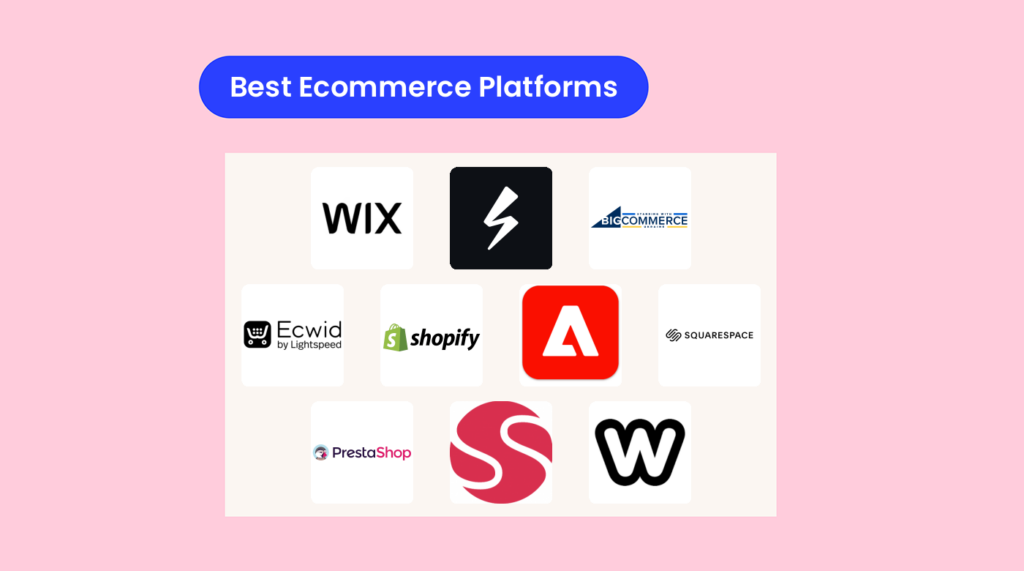

The best ecommerce platform is the one that actually gets out of your way and lets you run your store—no drama, no coding panic attacks, no mystery fees hiding in the fine print.
There are way too many platforms out there, and honestly, most of them promise you the moon, then hand you a cardboard cutout.
What you need is something that’s flexible, reliable, secure, and won’t leave you regretting your life choices at 2AM. It needs to handle all the basics—product management, inventory, orders, and mobile shoppers—without making you learn a new language.
I’ve spent more time poking around these platforms than any sane person should.
Here’s the real story on which ones are actually worth your energy, who they’re best for, and where each one gets it right—or absolutely blows it.
Read on for the shortlist, the details that actually matter, and a few things you probably won’t hear anywhere else. By the end, you’ll know exactly where to start looking—and what to avoid like a data breach.
Why Trust Our Software Recommendations
6,700+
Reviews
20
Industry experts
16+
Evaluation factors
14
Years
Our team has been testing and reviewing software since 2012. As retail leaders ourselves, we know how difficult—and important—it is to choose the right software.
For this guide, we evaluated tools using hands-on testing and independent research, scoring tools using our selection criteria.
Our reviews reflect our independent judgment—not a sales pitch.
Ecommerce Platforms on the Market Comparison Table
This comparison table summarizes pricing details for my top ecommerce platforms on the market selections:
| Tool | Best For | Trial Info | Price | ||
|---|---|---|---|---|---|
| 1 | Best for subscription-based ecommerce models | 14-day free trial | From $34.50/month | Website | |
| 2 | Best for omnichannel marketing | 15-day free trial | From $39/month | Website | |
| 3 | Best for social media selling | Free account available | From $5/month (billed annually) | Website | |
| 4 | Best for a range of integrations | 3-day free trial | From $29/month (billed annually) | Website | |
| 5 | Best for data-driven companies | Free demo available | Pricing upon request | Website | |
| 6 | Best for managing online stores | 14-day free trial | From $19/month (billed annually) | Website | |
| 7 | Best for customizable online stores | 14-day free trial | From €24/month | Website | |
| 8 | Best ecommerce platform for B2B sales | Free demo available | Pricing upon request | Website | |
| 9 | Best for customizable design options | Free plan available | From $13/month (billed annually) | Website | |
| 10 | Best for non-technical users | Free plan available | From $17/month (billed annually) | Website |


The Best Ecommerce Platforms for Scaling Your Store, Reviewed
Below, you’ll find brief reviews highlighting what each platform is best at, its top features, pros and cons, and screenshots of the tool in action.
 Best for subscription-based ecommerce models
- 14-day free trial
- From $34.50/month
Visit WebsiteCustomer Rating:4.8/5
Update the visual style of your cart so it matches your brand. Subbly helps subscription-first brands sell more with less duct tape—recurring billing, customizable checkout, and customer self-service live in one place.
If you run boxes, memberships, or replenishment, you’ll like the built-in upsells and dunning that protect margin without bolting on four plugins.
Why I Picked Subbly
I picked Subbly because it gives you subscription-first checkout controls—custom fields, buy rules, and domains—so you can tailor the flow to your products and reduce drop-off.
You get automated recurring billing with dunning and card-retry logic, which actually saves revenue instead of just reporting churn. If you already have a site, you can embed Subbly’s checkout and customer portal, letting your team add subscriptions without a full rebuild.
Surveys and funnels let you capture preferences and present targeted upsells, so average order value goes up because the feature literally asks smarter questions. Inventory tracking and out-of-stock logic keep renewals realistic—your operations team isn’t promising what the warehouse can’t ship.
Subbly Key Features
In addition to the subscription-centric checkout and billing, here are useful tools you’ll actually use.
- Bundles & Configurable Kits: Sell curated sets or let shoppers configure boxes while keeping fulfillment organized.
- Surveys & Signup Flows: Capture customer preferences up front to personalize products and upsells.
- Refer-a-Friend Program: Drive low-cost acquisition with built-in referral links and rewards.
- Multi-Language Support: Localize storefront and checkout to expand into new markets.
Subbly Integrations
Integrations include Klaviyo, Intercom, Twilio, ShipStation, Pirate Ship, Mailchimp, Zendesk, Postmark, TaxJar, and Hotjar.
Pros and Cons
Pros:
- Embeddable checkout adds subscriptions to an existing site quickly.
- Native shipping integrations reduce CSV exporting for labels and tracking.
- Klaviyo integration sends full subscription lifecycle events and values.
Cons:
- SKU caps by plan limit larger catalogs without higher tiers.
- Lite plan lacks automations and multi-language; upgrades required.
Learn more about Subbly:

The BigCommerce website builder has extensive editing features to customize the look of your site for better on-page product marketing. For growing retailers pushing into multiple channels, BigCommerce helps you expand revenue without duct-taping five tools together.
You get multi-storefront, marketplace and social selling, and strong merchandising options—built for teams handling high SKU counts and real traffic.
Muzammil Sayed, co-founder of NYC Leather Jackets, explained how the switch transformed their operations:
“We were stuck with a clunky platform before, but after moving to BigCommerce, our page load speed improved, abandoned carts were cut in half, and managing inventory across channels became seamless. Setting up SSL certificates and security badges was simpler too, which helped us build more trust with customers. On top of that, their SEO controls and API integrations give us flexibility without needing constant developer support.”
Why I Picked BigCommerce
I picked BigCommerce for omnichannel reach—you can list products to Amazon, Walmart, TikTok Shop, and Meta Shops while keeping a single catalog, which speeds time to revenue through native Channel Manager connections.
You get faster merchandising because product options, rules, and custom fields let you launch complex variants without custom code. Your team protects margins with native coupons, price lists, and customer groups—features that actually enable targeted promos, not just vanity discounts.
Checkout isn’t an afterthought either: you can enable one-page checkout and digital wallets like Apple Pay and Google Pay to lift conversion. For larger catalogs, built-in faceted search and SEO controls help shoppers find products and help your PDPs rank.
BigCommerce Key Features
These complement the multichannel focus and help teams sell faster day-to-day.
- Multi-Storefront: Run multiple brands or regions from one backend with shared inventory.
- Catalog Rules & Options: Configure complex variants, SKUs, and pricing without custom code.
- Customer Groups & Price Lists: Offer segmented pricing and B2B terms for different buyers.
- One-Page Checkout & Wallets: Reduce friction with accelerated payment methods at checkout.
BigCommerce Integrations
Integrations include Amazon Pay, PayPal, Stripe, Mailchimp, QuickBooks Online, ShipStation, Yotpo, Google Analytics, Meta Shops, and TikTok Shop.
Pros and Cons
Pros:
- Customer groups and price lists enable true B2B and VIP pricing.
- Built-in faceted search and SEO controls improve product discovery.
- Multichannel listings with unified inventory reduce oversells and manual updates.
Cons:
- Advanced theme changes often need developer time or paid apps.
- Annual online sales thresholds can trigger required plan upgrades.
Learn more about BigCommerce: Best for social media selling
- Free account available
- From $5/month (billed annually)
Visit WebsiteCustomer Rating:4.6/5
Ecwid automatically creates customer accounts following each purchase, making customer relationship management much easier. For merchants leaning hard into social selling, Ecwid lets you sync your catalog to Facebook, Instagram, and TikTok—so the posts that already drive attention can drive orders.
It’s a low-friction way to bolt ecommerce onto your existing site or link-in-bio, with a free plan to test before you commit.
Why I Picked Ecwid
I picked Ecwid because it lets you turn social attention into cart activity—your catalog syncs to Facebook and Instagram, so you can tag products and send shoppers straight to checkout.
You also get TikTok for Business connection from your Ecwid admin, so you can launch product ads without exporting spreadsheets. If you sell in person, you can pair your online store with Lightspeed Retail, Square, or Clover, keeping inventory and orders in one place.
For fulfillment, Ecwid’s discounted USPS labels cut small-parcel costs from day one. You can embed a storefront or a single “Buy Now” button on any site, making it a solid fit for creators, boutiques, and local retailers that want sales now, not a six-week rebuild.
Ecwid Key Features
In addition to social channel sync, here are a few tools you’ll actually use to keep sales moving.
- Buy Now Button: Drop a product or cart button into any page, blog, or link-in-bio.
- Apple Wallet Order Tracking: Let customers track orders via Wallet push notifications after checkout.
- POS Syncing: Connect Lightspeed, Square, or Clover to unify online and in-store stock and sales.
- Discount Shipping Labels for USPS: Print labels with built-in USPS discounts to protect margins.
Ecwid Integrations
Integrations include Facebook by Meta, Instagram Shopping, TikTok for Business, Google Shopping, Lightspeed Retail POS, Square POS, Clover POS, Printful, Pinterest, and Snapchat.
Pros and Cons
Pros:
- Social catalog sync turns posts into shoppable product tags fast.
- POS integrations keep inventory accurate across online and in-store.
- Built-in USPS label discounts reduce small-parcel shipping costs.
Cons:
- TikTok Shop selling requires an App Market connector, not native.
- Marketplace sales (e.g., Amazon, eBay) rely on third-party apps.
 Best for a range of integrations
- 3-day free trial
- From $29/month (billed annually)
Visit WebsiteCustomer Rating:4.5/5
Shopify presents you with real-time data on the performance of your ecommerce store. Shopify is for teams that want to launch fast, sell everywhere, and keep ops tidy without babysitting integrations.
You get a proven checkout, built-in shipping and returns, and an app ecosystem that lets you add only what you need—ideal for SMBs and midsize brands scaling into multi-channel.
As Justin Christopher, Manager of Ecommerce and Marketing at Klatch Coffee, puts it:
“In July 2024, we re-platformed from a proprietary ecommerce system to Shopify. Prior to launching, our pages were scoring in the low 80s on Google’s Lighthouse; after migration, those same pages moved into the high 90s—a significant performance improvement. Post-migration, Core Web Vitals shows that 0% of our pages are ‘poor’ or ‘needs improvement,’ a dramatic swing toward better mobile performance.”
Why I Picked Shopify
I picked Shopify because you can grow sales without piling on custom dev—your team gets real benefits from features that actually ship revenue. You improve conversion through Shop Pay’s accelerated checkout and one-page flow, not wishful thinking.
You reduce busywork using Flow automation for order tagging, fraud flags, and back-office handoffs your ops team can see and audit. You keep fulfillment moving with self-serve returns, discounted carrier labels, and native inventory tools in the mobile app.
When you expand channels, the built-in sales and marketing connectors mean you don’t spend weeks wiring ads and catalogs before the first order lands.
Shopify Key Features
Here are a few practical tools you’ll use day to day as you scale.
- Online Store 2.0 Theme Editor: Drag-and-drop sections and app blocks let you ship site changes without engineering tickets.
- Markets (Cross-Border): Localize currency, duties, and domains so international buyers see true landed costs.
- Shop Pay Installments: Offer pay-over-time at checkout to lift AOV with instant underwriting.
- POS for Omnichannel: Sync inventory, customers, and orders across retail and online so store staff can fulfill, exchange, and look up history.
Shopify Integrations
Integrations include Facebook & Instagram, Google & YouTube, TikTok, Pinterest, Google Analytics, Amazon (via Shopify Marketplace Connect), eBay (via Shopify Marketplace Connect), Walmart (via Shopify Marketplace Connect), and Etsy (via Shopify Marketplace Connect).
Pros and Cons
Pros:
- Built-in shipping labels and returns reduce WISMO tickets and costs.
- Shop Pay checkout and wallets boost conversion on mobile.
- Flow automation handles tagging, routing, and repetitive workflows.
Cons:
- Extra fees apply if you don’t use Shopify Payments.
- Some B2B and multi-location features require higher-tier plans.
 Best for data-driven companies
- Free demo available
- Pricing upon request
Visit WebsiteCustomer Rating:4.5/5
Adobe Commerce advanced reporting shares data on refunds, tax, shipping, orders, and revenue. For enterprise teams already invested in Adobe, Adobe Commerce pulls your storefront, merchandising, and analytics into one system—so you can act on customer behavior without duct-taping tools together.
It’s best for data-driven retailers and B2B sellers who want AI-driven discovery, native payments, and tight ties to Adobe’s marketing stack.
Why I Picked Adobe Commerce
I picked Adobe Commerce because you can grow revenue with AI-driven discovery—Live Search and Product Recommendations use Adobe Sensei to surface high-intent products based on real shopper behavior.
You get faster merchandising through Page Builder’s drag-and-drop content tools, so your team ships campaigns without endless dev tickets. Your analytics get sharper by connecting order data to Adobe Analytics and Commerce Intelligence, giving you journey-to-order attribution your finance team will actually trust.
If you sell B2B, company accounts, shared catalogs, quotes, and requisition lists let you handle complex pricing and approvals without spreadsheets. Payments are simpler too—Adobe Payment Services brings authorization, reconciliation, and dispute data into one dashboard.
Adobe Commerce Key Features
In addition to the reasons above, here are practical features teams use daily.
- Page Builder: Drag-and-drop CMS for landing pages, blocks, and content scheduling.
- PWA Studio: Tooling to build fast, app-like storefronts that boost mobile conversion.
- Multi-Source Inventory: Manage stock across warehouses and stores with source selection rules.
- Customer Segmentation: Target banners, promos, and content by behavior, location, or attributes.
Adobe Commerce Integrations
Integrations include Adobe Analytics, Adobe Customer Journey Analytics, Adobe Real-Time CDP, Adobe Journey Optimizer, Adobe Target, Adobe Marketo Engage, Adobe Experience Platform, and Adobe Commerce Intelligence.
Pros and Cons
Pros:
- B2B suite supports quotes, shared catalogs, POs, and approvals at scale.
- AI search and recommendations increase AOV via real-time behavioral signals.
- Native Adobe integrations unify marketing and order data for attribution.
Cons:
- Complex customizations often require experienced Adobe Commerce developers.
- Licensing and implementation costs can be high for smaller teams.
Learn more about Adobe Commerce: Best for managing online stores
- 14-day free trial
- From $19/month (billed annually)
Visit WebsiteCustomer Rating:4.6/5
Squarespace provides tools for building a professional online store. Squarespace is for design-first brands that need ecommerce baked in—clean templates, fast checkout, and simple ops without a pile of plugins.
If your pain is “my store looks messy and takes forever to maintain,” you’ll like how it keeps branding tight while handling the sales basics for you.
Why I Picked Squarespace
I picked Squarespace because you can launch a good-looking store quickly—mobile-optimized templates and the Fluid Engine editor keep pages consistent without design debt.
You get faster checkouts through Apple Pay, Stripe, and PayPal, which reduces friction at the moment of purchase. Revenue recovery is built in via abandoned cart emails, so you can win back shoppers automatically.
Inventory and variants are easy to manage, and product waitlists let you capture demand when items are sold out.
If you sell on social, the Facebook/Instagram product sync puts your catalog into posts and shops so your campaigns actually connect to inventory.
Squarespace Key Features
Here are a few practical tools beyond the basics you’ll actually use.
- Carrier-Calculated Shipping: Show live UPS/USPS/FedEx rates based on customer address and product data.
- Squarespace POS (US): Take in-person payments with a Square reader and keep online inventory in sync.
- Subscriptions & Member Areas: Sell recurring products or gated content to create repeat revenue.
- Analytics & Purchase Funnel: Track sales, top products, and abandoned checkouts from a single dashboard.
Squarespace Integrations
Integrations include Stripe, PayPal, Apple Pay, Afterpay/Clearpay, FedEx, UPS, USPS, Facebook and Instagram Shops, Google Analytics, and Mailchimp.
Pros and Cons
Pros:
- Facebook/Instagram product sync powers shoppable posts and catalog ads.
- Abandoned cart recovery emails reclaim revenue without extra apps.
- Apple Pay, Stripe, PayPal enable faster checkout and higher conversion.
Cons:
- Fewer third-party integrations than open app marketplaces.
- POS limited to US and Square—no broader hardware support.
Learn more about Squarespace: Best for customizable online stores
- 14-day free trial
- From €24/month
Visit WebsiteCustomer Rating:4.3/5
PrestaShop dashboard provides a comprehensive overview of your store's performance metrics. PrestaShop helps teams that want control—over code, costs, and country-by-country growth—launch customizable stores without per-sale platform fees.
It’s a good fit for operators with technical resources who need multilingual catalogs, multi-store management, and a big marketplace of modules to tailor payments, merchandising, and marketing.
Why I Picked PrestaShop
I picked PrestaShop because you keep predictable costs through an open-source core—your team can host where you want and add only the paid modules you need.
You support international growth through built-in multi-store and multilingual tools, so you can run separate catalogs, currencies, and tax rules from one back office. You improve conversion with first-party checkout options like PrestaShop Checkout and a Stripe module that enable cards and local payment methods from a single setup.
You get practical SEO controls—editable URLs, meta data, and sitemaps—so product pages can earn their keep without a plugin pileup.
When you need to extend, the official marketplace covers marketing automation, marketplaces, and shipping, giving you flexibility without rewriting your stack.
PrestaShop Key Features
In addition to the cost control and international tooling, here are a few features retail teams actually use day to day.
- Advanced Catalog Management: Manage variants, attributes, bundles, and pricing rules across single or multiple stores.
- Permissions and Workflows: Create employee profiles and limit access by role to keep ops tidy and auditable.
- Theme System and Editor: Start with modern themes and customize templates and CSS without touching core files.
- Order and Fulfillment Tools: Handle partial shipments, returns, and carrier rules from a central dashboard.
PrestaShop Integrations
Integrations include PrestaShop Checkout, Stripe, Klaviyo, Mailchimp, PrestaShop Marketing with Google, Google Merchant Center, PrestaShop Social with Facebook & Instagram, Amazon Marketplace, Nexi Checkout, and Authorize.Net.
Pros and Cons
Pros:
- Open-source core keeps platform fees off each transaction.
- Multi-store and multilingual features support real international ops.
- Large module marketplace covers marketing, marketplaces, and shipping.
Cons:
- Many advanced capabilities require paid modules to fill gaps.
- Setup and maintenance demand developer time and server know-how.
Learn more about PrestaShop: Best ecommerce platform for B2B sales
- Free demo available
- Pricing upon request
Visit WebsiteCustomer Rating:4.4/5
Sana Commerce Cloud provides detailed sales statistics broken down by client, making it great for B2B product analytics. Sana Commerce Cloud helps B2B brands turn ERP data into transactions—your buyers see live pricing, accurate stock, and their negotiated terms every time.
It’s best for mid-market manufacturers, distributors, and wholesalers already on Microsoft Dynamics or SAP, who need account-based buying, fast reorders, and fewer manual updates.
Why I Picked Sana Commerce Cloud
I picked Sana Commerce Cloud because it connects directly to Microsoft Dynamics and SAP ERPs, so you get real-time pricing, inventory, and customer data without middleware sync jobs.
Your team wins back hours because repeat buyers can reorder from saved lists and order templates, while you keep margins intact through customer-specific pricing and minimums.
Global teams get the right experience thanks to multi-language and multi-currency support tied to ERP data, not a separate catalog. Procurement-heavy accounts can check out through PunchOut, reducing offline quote ping-pong by pushing orders straight into your ERP.
You also capture more B2B cash flow because customers can pay invoices online using supported payment providers tied to their account.
Sana Commerce Cloud Key Features
Here are a few extras that pair nicely with the ERP-first approach.
- ERP Connectors: Pre-built connectors for Microsoft Dynamics and SAP sync products, pricing, and customers in real time.
- Account-Based Purchasing: Customer-specific catalogs, budgets, and permissions that mirror ERP account rules.
- PunchOut & E-Procurement: OCI/cXML PunchOut to route approved orders back into ERP purchase flows.
- Multi-Store & Localization: Region-specific stores with language, currency, and tax rules mapped from ERP.
Sana Commerce Cloud Integrations
Integrations include Microsoft Dynamics 365 Finance & Supply Chain, Microsoft Dynamics 365 Business Central, SAP S/4HANA, SAP ECC, SAP Business One, Mailchimp, dotdigital, Adyen, PayPal, and FedEx.
Pros and Cons
Pros:
- Direct ERP connection—live pricing, stock, and terms without middleware.
- Strong B2B reorder tools lead to larger, faster repeat purchases.
- PunchOut support reduces offline quotes and accelerates procurement approvals.
Cons:
- Native reporting is basic—deeper analytics may require external BI.
- Theme variety is modest compared to design-first ecommerce platforms.
Learn more about Sana Commerce Cloud: Best for customizable design options
- Free plan available
- From $13/month (billed annually)
Visit WebsiteCustomer Rating:4.3/5
Manage items, pricing, and stock in Weebly’s item library. Weebly gives small retailers a fast path to selling online and in person—without stitching together a dozen tools.
If you want Square payments, unlimited products (even on free), built-in shipping labels, and gift cards, it’s a simple way to launch and keep operations tidy.
Why I Picked Weebly
I picked Weebly because you get unified online-to-in-store payments through Square, so your team reconciles one payout stream and can use the same hardware in person.
You also get practical store ops—inventory tracking with low-stock indicators—so you don’t oversell and have to issue apologies. Real-time shipping rates and on-dashboard label printing (via Shippo) cut packing time when orders spike.
Gift cards are native, which helps you capture cash up front and drive repeat purchases. The mobile app lets you add products, fulfill orders, and check sales from anywhere, which is clutch for lean teams.
Weebly Key Features
Beyond payments and inventory, here are a few tools merchants actually use day to day.
- Automatic Tax Calculator: Calculates sales tax at checkout based on customer location.
- In-Store Pickup: Offer local pickup with scheduling options to reduce shipping costs.
- Item Reviews: Collect product reviews to improve conversion and merchandising decisions.
- Abandoned Cart Emails: Recover lost revenue with automatic reminders on eligible plans.
Weebly Integrations
Integrations include Square, PayPal, Shippo, ShipStation, Printful, Instagram Feed, Event Calendar, Google Maps, YouTube Gallery, and Setmore Appointment Booking.
Pros and Cons
Pros:
- Unified Square online and POS payments simplify reconciliation.
- Built-in label printing and carrier discounts via Shippo.
- Unlimited products—even on the free plan.
Cons:
- Template flexibility and advanced customization are limited.
- PayPal checkout requires the higher-tier plan.
Learn more about Weebly: 10Best for non-technical users
Wix
- Free plan available
- From $17/month (billed annually)
Visit WebsiteCustomer Rating:4.4/5
The order management features available within the Wix ecommerce platform let you efficiently handle customer orders and track order statuses. Wix helps small and midsize sellers get a polished store live fast—without begging a developer for every change.
You get quick setup, strong checkout options, and a big app market for shipping and marketing add-ons—best if your catalog isn’t massive and you want speed-to-live over heavy customization.
Why I Picked Wix
I picked Wix because you can launch quickly and still cover the essentials: you build your storefront in minutes with the AI site builder, then fine-tune with a visual editor.
Your team accelerates checkout conversion using native payment options—including Apple Pay, Google Pay, PayPal, and card processors—right on your product and cart pages.
Inventory stays accurate with variant-level stock tracking, so sizes and colors don’t oversell. You extend reach by syncing products to Meta Shops via a native partner app, keeping orders flowing back into your dashboard.
For operations, you print labels and track deliveries through shipping apps that plug directly into Wix, so fulfillment doesn’t become a side career.
Wix Key Features
These are practical tools that complement the quick-build approach above.
- Abandoned Cart Recovery: Send automatic reminders to shoppers who leave items behind to win back revenue.
- Gift Cards and Coupons: Drive repeat purchases with store credit and targeted discount codes.
- Wix POS (In-Person Selling): Sell in store and online with unified catalog and inventory.
- Built-In SEO Tools: Edit meta data, URL slugs, and structured data to improve product discoverability.
Wix Integrations
Integrations include Klaviyo, Mailchimp, AfterShip, Shippo, Facebook Shops by GoDataFeed, Google Analytics, Google Shopping, Eventbrite, JivoChat, and 123FormBuilder.
Pros and Cons
Pros:
- Native and partner apps cover shipping labels, tracking, and returns.
- Variant-level inventory and SKU control reduce overselling risk.
- AI site builder and visual editor speed up launch and updates.
Cons:
- Switching templates later requires a redesign—no one-click swap.
- Real-time carrier rates at checkout typically need third-party apps.
Learn more about Wix:
Other Ecommerce Platforms
Here are some additional tools I think are great—these are worth checking out as well.
- 11Shift4ShopBest for access to free template library
- 12VolusionBest for customer service
- 13Oracle CommerceBest for AI-driven sales efficiency
- 14NetSuite SuiteCommerceBest for ERP integration
- 15Big CartelBest for creative custom store designs
- 16MivaBest for dynamic merchandising
- 17WooCommerceBest ecommerce plug-in for Wordpress
- 18Elastic Path Commerce CloudBest for enterprise organizations
- 19ShopWiredBest for buy-now-pay-later purchasing
- 20Square OnlineBest value for money
- 21OroCommerceBest ecommerce platform for wholesalers
Related Ecommerce Software
If you still haven't found what you're looking for here, check out these tools related to ecommerce that we've tested and evaluated.
- Inventory Management Software
- Payment Processing Software
- Shopping Cart Solutions
- Order Management Systems
- Warehouse Management Software
- Squarespace Alternatives
- Shopify Alternatives
How I Evaluate Ecommerce Platforms to Accelerate Sales
Whether it's a DTC brand building its first storefront or a retailer unifying POS and online sales, I evaluate each against baseline must-haves before weighing what sets it apart.
Core Functionality (Table Stakes For This List)
When I'm selecting tools for my list, I rank each one on a scale from 0 (does not offer the functionality) to 5 (excels in this area) for each core functionality listed below. Then, I calculate the tool's total score into a percentage. Each tool needs to achieve a minimum total score of 75% to be considered for inclusion.
- Storefront & Catalog Builder: I look at how much control you get over themes, page layouts, and product catalog structure—things like variant handling, collection sorting, and custom landing pages.
- Checkout & Payment Processing: A platform's checkout flow matters for conversion, so I evaluate supported payment gateways, express checkout options, and multi-currency capabilities.
- Inventory & Order Management: Real-time stock tracking across locations, order routing, and fulfillment workflows are what I check here—especially for retailers managing both warehouse and store inventory.
- Multichannel Selling: I consider whether you can sell across marketplaces like Amazon and eBay, social channels, and POS systems from a single product catalog and order dashboard.
- Sales Acceleration Tools: Promotions, abandoned cart recovery, upsell and cross-sell features, and product recommendation engines all factor into how well a platform drives revenue growth.
- Marketing & Analytics: Built-in SEO controls, email campaign tools, and sales reporting dashboards help me gauge whether a platform gives you actionable data alongside traffic-driving features.
Once I have a list of tools that meet the criteria, I consider what sets each platform apart.
Differentiating Factors (What Sets Vendors Apart)
Here's how I compare and contrast different vendors:
Standout Features
AI-driven personalization is a major differentiator. I look at whether a platform can serve tailored product recommendations and dynamic content based on browsing and purchase history, which directly affects conversion and average order value. Headless commerce architecture matters for brands that want full control over their frontend across web, mobile apps, and in-store kiosks. I also evaluate global selling toolkits, since retailers expanding internationally need localized checkout with multi-currency pricing and automated duty calculations built in.
Beyond Features
I evaluate each platform's app ecosystem and integration depth, especially connections to ERPs, shipping carriers, and marketing tools your team already uses. Scalability is another key factor—I check whether a platform can handle traffic surges during peak sales events without degrading page speed or checkout reliability. Total cost of ownership also shapes my assessment. Transaction fees, theme costs, and paid app dependencies can add up fast, so I look at how pricing scales alongside your store's growth rather than just the base subscription.
What is an Ecommerce Platform?
An ecommerce platform is the all-in-one software that powers your entire online store.
It keeps your products organized, manages your inventory, processes payments, and handles orders—basically, it does all the dirty work so you don’t have to.
Whether you’re a side hustler or running a retail empire, an ecommerce platform gives you the tools to launch, run, and (fingers crossed) actually grow your business without needing a PhD in code.
If you want to sell online, this is your HQ—everything you need, right where you need it, minus the tech headaches.
How to Choose an Ecommerce Platform
Finding your ecommerce platform shouldn’t feel like a multiple-choice test you didn’t study for. Pick wrong, and you’ll waste time, money, and a few too many late nights muttering at your laptop.
Here’s the shortcut: focus on what actually matters for your business, not whatever shiny thing is trending on LinkedIn.
Use this checklist to zero in on a platform that fits your needs today—and won’t bail on you tomorrow.
| Step | What to do | Why it matters |
|---|---|---|
| StepPlan for growth | What to doChoose a platform that can handle more products, traffic spikes, and added features as you scale | Why it mattersYou don’t want to replatform every time your sales double |
| StepKeep it simple | What to doTest drive the interface—if it feels clunky or confusing, move on | Why it mattersYour time’s too valuable to waste on bad UX |
| StepShow off your brand | What to doGo for real design control with bold templates or drag-and-drop builders | Why it mattersYour store should look like you, not every other shop out there |
| StepKnow your payments | What to doReview payment gateway options and all the fine-print fees | Why it mattersSurprise charges are only fun on your birthday, not in your accounting |
| StepPlug in your tools | What to doMake sure it integrates easily with your must-have software | Why it mattersLess manual work means more time for everything else |
| StepBoost your marketing | What to doCheck for built-in blog, email, and SEO features to keep traffic coming | Why it mattersYou want new customers and repeat buyers, not just drive-by clicks |
| StepLock it down | What to doDemand strong security and support that actually responds | Why it mattersSleep better knowing your data—and your sanity—are safe |
Trends in Ecommerce Platforms for 2026
To keep you up-to-date, here are the hottest trends in ecommerce platforms for 2026, focusing on the most rapidly evolving features, novel functionalities, and shifts in demand:
- AI-powered personalization. AI is driving smarter ecommerce experiences by tailoring product recommendations, automating customer service, and adjusting prices in real time. This personalization increases engagement and drives higher conversion rates.
- Augmented Reality (AR) shopping. AR allows customers to virtually try products before buying, boosting confidence and reducing returns. With AR becoming a standard feature, businesses that leverage it can stand out and enhance user experience.
- Voice commerce. As more consumers use smart speakers, voice shopping is projected to skyrocket. To stay competitive, brands must optimize product descriptions for voice search to capture this growing market.
- Sustainability. Consumers are increasingly seeking out eco-friendly brands, pushing platforms to offer features like carbon footprint calculators and sustainable shipping options. Businesses prioritizing sustainability will build stronger connections with conscious consumers.
- Omnichannel integration. Seamlessly connecting online and offline experiences is critical. Platforms now offer tools to blend these interactions, such as social commerce integrations and POS systems, making omnichannel strategies essential for customer retention.
- Livestream shopping. Live shopping events are gaining traction, allowing brands to showcase products in real-time, engage customers through Q&As, and drive immediate purchases. Expect more platforms to support this interactive shopping experience.
- Automation and chatbots. With chatbots handling most customer interactions, automation is becoming vital for efficient, personalized support. Businesses using AI-driven chatbots are streamlining operations while enhancing the customer experience.
- Fast delivery options. Same-day and next-day delivery are becoming a standard expectation. Platforms are enhancing their logistics to offer same-day or next-day delivery, with Amazon setting the pace. This trend emphasizes the need for efficient fulfillment processes to meet consumer demands for quick delivery.
Essential Features of Ecommerce Platforms
Not all ecommerce platforms are created equal, and the features they offer can make or break your online business. Here’s what you should expect from the best:
- Mobile-first design. Everyone’s shopping on their phones now, and your store better look and function perfectly on mobile. The top mobile ecommerce platforms are built with mobile optimization in mind, meaning your site will be smooth as butter on any screen size.
- Customizable everything. Your store should scream you, not some cookie-cutter template. The best platforms let you tweak the design, layout, and functionality—whether you’re a drag-and-drop kind of person or have a developer who can go wild with the code.
- Multiple payment gateways. Credit cards, PayPal, Stripe, Apple Pay, maybe even some crypto on the side—the more options you offer, the more customers will convert. And, no one wants to be blindsided by high transaction fees, so transparency here is a must.
- Top-notch security. It’s 2026, and data breaches are no joke. Make sure your platform comes with built-in SSL, PCI compliance, and fraud protection to keep your customers safe and your reputation solid.
- SEO and marketing tools built in. Being found online isn’t magic—it’s SEO. The best platforms come with SEO tools that help you rank higher in search results. Plus, built-in marketing tools for email campaigns, social media, and promotions give you an edge in bringing people back for more.
- Inventory and order management. Whether you’re selling five products or five thousand, you need a platform that helps you track stock levels, manage variants, and handle orders without a hitch. And if it syncs with your POS? Even better.
- Flexible shipping options. Offering different shipping choices, real-time rates, and easy integration with carriers is key to keeping customers happy and meeting their growing demand for fast (or free!) delivery.
Benefits of Ecommerce Platforms
Why should you get on board with an ecommerce platform? Because the perks are hard to ignore:
- Make sales in your sleep. Your online store never clocks out—it’s open 24/7. Customers can browse and buy at any time, and you can wake up to a fresh stack of orders waiting for fulfillment.
- Reach customers worldwide. With an ecommerce platform, the whole world becomes your potential customer base. Say goodbye to the limits of geography and hello to global sales without needing a passport or extra rent checks.
- Automate the boring stuff. Order processing, inventory updates, customer emails—let automation do the heavy lifting. You can spend less time on routine tasks and more time strategizing your next big move.
- Data is your secret weapon. Track everything from what products are flying off the shelves to which marketing campaigns are killing it. With built-in analytics, you’ve got the insights you need to make smarter, faster decisions.
- Lower operating costs. No rent, no utilities, and fewer staff to worry about. Plus, ecommerce platforms often bundle things like hosting and security, so you’re getting more bang for your buck.
- Grow without the growing pains. Scaling up is a breeze when your platform can handle it. Whether you’re adding more products or breaking into new markets, ecommerce platforms are built to grow with you.
- Customer convenience is king. Shoppers love the freedom to browse and buy at their own pace. And with multiple payment and shipping options, you’re giving them exactly what they want: an easy, hassle-free shopping experience.
- Build relationships that stick. Thanks to integrated marketing tools, you can send personalized emails, run targeted promotions, and keep customers coming back for more. It’s like building loyalty on autopilot.
Cost & Pricing of Ecommerce Platforms
You'll find ecommerce platforms at all different price points, each designed to serve businesses of varying sizes, needs, and budgets.
There are plenty of factors that affect pricing for ecommerce platforms, including:
- Customization options
- Number of products
- Built-in marketing tools
- Hosting included
- Security features
- International selling capabilities
- Scalability
- Support options
- Transaction fees
Small businesses won't require certain things, and can find a lower pricing tier to fit those needs. Enterprise businesses will need many more features, and get a good ROI for the higher price point.
The great thing is that many ecommerce platforms have multiple tiers that allow for scalability as you grow.
Here's a breakdown of the common plan options and their pricing in the ecommerce platform market. You'll see which type of business each plan type is generally best for, but you'll always want to assess your own needs.
Plan comparison table for ecommerce platforms
| Plan type | Average price | Common features included | Best for |
|---|---|---|---|
| Plan typeFree | Average price$0 | Common features includedLimited product listings, basic templates, basic SEO tools, transaction fees on sales. | Best forHobbyists, solopreneurs |
| Plan typeBasic | Average price$20 - $30/month | Common features includedWebsite hosting, basic templates, product listings, basic SEO tools, simple analytics. | Best forSmall businesses, startups |
| Plan typeProfessional | Average price$50 - $100/month | Common features includedAll Basic features, additional templates, marketing tools, improved SEO capabilities, advanced analytics. | Best forGrowing businesses, SMEs |
| Plan typeAdvanced | Average price$150 - $300/month | Common features includedAll Professional features, advanced analytics, customer segmentation, abandoned cart recovery, priority support. | Best forMedium to large businesses |
| Plan typeEnterprise | Average price$500+/month | Common features includedAll Advanced features, custom integrations, full customization, dedicated support, training, enterprise-grade security. | Best forLarge enterprises |
When considering an ecommerce platform, software buyers should weigh their current business needs against their future growth plans, especially when evaluating D2C ecommerce platform options.
Ultimately, the choice of an ecommerce platform plan should align with your business goals, budget, and the level of control and customization you require—which is why exploring the best Magento alternatives can be valuable.
Ecommerce Platforms FAQs
If you’re new to the world of SaaS ecommerce solutions, you’ve probably got plenty of questions about how and why to set up an online shopping experience for your customers. Let’s take a look at some FAQ’s to provide some clarity:
How do you really know which ecommerce platform is easiest to use?
Start with your team—not the sales deck. The easiest ecommerce platform is the one your staff can run without a 100-page manual or a week of onboarding.
Look for clean dashboards, clear setup, and support that answers the phone. Try free trials, demo widely, and watch your team work. If anyone’s grumbling, that’s a red flag. Ease isn’t about the marketing—it’s about your day-to-day.
What are the main types of ecommerce platforms, and why should I care?
You’ll see three types: fully hosted (like Shopify), open-source (think WooCommerce), and headless (for the techy folks who want total control).
Hosted is grand for those who want plug-and-play without the fuss. Open-source lets you tweak every little thing but expect more maintenance. Headless gives you ultimate freedom—with matching complexity.
Your choice is less about style, more about how many headaches you’re willing to prevent or fix.
What’s the best ecommerce platform for someone just getting started?
If you want to launch fast and don’t have a tech squad at your beck and call, Shopify or BigCommerce are solid bets. They shave down setup time and handle the gnarly stuff (security, updates) so you can focus on sales.
But if you like to tinker or you’ve got engineering chops, an open-source option like WooCommerce might fit your way of working. There’s no single “best”—just what suits your risk tolerance and patience.
How do ecommerce platforms handle security—and what should I double-check?
Most top ecommerce platforms bake in security: SSL, PCI compliance, fraud alerts—the works. But don’t play defense too early.
Ask your provider how they update software, handle breaches, and where your data lives. No platform can make you 100% bulletproof, so train your team, set strong passwords, and don’t ignore those “security update” emails.
Security is half tech, half common sense.
Can you migrate existing store data to a new platform?
Yes, but only if you prep. Every leading platform offers migration tools, but you’ll want to back up everything and test imports before launch. Some shops hire data migration pros to smooth out kinks, especially when customer histories and order records are involved.
Think of it like moving houses—label your boxes and double-check nothing gets “lost in transit.” Budget time for QA.
Are there any truly free or open-source ecommerce platforms out there?
Yes—Magento (now Adobe Commerce), WooCommerce, and OpenCart are all open-source, which means no monthly fee to get started.
But don’t let “free” fool you. You’ll have hosting fees, plugin costs, and maintenance chores. Sometimes “free” costs you more time and sanity, so factor that in when tallying up real-world costs.
What are the hidden costs to watch for with ecommerce platforms?
They love to sneak up—transaction fees, paid themes, third-party plugins, storage limits, even email support. There’s usually a monthly sticker price, but the fine print adds up.
Always ask vendors for a total cost estimate based on your traffic, features, and integrations. If you grow fast, watch for sudden jumps in pricing tiers. You might pay more for success.
How easy is it to customize an ecommerce platform so it actually feels like my brand?
Hosted platforms dress up nice with themes and graphics, but you hit walls eventually. Want to mess with checkout flows or add niche integrations? Open-source or headless give you more freedom—if you have tech talent.
If you’re going custom, write down your “must-haves” and ask for real examples (not just promises). “Fully customizable” is never the same as “easy.”
Additional Ecommerce Platform Reviews
I believe these additional review lists will complement your research here, particularly if you're looking for something super specific for your store. I've reviewed ecommerce platforms for print on demand and different business types and platform types.
Ecommerce platforms by business type
- SaaS Ecommerce Platforms
- B2B Ecommerce Platforms
- Ecommerce Marketplace Platforms
- Subscription Ecommerce Platforms
- Ecommerce Platforms For Small Businesses
Ecommerce platforms by need
- Headless Ecommerce Platforms
- Easiest Ecommerce Platforms
- Omnichannel Commerce Platforms
- Enterprise Ecommerce Platforms
- Free Ecommerce Platforms
- Open Source Ecommerce Platforms
- Social Commerce Platforms
- Cheap Ecommerce Platforms
- Hosted Ecommerce Platforms