
10 Best Warehouse Management Software for 2026

The Top Warehouse Management Systems, The Shortlist


Warehouse management software automates your picking, packing, and shipping, giving you real-time control over inventory from a single dock to a global network.
Backed by cloud-based scalability, AI-powered forecasts, IoT sensors, robotics, and voice-picking on mobile scanners, the right WMS cuts errors, speeds up throughput, and adapts to any industry.
After 10+ years running stockrooms, warehouses, and international logistics, I’ve scored each platform on automation, global reach, industry-specific modules, and future-proof features—so you can pick the one that actually works.
Ready to turn chaos into consistent growth? Let’s dive in.
Why Trust Our Software Recommendations
Our team has been testing and reviewing software since 2012. As retail leaders ourselves, we know how difficult—and important—it is to choose the right software.
For this guide, we evaluated tools using hands-on testing and independent research, scoring tools using our selection criteria.
Our reviews reflect our independent judgment—not a sales pitch.
Warehouse Management Software Systems Comparison Table
This comparison table summarizes pricing details for my top warehouse management software systems selections:
| Tool | Best For | Trial Info | Price | ||
|---|---|---|---|---|---|
| 1 | Best for multichannel stock forecasting | Free demo available | From $449/month (volume-based pricing) | Website | |
| 2 | Best for built-in ecommerce marketing tools | Free demo available | Pricing upon request | Website | |
| 3 | Best for streamlining and automating operations | Free demo available | Pricing upon request | Website | |
| 4 | Best for complete supply chain process audits | Free demo available | From $590/user/month (billed annually) | Website | |
| 5 | Best for automated routing | Free demo available | Pricing upon request | Website | |
| 6 | Best for AI-powered supply chain management | Free demo available | Pricing available upon request | Website | |
| 7 | Best for wholesalers and distributors | Free demo available | Pricing upon request | Website | |
| 8 | Best for AI-driven warehouse operations | Free demo available | Pricing upon request | Website | |
| 9 | Best for hands-off fulfillment & shipping rate comparisons | Free demo available | Pricing upon request | Website | |
| 10 | Best for managing complete order fulfillment lifecycle | Free demo available | Pricing upon request | Website |
The Best Warehouse Management Software Systems, Reviewed
Now for the good stuff. Below, you’ll find brief reviews of our top WMS picks with why we picked them, top features, and screenshots of the tool in action.

Best for multichannel stock forecasting

For fast-growing multichannel retailers, Linnworks helps you keep stock levels “just right” across warehouses and sales channels—without living in spreadsheets.
It’s especially useful if you’re juggling marketplace orders, seasonal peaks, and tight warehouse space, and you need forecasting that actually ties to real warehouse workflows.
Why I Picked Linnworks
I picked Linnworks because it gives you SKU-level forecasting that’s tied directly to your real-time inventory and order data, so your replenishment decisions are based on what’s actually moving, not guesses.
You can forecast stock requirements using historical sales and seasonality, then turn those forecasts into purchase orders and transfer tasks inside the same system.
Your team gets one place to see stock across multiple warehouses and channels, with automatic updates every time an order is picked, packed, or shipped. I also like that you can build rules to route orders by channel, region, or warehouse, which keeps stock in the right place for the right customers.
For multichannel retailers trying to avoid both stockouts and dusty pallets, Linnworks gives you forecasting, routing, and warehouse control in one connected workflow.
Linnworks Key Features
In addition to its forecasting tools, Linnworks brings some very practical warehouse features to the table for retailers managing serious volume.
- Digital Picklists: Generate digital picklists that batch orders logically, helping pickers walk fewer miles while keeping error rates low.
- Barcode Scanning: Use barcode scanning at receiving, putaway, picking, and packing to keep inventory counts accurate and reduce mis-picks.
- Multi-Warehouse Transfers: Track inter-warehouse transfers so you can rebalance stock between locations based on demand rather than gut feel.
- Enhanced Warehouse Add-On: Layer in advanced bin, zone, and workflow configuration when you outgrow basic stock locations and need more granular control.
Linnworks Integrations
Integrations include Amazon, eBay, Shopify, BigCommerce, Walmart, TikTok Shop, WooCommerce, Magento, QuickBooks, and Gorgias.
Pros and Cons
Pros:
- Digital picklists and scanning reduce mis-picks in busy warehouse environments.
- Rules engine automates order routing by channel, warehouse, and region.
- Strong SKU-level forecasting helps dial in multichannel stock replenishment.
Cons:
- Advanced automation and warehouse features have a noticeable learning curve.
- Pricing is quote-based, so cost modeling takes extra upfront work.
New Product Updates from Linnworks
Linnworks Adds DMSExpress and Trade Order POS Apps
Linnworks adds DMSExpress and Trade Order POS to its App Store for shipping automation and point-of-sale order creation. These new apps expand fulfillment and sales workflows by connecting multi-carrier shipping and trade order processing directly with Linnworks. For more information, visit Linnworks’ official site.
 .
.
NetSuite
Best for built-in ecommerce marketing tools
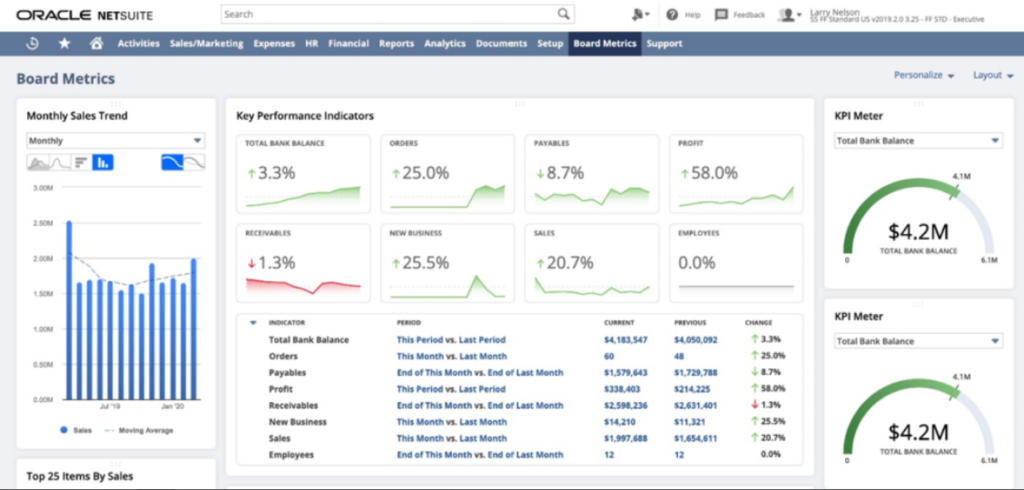
NetSuite WMS is built for retailers, distributors, and manufacturers already running on NetSuite who want warehouse execution to live in the same system as orders, inventory, and financials.
You get real-time visibility into stock, bins, and tasks, so your team isn’t chasing paper pick lists or updating spreadsheets after the fact.
Why I Picked NetSuite
I picked NetSuite because it runs as a native WMS module inside NetSuite ERP, so your warehouse team works off the same item, bin, and order data as finance and sales.
You get clearer inventory accuracy through features like RF barcode-powered receiving, bin transfers, and live replenishment updates tied directly to item records.
Your team can reduce mispicks and walking time using rules-based putaway and picking strategies that decide where to store and pull items for each order. Task management and cycle count plans give you a structured way to assign work, prioritize busy zones, and maintain accuracy without shutting down operations for full physical counts.
For growing operations, that combination of shared data and warehouse-specific workflows makes it a fit when you’ve outgrown light inventory tools but want to stay in the NetSuite ecosystem.
NetSuite Key Features
Beyond the tight ERP connection, NetSuite WMS includes warehouse-specific tools that help you handle higher order volumes and more complex layouts.
- Mobile Warehouse App: Guides users through receiving, putaway, picking, and packing on handheld devices for on-floor execution.
- Wave And Batch Picking: Groups orders into efficient waves so pickers can work zones instead of chasing single orders.
- Cartonization And Shipping Rules: Suggests packing configurations and connects to parcel systems to print accurate labels and documents.
- Bin And Location Management: Supports multi-bin locations, zone definitions, and replenishment rules to keep fast movers where staff can reach them quickly.
NetSuite Integrations
Integrations include NetSuite CRM, Oracle, JD Edwards EnterpriseOne, Sage Business Cloud, Affirm, Lightyear, ZoneBilling, Neuron ESB, and Pacejet.
Pros and Cons
Pros:
- Task, wave, and cycle count tools cut manual planning work.
- Mobile WMS app supports receiving, putaway, picking, packing on handhelds.
- Native to NetSuite ERP, sharing real-time item, bin, order data.
Cons:
- Configuration of bins, workflows, and mobile processes can be complex.
- Requires NetSuite ERP subscription, limiting fit for non-NetSuite users.

Best for streamlining and automating operations

Acumatica’s warehouse management system gives growing distributors and omnichannel retailers barcode-driven control over receiving, put-away, picking, packing, and shipping from directly inside their ERP.
You get mobile scanning, directed pick paths, and role-based dashboards that help your team cut mis-picks, shorten fulfillment cycles, and keep inventory accurate across multiple locations.
Why I Picked Acumatica
I picked Acumatica because it lets your warehouse team work entirely from phones or rugged handhelds, using barcode scanning to drive every key transaction—from PO receiving through pick, pack, and ship.
You can guide workers with directed paperless picking, so they follow optimized routes and scan each item, which reduces over- and under-shipments while keeping pick accuracy high.
I like that warehouse data lives in the same cloud ERP as orders, inventory, and financials, so you don’t have to reconcile a separate WMS at the end of the day. Role-based dashboards for warehouse managers, receivers, and shippers give you live views into backlogs, exceptions, and inventory variances, instead of waiting for end-of-day reports.
For retailers and distributors already on Acumatica, this is a logical way to add serious warehouse automation without bolting on another standalone system.
Acumatica Key Features
Alongside the core mobile scanning and directed picking, here are a few warehouse tools that actually move the needle.
- Batch And Wave Picking: Group orders into efficient batches or waves so pickers handle more lines per trip while still scanning each item for accuracy.
- Lot And Serial Tracking: Capture and verify lot and serial numbers at pick and pack, supporting recalls, compliance, and detailed inventory traceability.
- Cycle Counting And Physical Counts: Run barcode-driven cycle counts during normal hours and full physical counts when needed, reducing shutdown time and count errors.
- Pack And Ship Automation: Generate packing slips, labels, and shipment confirmations from the same workflow, using scanned data instead of manual re-entry.
Acumatica Integrations
Integrations include Shopify, ShipStation, Avalara, HubSpot, Pacejet Shipping, EazyStock, Workforce Go, and Adobe Sign.
Pros and Cons
Pros:
- Native Shopify connector fits merchants syncing online orders with central fulfillment.
- Role-based dashboards surface bottlenecks and exceptions across multiple warehouses.
- Mobile app and scanners support fully barcode-driven pick, pack, and ship.
Cons:
- Full WMS feature set requires investment in Acumatica ERP and Distribution Edition.
- Advanced multi-warehouse setups often need a partner or consultant to configure.

Best for complete supply chain process audits

PULPO WMS is built for ecommerce and omnichannel retailers that need to see exactly what’s happening in every aisle, bin, and workflow—not just inventory counts.
You get real-time visibility into stock movements and process efficiency, so you can audit your entire fulfillment chain and fix bottlenecks with actual data instead of hunches.
Why I Picked PULPO WMS
I picked PULPO WMS because it gives you end-to-end visibility through a digital twin of your warehouse and a live control center that shows locations, tasks, and order status in one place.
That matters for audits, because you can trace every SKU and movement using location mapping and detailed activity histories instead of piecing together spreadsheets.
Your floor team works through a native Android app that combines barcode scanning, guided pick routes, and packing workflows, so your process audits are based on real operational data, not manual notes.
For ecommerce, I like that orders, inventory, and shipping data sync with platforms like Shopify, WooCommerce, Magento, and Sendcloud, so you can compare what’s promised online with what’s actually happening in the warehouse.
Reporting and analytics then close the loop by surfacing KPIs such as error rates, throughput, and stock accuracy, giving your leadership team a clean starting point for continuous improvement.
PULPO WMS Key Features
In addition to visibility and ecommerce connectivity, there are a few features that are especially helpful if you’re serious about auditing and improving warehouse performance.
- Returns Management: Handles returns with reason codes and real-time updates, so you can analyze why items come back and adjust processes upstream.
- Replenishment Rules: Lets you configure automatic replenishment tasks for pick faces and store locations, giving you traceable logic behind stock moves.
- Serial And Lot Tracking: Tracks serial numbers, batches, and expiration dates, which is critical when you’re auditing traceability or compliance.
- Warehouse Reports And Analytics: Provides warehouse-specific dashboards on productivity, errors, and order cycle times, making operational reviews much more data-driven.
PULPO WMS Integrations
Integrations include Shopify, Shopify Plus, WooCommerce, Magento, Sendcloud, SAP, Microsoft Dynamics 365, QuickBooks, and Odoo.
Pros and Cons
Pros:
- Strong ecommerce and shipping integrations keep stock and orders in sync.
- Android warehouse app plus barcode scanning lowers errors on the floor.
- Digital twin and control center give full traceability for process audits.
Cons:
- Mobile experience is focused on Android devices, not native iOS.
- Pricing is quote-based, so costs aren’t visible upfront.

Infoplus
Best for automated routing

Infoplus is built for 3PLs and high-volume ecommerce warehouses that need tighter control over routing, inventory, and client SLAs—not just basic bin locations.
You get warehouse logic that matches your real-world flows, from inbound to shipping, with tools for routing, stock controls, and client-by-client rules that help you avoid costly mis-picks and delays.
Why I Picked Infoplus
I picked Infoplus because you can design detailed routing rules that send picks through the most efficient paths, cutting wasted travel time in busy facilities.
You also get flexible inventory controls—like low stock alerts, reorder rules, and item-level status tracking—so your team can act before stockouts or overstock hit your margins.
Management-by-exception workflows let you flag only problematic orders or loads, so your supervisors aren’t stuck combing through every transaction. I like that you can bolt on light manufacturing and centralized operations modules, tying together WMS, finance, and accounting when you’re ready to scale.
For 3PLs, the ability to define separate rules, reports, and portals for each client makes it easier to keep everyone happy without building everything from scratch every time.
Infoplus Key Features
Building on those routing and control capabilities, Infoplus also includes tools that help you run day-to-day operations more efficiently.
- Mobile Floor Apps: Let staff receive, pick, pack, and move inventory using barcode scanners.
- Cycle Counting & Inventory Snapshot: Support ongoing counts and visibility into quantities, locations, and item receipts.
- Smart Filters & User Reports: Allow you to slice warehouse data, save custom views, and share user reports.
- 3PL Billing & Value-Add Tracking: Capture time, transactions, and value-add activities to generate itemized client invoices.
Infoplus Integrations
Integrations include Shopify, BigCommerce, WooCommerce, Magento, Amazon Seller Central, Etsy, Cratejoy, HSN, Walmart Marketplace, and ChannelAdvisor.
Pros and Cons
Pros:
- Mobile apps support barcode-driven receiving, picking, packing, and inventory moves.
- Client-specific rules and reports fit 3PLs with diverse customer needs.
- Automated routing rules reduce picker travel time in complex warehouses.
Cons:
- No public pricing tiers; you have to request a custom quote.
- Reporting and configuration depth may overwhelm teams without strong ops owners.

Best for AI-powered supply chain management

Manhattan Active Order Management is built for enterprise retailers that need to coordinate high-volume, multi-node fulfillment without losing track of inventory or SLAs.
You get a cloud-native WMS layer that ties together labor, automation, and order orchestration so your warehouses can keep up with ecommerce peaks, store replenishment, and complex service-level promises.
Why I Picked Manhattan Active Order Management
I picked Manhattan Active Order Management because it gives you AI-driven order orchestration backed by a warehouse engine that understands both wave and waveless workflows, so you can prioritize the right orders instead of just pushing boxes.
Your team gets a single platform that combines WMS, labor management, slotting, and a warehouse execution system, which helps you coordinate people, robots, and conveyors from one place.
I also like that it’s cloud-native and “evergreen,” so you get continuous updates without painful replatforming projects and can still extend the system with your own logic.
The mobile-first UX and gamified labor tools help supervisors push productivity with targeted goals and real-time feedback, rather than generic labor standards. Overall, it’s a strong fit for large, complex networks that need scalable fulfillment logic more than a basic inventory tracker.
Manhattan Active Order Management Key Features
Beyond its orchestration engine, there are a few practical capabilities warehouse and supply chain leaders will actually lean on day to day.
- Slotting Optimization: Uses demand, velocity, and constraints to constantly re-slot inventory for faster picks and fewer travel miles.
- Embedded Labor Management: Tracks performance, incentives, and standards in the same system as tasks so you can align labor spend with actual workload.
- Warehouse Execution Orchestration: Coordinates automation, robotics, and manual tasks in one queue so each order flows to the best available resource.
- Real-Time Inventory Visibility: Maintains a single view of inventory across locations, enabling accurate promising and fewer split shipments.
Manhattan Active Order Management Integrations
Integrations include Manhattan Active Warehouse Management, Manhattan Active Transportation Management, Manhattan Active Omni, SAP S/4HANA, Shopify, ProShip, Takt, and major ERP systems.
Pros and Cons
Pros:
- Strong fit for omnichannel retailers needing sophisticated order routing logic.
- Evergreen, cloud-native architecture reduces upgrade projects and technical debt.
- Unifies WMS, labor, and WES to support high-throughput, complex sites.
Cons:
- Pricing is quote-based, with no transparent public tiers for evaluation.
- Enterprise-grade implementation effort and change management requirements.

Best for wholesalers and distributors

Blue Link ERP gives wholesalers and distributors a single system for inventory, accounting, and warehouse operations, so you’re not babysitting spreadsheets or bolt-ons all day.
You get built-in warehouse tools plus an advanced WMS Lite option to handle scanning, picking, and shipping in more complex environments.
Why I Picked Blue Link ERP
I picked Blue Link ERP because it ties your warehouse, inventory, and accounting into one database, so every pick, pack, and shipment automatically rolls up into financials you can trust.
You get concrete warehouse benefits—like wireless handheld picking and barcode verification at packing stations—through mobile devices that cut mis-picks while speeding up floor operations.
Multiple warehouse location management and bin-level tracking mean you can route orders to the right site and guide staff to the right shelf instead of hunting for SKUs. Pack-to-container and master shipment tracking help your team handle larger, mixed shipments while keeping carton contents and shipping docs aligned.
I also like that implementation, training, and support are handled by the vendor’s in-house team, which gives you a single partner that understands wholesale distribution workflows instead of a random network of resellers.
Blue Link ERP Key Features
Beyond the core WMS tools, here are a few warehouse-focused features your ops team will actually use.
- Automated Reorder Management: Uses purchasing rules and demand signals to auto-build purchase orders so you restock high-velocity SKUs before they become backorders.
- Landed Cost Tracking: Allocates freight, duty, and other import charges to inventory so margin reports reflect true per-item costs, not guesses in a spreadsheet.
- Multi-Warehouse Inventory Management: Supports multiple locations, bins, and transfer workflows so you can balance stock across sites without losing visibility into what’s available to promise.
- Integrated Shipping And Receiving: Connects picking, packing, label printing, and shipment confirmation so staff move from pick slip to shipped order without retyping data into carrier tools.
Blue Link ERP Integrations
Integrations include Magento, Shopify, BigCommerce, XCart, Volusion, Shopatron, Amazon, eBay, FedEx, and Purolator.
Pros and Cons
Pros:
- Two-way ecommerce and marketplace sync keeps stock levels accurate across channels.
- Mobile barcode workflows cut picking mistakes in fast-moving wholesale environments.
- All-in-one ERP plus WMS reduces reliance on separate inventory tools.
Cons:
- Best suited to small and midsize distributors; may be overkill for micro sellers.
- Pricing is quote-based only, so you must engage sales for numbers.

Fulfil
Best for AI-driven warehouse operations
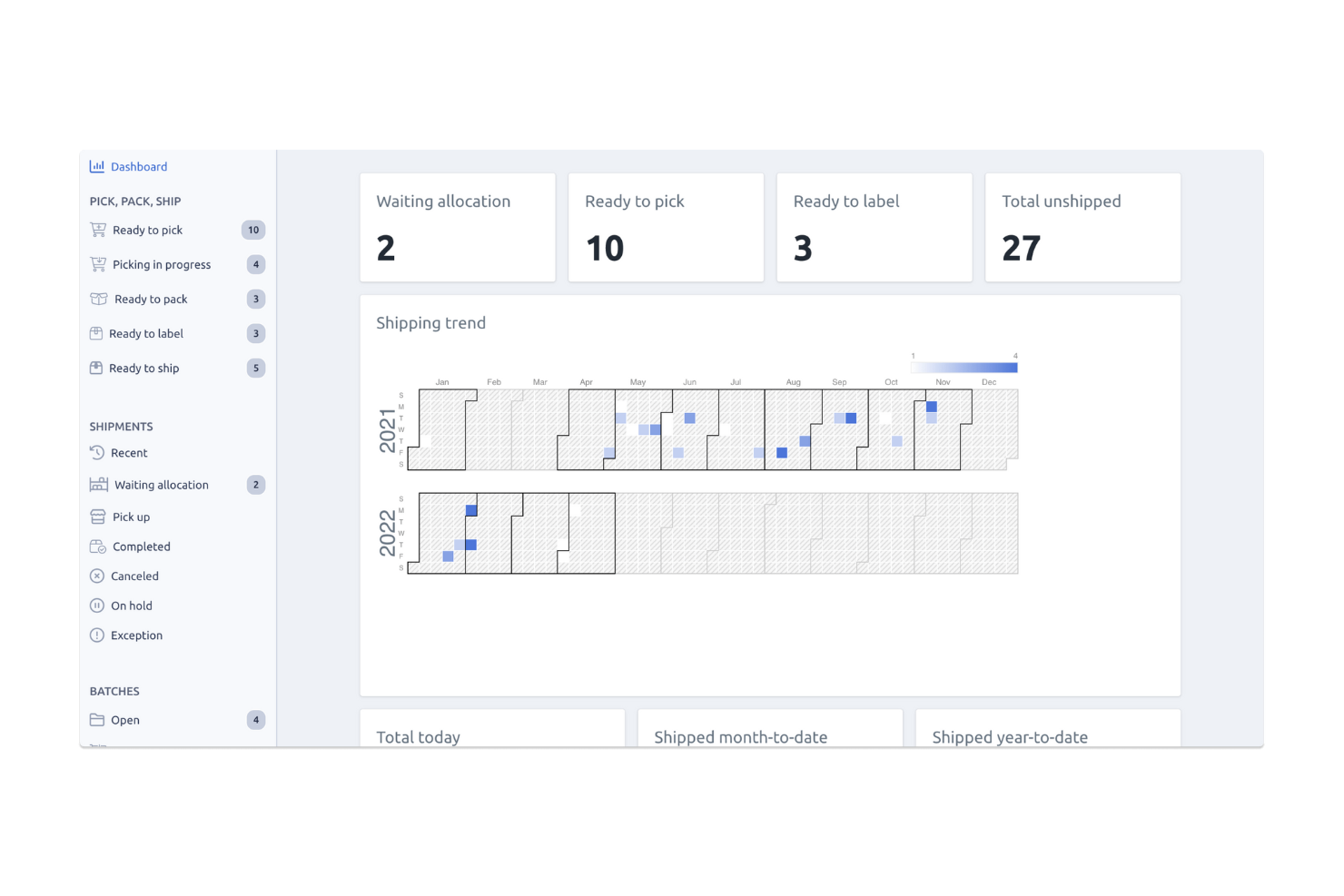
Fulfil is built for ecommerce and wholesale brands that have outgrown basic inventory apps and need real control over multi-warehouse operations.
You centralize orders, inventory, and fulfillment across in-house locations, 3PLs, and Amazon MCF, while keeping Shopify as your front end.
It’s a strong fit if you’re running high order volumes and want warehouse logic, not spreadsheets, deciding what happens next.
Why I Picked Fulfil
I picked Fulfil because it lets you run warehouse operations from a single brain instead of scattered tools—your orders, inventory, and fulfillment rules all live in one system.
You can set automation rules that route orders to the optimal warehouse or 3PL based on stock, destination, or service level, so your team spends less time making ad hoc decisions.
Smart shipping workflows let you compare carrier rates across FedEx, UPS, USPS, and DHL inside the pick/pack flow, so you protect margin without slowing the floor down.
I also like that Amazon Multi-Channel Fulfillment isn’t an afterthought—you can route non-Amazon orders to MCF and sync tracking back to every channel automatically.
For fast-growing Shopify Plus brands, the fixed-price, implementation-led approach helps you get ERP-grade warehouse control without an endless consulting project.
Fulfil Key Features
Beyond the automation you’ll rely on day to day, Fulfil adds planning and control features that keep complex warehouse environments from turning into guesswork.
- Inventory Planning And Replenishment: Use demand forecasting, inbound POs, and restock dates to keep high-velocity SKUs available across all locations.
- Shopify Scale Support: Bypass Shopify limits with unlimited variants, hundreds of locations, and complex bundles managed directly in the ERP.
- Manufacturing And Kitting: Tie BOM-based bundles, light manufacturing, and kitting work orders straight to on-hand stock and available-to-sell quantities.
- Revenue Recognition And Accounting: Apply ASC 606 rules, deferred revenue schedules, and payout reconciliation so your warehouse activity and books stay in sync.
Fulfil Integrations
Integrations include Shopify, Amazon, Amazon Multi-Channel Fulfillment, FedEx, UPS, USPS, DHL, Avalara, and Klarna.
Pros and Cons
Pros:
- Multi-warehouse and 3PL support unify in-house and outsourced fulfillment.
- Native Shopify integration supports large catalogs, many locations, and bundles.
- Warehouse automation rules cut manual routing and packing decisions at scale.
Cons:
- ERP-level implementation project; requires process changes and dedicated internal ownership.
- Best fit for Shopify-led brands; less compelling for non-Shopify stacks.

ShipBob
Best for hands-off fulfillment & shipping rate comparisons

ShipBob gives growing ecommerce brands a way to hand off day-to-day fulfillment while still keeping serious control over inventory, orders, and warehouse operations.
You can run your own facility on ShipBob’s WMS or plug into their global fulfillment network, then compare carrier options and locations to keep shipping fast and margins sane.
It’s a strong fit for multichannel brands that care about both customer delivery speed and the actual math behind their logistics costs.
Why I Picked ShipBob
I picked ShipBob because it lets your team manage inventory, orders, and warehouses in one place while also tapping into a large, distributed fulfillment network when you don’t want to run everything yourself.
You get real-time inventory and order syncing across your sales channels, backed by a WMS that tracks items down to bin locations and supports barcode-based picking to cut mispicks.
You can use ShipBob’s network of warehouses to place stock closer to customers, then compare service levels and carrier options so you’re not guessing about shipping trade-offs. I also like that the same platform supports brands running their own warehouse and those outsourcing to ShipBob, which makes it easier to grow from one setup to a hybrid model.
For warehouse teams, built-in task management and visibility tools make it easier to keep shifts efficient, instead of living in spreadsheets and hallway conversations.
ShipBob Key Features
Beyond the core WMS and fulfillment tools, there are a few features that are especially useful for warehouse-focused operators.
- MiniBob Mobile App: Gives floor staff a mobile interface for receiving, picking, and packing, so scans and updates happen on the spot instead of at a desktop.
- ToolBob Operations Console: Helps supervisors assign tasks, monitor performance, and manage daily workflows from a single dashboard rather than piecing together reports.
- Analytics & Reporting Tool: Surfaces order, inventory, and shipping reports so you can spot issues like aging stock, slow SKUs, or costly shipping lanes before they spiral.
- App Store & Open API: Offers prebuilt apps plus an API so you can extend the WMS, connect additional tools, or support edge cases in your warehouse processes.
ShipBob Integrations
Integrations include Shopify, Shopify Plus, BigCommerce, WooCommerce, Squarespace, Wix, Amazon, Walmart, eBay, and Square.
Pros and Cons
Pros:
- WMS option lets you run your own warehouse on the same tech stack.
- Real-time inventory sync reduces overselling across multiple ecommerce channels.
- Distributed warehouse network helps you offer faster, regionally optimized delivery.
Cons:
- Monthly minimum spend makes it less suitable for very low-volume brands.
- Custom, quote-based pricing and various add-on fees require careful cost analysis.

Hopstack
Best for managing complete order fulfillment lifecycle

Hopstack helps 3PLs and fast-growing ecommerce brands keep complex, omnichannel fulfillment under control—without losing track of orders, SLAs, or inventory accuracy.
It’s built for teams that manage multiple clients, channels, and warehouses, and need tighter control over labor, space, and per-order profitability.
Why I Picked Hopstack
I picked Hopstack because it gives 3PLs and high-volume ecommerce teams the kind of control you normally only get from heavyweight enterprise WMS platforms—without the clunky overhead.
You get tighter accuracy thanks to features like rule-based task assignments and scanner-driven workflows that keep staff synced in real time. I also like that you can manage multiple clients, SLAs, and warehouses from one dashboard, which is a lifesaver for operators juggling multi-site fulfillment.
Its built-in 3PL billing engine turns every task—picks, puts, storage, value-added services—into trackable revenue, helping you charge clients accurately.
If you want stronger operational visibility and cleaner per-order margin tracking, Hopstack gives you the tools to run a more efficient and profitable warehouse.
Hopstack Key Features
Hopstack gives you the warehouse controls you’d expect from an enterprise WMS, with a focus on order-to-ship speed and accuracy for 3PLs and omnichannel brands.
- Distributed Order Routing: Automatically sends orders to the best warehouse based on inventory, proximity, and custom rules.
- Returns Management: Handles RMAs, inspections, and restocking rules so your team can process returns quickly and keep stock data clean.
- Billing and Contracts For 3PLs: Supports client-level billing events (like storage, picks, and value-added services) so you can charge accurately for work performed.
- Hardware Integrations: Connects to scanners, printers, and other warehouse devices to support fast, error-resistant picking and packing.
Hopstack Integrations
Integrations include Shopify, Amazon, eBay, Etsy, BigCommerce, DHL, FedEx, UPS, SAP, NetSuite, and Salesforce.
Pros and Cons
Pros:
- Real-time reporting highlights bottlenecks across receiving, storage, and outbound tasks.
- Intelligent picking and routing rules help reduce travel time and rework.
- Strong marketplace and carrier integrations for multi-client, omnichannel fulfillment.
Cons:
- May feel heavyweight for small, single-location merchants with simple workflows.
- No published pricing; you need to talk to sales for a quote.
Other Warehouse Management Software
These are the rest of my selections for the best warehouse management software.
- Odoo Inventory
Open source warehouse management software
- SphereWMS
For warehouse inventory tracking
- Cadence WMS
For real-time warehouse data tracking
- mobe3 WMS
For optimizing warehouse layout & picking routes
- Highjump
For warehouse automations
- Iptor
For flexible deployment options
- IRMS360
For configurable dashboards
- Cin7 Core
Inventory and warehouse management in one
- Softengine
For mobile warehouse operations
- Agiliron
For CRM integration
- TradeGecko
For QuickBooks inventory integration
- Zoho Inventory
For ease of use
- ShipStation
For streamlining ecommerce shipping
- 3PL Warehouse Manager
For customer-specific charge tracking
- Infor
For product-centric enterprises
- Tecsys
For scalability
- Shipedge
For kitting and manufacturing
- Fishbowl Warehouse
For automated inventory purchasing
- Clear Spider
For vendor‑managed inventory visibility
- Channel Advisor
For product data management tools
- SnapFulfil
For 3PL functionality


Related Ecommerce Software Reviews
If you still haven't found what you're looking for here, check out these tools related to warehouse management software that we've tested and evaluated.
- Ecommerce Platforms
- Inventory Management Software
- Payment Processing Software
- Shopping Cart Solutions
- Order Management Systems
How I Evaluate Free Warehouse Management Software
I evaluate free WMS tools in two layers: the core must-haves—receiving, pick workflows, barcode scanning, a genuine free tier—and the differentiators that make one tool a better fit than another.
Core Functionality (Table Stakes For This List)
When I'm selecting tools for my list, I rank each one on a scale from 0 (does not offer the functionality) to 5 (excels in this area) for each core functionality listed below. Then, I calculate the tool's total score into a percentage. Each tool needs to achieve a minimum total score of 65% to be considered for inclusion.
- Inventory Tracking: I check whether the tool tracks stock quantities and bin locations in real time, so teams can locate a specific SKU across zones without walking the floor.
- Receiving & Putaway: Each tool should support inbound workflows like PO matching and guided putaway—not just a manual stock adjustment after goods hit the shelf.
- Order Picking & Fulfillment: I look for structured pick, pack, and ship workflows that connect to actual orders rather than requiring staff to eyeball a spreadsheet and pull items manually.
- Barcode & SKU Management: Scanning support matters here—whether it's through a mobile camera or a dedicated scanner, the tool should let teams process inventory moves by scan, not by hand.
- Genuine Free Tier: I evaluate whether the vendor offers a truly free plan with ongoing access, not a 14-day trial that locks you out before you've finished loading your catalog.
- Retail & Ecommerce Integrations: The tool should connect to platforms your team already uses—POS systems, ecommerce storefronts, or shipping carriers—so warehouse data flows into your broader retail stack.
Once I have a list of tools that meet this criteria, I consider what sets each platform apart.
Differentiating Factors (What Sets Vendors Apart)
Here's how I compare and contrast different vendors:
Standout Features
Multi-channel sync is a big one—I look for tools that update inventory across your sales channels in real time so a warehouse pick on one platform doesn't leave phantom stock on another. Returns management also matters, especially for retail teams processing high volumes of RMAs back into sellable inventory. I evaluate whether the free tier includes a mobile app, since floor staff need to scan and confirm picks from a handheld device, not a desktop across the warehouse.
Beyond Features
I pay close attention to free tier caps—limits on users, SKUs, or monthly orders determine whether a tool actually fits your operation or just gets you in the door. Implementation effort is another key factor, since many retail teams lack dedicated IT staff and need guided setup or strong self-serve docs to go live quickly. I also check deployment model, because some teams prefer cloud-hosted SaaS while others want the control of a self-hosted open-source install.
What is Warehouse Management Software?
Warehouse management software is a cloud-based system that orchestrates inventory, order fulfillment, and reporting across one site or an entire global network.
It leverages AI-powered forecasting, IoT sensors, robotics, and voice-picking on mobile scanners to automate receiving, picking, packing, and shipping with pinpoint accuracy.
Retailers, manufacturers, and 3PLs use modern warehouse order management systems to handle industry-specific workflows—whether cold-chain compliance, high-volume ecommerce, or custom batch production—so you scale efficiently without the manual headaches.
How to Choose Warehouse Management Software
Picking the right WMS doesn’t have to feel like blind dates with a dozen vendors. Nail down your must-haves, run the software through its paces, and make sure it fits your world—not the other way around.
Use this roadmap to turn your shopping trip into a smooth, no-BS decision.
| Step | What to evaluate | Pro tip |
|---|---|---|
| 1. Define your pain points | List your biggest headaches (stockouts, picking errors, slow growth, global SKUs) and rank them. | Be ruthless—if real-time visibility isn’t a blocker, don’t sweat features tied to it. |
| 2. Map your tech ecosystem | Check integrations with your ERP, ecommerce platform, TMS, CRM, plus voice-picking devices and IoT sensors. | A killer WMS with zero API hooks is just a pretty UI. Demand open-ended connectivity. |
| 3. Test voice-picking & mobile | Run through picking, cycle counts, and put-away on actual scanners or mobile apps. | If your pickers can’t talk back to the system hands-free, you’ll lose more time than you save. |
| 4. Assess cloud & global reach | Verify data-center locations, uptime SLAs, multi-site management, and local compliance (GDPR, CCPA, customs). | “Cloud” without geo-redundancy is just a fancy data hostage situation. |
| 5. Vet industry-specific modules | Look for features built for your niche—cold chain, batch tracking, kitting, pharma compliance, 3PL billing. | Generic ≠ good. Your vertical quirks deserve dedicated workflows. |
| 6. Future-proof vs future flop | Ask about AI/ML roadmaps, robotics integration, voice-picking updates, and IoT expansions. | If their “innovation pipeline” is radio silence for the past two years, move on. |
Next step: Use this chart as your vendor vetting cheat sheet—score each demo on these dimensions, then go with the system that ticks the most boxes (and still makes you smile).
Trends in Warehouse Management Software for 2025
Warehouse management is sprinting into the future, but not every shiny feature delivers the ROI it promises. Here’s what actually matters in 2025—and what you can call BS on:
- Smart automation—AI, robotics & IoT. Focus on AI-driven demand forecasts and IoT sensor alerts that actually cut stockouts and shrinkage, not just hype up your quarterly investor deck.
- Cloud-based SaaS & scalability. Demand geo-redundancy, elastic scaling for seasonal spikes, and predictable subscription pricing—because “cloud” in a single data center is just a fancy outage waiting to happen.
- Voice-picking & mobile-first ops. If your team still juggles clipboards and scanners, you’ve missed the point; voice-guided picking on rugged devices cuts errors by up to 35% and keeps hands—and throughput—free.
- Global reach & multi-site management. Your WMS should handle localized regs (GDPR, customs), multi-currency, and time-zone quirks—otherwise you’re building a Frankenstein stack of regional tools.
- Industry-specific modules. Cold-chain compliance, batch tracing for pharma, or 3PL billing engines: pick a platform built for your vertical, not one retrofitted to your nightmares.
- Predictive maintenance & ML roadmaps. Ask vendors for a 12-month feature calendar—predictive equipment alerts, machine-learning slotting, and voice-tech updates rolling out—not “maybe someday” vaporware.
Features of Warehouse Management Software
Here’s what modern WMS platforms bring to the table—no fluff, all must-haves:
- Real-time inventory tracking. Leverage barcodes, RFID, and IoT sensors to know exactly what’s on your shelves across all sites—no more “ghost stock.”
- Automated order fulfillment. From picking through packing and shipping, workflows fire off based on rules you set, cutting manual steps and mistakes.
- AI-driven forecasting. Machine-learning models analyze seasonality, sales velocity, and returns to predict demand—so you stock smarter, not harder.
- Voice-picking & mobile scans. Hands-free picking on rugged devices speeds up cycle counts and order assembly, freeing your team from clipboards and guesswork.
- Robotics integration. Plug in conveyor bots, AS/RS shuttles, or AMRs to handle repetitive hauls—your staff focuses on exception management, not pallet shuffles.
- Cloud scalability & redundancy. Geo-distributed SaaS keeps your data live worldwide, scales on demand during peak seasons, and slashes IT headaches.
- Global multi-site visibility. Manage warehouses in New York, London, or Tokyo from one pane—complete with multi-currency, customs, and GDPR compliance.
- Industry-specific workflows. Built-in modules for cold-chain, pharma batch tracking, food-grade compliance, or 3PL billing—so you don’t shoehorn generic features.
- Advanced reporting & analytics. Dashboards, customizable KPIs, and drill-downs surface bottlenecks—from picker performance to order-to-ship times—so you fix issues fast.
- Seamless integrations. Open APIs and prebuilt connectors sync with ERP, ecommerce, TMS, CRM, and voice systems—because a WMS that lives in a silo is dead on arrival.
Benefits of Warehouse Management Software
Here’s what you actually gain when you flip the switch on a modern WMS:
- Improved inventory accuracy. Real-time IoT and RFID tracking slashes stockouts and phantom stock—so you stop overordering and underdelivering.
- Faster order fulfillment. Automated pick/pack workflows, voice-guided picking, and robotics integration speed throughput and crush SLAs.
- Better space utilization. AI-driven slotting recommendations optimize storage layouts—fewer wasted aisles, more picks per square foot.
- Scalable global operations. Cloud-native SaaS with geo-redundancy and multi-site dashboards means you can launch in new regions without IT meltdowns.
- Industry-tailored compliance. From cold-chain temperature logs to pharma batch tracing and 3PL billing, built-in modules keep you audit-ready.
- Data-driven decision-making. Custom dashboards and ML-powered analytics surface hidden bottlenecks—letting you pivot before small issues snowball.
- Reduced labor costs. Voice-picking and mobile scans free hands and minds, cutting picker errors by up to 35% and trimming overtime.
- Future-proof flexibility. Regular cloud updates deliver new AI, voice, and robotics features—no forklift upgrades required.
Cost & Pricing of Warehouse Management Software
As with other ecommerce software, WMS providers offer a range of plans for the range of business sizes, needs, and budgets.
There are even free plans for many tools, which are great for brands just getting started or bigger brands wanting to try a WMS out.
As you move up the plan tiers, you get more advanced inventory and order management features, custom integrations, better customer support, automation and AI features, and powerful reporting capabilities.
In the below comparison table, you can see how features shake out for each general plan type and the types of businesses best served by each.
Plan comparison table for warehouse management software
| Plan Type | Average Price | Common Features Included | Best For |
|---|---|---|---|
| Free | $0 | - Basic inventory tracking - Limited orders per month - Community or forum support - Access to foundational features only | Small startups or hobbyists |
| Starter | $50 - $200/month | - Basic inventory tracking - Manual order entry - Basic reporting - Email support | Small to medium businesses |
| Professional | $200 - $800/month | - Advanced inventory management - Barcode scanning - Order management - Basic integrations (ecommerce platforms) - Phone and email support | Growing businesses |
| Enterprise | $800 - $2500+/month | - Comprehensive inventory and order management - Advanced reporting and analytics - Custom integrations (e.g., ERP, CRM) - Automation and AI capabilities - Dedicated account manager - 24/7 support | Large businesses and enterprises |
| Custom | Custom Pricing | - Tailored features based on business needs - Scalability options - Advanced automation and AI - High-level custom integrations - Premium support and consultancy | Enterprises with specific needs |
Whatever plan you choose, you'll want to be aware of the tiers above so you can accommodate future growth. You need a solution that scales with you.
Warehouse Management Software FAQs
Here are answers to some frequently asked questions about warehouse management, warehousing software, and the best practices of warehousing.
How long does it take to implement a WMS and what’s involved?
Most rollouts take six to sixteen weeks, give or take headaches, surprises, and how many spreadsheets you’ve been hoarding.
You’ll be planning, configuring, scrubbing ancient data, training your crew, and pressure-testing every barcode scanner in a real warehouse. Pick a vendor that brings actual onboarding muscle, not just a pretty PDF. Good ones cut the time—and the swearing—in half.
How do I know if my business is ready to upgrade from spreadsheets to a WMS?
If you’re hunting for inventory that should’ve arrived last week, drowning in manual counts, or losing sleep over misshipments, it’s time.
Once your mistakes are costing you more than the software would, or you’re managing more SKUs than your head (or team) can remember, move on. A WMS scales what works—and ditches what breaks—faster than a color-coded spreadsheet ever will.
What integrations should I prioritize when choosing warehouse management software?
Don’t get dazzled by bells and whistles. Focus on what keeps product and data moving: reliable ERP, ecommerce platform, shipping carrier, and accounting tool integrations.
Want to stay ahead of headaches? Get real about EDI, supplier links, and your POS—or you’ll be double-keying orders at 2 a.m. Make your WMS play nice with tech you use all day, not just what looks shiny in demo slides.
How secure and compliant are cloud-based WMS solutions?
Most top-shelf cloud WMS options are locked down with SOC 2 or ISO 27001 badges, robust regional data centers, and built-in tools for GDPR or CCPA compliance.
You get real security without babysitting servers. Still, don’t take their word for it—ask about uptime guarantees and where your data actually lives. Trust, but verify. You’ll sleep better.
How can a WMS help reduce picking and shipping errors?
Good WMS systems kill “I thought that went out” errors. They guide pickers with real-time instructions, barcode scans, and foolproof checks. No more guesswork and way fewer mispacks.
Plus, they track every move, so you know who grabbed what, when, and where. If mistakes happen, you fix them fast—and keep customers from calling you to fix your own mess.
What are common pitfalls during WMS implementation, and how do I avoid them?
Here’s how most teams blow it: They underestimate data cleanup, skip hands-on training, ignore integration quirks, and try to roll out everything at once. The fix? Be brutal about testing, get your crew in the system early, and keep scope tight. A phased launch runs smoother—and nobody quits in a huff.
Can one WMS handle warehouses in multiple countries?
Absolutely—but only if it’s built for it. A truly global system will manage multi-currency orders, local tax rules, customs documentation, and offer localized UIs or language packs. If your demo feels like a U.S. tool shoehorned into other markets, you’ll end up bolting on regional add-ons and overhead.
Additional Warehouse Software Reviews
There are different types of warehouse management software. Here are additional software reviews in case one of them better supports your niche.
- Open Source Warehouse Management Systems
- Best Fulfillment Services (to outsource warehousing)
- Inventory Management Systems
- Pick and Pack Software