

10 Best Cloud Warehouse Management Systems in 2026

The Top Cloud-Based WMS Software to Consider


Managing your warehouse has never been easier, thanks to cloud-based warehouse management systems (WMS) that give you real-time control and flexibility from anywhere.
It’s a far cry from the days of green screen computers running clunky, on-premises software—or, even earlier, relying on pencil and paper to track every pallet and shipment.
Back then, “clouds” were just what threatened to rain on your morning commute, not the technology transforming how warehouses operate.
Today’s cloud-based WMS solutions offer seamless integrations, scalable features, and the freedom to oversee your entire operation from your favorite device—whether you’re on the warehouse floor or relaxing at home.
Having spent over a decade in retail and wholesale warehouses—as an inventory controller, warehouse manager, and international shipping manager—I know firsthand how much of a difference the right system can make.
In this guide, I’ll highlight the top cloud-based warehouse management systems, break down their standout features, and share insights to help you find the best fit for your business.
Why Trust Our Software Recommendations
Our team has been testing and reviewing software since 2012. As retail leaders ourselves, we know how difficult—and important—it is to choose the right software.
For this guide, we evaluated tools using hands-on testing and independent research, scoring tools using our selection criteria.
Our reviews reflect our independent judgment—not a sales pitch.
Cloud-Based WMS Software Comparison Table
The table below compares pricing, trial details, and ideal use cases for my top cloud-based WMS software.
| Tool | Best For | Trial Info | Price | ||
|---|---|---|---|---|---|
| 1 | Best all-in-one solution for small manufacturers | 30-day free trial | From $49/user/month | Website | |
| 2 | For scaling inventory management operations | Free demo available | From $449/month (volume-based pricing) | Website | |
| 3 | Best inventory management with training and onboarding | Free demo available | Pricing upon request | Website | |
| 4 | For simple navigation | 14-day free trial + free demo available | From $129/month (billed annually) | Website | |
| 5 | An integrated cloud based warehouse management system that makes it easy to streamline operations and automate processes | Free demo available | Pricing upon request | Website | |
| 6 | For simple automation | Free demo available | Pricing upon request | Website | |
| 7 | For brief, real-time updates | Free demo available | Pricing upon request | Website | |
| 8 | Best for automated ecommerce workflows | Free demo available | Pricing upon request | Website | |
| 9 | Best for managing and executing a complete order fulfillment lifecycle | Free demo available | Pricing upon request | Website | |
| 10 | For transparent inventory management | Not available | From 4,965 CAD/ 5000 items/ month | Website |
The 15 Best Cloud-Based Warehouse Management Systems for Savvy Retailers, Reviewed
Now the good part—the reviews.
For each of these top cloud-based WMS picks, you’ll learn what it does, why we picked it, the coolest features, and the top integrations.

MRPeasy
Best all-in-one solution for small manufacturers

MRPeasy is an AI-powered MRP software designed for small manufacturers, offering real-time insights and accurate production planning and reporting. It helps companies stay organized, improve equipment utilization, prevent stock-outs, and ensure precise, on-time deliveries.
As a cloud-based warehouse management system, MRPeasy offers a comprehensive all-in-one solution that digitizes warehouse management and integrates seamlessly with sales, manufacturing, and procurement processes. For small manufacturers looking to streamline their workflows, this platform facilitates clear visibility of orders, stock, and every step of the warehousing process.
Notable features include inventory management, stock movements, batch and serial number tracking, and real-time insights into stock levels and replenishment. With everything in a single cloud-based platform, companies can forecast stock needs, boost resource utilization, and automate inventory transactions while also facilitating communication across departments.
Integrations include Amazon, BigCommerce, Crossfire, Dropbox, Google Drive, OneDrive, HubSpot, QuickBooks, ShipStation, Salesforce, Shopify, Zapier, and more.
New Product Updates from MRPeasy
MRPeasy Expands REST API v2 With New Data Endpoints
MRPeasy expands REST API v2 with new endpoints for reports, dashboard data, production resources, stock, and settings. This gives users broader programmatic access to operational data. For more information, visit MRPeasy’s official site.
 .
.
For scaling inventory management operations

Linnworks is a cloud-based warehouse management system that helps businesses of all sizes manage their inventory, orders, and shipping from a single platform. It offers a range of features designed to simplify warehouse management and streamline operations.
One of the standout features of Linnworks is its ability to automate a range of warehouse management tasks, including order processing, shipping label printing, and inventory tracking. It's also very easy to use, even for team members with no prior experience working with warehouse management software.
Linnworks offers integrations with a wide range of e-commerce platforms and marketplaces, including Amazon, eBay, and Etsy, as well as shipping carriers like USPS and FedEx. This allows you to increase efficiency of operations and manage everything from a single platform, which is incredibly helpful for small business owners who are looking to grow.
Linnworks pricing is available upon request. You can also request a free demo.
New Product Updates from Linnworks
Linnworks Adds DMSExpress and Trade Order POS Apps
Linnworks adds DMSExpress and Trade Order POS to its App Store for shipping automation and point-of-sale order creation. These new apps expand fulfillment and sales workflows by connecting multi-carrier shipping and trade order processing directly with Linnworks. For more information, visit Linnworks’ official site.
 .
.
SkuVault
Best inventory management with training and onboarding

SkuVault is a cloud-based inventory management platform with tools to help ecommerce businesses manage their stock, supply chain, and cataloging. Users can manage their inventory across various warehouse locations, transfer inventory, create pick lists, and generate reports on their stock levels. The software can also forecast inventory needs to help you plan your stock and supply chain operations. When it comes to cataloging, there are options to kit and bundle products as well as to list assembled products, making it a flexible solution.
Every plan available comes with onboarding and an online training library to help companies succeed with the software. Additional training packages can also be purchased for those who want even more in-depth support. This helps the software stand apart from the competition, as inventory management systems can be complex and take time to implement and integrate into your operations.
The software integrates with several popular ecommerce and workplace tools including Amazon, BigCommerce, Easyship, eBay, Etsy, Lightspeed, Marketo, Microsoft Dynamics, NetSuite, QuickBooks, Salesforce, ShipWorks, Shopify, Square, and WooCommerce, among others. Plans start at $359/month, and a free demo is available.

For simple navigation

inFlow Inventory is a customizable warehouse management system software that has a clean interface. The solution is well designed, and its layout makes it easy to find different features and interpret data.
This tool enables you to create custom fields, which can help you tailor the software to your warehouse. You can also use CSV files to create spreadsheets, so it’s easy to integrate the solution with your existing warehouse inventory management system.
With inFlow, you can configure your reports so you can see the most important aspects of your operation at a glance.
inFlow costs from $79/month. The solution offers a free trial for 14 days.

An integrated cloud based warehouse management system that makes it easy to streamline operations and automate processes

Acumatica's cloud based warehouse management system (WMS) streamlines warehouse operations in order to minimize potential errors, automate key processes and boost overall productivity. It is designed to modernize your warehouse transactions and maximize operational efficiency. You can effectively manage your unique warehouse requirements in retail, manufacturing, wholesale, e-commerce, and other sectors.
This cloud based warehouse management system offers advanced fulfillment features and capabilities, enabling you to go green and streamline your warehouse operations with proven green alternatives and prioritization. For instance, you also have the option to generate wave or batch pick lists according to the most desirable patch for each available picker. Barcode scanning can be leveraged to streamline and accelerate the picking process while preventing the wrong items from getting picked.
When it comes to packing, the cloud based warehouse management system enables you to provide adequate packaging in terms of size and materials, ensuring the safe transport of orders. The WMS also lets you easily identify and remedy potential errors in items, weight, and order amount, among others. You can also integrate the system with various digital scales and printers for automated weighing and printing of labels and packing slips.
Pricing varies based on the modules used per plan and requires a custom quote.

For simple automation
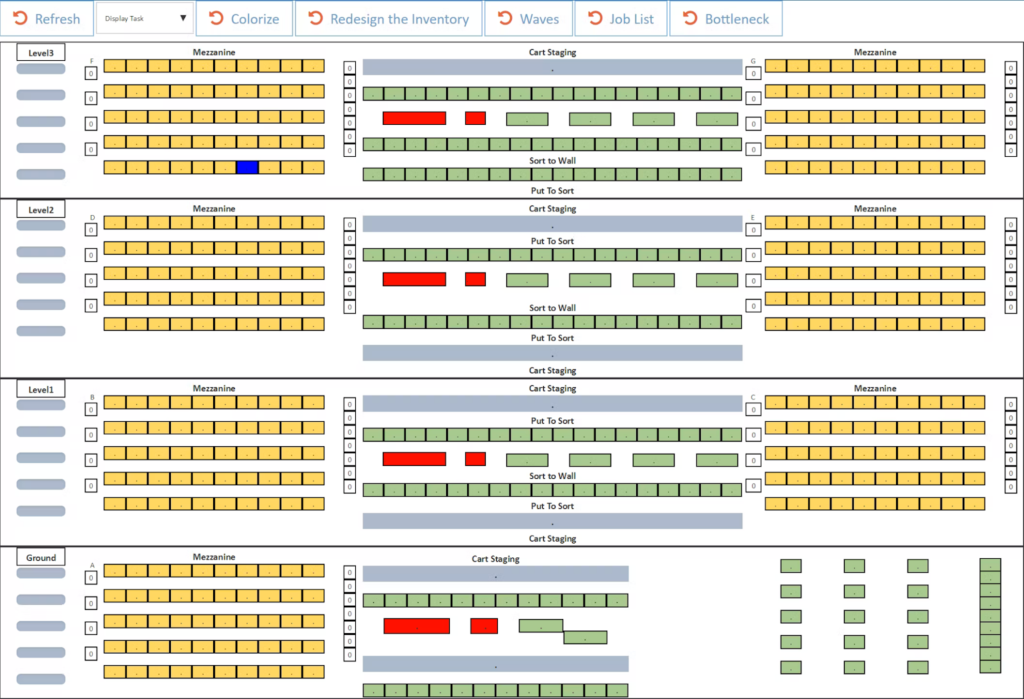
Logiwa is a cloud WMS software that makes it easy to run a digital warehouse. The solution has a bit of a learning curve, but once you get the hang of it, it offers all the features you need to get the most out of your warehouse.
The software’s web-based training is well made and helps your team become familiar with the features they’ll use to do their jobs, whether it’s inventory control, picking, or helping with order fulfillment.
The solution works well on any type of device, and its built-in integrations are easy to access. Logiwa enables you to automate receiving and shipping processes with simple rules.
This can help increase your team’s productivity. Logiwa integrates with Magento, Shopify, Woocommerce, Quickbooks Commerce, carriers, and payment processors.
The software comes with an Open API, so you can tailor it to your needs.
Logiwa offers custom pricing upon demand.
You can schedule a live demo.

Infoplus
For brief, real-time updates
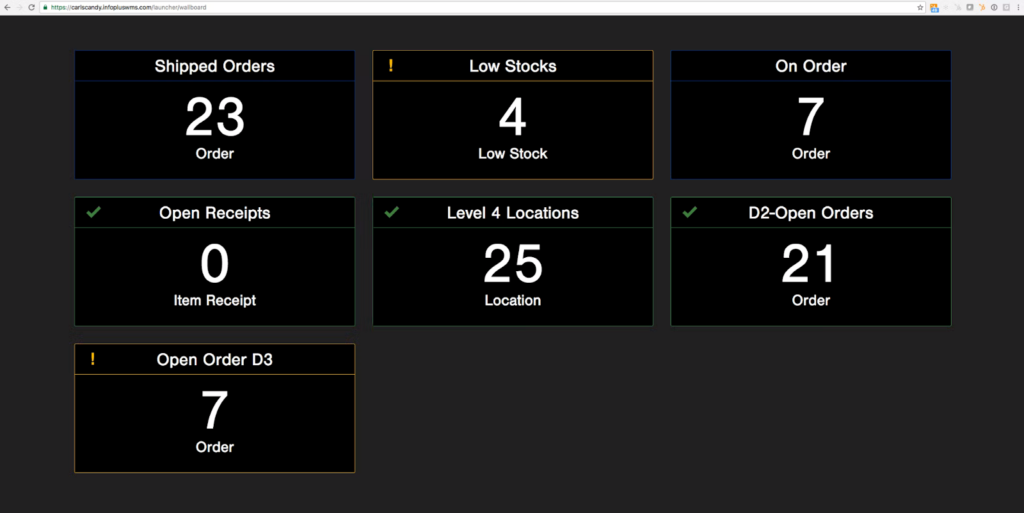
Infoplus is a powerful cloud based warehouse management system that has a simple interface. The tool is easy to navigate and comes with a helpful notification center that brings you up to speed with your organization’s activity.
The solution enables you to create a smooth flow of picking operations and optimize your SKU placements, which helps maximize your facility’s capacity. Besides a standard desktop version, Infoplus also has a native mobile app that allows your team members to perform their jobs with ease.
Infoplus integrates with most major retailers, such as Amazon, eBay, Walmart, carriers, and other supply chain solutions.
Infoplus costs from $695/month. You can schedule a live demo.

Fulfil
Best for automated ecommerce workflows

Fulfil is a cloud-based ERP and warehouse management system built specifically for ecommerce and wholesale operations. It brings together real-time inventory visibility, order management, and fulfillment automation in one scalable platform. As a cloud-based WMS, Fulfil helps modern retailers handle complex fulfillment operations across multiple warehouses and sales channels with ease.
I picked Fulfil because it gives growing ecommerce brands the kind of automation and visibility usually reserved for enterprise systems—without the long implementation time. You can centralize all your order management, automate fulfillment, and track stock across multiple warehouses and channels in real time. That means fewer manual errors, faster shipping, and better customer experiences, even when order volumes spike. It’s also impressive how quickly Fulfil can be deployed—typically in weeks rather than months.
Fulfil includes powerful automation for order routing, inventory replenishment, and returns management, helping you maintain accuracy and speed across fulfillment processes. Its AI-powered reporting tools simplify complex warehouse tasks, like optimizing pick routes or generating performance insights using natural language prompts. Fulfil also ensures data security through SOC 1 and SOC 2 compliance and offers robust manufacturing management for made-to-order products. Integrations include Shopify, Amazon, Etsy, Faire, TikTok Shop, DHL, UPS, FedEx, and the United States Postal Service.

Hopstack
Best for managing and executing a complete order fulfillment lifecycle

Hopstack is a comprehensive warehouse management system and execution platform designed to help businesses automate and optimize end-to-end warehouse operations and order fulfillment processes. It can be used by multi-channel sellers, businesses that rely on 3PL companies, or 3PL companies themselves, and includes order fulfillment, multi-channel order management, and shipping and dispatch tools.
One of the warehouse management features offered in the software is automated replenishment, which ups your stock when it dips to a certain level. Inventory is synchronized across multiple warehouses. You can also create customized workflows for order fulfillment and putaway processes, which can then be used by your team or 3PL company.
You can add multiple profiles in the system with their own workflows and procedures. This is a helpful tool for managing multiple brands, channels, or as a 3PL company.
Other useful features include automated workflows that enhance accuracy, speed up delivery times, minimize errors, and support data-driven decision-making in real time. Their proprietary algorithm can help you optimize picking routes and avoid unnecessary movements, ensuring faster order fulfillment, and their dynamic task allocation tools improve overall operational performance. Plus, their no-code rule engine takes simplicity to the next level, allowing you to easily define complex business rules.
The software integrates with over 70 tools, including Amazon, BigCommerce, eBay, Etsy, DHL, FedEx, Magento, Microsoft Dynamics 365, NetSuite, Purolator, SAP, Salesforce, and dozens of others.
Pricing and a free demo are available upon request.

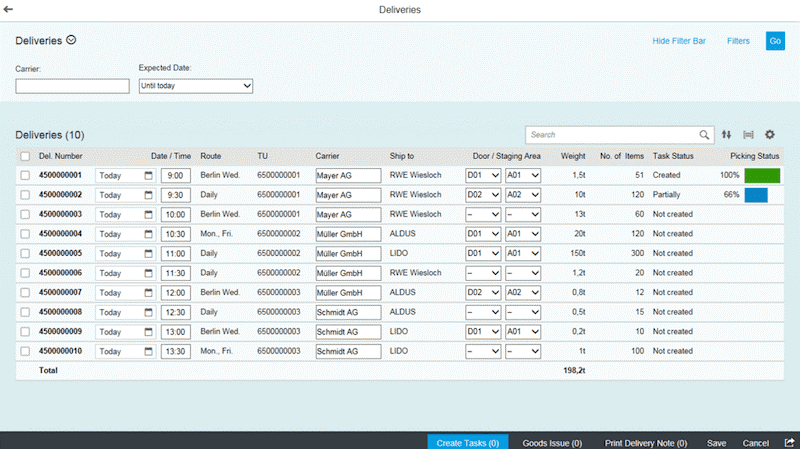
SAP Warehouse Management makes it easy to operate multiple warehouses. The cloud based WMS enables you to manage every aspect of your warehousing operation, regardless of complexity.
The software keeps track of stock transfers and goods receipts, and helps you automate repetitive processes to conserve resources. You can optimize the flow of materials, labor management, yard management, kitting, and designate docking areas with ease.
SAP Warehouse Management integrates with various tools, including carrier solutions, payment processors, and shopping carts.
SAP’s integration library features multiple free integrations you can use.
SAP Warehouse Management costs from 4,965 CAD/ 5000 items/ month. You can request a live demo.
Other Options
Here’s a few more that didn’t make the top list. I didn’t have room for a full review for each of these but they are still worthy of consideration:
- Epicor Warehouse Management
For increased personnel productivity
- Solochain
For adaptable workflows
- 3PL Warehouse Manager
For order allocation automation
- Cadence WMS
For real-time warehouse data monitoring
- WithoutWire
For mobile warehouse management
- Cin7 Core
For manufacturers and product sellers
- Fishbowl
For inventory predictions
- Softengine
For handheld device operations
- Shipedge
Warehouse management software that improves omnichannel order fulfillment through automation and forecasting
- Logis Move WMS
WMS solution that helps you improve multiple supply chain processes through close monitoring and automation
- Excalibur
WMS software that enables 3PL companies with order management, shipping, and receiving stock
- NeverOut
WMS system that helps you reduce labor costs and improve your order fulfillment process
- Ommna
Warehouse management software that improves your order management and warehouse efficiency


Other Software Reviews
Here are some software review lists that are similar to this one that you might want to check out:
- Warehouse Management Software
- Open Source Warehouse Management Systems
- Free Warehouse Management Software
- Order Fulfillment Software
How I Evaluate Cloud Based Warehouse Management Systems
I look at cloud WMS platforms in two layers: the baseline capabilities any qualified tool must have, and the differentiators that matter when your DC is managing multichannel retail fulfillment.
Core Functionality (Table Stakes For This List)
When I'm selecting tools for my list, I rank each one on a scale from 0 (does not offer the functionality) to 5 (excels in this area) for each core functionality listed below. Then, I calculate the tool's total score into a percentage. Each tool needs to achieve a minimum total score of 65% to be considered for inclusion.
- Cloud-Native SaaS Delivery: I check that the platform runs fully in the browser with automatic updates, so warehouse teams aren't stuck coordinating server maintenance during peak season.
- Real-Time Inventory Visibility: Every tool should show live stock levels and bin locations across facilities, the kind of accuracy that prevents overselling during a flash sale across channels.
- Order Fulfillment Workflows: I evaluate how each platform handles the full receive-to-ship cycle, including whether it supports batch picking, wave planning, or zone-based strategies for high-volume DCs.
- Barcode & Mobile Scanning: Floor-level usability matters, so I look for native mobile apps or device-compatible scanning that lets associates process receipts and picks without returning to a desktop terminal.
- Retail & Ecommerce Integrations: The tool should connect to the systems retailers already use, like Shopify, NetSuite, or SAP, through pre-built connectors or a well-documented API.
- Multi-Location & Omnichannel Support: I look at how each platform pools and allocates inventory across warehouses, stores, and online channels to support workflows like ship-from-store or marketplace fulfillment.
Once I have a list of tools that meet this criteria, I consider what sets each platform apart.
Differentiating Factors (What Sets Vendors Apart)
Here's how I compare and contrast different vendors:
Standout Features
Returns handling is a major differentiator. I look for platforms with dedicated reverse logistics workflows that route returned items to restock, refurbishment, or liquidation without manual sorting. Ship-from-store capability also matters, especially for retailers using store inventory to fulfill online orders and cut last-mile delivery times. I evaluate labor management tools too, since the ability to assign tasks dynamically and track picker productivity directly impacts how well a DC handles seasonal volume spikes.
Beyond Features
Pricing structure matters a lot in this space. I check whether a vendor charges per user, per order, or per warehouse, since a transaction-based model can spike costs fast during holiday surges. Scalability ties directly into this. A platform should handle peak-season order volumes without degradation or forcing a tier upgrade mid-cycle. I also evaluate security posture, looking for SOC 2 Type II certification and role-based access controls that let you separate warehouse floor permissions from corporate admin access.
What is a Cloud-Based Warehouse Management System (WMS)?
Cloud-based warehouse management systems are online tools that help you track inventory, manage orders, and handle shipping—all without bulky hardware or complicated setups.
Warehouse managers, operations teams, and logistics pros use these systems to keep tabs on stock, automate routine tasks, and see updates in real time from anywhere with an internet connection.
This means you can cut down on manual work, avoid mix-ups, and keep your warehouse running smoothly—whether you manage one location or several.
How to Choose a Cloud-Based Warehouse Management System (WMS)
Let’s cut to the chase: choosing a cloud-based WMS isn’t about ticking boxes—it’s about finding a system that actually makes your life easier instead of adding to the daily chaos.
Below, you’ll find a table that separates the must-haves from the marketing fluff. Use it to vet vendors, dodge headaches, and land a WMS that’ll keep your operation humming when things get weird.
| What to look for | Why it matters | What to ask/check |
|---|---|---|
| Multi-warehouse management | Handles growth and complexity, not just today’s problems | Can it juggle multiple sites without a meltdown? |
| Seamless integrations | Plays nice with your current tech stack | Does it sync with your ecommerce, ERP, and shipping? |
| Mobile functionality | Your team isn’t chained to desks | Is there a mobile app that actually works? |
| Automation & analytics | Smarter decisions, less manual grunt work | Does it offer AI, automated invoicing, real analytics? |
| Training & support | A slick UI means nothing if your team can’t use it | What onboarding is offered? How fast is support? |
| Transparent pricing | No one likes surprise fees | Are costs clear? Any hidden charges or setup fees? |
| Free trial/demo | Test drive before you commit | Can you kick the tires before signing anything? |
Don’t settle for “good enough.” Use this table to grill vendors, compare options, and make sure you’re picking a WMS that’s built for your business—not just for someone else’s demo.
Cloud-Based WMS Trends for 2026
Warehouse management is changing faster than a TikTok trend, and cloud-based WMS is leading the charge.
To keep your operations ahead of the pack, here are the top trends in cloud-based WMS software for 2026:
- AI and machine learning integration. WMS platforms are getting a brain boost with AI and machine learning, enabling smarter demand forecasting, optimized stock levels, and predictive maintenance. It's like having a crystal ball for your supply chain.
- Robotics and automation. Say hello to your new coworkers: robots. From autonomous mobile robots (AMRs) to collaborative robots (cobots), automation is streamlining tasks like picking, packing, and material handling, boosting efficiency and reducing human error.
- Sustainability initiatives. Green is the new black. WMS solutions are incorporating eco-friendly practices, such as optimizing routes to cut emissions and integrating with electric vehicles, aligning operations with environmental goals.
- Blockchain for transparency. Trust but verify. Blockchain technology is enhancing supply chain transparency, providing secure, immutable records that improve traceability and accountability.
- Urban warehousing. The need for speed. To meet consumer demands for rapid delivery, companies are positioning warehouses closer to urban centers, and WMS platforms are adapting to manage these compact, high-turnover spaces efficiently.
- Wearable technology. Get ready to accessorize. Wearables like smart glasses and wrist-mounted scanners are becoming standard, providing workers with real-time data and hands-free operation, enhancing productivity and accuracy.
- Data-driven decision-making. Advanced analytics within WMS platforms are offering deeper insights into operations, enabling more informed, agile decision-making.
Embracing these trends will not only keep your warehouse operations current but also position your brand as a leader in the always shifting logistics landscape.
Features of Cloud-Based WMS Software
When it comes to choosing a cloud-based WMS, the features are where the rubber meets the road—or, in this case, where the forklift meets the pallet.
The best WMS solutions are packed with tools to streamline your warehouse operations, cut costs, and make your life easier. Here’s a breakdown of the must-have features to look for:
- Mobile app functionality. Access your WMS on the go with mobile apps that let you scan barcodes, track inventory, and manage orders from anywhere. Bonus points if it works so smoothly you can use it with one hand while holding your coffee in the other.
- Multi-warehouse management. Juggling inventory across multiple locations? A good WMS will let you monitor stock levels, transfer items between warehouses, and keep everything in sync without breaking a sweat.
- AI-powered forecasting. Smarter systems use AI to predict demand, helping you optimize inventory levels, avoid overstocking, and always have what customers need, when they need it.
- Integration capabilities. The best WMS doesn’t just work on its own—it plays well with others. Look for seamless integrations with your ecommerce platform, ERP, and shipping tools for a unified workflow.
- Automated invoicing. Simplify your billing process with automatic invoice generation, rate calculations, and payment tracking to save time and reduce manual errors.
- Advanced security protocols. Your data is gold, and a WMS with features like encryption, multi-factor authentication, and secure backups ensures it stays safe.
- Robust analytics and reporting. Insights are everything. A solid WMS should offer dashboards and customizable reports to track key metrics and identify opportunities for improvement.
- Customizable workflows. No two warehouses are the same. The right WMS lets you adapt workflows and processes to fit your unique needs.
- User-friendly interface. If the system feels like it was designed for NASA engineers, it’s a no-go. Look for an intuitive interface that your team can pick up quickly.
The right features can transform your warehouse into a productivity powerhouse. Whether it’s automating tedious tasks or giving you insights at a glance, a feature-rich WMS sets you up for success.
Top Benefits of Cloud-Based WMS Solutions
A cloud-based WMS doesn’t just improve your warehouse—it transforms the way you run your entire operation.
From boosting efficiency to cutting costs, here’s how the right WMS can deliver game-changing benefits:
- Cost efficiency. Say goodbye to expensive hardware and IT infrastructure. Cloud-based systems run on subscription-based pricing, so you only pay for what you need—and upgrades are automatic, not an extra line item.
- Scalability. Whether you’re managing one warehouse or a growing network, a WMS scales with your business. It adapts to seasonal spikes, new locations, and fluctuating inventory needs without breaking a sweat.
- Real-time data access. Get instant visibility into your operations. From inventory levels to order statuses, cloud-based systems let you make faster, smarter decisions with data that’s always up to date.
- Improved accuracy. Features like barcode scanning, automated picking, and AI-driven forecasting drastically reduce errors, making your operation more precise and less prone to costly mistakes.
- Enhanced flexibility. Manage your warehouse from anywhere—whether that’s your desk, a coffee shop, or halfway across the globe. A cloud-based WMS gives you the freedom to stay in control no matter where you are.
- Streamlined operations. Automating repetitive tasks like invoicing and inventory counts frees up your team to focus on higher-value work. Efficiency goes up, frustration goes down.
- Seamless integration. Cloud-based systems are designed to work with your existing tools, from e-commerce platforms to shipping software, creating a cohesive, connected ecosystem.
- Better customer satisfaction. Faster order processing, fewer errors, and reliable delivery times mean happier customers—and that’s good for business.
- Robust security. Cloud providers use advanced encryption, multi-factor authentication, and frequent backups to ensure your data is protected against breaches and downtime.
- Lower environmental impact. Some systems support green initiatives, like optimizing delivery routes or reducing energy usage, helping you meet sustainability goals.
A cloud-based WMS isn’t just a software upgrade—it’s an operational upgrade.
Cost & Pricing for Cloud-Based Warehouse Management Systems
When it comes to managing your warehouse operations, selecting the right cloud-based WMS is a pivotal decision that can significantly impact your efficiency and bottom line.
These systems are typically offered through subscription-based models, with pricing structures designed to accommodate various business sizes and operational needs.
Understanding the available plans and their associated costs is essential to make an informed choice that aligns with your business objectives.
Plan comparison table for cloud-based WMS software
Here’s what you’re actually paying for at each tier—and what “free” really means, before you start dreaming about zero-dollar logistics. Use this as your cheat sheet when grilling vendors.
| Plan type | Average price per user/month | Common features and limitations | Best for |
|---|---|---|---|
| Free | $0 (with major caveats) | Basic inventory/order management, one user, ~100 items, capped locations; no integrations, DIY support. Outgrown quickly by any real business. | Micro operations, side hustles, “try before you buy” |
| Starter | $75–$150 | Inventory management, order processing, basic reporting, some support; limited users/warehouses. | Small businesses and startups |
| Professional | $200–$350 | Advanced analytics, integrations (ecommerce, ERP, shipping), multi-warehouse support, automation, improved support. | Growing teams, complex operations |
| Enterprise | $400+ (plus setup fees) | Custom workflows, dedicated support, AI forecasting, full API access, premium integrations, unlimited users/warehouses. | High-volume, multi-site, or highly customized operations |
A “free” WMS is a sandbox, not a solution. The minute you need integrations, automation, or actual support, you’re moving up the ladder.
If you’re running a real business, budget for at least the starter or pro tier—and always ask vendors to spell out what’s actually included (and what’s conveniently left out).
Other costs to consider
Beyond the subscription fees, it's important to account for additional costs that may arise:
- Implementation and setup fees. Initial costs for system configuration, data migration, and staff training can range from $5,000 to $20,000, depending on the complexity of your operations.
- Customization charges. Tailoring the WMS to meet specific business requirements may incur extra fees, typically between $2,000 and $10,000.
- Support and maintenance. While some plans include basic support, premium support services or additional maintenance may cost an extra $50 to $200 per user per month.
- Hardware investments. Although cloud-based systems reduce the need for extensive on-premise hardware, you might still need devices like barcode scanners or mobile terminals, with costs varying based on the equipment required.
By carefully evaluating these factors, you can select a cloud-based WMS that not only fits your operational needs but also aligns with your financial strategy, ensuring a seamless and cost-effective integration into your business processes.
Cloud-Based WMS FAQs
Question time! While I can’t call on everyone here raising their hands (because I can’t actually see you), I’ve come up with some questions that are probably on your mind. Hope I’m right!
How secure is my data in a cloud-based WMS?
Yes, your data is secure with a reputable cloud-based WMS. Providers use encryption, strict access controls, and regular security audits to protect sensitive inventory and customer information, whether you run an online or physical store.
Look for vendors who meet standards like SOC 2 or ISO 27001, and always ask about backup options in case you need to recover data quickly.
How long does it take to implement a cloud-based WMS?
You can usually get up and running in a few weeks to a few months, depending on how complex your retail operation is. Smaller stores or simple ecommerce setups move faster, while multi-location retailers may need more time for integration and staff training.
For a smoother rollout, get clear onboarding help from your WMS provider and plan for hands-on staff demos.
Can a cloud-based WMS integrate with my existing systems?
Yes, most cloud-based WMS platforms connect with popular retail systems like point-of-sale, ecommerce platforms, accounting tools, and shipping carriers. APIs or pre-built integrations make it easier to sync inventory and orders across all your sales channels. Always confirm that your must-have tools are supported before you buy.
How does a cloud-based WMS help with managing omnichannel inventory?
A cloud-based WMS tracks inventory in real time across all your locations—stores, warehouses, and online channels. This visibility helps you avoid overselling, quickly transfer stock, and promise accurate delivery times to customers. The system automatically updates inventory levels as orders are placed, so you won’t miss a sale or lose track of items.
What happens if there’s an internet outage in my warehouse?
Most cloud-based WMS platforms need internet to function, but some offer limited offline modes for basic tasks. If your connection drops, you might only be able to scan or receive stock, then sync everything when back online.
For a busy retail warehouse, investing in backup internet or LTE hotspots keeps operations moving with minimal disruption.
Can a cloud-based WMS scale with my business during peak seasons?
Yes, cloud-based WMS systems are built for scalability. You can add new users, locations, or sales channels without big hardware upgrades.
During peak times like holidays or big promotions, the platform can handle high order volumes and let your team pick, pack, and ship efficiently, so you won’t fall behind.
