
Los 10 mejores programas de gestión de inventario minorista para 2026

El mejor software de inventario minorista para simplificar las operaciones


El software de gestión de inventario minorista mantiene precisos tus niveles de existencias, agiliza tus pedidos y protege tus márgenes, en tiendas, almacenes y canales.
Responde a las preguntas del mundo real que los minoristas se hacen a diario: ¿Tenemos suficiente? ¿Está en el lugar correcto? ¿Podemos enviar este producto de verdad hoy?
Tanto si gestionas una marca DTC con lanzamientos impulsados por TikTok como si diriges una cadena tradicional con decenas de tiendas, la plataforma adecuada te ofrece control sin caos.
Se acabó el apaño de las hojas de cálculo. Se acabaron los momentos de «¿Dónde demonios está ese envío?».
He gestionado inventarios en salas de exposición, almacenes y cadenas logísticas globales. He visto lo que se rompe cuando fallan los sistemas y lo bien que funcionan cuando no lo hacen. ¿Las opciones que aparecen a continuación? Son las que realmente resisten bajo presión.
Encontremos un sistema que haga que el inventario sea menos caótico y más rentable.
Por qué confiar en nuestras recomendaciones de software
Nuestro equipo lleva probando y evaluando software desde 2012. Como líderes del sector retail, sabemos lo difícil —y lo importante— que es elegir el software adecuado.
Para esta guía, evaluamos las herramientas mediante pruebas prácticas e investigación independiente, puntuando las herramientas según nuestros criterios de selección.
Nuestras reseñas reflejan nuestro criterio independiente, no un discurso de ventas.
Tabla comparativa de software de gestión de inventario minorista
Veamos cómo se comparan estas opciones en cuanto a precios, información sobre pruebas y casos de uso ideales.
| Tool | Best For | Trial Info | Price | ||
|---|---|---|---|---|---|
| 1 | Ideal para crear SKUs únicos y llevar el control de tu inventario | Demostración gratuita disponible | Precio a consultar | Website | |
| 2 | Mejor para soporte omnicanal de extremo a extremo | Demo gratuita disponible | Precio a consultar | Website | |
| 3 | Ideal para escalar la gestión del inventario minorista | Demo gratuita disponible | Desde $449/mes (precio según volumen) | Website | |
| 4 | Ideal para gestión de inventario en varias ubicaciones | Prueba gratuita + demo gratuita disponible | Desde $59/mes | Website | |
| 5 | Ideal para pequeñas empresas que buscan inventario + POS en uno | Demo gratuita disponible | Desde Interchange + 0,40% + 8¢ (varía según el volumen) | Website | |
| 6 | Ideal para gestión de operaciones sobre activos para mayor fiabilidad | Prueba gratuita + demo gratis disponible | Desde $24/usuario/mes | Website | |
| 7 | Mejor para la gestión empresarial integral | Prueba gratuita de 14 días + plan gratuito + demo gratuita disponible | Desde $29/mes (facturado anualmente) | Website | |
| 8 | Ideal para conectar todos los canales de venta en un solo lugar | Prueba gratuita de 14 días | Desde $349/mes | Website | |
| 9 | La mejor opción para una amplia selección de servicios gratuitos de lanzamiento | Prueba gratuita de 30 días disponible | Los planes empiezan en $995/usuario | Website | |
| 10 | Ideal para reducir errores de previsión con optimización de inventario | Demo gratuita disponible | Precio a consultar | Website |

El mejor software de gestión de inventario minorista, analizado
Estas son mis principales opciones de software de gestión de inventario minorista, incluido el motivo por el que las elegimos, sus principales funciones e integraciones, sus ventajas y desventajas, y capturas de pantalla de la herramienta en uso.

SkuVault
Ideal para crear SKUs únicos y llevar el control de tu inventario
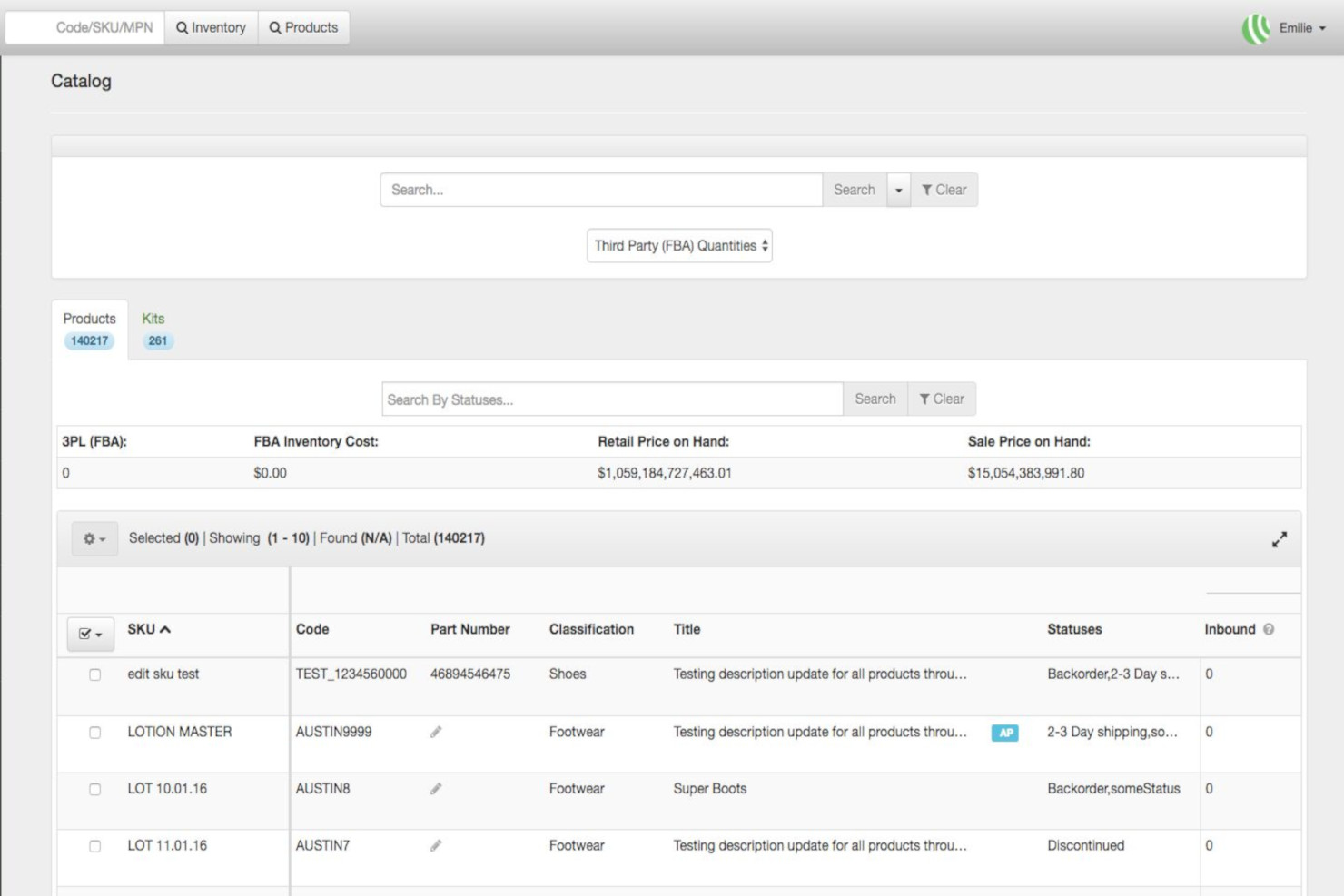
SkuVault está diseñado para minoristas que gestionan tiendas, almacenes y marketplaces y que están cansados de la falta de stock, errores de selección y momentos de “¿dónde fue a parar ese palé?”.
Centraliza tu inventario a través de todos los canales, vincula cada movimiento a un código de barras y te proporciona control a nivel de SKU para que puedas mantener las estanterías abastecidas, los pedidos precisos y a los compradores satisfechos.
Por qué elegí SkuVault
Elegí SkuVault porque trata el inventario como un flujo de trabajo físico, no solo como números en una hoja de cálculo: escaneas los artículos al entrar y salir de las ubicaciones, por lo que los recuentos reales reflejan lo que hay en tus contenedores.
Puedes establecer puntos de reorden por SKU y ubicación, y luego usar los informes de reorden integrados para decidir qué comprar basándote en datos concretos en vez de intuiciones. Tu equipo puede seleccionar y empacar pedidos con flujos de trabajo guiados por códigos de barras que verifican cada artículo contra la orden, lo que reduce errores en los envíos y devoluciones.
También obtienes sincronización en tiempo real de las cantidades entre tus almacenes, tiendas físicas y canales online, por lo que es mucho menos probable que sobre vendas durante promociones o temporadas altas.
Para minoristas en expansión hacia operaciones multialmacén u omnicanal, te proporciona la estructura necesaria para mantener el inventario controlado a medida que crece el volumen de pedidos.
Funciones clave de SkuVault
Más allá de las operaciones guiadas por códigos de barras, hay algunas herramientas específicas de inventario en las que los minoristas realmente confían día a día.
- Herramientas de conteo cíclico: Realiza recuentos continuos por ubicación o SKU para mejorar la exactitud sin cerrar tu almacén.
- Pronóstico de inventario: Utiliza el historial de ventas y los tiempos de entrega para proyectar la demanda futura y priorizar el reabastecimiento.
- Listas de selección de inventario: Genera listas de pickeo optimizadas para que el personal trabaje por zonas de forma eficiente y reduzca el tiempo de desplazamiento.
- Analítica avanzada e informes: Haz seguimiento de KPIs como tasa de cumplimiento, faltantes y antigüedad del inventario para guiar tus decisiones de compra.
Integraciones de SkuVault
Las integraciones incluyen Shopify, WooCommerce, BigCommerce, Magento, Amazon, eBay, Walmart Marketplace, QuickBooks, NetSuite y ShipStation.
Pros and Cons
Pros:
- La recepción y selección guiada por códigos de barras reduce drásticamente errores de picking y envío.
- La sincronización de inventario en tiempo real entre canales reduce el riesgo de sobreventa en picos de demanda.
- La gestión multilocalización te ayuda a cumplir los pedidos desde el almacén más eficiente.
Cons:
- La interfaz parece anticuada, lo que puede alargar la formación del personal de almacén.
- Los informes personalizados son limitados si buscas analíticas realmente a medida.

Mejor para soporte omnicanal de extremo a extremo
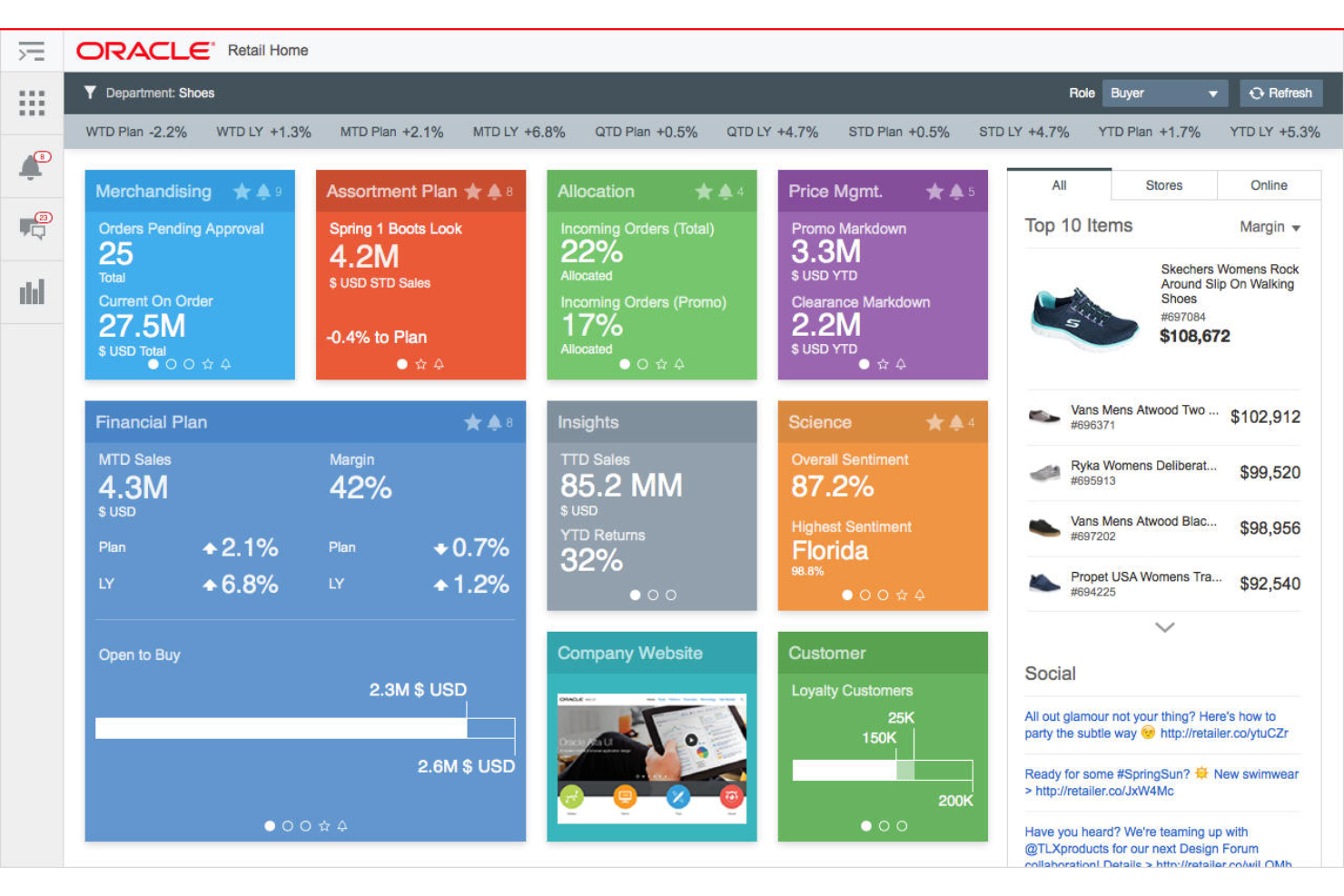
Oracle Retail reúne tus operaciones de comercialización, planificación e inventario de tiendas en una única columna vertebral en Oracle Cloud, para que no tengas que conciliar media docena de cifras de stock contradictorias.
Está diseñado para grandes minoristas con varias enseñas que necesitan pronósticos de demanda precisos, control estricto del reabastecimiento y visibilidad en tiempo real a través de tiendas, centros de distribución y canales de comercio electrónico.
Por qué elegí Oracle Retail
Elegí Oracle Retail porque proporciona a tu equipo una única fuente de datos verídicos del inventario a través de Merchandising Foundation Cloud Service, de modo que los datos de artículo, ubicación y stock se mantienen alineados en todo el negocio.
Obtienes cantidades y tiempos de compra más precisos mediante Inventory Planning Optimization Cloud Service, que utiliza aprendizaje automático para perfeccionar los pronósticos según ventas, promociones y estacionalidad.
Los equipos de tienda se benefician de Enterprise Inventory y Store Inventory Operations, que mantienen sincronizadas en casi tiempo real las existencias disponibles, transferencias y recepciones con la oficina central.
Para minoristas omnicanal, Oracle Retail integra el inventario en la gestión de pedidos y precios, por lo que el click-and-collect, el envío desde tienda y los descuentos se basan en la disponibilidad real y no en datos obsoletos. Es una opción sólida si ya utilizas Oracle Cloud y necesitas disciplina en el inventario a escala empresarial.
Características clave de Oracle Retail
Más allá de sus capacidades de pronóstico y reabastecimiento, Oracle Retail incluye herramientas centradas en el inventario que ayudan a las grandes organizaciones minoristas a gestionar las operaciones diarias sin perder el control del stock.
- Paneles de inventario según el rol: Muestra indicadores clave de stock, ventas y márgenes relevantes para compradores, planificadores, finanzas y operaciones de tienda en un solo lugar.
- Aplicaciones móviles de inventario para tienda: Permite al personal realizar conteos, recepciones y transferencias desde dispositivos portátiles para que las cantidades en estantería se mantengan precisas.
- Conciliación automática de facturas: Compara órdenes de compra, recepciones y facturas para detectar discrepancias que distorsionen el valor del inventario y el margen.
- Herramientas de precios según ciclo de vida y rebajas: Vincula cambios de precio y eventos de rebaja a la posición de inventario para liquidar stock envejecido de forma rentable.
Integraciones de Oracle Retail
Las integraciones incluyen Oracle Merchandising Foundation, Oracle Pricing, Enterprise Inventory, Store Inventory Operations, AI Foundation, Order Management Suite, Xstore POS, Warehouse Management Cloud, Customer Engagement y Data Store.
Pros and Cons
Pros:
- La previsión de demanda potenciada por IA afina las cantidades y tiempos de compra en todos los canales.
- La integración estrecha con la suite Oracle Retail centraliza datos de tiendas y centros de distribución.
- Admite surtidos complejos entre varios países, monedas y estructuras de impuestos a gran escala.
Cons:
- Los altos costes de licencias e implementación lo hacen poco viable para cadenas de menor tamaño.
- Las capacidades más avanzadas requieren un entorno centrado en Oracle, lo que limita la flexibilidad con otras suites.

Ideal para escalar la gestión del inventario minorista
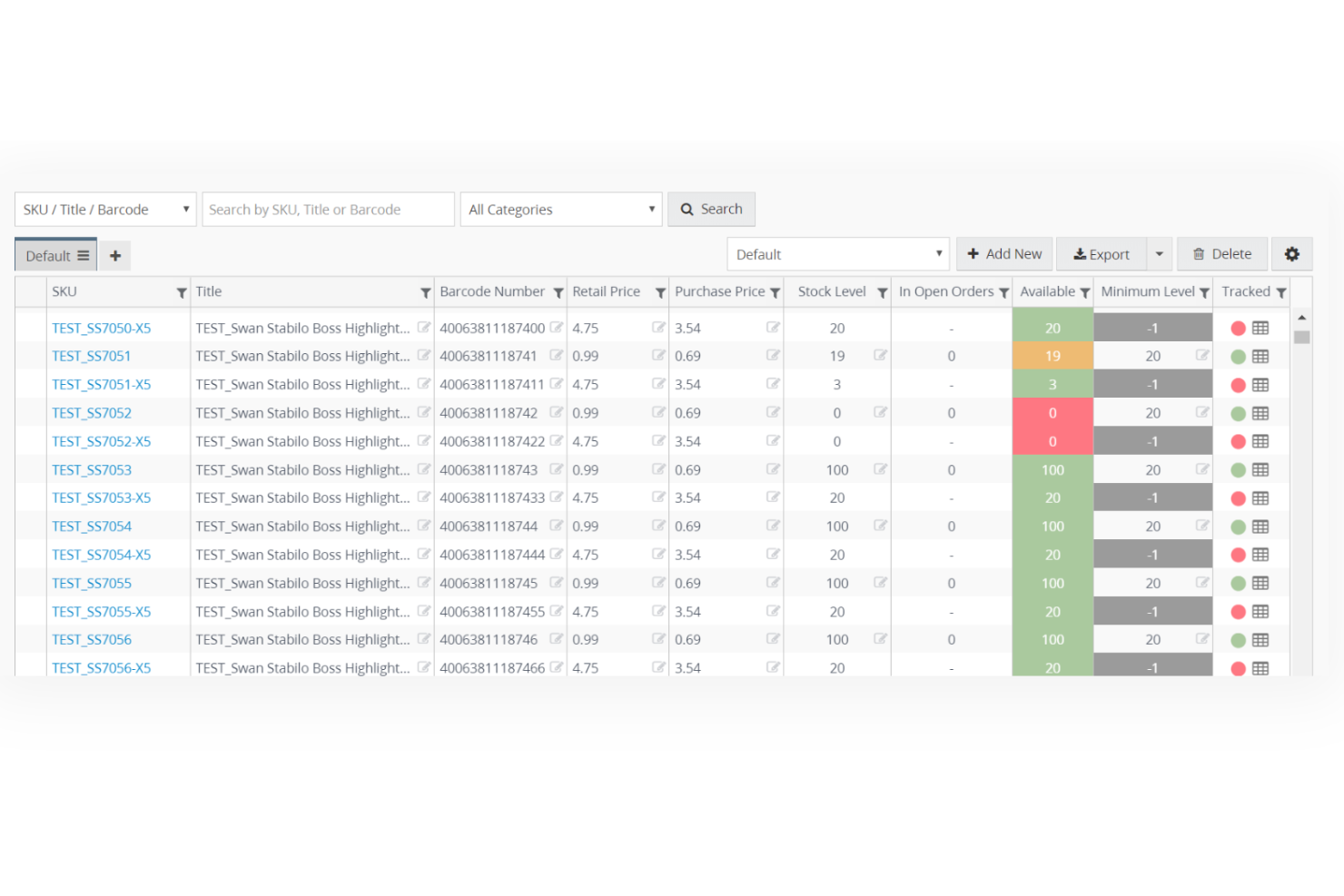
Linnworks ofrece a los minoristas en crecimiento un solo lugar para controlar el inventario, los pedidos y las listas de productos en todos los canales en línea que te interesan.
Está diseñado para equipos que gestionan grandes cantidades de SKUs, múltiples almacenes y el caos de los marketplaces, por lo que puedes ver el stock, evitar la sobreventa y enviar datos precisos de inventario a todas partes desde un solo sistema.
Por qué elegí Linnworks
Elegí Linnworks porque te permite tratar el inventario como un único fondo compartido entre marketplaces, tiendas web y ubicaciones físicas, en lugar de tener que manejar hojas de cálculo de existencias separadas por canal.
Puedes proteger tus márgenes con reglas de automatización que dirigen los pedidos al almacén correcto, reservan stock para los canales prioritarios y limitan los listados de mayor riesgo antes de que se sobrevendan. Tu equipo obtiene niveles de stock en tiempo real ligados directamente a la actividad de ventas, para que las órdenes de compra se basen en la demanda real en vez de en suposiciones.
También me gusta que puedas utilizar previsiones e historial de ventas para establecer puntos de reabastecimiento más inteligentes para SKUs de alta y baja rotación.
Para operadores ocupados, su panel de control central reúne pedidos, inventario y cumplimiento para que puedas detectar problemas a tiempo y solucionarlos antes de que los clientes se den cuenta.
Principales funcionalidades de Linnworks
Estas son algunas herramientas específicas de inventario que importan cuando escalas tus operaciones minoristas.
- Control multi-almacén: Haz seguimiento del stock en múltiples ubicaciones, transfiere inventario entre sitios y decide qué almacén debe cumplir con cada pedido.
- Preparación y empaque digital: Utiliza listas de preparación digitales y flujos de trabajo por lotes para que los equipos de almacén procesen los pedidos más rápido y con menos errores.
- Escaneo de códigos de barras: Soporta la recepción, conteo y ajustes basados en códigos de barras, para que la precisión del inventario no dependa de la entrada manual de datos.
- Paneles de inventario e informes: Supervisa el rendimiento de los SKUs, el stock envejecido y el nivel de ventas por canal mediante informes y paneles configurables de inventario.
Integraciones de Linnworks
Las integraciones incluyen Amazon, eBay, Walmart, Shopify, Magento, BigCommerce, Etsy, QuickBooks Online, ShipStation y WooCommerce.
Pros and Cons
Pros:
- Centraliza el inventario de marketplaces, tiendas online y almacenes en un solo sistema.
- Las reglas de automatización reducen la sobreventa y los pedidos mal enviados a mayor volumen.
- Las sólidas integraciones de marketplace y envíos soportan catálogos multicanal complejos.
Cons:
- No hay un precio transparente de autoservicio; necesitas solicitar una cotización.
- Curva de configuración e incorporación más pronunciada para equipos pequeños o con poca experiencia técnica.
New Product Updates from Linnworks
Linnworks Adds DMSExpress and Trade Order POS Apps
Linnworks adds DMSExpress and Trade Order POS to its App Store for shipping automation and point-of-sale order creation. These new apps expand fulfillment and sales workflows by connecting multi-carrier shipping and trade order processing directly with Linnworks. For more information, visit Linnworks’ official site.
 .
.
Ideal para gestión de inventario en varias ubicaciones
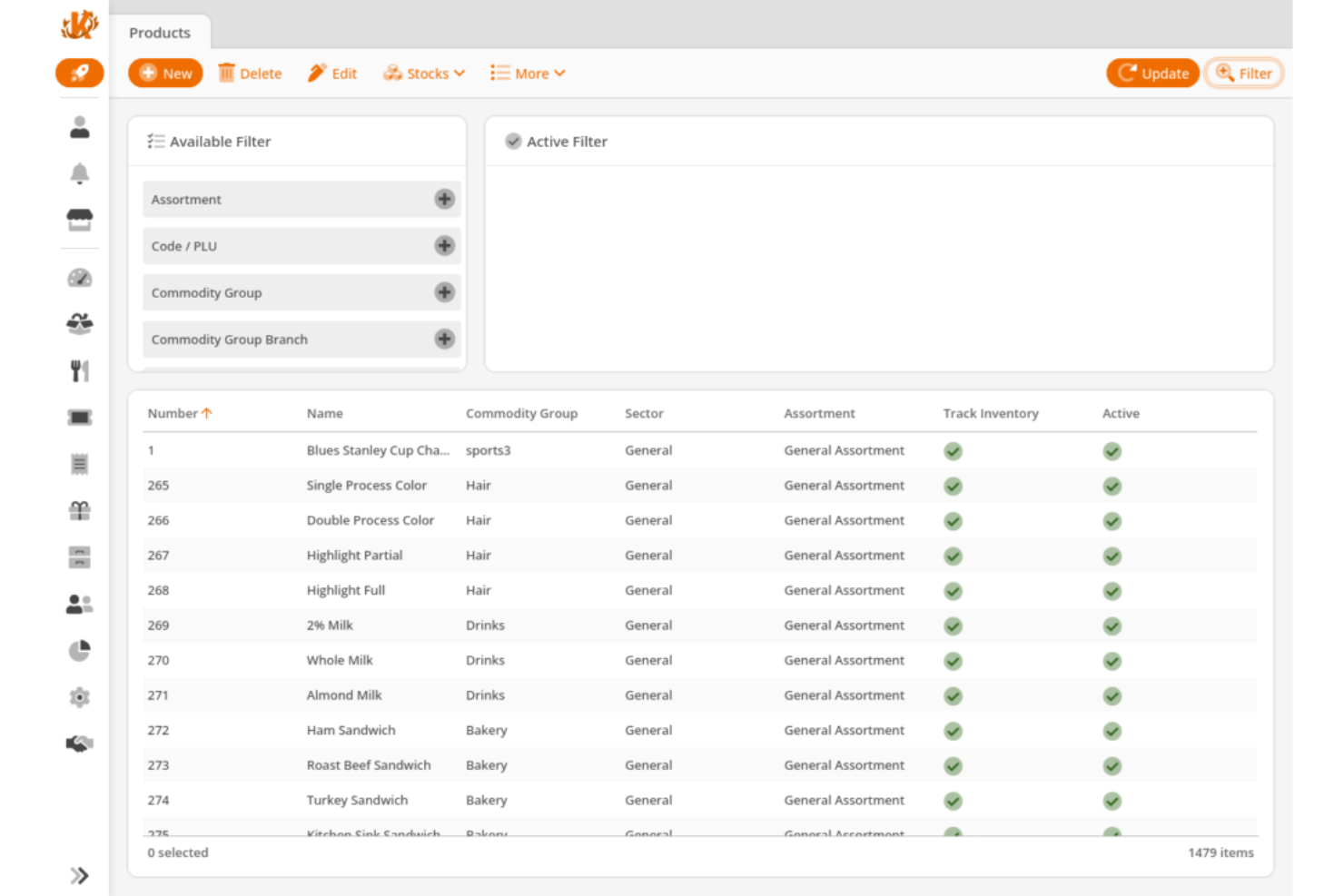
KORONA POS ayuda a los minoristas con varias sucursales a tomarse en serio el inventario: un catálogo compartido, controles a nivel de ubicación y las analíticas que necesitas para dejar de sobrecomprar en una tienda mientras te quedas sin existencias en otra.
Es ideal para minoristas con múltiples locales o surtidos complejos que quieren un reabastecimiento más ajustado, menos conteos manuales y visibilidad de lo que realmente se vende en toda la red.
Por qué elegí KORONA POS
Elegí KORONA POS porque te permite gestionar todas tus ubicaciones desde un solo catálogo de productos unificado, manteniendo a la vez precios y niveles de stock específicos por tienda, lo que hace que las transferencias y la apertura de nuevas sucursales sean mucho menos caóticas.
El sistema calcula los niveles ideales de recompra basándose en el historial de compras, las temporadas y las tendencias de demanda, para que puedas mantener los estantes llenos sin inmovilizar efectivo en productos de bajo movimiento.
El seguimiento de envíos incorpora notificaciones de proveedores y te ayuda a detectar faltantes en cuanto llega una entrega, en lugar de semanas después durante una auditoría manual. Los controles por permisos ocultan los valores esperados de inventario al personal de atención y separan las tareas de conteo y ajustes, lo cual es muy útil si la disminución de inventario alguna vez te ha desvelado.
También obtienes informes de inventario y ventas en tiempo real por sucursal, para ver rápidamente productos estancados, los más vendidos y dónde reasignar el stock en vez de recurrir directamente a rebajas.
Funciones clave de KORONA POS
Además del control multipunto, incluye herramientas de inventario a las que los minoristas realmente recurren semana a semana.
- Aplicación móvil de inventario: Permite que el personal realice conteos y consulte informes de productos desde el POS o un dispositivo móvil, reduciendo el uso de hojas y la importación de hojas de cálculo.
- Notificaciones de seguimiento: Señala problemas como conteos negativos o bajo rendimiento de productos para que tu equipo investigue antes de que afecten al cliente.
- Conteo automatizado: Genera listas de stock programadas para conteos cíclicos diarios o semanales, repartiendo el inventario físico durante el año en vez de hacer todo en una maratón dolorosa.
- Herramientas de etiquetas y códigos de barras: Permite varios códigos por artículo e imprime etiquetas o tags directamente desde los recibos, garantizando la coherencia de los códigos al mover los productos.
Integraciones de KORONA POS
Las integraciones incluyen Bookkeep, Octopus Bridge, Card Market, Bottlecapps, bLoyal, BlockChyp, Sekure, NearSt, WooCommerce y QuickBooks Online Advanced.
Pros and Cons
Pros:
- El catálogo centralizado de productos unifica los SKU a la vez que mantiene controles en cada tienda.
- La lógica automática de reposiciones utiliza historial y estacionalidad para definir niveles óptimos de stock.
- La app móvil de inventario y las opciones de recepción flexibles permiten conteos frecuentes y precisos.
Cons:
- La app móvil de inventario y algunas funciones avanzadas están en los planes de mayor precio.
- Las conexiones más profundas con ecommerce suelen requerir servicios adicionales y configuración extra.
New Product Updates from KORONA POS

KORONA POS Inventory Updates: CSV Import, Multi-OU, Filters & API
KORONA POS adds Stock Receipt imports, multi-location stock order sourcing, warehouse stock verification for inventory transfers, and External Reference fields for stock orders to improve inventory operations and tracking. For more information, visit KORONA POS's official site.

Helcim
Ideal para pequeñas empresas que buscan inventario + POS en uno
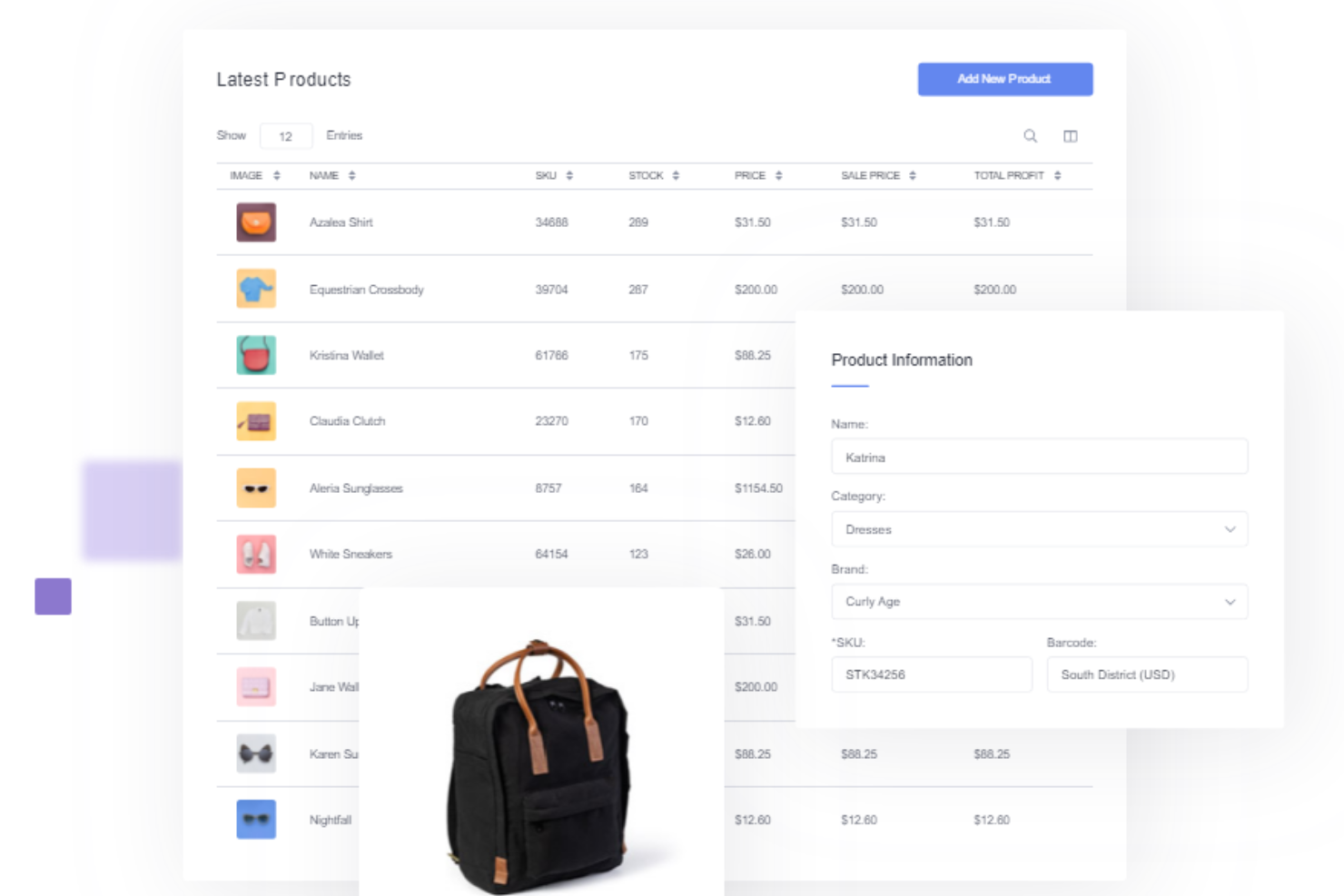
Helcim ofrece a los pequeños comerciantes una forma integral de vender tanto en tienda como en línea, mientras mantiene el control del inventario: los SKU, variantes y precios se sincronizan entre tu sistema de punto de venta (POS) y los canales de comercio electrónico.
Es especialmente útil si buscas procesamiento de tarjetas, sistema POS e inventario en un solo sistema, para no tener que improvisar con tres herramientas diferentes.
Por qué elegí Helcim
Elegí Helcim porque permite gestionar productos, precios y pagos desde un único panel de control, evitando que tu equipo tenga que vigilar hojas de cálculo cada vez que se mueve el stock.
Puedes crear fichas detalladas de productos—con SKU, variantes, marcas y datos de coste—de modo que tus márgenes y niveles de stock sean visibles justo donde realizas las ventas.
Las alertas de bajo inventario en el POS te ayudan a evitar roturas de stock avisando antes de que los estantes queden vacíos, en lugar de descubrir faltantes durante un conteo físico. También me gusta que las actualizaciones de inventario se sincronicen en todos los canales, así que cuando vendes un artículo en tienda, las cantidades online se actualizan automáticamente y tienes menos riesgo de vender más productos de los que tienes.
Además, la estructura de precios transparente de Helcim basada en interchange-plus te ayuda a mantener los costos de procesamiento previsibles mientras organizas tu inventario y tu stack de POS.
Principales características de Helcim
Además de las herramientas principales de POS, Helcim incluye varias funciones orientadas al inventario que son útiles para equipos de retail.
- Catálogo de productos centralizado: Gestiona productos, SKU, variantes y precios en un solo catálogo compartido entre ubicaciones y canales.
- Actualizaciones masivas de inventario: Ajusta cantidades y costes en bloque, lo que agiliza los conteos cíclicos y la importación de productos en grandes volúmenes.
- Seguimiento histórico de inventario: Visualiza movimientos históricos de existencias para poder auditar discrepancias y comprender dónde se están produciendo pérdidas.
- Informes de productos más vendidos y rentabilidad: Utiliza los informes por producto y categoría para ver los artículos más vendidos y rentables, y así comprar de forma más inteligente.
Integraciones de Helcim
Las integraciones incluyen QuickBooks Online, Xero y WooCommerce.
Pros and Cons
Pros:
- Inventario, POS y pagos en un solo sistema para pequeños comerciantes.
- Las alertas de bajo inventario y los informes te ayudan a reabastecer antes de que los estantes queden vacíos.
- Soporta variantes, precios mayoristas y catálogos de productos para varias ubicaciones.
Cons:
- Funcionalidades limitadas para gestión avanzada de almacenes en operaciones multi-almacén complejas.
- Principalmente pensado para comercios de Canadá y EE. UU., pocas opciones globales.

UpKeep
Ideal para gestión de operaciones sobre activos para mayor fiabilidad
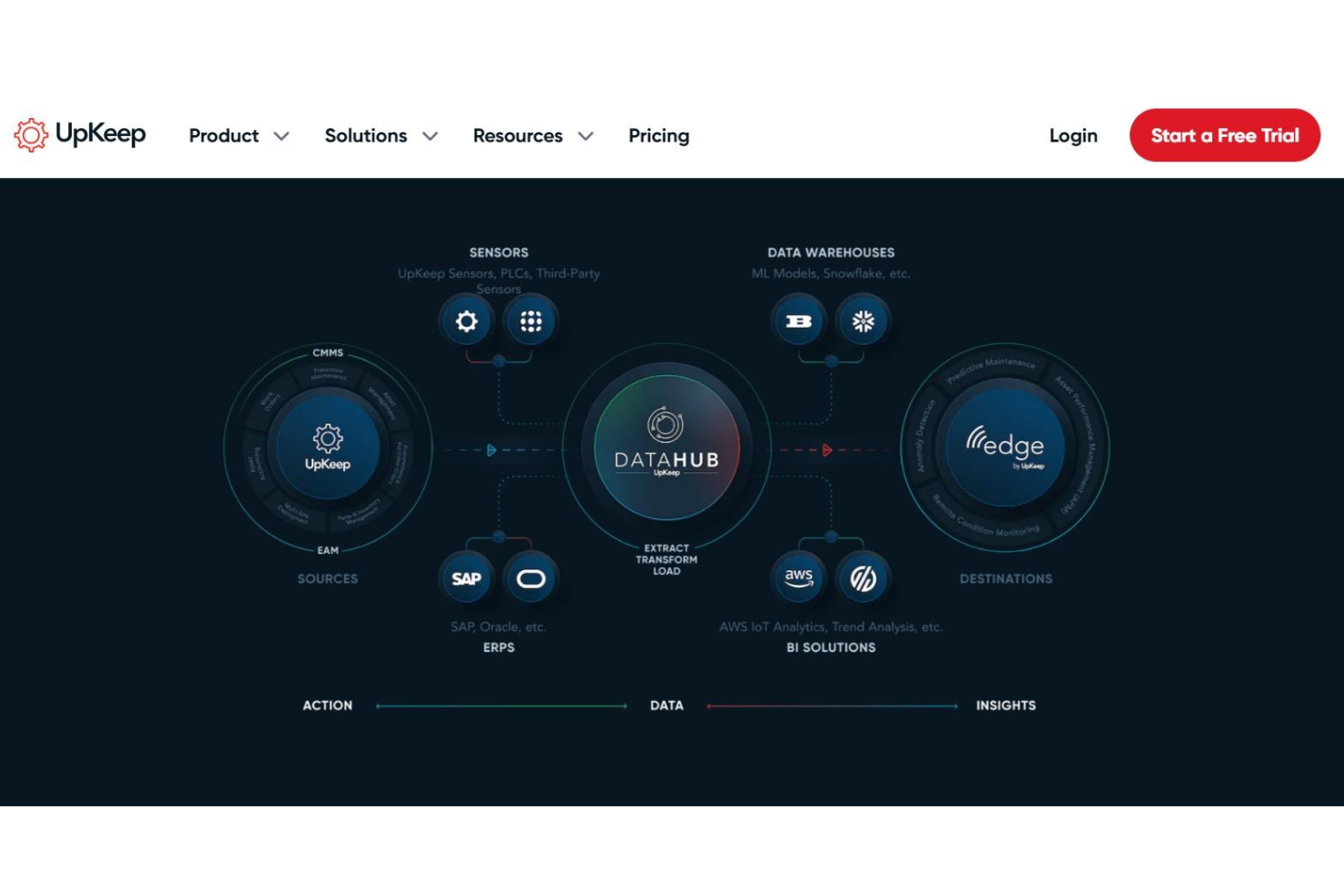
UpKeep ayuda a los equipos de mantenimiento e instalaciones a mantener piezas críticas a mano para que las reparaciones no se detengan por la falta de un componente de $5.
Es ideal para minoristas y operadores con múltiples ubicaciones que consideran el inventario MRO tan importante como el stock de mercancías, y que desean herramientas móviles para rastrear el uso de piezas directamente desde el taller.
Por qué elegí UpKeep
Elegí UpKeep porque trata el inventario de piezas como parte integral del trabajo de mantenimiento, no como una hoja de cálculo separada.
Puedes establecer umbrales de cantidad mínima y alertas de bajo stock para que tu equipo reciba notificaciones antes de que falte una pieza crucial, en lugar de descubrirlo en pleno fallo.
Los técnicos pueden escanear códigos de barras desde la aplicación móvil y ver instantáneamente la ubicación de la pieza y las cantidades disponibles, lo que reduce el tiempo buscando en los almacenes. También me gusta que el uso de piezas se relacione con las órdenes de trabajo y los activos, así puedes ver qué equipo consume más inventario y ajustar tus planes de mantenimiento.
Para minoristas con múltiples ubicaciones, un catálogo compartido con ubicaciones específicas facilita estandarizar los SKUs y evitar duplicados o piezas desconocidas entre diferentes sitios.
Funciones clave de UpKeep
Aquí algunas funciones enfocadas en inventario que refuerzan esos flujos de trabajo de mantenimiento.
- Conjuntos y kits de piezas: Agrupa piezas de uso frecuente en conjuntos reutilizables que puedes agregar a las órdenes de trabajo con un solo clic.
- Importación y actualización masiva: Importa listas de piezas existentes desde hojas de cálculo y actualiza detalles en lotes en vez de editar uno por uno.
- Seguimiento de proveedores y compras: Guarda detalles de proveedores, costos y tiempos de entrega junto a cada pieza para agilizar y estandarizar los pedidos.
- Seguimiento de números de serie y garantías: Registra números de serie, fechas de garantía y datos relacionados del activo para no desperdiciar piezas ni perder coberturas.
Integraciones de UpKeep
Las integraciones incluyen Microsoft Excel, Slack, Microsoft Teams, Zendesk, Procore, Tableau, Xero y Microsoft Azure.
Pros and Cons
Pros:
- El escaneo móvil de códigos de barras permite a los técnicos registrar el uso de piezas directamente en el activo.
- Los umbrales de bajo stock y alertas evitan faltantes inesperados de repuestos críticos.
- El catálogo de piezas para múltiples ubicaciones permite consistencia de SKUs entre sitios y almacenes.
Cons:
- Las funciones avanzadas de inventario solo están disponibles en planes de nivel superior.
- Enfocado en piezas de mantenimiento, no en el inventario completo de mercancía minorista.

Mejor para la gestión empresarial integral

Zoho Inventory ayuda a los equipos minoristas a mantener el control del inventario en tiendas, almacenes y canales en línea, evitando que tengas que adivinar si realmente puedes cumplir lo que vendes.
Es ideal si gestionas una operación omnicanal y quieres inventario, pedidos y envíos conectados sin recurrir a herramientas ERP complejas.
Por qué elegí Zoho Inventory
Elegí Zoho Inventory porque ofrece a los minoristas en crecimiento un verdadero control sobre el inventario, combinando el seguimiento multi-almacén con herramientas para transferencias, ajustes y visibilidad a nivel de ubicación, permitiéndote ver dónde está cada unidad en vez de confiar en conteos aproximados.
Puedes proteger la disponibilidad en estantería mediante niveles de reabastecimiento y alertas de bajo stock que se basan en el historial de ventas, en lugar de comprobar manualmente “cuando parece que queda poco”.
Para equipos omnicanal, dispones de inventario centralizado para marketplaces y carritos de compra en línea, de modo que tus niveles de stock se actualizan cuando llegan pedidos desde Shopify, Amazon u otros canales, reduciendo la probabilidad de sobreventa. Tu personal puede trabajar desde la app móvil con escaneo de códigos de barras, agilizando los conteos, la recepción y el picking, en lugar de introducir códigos SKU en un portátil en el pasillo.
También me gusta que se integra con el ecosistema más amplio de Zoho, permitiendo que los equipos de finanzas y CRM conecten pedidos, facturas y datos de clientes sin tener que exportar archivos CSV todo el día.
Funciones clave de Zoho Inventory
Además de esos controles enfocados en retail, Zoho Inventory incluye algunas capacidades extra que ayudan a tu equipo a optimizar la operativa diaria.
- Gestión multi-almacén: Rastrea inventario en varias ubicaciones, administra transferencias y ve la disponibilidad por almacén para tomar mejores decisiones de asignación.
- Seguimiento por lote y número de serie: Monitorea lotes y series para artículos como electrónicos o consumibles, facilitando las devoluciones y retiradas.
- Kitting y agrupación: Crea paquetes y kits de productos a partir de SKU existentes, permitiéndote armar sets listos para la venta al por menor sin perder de vista sus componentes originales.
- Comparación de tarifas de envío: Conéctate a múltiples transportistas y compara opciones de envío al generar un pedido, eligiendo servicios rentables para cada envío.
Integraciones de Zoho Inventory
Las integraciones incluyen Shopify, Amazon, eBay, Etsy, Google Shopping, AfterShip, USPS, Canada Post, Mailchimp y Bond.
Pros and Cons
Pros:
- Integraciones sólidas con marketplaces y carritos para minoristas omnicanal.
- La app móvil con escaneo de códigos de barras acelera los conteos y la recepción.
- Las herramientas multi-almacén permiten transferencias, ajustes y visibilidad por ubicación.
Cons:
- Los planes gratuitos y de nivel inferior limitan la cantidad de pedidos y almacenes por mes.
- Las analíticas y la planificación más avanzadas suelen requerir otras aplicaciones de Zoho.

Ideal para conectar todos los canales de venta en un solo lugar

Cin7 Omni ayuda a los minoristas que gestionan varias tiendas, marketplaces y sitios de comercio electrónico a mantener una sola visión precisa del inventario en lugar de cuatro diferentes y conflictivas.
Es ideal para minoristas medianos y grandes que necesitan inventario, compras, almacenes y POS conectados para que cada canal vea las mismas cantidades en tiempo real.
Por qué elegí Cin7 Omni
Elegí Cin7 Omni porque te da una visión central del inventario a través de tiendas online, marketplaces, ventas al por mayor y tiendas físicas, respaldado por sincronización de stock y actualizaciones de pedidos en tiempo real.
Puedes proteger los márgenes utilizando sus reglas automatizadas de asignación de pedidos para enviar cada venta al almacén, tienda o 3PL correcto según el stock, la ubicación y el método de envío.
Los equipos en tienda tienen menos sorpresas porque el POS integrado extrae del mismo motor de inventario, por lo que las cantidades en estantería coinciden con lo que se muestra online. Tu equipo de operaciones puede reducir el trabajo manual con flujos de trabajo configurables para compras, pedidos pendientes y reposiciones que se activan según los umbrales y reglas que configures.
Es una solución sólida para minoristas en crecimiento con operaciones en múltiples ubicaciones que quieren el control de inventarios y la lógica de cumplimiento en un solo lugar y no repartidos en varias hojas de cálculo.
Características clave de Cin7 Omni
Más allá de centralizar el inventario, Cin7 Omni ofrece a los equipos de operaciones herramientas prácticas que realmente usarán en el día a día.
- Herramientas de gestión de almacenes: Gestiona ubicaciones, movimientos de stock y tareas de picking para que los almacenes se mantengan organizados a medida que crece el volumen de pedidos.
- Gestión de devoluciones y RMA: Rastrea devoluciones, cambios y bajas en el mismo sistema, manteniendo las cantidades reales tras cada reembolso.
- Pronóstico de demanda y reposición: Utiliza ventas históricas y tiempos de entrega para recomendar órdenes de compra, ayudando a evitar tanto faltantes como sobrecompras.
- Portales de pedidos B2B: Ofrece a clientes mayoristas un portal dedicado vinculado directamente a tu inventario y precios, en lugar de gestionar pedidos por correo electrónico.
Integraciones de Cin7 Omni
Las integraciones incluyen Shopify, BigCommerce, WooCommerce, Amazon, eBay, Xero, QuickBooks Online, Walmart, ShipStation y Square.
Pros and Cons
Pros:
- La sincronización centralizada del inventario mantiene alineados el stock online, de marketplace y de tienda.
- Las herramientas de POS y almacén integradas conectan las salas de ventas con los movimientos de stock.
- Las reglas de automatización reducen el trabajo manual de picking, empaquetado y compra a gran escala.
Cons:
- La configuración y la incorporación pueden ser complejas para equipos pequeños o ágiles.
- El precio y las conexiones extra pueden resultar caros para minoristas de bajo volumen.

La mejor opción para una amplia selección de servicios gratuitos de lanzamiento
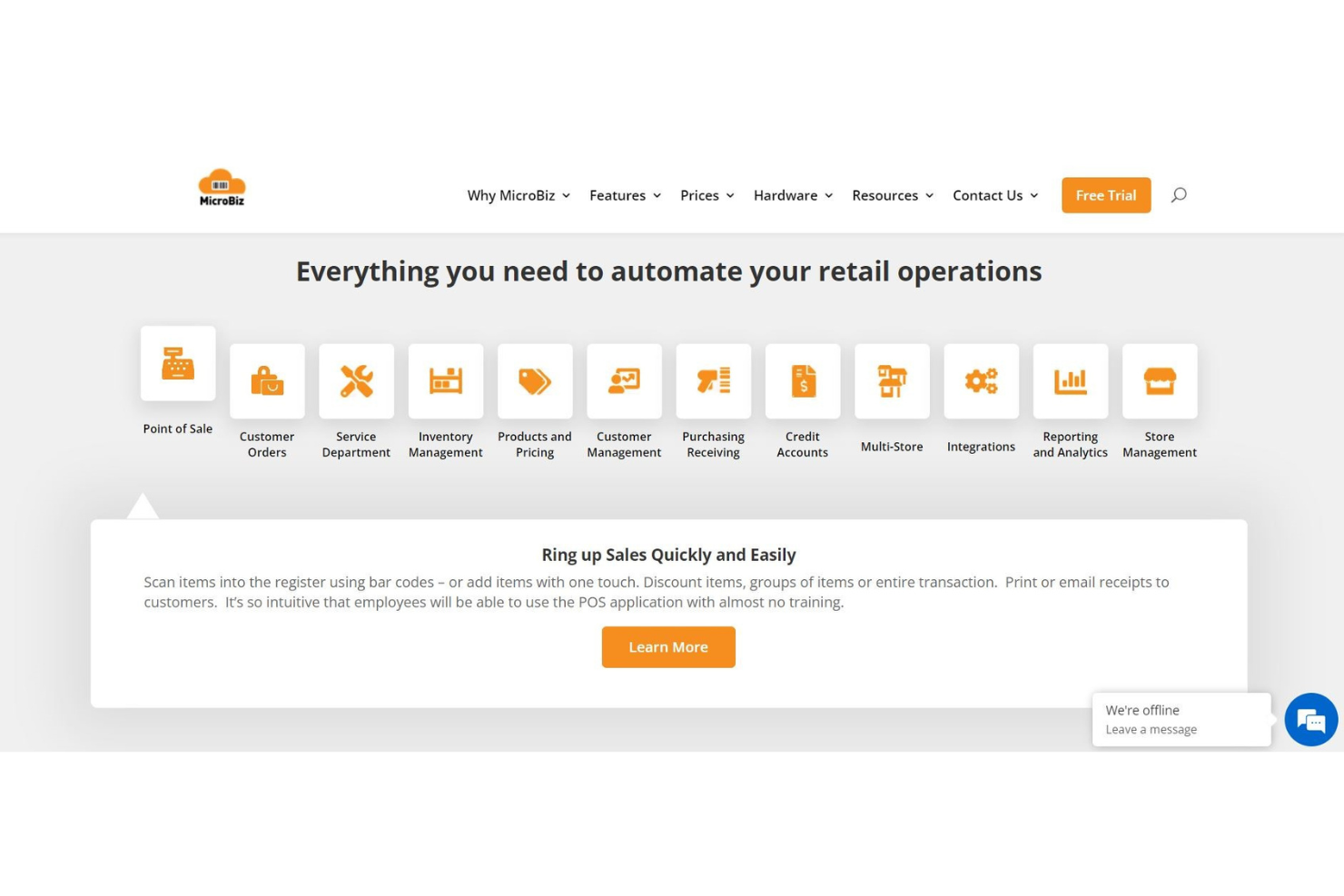
MicroBiz Cloud está diseñado para minoristas con un inventario amplio y varias tiendas que necesitan una visibilidad clara de los niveles de existencias en todas sus ubicaciones sin aumentar la plantilla.
Es especialmente útil si vendes productos con estructura matricial (tallas, colores y variantes) y quieres que el inventario de tu POS, tus compras y tu comercio electrónico estén en un solo lugar, respaldados por asistencia práctica durante el lanzamiento en lugar de una configuración por tu cuenta.
Por qué elegí MicroBiz Cloud
Elegí MicroBiz Cloud porque su motor de inventario en tiempo real mantiene precisos tus niveles de existencias mientras recibes envíos, transfieres productos entre tiendas y gestionas pedidos en línea y en tienda desde un único sistema.
Puedes gestionar catálogos complejos —como los de ropa, artículos deportivos o armas de fuego— mediante un inventario matricial con hasta tres atributos por artículo, además de un seguimiento serializado que vincula cada unidad con un cliente o pedido específico.
Tus compradores disponen de herramientas de reposición mín./máx. que generan automáticamente órdenes de compra a partir del historial de ventas y los puntos de reposición, por lo que no tendrás que rehacer las mismas hojas de cálculo cada semana.
También me gusta que los servicios gratuitos de lanzamiento y la capacitación cubran las importaciones de productos, las reglas fiscales y los flujos de trabajo, lo que significa que puedes empezar a operar con una configuración de inventario correctamente preparada en lugar de una base de datos migrada a medias.
Para los equipos pequeños, esta combinación de automatización y asistencia personalizada durante la incorporación ofrece una importante red de seguridad al modernizar la tecnología de tu negocio minorista.
Características principales de MicroBiz Cloud
Más allá del motor de inventario principal, hay varias herramientas prácticas importantes para las operaciones minoristas diarias.
- Etiquetas de precios con códigos de barras: Imprime etiquetas con códigos de barras a partir de las órdenes de compra para que el personal pueda etiquetar, contar y vender los artículos con precisión en la tienda.
- Gestión de pedidos y entregas: Haz un seguimiento de los pedidos especiales, las compras apartadas y las entregas desde la venta inicial hasta la ejecución, para que el inventario y las expectativas de los clientes estén sincronizados.
- Panel de gestión: Supervisa las ventas, los artículos más vendidos y el rendimiento de los empleados mediante un panel e informes exportables que puedes filtrar por tienda, intervalo de fechas y personal.
- Herramientas de importación de datos: Usa plantillas CSV para importar y actualizar en bloque productos, proveedores y clientes en lugar de introducir manualmente cada SKU y cuenta.
Integraciones de MicroBiz Cloud
Las integraciones incluyen QuickBooks Online, WooCommerce y Magento (Adobe Commerce).
Pros and Cons
Pros:
- El inventario en tiempo real para varias tiendas mantiene las existencias precisas en las cajas y los distintos canales.
- El seguimiento matricial y serializado permite gestionar catálogos complejos y líneas de productos regulados.
- La reposición automática mín./máx. genera órdenes de compra a partir de las ventas recientes y los umbrales.
Cons:
- Tiene menos integraciones nativas que algunos paquetes de POS con grandes mercados de aplicaciones.
- Ciertos informes avanzados, como las comparaciones de ventas entre días consecutivos, pueden requerir soluciones alternativas.

Intuendi
Ideal para reducir errores de previsión con optimización de inventario
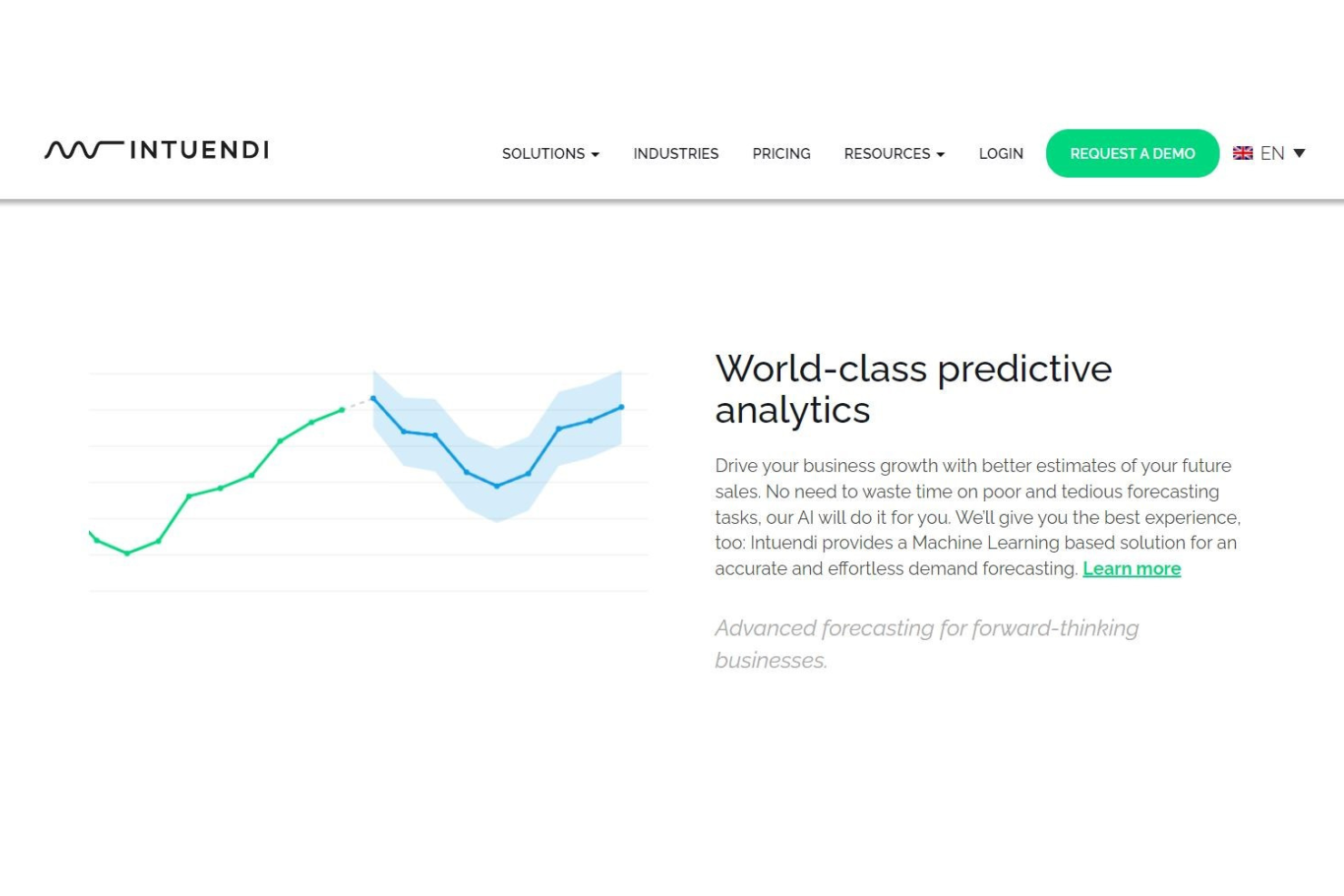
Intuendi ayuda a los minoristas que están cansados de quedarse sin existencias en un local y tener exceso de stock muerto en otro, utilizando la planificación de la demanda impulsada por IA para dimensionar correctamente el inventario a través de los canales.
Es especialmente útil si gestionas muchos SKUs, múltiples almacenes o tiendas, y necesitas que los compradores trabajen a partir de una previsión compartida en vez de hojas de cálculo aisladas.
Por qué elegí Intuendi
Elegí Intuendi porque ofrece a tus compradores sugerencias concretas de reposición y transferencia basadas en previsiones de IA y aprendizaje automático, en lugar de corazonadas o simples promedios.
Puedes conectar los datos de tu plataforma de comercio electrónico y ERP para que el sistema analice ventas históricas, estacionalidad y eventos externos, y recomiende órdenes de compra que realmente se ajusten a la demanda. Su lógica multi-escalón te ayuda a decidir si reequilibrar existencias entre ubicaciones o realizar nuevos pedidos, lo que protege tus márgenes al utilizar primero lo que ya tienes antes de comprar más.
También me gusta que te permite realizar pedidos teniendo en cuenta los contenedores, por lo que puedes construir planes de reabastecimiento que respeten las restricciones de envío y aun así cubran la demanda.
En conjunto, es una buena opción para minoristas que desean reducir los errores de previsión, minimizar el exceso de inventario y mantener los estantes llenos de productos que realmente se venden.
Principales características de Intuendi
Más allá del motor central de previsión y reabastecimiento, Intuendi incluye varias funciones especialmente útiles para la gestión de inventario minorista.
- Análisis de falta y exceso de stock: Señala artículos en riesgo de quedarse sin stock o de exceso de inventario y cuantifica el impacto en ingresos o costes de almacenamiento.
- Planificación de lista de materiales (BOM): Vincula productos terminados con SKUs de componentes para que la producción y el inventario de embalaje se mantengan alineados con las previsiones de ventas.
- Capacidades multi-proveedor: Compara tiempos de entrega y escalas de precios entre distintos proveedores para que las sugerencias de compra favorezcan la mezcla más eficiente.
- Paneles de rendimiento de inventario: Supervisa rotaciones, cobertura y niveles de servicio en un único lugar para detectar problemas antes de que afecten al cliente.
Integraciones de Intuendi
Las integraciones incluyen Shopify, NetSuite, Odoo, PrestaShop, Sage, Exact ERP, Unleashed y Fulfil.
Pros and Cons
Pros:
- Las previsiones basadas en IA reducen las roturas de stock y el exceso de inventario entre ubicaciones.
- La lógica multi-escalón ayuda a reequilibrar el inventario antes de realizar nuevas compras.
- Los compradores reciben sugerencias diarias de pedidos a nivel de SKU basadas en la demanda real.
Cons:
- El precio se cotiza a medida, sin planes públicos para comparación rápida.
- Los mejores resultados requieren datos históricos limpios y adopción disciplinada de procesos.
Otro software de gestión de inventario minorista
Estas son el resto de mis opciones para el mejor software de gestión de inventario minorista, incluido un caso de uso recomendado para cada una. No tenía espacio para hacer un análisis completo, pero aun así merece la pena conocerlas.
- Unleashed
Lo mejor para visibilidad y control total del inventario
- Fulfil
Ideal para el control de inventario en tiempo real
- Settle
Mejor para negocios de bienes de consumo empacados (CPG)
- Odoo
La mejor opción para la gestión empresarial todo en uno
- Lightspeed Retail
Ideal para sistemas integrados de punto de venta y gestión de inventario
- SKULabs
Ideal para gestión de pedidos multicanal en un solo lugar
- monday AI Workspace
Ideal para flujos de trabajo listos para usar
- ShipStation
Ideal para la gestión de envíos e inventario en uno solo
- Cin7 Core
Ideal para fabricantes y vendedores de productos
- Veeqo
Ideal para envíos automatizados y eficientes
- Softengine
Ideal para la gestión de inventario habilitada por dispositivos móviles


Análisis relacionados de software de comercio electrónico
Si todavía no has encontrado aquí lo que buscas, echa un vistazo a estas herramientas de comercio electrónico relacionadas que hemos probado y evaluado.
- Plataformas de comercio electrónico
- Software de gestión de inventario
- Software de procesamiento de pagos
- Soluciones de carrito de compra
- Sistemas de gestión de pedidos
- Software de gestión de almacenes
- Software de optimización de inventario
- Software de gestión de inventario de prendas de vestir
Cómo evalúo el software de gestión de inventario para comercios
Divido mi evaluación en dos niveles: los requisitos mínimos que la herramienta debe cubrir—como el seguimiento en tiempo real y la sincronización con el punto de venta (POS)—y los diferenciadores que separan las mejores opciones del resto.
Funcionalidad básica (Requisitos indispensables para esta lista)
Al seleccionar herramientas para mi lista, califico cada una en una escala del 0 (no ofrece la funcionalidad) al 5 (sobresale en esta área) para cada funcionalidad principal mencionada a continuación. Luego, calculo la puntuación total de la herramienta como un porcentaje. Cada herramienta debe alcanzar una puntuación mínima total del 65% para ser considerada.
- Seguimiento de stock en tiempo real: Reviso si la plataforma proporciona conteos de inventario en vivo en todas las ubicaciones y canales, de modo que una venta en una tienda actualiza al instante la disponibilidad en los demás puntos.
- Gestión multiubicación: Los minoristas con varias tiendas necesitan paneles centralizados, flujos de transferencia y visibilidad del inventario por localización. Evalúo cómo cada herramienta gestiona la asignación entre sitios.
- Sincronización con POS y omnicanal: Busco integraciones nativas y bidireccionales con los principales sistemas POS y plataformas de comercio electrónico que mantengan precisos los conteos sin importar si la venta ocurre en tienda, en línea o en un marketplace.
- Automatización de órdenes de compra: Desde establecer puntos de reposición hasta gestionar los plazos de proveedores, evalúo cuánto del ciclo de compras puede automatizar la herramienta más allá de la simple creación manual de órdenes de compra.
- Gestión de SKU y variantes: Los catálogos minoristas se vuelven complejos rápidamente. Reviso cómo cada herramienta maneja matrices de variantes, generación de códigos de barras y ediciones masivas de catálogos para productos con múltiples tallas, colores o estilos.
- Reportes y análisis de inventario: Evalúo si los informes van más allá del stock disponible, cubriendo indicadores específicos del sector retail como tasa de rotación, rotación de inventario y proyecciones de demanda por categoría o SKU.
Una vez que tengo una lista de herramientas que cumplen con estos criterios, considero qué distingue a cada plataforma.
Factores diferenciadores (Qué distingue a los proveedores)
Así es como comparo y contraste diferentes proveedores:
Funciones sobresalientes
La previsión de la demanda impulsada por IA es un diferenciador principal. Busco herramientas que tengan en cuenta la estacionalidad y los patrones de ventas históricos para sugerir cantidades de reposición, ayudando a los equipos de merchandising a evitar excedentes al final de la temporada. También es importante disponer de una aplicación móvil nativa, especialmente para los equipos de tienda que realizan inventarios o reciben envíos en la sala de ventas sin tener que volver a la terminal de escritorio. Las herramientas de prevención de pérdidas completan el panorama; el seguimiento de mermas y los registros de auditoría integrados ayudan a detectar discrepancias antes de que se conviertan en problemas costosos.
Más allá de las funciones
El ecosistema de integraciones es una de las primeras cosas que evalúo. Una herramienta que conecte de forma nativa con tu POS, canales de ecommerce y software contable te ahorra la entrada de datos manual y los dolores de cabeza de conciliación. El ajuste al sector retail es igualmente importante—un minorista de ropa que gestiona matrices de talla/color tiene necesidades muy diferentes a las de un supermercado que rastrea perecederos. También considero la compatibilidad de hardware, especialmente si una plataforma es compatible con lectores de códigos de barras estándar y funciona sin conexión para que las operaciones en tienda no se detengan durante una caída de internet.
Cómo elegir un software de gestión de inventario minorista
Elegir la herramienta de inventario adecuada no consiste en encontrar la interfaz más llamativa ni la que tenga más siglas. Se trata de resolver tus problemas específicos antes de que te cuesten dinero, clientes o la cordura.
Utiliza esta guía para acotar la búsqueda:
| Paso | Qué hacer | Qué buscar |
|---|---|---|
| 1. Analiza tus puntos problemáticos | Identifica dónde se queda corta tu configuración actual. ¿Te ahogas entre roturas de stock, exceso de existencias o datos incorrectos? | Herramientas que ofrezcan seguimiento en tiempo real, reposición automatizada o alertas. Puntos extra si admiten visibilidad en varias ubicaciones. |
| 2. Adapta el software a tu flujo de trabajo | ¿Tu trastienda no funciona como un almacén? ¿Tu almacén no es una boutique? Genial: elige herramientas que entiendan tu realidad. | Soluciones específicas del sector con funciones adaptadas a modelos minoristas, mayoristas o híbridos. Piensa en sistemas de códigos de barras para una alta rotación o en previsiones de demanda para plazos de entrega largos. |
| 3. Elige el tipo de sistema | Determina qué nivel de control necesitas. ¿Quieres un WMS completo? ¿Un seguimiento básico del inventario? | Entre las opciones se incluyen: sistemas de códigos de barras, plataformas compatibles con RFID, sistemas de gestión de almacenes (WMS) y conjuntos de aplicaciones integrados con ERP. Elige lo que se ajuste a tu nivel de complejidad. |
| 4. Comprueba tus integraciones | Haz una lista de todas las herramientas que ya utilizas —TPV, comercio electrónico, contabilidad, envíos— y comprueba cuáles se conectan. | Busca integraciones prediseñadas o API abiertas que se sincronicen con plataformas como Shopify, NetSuite, Square, QuickBooks y otras. |
| 5. Comprueba la facilidad de uso | No deberías necesitar un título de ingeniería aeroespacial para contar el inventario o transferir existencias. | Software fácil de aprender, que funcione en dispositivos móviles y se adapte a la forma en que trabaja realmente tu equipo. Puntos extra si tiene modo sin conexión. |
| 6. Piensa en el futuro (sí, desde ya) | Aunque ahora seas pequeño, el crecimiento llega rápido. Planifícalo. | Herramientas que ofrezcan escalabilidad, compatibilidad con varias ubicaciones y flujos de trabajo personalizables. Busca sistemas capaces de gestionar 10 veces tu volumen actual, porque algún día lo harán. |
| 7. Profundiza en las funciones de datos | Los datos precisos lo son todo. Si entran datos basura, salen resultados basura. | Da prioridad a las herramientas que ofrezcan sincronización en tiempo real, previsiones e informes automatizados. Estas funciones no son “extras agradables”: marcan la diferencia entre unas operaciones fluidas y el caos del inventario. |
| 8. Compara el precio con el valor | Un software barato que falla bajo presión es caro, aunque no lo parezca. | Evalúa lo que obtienes en cada nivel, especialmente el soporte, las funciones y los ciclos de actualización. Recuerda: unas buenas previsiones pueden amortizarse en una semana. |
| 9. Habla con el servicio de atención al cliente antes de comprar | Imagina que ya tienes un problema y comprueba lo rápido que responden. | Busca un servicio de atención receptivo y competente (no solo un chatbot que te haga dar vueltas eternamente). Si no consigues ayuda durante una prueba, no será mejor cuando estés operativo. |
| 10. Haz una prueba en condiciones reales | Configura un escenario real: escanea artículos, mueve existencias y sincroniza con el TPV. Si puedes, haz que falle. | La mayoría de las herramientas ofrecen demostraciones o pruebas. Úsalas a fondo. Involucra a tu equipo. Descubre qué les frustra ahora, antes de que el sistema dirija tu negocio. |
Tendencias del software de gestión de inventario minorista para 2026
La tecnología para el inventario minorista evoluciona rápidamente, y los minoristas más inteligentes se suben a la ola en lugar de intentar alcanzarla a toda prisa. Estas son las tendencias que marcarán 2026, con algunas opiniones contundentes.
- La cadena de bloques ha vuelto (pero con menos ruido). Aunque el entusiasmo ha disminuido, la cadena de bloques está ganando terreno discretamente para auditar las cadenas de suministro y los flujos de inventario, especialmente en sectores de alto valor y muy regulados.
- Las previsiones basadas en IA por fin se están volviendo específicas. Las herramientas están pasando de las predicciones generales de ventas a información detallada a nivel de SKU, ayudando a los minoristas a reponer existencias con confianza basándose en la demanda hiperlocal, la estacionalidad y el comportamiento de los clientes.
- La visibilidad del inventario en tiempo real es el nuevo estándar. Los días de sincronizar una vez por noche (o una vez por semana, ¡qué horror!) han quedado atrás. Si tu sistema no se actualiza en tiempo real, ya vas por detrás.
- La automatización del intercambio de datos está eliminando el caos intermedio. Los minoristas utilizan formatos de datos estandarizados para sincronizarse al instante con proveedores, 3PL y mercados en línea, reduciendo la introducción manual de datos, los retrasos y el ir y venir de «¿quién tiene las cifras correctas?».
- Los minoristas exigen soluciones específicas para cada sector. Las soluciones universales han quedado obsoletas. Los mayoristas de café, los minoristas de artículos de lujo y las marcas de CPG tienen necesidades diferentes, y los proveedores de software por fin están creando herramientas que comprenden esos matices.
- La tecnología de códigos de barras y RFID es cada vez más accesible. Lo que antes era «solo para grandes empresas» ahora es estándar. Se esperan más herramientas con escaneo integrado, recuentos móviles de inventario y seguimiento serializado a nivel de SKU.
- El seguimiento de la sostenibilidad se está convirtiendo en un factor de selección. Los minoristas realizan un seguimiento de las emisiones del inventario, los residuos y el abastecimiento para alinearse con los valores de la marca, y las herramientas de inventario están dando un paso adelante para ofrecer esos datos.
- La automatización está en auge, pero la supervisión humana sigue siendo importante. La reposición automatizada y la robótica son excelentes, hasta que fallan. Los minoristas inteligentes utilizan la automatización para mejorar las operaciones, no para sustituir el criterio.
- Los sistemas basados en la nube son ahora imprescindibles. Si todavía gestionas el inventario desde una aplicación de escritorio o una hoja de cálculo propia, es hora de cambiar. Las herramientas en la nube ofrecen escalabilidad, seguridad y colaboración en tiempo real que no se pueden simular.
- La robótica de almacén va más allá de Amazon. Los minoristas de todos los tamaños están adoptando la robótica para la preparación de pedidos, la clasificación y los recuentos cíclicos, no solo por la velocidad, sino también por la precisión y la eficiencia laboral.
Funciones del software de gestión de inventario minorista
Esto es lo que ofrecen las principales herramientas de gestión de inventario omnicanal actuales, porque las hojas de cálculo ya no son suficientes.
- Seguimiento del inventario en todas las ubicaciones. Consulta y gestiona las existencias de tiendas, almacenes y centros de distribución en tiempo real desde un único panel.
- Integración con el sistema de punto de venta para sincronizar las ventas sin interrupciones. Actualiza al instante el inventario cuando los artículos se venden, se devuelven o se cambian a través de tu sistema de punto de venta.
- Gestión de códigos de barras y SKU. Genera códigos de barras, asigna SKU y escanea artículos rápidamente para reducir la introducción manual de datos y mejorar la precisión.
- Automatización del punto de reposición. Establece umbrales para los productos clave y activa órdenes de compra automáticamente para no quedarte nunca sin existencias ni acumular un exceso de stock.
- Actualizaciones del inventario en tiempo real. Consulta los cambios en las existencias a medida que se producen en todos los canales, lo que te ayuda a evitar la sobreventa, la venta insuficiente o los puntos ciegos del inventario.
- Análisis e informes del inventario. Realiza un seguimiento de las tasas de rotación, las mermas, la velocidad de venta y las métricas de rentabilidad para tomar decisiones más acertadas.
- Previsión y planificación de la demanda. Predice las necesidades futuras de stock basándote en las tendencias, la estacionalidad y el historial de ventas para adelantarte a la demanda.
- Gestión de múltiples ubicaciones. Transfiere artículos entre ubicaciones, sincroniza los niveles de inventario y centraliza la supervisión de toda tu red minorista.
- Herramientas de gestión de almacenes. Organiza la preparación de pedidos, el empaquetado, las auditorías de stock y los recuentos cíclicos para agilizar las operaciones administrativas.
- Seguimiento de proveedores y órdenes de compra. Supervisa el rendimiento de los proveedores, gestiona las órdenes de compra y mantén una conexión estrecha entre las compras y la recepción.
- Acceso móvil al inventario. Cuenta, escanea, ajusta o mueve el inventario mediante aplicaciones móviles y dispositivos portátiles en la tienda o sobre el terreno.
- Control omnicanal del inventario. Mantén alineados tu tienda online, las ventas presenciales y los marketplaces mediante datos de stock unificados y en tiempo real.
- Automatización del intercambio de datos. Comparte directamente los datos del inventario y de los pedidos con proveedores y socios mediante APIs o EDI para eliminar retrasos y tareas duplicadas.
- Seguimiento mediante RFID y números de serie. Controla unidades individuales con etiquetas RFID y números de serie para ejercer un mayor control sobre el inventario de alto valor o regulado.
- Seguimiento de la sostenibilidad y los residuos. Supervisa la caducidad de los productos, reduce el desperdicio y realiza un seguimiento del impacto medioambiental para apoyar las iniciativas de residuo cero.
- Alertas y flujos de trabajo personalizados. Configura alertas de stock bajo, reglas de aprobación o activadores de tareas adaptados a la lógica de tu negocio y al ritmo de tus operaciones.
Beneficios del software de gestión de inventario minorista
El inventario no son solo productos: también es capital, espacio, flujo de caja y experiencia del cliente, todo en uno. Así es como el software adecuado te ayuda a mantener bajo control cada parte de esa ecuación con una planificación adecuada del surtido.
- Relaciones más sólidas con los proveedores. Realiza un seguimiento de los plazos de entrega, evita las urgencias de última hora y adelántate a los retrasos de los proveedores con la gestión y las alertas automatizadas de las órdenes de compra.
- Niveles de stock optimizados. Evita los costosos excesos de inventario y las situaciones de falta de existencias con herramientas que mantienen tu inventario equilibrado y justo a tiempo.
- Preparación de pedidos más rápida y precisa. Los datos en tiempo real y la automatización se traducen en menos errores, una preparación más rápida y clientes más satisfechos que reciben lo que han pedido a tiempo.
- Mejor rendimiento financiero. Los datos limpios sobre la rotación del inventario, los costes de mantenimiento y las mermas te ayudan a tomar mejores decisiones de compra y precios que aumentan los márgenes.
- Mejor aprovechamiento del espacio de almacén y de la tienda. Cuando sabes qué se vende y qué no, puedes optimizar el almacenamiento, reducir el stock inmovilizado y dejar espacio para los productos de mayor rendimiento.
- Visibilidad en tiempo real en todos los canales. Consulta al instante qué hay disponible y dónde, ya sea en la tienda, online o en tránsito, para que tus equipos de ventas y atención al cliente trabajen siempre con información veraz.
- Operaciones más ágiles. Automatiza tareas repetitivas como la reposición, los ajustes de stock y la recepción para que tu equipo pueda dedicarse a labores más estratégicas.
- Menos quebraderos de cabeza relacionados con el stock. Di adiós a los mensajes de Slack de «¿Dónde está?», a las búsquedas interminables de inventario y a las conciliaciones manuales en hojas de cálculo.
- Previsiones más precisas. Con los datos adecuados, puedes planificar mejor las promociones, evitar las roturas de stock estacionales y tomar decisiones más acertadas sobre qué volver a pedir.
- Escalabilidad sin caos. Tanto si abres nuevas ubicaciones como si añades canales de venta, tu software mantiene todo organizado para que el crecimiento no desborde tus operaciones.
Coste y precios del software de gestión de inventario minorista
Elegir el software adecuado de gestión de inventario minorista puede ser complicado, especialmente cuando hay tantos niveles de precios y funciones que tener en cuenta. Tanto si eres una pequeña empresa emergente como una gran empresa, encontrar el plan que se ajuste a tus necesidades y presupuesto es fundamental.
Aquí tienes un desglose de las opciones de planes más habituales, los precios medios y los tipos de empresas para los que cada nivel es más adecuado.
Tabla comparativa de planes para software de gestión de inventario minorista
| Tipo de plan | Precio medio | Funciones habituales incluidas | Ideal para |
|---|---|---|---|
| Gratis | $0 | Seguimiento básico del inventario, artículos y pedidos limitados, asistencia de la comunidad | Empresas emergentes y pequeños negocios que están probando el servicio |
| Inicial | $29 - $99/mes | Gestión básica del inventario, seguimiento en tiempo real, integraciones limitadas, acceso para un solo usuario | Pequeños minoristas o tiendas en línea |
| Profesional | $99 - $299/mes | Análisis avanzados, acceso para varios usuarios, más integraciones, asistencia al cliente | Empresas en crecimiento con varios canales de venta |
| Empresarial | $300 - $1,000+/mes | Funciones personalizables, integraciones ilimitadas, gestor de cuenta personal, asistencia las 24 horas, los 7 días de la semana | Grandes minoristas con necesidades complejas de inventario |
Otros aspectos relacionados con los costes
Los niveles de precios solo cuentan una parte de la historia. Estos son los otros factores de coste que los minoristas inteligentes deberían tener en cuenta antes de firmar en la línea de puntos:
- Condiciones contractuales y permanencias. La flexibilidad de pagar mes a mes puede costar más al principio, pero puede evitar que te quedes atrapado con una opción inadecuada. Ten cuidado con los contratos anuales a menos que estés completamente convencido.
- Costes de implementación y puesta en marcha. Algunos proveedores cobran por la configuración, la formación o la migración de los datos de inventario existentes, especialmente en los niveles intermedio y empresarial.
- Requisitos de hardware. Si vas a pasarte al escaneo de códigos de barras, RFID o aplicaciones móviles para almacenes, ten en cuenta el coste de los escáneres, las impresoras y los dispositivos compatibles.
- Costes de integración o de conectores. No todas las integraciones funcionan de forma inmediata. Es posible que necesites un conector de terceros (o tiempo de un desarrollador) para sincronizarte con plataformas de TPV, contabilidad o comercio electrónico.
- Trampas de los precios basados en el volumen. Presta atención a los precios que aumentan según el volumen de pedidos, los canales de venta o las SKU: lo que ahora parece asequible podría dispararse cuando empieces a crecer.
- Limitación de funciones según el plan. Algunos planes «básicos» excluyen funciones esenciales como la previsión, la automatización o la sincronización en tiempo real. Lee la letra pequeña y relaciona las funciones con tus necesidades reales.
- Niveles de asistencia y SLA. La asistencia prioritaria, las garantías de disponibilidad o los gestores de éxito dedicados pueden estar disponibles únicamente en los planes prémium, incluso si los necesitas ahora.
Preguntas frecuentes sobre el software de gestión de inventario minorista
Respondamos a las preguntas que quizá tengas o quizá no. Seremos breves y concisos con las respuestas.
¿Cómo se integran estas opciones de software con los sistemas POS existentes?
La mayoría de las herramientas de inventario minorista están diseñadas para funcionar bien con los principales sistemas POS. Las integraciones permiten actualizaciones en tiempo real, por lo que, cuando un artículo se vende, se devuelve o se transfiere, el inventario se ajusta al instante. Busca plataformas con integraciones nativas o API abiertas si tu conjunto tecnológico está más personalizado.
¿Pueden estas herramientas admitir modelos de envío directo o de gestión logística por terceros?
Sí; muchas plataformas de inventario están diseñadas teniendo en cuenta los flujos de trabajo de envío directo y de proveedores logísticos externos (3PL). Pueden dirigir automáticamente los pedidos a socios externos, sincronizar los niveles de existencias entre proveedores y mantener actualizada la información del inventario sin comprobaciones manuales constantes.
¿Qué tipos de sistemas de inventario existen y cómo elijo uno?
Tienes varias opciones. Los sistemas de códigos de barras funcionan muy bien para SKU de gran rotación. La identificación por radiofrecuencia (RFID) es perfecta para el seguimiento serializado y los productos de mayor valor. Las plataformas WMS completas ofrecen un control profundo del almacén, mientras que las herramientas integradas con ERP te proporcionan una visión empresarial más amplia.
Elige en función de tu tamaño, complejidad y del nivel de control que necesites sobre la gestión logística.
¿Qué ocurre cuando los datos de tu inventario no son precisos?
Ocurren problemas, como existencias fantasma, ventas perdidas, exceso de pedidos y clientes frustrados. Los datos imprecisos provocan previsiones deficientes, espacio desaprovechado y muchas suposiciones. Un buen software de inventario lo soluciona sincronizando los datos en tiempo real y minimizando los errores humanos mediante la automatización y el escaneado.
¿Cómo sé si necesito una solución específica para mi sector?
Si tus flujos de trabajo no corresponden al comercio minorista estándar —por ejemplo, si gestionas productos perecederos, kits y paquetes, o requisitos de cumplimiento complejos—, querrás un software adaptado a tu nicho. Las plataformas específicas para cada sector suelen incluir funciones prediseñadas que, de otro modo, tendrías que ensamblar por tu cuenta.
¿Hasta qué punto es escalable el software de gestión de inventario minorista?
La mayoría de las herramientas modernas están diseñadas para crecer contigo. Tanto si añades más ubicaciones, SKU o canales de venta, un buen sistema debería crecer sin ralentizarte. Busca plataformas compatibles con la gestión de varias ubicaciones, integraciones mediante API y flujos de trabajo personalizables a medida que se amplíen tus operaciones.
¿Puede realmente el software de inventario mejorar el rendimiento financiero?
Por supuesto. Un inventario preciso ayuda a reducir los costes de mantenimiento, eliminar las roturas de stock y mejorar el flujo de caja. Si además incorporas mejores previsiones, compras más inteligentes y menos pérdidas por obsolescencia, de repente tu sistema de inventario hará mucho más que realizar el seguimiento de las cajas.
Otras reseñas de software minorista
He revisado otros programas de gestión minorista, así que consulta estas listas si todavía no has encontrado lo que buscas.
- Programas de gestión minorista: Más que un simple inventario, los programas de gestión minorista pueden encargarse de todo lo que necesitas para las operaciones comerciales diarias.
- Programas de análisis minorista: ¿Te sirve tu estrategia minorista actual? Los análisis minoristas son fundamentales para realizar un seguimiento de tu enfoque empresarial y revisarlo.
- Programas de operaciones minoristas: Cubre todos los aspectos con la gestión de inventario, las compras, la gestión de almacenes y las ventas omnicanal en una sola plataforma.
