26 Best Ecommerce Marketing Tools for Growth 2026

The Best Ecommerce Marketing Solutions Out There
While we’re highlighting many marketing tools in this post, here are the top ecommerce marketing software you should consider for scaling your store.


If you’re running an ecommerce brand and skipping out on marketing tools, you might as well try launching a spaceship with a slingshot. The best ecommerce marketing tools make your life easier—period.
They help you reach real customers (not just your mom’s book club), automate the boring stuff, and actually see what’s working.
Wading through a million tool options? Yeah, it’s overwhelming—like hunting for snacks in a warehouse that hates you.
That’s why this guide cuts through the noise and highlights only the tools that help you nail email, SEO, and social without losing your mind.
Ready to build campaigns that feel personal, scale your brand, and maybe even have a little fun doing it? Let’s find your stack.
Why Trust Our Software Reviews
We’ve been testing and reviewing retail and ecommerce software and services since 2021.
As retail experts ourselves, we know how critical and difficult it is to make the right decision when selecting software. We invest in deep research to help our audience make better software purchasing decisions.
We’ve tested more than 2,000 tools for different finance and accounting use cases and written over 1,000 comprehensive software reviews. Learn how we stay transparent and our review methodology.
Comparing the Best Ecommerce Marketing Software, Feature by Feature
While these ecommerce marketing platforms don’t all perform the same marketing functions, here’s the pricing and feature comparisons all the same.
| Tool | Best For | Trial Info | Price | ||
|---|---|---|---|---|---|
| 1 | Best for custom software configurations | Free trial + free plan available | From $25/user/month (billed annually) | Website | |
| 2 | Best for customizable consent management | Free plan available | From $150/month (billed annually) | Website | |
| 3 | Best for multichannel support inbox | Free trial + free plan available | From $24.17/month (billed annually) | Website | |
| 4 | Best for branded sales emails | Free plan available | From $19/user/month (billed annually) | Website | |
| 5 | Best for dynamic product ads | Not available | Free To Use | Website | |
| 6 | Best for behavior-driven automation | Free demo + free plan available | From $45/month | Website | |
| 7 | Best for text message marketing | 14-day trial (50 msg free) | $26/month (500 msg) | Website | |
| 8 | Best for SEO marketing | 15-day free trial | From $29/month (billed annually) | Website | |
| 9 | Best for SMS marketing automation | 14-day free trial | From $25/month | Website | |
| 10 | Best for integrations | Free trial available | Pricing upon request | Website | |
| 11 | Best for marketing automation | 14-day free trial + free demo available | From $39/month | Website | |
| 12 | Best for discounts & coupons | Free demo available | Pricing upon request | Website | |
| 13 | Best for social media marketing | Free trial available | From $12/month | Website | |
| 14 | Best for email marketing campaigns | Free plan + 14-day free trial + free demo available | From $13/month (billed annually) | Website | |
| 15 | Best for customer analytics | Free demo available | Pricing upon request | Website | |
| 16 | Best for predictive analytics | Not available | Pricing upon request | Website | |
| 17 | Best for customer hijacking prevention | Not available | Website | ||
| 18 | Best for email marketing | Free demo available | From $119/month | Website | |
| 19 | Best SMS marketing | 14 days free trial | Website | ||
| 20 | Best for two-way SMS chat with customers | 30-day free trial | From $0.049/text (pay-as-you-go-model) | Website |
The Best Ecommerce Marketing Tools, Reviewed
Now the good part—the reviews. For each of the tools below, I’ll tell you what it does, why we picked it, what it looks like, and the top features and integrations.

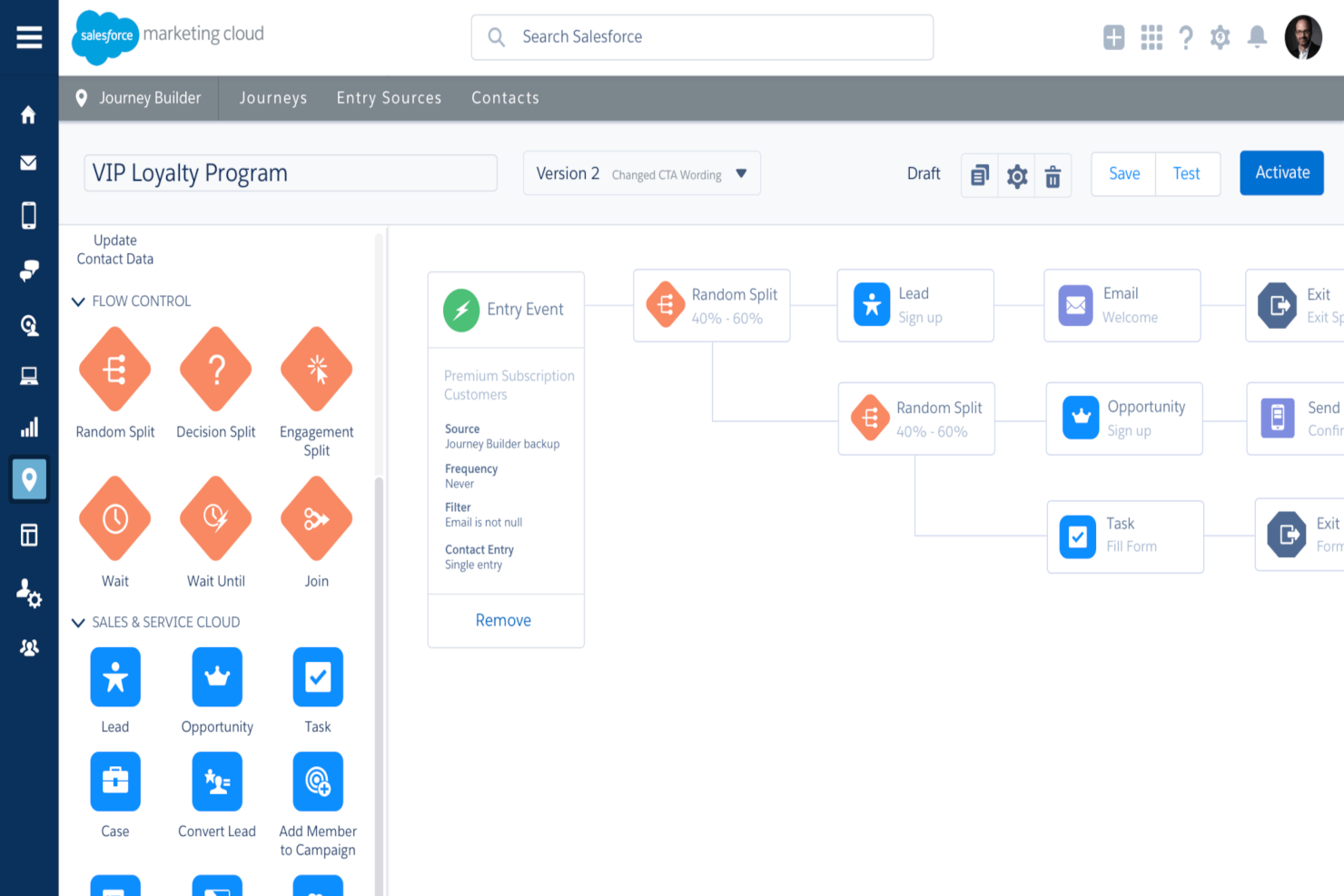
Salesforce CRM is a market leader in CRM solutions and is currently one of the best eCommerce marketing tools in the market. Salesforce CRM helps businesses create and track marketing campaigns.
Salesforce’s Marketing edition unifies and connects a user’s data to enable personalized interactions, allowing marketers to better manage customer loyalty. Marketers can also use Salesforce to automate engagement, optimize marketing using intelligent insights, and personalize the customer experience through their Salesforce Genie. Another unique feature is their mobile marketing capability that allows you to send SMS and MMS to customers to notify them about certain programs, like loyalty programs and other marketing efforts.
Companies can sign up for Salesforce’s products to build their solution according to the products they need. All the information from each module is combined into one dashboard to take advantage of automation to track emails and calls. When used together, Salesforce’s products allow companies to close deals fast, with easy access to data using the Salesforce mobile application. Businesses using Salesforce can also take advantage of their marketing analytics, customer engagement, loyalty management, and other add-on features if they opt to purchase them.
Salesforce CRM offers integrations with many third-party applications, as well as with social media platforms such as Facebook, Twitter, LinkedIn, and Instagram. This allows users to easily monitor conversations about their brand across multiple channels and respond quickly to questions or complaints. Salesforce also integrates natively with Slack, since they recently purchased that platform directly.
Unfortunately, there is no straightforward way of identifying the cost of each product since everything is sold individually to provide users with a personalized platform. Salesforce’s main marketing product is also sold individually and it is necessary to contact the company to get an accurate quote for the product.

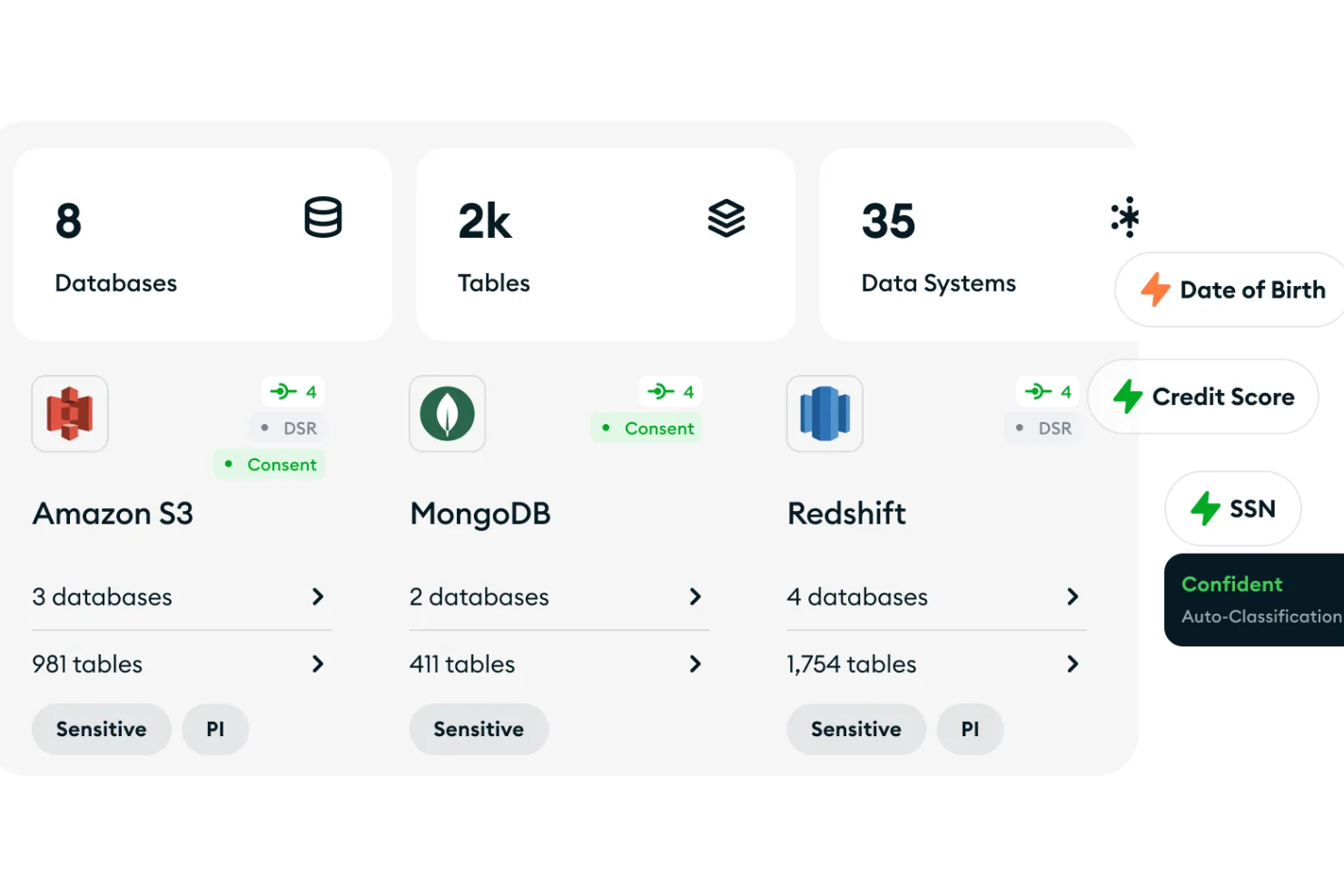
Ketch is a data privacy software designed to help businesses collect and manage customer data responsibly. It ensures compliance with global data privacy regulations while enabling effective marketing strategies.
I like that Ketch offers customizable consent management. You can create consent banners and pop-ups that align with your brand's look and feel, providing a seamless experience for your customers. This customization helps maintain brand consistency while ensuring compliance with data privacy laws.
The platform also offers marketing preference management. This feature allows you to collect and manage customer preferences regarding how they wish to receive marketing communications, whether via email, SMS, or other channels. By honoring these preferences, you can enhance customer satisfaction and engagement.
Other key features include automated data subject request fulfillment, which simplifies the process of handling customer data inquiries, and data mapping, which provides a clear view of your data landscape to identify and manage personal data effectively. Ketch also has risk assessments and reporting, offering real-time insights to help you identify and mitigate potential data privacy risks.
New Product Updates from Ketch

Ketch Expands Marketing Preference Management Capabilities
Ketch expands Marketing Preference Management, introducing capabilities for unifying consent, preferences, and zero-party data across systems. This update enables teams to activate customer data more effectively for personalized and compliant marketing. For more information, visit Ketch’s official site.
 .
.
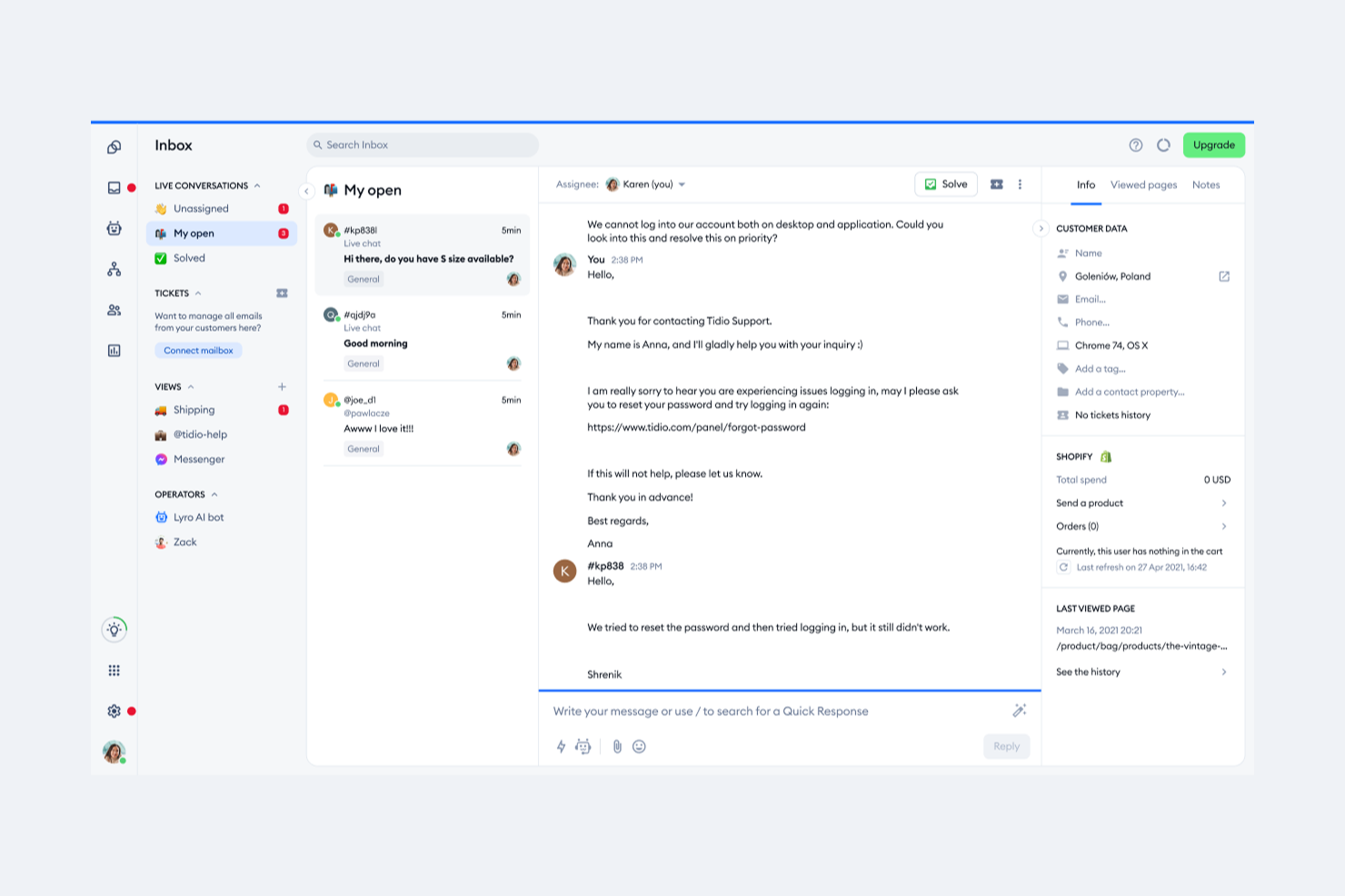
Tidio brings live chat, AI chatbots, and multichannel messaging together in one platform for ecommerce teams. If you manage an online store or handle customer engagement, Tidio helps you connect with shoppers in real time and automate responses across channels. It’s designed for businesses that want to boost conversions, answer questions quickly, and keep support organized without heavy technical setup.
Who Is Tidio Best For?
Tidio is a good fit for ecommerce businesses and online retailers that want to manage customer conversations and automate support across multiple channels without coding expertise.
Why I Picked Tidio
When I need a tool that brings all customer conversations into one place, Tidio stands out for its multichannel support inbox. The platform lets you manage live chat, email, Messenger, Instagram, and WhatsApp messages from a single dashboard, so your team doesn’t have to juggle multiple tabs or apps. I appreciate how Tidio organizes every interaction by customer, making it easy to track history and respond quickly. This setup is especially useful for ecommerce businesses that want to deliver consistent support across every channel shoppers use.
Tidio Key Features
Some other features in Tidio that ecommerce teams might find useful include:
- Multichannel inbox: Manage conversations from live chat, email, Messenger, Instagram, and WhatsApp in a single unified inbox.
- Visitor tracking: See who’s browsing your site in real time and view detailed visitor profiles to personalize outreach.
- Customizable chat widgets: Adjust the look, language, and placement of chat widgets to match your brand and website design.
- Pre-built chatbot templates: Access a library of ready-to-use chatbot templates for common ecommerce scenarios like order tracking, product recommendations, and abandoned cart recovery.
Tidio Integrations
Integrations include Shopify, WordPress, Messenger, Instagram, WhatsApp, Zendesk, HubSpot, Salesforce, Intercom, and Adobe Commerce.
Pros and Cons
Pros:
- Pre-built templates for ecommerce scenarios
- Real-time visitor tracking and profiles
- AI-powered chatbot handles complex queries
Cons:
- Free plan restricts number of conversations
- Some integrations require manual setup
New Product Updates from Tidio

Tidio Expands Lyro AI Across Email and Chat
Tidio expands Lyro AI to email ticketing and enhances its chatbot with Claude 3.0 integration. These updates improve automation across support channels and enhance AI-driven interactions. For more information, visit Tidio’s official site.
 .
.
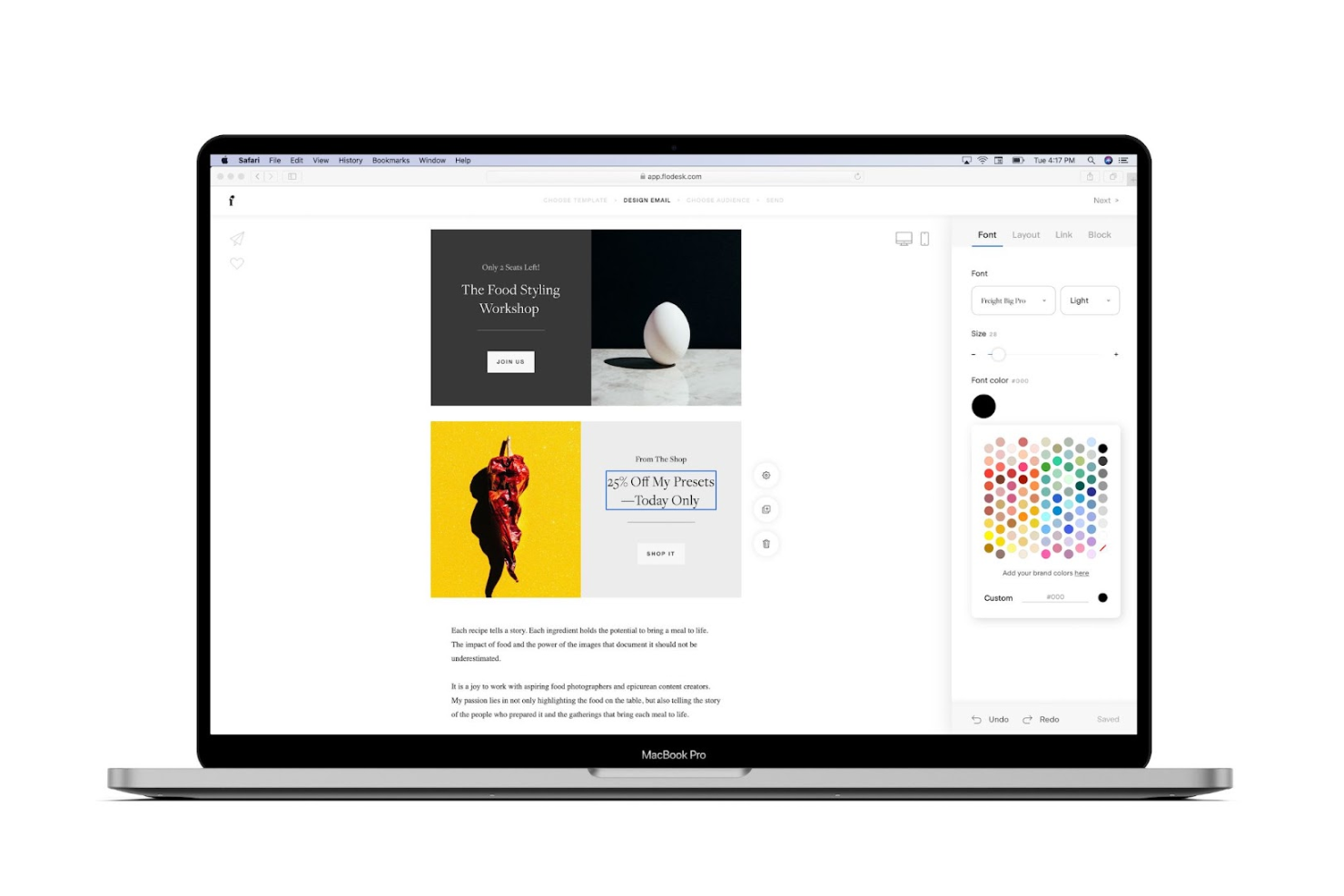
Flodesk empowers small to medium-sized e-commerce businesses with its user-friendly email marketing platform, designed to address the unique challenges of maintaining brand consistency and engaging customers. Its visually rich templates and automation features cater to business owners who aim to create memorable customer experiences without the need for extensive design or technical expertise. By integrating tools that support sales funnels and abandoned cart recovery, Flodesk helps retailers convert potential customers into loyal buyers, making it an appealing choice for those looking to enhance their digital marketing efforts.
Why I Picked Flodesk
I picked Flodesk for its unique ability to combine visually stunning email designs with automation features that cater specifically to e-commerce needs. The platform's patented layouts allow you to create eye-catching emails that maintain brand consistency, which is crucial for engaging your audience. Additionally, Flodesk's automated follow-ups help recover abandoned carts by sending personalized emails, addressing a common challenge in e-commerce businesses. These features, combined with the ability to create high-converting sales funnels, make Flodesk a compelling choice for those looking to enhance their e-commerce marketing strategy.
Flodesk Key Features
In addition to its standout design and automation capabilities, Flodesk offers several other features that support your e-commerce marketing efforts.
- Countdown Timers: Add urgency to your emails to encourage quick decision-making and boost sales.
- Embedded Polls: Gain valuable insights by including polls in your emails, which can help you better understand and segment your audience.
- Subscriber Capture: Easily collect subscribers from your social media profiles using link-in-bio forms to grow your email list.
- Analytics Suite: Access detailed analytics to make informed decisions that drive your business growth.
Flodesk Integrations
Integrations include Shopify, Instagram, Zapier, WordPress, and Facebook.
Pros and Cons
Pros:
- Visually polished email templates
- Built-in automation workflows
- Custom font and brand control
Cons:
- Limited advanced API access
- No built-in SMS marketing

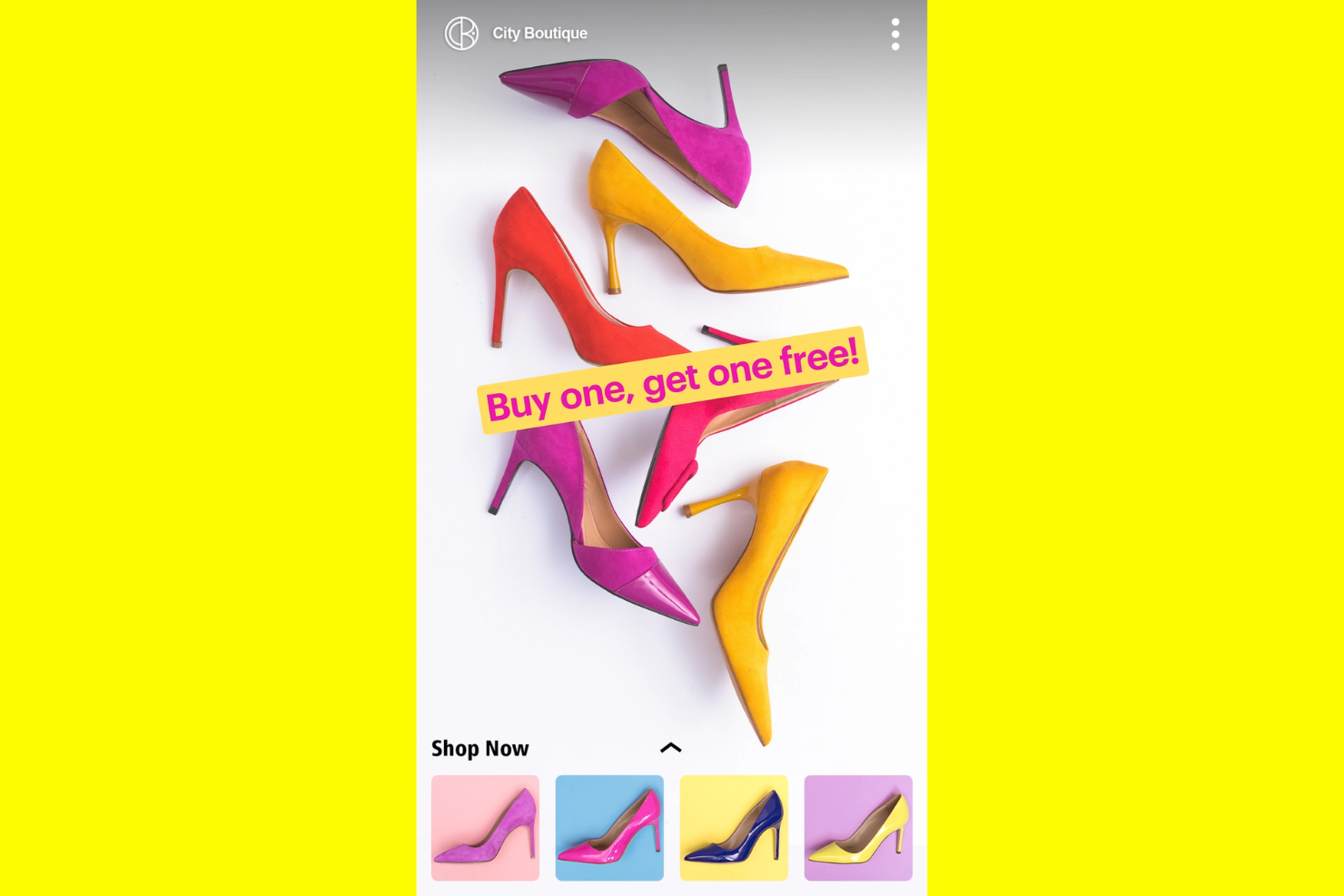
Snapchat is a multimedia messaging app that enables users to share photos, videos, and messages that disappear after being viewed. Beyond personal communication, it offers businesses a platform to reach and engage with a younger audience through various advertising tools.
Snapchat's Dynamic Ads automatically pull product images and details from your catalog to create personalized ads tailored to each user's interests and behaviors. This automation ensures that your audience sees the most relevant products. Additionally, Snapchat's Collection Ads showcase a series of products in a single ad, allowing users to browse and shop directly within the app.
Other features include Snap Pixel, a tool that tracks user actions on your website after interacting with your ads, providing valuable data to optimize campaigns. Another feature is AR Lenses, which allow users to virtually try on products, creating an interactive and immersive shopping experience.
Additionally, Story Ads enable brands to tell a cohesive narrative through a series of images or videos, engaging users and showcasing products in a compelling way.

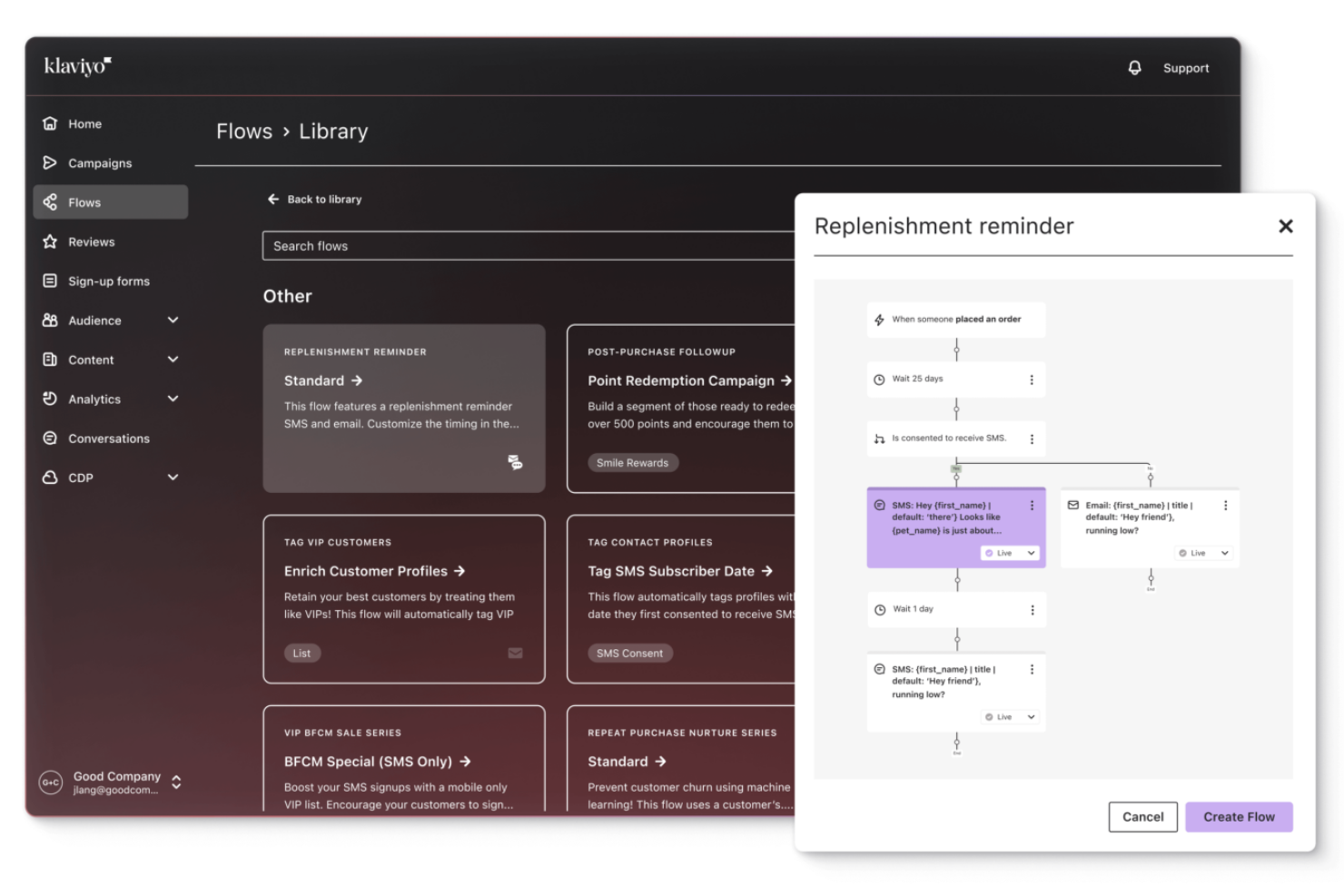
Klaviyo is a data-driven marketing platform built for ecommerce brands that want to upgrade how you communicate with your audience through email and SMS campaigns tied directly to customer behaviors and purchase history. It appeals especially to DTC and online store owners aiming to grow repeat purchases, refine customer journeys, and automate lifecycle messaging without juggling multiple standalone tools.
Why I Picked Klaviyo
I picked Klaviyo because its customer-behavior-driven automation is especially aligned with ecommerce marketing needs, letting you trigger messages based on real actions like cart abandonment and purchase history. Klaviyo’s segmentation features let your team build audience groups using detailed ecommerce data so you can tailor campaigns for repeat buyers or high-value customers.
Its support for both email and SMS in the same platform means you can coordinate messaging across channels without managing separate tools, making lifecycle marketing simpler for your business.
Klaviyo Key Features
In addition Klaviyo offers:
- Drag-and-Drop Email Builder: This intuitive tool allows you to design engaging emails with ease, featuring a library of over 350 customizable templates tailored for ecommerce.
- Klaviyo Flows: Automate your marketing tasks with over 80 pre-built flow templates, streamlining everything from welcome series to abandoned cart reminders.
- AI-Powered Marketing Agents: Uses built-in AI tools to generate campaign content, suggest segments, and optimize strategies based on patterns in your own data.
- Omnichannel Marketing: Supports marketing efforts across various channels, including email, SMS, and social media, ensuring consistent customer engagement.
Klaviyo Integrations
Integrations include Shopify, WooCommerce, BigCommerce, Magento, Salesforce Commerce Cloud, Google Ads, Facebook Ads, Stripe, Zapier, and Mailchimp.
Pros and Cons
Pros:
- Supports omnichannel marketing, including email, SMS, and social media.
- Provides AI-driven insights for personalized marketing strategies.
- Offers comprehensive data integration for unified customer profiles.
Cons:
- Pricing can escalate quickly as contact lists grow.
- Some users desire more customization options.

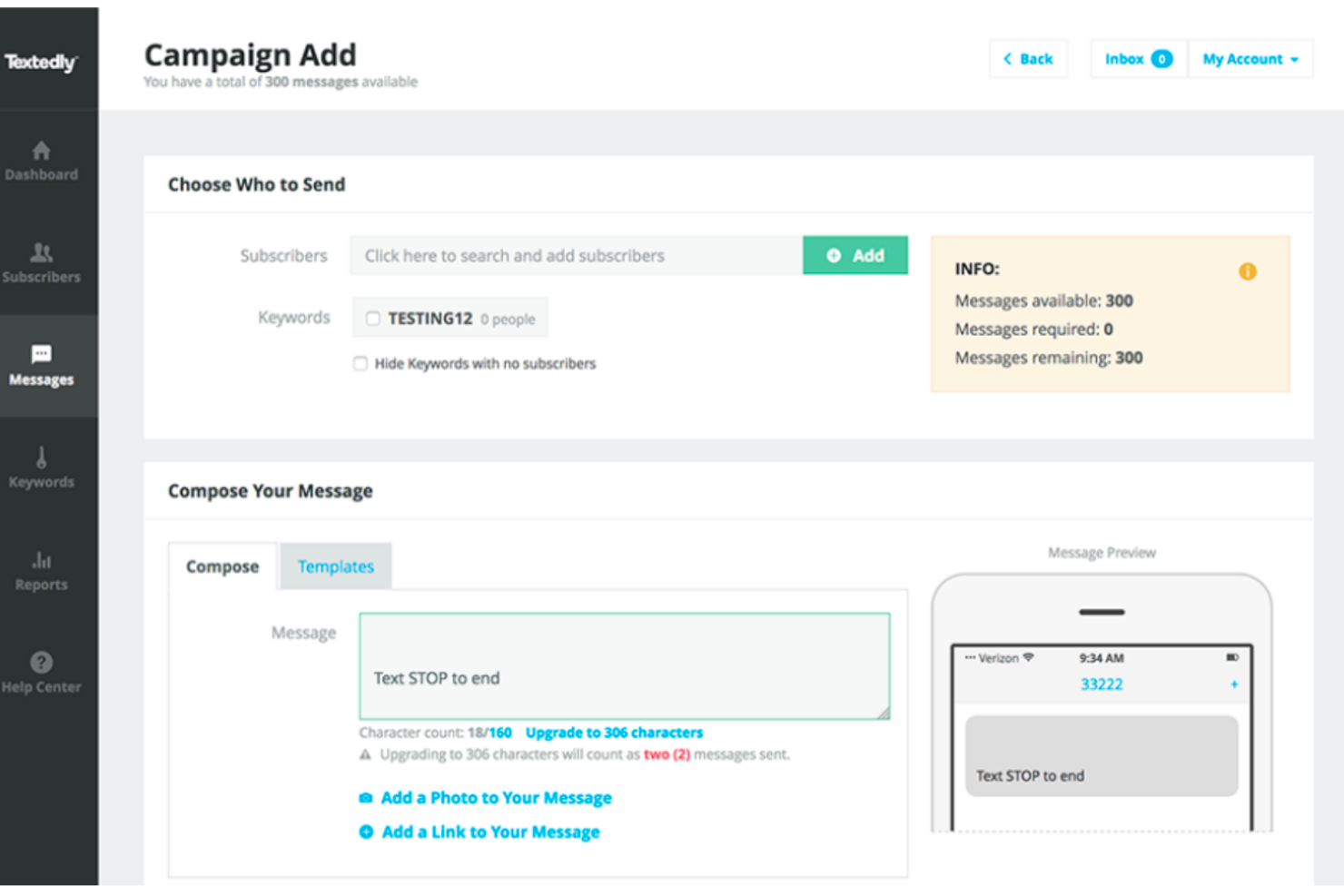
Textedly is a text message marketing platform that allows businesses to send SMS and MMS messages to their customers. It's designed to help you engage with your audience, promote your products, and even handle text-to-pay transactions. With Textedly, you can create and manage your text message campaigns, track their performance, and even schedule messages to be sent at specific times.
I chose Textedly as one of the best ecommerce marketing tools because it offers a unique and effective way to reach customers directly. In today's world, people are constantly on their phones, and text messages have a much higher open rate than emails. This makes Textedly a powerful tool for ecommerce businesses looking to boost their marketing efforts and stay connected with their audience. Plus, it's super easy to use and has a ton of features that make it stand out from other tools in the market.
Several features make Textedly stand out as a top ecommerce marketing tool. First, it offers unlimited subscribers, so you can grow your audience without worrying about hitting a cap. It also provides detailed analytics, allowing you to track the success of your campaigns and make data-driven decisions to improve your marketing efforts.
Another great feature is the ability to send multimedia messages (MMS), which can include images, videos, and even GIFs. This adds a visual element to your marketing campaigns and can help grab your audience's attention. Textedly also offers a keyword feature, allowing customers to text a specific keyword to your number to opt-in to your messaging list. This makes it easy for people to proactively opt-in in a way that is appropriate for most customer messaging privacy laws.
Integrations include Slack, Salesforce, Hubspot, Intercom, Pipedrive, Shopify, Mailchimp, Facebook Lead Ads, Google Sheets, Google Docs, Google Calendar, WordPress, Zoho CRM, Helpscout, Twitter, and others. You can unlock further integrations using Zapier, but that requires a separate subscription and may incur additional costs.

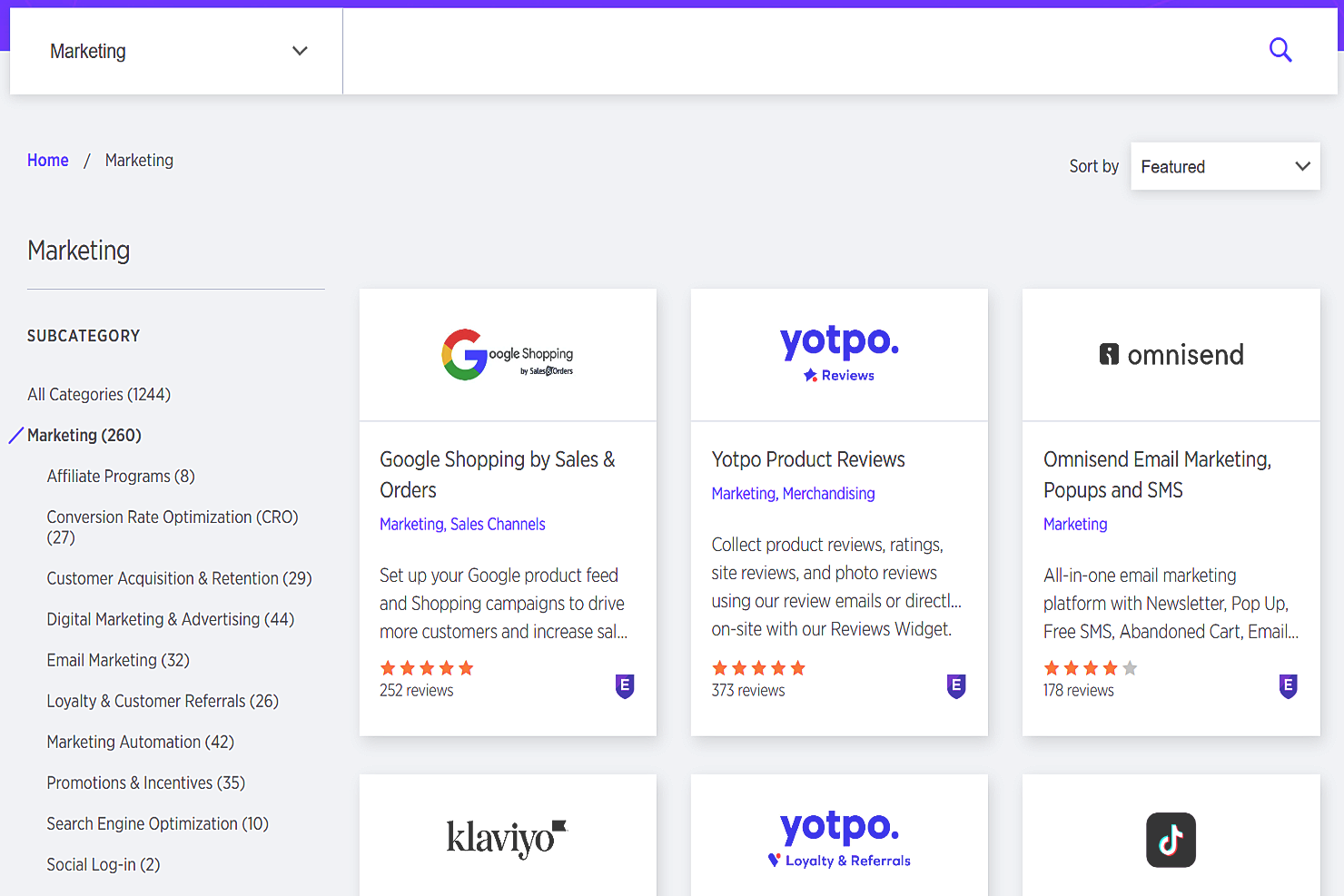
BigCommerce is an ecommerce platform offering a wide range of features such as payment processing, order management, inventory tracking, and product pages. The software comes with built-in SEO features that help users optimize their websites for search engine rankings. This means customers searching for products related to their business will find their website easier and faster.
BigCommerce allows users to easily manage products and inventory with its intuitive dashboard. This includes being able to add or remove products in just a few clicks, as well as setting up product categories and collections for easy sorting. All of this makes it easy for customers to find what they’re looking for without getting overwhelmed by too many choices. Users can also create discount codes, set up shipping rules, and track customer orders all within the same interface.
BigCommerce has powerful marketing automation capabilities that allow users to automate some of the more tedious tasks associated with running an e-commerce store. This includes setting up automated emails that are sent out when customers purchase products or sign up for newsletters, as well as automated social media posts that are triggered when certain conditions are met. This helps merchants save time while still keeping their customers engaged with their brand on multiple channels.
Features include customizable templates, built-in SEO, marketing tools, shipping & fulfillment, inventory management, reporting features, mobile-friendly design, responsive checkout, multiple payment gateway options, extensive third-party integrations, and 24/7 customer support.
Integrations include LiveChat, ShipStation, Georgias, Mailchimp, Quickbooks Online, Yotpo Product Reviews, Justuno, Brightpearl, Acumatica, ActiveCampaign, Hubspot, Klavyio, Shopgate, Printify, and dozens of other apps.

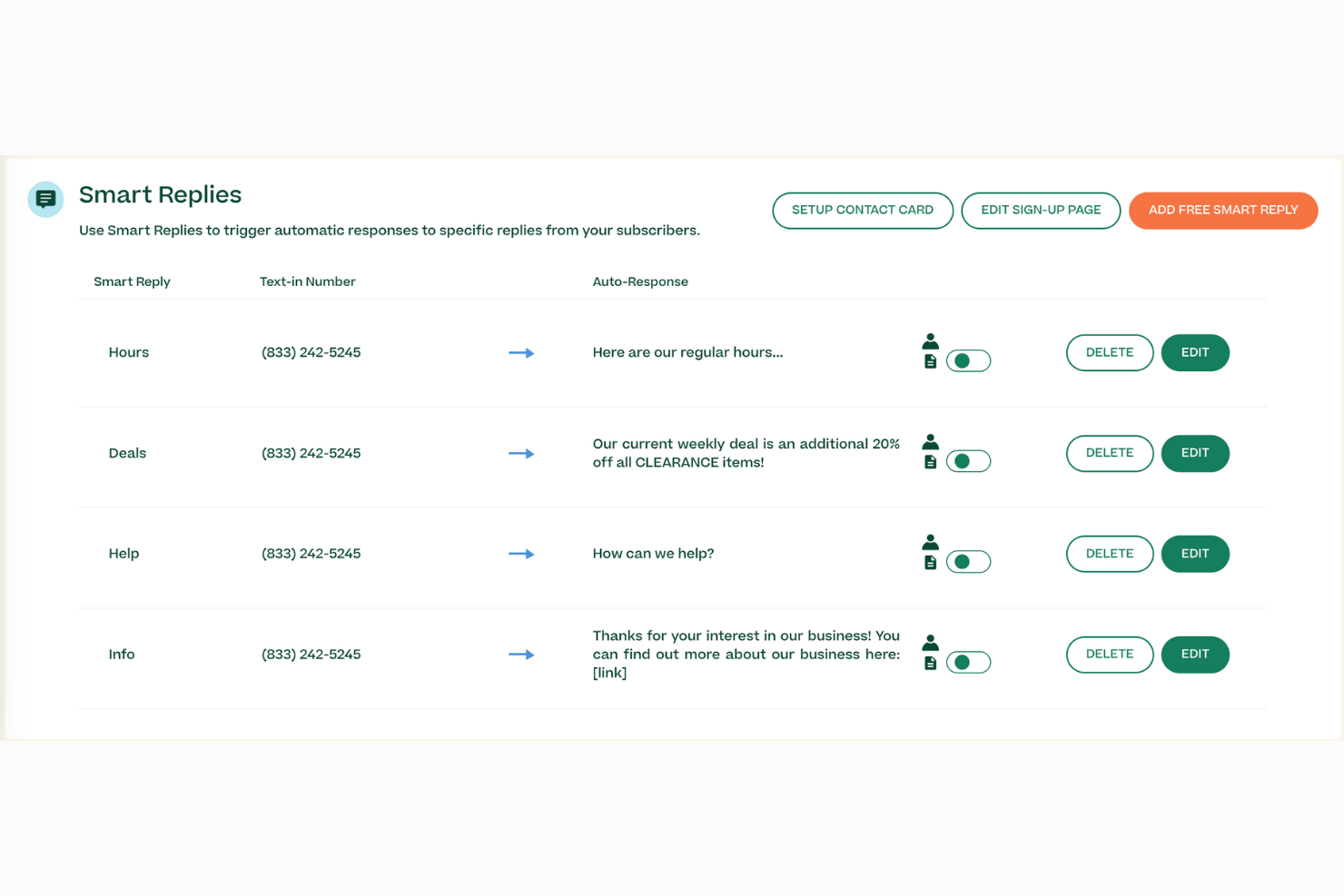
Mobile Text Alerts is an SMS marketing and automation platform that provides a suite of features you can use to connect with customers through text messages. The software's automation capabilities help you streamline your SMS marketing efforts and build smart drip campaigns to nurture your customer base.
Some of the ways you can use this tool are to schedule messages, bulk-send texts to large groups, and create smart replies. You can also use it to craft more personalized messages by syncing contact data from your other tech tools. MMS messaging is available to send multimedia marketing communications, and you can use the two-way texting capabilities for more interactive experiences for your customers.
Its in-depth data analytics and AI technology help you stay ahead of the curve and data-driven. Other cool features are mobile surveys, automated messages, text-to-join options, and customizable keywords for automated responses or alert sign-ups. The mobile app is available for both Android and iOS devices, and integrations can be configured using a paid Zapier account.
Paid plans start from $25 per month, and a 14-day free trial is available.
Funnel is a marketing and data collection tool you can use to help you formulate your marketing campaigns. You can export data from Funnel to any analytics or reporting tool to have meaningful data you can share with employees and stakeholders. If you want to study trends and buying patterns, Funnel keeps data from as far back as two years ago so you have historical data available.
Funnel is the best eCommerce marketing tool for you if you want to base your marketing strategy on a comprehensive database of customer preferences and buying patterns. You can choose from Funnel’s 500+ integrations to ensure that you’re using fresh data from the apps and social media platforms that your customers are using.
If you can’t find the app that you want to pull data from, you can send a request to Funnel and they can work with you on obtaining the data you need. You can integrate Mailchimp, Instagram, Twitter, Salesforce, Facebook, YouTube, and over 500+ other marketing, sales, and eCommerce apps.
Funnel pricing starts at $399/month for up to 5 seats.

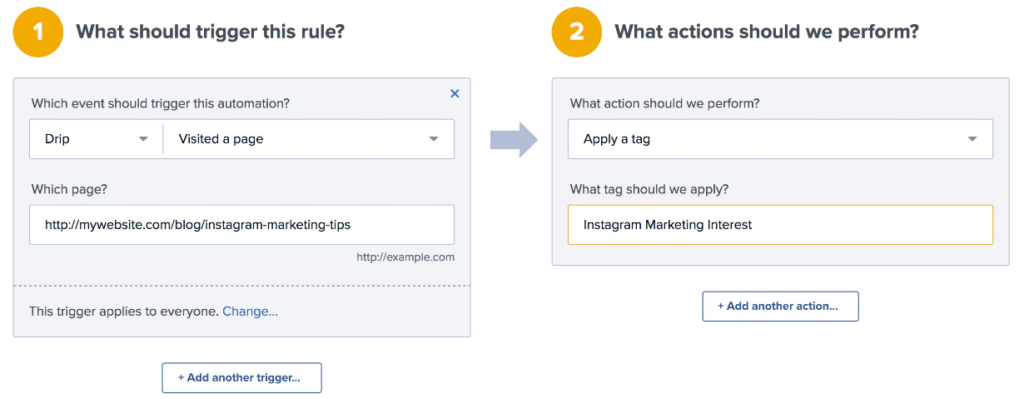
Drip is a marketing automation tool that can help you craft your store’s interactions with leads and launch next-steps campaigns without live agent intervention. You can use Drip to produce new customer welcome series, win-back campaigns, and loyalty workflows. On top of that, Drip harnesses customer data and generates reports around what your audience is browsing, opening, clicking, and buying.
Drip lets you set your own automation rules so the system triggers a marketing action according to customer movement; for example, generating a welcome note for first-time visitors to your site. With Drip, you can automatically generate a follow-up message to a customer with an abandoned cart or alert a customer about a new product based on frequently-visited product pages.
Drip integrates with 100+ productivity apps including Zapier, Recart, Magento, and Shopify.
Drip pricing starts at $39/month and includes a 14-day free trial.


BigCommerce is a SaaS platform specializing in retail services including online store creation, search engine optimization, and web hosting. It boasts multichannel integration so you can run several online stores using just one BigCommerce account. It has powerful APIs so you can customize your store to fit the customer experience that your target market is looking for.
BigCommerce’s advanced yet easy-to-use promotions tools enable you to create discount options without the need for a third-party app. Because of how easy it is to create promotions and discounts using BigCommerce, you can run flash sales, BOGO, or discounts and then track usage metrics to see which is more appealing to customers.
BigCommerce pricing starts at $29.95/month for unlimited users.
Constant Contact is a marketing tool you can use to import customer data for use in your marketing campaigns. If you’re just starting your ecommerce business, you can use Constant Contact to create your eCommerce site with built-in marketing tools and plugins. I also recommend Constant Contact if you want to run your first email marketing campaign because it has built-in templates you can use to run your campaign easily.
If you want to tap the wide reach of social media platforms for your marketing activities then Constant Contact is the best marketing tool for you because it makes social media marketing easy even if you are not tech-savvy.
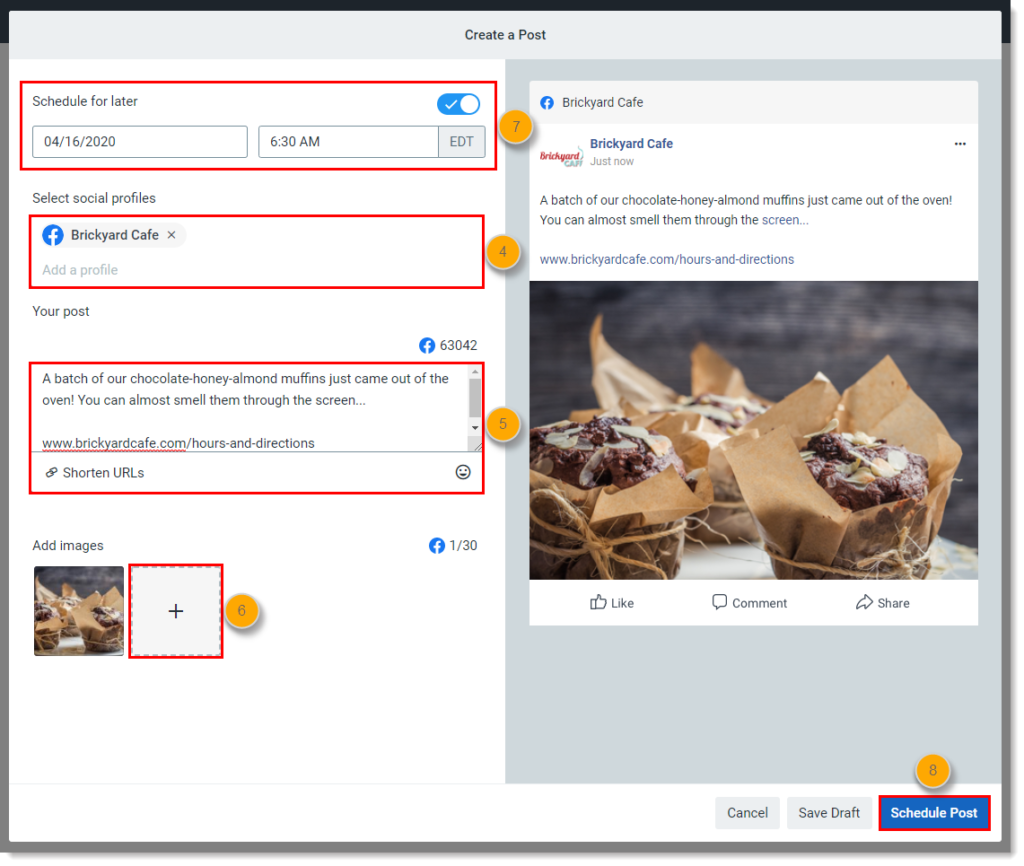
You can use Constant Contact to create and schedule social media posts so your customers receive constant updates about your store’s new products and promotions. Constant Contact allows you to create SEO-optimized Facebook and Instagram ads that create brand awareness and drive traffic to your online store increasing your chances of gaining new customers.
Constant Contact pricing starts at $9.99/month and offers a generous 60-day free trial.

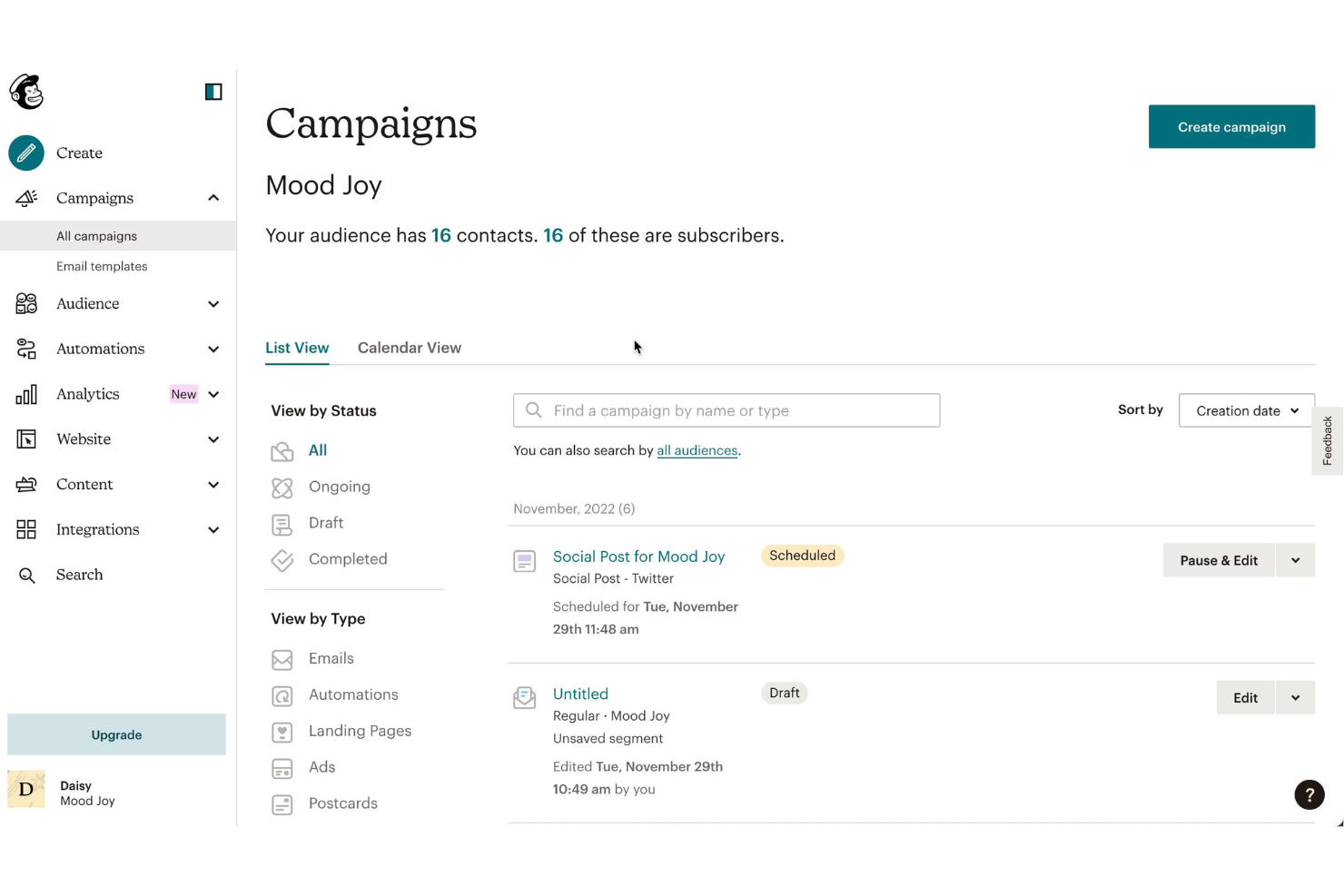
Mailchimp is an email marketing platform designed to help businesses of all sizes create, send, and analyze email campaigns. It's known for its user-friendly interface and comprehensive features, from basic email newsletter creation to complex automation and customer relationship management (CRM) capabilities.
Mailchimp allows users to create personalized email campaigns that cater to specific customer segments, enhancing the relevance and effectiveness of their marketing efforts. The platform's advanced automation features enable businesses to set up trigger-based emails, such as welcome series, abandoned cart reminders, and product recommendations.
In addition to its powerful automation tools, Mailchimp also offers extensive analytics and reporting features that provide insights into campaign performance. Users can track key metrics such as open rates, click-through rates, and conversion rates to gauge the success of their email campaigns. Furthermore, the platform's A/B testing capabilities allow businesses to experiment with different subject lines, content, and send times to determine what resonates best with their audience.
Mailchimp's CRM capabilities also enable users to manage their customer data, segment their audience, and create targeted campaigns based on customer behavior and preferences. The platform supports integration with various ecommerce platforms like Shopify, WooCommerce, and BigCommerce, allowing businesses to easily sync their store data and automate their marketing efforts.
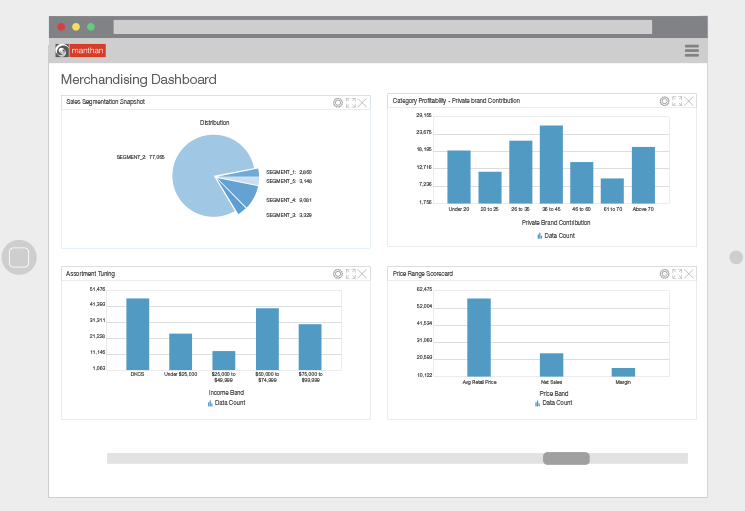
Algonomy is a suite of digital retail apps that use AI to help you streamline your customers’ shopping experience. It has an exhaustive pre-built library of commerce strategies you can choose from with templates and built-in tips to help you activate them.
It also provides you with a centralized system to automate supplier-related processes like onboarding, order processing, and payments.
Algonomy is the best eCommerce marketing tool for you if you want to have a better grasp of who your market is because of its powerful customer analytics tool.
It can use your eCommerce site’s data to determine the age and demographics of your customers.
Algonomy uses real-time customer data so you can alter your product offerings depending on who your customers are at any given time.
Algonomy pricing is available upon request.
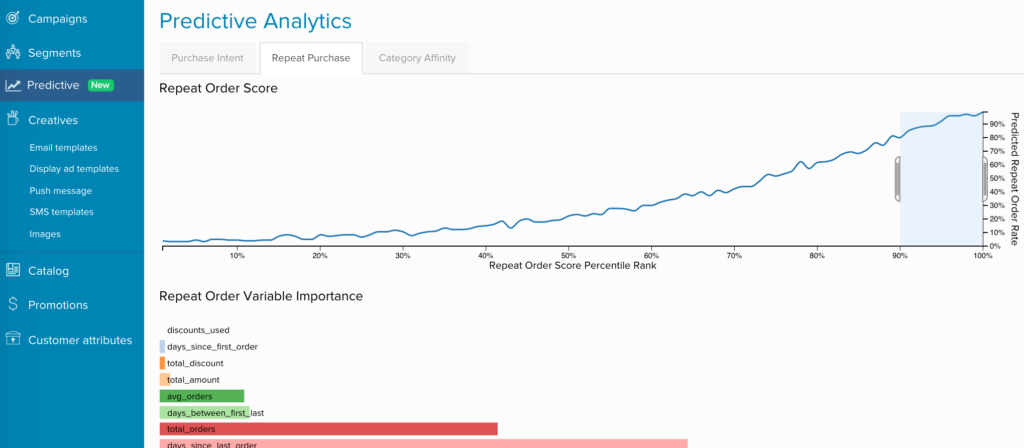
Blueshift is a digital marketing and automation software that is GDPR, CCPA, SOC2, and HIPAA compliant. It offers SMS, email, and content marketing for your online business.
Blueshift’s AI determines the best time to send emails or text messages to customers, improving deliverability and open rates. It also does website personalization, audience targeting, omnichannel orchestration, and contextual chat support. One of the key things Blueshift offers is a comprehensive predictive intelligence platform that leverages the power of artificial intelligence to estimate engagement, purchases, and churn rates amongst your customer base.
The solution flags those users most likely to make a purchase based on where they are in the customer journey funnel; then, you can build marketing campaigns to target those most ready-to-buy audiences.
Blueshift integrates with Facebook, Zapier, Google Ads, Snapchat, Shopify, and others. Blueshift pricing is available upon request.
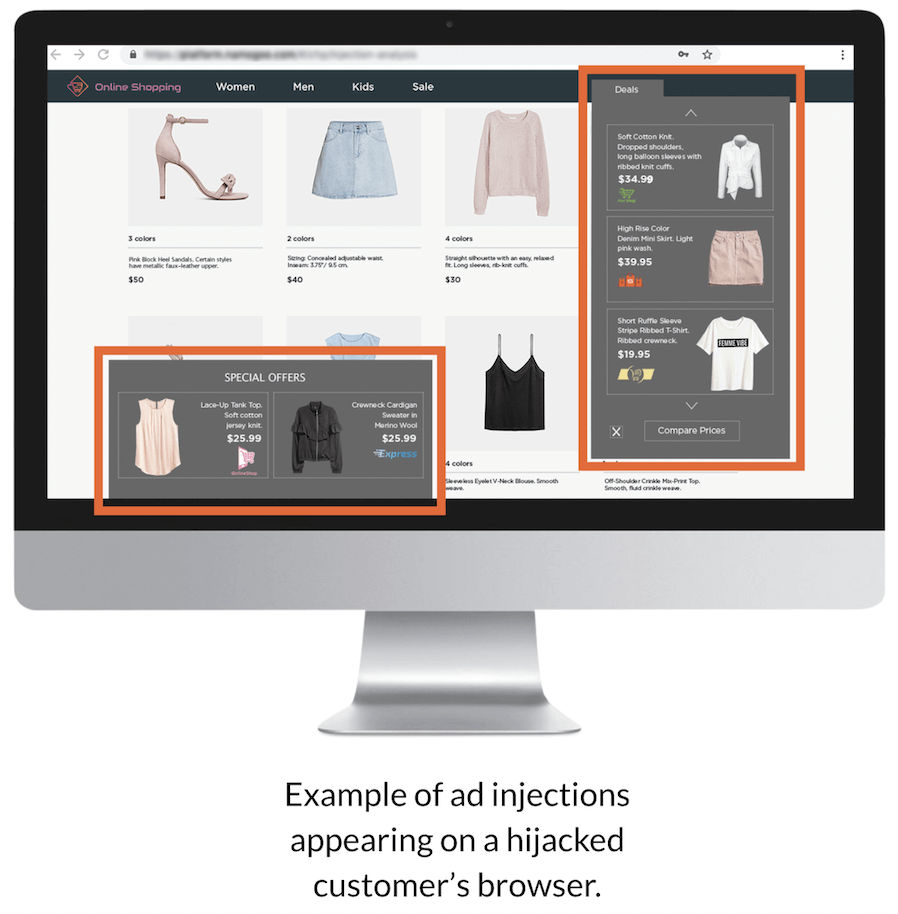
Namogoo is a SaaS platform that helps eCommerce platforms gain new customers through eCommerce tools like intent-based promotions and shopper extensions management. It also has an anti-customer hijacking feature that helps get rid of ads from competitors from your website.
Namogoo can also help you use SMS and emails to engage your customers and improve your store’s conversion rates. Namogoo has a unique focus on customer hijacking prevention, which has been successfully employed by digital teams at Carhartt, Dollar Shave Club, and Argos (to name a few). This feature intercepts your competitor’s ads that might appear on or around your content in an attempt to lure your customers elsewhere.
Namogoo works to “hijack the hijacking” and redirect users to better deals on your site using Microsoft Machine Learning and Azure technologies. Namogoo integrates with WordPress, Magento, Google Analytics, Wix, Facebook Ads, and other ecommerce tools.
Namogoo pricing is available upon request.
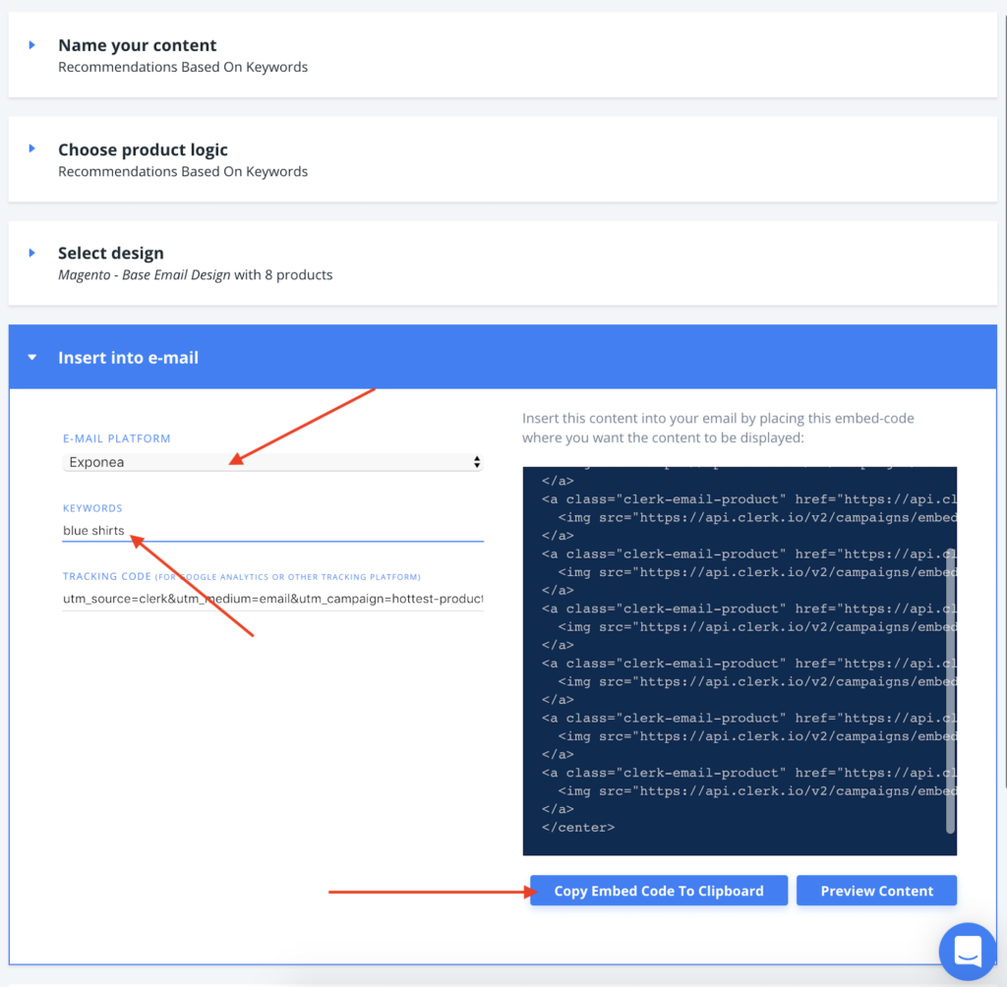
Clerk.io is an ecommerce marketing and personalization platform that can help you grow sales through ads, emails, social media campaigns, and behavioral-based product recommendations.
Clerk.io uses AI to match customers to products they are most likely to buy according to user actions on the page or prewritten rules you input yourself. The platform also helps users search for products easily through predictive text, spellcheck, and synonyms check.
Clerk.io is best for you if you want to improve your email marketing strategy because of its new email marketing module. You can use Clerk.io’s pre-built triggers to automatically send emails to customers in various stages of the buying/returning pipeline so that good leads don’t go to waste.
Clerk.io’s fully automated email sending also targets customers according to their interests and buying patterns, ensuring that customers receive product recommendations that fit their wants and needs.
Clerk.io integrates with Shopify, Magento, WooCommerce, BigCommerce, and others. Clerk.io’s pricing starts at $99/month per feature (search, recommendations, email, or audience).
There is a 7-day free trial with an option to extend the trial period upon request.
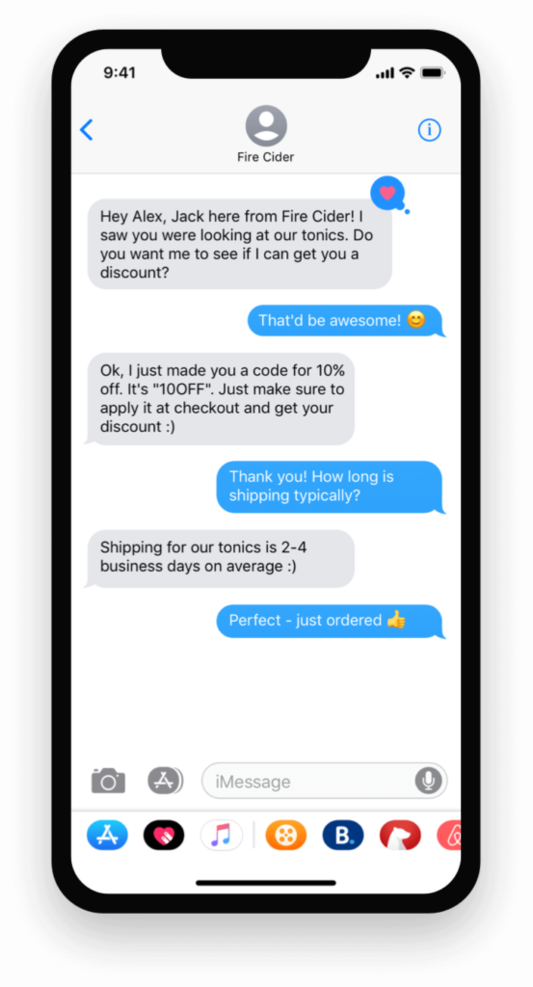
Emotive is an SMS marketing tool for eCommerce platforms used by SMBs and niche sellers like Alumite (household cleaner), 1822 Denim (apparel), Piper Finn (baby), Good Day Chocolate (health & food), and Dream Duffel (sports). Noteworthy features include form building, compliance monitoring (TCPA, CCPA, and CTIA), chat automations, abandoned cart recovery, conversational re-orders/subscriptions, and broadcast segmentation.
Emotive is the best eCommerce marketing tool if you prefer SMS marketing over other avenues. Instead of generic text blasts, Emotive empowers agents to hold conversations with customers through text messages that go above and beyond bot-generate FAQ regurgitation.
Emotive adds much-needed personal flourishes to SMS marketing, fostering both conversations and conversions. Emotive integrates with 20+ integrations including Magento, Mailchimp, Slack, and Shopify.
Emotive pricing is available upon request and they offer a 14-day free trial.

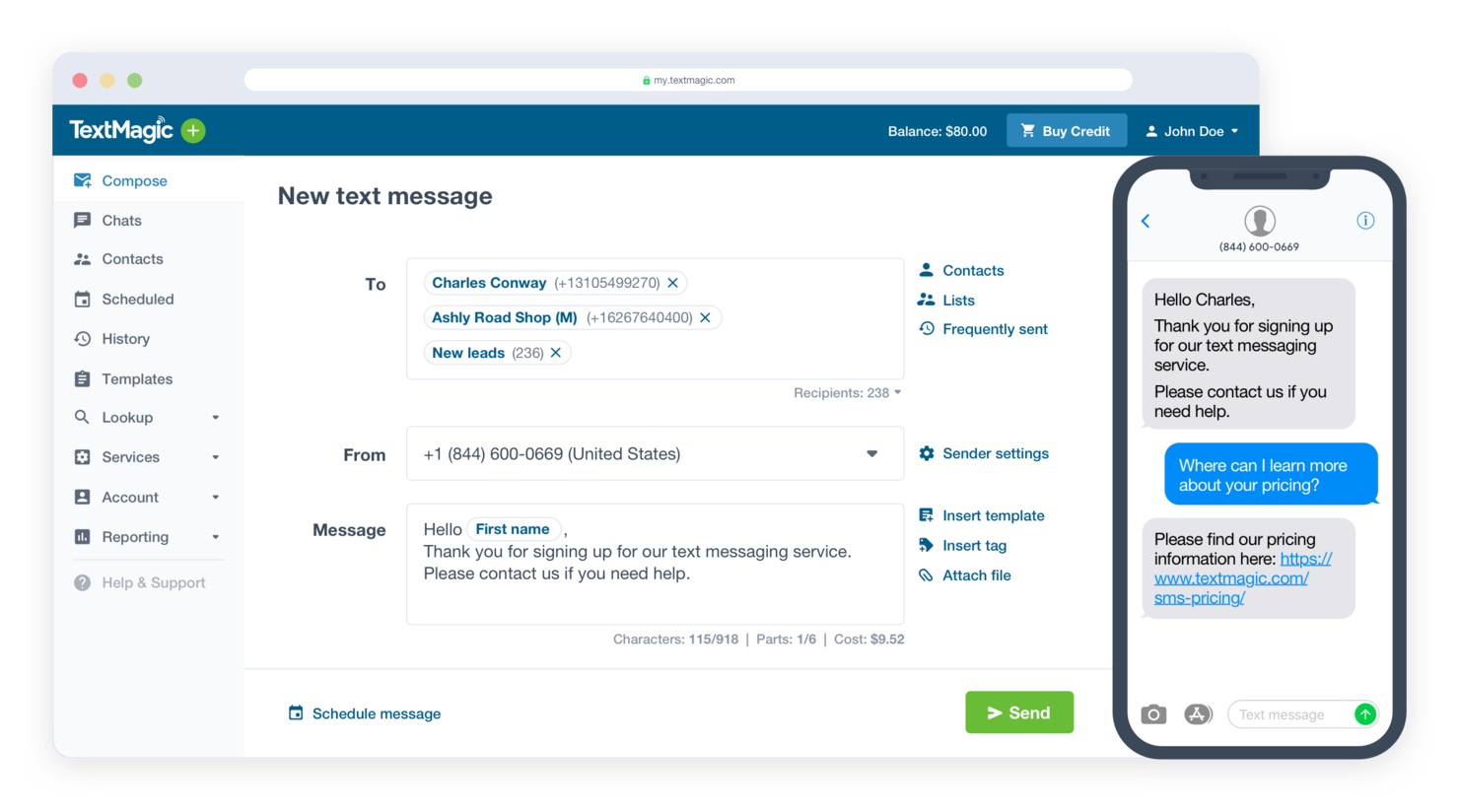
TextMagic is a versatile and user-friendly online text messaging service that empowers businesses and individuals to send and receive SMS messages globally. With its intuitive platform and robust features, TextMagic enables users to effortlessly manage their communication needs, including sending bulk SMS campaigns, scheduling messages, automating responses, and integrating with various applications through APIs. Its focus on accessibility and ease of use makes it a valuable tool for businesses looking to enhance customer engagement, streamline communication, and reach their target audience via SMS. TextMagic also stands out with unique features such as two-way email to SMS conversion and access to virtual mobile numbers in over 200 countries, further elevating its appeal for diverse communication needs.
TextMagic is a potent tool for ecommerce marketing, enabling businesses to boost sales and customer engagement. Ecommerce marketers can leverage TextMagic to send personalized SMS messages to customers, promoting new product launches, flash sales, or special discounts. With features like audience segmentation, they can target specific customer groups based on purchase history or preferences, ensuring relevant content. The scheduling feature ensures that messages are sent at optimal times for higher open rates. Additionally, TextMagic's two-way communication allows customers to inquire about products or receive order updates via SMS, fostering a strong customer-brand relationship. This robust platform provides ecommerce businesses with the means to enhance their marketing efforts, increase conversions, and deliver exceptional customer experiences through SMS marketing.
TextMagic offers a distinctive feature that allows users to send and receive SMS messages directly through their email client. This seamless integration simplifies communication by enabling users to send SMS messages from their familiar email platform and receive responses in their email inbox. This unique capability caters to users who prefer email for communication while also offering an efficient way to combine email and SMS in their communication strategy, setting TextMagic apart from competitors that may lack this feature.
TextMagic provides access to virtual mobile numbers in more than 200 countries, a rare and highly valuable feature for businesses with international operations or global customer bases. These virtual numbers allow users to send and receive SMS messages as if they were using a local mobile number in the respective country. This feature significantly enhances the credibility and accessibility of their SMS communication, making TextMagic a standout choice for businesses with diverse geographic requirements and setting it apart from competitors with limited international reach.
Integrations are possible using their REST API and email to SMS API. You can access additional integrations through Zapier, like Lucid Meeting, Calendly, and Google Calendar, but this requires a separate plan and may cost extra.
TextMagic costs from $0.049/text (pay-as-you-go-model) and has a 30-day free trial.
Other Options
Here’s a few more that didn’t make the top list.
- Adriel
An easy-to-use marketing analytics platform that centralizes marketing insights.
- Trellis
For Amazon sellers
- ActiveCampaign
Cloud-based platform with CRM tools and marketing automation functionality.
- Omnisend
Omnichannel marketing automation platform for email, SMS, pop-ups, segmentation, push notifications, and Facebook and Google ads.
- Shopify Plus
Commerce platform for enterprise-level brands.
- Helium 10
Software suite for advertising intended for Amazon sellers.


Our Selection Criteria for Ecommerce Marketing Tools
Choosing the right ecommerce marketing tool is like picking the right tool for a job—it needs to be efficient, easy to use, and able to grow with your business. To help you make the best choice, we’ve developed a weighted scoring system that breaks down the key factors you should consider when evaluating your options.
Here’s how we scored the tools:
Core functionality (25% of total weighting score)
This is the must-have stuff—the features that form the backbone of any good ecommerce marketing tool:
- Automation. The tool should automate repetitive tasks like email campaigns, social media posts, and customer follow-ups, freeing you up to focus on bigger-picture strategy.
- Personalization. From personalized product recommendations to dynamic content, the tool should help you deliver tailored customer experiences.
- Multi-channel marketing. Whether it's email, social media, or SMS, the tool needs to support a range of marketing channels to meet customers where they are.
- Analytics and reporting. Insights are key. The tool should offer in-depth reports on campaign performance, conversions, and customer behavior to help you refine your strategy.
- Integration capabilities. The tool should integrate seamlessly with your ecommerce platform (like Shopify or WooCommerce), CRM, and any other tools in your tech stack.
Additional standout features (25% of total weighting score)
These extras can make a good tool great, giving you the edge in your marketing efforts:
- AI-driven insights. The tool should leverage AI to predict customer behavior, personalize content, or recommend campaign adjustments.
- Advanced segmentation. The ability to create highly targeted segments based on customer behavior, purchase history, and more.
- A/B testing. Testing different versions of campaigns to see which performs better is crucial for optimization.
- Lead scoring. Helps you prioritize high-value prospects, so you can focus your efforts where they’ll have the most impact.
- Cross-platform tracking. The ability to track customer interactions across multiple devices and platforms to get a holistic view of your marketing performance.
Usability (10% of total weighting score)
Ease of use matters. A tool that’s too complicated will slow you down, no matter how powerful its features are:
- User-friendly interface. The tool should be easy to navigate, even for non-tech-savvy team members.
- Efficient workflows. Look for tools that streamline processes and make it easy to manage campaigns without jumping through hoops.
- Customization. Whether it’s dashboards or reports, the tool should allow for flexibility so you can tailor it to your needs.
Onboarding (10% of total weighting score)
How quickly can you get started? Onboarding is key to hitting the ground running:
- Training resources. Look for tools that offer tutorials, knowledge bases, or webinars to get your team up to speed.
- Product demos. A hands-on demo or free trial can make all the difference in seeing how well the tool fits your business needs.
- Onboarding support. Dedicated customer success teams or onboarding specialists can help you set everything up correctly from the start.
Customer support (10% of total weighting score)
When things go wrong, good support can save the day:
- Responsive support team. Whether it’s through chat, email, or phone, the tool should offer timely support when you need it.
- Comprehensive resources. A good tool should have extensive FAQs, documentation, and video tutorials to help you troubleshoot on your own.
- Proactive support. Tools that offer onboarding calls or regular check-ins to ensure you’re getting the most out of their platform.
Value for money (10% of total weighting score)
You want a tool that delivers real value without breaking the bank:
- Flexible pricing plans. Whether you're a startup or an established business, the tool should offer pricing plans that scale with your business.
- Transparent costs. There shouldn’t be any surprises when it comes to pricing. Make sure you understand what you’re paying for and that there are no hidden fees.
- Free trials or freemium versions. Look for tools that offer a free trial or a basic version to test the waters before committing to a paid plan.
Customer reviews (10% of total weighting score)
What do other users say? Customer reviews are a great way to gauge real-world performance:
- High satisfaction rates. Look for tools with consistently positive feedback on features, usability, and support.
- Positive feedback on usability. Reviews that highlight ease of use can help confirm that the tool will be a good fit for your team.
- Praise for customer support. Tools with a reputation for responsive and helpful customer service can make your life much easier.
- Favorable comparisons. See how the tool stacks up against its competitors in terms of features, pricing, and performance.
By weighing these criteria, you can find the ecommerce marketing tool that best fits your business needs and helps you streamline your marketing efforts.
What are Ecommerce Marketing Tools?
Ecommerce marketing tools are software platforms that help online brands attract, engage, and convert customers—without drowning in busywork.
They handle everything from automated email blasts to scheduling social posts, crunching your analytics, and launching ads that actually hit the mark.
Whether you’re wrangling abandoned carts or teeing up those perfectly-timed “treat yourself” promos, these tools exist to make scaling your store possible—and a lot less painful.
If growing your brand sounds better than spreadsheet purgatory, ecommerce marketing tools are the power-up your workflow’s been missing.
How to Choose the Best Ecommerce Marketing Tools
Choosing the right ecommerce marketing tool doesn’t have to be overwhelming if you focus on what really matters.
Here’s how to make sure you pick the tool that fits your business like a glove:
- Assess your business size and needs. Are you a small startup, a scaling business, or an enterprise? Pick a tool that not only fits your current size but can grow with you. Don’t settle for something that you’ll outgrow in six months.
- Set your budget. Determine how much you’re willing to invest and stick to it. Some tools are free or offer affordable entry plans, while others have premium features that may be worth the extra cost. Make sure the ROI justifies the spend.
- Choose something easy to use. Your marketing tool shouldn’t feel like a puzzle to solve. Go for a platform with an intuitive interface, so you and your team can hit the ground running without spending weeks learning how it works.
- Check for seamless integrations. Make sure the tool integrates smoothly with your existing ecommerce platform (like Shopify or WooCommerce) and other tools in your tech stack. The fewer compatibility issues, the smoother your operations will run.
- Prioritize automation and personalization. Look for tools that can automate repetitive tasks—like email campaigns and social posts—so you can free up time to focus on strategy. And don’t forget personalization features to engage customers on a deeper level.
- Verify customer support. No matter how great the tool is, you’ll need help at some point. Check reviews for reliable customer support or see if the tool offers dedicated help channels like live chat, phone support, or onboarding services.
Ecommerce Marketing Tool Trends
Ecommerce marketing is constantly evolving, and this year is set to introduce some game-changing trends. As technology advances and consumer expectations rise, ecommerce businesses must adapt to stay competitive.
Here are some key trends shaping the future of ecommerce marketing:
- AI-driven personalization. AI tools are increasingly used to tailor customer experiences, offering personalized product recommendations, content, and even pricing based on real-time behavior. This makes marketing feel more relevant and increases customer engagement.
- Social commerce expansion. Social platforms like Instagram, TikTok, and Facebook are becoming integral sales channels, allowing users to discover and purchase products directly in-app. This trend makes shopping more seamless and taps into impulse buying behavior.
- Sustainability as a selling point. Consumers are prioritizing brands that adopt eco-friendly practices, from sustainable packaging to carbon-neutral shipping. Marketing tools that highlight a brand's commitment to sustainability can attract these environmentally conscious shoppers.
- Omnichannel marketing integration. Customers expect a consistent and unified experience across platforms like email, social media, and SMS. Ecommerce marketing tools that help brands synchronize campaigns across multiple channels will be essential for maintaining customer loyalty.
- Augmented reality (AR) and immersive shopping. AR is enhancing online shopping by letting customers virtually try on products or see how items would look in their homes. More ecommerce brands will adopt AR to create immersive shopping experiences that bridge the gap between physical and digital retail.
- First-party data and privacy-focused strategies. With the decline of third-party cookies, ecommerce businesses are shifting towards collecting first-party data through owned channels. Tools that help brands manage customer data while adhering to privacy regulations will be crucial for maintaining personalized marketing efforts.
Key Features of Ecommerce Marketing Platforms
Ecommerce marketing tools come in all shapes and sizes, with different tools excelling at different parts of your marketing strategy.
Some are built for email marketing, others for social media management or SEO, so you won’t find every feature in every tool.
That said, here are some key features that either apply widely or are essential to specific types of tools:
- Automation. This is a must-have for many tools, especially in email marketing and social media management. Automate tasks like sending email campaigns, scheduling posts, or triggering follow-ups based on customer behavior, so you can focus on strategy instead of manual tasks.
- Personalization. Found mainly in email marketing and customer engagement tools, personalization allows you to tailor messages based on customer preferences, behavior, and past purchases. The more personalized your campaigns, the better your chances of converting leads into loyal customers.
- Multichannel marketing. Tools that support multiple marketing channels—like email, social media, SMS, and even push notifications—give you the flexibility to reach your customers wherever they spend time online. Not all tools offer this, but it's particularly valuable for businesses looking to build cohesive, cross-channel campaigns.
- Segmentation. Tools with strong segmentation capabilities (like email and CRM platforms) let you group your audience based on demographics, buying behavior, or interactions with your brand. This is essential for targeted marketing efforts that feel personal and relevant to each customer segment.
- Analytics and reporting. Whether it's tracking the performance of an email campaign or measuring social media engagement, robust analytics is key. Most tools will have some level of reporting, but the best ones offer customizable reports and actionable insights so you can track KPIs that matter to your business.
- SEO tools. For businesses focused on organic growth, SEO-focused tools (like SEMrush or Ahrefs) provide features like keyword research, on-page optimization, and content analysis. While not a feature found in all marketing tools, it’s essential for any tool that claims to help with search visibility.
- Social media management. If social media is a big part of your strategy, look for tools that let you schedule, post, and analyze content across multiple platforms from one place. Tools like Hootsuite and Buffer excel here, offering engagement tracking and performance metrics for your social campaigns.
- A/B testing. Common in email marketing and landing page optimization tools, A/B testing helps you experiment with different versions of campaigns or website elements to see which one performs better. This feature can drive incremental improvements in your marketing performance over time.
- Integration with ecommerce platforms. The ability to integrate with your ecommerce platform (like Shopify, WooCommerce, or Magento) is crucial for many tools. This feature lets you pull in real-time customer data, track sales directly from campaigns, and synchronize marketing efforts with store activity. Not every tool needs this, but for ecommerce-heavy operations, it’s essential.
While different tools prioritize different features, the right combination will depend on your marketing goals and the channels you focus on.
Benefits of Using Ecommerce Marketing Tools
Ecommerce marketing tools can completely transform how you manage your marketing efforts, making your processes more efficient, your campaigns more effective, and your customer relationships stronger. Here are some of the top benefits businesses can expect from using these tools:
- Automation of tedious tasks. From sending out abandoned cart emails to scheduling social media posts, marketing tools take care of the boring stuff so you don’t have to. This means fewer tasks to juggle, better consistency, and more time for your team to focus on high-impact initiatives.
- Increased efficiency. By automating tasks like email campaigns, social media posts, and customer follow-ups, marketing tools free up your time so you can focus on strategy and growth instead of manual, repetitive tasks.
- Better customer engagement. With tools that enable personalized messages and targeted campaigns, you can connect with your audience in a more meaningful way. Customers are more likely to engage with content that feels tailored to them, leading to stronger relationships and higher conversion rates.
- Data-driven decisions. Most ecommerce marketing tools come with robust analytics and reporting features that help you track performance across channels. These insights allow you to make smarter, data-backed decisions about where to invest your marketing efforts for the best returns.
- Scalability. As your business grows, so do your marketing needs. The right tools grow with you, whether it’s through more advanced features, larger customer databases, or additional marketing channels. You’ll be able to scale your efforts without overwhelming your team.
- Improved ROI. By optimizing campaigns and targeting the right audience with the right message at the right time, these tools can help boost your marketing ROI. Better segmentation, personalization, and testing can lead to more effective campaigns that convert more customers with less waste.
- Multichannel management. Many tools allow you to manage your marketing across several platforms (email, social media, SMS, etc.) from a single dashboard. This centralizes your efforts and helps ensure consistent messaging across all your channels without extra effort.
- Enhanced customer insights. With customer data being tracked across campaigns and platforms, these tools help you understand your customers' behavior, preferences, and journey. This data can be used to refine your marketing strategy and deliver more targeted, impactful campaigns.
Ecommerce Marketing Software FAQs
We talked about a few things here, but there’s always other stuff that comes up. Here’s my attempt to catch the questions still lingering.
What’s the difference between all-in-one ecommerce marketing platforms and specialized tools?
All-in-one ecommerce marketing platforms combine functions like email, SMS, automation, and analytics in one place. Specialized tools focus on a single area, like SEO or email, and go deeper in that feature.
If you want simplicity and a single login, go all-in-one. If you need advanced control for a single channel, pick a specialized tool.
How do ecommerce marketing tools integrate with my existing ecommerce platform?
Most ecommerce marketing tools offer native integrations or plugins for popular platforms like Shopify, WooCommerce, or BigCommerce. Integrations let you sync product catalogs, order data, customer lists, and automate campaigns based on user actions. Always check integration options before you choose a tool to ensure setup is hassle-free.
Can I get started with free ecommerce marketing tools, or should I invest in paid ones?
Yes, you can start with free ecommerce marketing tools—many offer basic features like email campaigns or simple automation at no charge. Start free to test usability and ROI.
As your store grows, upgrade to paid plans for scalability, better segmentation, and advanced automation that free plans limit.
How can I measure the success of my ecommerce marketing campaigns using these tools?
Track core metrics: conversion rates, average order value from campaigns, open and click-through rates for emails, and cart recovery rates. Use built-in dashboards to compare campaign results over time. Set clear goals (e.g., increase repeat purchases by 10%) and review your data monthly to spot trends and adjust strategy.
How can ecommerce marketing tools help me recover abandoned carts?
Most ecommerce marketing tools offer abandoned cart recovery features, like automated emails or SMS reminders when a customer leaves items. Set up sequences that trigger 1-3 timely follow-ups with personalized messages or discounts. Track recovery rates to tweak timing and content for better results.
Do ecommerce marketing tools support multichannel campaigns (email, SMS, social, etc.)?
Yes, many leading ecommerce marketing tools support running campaigns on email, SMS, push notifications, and even social media ads from a single dashboard. This lets you create consistent messaging across channels, reach customers where they engage, and analyze performance in one place.
How do I ensure data privacy and compliance when using ecommerce marketing tools?
Choose tools that comply with regulations like GDPR and CCPA. Look for built-in consent management, options to let customers manage preferences, and regular security updates.
Always review a tool’s privacy policy and set up double opt-ins for emails or texts to stay compliant and protect customer trust.
Other Ecommerce Marketing Software Reviews
Here are a few other lists of key ecommerce marketing software that you can consider for your overall marketing strategy.
- Marketing Resource Management Software
- Ecommerce Content Marketing Platforms
- Ecommerce Email Marketing Software
- Marketing CRM Software
- Marketing Automation Software
- Marketing Attribution Software
- Abandoned Cart Software
What’s Next:
If you're in the process of researching ecommerce marketing tools, connect with a SoftwareSelect advisor for free recommendations.
You fill out a form and have a quick chat where they get into the specifics of your needs. Then you'll get a shortlist of software to review. They'll even support you through the entire buying process, including price negotiations.