
Constant Contact Review: Pros, Cons, Features and Pricing


Constant Contact is an ecommerce email marketing software that helps businesses create and manage email campaigns. It's ideal for small to medium-sized retailers, nonprofits, and local service providers seeking easy-to-use tools. Constant Contact offers straightforward email marketing solutions with templates and analytics for effective audience engagement.
Constant Contact addresses email marketing efficiency and engagement issues for marketing teams and small business owners. In this article, I'll cover Constant Contact's features, pros and cons, use cases, pricing, and more, so you can decide if it meets your marketing needs and goals.
Constant Contact Evaluation Summary
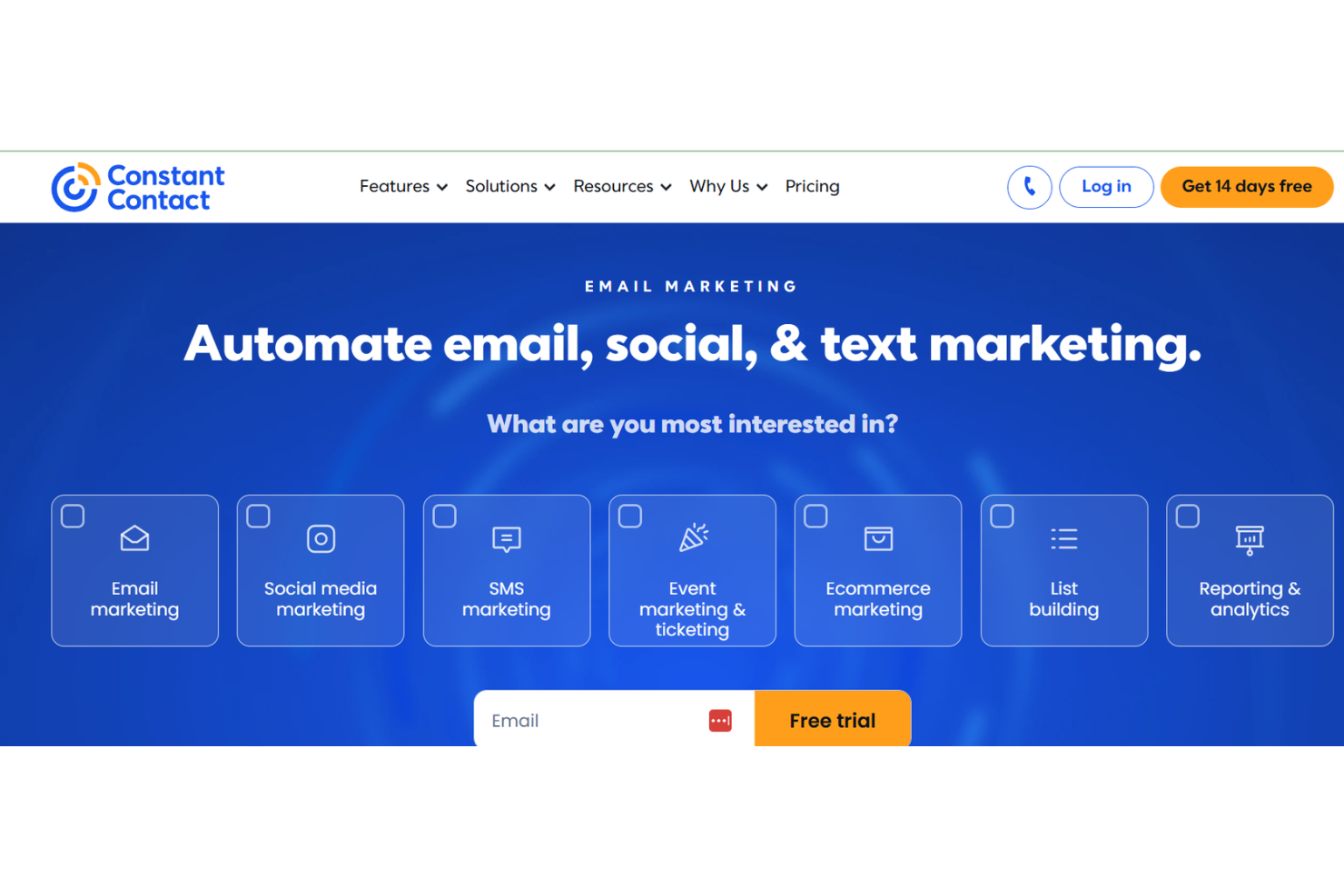
- From $12/month
- 30-day free trial + free demo available
Why Trust Our Software Reviews
Constant Contact Overview
In my opinion, Constant Contact is a solid choice for small to medium-sized businesses looking for straightforward email marketing solutions. It shines with its user-friendly interface and responsive customer support, making it easy for teams to get started. However, its pricing can be a bit steep for those who need advanced features or extensive integrations, which might be a drawback compared to competitors like Mailchimp or SendinBlue. If your team values ease of use and reliable support over complex integrations, Constant Contact could be a good fit.
pros
-
You'll appreciate the variety of email templates available.
-
Customer support is responsive and helpful when you need it.
-
Your team will find the user interface simple and intuitive.
cons
-
You may notice that the automation options are not as advanced.
-
The editor can be a bit clunky when designing emails.
-
Your team might find the reporting features limited compared to other tools.
-

GoBolt
Visit WebsiteThis is an aggregated rating for this tool including ratings from Crozdesk users and ratings from other sites.4.2 -
4ALLPORTAL
Visit WebsiteThis is an aggregated rating for this tool including ratings from Crozdesk users and ratings from other sites.4.7 -
Mouseflow
Visit WebsiteThis is an aggregated rating for this tool including ratings from Crozdesk users and ratings from other sites.4.7


Our Review Methodology
How We Test & Score Tools
We’ve spent years building, refining, and improving our software testing and scoring system. The rubric is designed to capture the nuances of software selection and what makes a tool effective, focusing on critical aspects of the decision-making process.
Below, you can see exactly how our testing and scoring works across seven criteria. It allows us to provide an unbiased evaluation of the software based on core functionality, standout features, ease of use, onboarding, customer support, integrations, customer reviews, and value for money.
Core Functionality (25% of final scoring)
The starting point of our evaluation is always the core functionality of the tool. Does it have the basic features and functions that a user would expect to see? Are any of those core features locked to higher-tiered pricing plans? At its core, we expect a tool to stand up against the baseline capabilities of its competitors.
Standout Features (25% of final scoring)
Next, we evaluate uncommon standout features that go above and beyond the core functionality typically found in tools of its kind. A high score reflects specialized or unique features that make the product faster, more efficient, or offer additional value to the user.
We also evaluate how easy it is to integrate with other tools typically found in the tech stack to expand the functionality and utility of the software. Tools offering plentiful native integrations, 3rd party connections, and API access to build custom integrations score best.
Ease of Use (10% of final scoring)
We consider how quick and easy it is to execute the tasks defined in the core functionality using the tool. High scoring software is well designed, intuitive to use, offers mobile apps, provides templates, and makes relatively complex tasks seem simple.
Onboarding (10% of final scoring)
We know how important rapid team adoption is for a new platform, so we evaluate how easy it is to learn and use a tool with minimal training. We evaluate how quickly a team member can get set up and start using the tool with no experience. High scoring solutions indicate little or no support is required.
Customer Support (10% of final scoring)
We review how quick and easy it is to get unstuck and find help by phone, live chat, or knowledge base. Tools and companies that provide real-time support score best, while chatbots score worst.
Customer Reviews (10% of final scoring)
Beyond our own testing and evaluation, we consider the net promoter score from current and past customers. We review their likelihood, given the option, to choose the tool again for the core functionality. A high scoring software reflects a high net promoter score from current or past customers.
Value for Money (10% of final scoring)
Lastly, in consideration of all the other criteria, we review the average price of entry level plans against the core features and consider the value of the other evaluation criteria. Software that delivers more, for less, will score higher.
Core Features
Email Templates
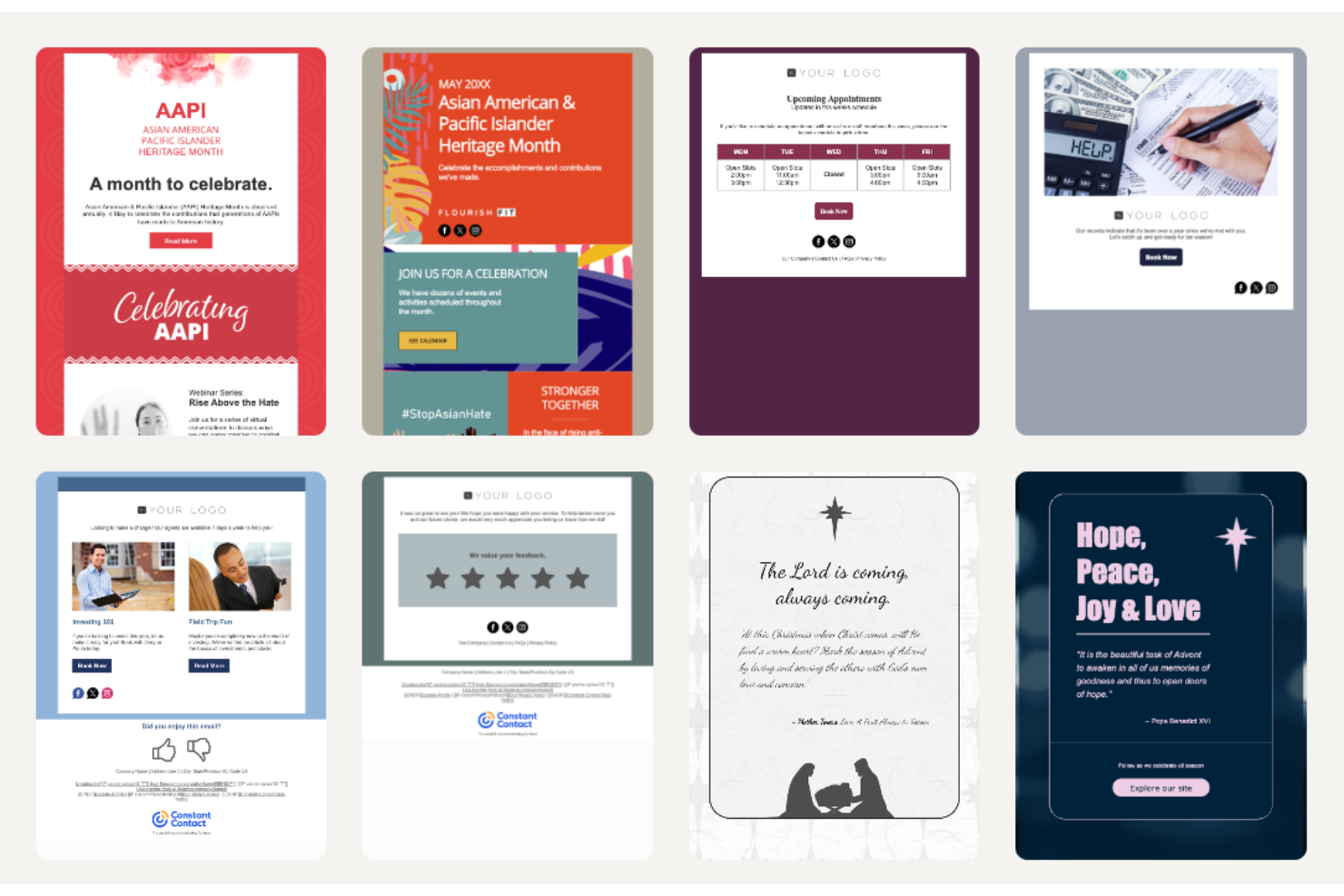
Constant Contact offers a variety of customizable templates that let your team create professional emails quickly.
List Management
You can easily segment and manage your email lists for targeted campaigns.
Drag-and-Drop Editor
The drag-and-drop email editor makes designing emails simple with its intuitive functionality.
Email Scheduling
Schedule your emails in advance or use simple autoresponders to reach your audience at the perfect time.
Tracking and Reporting
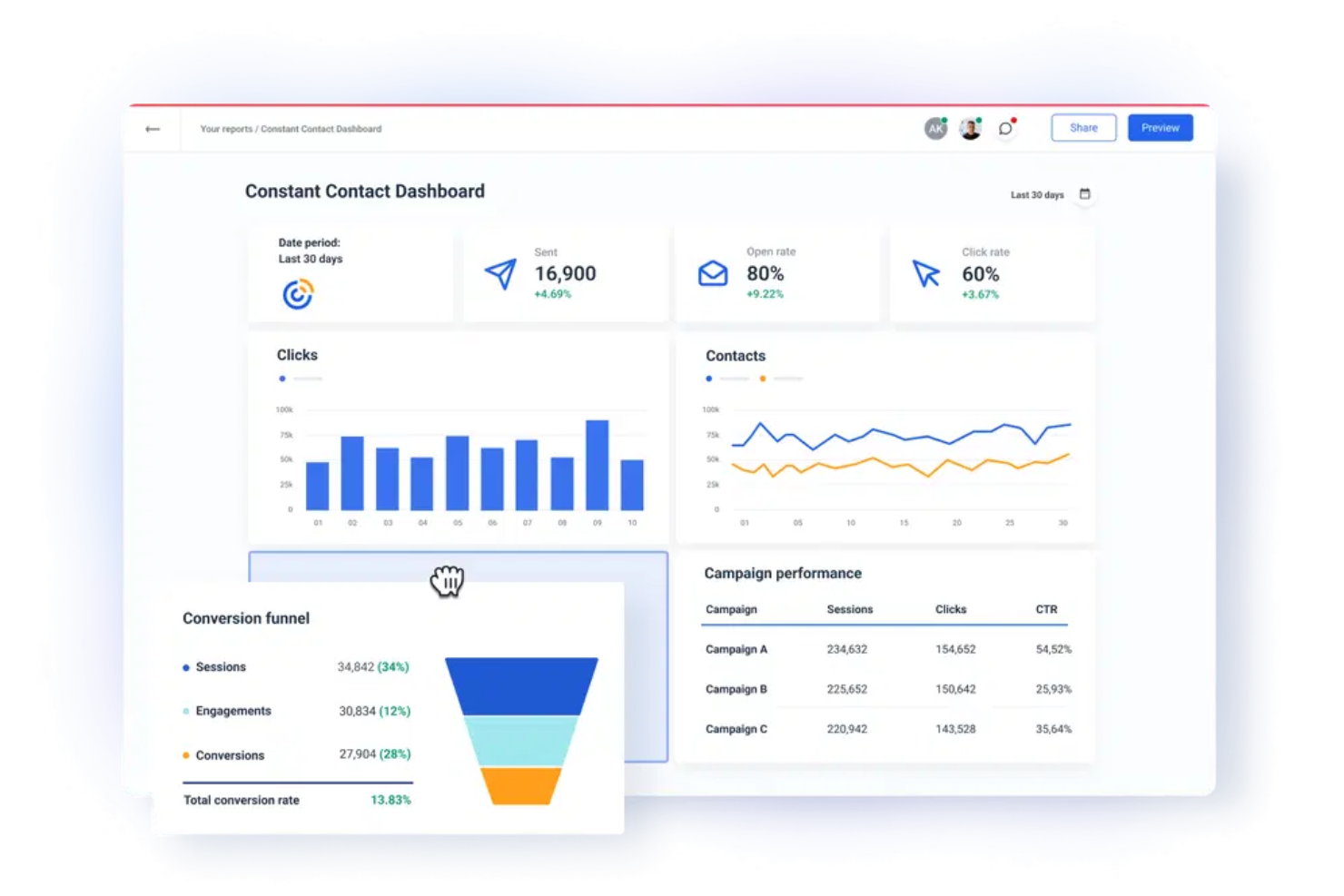
Monitor your campaign performance with basic analytics on opens, clicks, unsubscribes, abandoned cart workflows, and more.
A/B Testing
Test different email versions to see what resonates best with your audience and optimize your campaigns for better performance.
Ease of Use
Constant Contact has a seamless user experience, thanks to its intuitive interface and straightforward design. The drag-and-drop editor simplifies email creation, making it accessible even if you're not tech-savvy. While some users might find the editor a bit clunky, most appreciate the simplicity it offers for quick campaign setup. User reviews often highlight the ease of managing contacts and scheduling emails, which helps you focus on your marketing goals without getting bogged down by complex tools.
Integrations
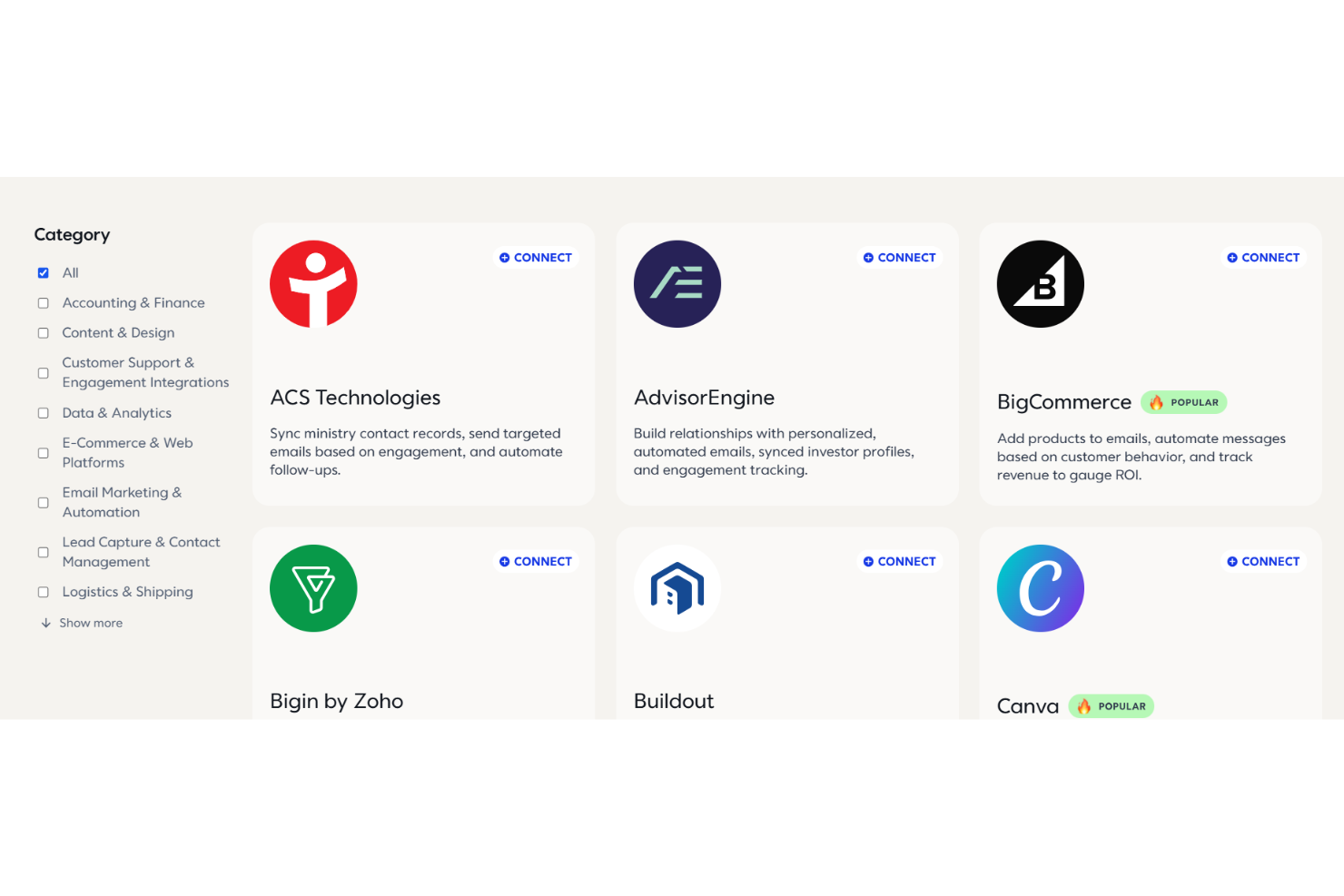
Constant Contact integrates with popular platforms such as Shopify, WooCommerce, Salesforce, Canva, Facebook, Brevo, and Eventbrite to connect email marketing with e-commerce, CRM, and social media tools. These integrations make it easy to sync contacts, track sales, and manage campaigns from one dashboard.
The platform also supports Zapier for connecting with hundreds of additional apps, along with an API for developers who want to build custom integrations.
Constant Contact Specs
- A/B Testing
- API
- Audience Targeting
- Brand Management
- Calendar Management
- Campaign Management
- Compliance Tracking
- Contact Management
- Contact Sharing
- Conversion Tracking
- CRM Integration
- Customer Management
- Dashboard
- Data Export
- Data Import
- Data Visualization
- Email Integration
- External Integrations
- Google Apps Integration
- Lead Management
- Lead Scoring
- Link Tracking
- Marketing Automation
- Multi-User
- Notifications
- Scheduling
- Social-Media Integration
- Third-Party Plugins/Add-Ons


