

Los 10 mejores programas de gestión de inventario para restaurantes analizados en 2026

Mejor software de gestión de inventario para restaurantes: lista seleccionada


Gestionar el inventario de un restaurante puede parecer un acto de malabarismo. Hay que equilibrar constantemente los niveles de existencias, reducir el desperdicio de alimentos y mantener los costes bajo control. Ahí es donde entra en juego el software de gestión de inventario. Te ayuda a hacer un seguimiento de todo, lo que facilita un poco tu trabajo.
Según mi experiencia, elegir el software adecuado puede transformar la forma en que trabaja tu equipo. He probado y analizado de forma independiente diversas opciones para ofrecerte una visión imparcial de lo que hay disponible.
En este artículo encontrarás mis principales recomendaciones de software de gestión de inventario. Te explicaré sus funciones, ventajas y por qué podrían ser la opción perfecta para tu restaurante. Hagamos que la gestión del inventario sea menos problemática para ti y tu equipo.
Por qué confiar en nuestras recomendaciones de software
Nuestro equipo lleva probando y evaluando software desde 2012. Como líderes del sector retail, sabemos lo difícil —y lo importante— que es elegir el software adecuado.
Para esta guía, evaluamos las herramientas mediante pruebas prácticas e investigación independiente, puntuando las herramientas según nuestros criterios de selección.
Nuestras reseñas reflejan nuestro criterio independiente, no un discurso de ventas.
Tabla comparativa del software de gestión de inventario para restaurantes
La siguiente tabla compara los detalles de precios de mis principales selecciones de software de gestión de inventario para restaurantes.
| Tool | Best For | Trial Info | Price | ||
|---|---|---|---|---|---|
| 1 | Mejor opción para reducir el desperdicio de alimentos | Demo gratuita disponible | Desde $199/mes | Website | |
| 2 | Mejor para grandes empresas | Demostración gratuita disponible | Precio bajo demanda | Website | |
| 3 | Ideal para el procesamiento automatizado de facturas | Demo gratuita disponible | Desde $330/ubicación/mes | Website | |
| 4 | Mejor para la gestión visual de inventario | Plan gratuito disponible + prueba gratuita de 14 días | Desde $24/mes (facturado anualmente) | Website | |
| 5 | Mejor integración con sistemas de punto de venta | Plan gratuito disponible | Desde $69/mes | Website | |
| 6 | Ideal para el seguimiento de inventario en tiempo real | Prueba gratis de 14 días disponible | Desde $89/mes (facturado anualmente) | Website | |
| 7 | Mejor para gestión multiubicación | Demostración gratuita disponible | Precio a consultar | Website | |
| 8 | Mejor para control de costos | Demo gratuita disponible | Precio a consultar | Website | |
| 9 | Mejor para informes detallados | Demostración gratuita disponible | Precios bajo solicitud | Website | |
| 10 | Ideal para inventario en tiempo real sincronizado con ventas | Plan gratuito disponible | Desde $35/mes | Website |
Análisis del mejor software de gestión de inventario para restaurantes
A continuación encontrarás mis resúmenes detallados del mejor software de gestión de inventario para restaurantes que ha llegado a mi lista seleccionada. Mis análisis ofrecen una visión detallada de las funciones clave, ventajas y desventajas, integraciones y casos de uso ideales de cada herramienta para ayudarte a encontrar la mejor opción para ti.

Mejor opción para reducir el desperdicio de alimentos
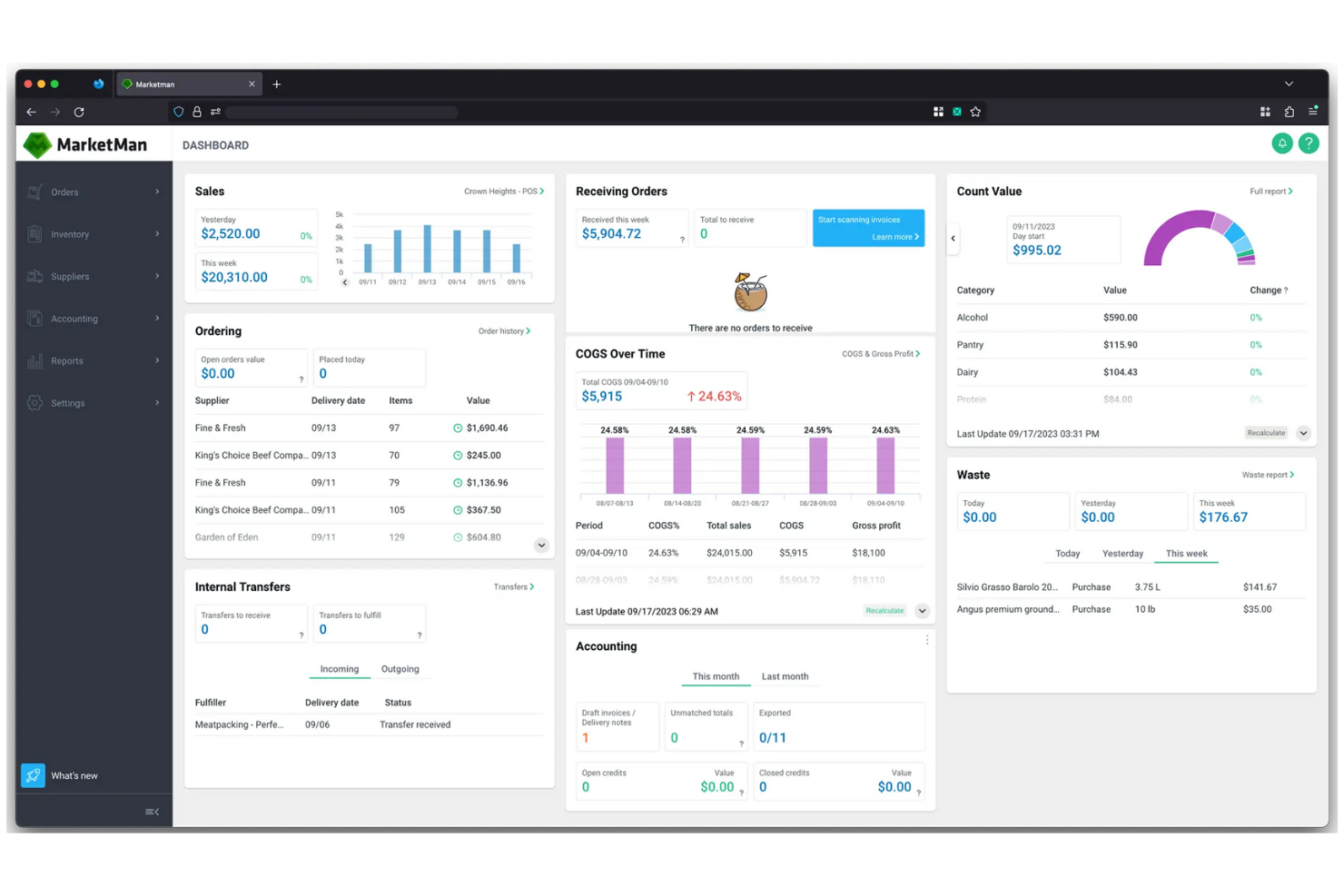
MarketMan es un software de gestión de inventario para restaurantes diseñado para mejorar el control de costos y la eficiencia. Sirve a los restaurantes ofreciendo seguimiento de inventario, facturación y cálculo de costos de recetas, todo dentro de una plataforma fácil de usar.
Por qué elegí MarketMan: Se enfoca en reducir el desperdicio de alimentos, con funciones como automatización impulsada por IA para el control de inventarios. Puedes seguir las compras y los costos en tiempo real, asegurando que solo almacenes lo que necesitas. El sistema también ofrece información sobre tendencias de compra, ayudándote a identificar áreas donde podrías reducir el desperdicio. El cálculo de costos de recetas respalda esto mostrando el coste exacto de los bienes vendidos, lo que permite tomar mejores decisiones de precios.
Funciones destacadas e integraciones:
Funciones incluyen automatización con IA para simplificar tareas, análisis en tiempo real para inventario y COGS, y acceso mediante aplicación móvil para la gestión en movimiento.
Integraciones incluyen Square, QuickBooks, Xero, Toast, Lightspeed, Clover, Revel, Aloha, Micros, Squirrel y más.
Pros and Cons
Pros:
- Automatización impulsada por IA
- Comodidad de la aplicación móvil
- Cálculo detallado del costo de recetas
Cons:
- Precio inicial relativamente alto
- Planes personalizados necesarios para grandes empresas
Oracle
Mejor para grandes empresas
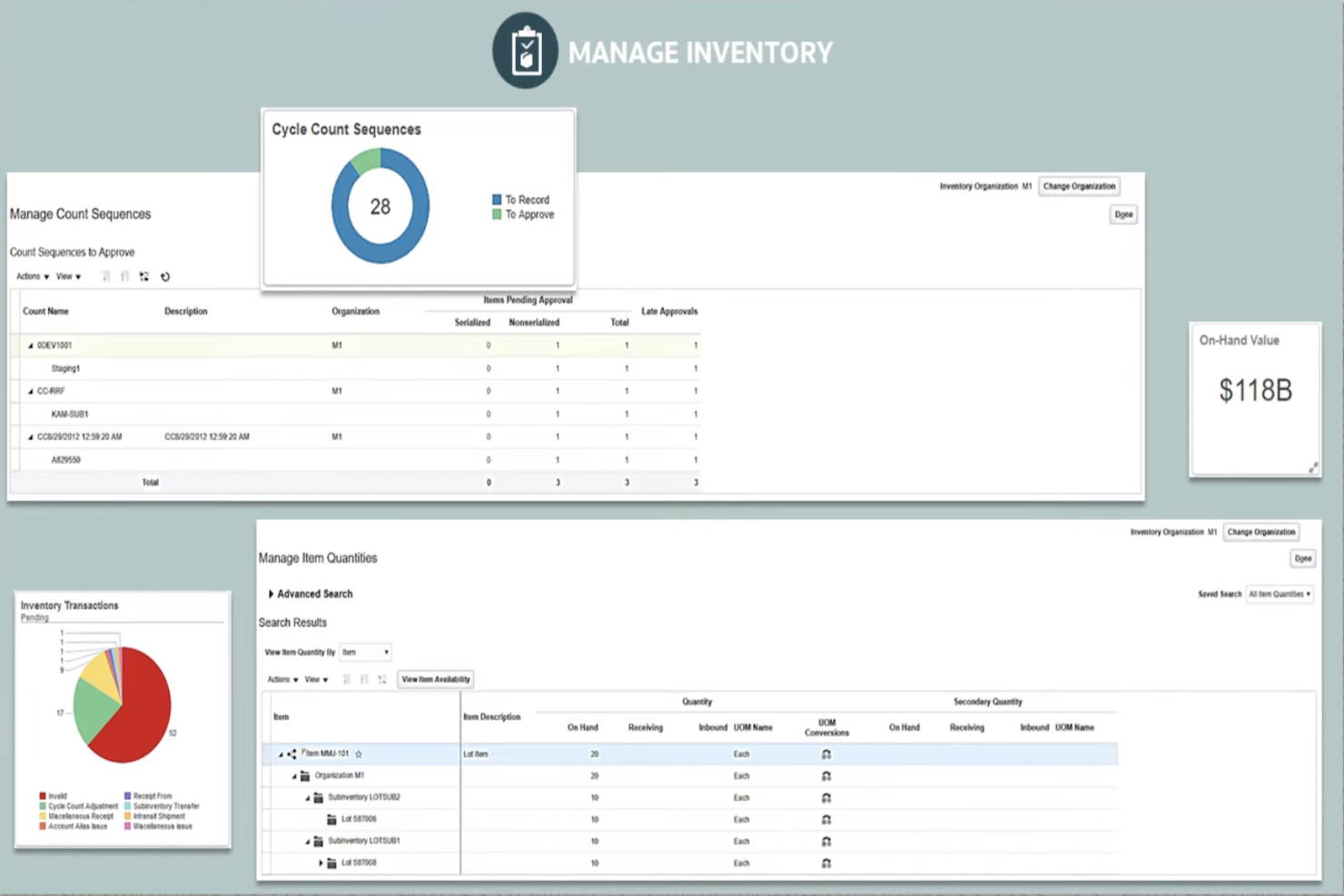
Oracle es un software de gestión de inventario a nivel empresarial diseñado para grandes restaurantes y cadenas. Se especializa en ofrecer soluciones para el control de inventarios, la gestión financiera y la adquisición de suministros.
Por qué elegí Oracle: Está orientado a grandes empresas, con funciones como análisis avanzados y acceso a datos en tiempo real. Puedes gestionar un inventario físico extenso en múltiples ubicaciones. La plataforma también ofrece herramientas de informes que te ayudan a tomar decisiones informadas. Esto lo hace adecuado para operaciones complejas que requieren supervisión detallada.
Funciones e integraciones destacadas:
Funciones incluyen análisis predictivos para previsión de demanda, procesos de adquisición automatizados para reducir tareas manuales y herramientas personalizables de informes que se pueden adaptar a las necesidades de tu negocio.
Integraciones incluyen SAP, Microsoft, Salesforce, Google Cloud, Amazon Web Services, IBM, VMware, Slack, Zoom y más.
Pros and Cons
Pros:
- Amplias opciones de personalización
- Adecuado para operaciones complejas
- Escalable para negocios en crecimiento
Cons:
- Actualizaciones lentas a nivel de artículo
- Licencias y actualizaciones costosas

Ideal para el procesamiento automatizado de facturas
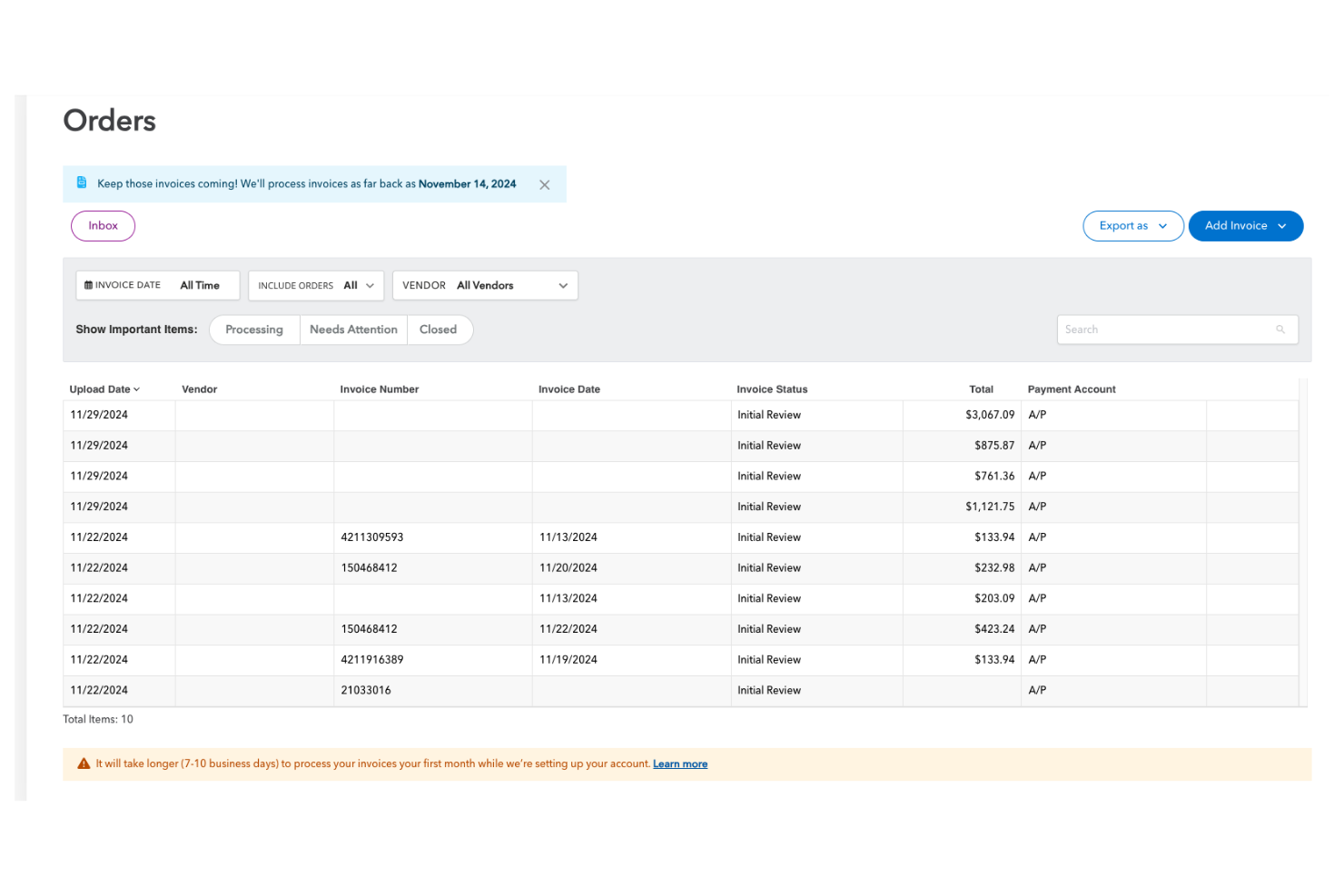
MarginEdge es un software de gestión de restaurantes diseñado para la gestión de inventarios y finanzas. Está dirigido a propietarios y gerentes de restaurantes, ofreciendo herramientas para el seguimiento de costos, procesamiento de facturas y control de inventario.
Por qué elegí MarginEdge: Automatiza el procesamiento de facturas y órdenes de compra, reduciendo la introducción manual de datos y los errores. Puedes enviar facturas por correo electrónico o móvil, y el sistema las procesará y categorizará automáticamente. Esta función ahorra tiempo y ayuda a garantizar la exactitud en tus registros financieros. Además, MarginEdge se integra con muchos sistemas contables, facilitando a tu equipo la gestión de gastos y mejorando la rentabilidad.
Características destacadas e integraciones:
Características incluyen seguimiento de costos de alimentos en tiempo real para ayudarte a gestionar presupuestos, informes personalizables para obtener información detallada y herramientas de análisis de menús que ayudan en la toma de decisiones de precios.
Integraciones incluyen QuickBooks, Xero, Toast, Square, Aloha, Oracle MICROS, Compeat, Restaurant365, Clover, Revel y más.
Pros and Cons
Pros:
- Automatización eficiente de facturas
- Seguimiento de costos en tiempo real
- Integración contable fluida
Cons:
- Los errores en facturas necesitan revisión
- Las funciones avanzadas pueden requerir capacitación adicional

Sortly
Mejor para la gestión visual de inventario
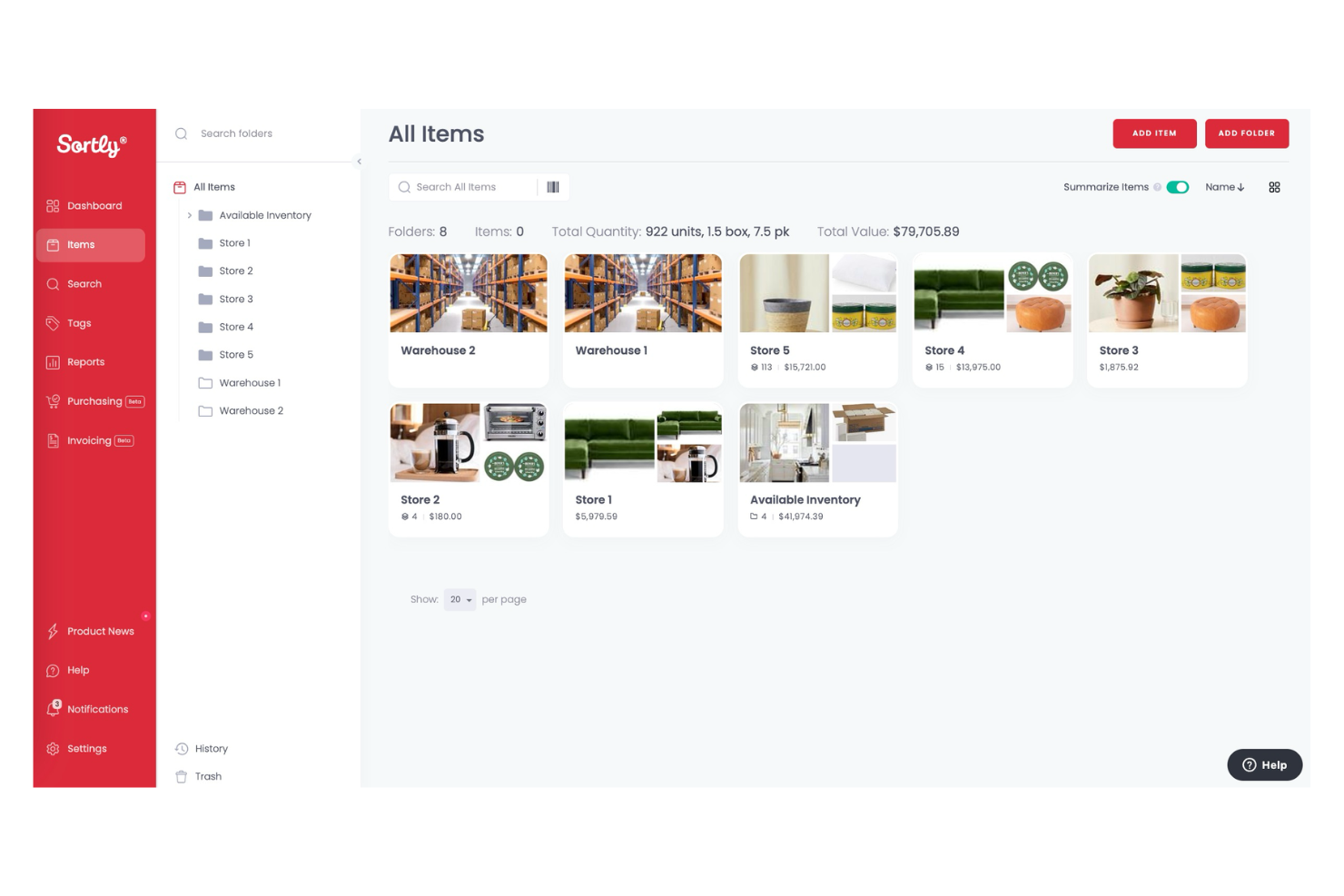
Sortly es un software de gestión de inventario diseñado para pequeñas y medianas empresas que buscan una manera intuitiva de gestionar su stock. Ofrece funciones que permiten el seguimiento y la organización fácil del inventario mediante señales visuales e interfaces sencillas.
Por qué elegí Sortly: Se destaca en la gestión visual del inventario, permitiéndote usar fotos para categorizar y rastrear artículos. Esto facilita que tu equipo reconozca los productos y los gestione de manera eficiente. El software proporciona generación de códigos QR para acceso rápido a los detalles del inventario. También puedes personalizar campos para adaptarse a tus necesidades específicas, mejorando la flexibilidad del proceso de gestión de inventario.
Características destacadas e integraciones:
Características incluyen seguimiento de inventario basado en fotos, generación de códigos QR para búsqueda fácil de artículos y campos personalizables para adaptar el sistema a tus requerimientos específicos.
Integraciones incluyen QuickBooks, Shopify, Amazon Business, Zapier, Slack y más.
Pros and Cons
Pros:
- Seguimiento visual del inventario
- Generación fácil de códigos QR
- No se requiere experiencia técnica
Cons:
- Funciones avanzadas limitadas
- No ideal para grandes inventarios

Toast
Mejor integración con sistemas de punto de venta
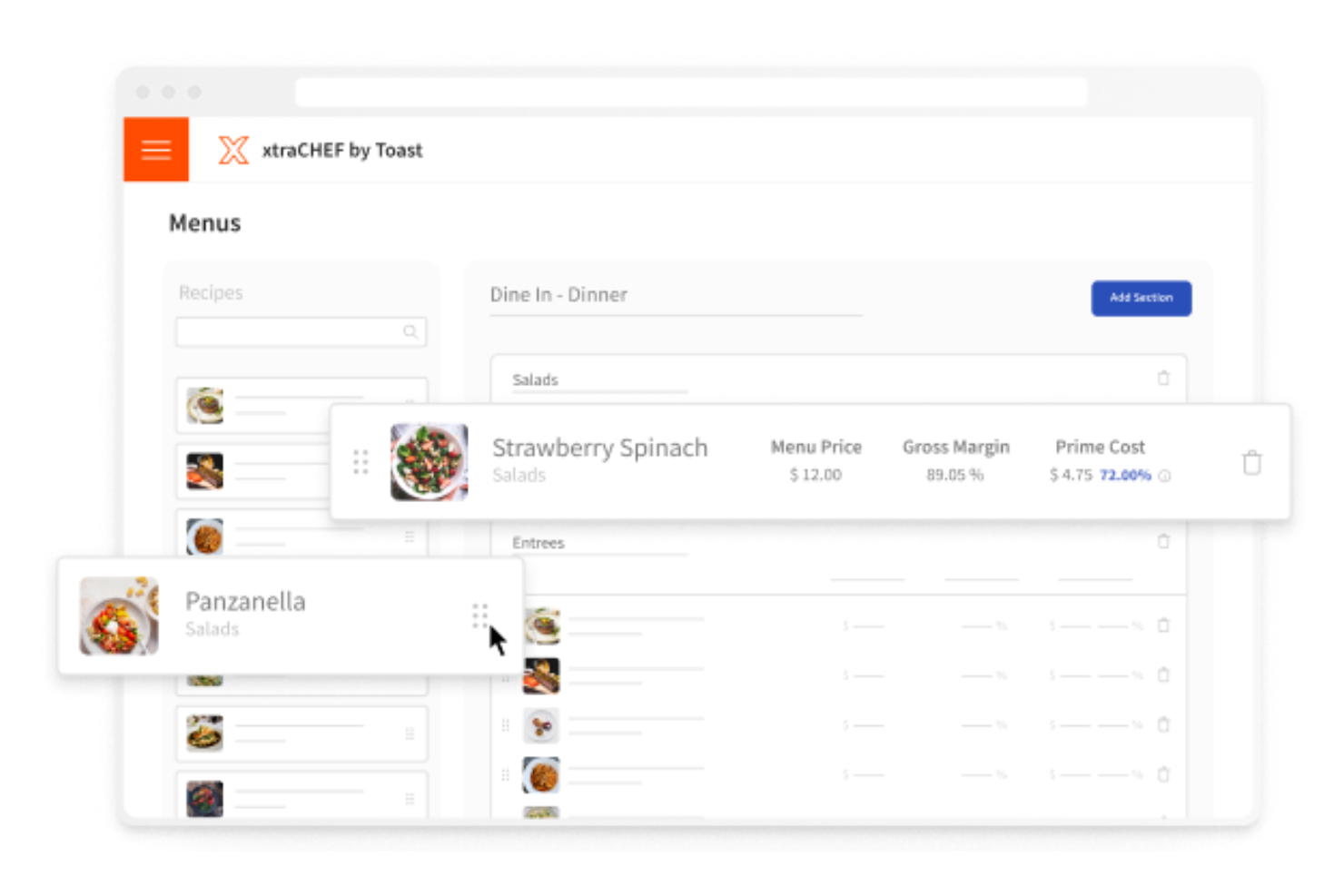
Toast es un sistema de punto de venta y gestión de restaurantes diseñado para establecimientos de todos los tamaños. Ayuda a simplificar las operaciones gestionando pedidos, pagos e inventario.
Por qué elegí Toast: Ofrece una integración fluida con los sistemas de punto de venta, lo que facilita la gestión de las operaciones de tu restaurante en un solo lugar. El sistema permite actualizaciones en tiempo real de los artículos del menú y seguimiento de pedidos, lo que ayuda a aumentar la eficiencia del servicio. También puedes acceder a informes de ventas detallados que te ayudan a tomar decisiones empresariales informadas. Esta capacidad de integración hace que Toast sea una excelente opción para quienes buscan unificar sus herramientas de gestión de restaurantes.
Funciones y conectividades destacadas:
Funciones incluyen gestión de menú en tiempo real que permite actualizaciones instantáneas, informes de ventas detallados para tomar decisiones basadas en datos y opciones móviles de pedido y pago para mejorar la experiencia del cliente.
Conectividades incluyen Grubhub, Uber Eats, DoorDash, OpenTable, 7shifts, PeachWorks, Compeat, Homebase, BevSpot y más.
Pros and Cons
Pros:
- Actualización fácil del menú
- Gestión y seguimiento de pedidos en tiempo real
- Opciones de pago móvil
Cons:
- Configuración y mantenimiento de inventario que consume mucho tiempo
- Dependencia de complementos de terceros

Ideal para el seguimiento de inventario en tiempo real
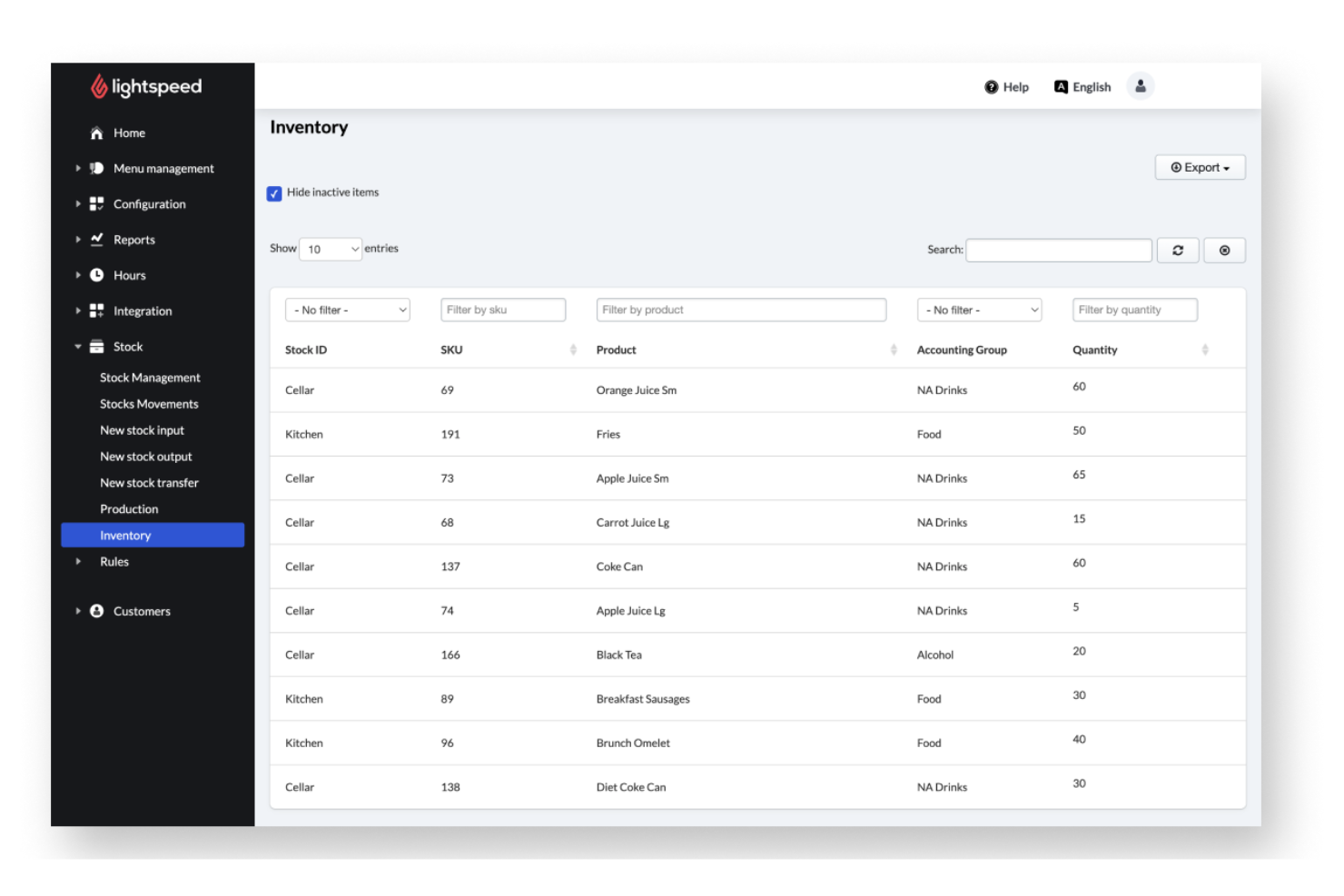
Lightspeed es un sistema de gestión de restaurantes multifuncional que se adapta a una variedad de establecimientos gastronómicos. Ofrece soluciones para punto de venta, gestión de inventario y fidelización de clientes.
Por qué elegí Lightspeed: Su sistema de gestión de inventario destaca por el seguimiento de existencias en tiempo real, lo que te permite controlar los niveles de stock a medida que se producen las ventas. Esta función ayuda a tu equipo a reducir el desperdicio y optimizar los procesos de pedidos. La plataforma también proporciona análisis detallados, ofreciéndote información sobre tendencias de ventas y necesidades de inventario. Esto resulta ideal para restaurantes que buscan mejorar la eficiencia operativa e incrementar sus márgenes de beneficio mediante un control preciso del inventario.
Características y integraciones destacadas:
Características incluyen herramientas avanzadas de generación de informes para analizar patrones de ventas, gestión de menús personalizable para facilitar actualizaciones y un programa de fidelización integrado para incrementar la retención de clientes.
Integraciones incluyen QuickBooks, Xero, Mailchimp, 7shifts, Uber Eats, OpenTable, Resy, Deliverect y más.
Pros and Cons
Pros:
- Actualizaciones de stock en tiempo real
- Programas de fidelización integrados
- Compatible con pequeños y grandes negocios
Cons:
- Dependencia de una conexión a Internet estable
- Los complementos aumentan el coste total

Mejor para gestión multiubicación
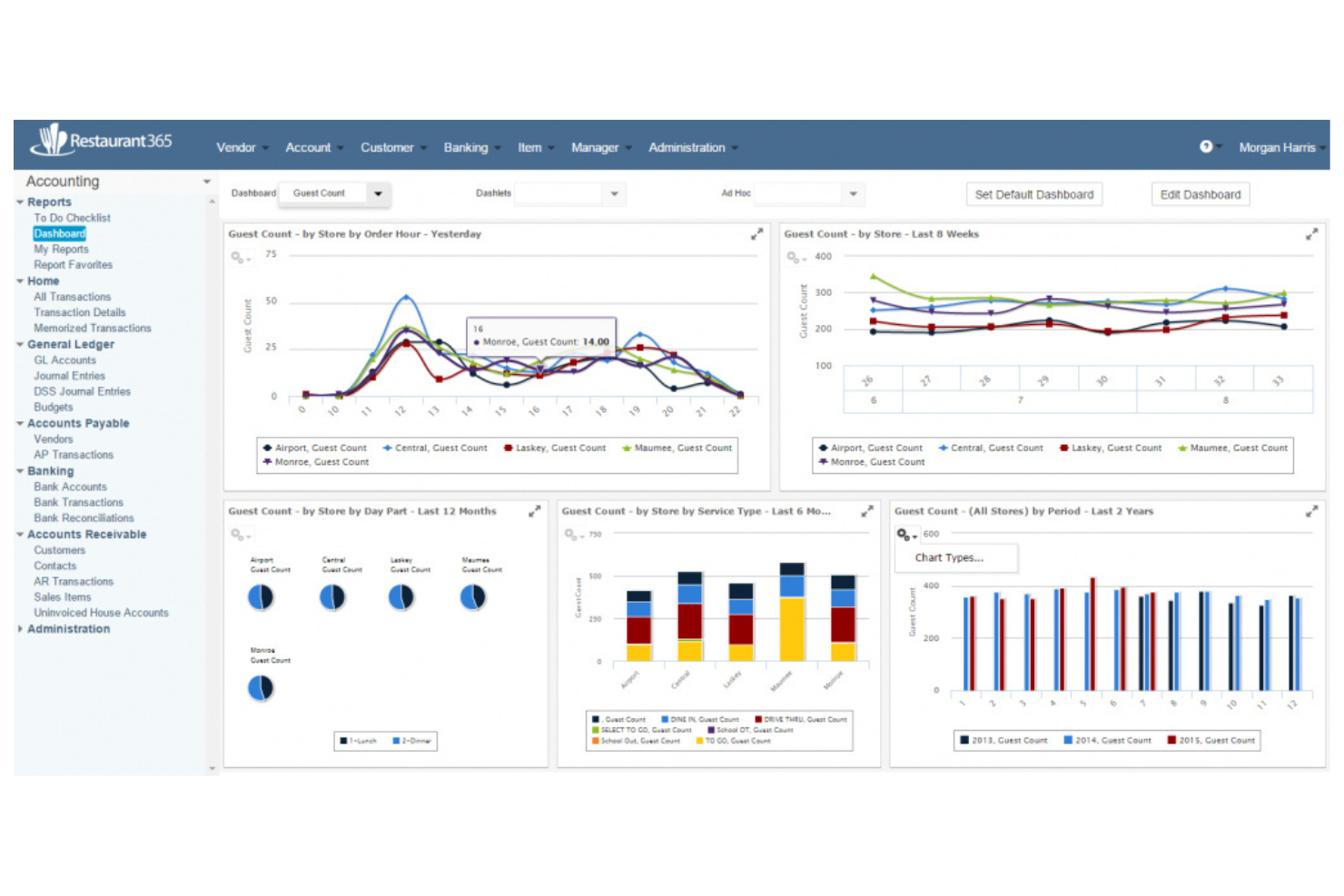
Restaurant365 es un software basado en la nube diseñado para la gestión de restaurantes que se centra en la contabilidad, el inventario y la programación. Es popular entre restaurantes con múltiples ubicaciones que buscan centralizar sus operaciones y mejorar la eficiencia.
Por qué elegí Restaurant365: Destaca en la gestión de múltiples ubicaciones al ofrecer funciones como contabilidad centralizada y seguimiento de inventarios en todos los sitios. La plataforma te permite consolidar datos financieros y de inventario, lo que ayuda a garantizar la coherencia y precisión. La herramienta también ofrece paneles personalizables para monitorear los indicadores de rendimiento de cada ubicación. Esto la convierte en una opción sólida para restaurantes que necesitan una visión unificada de sus operaciones.
Funciones destacadas e integraciones:
Funciones incluyen contabilidad automatizada para reducir errores manuales, paneles personalizables para seguimiento de rendimiento y herramientas de programación para optimizar la gestión del personal.
Integraciones incluyen QuickBooks, Xero, Square, Toast, Aloha, Oracle MICROS, Revel, Clover, Paychex, ADP y más.
Pros and Cons
Pros:
- Contabilidad centralizada
- Soporte para múltiples ubicaciones
- Herramientas de programación detalladas
Cons:
- Requiere capacitación continua
- Problemas de rendimiento con grandes volúmenes de datos
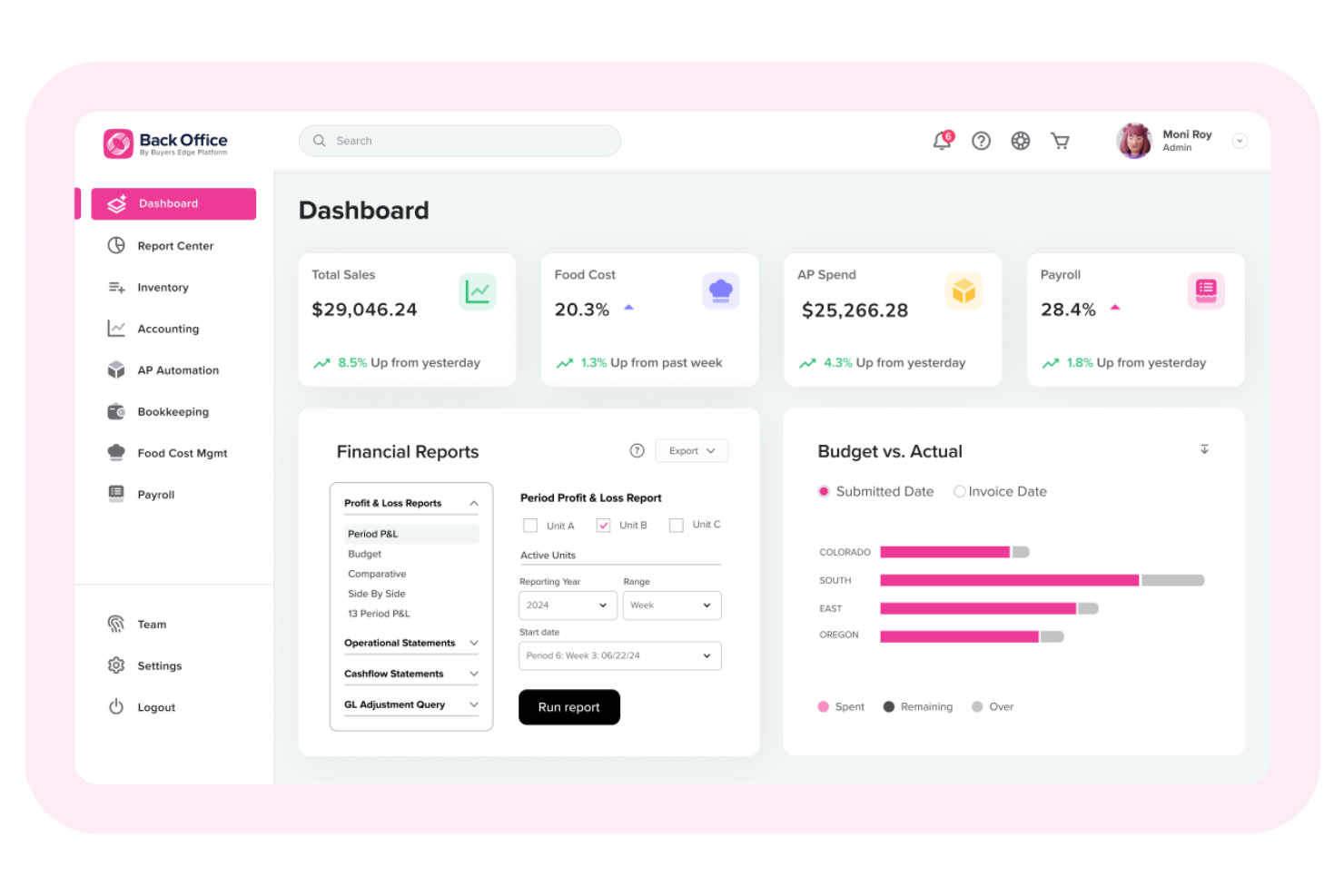
Back Office es un completo software de gestión para restaurantes diseñado para restaurantes independientes, operaciones multicategoría, franquiciados y franquiciadores. Ofrece soluciones para la gestión de inventario, contabilidad, nómina y control de costos de alimentos.
Por qué elegí Back Office: Está enfocado en el control de costos, con funciones como informes financieros detallados y cálculo de costos de recetas. Puedes rastrear los gastos con precisión y gestionar tus costos de mano de obra y de alimentos. El software también ofrece análisis de datos para ayudarte a tomar decisiones informadas. Esto lo hace ideal para restaurantes que buscan mejorar su supervisión financiera y rentabilidad.
Características destacadas e integraciones:
Características incluyen gestión de efectivo para operaciones financieras integrales, cuentas por pagar automatizadas para un seguimiento eficiente de los gastos y herramientas de informes personalizables para obtener información detallada.
Integraciones incluyen QuickBooks, Square, Toast, Aloha, Micros, Revel, Lightspeed, Linga, Maitre'D, Squirrel, Sync POS y más.
Pros and Cons
Pros:
- Gestión eficaz de costos
- Informes financieros detallados
- Permite gestionar múltiples locales
Cons:
- Problemas de rendimiento ocasionales
- Requiere capacitación continua
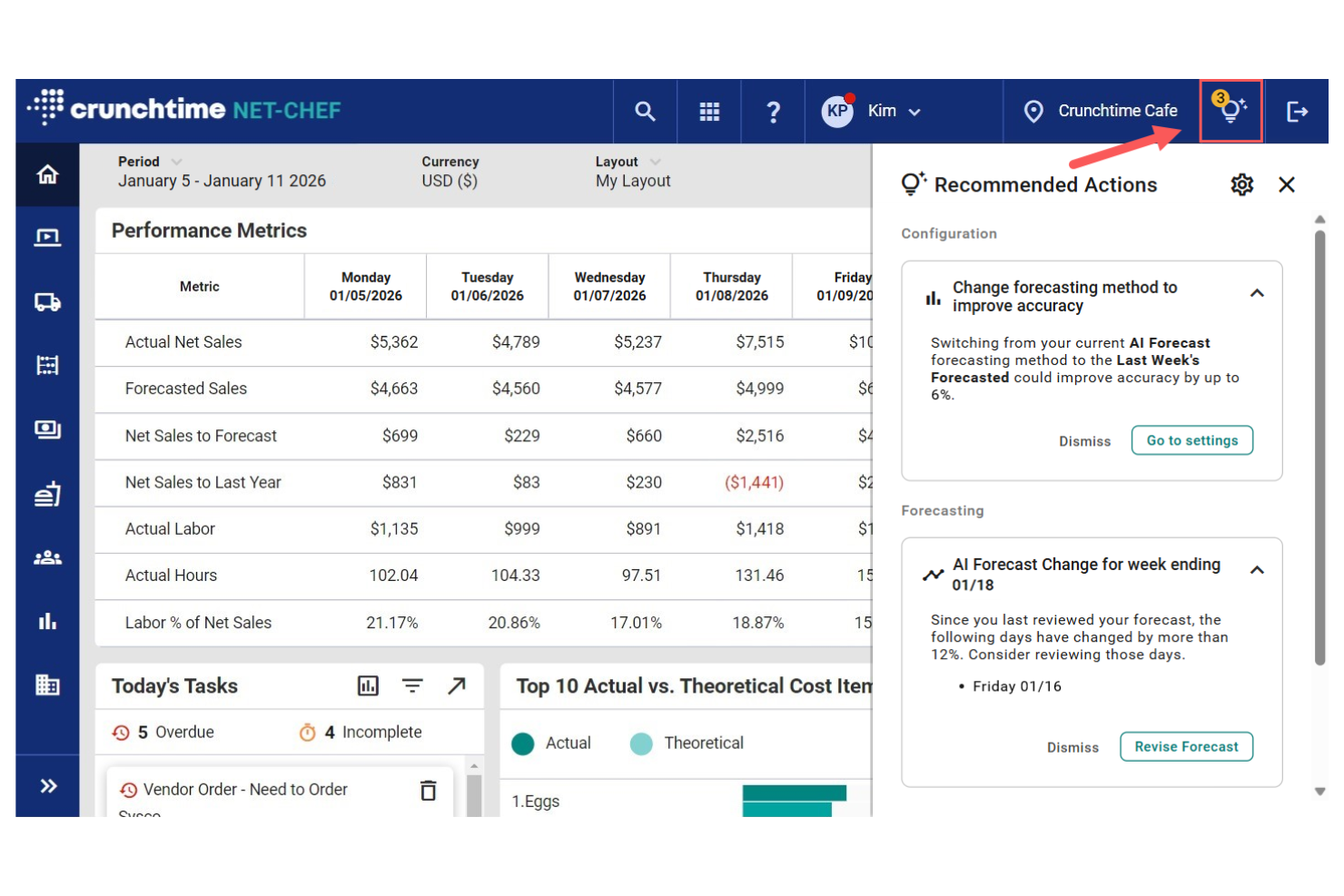
Crunchtime es una solución de gestión de inventario diseñada para restaurantes y negocios de servicios de alimentos. Ofrece funciones principales para el control de inventarios, gestión de personal y operaciones de la cadena de suministro.
Por qué elegí Crunchtime: Ofrece capacidades avanzadas de generación de informes que brindan información detallada sobre tus operaciones. Puedes rastrear con precisión el uso y los costos de inventario, lo que ayuda a tu equipo a tomar decisiones informadas. El sistema también admite la gestión de personal, permitiendo optimizar los niveles de dotación según los datos de ventas. Estas características lo convierten en una excelente opción para quienes valoran los informes detallados y la eficiencia operativa.
Funciones destacadas e integraciones:
Funciones incluyen gestión de recetas para mantener la consistencia, seguimiento automático de inventario para reducir discrepancias y errores manuales, y herramientas de pronóstico de ventas para anticipar necesidades futuras.
Las integraciones incluyen QuickBooks, ADP, Paycor, Paylocity, Square, Revel, Oracle MICROS, Aloha, Squirrel y más.
Pros and Cons
Pros:
- Soporta la gestión de personal
- Seguimiento preciso del inventario
- Gestión efectiva de la cadena de suministro
Cons:
- Requiere actualizaciones regulares
- Visibilidad en tiempo real limitada

Square
Ideal para inventario en tiempo real sincronizado con ventas
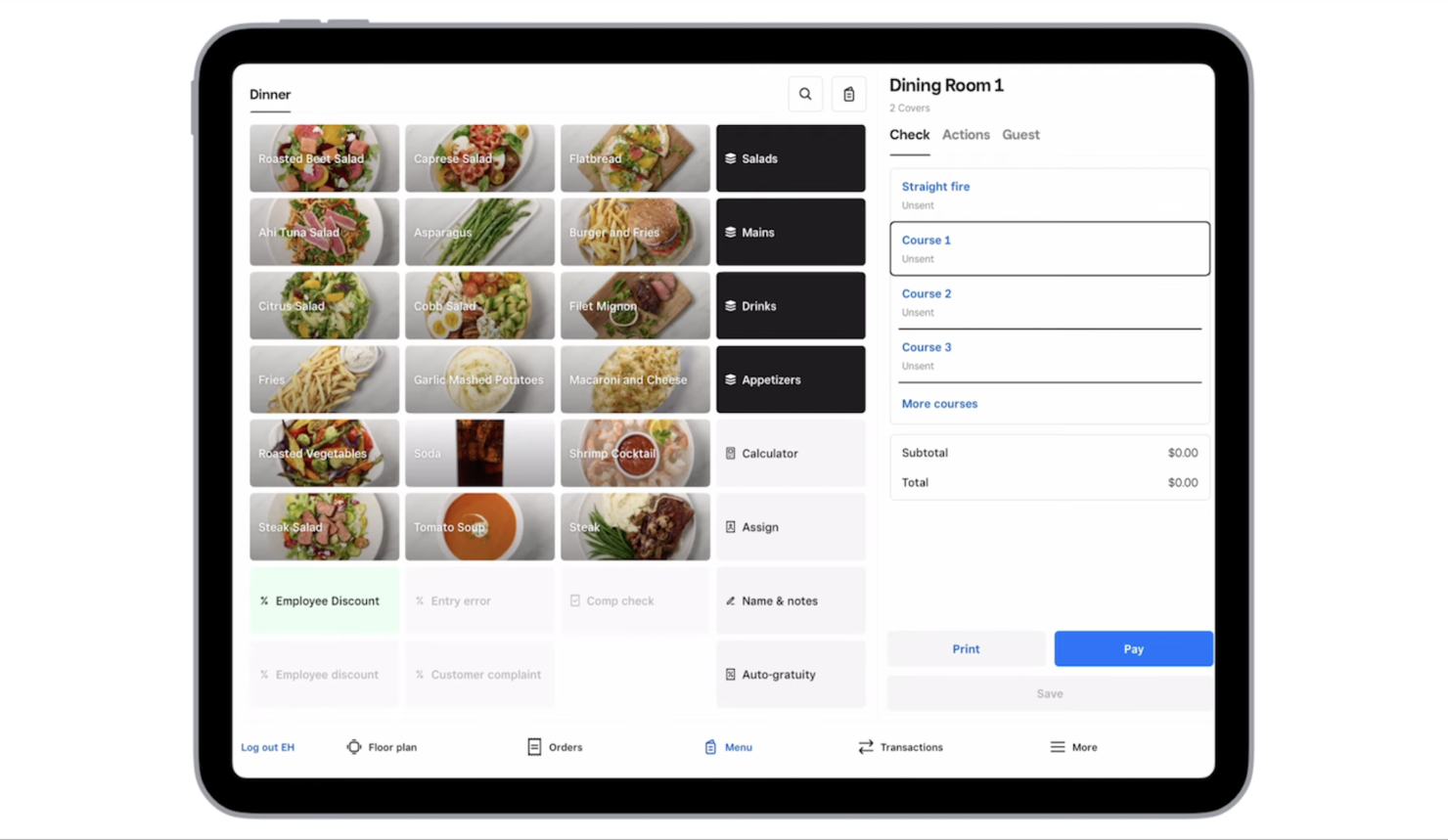
La gestión de inventario de Square para restaurantes está integrada en el sistema POS de Square y está diseñada para restaurantes pequeños y medianos que necesitan un seguimiento de inventario en tiempo real vinculado directamente a las ventas. Ayuda a los propietarios de restaurantes a gestionar automáticamente ingredientes, platos del menú y niveles de stock a medida que se realizan los pedidos.
Por qué elegí Square: Destaca por su integración perfecta con Square for Restaurants POS, lo que asegura que el inventario se actualice automáticamente con cada venta. Esto reduce el conteo manual y ayuda a prevenir que se agoten ingredientes clave. Square también admite modificadores y variaciones de artículos, lo que facilita el seguimiento de ingredientes en diferentes platos del menú. Las alertas de bajo stock ayudan a los gerentes a reponer antes de quedarse sin suministros, mejorando la eficiencia operativa.
Características destacadas e integraciones:
Características incluyen sincronización de inventario en tiempo real con las ventas POS, seguimiento a nivel de ingrediente, alertas de bajo inventario y soporte para modificadores y variaciones de artículos.
Integraciones incluyen Square for Restaurants, Square Online, QuickBooks, DoorDash, Uber Eats y otras herramientas del ecosistema Square.
Pros and Cons
Pros:
- Actualizaciones automáticas de inventario desde ventas
- Diseñado específicamente para flujos de trabajo en restaurantes
- Configuración sencilla con Square POS
Cons:
- Pronóstico de ingredientes avanzado limitado
- Más adecuado para restaurantes que usan Square
New Product Updates from Square
Square Adds Case Receiving and Camera Barcode Scanning
Square adds case and pallet receiving plus camera barcode scanning on iPhone and iPad. These updates help sellers receive stock in the units they buy and scan items without separate hardware. For more information, visit Square’s official site.
 .
.Otros programas de gestión de inventario para restaurantes
Estas son algunas opciones adicionales de software de gestión de inventario para restaurantes que no llegaron a mi lista seleccionada, pero que merece la pena consultar:
- TouchBistro
Ideal para sistemas POS basados en iPad
- NetSuite
Ideal para la gestión empresarial integrada


Cómo evalúo el software de gestión de inventarios para restaurantes
Analizo dos niveles: los requisitos indispensables como el seguimiento de ingredientes, el coste de recetas y el descuento automático con POS, y los factores diferenciadores que hacen que una herramienta sea adecuada para un operador específico.
Funcionalidad central (Criterios indispensables para esta lista)
Al seleccionar las herramientas para mi lista, califico cada una en una escala de 0 (no ofrece la funcionalidad) a 5 (sobresale en esta área) para cada funcionalidad clave que aparece a continuación. Luego, calculo la puntuación total de la herramienta en un porcentaje. Cada herramienta necesita lograr una puntuación total mínima del 65% para ser considerada para su inclusión.
- Seguimiento de inventario a nivel de ingredientes: Verifico si la plataforma rastrea ingredientes en bruto con soporte para múltiples unidades de medida, como convertir una caja de tomates en libras y onzas a medida que se usan en la cocina.
- Costeo de recetas y menús: Cada herramienta debe permitirte construir recetas a partir de ingredientes controlados y mostrar el coste de cada plato en tiempo real, para que los chefs puedan detectar cambios de márgenes cuando un proveedor sube precios.
- Gestión de proveedores y pedidos de compra: Busco catálogos de proveedores, pedido automático basado en PAR y flujos de trabajo de recepción que permitan a los gerentes realizar pedidos a varios proveedores de una sola vez.
- Integración con POS y descuento de inventario: La plataforma necesita conexiones nativas con los principales sistemas POS del sector restauración, para que los artículos vendidos reduzcan automáticamente el stock y se expongan las diferencias entre el consumo teórico y el real.
- Conteo de stock e informes de variaciones: El soporte para conteo móvil o mediante escáner es importante aquí, junto con informes de variación que desglosen si las pérdidas provienen de desperdicio, errores de porcionado o robos.
- Gestión de inventario para varias ubicaciones: Para operadores con varias unidades, evalúo si la herramienta gestiona transferencias entre sucursales, informes consolidados y permisos granulares para el personal de conteo según localización.
Una vez tengo la lista de herramientas que cumplen estos criterios, considero qué distingue a cada plataforma.
Factores diferenciadores (Qué distingue a los proveedores)
Así es como comparo y contrasto diferentes proveedores:
Características destacadas
La analítica de ingeniería de menús es muy importante. Busco herramientas que clasifiquen los platos en matrices de estrella/tractor/acertijo/perro para que los chefs identifiquen rápidamente qué elementos deben volver a precio, promocionar o retirar. La previsión de demanda impulsada por IA añade otra capa: las plataformas que tienen en cuenta ventas históricas, estacionalidad y eventos locales ayudan a los gerentes a definir mejores cantidades de pedido en lugar de confiar en la intuición. También es importante la automatización contable y de cuentas por pagar. La sincronización bidireccional con plataformas como QuickBooks o Sage que codifican automáticamente las facturas en las cuentas contables correctas puede ahorrar horas en cada cierre contable de periodo.
Más allá de las características
La compatibilidad con tu POS es lo primero que reviso: una herramienta que no se conecta con tu POS genera trabajo manual y arruina el propósito. También evalúo cómo se adapta la plataforma a tu tipo de operación. Una cafetería independiente tiene necesidades muy diferentes a una cadena QSR de 50 locales o una red de cocinas fantasma. La usabilidad móvil en las áreas de back office también pesa mucho. Los cuartos fríos y almacenes rara vez tienen buen Wi-Fi, así que el conteo y la recepción offline en dispositivos iOS o Android es una necesidad operativa real, no un extra.
Cómo elegir un software de gestión de inventario para restaurantes
Es fácil perderse entre largas listas de funciones y estructuras de precios complejas. Para ayudarte a mantener la concentración mientras recorres tu proceso único de selección de software, aquí tienes una lista de factores que debes tener en cuenta:
| Factor | Qué considerar |
|---|---|
| Escalabilidad | ¿El software crecerá con tu negocio? Comprueba si puede gestionar más ubicaciones o un inventario mayor a medida que te expandas. Busca soluciones que ofrezcan planes escalonados con margen para crecer. |
| Integraciones | ¿Funciona con tus sistemas actuales? Asegúrate de que se conecte con tu TPV, software de contabilidad y otras herramientas para evitar silos de datos y trabajo manual. |
| Personalización | ¿Puedes ajustarlo para adaptarlo a tus necesidades? Busca opciones que te permitan personalizar informes, flujos de trabajo y ajustes para que coincidan con tus procesos específicos. |
| Facilidad de uso | ¿La interfaz es intuitiva? Prueba el software para comprobar si tu equipo puede aprender a utilizarlo sin una formación exhaustiva. Un sistema complejo podría ralentizar las operaciones. |
| Implementación e incorporación | ¿Cuánto tiempo llevará ponerlo en funcionamiento? Ten en cuenta el tiempo y los recursos necesarios para la configuración y la formación. Busca proveedores que ofrezcan un sólido apoyo durante la incorporación. |
| Coste | ¿Se ajusta a tu presupuesto? Compara los modelos de precios y presta atención a las tarifas ocultas. Asegúrate de comprender el coste total de propiedad, incluidos los cargos adicionales por funciones extra. |
| Medidas de seguridad | ¿Qué nivel de seguridad tienen los datos? Comprueba que incluya cifrado, permisos de usuario y cumplimiento de las leyes de protección de datos para proteger la información sensible. |
| Disponibilidad del soporte | ¿Qué opciones de soporte hay disponibles? Ten en cuenta la disponibilidad del servicio de atención al cliente y del soporte técnico. Busca acceso las 24 horas, los 7 días de la semana, si tus operaciones funcionan continuamente. |
¿Qué es el software de gestión de inventario para restaurantes?
El software de gestión de inventario para restaurantes es una herramienta que ayuda a gestionar y realizar un seguimiento de los inventarios de alimentos y suministros. Los gerentes de restaurantes, chefs y equipos de compras suelen utilizar estas herramientas para reducir el desperdicio, controlar los costes y mantener unos niveles de existencias precisos.
Las funciones de seguimiento en tiempo real, pedidos automatizados e informes detallados ayudan a controlar el inventario de forma eficiente y a tomar decisiones. Estas herramientas aportan valor al mejorar la eficiencia operativa y la rentabilidad de los negocios de restauración.
Funciones
Al seleccionar un software de gestión de inventario para restaurantes, presta atención a las siguientes funciones clave:
- Seguimiento en tiempo real: Supervisa al instante los niveles de inventario para evitar el exceso de existencias o quedarte sin artículos esenciales.
- Pedidos automatizados: Vuelve a pedir suministros automáticamente cuando las cantidades del inventario caigan por debajo de los umbrales establecidos, ahorrando tiempo y reduciendo los errores manuales.
- Informes detallados: Genera informes sobre el uso del inventario, las tendencias de ventas y el análisis de costes para tomar decisiones empresariales fundamentadas.
- Cálculo del coste de las recetas: Calcula el coste de las recetas para garantizar la precisión de los precios y la rentabilidad.
- Acceso mediante aplicación móvil: Gestiona el inventario desde cualquier lugar con funciones móviles, lo que aporta flexibilidad y comodidad.
- Compatibilidad con varias ubicaciones: Realiza un seguimiento del inventario en varias ubicaciones del restaurante para mantener la coherencia y el control.
- Paneles personalizables: Personaliza los paneles para mostrar las métricas y los datos clave más relevantes para tus operaciones.
- Gestión de proveedores: Realiza un seguimiento de los datos, pedidos y rendimiento de los proveedores para mejorar su gestión y garantizar entregas puntuales y suministros de calidad.
Ventajas
La implementación de un software de gestión de inventario para restaurantes ofrece varias ventajas para tu equipo y tu negocio. Estas son algunas de las que puedes esperar:
- Reducción del desperdicio: El seguimiento en tiempo real y los pedidos automatizados ayudan a minimizar el desperdicio al garantizar que solo compres lo que necesitas.
- Ahorro de costes: El cálculo del coste de las recetas y los informes detallados ofrecen información sobre los gastos, lo que te ayuda a identificar áreas en las que reducir costes y mejorar la rentabilidad.
- Mayor eficiencia: La automatización de los procesos de inventario libera tiempo para que tu equipo se concentre en otras tareas, aumentando la productividad general y reduciendo los costes laborales.
- Mejor toma de decisiones: El acceso a análisis e informes detallados permite tomar decisiones fundamentadas sobre los niveles de existencias, los precios y la gestión de proveedores.
- Mayor precisión: La introducción y el seguimiento automatizados de datos reducen los errores manuales y garantizan registros de inventario más precisos.
- Relaciones más sólidas con los proveedores: La gestión de los datos y el rendimiento de los proveedores ayuda a mantener entregas puntuales y suministros de calidad.
- Flexibilidad y movilidad: El acceso mediante una aplicación móvil permite gestionar el inventario desde cualquier lugar, proporcionando flexibilidad y comodidad.
Costes y precios
Seleccionar un software de gestión de inventario para restaurantes requiere comprender los diversos modelos de precios y planes disponibles. Los costes varían según las funciones, el tamaño del equipo, los complementos y otros factores. La tabla siguiente resume los planes habituales, sus precios medios y las funciones que suelen incluir las soluciones de software de gestión de inventario para restaurantes:
Tabla comparativa de planes de software de gestión de inventario para restaurantes
| Tipo de plan | Precio medio | Funciones habituales |
|---|---|---|
| Plan gratuito | $0 | Seguimiento básico del inventario, informes limitados y gestión básica de proveedores. |
| Plan personal | $24-$69/mes | Seguimiento del inventario, informes básicos, acceso móvil e integraciones limitadas. |
| Plan empresarial | $150-$300/mes | Informes avanzados, pedidos automatizados, cálculo del coste de recetas y compatibilidad con varias ubicaciones. |
| Plan para empresas | $150-$500/mes | Paneles personalizables, análisis detallados, un conjunto completo de integraciones y asistencia especializada. |
Preguntas frecuentes sobre el software de gestión de inventario para restaurantes
Estas son algunas respuestas a preguntas habituales sobre el software de gestión de inventario para restaurantes:
¿El software de gestión de inventario para restaurantes permite hacer un seguimiento de los productos perecederos?
Sí, muchas plataformas de inventario para restaurantes están diseñadas para hacer un seguimiento de los productos perecederos, incluidas las fechas de caducidad y la vida útil. Puedes recibir alertas cuando los ingredientes se acerquen a su deterioro y supervisar la rotación de existencias. Esto reduce el desperdicio de alimentos, disminuye los costes de inventario y ayuda a mantener el cumplimiento de las normas de seguridad alimentaria en la cocina.
¿Puedo integrar el software de gestión de inventario con mi sistema de punto de venta actual?
Sí, la mayoría de las soluciones ofrecen integraciones con sistemas de punto de venta populares. Antes de comprar, comprueba si el software es compatible con tu sistema de punto de venta específico para garantizar un flujo de datos eficaz entre las plataformas. La integración permite realizar actualizaciones en tiempo real y ayuda a mantener recuentos de inventario precisos.
Si tu sistema de punto de venta actual no es compatible, considera la posibilidad de utilizar una solución intermediaria para conectar ambos sistemas. Prueba siempre la integración durante el periodo de prueba para resolver cualquier problema antes de comprometerte por completo
¿Qué tipo de asistencia puedo esperar de los proveedores de software?
Deberías esperar que los productos de gestión de inventario ofrezcan opciones de asistencia exhaustivas, como correo electrónico, teléfono y chat en directo. Muchos proveedores ofrecen gestores de cuentas especializados para ayudar con la incorporación y los problemas continuos. Busca proveedores que ofrezcan amplios recursos en línea, como preguntas frecuentes, foros de usuarios y videotutoriales.
Ten en cuenta la disponibilidad de la asistencia durante tu horario de actividad, especialmente si gestionas un establecimiento nocturno o abierto las 24 horas. Consulta las reseñas o solicita referencias para evaluar la calidad y la capacidad de respuesta de su equipo de asistencia.
¿Cómo puede ayudar el software de gestión de inventario con el cumplimiento normativo?
Puede ayudar con el cumplimiento normativo al automatizar el mantenimiento de registros y proporcionar trazabilidad de auditoría. Te ayuda a mantener niveles de existencias precisos y a realizar un seguimiento de las fechas de caducidad para cumplir las normativas sanitarias. Algunos programas también ofrecen funciones para etiquetar y realizar un seguimiento de los alérgenos, lo cual es fundamental para el cumplimiento de las normas de seguridad alimentaria.
Las actualizaciones periódicas del proveedor pueden mantener tu sistema alineado con las normativas más recientes. Verifica siempre que el software cumpla las normas locales antes de comprarlo.