

Los 10 mejores programas de gestión de inventario para múltiples ubicaciones en 2026

Los 10 mejores programas de gestión de inventario para múltiples ubicaciones


Si gestionas el inventario de varias ubicaciones, ya conoces los dolores de cabeza: cifras que no coinciden, faltas de existencias que acaban con las ventas y un exceso de inventario que inmoviliza el efectivo. Cada tienda o almacén adicional simplemente significa más formas de que las cosas salgan mal.
He pasado años en primera línea: buscando palés desaparecidos, verificando dos veces el cumplimiento de pedidos y limpiando los problemas causados por sistemas que no podían seguir el ritmo.
La mayoría de los programas de gestión de inventario tienen buen aspecto sobre el papel, pero con demasiada frecuencia dejan a tu equipo lidiando con lagunas de datos, correcciones manuales y trabajos interminables de copiar y pegar entre sistemas.
Esta guía está dirigida a quienes realmente se juegan algo en la operación. He puesto a prueba estas soluciones de gestión de inventario en entornos reales de venta minorista, así que aquí encontrarás consejos honestos y prácticos.
Las opciones que aparecen a continuación te ayudan a automatizar flujos de trabajo, optimizar los niveles de inventario y obtener por fin datos precisos en tiempo real, sin importar cuántas tiendas o canales de venta gestiones.
Si estás cansado de perseguir fantasmas del inventario, esta guía es exactamente para ti.
Por qué confiar en nuestras recomendaciones de software
Nuestro equipo lleva probando y evaluando software desde 2012. Como líderes del sector retail, sabemos lo difícil —y lo importante— que es elegir el software adecuado.
Para esta guía, evaluamos las herramientas mediante pruebas prácticas e investigación independiente, puntuando las herramientas según nuestros criterios de selección.
Nuestras reseñas reflejan nuestro criterio independiente, no un discurso de ventas.
Comparación directa de los mejores programas de gestión de inventario para múltiples ubicaciones
Esta es la versión resumida: he desglosado mis principales opciones de programas de gestión de inventario para múltiples ubicaciones según el precio y el caso de uso más adecuado. Consulta esta tabla para encontrar las opciones que se ajustan a las necesidades y al presupuesto de tu empresa.
| Tool | Best For | Trial Info | Price | ||
|---|---|---|---|---|---|
| 1 | Mejor para equipos pequeños de manufactura | Prueba gratuita de 30 días disponible | Desde $49/usuario/mes | Website | |
| 2 | Mejor para la gestión de envíos | Prueba gratuita de 15 días + plan gratuito + demo gratuita disponible | Desde $349/mes | Website | |
| 3 | Ideal para la gestión de comercio global | Prueba gratuita de 14 días + plan gratuito + demo gratis disponible | Desde $29/mes (facturado anualmente) | Website | |
| 4 | Ideal para colaboración multiusuario | Prueba gratuita de 15 días | Desde $135/mes | Website | |
| 5 | La mejor integración con Shopify | 49 pedidos gratis al mes | Desde $0.25/mes | Website | |
| 6 | Ideal para industrias manufactureras | Demo gratuita disponible | Precios a consultar | Website | |
| 7 | Ideal para visibilidad en la red de almacenes | Demo gratuita disponible | Precios según solicitud | Website | |
| 8 | La mejor opción para integración con QuickBooks | Demostración gratuita disponible | Desde $175/mes | Website | |
| 9 | Mejor para análisis e informes | Prueba gratuita de 30 días | Desde $49/mes (facturado anualmente) | Website | |
| 10 | Mejor para pequeños minoristas en línea | Demostración gratuita disponible | Desde £150/mes | Website |
Los 10 mejores programas de gestión de inventario para múltiples ubicaciones, analizados
Esta es mi opinión directa sobre cada plataforma que llegó a la lista final. Analizo qué funciona, qué no y las funciones clave que realmente necesitas para gestionar el inventario de múltiples ubicaciones en el mundo real.

MRPeasy
Mejor para equipos pequeños de manufactura
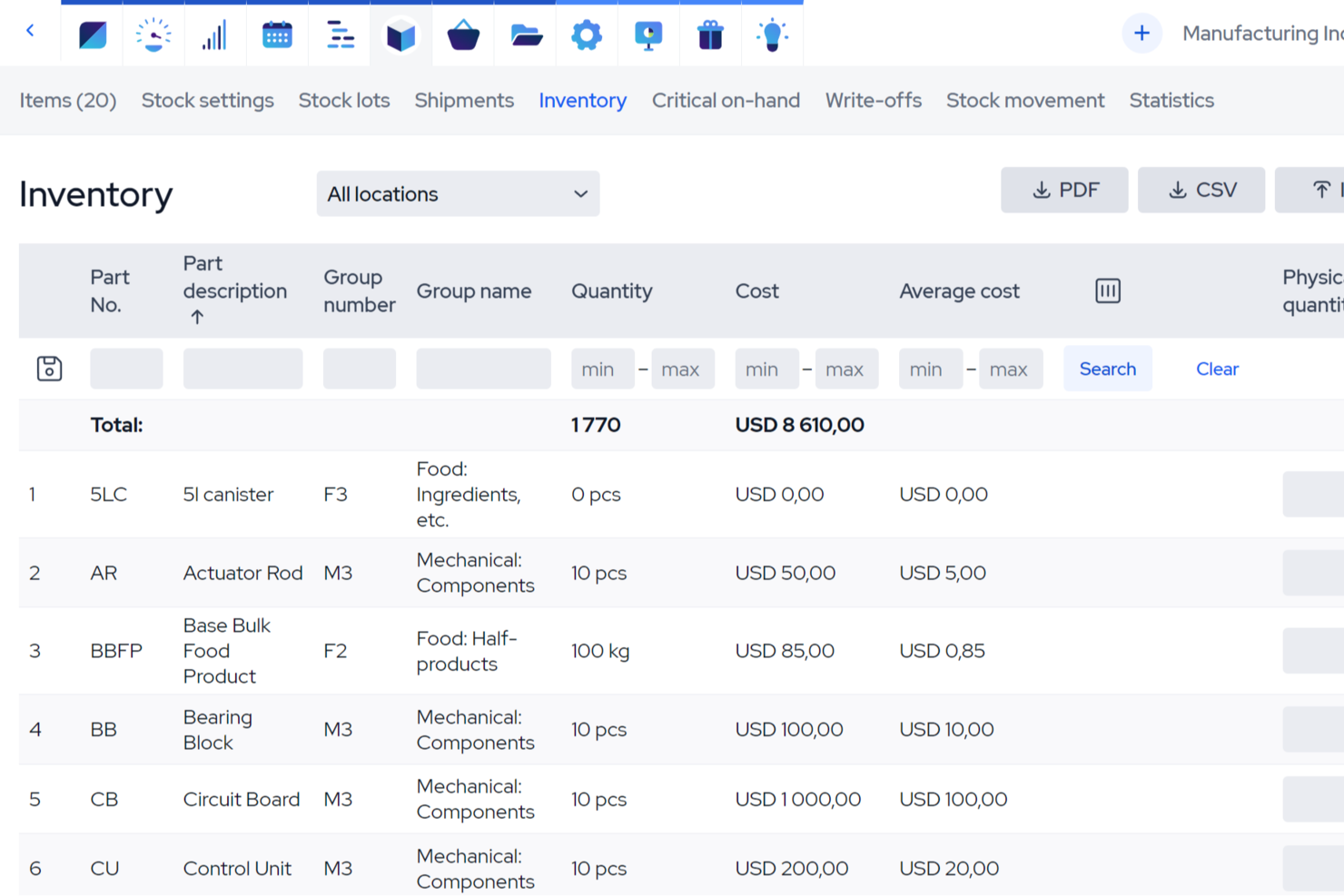
MRPeasy es una plataforma de gestión de inventario y producción basada en la nube diseñada para fabricantes y distribuidores pequeños y medianos. Si tu empresa necesita coordinar inventario, producción y compras en varias ubicaciones, MRPeasy reúne estas funciones en un solo sistema. La plataforma ayuda a los equipos a gestionar los niveles de stock, rastrear pedidos y mantener las operaciones alineadas a medida que escalan.
¿Para quién es mejor MRPeasy?
MRPeasy es ideal para empresas manufactureras pequeñas o medianas que necesitan gestionar inventario, producción y compras en varias ubicaciones.
Por qué elegí MRPeasy
Para equipos de manufactura pequeños, elegí MRPeasy porque ofrece herramientas de gestión de inventario y producción que no requieren un gran departamento de TI para implementarlas o mantenerlas. El seguimiento de inventarios en múltiples almacenes de la plataforma permite a los equipos más pequeños gestionar existencias en varias ubicaciones sin complejidad. También valoro cómo MRPeasy combina la gestión de pedidos y la programación de la producción en un solo lugar, para que los equipos puedan mantener todo coordinado a medida que crecen. Estas características lo hacen una opción práctica para fabricantes que necesitan gestión de inventario en múltiples ubicaciones sin los costos generales a nivel empresarial.
Características clave de MRPeasy
Otras funciones en MRPeasy que apoyan la gestión de inventario en múltiples ubicaciones incluyen:
- Escaneo de códigos de barras: Esta característica permite a los equipos rastrear rápidamente movimientos de inventario y niveles de stock en diferentes almacenes.
- Gestión de listas de materiales: Los usuarios pueden crear y gestionar listas de materiales multinivel para productos, lo que permite una planificación de producción precisa.
- Gestión de proveedores: El sistema rastrea información de proveedores, órdenes de compra y cronogramas de entrega para un mejor control de adquisición.
- Métodos de valoración de inventario: MRPeasy admite los métodos de FIFO, LIFO y costo promedio para ayudar a las empresas a gestionar la contabilidad de inventario en diferentes ubicaciones.
Integraciones de MRPeasy
Las integraciones incluyen Shopify, Xero, QuickBooks Online, WooCommerce, BigCommerce, Pipedrive y una API disponible para integraciones personalizadas.
Pros and Cons
Pros:
- Ofrece gestión de proveedores con seguimiento del historial de compras.
- Se dispone de programación de producción mediante arrastrar y soltar.
- El escaneo de códigos de barras para movimiento de inventario es compatible.
Cons:
- Las opciones de informes personalizados son limitadas.
- La funcionalidad de la aplicación móvil es básica en comparación con otras.
New Product Updates from MRPeasy
MRPeasy Expands REST API v2 With New Data Endpoints
MRPeasy expands REST API v2 with new endpoints for reports, dashboard data, production resources, stock, and settings. This gives users broader programmatic access to operational data. For more information, visit MRPeasy’s official site.
 .
.
Ordoro
Mejor para la gestión de envíos
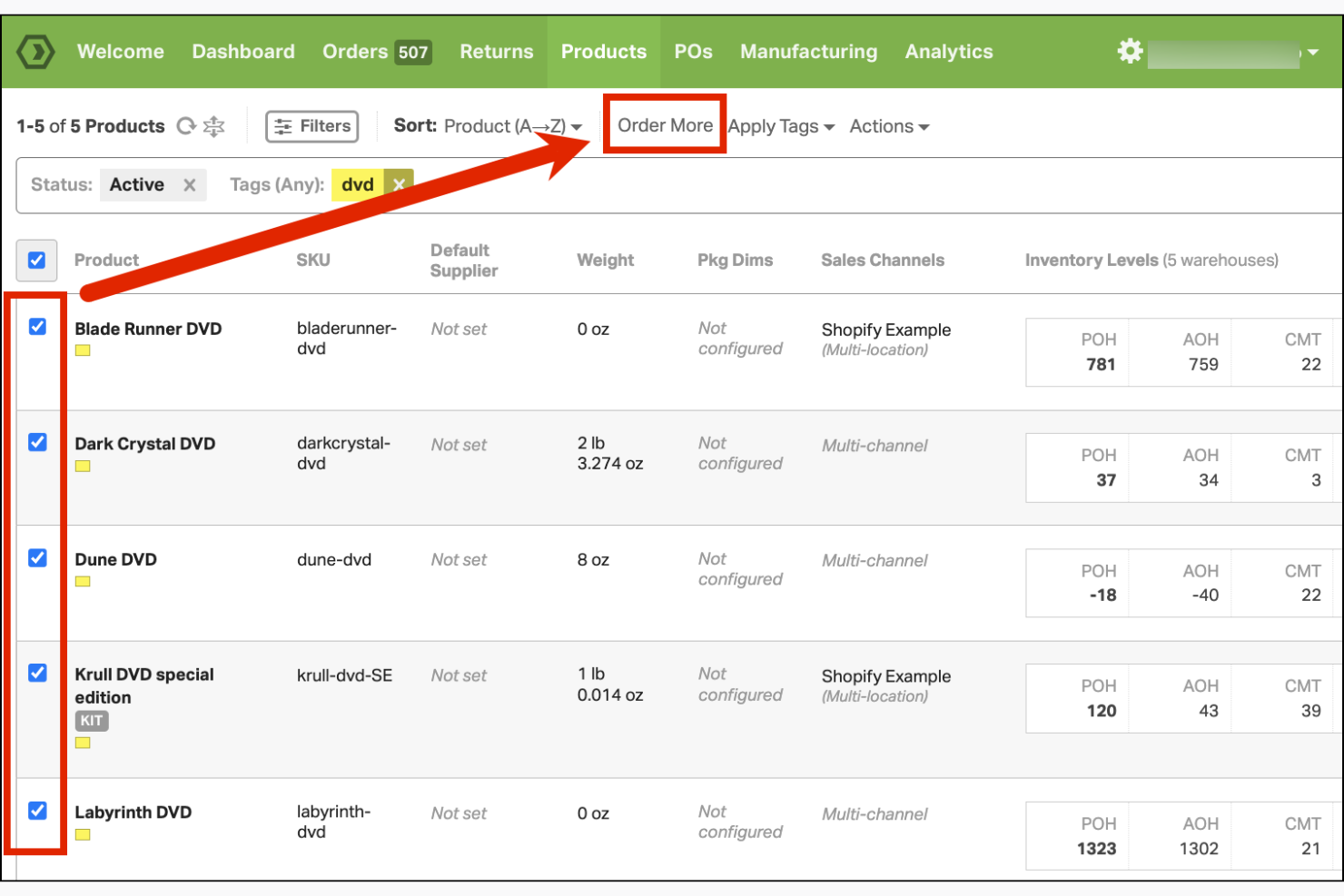
Ordoro es una solución de gestión de inventario y envíos dirigida a pequeñas y medianas empresas de comercio electrónico. Proporciona herramientas para la gestión de pedidos, envíos y control de inventario, ayudándote a optimizar las operaciones de tu tienda online.
Por qué elegí Ordoro: Ofrece una función integral de gestión de envíos que simplifica el proceso de cumplimiento. Con capacidades de dropshipping automatizadas, puedes gestionar fácilmente los pedidos sin necesidad de almacenar inventario. Su función de escaneo de códigos de barras mejora la precisión en la selección y el embalaje de pedidos. La funcionalidad de kit y agrupación de productos de Ordoro te permite crear paquetes de productos, lo que lo convierte en una opción versátil para negocios con una oferta de productos diversa.
Características destacadas e integraciones:
Características incluyen un potente sistema de gestión de envíos que admite múltiples transportistas. Ofrece dropshipping automatizado para que puedas gestionar proveedores y pedidos sin complicaciones. La función de kit y agrupación de productos te permite crear paquetes únicos para mejorar tu estrategia de ventas.
Integraciones incluyen Shopify, BigCommerce, WooCommerce, Amazon, eBay, Etsy, USPS, UPS, FedEx y QuickBooks.
Pros and Cons
Pros:
- Dropshipping automatizado
- Soporte para escaneo de códigos de barras
- Kit y agrupación de productos
- Soporte para múltiples transportistas
Cons:
- Requiere configuración técnica
- Opciones de personalización limitadas
- Puede requerir formación adicional

Ideal para la gestión de comercio global

Zoho Inventory es una solución integral de gestión de inventario diseñada para empresas que participan en el comercio global. Está orientada a pequeñas y medianas empresas, ofreciendo herramientas para el seguimiento de inventario, gestión de pedidos y supervisión de envíos en mercados internacionales.
Por qué elegí Zoho Inventory: Destaca en la gestión del comercio global con funciones como el soporte multidivisa y las integraciones de envíos internacionales. Tu equipo puede gestionar inventario en varios almacenes, garantizando una distribución eficiente del stock. El software proporciona análisis e informes detallados para ayudarte a optimizar las operaciones. Los flujos de trabajo automatizados de Zoho Inventory agilizan el procesamiento de pedidos, convirtiéndolo en una herramienta valiosa para empresas que operan a nivel mundial.
Características y integraciones destacadas:
Las características incluyen flujos de trabajo automatizados que simplifican el procesamiento de pedidos y reducen las tareas manuales. Las herramientas detalladas de análisis e informes ofrecen información sobre tendencias de ventas e inventario. El soporte multidivisa asegura transacciones fluidas en mercados globales, mejorando la capacidad de tu equipo para gestionar el comercio internacional.
Las integraciones incluyen Shopify, Amazon, eBay, Etsy, WooCommerce, Stripe, PayPal, QuickBooks, Xero y DHL.
Pros and Cons
Pros:
- Soporte multidivisa
- Gestión eficiente del comercio global
- Análisis e informes detallados
- Gestión multialmacén
Cons:
- Complejidad en la configuración inicial
- Requiere capacitación para funciones globales
- Puede requerir soporte técnico

Ideal para colaboración multiusuario
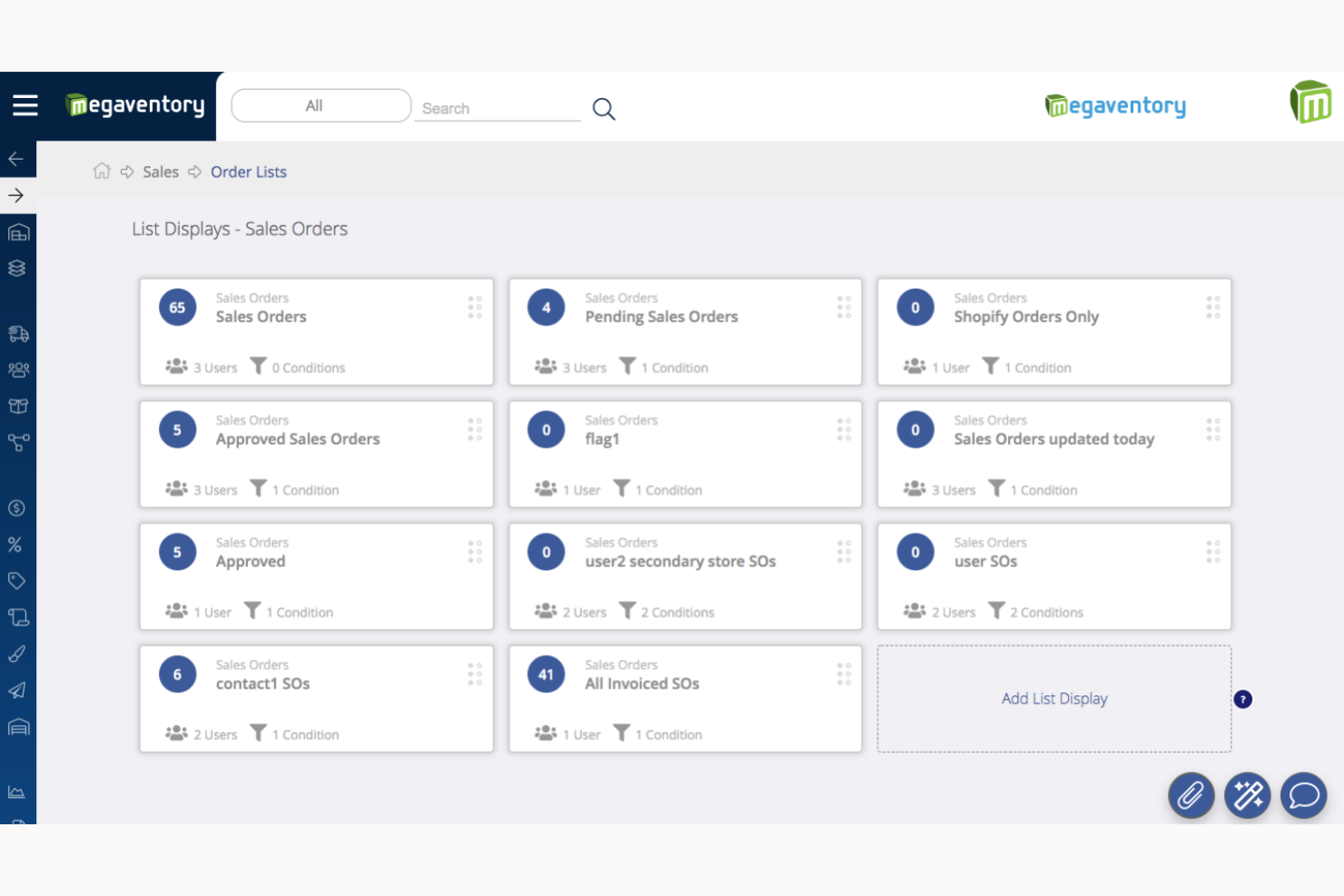
Megaventory es un software de gestión de inventarios diseñado para empresas que requieren acceso multiusuario y colaboración. Admite el seguimiento de inventarios, la gestión de pedidos y procesos de manufactura, lo que lo hace adecuado para empresas medianas y distribuidores.
Por qué elegí Megaventory: Ofrece avanzadas capacidades multiusuario, permitiendo que tu equipo trabaje en conjunto de manera eficiente. Con funciones como el control de acceso basado en roles, puedes asignar roles y permisos específicos a cada usuario. El software también proporciona herramientas de informes detallados que te ayudan a tomar decisiones fundamentadas. El módulo de manufactura de Megaventory admite la gestión de órdenes de trabajo, lo cual es vital para empresas que manejan tareas de producción.
Funciones destacadas e integraciones:
Las funciones incluyen control de acceso basado en roles que te permite definir permisos de usuario según sus responsabilidades. Las herramientas de informes detallados brindan información sobre los niveles de inventario, ventas y compras, facilitando la toma de decisiones basada en datos. El módulo de manufactura admite la gestión de órdenes de trabajo, asegurando la fluidez en los procesos de producción.
Las integraciones incluyen Shopify, Magento, WooCommerce, Zapier, QuickBooks Online, Xero, Salesforce, Google Drive, Dropbox y Lokad.
Pros and Cons
Pros:
- Acceso multiusuario avanzado
- Permisos basados en roles
- Herramientas de informes detallados
- Alertas personalizables
Cons:
- Complejidad en la configuración inicial
- Capacidades limitadas sin conexión
- Requiere actualizaciones ocasionales

SKUSavvy
La mejor integración con Shopify

SKUSavvy es un sistema de gestión de inventarios diseñado específicamente para usuarios de Shopify. Mejora la gestión de inventario y el cumplimiento de pedidos, lo que lo hace ideal para empresas que buscan optimizar sus operaciones en Shopify.
Por qué elegí SKUSavvy: Utiliza sincronización de datos en tiempo real a través de la API de Shopify para garantizar niveles de inventario precisos. Con funciones como paletización en 3D y reposición automática, tu equipo puede gestionar el inventario de manera eficiente. La aplicación móvil permite un seguimiento fluido del inventario en movimiento, lo cual es crucial para la integración con Shopify. El portal para proveedores de SKUSavvy simplifica los procesos de compra, convirtiéndolo en una opción destacada para los usuarios de Shopify.
Características destacadas e integraciones:
Características incluyen software de paletización en 3D que sugiere tamaños óptimos de cajas para el empaquetado, ayudando a ahorrar en envíos. La función de gestión global de inventario te permite gestionar existencias en múltiples ubicaciones de Shopify con facilidad. La reposición automática asegura que nunca te quedes sin stock al reponer según parámetros predefinidos.
Integraciones incluye Shopify, ShipEngine, Stripe, QuickBooks, Amazon y más.
Pros and Cons
Pros:
- Sincronización en tiempo real con Shopify
- Aplicación móvil para inventario
- Paletización en 3D
- Soporte para suscripciones
Cons:
- Puede requerir configuración técnica
- Limitado a usuarios de Shopify
- Requiere actualizaciones regulares

SYSPRO
Ideal para industrias manufactureras

SYSPRO es un software de planificación de recursos empresariales (ERP) diseñado para empresas de manufactura y distribución. Integra la gestión de inventarios, el procesamiento de pedidos y la planificación de la producción, ofreciendo una solución integral para gestionar operaciones complejas.
Por qué elegí SYSPRO: Está dirigido específicamente a las industrias manufactureras, proporcionando herramientas para gestionar simultáneamente la producción y el inventario. Con funciones como la planificación de requerimientos de materiales (MRP) y la gestión de listas de materiales (BOM), tu equipo puede manejar los cronogramas de producción de manera eficiente. La avanzada previsión de inventario del software te ayuda a mantener niveles óptimos de existencias. SYSPRO también admite el seguimiento por lotes y por números de serie, crucial para la trazabilidad en la manufactura.
Características e integraciones destacadas:
Características incluyen previsión avanzada de inventario que te ayuda a tomar decisiones informadas sobre existencias. La planificación de requerimientos de materiales (MRP) garantiza que tengas los materiales adecuados en el momento justo para la producción. La función de gestión de listas de materiales (BOM) te permite crear y gestionar estructuras de productos complejas fácilmente.
Integraciones incluyen Microsoft Office, Salesforce, Shopify, Magento, Amazon, eBay, QuickBooks, Sage, Xero y PayPal.
Pros and Cons
Pros:
- Admite seguimiento por lotes y números de serie
- Previsión avanzada de inventarios
- Planificación de requerimientos de materiales
- Gestión de listas de materiales
Cons:
- Configuración e implementación compleja
- Puede requerir soporte informático continuo
- Opciones de personalización limitadas

Fulfil
Ideal para visibilidad en la red de almacenes
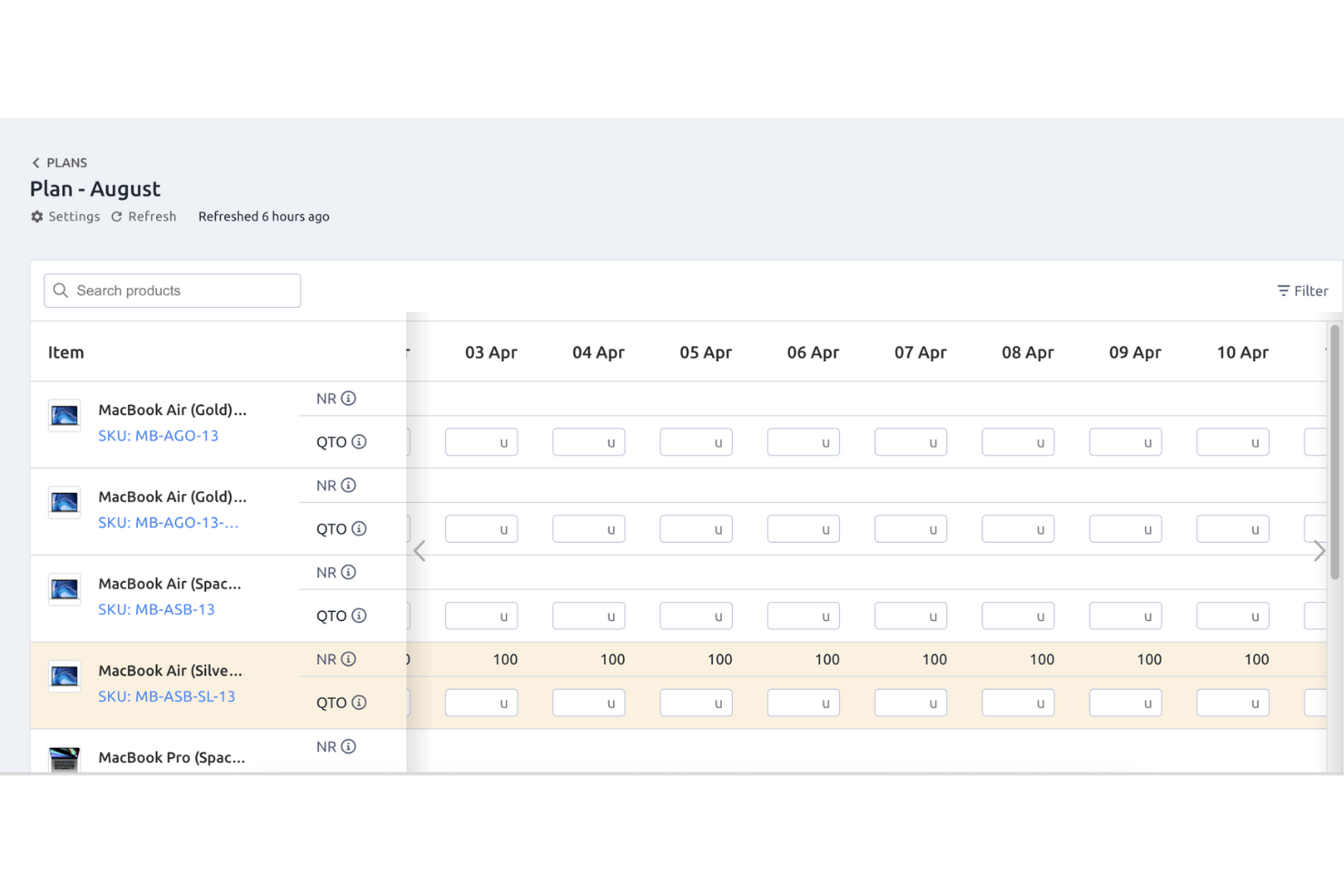
Fulfil es un ERP nativo de IA diseñado para ayudar a los equipos de comercio electrónico, venta al por mayor y minorista a gestionar sus operaciones en un solo lugar. Combina módulos de inventario, pedidos, almacén, compras y finanzas en un sistema unificado.
Por qué elegí Fulfil: Elegí Fulfil porque te brinda visibilidad en tiempo real en todos tus almacenes y canales de ventas, permitiéndote ver las existencias, cantidades reservadas y disponibilidad por ubicación en un solo sistema. Puedes establecer reglas automáticas de asignación para que cada pedido entrante se cumpla desde la ubicación óptima (por ejemplo, el almacén más cercano o el sitio con más stock), reduciendo el exceso de envíos o quiebres de stock. Fulfil también permite transferencias de inventario sin fricciones entre sitios (traslados entre almacenes), para que puedas reequilibrar automáticamente el inventario a lo largo de tu red de ubicaciones.
Características destacadas e integraciones
Las características incluyen el seguimiento a nivel de contenedor, que te permite gestionar exactamente dónde se encuentran los artículos dentro de cada ubicación, mejorando la eficiencia en la recolección. Maneja el seguimiento de lotes y partidas (y fechas de caducidad), por lo que puedes gestionar el inventario por ubicación con trazabilidad entre lotes. También apoya el conteo cíclico, recuentos completos, parciales o ciegos en cualquier ubicación para mantener la precisión.
Las integraciones incluyen Amazon, Shopify, Etsy, eBay, FedEx, UPS, DHL, PayPal, Stripe, Avalara, Klarna y Amazon Shipping.
Pros and Cons
Pros:
- Sólido soporte para multiempresa y multimoneda
- Seguimiento integrado de almacenes y lotes en múltiples sitios
- Automatiza transferencias y reequilibrio de inventario
Cons:
- La configuración de permisos para API puede ser complicada
- Los informes/visuales del panel necesitan mejorar

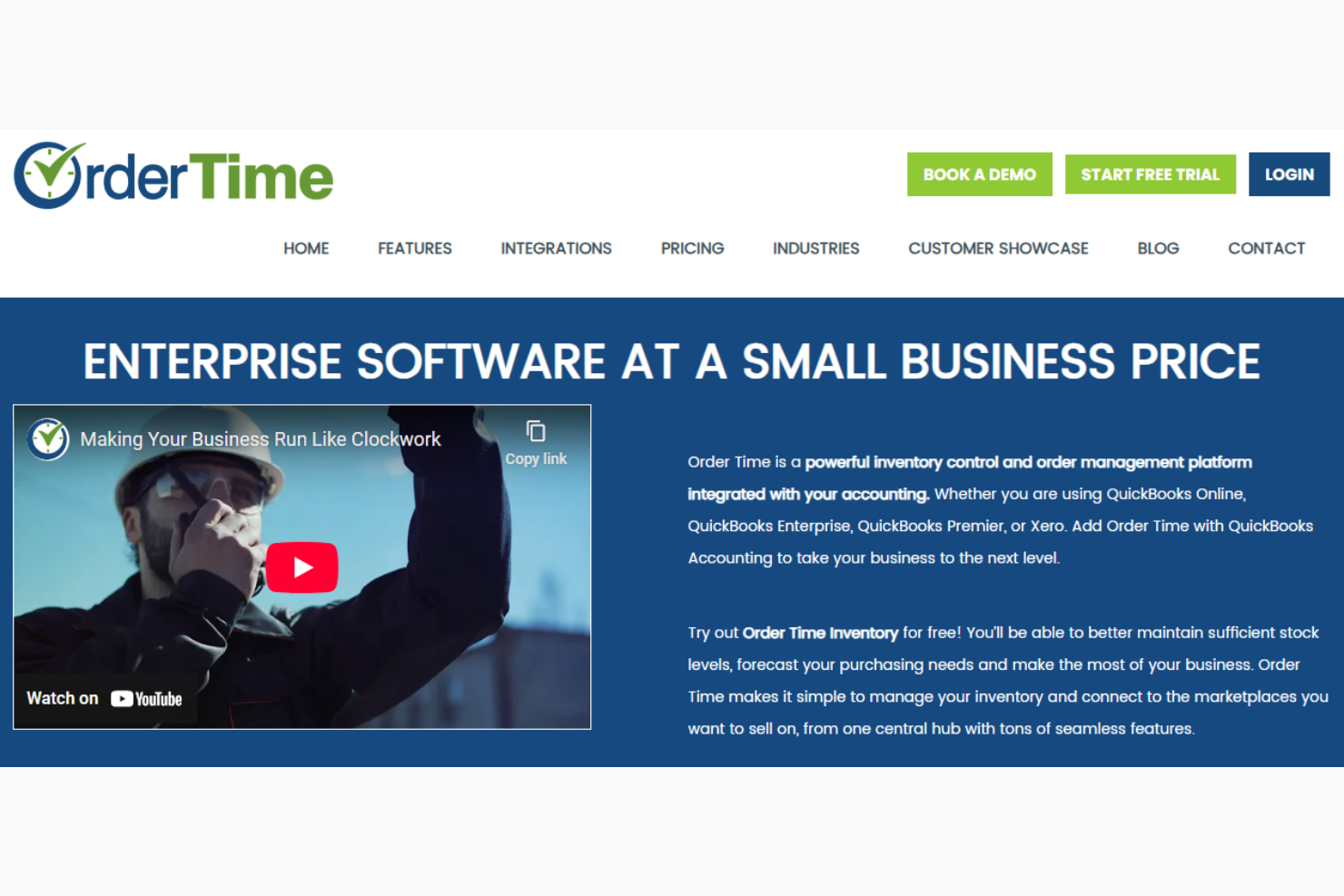
Order Time Inventory es una solución de gestión de inventario diseñada para empresas que necesitan un control eficiente de pedidos e inventario. Está orientada a pequeñas y medianas empresas, ofreciendo herramientas para gestionar el stock, las ventas y las órdenes de compra.
Por qué elegí Order Time Inventory: Se integra perfectamente con QuickBooks, lo que la hace ideal para empresas que dependen de este software contable. La plataforma admite la gestión de inventario en múltiples ubicaciones, permitiendo a tu equipo rastrear el stock en diversos lugares. Las actualizaciones en tiempo real aseguran que siempre tengas una visión precisa de tus niveles de inventario. Con funciones como el escaneo de códigos de barras e informes personalizables, Order Time Inventory mejora la eficiencia operativa.
Funciones e integraciones destacadas:
Las funciones incluyen el escaneo de códigos de barras que agiliza el seguimiento del inventario y reduce los errores. Los informes personalizables te permiten generar análisis adaptados a las necesidades de tu negocio. Las actualizaciones de inventario en tiempo real garantizan que siempre conozcas tus niveles de stock, minimizando el riesgo de quedarte sin existencias.
Las integraciones incluyen QuickBooks, Shopify, WooCommerce, Amazon, eBay, Magento, Square, BigCommerce, Etsy y PayPal.
Pros and Cons
Pros:
- Integración perfecta con QuickBooks
- Actualizaciones de inventario en tiempo real
- Capacidades de escaneo de códigos de barras
- Informes personalizables
Cons:
- La configuración inicial puede ser compleja
- Capacidades limitadas sin conexión
- Complejidad para pequeños negocios

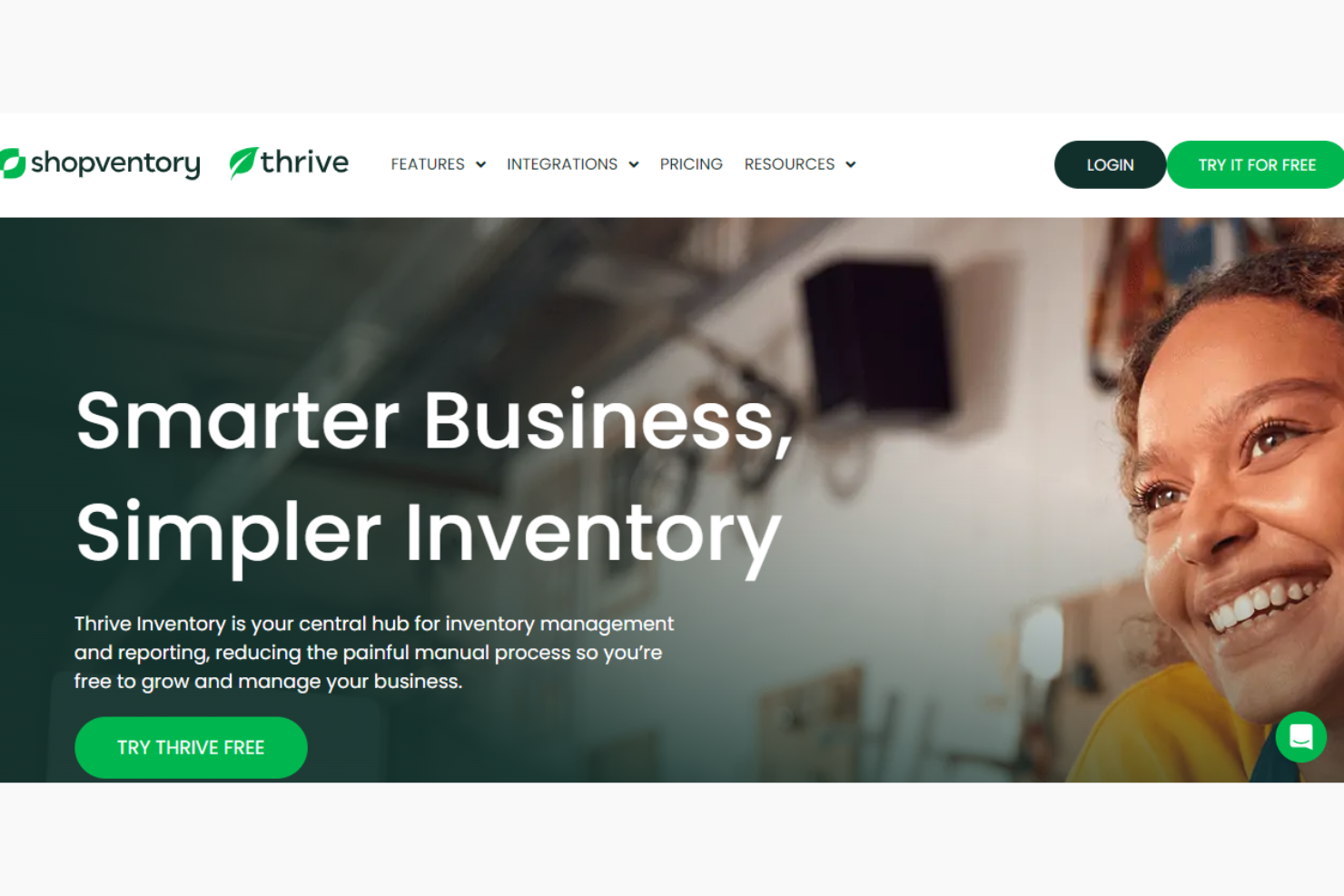
Thrive by Shopventory es una herramienta de gestión de inventario y análisis empresarial diseñada para minoristas pequeños y medianos. Ofrece seguimiento de inventario, informes de ventas e inteligencia empresarial para ayudarte a tomar decisiones informadas y optimizar tus operaciones.
Por qué elegí Thrive by Shopventory: Sus capacidades detalladas de análisis e informes brindan a tu equipo información sobre las tendencias de ventas y el desempeño del inventario. Los paneles personalizados te permiten monitorear los indicadores que más importan a tu negocio. La herramienta proporciona un seguimiento de inventario en tiempo real, asegurando que siempre sepas qué tienes en existencia. Thrive by Shopventory también admite la gestión de múltiples ubicaciones, lo que la hace ideal para negocios con varias tiendas o almacenes.
Características y integraciones destacadas:
Las características incluyen tableros personalizables que te permiten enfocarte en métricas clave relevantes para tu negocio. Las alertas de bajo inventario ayudan a prevenir faltantes y aseguran la reposición a tiempo. Los informes de ventas detallados proporcionan información sobre el desempeño de los productos, ayudándote a identificar los más vendidos y los de bajo rendimiento.
Las integraciones incluyen Shopify, Square, WooCommerce, BigCommerce, Clover, QuickBooks Online, PayPal, Stripe, Magento y Amazon.
Pros and Cons
Pros:
- Análisis e informes detallados
- Paneles personalizables
- Seguimiento de inventario en tiempo real
- Alertas de bajo inventario
Cons:
- La configuración inicial puede ser compleja
- Requiere actualizaciones regulares
- Puede requerir capacitación adicional

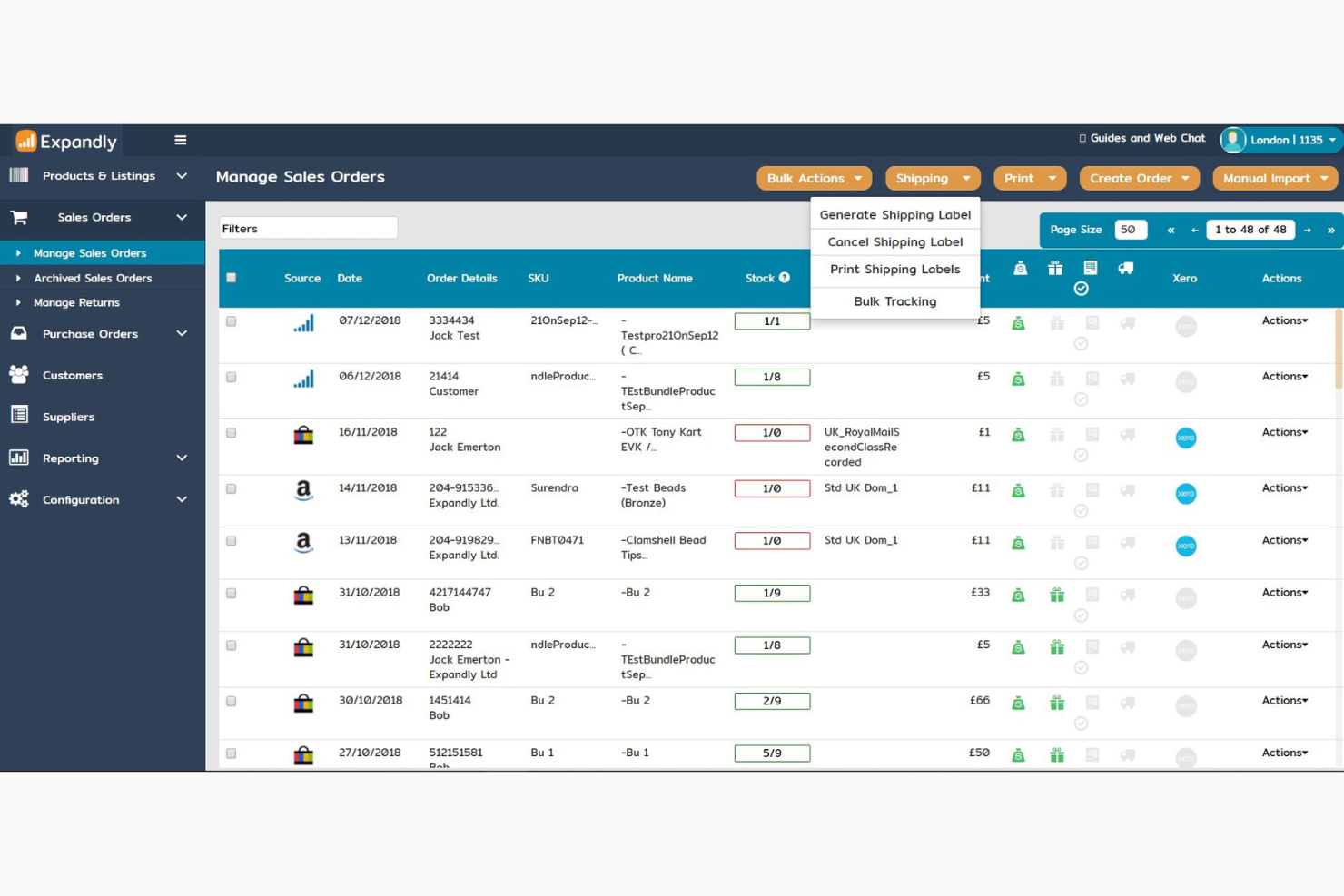
Expandly es una solución de gestión de inventario para múltiples ubicaciones diseñada para pequeños minoristas en línea. Proporciona visibilidad en tiempo real del stock, gestión de pedidos y funcionalidades de envío, ayudándote a administrar el inventario a través de diferentes canales de venta.
Por qué elegí Expandly: Ofrece una plataforma centralizada que sincroniza automáticamente los niveles de stock, asegurando que no vendas más de lo disponible. Con funciones como la visibilidad en tiempo real del stock y la gestión de devoluciones, puedes llevar un control preciso del inventario. También admite la gestión de kits y paquetes, lo que te permite ofrecer productos complejos. Expandly se integra con los carritos de compras más populares, lo que lo hace ideal para pequeños minoristas en línea.
Características destacadas e integraciones:
Características incluyen sincronización de niveles de stock en tiempo real, lo que te permite mantener el inventario preciso en todos los canales de venta. La plataforma ofrece gestión de kits y paquetes, brindándote flexibilidad en la oferta de productos. También puedes ajustar manualmente los niveles de inventario y establecer umbrales de reabastecimiento para un mejor control del stock.
Integraciones incluyen Shopify, WooCommerce, Xero, QuickBooks, Royal Mail, DHL, Amazon, eBay, Etsy y BigCommerce.
Pros and Cons
Pros:
- Sincronización de inventario en tiempo real
- Gestión de kits y paquetes
- Ajustes manuales de inventario
- Configuración de umbrales de reabastecimiento
Cons:
- Opciones de personalización limitadas
- Requiere configuración manual
- Algunas funciones pueden requerir actualizaciones
Otros programas de gestión de inventario para múltiples ubicaciones
Estas son algunas opciones adicionales de programas de gestión de inventario para múltiples ubicaciones que no llegaron a mi lista final, pero que aun así vale la pena conocer:
- Dynamic Inventory
Ideal para acceso a datos en tiempo real
- SkuNexus
Ideal para flujos de trabajo personalizables
- HandiFox
Ideal para el seguimiento de inventario móvil
- Deskera
Mejor para pequeñas y medianas empresas
- SimplyDepo
Ideal para ventas de campo y gestión de pedidos B2B


Cómo Evalúo el Software de Gestión de Inventario Multisucursal
Evalúo estas herramientas en dos niveles: la funcionalidad básica que toda herramienta debe tener para calificar, y los diferenciadores que más importan cuando estás sincronizando stock entre decenas de ubicaciones.
Funcionalidades Básicas (Requisitos Indispensables para Esta Lista)
Al seleccionar herramientas para mi lista, califico cada una en una escala del 0 (no ofrece la funcionalidad) al 5 (sobresale en esta área) para cada funcionalidad básica listada a continuación. Luego, calculo el puntaje total de la herramienta en porcentaje. Cada herramienta necesita alcanzar una puntuación total mínima del 65% para ser considerada para su inclusión.
- Seguimiento de Inventario Multisucursal: Compruebo si puedes ver cantidades en tiempo real, movimientos de SKU y estado del inventario en cada tienda y almacén desde un panel centralizado.
- Gestión de Transferencias Entre Ubicaciones: Mover productos de baja rotación de una tienda a otra es algo rutinario, por lo que busco órdenes de transferencia con visibilidad en tránsito y flujos de confirmación de recepción.
- Reabastecimiento Basado en Ubicación: Cada ubicación vende de forma diferente. Evalúo si los puntos de reorden y la generación automática de órdenes de compra pueden configurarse por sitio y no solo globalmente.
- Sincronización de Inventario Omnicanal: Miro cómo se sincronizan los niveles de stock entre sistemas POS, tiendas en línea y marketplaces para confirmar que una venta en un canal actualiza inmediatamente los demás.
- Reportes a Nivel de Ubicación: Aquí importan las comparativas de rotación entre ubicaciones y el seguimiento de mermas. Verifico que existan reportes que desglosen el rendimiento por cada sitio.
- Gestión de Códigos de Barras y SKUs: Evalúo el soporte para escaneo de códigos de barras, manejo de variantes y si el catálogo de productos puede unificarse entre ubicaciones o restringirse a sitios específicos.
Una vez que tengo una lista de herramientas que cumplen este criterio, considero qué diferencia a cada plataforma.
Factores Diferenciadores (Lo Que Distingue a los Proveedores)
Así comparo y contrasto diferentes proveedores:
Funciones Destacadas
La inteligencia artificial para prever la demanda es un diferenciador importante. Busco modelos que usen el historial de ventas y patrones estacionales de cada ubicación para recomendar la asignación de stock—manteniendo bien surtidas las tiendas con más tráfico en temporadas pico sin sobrecargar las sucursales menores. También es relevante la gestión de pedidos distribuida, que asigna pedidos en línea a la ubicación más cercana con stock disponible para reducir costos de envío. Además, evalúo las aplicaciones móviles para uso en tienda, ya que el personal que realiza conteo cíclico y recibe transferencias necesita escaneo nativo de códigos de barras sin depender de una computadora de escritorio.
Más Allá de las Funciones
La profundidad de integración con tu ecosistema de retail es una consideración clave. Verifico la existencia de conectores nativos con el POS, plataformas de comercio electrónico y herramientas contables que ya utilizas—porque una plataforma que no puede sincronizarse con tu tienda Shopify o el libro mayor de QuickBooks causa más problemas de los que resuelve. La escalabilidad también importa: una cadena de cinco tiendas hoy puede convertirse en una operación de cincuenta mañana, así que evalúo si la tarifa y el rendimiento se mantienen a medida que agregas ubicaciones. Por último, reviso la confiabilidad en tiempo real, incluida la compatibilidad con modo offline para tiendas que pierden conectividad en pleno turno y aún necesitan procesar recepciones.
¿Qué es un programa de gestión de inventario para múltiples ubicaciones?
Un programa de gestión de inventario para múltiples ubicaciones es un sistema que permite a minoristas, responsables de almacén y equipos de la cadena de suministro hacer un seguimiento, gestionar y optimizar los niveles de inventario en varias ubicaciones y en tiempo real.
Estas plataformas conectan cada almacén, tienda y canal de venta, para que siempre sepas qué hay disponible, dónde se encuentra y qué debe trasladarse a continuación.
Con el programa adecuado, puedes automatizar los puntos de reposición, agilizar las transferencias, evitar las faltas de existencias y detectar discrepancias antes de que se conviertan en problemas costosos.
Es la diferencia entre luchar con hojas de cálculo y gestionar un sistema de inventario centralizado y basado en datos que mantiene tus operaciones funcionando sin problemas, sin importar cuántos centros o canales gestiones.
Cómo elegir un programa de gestión de inventario para múltiples ubicaciones
No todos los programas de inventario son iguales, y un panel atractivo no solucionará un flujo de trabajo defectuoso. Utiliza esta lista de comprobación para centrar tu búsqueda y filtrar el ruido comercial:
| Factor | Qué buscar |
|---|---|
| Escalabilidad | ¿Podrá gestionar más ubicaciones, usuarios y canales a medida que crezca tu negocio, o se te quedará pequeño en un año? |
| Integraciones | ¿Realmente se conecta con tu POS, comercio electrónico, ERP y sistema de contabilidad, o tendrás que introducir los datos manualmente? |
| Personalización | ¿Puedes ajustar campos, paneles e informes para adaptarlos a tus operaciones, o tendrás que ceñirte al proceso de otra empresa? |
| Facilidad de uso | ¿Tu equipo podrá aprender a usarlo rápidamente, o perderás una semana con vídeos de capacitación y llamadas de incorporación? |
| Implementación | ¿Cuánto sufrimiento implica la implementación? Busca una buena incorporación y asistencia antes de firmar el contrato. |
| Coste | ¿Obtienes aquello por lo que pagas, o «premium» es simplemente una forma de decir «complementos por todas partes»? |
| Seguridad | ¿Cuenta con controles de acceso adecuados, cifrado y cumplimiento normativo, o tus datos de inventario quedan expuestos? |
| Asistencia | ¿Hay asistencia humana y fiable cuando la necesitas, y no solo un chatbot o un documento de ayuda? |
Funciones del software de gestión de inventario para varias ubicaciones
Si quieres olvidarte del seguimiento manual del inventario y conseguir que tus operaciones funcionen como una máquina bien engrasada, estas son las funciones que realmente importan en una configuración con varias ubicaciones:
- Seguimiento del inventario en tiempo real. Consulta al instante los niveles y movimientos de existencias en todas las ubicaciones de almacenes y tiendas, sin retrasos ni sorpresas.
- Puntos de reposición y reabastecimiento automatizados. Deja que el sistema señale los niveles bajos de existencias y active órdenes de compra antes de que llegues al inventario de seguridad o corras el riesgo de quedarte sin existencias.
- Panel centralizado. Consulta los datos de inventario, los pedidos y las transferencias en un solo lugar para disfrutar de un flujo de trabajo optimizado y basado en datos.
- Escaneo de códigos de barras y RFID. Agiliza las auditorías de inventario, el procesamiento de pedidos y las transferencias de existencias, al tiempo que reduces los errores y la introducción manual de datos.
- Análisis e informes avanzados. Detecta tendencias, discrepancias y exceso de existencias con informes de inventario personalizables y prácticos, no solo con gráficos atractivos.
- Integraciones fluidas. Sincroniza tu software de gestión de inventario con las herramientas de POS, comercio electrónico, ERP y contabilidad para que todo fluya sin el caos de copiar y pegar.
- Gestión de varias ubicaciones y almacenes. Haz un seguimiento, transfiere y optimiza fácilmente el inventario en distintas ubicaciones, centros de distribución y canales de venta.
- Controles de acceso basados en roles. Protege los datos confidenciales y permite que tu equipo trabaje de forma eficiente sin problemas de seguridad.
- Flujos de trabajo automatizados. Elimina las tareas manuales y repetitivas: utiliza la automatización para la preparación de pedidos, las auditorías y los ajustes de inventario.
- Acceso móvil y basado en la nube. Gestiona el inventario, realiza auditorías y procesa pedidos desde cualquier lugar, ya sea en el almacén, la oficina o una feria comercial.
Beneficios del software de gestión de inventario para varias ubicaciones
Si alguna vez has gestionado los niveles de existencias con una hoja de cálculo, sabes lo rápido que las cosas pueden descontrolarse. Esto es lo que la solución de gestión de inventario adecuada puede hacer realmente por tu empresa:
- Mejorar la precisión del inventario. El seguimiento en tiempo real y los flujos de trabajo automatizados se traducen en menos discrepancias de existencias y menos tiempo buscando productos desaparecidos.
- Optimizar las operaciones. Reduce los procesos manuales, automatiza la preparación de pedidos y permite que tu equipo se concentre en aportar valor, no en tareas repetitivas.
- Reducir las costosas roturas y acumulaciones de stock. Los datos y el reabastecimiento automatizado mantienen equilibradas tus estanterías, saludable tu flujo de caja y satisfechos a tus clientes.
- Optimizar los flujos de trabajo en varias ubicaciones. Transfiere existencias, audita el inventario y gestiona el procesamiento de pedidos fácilmente desde un solo panel en distintas ubicaciones, almacenes y canales de venta.
- Aumentar la rentabilidad. Un menor exceso de inventario, una rotación más rápida y un control más estricto del inventario repercuten directamente en tus resultados.
- Mejorar la satisfacción del cliente. Satisface la demanda, completa los pedidos con precisión y evita los problemas de «agotado», para conseguir clientes recurrentes y mejores reseñas.
- Facilitar la toma de decisiones basada en datos. Con informes de inventario en tiempo real, obtienes una visión clara de las tendencias, los cuellos de botella y las oportunidades antes de que se conviertan en problemas.
Costes y precios del software de gestión de inventario para varias ubicaciones
Los precios del software de gestión de inventario para varias ubicaciones pueden parecer un objetivo en movimiento. Lo que pagues dependerá de las funciones, el número de ubicaciones y usuarios, las integraciones y la cantidad de problemas que quieras automatizar.
Este es un breve resumen de lo que puedes esperar de los tipos de planes más habituales:
| Tipo de plan | Precio promedio | Características habituales | Ideal para |
|---|---|---|---|
| Plan gratuito | $0 | Seguimiento básico del inventario, ubicaciones limitadas, informes esenciales | Pequeñas empresas que están probando el servicio |
| Plan personal | $10–$30/usuario/mes | Actualizaciones de existencias en tiempo real, compatibilidad con varias ubicaciones, análisis básicos | Emprendedores individuales, startups |
| Plan empresarial | $40–$75/usuario/mes | Informes avanzados, integraciones contables, flujos de trabajo automatizados | Minoristas en crecimiento |
| Plan corporativo | $100–$200/usuario/mes | Paneles personalizados, asistencia especializada, gestión multidivisa | Operaciones complejas con varias ubicaciones |
Atención:
Algunas plataformas añaden tarifas por ubicaciones adicionales, módulos avanzados (como la previsión de la demanda o la integración con ERP) o un mayor volumen de pedidos. Si gestionas varias tiendas o una operación de alta rotación, asegúrate de comprender todos los niveles de uso y las tarifas por transacción antes de firmar un contrato.
Preguntas frecuentes sobre el software de gestión de inventario para varias ubicaciones
Estas son algunas respuestas a preguntas frecuentes sobre el software de gestión de inventario para varias ubicaciones:
Toma el control de tu inventario en todas las ubicaciones
Gestionar un inventario en varias ubicaciones no debería hacerte sentir que estás siempre a una escasez del caos si cuentas con un software adecuado para las operaciones minoristas.
El software de gestión de inventario adecuado es la forma de obtener por fin visibilidad en tiempo real, automatizar las tareas tediosas y mantener cada tienda, almacén y canal funcionando según tus condiciones, no al revés.
¿Listo para dejar de luchar contra las hojas de cálculo y tomar el control?
El comercio minorista nunca se detiene, y tú tampoco deberías hacerlo. Suscríbete a nuestro boletín para recibir las últimas ideas, estrategias y recursos profesionales de los principales líderes del comercio minorista que están dando forma al sector.