

Ordoro Review 2025: Pros, Cons, Features & Pricing
Ordoro simplifies multichannel order management and inventory tracking for ecommerce businesses. If you’re tired of spreadsheets and want automation without the startup nonsense, this platform actually delivers.

We review tools independently, and commissions help fund our testing. See our transparency policy, our methodology, or suggest a tool.
Ordoro is an order management system software built for ecommerce sellers who process orders across multiple sales channels. I'd consider it when you need both order routing and inventory control in one place—especially if dropshipping is part of your fulfillment mix. Compared to ShipStation, which focuses primarily on shipping label creation, Ordoro gives you more depth on inventory syncing, kitting, and supplier management without needing to layer in a separate tool.
Ordoro Evaluation Summary
4.7/5
- From $349/month
- 15-day free trial + free plan available
Why Trust Our Software Recommendations
6,700+
Reviews
20
Industry experts
16+
Evaluation factors
14
Years
Our team has been testing and reviewing software since 2012. As retail leaders ourselves, we know how difficult—and important—it is to choose the right software.
For this guide, we evaluated tools using hands-on testing and independent research, scoring tools using our selection criteria.
Our reviews reflect our independent judgment—not a sales pitch.
Ordoro Overview
Pros
- Streamlines multichannel order management. Keeps all your sales channels organized without manual gymnastics.
- Efficient shipping label generation. Cuts down on busywork and reduces shipping mistakes.
- Real-time inventory tracking. Helps avoid costly stockouts and double-selling headaches.
Cons
- User interface feels dated. Not exactly a visual treat—and it shows.
- Onboarding can be rough. New users may need extra patience (and maybe a drink).
- Support isn’t always quick. Help arrives, but rarely at lightning speed.
Is Ordoro Right For Your Needs?
Who Would be a Good Fit for Ordoro?
Ordoro is a strong fit for small to midsize ecommerce businesses that need to manage orders and inventory across multiple sales channels—especially if you’re selling on platforms like Shopify, Amazon, or WooCommerce.
If your operation values automation in shipping, inventory tracking, and order processing, and you want a user-friendly, cloud-based platform without excessive customization, Ordoro offers the right balance.
It’s especially practical for teams ready to move beyond spreadsheets and manual entry, but who don’t need enterprise-level complexity or endless integrations.
- Ecommerce retailersOrdoro helps your online store manage orders and inventory across multiple sales channels like Shopify, Amazon, eBay, and BigCommerce with less manual effort.
- Small businesses needing shipping automationAutomatically generate shipping labels and tracking numbers for USPS, FedEx, and UPS, saving time on every order.
- Online clothing storesEfficiently track stock and fulfill orders, ensuring customers receive accurate shipments—no more overselling or lost items.
- Specialty product sellersReal-time inventory tracking keeps unique or limited-stock items up to date across all marketplaces, reducing costly errors.
- Warehouse teamsStreamline operations with a centralized dashboard for order processing, inventory management, and barcode scanning.
- Multichannel sellersManage all your sales channels and inventory levels in one cloud-based platform, reducing overselling and fulfillment headaches.
Who Would be a Bad Fit for Ordoro?
Ordoro is not ideal for large-scale retailers or enterprise operations that require extensive workflow customization, advanced analytics, or robust warehouse management capabilities.
If your business expects fast, high-touch onboarding, detailed reporting, or deep integrations with legacy systems or APIs, you’ll likely find Ordoro’s offering too limited.
Companies with complex kitting, multiple warehouse locations, or specialized shipping solutions may quickly outgrow what Ordoro provides out of the box.
- Large corporationsOrdoro’s core functionality falls short for complex supply chains or highly detailed inventory systems.
- Custom workflow needsThe platform offers limited options for deep automation, custom notifications, or specialized integrations.
- Advanced analytics usersIf your team relies on in-depth reporting, data visualization, or integrations with BI tools, Ordoro won’t deliver.
- Dedicated IT teamsOrdoro’s interface and API flexibility won’t satisfy teams looking for extensive system tweaks or technical customizations.
- High-customization sectorsThe platform lacks the flexibility needed for intricate inventory tracking or advanced kitting.
- Complex inventory systemsFor businesses requiring robust warehouse management or advanced barcode solutions, Ordoro is likely not enough.
Our Review Methodology
How We Test & Score Tools
We’ve spent years building, refining, and improving our software testing and scoring system. The rubric is designed to capture the nuances of software selection and what makes a tool effective, focusing on critical aspects of the decision-making process.
Below, you can see exactly how our testing and scoring works across seven criteria. It allows us to provide an unbiased evaluation of the software based on core functionality, standout features, ease of use, onboarding, customer support, integrations, customer reviews, and value for money.
Core Functionality (25% of final scoring)
The starting point of our evaluation is always the core functionality of the tool. Does it have the basic features and functions that a user would expect to see? Are any of those core features locked to higher-tiered pricing plans? At its core, we expect a tool to stand up against the baseline capabilities of its competitors.
Standout Features (25% of final scoring)
Next, we evaluate uncommon standout features that go above and beyond the core functionality typically found in tools of its kind. A high score reflects specialized or unique features that make the product faster, more efficient, or offer additional value to the user.
We also evaluate how easy it is to integrate with other tools typically found in the tech stack to expand the functionality and utility of the software. Tools offering plentiful native integrations, 3rd party connections, and API access to build custom integrations score best.
Ease of Use (10% of final scoring)
We consider how quick and easy it is to execute the tasks defined in the core functionality using the tool. High scoring software is well designed, intuitive to use, offers mobile apps, provides templates, and makes relatively complex tasks seem simple.
Onboarding (10% of final scoring)
We know how important rapid team adoption is for a new platform, so we evaluate how easy it is to learn and use a tool with minimal training. We evaluate how quickly a team member can get set up and start using the tool with no experience. High scoring solutions indicate little or no support is required.
Customer Support (10% of final scoring)
We review how quick and easy it is to get unstuck and find help by phone, live chat, or knowledge base. Tools and companies that provide real-time support score best, while chatbots score worst.
Customer Reviews (10% of final scoring)
Beyond our own testing and evaluation, we consider the net promoter score from current and past customers. We review their likelihood, given the option, to choose the tool again for the core functionality. A high scoring software reflects a high net promoter score from current or past customers.
Value for Money (10% of final scoring)
Lastly, in consideration of all the other criteria, we review the average price of entry level plans against the core features and consider the value of the other evaluation criteria. Software that delivers more, for less, will score higher.
Core Features
Order management
Centralizes orders from all your sales channels—Shopify, Amazon, WooCommerce, eBay, and more—into a single dashboard for efficient order processing.
Inventory management
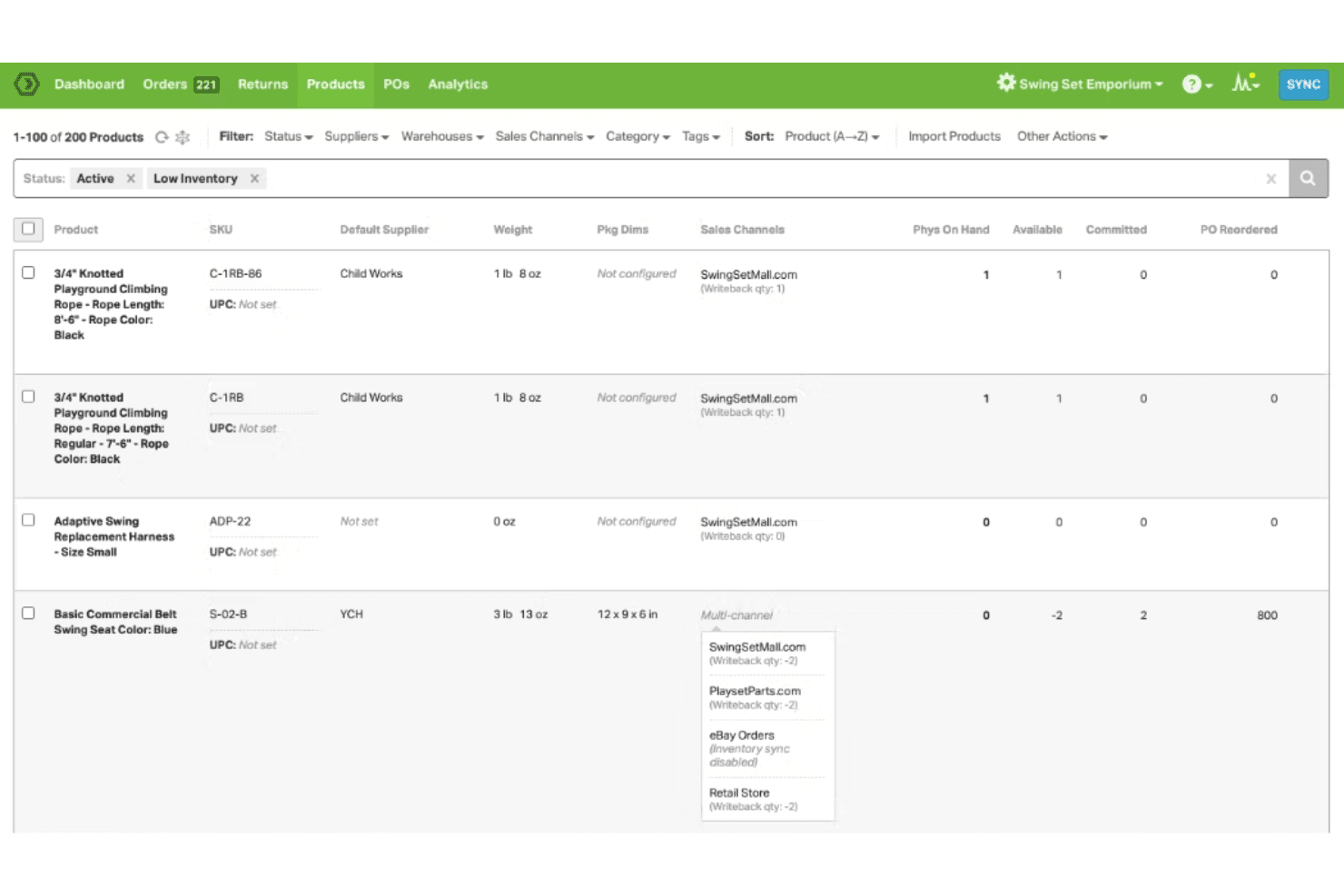
Provides real-time inventory tracking and automatically updates inventory levels across your connected ecommerce platforms, reducing overselling.
Shipping label generation
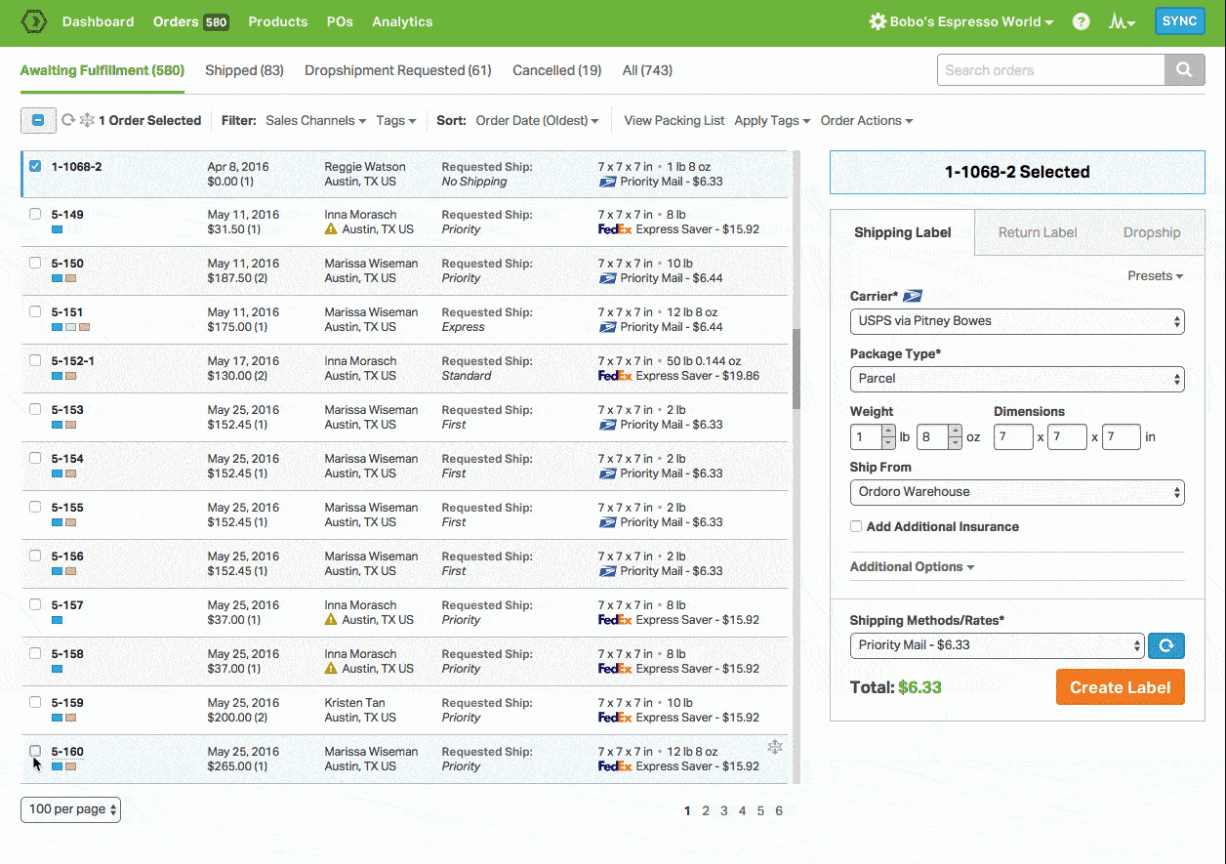
Quickly creates shipping labels for USPS, FedEx, and UPS, streamlining your shipping workflow and saving time.
Returns management
Simplifies returns and inventory adjustments with built-in tools, helping your team manage product returns without disrupting operations.
Reporting and analytics
Offers essential reports on sales channels, shipping, and inventory management—enough to keep an eye on performance.
Supplier management
Keeps supplier information and purchase orders organized, making it easier to manage restocking and dropshipping workflows.
Ease of Use
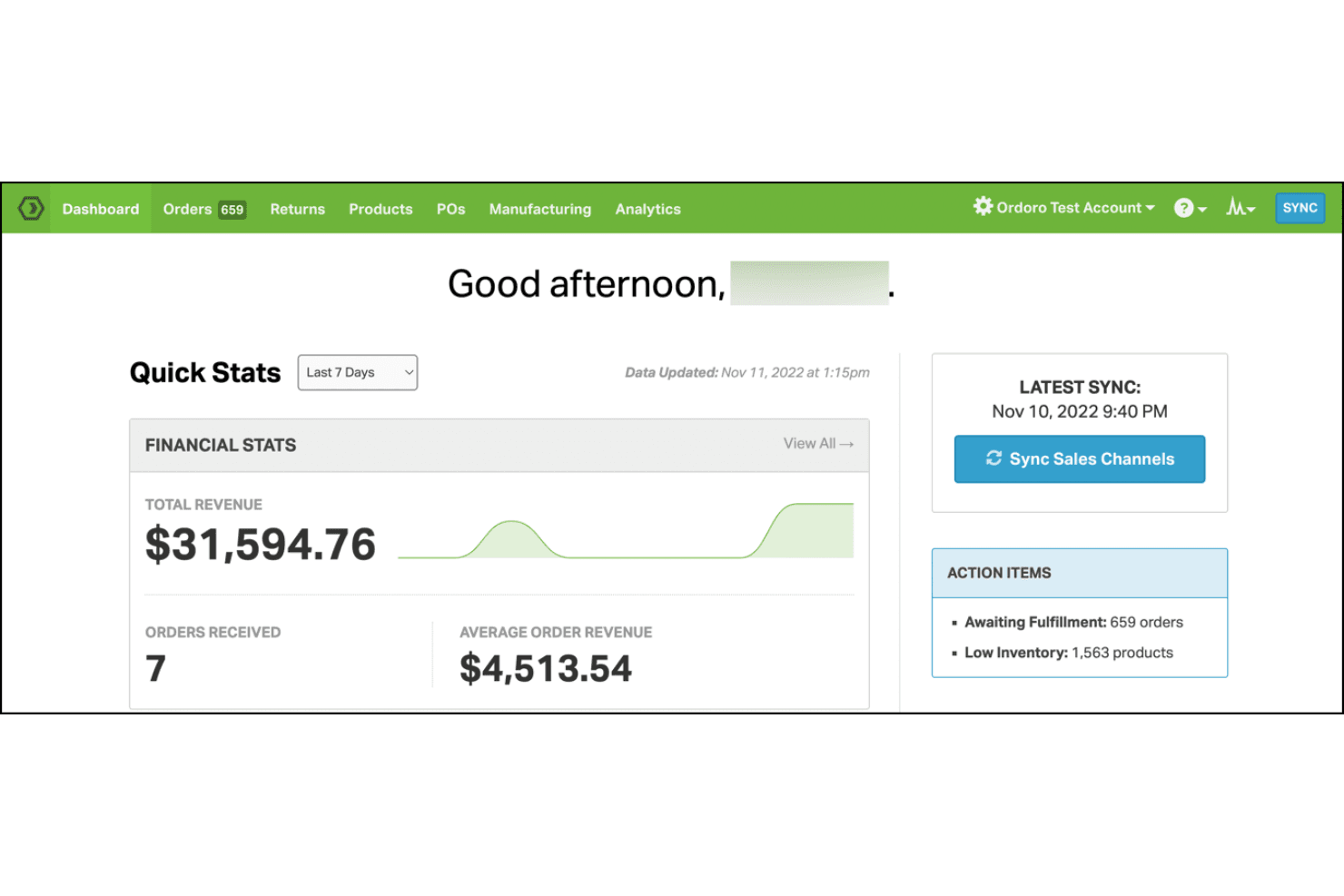
Ordoro is user-friendly once you get past the initial learning curve, but don’t expect a modern or particularly intuitive interface. The dashboard covers all the basics—order management, inventory tracking, and shipping labels—without getting in your way.
Real-time updates and streamlined workflows make it practical for small business teams, but anyone hoping for cutting-edge UX design will be underwhelmed.
If you want something that just works and doesn’t bury you in menus, you’ll be fine. If you expect sleek, you’ll be disappointed.
Ordoro Specs
- 2-Factor Authentication: No
- A/B Testing: No
- Analytics: Yes
- API: Yes
- BitCoin: No
- Conversion Tracking: No
- Dashboard: Yes
- Data Export: Yes
- Data Import: No
- Data Visualization: No
- Design Templates: No
- External Integrations: No
- Inventory Tracking: No
- Keyword Tracking: No
- Marketing Automation: No
- Multi-User: No
- Notifications: No
- Order Management: No
- Payment Gateway Integration: No
- Payment Processor: No
- PayPal: No
- Product Catalog: No
- Review Monitoring: No
- SAP Integration: No
- Scheduling: No
- Stripe: No
- Third-Party Plugins/Add-Ons: No


