
14 Best Afterpay Alternatives in 2026

Afterpay Alternatives Shortlist
Here’s my shortlist of Afterpay alternatives:


A strong Afterpay alternative gives your business flexible buy now pay later options, transparent terms, and integration that fits your sales channels. If you’re searching for Afterpay alternatives, you’re likely weighing new ways to offer installment payments, reach more customers, or find a provider that better matches your operational needs. This guide compares leading Afterpay alternatives, highlighting how each solution handles payment scheduling, credit checks, and platform compatibility—so you can confidently choose the right fit for your retail or ecommerce business.
What Is an Afterpay Alternative?
An Afterpay alternative is a buy now, pay later solution that lets customers split purchases into installments, similar to Afterpay. These platforms offer different payment schedules, approval processes, and integration options for retailers and ecommerce businesses. Choosing the right alternative helps you meet customer preferences, manage risk, and support both online and in-store transactions.
Why Trust Our Software Reviews
We’ve been testing and reviewing retail and ecommerce software and services since 2021.
As retail experts ourselves, we know how critical and difficult it is to make the right decision when selecting software. We invest in deep research to help our audience make better software purchasing decisions.
We’ve tested more than 2,000 tools for different finance and accounting use cases and written over 1,000 comprehensive software reviews. Learn how we stay transparent and our review methodology.
Best Afterpay Alternatives Summary
This comparison chart summarizes pricing details for my top Afterpay alternative selections to help you find the best one for your budget and business needs.
| Tool | Best For | Trial Info | Price | ||
|---|---|---|---|---|---|
| 1 | Best for transparent payment terms | Free plan available | Pricing upon request | Website | |
| 2 | Best for shoppers building credit history | Free plan available | Pricing upon request | Website | |
| 3 | Best for in-store point-of-sale financing | Free demo available | Pricing upon request | Website | |
| 4 | Best for PayPal account integration | Not available | From 2.29% + $0.09 per transaction | Website | |
| 5 | Best for flexible payment scheduling | Free demo available | Pricing upon request | Website | |
| 6 | Best for using existing credit cards | Free demo available | Pricing upon request | Website | |
| 7 | Best for customizable repayment plans | Free demo available | Pricing upon request | Website | |
| 8 | Best for white-label financing solutions | Expert consultation available | Pricing upon request | Website | |
| 9 | Best for mobile app payment management | Not available | From 5.9% plus $0.30 per transaction | Website | |
| 10 | Best for simple four-installment plans | Free demo available | Pricing upon request | Website |
Afterpay Alternatives Reviews
Below are my detailed summaries of the Afterpay alternatives that made it onto my shortlist. My reviews offer a detailed look at the features, best use cases, and integrations of each platform to help you find the best one for you.

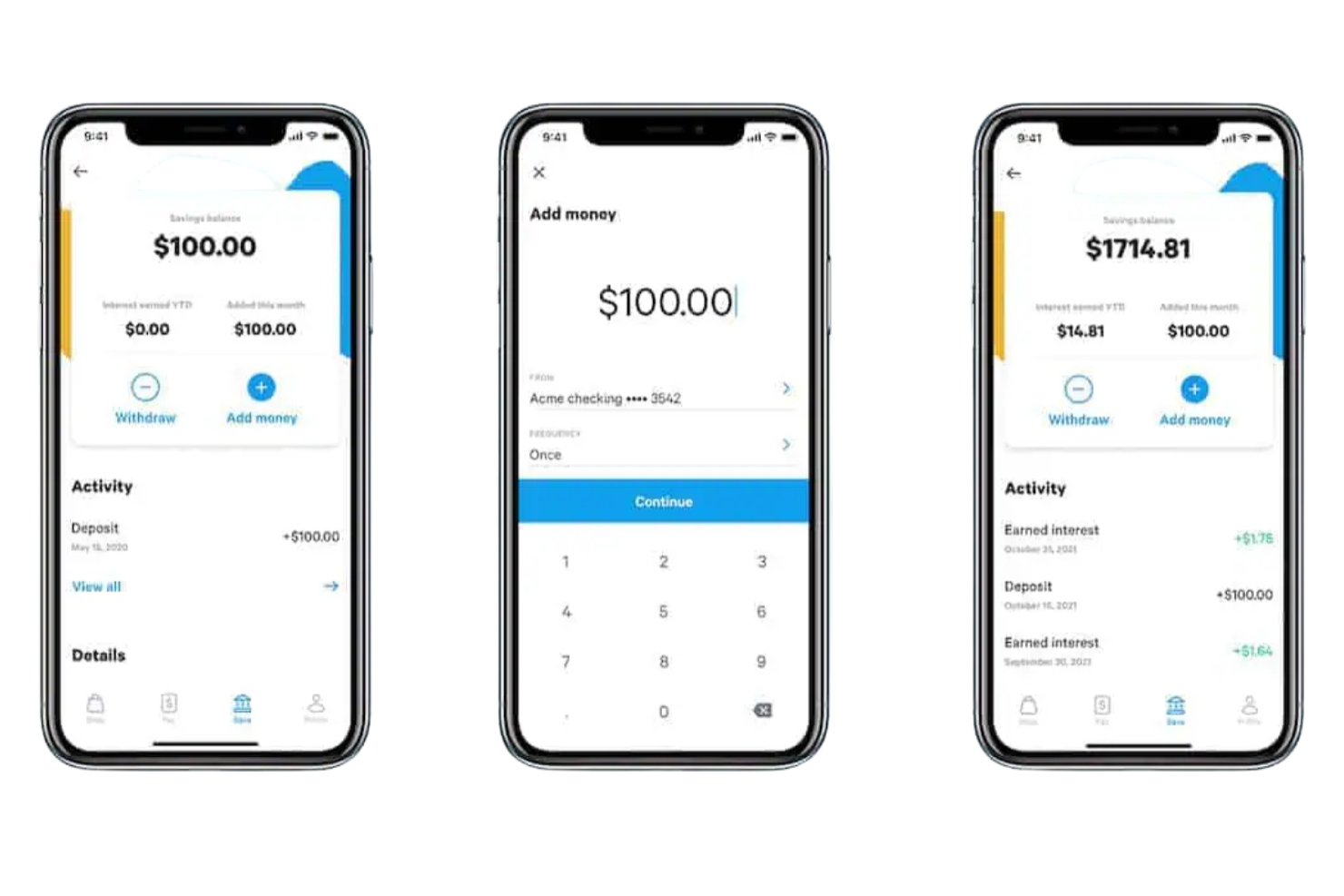
Affirm offers a buy now, pay later platform designed for retailers and ecommerce businesses that want to provide clear, upfront payment options. It appeals to teams looking for flexible financing choices that avoid hidden fees or late charges. If you’re searching for an Afterpay alternative that prioritizes transparency and customer trust, Affirm is worth considering.
Who Is Affirm Best For?
Affirm is a strong choice for ecommerce and retail businesses that want to offer customers transparent, predictable payment terms without hidden fees.
Why Affirm Is a Good Afterpay Alternative
What sets Affirm apart from other Afterpay alternatives is its commitment to transparent payment terms. I picked Affirm because it always shows customers the total cost of their purchase upfront, with no hidden fees or late charges. The platform lets shoppers choose from multiple payment schedules, including monthly installments, so they can select what works best for their budget. This level of clarity and flexibility helps businesses build trust with customers who want to avoid surprises in their payment plans.
Affirm Key Features
Some other features I found useful for businesses considering Affirm include:
- Virtual Card Checkout: Affirm offers a virtual card that lets customers use their approved loan amount at any merchant that accepts Visa.
- Merchant Analytics Dashboard: The platform provides a dashboard for merchants to track sales, monitor customer payment activity, and analyze performance data.
- Prequalification Process: Shoppers can check their eligibility and estimated payment terms before completing a purchase, without impacting their credit score.
- Marketing Support Tools: Affirm supplies co-branded marketing assets and promotional materials to help merchants drive adoption and educate customers.
Affirm Integrations
Integrations include Shopify, BigCommerce, WooCommerce, Salesforce Commerce Cloud, and Cybersource.
Pros and Cons
Pros:
- Virtual card works at most Visa merchants
- Prequalification does not impact credit score
- Multiple installment options for customers
Cons:
- Approval rates can be inconsistent
- Not available for all product categories

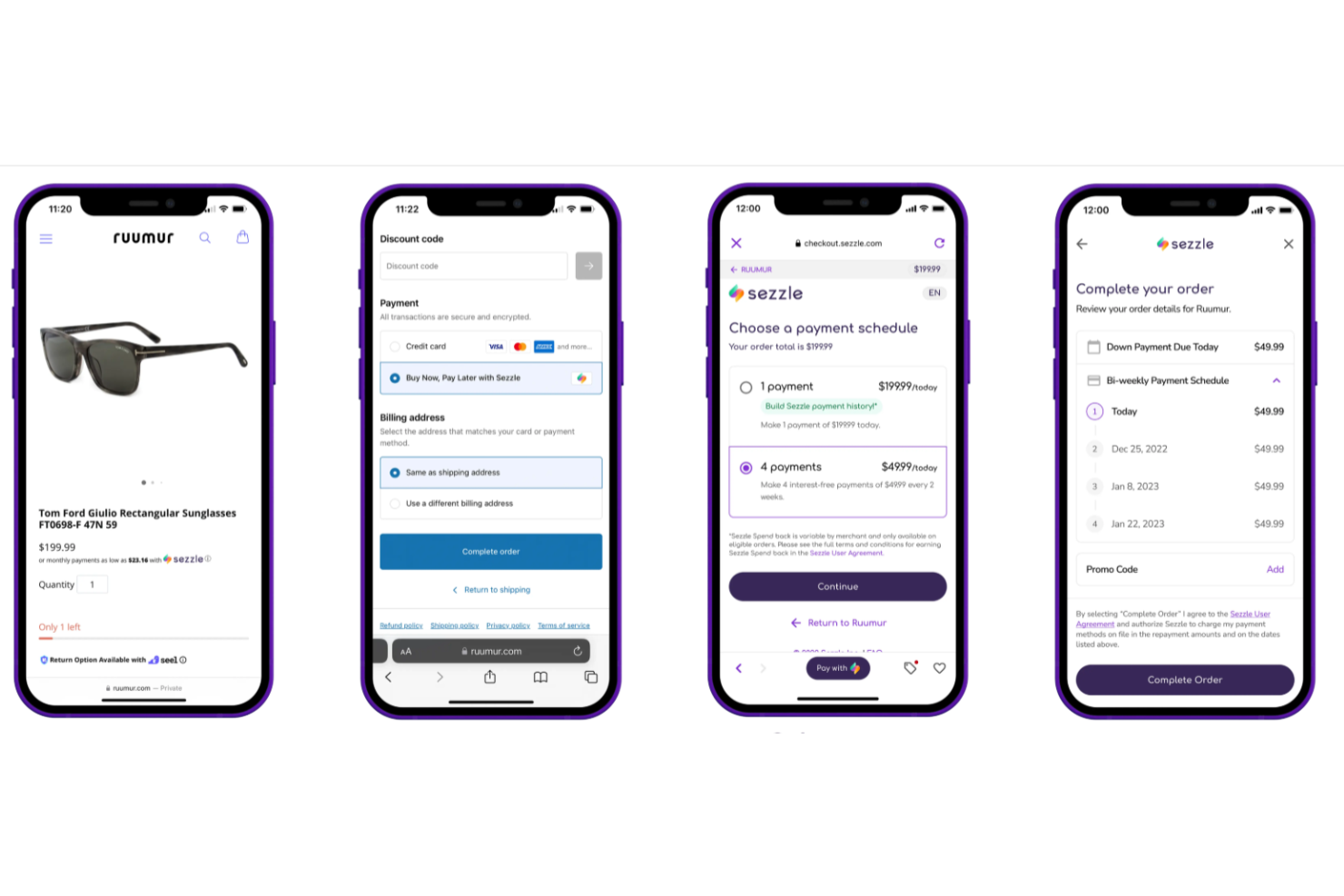
Sezzle offers a buy now, pay later platform designed for retailers and ecommerce businesses looking to expand payment flexibility. It appeals to merchants who want to attract younger shoppers or those interested in building financial responsibility. Sezzle stands out by reporting payment activity to credit bureaus, which is uncommon among Afterpay alternatives.
Who Is Sezzle Best For?
Sezzle is a good fit for retailers and ecommerce businesses that want to help shoppers build credit history through installment payments.
Why Sezzle Is a Good Afterpay Alternative
I picked Sezzle as an Afterpay alternative because it’s one of the few buy now, pay later platforms that reports payment activity to credit bureaus. This feature helps shoppers build or improve their credit history while using installment payments. Sezzle also lets customers split purchases into four interest-free payments, making it easy for businesses to offer flexible payment options. For retailers focused on supporting financial wellness, Sezzle brings a unique value that most other Afterpay alternatives don’t provide.
Sezzle Key Features
Some other features I found useful for businesses considering Sezzle include:
- Virtual Card: Sezzle offers a virtual card that lets customers use buy now, pay later at select online and in-store locations.
- Merchant Dashboard: The platform provides a dashboard for merchants to track transactions, manage orders, and access analytics.
- Automated Payment Reminders: Sezzle sends automated reminders to customers before each installment is due, helping reduce missed and late payments.
- Customizable Payment Plans: Merchants can offer flexible payment plan options beyond the standard four installments, depending on their business needs.
Sezzle Integrations
Integrations include Amazon, Walmart, Airbnb, Lyft, DoorDash, and Target.
Pros and Cons
Pros:
- Merchant dashboard includes analytics and order tracking
- Provides automated payment reminders to users
- Allows customizable payment plan options
Cons:
- Some users report declined transactions without explanation
- Not accepted by as many retailers as Afterpay

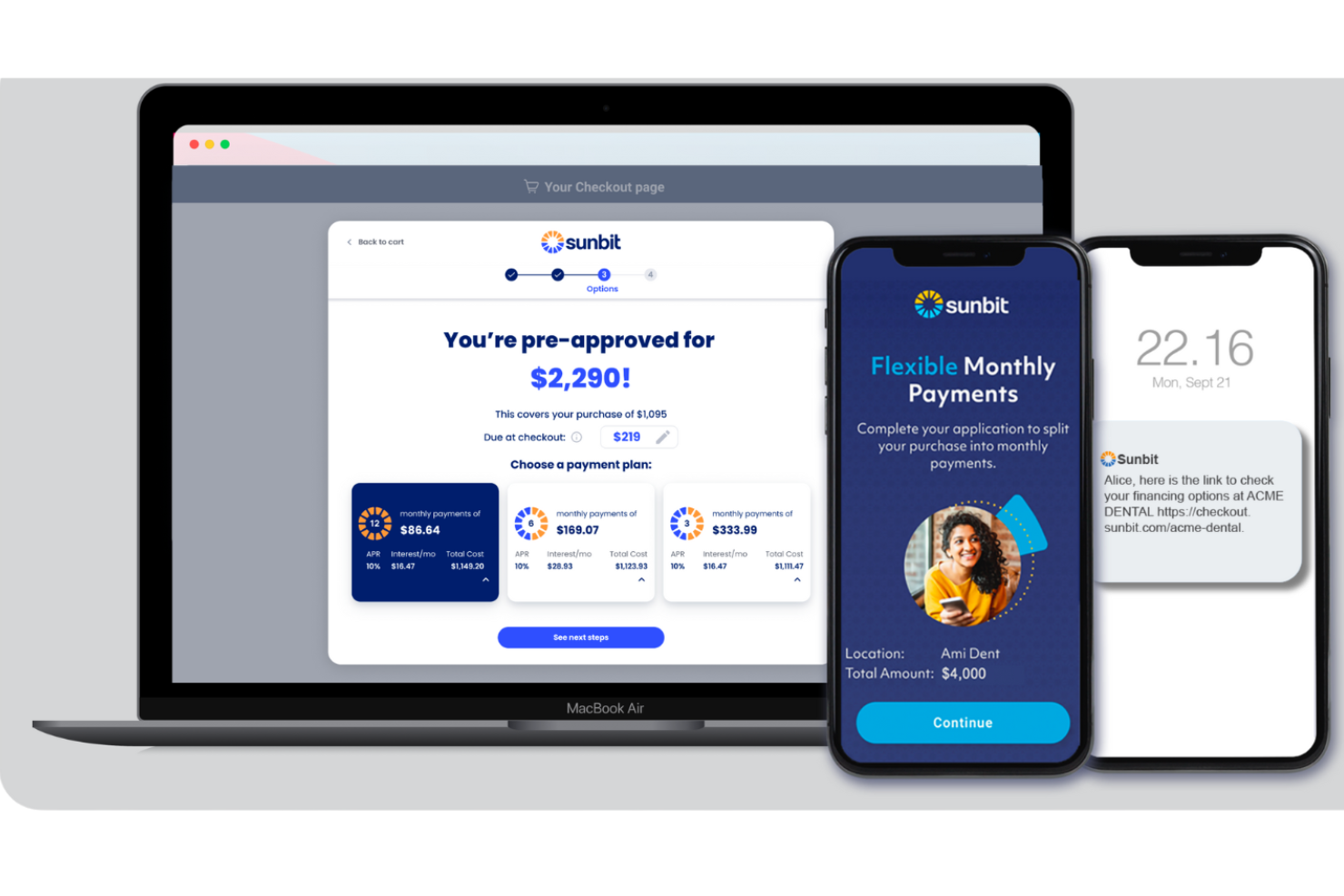
If you’re looking for a buy now, pay later solution designed specifically for in-person retail, Sunbit is worth a closer look. This tool appeals to brick-and-mortar businesses that want to offer financing options at the point of sale. Sunbit helps retailers address affordability concerns and increase conversion by making larger purchases more accessible for customers right at checkout.
Who Is Sunbit Best For?
Sunbit is a strong fit for brick-and-mortar retailers and service providers that want to offer in-store point-of-sale financing to customers.
Why Sunbit Is a Good Afterpay alternatives
What sets Sunbit apart from other Afterpay alternatives is its focus on in-store point-of-sale financing. I picked Sunbit because it enables retailers to offer instant financing decisions right at the checkout counter, making it easy for customers to break up larger purchases into manageable payments. Sunbit’s technology is designed for fast approvals and minimal paperwork, which helps keep the checkout process moving smoothly. This makes it especially useful for businesses that rely on face-to-face transactions and want to remove affordability barriers for their customers.
Sunbit Key Features
Some other Sunbit features that may interest you as you compare Afterpay alternatives include:
- Digital application process: Customers can complete financing applications on a tablet or mobile device in-store.
- Soft credit checks: Sunbit uses soft credit inquiries, which do not impact a customer’s credit score.
- Customizable financing terms: Merchants can offer a range of payment plan durations to fit different purchase sizes.
- Merchant dashboard: Businesses get access to a portal for tracking applications, approvals, and payment activity.
Sunbit Integrations
Integrations include AllyDVM, Bonsai, Boulevard, and CareStack.
Pros and Cons
Pros:
- Merchant dashboard for tracking transactions
- No impact on customer credit score
- Fast application and approval process
Cons:
- Refunds can take several business days
- Merchant fees can be higher than peers

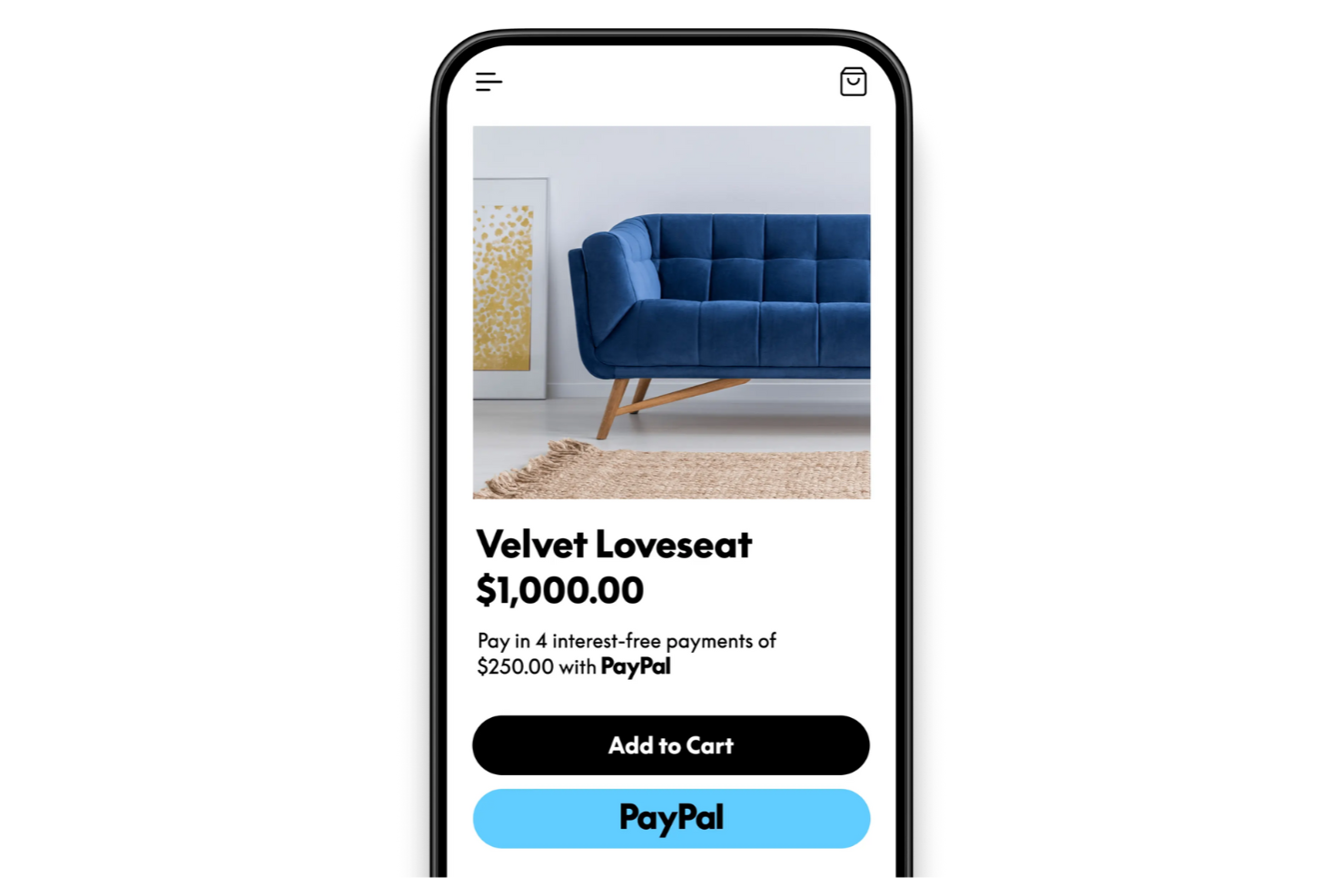
PayPal Credit gives businesses a way to offer buy now, pay later options directly through the PayPal platform. This solution appeals to ecommerce retailers and merchants who already use PayPal for payments and want to extend flexible financing to their customers. It helps address the need for installment payments without requiring shoppers to sign up for a separate service.
Who Is PayPal Best For?
PayPal suits ecommerce businesses and online retailers that want to offer buy now, pay later options directly within the PayPal checkout experience.
Why PayPal Is a Good Afterpay Alternative
What sets PayPal apart as an Afterpay alternative is its direct integration with the PayPal platform, making it easy for businesses to add buy now, pay later options without extra setup. I picked PayPal because customers can access financing right from their existing PayPal accounts, which streamlines the checkout process and reduces friction. The tool also supports flexible payment plans, allowing shoppers to split purchases into manageable installments. For businesses already using PayPal, this solution fits naturally into their payment workflows and appeals to customers who prefer not to create new accounts.
PayPal Key Features
Some other PayPal features that may interest you as you compare Afterpay alternatives include:
- Instant credit decision: Customers receive approval or denial for financing within seconds during checkout.
- No annual fee: Users can access PayPal without paying an annual maintenance fee.
- Purchase protection: Eligible purchases made with PayPal are covered by PayPal’s purchase protection policy.
- Dedicated dispute resolution center: Both merchants and customers can manage and resolve transaction disputes directly through PayPal’s platform.
PayPal Integrations
Integrations include Apple, Best Buy, Nike, Target, Office Depot, Home Depot, Ace Hardware, Land’s End, and Samsonite.
Pros and Cons
Pros:
- Widely recognized and trusted by shoppers
- Purchase protection for eligible transactions
- No annual fee for customers
Cons:
- Customer service can be slow to respond
- No merchant-branded financing options


If you’re looking for a flexible way to offer customers more payment options, Klarna is worth considering. This platform appeals to ecommerce retailers and omnichannel merchants who want to provide installment payments and pay-over-time choices at checkout. Klarna helps businesses address cart abandonment and meet rising consumer demand for alternative payment methods.
Who Is Klarna Best For?
Klarna is a strong fit for ecommerce and retail businesses that want to offer customers flexible payment scheduling at checkout.
Why Klarna Is a Good Afterpay alternatives
What makes Klarna a strong Afterpay alternative is its focus on flexible payment scheduling for customers. I picked Klarna because it lets shoppers split purchases into four interest-free payments or choose longer-term financing options right at checkout. Klarna also supports pay-now, pay-later, and monthly installment plans, giving businesses more ways to meet customer preferences. This flexibility helps retailers reduce cart abandonment and appeal to a wider range of shoppers who want control over how they pay.
Klarna Key Features
Some other Klarna features that may interest you as you compare Afterpay alternatives include:
- On-site messaging tools: Display Klarna payment options and promotions directly on your product and checkout pages.
- Fraud protection: Klarna assumes the risk of fraud and non-payment, so your business gets paid upfront.
- Order management dashboard: Track, manage, and process Klarna orders from a centralized merchant portal.
- Customer support tools: Access Klarna’s dedicated support for both merchants and shoppers, including dispute resolution.
Klarna Integrations
Integrations include Shopify, WooCommerce, BigCommerce, Salesforce Commerce Cloud, Wix, PrestaShop, and Ecwid.
Pros and Cons
Pros:
- User friendly app for order tracking
- Use anywhere with virtual cards
- Soft credit check wont hurt score
Cons:
- Missed payments may hurt credit
- Encourages high impulse spending

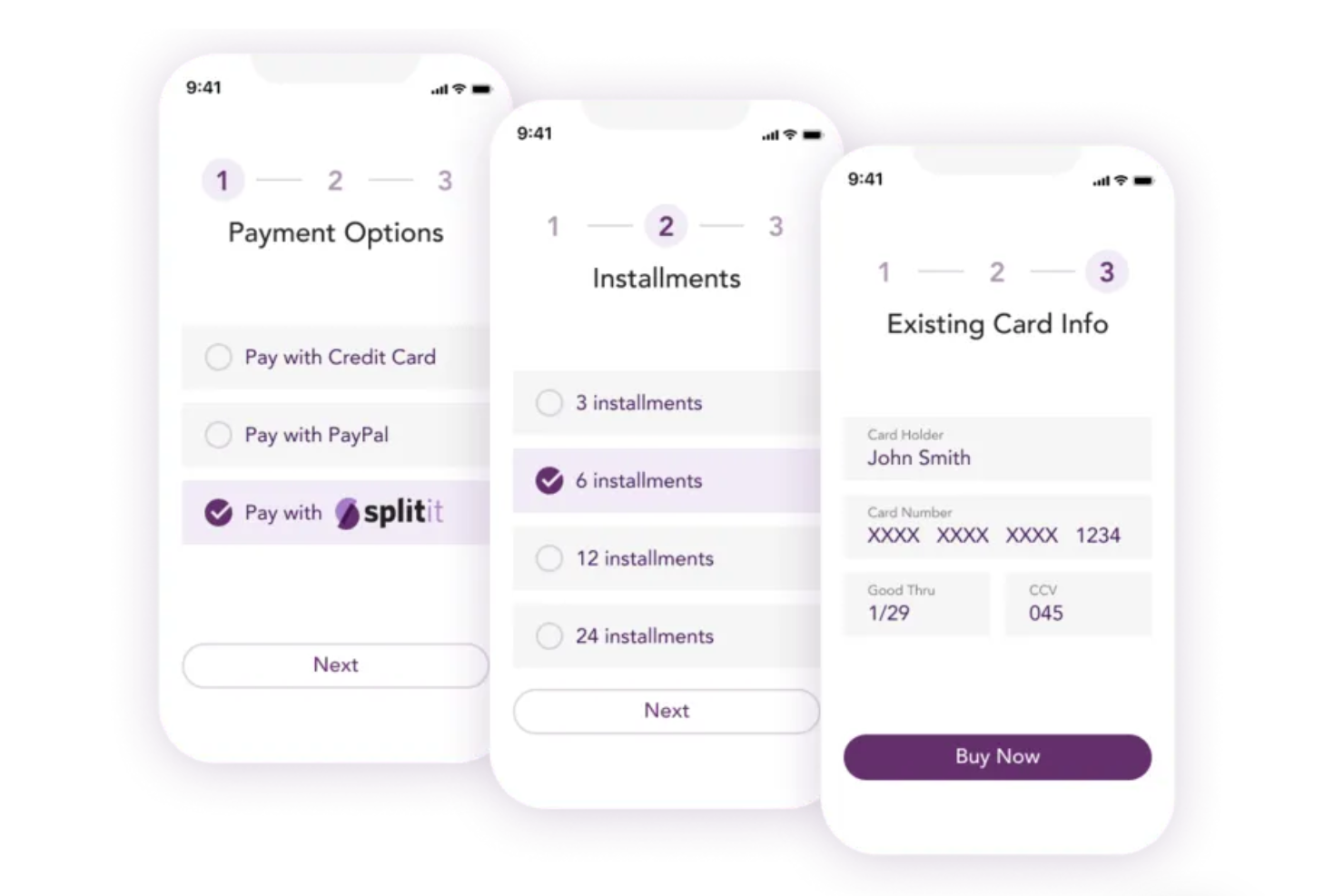
Splitit offers a unique approach to buy now, pay later by letting shoppers use their existing credit cards for installment payments. This solution appeals to ecommerce and retail businesses that want to provide flexible payment options without requiring new credit checks or accounts. If you’re looking for a BNPL option that works within the credit card ecosystem, Splitit is worth a closer look.
Who Is Splitit Best For?
Splitit is a good fit for ecommerce and retail businesses that want to offer installment payments using customers’ existing credit cards without requiring new lines of credit.
Why Splitit Is a Good Afterpay Alternative
What makes Splitit stand out among Afterpay alternatives is its ability to let customers split purchases into installments using their existing credit cards. I picked Splitit because it doesn’t require shoppers to open new accounts or undergo additional credit checks, which removes friction at checkout. The platform authorizes the full purchase amount on the customer’s card and then releases the hold as payments are made, so there are no new loans or interest charges from Splitit. This approach appeals to businesses that want to offer flexible payments while keeping the process simple for both merchants and shoppers.
Splitit Key Features
Some other features I found useful for businesses considering Splitit include:
- White-Label Solution: Merchants can customize the checkout experience to match their brand without Splitit branding.
- Omnichannel Support: Splitit works for both online and in-store transactions, supporting a unified payment experience.
- Merchant Analytics Dashboard: The platform provides real-time reporting and analytics on installment transactions and customer activity.
- Global Currency Support: Splitit supports multiple currencies, making it suitable for businesses with international customers.
Splitit Integrations
Integrations include Shopify, WooCommerce, BigCommerce, Wix, Worldline, and Checkout.com.
Pros and Cons
Pros:
- White-label checkout keeps merchant branding intact
- Supports multiple currencies for global merchants
- Works with both online and in-store sales
Cons:
- Fewer marketing tools than some BNPL providers
- Settlement times can be slower than competitors
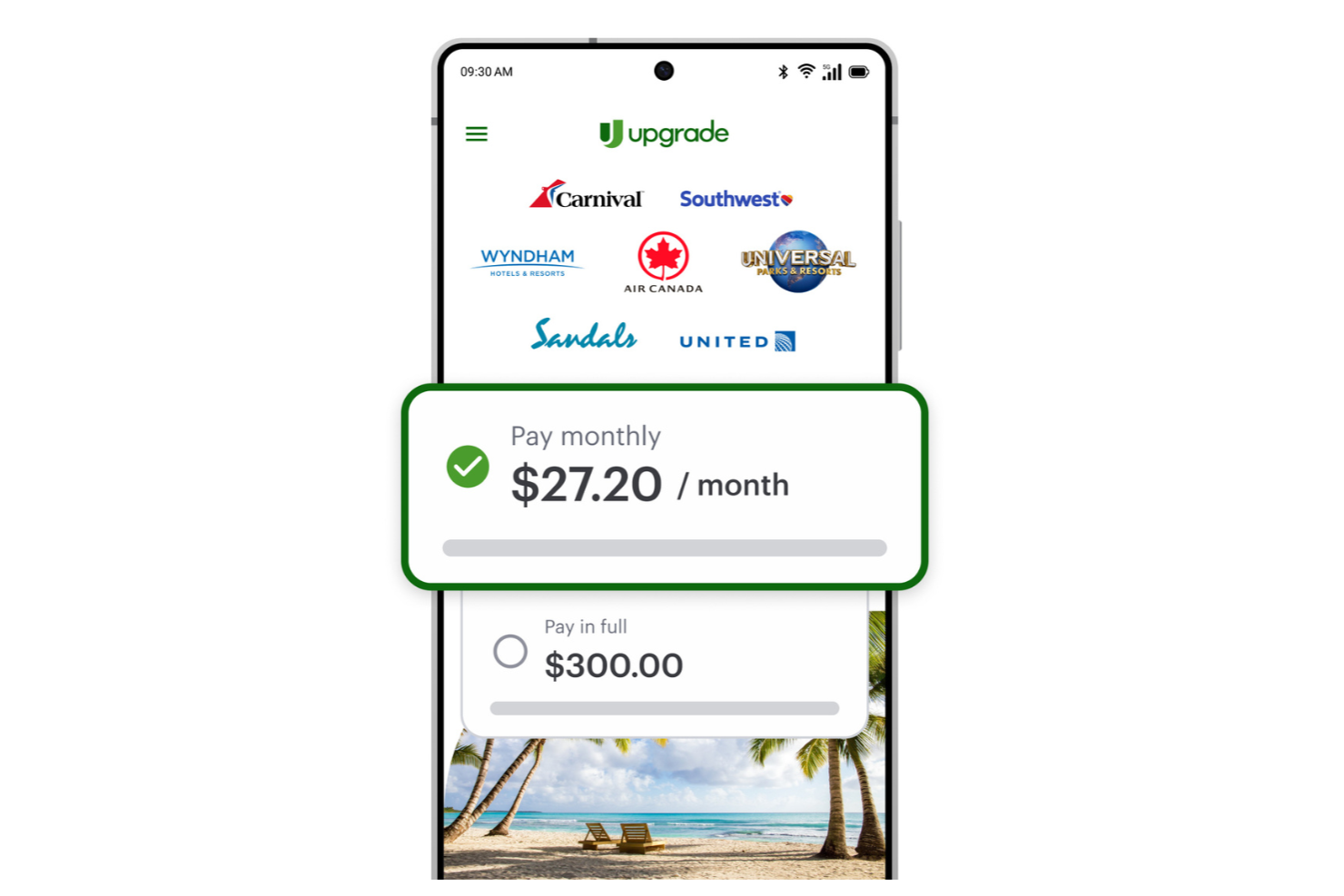
Flex Pay by Upgrade offers flexible payment solutions for businesses that want to provide customers with more control over how they repay purchases. This tool is a fit for retailers and service providers looking for alternatives to standard buy now, pay later options. It helps businesses address customer demand for personalized repayment schedules beyond what most Afterpay alternatives offer.
Who Is Flex Pay by Upgrade Best For?
Flex Pay by Upgrade suits retailers and service providers that want to offer customers customizable repayment plans at checkout.
Why Flex Pay by Upgrade Is a Good Afterpay Alternative
What sets Flex Pay by Upgrade apart from other Afterpay alternatives is its focus on customizable repayment plans. I picked this tool because it lets businesses offer customers the flexibility to choose their own payment schedule, rather than locking them into preset options. Flex Pay by Upgrade supports installment plans that can be tailored to fit different purchase amounts and customer preferences. This approach gives both businesses and customers more control over the payment experience compared to standard buy now, pay later solutions.
Flex Pay by Upgrade Key Features
Some other Flex Pay by Upgrade features that may interest you as you compare Afterpay alternatives include:
- Soft credit checks: Customers can check eligibility without impacting their credit score.
- Direct merchant settlement: Businesses receive full payment upfront while customers pay over time.
- Online and in-store support: Flex Pay can be used for both ecommerce and brick-and-mortar transactions.
- Dedicated merchant dashboard: Access real-time reporting and manage payment plans from a centralized portal.
Flex Pay by Upgrade Integrations
Integrations include Carnival Cruises, Southwest, Wyndham Hotels & Resorts, and Epic Pass.

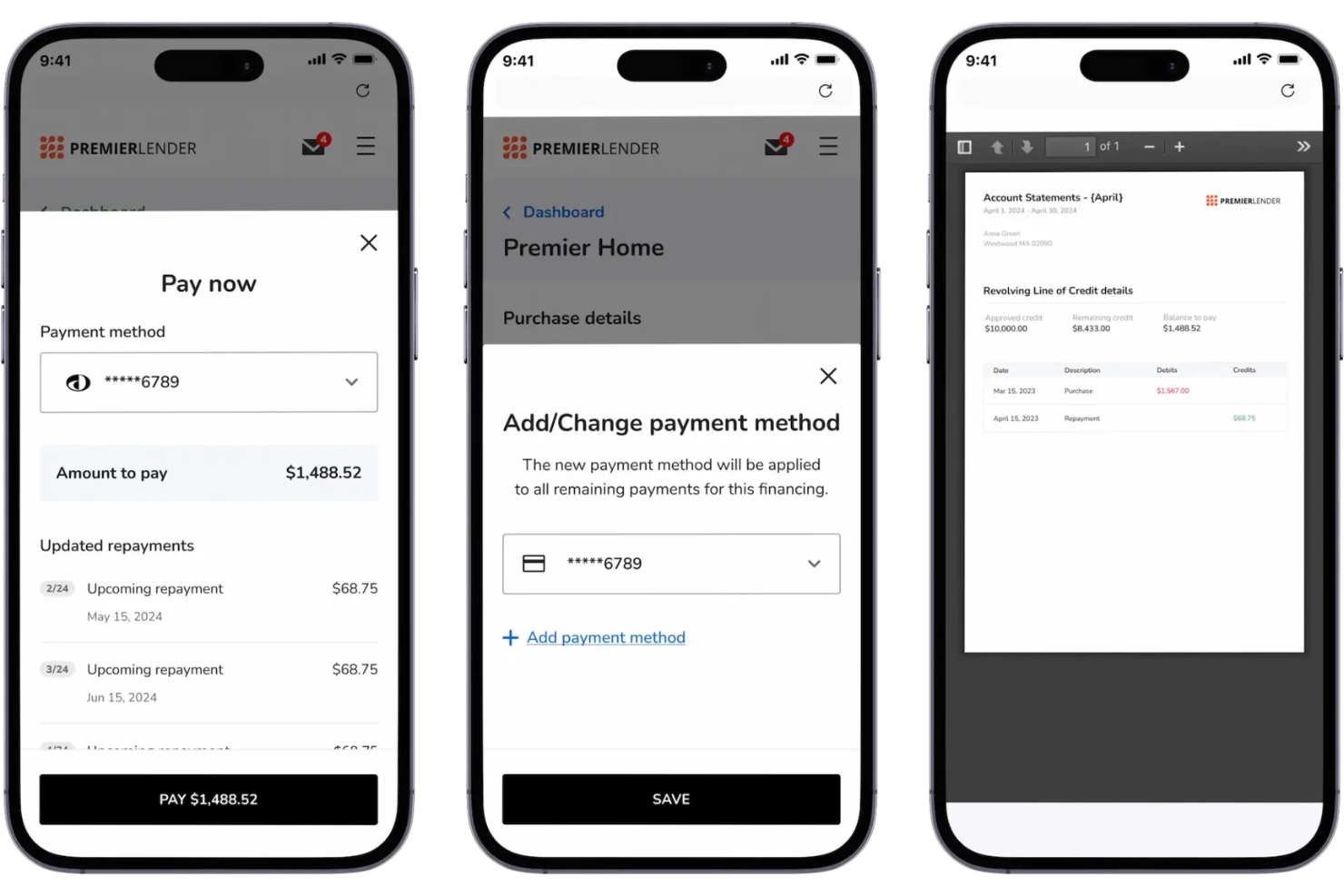
Jifiti offers a white-label financing platform that lets banks, lenders, and merchants provide branded buy now, pay later options. This solution is a good fit for retailers and financial institutions that want to control the customer experience and keep their own branding front and center. If you need a flexible way to offer installment loans or split payments without relying on a third-party brand, Jifiti addresses that gap.
Who Is Jifiti Best For?
Jifiti is a strong choice for banks, lenders, and large retailers that want to offer white-label buy now, pay later solutions under their own brand.
Why Jifiti Is a Good Afterpay Alternative
What sets Jifiti apart from other Afterpay alternatives is its white-label approach, which lets you fully brand the financing experience as your own. I picked Jifiti because it allows banks, lenders, and merchants to offer installment loans and split payments without exposing customers to a third-party brand. The platform supports a range of financial services, including BNPL, lines of credit, and installment loans, all delivered through your own digital channels. This flexibility makes Jifiti a strong fit for businesses that want to own the customer relationship and tailor financing options to their specific needs.
Jifiti Key Features
Some other features I found valuable for teams comparing Afterpay alternatives include:
- Omnichannel support: Jifiti enables financing options across ecommerce, in-store, and call center channels.
- Real-time credit decisioning: The platform provides instant approval or denial for customer financing applications.
- Merchant dashboard: Access a centralized dashboard to manage financing programs, track performance, and view analytics.
- Regulatory compliance tools: Built-in features help ensure financing programs meet local and international compliance requirements.
Jifiti Integrations
Integrations include FIS, Mastercard, Visa, Finastra, Temenos, TransUnion, Experian, Equifax, Galileo, and Marqeta.
Pros and Cons
Pros:
- Provides regulatory compliance management tools
- Works with multiple banks and lenders
- Offers instant credit decisioning for customers
Cons:
- No built-in marketing or promotional tools
- Not focused on small business merchants

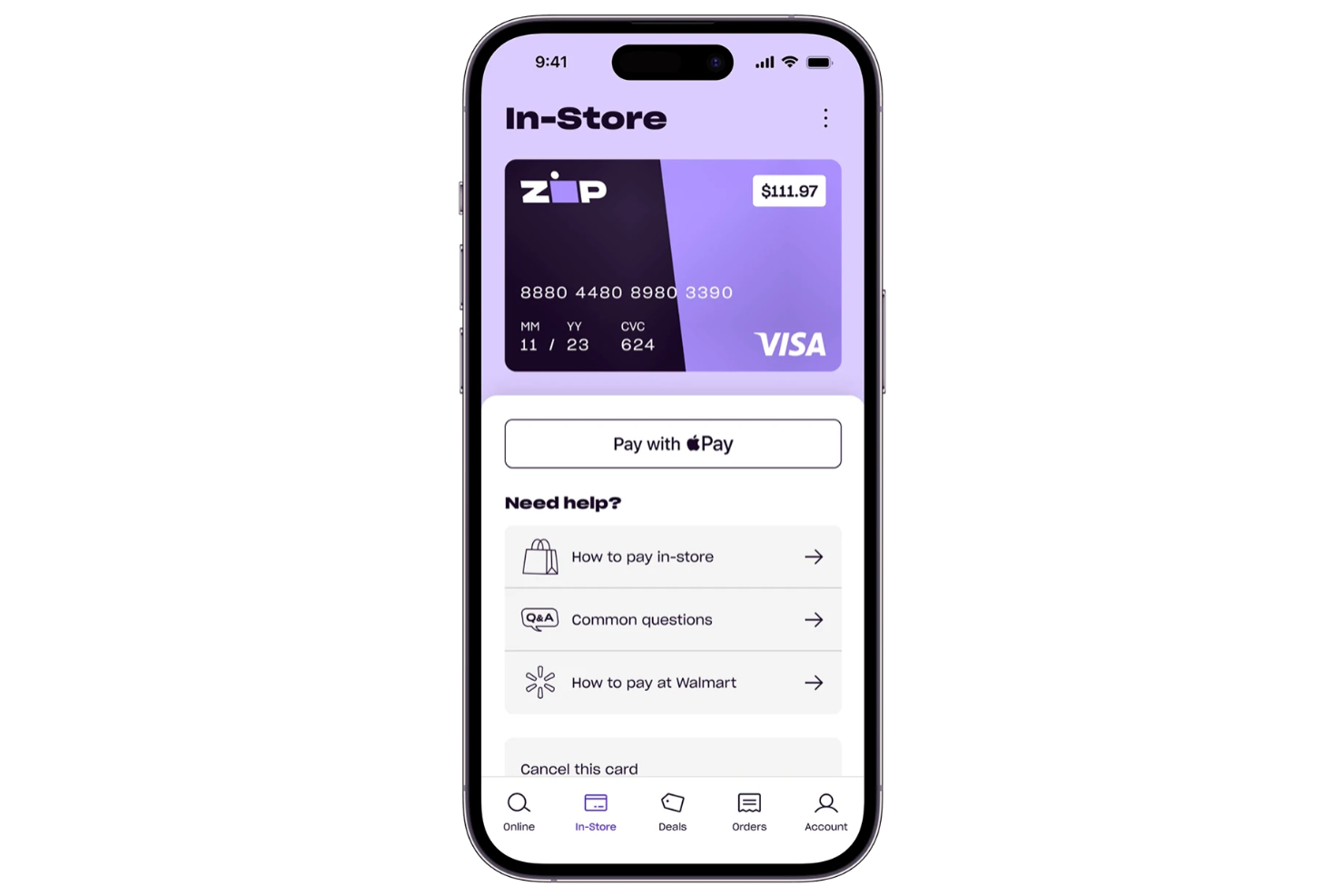
Zip offers a flexible buy now, pay later solution with a strong focus on mobile app payment management. It’s a good fit for retailers and ecommerce businesses that want to give customers more control over installment payments through a dedicated app. Zip stands out for ease of use for users who want to manage purchases, track payments, and access financing options directly from their smartphones.
Who Is Zip Best For?
Zip is a strong choice for retailers and ecommerce businesses that want to offer customers mobile-first payment management and installment options.
Why Zip Is a Good Afterpay Alternative
What makes Zip a strong Afterpay alternative is its dedicated mobile app for managing installment payments. I picked Zip because it lets customers split purchases into four payments and track all their transactions directly from their smartphones. The pay later app also sends payment reminders and allows users to manage multiple purchases in one place. This mobile-first approach gives both retailers and shoppers more flexibility and control compared to traditional buy now, pay later options.
Zip Key Features
Some other Zip features that may interest you as you compare Afterpay alternatives include:
- Virtual card support: Customers can generate single-use virtual cards for secure online and in-store purchases.
- Merchant portal: Businesses get access to a dashboard for tracking transactions, settlements, and customer activity.
- Automated payment scheduling: The platform automatically schedules and processes installment payments on behalf of customers.
- Dispute resolution tools: Zip provides built-in tools for managing chargebacks and resolving payment disputes.
Zip Integrations
Integrations include Shopify, WooCommerce, BigCommerce, and Salesforce Commerce Cloud.
Pros and Cons
Pros:
- Quick approval process at checkout
- First payment reschedule is often free
- Flexible pay in two or four options
Cons:
- Account freezes after one late payment
- Late fees can be as high as $16.95

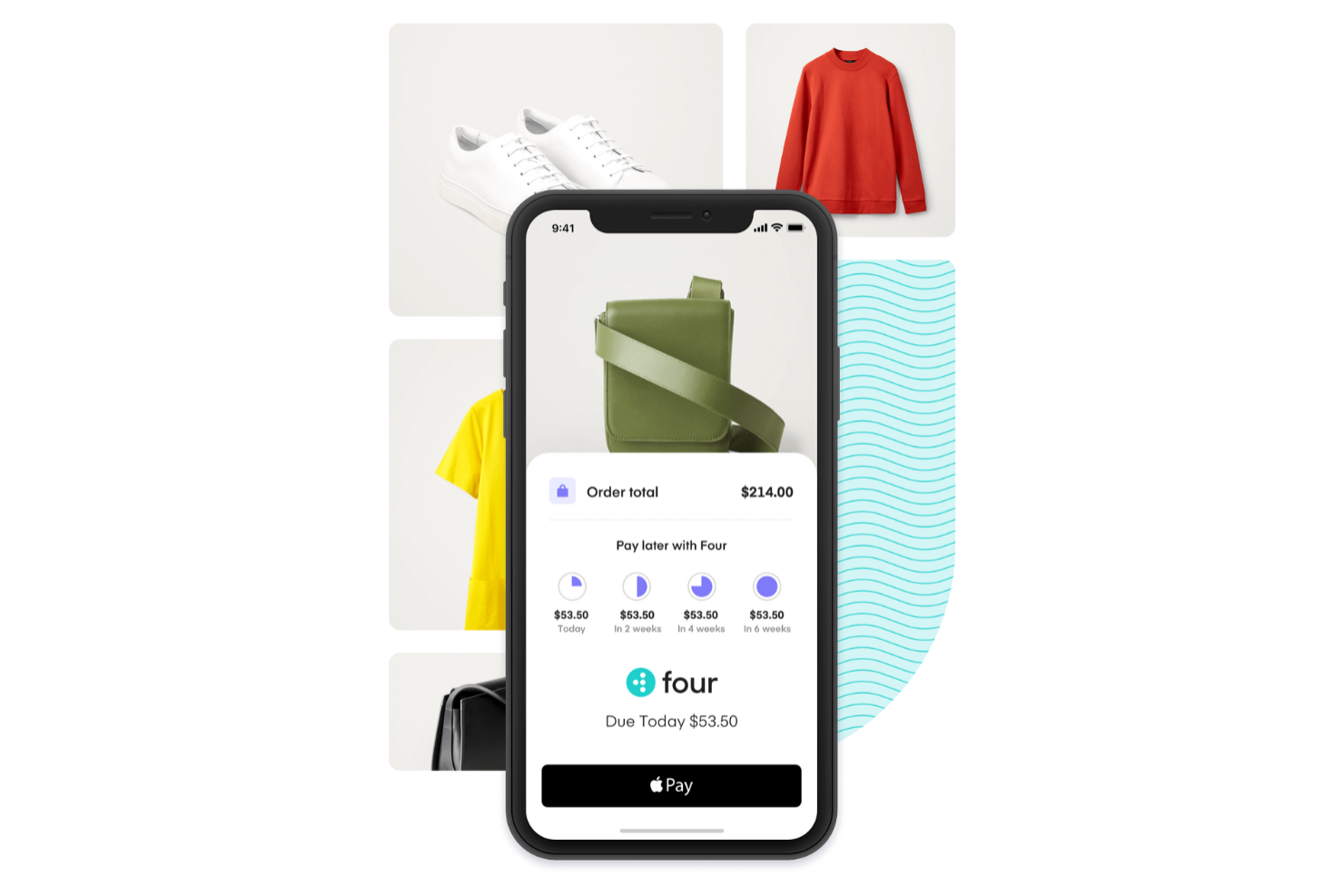
Four offers a straightforward way for retailers to provide customers with four equal installment payments at checkout. This solution appeals to ecommerce businesses and merchants who want a simple, predictable buy now, pay later option. If you’re looking for an alternative to Afterpay that keeps payment plans clear and easy to manage, Four is worth considering.
Who Is Four Best For?
Four suits ecommerce retailers and small businesses that want to offer customers a simple, fixed four-installment payment plan at checkout.
Why Four Is a Good Afterpay Alternatives
What sets Four apart from other Afterpay alternatives is its focus on a simple, four-installment payment structure. I picked Four because it eliminates confusion by offering only one clear repayment plan, which can help reduce cart abandonment for shoppers who want predictability. The platform automatically splits the purchase into four equal payments, scheduled at regular intervals, so there are no surprises for customers. This straightforward approach appeals to businesses that want to keep buy now, pay later options easy to understand and manage.
Four Key Features
Some other features I found useful for businesses considering Four include:
- Merchant dashboard: Lets you track installment transactions, payment statuses, and customer activity in real time.
- Automated payment reminders: Sends scheduled notifications to customers before each installment is due.
- Fraud prevention tools: Includes built-in checks to help reduce chargebacks and unauthorized transactions.
- Customizable checkout widget: Allows you to match the payment widget to your store’s branding and user experience.
Four Integrations
Native integrations are not currently listed by Four.
Pros and Cons
Pros:
- Quick approval process at checkout
- No interest or hidden fees for shoppers
- Simple four-payment structure for customers
Cons:
- No mobile app for merchants or shoppers
- No flexible installment plan options
Other Afterpay Alternatives
Here are some additional Afterpay alternatives options that didn’t make it onto my shortlist, but are still worth checking out:
- Credit Key
For B2B financing options
- PocketSuite
For service-based business payments
- Wisetack
For service-based business financing
- Zilch
For earning rewards on installment purchases


Afterpay Alternatives Selection Criteria
When selecting the best Afterpay alternatives to include in this list, I considered common buyer needs and pain points related to Afterpay alternatives products, like offering flexible payment options and minimizing risk for merchants. I also used the following framework to keep my evaluation structured and fair:
Core Functionality (25% of total score)
To be considered for inclusion in this list, each solution had to fulfill these common use cases:
- Enable buy now, pay later at checkout
- Allow installment payment scheduling
- Provide merchant payment upfront
- Support both online and in-store transactions
- Offer customer eligibility checks
Additional Standout Features (25% of total score)
To help further narrow down the competition, I also looked for unique features, such as:
- Customizable repayment plan options
- Soft credit check for customers
- Merchant dashboard with real-time reporting
- Support for large-ticket purchases
- Integration with loyalty or rewards programs
Usability (10% of total score)
To get a sense of the usability of each system, I considered the following:
- Simple and intuitive checkout experience
- Clear payment schedule presentation
- Easy merchant onboarding process
- Responsive interface on all devices
- Minimal steps for customer approval
Onboarding (10% of total score)
To evaluate the onboarding experience for each platform, I considered the following:
- Availability of training videos and guides
- Access to onboarding specialists or support
- Interactive product tours for new users
- Pre-built templates for quick setup
- Webinars or live demos for merchants
Customer Support (10% of total score)
To assess each software provider’s customer support services, I considered the following:
- Multiple support channels available
- Fast response times to inquiries
- Access to a knowledge base or help center
- Dedicated account management for merchants
- Availability of support during business hours
Value For Money (10% of total score)
To evaluate the value for money of each platform, I considered the following:
- Transparent pricing structure
- No hidden fees for merchants or customers
- Competitive rates compared to alternatives
- Flexible contract terms
- Clear ROI for merchants
Customer Reviews (10% of total score)
To get a sense of overall customer satisfaction, I considered the following when reading customer reviews:
- Positive feedback on payment flexibility
- Reports of reliable merchant payouts
- Satisfaction with customer support quality
- Ease of integration with existing systems
- Overall user experience and trustworthiness
Why Look for an Afterpay Alternative?
While Afterpay is a good choice of Afterpay alternatives, there are a number of reasons why some users seek out alternative solutions. You might be looking for an Afterpay alternative because…
- You need more customizable and flexible repayment plans
- Your business operates outside Afterpay’s supported regions
- You want support for higher-ticket purchases
- You require integration with specific ecommerce platforms
- Your customers prefer soft credit checks over hard inquiries
- You need in-store and online payment flexibility
If any of these sound like you, you’ve come to the right place. My list contains several Afterpay alternatives options that are better suited for teams facing these challenges with Afterpay and looking for alternative solutions.
Afterpay Key Features
Here are some of the key features of Afterpay, to help you contrast and compare what alternative solutions offer:
- Buy now, pay later: Lets customers split purchases into four interest-free payments, paid bi-weekly at checkout.
- Instant approval decision: Provides customers with a real-time eligibility check and approval process during checkout.
- Merchant payment upfront: Pays merchants the full purchase amount immediately, while customers pay over time.
- Automatic payment scheduling: Automatically deducts payments from the customer’s linked card on the scheduled dates.
- Online and in-store support: Works for both ecommerce transactions and in-person purchases at participating retailers.
- Customer account management: Allows users to track orders, manage payments, and view purchase history in the Afterpay app.
- Late fee management: Applies late fees for missed payments, with clear communication and reminders to customers.
- Fraud protection: Monitors transactions for suspicious activity and provides safeguards for both merchants and customers.
- Integration with ecommerce platforms: Offers native plugins and integrations for platforms like Shopify and WooCommerce.
- Marketing and discovery tools: Promotes participating merchants through the Afterpay app and website, helping drive new customer traffic.