
10 programas ERP para minoristas para 2026

Selección de software ERP para minoristas


El software ERP para minoristas es un tipo de plataforma de gestión empresarial que conecta los datos de inventario, ventas, compras, finanzas y clientes en todas las operaciones de tu negocio minorista. Si estás buscando el mejor software ERP para minoristas, probablemente quieras mejorar la precisión del inventario, unificar tus canales de ventas, aumentar la eficiencia operativa, minimizar las tareas repetitivas y obtener visibilidad en tiempo real de tus procesos empresariales. Con tantas opciones disponibles, elegir el sistema adecuado puede marcar la diferencia entre un crecimiento fluido y costosos contratiempos. Esta guía te ayudará a comparar las principales soluciones ERP para minoristas de 2026, para que encuentres la opción adecuada para las necesidades de tu equipo y los objetivos de tu empresa.
Por qué confiar en nuestras recomendaciones de software
Nuestro equipo lleva probando y evaluando software desde 2012. Como líderes del sector retail, sabemos lo difícil —y lo importante— que es elegir el software adecuado.
Para esta guía, evaluamos las herramientas mediante pruebas prácticas e investigación independiente, puntuando las herramientas según nuestros criterios de selección.
Nuestras reseñas reflejan nuestro criterio independiente, no un discurso de ventas.
Resumen del mejor software ERP para minoristas
Esta tabla comparativa resume los detalles de precios de mis principales selecciones de software ERP para minoristas para ayudarte a encontrar la mejor opción para tu presupuesto y las necesidades de tu empresa.
| Tool | Best For | Trial Info | Price | ||
|---|---|---|---|---|---|
| 1 | Ideal para la gestión de inventario en múltiples ubicaciones | Demostración gratuita disponible | Precio a consultar | Website | |
| 2 | Ideal para operaciones minoristas omnicanal | Demostración gratuita disponible | Precio bajo solicitud | Website | |
| 3 | Ideal para la escalabilidad minorista basada en la nube | Demostración gratuita disponible | Precio bajo solicitud | Website | |
| 4 | Mejor con opciones de personalización de código abierto | Demostración gratuita disponible | $9.10/mes | Website | |
| 5 | La mejor opción para negocios minoristas especializados | Demo gratuita disponible | Precio bajo solicitud | Website | |
| 6 | Ideal para minoristas de moda y confección | Demo gratuita disponible | Precio a consultar | Website | |
| 7 | Mejor para operaciones unificadas de backend | Demostración gratuita disponible | Precios a consultar | Website | |
| 8 | Ideal para análisis en tiempo real en retail | Demostración gratuita disponible | Precios disponibles a solicitud | Website | |
| 9 | Mejor integración con el ecosistema de Microsoft | Prueba gratis de 30 días disponible | Desde $50/usuario/mes (facturación anual) | Website | |
| 10 | Mejor para plazos de implementación rápidos | Demo gratuita disponible | Precios bajo solicitud | Website |

Reseñas de software ERP para minoristas
A continuación encontrarás mis resúmenes detallados del software ERP para minoristas que llegó a mi selección. Mis reseñas ofrecen un análisis detallado de las funciones, los mejores casos de uso y las integraciones de cada plataforma para ayudarte a encontrar la mejor opción para ti.
NetSuite
Ideal para la gestión de inventario en múltiples ubicaciones
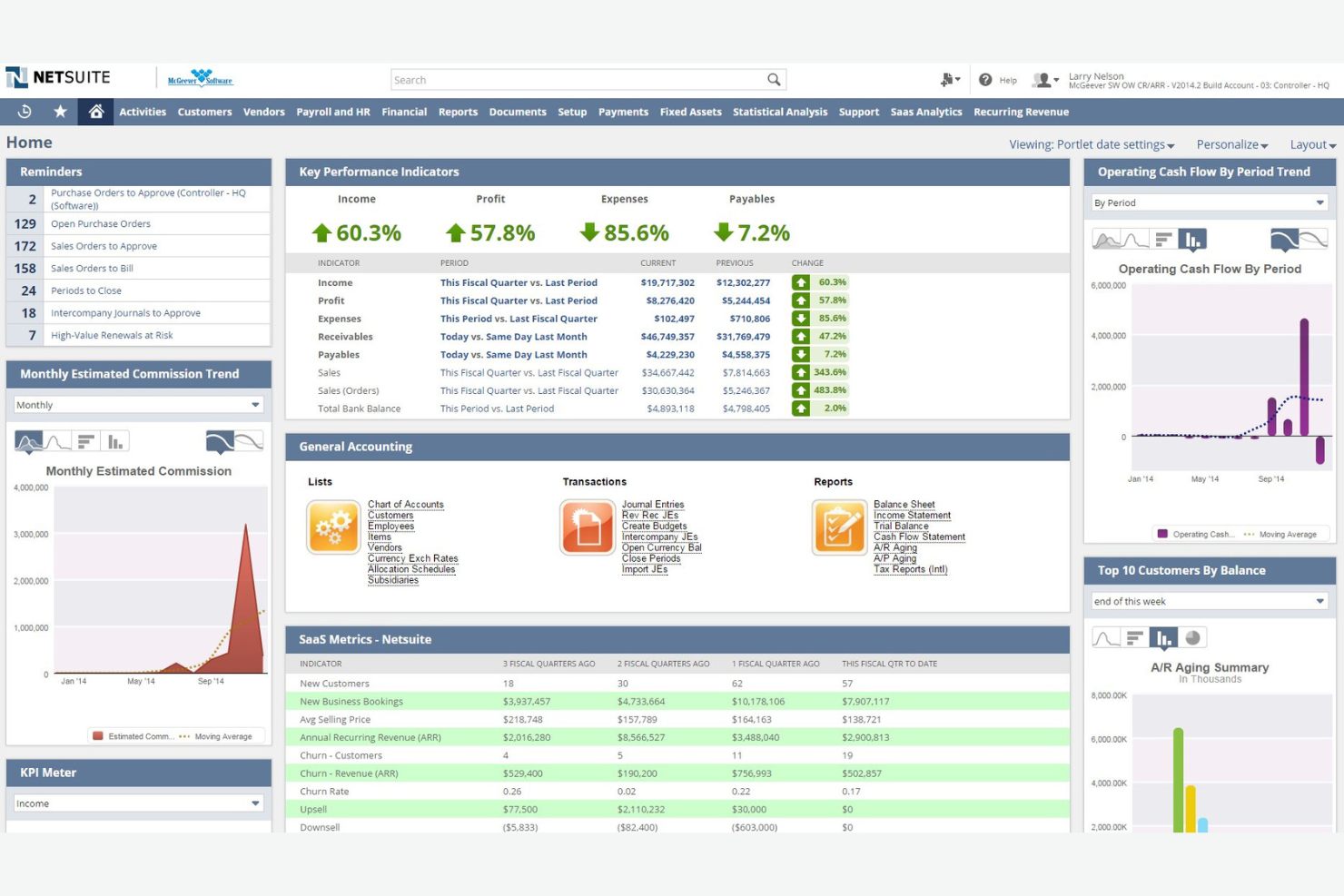
NetSuite es una plataforma ERP basada en la nube diseñada para minoristas que gestionan inventarios en múltiples ubicaciones. Es una opción sólida para empresas que necesitan visibilidad en tiempo real sobre el stock, las ventas y la gestión de pedidos a gran escala. Si buscas unificar tus operaciones y reducir las discrepancias de inventario entre tiendas y canales, NetSuite ofrece herramientas especializadas para estos desafíos.
Por qué elegí NetSuite
Para minoristas que manejan inventarios en varias ubicaciones, NetSuite destaca por sus avanzadas capacidades de gestión de inventario multiubicación. Elegí NetSuite porque te permite rastrear niveles de existencias, transferencias y puntos de reabastecimiento en tiempo real entre almacenes, tiendas y canales en línea. El reabastecimiento automatizado de la plataforma y la visibilidad centralizada del inventario ayudan a reducir los faltantes y el exceso de stock. Estas características hacen de NetSuite una excelente opción para empresas que necesitan coordinar el inventario de forma eficiente mientras crecen.
Funciones clave de NetSuite
Otras funciones útiles en NetSuite para equipos de retail incluyen:
- Integración de punto de venta (POS): Conecta los datos de ventas en tienda directamente con tu ERP para reportes unificados y actualizaciones de inventario.
- Gestión de pedidos: Gestiona pedidos de múltiples canales, incluidos online, en tienda y por teléfono, en un solo sistema.
- Gestión de relaciones con clientes (CRM): Registra las interacciones con clientes, historial de compras y preferencias dentro de la misma plataforma.
- Gestión financiera: Administra la contabilidad, facturación y reportes financieros junto con las operaciones de retail.
Integraciones de NetSuite
Las integraciones incluyen Salesforce, Shopify, Jira, HubSpot y Zendesk.
Pros and Cons
Pros:
- Herramientas financieras robustas
- Nube altamente escalable
- Capacidades POS nativas
Cons:
- Demasiado avanzado para negocios pequeños
- El soporte puede ser lento

Ideal para operaciones minoristas omnicanal

Brightpearl está diseñado específicamente para minoristas y mayoristas que necesitan gestionar ventas, inventario y cumplimiento en múltiples canales. Es especialmente útil para empresas que desean automatizar flujos de trabajo entre sus tiendas en línea, marketplaces y ubicaciones físicas. Si buscas centralizar las operaciones y estar al día con las exigencias del comercio omnicanal, Brightpearl ofrece herramientas pensadas para esa complejidad.
Por qué elegí Brightpearl
Lo que distingue a Brightpearl es su enfoque en respaldar verdaderas operaciones de comercio minorista omnicanal. Elegí Brightpearl porque conecta tus datos de ventas, inventario y cumplimiento en tiempo real entre tiendas en línea, marketplaces y locales físicos. El enrutamiento automático de pedidos y la gestión centralizada de inventario de la plataforma te ayudan a evitar sobreventas y a mantener los niveles de existencias precisos en todos los puntos de venta. Para los minoristas que necesitan coordinar múltiples canales sin soluciones manuales, las funciones de Brightpearl están diseñadas para esa complejidad.
Funciones clave de Brightpearl
Además de su coordinación omnicanal, también encontré estas funciones dignas de mención:
- Contabilidad integrada: Gestiona finanzas, facturación e informes dentro de la misma plataforma que tus operaciones minoristas.
- Gestión de proveedores: Realiza el seguimiento de órdenes de compra, el desempeño de los proveedores y plazos de entrega para un mejor control de adquisiciones.
- Flujos de trabajo de dropshipping automatizados: Permite el envío directo al cliente desde los proveedores sin intervención manual.
- Panel de análisis en tiempo real: Proporciona métricas actualizadas de ventas, inventario y rendimiento en una sola vista.
Integraciones de Brightpearl
Las integraciones incluyen Shopify, BigCommerce, Amazon, ShipStation y Walmart.
Pros and Cons
Pros:
- Implementación rápida
- Excelentes reglas de automatización
- Conteo de existencias en tiempo real
Cons:
- No es un ERP de escala completa
- Los informes personalizados son débiles

Ideal para la escalabilidad minorista basada en la nube
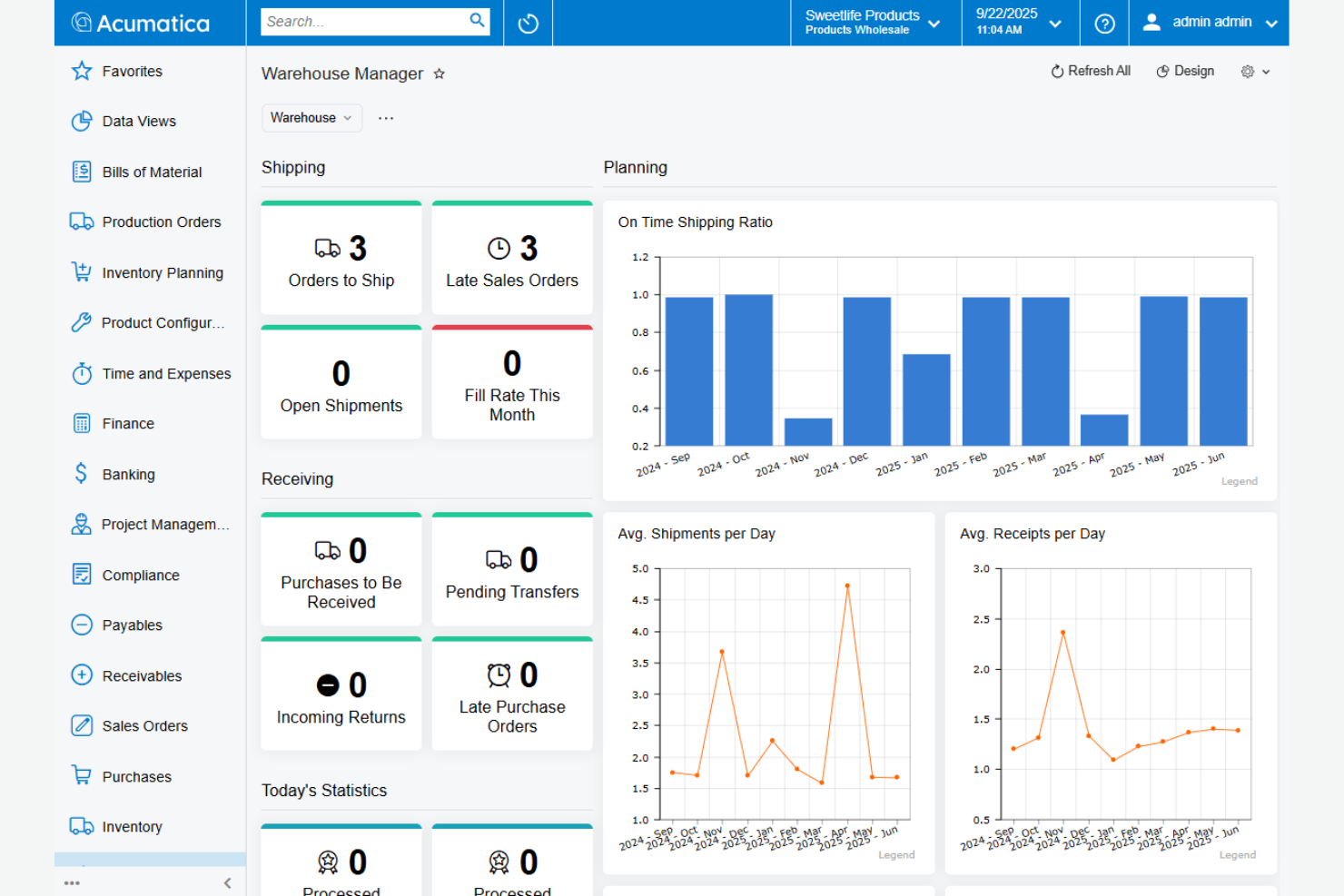
Acumatica ofrece una plataforma ERP basada en la nube diseñada para minoristas que necesitan escalar rápidamente y gestionar múltiples canales. Es especialmente útil para empresas con operaciones en e-commerce, tiendas físicas y mayoristas en crecimiento que desean una gestión unificada de inventario y pedidos. Con una implementación flexible y acceso a datos en tiempo real, Acumatica ayuda a los equipos de ventas a adaptarse a la demanda y los patrones de ventas cambiantes.
Por qué elegí Acumatica
Lo que distingue a Acumatica para el ERP minorista es su enfoque en la escalabilidad basada en la nube, que es esencial para minoristas con volúmenes de ventas variables y múltiples canales. Elegí Acumatica porque te permite gestionar inventario, pedidos y datos de clientes en tiempo real a través de operaciones de e-commerce, en tienda y mayoristas. Las opciones flexibles de implementación de la plataforma y su modelo de precios basado en recursos facilitan a los minoristas en crecimiento expandirse sin realizar grandes cambios en TI. Si tu negocio necesita adaptarse rápidamente a picos estacionales o nuevos canales de ventas, la arquitectura en la nube de Acumatica está hecha para apoyar ese crecimiento.
Funciones clave de Acumatica
Además de su escalabilidad, hay varias funciones que los equipos minoristas pueden considerar valiosas:
- Sistema punto de venta (POS) integrado: Conecta las transacciones en tienda directamente con tu ERP para un seguimiento unificado de las ventas.
- Flujos de compra automatizados: Optimiza la gestión de proveedores y aprobaciones de órdenes de compra dentro de la plataforma.
- Gestión de relaciones con clientes (CRM): Rastrea las interacciones con clientes, el historial de ventas y actividades de marketing en un solo lugar.
- Tableros basados en roles: Ofrece vistas y análisis personalizados para diferentes miembros del equipo, desde gerentes de tienda hasta responsables de finanzas.
Integraciones de Acumatica
Las integraciones incluyen Shopify, BigCommerce, Salesforce, HubSpot, Power BI y Adobe Sign.
Pros and Cons
Pros:
- Precios según uso
- Sólida funcionalidad nativa de e-commerce
- Despliegue flexible en la nube
Cons:
- El costo de los módulos se acumula
- Red global más pequeña

Odoo
Mejor con opciones de personalización de código abierto
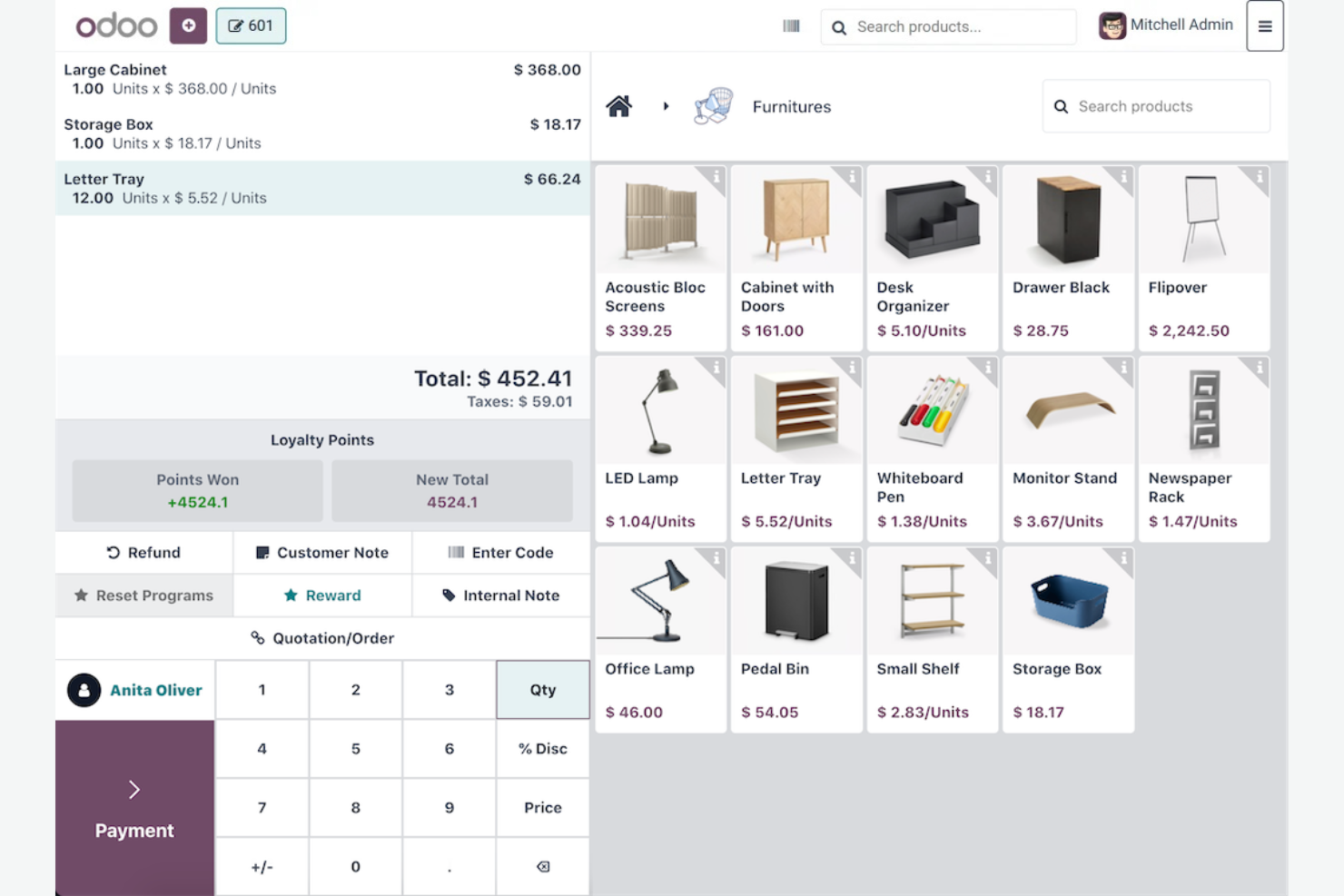
Si buscas un ERP para retail que puedas personalizar completamente según tu negocio, Odoo ofrece una flexibilidad de código abierto difícil de igualar. Es una excelente opción para minoristas con recursos internos de TI o desarrollo que desean personalizar flujos de trabajo, módulos e integraciones. Odoo ayuda a los equipos a unificar ventas, inventario y operaciones de comercio electrónico, al mismo tiempo que les da control total sobre cómo funciona cada proceso.
Por qué elegí Odoo
Lo que distingue a Odoo es su marco de código abierto, que brinda a los minoristas la libertad de personalizar casi todos los aspectos de su entorno ERP. Elegí Odoo porque puedes modificar los módulos existentes o crear otros completamente nuevos para adaptarlos a los flujos de trabajo exclusivos de tu comercio. El acceso al código fuente de la plataforma y su activa comunidad de desarrolladores hacen posible adaptar funciones de inventario, ventas y comercio electrónico a necesidades especializadas. Este nivel de personalización es especialmente valioso para minoristas con procesos complejos o que desean mantener control total sobre su entorno tecnológico.
Funciones clave de Odoo
Además de sus capacidades de personalización, Odoo ofrece varias funciones para apoyar las operaciones minoristas:
- Gestión multitienda: Permite supervisar inventario, ventas y operaciones en varias ubicaciones desde un solo panel de control.
- Plataforma de comercio electrónico integrada: Conecta tu tienda en línea con el inventario, las ventas y los datos de clientes en tiempo real.
- Escaneo de códigos de barras: Soporta seguimiento de inventario y procesos de caja basados en códigos de barras.
- Gestión de programas de fidelización: Te permite configurar y gestionar recompensas y promociones para clientes directamente desde el sistema.
Integraciones de Odoo
Las integraciones incluyen WhatsApp, Amazon, Shopify, Magento, Stripe y Twilio.
Pros and Cons
Pros:
- Diseño altamente modular
- Precios muy accesibles
- Aplicación POS para minoristas incorporada
Cons:
- La personalización puede ser costosa
- El soporte puede ser insuficiente

Epicor
La mejor opción para negocios minoristas especializados

Epicor está diseñado para minoristas especializados que necesitan un software ERP adaptado a requisitos únicos de inventario, servicio y atención al cliente. Es una excelente opción para negocios como ferreterías, centros de jardinería y tiendas de autopartes que gestionan surtidos de productos complejos y servicios en tienda. Epicor ayuda a estos minoristas a manejar inventario especializado, relaciones con proveedores y programas de fidelización en un solo sistema.
Por qué elegí Epicor
Epicor se destaca para los negocios minoristas especializados porque está construido para gestionar las necesidades únicas de inventario y servicio que enfrentan estos comercios. Elegí Epicor porque admite catálogos de productos complejos, incluidos artículos seriados y kits, que son habituales en ferreterías, centros de jardinería y tiendas de automoción. La plataforma también ofrece herramientas integradas para gestionar servicios en tienda, como reparaciones o pedidos personalizados, junto con las operaciones minoristas tradicionales. Para los minoristas que necesitan rastrear inventarios especializados y brindar experiencias personalizadas al cliente, las características específicas del sector de Epicor lo convierten en una opción muy adecuada.
Características clave de Epicor
Otras funciones que pueden resultar útiles para minoristas especializados incluyen:
- Motor avanzado de promociones: Permite configurar y gestionar descuentos complejos, cupones y ofertas de fidelidad.
- Gestión de pedidos omnicanal: Coordina pedidos en canales online, en tienda y móviles en un solo sistema.
- Herramientas de integración con proveedores: Conecta directamente con proveedores para reposición automática y órdenes de compra.
- Módulo de gestión de personal: Programa al personal, registra el tiempo y gestiona los costos laborales dentro del ERP.
Integraciones de Epicor
Las integraciones incluyen Salesforce, AutoCAD, SolidWorks, Microsoft Office y Amazon Web Services.
Pros and Cons
Pros:
- Excelente cadena de suministro
- Funcionalidades CRM integradas
- Buen control de almacén
Cons:
- Mejor para manufactura
- Las actualizaciones pueden ser complicadas

Infor
Ideal para minoristas de moda y confección
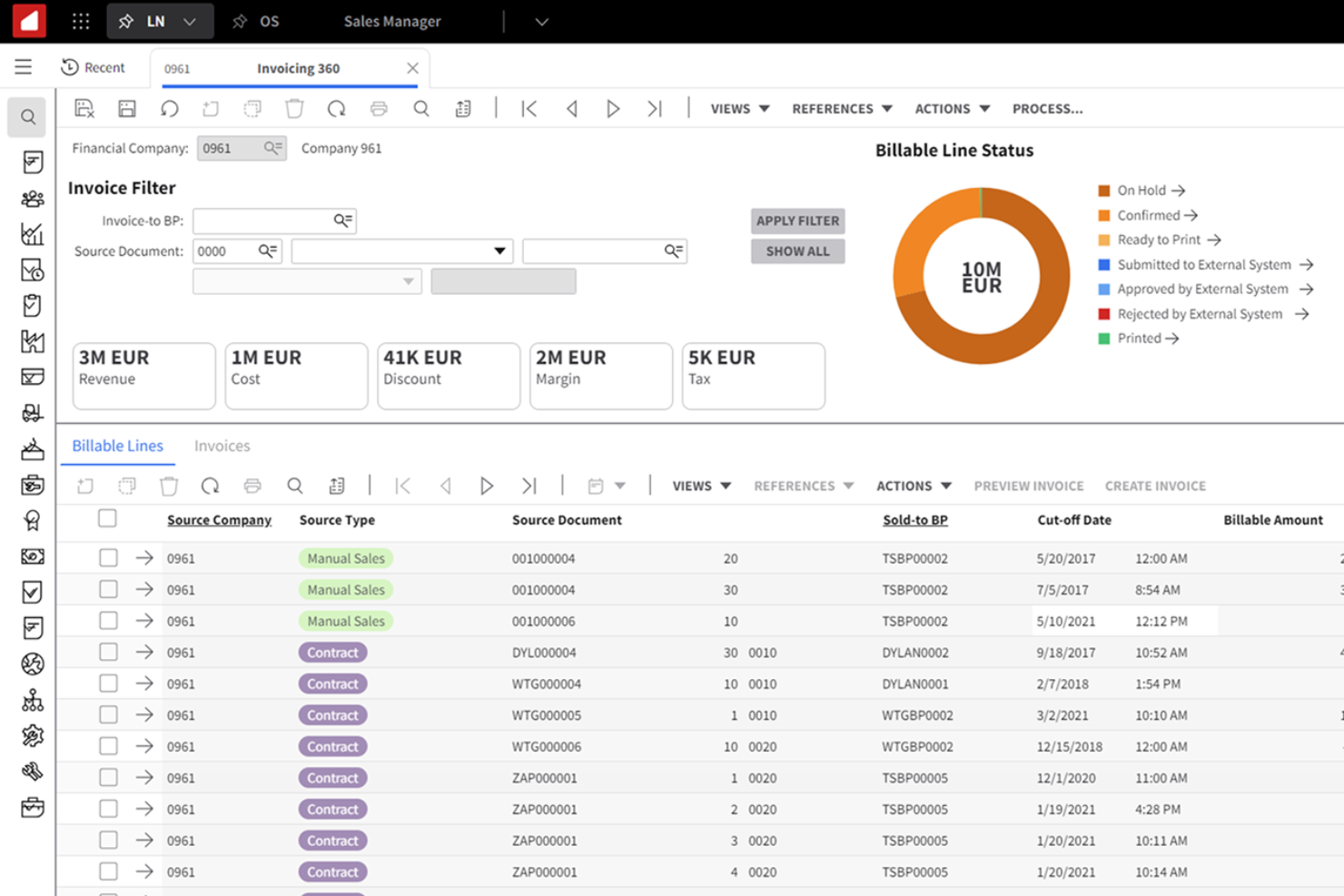
Infor ofrece una plataforma ERP minorista diseñada para marcas de moda y confección que necesitan gestionar estilos en constante cambio, colecciones de temporada y cadenas de suministro globales. Es especialmente útil para minoristas y mayoristas que manejan surtidos complejos, múltiples canales de venta y ciclos de vida de productos rápidos. Infor ayuda a estas empresas a coordinar el diseño, el abastecimiento, el inventario y la comercialización en un solo sistema creado para el ritmo acelerado de la moda.
Por qué elegí Infor
Lo que diferencia a Infor para los minoristas de moda y confección es su enfoque en gestionar el ritmo y la complejidad de esta industria. Elegí Infor porque ofrece herramientas de gestión de estilos y temporadas que te ayudan a seguir colecciones, variedades de color y tallas en varios canales. La plataforma también admite abastecimiento global y visibilidad de la cadena de suministro, algo esencial para marcas que trabajan con proveedores internacionales y demandas fluctuantes. Para empresas que necesitan coordinar diseño, producción y comercialización en un solo lugar, las funciones especializadas de Infor lo convierten en una opción sólida.
Funciones clave de Infor
También encontré varias funciones que los minoristas de moda y confección pueden considerar valiosas:
- Herramientas de planificación de surtido: Permiten crear, visualizar y ajustar surtidos de productos por canal o región.
- Sistema POS integrado: Conecta las ventas en tienda con el inventario y los datos de clientes en tiempo real.
- Gestión de pedidos omnicanal: Gestiona pedidos y entregas en ecommerce, tiendas físicas y marketplaces.
- Portal de colaboración con proveedores: Ofrece un espacio compartido para comunicarse y gestionar pedidos con los proveedores.
Integraciones de Infor
Las integraciones incluyen Salesforce, Microsoft Dynamics, SAP, Oracle, AWS y PayPal.
Pros and Cons
Pros:
- Interfaz de usuario atractiva
- Tecnología especializada en retail de moda
- Planificación avanzada de la demanda
Cons:
- Sincronizaciones externas complejas
- Precio elevado para el segmento medio

Fulfil
Mejor para operaciones unificadas de backend
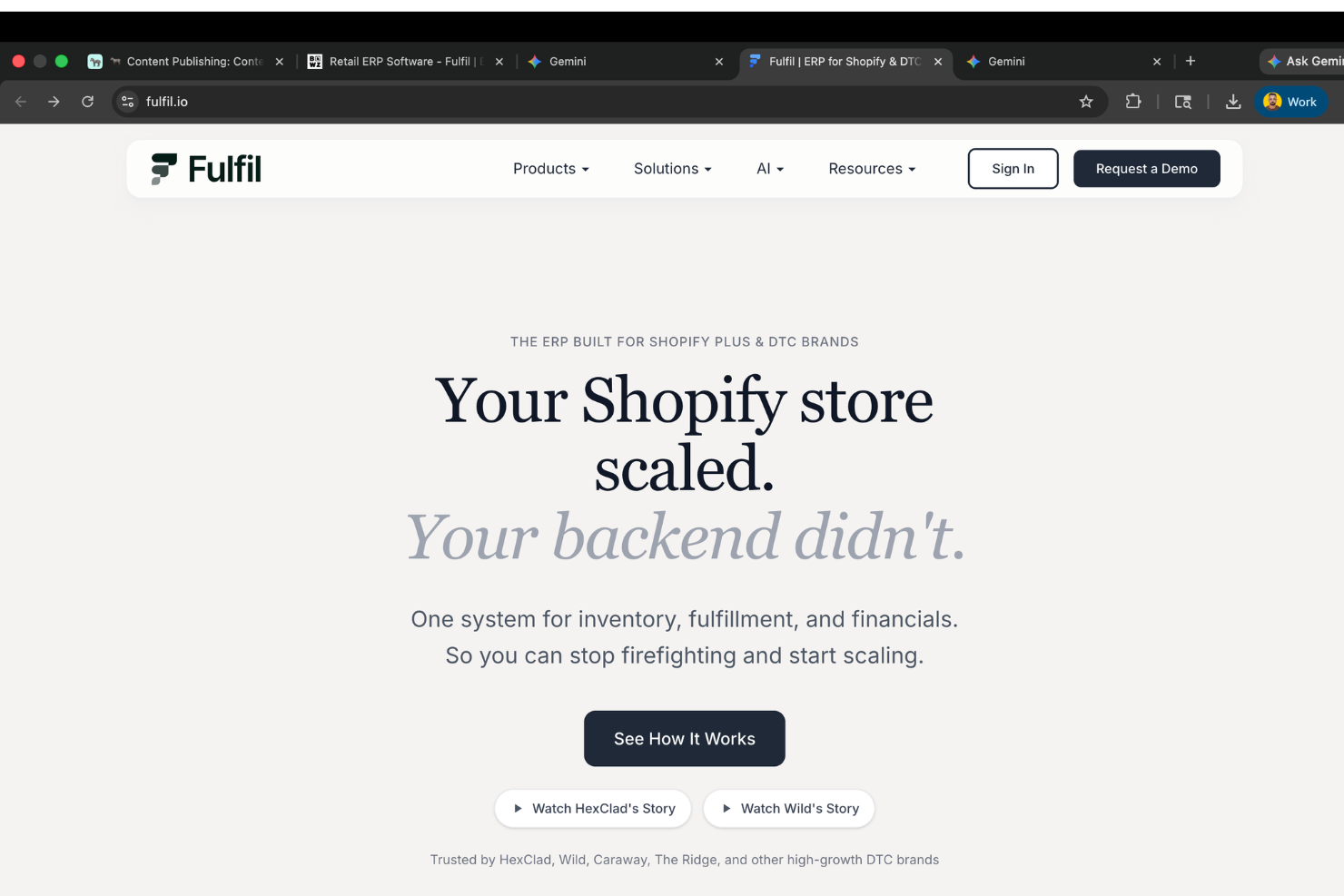
Fulfil.io es una plataforma moderna de Planificación de Recursos Empresariales (ERP) en la nube, diseñada específicamente para marcas minoristas y de comercio electrónico de rápido crecimiento. Sirve como una única fuente de verdad al unificar inventario, gestión de pedidos, finanzas y adquisiciones en un sistema integral. Al eliminar aplicaciones desconectadas y la entrada manual de datos, el software resuelve problemas críticos como la escalabilidad de operaciones, faltantes inesperados de inventario y reportes financieros fragmentados.
¿Para quién es Fulfil ideal?
Fulfil.io es ideal para minoristas omnicanal y mayoristas de nivel medio a empresarial que gestionan altos volúmenes de transacciones en múltiples plataformas.
Por qué elegí Fulfil
Seleccioné esta plataforma porque ofrece una arquitectura verdaderamente unificada, adaptada específicamente al comercio moderno en lugar de modelos genéricos de manufactura o modelos empresariales heredados. Destaca como la mejor opción para operaciones unificadas de backend al conectar sin problemas las tiendas en línea con los flujos de trabajo del almacén y contabilidad. Esta integración profunda permite a los operadores minoristas escalar con confianza sin depender de conectores frágiles de terceros o middleware.
Características clave de Fulfil
- Gestión de inventario: Sincroniza los niveles de stock en tiempo real a través de múltiples canales de venta y almacenes.
- Gestión de pedidos: Automatiza rutas complejas, selección, empaque y envío para acelerar la entrega.
- Compras y adquisiciones: Optimiza las relaciones con proveedores mediante puntos de reorden automáticos y generación de órdenes de compra.
- Contabilidad nativa: Incluye un libro mayor integrado para rastrear costos totales, COGS y rentabilidad con precisión.
Integraciones de Fulfil
Las integraciones incluyen Shopify, BigCommerce, Amazon, eBay, Walmart, Stripe, Faire, EasyPost y NuORDER.
Pros and Cons
Pros:
- Extensibilidad profunda via API
- Automatiza el enrutamiento de pedidos
- Sincronización de inventario en tiempo real
Cons:
- Demasiado robusto para minoristas pequeños
- Tarifa premium

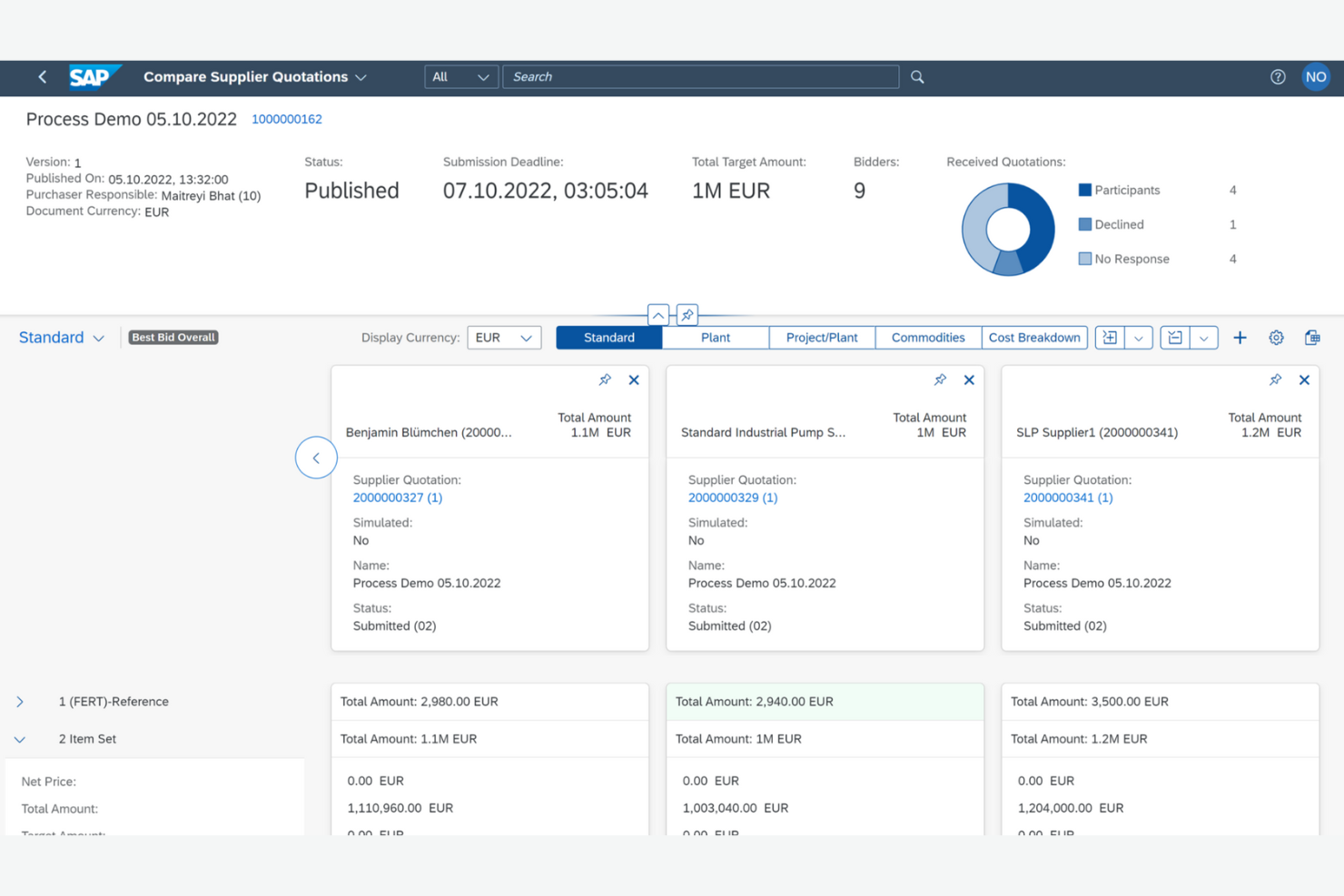
SAP S/4HANA está diseñado para minoristas que necesitan análisis en tiempo real para gestionar operaciones complejas y un inventario de rápida rotación. Es una opción sólida para grandes organizaciones minoristas que desean conectar datos de ventas, cadena de suministro y finanzas en un solo lugar. Con su base de datos en memoria, SAP S/4HANA ayuda a los equipos a analizar tendencias y tomar decisiones a medida que ocurren las transacciones.
Por qué elegí SAP S/4HANA
Para los minoristas que necesitan acceso instantáneo a datos operativos, SAP S/4HANA destaca por sus capacidades de análisis en tiempo real. Elegí esta herramienta porque utiliza una base de datos en memoria para procesar transacciones y análisis de manera simultánea, para que puedas monitorear ventas, inventario y actividad de la cadena de suministro en el momento. Los paneles de análisis integrados permiten a los equipos minoristas visualizar tendencias y detectar problemas sin esperar a los informes por lotes. Si tu negocio depende de decisiones rápidas e impulsadas por datos, SAP S/4HANA está diseñado para ofrecer ese nivel de información.
Funciones clave de SAP S/4HANA
Otras funciones que los equipos minoristas pueden encontrar útiles incluyen:
- Gestión de pedidos omnicanal: Coordina pedidos a través de los canales en línea, en tienda y móviles en un solo sistema.
- Planificación automática de reposición: Calcula los niveles óptimos de existencias y genera órdenes de compra en función de la demanda en tiempo real.
- Gestión centralizada de datos maestros: Mantiene datos coherentes de productos, proveedores y clientes en todas las unidades de negocio.
- Consolidación financiera integrada: Combina datos financieros de múltiples entidades para informes y cumplimiento unificados.
Integraciones de SAP S/4HANA
Las integraciones incluyen Ariba, SuccessFactors, Concur, Salesforce, MuleSoft y SAP Concur.
Pros and Cons
Pros:
- Cadena de suministro global
- Gran capacidad de datos
- Potentes herramientas omnicanal
Cons:
- Implementación prolongada
- Requiere expertos en SAP
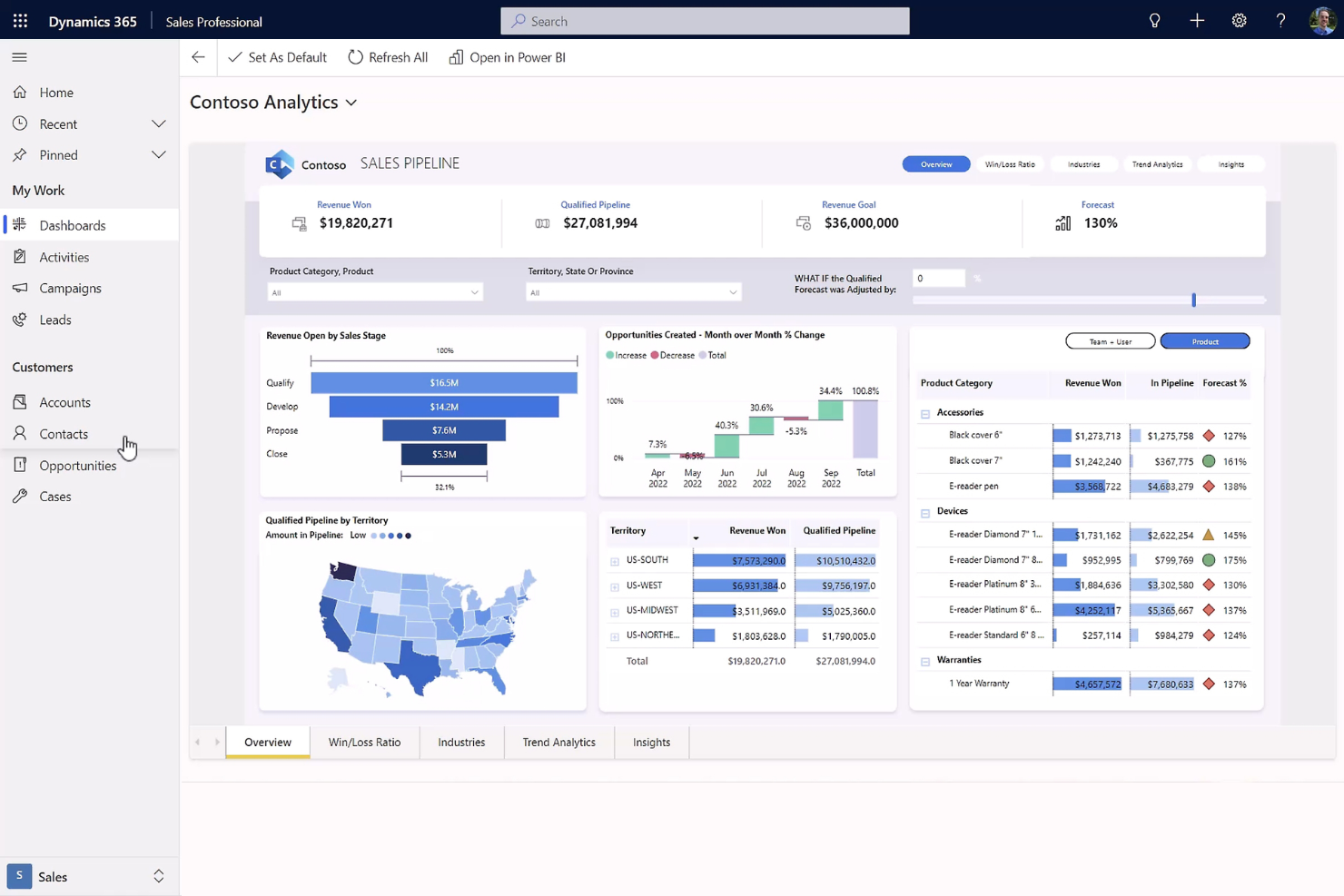
Si tu empresa ya utiliza herramientas de Microsoft, Microsoft Dynamics 365 ofrece una solución ERP para retail que se integra de forma natural en tus flujos de trabajo existentes. Es especialmente útil para minoristas que desean unificar datos, procesos y experiencias del cliente en ventas, finanzas y operaciones dentro del ecosistema de Microsoft. Gracias a su profunda integración con Microsoft 365, Power BI y Azure, Dynamics 365 ayuda a los equipos a conectar las operaciones minoristas con herramientas de productividad y análisis familiares.
Por qué elegí Microsoft Dynamics 365
Lo que diferencia a Microsoft Dynamics 365 es cuán profundamente se conecta con el ecosistema más amplio de Microsoft, convirtiéndolo en una opción sólida para minoristas que ya han invertido en tecnologías de Microsoft. Elegí Dynamics 365 porque te permite gestionar operaciones de retail, finanzas y datos de clientes en un entorno unificado que se sincroniza con Microsoft 365 y Power BI. Las herramientas de análisis y reportes en tiempo real de la plataforma ayudan a los equipos minoristas a tomar decisiones guiadas por datos usando interfaces familiares. Si tu empresa valora la colaboración sin fricciones y la centralización de datos entre productos de Microsoft, Dynamics 365 está diseñado para esa experiencia.
Características clave de Microsoft Dynamics 365
Otras características destacadas incluyen:
- Reabastecimiento automático de inventario: Lanza pedidos de compra y transferencias de stock en función de los niveles de inventario en tiempo real.
- Plataforma de comercio unificado: Conecta el punto de venta, comercio electrónico y operaciones de centro de llamadas en un solo sistema.
- Gestión de información de productos: Centraliza los datos, precios y descripciones de productos para todos los canales.
- Motor de promociones integrado: Te permite configurar y gestionar descuentos, cupones y ofertas especiales en todos los canales.
Integraciones de Microsoft Dynamics 365
Las integraciones incluyen Microsoft Office 365, SharePoint, Power BI, LinkedIn, Outlook y Adobe.
Pros and Cons
Pros:
- Sincronización fluida con Microsoft
- Comercio unificado sólido
- Información profunda sobre clientes
Cons:
- Requiere experiencia de desarrollo
- Las actualizaciones interrumpen los flujos

Priority
Mejor para plazos de implementación rápidos
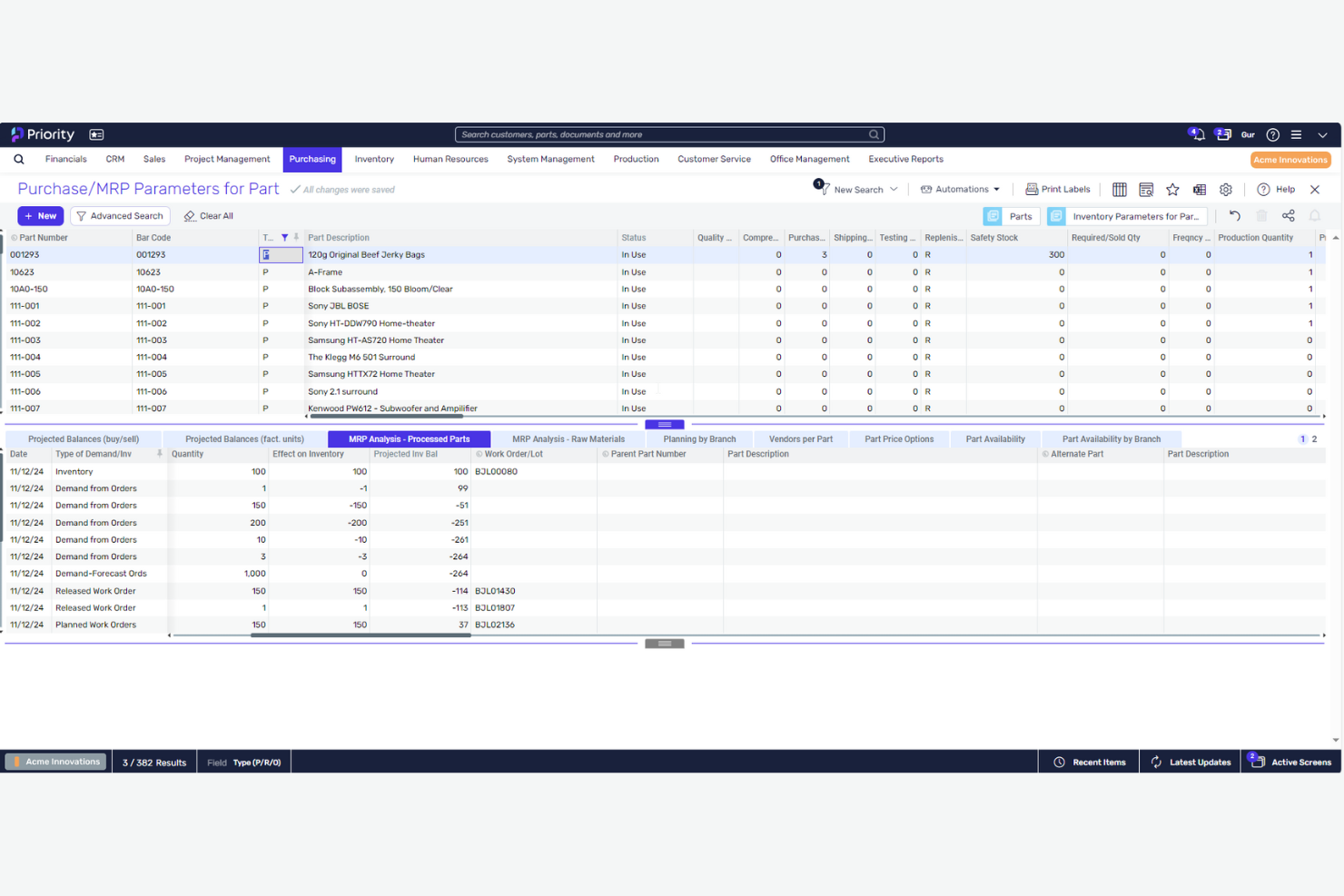
Priority está diseñado para minoristas que necesitan comenzar a utilizar un software ERP de forma rápida, sin largos ciclos de implementación. Es una buena opción para empresas que buscan un sistema modular que puedan adaptar a sus operaciones, ya sea que gestionen una sola tienda o una cadena con múltiples ubicaciones. Priority ayuda a los equipos a centralizar los procesos de inventario, ventas y compras para que puedan actuar con rapidez y adaptarse a medida que crecen.
Por qué elegí Priority
Para minoristas que necesitan moverse rápidamente, Priority destaca por sus plazos de implementación rápidos y su enfoque modular. Elegí Priority porque ofrece plantillas preconfiguradas específicas para el sector y una incorporación guiada, lo que ayuda a las empresas a comenzar sin una configuración prolongada. La estructura modular de la plataforma te permite activar solo las funciones que necesitas, para que puedas escalar o adaptarte a medida que tu negocio cambia. Esto hace que Priority sea una opción sólida para minoristas que quieren minimizar los tiempos de inactividad y comenzar a gestionar inventario, ventas y compras de inmediato.
Funciones clave de Priority
Otras funciones útiles para los equipos de retail incluyen:
- Gestión de inventario en múltiples ubicaciones: Rastrea los niveles y movimientos de stock en varias tiendas o almacenes.
- Sistema de punto de venta (POS) integrado: Conecta las transacciones en tienda directamente con tus datos de ERP.
- Flujos de trabajo de compras automatizados: Te permite configurar reglas para la reposición y la gestión de proveedores.
- Informes financieros en tiempo real: Ofrece información actualizada sobre ventas, gastos y rentabilidad.
Integraciones de Priority
Las integraciones incluyen Salesforce, QuickBooks, Shopify, Microsoft Office, Outlook y Slack.
Pros and Cons
Pros:
- Buenas opciones de POS móvil
- Asequible para medianas empresas
- Fuerte con multimoneda
Cons:
- Marketplace de aplicaciones más pequeño
- La interfaz es un poco anticuada
Otro software ERP para minoristas
Estas son algunas opciones adicionales de software ERP para minoristas que no llegaron a mi selección, pero que aún vale la pena revisar:
- Oracle Retail
Ideal para implementaciones empresariales a gran escala
- Method
Ideal para necesidades de integración con QuickBooks
- Cin7
Lo mejor para la gestión unificada de punto de venta e inventario


Cómo evalúo el software ERP para retail
Divido mi evaluación en dos capas: requisitos básicos como inventario en tiempo real e integración con POS, y diferenciadores que separan una buena opción de la opción correcta para tu operación minorista.
Funcionalidad central (Requisitos imprescindibles para esta lista)
Cuando selecciono herramientas para mi lista, califico cada una en una escala del 0 (no ofrece la funcionalidad) al 5 (sobresale en esta área) para cada funcionalidad central listada a continuación. Luego, calculo la puntuación total de la herramienta como un porcentaje. Cada herramienta debe alcanzar una puntuación total mínima del 65% para ser considerada para su inclusión.
- Gestión de inventario minorista: Analizo cómo maneja cada plataforma la visibilidad de existencias en tiempo real en tiendas y almacenes, incluidos los traspasos, inventarios cíclicos y seguimiento a nivel SKU para artículos con variantes, como talla/color.
- Conectividad POS integrada: Aquí influye si el ERP incluye un módulo POS nativo o conectores certificados, especialmente para sincronizar transacciones, devoluciones y datos de clientes con el sistema central.
- Gestión de pedidos omnicanal: Evalúo qué tan bien la plataforma consolida pedidos de tiendas físicas, tiendas online y marketplaces en un solo flujo de trabajo con opciones de cumplimiento como BOPIS y envío desde tienda.
- Gestión financiera minorista: Cada herramienta debe cubrir la contabilidad básica (GL, AP/AR) junto con necesidades específicas de retail como consolidación multi-entidad, seguimiento de costos desembarcados y manejo de impuestos en distintas jurisdicciones.
- Compras y gestión de proveedores: Verifico la generación automática de órdenes de compra según puntos de reorden, la gestión de proveedores y flujos de recepción que enlacen con inventario y cuentas por pagar.
- Análisis y reportes para retail: Los paneles deben mostrar indicadores clave minoristas, como índice de rotación de inventario, margen bruto por SKU o categoría y rendimiento por tienda, en lugar de solo reportes financieros genéricos.
Una vez tengo una lista de herramientas que cumplen con estos criterios, considero qué distingue a cada plataforma.
Factores diferenciadores (Qué distingue a los proveedores)
Así es como comparo y contrasto distintos proveedores:
Características sobresalientes
La previsión de demanda impulsada por IA es un gran diferenciador. Las plataformas que predicen la demanda a nivel SKU y tienda ayudan a los compradores a evitar exceso de inventario y ventas perdidas en temporadas altas. También evalúo herramientas de planificación de mercancía, particularmente presupuestos "open-to-buy" y optimización de rebajas, que son especialmente relevantes para minoristas de moda y productos estacionales. La gestión de almacenes incorporada con flujos de preparación/empaque/envío es otro punto que valoro, ya que puede eliminar la necesidad de un WMS independiente.
Más allá de las características
Las integraciones con el ecosistema retail son de las primeras cosas que reviso. Una plataforma que conecta con tu tienda en línea, marketplaces y proveedores de envíos desde el primer momento ahorra meses de desarrollo personalizado. También evalúo muy de cerca el ajuste al sector: un ERP diseñado para minoristas de moda maneja las matrices de estilo/color/talla de forma diferente a uno pensado para supermercados o productos duros. Los plazos de implementación también cuentan, especialmente en despliegues multi-tienda, donde plantillas específicas para retail y socios experimentados pueden reducir considerablemente el tiempo para obtener valor.
Cómo elegir un software ERP para minoristas
Es fácil perderse entre largas listas de funciones y complejas estructuras de precios. Para ayudarte a mantener la concentración mientras avanzas en tu proceso único de selección de software, aquí tienes una lista de factores que debes tener en cuenta:
| Factor | Qué debes considerar |
|---|---|
| Escalabilidad | ¿El software podrá gestionar el crecimiento de tus ubicaciones, SKU y canales de ventas durante los próximos 3-5 años? Comprueba los límites de usuarios, transacciones y volumen de datos. |
| Integraciones | ¿El ERP se conecta de forma nativa con tus herramientas de comercio electrónico, punto de venta, contabilidad y envíos? Haz una lista de las integraciones imprescindibles y confirma que sean compatibles. |
| Personalización | ¿Puedes adaptar los flujos de trabajo, campos e informes para que coincidan con tus procesos minoristas sin una gran intervención del departamento de TI? Pregunta por las diferencias entre configuración y programación personalizada. |
| Facilidad de uso | ¿Tu equipo podrá aprender a utilizar el sistema rápidamente? Solicita una demostración y haz que los usuarios finales prueben las tareas habituales antes de comprometerte. |
| Implementación e incorporación | ¿Qué recursos, tiempo y conocimientos se necesitan para empezar a trabajar? Pregunta por la asistencia para la migración, la formación y los plazos habituales para la puesta en marcha. |
| Coste | ¿Cuál es el coste total de propiedad, incluidas las licencias, los complementos, la asistencia y las actualizaciones? Presta atención a las tarifas ocultas y aclara las condiciones del contrato. |
| Medidas de seguridad | ¿El software ofrece acceso basado en roles, cifrado de datos y registros de auditoría? Confirma el cumplimiento de las normas de protección de datos de tu sector. |
| Disponibilidad de asistencia | ¿Qué canales de asistencia se ofrecen y durante qué horario? Considera si necesitas ayuda las 24 horas del día, los 7 días de la semana, asistencia en tu idioma o un gestor de cuenta exclusivo. |
¿Qué es el software ERP para minoristas?
El software ERP para minoristas es un sistema centralizado que gestiona las operaciones minoristas principales, incluidos el inventario, las ventas, las compras, la contabilidad y los datos de los clientes. Estas plataformas ayudan a los minoristas a coordinar procesos en canales físicos y digitales, mejorar la precisión de los datos y respaldar la toma de decisiones. El software ERP para minoristas es utilizado por gerentes de tiendas, equipos de comercio electrónico, personal financiero y responsables de operaciones para unificar los flujos de trabajo y mantener la visibilidad de todo el negocio minorista.
Características
Al seleccionar un software ERP para minoristas, presta atención a las siguientes características clave:
- Gestión de inventario: Realiza un seguimiento de los niveles, movimientos y ubicaciones del inventario en almacenes y tiendas, lo que ayuda a evitar la falta de existencias y el exceso de inventario.
- Gestión de pedidos: Centraliza el procesamiento de pedidos de todos los canales de venta, automatiza los pasos de preparación y actualiza el estado de los pedidos en tiempo real.
- Integración con el punto de venta (POS): Conecta las ventas en tienda con tu sistema ERP y sincroniza al instante las transacciones, el inventario y los datos de los clientes.
- Gestión de compras y proveedores: Gestiona las órdenes de compra, los registros de proveedores y los flujos de trabajo de adquisición para agilizar el reabastecimiento y las relaciones con los proveedores.
- Gestión de relaciones con los clientes (CRM): Almacena los perfiles de los clientes, su historial de compras y sus preferencias para respaldar el marketing dirigido y el servicio personalizado.
- Gestión financiera: Gestiona la contabilidad, la facturación, los pagos y los informes financieros dentro de la misma plataforma para mantener registros precisos y actualizados.
- Informes y análisis: Proporciona paneles e informes personalizables sobre ventas, inventario y operaciones para respaldar decisiones basadas en datos.
- Compatibilidad con múltiples ubicaciones: Permite gestionar de forma centralizada el inventario, las ventas y el personal de varias tiendas o almacenes.
- Procesamiento de devoluciones y reembolsos: Realiza un seguimiento de las devoluciones de productos, gestiona los flujos de trabajo de reembolso y actualiza automáticamente los registros de inventario y financieros.
Características comunes de IA del software ERP para minoristas
Además de las características estándar del software ERP para minoristas mencionadas anteriormente, muchas de estas soluciones están incorporando IA con funciones como:
- Previsión de la demanda: Utiliza algoritmos de IA para analizar las tendencias de ventas, la estacionalidad y los factores externos con el fin de predecir las necesidades futuras de inventario y reducir la falta o el exceso de existencias.
- Detección automatizada de anomalías: Supervisa las transacciones y los datos operativos para señalar patrones inusuales, como posibles fraudes, errores de precios o discrepancias de inventario.
- Optimización dinámica de precios: Ajusta los precios de los productos en tiempo real según la demanda, los precios de la competencia y los niveles de inventario para maximizar los ingresos y el margen.
- Recomendaciones personalizadas de productos: Analiza el comportamiento de los clientes y su historial de compras para sugerir productos relevantes, aumentando las oportunidades de venta cruzada y venta adicional.
- Reabastecimiento inteligente: Genera automáticamente órdenes de compra y alertas de reabastecimiento al predecir cuándo el inventario estará próximo a agotarse, teniendo en cuenta los plazos de entrega y la velocidad de ventas.
Beneficios
La implementación de un software ERP para minoristas ofrece varios beneficios para tu equipo y tu empresa. Estos son algunos de los que puedes esperar:
- Operaciones centralizadas: Unifica los datos de inventario, ventas, compras y finanzas en una sola plataforma, reduciendo el trabajo manual y los silos de datos.
- Mayor precisión del inventario: El seguimiento en tiempo real y las actualizaciones automatizadas del inventario ayudan a evitar la falta de existencias, el exceso de inventario y la pérdida de ventas.
- Toma de decisiones más rápida: Las herramientas integradas de análisis e informes proporcionan información oportuna sobre ventas, inventario y operaciones.
- Mejora de la experiencia del cliente: Las funciones integradas de CRM y POS permiten ofrecer un servicio personalizado y una interacción coherente en todos los canales.
- Agilización del cumplimiento de pedidos: La gestión automatizada de pedidos y los flujos de trabajo de proveedores aceleran el procesamiento y reducen los errores.
- Apoyo al crecimiento escalable: Las capacidades para múltiples ubicaciones y canales facilitan la expansión del negocio sin perder el control.
- Mejor control de costes: Las funciones de gestión financiera y precios dinámicos ayudan a supervisar los gastos y optimizar los márgenes.
Costes y precios
Seleccionar un software ERP para minoristas requiere comprender los diversos modelos y planes de precios disponibles. Los costes varían según las características, el tamaño del equipo, los complementos y otros factores. La tabla siguiente resume los planes comunes, sus precios medios y las características que suelen incluir las soluciones de software ERP para minoristas:
Tabla comparativa de planes para software ERP para comercios
| Tipo de plan | Precio promedio | Funciones comunes |
|---|---|---|
| Plan gratuito | $0 | Seguimiento básico del inventario, gestión limitada de pedidos, acceso para un solo usuario y asistencia de la comunidad. |
| Plan personal | $25-$150/usuario/mes | Gestión central del inventario y las ventas, informes básicos, asistencia por correo electrónico e integraciones limitadas. |
| Plan empresarial | $150-$350/usuario/mes | Compatibilidad con varias ubicaciones, análisis avanzados, flujos de trabajo de compras, funciones de CRM y acceso a la API. |
| Plan para grandes empresas | $5000+/mes | Flujos de trabajo personalizados, gestión de cuentas exclusiva, seguridad avanzada, asistencia prioritaria e integraciones completas. |
Preguntas frecuentes sobre el software ERP para comercios
Estas son algunas respuestas a preguntas frecuentes sobre el software ERP para comercios:
¿Cuánto tiempo se tarda en implementar un software ERP para comercios?
Los plazos de implementación varían, pero la mayoría de los proyectos de software ERP para comercios tardan entre 2 y 6 meses. El plazo depende de las necesidades de migración de datos, del número de integraciones y del nivel de personalización necesario. Las fases de planificación, capacitación y pruebas también pueden afectar al calendario general.
¿Puede el software ERP para comercios integrarse con mi plataforma de comercio electrónico actual?
Sí, la mayoría de las soluciones de software ERP para comercios ofrecen integraciones con plataformas populares de comercio electrónico. Antes de elegir un sistema, confirma que sea compatible con tu proveedor específico de comercio electrónico y comprueba si la integración es nativa o requiere conectores de terceros.
¿Qué tipos de empresas se benefician más del software ERP para comercios?
El software ERP para comercios es especialmente valioso para empresas con varios canales de venta, múltiples ubicaciones o necesidades complejas de inventario. Resulta particularmente útil para los minoristas que buscan unificar las operaciones en tienda y en línea, mejorar la precisión del inventario y obtener una mejor visibilidad del rendimiento empresarial.
¿Cómo sé si mi empresa está preparada para utilizar un software ERP para comercios?
Si tienes dificultades con procesos manuales, datos aislados o errores frecuentes de inventario, puede ser el momento de considerar un software ERP para comercios. Las empresas que planean crecer, añadir nuevas ubicaciones o expandirse en línea suelen beneficiarse de la estructura y la automatización que ofrecen estos sistemas.
¿Qué debo buscar en una demostración de software ERP para comercios?
Concéntrate en cómo gestiona el sistema tus flujos de trabajo principales, como la administración del inventario, el procesamiento de pedidos y la elaboración de informes. Solicita una demostración de las integraciones con tus herramientas actuales y haz que los usuarios finales prueben la interfaz para asegurarte de que se adapta a las necesidades y al nivel de conocimientos de tu equipo.