
Reseña de Bottle POS: ventajas, desventajas, funciones y precios explicados



Bottle POS is a POS system built specifically for liquor stores, bottle shops, and wine retailers. If you're running a beverage alcohol business, you need features like age verification, case break pricing, and bottle deposit tracking built in—not bolted on. I'd reach for Bottle POS over a general retail tool like Lightspeed if your operation depends on those liquor-specific workflows rather than configuring workarounds to get there.
Bottle POS Evaluation Summary
- From $59/month
- Free demo available
Por qué confiar en nuestras recomendaciones de software
Nuestro equipo lleva probando y evaluando software desde 2012. Como líderes del sector retail, sabemos lo difícil —y lo importante— que es elegir el software adecuado.
Para esta guía, evaluamos las herramientas mediante pruebas prácticas e investigación independiente, puntuando las herramientas según nuestros criterios de selección.
Nuestras reseñas reflejan nuestro criterio independiente, no un discurso de ventas.
Bottle POS Overview
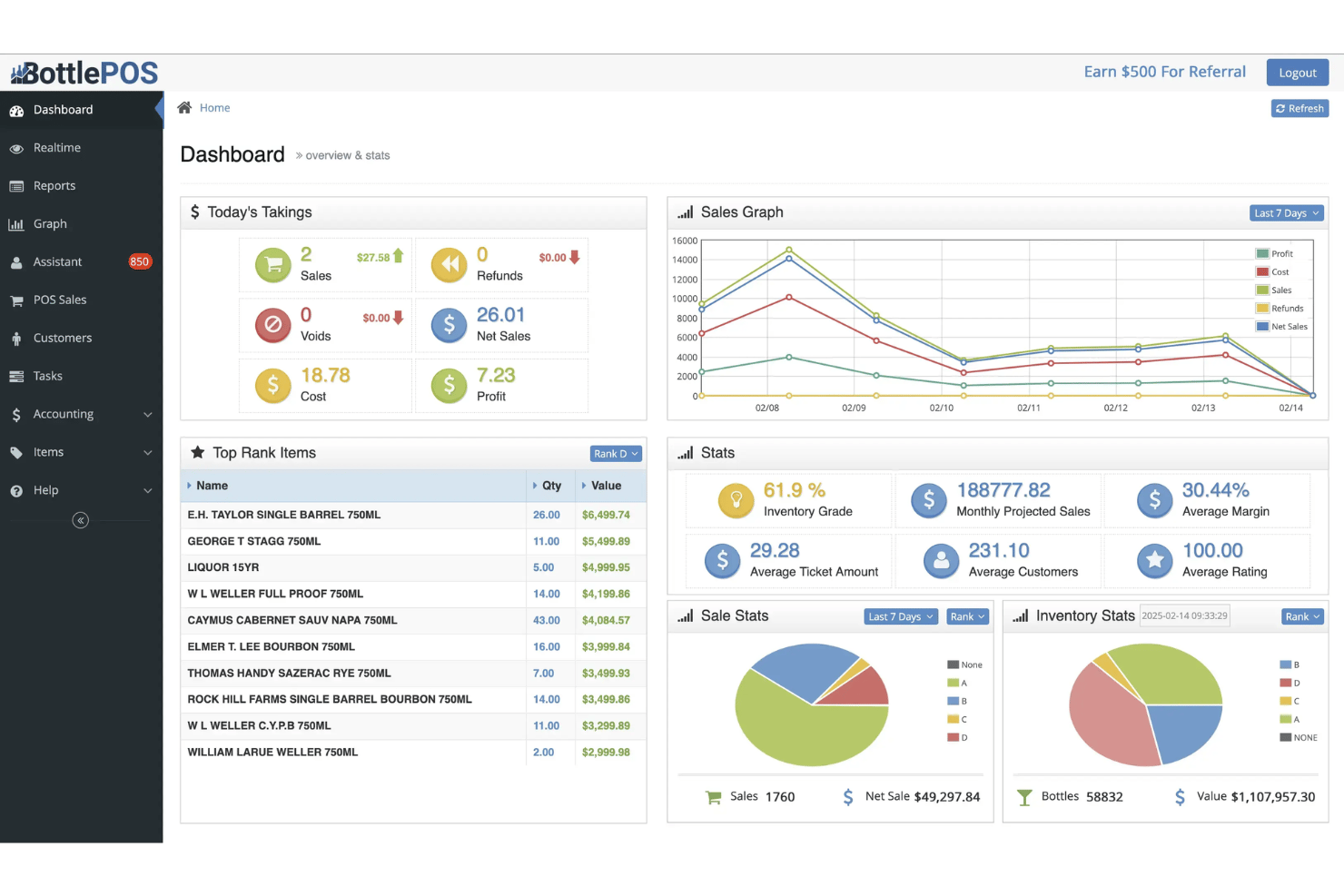
Bottle POS stands out for its liquor-specific features, including automated state reporting, AI invoice processing, case-break inventory management, and integrated age verification. It also offers real-time inventory tracking, mix-and-match promotions, and multi-store management tailored for alcohol retailers. The platform pairs with purpose-built hardware like ID scanners and bottle-optimized barcode scanners to streamline compliance, checkout, and inventory workflows.
If you’re choosing a POS system for a busy liquor store where inventory accuracy, compliance, barcode scanning, and alcohol-specific workflows matter most, Bottle POS is a highly specialized option built around those operational needs.
pros
-
Compliance features help stores manage age verification and regulatory requirements.
-
Real-time inventory sync across multiple registers.
-
Liquor store barcode catalog matches common brews and spirits.
cons
-
Fewer third-party app integrations than most competitors.
-
Mandatory payment processing agreements limit flexibility for merchant payment provider choices.
-
Hardware compatibility options are somewhat restrictive.
Nuestra Metodología de Revisión
Cómo Probamos y Puntamos Herramientas
Hemos pasado años construyendo, perfeccionando y mejorando nuestro sistema de pruebas y puntuación de software. La rúbrica está diseñada para captar los matices de la selección de software y lo que hace que una herramienta sea eficaz, enfocándose en los aspectos críticos del proceso de toma de decisiones. A continuación, puedes ver exactamente cómo funcionan nuestras pruebas y puntuaciones en siete criterios. Esto nos permite brindar una evaluación imparcial del software según la funcionalidad principal, características destacadas, facilidad de uso, incorporación, soporte al cliente, integraciones, reseñas de usuarios y relación calidad-precio.
Funcionalidad Principal (25% de la puntuación final)
El punto de partida de nuestra evaluación siempre es la funcionalidad principal de la herramienta. ¿Cuenta con las características y funciones básicas que un usuario esperaría ver? ¿Alguna de esas funcionalidades está limitada a planes de precios superiores? En esencia, esperamos que una herramienta se compare favorablemente con las capacidades básicas de sus competidores.
Características Destacadas (25% de la puntuación final)
A continuación, evaluamos las características sobresalientes poco comunes que van más allá de la funcionalidad principal que normalmente se encuentra en herramientas similares. Una alta puntuación refleja funcionalidades especializadas o únicas que hacen que el producto sea más rápido, eficiente o aporte un valor extra al usuario. También evaluamos qué tan fácil es integrar la herramienta con otras comúnmente usadas en el entorno tecnológico para ampliar la funcionalidad y utilidad del software. Las herramientas que ofrecen numerosas integraciones nativas, conexiones de terceros y acceso a API para crear integraciones personalizadas obtienen la mejor puntuación.
Facilidad de Uso (10% de la puntuación final)
Consideramos qué tan rápido y fácil es realizar las tareas definidas en la funcionalidad principal usando la herramienta. El software de alta puntuación está bien diseñado, es intuitivo, ofrece aplicaciones móviles, proporciona plantillas y hace que tareas relativamente complejas parezcan simples.
Incorporación (10% de la puntuación final)
Sabemos lo importante que es que un equipo adopte rápidamente una nueva plataforma, así que evaluamos qué tan fácil es aprender y usar la herramienta con mínima capacitación. Analizamos cuánto tiempo tarda un miembro del equipo en prepararse y comenzar a usar la herramienta sin experiencia previa. Las soluciones con alta puntuación requieren poco o ningún soporte.
Soporte al Cliente (10% de la puntuación final)
Revisamos qué tan rápido y fácil es obtener ayuda por teléfono, chat en vivo o base de conocimientos. Las herramientas y empresas que ofrecen soporte en tiempo real obtienen la mejor puntuación, mientras que los chatbots obtienen la peor.
Reseñas de Clientes (10% de la puntuación final)
Además de nuestras pruebas y evaluaciones, consideramos el puntaje neto de promotores de clientes actuales y pasados. Revisamos la probabilidad de que elijan de nuevo la herramienta para la funcionalidad principal. Un software con alta puntuación refleja un alto NPS de clientes actuales o pasados.
Relación Calidad-Precio (10% de la puntuación final)
Por último, considerando todos los demás criterios, revisamos el precio promedio de los planes de nivel básico frente a las características principales y consideramos el valor de los otros criterios de evaluación. El software que ofrece más por menos, tendrá una puntuación más alta.
Core Features
Smart Barcode Catalog
Bottle POS auto-recognizes thousands of beer, wine, and liquor barcodes. Cashiers scan items and see instant product info for fast checkout.
Age Verification at Checkout
The system prompts for ID when required by law. Operators can’t process restricted sales without a valid scan or entry.
Real-Time Inventory Tracking
Inventory adjustments sync instantly as items sell or restock. Staff always see current stock, even across multiple registers.
Custom Mix-and-Match Promotions
Set case discounts, BOGO deals, or multi-pack pricing. Promotions auto-apply based on cart combinations at checkout.
Shelf Tag and Label Printing
Print product tags and labels directly from the dashboard. Tags include names, pricing, and scannable barcodes for shelf accuracy.
Multi-Store Management
Manage multiple locations from a single login. View sales, transfer inventory, and update prices across all stores at once.
Ease of Use
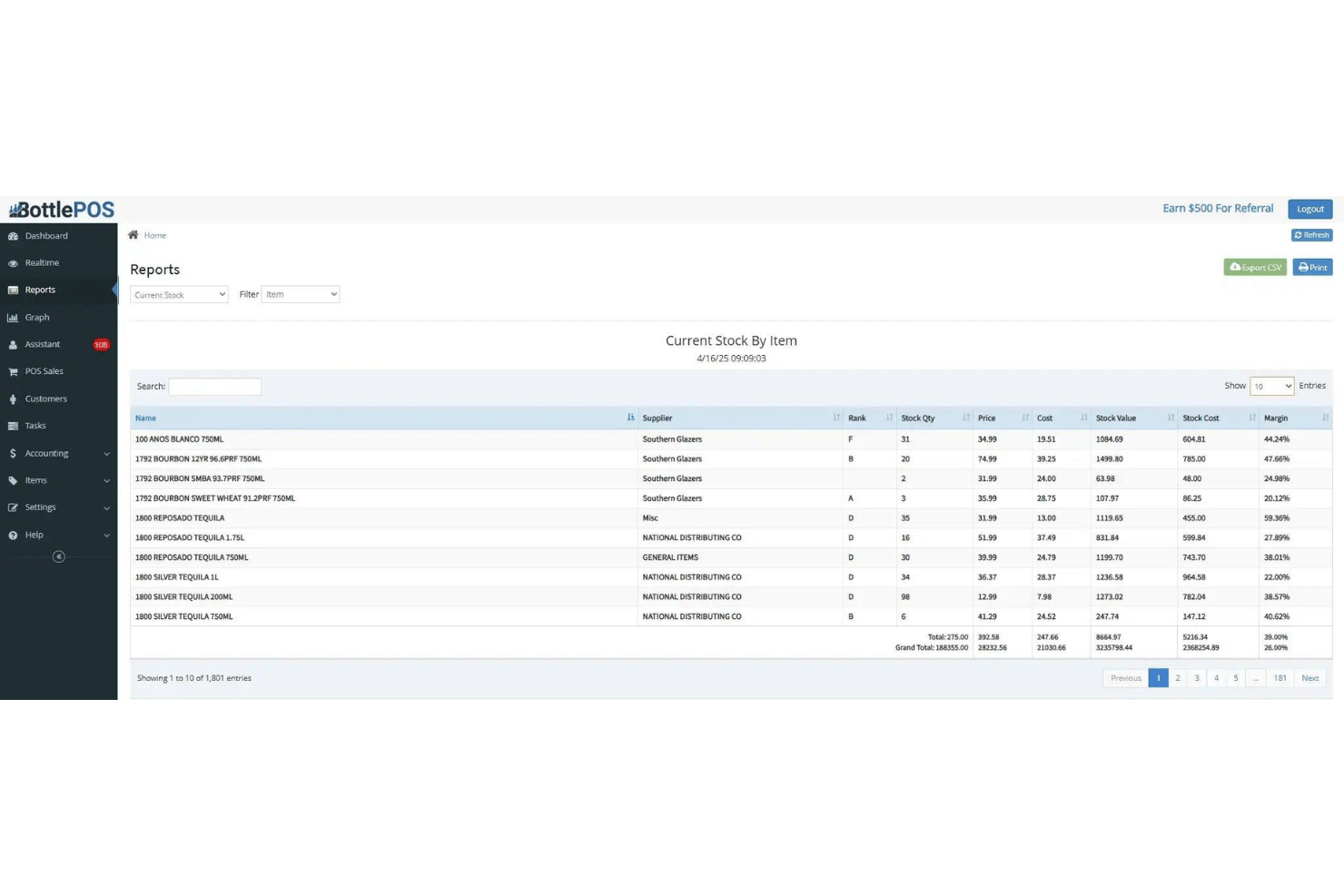
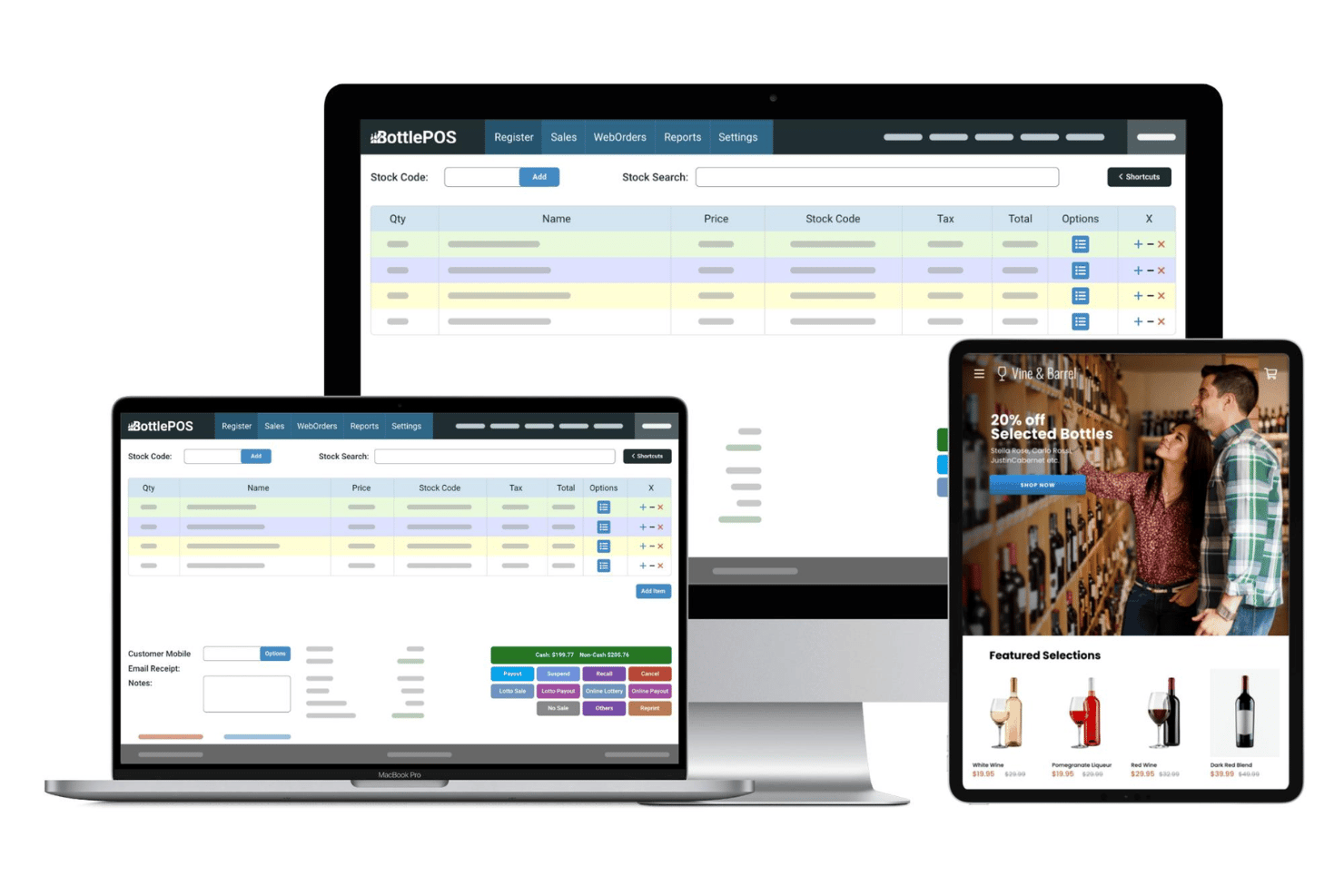
Bottle POS feels purpose-built for liquor retail, with workflows designed around age checks, barcode scanning, and fast-moving inventory. I think the interface is uncluttered and direct—cashiers scan bottles and get instant results, and the touchpoints for setting discounts or printing labels are simple, not buried in menus. Users consistently mention that staff learn it in one shift.
Integrations
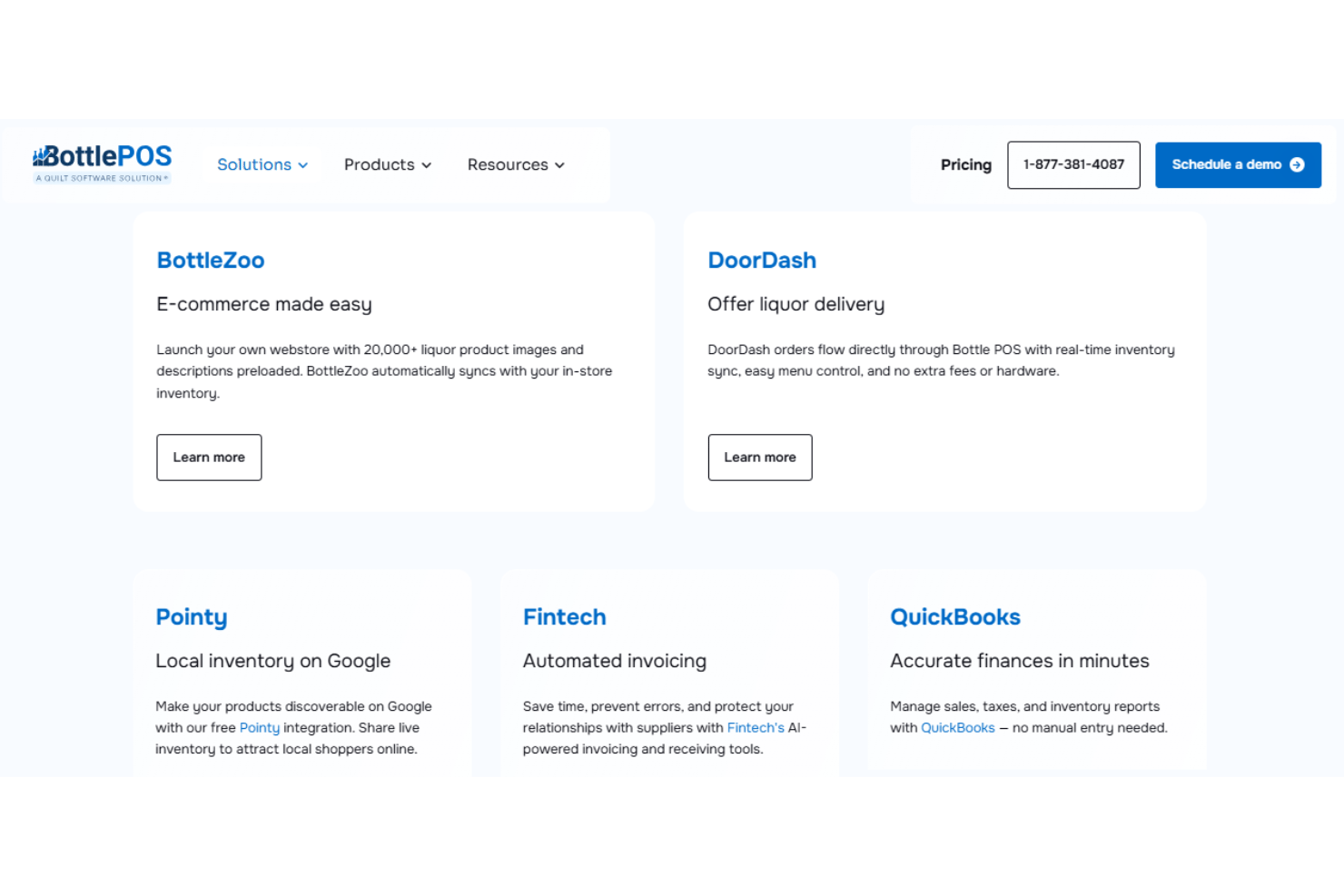
Bottle POS integrates with QuickBooks, Fintech, Pointy, BottleZoo, DoorDash, CityHive, BottleCapps, Google, and Monroe Package, among others.
Bottle POS does not advertise an open API, and its integrations are built-in rather than relying on third-party integration tools.
Bottle POS Specs
- 2-Factor Authentication
- API
- Barcode Scanning
- BitCoin
- Budgeting
- Contact Management
- Custom Reports
- Customer Management
- Customer Rewards
- Dashboard
- Data Export
- Data Import
- Data Visualization
- External Integrations
- Forecasting
- Fraud Detection
- Inventory Tracking
- Multi-Currency
- Multi-User
- Notifications
- Offline Access
- Order Management
- Payment Processor
- PayPal
- Stripe
- Supplier Management
- Tax Management
- Third-Party Plugins/Add-Ons
- Workflow Management