

Las 10 mejores pasarelas de pago para realizar transacciones seguras en 2026

La lista de los 10 mejores proveedores de pasarelas de pago


Las pasarelas de pago gestionan cada pago con tarjeta, toque de una cartera digital y transferencia bancaria para que recibas tus pagos de forma segura y fiable. Son la columna vertebral de tu proceso de pago.
En esta guía, evaluamos cada proveedor según su seguridad (cifrado, tokenización y filtros antifraude), sus capacidades de integración (API, plugins y comercio sin interfaz), la transparencia de sus precios (planes de suscripción frente a tarifas por transacción) y sus funciones de escalabilidad (facturación recurrente, divisas internacionales y gestión del volumen).
No habrá más tarifas sorpresa. No habrá más dependencia de una plataforma. Solo recomendaciones honestas, respaldadas por expertos, para ayudarte a elegir la pasarela que se adapte a tu negocio y mantenga los ingresos en circulación.
Por qué confiar en nuestras recomendaciones de software
Nuestro equipo lleva probando y evaluando software desde 2012. Como líderes del sector retail, sabemos lo difícil —y lo importante— que es elegir el software adecuado.
Para esta guía, evaluamos las herramientas mediante pruebas prácticas e investigación independiente, puntuando las herramientas según nuestros criterios de selección.
Nuestras reseñas reflejan nuestro criterio independiente, no un discurso de ventas.
Comparativa de las mejores soluciones de pasarelas de pago
Primero, compararemos los precios de cada pasarela de pago en una práctica tabla. Después, haz clic en Comparar software para consultar comparativas de todas las demás funciones.
| Tool | Best For | Trial Info | Price | ||
|---|---|---|---|---|---|
| 1 | Mejor relación calidad-precio para altos volúmenes de transacción | Prueba gratuita de 3 meses | Desde $79/mes | Website | |
| 2 | Ideal para integración minorista omnicanal | Prueba gratuita de 3 días | Desde $29/mes (facturado anualmente) | Website | |
| 3 | El mejor proveedor de pasarela de pagos para la gestión empresarial unificada | Cotización gratuita disponible | Precio disponible bajo solicitud | Website | |
| 4 | La mejor opción para procesamiento de tarjetas de crédito sin costo | Not available | Desde $29/mes | Website | |
| 5 | Ideal para acceder a las principales pasarelas de pago | Plan gratuito disponible | Desde $50/hora | Website | |
| 6 | El mejor proveedor de pasarela de pago para facturación | Prueba gratuita de 30 días | Desde $19/mes | Website | |
| 7 | La mejor para procesamiento de pagos rentable | Demo gratuita disponible | Desde Interchange + 0.40% + 8¢ (varía según el volumen) | Website | |
| 8 | Mejor para servicios de integración POS | Demostración gratuita disponible | Desde $135/mes | Website | |
| 9 | Las mejores soluciones de pago personalizables adaptadas a las necesidades específicas de cada negocio | Cotización gratuita disponible | Precio a consultar | Website | |
| 10 | Mejor proveedor de pasarelas de pago para gestionar transacciones recurrentes | No disponible | Desde 2.9% + 30¢/transacción | Website |

Los 10 mejores proveedores de pasarelas de pago, analizados para ti
Estos son los 10 mejores programas de pasarelas de pago que analizaré en detalle, incluido el caso de uso más adecuado para cada uno, sus funciones principales y sus ventajas y desventajas.
Después de esta lista, ofreceré un breve resumen de mis otras opciones, así que sigue leyendo aunque no encuentres aquí nada que te convenza.

Mejor relación calidad-precio para altos volúmenes de transacción
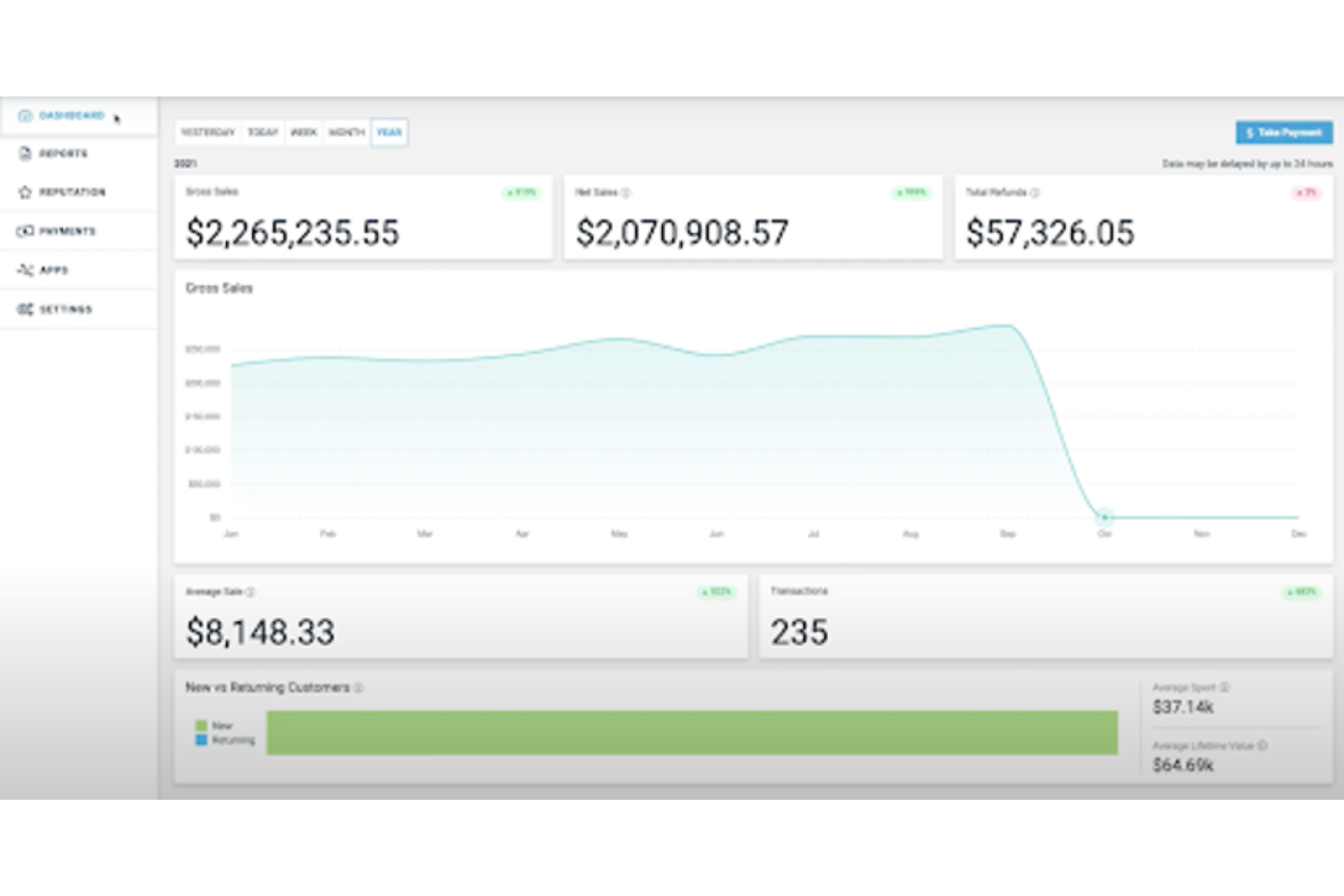
Payment Depot es una opción convincente para las empresas de comercio electrónico que buscan un proveedor confiable de pasarelas de pago. Su modelo de precios basado en suscripción ofrece una solución rentable para negocios con altos volúmenes de transacciones, permitiendo a los comerciantes pagar una tarifa mensual fija más un pequeño cargo por transacción sobre las tarifas al por mayor. Esta configuración reduce significativamente los costos de transacción en comparación con las estructuras tradicionales de tarifas basadas en porcentajes.
Por qué elegí Payment Depot: Su modelo de precios transparente elimina las tarifas ocultas, lo que facilita a las empresas predecir los gastos mensuales y gestionar sus presupuestos. Payment Depot también incluye una pasarela de pago gratuita en sus planes de suscripción, permitiendo a los comerciantes procesar transacciones en línea sin tarifas adicionales. Sus capacidades de terminal virtual, impulsadas por asociaciones como SwipeSimple, permiten pagos en línea, móviles y por teléfono sin complicaciones.
Características e integraciones destacadas de Payment Depot
Entre las características destacadas se encuentra su modelo de precios por suscripción, que ofrece una estructura de tarifa mensual fija que reduce significativamente los costos para negocios con alto volumen. La plataforma incluye una pasarela de pago gratuita, lo que ayuda a los comerciantes a procesar pagos en línea sin incurrir en tarifas adicionales de pasarela. Además, su interfaz intuitiva y las herramientas de informes facilitan el análisis de datos de ventas y la obtención de información útil para el negocio.
Las integraciones incluyen OpenCart, PrestaShop, 3dCart, BigCommerce, WooCommerce, Magento, Zen Cart, NCR, Authorize.Net, PayTrace, y más.

Ideal para integración minorista omnicanal
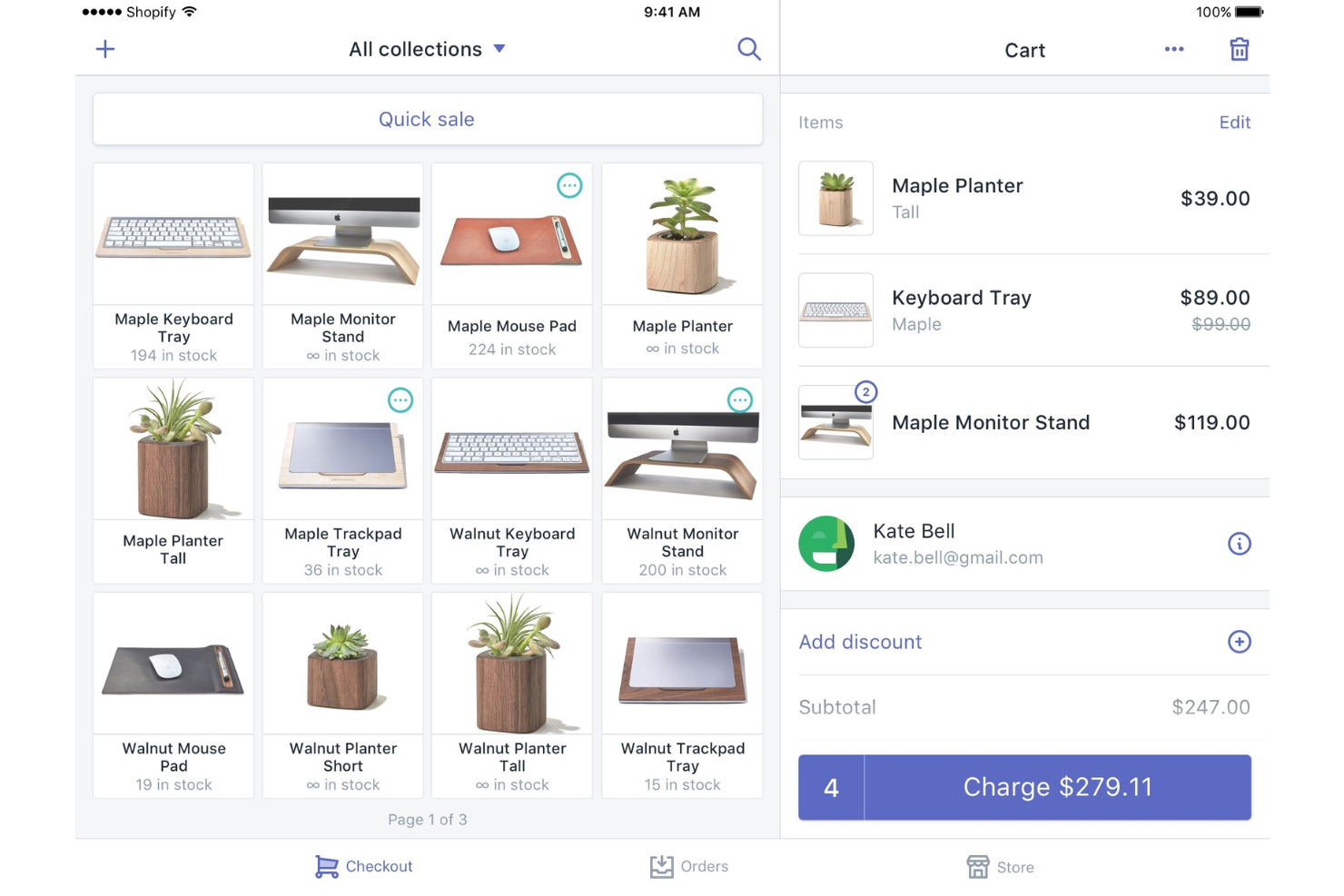
Shopify POS es un sistema de punto de venta versátil diseñado para unificar las ventas en línea y presenciales, facilitando operaciones minoristas sin contratiempos. Totalmente integrado con la plataforma de comercio electrónico de Shopify, permite a los comerciantes gestionar inventario, datos de clientes y pedidos en todos los canales. Ya sea que administres una tienda física, una tienda en línea o ambas, Shopify POS ofrece herramientas para agilizar las ventas, mejorar la experiencia del cliente y proporcionar análisis detallados para tomar mejores decisiones.
Por qué elegí Shopify POS: Shopify POS destaca por su integración perfecta con el ecosistema de comercio electrónico de Shopify, creando un panel unificado para gestionar ventas tanto en línea como fuera de línea. Este nivel de sincronización ahorra tiempo, elimina silos de datos y garantiza una experiencia de cliente coherente en todos los canales. Además, su interfaz de cuadrícula inteligente personalizable es una innovación que permite a los negocios adaptar el diseño del punto de venta para transacciones más rápidas y eficientes.
Características y integraciones destacadas de Shopify POS
Entre las características destacadas se encuentra su cuadrícula inteligente personalizable, que permite a los comerciantes organizar aplicaciones, productos y funciones de uso frecuente para acceder rápidamente durante las transacciones. Esta personalización mejora la eficiencia operativa y la productividad del personal.
El sistema también soporta una amplia gama de métodos de pago, asegurando que los clientes puedan pagar como prefieran, además de ofrecer funciones avanzadas de seguridad para proteger la información sensible. Por último, sus herramientas de análisis integradas proporcionan información útil sobre el rendimiento de ventas, ayudando a los negocios a tomar decisiones basadas en datos.
Las integraciones incluyen Shopify Payments, Shopify Shipping, Shopify Email, QuickBooks, Xero, Klaviyo, Google Analytics, Oberlo, Printful y Gift Cards & Loyalty Program de Smile.io. Estas integraciones amplían la funcionalidad en pagos, envíos, marketing, contabilidad y fidelización del cliente, haciendo de Shopify POS una solución completa para comercios minoristas.
New Product Updates from Shopify POS
Shopify POS Adds Local Delivery at Checkout
Shopify POS now lets staff create local delivery orders during checkout using existing delivery zones and rates, adding delivery details to carts and receipts. For more information, visit Shopify POS's official site.
 .
.
Stax
El mejor proveedor de pasarela de pagos para la gestión empresarial unificada
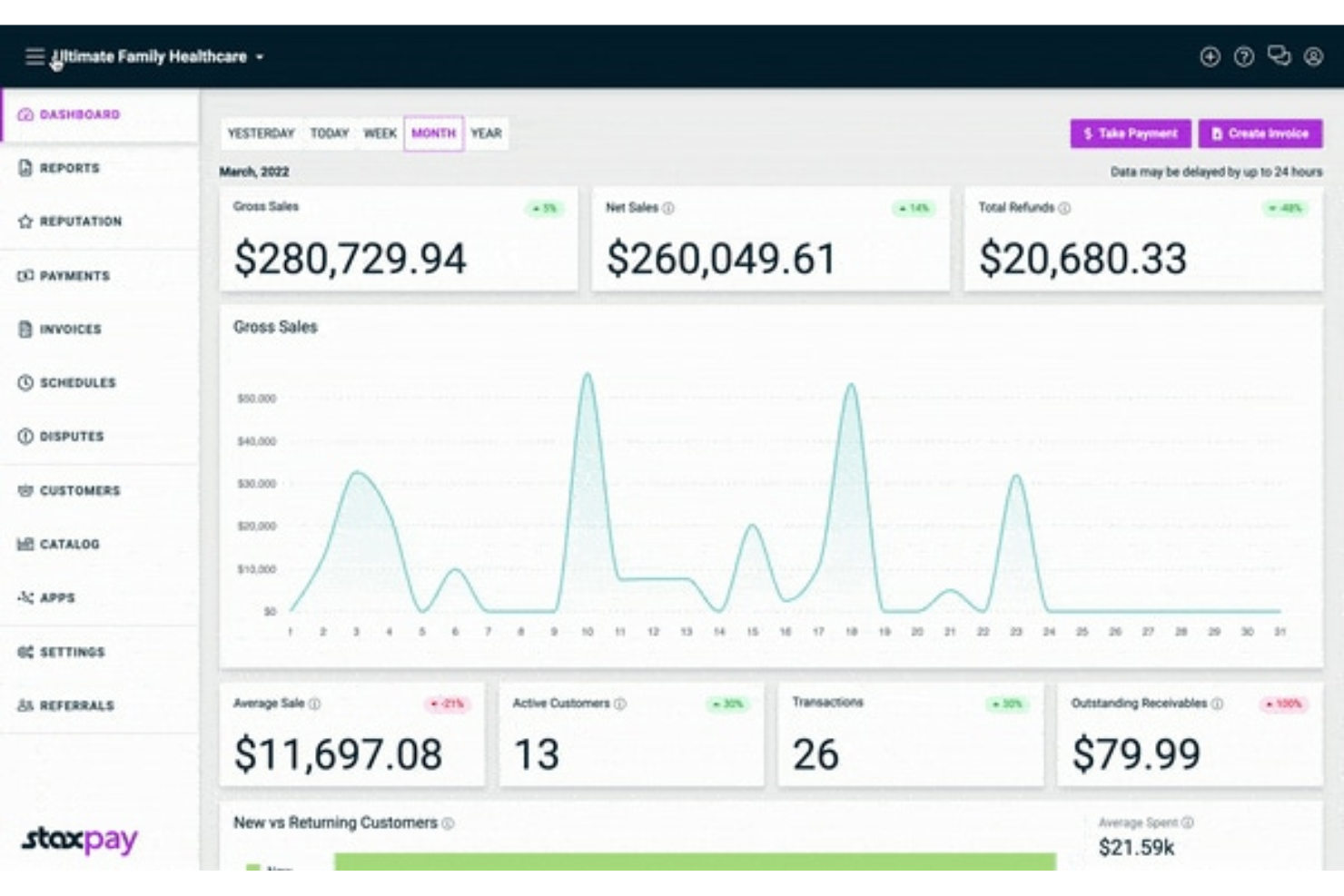
Stax Pay es una plataforma integral de gestión empresarial que simplifica los procesos de pago para las empresas, ofreciendo procesamiento seguro de pagos con tarjeta de crédito y una plataforma completa para operar y hacer crecer un negocio.
Por qué elegí Stax Pay: Una de las características más destacadas de Stax Pay es su enfoque unificado e integral para la gestión empresarial. Este enfoque no solo simplifica la administración de diversos métodos de pago, sino que también integra herramientas fundamentales como facturación, cobros y gestión de clientes en un solo panel de control. Esta integración reduce la necesidad de múltiples plataformas, lo que ayuda a optimizar las operaciones y minimizar errores.
Además, las sólidas soluciones de pago móvil de la plataforma la hacen ideal para empresas en movimiento. Los usuarios pueden aceptar pagos en cualquier lugar y momento a través de dispositivos móviles, con opciones de tarjeta deslizada, insertada o sin contacto. Stax Pay también ofrece compatibilidad con billeteras digitales como Apple Pay y Google Pay. Esta flexibilidad es crucial para las empresas modernas que operan tanto en línea como fuera de línea.
Características y integraciones sobresalientes de Stax Pay
Entre las características destacadas se encuentra su plataforma unificada y todo en uno que fusiona el procesamiento de pagos con la facturación, cobros y la gestión de clientes, reduciendo la necesidad de múltiples herramientas y simplificando las operaciones. La plataforma sobresale con soluciones de pago personalizables y sin necesidad de programación, como páginas de pago alojadas, enlaces, botones y códigos QR, permitiendo que las empresas ofrezcan una experiencia de pago flexible y fácil de usar. Además, las capacidades de datos y análisis de Stax Pay proporcionan información valiosa sobre el rendimiento financiero, ayudando a las empresas a tomar decisiones informadas.
Las integraciones incluyen varios métodos de pago en persona, en línea, ACH y móviles. Stax Pay también funciona sin inconvenientes con herramientas empresariales como Slack, Zapier, Microsoft Office, Google Suite y CRMs, mejorando la automatización y eficiencia del flujo de trabajo.
Pros and Cons
Pros:
- Panel de control completo y analíticas
- Gestión de pagos todo en uno
- Modelo de precios transparente
Cons:
- Soporte internacional limitado
- Posibles complejidades de integración con algunas herramientas

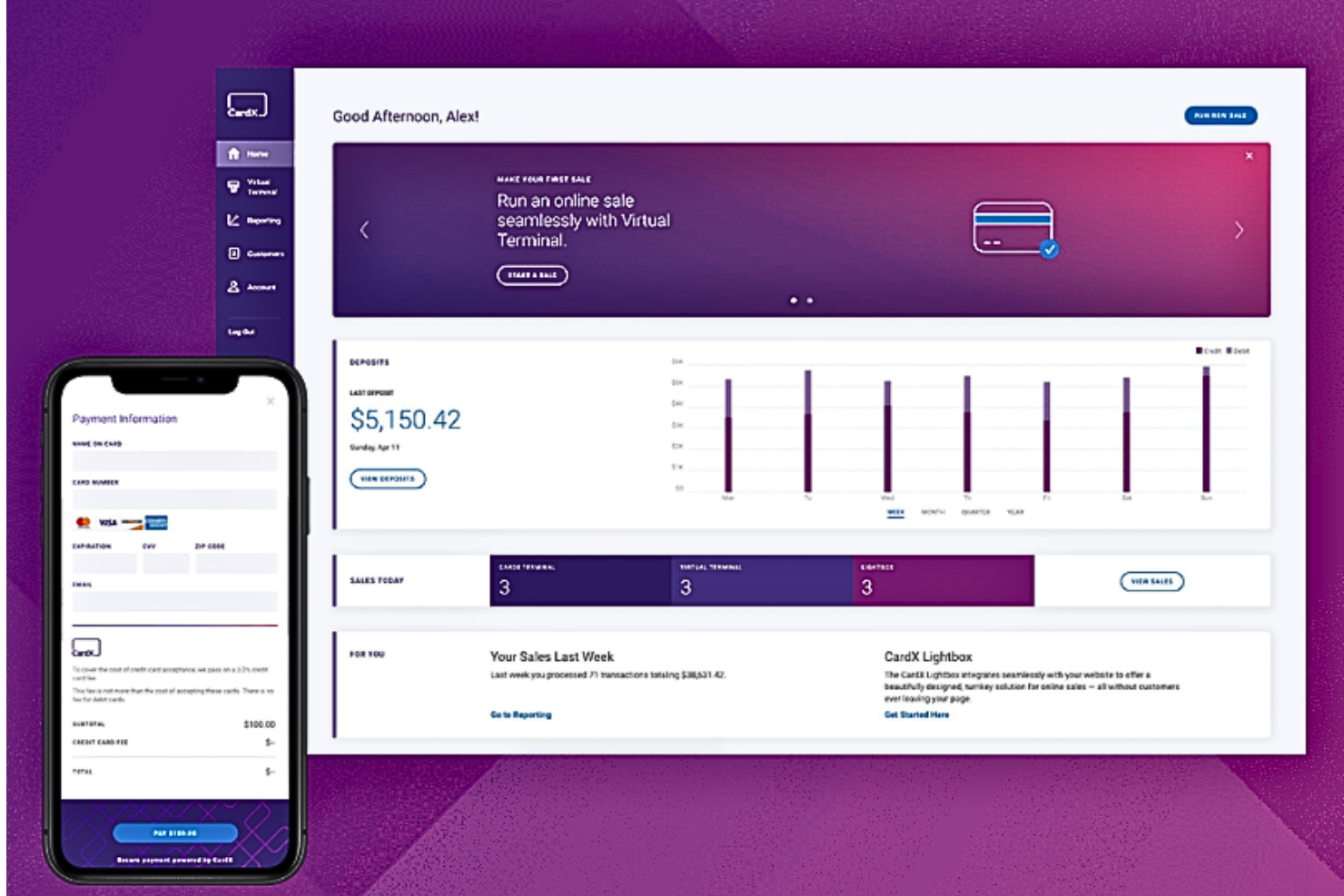
CardX by Stax es una herramienta de procesamiento de pagos que permite a las empresas aceptar pagos con tarjeta de crédito a un costo del 0%, garantizando el cumplimiento de las regulaciones sobre recargos.
Por qué elegí CardX by Stax: CardX by Stax destaca por su cumplimiento automatizado y su enfoque amigable para el cliente, asegurando que las empresas cumplan completamente con todas las normas y regulaciones. El software ofrece procesamiento de tarjetas de crédito al 0% de costo, lo que permite a las empresas mantener el 100% de sus ventas con tarjeta de crédito. Esta función es especialmente beneficiosa para empresas que buscan aumentar sus márgenes sin incurrir en comisiones de intercambio.
CardX by Stax ofrece soluciones de procesamiento de pagos en línea, en oficina y presencial, facilitando a las empresas completar transacciones con tarjeta de crédito. Además, ofrece una estructura de precios transparente sin cargos ocultos, permitiendo a los comerciantes transferir los costos de procesamiento a los clientes que eligen pagar con tarjeta de crédito.
Características destacadas e integraciones de CardX by Stax
Entre sus características destacadas se incluye su modelo de procesamiento de tarjetas de crédito al 0% de costo, el cual permite a las empresas trasladar las comisiones de procesamiento a los clientes mientras retienen el 100% de los ingresos por ventas. Las herramientas de cumplimiento automatizado de la plataforma garantizan una adhesión sin inconvenientes a las regulaciones de recargos, eliminando la incertidumbre para las empresas. Además, sus informes en tiempo real proporcionan información detallada sobre las transacciones, ayudando a las empresas a monitorear su desempeño y tomar decisiones basadas en datos.
Las integraciones incluyen Stax Pay, Stax Connect, Stax Bill, Stax Processing y Click to Pay, asegurando una experiencia fluida dentro del ecosistema de Stax para una gestión de pagos unificada.
Pros and Cons
Pros:
- Experiencias de marca y pago personalizables
- Cálculo automático de recargos
- Acceso a la API para integraciones avanzadas
Cons:
- Soporte internacional limitado
- Procesos de integración complejos

Swipesum
Ideal para acceder a las principales pasarelas de pago
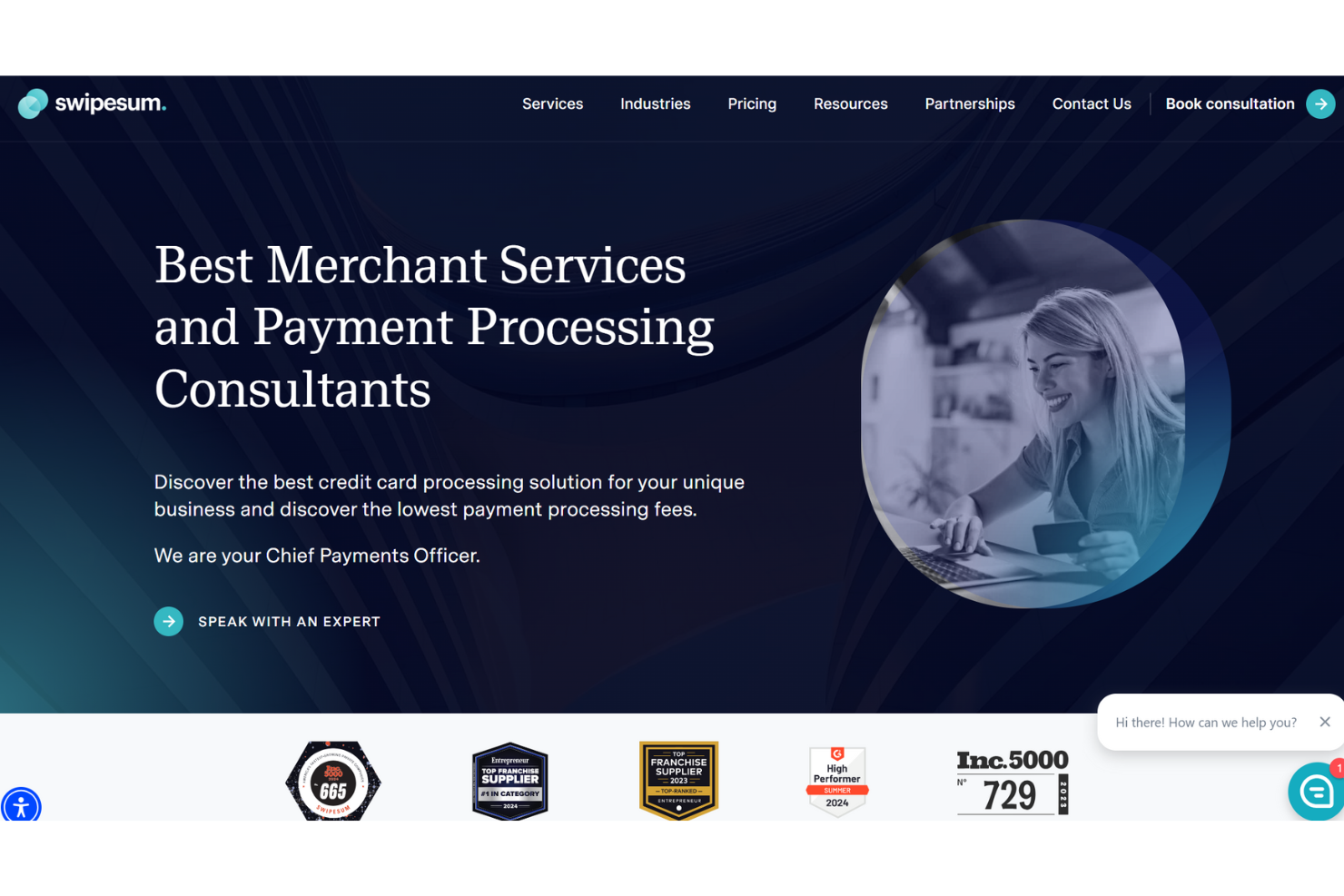
Swipesum es una solución consultiva de procesamiento de pagos que ayuda a empresas de todos los tamaños a encontrar la pasarela de pagos y el procesador adecuados para sus necesidades específicas. Al actuar como un 'Director de Pagos' para sus clientes, Swipesum ofrece un enfoque único para las soluciones de pago.
Por qué elegí Swipesum: Swipesum destaca como proveedor de pasarelas de pago gracias a su plataforma agnóstica respecto a los procesadores. Este enfoque permite a tu empresa acceder a casi cualquier pasarela o procesador líder a través de un único portal, facilitando la integración de las soluciones de pago que mejor se adapten a tus necesidades. El proceso de consulta de Swipesum está diseñado para ayudarte a determinar rápidamente la pasarela ideal y asegurar condiciones favorables, todo sin necesidad de gestionar plataformas o proveedores por separado.
Otra fortaleza es el compromiso de Swipesum de optimizar tus costos con funciones como Staitment, una herramienta impulsada por IA para la monitorización continua de tarifas y comisiones. Staitment audita los estados de cuenta mensuales de los comercios para identificar errores y cargos negociables, manteniendo tus tasas lo más bajas posible y ayudándote a gestionar disputas a medida que surjan. Ya seas una gran empresa o un negocio más pequeño, contar con este tipo de apoyo proactivo reduce el tiempo que necesitas invertir en la gestión de pagos.
Funciones destacadas e integraciones de Swipesum
Entre las funciones destacadas se encuentra su plataforma agnóstica respecto a los procesadores, que permite a las empresas acceder a casi cualquier pasarela o procesador de pagos a través de un único portal. Esta flexibilidad facilita personalizar las soluciones de pago para adaptarlas a las necesidades específicas. Swipesum también ofrece Staitment, una herramienta basada en IA para monitorizar las comisiones de los comercios, identificar errores y negociar mejores tarifas, ayudando a las empresas a reducir costos y gestionar disputas de manera eficiente.
Además, su equipo de ingeniería dedicado puede desarrollar flujos de trabajo e integraciones a medida, garantizando una funcionalidad fluida entre sistemas.
Sus integraciones incluyen Shopify, NetSuite, QuickBooks, Square, Stripe, PayPal, WooCommerce, BigCommerce, Magento, Revel, Lightspeed, Toast y Clover.
Pros and Cons
Pros:
- Análisis de estados de cuenta impulsado por IA para una gestión transparente de comisiones
- Permite gestionar devoluciones de cargos (chargeback) y prevenir fraudes
- El enfoque agnóstico respecto a los procesadores permite opciones flexibles de proveedores
Cons:
- Las soluciones personalizadas pueden tardar más en implementarse
- No es ideal para empresas que prefieren una configuración autoservicio

El mejor proveedor de pasarela de pago para facturación
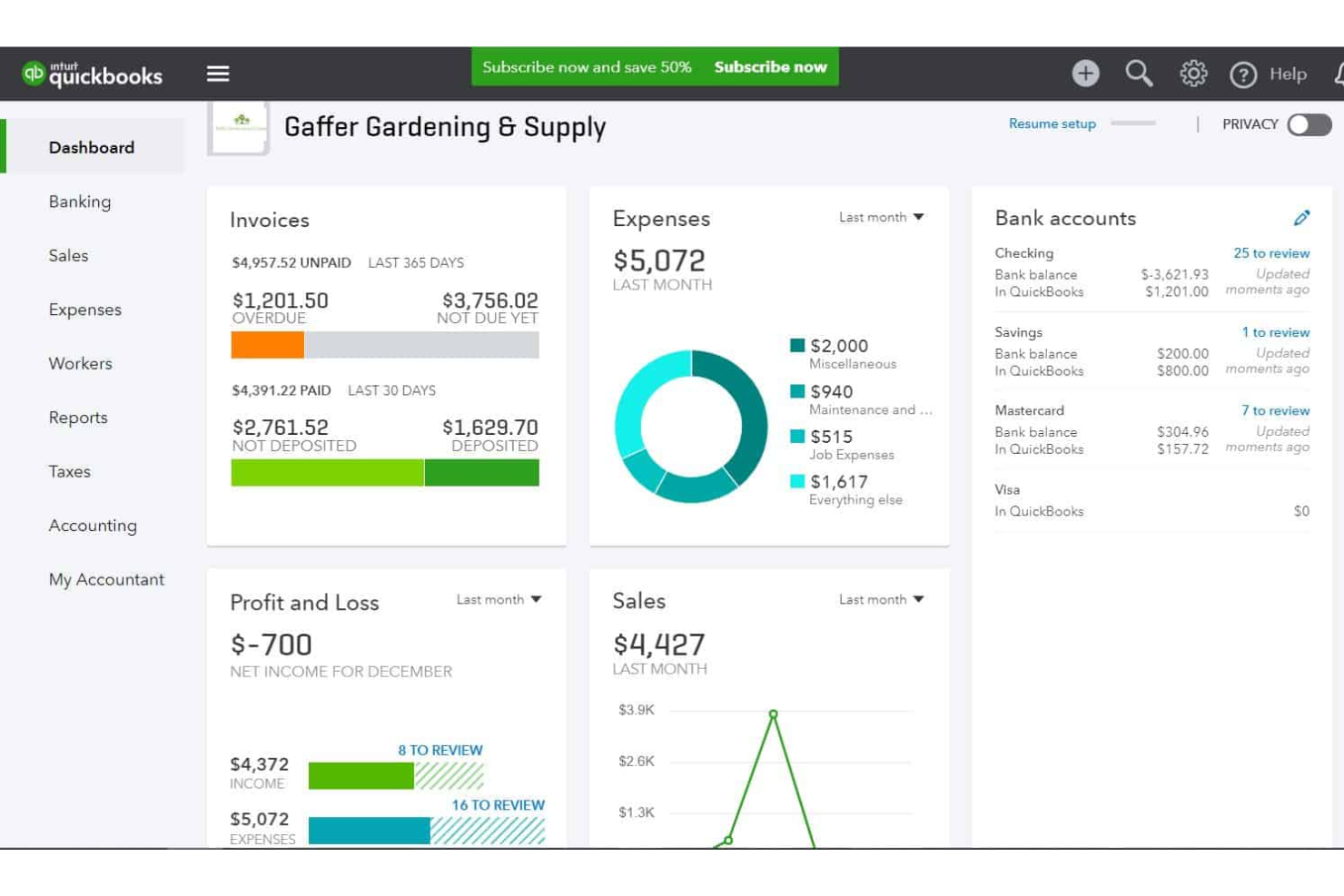
QuickBooks Online es un software de contabilidad diseñado específicamente para pequeñas y medianas empresas. Puede ayudarte a gestionar tus finanzas, controlar gastos, crear y enviar facturas, y procesar pagos.
Por qué elegí QuickBooks Online: El sistema de procesamiento de pagos del software rastrea los detalles de las transacciones para ayudarte a detectar errores. Esto también te ayuda a llevar un registro preciso. Puedes conectar tus cuentas bancarias a la plataforma, eliminando la necesidad de ingresar datos manualmente. El software también calcula automáticamente los impuestos sobre ventas y te permite cobrar a clientes y usuarios mediante factura.
Puedes crear facturas profesionales y personalizables utilizando el software, y enviarlas por correo electrónico o imprimiéndolas y enviándolas por correo postal. Para clientes habituales, puedes configurar facturas recurrentes para aliviar tu carga de trabajo. La función de seguimiento de gastos te permite clasificar y controlar los gastos de tu empresa, ayudándote a mantener registros financieros limpios y actualizados.
Funciones destacadas e integraciones de QuickBooks Online
Las funciones destacadas incluyen su capacidad para agilizar la gestión financiera a través de herramientas como el seguimiento de gastos y la gestión de recibos, que ayudan a las empresas a mantener registros financieros precisos y actualizados. El software también simplifica la facturación con plantillas personalizables y opciones de facturas recurrentes para clientes habituales, lo que ahorra tiempo y esfuerzo. Además, sus cálculos automáticos de impuestos sobre ventas garantizan cumplimiento y precisión, reduciendo el riesgo de errores en los informes fiscales.
Las integraciones incluyen más de 450 aplicaciones empresariales, como Square, Stripe, Insightly CRM, Mailchimp, Shopify, eBay, BigCommerce, Magento, Squarespace y Etsy.
Pros and Cons
Pros:
- Automatiza deducciones e informes de impuestos
- Se adapta específicamente a pequeñas empresas
- Nómina y contabilidad en el mismo software
Cons:
- No dispone de un plan gratuito para siempre
- No está disponible globalmente
New Product Updates from QuickBooks Online

QuickBooks Online Adds Two-Way Shopify Inventory Sync
QuickBooks Online adds two-way inventory sync with Shopify to keep stock levels aligned automatically across both platforms. This reduces manual reconciliation and keeps QuickBooks as the source of truth. For more information, visit QuickBooks Online’s official site.

Helcim
La mejor para procesamiento de pagos rentable
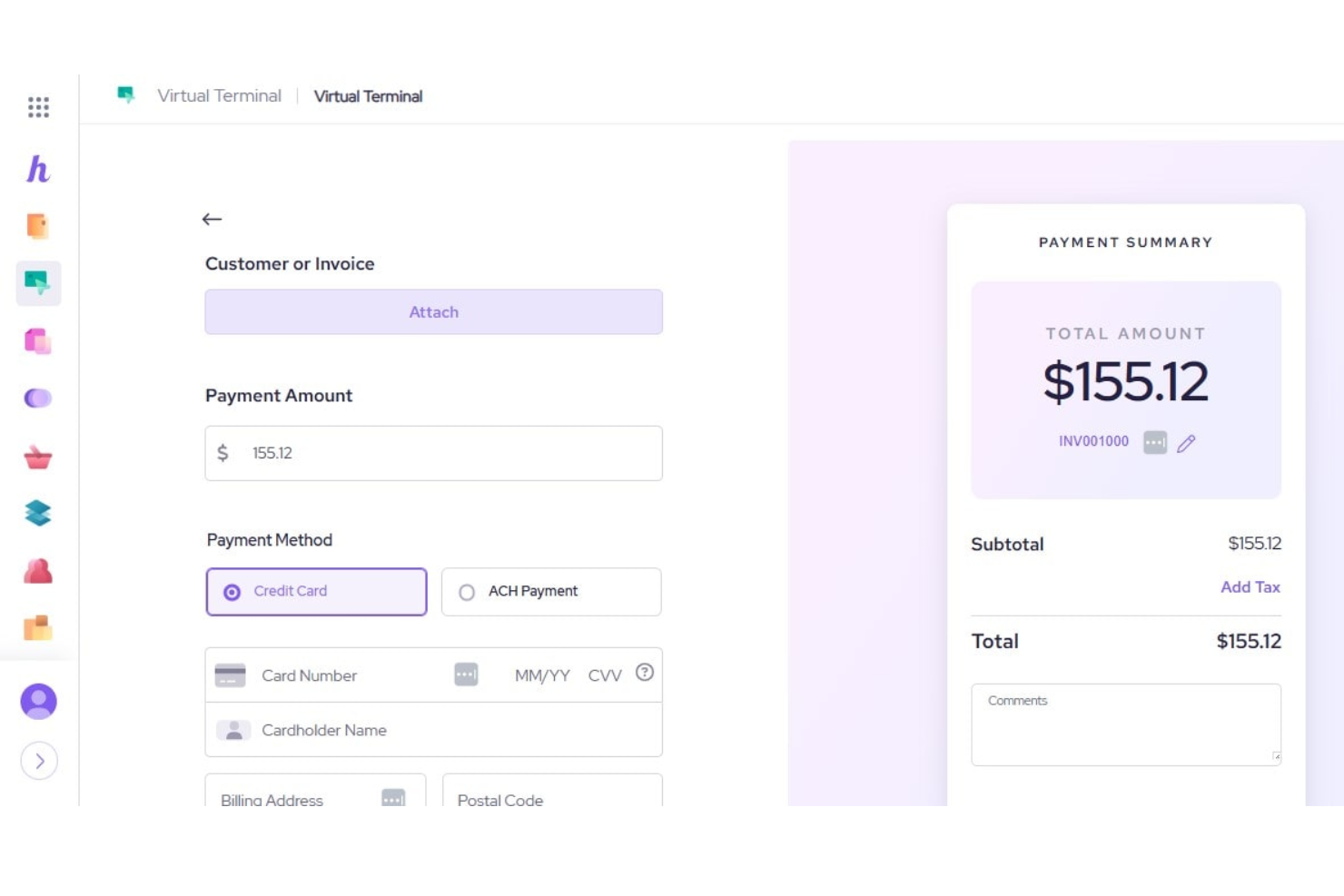
Helcim es una herramienta de soluciones de pago que ofrece opciones transparentes y asequibles para pequeñas y medianas empresas que aceptan pagos con tarjeta de crédito en persona o en línea. Con su énfasis en tarifas de procesamiento bajas y transparencia total, Helcim se destaca como la mejor herramienta para empresas que buscan una solución de procesamiento de pagos confiable y económica.
Elegí Helcim como proveedor de pasarela de pago por su compromiso con la asequibilidad y la transparencia en el procesamiento de pagos. Lo que diferencia a Helcim es su modelo de precios Interchange Plus, que puede traducirse en ahorros significativos para las empresas al ofrecer tarifas de procesamiento más bajas. Además, el programa Helcim Fee Saver presenta una oportunidad para procesar tarjetas de crédito gratis, lo cual es una oferta única en el mercado.
Más allá del simple procesamiento de pagos, Helcim ofrece un conjunto completo de servicios integrados, incluyendo una plataforma integral para comerciantes que admite una amplia gama de funcionalidades como facturación, gestión de clientes y control de inventario. Este enfoque de plataforma integral permite a las empresas gestionar varios aspectos de sus operaciones de manera fluida dentro de un solo ecosistema, aumentando la eficiencia y optimizando los flujos de trabajo.
Características e integraciones destacadas de Helcim
Entre las características destacadas se encuentra su modelo de precios transparente Interchange Plus, que ofrece tarifas de procesamiento más bajas y ahorros significativos en costos para las empresas. El programa Helcim Fee Saver destaca aún más al ofrecer la opción de procesamiento gratuito de tarjetas de crédito, una característica poco común en el mercado. Además, la plataforma integral para comerciantes de Helcim combina el procesamiento de pagos con herramientas para facturación, gestión de clientes y gestión de inventario, optimizando las operaciones empresariales dentro de un único ecosistema.
Las integraciones incluyen Xero, QuickBooks, WooCommerce, Foxy.io y Great Exposure, permitiendo a las empresas conectar Helcim con herramientas de contabilidad, comercio electrónico y otras soluciones operativas para flujos de trabajo sin inconvenientes.

Clover
Mejor para servicios de integración POS
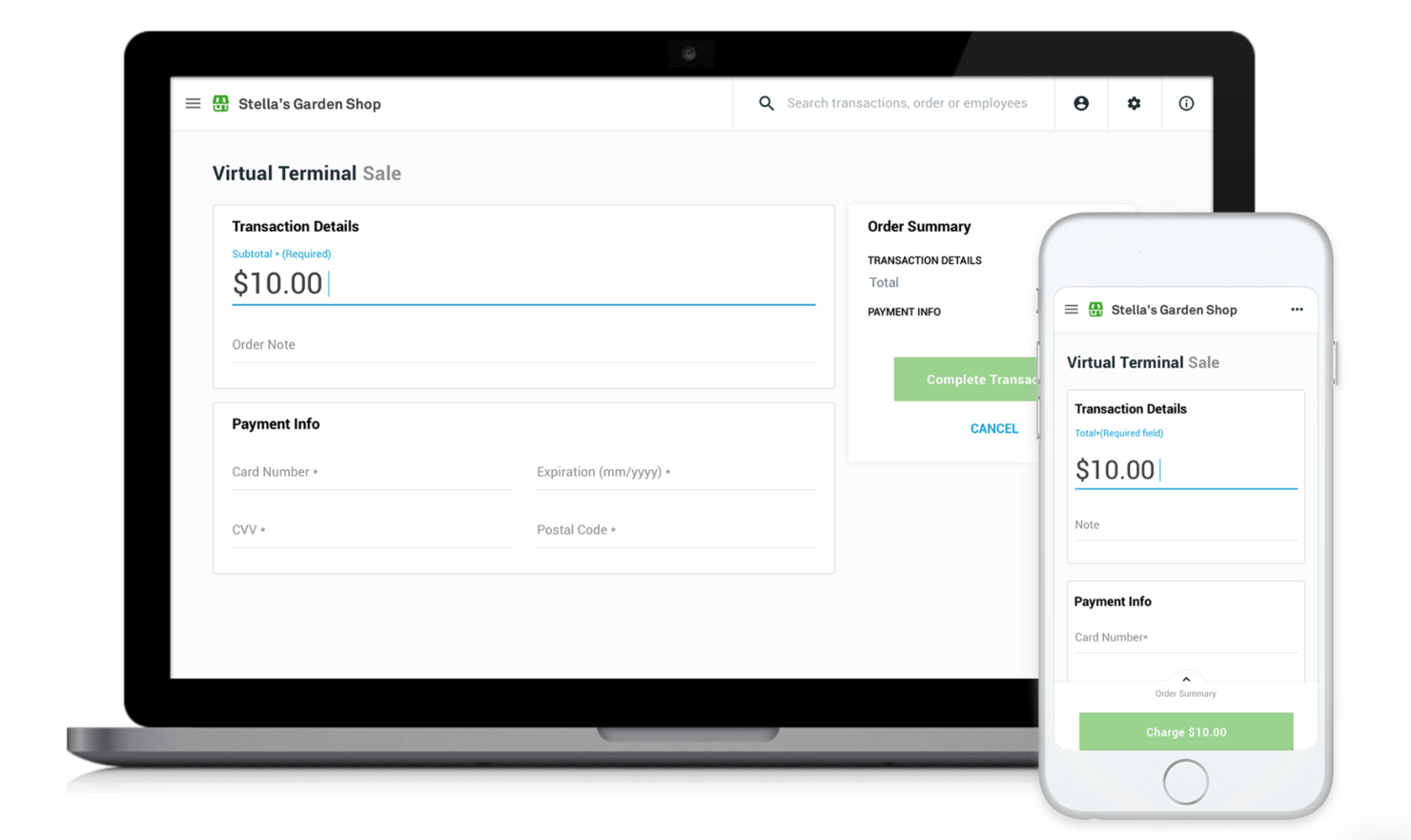
Clover es un sistema de punto de venta (POS) integral diseñado para satisfacer las necesidades de las pequeñas empresas a través de un ecosistema completo que incluye una robusta gama de soluciones de hardware y software, diseñado para cubrir una amplia variedad de necesidades empresariales, desde pequeños comercios hasta restaurantes concurridos.
Por qué elegí Clover: Elegí Clover porque ofrece un sistema POS completo que admite una variedad de métodos de pago, incluidos crédito, débito, tarjetas de regalo y pagos sin contacto. Esta capacidad es fundamental en el mercado actual, donde los consumidores esperan comodidad y flexibilidad en las opciones de pago.
El sistema te permite recibir pagos desde lectores de tarjetas, dispositivos POS y plataformas en línea. Incluso cuenta con un terminal virtual que puedes utilizar cuando estás lejos de un dispositivo físico. Esto te ayudará a procesar pagos rápidamente desde cualquier dispositivo con acceso a internet, como tu teléfono o computadora personal.
Características destacadas e integraciones de Clover
Entre las características destacadas se encuentra su capacidad para cubrir una amplia gama de necesidades empresariales mediante herramientas como el seguimiento de inventario, la gestión del personal, la integración de aplicaciones y los programas de fidelización de clientes. Las sólidas funciones de seguridad de Clover, como el cifrado de extremo a extremo y el cumplimiento de PCI, brindan tranquilidad a las empresas y sus clientes al garantizar la seguridad de las transacciones. La versatilidad de la plataforma la convierte en una excelente opción para comercios, restaurantes y otros entornos de pequeñas empresas.
Las integraciones incluyen una variedad de aplicaciones de terceros, tales como Mailchimp para automatización de marketing, DocuSign para firmas electrónicas, Shopify para comercio electrónico, Gusto para nómina y recursos humanos, y Xero para contabilidad. Estas integraciones permiten a las empresas gestionar operaciones de marketing, RR.HH. y flujos financieros perfectamente dentro del sistema de Clover.
Pros and Cons
Pros:
- Diseño moderno
- Opciones de tarjetas de regalo
- Atención al cliente 24/7
Cons:
- No es adecuado para todo tipo de negocios
- El sistema de precios puede ser difícil de entender

Las mejores soluciones de pago personalizables adaptadas a las necesidades específicas de cada negocio

Merchant One es una solución de procesamiento de pagos que admite una variedad de sectores comerciales, incluidos comercio minorista, restaurantes, hotelería y comercio electrónico. Con un enfoque en la financiación al día siguiente y sistemas robustos de punto de venta (POS), proporciona herramientas de pago confiables para mantener el funcionamiento fluido de los negocios.
Por qué elegí Merchant One: Merchant One destaca por su compromiso con la inclusión y la eficiencia. Sus altas tasas de aprobación para negocios de diversos sectores, incluidos los de alto riesgo, lo convierten en una opción accesible para comerciantes que podrían tener dificultades para obtener procesamiento de pagos tradicional. La financiación al día siguiente de la plataforma garantiza que los negocios mantengan un flujo de efectivo constante, y su soporte personalizado a través de administradores de cuentas dedicados la distingue, proporcionando orientación experta desde la configuración hasta la optimización.
Aspectos y integraciones destacados de Merchant One
Entre sus características destacadas se incluye la capacidad de financiación al día siguiente, que asegura que los comercios reciban sus pagos rápidamente para mantener un flujo de efectivo constante. La plataforma también admite altas tasas de aprobación para empresas, incluidas aquellas en industrias de alto riesgo, permitiendo que más comerciantes accedan a un procesamiento de pagos confiable. Además, Merchant One ofrece administradores de cuentas dedicados que guían a los negocios desde la configuración, optimizan la configuración de pagos y proporcionan soporte continuo para una experiencia sin complicaciones.
Las integraciones incluyen Authorize.net, Payeezy Gateway, Payflow Pro, Paytrace Gateway, USAePay, Aloha, Micros, Maitre’D, 1ShoppingCart, BigCommerce, Ecwid, Fishbowl, Magento, PrestaShop, Salesforce y muchos más. Su amplia compatibilidad asegura una conexión fluida con plataformas de comercio electrónico, soluciones de carrito de compras y herramientas de ventas para un proceso de pago optimizado.

Stripe
Mejor proveedor de pasarelas de pago para gestionar transacciones recurrentes
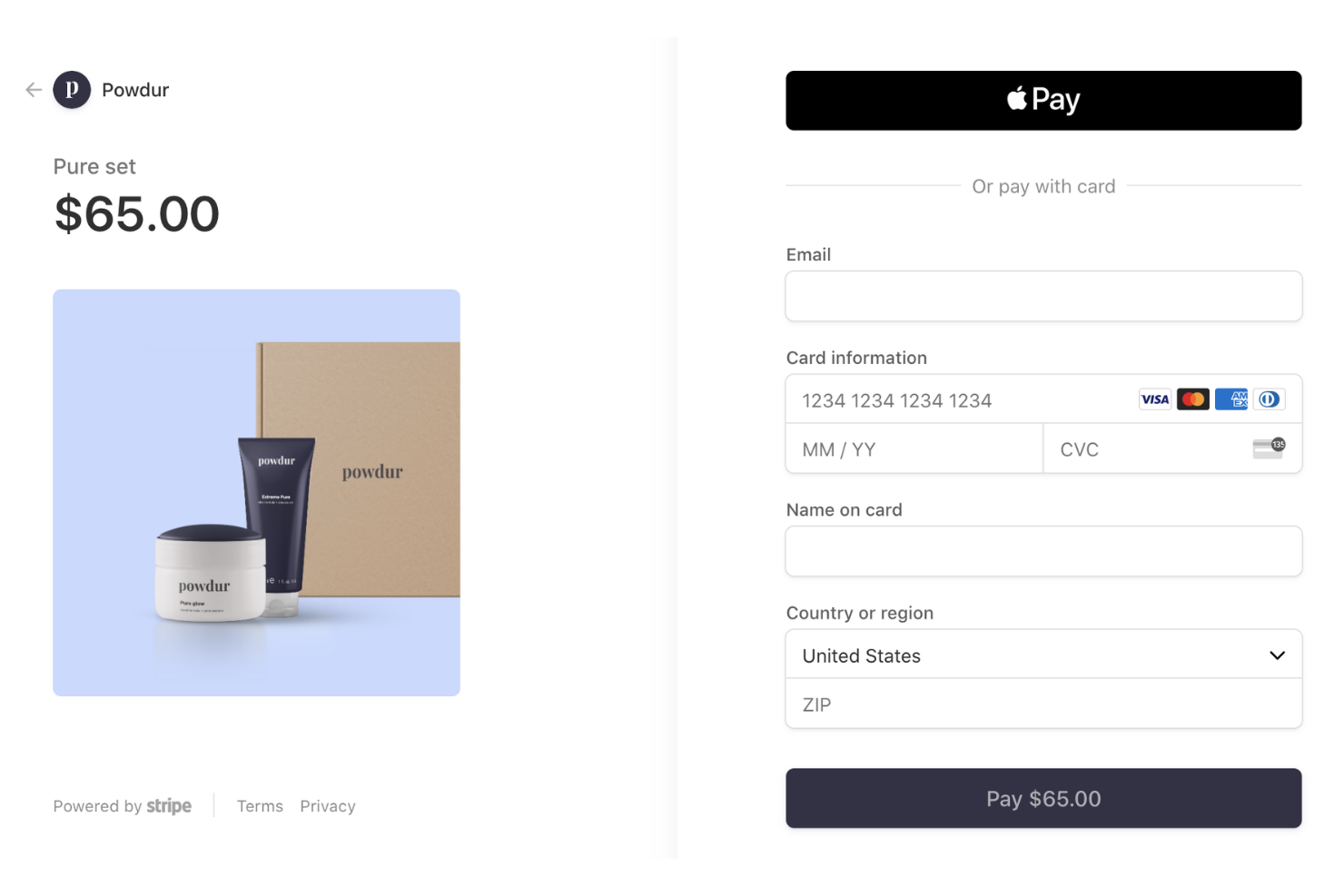
Stripe es una plataforma de procesamiento de pagos en línea que proporciona herramientas y servicios que permiten a empresas de todos los tamaños aceptar pagos en línea de forma rápida y segura, incluyendo tarjetas de crédito y débito, monederos digitales y transferencias bancarias. Las empresas utilizan las soluciones flexibles de procesamiento de pagos de Stripe en diversos sectores, como el comercio electrónico, los servicios de suscripción y los mercados bajo demanda.
Por qué elegí Stripe: La interfaz de usuario intuitiva de Stripe, su API pensada para desarrolladores y su documentación detallada facilitan que los equipos comiencen a procesar pagos rápidamente. Lo que diferencia a Stripe es su capacidad para gestionar fácilmente transacciones recurrentes, permitiendo que las empresas con modelos de suscripción automaticen el procesamiento de pagos y reduzcan los fallos de cobro.
Stripe es ideal para startups y desarrolladores que desean incorporar procesamiento de pagos en sus aplicaciones web o móviles. Sus características destacadas incluyen una amplia gama de opciones de pago, entre ellas tarjetas de crédito y débito, monederos digitales, transferencias bancarias y compatibilidad con más de 135 divisas.
La API de Stripe, amigable para desarrolladores, y su documentación completa hacen que los equipos puedan empezar a procesar pagos rápidamente. Además, las robustas funciones de gestión de suscripciones de Stripe, incluido el cobro automático, facilitan que empresas con modelos de ingresos por suscripción gestionen fácilmente transacciones recurrentes.
Características y integraciones destacadas de Stripe
Las características incluyen procesamiento de pagos ACH, facturación y generación de facturas, gestión de pagos con tarjeta de crédito, detección de fraudes, pagos presenciales, compatibilidad con más de 135 divisas y aplicaciones móviles para iOS y Android.
Las integraciones incluyen DocuSign, FreshBooks, Gmail, Google Pay, Mailchimp, Microsoft Excel, monday.com, Rippling, Shopify, Slack, WordPress y otras opciones de software. También puedes conectar Stripe a una cuenta de pago de Zapier para desbloquear integraciones adicionales, si lo necesitas.
Pros and Cons
Pros:
- Software fácil de usar
- Utiliza herramientas avanzadas de detección de fraude
- Soporta más de 135 divisas
Cons:
- Altas comisiones por contracargo
- Soporte telefónico limitado
Otras opciones de pasarelas de pago
No tenía espacio para incluir reseñas completas de cada uno de estos proveedores adicionales de pasarelas de pago, pero ofrecen funciones y características interesantes que podrían ser exactamente lo que necesitas. Te los presentamos para que los tengas en cuenta:
- EBizCharge
Mejor para negocios B2B
- Braintree
Mejor proveedor de pasarela de pago para negocios de comercio electrónico
- Payoneer
Mejor proveedor de pasarela de pago para empresas globales y freelancers
- Shift4
Mejor proveedor de pasarelas de pago para empresas de todos los tamaños
- 2Checkout
Mejor proveedor de pasarela de pagos para negocios basados en suscripción
- Skrill
Mejor proveedor de pasarelas de pago para transacciones seguras y rápidas
- BlueSnap
Mejor proveedor de pasarela de pagos para transacciones transfronterizas
- Dwolla
Mejor proveedor de pasarela de pago para transferencias ACH
- Authorize.net
Mejor proveedor de pasarela de pagos para un plan todo en uno
- WePay
Mejor proveedor de pasarela de pago para socios de plataformas de WePay


Cómo Evalúo los Proveedores de Pasarelas de Pago
Evalúo las pasarelas de pago en dos niveles: los requisitos indispensables que califican una herramienta—aceptación omnicanal, cumplimiento PCI, integraciones POS—y los diferenciadores como la velocidad de liquidación y las herramientas antifraude.
Funcionalidad Básica (Condiciones Esenciales Para Esta Lista)
Al seleccionar herramientas para mi lista, califico cada una en una escala del 0 (no ofrece la funcionalidad) al 5 (sobresale en esta área) para cada funcionalidad básica que se menciona a continuación. Luego, calculo el puntaje total de la herramienta en porcentaje. Cada herramienta debe lograr una puntuación total mínima del 65% para ser considerada en la inclusión.
- Aceptación de Pagos Multicanal: Verifico si una pasarela puede procesar transacciones en checkout online, terminales en tienda y dispositivos móviles—idealmente mediante una sola integración y no con configuraciones separadas por canal.
- Soporte de Diversos Métodos de Pago: Más allá de las principales marcas de tarjetas, busco cobertura de billeteras digitales (Apple Pay, Google Pay) y métodos alternativos como "compra ahora y paga después" o métodos locales relevantes para compradores minoristas.
- Cumplimiento PCI y Prevención de Fraude: El nivel de certificación PCI DSS de cada proveedor es importante, así como si la tokenización, encriptación y herramientas de puntuación de fraude como 3D Secure vienen integradas o requieren complementos.
- Integraciones con POS y Comercio Electrónico: Los equipos de retail rara vez gestionan los pagos de forma aislada, por lo que evalúo conectores preconstruidos con plataformas como Shopify, Magento, WooCommerce, Lightspeed y sistemas comunes de ERP o contabilidad.
- Procesamiento Multidivisa y Global: Para los comercios que venden internacionalmente, reviso la cantidad de monedas soportadas, la disponibilidad de redes de adquirentes locales y cómo se manejan la liquidación transfronteriza y el cambio de divisas.
- Informes y Conciliación: Evalúo si la pasarela ofrece paneles en tiempo real, seguimiento de liquidaciones y herramientas de exportación que los equipos financieros del retail puedan usar para conciliar transacciones entre canales.
Una vez tengo una lista de herramientas que cumplen estos criterios, considero lo que diferencia a cada plataforma.
Factores Diferenciadores (Qué Distingue a los Proveedores)
Así es como comparo y contrasto diferentes proveedores:
Características Destacadas
El enrutamiento inteligente de pagos es importante—las pasarelas que seleccionan dinámicamente el mejor adquirente por transacción pueden aumentar las tasas de autorización durante eventos de alto volumen como las ventas estacionales. También reviso las herramientas de gestión de contracargos, especialmente los flujos de disputa automatizados y alertas que ayudan a los minoristas a responder antes de que se cumpla el plazo. Un único "customer vault" aporta valor real al almacenar datos de pago tokenizados en todos los canales, de modo que un cliente que guarda una tarjeta online pueda pagar más rápido en la tienda física.
Más Allá de las Funcionalidades
La transparencia en la estructura de precios es fundamental—reviso si una pasarela desglosa claramente las comisiones de intercambio, recargos por transacciones internacionales y los costos por contracargos, lo que ayuda a los equipos de retail a anticipar correctamente los gastos de procesamiento. También presto atención a la velocidad de liquidación, ya que un minorista con márgenes ajustados durante la temporada alta necesita financiación para el día siguiente o el mismo día, no una retención de una semana. Evalúo el soporte para la implementación, especialmente la calidad de la documentación para desarrolladores y el acceso al "sandbox", lo cual indica qué tan fluida será realmente la integración.
Cómo elegir soluciones de pasarelas de pago
Elegir una pasarela de pago es una decisión estratégica. Si eliges mal, tendrás que enfrentarte a procesos de pago fallidos y clientes enfadados. Esta tabla presenta los criterios imprescindibles, los aspectos que debes evaluar y por qué son importantes para que puedas tomar una decisión sólida.
| Criterio | Qué debes buscar | Por qué es importante |
|---|---|---|
| Necesidades y volumen del negocio | Gestiona tu volumen medio y máximo de transacciones. Admite pagos puntuales y por suscripción. | Evita ralentizaciones o interrupciones durante los picos de actividad. Asegúrate de que la pasarela crece al ritmo de tu negocio. |
| Integración y personalización | Plugins nativos, API REST, SDK, compatibilidad con comercio sin interfaz y opciones de proceso de pago de marca blanca. | Ponte en marcha rápidamente. Adapta la experiencia de pago para que coincida con tu marca y tu conjunto tecnológico. |
| Seguridad y prevención del fraude | Cifrado AES-256, tokenización, cumplimiento de PCI DSS y filtros antifraude basados en aprendizaje automático. | Protege tus ingresos y a tus clientes. Reduce las devoluciones de cargos y los problemas de cumplimiento normativo. |
| Transparencia de precios | Desglose claro de las tarifas de suscripción frente a las tarifas por transacción; tarifas de intercambio más margen frente a tarifas combinadas; sin complementos ocultos. | Conoce tu coste real. Negocia descuentos por volumen. Evita tarifas sorpresa que reduzcan tus márgenes. |
| Escalabilidad y facturación por suscripción | Compatibilidad con facturación recurrente, múltiples divisas, descuentos por volumen e infraestructura nativa de la nube. | Mantén el ritmo durante los picos estacionales. Implementa o amplía modelos de suscripción sin complicaciones. |
| Asistencia y garantías de SLA | Canales de asistencia disponibles las 24 horas, los 7 días de la semana, gestores de cuentas dedicados y SLA de disponibilidad. | Cuando los pagos fallan, necesitas ayuda de inmediato. Minimiza el tiempo de inactividad y las ventas perdidas. |
Al seleccionar una pasarela de pago, no pases por alto estos procesadores de pagos para organizaciones sin ánimo de lucro diseñados para organizaciones benéficas. Y si Stripe te provoca rechazo, hemos recopilado las mejores alternativas a Stripe que puedes considerar.
Tendencias de las pasarelas de pago que debes seguir
Los pagos nunca se quedan quietos. Estos cambios transformarán las experiencias de pago y tus resultados finales.
- Pagos en tiempo real y liquidaciones instantáneas. Los fondos se liquidan en segundos, no en días, lo que mejora el flujo de caja y reduce los quebraderos de cabeza de la conciliación.
- Los monederos digitales como centros de identidad. Apple Pay y Google Pay evolucionan más allá de los pagos para convertirse en identificadores digitales seguros; espera una integración más estrecha con los programas de fidelización y la autenticación.
- La consolidación institucional del pago a plazos. Los bancos y las grandes entidades financieras respaldan el pago aplazado, reduciendo los costes y ampliando las opciones más allá de los artículos de alto precio.
- Los pagos con criptomonedas ganan fuerza. Bitcoin, Ether, las monedas estables e incluso las monedas digitales de los bancos centrales ofrecen redes transfronterizas de bajo coste para los compradores preocupados por la privacidad.
- Unificación omnicanal. Un único flujo de pago para la web, la tienda física, la aplicación móvil y el comercio en redes sociales. Se acabaron las plataformas de pago aisladas y los datos fragmentados.
- Flujos biométricos y sin contraseña. La huella dactilar, el reconocimiento facial e incluso los pagos por voz reducen la fricción y el fraude. Tus clientes apenas lo notarán, hasta que prueben cualquier otra cosa.
- Finanzas integradas y plataformas de marca blanca. Las marcas no bancarias están lanzando sus propios botones de «compra» y servicios de monedero, convirtiendo el proceso de pago en un punto de contacto con la marca.
- Pagos ecológicos y sostenibilidad. El procesamiento neutro en carbono, los recibos electrónicos predeterminados y los recargos con conciencia ecológica te permiten alinear los pagos con tus objetivos ESG.
Mantente al día de estas tendencias y tu tecnología de pago parecerá vanguardista, no anticuada.
¿Qué es un proveedor de pasarelas de pago?
Los proveedores de pasarelas de pago son servicios que transmiten de forma segura los datos de las tarjetas de crédito, los tokens de los monederos digitales y las transferencias bancarias entre tu proceso de pago y las redes financieras.
Gestionan el cifrado, la tokenización y los filtros antifraude personalizables para que puedas olvidarte de los quebraderos de cabeza relacionados con el cumplimiento normativo.
Los comercios minoristas, los mercados digitales y las empresas basadas en suscripciones los utilizan para aceptar todos los métodos de pago imaginables y crecer sin preocuparse por los aspectos técnicos.
Con integraciones sencillas mediante API y complementos, modelos de precios transparentes y compatibilidad con múltiples divisas, mantienen tus ingresos en circulación y a tu equipo de desarrollo satisfecho.
Características clave de las pasarelas de pago que debes considerar
Una pasarela sólida es un conjunto completo de herramientas para tu proceso de pago. Esto es lo que debes buscar:
- Métodos de pago versátiles. Tarjetas, monederos electrónicos (Apple/Google Pay), transferencias ACH e incluso criptomonedas: ofrece a los clientes todas las formas posibles de pagar.
- Capacidades de integración. Complementos nativos, API REST, SDK y compatibilidad con arquitecturas sin interfaz: intégrala en Shopify, WooCommerce, tu plataforma personalizada o las tres sin tener que reescribir el código.
- Medidas de seguridad. El cifrado AES-256, la tokenización, el cumplimiento de PCI DSS, 3D Secure y los filtros antifraude basados en aprendizaje automático mantienen bajo control los datos y las multas.
- Funciones de suscripción y facturación. Facturación recurrente, facturas automatizadas y reglas de reintento personalizables: ideales para membresías, SaaS o cualquier modelo que prospere gracias a unos ingresos recurrentes mensuales predecibles.
- Herramientas de prevención del fraude. Motores de reglas personalizados, controles de frecuencia, bloqueo geográfico y alertas en tiempo real: detén a los defraudadores sin bloquear a los clientes legítimos.
- Personalización y marca. Procesos de pago de marca blanca, campos personalizados y kits de herramientas para desarrolladores: haz que cada flujo de pago parezca parte de tu marca.
- Tipos de pasarelas. Autohospedada frente a redirección (no alojada) frente a SaaS completamente alojado: elige el equilibrio entre control y cumplimiento normativo.
- Compatibilidad móvil e internacional. Proceso de pago adaptable, pagos dentro de la aplicación, métodos locales, conversión de divisas y cumplimiento normativo global para las ventas transfronterizas.
- Informes, análisis e interfaz. Los paneles intuitivos ofrecen de un vistazo detalles de las transacciones, tendencias de ventas, tasas de reembolso e información sobre los clientes.
- Escalabilidad y rendimiento. Arquitectura nativa de la nube con escalado automático, equilibrio de carga y autorizaciones en menos de un segundo: sin ralentizaciones cuando el tráfico alcanza su punto máximo.
- Gestión de contracargos. Las herramientas integradas para disputas, la recopilación de pruebas y el seguimiento del ciclo de vida te ayudan a ganar más reversiones.
Principales ventajas de los buenos proveedores de pasarelas de pago
Las pasarelas de pago hacen mucho más que mover dinero. Aumentan la confianza de los clientes, reducen las pérdidas por fraude y te proporcionan información en tiempo real, lo que permite tomar mejores decisiones y agilizar las operaciones en todo momento.
- Seguridad sólida y prevención del fraude. El cifrado AES-256, la tokenización y los filtros basados en aprendizaje automático protegen tus ingresos frente a delincuentes y sanciones por incumplimiento.
- Mayor conversión gracias a métodos de pago versátiles. Tarjetas, monederos electrónicos, ACH e incluso criptomonedas: ofrece todas las formas de pago y observa cómo disminuye el abandono del carrito.
- Integración fluida para operaciones más ágiles. Los complementos nativos, las API REST, los SDK y la compatibilidad sin interfaz se integran con Shopify, WooCommerce o tu tecnología personalizada sin complicaciones de código.
- Precios transparentes y control de costes. Los modelos de intercambio más margen o de tarifa fija, los planes de suscripción frente a los planes por transacción y las opciones de descuentos por volumen eliminan las desagradables sorpresas en las tarifas.
- Rendimiento escalable que crece contigo. La infraestructura nativa de la nube se escala automáticamente durante los picos de tráfico, mientras que las herramientas de suscripción integradas aseguran un MRR fiable.
- Ingresos recurrentes automatizados. La facturación recurrente, las reglas de reintento y la gestión de cobros atrasados te liberan de los problemas relacionados con los pagos tardíos.
- Experiencia de usuario del proceso de pago adaptada a tu marca. Las páginas de marca blanca, los campos personalizados y los kits de herramientas para desarrolladores mantienen el flujo de pago claramente asociado a tu marca.
- Alcance global simplificado. La compatibilidad con múltiples divisas, los métodos de pago locales y el cumplimiento normativo integrado facilitan las ventas transfronterizas sin complicaciones adicionales.
- Análisis útiles de un vistazo. Los paneles repletos de datos de transacciones, métricas de reembolsos y tendencias de ventas impulsan estrategias más inteligentes.
- Comodidad prioritaria en dispositivos móviles. Los procesos de pago adaptables y los pagos dentro de la aplicación ofrecen una experiencia fluida en cualquier dispositivo.
Costes y precios de los proveedores de pasarelas de pago
Los precios pueden parecer un campo minado: los planes mensuales, las tarifas por transacción y los cargos ocultos pueden acabar con tus márgenes. Encontrar servicios de procesamiento de tarjetas de crédito económicos se vuelve esencial para las empresas preocupadas por los costes. Esta tabla presenta cuatro niveles de precios habituales para que puedas identificar rápidamente cuál se adapta a tu presupuesto y a tu volumen de transacciones.
| Tipo de plan | Cuota mensual | Tarifa por transacción (media) | Ideal para |
|---|---|---|---|
| Pago por uso | $0 | 2.9% + $0.30 por transacción | Microtiendas, tiendas temporales y actividades secundarias |
| Inicial | $15–30/mes | 2.6% + $0.25 por transacción | Pequeñas tiendas en línea (volumen de $5k–50k/mes) |
| Crecimiento | $50–100/mes | 2.4% + $0.20 por transacción | SMB en expansión ($50k–500k/mes) |
| Empresarial | Precios personalizados | Tarifas de intercambio más margen negociadas | Marcas de gran volumen y globales |
Aspectos clave
- Suscripción frente a pago por uso. Las cuotas mensuales fijas limitan tus costes; los planes basados únicamente en transacciones permiten mantener ajustados los gastos de las empresas emergentes.
- Intercambio más margen frente a tarifas combinadas. El modelo de intercambio más margen muestra las tarifas mayoristas más el margen de beneficio. El modelo combinado simplifica la facturación, pero puede ocultar márgenes adicionales.
- Puntos problemáticos de las tarifas ocultas. Presta atención a los recargos transfronterizos, las tarifas de conversión de divisas, las tarifas por contracargos o reembolsos, los cargos por cumplimiento de PCI y las tarifas de los extractos.
- Descuentos por volumen y negociación. Si procesas grandes volúmenes, negocia niveles de tarifas personalizados, la exención de las tarifas de configuración y asistencia prioritaria.
- Plazos de liquidación y retrasos en los pagos. La disponibilidad más rápida de los fondos mejora el flujo de caja; conoce el calendario de pagos de cada proveedor.
- Asistencia y SLA. La asistencia 24/7, los gestores de cuentas asignados y las garantías de disponibilidad mantienen saludable tu flujo de ingresos.
Preguntas frecuentes sobre pasarelas de pago
A medida que sigas aprendiendo sobre los proveedores de pasarelas de pago, es posible que te encuentres con algunas preguntas habituales. Estas son algunas de las preguntas más frecuentes.
¿Con qué rapidez liquidan los fondos las pasarelas de pago y qué afecta a los plazos de pago?
La autorización se produce al instante, pero la liquidación (cuando los fondos llegan a tu banco) puede tardar desde el mismo día hasta tres días laborables. El plazo depende de tu nivel como comerciante, de los horarios de procesamiento de tu banco y de cualquier retención aplicada a transacciones de alto riesgo o internacionales.
¿Cómo puedo probar una pasarela de pago y su entorno de pruebas antes de ponerla en funcionamiento?
La mayoría de las pasarelas ofrecen un entorno de pruebas específico con claves de API de prueba y tarjetas ficticias para que puedas simular transacciones del mundo real —y todos los escenarios imprevistos— sin tocar fondos reales. Realiza siempre pruebas de autorización, captura, reembolso y webhook antes de pasar al entorno de producción.
¿Puedo cambiar o migrar de pasarela de pago sin perder los datos históricos?
Las pasarelas modernas permiten exportar e importar tokens de clientes, perfiles de facturación recurrente y registros de transacciones mediante CSV o API. Planifica un periodo de transición con ambas pasarelas activas, verifica tus informes y, después, retira el servicio antiguo para conservar intacto hasta el último céntimo del historial.
¿Qué partes del cumplimiento de la normativa PCI gestiona mi pasarela y cuáles siguen siendo responsabilidad mía?
Las pasarelas se encargan de requisitos fundamentales —cifrado, tokenización y transmisión segura de datos—, reduciendo el alcance de tu PCI DSS. Tú eres responsable de proteger las páginas de pago, mantener la documentación de tu SAQ y seguir las buenas prácticas de integración de tu proveedor.
¿Qué métricas debería supervisar en el panel de control de mi pasarela de pago?
Presta atención a las tasas de autorización, los motivos de rechazo, los índices de contracargos, el valor medio de los pedidos y el rendimiento de los métodos de pago. Estas estadísticas ponen de relieve los puntos de fricción, las fugas de costes y las oportunidades de crecimiento, para que puedas ajustar tu configuración y maximizar los ingresos.
¿Cómo optimizo mi pasarela de pago para clientes que priorizan el móvil?
Elige una pasarela con una página de pago adaptable, SDK para aplicaciones y compatibilidad nativa con monederos móviles como Apple Pay y Google Pay. Haz pruebas en dispositivos reales, reduce los campos del formulario y aprovecha los tokens de autocompletado para minimizar la fricción en pantallas pequeñas.
Otras reseñas de software de pagos
Estas listas de reseñas de software pueden complementar tu búsqueda de software de pasarelas de pago. Me centré en reseñas de software para tecnologías de pago o relacionadas con los pagos, como el software de procesamiento de pagos o BNPL.
- Plataformas de compra ahora y paga después (BNPL): Permite que tus clientes paguen artículos de precio elevado a plazos, ofreciendo una experiencia mucho más fácil de usar.
- Software de prevención del fraude en el comercio electrónico: Asegúrate de que todas las transacciones de tu tienda en línea sean legítimas; ¡protégete a ti y a tus clientes!
- Software de contabilidad para el comercio electrónico: Asegúrate de tener acceso a un sistema contable completo para cobrar pagos y hacer un seguimiento de los impuestos.
¿Qué viene después?
Si estás investigando proveedores de pasarelas de pago, contacta gratuitamente con un asesor de SoftwareSelect para recibir recomendaciones.
Rellenas un formulario y mantienes una breve conversación en la que profundizan en los detalles específicos de tus necesidades. Después recibirás una lista breve de programas que podrás revisar. Incluso te ayudarán durante todo el proceso de compra, incluidas las negociaciones de precios en la industria.