
10 Best Subscription Management Software for 2026

The Top Subscription Management Software to Use


Subscription management software helps ecommerce brands launch and scale subscriptions by automating recurring billing, renewals, and customer self-service—so you grow predictable MRR with less churn.
The right platform handles the messy parts you don’t have time for and plugs cleanly into your stack. That means it:
- Automates recurring billing, taxes, proration, trials, and prepaid plans
- Dunning, renewal, and win-back flows that actually recover revenue
- Self-serve portal to pause, skip, swap, or edit orders (fewer tickets)
- Cohort, churn, LTV, and SKU-level reporting you can act on
- Tight integrations with Shopify/BigCommerce/Woo, Stripe/Adyen/PayPal, ESPs, ERPs, and 3PLs
Why this matters: cleaner accounting, steadier cash flow, better retention, and clearer forecasting—all without duct-taping tools or spamming your help desk.
I’ve spent over a decade in retail, ecommerce, and wholesale ops and marketing.
We tested the top subscription management solutions with a retail lens—prioritizing fast checkout, flexible bundles and add-ons, inventory-aware logic, and transparent analytics—so you can skip the guesswork and start scaling.
Why Trust Our Software Reviews
We’ve been testing and reviewing retail and ecommerce software and services since 2021.
As retail experts ourselves, we know how critical and difficult it is to make the right decision when selecting software. We invest in deep research to help our audience make better software purchasing decisions.
We’ve tested more than 2,000 tools for different finance and accounting use cases and written over 1,000 comprehensive software reviews. Learn how we stay transparent and our review methodology.
Comparing the Best Subscription Management Software & Apps
When choosing subscription software, top of mind is pricing. Of course. Below you’ll find a pricing comparison for our top subscription management systems.
| Tool | Best For | Trial Info | Price | ||
|---|---|---|---|---|---|
| 1 | Best for flexible subscription billing models | Free demo available | Pricing upon request | Website | |
| 2 | Best for handling your operations without plugins | 14-day free trial | From $34.50/month | Website | |
| 3 | Best for enterprise retail subscriptions | Trial not available | Price not available | Website | |
| 4 | Best for customizable billing | Free demo + Free trial available | From $229/month | Website | |
| 5 | Best for end-to-end subscription management | Free plan available | From $49/organization/month | Website | |
| 6 | Best for subscription analytics | 14-day free trial + free plan available | From $125/month | Website | |
| 7 | Best for subscription lifecycle visibility | Free demo available | From $99/month | Website | |
| 8 | Best for dunning management | Free plan available | Pricing upon request | Website | |
| 9 | Best all-in-one subscription management tool | 90-day free trial | From $249/month | Website | |
| 10 | Best for customer lifecycle tracking | Free plan available | From $8.95/user/month (billed annually) | Website |
The Best Subscription Management Software Solutions, Reviewed
Here, we’ll quickly review each subscription management tool, highlighting why we picked the software, its top features and integrations, pros and cons, and screenshots of the tool in action.

Best for flexible subscription billing models

For revenue teams juggling subscriptions, amendments, and renewals, DealHub AI centralizes billing, contracts, and pricing so you’re not stitching tools together.
It’s built for sales-ops and finance leaders who need flexible billing models and clean auditability across the full quote-to-revenue cycle.
Why I Picked DealHub AI
I picked DealHub AI because you can run your entire subscription lifecycle—new orders, renewals, upgrades, and downgrades—without manual handoffs, thanks to automated amendments and scheduled billing.
You get predictable cash collection because invoices, payment schedules, and reminders are generated from the same configured rules, not one-off spreadsheets.
When your pricing gets tricky, you can support recurring, milestone, and usage-based billing in one place, so each customer gets the right structure.
Finance stays confident because revenue recognition is supported with tools aligned to ASC 606 and IFRS 15, giving you clear allocation and deferral tracking. Your team benefits from fewer errors and faster closes because quoting, billing, and recognition live in a single workflow.
DealHub AI Key Features
In addition to lifecycle automation, here are practical features subscription operators will actually use.
- Churn Analytics: Surface renewal risk with trends across cohorts, products, and terms.
- Revenue Forecasting: Project MRR and cash collections using live subscription and invoice data.
- Usage Insights: Track consumption patterns to inform pricing tiers and overage rules.
- Recurring Invoice Dashboard: Filter invoices by status, date, and account to speed collections.
DealHub AI Integrations
Integrations include Salesforce, Microsoft Dynamics 365, HubSpot, Freshworks, DocuSign, Gong, and Slack.
Pros and Cons
Pros:
- Automates renewals, payments, and subscription amendments to reduce errors.
- Supports recurring, milestone, and usage-based pricing in one system.
- Revenue recognition tools aid ASC 606 and IFRS 15 compliance.
Cons:
- Missing some native integrations beyond core CRM and ops tools.
- Complex billing rules may require vendor support to configure.
New Product Updates from DealHub AI

DealHub AI Expands Bundle Attribute Automation
DealHub AI introduces Assignment Rules for child proposal attributes and numeric aggregation for bundles. These updates give admins more control over bundle attribute automation and configuration. For more information, visit DealHub’s official site.
 .
.
Subbly
Best for handling your operations without plugins

For subscription-first brands that don’t want a patchwork of plugins, Subbly gives you subscription logic, billing, and customer management in one place—plus funnels and churn tools built for retention.
It’s best for subscription boxes, memberships, and recurring product businesses that want flexible plans, solid dunning, and a checkout you can actually customize.
Why I Picked Subbly
I picked Subbly because you can set up real subscription mechanics—skips, pauses, plan switches, and proration—without cobbling together add-ons, which keeps operations cleaner.
You get retention features with teeth, like failed-payment retries on custom schedules and cancellation-reason capture that feeds save offers, so you’re not bleeding MRR.
The checkout is customizable (buy links, surveys, upsells), which lets you collect preferences and increase AOV right at purchase. Inventory controls and bundles support more complex pricing models, so you can launch curated sets or tiered memberships without duct tape.
As you scale, automation rules expand by plan, and API access on higher tiers lets your team wire Subbly into the rest of your stack.
Subbly Key Features
In addition to the retention and checkout tooling above, here are a few practical subscription controls your team will actually use.
- Churn Suite and Save Flows: Capture cancel reasons and trigger targeted offers before customers leave.
- Advanced Dunning Schedules: Set multiple failed-payment retries with configurable intervals to recover revenue.
- Subscriber Self-Service: Let customers skip, pause, switch plans, or add one-offs from their portal—fewer tickets for support.
- Funnel and Offer Builder: Add upsells/cross-sells and pre-checkout surveys to lift AOV and personalize onboarding.
Subbly Integrations
Integrations include Mailchimp, Klaviyo, Intercom, Zendesk, ShipStation, Pirate Ship, Hotjar, Twilio, TaxJar, and Postmark.
Pros and Cons
Pros:
- Built-in save tools and retries reduce involuntary and voluntary churn.
- Customizable checkout, surveys, and buy links boost AOV and data capture.
- Bundles and flexible plan logic support curated boxes and memberships.
Cons:
- Lite/entry plans have restricted language options for multi-region stores.
- Advanced automations and API access are limited to higher-tier plans.
New Product Updates from Subbly

Subbly Adds Mid-Run Steering for AI Builder
Subbly’s AI Builder now lets you send additional prompts while an agent is still running, inserting your guidance at the right moment so you can course-correct faster, stay in flow, and improve outcomes while saving time and credits. For more information, visit Subbly's official site.
 .
.
Best for enterprise retail subscriptions
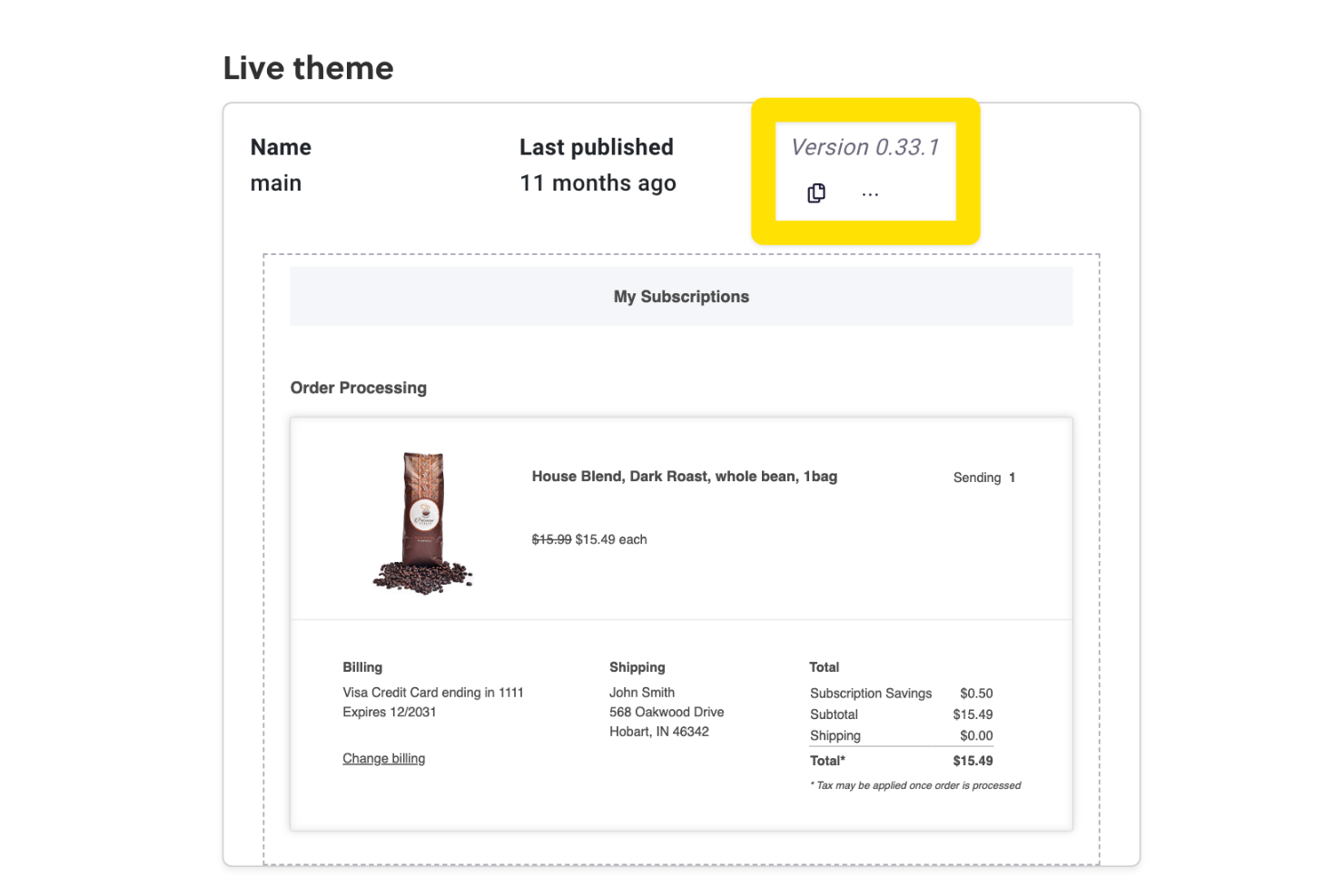
Ordergroove is a powerful subscription management platform built to help retail brands launch and scale recurring revenue models. It eliminates the complexities of recurring billing, order creation, and inventory forecasting for physical products. The software empowers merchants to build strong customer relationships through frictionless, flexible repurchasing experiences.
Who Is Ordergroove Best For?
It is best for mid-market and enterprise direct-to-consumer and retail brands looking to scale their physical product subscription offerings.
Why I Picked Ordergroove
I selected Ordergroove because it handles high-volume, complex recurring commerce seamlessly while remaining highly customizable. It stands out as the best for enterprise retail subscriptions, offering deeply integrated checkout experiences without ever redirecting customers away from your site. The platform's predictive analytics and robust self-service options give shoppers total control over their recurring orders, which significantly boosts retention and long-term customer lifetime value.
Ordergroove Key Features
Anticipatory AI: Predicts when subscribers are likely to churn and automatically deploys targeted retention offers.
Integrated checkout: Keeps shoppers on your native domain during the subscription signup process to maximize conversion rates.
Self-service portal: Empowers customers to independently swap products, skip deliveries, or update billing details.
Incentive management: Allows merchants to easily configure and automatically apply tier-based discounts or free shipping to recurring orders.
Ordergroove Integrations
Integrations include Shopify Plus, Salesforce Commerce Cloud, BigCommerce, Adobe Commerce (Magento), and Yotpo.
Pros and Cons
Pros:
- Native seamless checkout experience
- Strong promotional and discount tools
- Deep enterprise platform integrations
Cons:
- Requires developer help to set up
- Strong promotional and discount tool

Best for customizable billing

ChargeOver helps you automate recurring invoices, recover failed payments, and keep accounting clean—without rebuilding your stack.
It’s a fit for SaaS and service teams that want flexible plans (including usage/metered) and dependable collections through automated retries and reminders.
Why I Picked ChargeOver
I picked ChargeOver because you get reliable subscription billing with real levers your finance team will actually use—custom billing schedules, metered/usage pricing, and proration—so you can mirror complex plans without hacks.
You reduce involuntary churn through automated dunning, card-on-file updates, and configurable retry logic, which directly improves net revenue. Your books stay tidy because customers, invoices, and payments sync to QuickBooks or Xero in real time, cutting manual entry and reconciliation.
Sales and success teams don’t operate blind either—native HubSpot and Salesforce connections push subscription details (MRR, status, next charge) where your reps live.
And since it’s bring-your-own-gateway, you keep your preferred processors while ChargeOver handles the subscription logic.
ChargeOver Key Features
In addition to flexible billing and built-in dunning, here are tools teams use day to day.
- Hosted Signup & Payment Pages: Let customers start subscriptions, update cards, and opt into autopay securely.
- Revenue Recognition Add-On: Calculate deferred and recognized revenue and post monthly journal entries to your GL.
- Coupon & Discount Controls: Run trials, one-time promos, and recurring discounts without breaking your invoice history.
- Webhooks & Libraries: Trigger workflows in downstream systems with REST API, webhooks, and ChargeOver.js.
ChargeOver Integrations
Integrations include QuickBooks Online, QuickBooks Desktop, Xero, Salesforce, HubSpot, Avalara, ChartMogul, Mailchimp, ShipStation, and Slack.
Pros and Cons
Pros:
- Flexible metered, tiered, and proration options support complex subscription models.
- Automated retries, card updates, and emails help recover failed payments.
- Native CRM and accounting sync reduce reconciliation work and data drift.
Cons:
- Bring-your-own-gateway means separate contracts and processor fees.
- Revenue recognition posts via journal entries—extra steps for accountants.

Best for end-to-end subscription management

For subscription-heavy brands, Zoho Subscriptions gives you billing control without babysitting—automated proration, retries on failed payments, and a customer portal your team doesn’t have to micromanage.
It’s a strong fit for ecommerce and SaaS operators who need regional gateway coverage, branded invoices/pages, and reliable tax handling.
Why I Picked Zoho Subscriptions
I picked Zoho Subscriptions because you can reduce involuntary churn through configurable dunning—automatic retries and reminder schedules back up that benefit.
You keep upgrade/downgrade changes accurate with proration, so customers pay the right amount when plans shift mid-cycle. You can offer a pause/resume option to save at-risk accounts, supported by built-in credit notes for unused time.
Your team also gets branded hosted pages and a self-service portal, so customers manage plans and payments without support tickets. For payments, you have native connections to major gateways, giving you redundancy and the flexibility to match processors to your markets.
Zoho Subscriptions Key Features
In addition to the lifecycle controls above, here are practical tools subscription teams actually use.
- Metered Billing: Charge for usage with overage rules for higher-than-plan consumption.
- Coupons, Discounts, and Trials: Run promotions and free trials with precise start/end and eligibility controls.
- Revenue and Cohort Reports: Track MRR, churn, and plan movements to inform pricing and retention.
- Unbilled Charges: Add one-off items and consolidate them on the next invoice to simplify AR.
Zoho Subscriptions Integrations
Integrations include Stripe, Authorize.Net, PayPal Express Checkout, PayPal Payflow Pro, Worldpay, Forte, WePay, 2Checkout, Zoho Books, Zoho CRM, and Avalara AvaTax.
Pros and Cons
Pros:
- Multiple native gateways enable region-appropriate processor choices.
- Configurable dunning retries and reminders reduce failed-payment churn.
- Pause/resume subscriptions to retain customers during temporary downgrades.
Cons:
- Gateway availability varies by country, limiting options in some regions.
- 2Checkout integration supports one-time payments—no auto-billing.

Best for subscription analytics

For subscription brands drowning in messy billing data, ChartMogul gives you clean, trustworthy revenue metrics—MRR, churn, LTV—without duct-taping spreadsheets.
It’s best for operators who need cohort and retention analysis across multiple billing sources and care about auditability.
Why I Picked ChartMogul
I picked ChartMogul because you get reliable numbers through built-in data cleaning—duplicate handling, mapping rules, and MRR movement logic—so your finance and growth teams stop arguing about definitions.
You can measure retention and expansion with cohort charts that tie revenue changes to specific events, not vibes. Your team can segment by plan, geography, coupon, or any custom attribute to find pricing and packaging wins.
When you need to push analysis further, warehouse exports let your analysts query raw subscriptions alongside product or marketing data. The mobile apps keep leadership aligned by surfacing ARR, MRR, and churn trendlines on the go.
ChartMogul Key Features
In addition to the analytics and data quality tools above, here are a few practical capabilities you’ll actually use.
- Warehouse Exports: Send metrics and records to Snowflake, BigQuery, Redshift, or S3 for deeper analysis.
- Custom Attributes: Enrich customer records with plan metadata, lifecycle tags, or segments you define.
- Benchmarks & Cohorts: Compare retention and net MRR retention across cohorts to spot inflection points.
- Email sharing & apps: Share charts to Slack and email so non-analysts see the same source of truth.
ChartMogul Integrations
Integrations include Stripe, Recurly, Chargebee, Braintree, PayPal, Zuora, Paddle, GoCardless, App Store Connect, and Google Play.
Pros and Cons
Pros:
- Cohort and net MRR retention reveal where expansion actually happens.
- Warehouse exports connect revenue to product and marketing data.
- Data cleaning rules reduce duplicates and fix bad plan mappings.
Cons:
- Mobile apps are view-only; advanced reporting stays on desktop.
- Analytics only—billing and invoicing still require another platform.

Best for subscription lifecycle visibility

For subscription teams who need clearer lifecycle visibility, SubscriptionFlow brings your billing, customer status, and revenue signals into one place.
It’s a fit for SaaS, subscription retailers, and B2B services that want tighter churn control and cleaner upgrade/downgrade flows.
Why I Picked SubscriptionFlow
I picked SubscriptionFlow because you get practical lifecycle visibility—not vague charts. You can track each account’s status from signup to renewal to pause/cancel, then act before revenue slips.
That benefit is backed by concrete features: recurring payment tools that log every billing event, plus alerts you can use to chase failed payments or intervene with offers.
Your team can also drive expansion because customers can change plans, update payment methods, and manage add-ons from a self-serve portal. I like that it ties into your commerce, CRM, and accounting systems so subscription data doesn’t live in a silo.
SubscriptionFlow Key Features
Here are a few tools that pair well with the lifecycle focus above.
- Recurring Payment Processing: Handle automated renewals and one-off charges with secure card vaulting.
- Customer Portal: Let customers upgrade, downgrade, or update payment details without tickets.
- Lifecycle Dashboard: See renewals, pauses, and cancellations in a single, centralized view.
- Reporting & Exports: Pull subscription metrics and export data for finance and ops reviews.
SubscriptionFlow Integrations
Integrations include Shopify, WooCommerce, BigCommerce, Magento, HubSpot, Salesforce, QuickBooks, Xero, Zendesk, and Pipedrive.
Pros and Cons
Pros:
- Lifecycle dashboard surfaces renewals, pauses, and cancels for faster action.
- Self-serve portal reduces tickets for upgrades, downgrades, and card updates.
- Broad native integrations connect billing to ecommerce, CRM, and finance.
Cons:
- Feature depth can feel overwhelming for smaller teams.
- Steep learning curve while configuring plans and workflows.

Best for dunning management

If failed renewals are driving churn, Chargebee helps your team catch more recoveries with less babysitting—think smart retries, card updates, and backup payment methods working together.
It’s best for subscription brands and SaaS companies processing meaningful volume who need tight control over dunning rules and payment lifecycles.
Why I Picked Chargebee
I picked Chargebee because you get revenue recovery that’s backed by specific tools—Smart Retry schedules payment attempts at data-driven intervals to lift success rates.
You can lower involuntary churn because Account Updater refreshes expired or reissued cards automatically during payment attempts.
Your team can also fail over smoothly because customers can add multiple payment sources and mark a backup method in the portal.
You keep control with configurable dunning periods, final actions, and tailored email sequences that match your billing logic. For ops, that translates into fewer manual escalations and clearer guardrails around renewals and suspensions.
Chargebee Key Features
In addition to its recovery toolkit, here are practical features subscription teams actually use.
- Product Catalog 2.0: Support flat-rate, tiered, usage-based, and hybrid pricing models from one catalog.
- Entitlements Management: Gate features by plan or add-on to reduce provisioning errors and refunds.
- Checkout and Customer Portal: Offer hosted checkout and self-serve plan changes to cut support load.
- Revenue Recognition (RevRec): Generate compliant schedules and journal entries to speed month-end close.
Chargebee Integrations
Integrations include Salesforce, HubSpot, QuickBooks Online, Xero, BigCommerce, Mailchimp, Klaviyo, Zendesk, Freshdesk, and Slack.
Pros and Cons
Pros:
- Smart Retry reduces failed charges through data-driven, dynamic schedules.
- Backup payment methods fail over automatically during dunning.
- Account Updater refreshes expired cards to prevent avoidable churn.
Cons:
- Complex catalogs and multi-entity setups can lengthen implementation.
- Advanced recovery features sit behind higher-tier plans, raising cost.
Recurly
Best all-in-one subscription management tool

For finance and subscription teams juggling mixed pricing models, Recurly gives you granular control over billing, dunning, and compliance—without duct-taping half a dozen point tools.
You get usage-based billing, coupons and gift cards, account hierarchies for parent–child billing, and automated revenue recognition—making it a strong fit for mid-market and enterprise subscription businesses that care about recovery rates and audit readiness.
Why I Picked Recurly
I picked Recurly because you can improve involuntary churn through configurable dunning campaigns backed by card updater tools and retry logic—features that actually move recovery rates, not just dashboards.
You can support complex catalogs with metered and tiered pricing because Recurly tracks usage events and bills at cycle end, so finance reconciles actuals instead of estimates.
Your team stays audit-ready since revenue recognition maps contracts to ASC 606/IFRS 15 rules and posts schedules automatically, cutting close times. For B2B, account hierarchy lets you roll up invoices to a parent entity or bill subsidiaries individually, which cleans up enterprise AR.
And when expansion demands it, multi-gateway support with routing rules helps you add regions or failover paths without replatforming.
Recurly Key Features
- Account Hierarchy: Set parent–child relationships to consolidate or split billing for B2B customers.
- Coupons, Trials, And Gift Cards: Run targeted promotions and track redemptions without spreadsheet gymnastics.
- Multiple Gateways And Routing: Add gateways, set rules, and fail over to protect authorization rates.
- Revenue Recognition: Automate ASC 606/IFRS 15 schedules and export-ready reports for faster closes.
Recurly Integrations
Integrations include Salesforce, QuickBooks Online, Xero, Avalara AvaTax, Zendesk, Shopify, ChartMogul, Oracle NetSuite, Mailchimp, and Authorize.Net.
Pros and Cons
Pros:
- Usage-based billing supports metered, tiered, and hybrid pricing models.
- Dunning campaigns with card updater reduce failed-payment churn.
- Account hierarchy fits enterprise roll-ups and complex AR workflows.
Cons:
- Revenue recognition is a separate module with added setup.
- Invoice edits rely on credit notes; limited direct modification.

Odoo
Best for customer lifecycle tracking

For retailers and B2B teams running recurring revenue, Odoo Subscriptions keeps billing, renewals, and customer self-service in the same place as your quotes, invoices, and support.
You get fewer integration gaps and cleaner reporting—best for operators who want subscription management tied directly to day-to-day finance and ops.
Why I Picked Odoo
I picked Odoo because you manage the whole subscription lifecycle in one suite—your team can sell a quote, convert it to a subscription, charge automatically, and handle renewals without hopping tools.
You reduce failed renewals through automated dunning emails and payment retries, backed by saved payment methods and supported acquirers. Finance gets accurate MRR and churn views because subscription events feed Odoo Accounting and Invoicing, not a separate data silo.
Your customers can upgrade, downgrade, or cancel in a portal, which cuts tickets and improves retention through immediate plan changes.
As you scale, you can add first-party modules—like Helpdesk for SLA-bound cases or ecommerce for self-serve signups—so your process expands without rebuilding integrations.
Odoo Key Features
In practice, here’s where teams get day-one wins after setup.
- Subscription Templates And Cadences: Standardize terms, billing intervals, and trial logic across product lines.
- Automated Dunning And Retries: Recover revenue with scheduled emails, smart retries, and balance tracking.
- Customer Self-Service Portal: Let customers change plans, update payment methods, or cancel without a ticket.
- MRR And Churn Dashboards: Track growth, renewals, and cancellations with finance-ready metrics.
Odoo Integrations
Integrations include Odoo Accounting, Odoo Invoicing, Odoo CRM, Odoo Sales, Odoo Website/eCommerce, Odoo Helpdesk, Odoo POS, Odoo Inventory, Odoo Email Marketing, and Odoo Studio.
Pros and Cons
Pros:
- Renewals, proration, and dunning run automatically from templates.
- Customer portal enables plan changes, upgrades, and cancellations.
- Quote-to-invoice workflow lives in one database—the Odoo suite.
Cons:
- Setup and customization are complex without an Odoo implementer.
- Module depth varies; advanced cases may require paid add-ons.
Other Subscription Management Options
Now here are a few other worthy options that didn’t make the top billing.
- Zuora
For handling any subscription model
- Stripe Billing
For subscription payment processing
- Salesforce Billing
For automated revenue recognition
- PayWhirl
For flexible subscription widgets
- Cleverbridge
For secure transactions
- Rebilly
Future-proof subscription framework
- Loop Subscriptions
For creating product bundles
- Rentle
For launching subscription services
- Billsby
For flexible billing options
- Cheddar
For usage-based billing
- Stax Bill
For subscription automation
- Seal Subscriptions
For Shopify subscriptions
- Appstle Subscriptions
For customizable subscription programs


Related Ecommerce Software Reviews
If you still haven't found what you're looking for here, check out these related ecommerce tools that we've tested and evaluated.
- Ecommerce Platforms
- Inventory Management Software
- Payment Processing Software
- Shopping Cart Solutions
- Order Management Systems
- Warehouse Management Software
- Enterprise Subscription Management Software
How I Evaluate Subscription Management Software
I look at subscription management tools in two layers: baseline must-haves like recurring billing and dunning, then the differentiators that matter for retail and DTC use cases.
Core Functionality (Table Stakes For This List)
When I'm selecting tools for my list, I rank each one on a scale from 0 (does not offer the functionality) to 5 (excels in this area) for each core functionality listed below. Then, I calculate the tool's total score into a percentage. Each tool needs to achieve a minimum total score of 65% to be considered for inclusion.
- Recurring Billing Engine: I evaluate how each tool handles multiple billing intervals, proration, and invoicing across plan types—like a subscribe-and-save with monthly billing alongside a quarterly curated box.
- Subscriber Lifecycle Management: The platform should let subscribers and admins handle upgrades, downgrades, pauses, skips, swaps, and cancellations without workaround hacks or custom development.
- Payment Processing & Dunning: I check for multi-gateway support, smart retry logic, card updater integrations, and configurable dunning email sequences that help recover failed payments before a subscriber churns.
- Plan & Catalog Configuration: Retailers need to create plans, bundles, trials, and promo offers without engineering help—think spinning up a holiday gift box tier or adding an upsell add-on mid-cycle.
- Churn & Retention Tools: I look for configurable cancellation flows, pause and swap alternatives, targeted win-back offers, and retention analytics that show where and why subscribers drop off.
- Ecommerce & Retail Integrations: Native connections with platforms like Shopify, BigCommerce, and WooCommerce matter, along with syncing to CRMs, ERPs, and fulfillment systems that round out a retail tech stack.
Once I have a list of tools that meet this criteria, I consider what sets each platform apart.
Differentiating Factors (What Sets Vendors Apart)
Here's how I compare and contrast different vendors:
Standout Features
Build-a-box functionality is a big differentiator for curated subscription brands—I look at how much control subscribers get to swap items, choose variants, or personalize orders each cycle. Subscriber analytics also matter: platforms that surface MRR trends, churn cohorts, and product-level performance give retail teams the data they need to act fast. I also evaluate how well a tool syncs subscription orders with inventory and fulfillment systems, since overselling a recurring SKU erodes subscriber trust quickly.
Beyond Features
Ecommerce platform fit is one of the first things I check—a tool that integrates deeply with Shopify may offer only surface-level support for BigCommerce or WooCommerce, and that gap shows up fast during checkout and order sync. Pricing structure matters too, since some vendors charge a flat monthly fee while others take a percentage of subscription revenue, which hits margins hard as you scale. I also evaluate compliance coverage, especially PCI DSS handling and automated tax collection for cross-border subscription shipments.
What is Subscription Management Software?
Subscription management software is a platform that automates recurring billing and manages the full subscriber lifecycle—signup, renewals, proration, cancellations, refunds, and secure payment storage.
It gives customers a self-serve portal to pause, skip, swap, or update payment details, and it runs dunning to recover failed charges so revenue doesn’t leak.
Finance gets clean invoices, taxes, and revenue recognition; growth gets cohorts, LTV, and churn analytics; ops gets integrations with Shopify/BigCommerce/WooCommerce, Stripe/Adyen/PayPal, ERPs, and 3PLs.
DTC brands, subscription boxes, and SaaS teams use subscription management software to scale predictable revenue with fewer tickets, fewer developer handoffs, and far less manual cleanup.
How To Choose Subscription Management Software
Choosing the wrong tool can kill your margins—or your patience. The right one? It’ll help you scale effortlessly, keep churn low, and make your revenue predictable. Here's how to pick a winner:
| Step | What to look for | Why it matters |
|---|---|---|
| Start with billing flexibility | Supports recurring, usage-based, milestone, and hybrid models | Different customers, different pricing needs—don’t box yourself in |
| Demand global scalability | Multi-currency support, localized tax handling, regional payment gateways | Expanding internationally? Your software needs to speak the language (and do the math) |
| Prioritize lifecycle management | Onboarding flows, mid-cycle plan changes, renewals, and churn recovery tools | Winning the first sale is easy—keeping the customer is where the money’s made |
| Check integration capabilities | Seamless sync with ecommerce platforms, CRMs, ERPs, and analytics tools | No tool should live in a silo—your tech stack needs to talk to each other |
| Look for retention and revenue tools | Dunning automation, smart retries, win-back workflows | These features print money by recovering lost revenue and extending customer lifetime value |
| Insist on customer insight tools | Churn prediction, revenue metrics, and subscriber benchmarks | You can’t optimize what you can’t measure—data visibility is non-negotiable |
| Test the UX—yours and theirs | Clean dashboards, easy customer portals, intuitive billing settings | Your team should want to use it, and your customers shouldn’t have to email support to pause a subscription |
| Don’t sleep on pricing model flexibility | Ability to test, iterate, and launch new offers without engineering help | Fast changes = fast learning = faster revenue growth |
| Make sure it scales with you | Handles 100 or 1 million subs without breaking or ballooning costs | You don’t want to replatform every time you grow—choose future-proof now |
Trends in Subscription Management Software for 2026
The subscription economy is getting sharper, not just bigger. To stay competitive, businesses need tools that do more than just bill on repeat. These are the top trends shaping how ecommerce brands manage—and grow—their subscriber base this year:
- Retention is the new acquisition. Platforms are investing heavily in tools that reduce churn, from smart dunning workflows to loyalty programs and contextual in-app messaging.
- AI-driven retention and personalization is table stakes. Platforms are using AI to reduce churn, send personalized win-back offers, and dynamically adjust plans based on user behavior.
- Benchmarking and insights are now built-in. The best tools don’t just show you your churn rate—they tell you how you stack up against others in your industry and what to fix next.
- Global scalability is a must-have, not a nice-to-have. Multi-currency billing, regional tax compliance, and local payment methods are essential if you want to expand internationally without friction.
- Lifecycle visibility drives smarter decisions. Modern platforms track every step of the subscriber journey—from sign-up to downgrade—to help you upsell, intervene, or improve UX in real time.
- Hybrid pricing models are gaining ground. Pay-as-you-go, usage-based, freemium plus premium—all of it. Software needs to be flexible enough to support experiments without dev bottlenecks.
- Customer self-service is a growth lever. Tools now include branded portals where subscribers can pause, upgrade, or update info without contacting support—reducing friction and cost.
- Data security and compliance are non-negotiable. PCI DSS, GDPR, and more are built into the best platforms, helping businesses avoid risk and build customer trust.
- Revenue recognition and forecasting is being productized. Expect more platforms to bake in ASC 606 compliance, deferred revenue tracking, and predictive forecasting models.
- Mobile-first experiences are getting prioritized. From mobile billing flows to push notification support, platforms are adapting to the way customers manage subscriptions on the go.
Key Features of Subscription Management Software
Not all subscription billing software is created equal. The right platform doesn't just automate billing—it gives you tools to grow smarter, reduce churn, and scale globally. Here's what to look for:
- Security and compliance features. Stay on the right side of GDPR, PCI DSS, and other regulatory frameworks with built-in data encryption and audit-ready systems.
- Recurring billing and invoicing automation. Automatically generate invoices, charge customers, and sync payment data without manual input or spreadsheet drama.
- Flexible pricing model support. Handle everything from recurring flat fees to usage-based, milestone, freemium, or hybrid plans—all without calling your dev team.
- Global payment and tax capabilities. Accept multiple currencies, apply regional tax rules, and support local payment methods to expand globally without compliance nightmares.
- Customer lifecycle management tools. Manage onboarding, upgrades, renewals, and cancellations with built-in workflows that keep the customer journey smooth and proactive.
- Retention and revenue recovery tools. Use dunning automation, smart retries, and personalized reminders to recover failed payments and reduce involuntary churn.
- Self-service subscriber portals. Let customers update billing info, pause or cancel plans, and manage their subscriptions without pinging support.
- Built-in analytics and financial reporting. Track key metrics like churn, MRR, LTV, and revenue trends from a centralized dashboard that updates in real time.
- Benchmarking and performance insights. Compare your subscription KPIs against industry peers to identify gaps and opportunities for improvement.
- Third-party integrations and open APIs. Seamlessly connect with ecommerce platforms, CRMs, accounting tools, and more to create a unified workflow.
Benefits of Subscription Management Software
This isn’t just about automating admin work—it’s about building a more resilient, profitable business. The right subscription management software helps you grow without chaos, and here’s how:
- Freedom to experiment. Quickly launch new offers, promos, or plans without engineering delays—so you can test, learn, and optimize in real time.
- Streamlined operations at scale. Automate billing, renewals, and cancellations so your team spends less time fixing errors and more time driving strategy.
- Better customer experience. Give subscribers intuitive self-service portals, transparent billing, and flexible options that keep them around longer.
- Higher retention and reduced churn. Proactively recover failed payments, personalize renewal flows, and surface churn risk with the right tools and workflows.
- Predictable, scalable revenue. Build reliable cash flow with recurring payment systems, while testing new pricing and packaging to grow your customer base..
- Smarter decision-making through analytics. Use real-time MRR, churn, LTV, and cohort metrics to pinpoint what’s working—and what’s quietly leaking revenue.
- Faster global expansion. Sell internationally with confidence thanks to built-in currency conversion, tax handling, and compliance support.
- More efficient revenue recovery. Use automated dunning, smart retries, and backup payment methods to recover what would otherwise be lost revenue.
- Built-in financial compliance. Stay audit-ready with tools that support ASC 606, IFRS 15, PCI DSS, and other financial standards by default.
Cost & Pricing For Subscription Management Software
Subscription management software comes in a variety of pricing plans tailored to fit different business sizes—from scrappy startups to massive enterprises.
Here’s a look at the options available:
Plan comparison table for subscription management software
| Plan Type | Average Price | Common Features Included | Best For |
|---|---|---|---|
| Free | $0 | Limited subscription management, manual billing processes, basic reporting, community support | Small startups or testing the waters |
| Starter | $10 - $50 per month | Basic subscription management, automated billing and invoicing, basic reporting, email support | Startups and small businesses |
| Professional | $50 - $200 per month | Advanced billing options, customizable reports, CRM and ecommerce platform integration, phone support | Growing businesses |
| Enterprise | $200 - $1,000+ per month | Custom pricing models, dedicated account manager, advanced analytics, premium support, API access | Large enterprises and high-volume businesses |
When choosing a plan, think beyond where you are today. Consider reviewing our comprehensive evaluation of free subscription management software to find options that can scale with your business.
Many businesses start with a $29–$99/month plan to access billing automation, dunning tools, and ecommerce integrations without breaking the bank, especially when using open source subscription management software.
As you scale, subscription billing software solutions like Chargebee and Recurly—starting around $249/month—offer the advanced analytics, pricing flexibility, and compliance support that growing brands need to manage thousands of subscribers and millions in revenue.
Watch for hidden costs, like charges for API access, custom integrations, or premium support tiers. A tool that looks affordable on paper can get expensive fast if you're not careful.
The best subscription platforms grow with you. Look for pricing that aligns with your business stage, your revenue goals, and your need for agility—not just your current headcount.
Subscription Management Tools FAQs
It’s that time when we do questions and answers. We took some good guesses on questions that might be in your head still, then answered them.
What are the main types of ecommerce subscription models?
Subscription models include replenishment (think razors or pet food), curation boxes (like beauty or snacks), access models (discount clubs or VIP programs), freemium-to-premium SaaS, and usage-based billing (pay for what you use).
Most businesses don’t stick to just one. A flexible subscription management tool should support multiple models at once—so you can experiment, personalize offers, and iterate based on customer behavior. The right software doesn’t box you in; it helps you grow with the models that fit your product, pricing, and audience.
Can subscription software support multiple channels (e.g., online, mobile, in-app)?
Yes—top-tier platforms are built to handle omnichannel subscriptions. Whether customers sign up through your website, mobile app, POS, or a third-party marketplace, your software should centralize that data and ensure consistency across platforms.
This unified view allows for seamless customer experiences, better lifecycle messaging, and accurate revenue tracking. The best tools also offer SDKs and APIs to help you connect new channels as you grow. In today’s market, channel silos are revenue killers—your platform should support the way your customers actually buy.
What should I avoid when implementing new subscription software?
Biggest mistake? Treating it like plug-and-play. You need proper onboarding, training, and integration planning. Other pitfalls include picking software that doesn’t scale, failing to connect it with your ecommerce stack, or ignoring critical features like dunning and lifecycle automation.
Also: don’t overlook reporting. If your tool doesn’t give you actionable metrics, you’re flying blind. Finally, make sure your customer experience doesn’t suffer during the transition. The software should enhance how subscribers engage, not confuse them. Bottom line: plan the rollout like it’s a product launch.
How do these platforms help reduce churn and improve retention?
Retention isn’t a bonus—it’s the business model. The best subscription platforms reduce churn through smart dunning workflows (think retries, reminders, backup payment methods), personalized renewal flows, and churn prediction tools.
Some go even further, using machine learning to spot at-risk users before they cancel. Lifecycle automation helps you engage subscribers at key moments—onboarding, mid-cycle, or pre-renewal—so you keep the experience sticky. If your current tool doesn’t actively help you save subscribers and recover revenue, you’re leaving money on the table.
Can I track subscription performance against industry benchmarks?
Yes—and it’s one of the most underrated features. Benchmarking lets you compare your churn, LTV, MRR, or conversion rates against similar companies in your industry or customer size.
Some platforms—like ProfitWell or ChartMogul—have built-in tools for this. Others offer integrations to benchmark services or datasets. Either way, it gives you context: is your churn actually bad, or just average? Are your growth numbers ahead of the pack or falling behind? Benchmarks turn isolated metrics into strategic insights you can act on.
How do subscription tools handle international payments and taxes?
If you’re selling globally, you need more than Stripe and prayers. Modern subscription platforms handle multi-currency billing, apply region-specific tax rules (VAT, GST, etc.), and manage compliance with international standards like PCI DSS and GDPR.
They’ll also offer localized payment methods—because not everyone pays with a Visa card. Look for tools that automatically update tax rates, generate compliant invoices, and support regional payment gateways. This isn’t just about getting paid—it’s about making your global customers feel like you’re local.
Which tools are best if I want to test or customize pricing models?
You want pricing freedom? Then pick a tool that doesn’t require dev time every time you tweak an offer. Platforms like Zuora, DealHub, and Subbly let you create flexible plans—bundles, freemium tiers, usage-based billing, trials, promos—all without writing code.
This means faster A/B testing, quicker go-to-market, and real-time adjustments based on performance. If your software locks you into a static model or makes testing a headache, it’s slowing down growth. Customization should be easy, not a quarterly project.
Other Ecommerce Management Software Reviews
Subscription management software is an excellent place to start when searching for new tools to optimize your online store’s operations, but what about other vital functions.
Here, you’ll find a list of other ecommerce management software I picked out to help you handle other aspects of your business.
Build a Better Subscription Program
We're naturally bullish on software here at The Retail Exec, but you really can't run a subscription program without great technology.
The complexity involved in recurring billing is just insurmountable with hard work and grit alone (which we know you have plenty of). It takes subscription management software to do it right (and to do it at all).
In this post, you have all you need to start making regular and reliable income from subscriptions. So, get at it.
Retail never stands still—and neither should you. Subscribe to our newsletter for the latest insights, strategies, and career resources from top retail leaders shaping the industry.