
10 Best Subscription Billing Software for 2026

The Top Subscription Billing Software to Consider


The best subscription billing software automates recurring payments, simplifies subscription management, and gives you clear, real-time metrics to control your revenue streams.
If you’re wrestling with clunky billing systems, manual renewals, or unpredictable churn, this guide will show you tools that solve those headaches.
I’ve worked the trenches—from inventory to shipping to managing billing chaos—so I know what it takes to keep customers subscribed and cash flowing.
The right billing system not only handles flexible pricing models and billing cycles but also integrates with your CRM, payment gateways, and accounting software to streamline workflows and reduce failed payments.
For businesses looking to manage costs while implementing these systems, exploring free subscription management software can be a great starting point.
This post breaks down the top subscription billing platforms built to optimize your billing process, support growth, and improve customer retention.
Whether you’re scaling a startup or managing complex enterprise subscriptions, you’ll find software that fits your subscription business model and helps you take control of your billing lifecycle.
Why Trust Our Software Reviews
We’ve been testing and reviewing retail and ecommerce software and services since 2021.
As retail experts ourselves, we know how critical and difficult it is to make the right decision when selecting software. We invest in deep research to help our audience make better software purchasing decisions.
We’ve tested more than 2,000 tools for different finance and accounting use cases and written over 1,000 comprehensive software reviews. Learn how we stay transparent and our review methodology.
Comparing the Best Subscription Billing Software, Side-by-Side
This table compares use cases, pricing, and trial options to help you quickly find the right subscription billing software for your business.
| Tool | Best For | Trial Info | Price | ||
|---|---|---|---|---|---|
| 1 | Best for flexible billing cycles | 14-day free trial | From $34.50/month | Website | |
| 2 | Best for sales engagement | Free demo available | Pricing upon request | Website | |
| 3 | Best for SaaS businesses | Free demo available | From $0.50 + 5% per transaction | Website | |
| 4 | Best for managing subscriber lifecycles | Free plan available | Pricing upon request | Website | |
| 5 | Best for financial reporting | Free demo available | Pricing upon request | Website | |
| 6 | Best for open-source flexibility | Free plan available | Pricing upon request | Website | |
| 7 | Best for small businesses | 90-day free trial | From $249/month | Website | |
| 8 | Best for advanced subscription management | 14-day free trial + free demo available | From $25/organization/month (billed annually) | Website | |
| 9 | Best for usage-based billing | Free demo available | Pricing upon request | Website | |
| 10 | Best for enterprise scalability | Free demo available | Pricing upon request | Website |

The Best Subscription Billing Software, Reviewed
Here are detailed reviews highlighting features, pros, cons, and integrations to help you pick a platform that fits your billing needs and subscription model.

Subbly
Best for flexible billing cycles
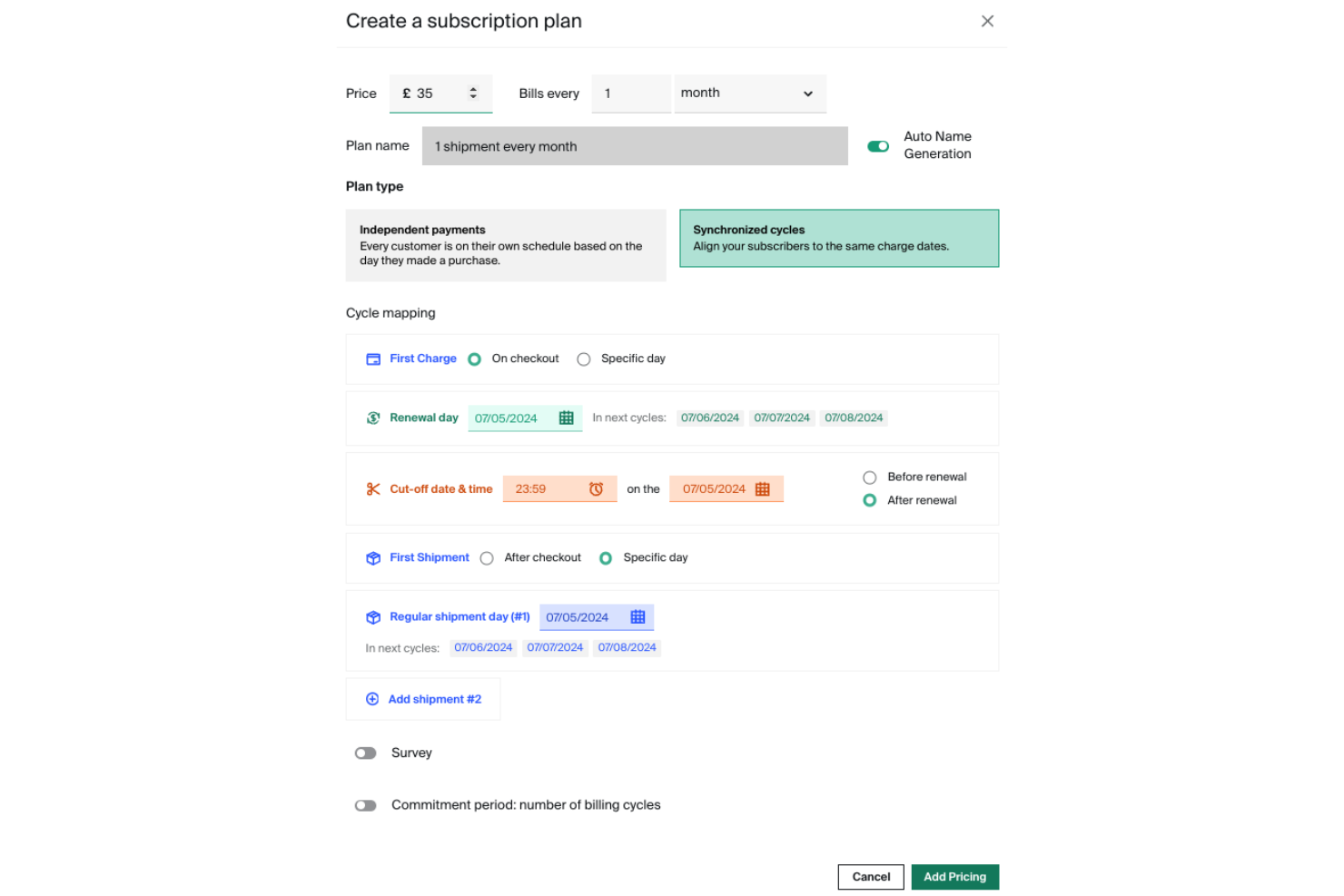
Subbly gives subscription-first brands a flexible way to run billing, customer choices, and recurring orders from one place.
It’s best for subscription box companies and membership-style businesses that need customizable billing cycles and reliable recurring payments.
Why I Picked Subbly
I picked Subbly because you can match your billing schedule to how customers actually buy—monthly, quarterly, or custom—through flexible cycle settings that keep invoices accurate.
That benefit is backed by helpful details like automatic prorations for mid-cycle plan changes, so your revenue stays consistent even when customers switch tiers.
I also like the “build-a-box” and survey tools, which let your team gather customer preferences and personalize shipments in a way that boosts retention.
Your customers get a self-service portal to pause, skip, or edit subscriptions, which cuts down support volume while keeping churn in check.
Subbly Key Features
Here are a few subscription-focused tools beyond billing flexibility.
- Checkout And Funnel Builder: Build optimized checkouts and upsell flows without separate landing-page software.
- Customer Profiles And Analytics: Track subscriber behavior and churn signals to target offers more intelligently.
- Shipping And Tax Management: Connect shipping rules and tax settings directly to recurring orders.
- Cancellation Management: Capture cancellation reasons and trigger win-back offers automatically.
Subbly Integrations
Integrations include Stripe, Google Pay, Apple Pay, Braintree, PayPal, and Authorize.net.
Pros and Cons
Pros:
- Self-service portal lowers support tickets from plan edits and skips.
- Custom surveys and “build-a-box” flows personalize recurring shipments.
- Flexible billing cycles support subscription boxes, memberships, and hybrid models.
Cons:
- Smaller integration ecosystem for nonpayment tools.
- Website builder is more limited compared to full ecommerce platforms.
New Product Updates from Subbly

Subbly Adds Mid-Run Steering for AI Builder
Subbly’s AI Builder now lets you send additional prompts while an agent is still running, inserting your guidance at the right moment so you can course-correct faster, stay in flow, and improve outcomes while saving time and credits. For more information, visit Subbly's official site.
 .
.
Best for sales engagement

DealHub AI is built for revenue teams that need subscription billing tied directly to quotes, contracts, and renewals—not a separate system bolted on after the sale.
It’s a strong fit for B2B companies with complex pricing, multi-year deals, and sales-led motions that live inside Salesforce, Microsoft Dynamics, or HubSpot.
Why I Picked DealHub AI
I picked DealHub AI because it ties quoting, contracting, and subscription billing into one workflow, so your team creates billing schedules directly from approved quotes instead of re-entering data.
You get adaptive pricing tools for complex models—like usage-based or tiered plans—backed by guardrails and approval rules that keep margins intact.
I also like how renewals, upgrades, and co-terming automatically update the underlying subscription record, which removes the usual reconciliation headaches for RevOps.
DealHub AI Key Features
In addition to its CPQ roots, DealHub AI adds subscription-specific capabilities that matter when you’re managing recurring revenue at scale.
- Subscription Lifecycle Management: Manage new subscriptions, renewals, upgrades, and cancellations from one workflow that stays in sync with your CRM.
- Revenue Recognition Support: Generate clean, structured billing and subscription data your finance stack can use for revenue recognition and audit-ready reporting.
- Compliance Automation: Use tax, regulatory, and contract controls to reduce manual review for global customers and multi-entity setups.
- Billing Intelligence: Get insight into billing schedules, failed payments, and renewal exposure so you can proactively address churn and cash flow risk.
DealHub AI Integrations
Integrations include Salesforce, Microsoft Dynamics 365, HubSpot, NetSuite, QuickBooks, Xero, Sage Intacct, Stripe, Avalara, and Slack.
Pros and Cons
Pros:
- Strong CRM and ERP integrations help RevOps and finance share a single view.
- Supports flat, tiered, and usage-based pricing for complex B2B subscriptions.
- Quote, contract, subscription, and billing data stay aligned in one platform.
Cons:
- Pricing is quote-based, so you’ll need a sales conversation to estimate costs.
- Best suited to sales-led teams already standardized on a major CRM.
New Product Updates from DealHub AI

DealHub AI Expands Bundle Attribute Automation
DealHub AI introduces Assignment Rules for child proposal attributes and numeric aggregation for bundles. These updates give admins more control over bundle attribute automation and configuration. For more information, visit DealHub’s official site.
 .
.
Paddle
Best for SaaS businesses

For SaaS teams tired of wiring together payment gateways, tax tools, and subscription logic, Paddle wraps everything into a single merchant-of-record platform that actually owns the messy billing work.
It’s best for software businesses selling globally that want flexible subscription models without building a compliance and finance team around their payments stack.
Why I Picked Paddle
I picked Paddle because its merchant-of-record model takes sales tax liability, chargebacks, and compliance off your plate through built-in tax/VAT handling, chargeback management, and customer billing support.
That lets your finance and ops teams focus on pricing, reporting, and forecasting instead of wrestling with filings and disputes.
For your product team, Paddle’s subscription engine supports bundles, seat-based plans, and add-ons so you can test real pricing strategies directly in your billing setup.
I also like that automatic proration and pausing/reactivating subscriptions are baked in, so you can offer mid-cycle upgrades and temporary pauses without manual adjustments or side spreadsheets.
Paddle Key Features
Beyond the merchant-of-record model, there are a few billing details your team will actually lean on day to day.
- Customer Portal: Provides a hosted portal where subscribers can update cards, adjust seats or products, and manage cancellations without your engineers building account management screens.
- Localized Checkout: Offers branded checkout flows with local currencies, languages, and payment methods so international buyers see pricing and options that match their market.
- Revenue Analytics: Uses ProfitWell Metrics data inside Paddle Billing to surface MRR, churn, and cohort trends from the same events driving your invoices and subscriptions.
- Dunning Automation: Runs card retries and recovery workflows via Retain so failed payments are chased automatically instead of by your support or finance teams.
Paddle Integrations
Integrations include HubSpot, Intercom, Databox, Braintree, Chargebee, Stripe, Recurly, Zuora, Uscreen, and Maxio.
Pros and Cons
Pros:
- Built-in analytics and dunning tools help track growth and recover revenue.
- Flexible subscription engine supports bundles, add-ons, and seat-based pricing.
- Merchant-of-record model handles global tax, compliance, and chargebacks for you.
Cons:
- Focused on SaaS and apps; not ideal for physical retail.
- Pricing (5% + 50¢ per transaction) can exceed alternatives at scale.

Best for managing subscriber lifecycles

For SaaS and subscription commerce teams juggling trials, renewals, and recurring invoices, Chargebee helps you untangle billing complexity, keep revenue compliant, and reduce failed payments.
It’s a better fit for fast-growing, multi-region subscription businesses with mixed pricing models than for tiny catalogs with very simple billing needs.
Why I Picked Chargebee
I picked Chargebee because it handles complex subscription lifecycles—trials, upgrades, pauses, renewals—through one system instead of scattered scripts.
Your team can test flat, tiered, and usage-based pricing in the same catalog, so you can match plans to real customer behavior without rebuilding billing logic.
Its dunning and smart retry engine gives you a tangible lift on failed payments by pairing custom schedules with targeted messaging.
Finance teams also get compliant revenue recognition with proper schedules and auditability, which keeps monthly closes from turning into spreadsheet surgery.
Chargebee Key Features
Beyond billing basics, Chargebee adds a few capabilities that matter once your subscription revenue starts to scale.
- Trials And Freemium Controls: Configure trial periods, freemium tiers, and conversion rules so marketing can test offers without engineering rebuilding billing logic each time.
- Self-Service Portal: Give customers a branded portal to update cards, change plans, and download invoices themselves, cutting down on support tickets for simple account changes.
- Tax And Compliance Tools: Manage multi-country tax rules, localized invoice formats, and compliance settings from a central hub rather than bolting on separate tax tools for each region.
- Reporting And Dashboards: Track MRR, churn, cohort performance, and subscription health across products and geographies from a single reporting layer that matches what’s in your ledger.
Chargebee Integrations
Integrations include Salesforce, HubSpot, NetSuite, Sage Intacct, Xero, QuickBooks, Stripe, PayPal, GoCardless, and Zendesk.
Pros and Cons
Pros:
- Revenue recognition and audit trails support ASC 606 and IFRS 15.
- Flexible pricing engine supports flat, tiered, volume, and hybrid models.
- Smart dunning flows recover failed payments and cut involuntary churn.
Cons:
- Add-ons for RevRec, taxes, and advanced integrations increase total cost.
- Configuration depth creates a learning curve for non-technical operators.

Best for financial reporting

Sage Intacct is built for finance teams at subscription and SaaS businesses that live in spreadsheets today and are tired of wrestling with complex billing rules every month-end.
You get subscription billing tied directly to revenue recognition and reporting, so your team can handle tiered, usage-based, and contract billing without losing visibility into the numbers executives actually care about.
Why I Picked Sage Intacct
I picked Sage Intacct because it manages complex subscription models—like tiered, usage-based, and ramped contracts—through configurable billing rules instead of manual spreadsheets.
That makes upgrades, renewals, and proration more predictable for your finance team.
You also get automated revenue recognition tied directly to contracts, which helps your team stay compliant with ASC 606 and IFRS 15 without juggling side schedules.
I like that its financial dashboards connect billing activity to MRR, churn, and forecasted revenue, giving leadership a clearer read on performance.
Sage Intacct Key Features
Here are a few subscription-specific tools your finance team will actually use day-to-day.
- Multi-Entity Management: Support multiple entities, currencies, and charts of accounts while consolidating subscription revenue and billing at the push of a button.
- Dimensions-Based Reporting: Tag transactions with dimensions like customer, product, region, or subscription type to slice recurring revenue and churn however your leadership team wants to see it.
- Contract Templates: Use reusable templates for common contract and billing patterns so your team can launch new subscription offers without rebuilding schedules each time.
- SaaS Metrics Dashboards: Monitor key SaaS KPIs—such as MRR, CMRR, and churn—inside finance dashboards connected directly to your contract and billing data.
Sage Intacct Integrations
Integrations include Salesforce, ADP Workforce Now, Expensify, BILL (Bill.com), Avalara, Workday Adaptive Planning, MineralTree, and FloQast.
Pros and Cons
Pros:
- Dimensions-based reporting gives leadership granular visibility into subscription performance.
- Built-in revenue recognition keeps finance teams aligned with ASC 606 and IFRS 15.
- Handles advanced subscription models, including tiered and usage-based billing.
Cons:
- Initial configuration for complex contracts and entities can be time-consuming.
- Best suited to midsize and larger subscription businesses with dedicated finance teams.

Best for open-source flexibility

Odoo Subscriptions helps you get out of spreadsheet chaos by centralizing recurring billing, renewals, and subscription changes in one place.
It’s a strong fit for service-based companies and SaaS teams that want open-source flexibility, tight links to accounting, and self-service tools for subscribers.
Why I Picked Odoo Subscriptions
I picked Odoo Subscriptions because it gives you serious control over recurring billing while keeping everything tied back to your sales and finance data.
You can define recurring plans, billing intervals, and pricing rules so invoices go out on time without your team chasing dates.
Your subscribers get a self-service portal where they can upgrade, downgrade, or cancel on their own, which reduces support tickets and makes your revenue changes easier to track.
Because the module is part of the wider Odoo ecosystem, your CRM, Sales, and Helpdesk teams see the same subscription records your finance team relies on. If you have edge-case billing scenarios or complex workflows, the open-source architecture means your developers or Odoo partner can tailor it to your exact model.
Odoo Subscriptions Key Features
Here are a few subscription billing features retailers and SaaS teams will actually lean on.
- Subscription Templates: Create reusable templates for plans, pricing, and billing frequency so new offerings are quick to launch.
- Consolidated Billing: Group multiple active subscriptions into a single invoice to cut down on fragmented customer billing.
- Revenue Metrics Dashboard: Track MRR, churn, and renewal performance from built-in reports instead of stitching data together.
- Multi-Currency Support: Bill customers in different currencies while keeping accounting and tax handling tied back to one system.
Odoo Subscriptions Integrations
Integrations include Odoo Invoicing, Odoo Accounting, Odoo CRM, Odoo Sales, Odoo Helpdesk, Odoo Website, Odoo eCommerce, and Odoo Marketing Automation.
Pros and Cons
Pros:
- Customer portal lets subscribers self-manage upgrades, downgrades, and cancellations.
- Native link to CRM, Sales, and Helpdesk unifies subscriber lifecycle.
- Deep subscription billing automation across invoicing, renewals, and automatic payments.
Cons:
- Configuration and customizations often require technical admin or partner assistance.
- Full value usually depends on adopting the wider Odoo suite.
Recurly
Best for small businesses

Recurly gives small subscription businesses the billing muscle they need to handle recurring payments, reduce failed charges, and stay on top of revenue without hiring a full finance team.
It’s especially useful if you manage multiple plans, add-ons, or upgrades and want fewer billing headaches as you grow.
Why I Picked Recurly
I picked Recurly because it helps you keep more of your recurring revenue through customizable dunning campaigns that retry failed payments and send targeted follow-ups.
Your team also gets flexible plan controls—trials, coupons, add-ons, and usage or quantity-based pricing—so you can experiment with offers without rebuilding billing logic.
Finance teams benefit from automated revenue recognition and smooth syncing to accounting tools, which makes close processes much easier.
I also like that Recurly supports 140+ currencies and a wide range of payment gateways, giving you room to expand internationally without rebuilding your billing stack.
Recurly Key Features
In addition to its dunning and billing tools, Recurly gives you practical controls that make daily subscription operations easier.
- Revenue Recognition Automation: Converts subscription events into compliant revenue schedules and exports them to accounting tools.
- Global Payments And Currencies: Supports 140+ currencies and multiple gateways for local payment acceptance.
- Plan And Promotion Controls: Lets you configure plans, coupons, trials, and add-ons directly in the dashboard.
- Reporting And Subscriber Analytics: Tracks churn, MRR, cohorts, and plan performance from a central dashboard.
Recurly Integrations
Integrations include Salesforce, QuickBooks Online, Xero, NetSuite, HubSpot, Mailchimp, Zendesk, and Shopify.
Pros and Cons
Pros:
- Native accounting integrations keep subscription and revenue data aligned.
- Flexible plan tools support trials, add-ons, and usage-based pricing.
- Smart dunning features help recover failed payments and reduce churn.
Cons:
- Some advanced features, like multiple dunning setups, require higher-tier plans.
- Native ecommerce integrations outside Shopify are limited or require extra setup.

Best for advanced subscription management

Zoho Billing helps subscription businesses handle recurring invoicing, payments, and revenue events without drowning in manual tasks.
It’s best for SMB and mid-market teams juggling trials, tiers, and usage-based plans that need accuracy, automation, and strong financial controls.
Why I Picked Zoho Billing
I picked Zoho Billing because it gives your team precise control over subscription lifecycles—every upgrade, downgrade, and add-on is handled through automated billing logic.
You reduce errors thanks to usage tracking, itemized proration, and automated revenue events that otherwise require spreadsheet gymnastics.
I also like how customer portals cut support tickets by letting buyers update payment details, view invoices, and manage subscriptions on their own.
The real advantage is how well it fits into the broader Zoho ecosystem, giving you CRM-to-cash visibility without bolting together five different tools.
Zoho Billing Key Features
Alongside its subscription management tools, Zoho Billing adds operational features your finance team will use every day.
- Project Billing & Time Tracking: Bill based on hours, tasks, or staff to accurately charge for service work.
- Advanced Tax Management: Apply multi-region tax rules automatically to stay compliant across markets.
- Revenue & Churn Analytics: Track MRR, churn, retention, and aging reports to identify trends before they become problems.
- Mobile Access: Review invoices, payments, and customer details from iOS, Android, or desktop apps.
Zoho Billing Integrations
Integrations include Zoho CRM, Zoho Books, Zoho Analytics, Zoho Desk, Stripe, PayPal, GoCardless, Shopify, WordPress, and Slack.
Pros and Cons
Pros:
- Automated dunning helps recover failed payments and boost retention.
- Tight integration with Zoho CRM and Books improves quote-to-cash accuracy.
- Strong billing logic handles trials, tiers, add-ons, and usage.
Cons:
- Some users report slower response times from customer support.
- Setup can be time-consuming for teams unfamiliar with subscription operations.

Certinia
Best for usage-based billing

Certinia is built for services businesses that live and breathe usage-based and recurring revenue, especially if you’re already committed to Salesforce.
It’s best for teams juggling complex contracts—mixes of subscriptions, consumption-based charges, and services—that need precise billing and clean handoffs into finance.
Why I Picked Certinia
I picked Certinia because it gives you granular control over usage events, so you can bill exactly on what customers consume instead of rough estimates.
Your team can capture metered usage, apply tiered or volume pricing, and push accurate charges straight into invoices.
You also get usage, subscription, and one-off charges in the same billing engine, which is a big deal if you sell hybrid bundles. That’s supported by configurable billing schedules and billing frequencies, so finance isn’t stuck stitching together multiple tools.
I like that it’s Salesforce-native, which means sales, services, and finance all see the same customer record and contract terms. That shared data model leads to fewer disputes, because what’s sold, what’s delivered, and what’s billed all line up in one system.
Certinia Key Features
In addition to usage-focused billing, Certinia includes several tools that help teams running complex recurring revenue models stay sane.
- Mixed-Model Billing: Bill subscriptions, usage, and project work in a single process.
- Contract And Amendment Management: Handle renewals, upgrades, and mid-term changes without rebuilding deals from scratch.
- Rating And Pricing Engine: Configure tiered, volume, or flat-rate pricing rules for different usage metrics.
- Billing Analytics Dashboards: Monitor billed vs. unbilled usage, aging, and trends from prebuilt Salesforce reports.
Certinia Integrations
Integrations include Salesforce Sales Cloud, Salesforce Service Cloud, Certinia Financial Management Cloud, Certinia Professional Services Cloud, and Certinia Customer Success Cloud.
Pros and Cons
Pros:
- Flexible pricing and rating handle tiered and volume usage scenarios reliably.
- Salesforce-native architecture keeps CRM, contracts, and billing on one record.
- Strong fit for usage-heavy, services-led businesses with complex billing mixes.
Cons:
- Implementation and configuration effort can be significant for smaller teams.
- Best suited to Salesforce-centric orgs, less attractive if you’re off-platform.

Zuora
Best for enterprise scalability
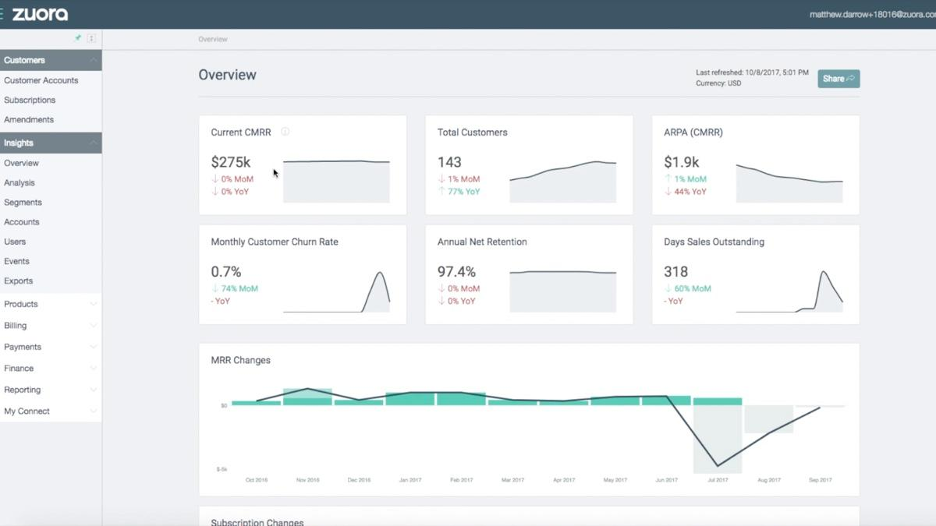
Zuora is built for enterprises that live in subscription chaos—complex pricing, global entities, and finance teams who actually care about ASC 606.
It’s a fit for large SaaS and B2B companies that need billing, usage, and revenue recognition to play nicely with ERPs instead of living in spreadsheets.
Why I Picked Zuora
I picked Zuora because it handles messy, real-world monetization—usage-based, hybrid, and multi-tier pricing—while still giving your finance team clean, auditable data.
You can roll out new plans, add-ons, and contract changes without rewriting billing logic every quarter, which matters when product is constantly tweaking packaging.
For your finance team, Zuora Revenue ties billing schedules to ASC 606-compliant recognition rules, so you get accurate revenue timing instead of guesswork in Excel. I also like that dunning, collections, and payment retries sit inside the same platform, so your team can reduce involuntary churn using actual customer behavior and payment history.
If you’re already running an ERP like NetSuite, SAP, or Workday, Zuora’s prebuilt connectors give you item-level or GL-summary sync, which means order-to-cash doesn’t become a brittle one-off integration project every time your business model evolves.
Zuora Key Features
In addition to its core billing engine, Zuora offers several enterprise-grade tools that matter when you’re running complex, high-volume subscriptions.
- Usage Metering And Billing: Capture granular consumption data, rate it against complex plans, and convert it into accurate invoices each cycle.
- Multi-Entity And Multi-Currency: Support multiple business units and currencies in one tenant while keeping financials clean for consolidation.
- Advanced Dunning And Collections: Configure targeted retry logic, notifications, and workflows to recover failed payments and reduce involuntary churn.
- Subscription Analytics And Dashboards: Monitor MRR, churn, and cohort behavior from billing-native data, giving RevOps and finance a shared view of performance.
Zuora Integrations
Integrations include Salesforce, NetSuite, Workday, SAP, Microsoft Dynamics 365, QuickBooks, Xero, Stripe, Adyen, and GoCardless.
Pros and Cons
Pros:
- Prebuilt ERP connectors reduce manual reconciliation between billing and finance.
- Native revenue recognition helps teams meet ASC 606 requirements reliably.
- Handles complex usage, hybrid, and multi-tier billing at enterprise scale.
Cons:
- Pricing and complexity may be excessive for simple, single-entity subscription models.
- Enterprise deployments can be lengthy and need experienced implementation partners.
Other Subscription Billing Software
Here are some additional subscription billing software options that didn’t make it onto my shortlist, but are still worth checking out:
- BillingPlatform
For global reach
- Stripe Billing
For global payment support
- Bold Subscriptions
For convertible subscriptions
- PayWhirl
For customer self-management
- Ordergroove
For personalized subscriber experiences
- Skio
For no-code subscription management
- Smartrr
For Shopify brands
- Loop Subscriptions
For increasing average order value
- Subskribe
For fast-growing startups
- Stax Bill
For automated proration
- Maxio
For startup scalability
- PayPal Subscriptions
For fast, trusted checkout subscriptions


How I Evaluate Subscription Billing Software
I split my evaluation into two layers—baseline capabilities every tool must clear, and the differentiators that matter for retailers running subscription boxes, memberships, or replenishment programs.
Core Functionality (Table Stakes For This List)
When I'm selecting tools for my list, I rank each one on a scale from 0 (does not offer the functionality) to 5 (excels in this area) for each core functionality listed below. Then, I calculate the tool's total score into a percentage. Each tool needs to achieve a minimum total score of 65% to be considered for inclusion.
- Recurring Billing Automation: I check whether a platform supports flexible billing cadences beyond simple monthly charges, like the weekly or biweekly cycles common in meal kit and replenishment subscriptions.
- Subscription Lifecycle Management: The full subscriber journey matters here—I look for how each tool handles pauses, product swaps, and mid-cycle upgrades that subscription box customers expect.
- Flexible Pricing & Plan Models: Retail subscriptions get creative with pricing, so I evaluate whether a tool supports tiered memberships, hybrid models, bundle discounts, and promotional coupons.
- Payment Gateway & Method Support: I look at which gateways each platform connects to and whether it accommodates multi-currency transactions and diverse methods like digital wallets and ACH.
- Dunning & Churn Management: Failed payments quietly drain recurring revenue, so I evaluate each tool's retry logic, card updater capabilities, and customizable dunning email sequences.
- Tax Compliance & Revenue Reporting: Retail subscriptions ship across tax jurisdictions constantly, so I look for automated tax calculation alongside MRR, ARR, and churn reporting.
Once I have a list of tools that meet this criteria, I consider what sets each platform apart.
Differentiating Factors (What Sets Vendors Apart)
Here's how I compare and contrast different vendors:
Standout Features
A self-service customer portal is a big differentiator—subscription box customers expect to skip a month or swap a product on their own without emailing support. I also evaluate how well a platform syncs subscription plans with product catalogs and inventory, since stock-aware billing prevents overselling during high-demand drops. For DTC brands running custom storefronts, embedded checkout flows and headless APIs determine whether a tool fits into existing site architecture or forces a rebuild.
Beyond Features
Integration depth with your existing retail stack matters just as much as the billing features themselves. I look at whether a platform connects natively to ecommerce engines like Shopify or BigCommerce, plus accounting tools like QuickBooks or Xero, without requiring middleware. Pricing structure is another factor I weigh carefully—a percentage-of-revenue model can quietly erode margins as your subscriber base grows, while flat-fee plans may better serve high-volume retailers. I also consider scalability during peak seasons, since a tool that can't handle holiday rush volumes creates real revenue risk.
How to Choose Subscription Billing Software
Picking the right subscription billing software means focusing on what actually moves the needle for your business: scalability, integrations, and billing flexibility.
Here’s a straightforward checklist to keep your search sharp and avoid getting overwhelmed by feature lists or confusing pricing models.
| Factor | What to consider |
|---|---|
| Scalability | Can the billing platform handle growing transaction volumes and more complex subscription models without breaking a sweat? |
| Integrations | Does it connect with your CRM, ERP, accounting software, and payment gateways to keep workflows smooth and data flowing? |
| Customizability | Can you tailor billing cycles, pricing models (tiered, usage-based, add-ons), and renewals to fit your business model? |
| Ease of use | Is the interface intuitive enough to onboard your team quickly and avoid costly mistakes in your billing process? |
| Pricing | Are pricing plans transparent and flexible? Watch for hidden fees on add-ons, API calls, or billing cycles. |
| Security | Does the software comply with industry standards (PCI DSS, encryption) to protect payment processing and customer data? |
Trends In Subscription Billing Software
Subscription billing software is evolving fast, and knowing where it’s headed helps you pick a platform that won’t hold you back. These are the trends shaping the next generation of billing solutions:
- AI-driven insights for churn and revenue growth. Tools now analyze subscriber data in real time to predict cancellations and recommend retention tactics. This helps boost customer retention and optimize recurring revenue.
- Flexible billing cycles and subscription models. More software supports custom billing frequencies, proration for upgrades or downgrades, and hybrid models like usage-based and tiered pricing, letting you tailor plans to customer preferences.
- Stronger security and compliance. Enhanced features like biometric authentication and automated dunning management protect customer data and reduce failed payments, building trust and safeguarding your business.
- Subscription bundling and add-ons. Platforms are enabling the combination of subscriptions with one-time purchases or service packages, creating more revenue streams and improving customer experience.
- Sustainability tracking. Some solutions now offer reporting on environmental impact, helping businesses meet sustainability goals and share progress with subscribers.
What is Subscription Billing Software?
Subscription billing software is a billing solution that automates managing recurring payments and subscription plans.
It handles everything from flexible billing cycles and upgrades to dunning and revenue recognition, making the billing process smoother and more reliable.
Businesses with subscription models use it to reduce manual errors, optimize cash flow, and improve customer retention through streamlined billing workflows and real-time metrics.
Features of Subscription Billing Software
The right subscription billing software comes loaded with features built to streamline your billing process and optimize recurring revenue:
- Automated invoicing. Cuts down manual errors by generating and sending invoices automatically for every billing cycle.
- Flexible billing cycles. Supports custom schedules—monthly, quarterly, or annual—with proration for upgrades, downgrades, and cancellations.
- AI-driven insights. Uses data analysis to track subscription metrics, predict churn, and suggest pricing strategies to boost retention.
- Usage-based billing. Bills customers based on actual consumption, ideal for SaaS and telecom industries with metered pricing.
- Customizable pricing models. Handles tiered pricing, add-ons, discounts, and bundled subscriptions for diverse revenue streams.
- Security features. Includes PCI compliance, encryption, and advanced fraud detection to protect payment processing and customer data.
- Subscription bundling. Lets you package subscriptions with one-time purchases or services to increase average order value.
- Real-time analytics and dashboards. Provides visibility into MRR, churn, customer subscriptions, and revenue recognition for smarter decision-making.
Benefits of Subscription Billing Software
Implementing the right subscription billing software delivers real advantages that go beyond just automating payments:
- Save time with automated billing. Reduce manual invoicing and retries, freeing your team to focus on growth.
- Improve billing accuracy and cash flow. Cut down on failed payments, proration errors, and missed renewals to keep revenue steady.
- Boost customer retention. Flexible pricing models and smooth upgrade/downgrade workflows improve the subscriber experience and reduce churn.
- Gain better financial visibility. Real-time dashboards and revenue recognition tools give you clear insight into MRR and revenue streams.
- Scale with confidence. Support complex subscription models, usage-based pricing, and global payment methods as your business grows.
- Stay compliant and secure. Automated dunning management and advanced security protocols protect your business and customers.
Costs and Pricing of Subscription Billing Software
Subscription billing software pricing varies based on features, user counts, and add-ons. Here’s a typical breakdown of common plans to help you budget and compare options:
| Plan type | Average price | Common features | Best for |
|---|---|---|---|
| Free plan | $0 | Basic invoicing, limited customer support, standard reporting | Startups and small businesses testing billing software |
| Personal plan | $5–25 per user/month | Automated invoicing, basic analytics, multi-currency support, email support | Small teams with simple subscription needs |
| Business plan | $30–75 per user/month | Flexible billing cycles, customizable pricing models, advanced analytics, priority support | Growing businesses with complex billing needs |
| Enterprise plan | $100–300 per user/month | Usage-based billing, ERP integrations, AI-driven insights, dedicated account management, compliance tools | Large enterprises with complex subscription billing |
Additional costs to consider
Many platforms charge extra for API calls, add-ons like dunning management or advanced analytics, and per-transaction fees—especially for payment processing through gateways like Stripe or PayPal. For enterprise subscription management software, these costs can scale significantly.
Some also impose limits on billing cycles or subscribers before charging more. Always check the fine print on pricing models to avoid surprises.
Subscription Billing Software FAQs
Here are some answers to common questions about subscription billing software:
Can subscription billing software handle multiple payment methods and currencies?
Yes—it’s table stakes. Any platform worth your time lets you take cards, ACH, digital wallets, and wrangles more currencies than your average airport kiosk.
That means fewer excuses when you land a customer in Berlin or Brisbane. Just double-check which methods are baked in and which come with extra fees—hidden “gotchas” are half the reason you’re probably switching in the first place.
How hard is it to switch subscription billing platforms?
It’s never fun, but it won’t wreck your month. Migration’s mostly about clean data and a vendor who actually picks up the phone.
Look for a tool that offers hands-on migration help, sane import/export options, and a setup flow that reads like plain English—not an IT crossword. Budget a few days to a couple of weeks for setup, depending on how messy your billing life is today.
What is dunning management, and why does it matter?
Dunning management is the grown-up way to say “don’t let expired cards kill my revenue.” These tools chase down failed payments by pinging cards a few times and nudging customers with reminders, so you’re not losing cash just because someone’s wallet got replaced.
Skip dunning, and you’ll watch your easy revenue trickle away—quietly, but consistently.
Can subscription billing software support complex pricing strategies like usage-based or tiered pricing?
Absolutely. Good software flexes for anything from all-you-can-eat SaaS to “pay as you grow” plans, or wild tiering schemes the CFO dreams up. That means usage, volume, cocktails of flat + metered—whatever keeps your margins fat and your customers hooked.
How does subscription billing software help with revenue recognition compliance?
It does the math so finance sleeps at night. Modern tools slice and dice what you’ve billed and what you’ve actually “earned” under ASC 606 or IFRS 15 nonsense, then spit out reports that’ll keep auditors out of your hair. If you’re still managing this by spreadsheet, you’re either a wizard or a bit of a glutton for punishment.
How can subscription billing software reduce involuntary churn?
By taking payment failure personally. These platforms use smart retries, card updater services, and clear emails to keep customers from dropping off over nothing but a glitchy card. Involuntary churn adds up—and killing it is one of the fastest ways to grow without lifting a finger in sales.
Can my subscribers manage their own plans or payments?
Yes, most solid billing platforms offer a self-serve portal. Letting customers upgrade, downgrade, or update their card means fewer support tickets and happier humans. You get paid faster and spend less time playing IT helpdesk. If your software can’t handle this, it’s time to move on.
Keep Your Billing On Repeat
Subscription billing doesn’t have to be a recurring headache.
The right software automates your billing cycles, cuts down on failed payments, and gives you real-time insight into your revenue streams and customer lifecycle. That means less time wrestling spreadsheets and more time growing your business.
With tools built to handle everything from flexible pricing models to dunning management and revenue recognition, you can optimize your billing process and keep subscribers coming back.
Pick a platform that fits your scale and complexity—whether commercial or open source subscription management solutions—and stop leaving money on the table.
It’s time to take control of your subscription billing and make your recurring revenue work for you. Or maybe you need a great subscription management platform instead? Either way, we got ya covered.
Retail never stands still—and neither should you. Subscribe to our newsletter for the latest insights, strategies, and career resources from top retail leaders shaping the industry.