

25 Best Stripe Alternatives for Online Payments in 2026

The Top 10 Stripe Alternatives for Better Payment Processing


You know the drill: payment processing is the backbone of any serious retail or ecommerce operation, but Stripe isn’t always the right fit—especially if you’re tired of unpredictable transaction fees, limited payment methods, or support that feels like shouting into the void.
Maybe you want a payment processor with a more transparent pricing structure, better fraud protection, or a platform that actually plays nice with your POS and ecommerce stack.
Or maybe you’re just done with flat-rate fees eating into your margins.
I’ve spent years in the trenches—inventory controller, warehouse manager, international sales, and more—so I know what it’s like to wrangle payment systems that don’t deliver.
That’s why I’ve ranked the best Stripe alternatives: to help business owners, operators, and startups find a payment gateway that’s cost-effective, scalable, and actually user-friendly.
This guide cuts through the SaaS noise. You’ll get a straight-shooting look at the top Stripe competitors, their key features, pricing models, and who they’re best for—so you can optimize your payment processing and get back to running your business.
Why Trust Our Software Reviews
We’ve been testing and reviewing retail and ecommerce software since 2021.
As retail experts ourselves, we know how critical and difficult it is to make the right decision when selecting software. We invest in deep research to help our audience make better software purchasing decisions.
We’ve tested more than 2,000 tools for different retail management use cases and written over 1,000 comprehensive software reviews. Learn how we stay transparent and check out our software review methodology.
Comparing the Best Stripe Alternatives, Side-by-Side
Need the quick version? Here’s a side-by-side comparison of the best Stripe alternatives—pricing, trial details, and ideal use cases—so you can spot the right payment processor for your business without wading through sales fluff.
| Tool | Best For | Trial Info | Price | ||
|---|---|---|---|---|---|
| 1 | Best for all-in-one solutions | Free plan + free trial available | From $49/location/month | Website | |
| 2 | Best for mixed in-person and online payments | 3-month free trial | From $79/month | Website | |
| 3 | Best for predictable processing costs | Free quote available | Pricing upon request | Website | |
| 4 | Best for global business payouts | Free plan available | From $25/month | Website | |
| 5 | Best for ERP integration | Free demo available | From $15/month | Website | |
| 6 | Best for international transactions | Free plan available | From $9.99/month | Website | |
| 7 | Best for omnichannel solutions | Not available | Pricing upon request | Website | |
| 8 | Best for unified transactions | Free test account available | From $0.13 processing fee + payment method fee | Website | |
| 9 | Best for European businesses | Free demo available | From 1.80% + €0.25 | Website | |
| 10 | Best for social payments | Free demo available | From $10/month | Website |
The 10 Best Stripe Alternatives, Ranked & Reviewed
Ready for the details? These reviews break down each top Stripe competitor’s standout features, pricing, integrations, and who they’re best for—so you can pick a payment processing solution that actually fits your business model.

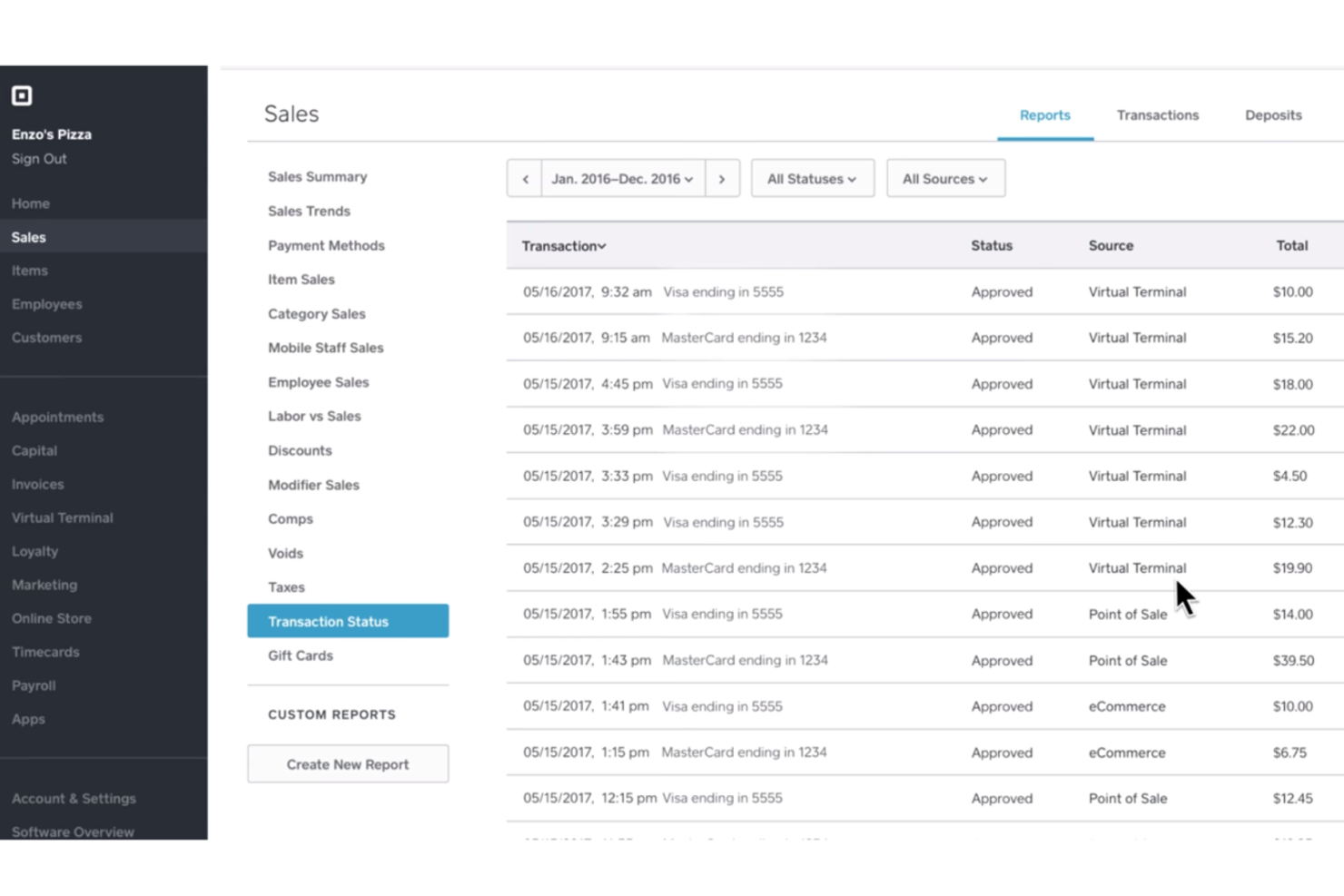
Square is a comprehensive payment processing platform that caters to small and medium-sized businesses, providing tools for accepting payments, managing invoices, and more. It's designed to help businesses handle both in-person and online transactions efficiently.
Why it's a good Stripe alternative: Square offers an all-in-one solution that includes point-of-sale systems, invoicing, and ecommerce capabilities. Its hardware options allow you to accept payments in various ways, from mobile card readers to contactless payments. With features like inventory management and sales analytics, it helps you keep track of your business operations. The comprehensive nature of its offerings makes it a versatile choice for businesses seeking a unified solution.
Standout features & integrations:
Features include inventory management tools that help you keep track of stock levels. The platform offers sales analytics to provide insights into your business performance. You can also manage employee schedules and payroll directly through Square.
Integrations include QuickBooks, Xero, WooCommerce, Shopify, BigCommerce, Magento, Wix, Weebly, Zoho Books, and Acuity Scheduling.
Pros and Cons
Pros:
- Supports employee management
- Includes inventory management
- Versatile payment hardware options
- Comprehensive all-in-one solution
Cons:
- Some features may be industry-specific
- Requires setup and configuration
- Focus on small to medium businesses
New Product Updates from Square
Square Introduces Neighborhoods on Cash App
Square launches Neighborhoods on Cash App, offering businesses access to over 57 million active accounts, direct marketing, neighborhood rewards, and a 1% processing fee. For more information, visit Square's official site.
 .
.

Payment Depot offers a payment processing model that may appeal to business owners who want more predictable rates on credit-card transactions — you pay a membership fee rather than a hidden markup, and get wholesale interchange-plus pricing passed through. It can suit retailers, restaurants, or service-based businesses that regularly accept credit cards and want clarity on what they’ll pay per transaction.
Why I Picked Payment Depot
I picked Payment Depot because its subscription-based pricing with true interchange-plus billing stands out as a cost-conscious alternative to many payment processors — it passes wholesale rates directly to your business rather than inflating them. You get a free virtual terminal and payment-gateway access included with the plan, which means you don’t need to hunt for third-party tools to process online payments or keyed-in transactions. That makes it a good fit if you accept card payments both in person (e.g. retail or restaurant) and online or over the phone.
Payment Depot Key Features
In addition to its transparent pricing model, I also found several other features that make Payment Depot a strong contender as a Stripe alternative:
- No Long-Term Contracts: Businesses can enjoy the flexibility of month-to-month service agreements without being locked into long-term commitments.
- 24/7 Customer Support: Access to round-the-clock assistance ensures that any issues can be resolved swiftly, minimizing downtime and maintaining smooth operations.
- Varied Payment Acceptance: Supports EMV, NFC, and magstripe payments, catering to a wide range of transaction types and customer preferences.
- Merchant Cash Advances: Offers financial solutions to help businesses manage cash flow with advances up to $500,000.
Payment Depot Integrations
Integrations include Clover, SwipeSimple, Vend, QuickBooks, Authorize.Net, WooCommerce, BigCommerce, Magento, Shopify, and Square.
Pros and Cons
Pros:
- 24/7 customer support provides reliable assistance for users.
- No long-term contracts offer flexibility for businesses.
- Transparent pricing with interchange-plus model attracts cost-conscious users.
Cons:
- Membership fees may be high for small or low-volume businesses.
- Not suitable for high-risk or international merchants.

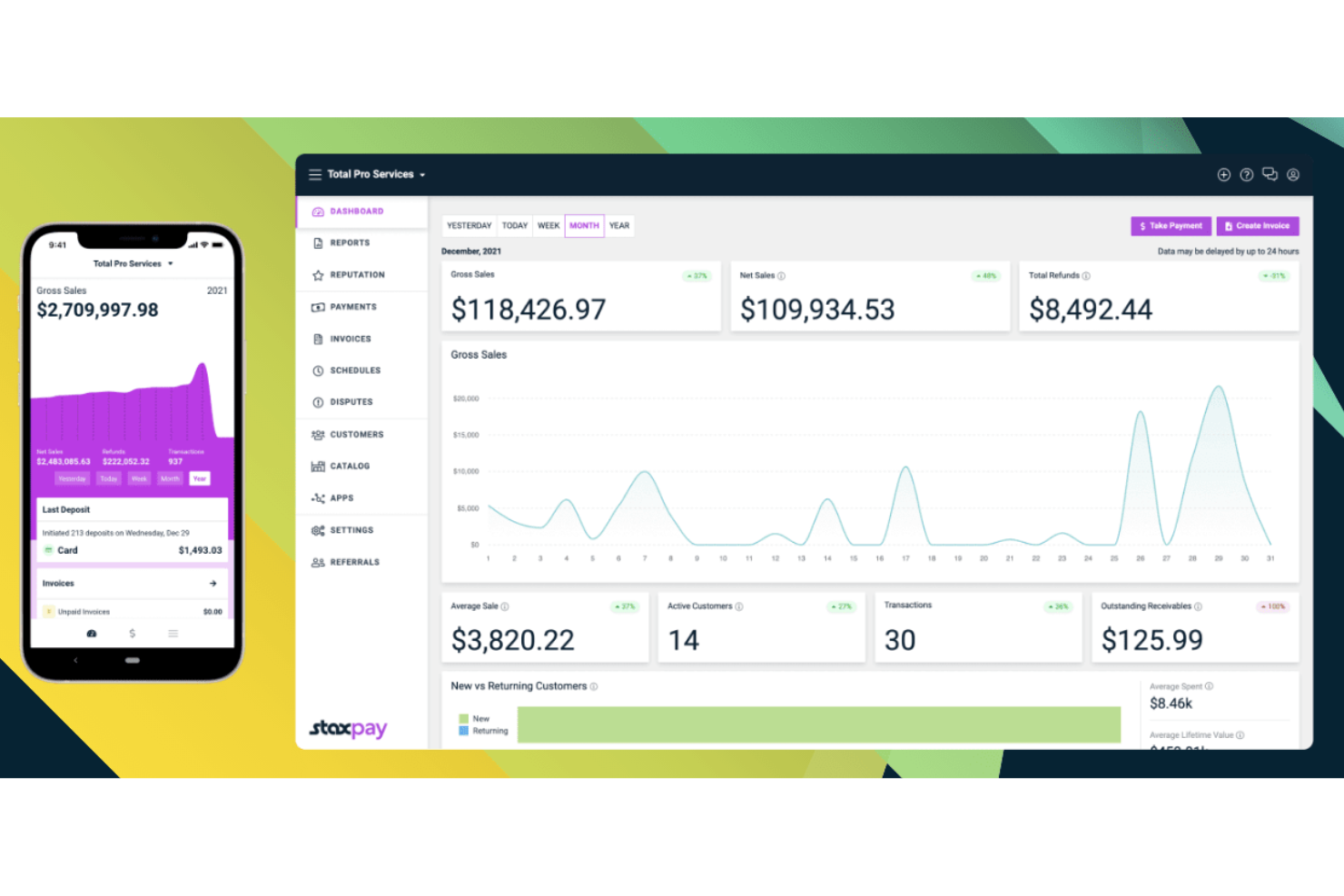
Stax Pay brings payment processing and billing into a single dashboard — ideal if you run a small-to-mid-sized business, e-commerce shop, or service company that handles both in-person and online payments. If your team wants predictable pricing, flexible payment options (card-present, mobile, or online), and a unified way to invoice, bill, and track transactions, Stax Pay can help you simplify operations and avoid juggling multiple tools.
Why I Picked Stax Pay
I picked Stax Pay because its subscription-based pricing with interchange-plus transaction rates gives you predictable costs and potentially lowers your payment processing expenses if you handle consistent monthly volume. Its all-in-one platform lets you manage online payments, in-person card transactions, invoicing, and recurring billing from the same dashboard — a useful advantage for teams juggling physical stores, e-commerce, or a mix of both.
Stax Pay Key Features
In addition to the core benefits above, you’ll find:
- In-person payments: Accept swiped, dipped, or tapped cards (plus mobile wallet payments via Apple Pay / Google Pay) using smart terminals or mobile card readers.
- Online payments: Use pre-built, no-code hosted payment pages, payment links, buttons, or QR codes to accept payments via web without heavy development work.
- Mobile payments: With the Stax mobile app, you can take key-in, swiped, or tapped payments from anywhere and get real-time sales reporting on the go.
- Invoicing and recurring billing: Send branded invoices by email or text, schedule recurring payments for subscriptions or services, and automate invoice reminders to customers.
Stax Pay Integrations
Integrations include QuickBooks, Salesforce, WooCommerce, Shopify, BigCommerce, Magento, Xero, NetSuite, FreshBooks, and Zapier. An API is also available for custom integrations.
Pros and Cons
Pros:
- Ability to pass processing fees to customers where surcharge laws allow.
- Supports various payment methods, including mobile processing.
- Transparent subscription-plus-interchange pricing gives predictable costs.
Cons:
- Subscription fee may outweigh savings for low-volume merchants.
- Next-day funding isn’t guaranteed and sometimes comes with extra cost.


Slash is a financial platform built for industries that need flexible, tech-forward banking options, including Web3, e-commerce, and healthcare. It combines corporate cards, business banking, and treasury services in one place, offering high-yield accounts, cashback rewards, and financing tools. Slash also supports stablecoin payments, helping businesses expand into digital and global financial ecosystems.
Why it’s a good Stripe alternative: I picked Slash because it brings together modern financial tools that help you manage global business payouts, expenses, and assets more efficiently. Unlike Stripe, which focuses primarily on payment processing, Slash offers integrated banking features like high-yield accounts, customizable corporate cards, and real-time transaction authorization. If your business works with crypto or operates globally, Slash’s stablecoin support can also simplify multi-currency transactions while maintaining compliance.
Standout features & integrations:
Features include corporate cards with unlimited cashback and granular spending controls, stablecoin payments for crypto-to-fiat conversion, and treasury services for optimized cash flow. The platform also supports multi-entity management and API access for custom financial automation.
Integrations include Google Sheets, Notion, Email, Webhook, Amplitude, Airtable, Zapier, and Slack.
Pros and Cons
Pros:
- Multi-entity financial data management
- Integrates with accounting platforms
- Automated transaction categorization and mapping
Cons:
- Learning curve for complex features
- Limited onboarding and training materials


EBizCharge is a payment processing solution primarily used by businesses that need integrated payment systems with their ERP and accounting software. It helps streamline the payment process by handling credit card and ACH transactions directly within the user's existing software.
Why it's a good Stripe alternative: EBizCharge offers extensive ERP integration capabilities, allowing you to process payments directly from your ERP system. It provides tools for reducing processing fees and offers advanced security features to protect sensitive data. With its focus on integration and cost savings, EBizCharge helps you manage payments more effectively. Its user-friendly interface makes it accessible for teams of varying sizes.
Standout features & integrations:
Features include in-depth reporting tools that give you insights into your transaction data. The platform offers advanced fraud protection to safeguard your business. You can also benefit from its recurring billing feature, which simplifies managing subscriptions.
Integrations include QuickBooks, Microsoft Dynamics, SAP Business One, NetSuite, Sage 100, Sage 300, Acumatica, Epicor, AccountMate, and MYOB.
Pros and Cons
Pros:
- Effective payment management
- User-friendly interface
- Advanced security features
- Strong ERP integration capabilities
Cons:
- Some features might be ERP-specific
- May need technical support
- Limited for non-ERP users


Revolut is a payment processing platform tailored for businesses that need to manage international transactions efficiently. It serves companies that operate across borders, providing tools for handling multiple currencies and financial services.
Why it's a good Stripe alternative: Revolut offers competitive exchange rates and multi-currency accounts, which help you save on international transaction costs. Its ability to handle payments in different currencies makes it ideal for businesses with a global reach. With features like instant currency exchange and spending analytics, you can manage your finances more effectively. The focus on international transactions and cost savings differentiates it from other payment solutions.
Standout features & integrations:
Features include virtual cards for secure online transactions. The platform provides spending controls that help you manage expenses. You can also access detailed analytics to track and analyze your financial activities.
Integrations include Xero, QuickBooks, FreeAgent, Sage, Shopify, WooCommerce, Magento, BigCommerce, PrestaShop, and OpenCart.
Pros and Cons
Pros:
- Ideal for global businesses
- Detailed spending analytics
- Instant currency exchange
- Multi-currency accounts
Cons:
- Focus on international needs
- Some features are region-specific
- Limited for domestic-only businesses

Fiserv is a payment processing platform that serves online businesses of all sizes, offering solutions for both in-store and online transactions. It's widely used by retailers, financial institutions, and service providers to handle payments and manage financial operations.
Why it's a good Stripe alternative: Fiserv provides comprehensive omnichannel solutions that allow you to integrate your payment systems across multiple platforms. Its advanced analytics help you understand customer behavior and optimize your sales strategies. With secure payment processing and customizable solutions, you can tailor the platform to meet your specific business needs. The focus on omnichannel capabilities makes it a versatile choice for diverse business environments.
Standout features & integrations:
Features include detailed analytics tools that provide insights into your business performance. Fiserv offers secure payment gateways to ensure safe transactions for your customers. You'll also find value in their customizable point-of-sale systems that adapt to various business models.
Integrations include Clover, QuickBooks, Shopify, Magento, WooCommerce, BigCommerce, Salesforce, NetSuite, SAP, and Oracle.
Pros and Cons
Pros:
- Customizable solutions
- Secure payment processing
- Advanced analytics tools
- Strong omnichannel capabilities
Cons:
- Limited customization for niche markets
- Learning curve for new users
- Setup can be complex

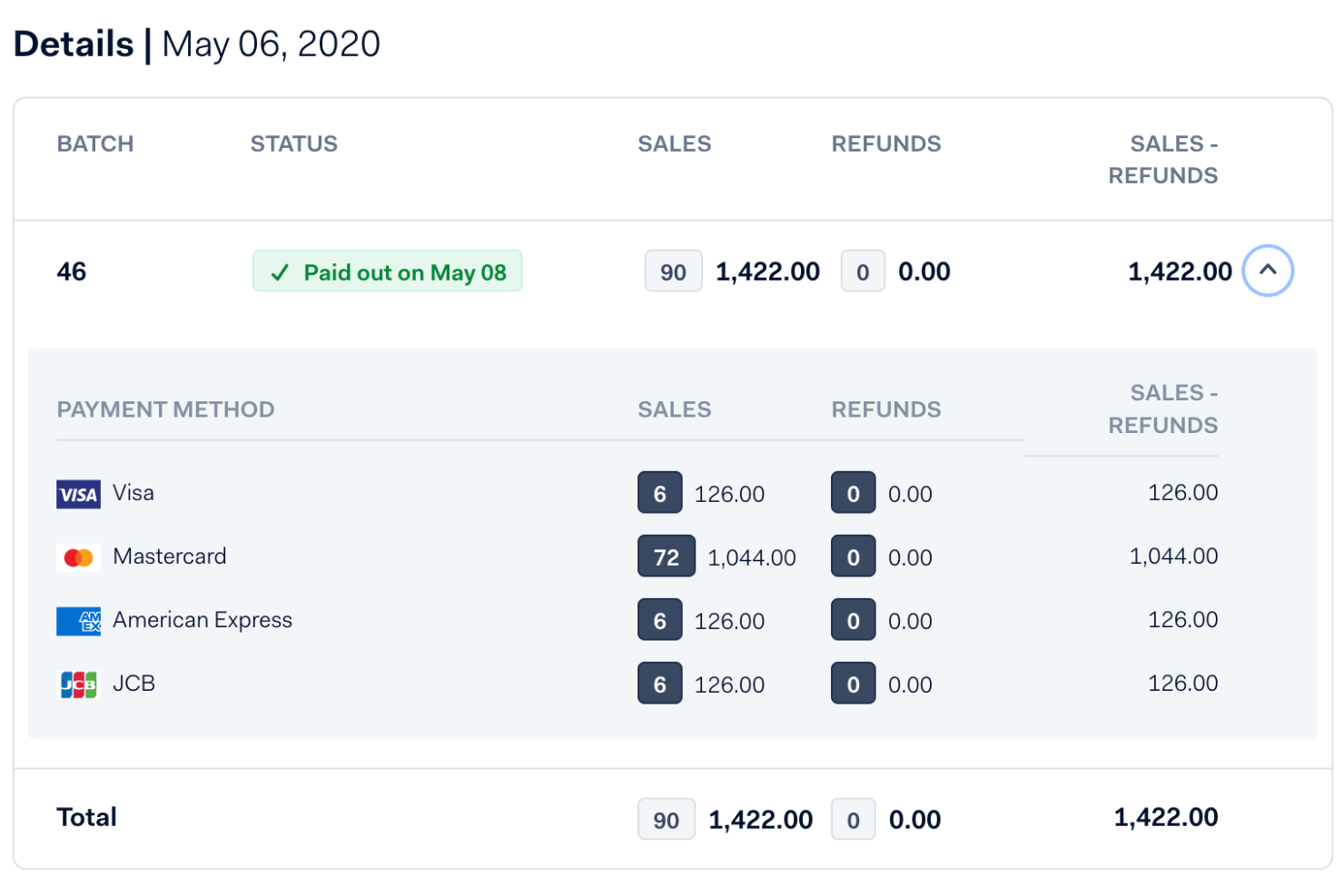
Adyen is a payment processing platform designed for businesses that require a single solution to manage multiple payment methods. It caters to enterprises looking to handle transactions across online, mobile, and in-store channels.
Why it's a good Stripe alternative: Adyen provides a unified transaction platform, allowing you to manage various payment methods through a single system. Its real-time data insights help optimize payment strategies, and its advanced fraud protection ensures secure transactions. With support for global payment methods, it offers flexibility for businesses operating internationally. The focus on unifying transactions across different channels makes it a versatile alternative.
Standout features & integrations:
Features include a comprehensive reporting system that offers insights into transaction data. You can access advanced fraud prevention tools to safeguard your payments. The platform also supports local acquiring, which helps optimize payment acceptance rates in different regions.
Integrations include Shopify, Magento, WooCommerce, Salesforce Commerce Cloud, BigCommerce, PrestaShop, OpenCart, SAP Commerce Cloud, QuickBooks, and NetSuite.
Pros and Cons
Pros:
- Flexible for international businesses
- Supports global payment methods
- Advanced fraud protection
- Unified transaction management
Cons:
- Not ideal for simple setups
- Focus on large enterprises
- May require technical expertise


Mollie is a payment processing platform catering to businesses of all sizes, facilitating both online and in-person transactions. It's widely used by startups and enterprises for managing payments, subscriptions, and invoicing.
Why it's a good Stripe alternative: Mollie caters specifically to European businesses, offering features like support for local payment methods such as iDEAL and SEPA bank transfers. It provides tools for creating secure payment links and accepting contactless payments via iPhone. Mollie's fast payment terminal, Tap, and its focus on cost reduction make it a suitable choice for businesses looking to enhance their payment processing within Europe.
Standout features & integrations:
Features include tools for fraud prevention, embedded payments, and access to capital for business growth. You can manage both online and in-person payments, and Mollie offers an optimized checkout solution to improve user experience.
Integrations include WooCommerce, Shopify, Magento, Prestashop, BigCommerce, Kibo Commerce, Shopware, OpenCart, Lightspeed, and Ecwid.
Pros and Cons
Pros:
- Focuses on European businesses
- Provides payment insights
- Offers contactless payment options
- Supports local payment methods
Cons:
- Some features are region-specific
- May lack advanced customization
- Limited global reach


Venmo for Business is a payment processing platform tailored for businesses that want to leverage social interactions for transactions. It caters to small and medium-sized businesses looking to engage customers through social media-like payment experiences.
Why it's a good Stripe alternative: Venmo for Business offers a unique social payment experience, allowing your customers to share and interact with payments. Its easy-to-use interface and quick transfer capabilities make it ideal for businesses that want to enhance customer engagement. With features like transaction sharing and social media integration, you can create a more interactive payment experience. The focus on social payments makes it a compelling alternative for businesses aiming to connect with customers on a personal level.
Standout features & integrations:
Features include transaction sharing, which allows customers to share their purchases with friends. The platform offers quick transfer capabilities, ensuring fast access to funds. You can also benefit from its user-friendly interface that simplifies the payment process.
Integrations include PayPal, Shopify, WooCommerce, BigCommerce, Magento, PrestaShop, OpenCart, Squarespace, Wix, and Weebly.
Pros and Cons
Pros:
- Ideal for small businesses
- User-friendly interface
- Quick transfer capabilities
- Social payment experience
Cons:
- May need frequent updates
- Requires social media presence
- Focus on social interaction
Other Stripe Alternatives
Here are some additional Stripe alternatives that didn’t make it onto my shortlist, but are still worth checking out:
- Elavon
For fast funding
- Checkout.com
For advanced fraud detection
- Authorize.net
For small businesses
- WePay
For platform integration
- KIS Payments
For credit card rewards
- Airwallex
For cross-border transactions
- PayPal
For PayPal user integration
- Helcim
For transparent pricing
- Shopify Payments
For ecommerce platforms
- Merchant One
For high-risk merchants
- Stax
For subscription businesses
- Payline Data
For customized payment solutions
- Finix
For platform payments
- QuickBooks Payments
For accounting integration
- Clover
For retail businesses


Our Selection Criteria For Stripe Alternatives
Here’s how I separate the real Stripe competitors from the SaaS pretenders. Every payment processor on this list had to check these boxes—and then some:
Core functionality (25% of total score)
To make the list, a payment platform has to nail the basics—no exceptions.
- Accept credit card payments. Handles both card and ACH transactions reliably.
- Process refunds. Makes it easy to issue and track refunds for any transaction.
- Manage recurring billing. Supports subscriptions and automated payments without headaches.
- Provide transaction reports. Gives you clear, actionable data on every sale.
- Ensure data security. Meets PCI compliance and protects sensitive customer info.
Additional standout features (25% of total score)
Beyond the fundamentals, I look for features that actually move the needle for business owners.
- Support for multiple currencies. Handles international payments and currency conversion.
- Advanced fraud detection. Uses machine learning or rules to flag suspicious activity.
- Customizable checkout pages. Lets you brand and optimize the payment experience.
- Mobile payment capabilities. Accepts payments on the go, not just online.
- POS integration. Syncs with your in-store systems for true omnichannel coverage.
Usability (10% of total score)
If the interface is clunky or confusing, it’s a nonstarter.
- Intuitive interface design. Clean, modern, and easy to navigate.
- Easy navigation. You can find what you need without a manual.
- Comprehensive user guides. Clear documentation and how-tos.
- Availability of mobile apps. Manage payments from anywhere.
- Customizable dashboards. Tailor your view to what matters most.
Onboarding (10% of total score)
Getting up to speed should be painless, not a project.
- Availability of training videos. Learn the ropes without a sales call.
- Interactive product tours. See features in action before you commit.
- Access to templates. Prebuilt workflows to save you setup time.
- Webinars for new users. Live or recorded sessions to answer real questions.
- Chatbot assistance. Instant help for common onboarding hurdles.
Customer support (10% of total score)
When payments break, you need real help—fast.
- 24/7 support availability. Someone’s always on call.
- Response time to inquiries. No black hole ticketing systems.
- Access to live chat. Get answers in real time, not “within 48 hours.”
- Availability of phone support. Sometimes you just need to talk to a human.
- Comprehensive FAQ section. Find quick answers without waiting.
Value for money (10% of total score)
You deserve pricing that’s upfront, fair, and free of fine print.
- Transparent pricing structure. No hidden monthly fees or surprise charges.
- Competitive transaction fees. Rates that don’t eat your margins.
- Availability of free trials. Test before you buy.
- Discounts for annual billing. Save if you’re ready to commit.
- Flexibility in payment plans. Options for different business sizes and needs.
Customer reviews (10% of total score)
I trust real-world operator feedback over vendor spin every time.
- Overall satisfaction ratings. High marks from actual users.
- Frequency of positive mentions. Consistent praise, not just one-off raves.
- Commonly reported issues. No dealbreakers hiding in the fine print.
- Feedback on customer support. Fast, helpful, and human.
- User recommendations. Would real operators choose it again?
If a payment processing solution didn’t deliver on these, it didn’t make the cut.
What is Stripe?
Stripe is a payment processing platform that lets businesses accept online payments, credit cards, and digital wallets with minimal hassle.
It’s the go-to tool for ecommerce pros, SaaS startups, and anyone who wants to move money online without hiring a team of developers.
With Stripe, you get flexible APIs, global payment methods, and built-in tools for subscriptions, recurring billing, and fraud prevention—all designed to help you take payments, manage transactions, and stay focused on actually running your business.
Why Look For a Stripe Alternative?
Stripe is a solid payment processor, but it’s not a one-size-fits-all solution.
You might be searching for a Stripe alternative if you’re tired of high transaction fees, need better customer support, or want more flexibility with payment methods and integrations.
Maybe Stripe doesn’t support your region, or your business has unique compliance or customization needs that Stripe just can’t handle.
The bottom line: if Stripe is holding you back—on cost, features, or control—there are plenty of credit card processing platforms out there that can give you more leverage, better pricing, and a setup that actually fits your business model.
Stripe Alternatives Key Features
Here’s what you should expect from any Stripe alternative worth your time—and your transaction fees:
- Flexible payment acceptance. Take credit cards, debit cards, ACH, digital wallets, and local payment methods—online, in-store, or on mobile.
- Transparent pricing and lower fees. Clear pricing models, competitive transaction fees, and no nasty surprises on your monthly statement.
- Customizable checkout and integrations. Seamless integrations with your ecommerce platform, POS, or CRM, plus the ability to brand and optimize your checkout flow.
- Recurring billing and subscription management. Built-in tools for handling subscriptions, automated billing, and one-off or recurring payments.
- Advanced fraud protection and security. PCI compliance, real-time fraud detection, chargeback management, and tools to keep your business and customers safe.
- Multi-currency and global support. Accept payments in multiple currencies and serve customers worldwide—without jumping through hoops.
- Actionable analytics and reporting. Get clear, real-time insights into sales, transaction volumes, payouts, and more—so you can actually make data-driven decisions.
- Responsive customer support. Access to real humans via chat, phone, or email when things go sideways—or you just need a straight answer.
The best Stripe alternatives are built to give you more control, more options, and a payment processing experience that actually fits the way you do business.
Time to Make Your Move
If Stripe is making you grind your teeth over transaction fees, rigid features, or lackluster support, it’s time to stop settling.
The right payment processor should work as hard as you do—freeing up your team, fitting your stack, and not siphoning away your margins.
Whether you need global payments, custom checkout, better fraud protection, or just a real human when you need help, there’s a Stripe alternative out there that actually fits your business. Don’t waste another quarter wrestling with a platform that doesn’t serve you.
Pick a payment processing solution that gives you real leverage—and get back to what actually matters: growing your business, not babysitting your payment stack.
If you're in the process of researching payment processing, connect with a SoftwareSelect advisor for free recommendations.
You fill out a form and have a quick chat where they get into the specifics of your needs. Then you'll get a shortlist of software to review. They'll even support you through the entire buying process, including price negotiations.
Retail never stands still—and neither should you. Subscribe to our newsletter for the latest insights, strategies, and career resources from top retail leaders shaping the industry.