25 Best Retail Management Software for 2026

The Top Retail Management Software for Your Store
Let’s start with the leaderboard here. These are the top retail management solutions and what they are best at:


Retail management software streamlines everything from barcode-driven inventory tracking to mobile POS transactions, purchase order accuracy, and cross-channel reporting—helping you run your store smarter and boost profit.
The right platform eliminates system slowdowns, so you can keep shelves stocked and customers happy in real time.
After years in global shipping, warehouse ops, and ecommerce, I’ve put top retail management software to the test.
Here, I’ll show you which tools deliver results and how to pick the best one for your business.
Why Trust Our Software Reviews
We’ve been testing and reviewing retail and ecommerce software and services since 2021.
As retail experts ourselves, we know how critical and difficult it is to make the right decision when selecting software. We invest in deep research to help our audience make better software purchasing decisions.
We’ve tested more than 2,000 tools for different finance and accounting use cases and written over 1,000 comprehensive software reviews. Learn how we stay transparent and our review methodology.
Comparing the Best Retail Management Software, Side-by-Side
Need the short version? The table below distills each retail management software pick into a one-line “best for,” trial details, and starting price. Skim it for a quick fit check on POS speed, inventory control, or omnichannel support—then dive deeper where it counts.
| Tool | Best For | Trial Info | Price | ||
|---|---|---|---|---|---|
| 1 | Best for enterprise retailers | Free demo available | Pricing upon request | Website | |
| 2 | Best for real-time stock notifications | Free trial + free demo available | From $59/month | Website | |
| 3 | Best for warehouse management | Free 14-day trial + free plan + free demo available | From $29 per organization/month (billed annually) | Website | |
| 4 | Best for end-to-end retail management | Free demo available | Pricing upon request | Website | |
| 5 | Best for cross-module workflows | Free demo available | Pricing upon request | Website | |
| 6 | Best for field team management | Free demo available | Pricing upon request | Website | |
| 7 | Best for table-service restaurants | Free demo available | From $99/month | Website | |
| 8 | Best for retail cash flow management | Free plan available | From $199/month | Website | |
| 9 | Best for small businesses | Free plan available | From $29/month | Website | |
| 10 | Best all-in-one retail management software | Not available | Pricing upon request | Website | |
| 11 | Best for merchandise management | Not available | Pricing upon request | Website | |
| 12 | Best for direct integration to NetSuite ERP | Free demo available | From $999/month + $99/month/user | Website | |
| 13 | Best for inventory management | Free trial available | From $69/month | Website | |
| 14 | Best for barcode solutions in the retail sector | Free demo available | Pricing available upon request | Website | |
| 15 | Best for speciality retail businesses | Not available | Pricing upon request | Website | |
| 16 | Best for enhancing customer loyalty | Free account; just pay for processing fees | From 1.74% +10¢ per transaction | Website | |
| 17 | Best for in-depth reporting | Free consultation available | Pricing upon request | Website | |
| 18 | Best for automated purchasing | Free demo available | From $199/2-users/month | Website | |
| 19 | Best for multichannel sales | Free demo available | Pricing upon request | Website | |
| 20 | Best for CPG retail execution | Free 60-day trial available | Pricing upon request | Website |
The Best Retail Management Software, Reviewed
The reviews that follow break down how each platform handles real-world workflows: barcode accuracy, mobile POS uptime, order management, and cross-channel reporting. I kept the tool blurbs intact but added context on functionality, pricing quirks, and who should (or shouldn’t) put it in their tech stack.


Oracle Retail is built for enterprise retailers that need accurate, cross-channel control over merchandising, pricing, and inventory.
You get a unified platform for planning, buying, allocating, and tracking stock across huge store networks. It’s best for teams managing complex product hierarchies and large seasonal assortments.
Who is Oracle Retail Best For?
Retail operations and merchandising executives in large enterprises globally managing complex retail operations and enterprise-scale workflows.
Why I Picked Oracle Retail
I picked Oracle Retail because it gives you one system for item setup, purchasing, and stock governance—critical when you’re dealing with thousands of SKUs across hundreds of stores.
Your team benefits from demand forecasting and planning tools that recommend buys and allocations based on real sales patterns, not gut feel.
I also like that the pricing and promotion modules tie margin targets directly to regular, promo, and markdown strategies.
Finally, Oracle's store operations tools help associates receive, count, and fulfill orders with more accurate on-hand data.
Oracle Retail Key Features
In addition to the core merchandising tools, Oracle Retail includes several modules you can use to strengthen daily planning and store execution.
- Lifecycle Pricing Optimization: Models regular, promo, and markdown prices against margin and sell-through goals.
- Assortment Planning: Helps planners localize assortments with forecast-driven option counts and seasonal insights.
- Order Management Suite: Routes and fulfills orders across channels based on actual availability.
- Store Inventory Operations: Supports receiving, counting, and inventory adjustments from mobile devices.
Oracle Retail Integrations
Integrations include Salesforce, SAP, Shopify, Snowflake, ServiceNow, and Workday.
Pros and Cons
Pros:
- OMS and store tools help teams fulfill orders with fewer stock errors.
- Unified merchandising workflows improve financial and inventory accuracy.
- Extensive planning and pricing tools support complex retail structures.
Cons:
- Pricing aligns more with large retail enterprises than smaller chains.
- Long, resource-heavy implementations.


KORONA POS gives growing retailers a way to keep shelves stocked, stores compliant, and margins intact across one or many locations.
It’s especially useful if you’re juggling complex inventory—liquor, vape, specialty food, or gift shops—and need real-time visibility instead of guessing from yesterday’s reports.
Who is KORONA POS Best For?
Store managers and inventory supervisors in small to mid-sized retail businesses in North America and Europe requiring real-time stock notifications.
Why I Picked KORONA POS
I picked KORONA POS because it gives you real-time stock notifications and automated reordering, so you can set par levels and let the system flag issues before stockouts or overstock pile up on your balance sheet.
You can also manage vendors directly through the platform, which means your team can compare supplier performance and tighten up purchasing instead of chasing spreadsheets.
I like that the same inventory logic works whether you’re running a single shop or a growing chain, so your team can keep one playbook as you add locations.
For compliance-heavy retailers, KORONA POS includes age verification and product flags that help cashiers catch restricted items at checkout, reducing risk while keeping lines moving.
On the payments side, it stays processor-agnostic, so you can shop for better rates instead of being locked into one provider.
KORONA POS Key Features
Beyond those inventory and compliance tools, a few extra features make KORONA POS feel like an actual retail management hub, not just a cash register.
- KORONA Studio Dashboard: Cloud-based back office where you adjust pricing, promotions, and ordering rules from anywhere.
- Advanced Reporting And KPIs: Prebuilt reports for sales, categories, locations, and staff performance so you can spot trends faster.
- Customer Loyalty Programs: Built-in loyalty and promotions engine that lets you reward repeat shoppers without bolting on another app.
- Ticketing And Membership Tools: Support for tickets, passes, and memberships for verticals like museums, wineries, and attractions.
KORONA POS Integrations
Integrations include WooCommerce, Adobe Commerce, QuickBooks Online, Bookkeep, bLoyal, Bottlecapps, TimeForge, Octopus Bridge, Card Market, and CMS Max.
Pros and Cons
Pros:
- Age-verification and shelf-life tracking support liquor, vape, and specialty food retailers.
- Franchise tools handle royalties and multi-store reporting in one shared backend.
- Real-time inventory alerts prevent stockouts and overstock across all locations.
Cons:
- Performance on some tablets can lag during busy retail hours.
- Limited offline functionality; some features require constant internet connectivity.
New Product Updates from KORONA POS

KORONA POS Enhances Reporting Tools for Better Tracking
KORONA POS has updated its reporting tools with new grouping, columns, and time-tracking features to improve data visibility across discounts, stock, and cancellations. For more information, visit KORONA POS's official site.
 .
.

Zoho Inventory is built for retailers and wholesalers who are juggling inventory across multiple warehouses, channels, and regions.
You get granular control over batches, serials, and locations so you can see exactly what’s sitting where—and what’s at risk of expiring or running out—without graduating to a heavy ERP.
It’s a strong fit if your team needs warehouse-level visibility, not just a stock-on-hand number in your POS.
Who is Zoho Inventory Best For?
Warehouse managers and operations teams in small to mid-sized organizations globally overseeing inventory tracking and stock control.
Why I Picked Zoho Inventory
I picked Zoho Inventory because it gives you true multi-warehouse visibility—each location has its own stock, bins, and transfer orders, so you can route fulfillment with confidence.
You also get batch and serial tracking for products that need traceability, letting your team handle recalls, warranties, or expiry-sensitive items without spreadsheets.
Barcode scanning speeds up picking and packing by capturing SKUs, batches, or serials directly into orders.
And the built-in reorder alerts keep you ahead of low-stock issues by tying replenishment to actual warehouse activity.
Zoho Inventory Key Features
Beyond the core warehouse controls, Zoho Inventory adds a few operational features your team will actually use day to day.
- Replenishment Planning: Uses reorder levels and replenishment views to highlight low-stock items so you can raise purchase orders before you hit stockouts.
- Pick, Pack, And Ship Workflows: Supports picklists, packages, and shipments in one place so your team can move orders from shelf to truck without hopping between tools.
- Shipping Rate And Label Management: Connects to shipping carriers for live rates, label generation, and shipment tracking inside Zoho Inventory.
- Inventory And Sales Reporting: Surfaces stock movement, backorders, and warehouse-level performance so you can tweak layouts, purchase quantities, and fulfillment rules with actual data.
Zoho Inventory Integrations
Integrations include Shopify, Amazon, eBay, Etsy, Zoho Commerce, Zoho Books, Zoho CRM, USPS, UPS, and AfterShip.
Pros and Cons
Pros:
- Reorder alerts and replenishment views reduce out-of-stock risk.
- Batch and serial tracking plus barcode scans support precise picking.
- Multi-warehouse tracking with transfer orders keeps stock balanced across locations.
Cons:
- No built-in demand forecasting for complex, multi-season inventory patterns.
- Advanced tracking features locked to higher-tier paid subscription plans.


Brightpearl gives growing multi-channel retailers and wholesalers a single place to run inventory, orders, purchasing, warehousing, CRM, and accounting.
It’s best if you’re past the starter-tool phase and need tighter control over post-purchase operations across ecommerce, marketplaces, and stores.
Who is Brightpearl Best For?
Retail managers and operations leads in small to mid-sized omnichannel retailers globally managing end-to-end retail operations.
Why I Picked Brightpearl
I picked Brightpearl for retailers who want one “source of truth” for operations instead of stitching together separate inventory, order, and accounting tools.
When you update stock, ship an order, or receive a purchase order, those changes roll through the same system so your team isn’t reconciling spreadsheets at month-end.
You can set up rules so Brightpearl automatically allocates stock, prioritizes certain channels, or routes orders to the right warehouse, which means your team spends more time solving exceptions and less time keying repetitive updates.
For multichannel brands, it supports higher order volume—online, marketplace, and in-store—while still giving you accurate available-to-sell numbers and landed-cost-aware margins.
Because accounting, inventory, and order data live together, you get cleaner performance reporting by product, channel, and location, which makes it easier to decide where to invest in stock and marketing.
Brightpearl Key Features
Here are a few Brightpearl features retailers actually use day to day.
- Multi-Location Inventory Planning: Coordinate stock, transfers, and safety levels across warehouses so planners can protect availability without overbuying.
- Backorder And Preorder Management: Capture demand when items aren’t on the shelf and automatically allocate incoming stock so sales, purchasing, and service stay aligned.
- Returns And RMA Workflows: Track returns from authorization through restocking or write-off so refunds, stock levels, and margins stay accurate.
- Retail Analytics Dashboards: Monitor channel, SKU, and location performance in configurable views so leadership can quickly spot bottlenecks and underperforming lines.
Brightpearl Integrations
Integrations include Shopify, BigCommerce, Magento, Amazon, eBay, Walmart, Xero, QuickBooks Online, Sage Intacct, and Mailchimp.
Pros and Cons
Pros:
- Multichannel stock sync helps prevent overselling across ecommerce, marketplaces, and stores.
- Automation rules reduce manual work in allocation, purchasing, and order routing.
- Unified operations platform for inventory, orders, purchasing, CRM, and accounting.
Cons:
- Quote-based pricing and no public tiers complicate upfront cost comparisons.
- Initial implementation and configuration can be demanding for smaller internal teams.

Acumatica Cloud ERP is built for retailers trying to wrangle inventory, orders, and customers across stores, warehouses, and ecommerce without living in spreadsheets.
It’s a good fit for mid-market retailers with multi-location or omnichannel operations who want one place to manage stock, financials, POS, and commerce instead of stitching together a dozen point solutions.
Who is Acumatica Cloud ERP Best For?
Finance and operations teams in mid-sized to large companies in North America and Europe coordinating workflows across multiple business modules.
Why I Picked Acumatica Cloud ERP
I picked Acumatica Cloud ERP because it gives you one system for inventory, orders, customers, and financials, so your team isn’t reconciling mismatched data every week.
You get real-time stock visibility across warehouses, stores, and ecommerce, helping you reduce overselling while keeping lean inventory.
Its POS ties directly into order and inventory data, letting you support BOPIS and returns without manual rekeying.
I also like the native commerce connectors, which keep product data and orders synced across Shopify, BigCommerce, and Amazon.
Acumatica Cloud ERP Key Features
Here are a few retail-specific capabilities that matter once you’re past basic inventory and need real operational control.
- Customer Self-Service Portal: Let customers track orders, view invoices, and submit cases online, cutting support tickets while keeping account history tied to your CRM.
- Warehouse Management System: Use barcode-driven receiving, picking, and packing to keep back-of-house activity synced with sales, reducing mis-picks and shipping mistakes.
- Role-Based Dashboards: Give store managers, buyers, and finance their own live KPIs for sales, margin, stock turns, and returns, instead of static reports that are outdated by Monday afternoon.
- Retail Pricing And Promotions: Centralize catalog, pricing, and discount rules so you can run consistent promotions across stores and channels without hand-editing POS and ecommerce settings.
Acumatica Cloud ERP Integrations
Integrations include Shopify, BigCommerce, Magento, Amazon, ShipStation, SPS Commerce, 3G Pacejet Shipping, and Avalara.
Pros and Cons
Pros:
- Role-based dashboards give store and ops leaders quick margin insights.
- Native ecommerce connectors keep online orders and stock reliably aligned.
- Real-time inventory across stores and channels reduces overselling risk.
Cons:
- Advanced configuration can feel heavy for small single-location retailers.
- Implementation and setup typically require a partner experienced with retail.


Repsly helps CPG brands and retail service providers keep field reps, merchandisers, and store conditions under control across a huge retail footprint.
You get a mobile-first app for visits in the field plus HQ dashboards that turn store-level activity, photos, and surveys into decisions about promotions, facings, and availability.
Who is Repsly Best For?
Field sales managers and team supervisors in mid-sized consumer goods and retail companies in North America and Europe managing mobile teams.
Why I Picked Repsly
I picked Repsly because it gives field teams clear visit agendas, photo tools, and mobile forms so every store stop produces useful data, not guesswork.
Its AI image recognition turns shelf photos into SKU-level insights, helping you spot out-of-stocks and display issues through trained models tied to your product catalog.
Managers get dashboards that compare execution by retailer, brand, or rep, giving you concrete follow-up actions instead of anecdotes.
Repsly Key Features
Beyond basic field visit tracking, Repsly gives you tools aimed squarely at retail execution quality and coverage.
- Territory Management & Scheduling: Define territories, set visit frequencies, and assign routes so reps hit priority accounts at the right cadence.
- In-Store Order Capture: Let reps submit orders, returns, and replenishment requests from the aisle, tied to each account’s history.
- Mobile Forms & Surveys: Build store audit templates, promo compliance checklists, and survey forms that reps complete on their phones.
- Insights Dashboards & KPIs: Track execution metrics, shelf conditions, and promotion performance in near real time across regions and teams.
Repsly Integrations
Integrations include Salesforce, HubSpot, Zoho CRM, QuickBooks, Xero, Mailchimp, Google Sheets, and Microsoft 365.
Pros and Cons
Pros:
- Mobile forms and surveys capture consistent data across every store visit.
- Territory and visit planning tools support large, distributed retail footprints.
- AI shelf recognition helps catch out-of-stocks and display issues quickly.
Cons:
- Visit submissions are hard to fix when reps check in at wrong locations.
- Form builder can take time to configure for complex workflows.


Revel Systems is built for busy table-service restaurants and multi-location retailers that can’t afford order chaos or inventory guesswork.
You get an iPad-based POS that ties together table management, ingredient-level inventory, and central reporting so you can keep orders moving while actually trusting your numbers.
Who is Revel Systems Best For?
Restaurant managers and owners in table-service establishments across North America needing integrated POS and workflow management.
Why I Picked Revel Systems
I picked Revel Systems because it gives table-service restaurants and chains real control over both the dining room and the back office.
You can manage tables, split checks, route orders to the right kitchen stations, and keep an eye on ticket times from a single POS screen, so service doesn’t grind to a halt on Friday nights.
For retail-style operations, ingredient and item-level inventory tracking lets you monitor stock across locations, then trigger purchase orders based on real usage instead of gut feel.
I also like the “Always On” mode, which lets you keep taking orders and payments when the internet flakes, then syncs everything once you’re back online, so your sales history and stock counts stay accurate.
Finally, Revel’s centralized console means you can change menus, prices, and promos once and push them to every store, which saves your team from logging into a dozen systems and hoping they didn’t miss one.
Revel Systems Key Features
Beyond the table and ticket tools, Revel has a few extras that matter for serious retail and restaurant operations.
- Kitchen Display Systems: Send digital tickets to kitchen screens, prioritize courses, and track bump times to keep the line moving.
- Employee Scheduling And Timecards: Build schedules, track clock-ins, and tie labor reports to sales so you can spot overstaffed shifts.
- Centralized Menu And Catalog Management: Update items, prices, and modifiers once in the back office and roll changes out to every location.
- Customer Profiles And Loyalty: Capture guest data, record visit history, and run built-in loyalty programs to reward frequent diners and shoppers.
Revel Systems Integrations
Integrations include QuickBooks Online, Como Loyalty, Punchh, Twilio, DoorDash Marketplace, Uber Eats, Apple Pay, and Revel Advantage (Adyen).
Pros and Cons
Pros:
- Centralized console pushes menu, pricing, and promo updates to every store.
- Ingredient-level inventory tools help prevent stockouts and over-ordering across locations.
- Always On offline mode keeps orders and payments flowing during outages.
Cons:
- Some users report occasional sync glitches that require reconciliation time.
- Configuration and rollout can be complex for teams without dedicated IT.


Settle gives inventory-led retailers one place to manage cash going out the door—connecting purchase orders, vendor bills, and payments so you don’t lose track of what’s tied up in stock.
It’s especially useful for CPG and omnichannel brands that constantly juggle reorders, long lead times, and tight margins.
Who is Settle Best For?
Finance and retail operations managers in small to mid-sized retailers in North America optimizing cash flow and payment processing.
Why I Picked Settle
I picked Settle for retail management because it ties together bill pay, inventory, and purchasing, so you can see exactly how every PO affects cash flow and stock levels.
You aren’t just paying invoices in isolation—you’re matching them against purchase orders and receipts, which helps catch overbilling and mismatched quantities before cash leaves your account.
For inventory-heavy brands, I like that Settle calculates landed costs at the SKU level using real invoices, freight, and duties, so your team gets honest margin numbers instead of guesses. The working capital tools let you finance purchase orders directly inside the same platform you use to manage AP, helping you cover big buys without starving the rest of the business.
If you’re running on Shopify and selling through marketplaces, Settle also pulls in order and product data, which makes it easier to prioritize reorders and funding decisions based on what’s actually selling, not just what’s sitting in a spreadsheet.
Settle Key Features
Beyond AP automation and landed cost tracking, here are a few other capabilities retail teams will actually lean on day to day.
- Inventory-Aware Bill Pay: Connect bills to specific POs and receipts so every vendor payment ties back to actual inventory movements.
- Purchase Order Automation: Generate, approve, and update purchase orders from one place, keeping buyers and finance aligned on quantities, timing, and vendor terms.
- Working Capital Programs: Access PO and inventory financing inside the same workflow you use for payables, with clear repayment schedules that map to your cash flow.
- Multi-Channel Inventory Visibility: Pull product and sales data from ecommerce platforms and marketplaces so you can spot fast movers and adjust reorders before stockouts hit.
Settle Integrations
Integrations include QuickBooks Online, NetSuite, Shopify, Amazon, Walmart, Faire, TikTok Shop, A2X, Finaloop, and various warehouse management systems.
Pros and Cons
Pros:
- Built-in working capital lets you finance inventory purchases without separate tools.
- SKU-level landed cost tracking gives accurate margins for inventory-led brands.
- Inventory-aware AP workflows connect purchase orders, bills, and vendor payments.
Cons:
- Full value depends on connecting accounting, sales channels, and WMS integrations.
- Designed primarily for CPG and inventory-heavy brands, not services businesses.


Square for Retail is designed for small retailers who want a simple way to manage sales, inventory, and customer data in one place.
It’s especially useful for shop owners and boutique managers who need built-in payment processing and barcode scanning without extra hardware. The platform helps you keep track of stock, process returns, and manage staff from a single, easy-to-use dashboard.
Who is Square for Retail Best For?
Small business owners and retail managers in North America and Europe looking for simple, point-of-sale solutions.
Why I Picked Square for Retail
For small businesses, Square for Retail stands out because it combines essential retail functions in a single, accessible platform.
I picked it for its built-in payment processing, which lets you accept card and contactless payments without extra hardware or complicated setup.
The inventory management tools are straightforward, allowing you to track stock levels, set alerts, and manage product variants easily.
These features make Square for Retail a practical choice for shop owners who want to keep operations simple and efficient.
Square for Retail Key Features
Some other features that make Square for Retail useful for small business owners include:
- Customer Directory: Store and organize customer profiles, purchase history, and contact information in one place.
- Barcode Label Printing: Print barcode labels directly from the system for easy product scanning and tracking.
- Employee Permissions: Set custom access levels for staff to control who can view reports, process refunds, or manage inventory.
- Multi-Location Management: Manage inventory, sales, and staff across multiple store locations from a single dashboard.
Square for Retail Integrations
Integrations include QuickBooks, Xero, WooCommerce, BigCommerce, Wix, Mailchimp, Tidio, Afterpay, and QuickBooks Online.
Pros and Cons
Pros:
- Includes a free plan.
- Competitive pricing.
- Compatible with iOS devices.
Cons:
- Limited inventory features.
- Dependency on Square payment processing software.


Microsoft Dynamics 365 for Retail helps multi-store, omnichannel retailers get POS, inventory, merchandising, and finance working off the same real-time data.
It’s especially useful if you’re already in the Microsoft ecosystem and want end-to-end retail control without stitching together five different systems.
Who is Microsoft Dynamics 365 for Retail Best For?
Retail operations and IT managers in mid-sized to large organizations globally requiring all-in-one retail management software.
Why I Picked Microsoft Dynamics 365 for Retail
I picked Microsoft Dynamics 365 for Retail because it gives you a single platform for in-store, online, and call center sales, so your team isn’t reconciling data across disconnected tools.
You can run fixed terminals, tablets, and mobile POS on the same system, which means your associates can sell, check stock, and handle returns from wherever they’re standing.
I also like that your pricing, promotions, and assortments live in one merchandising engine, so you can roll out complex campaigns across regions and banners without maintaining different price files. Paired with real-time inventory visibility and order status, that gives you fewer stockouts, fewer awkward “let me call another store” moments, and better use of your existing stock.
For leadership, embedded analytics and tight links to finance and supply chain apps make it much easier to see how store operations, inventory, and margin actually connect, instead of guessing from static reports.
Microsoft Dynamics 365 for Retail Key Features
Beyond the unified POS and merchandising, there are a few features that are especially relevant for retail leaders.
- Unified Channel Management: Configure products, pricing, and catalogs once and push them consistently to stores, ecommerce, and call centers.
- Advanced Promotions and Discounts: Support mix-and-match offers, loyalty rewards, and targeted discounts with central rules instead of ad hoc store-level workarounds.
- Clienteling Tools: Give associates access to customer profiles, order history, and preferences at POS so they can personalize recommendations and service.
- Task And Workforce Management: Coordinate store tasks, audit completion, and align staff activities with campaigns and HQ initiatives in a structured way.
Microsoft Dynamics 365 for Retail Integrations
Integrations include Microsoft Teams, Power BI, SharePoint, Office 365, Outlook, Microsoft Exchange, OneNote, and Yammer.
Pros and Cons
Pros:
- Rich merchandising, pricing, and promotions controls for multi-brand assortments.
- Native Microsoft 365 integrations keep retail, finance, and ops on one stack.
- Deep omnichannel POS ties store, ecommerce, and call center transactions.
Cons:
- Best suited to larger chains; overkill for very small retailers.
- Implementation projects can be lengthy and require experienced partners.


SAP Retail is built for enterprise retailers that live and die by tight merchandise control—multiple regions, formats, and channels, all tied back to one source of truth.
It’s best for large, complex operations that need real-time visibility into what’s selling, where, and at what margin, so you’re not guessing when you buy, allocate, or mark down stock.
Who is SAP Retail Best For?
Merchandising and supply chain managers in large retail enterprises worldwide managing inventory, products, and merchandise planning.
Why I Picked SAP Retail
I picked SAP Retail because it lets you manage merchandise centrally while still tailoring assortments by region, store cluster, or channel. You can set range plans, push them to stores, then watch sell-through and margins by slice of the business instead of hacking this together in spreadsheets.
What I like is how demand forecasting and replenishment are wired into the same platform as merchandise management. Your team uses actual POS history, promotions, and seasonality to drive orders, rather than gut feel or static min/max rules.
For operators, that means fewer stockouts on fast movers and less dead stock on the fringe of the assortment, because purchase decisions are grounded in live data. Finance and merch teams also benefit from shared visibility into open-to-buy, committed inventory, and markdown exposure in one system.
If you’re already invested in the SAP stack, SAP Retail fits cleanly into that landscape, so your store data, supply chain, and financials are all speaking the same language.
SAP Retail Key Features
Beyond the core merchandise engine, there are a few capabilities retail leaders tend to lean on the most.
- Assortment and Range Planning: Build assortments by store cluster, channel, or format and push plans directly into purchasing workflows.
- Allocation and Replenishment: Use store-level demand patterns and POS history to drive smarter allocations and automated replenishment.
- Pricing and Markdown Management: Manage lifecycle pricing, promotions, and markdown strategies centrally, then roll them out consistently across locations.
- Omnichannel Stock Visibility: Consolidate inventory positions from stores, warehouses, and ecommerce so you can promise availability accurately across channels.
SAP Retail Integrations
Integrations include SAP S/4HANA Finance, SAP Customer Activity Repository, SAP Commerce Cloud, SAP Omnichannel Point-of-Sale by GK, SAP Customer Checkout, SAP Extended Warehouse Management, SAP Transportation Management, and SAP Analytics Cloud.
Pros and Cons
Pros:
- Native links to SAP supply chain and finance tighten end-to-end control.
- Deep POS-to-ERP data flows improve forecasting and replenishment accuracy.
- Strong merchandise, allocation, and pricing controls for complex retail footprints.
Cons:
- Typically suited to large enterprises; mid-sized retailers may find it heavy.
- Implementation and ongoing configuration demand specialized SAP retail expertise.


NetSuite SuiteCommerce gives mid-market and enterprise retailers one place to run ecommerce, POS, inventory, and financials—so you’re not reconciling orders across five systems every Monday.
It’s best for retailers already on NetSuite ERP who want real-time stock, pricing, and customer data shared across every channel.
Who is NetSuite SuiteCommerce Best For?
E-commerce and retail operations managers in mid-sized to large organizations globally seeking direct integration with NetSuite ERP.
Why I Picked NetSuite SuiteCommerce
I picked NetSuite SuiteCommerce because it ties your online store directly into NetSuite ERP, so every order updates inventory, financials, and customer records in real time instead of through fragile nightly syncs.
For omnichannel retailers, that matters because you can promise store pickup or ship-from-store based on live inventory rather than guesses pulled from spreadsheets.
I also like that merchandising and pricing live in the same platform as order and inventory management, so your team can run promotions, update assortments, and enforce consistent pricing rules without jumping between tools.
Your finance team benefits too, because settlements, taxes, and refunds roll straight into NetSuite, which cuts down on manual reconciliation and mystery variances at month end.
If you’re running both B2B and B2C, customer-specific catalogs, pricing tiers, and terms all sit on the same stack, so your sales team and ecommerce site finally tell the same story.
NetSuite SuiteCommerce Key Features
Beyond the ERP integration, there are a few retail-friendly capabilities your team will lean on regularly.
- Unified Product and Pricing Management: Maintain a single catalog and pricing engine that pushes consistent SKUs, promotions, and customer-specific pricing across sites and channels.
- Omnichannel Order Management: Route orders intelligently to warehouses or stores, handle ship-from-store and pickup, and keep fulfillment status synced everywhere.
- Multi-Site and Multi-Brand Support: Run multiple branded sites, regions, or storefronts from one back end, with localized content, currencies, and rules where needed.
- Commerce Extensions and Apps: Add prebuilt extensions for search, merchandising, UX, and checkout enhancements without rebuilding your whole frontend.
NetSuite SuiteCommerce Integrations
Integrations include Gorgias, HubSpot, Klaviyo, Mailchimp, Yotpo, LiveChat, Justuno, ShipStation, Brightpearl, and QuickBooks Online.
Pros and Cons
Pros:
- Multi-site architecture fits multi-brand, multi-region retail portfolios.
- Strong support for mixed B2B and B2C pricing and catalogs.
- Deep, real-time connection to NetSuite ERP for orders and inventory.
Cons:
- Best suited to teams already committed to the broader NetSuite stack.
- Licensing and implementation costs can be high for smaller retailers.


Lightspeed Retail helps inventory-heavy retailers keep stock under control across stores, channels, and warehouses from a single system, instead of juggling spreadsheets and siloed tools.
It’s especially useful if you’re running multiple locations or planning to expand, and you need tight inventory visibility without losing time to manual counts and messy transfers.
Who is Lightspeed Retail Best For?
Retail store managers and inventory supervisors in small to mid-sized businesses in North America and Europe managing inventory efficiently.
Why I Picked Lightspeed Retail
I picked Lightspeed Retail because you get real-time visibility into stock across every location, backed by features like centralized catalogs and location-level counts.
Your team can replenish confidently using low-stock alerts and purchase order tools that tie directly into sales data.
I also like that its reporting goes beyond basics with SKU-level margins and location performance, giving you the numbers you need to keep shelves balanced without overbuying.
Lightspeed Retail Key Features
Here’s how Lightspeed supports inventory-focused retailers beyond the basics.
- Ecommerce And Marketplace Sync: Connect your online store and marketplaces to a shared product catalog so inventory updates automatically as orders come in.
- Landed Cost Tracking: Allocate freight, duties, and fees into item costs so your team sees true margins when pricing and reordering.
- Purchase Orders And Vendor Management: Create and send purchase orders from the system, track incoming stock, and keep vendor details tied to each SKU.
- Role-Based Staff Controls: Control who can adjust inventory, approve discounts, or process returns so shrink and data errors stay in check.
Lightspeed Retail Integrations
Integrations include BigCommerce, Brightpearl by Sage, Inventory Planner, Deputy, Homebase, Klaviyo, Mailchimp, NearSt, Pipe17, and skuIQ.
Pros and Cons
Pros:
- Multi-location inventory with real-time stock visibility and transfers.
- Built-in ecommerce tools share one catalog across stores and channels.
- Mobile Scanner app speeds cycle counts, receiving, and on-the-floor tasks.
Cons:
- Limited offline functionality can be risky for stores with unstable internet.
- Some advanced inventory and analytics features sit on higher-priced plans.


Zebra specializes in barcode and scanning technology that helps retailers track products and manage inventory with precision. It’s a strong fit for businesses that need reliable barcode printing, scanning, and mobile data capture across stores or warehouses.
If you’re looking to improve inventory accuracy and speed up checkout or stockroom processes, Zebra’s hardware and software solutions are built for these retail challenges.
Who is Zebra Best For?
Retail operations and IT teams in mid-sized to large businesses in North America and Europe deploying barcode and scanning solutions.
Why I Picked Zebra
When it comes to barcode solutions in the retail sector, Zebra stands out for its specialized hardware and software designed to handle high-volume scanning and labeling.
I picked Zebra because its barcode printers and mobile scanners are built for durability and speed, which is essential for busy retail environments.
The platform also offers real-time inventory tracking and advanced data capture, helping retailers reduce errors and keep stock levels accurate.
For businesses that rely on barcodes to move products efficiently, Zebra’s focus on retail-specific scanning technology makes it a strong fit.
Zebra Key Features
Some other features that make Zebra useful for retail management include:
- RFID Tracking Solutions: Supports item-level tracking and automated inventory counts using RFID tags.
- Mobile Computer Integration: Connects with handheld devices for on-the-go inventory and asset management.
- Label Design Software: Provides tools for creating and customizing barcode and product labels.
- Workforce Communication Devices: Offers two-way radios and mobile devices to keep retail teams connected on the floor.
Zebra Integrations
Integrations include SAP, Oracle, Microsoft Dynamics, IBM Maximo, Honeywell, Cisco, Salesforce, ServiceNow, and Zebra's own Mobility DNA platform.
Pros and Cons
Pros:
- Offers visibility and actionable insights into customers and operations.
- Extensive experience and expertise in the retail industry.
- Provides retail asset visibility.
Cons:
- Limited customization options.
- Steep learning curve for new users.


Epicor Retail Management Suite is built for specialty retailers that need tight control over inventory, purchasing, POS, and loyalty without duct-taping multiple systems together.
It’s a fit if you manage complex assortments, juggle vendor relationships, and want store teams working from the same real-time data.
Who is Epicor Retail Management Suite Best For?
Operations and merchandising teams in specialty retail businesses in North America and Europe seeking industry-specific retail management solutions.
Why I Picked Epicor Retail Management Suite
I picked Epicor because it gives specialty retailers a single operational spine—your POS, inventory, purchasing, and financials all feed the same dataset, so decisions aren’t guesswork.
You can build loyalty programs directly from customer and SKU-level data the system captures at checkout, which helps you tailor rewards and promos that actually reflect what people buy.
It also supports multi-location and multi-channel operations with real-time stock visibility, helping your team avoid stockouts and fulfill orders across stores without manual reconciliation.
Epicor Retail Management Suite Key Features
Here are a few more capabilities that matter for specialty retail operations and expansion plans.
- Merchandise And Assortment Planning: Adjust assortments by store, season, and category to match local demand.
- Vendor And Purchasing Management: Automate purchase orders and track supplier performance to keep stock levels healthy.
- Warehouse And Inventory Control: Centralize inventory to reduce shrink, overstock, and transfer delays.
- Audit And Operations Management: Monitor store procedures and cash handling to reduce errors and support compliance.
Epicor Retail Management Suite Integrations
Integrations include Epicor Advanced MES, Epicor ERP Financial Management, Epicor Eagle, Epicor Propello, Epicor Payment Solutions, and Epicor Mobile applications.
Pros and Cons
Pros:
- Strong support for multi-store and omnichannel operations.
- Unified POS, inventory, purchasing, and financials.
- Built-in loyalty and CRM features for specialty retailers.
Cons:
- Pricing is quote-based and often above midmarket averages.
- Implementation can be lengthy for large retail environments.


Payline Data is a good fit for retailers who want to use loyalty, gift cards, and targeted promotions to bring customers back, without being locked into a single POS brand.
You get card-present, online, and phone payments under one processor, while choosing hardware and software that actually match your store format.
It’s especially useful if you’re running multiple locations or concepts and need different POS setups under the same merchant services umbrella.
Who is Payline Data Best For?
Retail and marketing managers in small to mid-sized organizations in North America improving customer loyalty programs and engagement.
Why I Picked Payline Data
I picked Payline Data because it lets you pair its processing with proven retail POS ecosystems like Clover, NCR, Oracle/MICROS, and Vend, so your stores can keep (or adopt) the hardware and workflows that already work for your team.
From there, you can use loyalty features inside those POS platforms—customer profiles, rewards balances, and stored gift cards—to nudge shoppers back in with targeted offers instead of one-off discounts.
I also like that you can support card-present, keyed, and card-not-present transactions under the same account, which matters if you’re taking phone orders or doing back-office charges in addition to front-of-house checkout.
For operators watching margins, the interchange-plus style pricing on many plans makes your effective costs easier to understand, so you can see whether your loyalty and promo programs are actually paying off at the store level.
Payline Data Key Features
Beyond the loyalty and POS flexibility, there are a few core capabilities retail leaders will care about most.
- Virtual Terminal And Dashboard: Run keyed or mail/phone orders from any browser and track batches, deposits, and transaction history in one place.
- Retail-Focused Hardware Options: Connect to countertop terminals, portable devices, and full POS stations suited to boutiques, specialty shops, and multi-lane stores.
- Payment Method Coverage: Accept chip, contactless, magstripe, and online card payments so customers can pay however they prefer.
- Security And Compliance Tools: Use tokenization and PCI-focused controls to reduce the amount of card data your staff and systems ever handle directly.
Payline Data Integrations
Integrations include Shopify, WooCommerce, BigCommerce, Magento, Authorize.net, NMI, CardPointe, and QuickBooks.
Pros and Cons
Pros:
- Interchange-plus style pricing can benefit higher-volume or higher-ticket retailers.
- Flexible POS brand choice suits different retail formats and store concepts.
- Loyalty and gift card support via connected POS systems boosts repeat visits.
Cons:
- Hardware, gateway, and integration configuration may overwhelm very small teams.
- Working with Payline plus a separate POS vendor adds setup complexity.


Retail Pro is built for retailers who live and die by their numbers—multi-store operators who need to see what’s happening by store, region, and channel without exporting twelve reports into Excel.
You get deep visibility into sales, margins, and inventory performance, plus flexible workflows that can adapt to specialty concepts and international footprints.
Who is Retail Pro Best For?
Retail managers and analysts in mid-sized to large organizations globally requiring in-depth sales and inventory reporting.
Why I Picked Retail Pro
I picked Retail Pro because its reporting mirrors how retailers actually run their business—by store, channel, product hierarchy, and promotion.
You can drill into KPIs across locations and spot variance drivers quickly, which helps your team fix issues before they snowball.
Its inventory and sell-through insights tie directly into purchase orders and replenishment rules, giving you data-backed buying instead of guesswork. I also like that complex pricing and promotions live in the same environment, so you can measure margin impact without juggling extra tools.
For global operators, multi-currency, tax, and language support keeps everything compliant while still letting you compare performance across regions. It’s a strong fit for specialty and mid-market chains that want more control than a simple POS can offer.
Retail Pro Key Features
In addition to the analytics focus, Retail Pro brings a set of practical capabilities that matter for multi-location retail management.
- Multi-Location Reporting: Track sales, margins, discounts, and KPIs by store, region, and hierarchy so you can quickly spot underperforming locations.
- Omnichannel Inventory View: Sync store and online stock levels to reduce stockouts and overselling while keeping a single view of on-hand inventory.
- Customizable Promotions Engine: Configure complex pricing rules, coupon logic, and localized promos so marketing experiments show up clearly in your reports.
- Mobile POS Support: Run POS on iOS, Android, and Windows devices so store teams can ring sales, check inventory, and look up customers on the floor.
Retail Pro Integrations
Integrations include Brandify, Bulk POS, BaadMe, ComPRO eCommerce (Shopify), Octopus Bridge, ShipMX, SAP, AppCard, OptCulture, 24Seven Commerce, and Retail Dimensions.
Pros and Cons
Pros:
- Supports global operations with multi-currency, multi-language, and regional compliance.
- Highly configurable pricing, promotions, and tax rules for complex retail setups.
- Advanced KPI and sales reports across locations, channels, and product hierarchies.
Cons:
- Best suited to established chains; may be overkill for very small retailers.
- Configuration and reporting setup often require an implementation partner.


Fishbowl helps multi-location retailers keep shelves stocked without overbuying by tying purchasing directly to real-time inventory levels.
It’s a strong fit if you’re juggling stores, warehouses, and maybe a small production line, and you want purchase orders to fire automatically instead of living in someone’s inbox.
Who is Fishbowl Best For?
Operations and purchasing teams in small to mid-sized companies in North America automating purchasing and inventory workflows.
Why I Picked Fishbowl
I picked Fishbowl because its auto purchasing lets you set reorder points and have the system generate purchase orders the moment stock dips below your thresholds.
That benefit actually shows up in the day-to-day: your team can convert sales demand into vendor orders with minimal clicks, so popular SKUs get reordered on time instead of after a frantic spreadsheet check.
For retailers with multiple locations, you can see stock across stores and warehouses in one place, which makes it easier to buy for the network instead of guessing per store.
I also like that it connects purchasing and inventory to QuickBooks and Xero, so your finance team gets accurate landed costs and COGS without re-keying data from yet another system.
Fishbowl Key Features
Beyond auto purchasing, Fishbowl gives retail operators some useful levers to tighten control over stock and shrink.
- Multi-Location Inventory Control: Track stock by store, warehouse, and bin so you can rebalance inventory before you hit stockouts or dead shelves.
- Cycle Counting And Audit Tools: Run regular counts without shutting down operations, helping you catch miscounts, shrink, and receiving errors early.
- Lot And Serial Tracking: Trace items from receipt to sale, which is helpful for regulated products, recalls, or strict vendor agreements.
- Purchase Order Workflows: Apply vendor rules, approvals, and lead times so your team follows a consistent buying process instead of ad hoc ordering.
Fishbowl Integrations
Integrations include QuickBooks Online, QuickBooks Desktop, Xero, Shopify, BigCommerce, WooCommerce, Amazon, eBay, ShipStation, and Salesforce.
Pros and Cons
Pros:
- Supports multi-warehouse retailers that also run light manufacturing or kitting.
- Deep QuickBooks and Xero sync keeps retail and accounting data aligned.
- Auto purchasing based on reorder points cuts manual buying tasks.
Cons:
- Mobile tools focus on scanning and picking, not full management.
- Desktop-first interface feels dated compared to newer retail platforms.


For multi-location and multichannel retailers, DualEntry helps you keep the financial side of the operation as tight as your merchandising—centralizing entities, currencies, and channels in one AI-first ledger.
It’s best for mid-market and enterprise retailers who’ve outgrown entry-level accounting tools and need live visibility into cash, margins, and risk across stores, ecommerce, and marketplaces.
Who is DualEntry Best For?
E-commerce and retail managers in mid-sized businesses globally managing multichannel sales and synchronized stock data.
Why I Picked DualEntry
I picked DualEntry because it gives retailers with multiple locations and entities a single source of truth for sales, expenses, and inventory-related costs, instead of scattering them across spreadsheets and legacy tools.
You get AI-driven bank and card-feed matching, so your team spends less time keying transactions and more time catching real issues—like unexpected refunds, fee spikes, or channel-level anomalies.
I also like that you can slice real-time dashboards by store, region, or channel using granular classifications, which makes it much easier to see where margins are slipping or cash is tight.
For retailers dealing with cross-border sales, the multi-currency and tax tools help you keep FX differences, VAT/sales tax, and local compliance under control, backed by proper audit logs and approvals.
DualEntry Key Features
Alongside its core ledger, DualEntry adds a few very retail-friendly capabilities your finance team will actually use.
- Multi-Entity Consolidation: Roll up performance across chains, franchises, and regions while still being able to drill into individual store or brand results.
- Global Cash Visibility: Track cash balances and inflows across thousands of bank feeds so you always know which channels and locations are funding the operation.
- Tax And Compliance Automation: Manage sales and indirect taxes, audit trails, and approvals in one place, reducing the busywork of audits and period close.
- Close Management Tools: Use checklists, workflows, and automated reconciliations to keep month-end close on schedule—even when transaction volumes spike during peak season.
DualEntry Integrations
Integrations include Stripe Billing, Stripe, PayPal, BILL, Brex, Ramp, Gusto, Deel, Rippling, BambooHR, HubSpot, and Salesforce.
Pros and Cons
Pros:
- AI-driven reconciliations reduce manual close work during peak retail periods.
- 13,000+ bank feeds keep store and ecommerce cash positions current.
- Handles multi-entity, multi-currency ledgers for complex retail structures.
Cons:
- Interface can feel dense for non-finance users in retail organizations.
- No built-in POS; you’ll still need separate retail front-end tools.
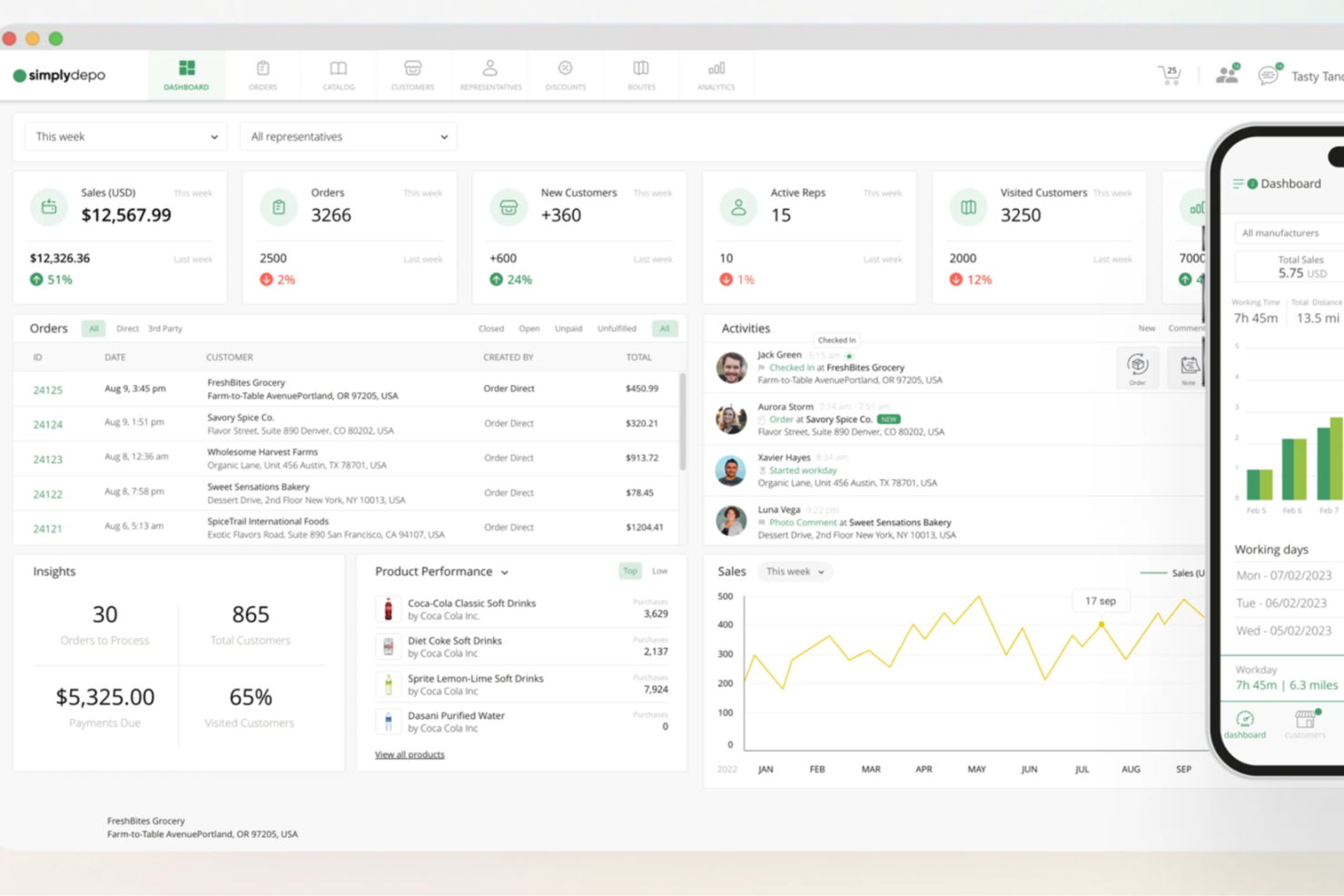
SimplyDepo offers a tailored solution for CPG brands, distributors, and field teams seeking to manage retail operations beyond the point of sale. The platform focuses on retail execution and wholesale workflows, including account management, B2B order capture, and in-store activity tracking, making it especially useful for small and emerging brands managing multiple retail accounts. By reducing manual processes and fragmented reporting, SimplyDepo helps teams improve visibility into in-store execution and wholesale performance across retail locations.
Who is SimplyDepo Best For?
CPG and retail execution managers in small to mid-sized businesses in North America streamlining retail distribution and execution processes.
Why I Picked SimplyDepo
I picked SimplyDepo for its clear focus on retail execution and wholesale operations rather than register-level POS checkout. Its AI-powered reporting provides actionable insights into customer and account performance, including sales performance, fulfillment status, payment status, and product performance, helping you make more informed decisions across retail and wholesale accounts. The platform’s B2B ordering and route management features also support DSD-style operations, allowing you to align field activity, store visits, and delivery workflows in one system without replacing your existing POS or ERP software.
SimplyDepo Key Features
In addition to its core functionalities, I also found the following features noteworthy:
- Task Management: Assign and track retail execution tasks such as store check-ins, audits, photo capture, and visit reporting.
- Account and Order Management: Manage wholesale customers, retail accounts, and B2B orders in one system.
- SimplyAI: Use AI-driven insights to analyze sales performance, fulfillment status, payment status, and product performance.
- Mobile and Desktop Access: Manage retail execution and field operations from mobile devices or desktop dashboards.
SimplyDepo Integrations
Integrations include QuickBooks and other accounting or operational systems, supporting SimplyDepo’s role as a retail execution and wholesale operations platform that complements existing POS and ERP solutions.
Pros and Cons
Pros:
- End-to-end wholesale order management.
- Built-in B2B ordering portal.
- Route optimization reduces delivery inefficiencies.
Cons:
- Limited native third-party integrations.
- Initial onboarding learning curve.
Other Retail Management Software
Here’s a list of a few more retail management system that you can look at:
- Agiliron
For B2B and B2C websites
- Blue Yonder
For supply chain management
- NCR Counterpoint
For integrating front and back office
- QuickBooks Point of Sale
For Shopify users
- NCR Systems
For wholesale businesses


Related Ecommerce Software Reviews
If you still haven't found what you're looking for here, check out these related ecommerce tools that we've tested and evaluated.
- Ecommerce Platforms
- Inventory Management Software
- Payment Processing Software
- Shopping Cart Solutions
- Order Management Systems
- Warehouse Management Software
Our Selection Criteria For Retail Management Software
We graded each platform against the same seven pillars, weighted for impact on day-to-day store life. Here’s how we kept the scoring honest—and ruthless.
Core functionality (25% of total score)
Every contender had to nail the basics first.
- Reliable POS. Fast checkout with barcode accuracy and minimal hardware headaches.
- Inventory control. Real-time counts, low-stock alerts, and painless purchase orders.
- CRM built in. Easy access to customer data at the till and inside marketing campaigns.
- Actionable reporting. Sales, margin, and SKU velocity dashboards that make sense at a glance.
- Omnichannel sync. One stock pool across in-store, ecommerce, and marketplaces.
Additional standout features (25% of total score)
Beyond table stakes, we rewarded innovation.
- Marketing muscle. Loyalty, email, or SMS tools that actually drive repeat visits.
- AI or automation. Forecasting, replenishment, or workflows that cut manual clicks.
- Deep integrations. Native hooks into ERP, ecommerce, and accounting—no Zapier gymnastics required.
- Mobile freedom. Full functionality on iOS or Android so managers can fix issues from the floor.
- Scalability promises kept. Proven performance as stores, SKUs, and channels multiply.
Usability (10% of total score)
If staff hate it, they won’t use it.
- Clean UI. Logical menus and customizable dashboards that surface key metrics.
- Low ramp-up. New cashiers should ring a sale in minutes, not days.
- Workflow fit. Screens match real retail steps, not a developer’s wish list.
Onboarding (10% of total score)
Switching systems should feel like an upgrade, not open-heart surgery.
- Live training options. Webinars, one-on-one sessions, or onsite help when budgets allow.
- Guided setup. Templates, data import wizards, and clear milestones.
- Early-stage support. A real human on chat or phone during that first chaotic week.
Customer support (10% of total score)
Problems happen. We scored how fast they get fixed.
- 24/7 coverage. Chat, phone, or email that never clocks out.
- Knowledge depth. Reps who understand retail workflows, not just scripts.
- Self-serve library. Updated docs, videos, and community forums for quick answers.
Value for money (10% of total score)
Price only matters if the ROI isn’t there.
- Transparent tiers. Clear per-store or per-terminal costs with no surprise add-ons.
- ROI evidence. Case studies or metrics that show real savings or sales lifts.
- Flexible contracts. Monthly terms or pilot pricing to prove worth before you commit.
Customer reviews (10% of total score)
We checked the vibe outside the demo environment.
- Constructive negatives. We note recurring gripes, especially on speed or hidden fees.
- Consistent reliability praise. Minimal downtime and smooth updates.
- Support shout-outs. Users thanking reps by name is always a good sign.
What is Retail Management Software?
Retail management software is a cloud-based control center that unites your POS, inventory, CRM, and reporting in one dashboard.
Store owners, ecommerce operators, and multi-location chains use it to ditch spreadsheets, cut stockouts, and sync in-store and online sales data with the best retail POS systems.
If you’re stuck hopping between separate apps for SKUs, supplier POs, and loyalty programs, a retail management system pulls those workflows into one real-time view—so you can act, not guess.
How to Choose Retail Management Software
The flashiest demo means nothing if the platform fumbles on your sales floor. Before you swipe a credit card, map the realities of your business—SKUs, staff, channels, and cash flow—and force each vendor to prove they can match them.
The table below walks you through a no-nonsense vetting process I use when a CEO tells me, “Pick something that won’t implode on launch day.” Stick to these steps, and the winner will reveal itself fast.
| Step | Action | Why it matters |
|---|---|---|
| 1. Diagnose the bottleneck | List the top three pain points (slow checkout, phantom inventory, disjointed online/offline data). | Keeps you from buying a Swiss Army knife when you really need a scalpel. |
| 2. Map critical workflows | Sketch how orders, inventory, and customer data move today—and where they break. | Lets you demand live demos on your workflow, not a canned tour. |
| 3. Stress-test integrations | Hand the vendor your tech stack list and ask for a working sandbox or reference client. | Avoids surprise middleware costs and post-go-live finger-pointing. |
| 4. Run a “Day in the Life” pilot | Put frontline staff on the trial: receive a shipment, process returns, pull a sales report. | Surfaces usability flaws the IT team never sees. |
| 5. Calculate true cost of ownership | Add hardware, payment processing, add-on modules, and implementation fees to the sticker price. | Prevents budget blow-ups six months in. |
| 6. Lock success metrics early | Define two must-hit KPIs (e.g., shrink <1%, stock accuracy 98%). Tie them to renewal clauses. | Gives you leverage if the vendor under-delivers and grounds the project in results, not hype. |
Features of Great Retail Management Software
Skip the endless feature grids. If a retail management solution nails the eight items below, you’re set up for smooth store operations and stress-free scaling.
- Unified POS + CRM. One cloud-based dashboard ties real-time sales data to customer profiles, loyalty programs, and targeted promos—so you stop guessing and start personalizing.
- Inventory control on autopilot. Barcode scanning, automated reorders, and multi-location stock views keep SKUs accurate across warehouses, pop-ups, and your ecommerce store.
- Omnichannel order routing. Ship-from-store, click-and-collect, and marketplace sync happen natively, without duct-taped modules or nightly batch files.
- Actionable analytics. Sales data, margin heat maps, and demand forecasts surface inside the app—no exporting to spreadsheets unless you’re nostalgic.
- Mobile-first workflows. Full POS, receiving, and cycle counts on iOS and Android devices, so floor staff crush tasks without running to the back office.
- Open integrations. Plug-and-play connectors for Shopify, NetSuite, QuickBooks, and most payment processors; REST APIs for everything else.
- Automation & alerts. Low-stock texts, price-change rules, and fraud flags fire automatically, slashing manual checks and surprise shrink.
- Scalable, secure cloud. SOC-compliant hosting, encrypted credit-card vaults, and versionless updates—letting you focus on customer engagement, not patch management.
Benefits of Retail Management Software
A feature list is nice; the payoff is nicer. Here’s what the best retail management software delivers once it’s live.
- Frictionless growth. Multi-store, multi-currency, and warehouse management tools let you add locations or channels without rebuilding your tech stack.
- Higher margin. Accurate inventory and dynamic pricing stop over-stock discounting and lost sales.
- Happier customers. Fast checkout, unified loyalty points, and real-time stock visibility lift customer satisfaction—and repeat visits.
- Fewer late nights. Automated purchase orders, invoicing, and employee scheduling slash back-office busywork.
- Smarter decisions. Built-in business intelligence surfaces trends by channel, location, and SKU without a BI team.
Cost & Pricing for Retail Management Software
Sticker prices swing wildly—from free forever tiers to five-figure ERP contracts—so you need a clear yard-stick before vendors hit you with glossy decks.
I pulled current 2026 pricing straight from vendor sites and analyst reports to give you a reality check.
| Plan type | Typical price range (USD / month) | Common features | Best for |
|---|---|---|---|
| Free | $0 | Basic POS, limited inventory, single store, community support | Side-hustles, proof-of-concept pilots |
| Basic | $29 – $89 | Core POS, barcode and stock counts, one location, starter reports | Pop-up shops, first retail location |
| Professional | $79 – $249 | Advanced inventory management, CRM/loyalty, multi-store sync, analytics dashboards | Growing omnichannel retailers |
| Enterprise | $999 – $4,000+ | End-to-end ERP integration, custom modules, unlimited SKUs, dedicated support | Complex multi-location chains & global brands |
Additional cost considerations
- Hardware & peripherals. Card readers run $0–$49; full touchscreen registers climb past $1,200 each. Budget for scanners, label printers, and spare cash drawers.
- Payment processing fees. Expect 2.3 %–2.6 % + $0.10 per in-store swipe; negotiate or watch margin disappear.
- Per-location or per-register add-ons. Many POS providers tack on $14.95–$39 per extra register or location—small line item that snowballs as you scale.
- Implementation & training. Enterprise suites often bundle mandatory onboarding; figure on 1×–3× first-year license fees for data migration, sandbox testing, and staff training.
- Future modules. Email marketing, warehouse management, or B2B portals can be à-la-carte extras, so build a three-year roadmap before signing.
- Contract length & exit clauses. Some vendors lock you into 36-month terms with hefty early-termination penalties. Push for month-to-month if cash flow is king.
Bottom line: price the total cost of ownership—software, hardware, integrations, and card fees—against the ROI levers that matter (shrink, sell-through, workforce hours). That's how you keep budgets tight and your retail planning operations humming.
Retail Management Software FAQs
Here are the answers to frequently asked questions about retail management system (RMS):
How long does retail management software implementation take?
It depends, but you’re not waiting for a miracle. Most teams get up and running in 2-12 weeks. If you’re migrating from pen-and-paper, it’s usually faster. Larger, multi-location rollouts (with custom bells and whistles) can stretch the timeline.
The real X factor? How clean your current data is, and whether your team actually shows up for training. Pro tip: assign a clear project owner, or you’ll burn weeks chasing sign-offs.
What’s the safest way to migrate historical data to a new system?
Start by only moving what you’ll actually use—don’t let that graveyard of ancient SKUs follow you. Export your data and clean it. Then back it up—twice.
Work with your vendor, or a pro who knows retail migrations, for the import. And if they suggest a trial run in a sandbox environment: say yes. I’ve seen more than a few horror stories start with, “We thought full migration was fine…” Test first.
Which KPIs should I track in the first 90 days?
Focus on sell-through rate, inventory turn, gross margin, and shrink. Don’t sleep on staff performance or customer retention, either. The first three months are about proving the system works and putting quick wins on the board, not boiling the ocean. Look for red flags, bottlenecks, or user errors—and fix those instead of building reports you’ll never check.
What integrations should I prioritize with retail management software?
Start with accounting (think QuickBooks or Xero) and your eCommerce platform. Loyalty, ERP, and shipping come next—only if they’re critical to your daily flow.
Don’t get sucked into “integration sprawl.” Each extra link is another thing to break when you’re slammed on a Saturday. Pick the ones that save you real time or protect your margins.
How do I compare retail management software for multi-location management?
You want centralized dashboards, real-time inventory visibility, and location-specific reporting. The good systems let you pivot between stores in a click, without losing the forest for the trees.
Flexible user permissions are non-negotiable—otherwise, one rookie in the wrong dashboard can mess up your whole operation. Bonus points for tools that let you roll out promotions or pricing across locations without creating a spreadsheet nightmare.
What security features should retail management software include?
Don’t skimp here. PCI compliance, encryption at rest and in transit, user access controls, and detailed audit logs are table stakes. Two-factor authentication is almost a must.
Ask if your software gives you regular security updates, not just after something breaks. If your vendor’s answer is, “We take security very seriously,” with no specifics, run.
Can retail management software help with employee performance tracking?
Absolutely. The better platforms tie sales data, shift performance, and even customer feedback to individual staffers—without turning you into Big Brother.
Use it to spot your unsung heroes or coach struggling team members. Just don’t let the numbers do all the talking; context still matters (we all know who gets stuck covering returns on a bad day).
Additional Retail Software Reviews
Retail management software can be a great addition to your toolkit, but there are other software you might need as a retailer. For service-based retail businesses, specialized solutions like salon management platforms provide industry-specific features. Below are reviews of some retail software you might need.
Ring Up Results, Not Headaches
Your shelves, staff, and sales channels won’t manage themselves—but the right retail management software comes pretty close.
Use the criteria and cost lens above, run vendors through a live-fire demo, and lock in the platform that cuts shrink, speeds checkout, and syncs every sales channel in real time while maintaining optimal product assortments.
Retail never stands still—and neither should you. Subscribe to our newsletter for the latest insights, strategies, and career resources from top retail leaders shaping the industry.