
25 Best Ecommerce Fulfillment Services for 2026

The Best Fulfillment Services to Consider for Ecommerce
Before we get into all the lovely words we’re going to spill about fulfillment, here’s the shortlist of our favorite fulfillment services.


Ecommerce fulfillment services handle the storage, packing, and shipping of your products so you can scale efficiently and deliver faster to your customers—no more getting buried in boxes or running to the post office every day.
As your orders grow, outsourcing fulfillment to top providers makes it easier to compete with giants like Amazon.
I’ve been in your shoes, shipping products myself until it became unmanageable. In this guide, I’ll help you find the top ecommerce fulfillment services to support your growth.
Why Trust Our Software Reviews
We’ve been testing and reviewing retail and ecommerce software and services since 2021.
As retail experts ourselves, we know how critical and difficult it is to make the right decision when selecting software. We invest in deep research to help our audience make better software purchasing decisions.
We’ve tested more than 2,000 tools for different finance and accounting use cases and written over 1,000 comprehensive software reviews. Learn how we stay transparent and our review methodology.
Comparing the Best Fulfillment Services, Pricing and Beyond
Before we get into the reviews themselves, let’s quickly compare the fulfillment service options by pricing, trial details, and ideal use cases.
| Service | Best For | Trial Info | Price | ||
|---|---|---|---|---|---|
| 1 | Best for sustainable deliveries | Free consultation available on request | Pricing available upon request | Website | |
| 2 | Best for centralized inventory control | Free demo available | From $449/month (volume-based pricing) | Website | |
| 3 | Best for comprehensive order management | Free demo | Pricing upon request | Website | |
| 4 | Best for global expansion | Free demo available | Pricing upon request | Website | |
| 5 | Best for custom packaging options | Storage is free for the first 180 days when using a partner | Pricing upon request | Website | |
| 6 | Best for managing shipping processes | Free demo | From $39.99/month | Website | |
| 7 | Best for high order accuracy | 30-day risk-free trial—no long-term contract | Pricing upon request | Website | |
| 8 | Best for multi-warehouse control | Free demo available | From $1,850/month | Website | |
| 9 | Best for warehousing and fulfillment | 15 minute free platform walkthrough | From $133 freight option | Website | |
| 10 | Best for real-time inventory visibility | Free plan available | From $18/month (billed annually) | Website | |
| 11 | Best for real-time inventory tracking | Free demo available | From $500/mo | Website | |
| 12 | Best for real-time inventory tracking | Free consultation available upon request | Pricing available upon request | Website | |
| 13 | Best for global logistics support | Free demo available | Pricing upon request | Website | |
| 14 | Best for custom packaging solutions | Not available | Flat fee per order by weight; $750 monthly minimum | Website | |
| 15 | Best for high-volume ecommerce | No free trial | Pricing upon request | Website | |
| 16 | Best for flexible workspace solutions | 30-day free trial | From $349/month | Website | |
| 17 | Best for personalized product options | Not available | Pricing upon request | Website | |
| 18 | Best for personalized service | Not available | Pricing upon request | Website | |
| 19 | Best for managing multiple carriers | 30-day free trial | From $0/month | Website | |
| 20 | Best for order consolidation | Free plan available | From $75/month | Website |
The Best Ecommerce Fulfillment Services For Ecommerce, Reviewed
OK, now let’s look at each ecommerce fulfillment service, reviewing what each is best for, top features, pros and cons, as well as screenshots to see how it works.
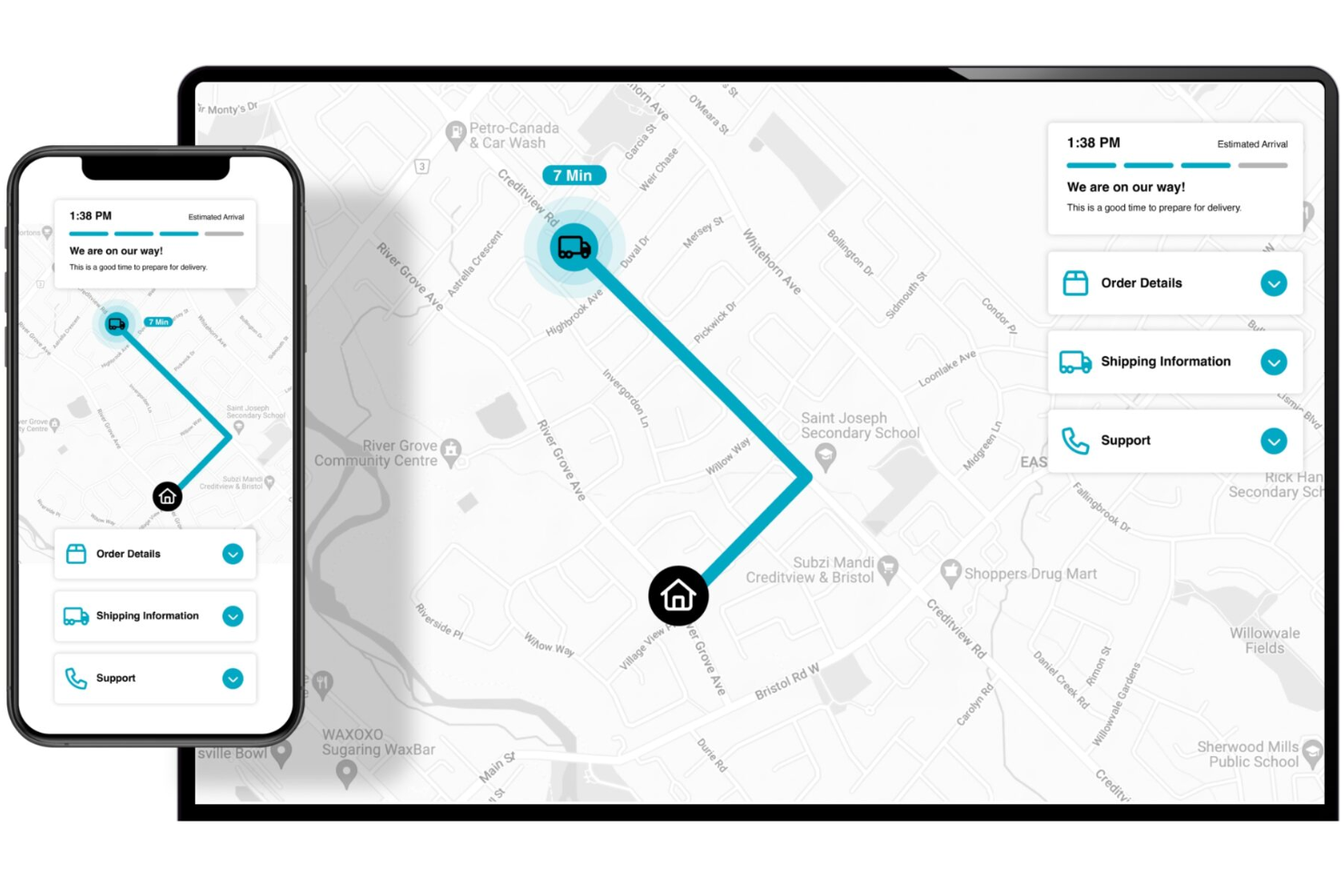
GoBolt is a sustainable fulfillment service provider that streamlines end‑to‑end logistics for ecommerce retailers. It handles warehousing, picking, packing, shipping, and last‑mile delivery across the US and Canada, helping teams reduce stockouts, speed up deliveries, and improve customer satisfaction.
Why I Picked GoBolt:
I like GoBolt because it has 12 strategically located fulfillment centers that make cross‑border expansion in North America a breeze. Its focus on carbon‑neutral deliveries and competitive shipping rates means you can improve sustainability while keeping costs under control.
The platform suits mid‑market and scaling retailers with more than 3,000 monthly orders who need a scalable partner for complex fulfillment. Smaller merchants or those needing global coverage beyond North America might consider other options.
Standout features and integrations:
Features include comprehensive fulfillment services, real‑time last‑mile delivery tracking, cross‑border expansion between the US and Canada, scalable infrastructure, and predictable invoicing.
Integrations include Shopify, Amazon, WooCommerce, BigCommerce, Channel Advisor, Narvar, FedEx, UPS, DHL, ShipStation, NetSuite, and USPS.
Pros and Cons
Pros:
- Manages picking, packing, shipping, and last‑mile delivery to streamline operations.
- Twelve fulfillment centers enable fast cross‑border shipping and scalable expansion.
- Carbon‑neutral delivery options and competitive rates enhance eco‑friendliness and lower costs.
Cons:
- Best suited for merchants shipping 3,000+ orders monthly, so smaller brands may not benefit.
- Focus on US and Canada means less coverage for global markets beyond North America.

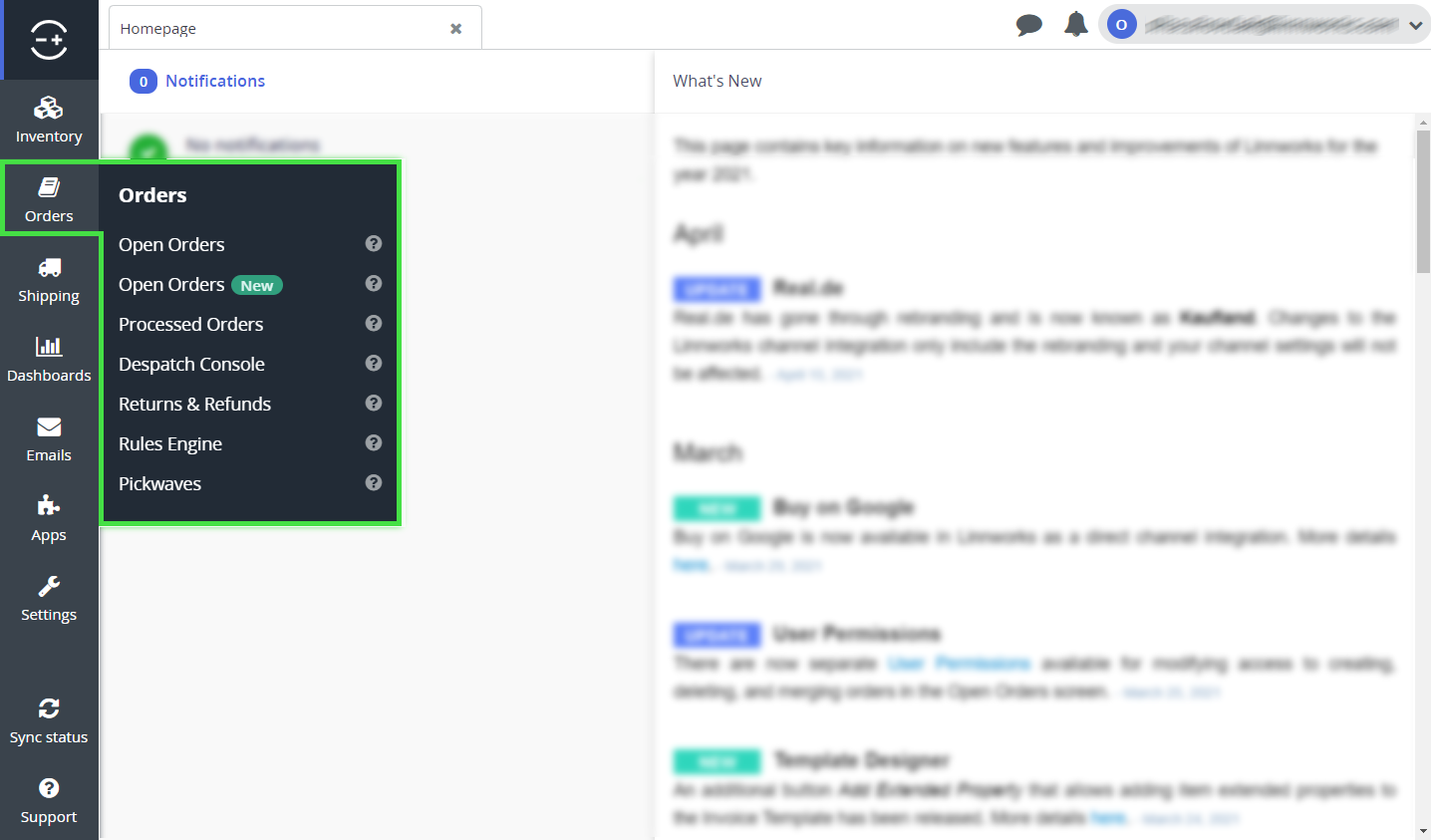
Linnworks is a fulfillment and operations management platform that centralizes inventory, order routing and warehouse control for ecommerce retailers and logistics teams.
It covers inventory, warehouse, shipping and fulfillment network management, helping teams reduce stockouts, accelerate dispatches and keep reconciliations clean.
Why I picked Linnworks:
It suits merchants managing high order volumes across multiple channels who need real‑time visibility into stock and fast fulfillment. I appreciate how its centralized inventory prevents over‑ or under‑selling, and its automated routing and carrier integrations speed up picking, packing and shipping.
Warehouse tools maintain accuracy and shrink reduction, while shipping integrations reduce lead times and chargebacks. If you want a more modern interface or advanced multi‑location complexity, consider exploring other platforms.
Standout features and integrations:
Features include automated order routing to the nearest fulfillment center, real‑time analytics for inventory and sales, and multi‑channel inventory management that keeps stock accurate across marketplaces.
Integrations include Amazon, eBay, Shopify, Magento, WooCommerce, BigCommerce, Etsy, Walmart, Klaviyo, NetSuite, QuickBooks and Xero.
Pros and Cons
Pros:
- Streamlined CSV-based workflows simplify inventory updates for teams comfortable with spreadsheets.
- Stable platform ensures consistent order management and inventory accuracy.
- Responsive customer support aids quick resolution of operational issues.
Cons:
- Outdated interface can slow down navigation and daily tasks.
- Occasional syncing issues with marketplaces like eBay disrupt order flow.
New Product Updates from Linnworks
Linnworks Launches the Order Item Adder App
Linnworks adds the Order Item Adder App, introducing tools to add one or more items to existing orders. This update simplifies order adjustments for promotions, samples, and corrections while improving pricing and tax accuracy. For more information, visit Linnworks’ official site.
 .
.
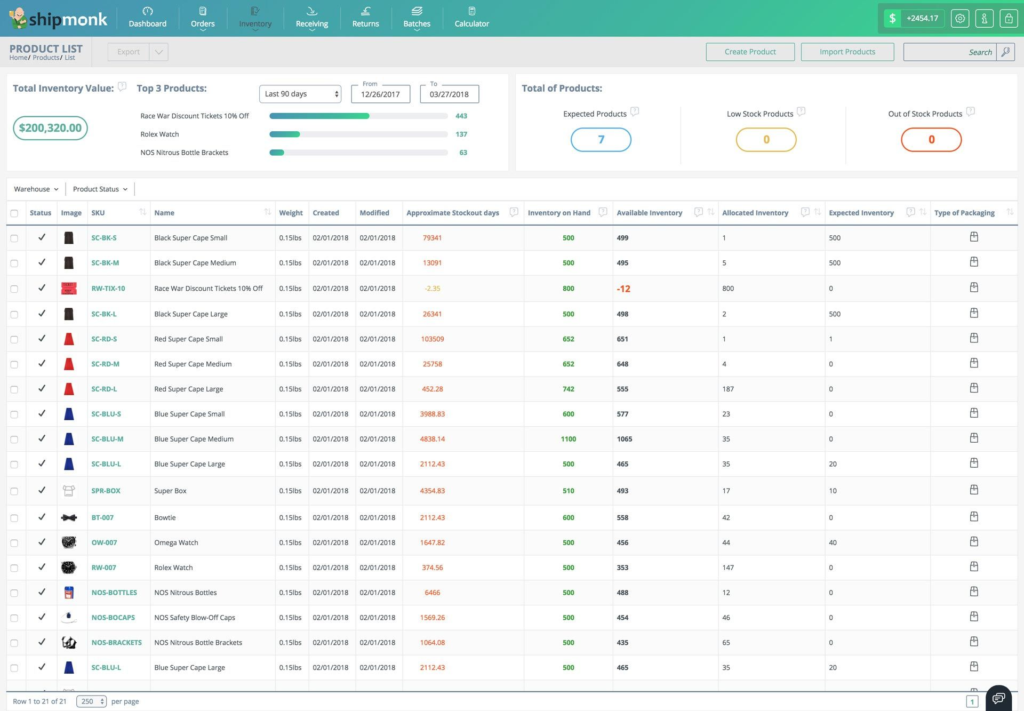
ShipMonk provides ecommerce fulfillment and third-party logistics services, focusing on enhancing both brand presentation and customer experience. They offer a range of solutions tailored to meet the diverse needs of businesses looking to optimize their fulfillment processes.
Why I picked Shipmonk
I chose ShipMonk as a strong contender for fulfillment services because of their comprehensive management systems that encompass order, warehouse, and inventory management. These systems ensure accuracy and visibility throughout the entire fulfillment process, which is crucial for maintaining customer satisfaction. Additionally, ShipMonk's strategic warehouse locations help optimize delivery and support global expansion, providing businesses with the flexibility to grow efficiently.
Another reason I picked ShipMonk is their commitment to custom solutions, such as bonded warehouses and reverse logistics, which enhance the customer experience by offering services like duty-free storage and easy returns. This focus on customer-centric services ensures that businesses can maintain high standards in their operations while meeting diverse client needs.
Standout features and integrations:
Features include real-time inventory management, which provides businesses with up-to-date information on stock levels, ensuring they can meet demand without overstocking. Their AI-powered shipping management optimizes delivery routes and costs, allowing for timely and cost-effective shipping. Additionally, ShipMonk offers personalized support through dedicated Merchant Success Managers, ensuring that businesses have access to expert advice and quick issue resolution.
Integrations include Shopify, WooCommerce, BigCommerce, Magento, Amazon, Walmart, eBay, Etsy, Target, EasyPost, ShipStation, and Salesforce Commerce Cloud.
Pros and Cons
Pros:
- Scalable logistics solutions that accommodate business growth effectively.
- User-friendly platform with seamless integration capabilities, particularly with Shopify.
- Efficient order fulfillment process that handles large volumes accurately.
Cons:
- Limited international shipping options that may not meet all business needs.
- Occasional inventory accuracy issues leading to fulfillment delays.

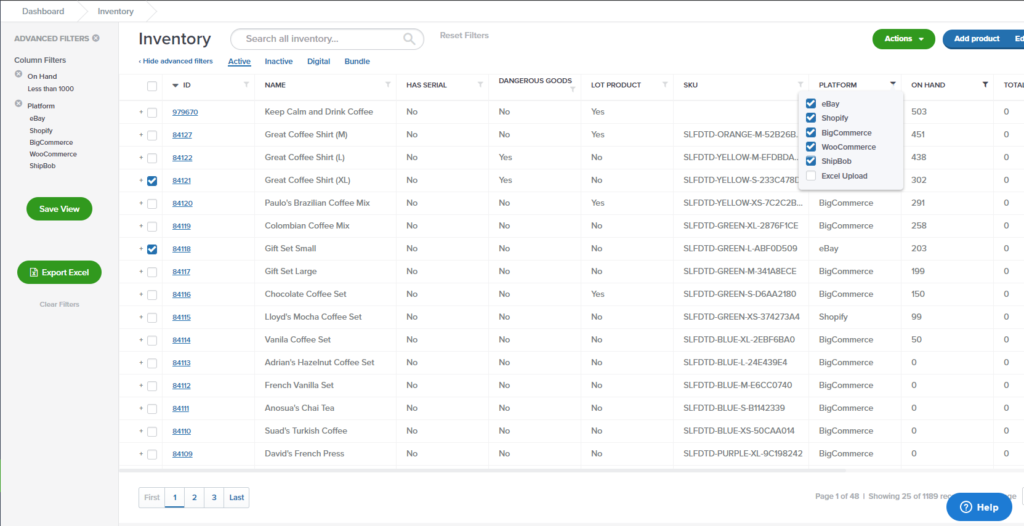
ShipBob is a comprehensive ecommerce fulfillment service that streamlines logistics and order processing for retail brands and online merchants.
It covers everything from inventory management and order orchestration to shipping and analytics, helping teams reduce stockouts, speed up fulfillment, and improve reconciliation.
Why I picked ShipBob:
I picked ShipBob because its global network of over 60 fulfillment centers makes it ideal for brands expanding internationally. Fast 2‑day shipping and high order accuracy mean customers get their orders quickly and correctly, lowering the risk of returns or chargebacks.
The platform’s full‑stack approach—combining order management, inventory management, and analytics—gives operators real‑time visibility into stock and sales. It fits best for mid‑market and scaling ecommerce businesses that need omnichannel and B2B fulfillment without building their own network.
Consider alternatives if you require hyper‑specialized compliance or already have an established in‑house logistics infrastructure.
Standout features and integrations:
Features include outsourced fulfillment, global expansion support, a full‑stack platform, 2‑day shipping, omnichannel and B2B fulfillment, customization options, a developer‑friendly API, and industry‑specific expertise.
Integrations include Shopify, Shopify Plus, BigCommerce, WooCommerce, Amazon, Walmart, eBay, Squarespace, Wix, Square, Klaviyo, Gorgias, NetSuite, AfterShip, Loop Returns, Cin7, ShipStation, and various ERP, EDI, and inventory management systems.
Pros and Cons
Pros:
- 2‑day delivery and worldwide fulfillment centers shorten lead times and reduce shipping costs.
- Unified order, inventory, and analytics visibility improves accuracy and streamlines reconciliation.
- Supports B2B and D2C channels, providing consistent order handling and reducing errors.
Cons:
- Not every market can access 2‑day shipping despite the global network.
- Connecting multiple platforms and APIs may need developer time.
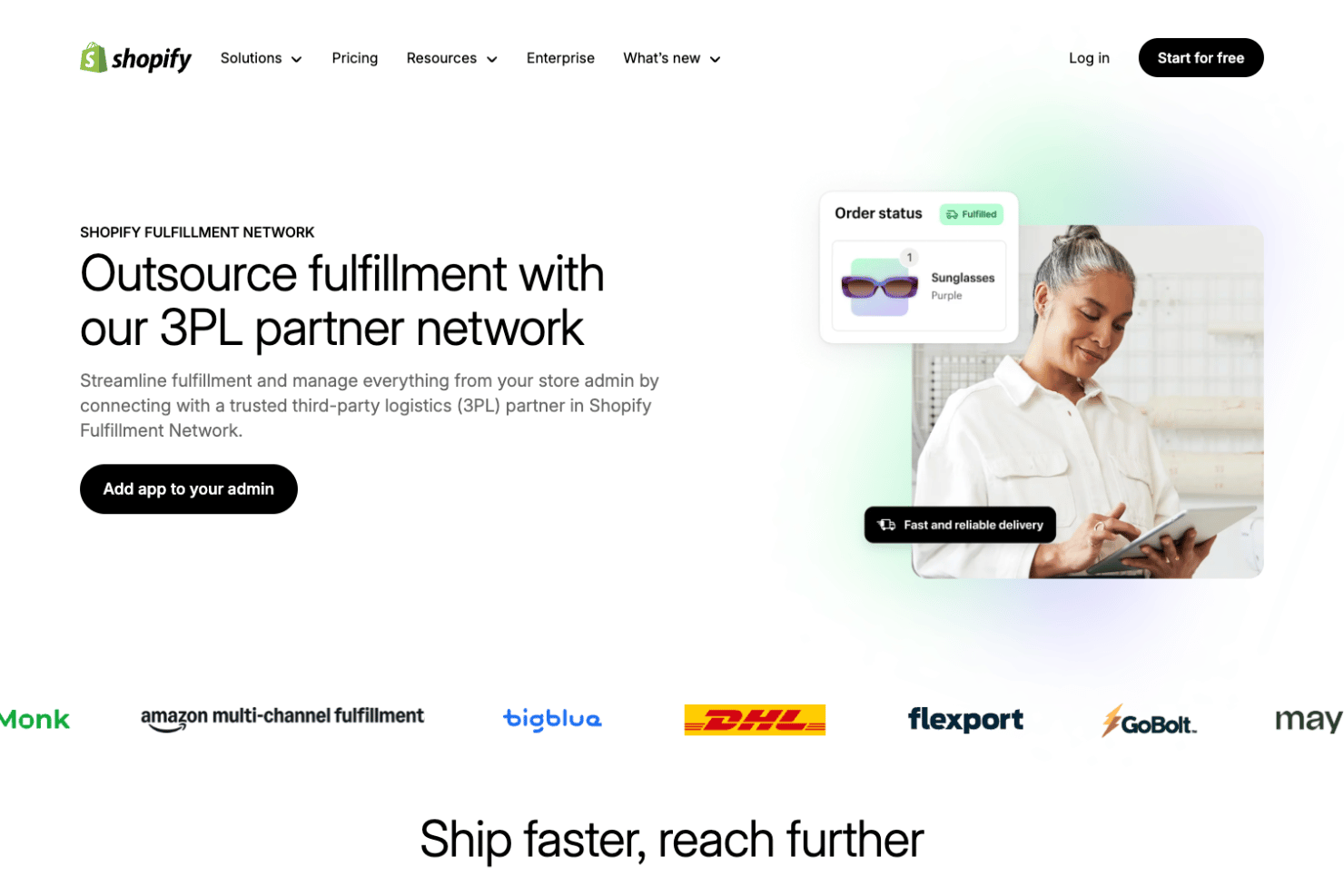
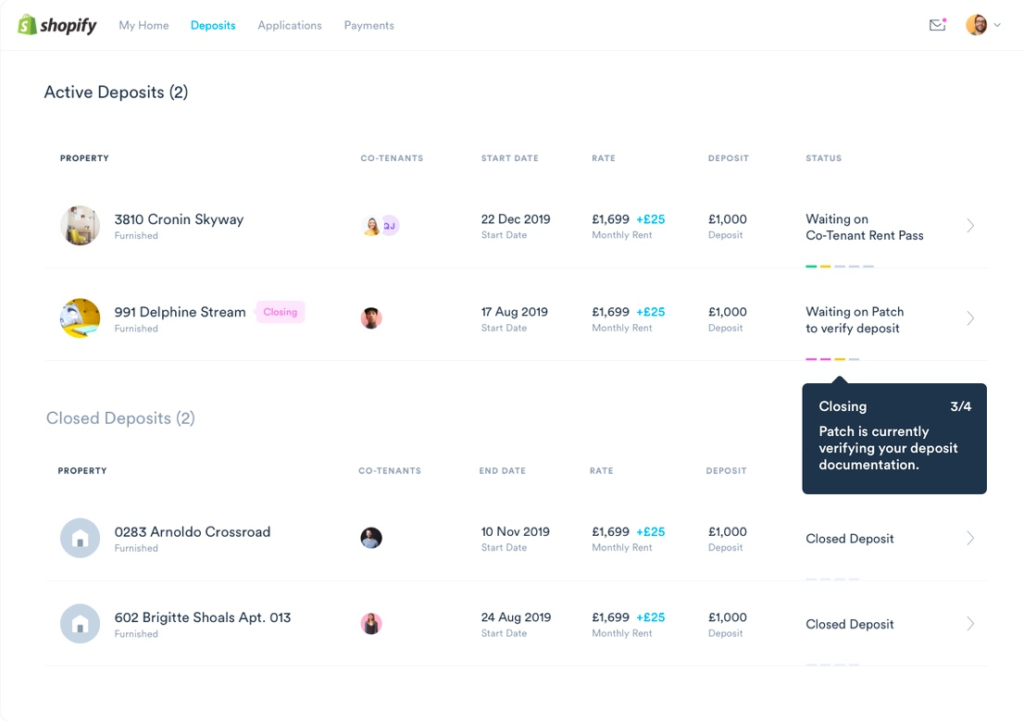
Shopify Fulfillment Network (SFN) is a fulfillment service for Shopify merchants that handles inventory storage, picking, packing, and shipping across a network of fulfillment centers so sellers can offer fast delivery without managing warehouses.
Why I picked Shopify Fulfillment Network (SFN):
SFN stands out for its tight integration within the Shopify ecosystem, giving merchants a single dashboard to manage orders, inventory, and fulfillment.
It uses machine-learning models to determine optimal product placement across its network, reducing delivery times and shipping costs. Its automation capabilities streamline fulfillment workflows—from receiving inventory to generating shipping labels—while maintaining visibility inside Shopify’s admin. This makes it ideal for merchants that want a hands-off logistics operation with fast, reliable shipping.
The trade-off is flexibility—SFN is available only to Shopify merchants and less customizable than open 3PLs, but it’s an excellent fit for merchants prioritizing speed, automation, and data-driven logistics optimization.
Standout features and integrations:
Features include two-day delivery coverage, automated order routing, integrated returns management, and analytics on fulfillment performance.
Integrations include Flexport, Amazon, Bigblue, DHL Fulfillment Network, GoBolt, Mayple Global, ShipBob, Shipfusion, and ShipMonk.
Pros and Cons
Pros:
- Monitor inventory transfers and track fulfillment directly in Shopify's admin while partners pick and ship orders.
- Strategically located fulfillment centers offer reliable two‑day delivery.
- Machine‑learning recommendations optimize where to store products.
Cons:
- The network is available only to Shopify merchants, limiting options for multi-platform sellers.
- Few options for branded packaging or bespoke fulfillment workflows.
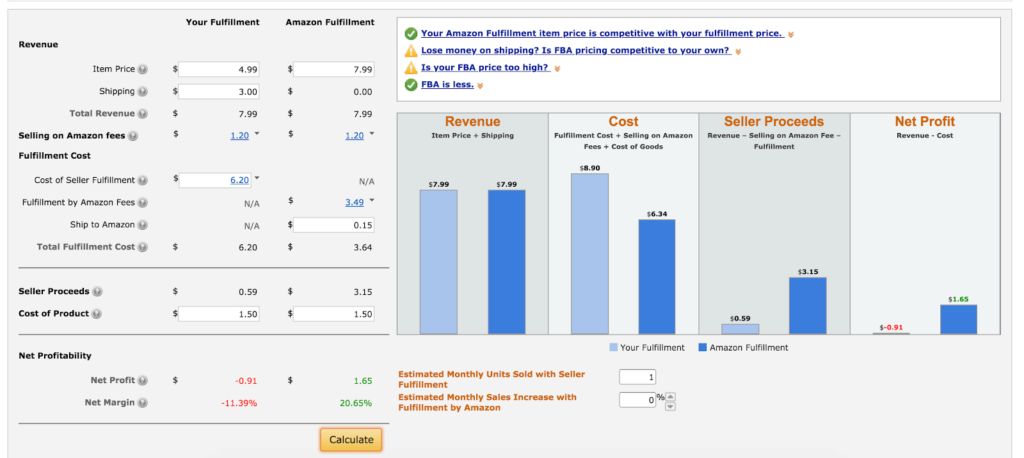
Fulfillment by Amazon is a comprehensive fulfillment service that streamlines order fulfillment for ecommerce sellers across channels.
It manages storage, picking, packing, shipping, customer service, and returns, helping teams reduce stockouts, improve delivery speed, and keep customers happy.
Why I picked Fulfillment by Amazon:
FBA is a strong fit for sellers who want to offload logistics and tap into Amazon’s vast Prime network. It ensures products are picked, packed, shipped, and serviced quickly so you can focus on marketing, product development, and growth.
Because FBA handles returns and customer service, it delivers consistent experiences and scales well as your catalog grows. However, you give up some control over branding and packaging and operate within Amazon’s rules, so brands that need a bespoke unboxing experience or want to avoid direct platform dependency may want to compare alternative fulfillment partners.
Standout features and integrations:
Features include the Amazon Brand Registry and marketing tools for brand protection and promotion, an Inventory Performance Dashboard for inventory optimization and excess stock management, and seller resources like Seller University to train teams and improve operations.
Integrations include Shopify, BigCommerce, WebBee, Rithum, Veeqo, TikTok Shop, Pipe17, ByteStand, ShipStation, and Order Desk.
Pros and Cons
Pros:
- Products fulfilled by Amazon are eligible for Prime, boosting visibility and attracting more customers.
- FBA handles orders from multiple sales channels, simplifying logistics and keeping inventory synced.
- Brand Registry and inventory dashboards protect your brand and optimize stock levels.
Cons:
- Sellers must operate within Amazon’s policies, which can limit flexibility and control.
- Standardized fulfillment makes it harder to customize packaging or differentiate the unboxing experience.

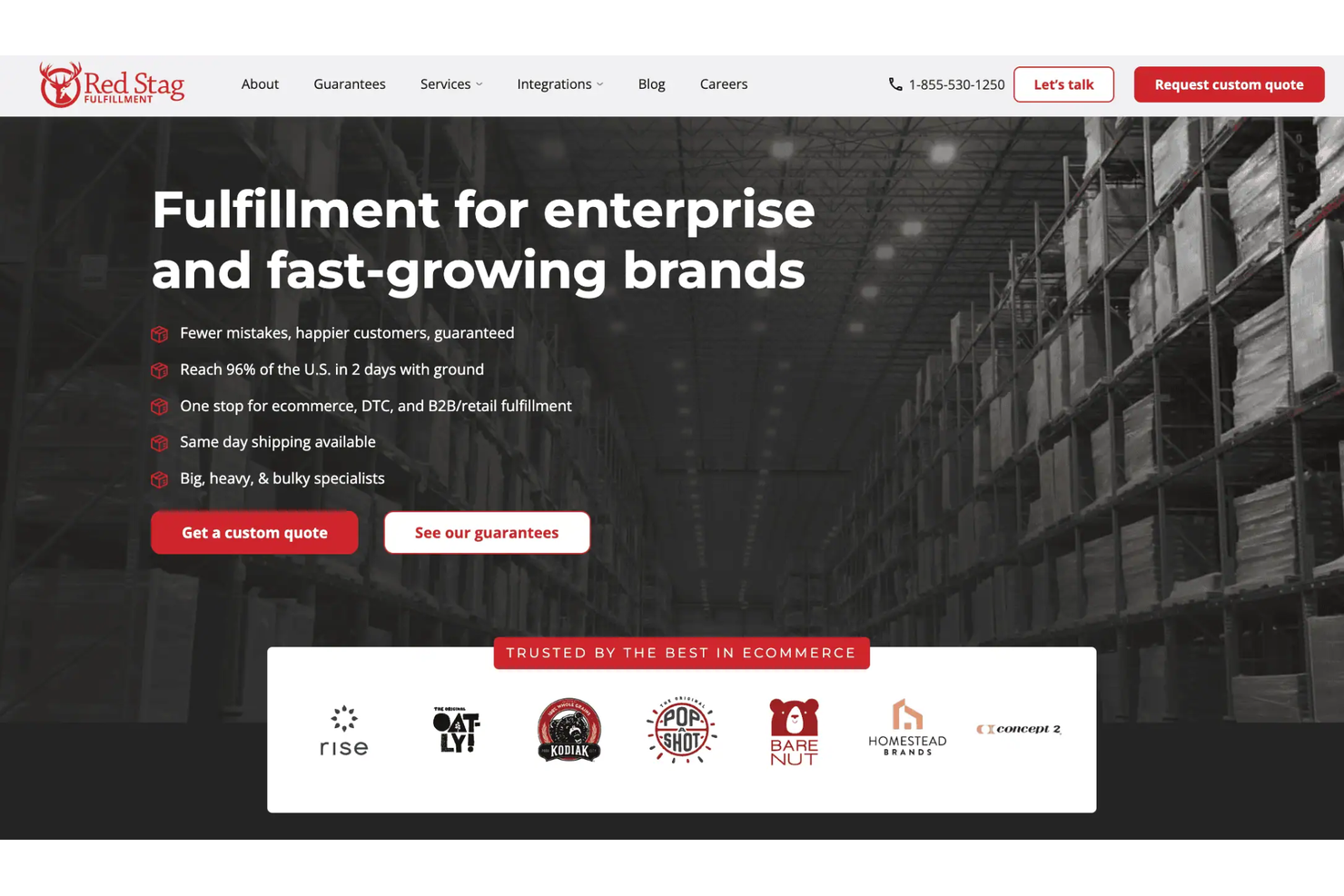
Red Stag Fulfillment is a third‑party fulfillment provider for ecommerce brands that sell heavy, bulky, or high‑value products.
It handles receiving, storage, pick, pack, and shipping from US warehouses to reduce errors, speed delivery, and free up operations.
Why I picked Red Stag Fulfillment:
Red Stag Fulfillment stands out for its accuracy and zero‑shrinkage guarantees—if they mispack an order or lose inventory, they fix it and compensate you.
With warehouses engineered for oversized and high‑value goods, the service excels at handling heavy, fragile, or unwieldy items while maintaining low error rates and fast turnarounds.
Late same‑day shipping cutoffs, dedicated account managers, and a 30‑day risk‑free trial make it appealing to scaling brands that need reliability and transparency. While its footprint is limited to two U.S. locations, the company’s focus on quality and reliability makes it a strong partner for merchants whose product mix demands special care.
Standout features and integrations:
Features include specialized receiving and storage for large and high‑value products, custom packaging and kitting, zero‑shrinkage and accuracy guarantees, same‑day order processing with late cut‑off times, and support for returns and freight forwarding. These services reduce damages, speed up delivery, and free merchants to focus on growth.
Integrations include major ecommerce platforms and tools including Shopify, BigCommerce, WooCommerce, Magento, Shift4Shop, PrestaShop, Volusion, Ecwid, and shipping and inventory systems like ShipStation and Ordoro.
Pros and Cons
Pros:
- Offers same-day shipping cut-offs, low error rates, and a zero shrinkage guarantee.
- Warehouses and workflows are designed for large, bulky, and high-value products.
- If an order is mispacked, the company compensates you and fixes the mistake.
Cons:
- The management dashboard can feel clunky and less intuitive than competitors.
- Only two US fulfillment centers, which can result in longer transit times to some regions.
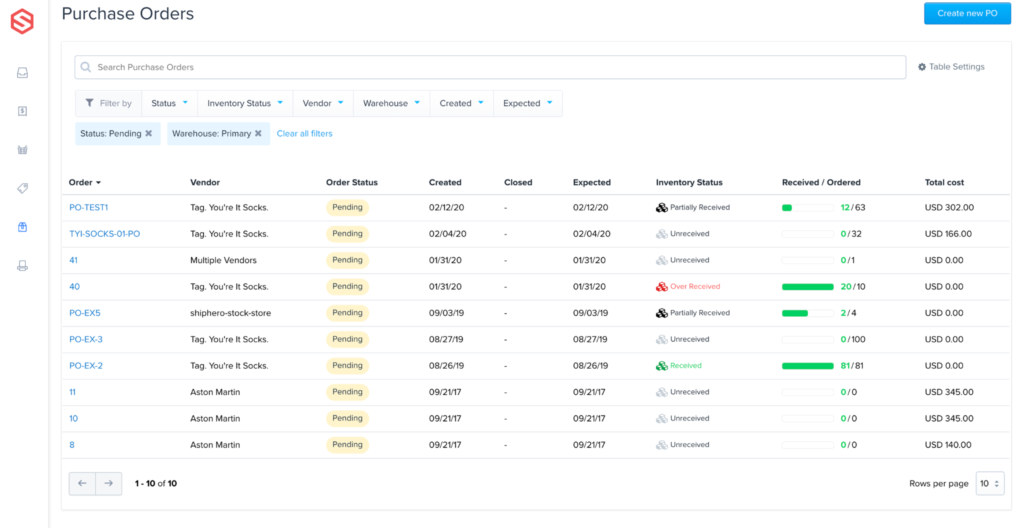
ShipHero is a fulfillment service provider that streamlines order and inventory management for omnichannel retailers. It handles order picking, packing, shipping and inventory control across a network of seven warehouses, helping teams reduce stockouts, speed up shipping, and improve supply chain visibility.
Why I picked ShipHero:
I picked ShipHero because its network of seven controlled warehouses ensures consistent service quality and short lead times. Its advanced warehouse management system provides real‑time visibility into orders and inventory, so you can make faster, more accurate decisions.
ShipHero suits mid‑sized and growing online retailers who need turnkey fulfillment and inventory control without building their own infrastructure. Consider alternatives if you need more specialized carrier options or if reliability of shipping weights and service responsiveness is paramount.
Standout features and integrations:
Features include multi‑warehouse control for faster distribution, real‑time inventory visibility with precise order picking and packing, and customizable workflows that optimize inventory placement and reduce shipping times.
Integrations include Shopify, Shopify+, FedEx, UPS, USPS, DHL eCommerce, Oracle NetSuite, Shippo, BigCommerce, Amazon, WooCommerce, and Magento 2.
Pros and Cons
Pros:
- Comprehensive order and inventory management integrates with major platforms, improving visibility and accuracy.
- Strong warehouse management and network enhance logistics performance and reduce shipping lead times.
- User-friendly interface simplifies managing orders and inventory tracking, boosting operational efficiency.
Cons:
- Inaccurate shipping weights create reconciliation issues and inflated shipping costs.
- Late shipments and lost packages lead to unreliable deliveries and customer dissatisfaction.

eShipper is a logistics and fulfillment service that streamlines shipping and fulfillment operations for ecommerce businesses. It covers warehousing, Amazon FBA/FBM prep and returns, multi-carrier shipping options, and managed logistics, helping teams shorten lead times, reduce stockouts and shrink, improve order accuracy, and maintain compliance.
Why I picked eShipper:
eShipper suits scaling retailers that need a robust partner for warehousing and fulfillment across multiple channels. Its strategically located fulfillment centers let you pick, pack, and ship orders efficiently—reducing lead times and stockouts.
The Amazon FBA/FBM services handle prep, labeling, and returns in compliance with Amazon standards, freeing your team from tedious logistics. I also like how its managed logistics services take care of complex freight and supply chain coordination, so you can focus on growth. However, if your business relies mostly on very local deliveries or has minimal inventory management needs, a simpler solution might be sufficient.
Standout features and integrations:
Features include pick-and-pack warehousing across strategic centers, Amazon FBA/FBM compliance for prep, labeling and returns, multi-carrier shipping options from same-day courier to freight, and managed logistics for complex supply chains.
Integrations include Shopify, Amazon, Etsy, WooCommerce, BigCommerce, ShipStation, eBay, Magento, Walmart, Squarespace, and Wix.
Pros and Cons
Pros:
- Wide range of shipping options and carriers enables flexible, fast fulfillment and reduces lead times.
- Reliable tracking features improve shipment visibility, reducing customer inquiries and chargebacks.
- Seamless integrations with Shopify, Amazon, and other platforms sync orders and inventory across channels.
Cons:
- Occasional shipping delays may impact delivery times during peak periods.
- Technical glitches in the online platform can disrupt order processing.
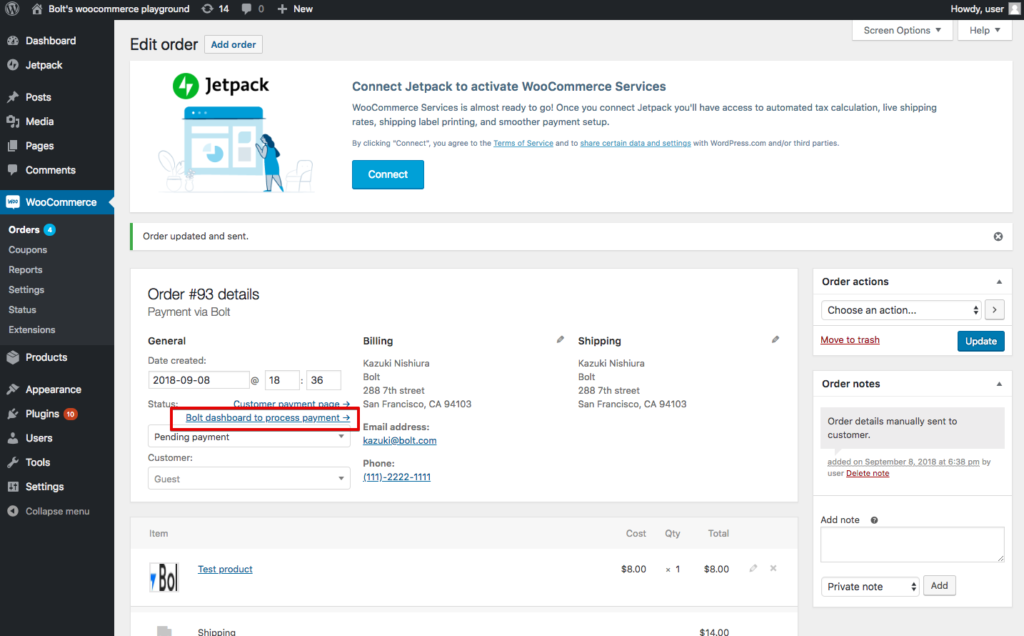
GoBolt is a sustainable third‑party logistics provider that delivers end‑to‑end fulfillment and last‑mile delivery for ecommerce and direct‑to‑consumer brands.
It covers order processing, inventory management, pick and pack, shipping, returns, cross‑border expansion, scalable infrastructure, cost efficiency, predictable costs and invoicing, sustainability initiatives, and hands‑on support, helping teams reduce stockouts, speed up deliveries, shrink their carbon footprint, and gain real‑time visibility into their supply chain.
Why I picked GoBolt:
I’m a fan of GoBolt because it hits that sweet spot for fast‑growing brands that need to keep up with demand without blowing their budget. Its real‑time inventory visibility and same‑day fulfillment mean you’re not leaving customers hanging, and a diversified carrier network drives down shipping costs while still delivering on speed.
It’s particularly strong for US and Canadian merchants who care about eco‑friendly practices and predictable billing. If your operations span continents beyond North America or you need ultra‑custom handling, you might consider other providers, but for most scaling ecommerce teams, GoBolt offers a compelling blend of speed, sustainability, and transparency.
Standout features and integrations:
Features include fulfillment services, last mile delivery, cross‑border expansion, scalable infrastructure, cost efficiency, predictable costs and invoicing, sustainability initiatives, and dedicated customer support.
Integrations include Shopify Plus, NetSuite, BigCommerce, AfterShip, Loop, FedEx, UPS, DHL, Canada Post, and other major platforms and carriers.
Pros and Cons
Pros:
- Provides up‑to‑date stock levels so you can prevent stockouts and overstocking.
- Uses a mix of carriers to lower shipping costs and offer faster deliveries.
- Supports sustainability goals with eco‑friendly delivery and emission optimization.
Cons:
- Limited warehouse network means fewer options for global fulfillment outside US and Canada.
- Orders must be placed by 1 PM for same‑day fulfillment, which may not fit every schedule.
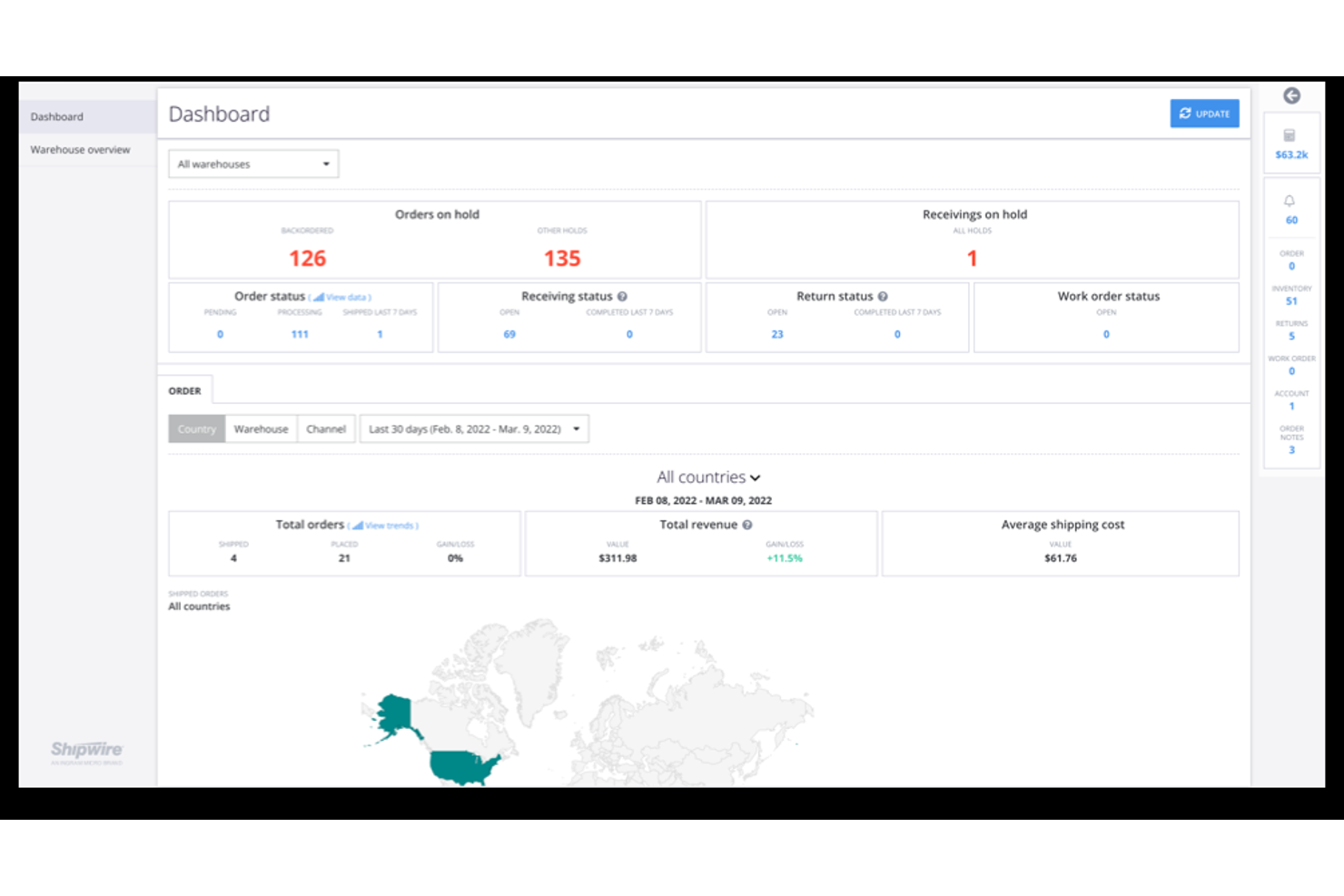
Shipwire is a fulfillment and logistics platform for ecommerce brands and omnichannel retailers.
It automates warehousing, shipping and global fulfillment, covering domestic and cross-border orders so you can scale without worrying about logistics.
Why I picked Shipwire:
I’m drawn to Shipwire’s global network and real‑time inventory tracking that let you serve customers anywhere. The platform’s combination of automation and machine‑learning forecasting cuts down mis‑ships and stockouts while giving you analytics to optimize your supply chain.
Shipwire’s commitment to sustainable operations—like carbon‑conscious routing and packaging—signals it’s thinking ahead. It handles complex logistics, from B2B and crowdfunding fulfilment to reverse logistics, so you can expand channels without missing a beat.
Standout features and integrations:
Features include cross-border fulfillment, multichannel order processing, subscription box management, and analytics for visibility into orders and inventory. It also supports reverse logistics and B2B fulfillment for easy scaling beyond D2C.
Integrations include Shopify, BigCommerce, Magento, WooCommerce, Amazon, eBay, Walmart Marketplace, ChannelAdvisor, CommerceHub, NetSuite, Microsoft Dynamics, Salesforce and Narvar.
Pros and Cons
Pros:
- High shipment accuracy and on-time performance noted by certain clients.
- Efficient automation for handling large shipping volumes ensures timely order processing.
- Positive feedback for specific account managers highlights their responsiveness and support.
Cons:
- Inventory synchronization problems lead to stockouts and missed sales.
- Frequent issues with lost packages and stock cause financial losses.

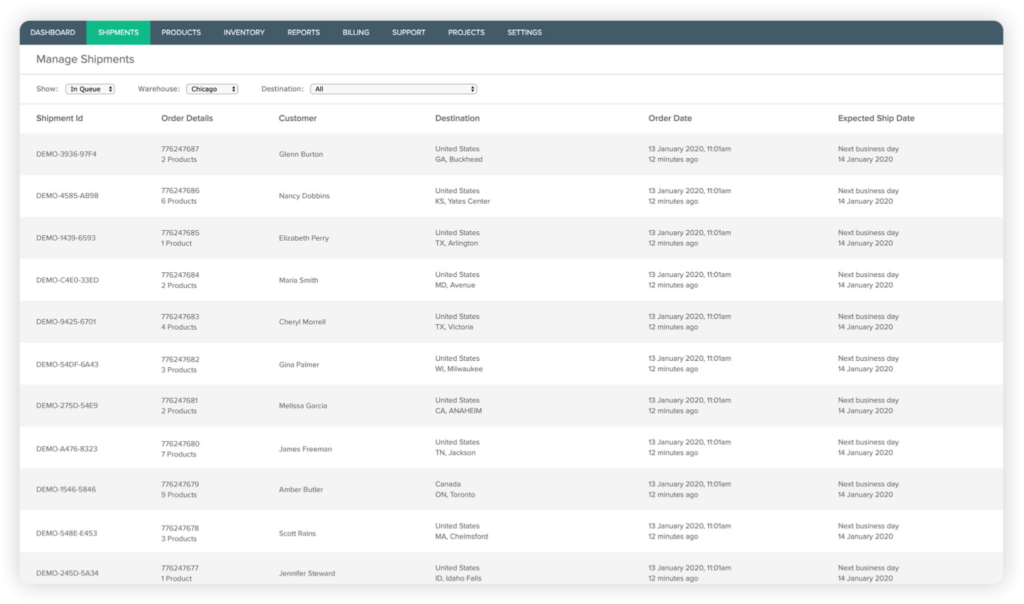
Shipfusion is a third-party logistics (3PL) fulfillment service that streamlines fulfillment and logistics operations for ecommerce brands, B2B, and wholesale contexts.
It covers third-party logistics, inventory management, shipping solutions, freight services, returns processing, and temperature-controlled storage, helping teams reduce stockouts, accelerate order cycle times, improve reconciliation, and maintain compliance.
Why I picked Shipfusion:
I like Shipfusion for retailers that need real-time visibility into stock and orders across multiple channels. Its inventory management and lot tracking ensure you know exactly what’s on hand and where it’s headed—cutting down stockouts and keeping cash flowing.
The built-in freight and returns services simplify complicated logistics, so you spend less time wrangling carriers and more time selling. It’s best for mid-sized brands with diverse product categories that need temperature control and multi-location warehouses; if you have extremely high volume or need bespoke branding, consider a specialist.
Standout features and integrations:
Features include temperature-controlled storage, lot and serial tracking, strategic fulfillment centers in Chicago and Toronto for faster delivery, and detailed reporting to optimize turns and compliance.
Integrations include Amazon, BigCommerce, Magento, Shopify, Walmart, WooCommerce, and TikTok Shop.
Pros and Cons
Pros:
- Reliable and timely order processing ensures faster delivery and fewer errors.
- Flexible warehousing options and locations let you scale and adapt inventory strategies.
- Positive experiences with real-time inventory management improve stock visibility and accuracy.
Cons:
- Some users report issues with order accuracy.
- Occasional delays in shipping during peak seasons.
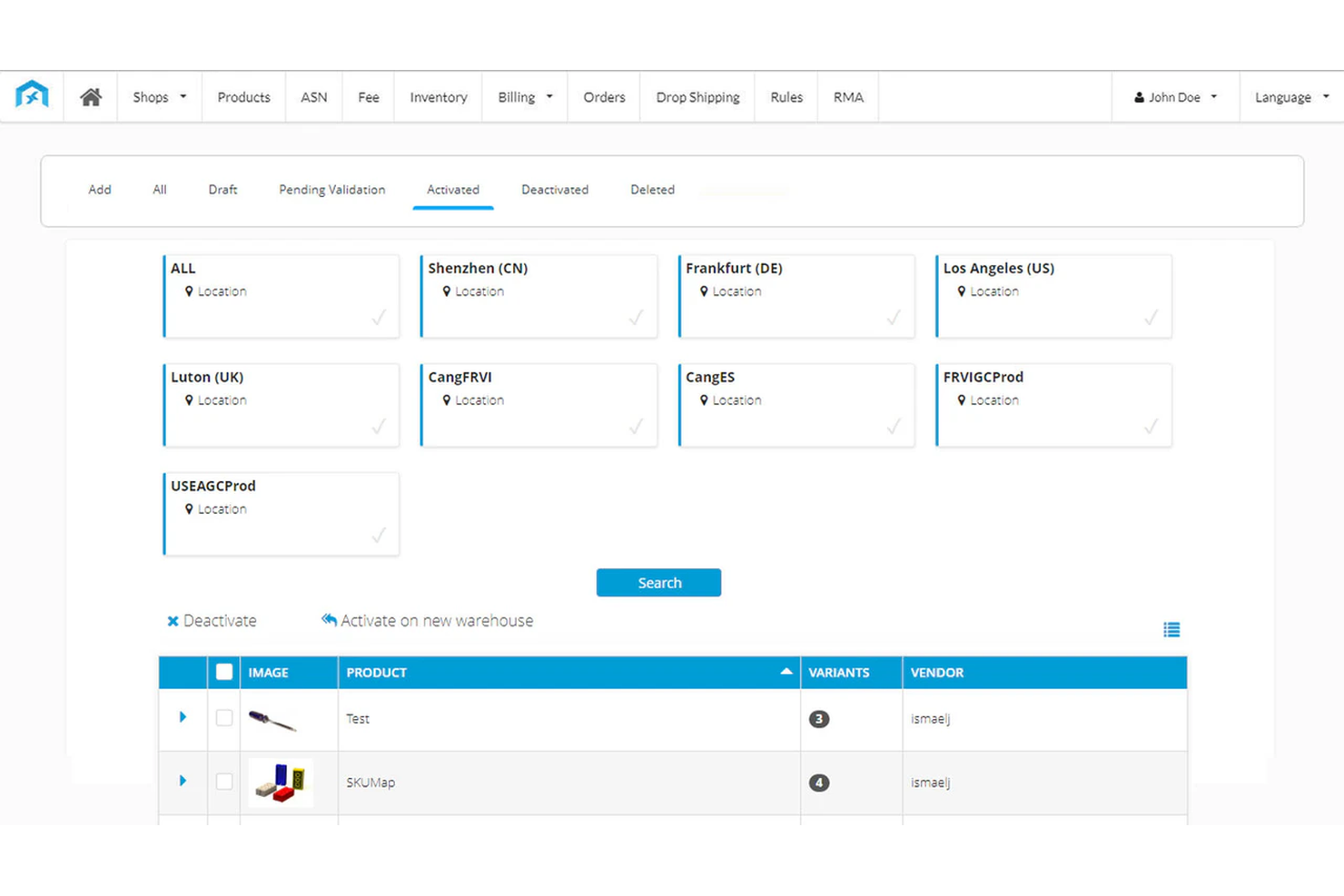
Fulfillment Bridge is a global logistics and fulfillment service for ecommerce brands expanding into international markets.
It handles storage, order processing, and shipping across multiple warehouses so you can scale internationally without building your own logistics network.
Why I picked Fulfillment Bridge:
This service stands out because it lets you offload the operational burden of cross‑border fulfillment. By leveraging a network of warehouses and carrier partners, it simplifies getting orders to customers around the world.
The platform’s analytics tools give you visibility into inventory and shipping performance, helping you make decisions that prevent stockouts and reduce delivery times.
Another benefit is its returns management workflows, which turn what’s usually a messy process into a structured, customer‑friendly experience.
Standout features and integrations:
Features include cross‑border shipping with customs handling, multi‑warehouse storage, item‑level order tracking, returns management, and analytics reporting. These services ensure your orders flow from purchase to doorstep smoothly, giving you more time to focus on marketing and product development.
Integrations include Shopify, WooCommerce, BigCommerce, Amazon, and major carriers like DHL, FedEx, and Aramex.
Pros and Cons
Pros:
- Efficient order fulfillment processes streamline order handling from placement to delivery.
- Customized solutions based on data analytics optimize fulfillment and logistics operations.
- Scalable services for ecommerce businesses support growth across markets.
Cons:
- Users report occasional shipping delays.
- Mixed customer reviews highlight inconsistent experiences.

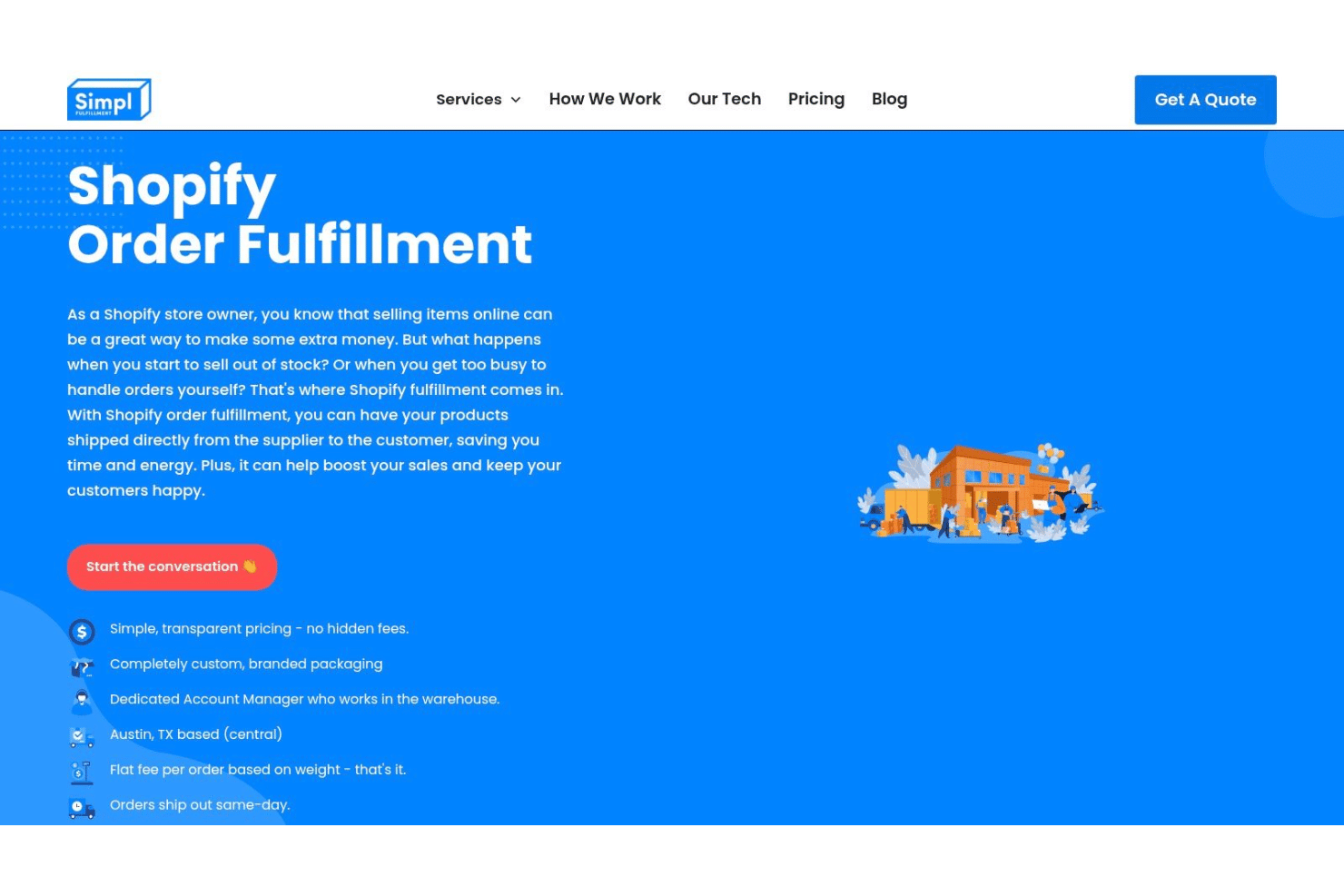
Simpl Fulfillment is a third‑party logistics provider that delivers same‑day fulfillment and subscription box shipping for ecommerce brands.
It offers flat‑fee, weight‑based order processing and personalized packing services, helping teams ship faster, avoid stockouts, and delight customers with polished unboxing experiences.
Why I picked Simpl Fulfillment:
Simpl Fulfillment fits merchants who care about high‑touch service and fast turnaround. Its same‑day order fulfillment and transparent, weight‑based pricing remove the guesswork around shipping costs and ensure your customers get their orders quickly.
Dedicated account managers and personalized support mean you’re not just another ticket—you get hands‑on help optimizing your shipping workflows. The service shines for subscription box businesses and brands needing custom packaging, because Simpl offers bespoke unboxing experiences with eco‑friendly materials.
If you want an approachable 3PL that scales with your brand but don’t need a giant network of warehouses, Simpl Fulfillment should be on your radar.
Standout features and integrations:
Features include same‑day order fulfillment, subscription box fulfillment services, custom packaging options, Amazon FBA prep, and sustainable packaging powered by 3D scanning to reduce waste.
Integrations include Shopify, Shopify Plus, BigCommerce, WooCommerce, Amazon, Walmart, eBay, Etsy, 3dCart, Magento, Squarespace, and Big Cartel.
Pros and Cons
Pros:
- Custom packaging options enhance brand presentation.
- Personalized service with dedicated support tailored to client needs.
- Fast processing times, with same-day order fulfillment, ensure quick dispatch.
Cons:
- Operating from a single warehouse may slow shipping to certain regions.
- Limited reviews and online presence make it hard to gauge overall satisfaction.
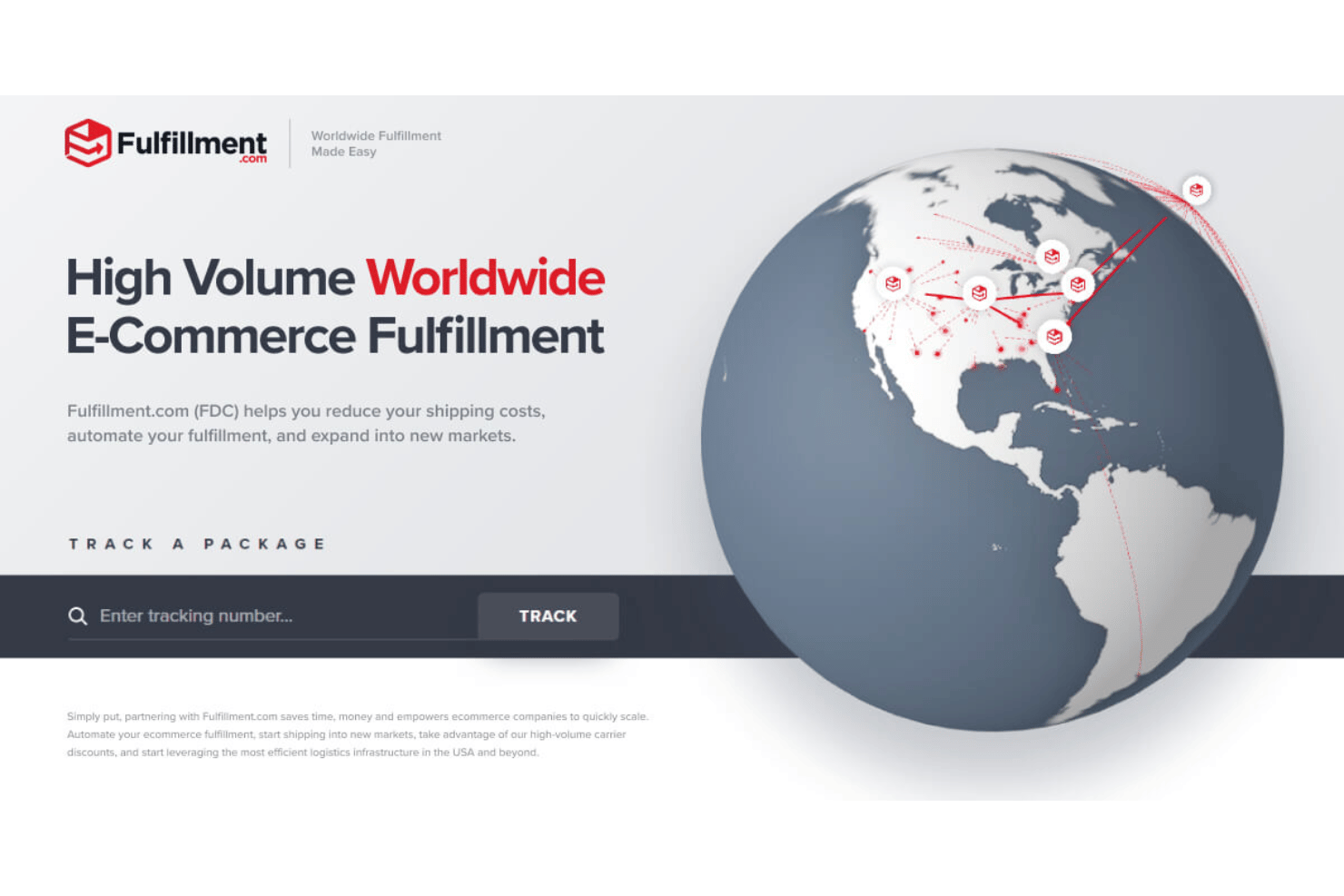
Fulfillment.com is a fulfillment service provider for e-commerce retailers.
It offers global logistics solutions that manage shipping and inventory across multiple regions, covering online and subscription channels so orders reach customers quickly and accurately.
Why I picked Fulfillment.com:
Its strategic global network of fulfillment centers in the United States, Canada, the UK, Germany, and Australia reduces transit times and shipping costs, making it easier for your brand to expand internationally.
The company’s advanced technology supports quick pick, pack, and ship workflows with real‑time inventory monitoring, so you can keep operations humming without overselling or disappointing customers.
Fulfillment.com also scales gracefully for high‑volume merchants, letting you handle spikes in orders without worrying about bottlenecks. On top of that, the team invests in community education and industry relationships—keeping you plugged in with best practices and peers.
Standout features and integrations:
Features include a cloud-based order management system for real-time tracking and automated fulfillment; partnerships with cGMP-certified manufacturers for cost savings on health and beauty products; a global fulfillment network for fast, accurate shipping; and community initiatives that keep merchants informed and connected.
Integrations include popular ecommerce platforms and tools such as Shopify, Amazon, WooCommerce, BigCommerce, and leading marketplaces and shopping carts.
Pros and Cons
Pros:
- High-quality technology and support ensure reliability.
- Accurate and timely order shipments enhance customer satisfaction.
- Efficient service and quick response times improve order handling.
Cons:
- Lack of 24/7 customer support may hinder urgent issues.
- Limited scalability for smaller businesses due to high-volume focus.

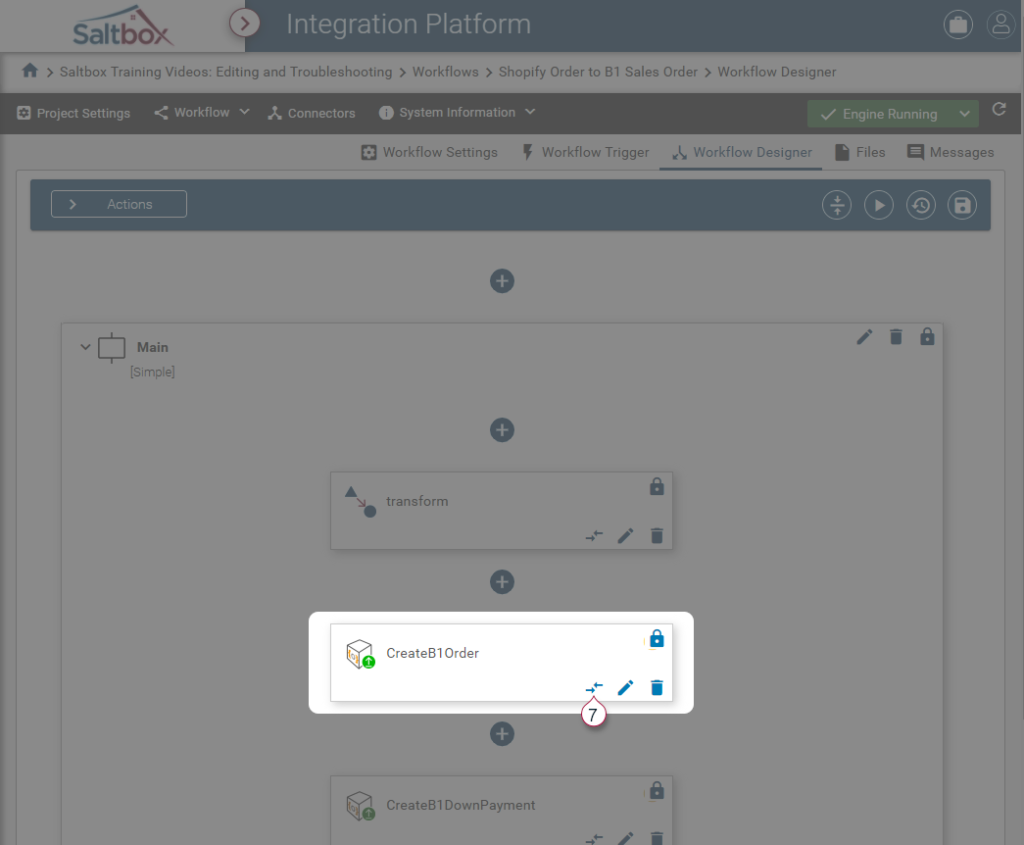
Saltbox is a fulfillment service designed for eCommerce businesses, offering tailored solutions for startups and scaling brands. It provides flexible workspaces, logistics support, and specialized services to help entrepreneurs grow their businesses.
Why I picked Saltbox
I chose Saltbox because it offers a unique combination of warehouse and office suites, which range from 70 to over 5,000 square feet. This flexibility means you can find the perfect space for your team's size and storage needs. The in-suite pick and pack services are a great perk, starting at just $3 per order, making it easier for your business to handle direct-to-consumer fulfillment.
Another reason Saltbox stands out is its logistics and shipping support. With assistance in inventory management and shipping, you can focus on scaling your business while Saltbox handles the heavy lifting. The Parsel Shipping Platform is a game-changer, providing significant shipping savings and real-time support so that you can manage costs and streamline operations.
Standout features and integrations:
Features include content studios, which are dedicated areas for product photography and content creation. This can be a boon for businesses needing professional-grade visuals for marketing. The special projects team offers support for tasks like FBA prep and inventory management, ensuring you have the help you need for complex tasks. Equipment rentals are available, providing necessary tools for operations without the burden of purchasing.
Integrations include Sage Intacct, SAP Business One, Universal API, Amazon Selling Partner, HubSpot, Magento, Salesforce, ShipStation, Shopify, WooCommerce, Concur, and iDocuments.
Pros and Cons
Pros:
- Offers a hands-on approach to fulfillment, allowing business owners full control over logistics.
- Flexible workspace solutions suitable for startups and scaling businesses.
- High customer satisfaction with logistics and fulfillment services.
Cons:
- Limited volume capacity, which may not suit larger enterprises.
- Not ideal for businesses looking to fully outsource logistics.

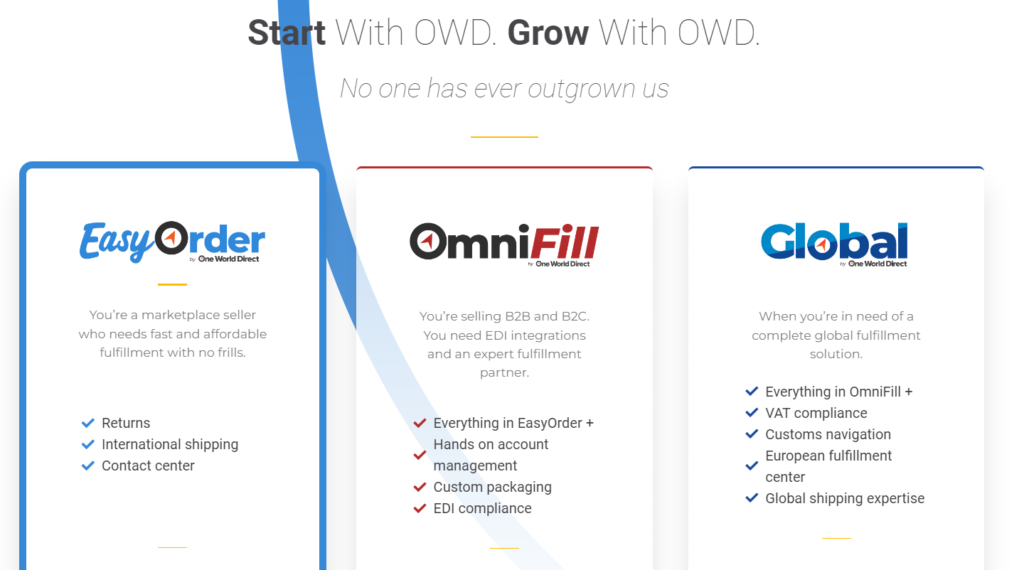
One World Direct (OWD) is a full‑service fulfillment partner that streamlines personalized order fulfillment and global shipping for ecommerce brands across D2C, B2B, and P2C contexts.
It covers end‑to‑end order processing—from custom product personalization and custom packaging to returns management and US-based call center support—helping teams reduce stockouts, accelerate delivery times, and maintain accurate reconciliation.
Why I picked One World Direct:
One World Direct fits best for sellers who need customized products and global fulfillment across multiple channels. Its open API and more than 200 integrations connect seamlessly with carts, marketplaces, ERPs, and EDI systems, keeping your operations in sync.
The combination of personalization options, custom packaging, returns management, and a dedicated call center lets you deliver a premium customer experience while keeping operational speed and accuracy high.
Some users have reported occasional inconsistencies due to staffing changes or support delays, so brands with strict SLAs should evaluate whether the service levels match their expectations or consider alternatives.
Standout features and integrations:
Features include personalization options like engraving, embroidery, and custom greeting cards, custom packaging that elevates the unboxing experience, a client portal with customizable reports and visualizations, and a U.S.-based call center and returns management to keep customers happy and your books clean.
Integrations include Shopify, BigCommerce, Magento, WooCommerce, Amazon, eBay, Walmart, Wayfair, Skubana, Cin7, ChannelAdvisor, SPS Commerce, and NetSuite.
Pros and Cons
Pros:
- Comprehensive returns service with pre‑printed labels and quality checks reduces returns friction.
- US-based call center enhances communication and customer service responsiveness.
- Wide integration options across carts, marketplaces, ERPs, and EDI keep operations synchronized.
Cons:
- Staffing inconsistencies can lead to occasional lapses in standard operating procedures.
- Occasional communication delays may impact timely issue resolution.

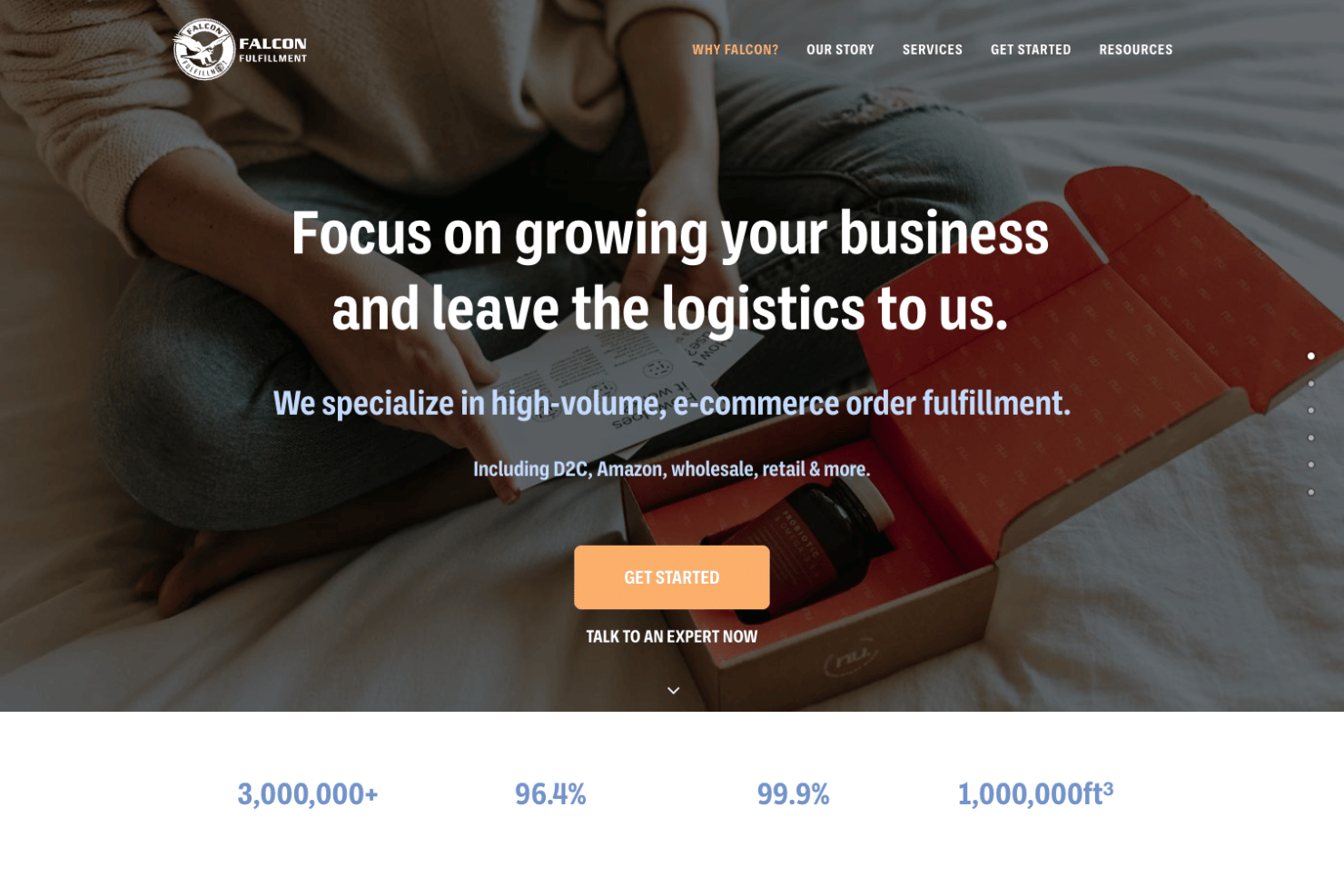
Falcon Fulfillment is a third‑party logistics provider for high‑volume ecommerce and B2B brands.
It customizes order fulfillment across receiving, storage, picking, packing, shipping, and returns so you can deliver fast, accurate orders across the continental U.S.
Why I picked Falcon Fulfillment:
Falcon stands out because of its personalized service—each merchant gets a dedicated account manager who tailors workflows to your products and volumes.
Their 24/7 operations and nationwide network mean reduced shipping windows and reliable delivery, and the company touts a 99.9% inventory accuracy rate and a 96.4% two‑day shipping rate.
That kind of consistency makes it easier to maintain stock levels and build customer loyalty. Additionally, the focus on custom packaging and eco‑friendly materials helps reinforce your brand while minimizing waste.
Standout features and integrations:
Features include custom packaging and kitting options for memorable unboxing experiences, returns and reverse logistics handling, influencer and subscription fulfillment support, robust reporting tools for order, inventory, and shipping visibility, and a scalable warehousing network that grows with your business.
Integrations include Shopify, BigCommerce, Wix, HubSpot, Zendesk, leading inventory management and shipping platforms, accounting software, and Order Desk.
Pros and Cons
Pros:
- High inventory accuracy and a 96.4% two-day shipping rate keep stock reliable and deliveries fast.
- Dedicated account management ensures personalized support and customizable fulfillment workflows.
- Comprehensive fulfillment services including e-commerce and B2B fulfillment, returns management, custom packaging, and warehousing.
Cons:
- Some users report issues with customer service responsiveness.
- Limited flexibility in service offerings compared with competitors serving a broader range of industries.

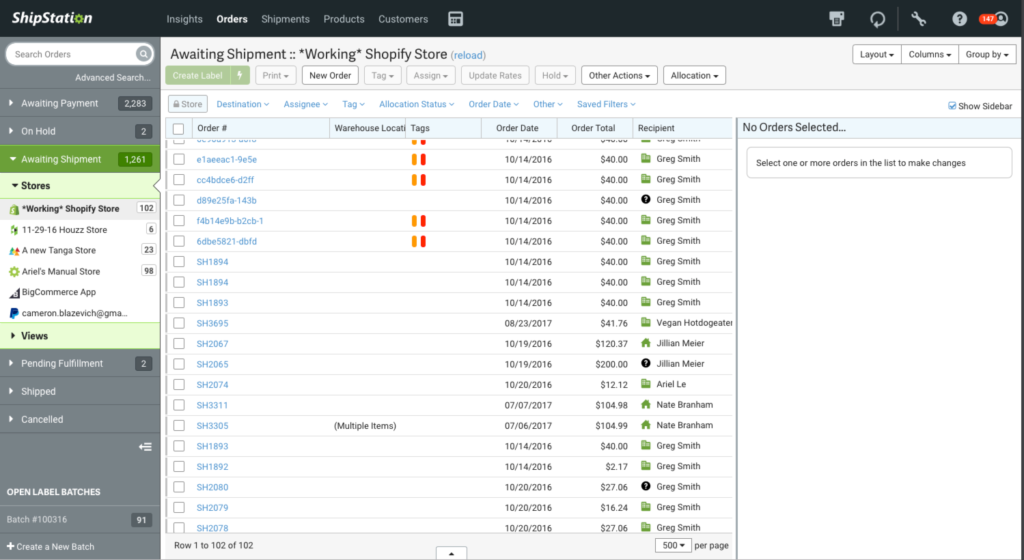
ShipStation is a shipping and fulfillment platform that simplifies multi-carrier logistics and order management for ecommerce merchants.
It covers everything from rate shopping and automated label printing to returns management and analytics, helping teams speed up fulfillment, reduce shipping errors, and keep stock levels accurate.
Why I picked ShipStation:
ShipStation shines for retailers who need reliable shipping across multiple carriers without drowning in spreadsheets or manual updates. Its automation handles tasks like label creation, order tagging, and batch printing, freeing you up to focus on sales and customer experience.
The platform’s inventory sync prevents overselling and ensures you’re not promising products you don’t have. While it’s primarily a shipping tool, it offers enough operational insight and return handling to satisfy most ecommerce workflows; if you need deep inventory or demand forecasting, you may want to pair it with a dedicated inventory system.
Standout features and integrations:
Features include rate shopping, inventory synchronization, automated label printing, returns management, and in-transit shipment tracking.
Integrations include UPS, USPS, FedEx, DHL, Amazon, Shopify, WooCommerce, and BigCommerce.
Pros and Cons
Pros:
- Automated workflows save time and reduce manual errors.
- Consolidated dashboard improves order visibility across channels.
- Supports multiple carriers, offering flexible shipping choices.
Cons:
- Customer support response times can be inconsistent.
- Recent performance hiccups affect reliability.
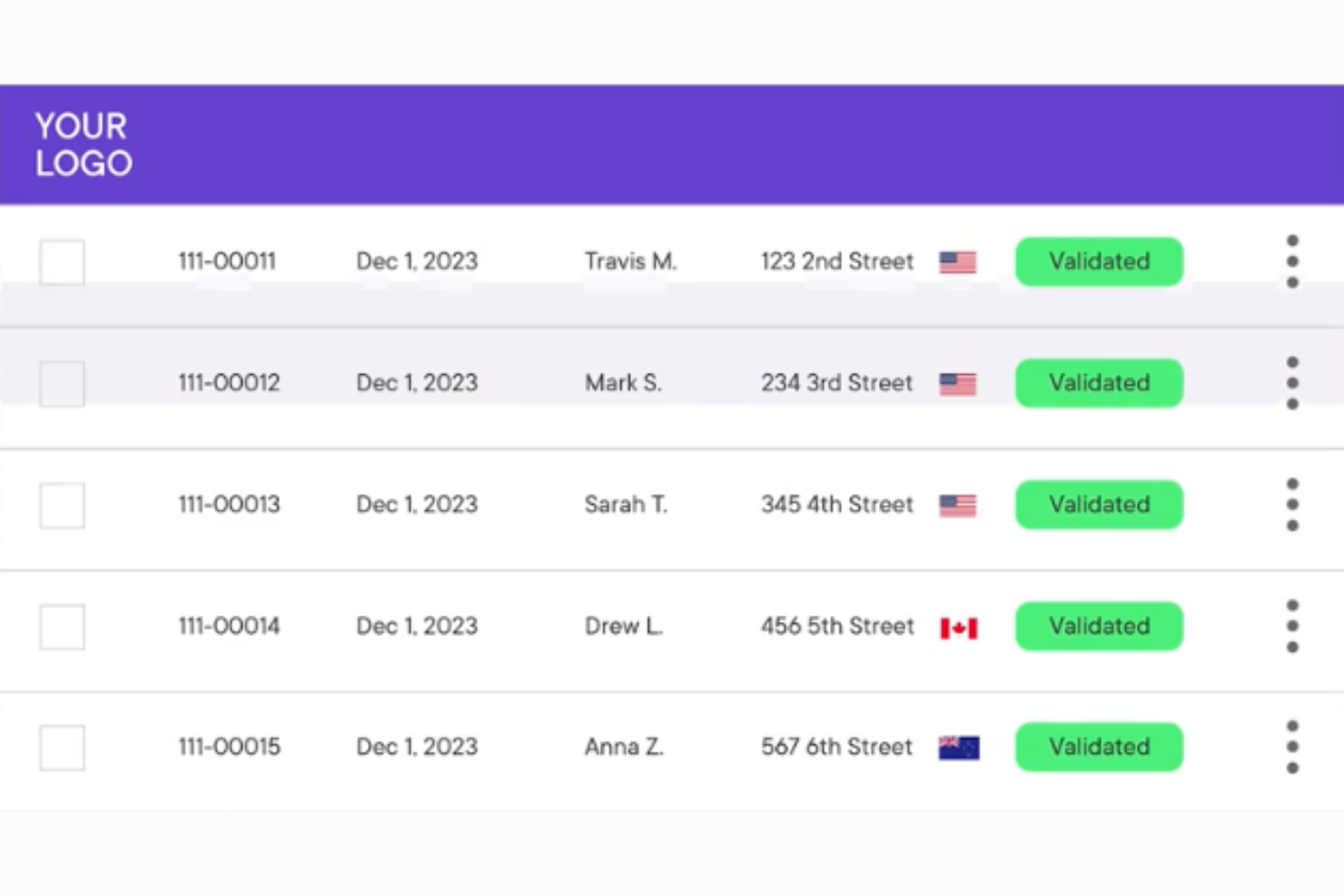
ShipEngine is a shipping API and fulfillment management platform that streamlines order fulfillment for ecommerce retailers and omnichannel merchants.
It unifies order consolidation, rate comparison, real‑time tracking, address validation, and returns management, helping teams cut manual errors, snag better shipping rates, and give customers total visibility.
Why I picked ShipEngine:
I picked ShipEngine because it centralizes messy orders from every sales channel and automates the ugly parts of shipping. Its rate‑shopping tools let you play the carriers against each other, boosting margins and cutting surprises at checkout. The real‑time tracking API keeps your customers in the loop so they’re not blowing up your support inbox, and the address validation saves you from packages boomeranging back to the warehouse.
If you need a carrier‑agnostic, globally friendly engine with strong APIs, it’s a great fit; if your priority is deep analytics or extreme customization, you might look elsewhere.
Standout features and integrations:
Features include order consolidation, real‑time rate comparison, tracking API, address validation, and returns management.
Integrations include UPS, USPS, FedEx, QuickBooks, NetSuite, Salesforce, HubSpot, Slack, Shopify, Trello, Gmail, and WooCommerce.
Pros and Cons
Pros:
- Flexible API-first design enables customized shipping solutions.
- Extensive carrier integrations support global shipping expansion.
- Real-time tracking keeps customers informed and reduces support inquiries.
Cons:
- Occasional software glitches can interrupt shipping workflows.
- Some users find integration setup and support inadequate.
Other Fulfillment Services
Here are a few more fulfillment services and 3PL companies that didn’t make the top list.
- eFulfillment Service
For managing multichannel marketplace orders
- Deliverr
For next-day delivery fulfillment
- Rakuten Super Logistics
For nationwide 3PL fulfillment expertise
- Fulfillment Warehouse
For LAX-area warehousing and storage
- FedEx Fulfillment
For modular, scalable logistics solutions


Related Ecommerce Software Reviews
If you still haven't found what you're looking for here, check out these related ecommerce tools that we've tested and evaluated.
- Ecommerce Platforms
- Inventory Management Software
- Payment Processing Software
- Shopping Cart Solutions
- Order Management Systems
- Warehouse Management Software
Our Selection Criteria for Ecommerce Fulfillment Services
Selecting the right fulfillment services involves a careful evaluation of what they have to offer.
Through extensive personal trials and research, we’ve developed criteria to guide software buyers towards making an informed decision.
Core functionality (25% weighting score)
Fulfillment services must excel in core areas to streamline ecommerce operations. We focus on essential use cases, such as:
- Order processing and management. Efficiently handling orders from receipt to delivery.
- Inventory management. Real-time tracking and updating of stock levels.
- Shipping and handling. Reliable picking, packing, and shipping processes.
- Returns management. Simplified processing of returns for customers.
- Integration capabilities. Seamless connectivity with ecommerce platforms and other essential business systems.
Additional standout features (25% weighting score)
While core functionality is crucial, innovative features can set top contenders apart. We test for:
- Advanced automation. Tools offering smart automation for repetitive tasks, enhancing operational efficiency.
- Custom branding options. Services that support personalized packaging and branding efforts.
- Global shipping solutions. Providers with a robust international logistics network.
- Sustainable practices. Options for eco-friendly packaging and carbon-neutral shipping.
- Exceptional analytics. Comprehensive reporting tools for insightful business intelligence.
Usability (10% weighting score)
A user-friendly interface is essential for efficient operations. We consider:
- Intuitive design. A clear, straightforward interface that simplifies navigation and task completion.
- Accessibility. Services that are easily accessible across various devices and platforms.
- Streamlined workflow. Features that facilitate a smooth workflow, such as batch processing capabilities.
Onboarding (10% weighting score)
The transition to new software should be as seamless as possible. We evaluate:
- Comprehensive training materials. Availability of in-depth tutorials, webinars, and documentation.
- Interactive guides. Tools that offer interactive onboarding experiences to quickly familiarize users with the service.
- Customer support availability. Access to knowledgeable support teams during the initial setup phase.
Customer support (10% weighting score)
Effective support can make all the difference. We look for:
- Multiple support channels. Offering support through live chat, email, and phone.
- Proactive service. Quick and effective resolution of issues before they impact operations.
- Community support. Access to user forums or communities for peer advice and tips.
Value for money (10% weighting score)
Balancing cost against features ensures you get the best deal without compromising quality. We assess:
- Transparent pricing. Clear, upfront costs without hidden fees.
- Flexible plans. Pricing plans that scale with business growth.
- Free trials or demos. Opportunities to test services before committing financially.
Customer reviews (10% weighting score)
Real-world feedback provides valuable insights into a service’s performance. We analyze:
- Positive testimonials. High satisfaction levels among current and past users.
- Issue resolution. How effectively and quickly problems are addressed.
- Long-term value. Users’ perceptions of the service’s impact on their business over time.
By carefully weighing these criteria, you can select a fulfillment service that not only meets but exceeds your expectations, ensuring that your ecommerce operations run smoothly and efficiently.
What are Ecommerce Fulfillment Services?
Ecommerce fulfillment services are third-party providers that handle storage, inventory, picking, packing, shipping, and even returns for your online store—basically, they take care of all the logistics so your products reach customers fast and efficiently.
By integrating with your ecommerce systems and managing everything from warehousing to returns, these services let you skip the logistics headaches and focus on growing your business.
Pick the service level that matches your needs and reclaim your time for the parts of business you actually enjoy.
How to Choose Fulfillment Services for Your Ecommerce Brand
The right partner should smooth out your operations today while leaving room for you to scale tomorrow. Use this framework to cut through the sales pitches and pick what truly fits your business.
| Step | What to do | Why it matters |
|---|---|---|
| Evaluate your needs | Define order volume, product types, and fulfillment requirements (e.g., same-day, international). Decide between 3PL, 4PL, or self-fulfillment. | Clarity on scope prevents overpaying for bells and whistles you don’t need. |
| Plan for scalability | Choose a provider that can grow with spikes in orders, inventory expansion, and new markets. | Prevents costly provider switches during growth spurts. |
| Consider outsourcing triggers | If you’re out of space, missing peak-season labor, or bottlenecked on shipping—outsource. | Frees you from logistics chaos so you can focus on growth. |
| Check compatibility | Confirm integrations with ecommerce platforms, inventory systems, and CRMs. | Avoids messy workarounds and wasted hours. |
| Assess core features | Look for essentials: order processing, shipping rates, label printing, returns. Ensure flexibility for product quirks. | The right features = smoother ops and happier customers. |
| Weigh logistics | Prioritize providers with strategically located fulfillment centers. | Faster, cheaper shipping gives you an edge over competitors. |
| Compare costs | Dig into fees, storage, shipping rates, and hidden charges. | Transparency beats sticker shock down the line. |
| Vet support and reputation | Check for responsive support and user reviews. | Strong support saves headaches when things go sideways. |
Bottom line: the “best” fulfillment service isn’t universal—it’s the one that aligns with your current realities and future goals.
Trends in Fulfillment Services
Staying on top of fulfillment trends is crucial for ecommerce businesses looking to stay competitive. Here are the key trends shaping fulfillment right now:
- Advanced automation. Warehouses are using AI and robotics to enhance efficiency, reduce errors, and speed up order processing. Expect more robotic pickers and AI-driven inventory systems to support scalable growth.
- Sustainability practices. Eco-friendly packaging and carbon-neutral shipping are becoming standard. Fulfillment services now offer more sustainable options to meet consumer demand for greener ecommerce.
- Personalization and branding. Customized packaging and unique unboxing experiences are on the rise. Fulfillment services that offer branding options help businesses stand out and enhance customer loyalty.
- Global expansion support. Enhanced logistics capabilities are making international expansion easier. Look for services that streamline customs clearance and offer robust global shipping solutions.
- Improved return management. Streamlined returns processes, intuitive customer portals, and instant return labels are enhancing customer satisfaction and retention.
- Same-day and next-day delivery. With rising expectations for fast delivery, more services are adding localized fulfillment centers to support rapid shipping options.
- Advanced analytics. Fulfillment services are integrating sophisticated analytics tools to optimize inventory, forecast demand, and improve decision-making, giving businesses a competitive edge.
- Flexible fulfillment models. Hybrid models combining in-house and third-party logistics are becoming popular, offering scalable solutions without high overhead costs.
These trends can guide your selection of a fulfillment partner, ensuring your business is well-positioned for growth and ready to meet evolving customer expectations.
Ecommerce fulfillment methods
Not all fulfillment approaches are created equal. Businesses have different needs, and the right method depends on factors like control, budget, and scalability.
Here’s a breakdown of the primary fulfillment methods:
- Self-fulfillment: Handle everything in-house, from inventory management to shipping. Great for retaining control but time-consuming and less scalable.
- Third-party logistics (3PL): Outsource warehousing, shipping, and often returns to an experienced provider. Ideal for businesses ready to scale without investing in infrastructure.
- Dropshipping: Sell without holding inventory—your supplier handles storage and shipping. Low upfront cost but limited control over quality and delivery times.
Each method comes with unique benefits and challenges, so weigh your options based on your business goals.
Key Functions & Features of Fulfillment Services
Fulfillment services are essential for streamlining the order fulfillment process and ensuring a seamless customer experience. Here are the key functions they handle:
- Warehousing and storage. Fulfillment centers provide secure, organized storage solutions with climate control for sensitive products. They also handle product inspections to ensure quality before shipping.
- Inventory management. Real-time tracking systems sync with your ecommerce platform, helping you monitor stock levels, avoid overselling, and plan restocking efficiently.
- Order processing. End-to-end management from order receipt to preparation for shipment. This includes order confirmation, payment processing, and data entry.
- Pick and pack. Accurate selection of products from warehouse shelves and proper packaging for shipment, including necessary labels and promo materials.
- Shipping network and services. Fulfillment providers often partner with carriers like UPS, DHL, and FedEx to negotiate better shipping rates and ensure reliable delivery. They also navigate the complex maze of international shipping—customs, tariffs, and compliance—so you don’t have to sweat the details.
- Tracking and visibility. Provides tracking numbers for businesses and customers to monitor shipments and order status in real-time.
- Returns handling. Manages the return process, including inspection, restocking or disposal, and handling refunds or exchanges, making returns hassle-free.
- Value-added services. Extras like kitting, customization, gift wrapping, and promotional inserts help elevate the customer experience.
- Reporting and analytics. Offers insights into fulfillment performance, inventory levels, and shipping costs, helping businesses make data-driven decisions.
By managing these functions, fulfillment services enable ecommerce businesses to focus on growth and customer satisfaction, knowing their fulfillment process is in good hands.
Top Benefits of Fulfillment Services For Ecomm Brands
Outsourcing storage, packing, and shipping to a fulfillment service can be a game-changer for ecommerce businesses. Here are the top benefits:
- Increased efficiency. Fulfillment services handle logistics, allowing you to focus on core business activities like marketing and product development. This boost in efficiency often leads to reduced costs and higher productivity.
- Scalability. Whether you're experiencing seasonal spikes or rapid growth, fulfillment services offer the flexibility to scale operations up or down without significant capital investment. This adaptability helps you respond quickly to changing market demands.
- Improved customer satisfaction. Professional packaging and timely delivery are essential for a positive customer experience. Fulfillment services ensure orders are processed accurately and delivered on time, leading to happier customers and more repeat business.
- Global reach. Fulfillment services have the infrastructure to support international shipping, making it easier for you to expand into new markets. They handle customs and logistics, simplifying the complexities of global ecommerce.
- Risk management. From inventory loss to shipping damage, fulfillment services help reduce risks by using their expertise and established processes. This ensures a more reliable and secure supply chain, giving you peace of mind.
Whether you're a small startup or a large retailer, the benefits of using a fulfillment service are clear: you can scale efficiently, improve customer satisfaction, and reduce operational headaches.
Choosing the right fulfillment partner tailored to your business needs can significantly impact your growth and long-term success.
Cost & Pricing for Fulfillment Services
When venturing into ecommerce, picking the right fulfillment service to handle your logistics is a crucial move.
Fulfillment services come with a range of plan options to suit different business sizes, order volumes, and specific needs. These plans can vary from basic packages ideal for startups to more comprehensive solutions for larger enterprises.
Knowing the ins and outs of each plan will help you make a smart decision that aligns with your business goals and budget.
Plan comparison table for ecommerce fulfillment services
| Plan Type | Average Price | Common Features | Best For |
|---|---|---|---|
| Starter | $30 - $50/month | Basic order fulfillment, inventory management, standard shipping rates | Small startups and new businesses |
| Professional | $100 - $300/month | Advanced order fulfillment, enhanced inventory tracking, discounted shipping rates, customer support | Growing businesses needing more features and support |
| Enterprise | Custom pricing | Customizable solutions, dedicated account manager, priority shipping, comprehensive analytics and reporting | Large enterprises and high-volume sellers |
| Free | $0 | Limited order fulfillment, basic inventory tracking, standard shipping with higher rates | Small businesses testing the waters or with minimal fulfillment needs |
Picking the right plan means looking at your current needs, order volume, and where you see your business going.
The free option can be a great way to try out the service, while higher-tier plans offer the scalability and features needed for a growing business.
The key is to find a fulfillment service that aligns with your operations and long-term goals.
Other costs to consider
- Pick and pack fees: On average, pick and pack fees for a single item order range from $2.97 to $3.18 for B2C orders and $4.31 to $4.79 for B2B orders.
- Monthly storage fees: Storage fees can vary widely. For example, some services might charge around $5 per pallet per month, while others might charge based on cubic footage, such as $0.75 per cubic foot per month.
- Additional fees: Be mindful of other potential costs like receiving fees (e.g., $14.25 per pallet received), setup fees, and long-term storage rates for items stored beyond a certain period.
Ecommerce Fulfillment Services FAQs
Here are a smattering of questions I wanted to get the jump on answering while we’re on the topic of fulfillment services.
How do fulfillment services integrate with my ecommerce platform?
Most big-name fulfillment services plug right into platforms like Shopify, WooCommerce, and BigCommerce using apps or APIs. If your store’s on something obscure, expect a custom fix—sometimes a little messy, always doable with the right support.
Just make sure any provider you consider actually knows your tech stack. Cut through the sales pitch, get them to do a test order, and see how clean the data flows.
How do I know if my business is ready for a fulfillment service?
If you’re spending more time packing boxes than growing the business—or your kitchen table has disappeared under bubble wrap—you’re ready.
Signs you’re due: 100+ orders a month, chronic shipping headaches, or more returns than you can track. Fulfillment services move the grunt work off your plate so you can focus on what actually grows your bottom line.
How do I switch to a new fulfillment service without disrupting operations?
It’s choreography, not chaos—if you plan it right. Start by overlapping your old and new providers for a couple of weeks. Sync inventories.
Double-check your integrations, and warn your frontline staff about the upcoming transition. Test everything before you go live. Customers can forgive a lot, but shipping mix-ups during a changeover isn’t one of them.
Can fulfillment services help improve customer satisfaction?
Yes, and not in some abstract way. Order accuracy goes up, speed improves, and tracking updates start landing on time. Good fulfillment partners cut shipping errors, offer branded packaging, and smooth out returns. That means happier customers, fewer angry emails, and the kind of word-of-mouth money can’t buy.
How do fulfillment services handle returns and reverse logistics?
Most fulfillment partners handle returns as part of the package—but the details matter. Some will inspect, restock, or even handle refunds if you want.
The best offer a dedicated return portal that syncs back to your platform. Nail down who pays return shipping (spoiler: it’s often you), and make sure their process matches the customer experience you want.
What kind of inventory management support do fulfillment services offer?
Real fulfillment shops don’t just stack boxes. They give you real-time dashboards, low-stock warnings, batch tracking, and sometimes even demand forecasts. The goal: prevent those “out of stock” oops moments. Push them on this. You want insights you can act on, not just a warehouse with WiFi.
How do fulfillment services handle international shipping?
If you want to ship abroad, make sure your fulfillment partner knows more than just the local post office. Good ones handle customs forms, tariffs, and even local delivery quirks.
Fees can sneak up fast—ask for a detailed quote before you sign. And always ask if international shipments are trackable; some carriers leave parcels in postal purgatory.
Other Fulfillment Software Reviews
If you want to take on fulfillment management yourself, I would start with these software options to build out your internal system.
- Order Fulfillment Software
- Warehouse Management Software
- Inventory Management Software
- Product Information Management (PIM) Software
- Pick and Pack Software
Your Path to Fulfillment Starts Here
While most jobs can't give you personal fulfillment, ecommerce merchants can find great fulfillment without doing it themselves.
But, seriously, with the right fulfillment service, you not only make your life easier, but you also make your customers happy in the bargain. What else could you want in life? (pizza, a beach vacation, world peace... yeah yeah, me too)
Hopefully, this list of top fulfillment services enables you to simplify your life and scale your brand.
Retail never stands still—and neither should you. Subscribe to our newsletter for the latest insights, strategies, and career resources from top retail leaders shaping the industry.