24 Best Enterprise Subscription Management Software 2026

The Top 10 Enterprise Subscription Management Software to Consider
These are the top enterprise subscription management software picks for automating billing, reducing churn, and optimizing retention, whether you run ecommerce, SaaS, or any recurring revenue operation.


Running an enterprise subscription business is nothing like running a simple storefront. You’re managing recurring revenue, customer subscriptions, billing cycles, and a tech stack that never stops changing.
If you’re dealing with failed payments, customer churn, or messy invoice workflows, you’re not alone.
This guide is built for teams who want to automate billing, streamline subscription management, and get granular with metrics—without getting buried in jargon or sales fluff.
I’ve spent more than a decade in ecommerce, retail, and wholesale, with hands-on experience in logistics and marketing for platforms like WooCommerce, Shopify, and Adobe Commerce.
I cut through the noise by testing the leading subscription management platforms for functionality, retention tools, real-time analytics, and integration muscle. Whether you’re running SaaS, D2C ecommerce, or managing global renewals, you’ll get an honest look at what actually works at scale.
Skip the sales pitch. This is about actionable advice for selecting the right subscription management solution, optimizing for recurring revenue, and giving your team tools that don’t waste your time—or your customer’s patience.
Table of Contents
Why Trust Our Software Reviews
Comparing the Best Enterprise Subscription Management Software, Side-by-Side
Here’s how the top enterprise subscription management platforms stack up on pricing and real-world usability. Use this chart for a quick gut check on what fits your budget and your billing model.
| Tool | Best For | Trial Info | Price | ||
|---|---|---|---|---|---|
| 1 | Best for automated billing | Free demo + Free trial available | From $229/month | Website | |
| 2 | Best for subscription automation | Free demo available | From $99/month | Website | |
| 3 | Best for subscription analytics | Free demo available | Pricing upon request | Website | |
| 4 | Best for global enterprises | Free demo available | Pricing upon request | Website | |
| 5 | Best for payment flexibility | Not available | Website | ||
| 6 | Best for Shopify integration | 30-day free trial; free plan for 90 days | From $24.99/month + 2% on subscription orders | Website | |
| 7 | Best for retail subscriptions | Free demo | Pricing upon request | Website | |
| 8 | Best for custom plans | 3-day free trial | From $29/month | Website | |
| 9 | Best for Shopify stores | 30-day free trial for new subscribers | From $99/month and a fee of 1.25% + $0.19/transaction | Website | |
| 10 | Best for easy migration | Free demo available | From $499/month (billed annually) & 1% + 20¢ transaction fee | Website |
The 10 Best Enterprise Subscription Management Software, Reviewed
Dig into detailed reviews of the leading enterprise subscription management tools. I break down key features, integrations, pros, and cons—so you can see exactly where each platform delivers, and where it doesn’t.


ChargeOver is an automated subscription management software designed for businesses looking to simplify their billing and payment processes. It's ideal for companies with diverse subscription needs, such as digital marketing agencies.
Why I picked ChargeOver: It offers customizable billing options and multiple payment methods that align with its focus on automated billing. The platform provides real-time metrics and detailed reporting to help you make informed decisions. Automatic reminders for failed transactions ensure smooth payment collection. ChargeOver integrates with over 60 applications, enhancing its versatility for various business needs.
Standout features & integrations:
Features include customizable billing methods, real-time metrics, and automatic reminders for failed transactions. ChargeOver also offers on-brand invoices to maintain your company's image. Its detailed reporting capabilities support informed decision-making.
Integrations include QuickBooks, Xero, Stripe, Authorize.Net, PayPal, Braintree, Square, FreshBooks, Zapier, and Salesforce.
Pros and Cons
Pros:
- Comprehensive payment options
- Easy integration setup
- Automated billing processes
Cons:
- Requires technical knowledge
- Limited customization for reports


SubscriptionFlow is a subscription management platform designed for businesses aiming to automate their billing and subscription processes. It caters to companies looking to streamline operations and improve efficiency through automated workflows and detailed analytics.
Why I picked SubscriptionFlow: It provides extensive automation capabilities that simplify billing and subscription management. Features like automated invoicing and payment reminders reduce manual intervention, aligning with its focus on automation. SubscriptionFlow's analytics offer insights into subscriber behavior and financial performance. In my experience, these tools help your team make informed decisions and optimize business strategies.
Standout features & integrations:
Features include automated invoicing that streamlines billing processes and reduces errors. Payment reminders ensure timely collections, reducing the risk of missed payments. SubscriptionFlow's analytics provide valuable insights into subscriber behavior, helping you refine your business strategies.
Integrations include Salesforce, QuickBooks, Xero, Stripe, PayPal, Authorize.Net, Mailchimp, HubSpot, Zapier, and Google Analytics.
Pros and Cons
Pros:
- Easy to customize workflows
- Detailed analytics insights
- Extensive automation capabilities
Cons:
- Limited advanced features
- May need technical expertise

Recurly is a subscription management platform designed for businesses that need detailed analytics to optimize their subscription services. It's suitable for companies of all sizes looking to enhance revenue growth through data-driven insights and automated billing processes.
Why I picked Recurly: Its advanced analytics tools provide insights into subscriber behavior, aligning with its focus on subscription analytics. Recurly offers features like custom reporting, which helps you track key metrics and performance. The platform's automated billing and invoicing simplify revenue collection. Recurly's dunning management reduces churn by handling failed payments effectively.
Standout features & integrations:
Features include custom reporting that allows you to track key performance metrics. Automated invoicing helps streamline revenue collection, saving time and reducing errors. Recurly's dunning management effectively handles failed payments, reducing churn and maintaining cash flow.
Integrations include Salesforce, NetSuite, QuickBooks, Xero, Avalara, Stripe, PayPal, Braintree, Mailchimp, and HubSpot.
Pros and Cons
Pros:
- Customizable reporting options
- Effective dunning management
- Advanced analytics capabilities
Cons:
- Reporting features may overwhelm beginners
- Complex implementation process


Zuora is a subscription management platform tailored for large-scale enterprises that operate on a global level. It helps businesses manage billing, revenue recognition, and subscription lifecycles, making it ideal for companies with complex subscription models.
Why I picked Zuora: Its ability to handle complex billing scenarios makes it suitable for global enterprises. The platform offers features like multi-currency support, which is crucial for international operations. Advanced reporting tools provide insights into financial performance and subscription metrics. Zuora’s scalability ensures it can grow alongside your business, handling large volumes of data and transactions.
Standout features & integrations:
Features include multi-currency support that allows you to manage international transactions. Advanced reporting tools help you track financial performance and subscription metrics. Zuora’s scalability supports businesses with large volumes of data and transactions.
Integrations include Salesforce, NetSuite, Microsoft Dynamics 365, SAP, Oracle, Workday, QuickBooks, Xero, Marketo, and HubSpot.
Pros and Cons
Pros:
- Comprehensive subscription lifecycle management
- Supports multiple currencies
- Handles complex billing scenarios
Cons:
- May need technical expertise
- Requires extensive setup time


PayWhirl is a subscription management tool designed for businesses seeking flexible payment solutions. It caters to companies that offer recurring billing services, providing an easy way to manage payments and subscriptions.
Why I picked PayWhirl: Its focus on payment flexibility is evident through features like customizable payment plans and multiple billing cycles. PayWhirl allows you to set up installment payments, catering to diverse customer needs. The platform supports various payment gateways, enhancing payment options. In my experience, PayWhirl's user-friendly dashboard makes managing subscriptions straightforward for your team.
Standout features & integrations:
Features include customizable payment plans that let you tailor billing cycles to suit your customers. The platform supports installment payments, offering flexibility in payment options. PayWhirl's user-friendly dashboard simplifies subscription management, making it easy for your team to handle daily operations.
Integrations include Shopify, WooCommerce, BigCommerce, PayPal, Stripe, Authorize.Net, Square, QuickBooks, Mailchimp, and Zapier.
Pros and Cons
Pros:
- Easy setup process
- User-friendly dashboard
- Customizable billing cycles
Cons:
- May need developer support
- Limited advanced features


Bold Subscriptions is a subscription management solution built specifically for Shopify store owners who want to offer flexible subscription models. It caters to ecommerce businesses that aim to boost recurring revenue through customizable subscription plans.
Why I picked Bold Subscriptions: Its seamless integration with Shopify makes it ideal for store owners looking to manage subscriptions directly within their existing platform. Bold Subscriptions offers features like dynamic discounting and flexible subscription management, which align with its focus on Shopify integration. It provides detailed analytics to help you understand subscriber behavior. The platform's customer portal allows easy management of subscriptions, improving customer satisfaction.
Standout features & integrations:
Features include dynamic discounting that allows you to offer personalized deals to your customers. The flexible subscription management feature lets you customize plans to fit customer needs. Detailed analytics provide insights into subscriber behavior, helping you make informed business decisions.
Integrations include Shopify, BigCommerce, WooCommerce, Zapier, Klaviyo, Mailchimp, Google Analytics, Avalara, QuickBooks, and Xero.
Pros and Cons
Pros:
- Detailed analytics insights
- Dynamic discounting options
- Seamless Shopify integration
Cons:
- Limited customization for non-Shopify users
- Requires technical setup

Ordergroove is a subscription management platform tailored for retail brands aiming to enhance customer relationships and drive recurring revenue. It's designed for ecommerce businesses in industries like beauty and food, offering tools to manage and optimize subscription services.
Why I picked Ordergroove: It provides customizable subscription options and churn reduction tools, aligning with its focus on retail subscriptions. A/B testing capabilities allow you to refine your strategies for better results. Performance analytics give insights into customer behavior, improving decision-making. Ordergroove supports businesses from launching to scaling their subscription operations.
Standout features & integrations:
Features include customizable subscription options, A/B testing, and churn reduction tools. Performance analytics offer insights into customer behavior, helping you make informed decisions. Ordergroove’s dedicated support ensures smooth implementation and scaling of subscription services.
Integrations include Shopify, Magento, Salesforce, BigCommerce, Adobe Commerce, WooCommerce, SAP, Oracle, Netsuite, and Microsoft Dynamics.
Pros and Cons
Pros:
- Flexible API integrations
- Advanced analytics capabilities
- Customizable subscription options
Cons:
- Not ideal for small businesses
- May need technical expertise
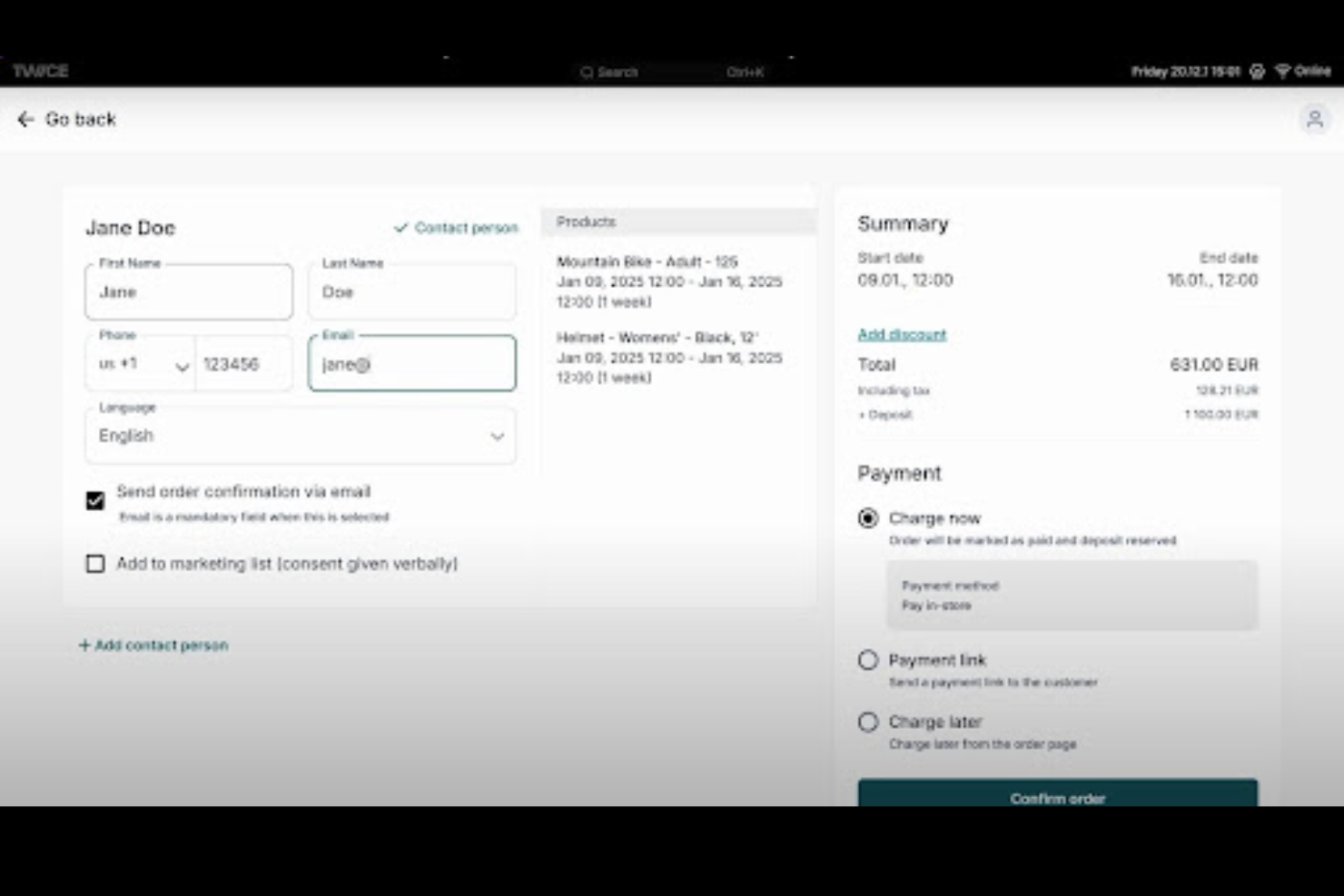
Twice Commerce is a subscription management software designed for businesses looking to manage online and in-store subscriptions efficiently. It's ideal for industries like fashion, electronics, and consumables that want to offer diverse subscription models, including product subscriptions and memberships.
Why I picked Twice Commerce: It offers customizable subscription plans, allowing you to tailor offerings to suit your business needs. With features like inventory management and dynamic product catalogs, Twice Commerce supports various subscription models. Its user-friendly automation simplifies billing and renewals, making it easier to scale operations. The platform's item-level tracking ensures precise inventory management, enhancing operational efficiency.
Standout features & integrations:
Features include inventory management that helps you keep track of stock levels in real-time. The dynamic product catalog allows for flexible subscription offerings. Twice Commerce's billing automation ensures timely renewals and reduces manual errors.
Integrations include Shopify, WooCommerce, Magento, Stripe, PayPal, QuickBooks, Xero, Google Analytics, HubSpot, and Salesforce.
Pros and Cons
Pros:
- Supports diverse business models
- User-friendly billing automation
- Customizable subscription plans
Cons:
- Limited to specific industries
- May need technical assistance

Recharge is a subscription management tool tailored for Shopify store owners who want to offer flexible subscription options. It's designed to help ecommerce businesses enhance customer retention and increase recurring revenue through customizable subscription models.
Why I picked Recharge: Its seamless integration with Shopify makes it ideal for store owners looking to manage subscriptions directly within their existing platform. Recharge offers features like flexible billing cycles and personalized customer portals, which align with its focus on Shopify stores. The analytics and reporting tools provide valuable insights into subscription performance. Recharge’s focus on user experience helps you create a smooth subscription journey for your customers.
Standout features & integrations:
Features include flexible billing cycles that let you set custom subscription intervals. Personalized customer portals allow your customers to manage their subscriptions easily. The analytics tools provide insights into subscription trends and customer behavior, helping you make informed decisions.
Integrations include Shopify, BigCommerce, WooCommerce, Klaviyo, Mailchimp, Google Analytics, Zapier, QuickBooks, Xero, and Avalara.
Pros and Cons
Pros:
- Personalized customer portals
- Customizable billing cycles
- Easy Shopify integration
Cons:
- Complex reporting features
- Requires technical setup


Skio is a subscription management platform designed for businesses looking to simplify the migration process from other platforms. It's aimed at companies that want to manage subscriptions efficiently while minimizing the hassle of transitioning systems.
Why I picked Skio: It offers a smooth migration process, reducing downtime and data loss, which is crucial for businesses switching platforms. Skio provides automated tools to transfer customer data securely. The onboarding support ensures your team can quickly adapt to the new system. Skio also offers flexible subscription management options, allowing you to customize plans to suit your business needs.
Standout features & integrations:
Features include automated tools for secure data transfer, which help reduce the risk of data loss during migration. Skio offers flexible subscription management options, letting you customize plans to fit your needs. The platform also provides comprehensive onboarding support to help your team adapt quickly.
Integrations include Shopify, Recharge, Klaviyo, Mailchimp, Google Analytics, HubSpot, QuickBooks, Xero, Salesforce, and Netsuite.
Pros and Cons
Pros:
- Customizable plans
- Automated data transfer tools
- Smooth migration process
Cons:
- Limited advanced features
- Limited to specific platforms
Other Enterprise Subscription Management Software
Here are some additional enterprise subscription management software options that didn’t make it onto my shortlist, but are still worth checking out:
- Smartrr
For customer retention
- Loop Subscriptions
For D2C brands
- Subbly
For subscription box services
- sticky.io
For retail ecommerce
- FastSpring
For digital commerce
- Paddle
For software companies
- Chargebee
For SaaS startups
- Stax Bill
For real-time billing updates
- Zoho Billing
For small businesses
- Adyen
For global payment processing
- BlueSnap
For integrated payments
- Rebilly
For billing optimization
- Cleverbridge
For digital goods
- Billsby
For pricing plan flexibility


Our Selection Criteria For Enterprise Subscription Management Software
Here’s the framework I use to separate the real contenders from the noise in enterprise subscription management. Every platform here is measured against the same yardstick, and only those that deliver on these fronts make the cut.
Core functionality (25% of total score)
This is non-negotiable. If a platform can’t handle these basics, it doesn’t make the list.
- Manages recurring billing and subscription cycles efficiently.
- Automates invoicing and payment collection with minimal manual intervention.
- Supports multiple payment methods and gateways, including global options.
- Delivers real-time analytics and reporting to surface actionable metrics.
- Provides a customer self-service portal for upgrades, downgrades, and cancellations.
Additional standout features (25% of total score)
Extra points if a tool goes beyond the basics—here’s what I look for.
- Customizable subscription models and flexible billing options.
- Advanced dunning management and churn reduction tools.
- Multi-currency and tax support for global business.
- AI-driven forecasting, usage-based billing, or advanced integrations.
Usability (10% of total score)
A powerful tool that’s a pain to use isn’t worth it. Here’s how I judge ease of use.
- Intuitive interface with minimal learning curve for your team.
- Configurable dashboards that surface what matters most.
- Responsive design for managing on desktop or mobile.
- Clear navigation, not hidden settings and buried menus.
Onboarding (10% of total score)
Even the best system fails if the rollout is a mess. Here’s what matters for onboarding.
- On-demand tutorials and live training for fast adoption.
- Interactive product tours, sample workflows, and templates.
- Access to human support (not just bots) during implementation.
Customer support (10% of total score)
You need answers fast, not tickets that sit for days. Here’s what I check.
- 24/7 support and dedicated account managers for enterprise accounts.
- Multiple support channels—phone, email, chat—no black holes.
- Comprehensive online help and a real knowledge base.
- Fast, consistent response times.
Value for money (10% of total score)
Features and support mean nothing if the pricing is out of whack. This is my yardstick.
- Transparent pricing with clear breakdowns—no hidden fees.
- Competitive rates for the feature set, not bloated enterprise pricing.
- Flexible plans that scale with your team and needs.
- Generous free trials or demos for real testing.
Customer reviews (10% of total score)
Nothing beats the signal from real users. Here’s what I focus on in user feedback.
- Consistently high satisfaction scores from teams like yours.
- Real-world feedback on onboarding, customer support, and feature depth.
- Reported reliability—uptime, bugs, and handling of updates.
- Specifics on how the tool impacts churn, cash flow, and day-to-day ops.
What is Enterprise Subscription Management Software?
Enterprise subscription management software is a platform for handling every part of your subscription lifecycle—billing, invoicing, renewals, upgrades, downgrades, and churn reduction—at scale.
It’s built for teams who want to automate recurring billing, streamline workflows, and make data-driven decisions with real-time metrics.
These systems connect with your payment gateways, CRM, and accounting software, so you can manage customer subscriptions, flexible pricing models, and recurring revenue in one place.
For SaaS, ecommerce, or any subscription-based business, this is how you keep operations running smoothly, optimize retention, and stay ahead of failed payments and manual errors.
How to Choose Enterprise Subscription Management Software
Choosing subscription management software shouldn’t be guesswork.
Here’s a no-nonsense checklist to help you zero in on the right platform for your business model, workflow, and recurring revenue goals.
| Step | What to do | Quick tip |
|---|---|---|
| Define your subscription model | List your pricing plans, renewal cycles, and recurring billing needs. | Clarify if you need usage-based billing, one-time, or hybrid options. |
| Map your integrations | Identify must-have connections (CRM, ERP, payment gateways, accounting). | Confirm the software has open API and native integrations. |
| Audit automation needs | List workflows to automate—like invoicing, dunning, and renewals. | Prioritize real-time alerts, retries, and flexible billing cycles. |
| Check reporting & analytics | Decide which metrics (MRR, churn, LTV) you need on dashboards. | Make sure reports are exportable, not just locked in the UI. |
| Test usability & support | Trial the interface, onboarding, and customer support channels. | Choose user-friendly dashboards and live support, not just ticket bots. |
| Compare pricing & scalability | Stack up plans for total cost, flexibility, and growth potential. | Factor in failed payments, upgrades, downgrades, and future headcount. |
Top Features of Enterprise Subscription Management Software
Here’s what you should expect out of any enterprise-grade subscription management platform worth the investment.
- Automated recurring billing and invoicing. Eliminate manual processes and let the system handle invoicing, payment retries, proration, and dunning.
- Flexible subscription model support. Run tiered, usage-based, hybrid, one-time, or custom billing cycles without engineering workarounds.
- Advanced dunning management. Automated workflows for failed payments, retry logic, and customer notifications, so you keep cash flow steady and reduce involuntary churn.
- Multi-currency and tax handling. Real-time support for global currencies, country-specific taxes, and compliance—critical for cross-border subscription business models.
- Comprehensive analytics and dashboards. Built-in metrics tracking for MRR, churn, renewals, lifetime value, and subscriber growth. All reporting must be exportable.
- API-first integrations. Native connectors and robust API access to sync with your CRM, ERP, accounting, and payment gateways—enabling a unified subscription lifecycle.
- Customer self-service portals. Empower users to upgrade, downgrade, or cancel their plans on their terms, cutting support costs and improving satisfaction.
- User roles and permissions. Enterprise-grade access control so finance, ops, and support get the right tools and data—without bottlenecks or security risks.
- Automated onboarding and workflow tools. Drag-and-drop workflow builders, onboarding wizards, and prebuilt templates that accelerate time to value for new customers.
Key Benefits of Enterprise Subscription Management Software
Switching to the right subscription management platform isn’t just about efficiency—it’s about unlocking real revenue growth and operational leverage.
- Increased billing accuracy. Automation cuts manual errors and late invoices, so your revenue recognition is rock-solid every billing cycle.
- Lower churn and improved retention. Dunning management, real-time alerts, and self-service options keep customers engaged and stop revenue leaks before they start.
- Stronger recurring revenue and cash flow. Automated billing, payment retries, and flexible pricing models turn subscription revenue into a reliable growth engine.
- Faster, smarter decision-making. Real-time analytics and customizable dashboards put actionable data—MRR, LTV, churn—front and center for your team.
- Streamlined workflows. Integration with your CRM, accounting software, and ERP means less manual work and fewer siloed systems.
- Scalability and flexibility. Grow from hundreds to millions of subscribers without overhauling your tech stack, adding costly headcount, or sacrificing uptime.
- Better customer experience. Self-service portals, transparent billing, and easy plan management boost satisfaction and increase customer lifetime value.
- Stronger compliance and data security. Enterprise platforms give you audit trails, encryption, and regulatory compliance—so you sleep better at night.
Costs and Pricing of Enterprise Subscription Management Software
Here’s what you’re likely to pay for subscription management platforms—plus what those line items actually get you.
| Plan type | Average price | Common features | Best for |
|---|---|---|---|
| Free plan | $0 | Basic invoicing, limited support, basic analytics. | Testing, very small teams. |
| Personal plan | $10–$30/user/month | Automated invoicing, multiple payment gateways, self-service. | Startups, solo operators. |
| Business plan | $40–$70/user/month | Advanced analytics, customizable plans, integrations. | Growing SaaS or ecommerce teams. |
| Enterprise plan | $80–$150+/user/month | Multi-currency, account management, advanced security. | Multinational or high-volume ops. |
Additional costs to consider
- Add-ons and premium features. Usage-based billing, advanced dunning, custom integrations, or premium support may come with extra fees.
- Implementation and onboarding. Setup, migration from legacy systems, or staff training can result in one-time costs or upcharges.
- Transaction and payment processing fees. Some platforms charge a percentage of recurring payments or per-transaction fees, which add up at scale.
- API and user limits. Watch for pricing that scales with API calls, active subscribers, or admin users—not just flat monthly rates.
- Support tiers. 24/7 support, dedicated account managers, or priority response times may only be available on higher-priced plans.
Pricing is never just the sticker on the website—do the math based on your business model and subscriber count.
Enterprise Subscription Management Software FAQs
Here are some answers to common questions about enterprise subscription management software:
How can subscription management software help with revenue recognition for complex contracts?
Accurate revenue recognition is critical, especially if you’re managing multi-year, usage-based, or milestone-driven contracts. The right platform automates deferred revenue tracking, proration, and compliance with ASC 606 or IFRS 15.
That means fewer spreadsheet headaches for your finance team and audit trails that make your accountant’s life easier—no more manual guesswork or missed numbers.
What role does subscription management software play in supporting mergers and acquisitions?
When you’re acquiring or merging businesses, reconciling customer subscriptions, revenue, and billing systems can derail the whole deal.
Enterprise-grade software with robust data migration, user permission management, and unified reporting makes it possible to consolidate accounts and billing without losing subscribers or mangling your recurring revenue streams. If your provider can’t handle this, you’re inheriting a mess.
How do these platforms enable pricing experimentation and rapid plan changes?
If you’re running A/B pricing tests, rolling out new subscription models, or tweaking offers by customer segment, look for software that lets you clone, launch, and retire plans with minimal IT lift.
The best tools offer versioning, grandfathering, and sandbox environments, so you can test pricing strategies in real time—without blowing up your active customer base.
What is dunning management, and why does it matter at scale?
Dunning management is how your system handles failed or declined payments—automatically chasing overdue invoices, sending reminders, and retrying payment methods.
At scale, good dunning reduces involuntary churn and recovers revenue you’d otherwise lose. A weak dunning process shows up as rising churn rate and unexplained drops in MRR.
Make sure your platform offers flexible, automated dunning workflows and clear reporting.
Can subscription management software support multiple business models under one roof?
Many enterprises run more than one business model—subscriptions, memberships, one-time sales, usage-based pricing.
The right subscription management platform can handle them all, letting you mix and match products, plans, and billing cycles within a single dashboard. No need to juggle multiple systems or run parallel workflows; you keep your customer data and analytics unified.
What should I look for in audit trails and user activity logs?
You want full visibility—who did what, when, and from where—especially if you’re subject to compliance requirements.
A good platform provides immutable logs for all billing changes, user actions, API calls, and access attempts. That’s non-negotiable if you ever need to resolve disputes, investigate issues, or survive a compliance audit.
The Last Word On Enterprise Subscription Management
If you want real control over recurring revenue and customer retention, picking the right subscription management platform is half the battle. Make a smart choice now and you’ll spend less time chasing payments—and more time growing your business.
If you're in the process of researching enterprise subscription management software, connect with a SoftwareSelect advisor for free recommendations.
You fill out a form and have a quick chat where they get into the specifics of your needs. Then you'll get a shortlist of software to review. They'll even support you through the entire buying process, including price negotiations.
Retail never stands still—and neither should you. Subscribe to our newsletter for the latest insights, strategies, and career resources from top retail leaders shaping the industry.