
The 15 Best Auto Parts Ecommerce Platforms of 2026

The Top Auto Parts Ecommerce Platform to Consider
Before we get into it, let’s just see the top picks here to manage your auto parts ecommerce empire.


If you’re searching for the best auto parts ecommerce platform, you’re in the right place—and you’re not alone. The auto parts industry is crowded, complicated, and brutally unforgiving if your online store can’t deliver on speed, accuracy, and customer experience.
I’ve spent over a decade in ecommerce—mostly in retail, not under the hood. But what I know is this: the right platform makes or breaks your online auto parts business.
Inventory sync, fitment data, endless SKUs, pricing updates, SEO, and integrations with marketplaces like eBay and Amazon? That’s table stakes. Fail at any of those, and your customers bail before checkout.
That’s why I cut through the marketing noise to personally review and rank the top auto parts ecommerce platforms. No sugarcoating—just honest takes on what works and what doesn’t for the unique headaches of the automotive ecommerce world.
If you want a platform that actually supports your growth—whether you’re flipping parts from your garage or scaling to thousands of SKUs—stick around. This guide will help you compare, choose, and build an auto parts ecommerce site that leaves your competition in the dust.
Why Trust Our Software Reviews
Comparing the Best Auto Parts Ecommerce Platforms, Side-by-Side
Now let’s compare these platforms one to one on pricing, trial info, and use cases.
| Tool | Best For | Trial Info | Price | ||
|---|---|---|---|---|---|
| 1 | Best for AI-driven personalized experiences | Free open source plan | Free for Magento Open Source; hosted pricing available by request | Website | |
| 2 | Best for all-in-one website and ecommerce solutions | Free 14-day trial available | From $590/month (billed annually) | Website | |
| 3 | Best for open-source flexibility and customization | Free plan available | Free plan available | Website | |
| 4 | Best for ERP-integrated automotive processes | Free demo available | Contact for pricing | Website | |
| 5 | Best for scalable enterprise ecommerce solutions | Free demo available | From $2,500/month | Website | |
| 6 | Best for automating complex fitment data management | Free demo available | From $499/user/month (billed annually) | Website | |
| 7 | Best for large catalogs and high-volume orders | Free demo available | Pricing upon request | Website | |
| 8 | Best for OEM parts and accessories | Not available | Pricing upon request | Website | |
| 9 | Best for cost-effective, feature-rich ecommerce solutions | Free plan available | From $39/month | Website | |
| 10 | Best for WordPress-based customization | Free plan available | From $10/month | Website |
The Best Auto Parts Ecommerce Platforms, Reviewed
Now the reviews. Let’s see how they stack up on features, integrations, and all that stuff. Then we’ll see the pros and cons that illuminate what you want in your platform.

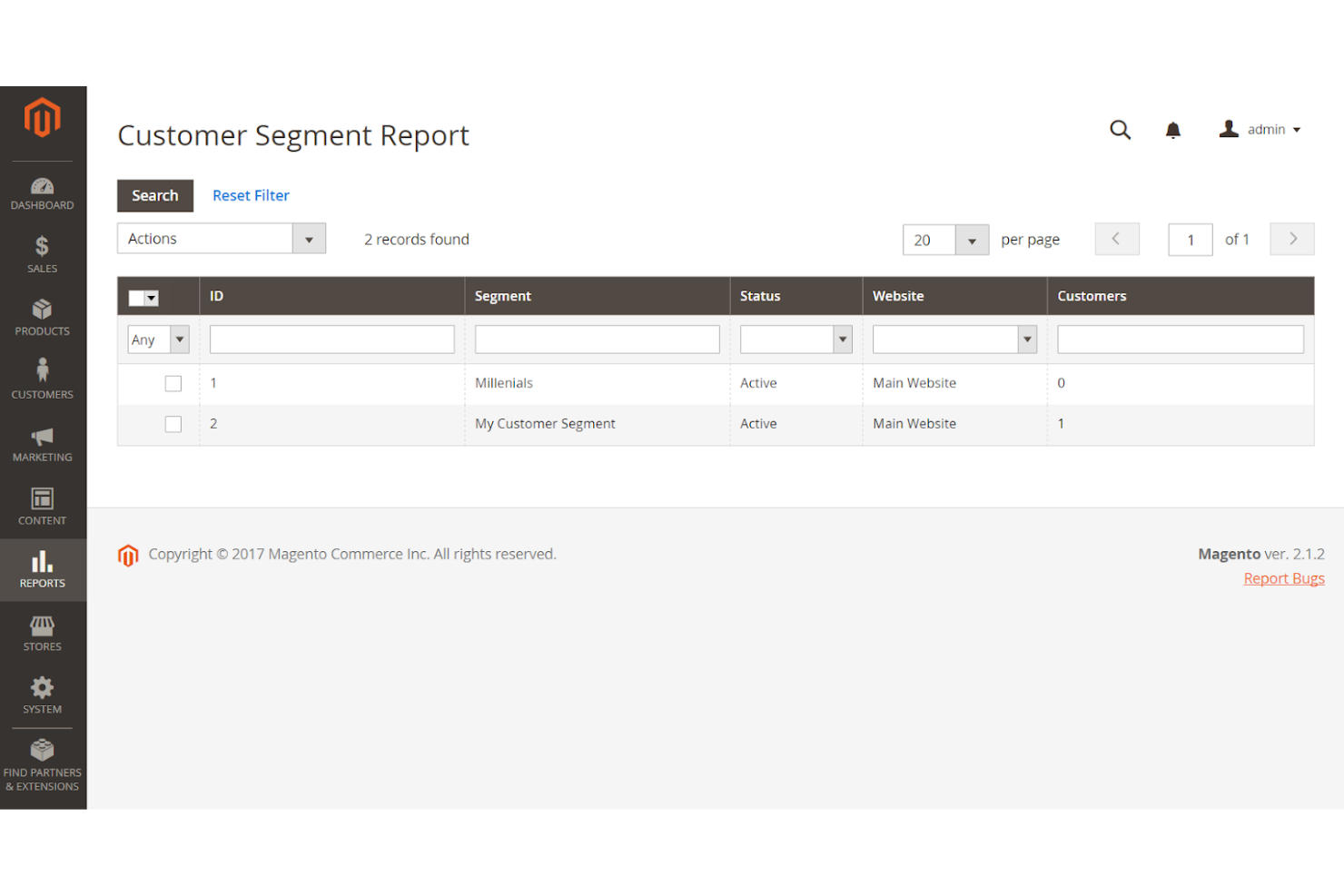
Adobe Commerce, formerly Magento, is a flexible and scalable commerce platform that allows businesses to create personalized B2B and B2C experiences. It offers native AI capabilities to boost conversions and deliver customized content and promotions in real-time.
Why I picked Adobe Commerce: Adobe Commerce comes with advanced AI-driven personalization capabilities, which set it apart from other auto parts ecommerce platforms. The platform's ability to deliver real-time, relevant content and promotions makes it ideal for businesses looking to enhance customer engagement and conversion rates.
Standout features & integrations:
Features include AI-driven personalized experiences, the ability to manage multiple brands across channels, and a scalable architecture designed for endless growth. The platform offers powerful developer tools and a headless solution for quick innovation.
Integrations include Adobe Analytics, Real-Time Customer Data Platform, Adobe Target, Adobe Journey Optimizer, Adobe Experience Manager, Microsoft Dynamics 365, Salesforce, SAP, Oracle, and Marketo.
Pros and Cons
Pros:
- Multi-brand management
- Scalable architecture
- AI-driven personalization
Cons:
- Higher cost
- Complex setup

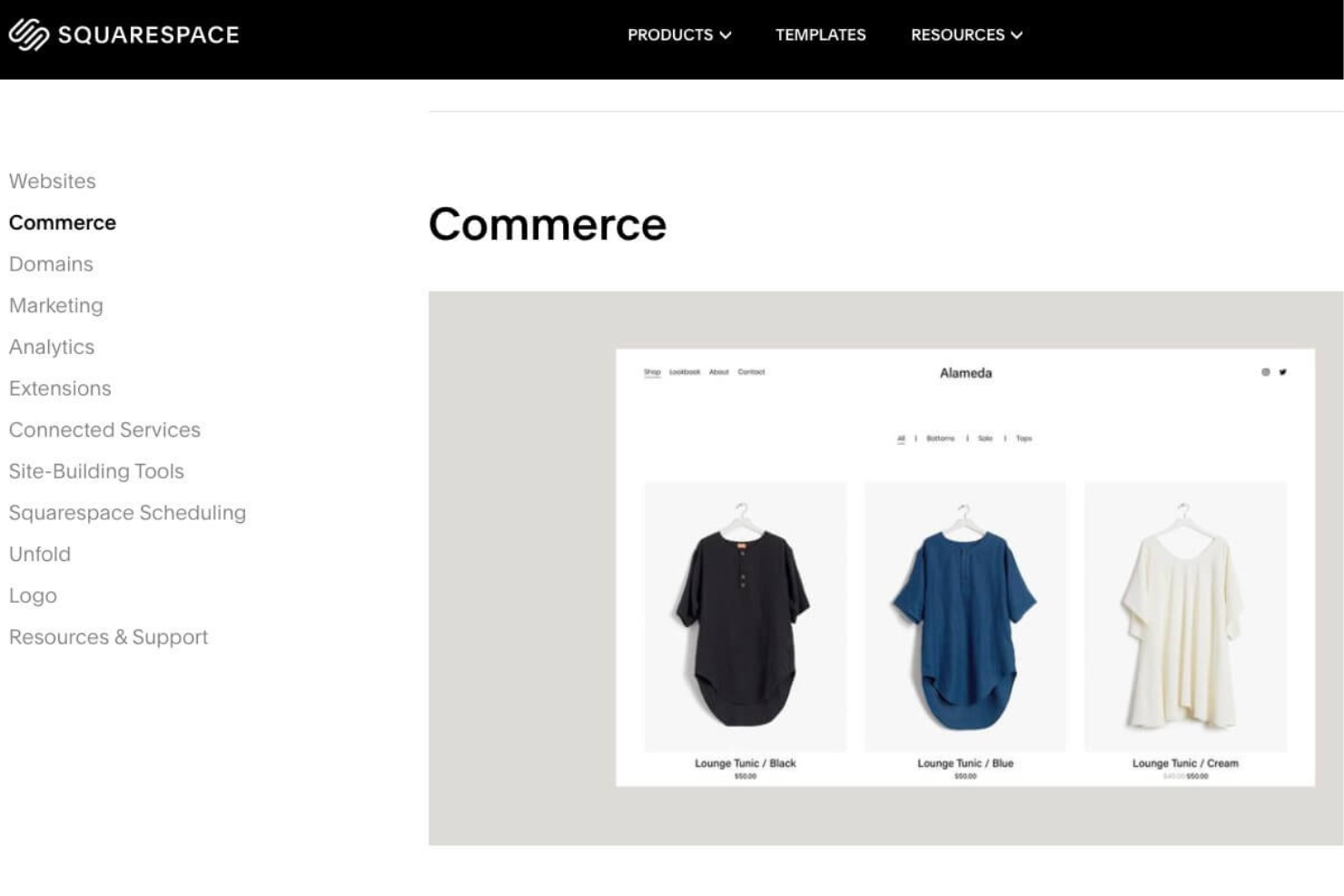
SquareSpace is a website-building platform that offers customizable templates and features for businesses to create and sell products online. It also provides marketing, analytics, and customer management tools to help companies grow and succeed online.
Why I picked SquareSpace: SquareSpace offers an advanced suite of tools that allows businesses to manage everything from website design to sales and marketing in one place. It simplifies setting up and running an online store, making it accessible for businesses of all sizes.
Standout features & integrations:
Features include customizable templates, integrated ecommerce tools, and built-in marketing and analytics capabilities.
Integrations include Acuity Scheduling, Bio Sites, Unfold, Tock, Printful, Stripe, PayPal, Apple Pay, Google Analytics, and Mailchimp.
Pros and Cons
Pros:
- Customizable templates
- Comprehensive tools
- Easy to use
Cons:
- Basic ecommerce features
- Limited customization options


NopCommerce is a powerful and customizable ecommerce platform tailored explicitly for automotive ecommerce. It offers open-source flexibility and customization, making it ideal for businesses with unique needs.
Why I picked nopCommerce: nopCommerce is known for its open-source format and extensive customization options, which set it apart from other auto parts ecommerce platforms. Its flexibility allows businesses to tailor the platform to their requirements, making it highly adaptable. With this feature, the software enables developers to build and share custom features, ensuring the platform meets diverse business needs.
Standout features & integrations:
Features include a user-friendly filter system (Year-Make-Model), intelligent search, personalized product recommendations, and integration with popular shipping solutions. The platform supports global ecommerce with multi-currency and international payment systems and offers fast and straightforward product assortment management.
Integrations include Microsoft Power BI, Avalara, FedEx, UPS, PayPal, Stripe, Authorize.net, Google Analytics, Mailchimp, and QuickBooks.
Pros and Cons
Pros:
- Multi-store functionality
- Strong community support
- Highly customizable
Cons:
- Limited built-in themes
- Requires technical expertise

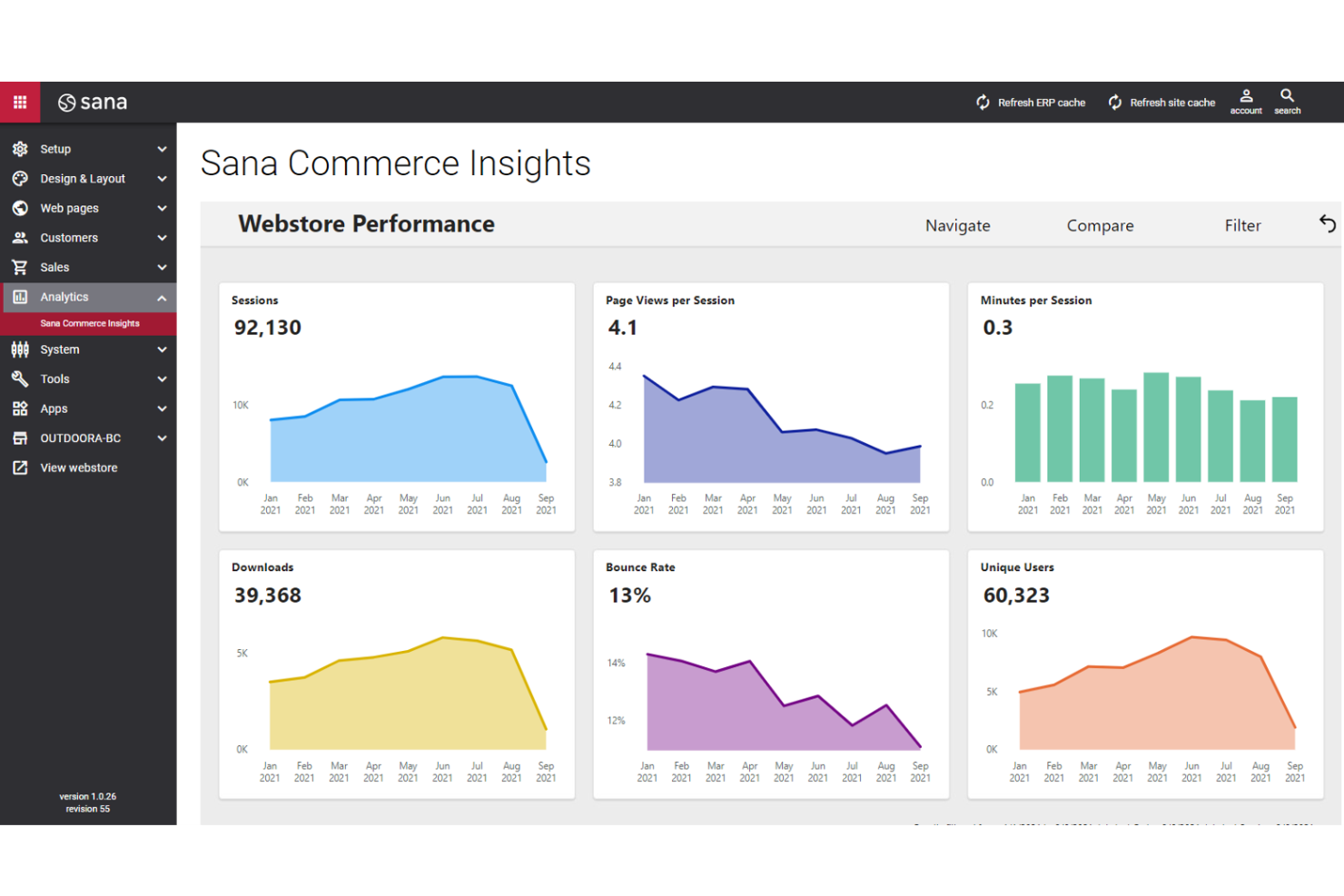
Sana Commerce Cloud offers an ecommerce platform for the automotive and auto parts industry. It integrates directly with SAP or Microsoft Dynamics ERP systems.
Why I picked Sana Commerce Cloud: Sana Commerce Cloud is known for its strong ERP integration, which sets it apart from other platforms. This integration ensures real-time data synchronization, reducing errors and improving efficiency. Overall, it provides a seamless connection between ecommerce and ERP systems, enhancing data accuracy and operational efficiency.
Standout features & integrations:
Features include personalized self-service options, hyper-personalized web stores, exploded views for detailed product inspection, and advanced filtering options.
Integrations include SAP, Microsoft Dynamics, TecDoc, Autoinfo, xChecker, PIM systems, and CRM systems.
Pros and Cons
Pros:
- Advanced filtering options
- Seamless ERP integration
- Real-time inventory updates
Cons:
- Requires ERP system
- Limited standalone features

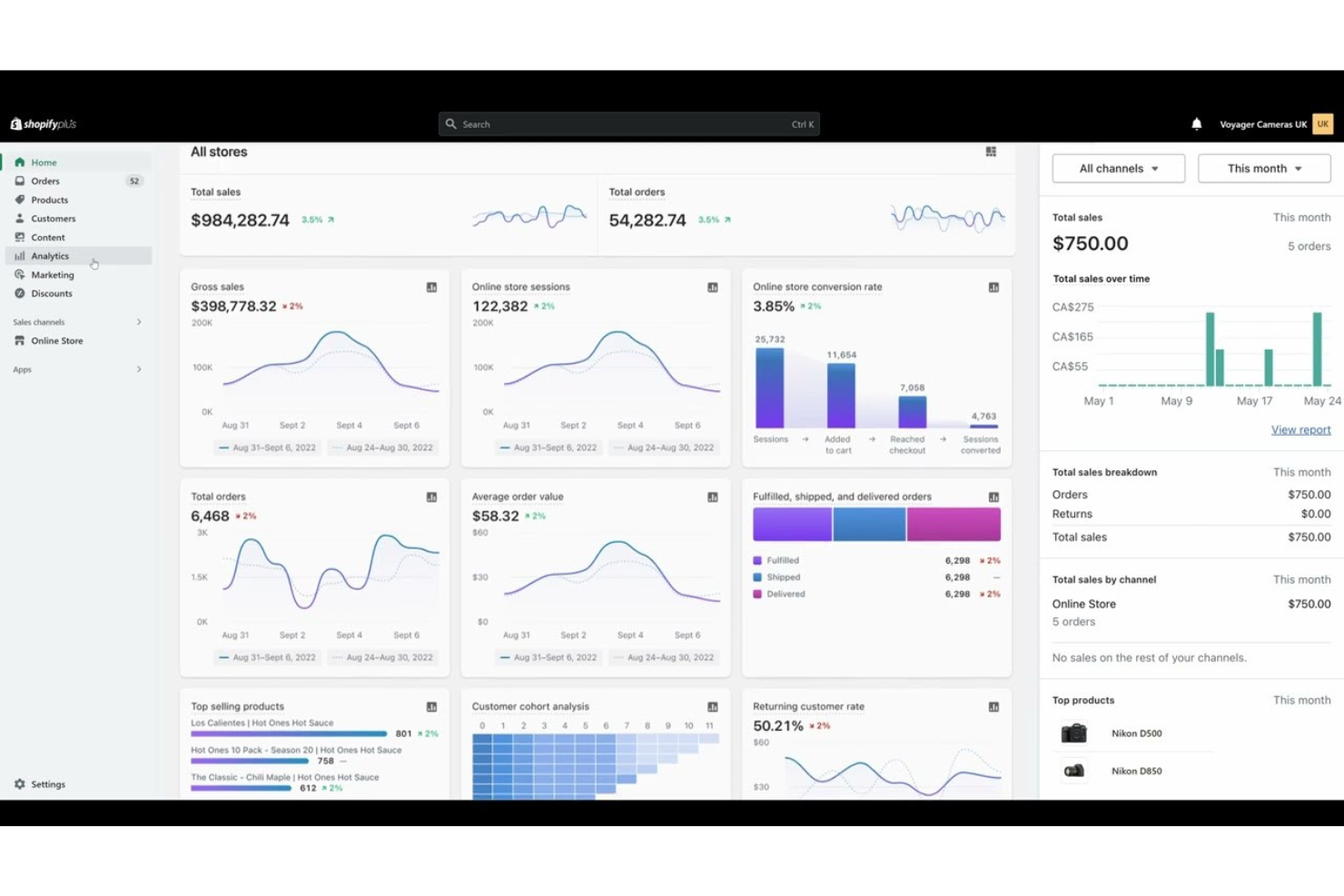
Shopify Plus is a scalable commerce platform that offers customizable and extensible solutions for businesses. It provides tools for online selling, omnichannel solutions, international B2B features, and platform extensibility.
Why I picked Shopify Plus: Shopify Plus’ ability to handle high transaction volumes and extensive customization options make it stand out from other platforms. It also offers advanced customization options and integrates easily with various third-party apps, enabling auto parts retailers to create a tailored shopping experience with features like real-time inventory tracking, customer segmentation, and dynamic pricing.
Standout features & integrations:
Features include customizable online stores, omnichannel solutions, international B2B capabilities, and platform extensibility.
Integrations include Google Analytics, Facebook, Instagram, Amazon, eBay, Mailchimp, QuickBooks, Xero, HubSpot, and Salesforce.
Pros and Cons
Pros:
- Extensive integration options
- Supports high transaction volumes
- Highly customizable
Cons:
- Complex setup process
- Limited advanced analytics
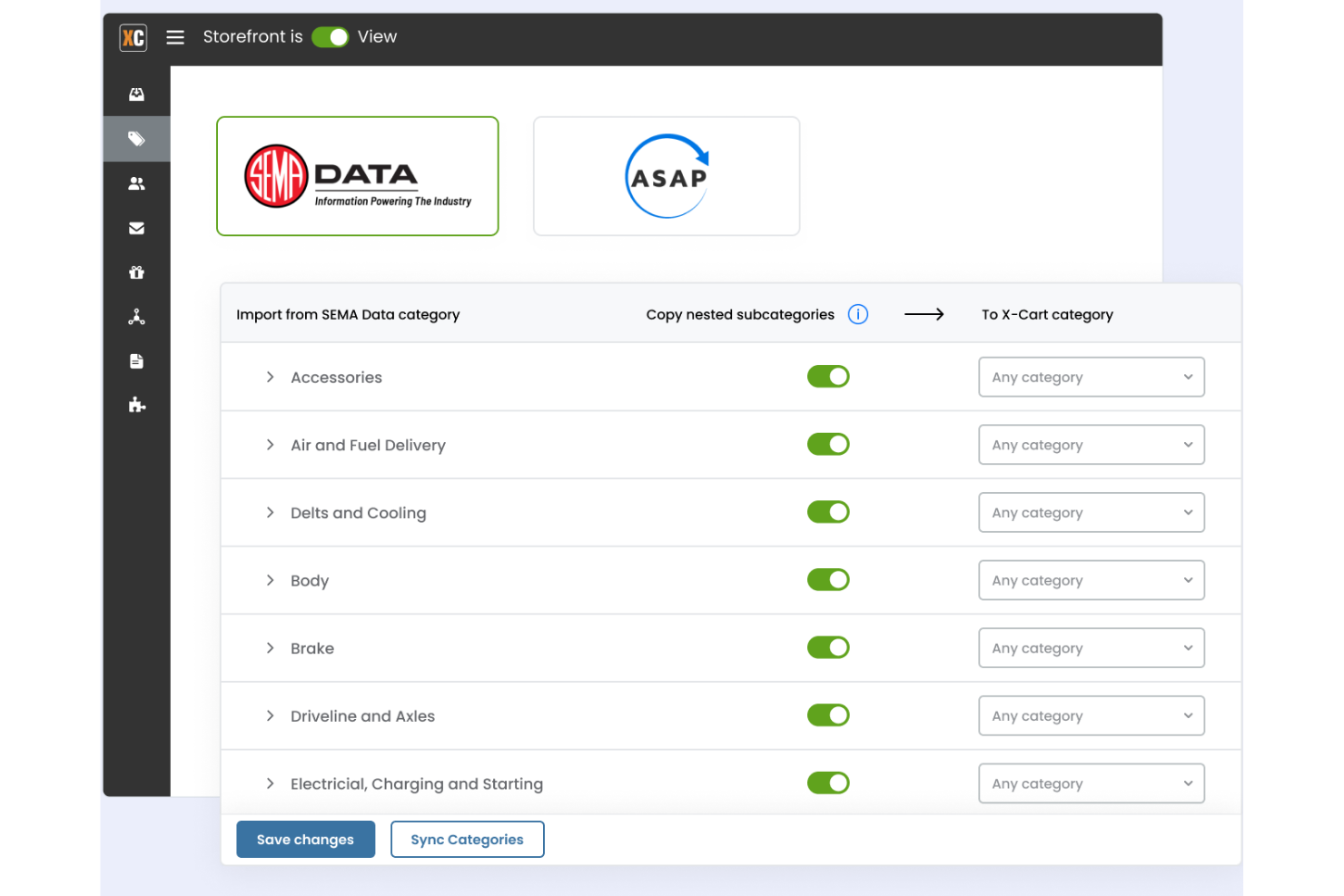
X-Cart Automotive is an ecommerce platform designed specifically for auto parts businesses. It automates complex fitment data management, inventory updates, and order fulfillment.
Why I picked X-Cart Automotive: X-Cart Automotive is known for its strong capabilities in automating complex fitment data management, which is vital for auto parts ecommerce. Unlike other platforms, X-Cart offers specialized tools for managing automotive product data. Additionally, its ability to handle intricate data requirements and streamline operations makes it the best choice for this use case.
Standout features & integrations:
Features include automotive product data management, order and inventory management, intelligent category mapping, and integration with Amazon and eBay Motors.
Integrations include PayPal, Stripe, Authorize.net, Avalara, TaxJar, Amazon, eBay Motors, Turn 14 Distribution, Keystone Automotive Operations, and SEMA Data.
Pros and Cons
Pros:
- Customizable mobile-first themes
- Integration with major marketplaces
- Advanced fitment data management
Cons:
- Limited to the automotive industry
- Complexity in bulk order management

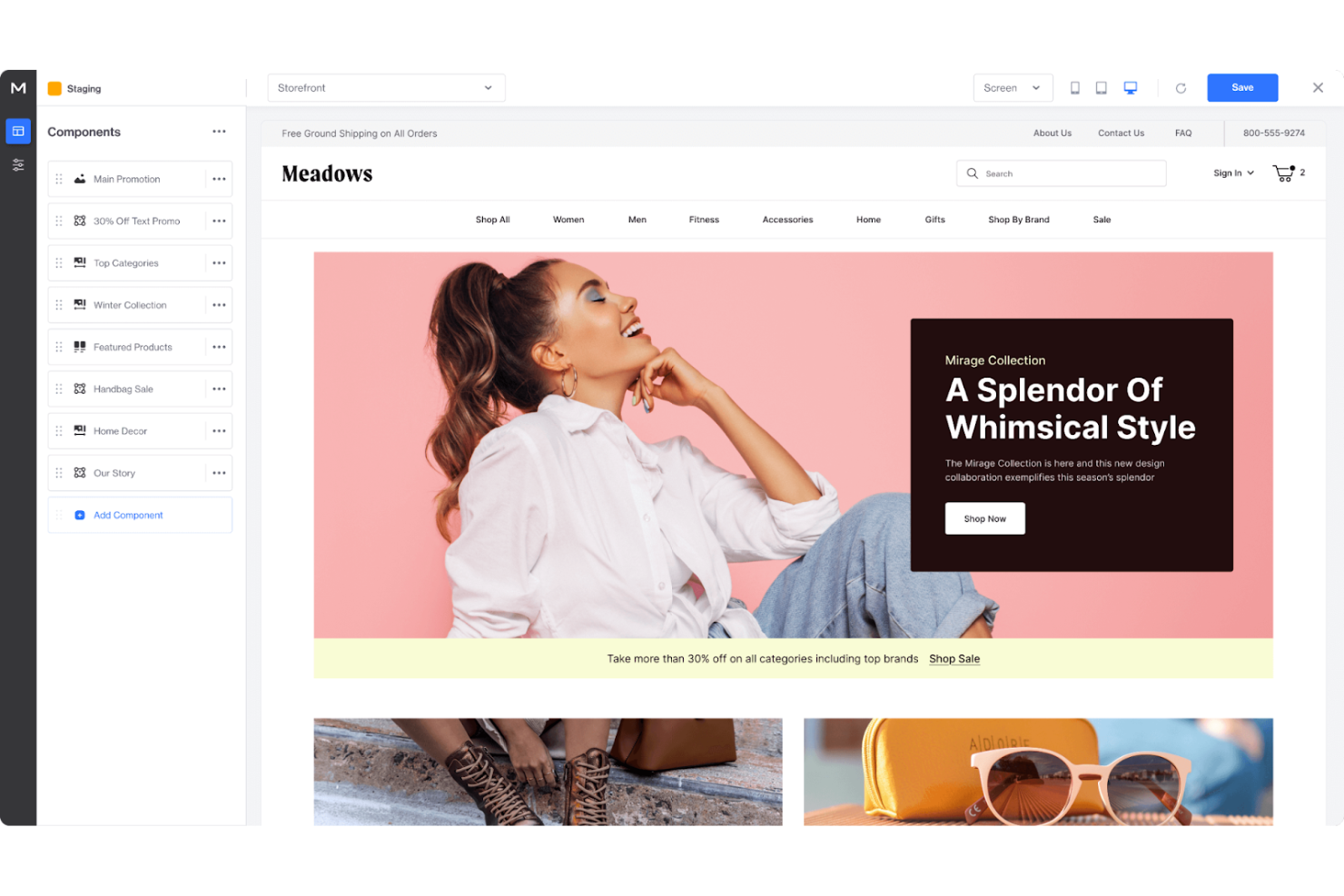
Miva helps online auto parts stores attract more customers and drive sales. Due to its strong inventory management and high-volume order processing capabilities, it’s best for large catalogs and high-volume orders.
Why I picked Miva: Miva has an exceptional ability to handle large product catalogs and high-volume orders, which is important for auto parts ecommerce platforms. The software stands out with its user-friendly year/make/model search and the ability to sell both B2B and B2C on the same site, making it versatile and efficient for various business needs.
Standout features & integrations:
Features include user-friendly year/make/model search, SEO-ready faceted search, and customer-friendly easy navigation.
Integrations include Google Shopping, Amazon, eBay, Etsy, QuickBooks, ShipStation, Avalara, PayPal, Stripe, and Mailchimp.
Pros and Cons
Pros:
- B2B and B2C on one site
- Supports high-volume orders
- Handles large catalogs
Cons:
- Limited third-party app integrations
- Requires setup time

Revolution Parts is best for OEM parts and accessories ecommerce because it offers an advanced solution tailored specifically for new car dealers, auto manufacturers, aftermarket businesses, and wholesale buyers.
Why I picked Revolution Parts: Revolution Parts offers a specialized focus on OEM parts and accessories, which sets it apart from other platforms. Its tailored solutions for different segments of the auto industry make it a standout choice. Furthermore, the software provides dedicated features like branded web stores, marketplace integrations, and specialized marketing services to help businesses sell and market inventory.
Standout features & integrations:
Features include branded web stores for selling parts online, integration with major marketplaces like eBay and Amazon, and marketing services to boost online part sales.
Integrations include eBay, Amazon, PayPal, Stripe, Google Analytics, Facebook, Mailchimp, ShipStation, QuickBooks, and Salesforce.
Pros and Cons
Pros:
- Comprehensive marketing services
- Marketplace integrations
- Specialized OEM focus
Cons:
- Complex setup and customization process
- Limited to the auto parts industry

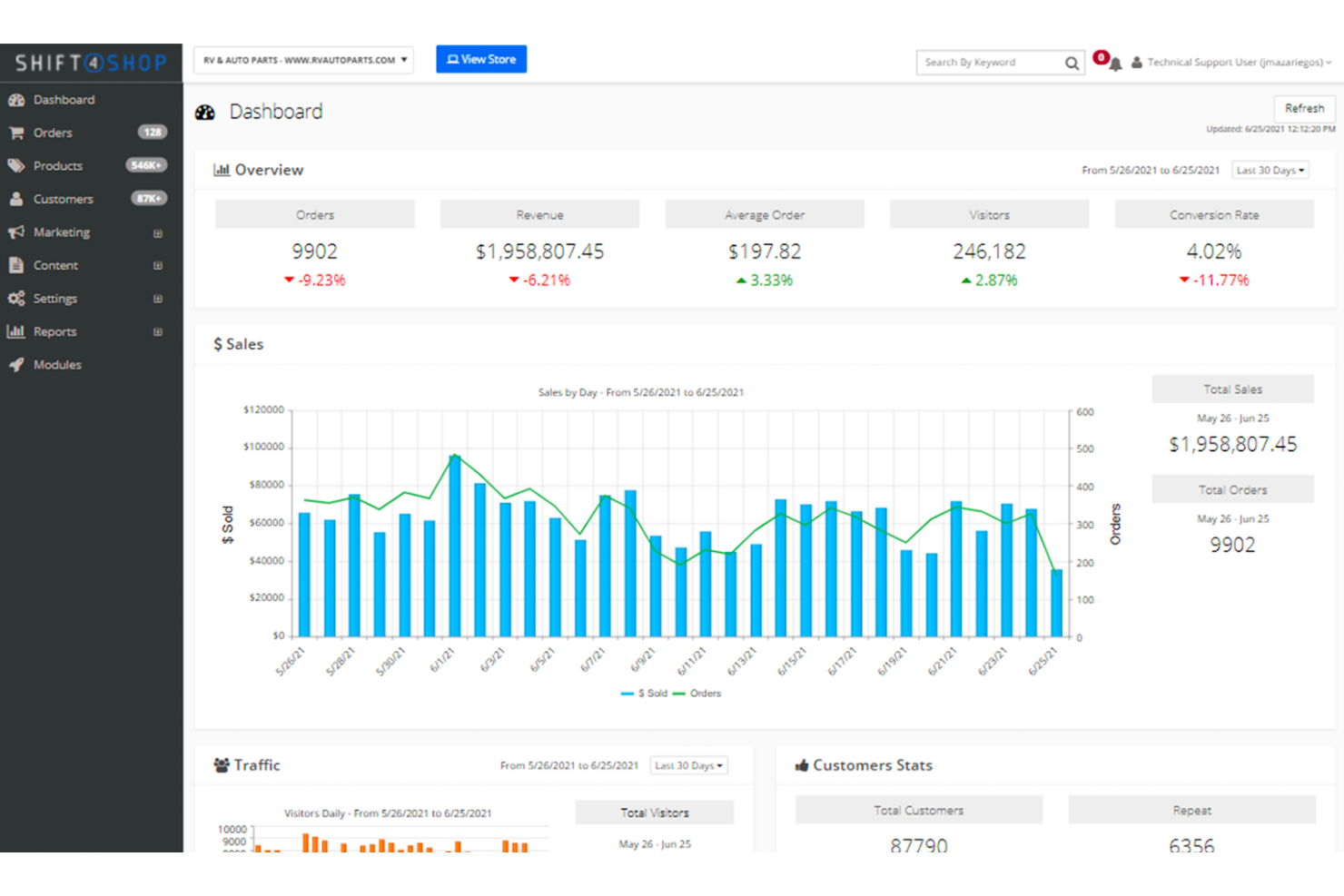
Shift4Shop is an ecommerce platform that offers a comprehensive solution for businesses selling auto parts online. It provides a feature-rich website builder, product and order management, and customer marketing tools.
Why I picked Shift4Shop: Shift4Shop is praised for its affordability and extensive feature set, which stands out among other auto parts ecommerce platforms. Its cost-effective pricing model and advanced tools make it an excellent choice for businesses looking to maximize value without sacrificing functionality.
Standout features & integrations:
Features include a powerful website builder with industry-specific templates, strong product and order management, and advanced customer marketing tools.
Integrations include PayPal, Apple Pay, Google Pay, USPS, UPS, FedEx, Amazon, eBay, Facebook, Kount, and Royal Mail.
Pros and Cons
Pros:
- Free migration assistance
- Comprehensive feature set
- Affordable pricing
Cons:
- Limited to specific payment processors
- Minimum processing amount required

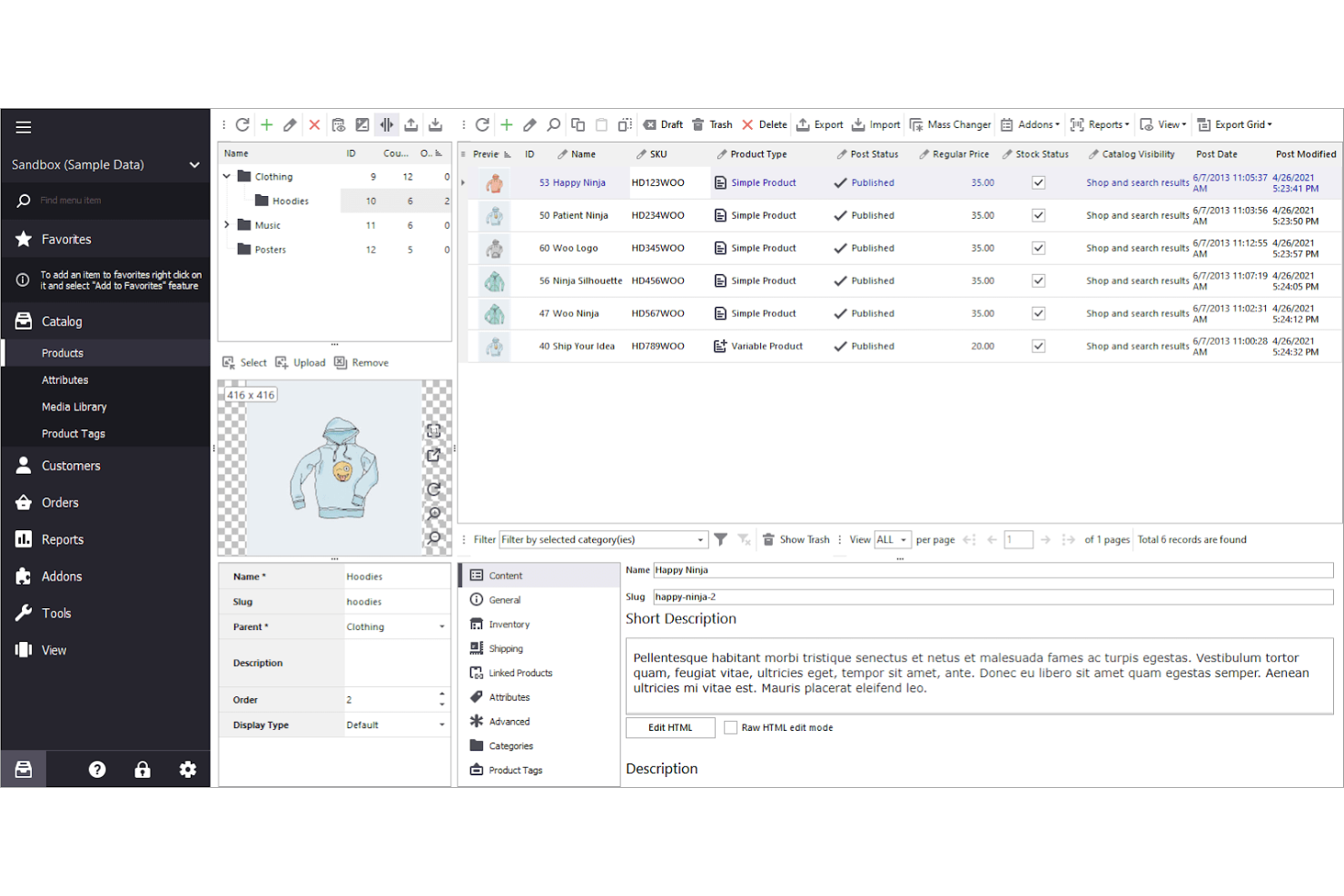
WooCommerce is a WordPress-based ecommerce platform that helps merchants and developers build successful online stores.
Why I picked WooCommerce: WooCommerce stands out for its deep integration with WordPress, making it highly customizable for any ecommerce needs. Its open-source nature allows for extensive modifications, which is important for auto parts ecommerce platforms that require unique features. Additionally, the software offers a wide range of extensions and themes, enabling businesses to create a store that fits their specific requirements.
Standout features & integrations:
Features include no-code customization, a mobile app for on-the-go management, and advanced selling features for established merchants.
Integrations include Stripe, PayPal, Mailchimp, Google Analytics, Facebook, ShipStation, Square, Zapier, HubSpot, and QuickBooks.
Pros and Cons
Pros:
- Strong WordPress integration
- Extensive plugin library
- Highly customizable
Cons:
- Can be resource-intensive
- Requires WordPress knowledge
Other Auto Parts Ecommerce Platforms
Below is a list of additional auto parts ecommerce platforms that I shortlisted. While they didn’t make the shortlist, they’re still valuable and worth further research.
- BigCommerce
For seamless B2B and B2C integration
- WebShop Manager
For its user-friendly interface
- eTool Developers
For custom development services
- Auto Parts Shopping Cart
For inventory management
- Auto Leap
For customer relationship tools


Related Ecommerce Software Reviews
If you still haven't found what you're looking for here, check out these related ecommerce tools that we've tested and evaluated.
- Ecommerce Platforms
- Inventory Management Software
- Parts Inventory Management Software
- Payment Processing Software
- Shopping Cart Solutions
- Order Management Systems
- Warehouse Management Software
Our Selection Criteria For Auto Parts Ecommerce Platforms
Choosing an auto parts ecommerce platform isn’t just about flashy features—it's about finding a system that actually solves your daily headaches.
Here’s what I looked for and how each factor stacks up in my scoring:
Core functionality (25% of total score)
Every platform says it “does it all,” but I checked for the essentials that keep your auto parts business running:
- Inventory management must be airtight. If you can’t track SKUs, fitments, and restocks, you’re dead in the water.
- Order processing should be fast and flexible. Customers want updates, tracking, and painless checkout every time.
- Built-in CRM features help you actually know your buyers. Repeat business is the name of the game.
- Shipping and payment integrations can’t be afterthoughts. Real-time rates, label printing, and fraud prevention are non-negotiable.
Additional standout features (25% of total score)
Here’s where platforms can win you over—or waste your time.
- Advanced search and filtering are table stakes. Year/Make/Model (YMM), VIN lookup, and robust filters let customers find parts fast.
- Real-time inventory updates prevent customer rage. Oversells and out-of-stocks? Not on my watch.
- AI-driven recommendations and mobile support make shopping easier. The bar is higher than ever.
- Integration with third-party marketplaces is a growth lever. Think eBay, Amazon, and everywhere your customers shop.
Usability (10% of total score)
If the platform feels like homework, it’s not the right fit.
- Intuitive UI makes daily ops less painful. Drag, drop, and get out of your own way.
- Responsive design is a must. Mobile, tablet, desktop—your store has to work everywhere.
- Dashboards and navigation need to be clear. No buried features, no confusing menus.
Onboarding (10% of total score)
Time is money. The faster you can launch, the better.
- Solid onboarding materials save you hours. I want videos, tours, and real help—not a PDF from 2017.
- Pre-built templates mean you don’t start from scratch. Fast setup wins.
Customer support (10% of total score)
Support isn’t just a chat bubble—it’s a lifeline when things go sideways.
- 24/7 support and multi-channel options matter. If something breaks at 2 a.m., I want a human, not a ticket.
- Fast, knowledgeable answers keep you selling. No endless hold music.
Value for money (10% of total score)
No one likes surprises on their bill.
- Transparent pricing, real value. No hidden fees or “gotcha” renewals.
- Annual discounts and free trials are real perks. If a platform believes in its product, let me try before I buy.
Customer reviews (10% of total score)
What real users say can be more useful than any sales pitch.
- Satisfaction ratings and support feedback. Are folks happy after launch, or cursing in the forums?
- Actual ROI, not marketing fluff. Look for signs the platform delivers on its promises.
What Are Auto Parts Ecommerce Platforms?
Auto parts ecommerce platforms are specialized software solutions for selling automotive parts and accessories online. They help retailers, distributors, and manufacturers manage massive product catalogs, streamline inventory and fitment data, and handle thousands of SKUs with ease.
The right automotive ecommerce platform solves headaches unique to the industry—think complex search (YMM, VIN lookup), real-time inventory sync, seamless integration with marketplaces like eBay and Amazon, and secure checkout.
These platforms also bring built-in SEO, data management, and automation to boost conversion rates and keep customers coming back.
If you’re in the business of car parts—OEM, aftermarket, or performance—an auto parts ecommerce solution takes you from old-school parts counter to modern, scalable online store.
How to Choose an Auto Parts Ecommerce Platform
The auto parts ecommerce world is full of platforms promising the moon, but only a few actually deliver for automotive data, inventory, and customer experience.
Here’s how to cut through the noise and choose one that fits your business—and doesn’t create more headaches:
| Step | What to look for | Pro tip |
|---|---|---|
| Define your business needs | Inventory size, fitment data, marketplace channels | Map out your product catalog and channels up front—avoid “wish I’d known” later. |
| Prioritize automotive features | YMM search, VIN lookup, real-time inventory, bulk SKU management | If the demo skips these, the platform probably can’t handle real auto parts complexity. |
| Check integrations | Connections to ERP, shipping, inventory, and marketing tools | Ask for their full integration list—don’t accept “we have an API” as the only answer. |
| Test usability and support | Intuitive admin, onboarding help, responsive technical support | Hit support with a real question before you buy—bad response = trouble later. |
| Compare total pricing | All fees: monthly, add-ons, payment, transaction, setup | If pricing is hidden or complicated, expect future surprises—push for clear answers. |
| Scan user reviews and case studies | Recent customer experiences, real-world pain points and wins | Filter reviews by date—products change fast, and old pain points may now be fixed. |
Top Features of Auto Parts Ecommerce Platforms
Choosing an auto parts ecommerce platform is about having the right tools for messy data, massive catalogs, and real-world fitment headaches.
The best platforms go way beyond basics, giving you the firepower to compete on accuracy, automation, and speed. Here’s what actually matters in this industry:
- B2B and B2C mode switching for flexible sales. Price, market, and serve jobbers and retail buyers differently—all from one platform.
- Advanced fitment search with YMM and VIN lookup. Let customers find parts that fit the first time—no guesswork, fewer returns.
- Bulk SKU and product catalog management. Upload, edit, and wrangle thousands of SKUs without losing your mind.
- Automotive data integrations with ACES and PIES. Plug straight into industry databases for faster, cleaner listings.
- Marketplace sync for Amazon and eBay Motors. Keep your inventory and orders flowing smoothly across every channel that matters.
- Parts lookup by diagrams and exploded views. Make it dead simple for buyers to identify the right part visually.
- Real-time inventory sync across all sales channels. If your stock isn’t live everywhere, you’re asking for customer complaints.
- Customizable product attributes for auto parts. Add whatever details you need—engine, trim, or obscure part notes—without hacking together a workaround.
- VIN decoder tools for instant compatibility checks. Instantly surface the exact parts for a vehicle based on VIN, saving support time and customer headaches.
- Automated pricing and repricing tools. Compete with marketplace sellers and stay profitable without a spreadsheet marathon.
- ERP and inventory system integrations. No manual double-entry—your backend and storefront stay aligned, always.
Benefits of Auto Parts Ecommerce Platforms
Running an auto parts business is a grind—manual catalog updates, endless fitment headaches, and customers who expect Amazon-level service.
The right ecommerce platform doesn’t just make selling easier; it changes the entire game for inventory, reach, and efficiency. Here’s what you really get:
- Expanded reach to automotive buyers everywhere. Tap into new markets—regional, national, or international—without needing extra locations or staff.
- 24/7 sales and customer convenience. Your store never closes, so buyers can order parts on their schedule, not yours.
- Streamlined inventory and fitment management. Handle thousands of SKUs, product variants, and vehicle compatibilities without spreadsheets or chaos.
- Higher conversion rates with smarter search and recommendations. Give shoppers the tools to find what actually fits—and watch them check out instead of bouncing.
- Seamless integration with marketplaces and suppliers. Sync your catalog and orders with Amazon, eBay, and distributors to cut out double entry and missed sales.
- Lower operational costs and fewer errors. Automate the busywork—pricing, updates, and order routing—so you can focus on growing, not fixing mistakes.
- Built-in SEO and marketing tools. Boost your rankings, attract organic traffic, and run targeted campaigns to keep your business top of mind.
- Real-time data and analytics for better decisions. See what’s selling, what’s stalling, and where to double down—no more guessing or flying blind.
Costs & Pricing of Auto Parts Ecommerce Platforms
Pricing for auto parts ecommerce platforms runs the gamut—from basic free plans for side hustlers to serious enterprise rates for high-volume parts sellers.
In this industry, you’re not just paying for a website. You’re buying the ability to handle fitment, bulk SKUs, marketplace sync, and real integrations. Here’s what the landscape looks like right now:
| Plan | Average price | Common features | Best for |
|---|---|---|---|
| Free Plan | $0 | Basic listings, limited support, little customization | Testing, side projects |
| Personal Plan | $19–$29/month | Enhanced catalog, basic SEO, limited integrations, email | Solo shops, small inventory |
| Business Plan | $199–$499/month | Advanced SEO, more payment gateways, inventory tools | Growing retailers, B2B/B2C mix |
| Enterprise | $499–$1000+/month | Custom integrations, analytics, dedicated support | Large catalogs, multi-channel |
Other cost considerations for auto parts ecommerce
Beyond sticker price, you’ll want to keep these real-world costs and gotchas in mind as you budget and compare:
- Marketplace and channel fees can eat into your profits. If you’re selling on Amazon or eBay, factor their cuts into your margins.
- Custom integrations and data migration aren’t always included. Moving your old fitment and SKU data can require a hefty setup fee.
- Advanced features like fitment lookup or live inventory sync may be extra. Don’t assume every demo feature comes standard—always confirm.
- Payment gateway and transaction fees add up. Make sure you calculate your true all-in cost per sale, not just the subscription price.
- Higher-tier support or priority response times often cost more. If your operation can’t afford downtime, pay attention to support packages.
Auto Parts Ecommerce Platforms FAQs
Here are some commonly asked questions about auto parts ecommerce platforms.
How do I add fitment search (YMM or VIN) to my auto parts ecommerce site?
Choose a platform with built-in fitment search or support for ACES/PIES data. Many top providers offer YMM and VIN lookup out of the box or as a plugin. Don’t try to bolt this on later—fitment search is mission-critical for auto parts ecommerce.
What’s the best ecommerce platform for selling auto parts on Amazon and eBay?
Look for an automotive ecommerce platform with direct marketplace integrations and real-time inventory sync. Shopify, BigCommerce, and Revolution Parts all support Amazon and eBay, but always confirm SKU and fitment data will sync automatically.
Can I migrate my parts catalog and fitment data from an old website?
Most leading auto parts ecommerce solutions offer migration tools or white-glove services for catalog and fitment data. Be prepared for some manual cleanup, especially if your old site used custom fields or outdated standards.
How can I handle returns and warranties for auto parts sold online?
Have clear, visible return and warranty policies on your site. Use ecommerce platforms with built-in RMA (return merchandise authorization) workflows to automate approvals, labels, and restocking, which keeps headaches to a minimum.
Are open-source auto parts ecommerce platforms worth it?
Open-source platforms like Magento (Adobe Commerce) or nopCommerce are flexible and powerful, but require more technical know-how and ongoing maintenance. If you have development resources and want full control, they’re a solid choice. Otherwise, consider SaaS.
What payment gateways work best for auto parts ecommerce?
Go with a platform that supports Stripe, PayPal, and direct credit card processing. The more options you offer, the fewer abandoned carts you’ll see. Double-check that your gateway handles fraud protection and PCI compliance out of the box.
Shifting Into High Gear
If you’ve made it this far, you’re already miles ahead of most auto parts sellers still stuck in neutral.
The right ecommerce platform won’t just list your parts online—it’ll streamline your workflow, boost conversion rates, and make customer headaches a thing of the past.
Ready to upgrade your auto parts ecommerce operation? Use the shortlist, compare features, and don’t be afraid to test-drive a few platforms before you commit. If you want tailored advice or help picking a platform, hit the button below.
Retail never stands still—and neither should you. Subscribe to our newsletter for the latest insights, strategies, and career resources from top retail leaders shaping the industry.