



Shopify is an ecommerce platform that helps businesses create and manage online stores. It best serves small to medium-sized retailers, such as boutique clothing stores and artisanal food shops, looking to expand their digital presence. Shopify’s value lies in its ability to simplify online selling, allowing you to focus on growing your business.
Shopify Evaluation Summary
- From $37/month (billed annually)
- 3-day free trial available
Why Trust Our Software Reviews
We’ve been testing and reviewing retail and ecommerce software and services since 2021.
As retail experts ourselves, we know how critical and difficult it is to make the right decision when selecting software. We invest in deep research to help our audience make better software purchasing decisions.
We’ve tested more than 2,000 tools for different finance and accounting use cases and written over 1,000 comprehensive software reviews. Learn how we stay transparent and our review methodology.
Shopify Overview
Shopify empowers your business with its robust ecommerce tools, making it a top choice for entrepreneurs seeking growth and simplicity.
pros
-
You can easily customize your store with a wide range of themes.
-
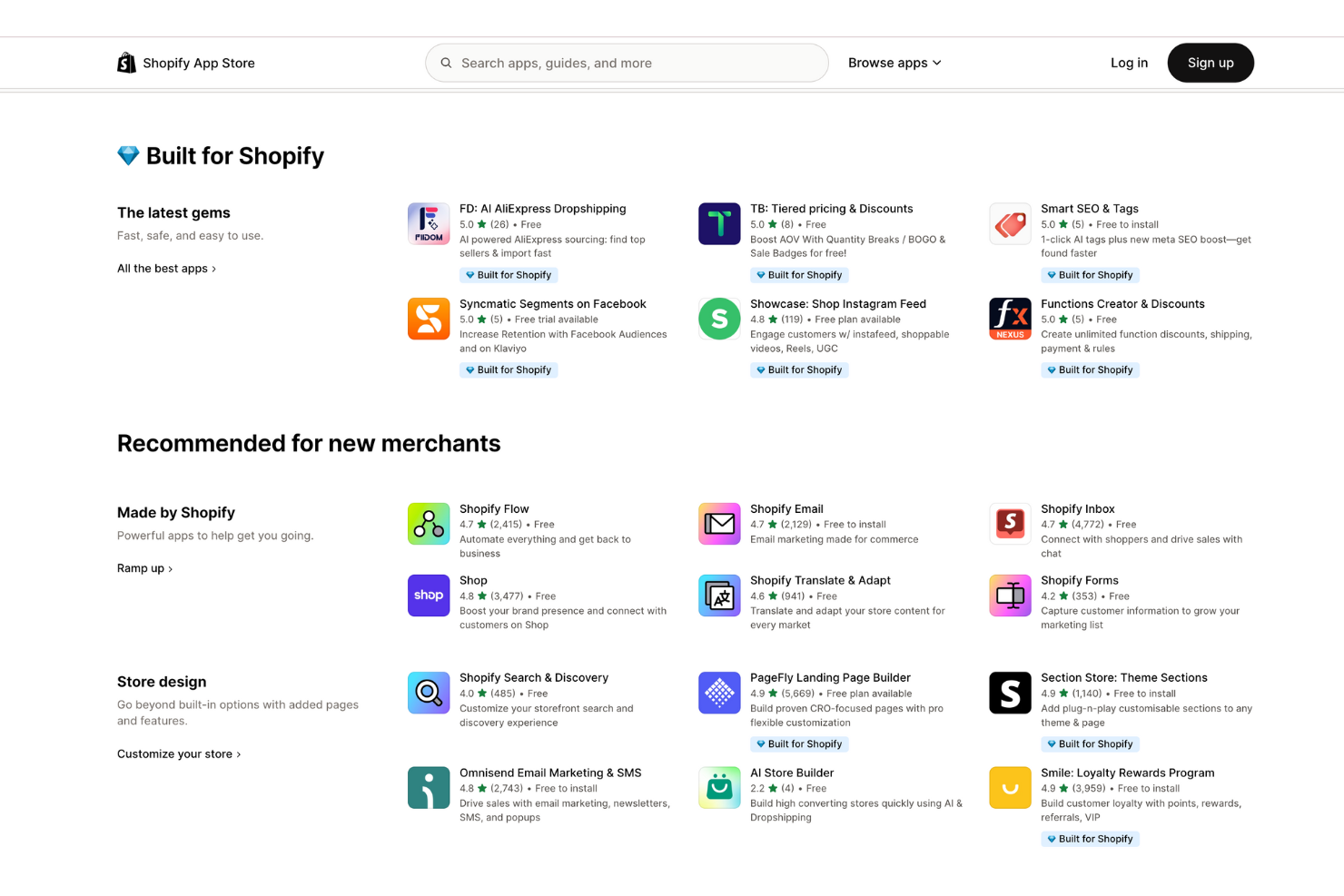
Shopify's app store offers tools to boost your store's functionality.
-
It provides reliable security to protect your customers' data.
cons
-
You might find transaction fees if not using Shopify Payments.
-
Shopify's blogging feature is less robust than others.
-
It can be challenging to manage multiple currencies.
-

GoBolt
Visit WebsiteThis is an aggregated rating for this tool including ratings from Crozdesk users and ratings from other sites.4.2 -
Mouseflow
Visit WebsiteThis is an aggregated rating for this tool including ratings from Crozdesk users and ratings from other sites.4.7 -
Countly
Visit WebsiteThis is an aggregated rating for this tool including ratings from Crozdesk users and ratings from other sites.4.2





Our Review Methodology
How We Test & Score Tools
We’ve spent years building, refining, and improving our software testing and scoring system. The rubric is designed to capture the nuances of software selection and what makes a tool effective, focusing on critical aspects of the decision-making process.
Below, you can see exactly how our testing and scoring works across seven criteria. It allows us to provide an unbiased evaluation of the software based on core functionality, standout features, ease of use, onboarding, customer support, integrations, customer reviews, and value for money.
Core Functionality (25% of final scoring)
The starting point of our evaluation is always the core functionality of the tool. Does it have the basic features and functions that a user would expect to see? Are any of those core features locked to higher-tiered pricing plans? At its core, we expect a tool to stand up against the baseline capabilities of its competitors.
Standout Features (25% of final scoring)
Next, we evaluate uncommon standout features that go above and beyond the core functionality typically found in tools of its kind. A high score reflects specialized or unique features that make the product faster, more efficient, or offer additional value to the user.
We also evaluate how easy it is to integrate with other tools typically found in the tech stack to expand the functionality and utility of the software. Tools offering plentiful native integrations, 3rd party connections, and API access to build custom integrations score best.
Ease of Use (10% of final scoring)
We consider how quick and easy it is to execute the tasks defined in the core functionality using the tool. High scoring software is well designed, intuitive to use, offers mobile apps, provides templates, and makes relatively complex tasks seem simple.
Onboarding (10% of final scoring)
We know how important rapid team adoption is for a new platform, so we evaluate how easy it is to learn and use a tool with minimal training. We evaluate how quickly a team member can get set up and start using the tool with no experience. High scoring solutions indicate little or no support is required.
Customer Support (10% of final scoring)
We review how quick and easy it is to get unstuck and find help by phone, live chat, or knowledge base. Tools and companies that provide real-time support score best, while chatbots score worst.
Customer Reviews (10% of final scoring)
Beyond our own testing and evaluation, we consider the net promoter score from current and past customers. We review their likelihood, given the option, to choose the tool again for the core functionality. A high scoring software reflects a high net promoter score from current or past customers.
Value for Money (10% of final scoring)
Lastly, in consideration of all the other criteria, we review the average price of entry level plans against the core features and consider the value of the other evaluation criteria. Software that delivers more, for less, will score higher.
Core Features
Online Store Builder
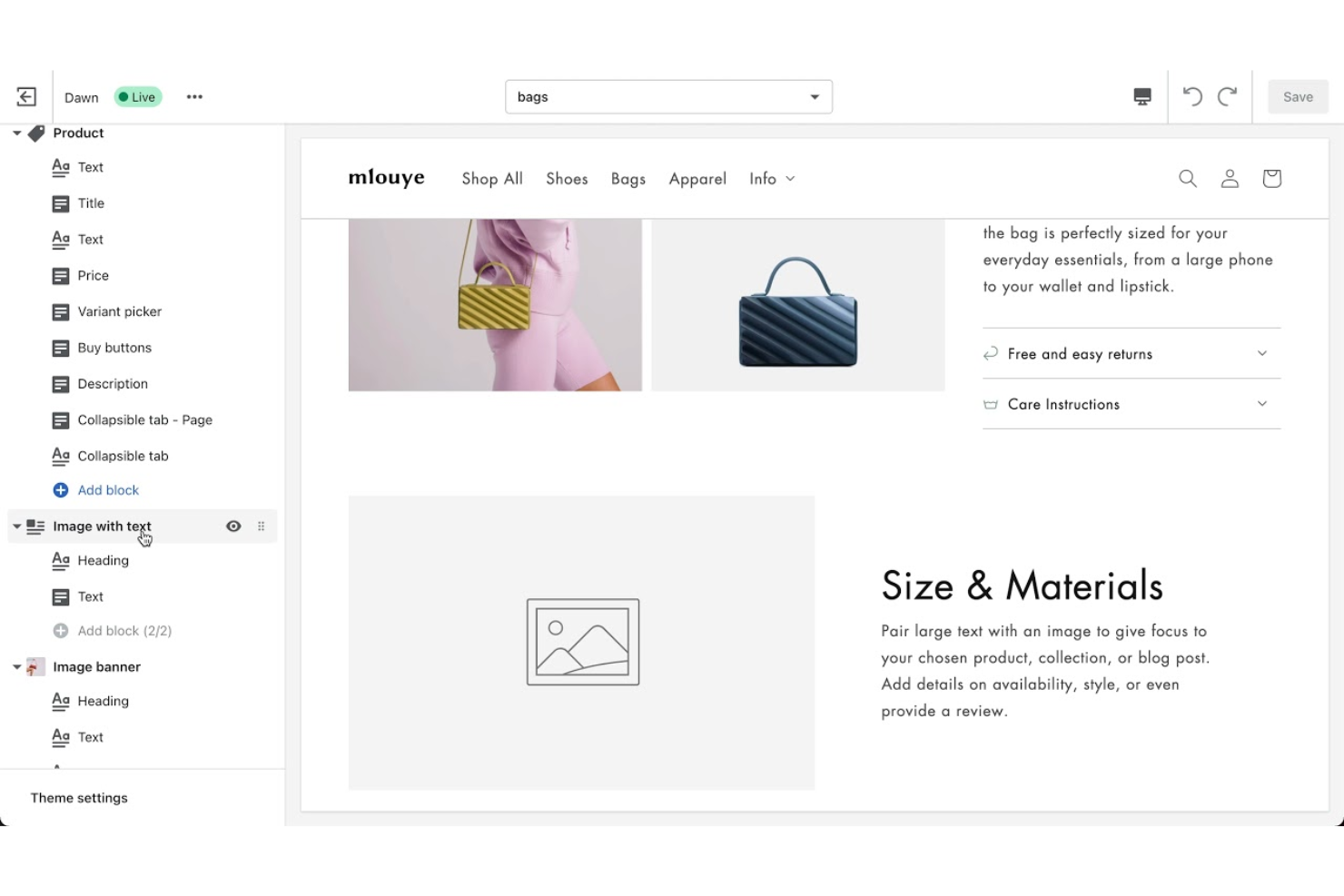
Shopify provides an easy-to-use drag-and-drop store builder that lets you design your store without coding. You can choose from a variety of themes to create a unique look for your brand.
Product Management
Manage your product listings with ease, including inventory tracking and product variants. Shopify's interface makes it simple to add descriptions, images, and pricing.
Secure Payments
Accept payments from major credit cards with Shopify Payments, ensuring secure transactions for your customers. It simplifies the checkout process and builds trust.
Order Management
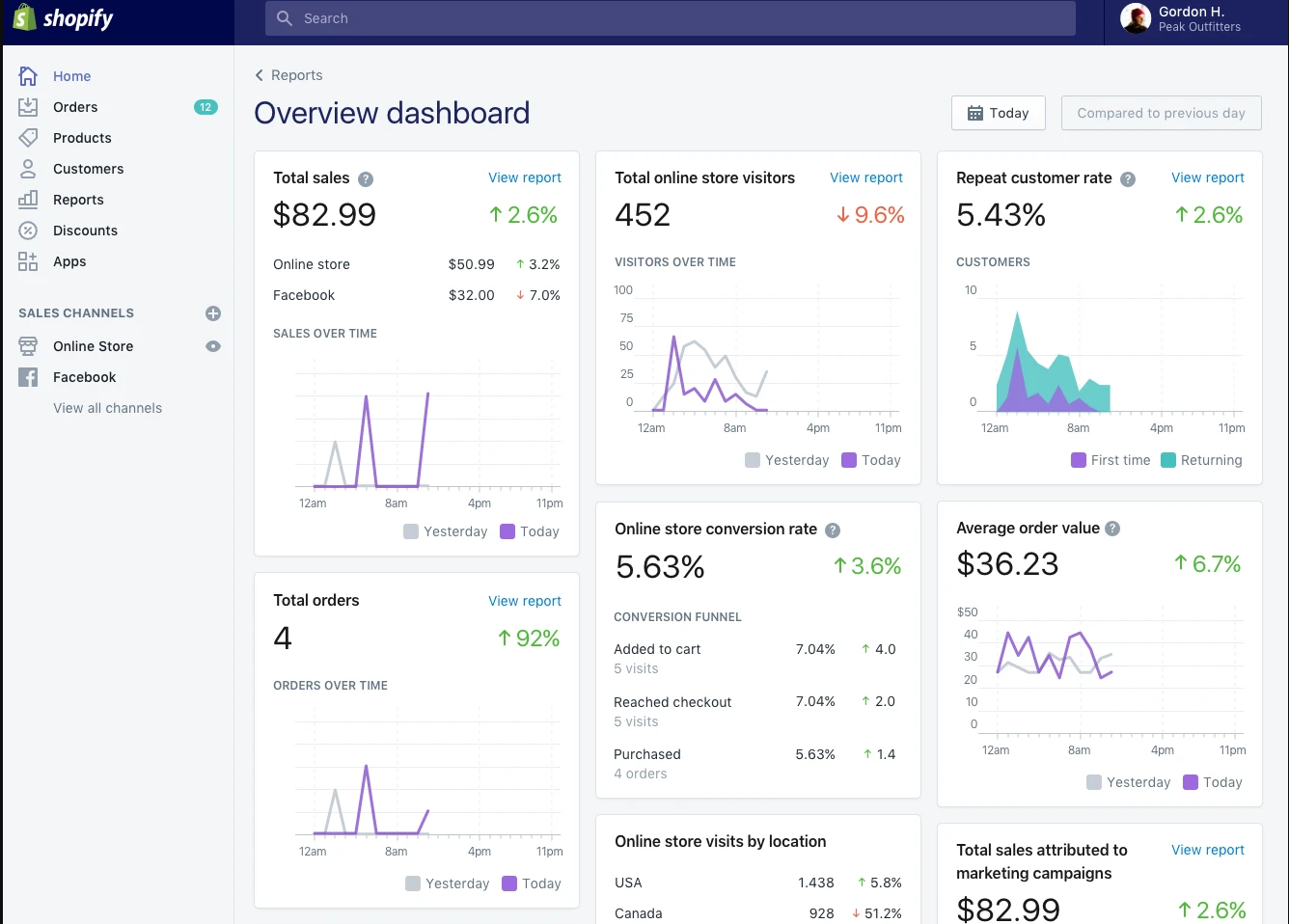
Track and manage all your orders from one dashboard. You can fulfill orders, update statuses, and communicate with customers seamlessly.
SEO Tools
Shopify offers built-in SEO features to help your store rank better in search engines. You can edit meta tags, product descriptions, and URLs to optimize for search visibility.
Mobile Responsiveness
Your store automatically adjusts to look great on any device. This ensures a consistent shopping experience for your customers, whether they're on mobile or desktop.
Ease of Use
Shopify stands out for its user-friendly interface, making it easy for you to set up and manage your online store. The drag-and-drop builder lets you design your store without needing technical skills. Users appreciate the intuitive dashboard for managing products and orders, which saves time and reduces errors. While some advanced features may require a learning curve, the platform’s overall simplicity helps you focus on growing your business instead of getting bogged down in complex processes.

Integrations
Integrations include Shopify Payments, Facebook, Instagram, Amazon, eBay, Walmart, TikTok, Google, Adyen, Manhattan, Shopify Flow, and POS systems.
Shopify Specs
- 2-Factor Authentication
- A/B Testing
- Analytics
- API
- BitCoin
- Conversion Tracking
- Dashboard
- Data Export
- Data Import
- Data Visualization
- Design Templates
- External Integrations
- Inventory Tracking
- Keyword Tracking
- Marketing Automation
- Multi-User
- Notifications
- Order Management
- Payment Gateway Integration
- Payment Processor
- PayPal
- Product Catalog
- Review Monitoring
- SAP Integration
- Scheduling
- Stripe
- Third-Party Plugins/Add-Ons




- Driving Ecommerce: Gepard PIM's Integration Journey With ShopifyOpens new window
- 10 Best Shopify Alternatives for eCommerce Stores in 2026Opens new window
- 10 Best Shopify Order Management Software for 2026Opens new window
- 10 Best Shopify Payments Alternatives for 2026Opens new window
- 10 Best Shopify POS Alternatives, Ranked for 2026Opens new window
- Shopify POS Review: Pros, Cons, Features & PricingOpens new window
Shopify FAQs
How secure is Shopify for handling transactions?
Can I use my own domain name with Shopify?
How does Shopify handle taxes?
Is it easy to switch to Shopify from another platform?
What kind of customer support does Shopify offer?
Can Shopify handle high traffic volumes?
How customizable is a Shopify store?
Does Shopify support international sales?
What's Next?
Retail never stands still—and neither should you. Subscribe to our newsletter for the latest insights, strategies, and career resources from top retail leaders shaping the industry.