
10 Best DSPs to Optimize Ecommerce Ad Spend in 2026

Top DSPs for Ecommerce Brands


A demand side platform (DSP) is how ecommerce brands stop wasting money on ads that go nowhere—and start running campaigns that actually pull their weight. No more crossing your fingers and hoping for the best.
With a DSP, you get automated buying, pinpoint targeting, and real-time bidding—so every dollar works harder.
Let’s be clear: the brands that win aren’t just “setting and forgetting” their ads. They’re squeezing every ounce of ROI from their spend, turning window shoppers into loyal customers with ruthless efficiency.
Sure, your ecommerce platform can launch a campaign. But real growth? That’s what happens when you let a DSP do the heavy lifting and free up your time for bigger moves.
I’ve dug into the best DSPs out there—the ones that make your budget go further and your results look sharp. Here’s what you need to know to pick the right one and get back to selling.
Why Trust Our Software Recommendations
Our team has been testing and reviewing software since 2012. As retail leaders ourselves, we know how difficult—and important—it is to choose the right software.
For this guide, we evaluated tools using hands-on testing and independent research, scoring tools using our selection criteria.
Our reviews reflect our independent judgment—not a sales pitch.
Comparing the Top DSPs for Ecommerce, Side-by-Side
Let’s look at this in one simple comparison table, folks. First up, the pricing details for our top demand side platforms. Then, click Compare Software to see other feature comparison.
| Tool | Best For | Trial Info | Price | ||
|---|---|---|---|---|---|
| 1 | Best for campaign planning | Free demo available | Pricing upon request | Website | |
| 2 | Best for go-to-market strategies | Free demo available | Pricing upon request | Website | |
| 3 | Best for native advertising | Not available | Pricing upon request | Website | |
| 4 | Best for ad retargeting | Free demo available | Pricing upon request | Website | |
| 5 | Best for advertising on Amazon | Not available | Pricing upon request | Website | |
| 6 | Best for in-depth analytics | Not available | From $12,500/month. | Website | |
| 7 | Best for TV advertisements | Free demo available | Pricing upon request | Website | |
| 8 | Best for reaching smart TV households | Not available | Pricing upon request | Website | |
| 9 | Best number of advertising channels | Not available | Pricing upon request | Website | |
| 10 | Best for healthy traffic | Free demo available | Pricing upon request | Website |
The 10 Best Demand Side Platforms for Ecommerce, Reviewed
Here, we’ll review the best demand side platforms, highlighting their top features, their pros and cons, and screenshots that show the interface.

Best for campaign planning

StackAdapt uses machine learning processes to help brands plan ad buying campaigns to grow their business using multiple channels.
Why I picked StackAdapt: I chose to add StackAdapt to this list because of its ability to help your ecommerce business plan ad campaigns. It provides a creative studio that will help you test your campaigns before launching and get access to data-driven campaigns’ potential. StackAdapt’s ad previewer feature allows you to evaluate the performance of your marketing campaigns beforehand.
StackAdapt standout features and integrations
Standout features include a creative studio that lets you test ad campaigns in a controlled environment before launch, reducing risks and boosting strategy confidence. Its AI-powered reporting tools provide precise, scheduled performance analytics, saving time and ensuring you're always informed about campaign effectiveness. The platform's cross-channel capabilities make it simple to launch campaigns across video, native, desktop, tablet, and mobile formats, enabling seamless audience reach.
Integrations include connections with third-party systems that will help you add or expand advertising capabilities through popular platforms. These include AgencyAnalytics, Airbyte, Databox, HubSpot, Improvado, Measured, NinjaCat, Salesforce, Tray.io, Windsor.ai, and other software options.
Pros and Cons
Pros:
- Easy to use and understand.
- Flexibility to execute various strategies.
- World-class support.
Cons:
- Creative management tool is clunky.
- Reporting navigation can be complex.

Best for go-to-market strategies

Demandbase helps B2B ecommerce brands find go-to-market opportunities earlier and create more intelligent marketing campaigns.
Why I picked Demandbase: If your business focuses on B2B sales, I added Demandbase to this list to help you develop go-to-market strategies to help you plan campaigns to engage with potential customers and convince them to buy your products. Demandbase helps you focus on account-based campaigns and build a unified account data foundation. You can use the platform to connect your first-party data with Demandbase’s third-party data and artificial intelligence to increase your pipeline and revenue.
Demandbase standout features and integrations
Standout features include in-depth insights that pinpoint where your teams should focus to close sales by connecting with decision-makers who are ready to buy. The platform’s automation capabilities simplify account-based marketing tasks, saving time while building a more robust pipeline. Additionally, its ability to unify your first-party data with third-party data and AI helps drive more intelligent, targeted campaigns that increase revenue.
Integrations include tools such as Adobe Analytics, Domo, Google Analytics, HubSpot, Marketo, Microsoft Dynamics 365, Optimizely, Salesforce, Slack, and Workato. These integrations, along with others, ensure seamless connections to optimize your marketing operations.
Pros and Cons
Pros:
- Clean user interface.
- Provides in-market account intelligence.
- Monitors how long prospects look at content.
Cons:
- Experiences glitches from time to time.
- Reporting can be more intuitive.

Taboola
Best for native advertising

Taboola provides native advertising capabilities that allow ecommerce businesses to build brand awareness by connecting with the right audience throughout all web platforms.
Why I picked Taboola: Through native advertisement tools from Taboola, you can publish content on some of the top websites across the internet. You can use Taboola to effectively target B2C or B2B audiences and operate separate campaigns if you target both of these audiences. The platform also offers comprehensive reporting tools that help you monitor real-time content performance across your web channels.
Taboola standout features and integrations
Standout features include advanced predictive engines that analyze inputs from various data sources to ensure your content reaches the right audience at the right time. This precision targeting ensures that your ads resonate with the intended viewers. Taboola also enables audiences to rate and share your content across social media platforms, amplifying your reach and enhancing engagement beyond initial placements.
Integrations include over 50 popular platforms, such as Brax, Desktop.com, Hevo, HubSpot CRM, Improvado, Retargetly, Sitejet, TapClicks, wecantrack, and WordPress. These integrations streamline workflows and help automate processes to maximize efficiency in your campaigns.
Pros and Cons
Pros:
- Excellent customer support.
- Simple campaign setup.
- Precise KPIs.
Cons:
- Approval system needs work.
- User interface is bulky.

Criteo
Best for ad retargeting

Criteo helps brands reach target audiences and increase impressions by providing dynamic retargeting capabilities.
Why I picked Criteo: The platform is among some of the top demand side platforms because of its dynamic retargeting features. Criteo’s AI Engine can monitor your customers’ engagement and uses its retargeting capabilities to power product recommendations in your advertisements. Criteo provides access to some of the best ad inventory on the market with thousands of top publishers that allow you to get better placements for your retargeting campaigns.
Criteo standout features and integrations
Standout features include contextual advertising tools that use commerce and contextual data to make your campaigns more relevant and impactful. The platform also offers retail media features that allow you to reach and convert shoppers through strategically placed ads near digital points of sale on retailer and marketplace websites. Additionally, Criteo’s dynamic retargeting capabilities and AI-driven product recommendations ensure your ads are always engaging and conversion-focused.
Integrations include platforms such as Adjust, Blueshift, Census, Flowbox, Klaviyo, Leadsbridge, MightySignal, mParticle, Oracle Data Cloud, and Shopify Plus. Criteo carefully reviews third-party connections to ensure they provide best-in-class service and enhance your advertising processes.
Pros and Cons
Pros:
- Clear performance reports.
- Simple navigation.
- Easy to use.
Cons:
- Support needs work.
- Inconsistent performance.


Amazon DSP helps ecommerce brands advertise on Amazon and other Amazon-owned sites.
Why I picked Amazon DSP: Amazon is one of the largest online retailers on the planet, so I wanted to add a way for you to be able to place your ads on this massive marketplace. Amazon DSP allows you to advertise your ecommerce products, no matter if you sell products on the Amazon marketplace or not. With Amazon DSP, you can get video and display ad templates you can customize to start developing your creatives.
Amazon DSP standout features and integrations
Standout features include exclusive shopping signals and audience insights that help connect your brand with highly relevant customers both on and off the Amazon marketplace. The platform also offers robust performance reporting tools, enabling you to plan and refine your marketing strategies with precision.
Integrations include an API that facilitates seamless connections with third-party systems, allowing you to manage demand-side advertising operations efficiently. This flexibility helps streamline workflows and enhance advertising capabilities.
Pros and Cons
Pros:
- Top-notch reporting and analytics tools.
- Extends ads beyond the Amazon ecosystem.
- Unparalleled targeting capabilities.
Cons:
- Minimum spend requirements.
- Steep learning curve.


Google Marketing Platform Enterprise provides large ecommerce businesses with a unified advertising and analytics platform that allows them to develop smarter marketing campaigns and get better results.
Why I picked Google Marketing Platform Enterprise: You might already be using some of Google’s products within your ecommerce brand, so I put Google Marketing Platform Enterprise in this article for you to consider one more Google tool for your operations. When using the platform, you can use the built-in intelligence tool to automatically discover your best marketing insights, so you can achieve your goals as fast as possible. Google Marketing Platform Enterprise easily allows you to get an overview of your campaigns and find out what’s working so you can make the best data-driven decisions to improve performance and deliver quality experiences.
Google Marketing Platform Enterprise Standout Features and Integrations
Features include the Display and Video 360 tool that allows you to manage everything in your campaigns, from planning and creative development to campaign measurement and enhancement. The platform also provides the Search Ads 360 tool to help you optimize search engine marketing campaigns.
Integrations include connections with third-party systems that will allow you to pass critical data between applications to enhance campaigns. These integrations include tools such as Adjust, BlueShift, CallRail, CallTrackingMetrics, Google Analytics 360, Invoca, LoginRadius, mParticle, NinjaCat, Salesforce, and other software options.
Pros and Cons
Pros:
- Allows simple access to marketing tools.
- Simple ad management interface.
- One-stop shop for digital marketing.
Cons:
- Very expensive.
- Steep learning curve.


Adobe Advertising Cloud helps brands create all types of TV advertising campaigns across many devices to enable them to reach a wider audience.
Why I picked Adobe Advertising Cloud: I believe what makes Adobe Advertising Cloud an excellent choice for this article is its ability to provide your brand with access to more than 50 TV broadcasters. It focuses on TV advertising and other beneficial ad formats, inventory management, and people-based marketing that will increase your return on investment. Adobe Advertising Cloud also allows you to easily manage and track advertising campaigns in a single area.
Adobe Advertising Cloud standout features and integrations
Standout features include artificial intelligence optimization tools that provide real-time spend forecasts and campaign improvement opportunities, helping you maximize ROI. The platform also includes content creation tools that bridge creative and marketing teams, enabling the production of ads at scale while maintaining efficiency and consistency.
Integrations include leading systems such as Adobe Analytics, BlueShift, Branch.io, Improvado, Invoca, NinjaCat, Tealium, Uptempto, and Zendesk. These connections help automate advertising workflows and enhance campaign capabilities.
Pros and Cons
Pros:
- Manageable interface.
- Provides real-time data.
- Reliable work environment.
Cons:
- Uploading large files is slow.
- Difficult to use.


Xandr is one of the leading demand side platforms that provide programmatic advertising to help brands reach households with smart TVs.
Why I picked Xandr: The platform provides your brand with high-quality traffic by helping you advertise your ecommerce business to smart TV households. Xandr allows you to achieve your greatest advertising outcomes by providing access to exclusive inventory, powerful statistics, precise targeting, and data management. Xandr also gathers top-class, first-party data to help you can target any of the over 2,500 audience segments.
Xandr standout features and integrations
Standout features include real-time campaign attribution powered by a robust reporting system that delivers visualized statistics and performance highlights, helping you quickly assess advertising effectiveness. The platform also supports a wide range of cross-channel ad formats, including mobile display, in-app ads, programmatic audio, and more, ensuring your campaigns are optimized for the right environments and resolutions.
Integrations include third-party tools that simplify workflows and automate advertising processes. Key connections include Adplorer, Advendio, Bidtellect, Humming, Meetrics, PubPower, Qloo, Retargetly, The Moneytizer, and Yieldlab, along with additional software options to support your advertising strategy.
Pros and Cons
Pros:
- Many targeting options are available.
- Easy to use.
- Simple user interface.
Cons:
- Long creative approvals.
- Needs more fraud detection capabilities.


The Trade Desk allows ecommerce merchants to reach audiences throughout their digital journeys via an extensive number of advertising channels.
Why I picked The Trade Desk: The platform works well with demand side platform experts and newbies that want to use any kind of ad channel to reach their audience. The Trade Desk allows you to use advertising channels such as connected TV, video, audio, digital out-of-home, mobile, display, and native ads. When using The Trade Desk, your online store will receive guaranteed, high-quality traffic at excellent volumes.
The Trade Desk standout features and integrations
Standout features include comprehensive reporting tools that track performance from impression to conversion, offering clear insights into campaign success. The platform also provides advanced planning tools to help you activate data, gather audience insights, and allocate your budget toward the most effective media and strategies, ensuring maximum ROI.
Integrations include third-party systems such as Adjust, Blueshift, Hightouch, LiveRamp, mParticle, NinjaCat, Permutive, Salesforce, Tealium, and Tray.io. The Trade Desk also offers an API, enabling you to create custom integrations tailored to your specific toolset and workflows.
Pros and Cons
Pros:
- Short learning curve.
- Helpful customer support.
- User-friendly interface.
Cons:
- Reporting doesn’t go past 90 days.
- Expensive fees.
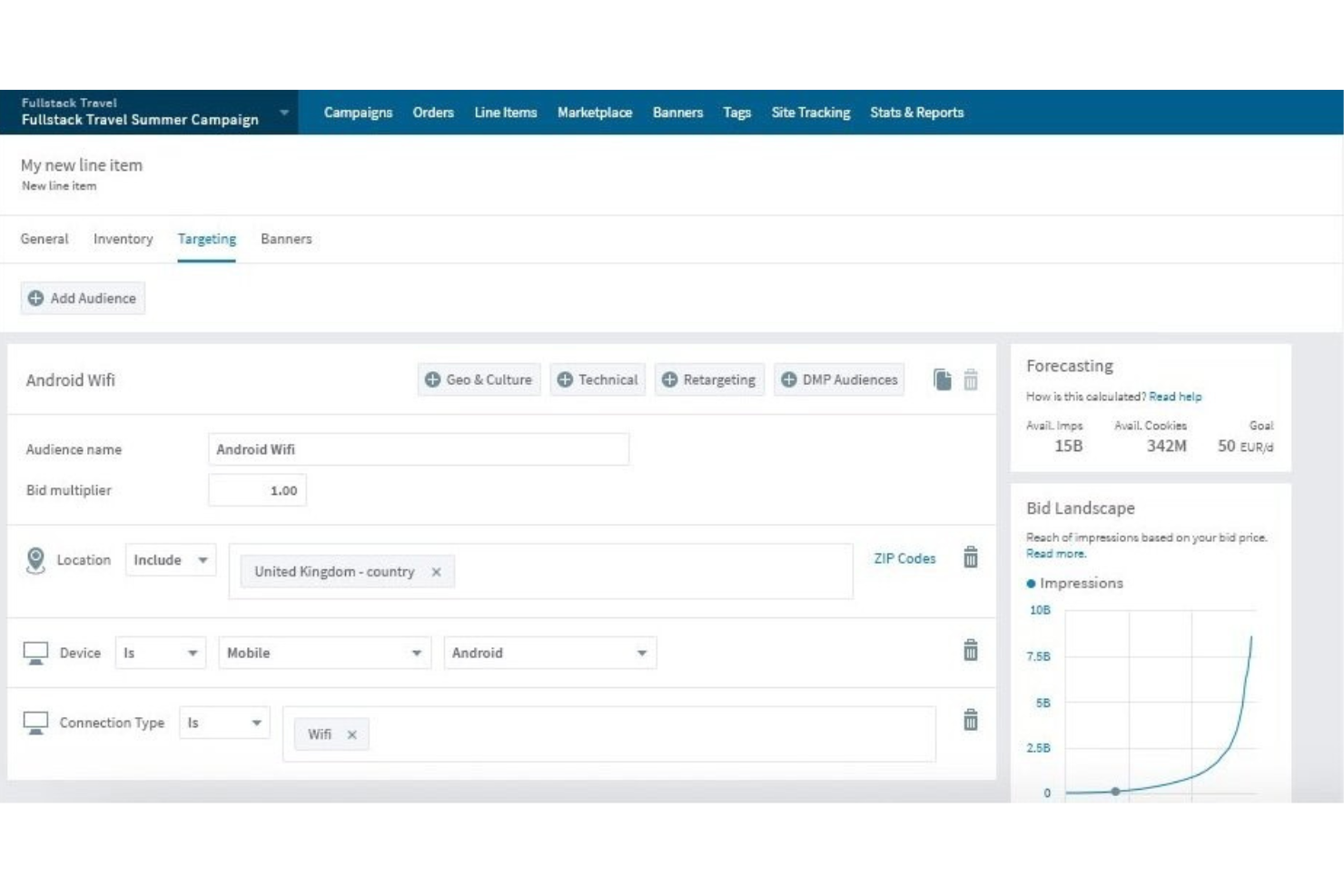
Adform helps brands get the best possible return from their advertising by providing top-quality, healthy traffic from various environments.
Why I picked Adform: As many people know, healthy traffic is the best kind, so I wanted to add Adform to this list for this reason alone. Adform generates 100% healthy, viewable traffic that is bot-free and eliminates other ad fraud threats. When using Adform, you will get the best traffic from top countries such as the US, Spain, Denmark, Netherlands, Sweden, Poland, and other beneficial traffic regions.
Adform standout features and integrations
Standout features include a broad advertising reach through partnerships with some of the largest traffic providers, ensuring access to high-quality, viewable, and bot-free audiences across key regions like the US, Spain, Denmark, Netherlands, Sweden, and Poland. The platform also offers flexible reporting tools that allow you to create real-time or on-demand reports tailored to specific performance criteria, helping you make data-driven decisions.
Integrations include systems like Browsi, Channable, Data Virtuality, Lyftrondata, Onlymega, Publitas, ROIVENUE, Salesforce, Tray.io, and Zuuvi. Additionally, Adform’s API enables you to build custom integrations with your existing tools for a seamless advertising workflow.
Pros and Cons
Pros:
- Regular updates.
- Friendly user interface.
- Excellent custom reporting capabilities.
Cons:
- Needs more tracking visualizations.
- Lacks optimization for smaller screens.
Other Options
The above list is fairly robust, and I believe that you’ll find some worthwhile demand side platform options. However, I decided to add some other options below for your consideration.
- Moloco
For performance-based advertising
- Emerse
For ad optimization
- AdButler
Self-serve advertising marketplace.
- MediaMath
Omnichannel demand side platform.
- Genius Monkey
Fully managed demand side platform.
- Readpeak
For content-driven advertising.
- Platform.io
White label DSP.
- Connexity
For understanding ecommerce customers.
- Brandzooka
Self-service TV and digital ad buying platform.


How I Evaluate Demand-Side Platforms
When a retail media team needs to activate shopper data across CTV and display, I split my evaluation into core requirements every DSP must meet and the differentiators that set one apart.
Core Functionality (Table Stakes For This List)
When I'm selecting tools for my list, I rank each one on a scale from 0 (does not offer the functionality) to 5 (excels in this area) for each core functionality listed below. Then, I calculate the tool's total score into a percentage. Each tool needs to achieve a minimum total score of 65% to be considered for inclusion.
- Real-Time Bidding Capabilities: I evaluate how many exchanges and SSPs a platform connects to and whether it supports custom bidding algorithms beyond standard RTB auction logic.
- Multi-Channel Inventory Access: Retail campaigns span display, video, mobile, CTV, and native, so I check which formats each platform actually supports from a single buying interface.
- Audience Targeting & Segmentation: I look for first-party data onboarding, third-party segment integrations, and advanced modeling like lookalike audiences built from retailer loyalty data.
- Campaign Management & Optimization: The platform should offer centralized campaign setup with automated pacing, bid adjustments, and budget reallocation across line items and channels.
- Performance Analytics & Reporting: Real-time dashboards matter, but I pay closer attention to attribution depth—whether the tool ties impressions to actual purchase conversions online and in-store.
- Brand Safety & Fraud Prevention: Verified integrations with partners like IAS or DoubleVerify, pre-bid filtering, and invalid traffic detection all factor into how I score a platform here.
Once I have a list of tools that meet this criteria, I consider what sets each platform apart.
Differentiating Factors (What Sets Vendors Apart)
Here's how I compare and contrast different vendors:
Standout Features
Closed-loop sales attribution is a major differentiator. I look for platforms that connect ad impressions to SKU-level purchases across both online and brick-and-mortar channels. Retail media activation matters too; native connections to networks like Amazon DSP or Walmart Connect let teams run campaigns against retailer-owned audiences without manual workarounds. I also evaluate AI-driven bid optimization, specifically whether a platform can auto-optimize toward retail KPIs like ROAS or new-to-brand acquisition rather than just clicks or impressions.
Beyond Features
Data integrations and identity resolution shape how well a DSP fits into your existing stack. I check for direct connectors to CDPs and clean rooms, plus support for cookieless identity solutions like UID2 that keep retail audience targeting viable as privacy rules tighten. Pricing transparency is another factor I evaluate closely—whether a vendor charges CPM markups, flat platform fees, or both, and what minimum spend commitments look like for mid-market retail teams. I also consider compliance certifications such as SOC 2 Type II, TAG, and MRC accreditation, which signal the platform meets enterprise data security standards.
How to Choose the Best Demand Side Platform
Choosing the right demand-side platform (DSP) isn’t just about finding one that works—it’s about finding one that works for you.
Here’s a straightforward guide to help you make the best choice:
- Look at inventory and reach. Your DSP should open doors, not keep them shut. Look for one that connects to a broad range of ad exchanges, supply-side platforms (SSPs), and premium publishers. The wider the inventory, the better your chances of reaching specific audiences globally and across the channels that matter to your business—whether that’s mobile, display, video, or even connected TV (CTV).
- Check out the targeting options. Advanced targeting can make or break your campaign. Look for DSPs that offer demographic, behavioral, contextual, and geographic targeting. Bonus points if they allow you to bring in your own first-party data, add third-party data integrations, or even create lookalike audiences based on your existing customers. This will help you zero in on the people who are most likely to engage with (and buy from) you.
- Demand transparency and reporting. If you can’t see what’s working (or not), you’re flying blind. Prioritize DSPs that offer clear, detailed reporting and real-time tracking. A great DSP should have customizable dashboards where you can dig into campaign performance metrics. Real-time data and granular insights let you spot underperforming traffic sources and fine-tune your ads on the fly.
- Check ease of use and support. You don’t want a DSP that feels like it requires a degree in rocket science. A clean, intuitive interface can make a huge difference when you’re juggling multiple campaigns. Some DSPs offer robust training resources, onboarding support, and even a dedicated customer success team. These perks can be especially valuable if you’re running complex campaigns or new to DSP management models, like full-service versus self-service.
- Get clear on pricing models. Pricing in the DSP world can be tricky. You’ll see options like CPM-based pricing (cost per thousand impressions), flat-fee subscriptions, or fees as a percentage of your media spend. Some DSPs also offer private marketplace deals or programmatic guaranteed deals, which can affect costs and flexibility. Be sure to weigh the pricing model against the features offered and the potential ROI—you want your DSP to stretch your ad dollars, not drain them.
Trends for Demand Side Platforms in 2026
Demand side platforms (DSPs) are constantly evolving to keep up with digital shifts and new audience expectations. Here’s what’s shaping the DSP landscape going into 2026:
- AI-driven optimization. AI is now essential, powering smarter real-time bidding, refining audience targeting, and enhancing campaign optimization. This helps DSPs place ads with laser precision, boosting ROI as algorithms adapt to campaign data on the fly.
- Privacy-first approaches. As cookies phase out, DSPs are stepping up with privacy-centric targeting methods like contextual ads and first-party data strategies. The goal? Keep ads relevant while respecting user privacy—no cookies required.
- Cross-channel integration explosion. DSPs are covering more ground with channels like connected TV (CTV) and digital out-of-home (DOOH) ads, providing a one-stop platform for unified campaign management. Now brands can engage audiences wherever they are and track it all from one place.
- Sustainability as a standard. DSPs are answering the call for eco-friendly ad options by adding sustainability metrics to track the carbon impact of campaigns. It’s a win for brands looking to reduce their carbon footprint and meet the growing demand for responsible advertising.
- Next-gen measurement models. DSPs are pushing beyond basic click metrics to advanced tools like multi-touch attribution and incrementality testing. These next-gen metrics let advertisers see how each touchpoint contributes to conversions, painting a clearer picture of the customer journey.
These trends underscore DSPs’ push to be smarter, privacy-compliant, eco-conscious, and more adaptable than ever. If you’re advertising in the coming year, look for these capabilities to maximize both your ad spend and audience impact.
What is a Demand Side Platform (DSP)?
Demand side platforms (DSPs) are automated ad-buying engines that let you target, bid, and manage campaigns across the web—all from one dashboard.
With a DSP, your ads show up in front of the right people, in the right places, at the right time, with way less manual effort.
DSPs handle everything from real-time bidding to cross-channel placements—display, video, mobile, and even connected TV. They track performance as your campaigns run, giving you instant data to tweak what’s working (and kill what’s not) without ever switching tabs.
For ecommerce brands tired of bouncing between platforms or guessing where their money’s going, DSPs are the ultimate control center.
You get more reach, smarter targeting, and a fighting chance at turning browsers into loyal customers—without losing your sanity or your shirt.
Key Features of Top DSPs
Demand side platforms (DSPs) are essential tools for digital advertisers, streamlining the ad buying process and optimizing campaigns across multiple channels. Here are the key features that make DSPs effective for programmatic advertising:
- Real-time bidding (RTB). DSPs participate in ad exchanges, bidding on ad impressions in real-time to maximize placement value and reach the target audience at the optimal moment.
- Advanced targeting options. DSPs offer sophisticated targeting based on demographics, behavior, and location, enabling highly personalized ads that enhance campaign effectiveness.
- Cross-channel integration. Manage campaigns across display, video, mobile, and social media from a single platform, ensuring consistent messaging and optimized performance.
- Data management and analytics. DSPs provide robust tools for collecting and analyzing data, supporting data-driven decisions that refine targeting strategies and improve performance.
- AI and machine learning. Advanced DSPs leverage AI to optimize bidding strategies and audience targeting, automating complex decisions and increasing campaign efficiency.
- Inventory quality control. Features like fraud detection and brand safety measures protect against low-quality placements, ensuring ad spend is used effectively and maintaining brand reputation.
- Customizable reporting and dashboards. Track and visualize key metrics with flexible reporting tools, essential for demonstrating ROI and making informed campaign adjustments.
- Third-party data integration. Enhance targeting and audience insights by incorporating third-party data, improving the effectiveness of first-party data.
- Audience segmentation and management. Create and manage detailed audience profiles for highly targeted ad experiences, crucial for reaching the right audience at the right time.
- Frequency capping and budget management. Control ad frequency and budgets to prevent ad fatigue and ensure efficient spending.
These features make DSPs indispensable for modern advertisers, driving more targeted, cost-effective, and successful programmatic campaigns.
The Benefits of Top DSPs
Demand-side platforms (DSPs) provide numerous advantages for ecommerce merchants aiming to optimize their advertising efforts:
- Enhanced targeting capabilities. DSPs enable precise audience segmentation, allowing you to reach specific demographics, behaviors, and interests with tailored ads. This targeted approach increases conversion rates by delivering relevant content to the right audience.
- Cost efficiency. DSPs optimize ad spend through real-time bidding, ensuring you only pay for ad impressions that meet your criteria. This reduces waste on ineffective placements, maximizing your budget's impact.
- Streamlined campaign management. Managing ad campaigns across various channels from a single platform simplifies the process. DSPs offer centralized control with automated bidding, budget allocation, and ad placements, allowing you to focus on strategy.
- Improved performance and ROI. Real-time analytics provide immediate insights into campaign performance, enabling quick adjustments. Dynamic creative optimization tailors ad content in real-time, improving engagement and ROI.
- Cross-device reach. DSPs ensure your ads reach users across all devices—desktop, mobile, and tablet—providing a consistent message and enhancing the user experience. This multi-device targeting creates cohesive campaigns that follow users as they switch between devices.
- Scalability. DSPs are adaptable to your business's growth, allowing you to scale your advertising efforts without needing proportional increases in resources. They also offer global reach, enabling you to access international ad inventories and expand your market.
- Advanced data utilization. Comprehensive data management capabilities allow you to refine targeting and improve campaign effectiveness. Detailed analytics support informed decision-making, enhancing your strategy with data-driven insights.
- Fraud prevention. DSPs include fraud detection measures, ensuring your ad spend is not wasted on fraudulent activities. Enhanced security features help maintain your brand’s integrity.
These benefits make DSPs essential for driving efficient, targeted, and scalable advertising strategies, ultimately boosting your ecommerce business's performance.
Costs & Pricing of Demand Side Platforms
Demand-side platforms (DSPs) offer a range of pricing models and tiers, so there’s something for every budget—from entry-level options for small brands to full-service plans for ad-heavy enterprises.
Here’s what you can expect in terms of costs and features:
| Plan type | Average price | Common features | Best for |
|---|---|---|---|
| Entry-level plan | $100-$500/month | Basic ad inventory access, limited targeting options, standard reporting, basic support | Small businesses, startups, or brands new to programmatic advertising seeking affordable options. |
| Mid-tier plan | $1,000-$5,000/month | Full ad inventory access, advanced targeting and optimization, detailed analytics, API access, account support | Growing SMBs that need stronger features and dedicated support. |
| Enterprise plan | $10,000+/month | Custom solutions, AI-driven optimization, premium inventory, white-label options, 24/7 support | Large enterprises with complex ad needs requiring advanced tools and premium support. |
Key points to consider
- Entry-level plans. These plans are great for small businesses or startups just dipping their toes in programmatic advertising. You’ll get essential features like basic inventory access and standard reporting, but expect limited targeting and support options. Ideal for those with a tight budget who want to start small.
- Mid-tier plans. Designed for growing SMBs, mid-tier plans offer more advanced targeting, robust analytics, and sometimes API access for integration. If your programmatic strategy is ramping up and you need dedicated support, these plans give you the right balance of features and affordability.
- Enterprise plans. Customizable for large advertisers, these plans provide premium inventory, advanced AI tools, and white-label options. They’re perfect for enterprises needing top-tier support, 24/7 assistance, and full API integrations to meet complex advertising goals.
Pricing models and considerations
- Percentage of ad spend. Some DSPs, like The Trade Desk and Google Marketing Platform (DV360), charge based on a percentage of ad spend, which can vary significantly depending on the scale of your campaigns—typically a better fit for brands with high ad budgets.
- No free plans. Most major DSPs don’t offer free plans, but they may provide free trials or limited-time demos to help you test the waters before committing.
These tiers offer a general guide, but prices can vary widely depending on your specific needs, ad spend, and desired features.
Demand Side Platforms FAQs
When searching for new DSPs, many people will have additional questions about these systems. Here are some of the most common questions people ask when examining new DSPs and detailed answers to help you.
Can small businesses benefit from using a DSP, or are they mainly for large companies?
Yes, small businesses can use DSPs—if you pick the right fit. Not all platforms require Walmart money or a full-time ad ops whiz. Some are built for lean teams and let you test with low minimums.
Just keep a sharp eye on spend and don’t buy into bells and whistles you’ll never use. For shoestring teams or side hustles, start with a self-serve, “try-before-you-scale” model.
What types of ads can I run through a DSP?
You can run everything from straightforward display banners to video, audio, and even connected TV. If a customer’s device has a screen (or a speaker), there’s probably a DSP impression waiting.
Retailers often see wins with dynamic product ads, retargeting, and mobile placements. The trick is picking ad types that fit your funnel stage and getting creative with your assets. You’re not stuck with vanilla.
How do DSPs handle data privacy with the shift away from third-party cookies?
DSPs are racing to replace cookie-fueled targeting with first-party data, contextual signals, and ID solutions. Some work with retail media networks, shopper loyalty data, or direct partnerships for audience targeting.
No DSP will save a retailer who ignores privacy rules—so you’ll need your own house in order, too. A best bet: vet platforms for their approach to consent, opt-outs, and transparency.
Do I need technical expertise to manage campaigns on a DSP?
No, but it helps if you enjoy a dashboard and aren’t afraid to poke around. Modern DSPs don’t require a data science degree—or an all-night troubleshoot session.
Most offer onboarding and enough support so you aren’t lost in the weeds. That said, if “programmatic” sounds like a magic trick and this is your first rodeo, expect a learning curve. Lean in, ask questions, and don’t be afraid to hit pause until you get your bearings.
How do I evaluate which DSP is best for my ecommerce business?
Start with your business goals: are you building brand, driving sales, or stretching every dollar? Next, ruthlessly assess each DSP’s targeting, reporting, and integrations—demo your top picks. Ask for retail case studies.
Don’t get wooed by features you’ll never use. Check contract minimums and support. If a sales rep dodges hard questions, move on.
Can I integrate a DSP with my existing ecommerce and marketing tools?
Most reputable DSPs play nicely with ecommerce platforms, CRM, and analytics stacks. But some require more duct tape than others. Always ask for a list of compatible integrations—down to pixel tracking and product feeds.
If your martech setup is a patchwork, bring IT in early. We’ve seen more than one campaign tank over a missed integration detail.
How can I measure ROI from my DSP campaigns?
ROI isn’t just clicks and conversions (though you should track those). Look for lift in sales, new customer acquisition, and repeat purchases. Good DSPs offer attribution tools, but always back it up with your own numbers from your ecommerce platform.
Tie spend to bottom-line impact, not just impressions or reach. And if a campaign’s not returning more than it costs, kill it quick and re-allocate.
Other Ecommerce Support Software Reviews
Here are other tool reviews for ecommerce support software that you can use alongside your new demand side platform.
- Best Ecommerce Tools
- Content Marketing Platforms
- Landing Page Builders
- Ecommerce Fraud Prevention Software
- Social Commerce Platforms
- Free Ecommerce Website Builders
What's Next?
If you're in the process of researching demand site platforms, connect with a SoftwareSelect advisor for free recommendations.
You fill out a form and have a quick chat where they get into the specifics of your needs. Then you'll get a shortlist of software to review. They'll even support you through the entire buying process, including price negotiations.