32 Best Multichannel Order Management Systems of 2026

The Top 10 Multichannel Order Management Systems
Let’s see what we’ve got in short form before we move to long form. Here are the 10 best multichannel OMS options for you:


Selling on five platforms shouldn’t feel like a full-time crisis. Yet here you are—chasing inventory errors, fixing fulfillment screw-ups, and manually updating spreadsheets like it’s 2005. It’s inefficient, error-prone, and frankly, a waste of your team’s time.
Enter multichannel order management systems.
These tools are built to handle the grunt work—syncing sales channels, automating inventory updates, and keeping orders moving without constant babysitting.
We’ve reviewed the top systems, sliced through the buzzwords, and ranked the best solutions that actually deliver. If you're done with chaos and ready for streamlined operations, you're in the right place.
Table of Contents
- Best Software Shortlist
- Why Trust Us
- Compare Specs
- The Best Multichannel OMS Software, Reviewed
- Other Multichannel Order Management Systems
- Selection Criteria
- What is a Multichannel Order Management System?
- How To Choose
- Trends in Multichannel Order Management Systems
- Features
- Benefits
- Costs & Pricing
- FAQs
Why Trust Our Software Reviews
Comparing the Best Multichannel Order Management Systems, Side-by-Side
Let’s see how these top picks stack up on the high level aspects—pricing, trial info, and use cases.
| Tool | Best For | Trial Info | Price | ||
|---|---|---|---|---|---|
| 1 | Best for complex commerce operations | Free demo available | Pricing upon request | Website | |
| 2 | Best for ecommerce startups | 3-day free trial available | From $29/month (billed annually) | Website | |
| 3 | Best for manufacturing operations | Free 14-day trial + free plan + free demo available | From $359/month (billed annually) | Website | |
| 4 | Best for small businesses | Free 14-day trial + free plan + free demo available | From $29 per organization/month (billed annually) | Website | |
| 5 | Best for cloud ERP solutions | Free demo available | Pricing upon request | Website | |
| 6 | Best for retail automation | Free demo available | Pricing upon request | Website | |
| 7 | Best for scalable solutions | Free demo available | Pricing upon request | Website | |
| 8 | Best for 3PL integrations | Free demo available | Pricing upon request | Website | |
| 9 | Best for ERP integration | Free demo available | Pricing upon request | Website | |
| 10 | Best for inventory transparency | 14-day free trial | From $269.08/month (billed annually) | Website |
The Best Multichannel Order Management Systems, Reviewed
Let’s get into it now with a detailed look at the key features, pros & cons, integrations, and ideal use cases of each multichannel OMS tool to help you find the best one for you.


Fulfil is a cloud-based ERP built with a focus on complex commerce operations, especially order flows and fulfillment. It works across channels (online marketplaces, direct stores, wholesale, POS) so your orders all live in one system.
Why I Picked Fulfil: I picked Fulfil because it’s built to manage the complexity of multichannel commerce without fragmentation. Its intelligent order routing lets you automate fulfillment decisions using your own business logic—no code required. You can also manage multiple fulfillment models like warehouse shipping, dropshipping, and in-store pickup in parallel, which means your team doesn’t have to switch systems as your sales strategy evolves. It even supports personalization, which carries custom engravings, gift wrapping, and Amazon Custom options directly through your workflows.
Standout Features & Integrations
Features include AI-powered address validation, which prevents shipping delays by flagging only the address changes that matter, ensuring faster delivery turnaround. You also get a mobile-first warehouse management system with barcode scanning and optimized pick routes, helping workers process orders quickly and accurately.
Integrations include Amazon, Shopify, Etsy, eBay, FedEx, UPS, DHL, PayPal, Stripe, Avalara, Klarna, and Amazon Shipping.
Pros and Cons
Pros:
- Supports custom product options and personalization
- Handles DTC, wholesale, and marketplace orders
- Automates routing logic with no-code workflows
Cons:
- Limited visual dashboards
- Setup can be complex for small teams
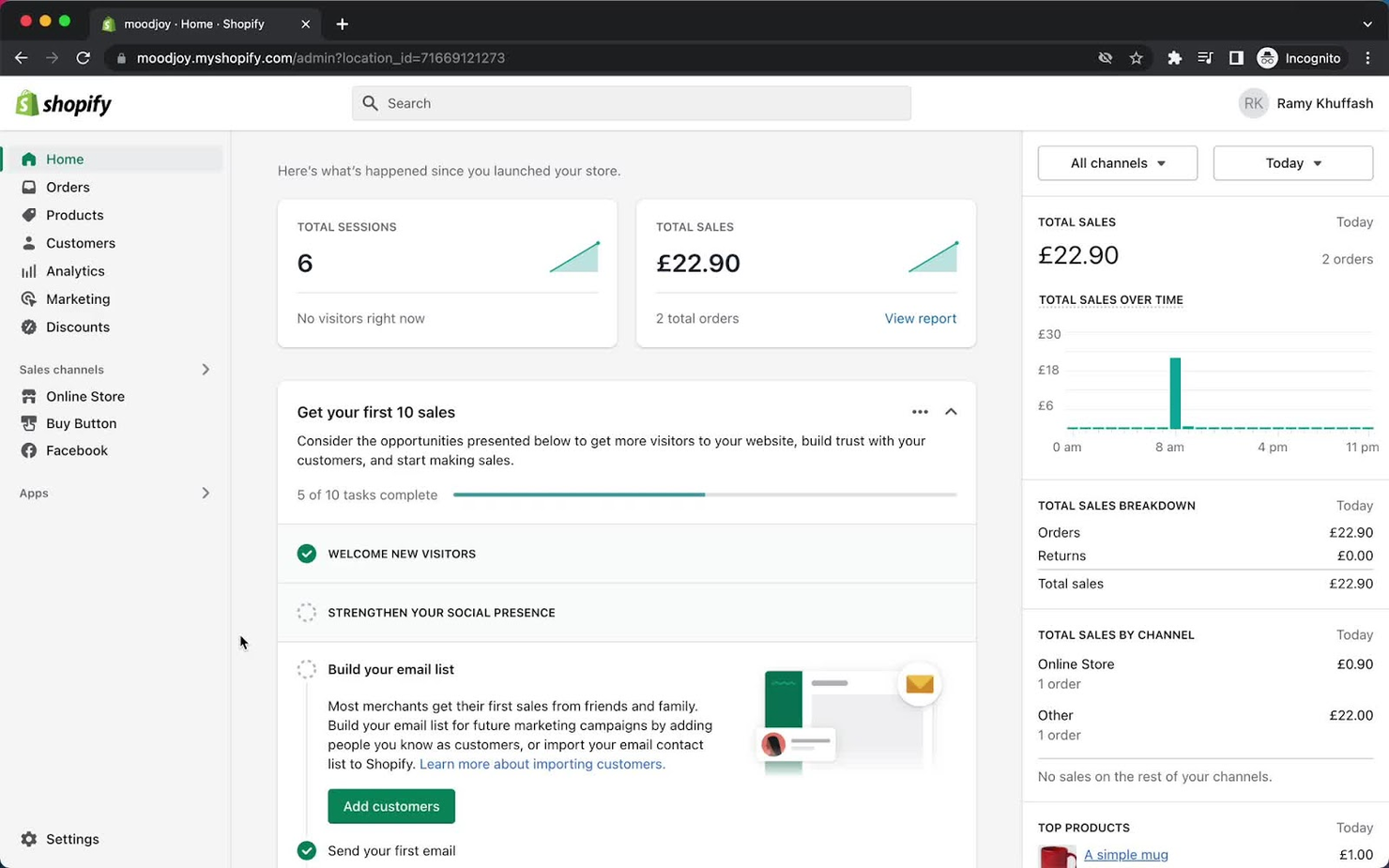
Shopify is an ecommerce platform designed for businesses of all sizes, offering tools to create and manage online stores. It's particularly popular among startups due to its ease of use and comprehensive features for setting up an online presence.
Why I picked Shopify: The platform is perfect for startups looking to quickly establish an online store. It provides a user-friendly interface that doesn't require extensive technical knowledge. You can choose from a wide range of customizable themes to match your brand's look. Shopify's built-in payment processing and marketing tools make it easy to manage sales and grow your business.
Standout features & integrations:
Features include a powerful dashboard that provides insights into your store's performance. You can also use its mobile app to manage your store on the go. Shopify's abandoned cart recovery feature helps you capture lost sales by reminding customers to complete their purchases.
Integrations include Facebook, Instagram, Amazon, eBay, Google Analytics, Mailchimp, QuickBooks, Xero, HubSpot, and Stripe.
Pros and Cons
Pros:
- Abandoned cart recovery
- Mobile app for store management
- Built-in payment processing
- Easy setup for new businesses
Cons:
- Limited reporting features
- May require third-party apps for features
- Transaction fees on non-Shopify payments


Katana is a manufacturing software tailored for small to medium-sized businesses, focusing on production management and inventory control. It helps manufacturers optimize their workflows and manage resources efficiently.
Why I picked Katana: This tool is specifically designed for manufacturing operations, providing clear visibility into production processes. It offers real-time inventory updates, which are crucial for maintaining efficient production schedules. You can set up production workflows that align with your manufacturing needs. Katana's ability to integrate manufacturing and inventory management sets it apart for businesses in this sector.
Standout features & integrations:
Features include visual production planning to help you keep track of your manufacturing process. The software also provides batch tracking, which is essential for quality control and traceability. You can manage multiple production sites from one platform, ensuring consistent operations across locations.
Integrations include Shopify, WooCommerce, Xero, QuickBooks Online, Zapier, Salesforce, BigCommerce, Amazon, Etsy, and eBay.
Pros and Cons
Pros:
- Aligns with manufacturing workflows
- Batch tracking for quality control
- Visual production planning
- Real-time inventory updates
Cons:
- May need technical support
- Initial setup requires time
- Limited advanced reporting features


Zoho Inventory is an inventory management software designed for small to medium-sized businesses. It helps manage orders, track inventory, and streamline sales across multiple channels.
Why I picked Zoho Inventory: This tool is particularly well-suited for small businesses looking for cost-effective inventory management. It offers features like real-time inventory tracking and order management that cater to smaller operations. With its user-friendly interface, it simplifies complex tasks. Its integration capabilities with various sales channels make it a versatile tool for expanding businesses.
Standout features & integrations:
Features include barcode scanning to speed up inventory processing and automated workflows to reduce manual tasks. You can also access detailed inventory reports to make informed decisions. The platform supports multiple warehouses, allowing you to manage stocks from different locations easily.
Integrations include Shopify, Amazon, eBay, Etsy, WooCommerce, Stripe, PayPal, QuickBooks, Xero, and Zoho Books.
Pros and Cons
Pros:
- Cost-effective for startups
- User-friendly for small teams
- Supports multiple warehouses
- Real-time inventory tracking
Cons:
- Basic reporting capabilities
- Can be slow with large data
- Limited advanced features


Acumatica is a cloud-based Enterprise Resource Planning (ERP) solution tailored for growing businesses. It caters to various industries by offering financial management, project accounting, and customer management tools.
Why I picked Acumatica: This tool is perfect for businesses seeking a cloud ERP solution. It provides real-time data access, which is crucial for informed decision-making. The platform supports unlimited users, ensuring scalability as your business grows. Its flexible deployment options and comprehensive suite of applications make it a versatile choice for diverse business needs.
Standout features & integrations:
Features include advanced financial management to streamline accounting processes. You can also utilize project accounting to manage budgets and timelines. The customer management feature helps in maintaining strong client relationships.
Integrations include Salesforce, Avalara, HubSpot, Shopify, BigCommerce, Magento, DocuSign, Microsoft Power BI, Adobe Sign, and Smartsheet.
Pros and Cons
Pros:
- Scalable for growing businesses
- Real-time data access
- Offers flexible deployment options
- Supports unlimited users
Cons:
- Can be resource-intensive
- Steep learning curve
- Complex setup process

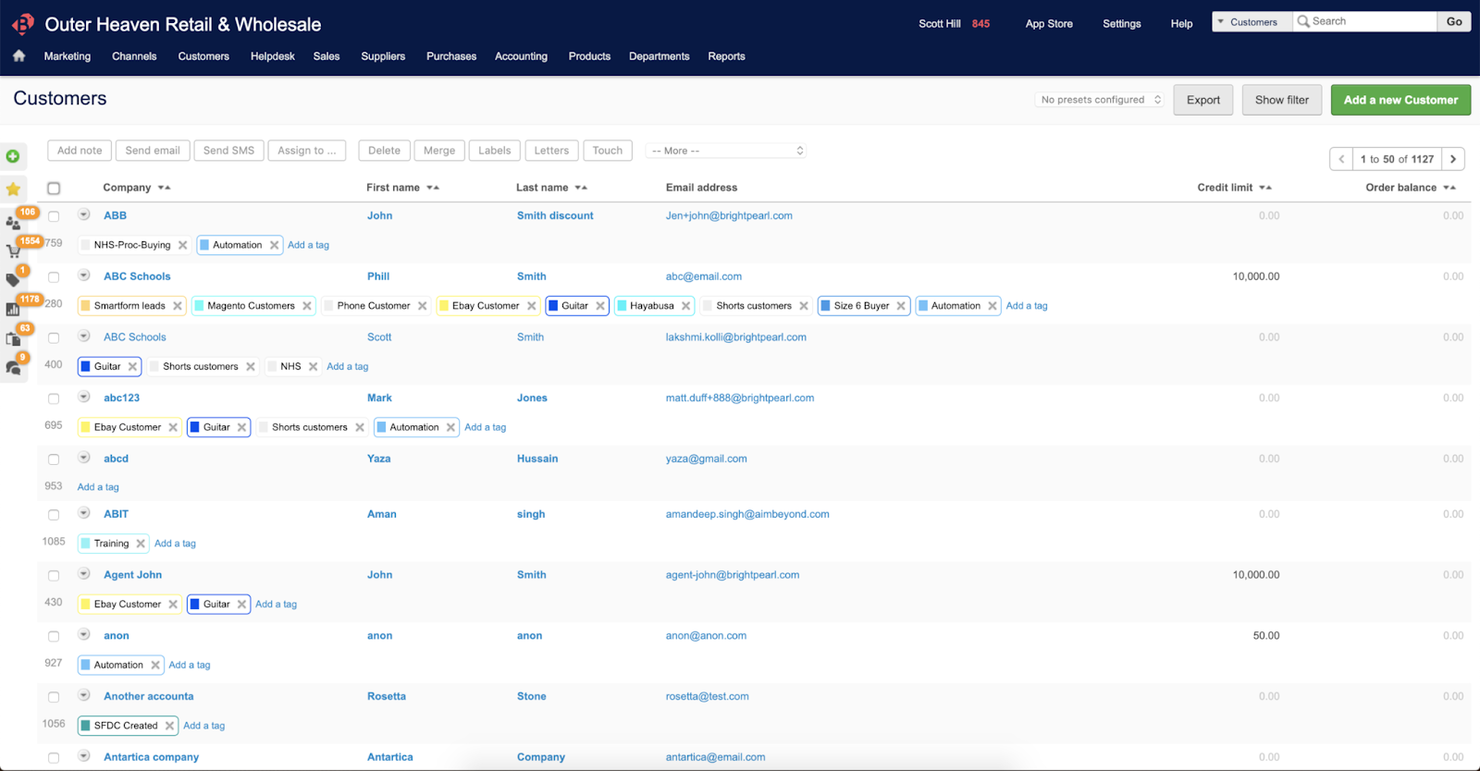
Brightpearl is a retail operating system designed for multichannel ecommerce businesses. It helps automate inventory management and order fulfillment, boosting efficiency and reducing errors.
Why I picked Brightpearl: The platform excels in retail automation, which is essential for handling large volumes of orders. Its automation engine reduces human errors and labor costs, making it ideal for busy retail environments. Brightpearl's ability to manage peak order volumes ensures your operations run smoothly. The integration with various ecommerce platforms further supports efficient business management.
Standout features & integrations:
Features include comprehensive retail analytics to track performance and identify trends. You can automate repetitive tasks to save time and costs. Brightpearl also offers expert support to help optimize your use of the platform.
Integrations include Shopify, Amazon, eBay, Magento, BigCommerce, Xero, QuickBooks, ShipStation, PayPal, and Stripe.
Pros and Cons
Pros:
- Offers expert implementation support
- Reduces manual errors
- Handles peak order volumes
- Effective inventory automation
Cons:
- Potential integration challenges
- Requires training for effective use
- Complex initial setup

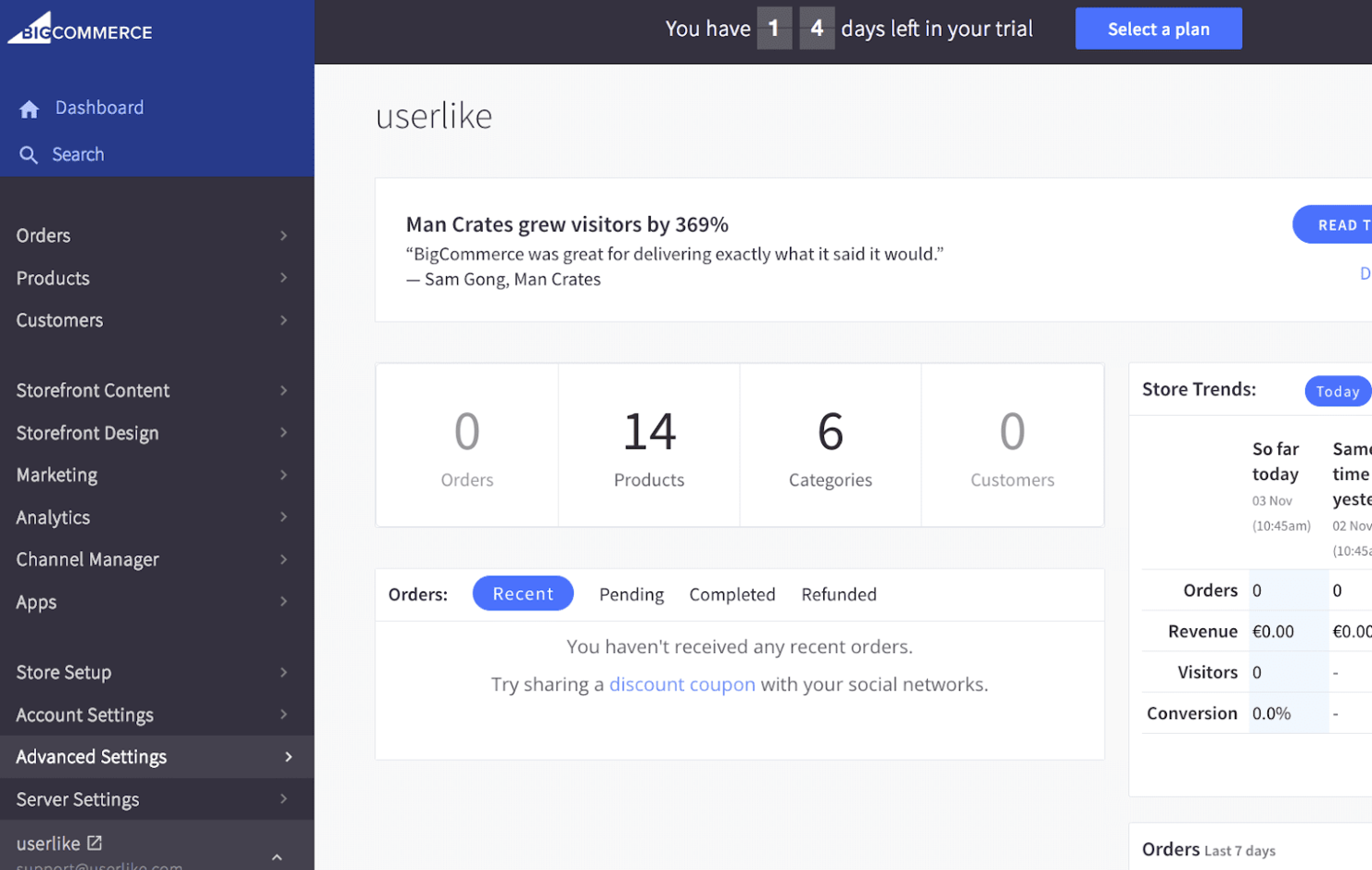
BigCommerce is an ecommerce platform designed for businesses of all sizes, offering comprehensive tools for building and managing online stores. It's particularly favored by growing businesses due to its scalability and flexibility in handling large product catalogs and high traffic.
Why I picked BigCommerce: The platform is ideal for businesses seeking scalable solutions that grow with their needs. It offers unlimited product listings and bandwidth, which is crucial for expanding businesses. You can customize your store with advanced design tools and access a range of built-in features. BigCommerce's ability to support large-scale operations makes it a strong contender for businesses planning to expand their online presence.
Standout features & integrations:
Features include advanced SEO tools to help your store rank higher in search results. The platform offers a variety of customizable templates to match your brand's identity. You can also benefit from its multi-currency support, which is essential for reaching international customers.
Integrations include Amazon, eBay, Facebook, Instagram, Google Shopping, QuickBooks, Xero, Mailchimp, HubSpot, and Stripe.
Pros and Cons
Pros:
- Scales with business growth
- Advanced SEO tools included
- Offers multi-currency support
- Supports large product catalogs
Cons:
- Initial setup time-consuming
- May need additional apps
- Customization can be complex


Extensiv is an order management software tailored for brands and third-party logistics providers (3PLs). It helps manage inventory, orders, shipping, and purchasing to boost productivity and efficiency.
Why I picked Extensiv: The system excels in integrating with 3PLs, making it ideal for businesses relying on external logistics. Its features include comprehensive inventory management and order processing capabilities. The platform offers a centralized source of truth, allowing you to manage multiple sales channels seamlessly. Extensiv's ability to connect with various external warehouses is a standout aspect, ensuring you can scale operations effectively.
Standout features & integrations:
Features include inventory management, order processing, and catalog management. You can also manage purchasing and receiving efficiently. The system's actionable analytics enhance visibility into your operations.
Integrations include Shopify, Amazon, eBay, Walmart, QuickBooks, Xero, NetSuite, ShipStation, and FedEx.
Pros and Cons
Pros:
- Actionable analytics for decision-making
- Enhances visibility into operations
- Strong integration capabilities
- Centralized management system
Cons:
- Customization options may be limited
- Learning curve for new users
- Initial setup can be complex

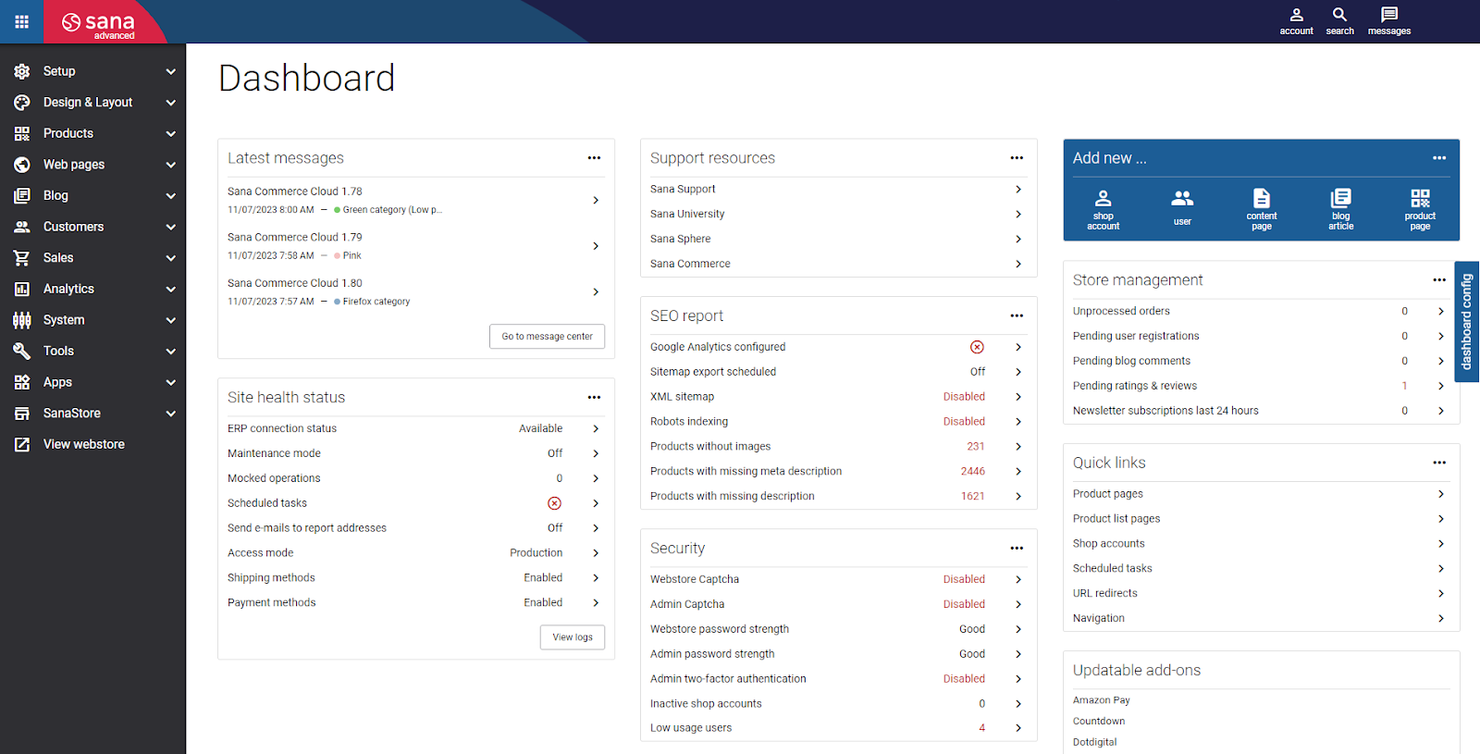
Sana Commerce is an ecommerce platform designed for businesses that require strong ERP integration. It helps streamline sales processes by connecting directly with ERP systems to ensure data accuracy and efficiency.
Why I picked Sana Commerce: The platform is ideal for businesses that rely heavily on ERP systems for their operations. Its deep ERP integration eliminates data silos, providing a single source of truth for your business. You can manage complex pricing and inventory directly from your ERP, reducing errors and saving time. Sana Commerce's ability to enhance order accuracy and customer experience is a key benefit for businesses looking to optimize their ecommerce operations.
Standout features & integrations:
Features include real-time inventory updates to keep your stock information accurate. The platform offers personalized customer experiences by leveraging ERP data for tailored pricing and product catalogs. You can also benefit from its user-friendly interface, which simplifies order management tasks.
Integrations include Microsoft Dynamics 365, SAP ERP, SAP Business One, Microsoft Dynamics NAV, Microsoft Dynamics AX, Microsoft Dynamics GP, Microsoft Dynamics 365 Business Central, Magento, WooCommerce, and Shopify.
Pros and Cons
Pros:
- Enhances data accuracy
- Personalized customer experiences
- Real-time inventory updates
- Deep ERP integration
Cons:
- Can be resource-intensive
- Requires ERP expertise
- Initial setup complexity


SkuVault is an inventory management software designed for retailers and ecommerce businesses. It helps manage inventory levels, orders, and warehouse operations to ensure accurate stock information and efficient order fulfillment processes.
Why I picked SkuVault: The platform is ideal for businesses seeking transparency in their inventory management. It offers real-time inventory visibility, which is crucial for preventing stockouts and overstocking. You can track products across multiple locations, ensuring accurate inventory counts. SkuVault's barcode scanning feature enhances accuracy and efficiency in warehouse management operations.
Standout features & integrations:
Features include advanced reporting tools that provide insights into inventory performance. The software supports cycle counting, helping you maintain inventory accuracy without disrupting operations. You can also manage multiple warehouses, optimizing your stock distribution effectively.
Integrations include Shopify, Amazon, eBay, BigCommerce, Walmart, WooCommerce, Magento, QuickBooks Online, ShipStation, and ShipWorks.
Pros and Cons
Pros:
- Efficient cycle counting
- Advanced reporting tools
- Barcode scanning for accuracy
- Real-time inventory visibility
Cons:
- Potential integration challenges
- Can be resource-intensive
- Initial setup complexity
Other Multichannel Order Management Systems
Here are some additional multichannel order management software options that didn’t make it onto my shortlist, but are still worth checking out:
- Kibo Commerce
For unified commerce
- Conexiom
For automated order processing
- ShipStation
For shipping discounts
- Creatio CRM
For CRM integration
- Veeqo
For shipping management
- Linnworks
For order automation
- Cin7 Omni
For omnichannel retail operations
- Anchanto
For brand management
- Unicommerce
For ecommerce fulfillment
- Now Commerce
For B2B order processing
- QuickBooks Enterprise
For financial management
- Odoo
For modular business applications
- Blue Yonder
For inventory optimization
- Cin7 Core
For small retail businesses
- NetSuite
For integrated business management
- NewStore
For mobile-first retail
- EasyChannel
For channel synchronization
- Increff WMS
For warehouse efficiency
- Freestyle Solutions
For order lifecycle management
- SalesWarp
For customizable workflows
- Orisha
For personalized shopping experiences
- Multiorders OMS
For multichannel integration


Other Related Retail Software
Here are some other roundups you might be curious about:
- Wholesale Order Management Software
- Enterprise Inventory Management Software
- B2B Order Management Software
- Inventory Management Software
- Shopify Order Management Software
Our Selection Criteria for Multichannel Order Management Systems
We don’t just throw tools into a list and call it a day. Every system here was evaluated against what actually matters—solving real ecommerce headaches. Here’s how we scored them, with a weighted breakdown to keep it fair (and useful).
Core functionality (25% of total score)
Every tool had to handle the basics—and handle them well. No half-measures here.
- Manage inventory across multiple sales channels
- Process orders from various platforms
- Update stock levels in real time
- Provide detailed sales and fulfillment reports
- Integrate with popular ecommerce platforms
Additional standout features (25% of total score)
Beyond the basics, we looked for tools that bring something extra to the table.
- Advanced analytics and demand forecasting
- AI-driven decision-making tools
- Customizable workflows for unique operations
- Multi-currency support for global selling
- Automated supplier or purchase order management
Usability (10% of total score)
If it’s clunky or confusing, it’s out. Tools should make your life easier, not harder.
- Clean, intuitive user interface
- Easy navigation and layout
- Minimal training required to get started
- Responsive design (works on all devices)
- Clear, actionable instructions—not just jargon
Onboarding (10% of total score)
A great tool doesn’t help if you can’t figure out how to use it. Onboarding matters.
- Training videos and documentation
- Interactive product tours or demos
- Access to starter templates or workflows
- Live or recorded webinars for new users
- Supportive, useful chatbots (not the annoying kind)
Customer support (10% of total score)
When things go sideways, support needs to show up—and fast.
- 24/7 support availability
- Multiple contact options (chat, phone, email)
- Fast response times
- Support reps who actually know the product
- Well-stocked help center with useful guides
Value for money (10% of total score)
It’s not just about being cheap—it’s about delivering real value.
- Competitive pricing across tiers
- Strong features in the base plan
- Scalable pricing that grows with your team
- Discounts for annual billing or high volume
- Overall ROI based on features vs. cost
Customer reviews (10% of total score)
Real-world feedback keeps us honest. We read the reviews so you don’t have to.
- Overall satisfaction ratings
- Feedback on reliability and uptime
- Praise or complaints about features
- Suggestions or wish lists from users
- Shoutouts (or rants) about customer service
What is a Multichannel Order Management System?
A multichannel order management system is software that helps you keep your sales, inventory, and fulfillment in sync across all the platforms you sell on—think Amazon, Shopify, your own site, and more.
Instead of manually updating stock or juggling orders across tabs, everything’s managed from one centralized dashboard.
Ecommerce managers, retailers, and ops teams use these tools to avoid oversells, missed orders, and multichannel inventory chaos.
Features like real-time stock tracking, automated order routing, and AI-powered insights help you stay on top of demand, fulfill faster, and deliver a seamless customer experience—whether someone’s buying from your site or a third-party online marketplace.
In short, these systems bring order (literally) to your order management—and give you the visibility and control you need to scale without losing your mind.
How to Choose Multichannel Order Management System
Choosing the right system isn’t about ticking boxes—it’s about finding a tool that fits your workflow, scales with your growth, and doesn’t break the bank. Here’s a checklist of what to actually do when evaluating options.
| Factor | What to consider |
|---|---|
| Scalability | Pick a system that can grow with you. Make sure it can handle more orders, more channels, and more complexity without falling apart—or costing a fortune. |
| Integrations | Confirm it plugs into your current stack. Check compatibility with ecommerce platforms, accounting tools, shipping carriers, and marketplaces. |
| Customizability | Look for tools that let you tweak workflows, reports, and dashboards. You want flexibility that boosts efficiency—not just bells and whistles. |
| Ease of use | Demo the interface. If your team needs weeks of training, it’s a problem. A clean UI and intuitive flow will save you time—and sanity. |
| Budget | Calculate total cost—not just base price. Include setup fees, per-user charges, and potential add-ons. Make sure the ROI lines up with your growth goals. |
| Security safeguards | Check for solid data protection—encryption, role-based access, regular updates. You’re handling customer info, so don’t mess around here. |
| Support | Test their support channels. Look for fast, helpful responses and support hours that match your business needs—especially if you're global. |
| Key features | Focus on the must-haves: real-time inventory tracking, order processing, reporting, and integrations. Add-ons are nice, but core features are critical. |
Trends in Multichannel Order Management Solutions
We cut through the noise to spotlight trends that actually matter—and impact how you manage orders across platforms.
- AI-powered demand forecasting is everywhere. AI now predicts sales trends and inventory needs with scary accuracy, helping you avoid overstock and stockouts with data-backed decisions.
- Supply chain visibility is getting real-time. Businesses are using tech like GPS and RFID to track products end-to-end, spotting issues before they become disasters.
- Virtual POS systems are going mainstream. Cloud-based point-of-sale tools let you process orders anywhere, offering more flexibility for omnichannel retailers.
- Generative AI is optimizing everything. From automating workflows to personalizing customer experiences, generative AI is transforming how order management runs behind the scenes.
- Sourcing strategies are diversifying. Brands are moving beyond single-market suppliers and exploring nearshoring, multi-sourcing, and regional diversification to boost resilience.
- OMS tools are syncing with full supply chain platforms. Order management isn’t in a silo anymore—it’s integrating tightly with broader supply chain tools to reduce lead times and improve coordination.
- Sustainability tools are gaining traction. More platforms are adding eco-friendly features like carbon tracking and optimized shipping to meet customer demand for greener practices.
- Security is non-negotiable. Expect stronger encryption, authentication, and audit logs as vendors double down on protecting your data and maintaining compliance.
Features of Multichannel Order Management System
Here’s what to look for under the hood. These features do the heavy lifting so you don’t have to.
- Track inventory in real time. Stay on top of stock levels across all your channels—no more overselling or manual updates.
- Automate your order processing. Get orders out the door faster with workflows that handle the grunt work for you.
- Forecast demand with AI. Use built-in intelligence to predict what’s selling, what’s not, and when to restock.
- See everything as it happens. Real-time visibility means you always know what’s in stock, what’s shipping, and what’s delayed.
- Sync every sales channel. Connect online stores, marketplaces, and physical locations—everything talks to everything.
- Lock down your data. Built-in encryption, access controls, and multi-factor authentication keep customer info safe.
- Customize how work gets done. Build workflows, reports, and routing rules that match how your team operates.
- Sell globally, seamlessly. Multi-currency support makes international sales smooth and painless.
- Speed up warehouse ops. Barcode scanning keeps order picking and stock counts fast and error-free.
- Adjust pricing on the fly. Dynamic pricing tools help you stay competitive and respond to market shifts instantly.
Benefits of Multichannel Order Management System
Let’s talk results. Here’s what a solid system actually delivers for your business.
- Work smarter, not harder. Automate repetitive tasks and streamline operations—so your team can focus on growth.
- Cut down on errors. Real-time tracking and AI insights keep inventory and order mistakes to a minimum.
- Deliver a better customer experience. Fulfill faster, communicate clearly, and keep customers coming back for more.
- Scale without stress. Add sales channels and order volume without losing control or needing more headcount.
- Save serious money. Reduce shipping errors, avoid overstocking, and optimize your resources for better margins.
- Make data-driven moves. Use actionable insights to forecast demand, manage stock, and make smarter decisions.
- Protect your reputation. Strong security safeguards customer trust and keeps your brand out of the headlines.
Costs & Pricing of Multichannel Order Management Systems
Pricing can vary wildly depending on features, users, and order volume. Some tools are affordable out of the gate, others come with enterprise-level price tags—and surprise costs if you’re not careful.
Here's how it typically breaks down.
| Plan type | Average price | Common features | Best for |
|---|---|---|---|
| Free plan | $0 | Basic inventory tracking, limited order processing, and entry-level reports. | Solo sellers or side hustlers just starting out. |
| Personal plan | $10–$30/user/month | Inventory management, order processing, and basic analytics. | Small businesses with low order volume. |
| Business plan | $50–$100/user/month | Advanced inventory tools, multichannel support, customer management. | Scaling brands selling across 2–3 platforms. |
| Enterprise plan | $150–$300/user/month | Full customization, AI-driven insights, dedicated support, and advanced security. | High-volume sellers, large retailers, B2B ops. |
Additional costs to watch for
- Per-order or transaction fees. Some platforms charge based on order volume—this adds up fast for busy businesses.
- Add-ons and integrations. Want advanced analytics, extra users, or integrations with niche tools? That often costs extra.
- Implementation and setup fees. Larger platforms may charge for onboarding, especially at the enterprise level.
- Support tiers. Premium support or faster response times may only come with higher-priced plans.
- Annual contracts. Discounts are common for yearly billing—but watch for lock-ins that limit flexibility.
Multichannel Order Management System FAQs
Here are some answers to common questions about multichannel order management system:
How do I know if I’ve outgrown manual order management?
If you’re spending more time fixing order errors, chasing inventory updates, or juggling spreadsheets than actually growing your business—it’s time. Manual systems don’t scale, and they cost you in errors, delays, and customer trust.
Can I use a multichannel OMS if I only sell on two platforms?
Yes—and it’s smart to get ahead of the chaos. Even with two channels, syncing inventory and orders manually gets messy fast.
A good OMS simplifies your workflow now and sets you up to scale without extra headaches later.
What’s the ROI of investing in a multichannel OMS?
Lower error rates, faster fulfillment, fewer support tickets, and happier customers. Add in time saved on manual tasks and better data for decision-making, and the ROI isn’t just financial—it’s operational sanity.
How hard is it to switch from my current system?
Depends on the tool—and your current setup. Many platforms offer migration support, but expect some lift, especially if your data’s a mess. Look for tools with import templates, onboarding help, and solid support during the transition.
What’s the biggest mistake people make when choosing an OMS?
Chasing features you don’t need—and ignoring the learning curve. Choose a tool that solves your pain points, not just the one with the flashiest dashboard.
Bonus mistake: ignoring support quality. You’ll care when something breaks.
How do multichannel order management systems streamline returns?
A solid OMS handles returns across all your channels in one place—no more chasing return emails or updating inventory manually. You can track return requests, process refunds faster, and restock inventory automatically.
It keeps the customer experience smooth and your ops team sane.
Other Software You Might Need
Before we sign off, here are a few tool roundups you may want to take a gander at.
- Wholesale Inventory Management Software
- Multichannel Inventory Management Software
- B2B Order Management Software
Chaos is Optional—Choose Orderly Order Management
Managing orders across multiple channels doesn’t have to feel like a never-ending game of whack-a-mole. Manual workarounds, inventory chaos, and late shipments aren't just annoying—they're growth killers that retail management systems can eliminate.
The right order management system takes that chaos and turns it into a streamlined, automated workflow that actually works for you. Less time fixing errors, more time fulfilling orders—and scaling your business without losing control.
You’ve got the tools, the insights, and the shortlist. Now it’s time to pick a system that fits your team and finally take order management off your “stress list.”
Other Software You Might Need
Before we leave you, here are some more software roundups that may be of interest to you:
- Open Source Order Management Systems
- Ecommerce Delivery Management Software
- Package Tracking Software
- Ecommerce Order Management Systems
What’s Next:
If you're in the process of researching multichannel order management system, connect with a SoftwareSelect advisor for free recommendations.
You fill out a form and have a quick chat where they get into the specifics of your needs. Then you'll get a shortlist of software to review. They'll even support you through the entire buying process, including price negotiations.