

7 Business Scaling Strategies Retailers Need to Succeed


Scaling Strategy: Creating a robust business scaling strategy prevents chaos and aligns resources and goals effectively.
Culture & Team: Protecting company culture and developing talent are essential for smooth scaling and reducing turnover.
Financial Management: Smart financing and resource allocation ensure sustainable growth without cash flow crunches.
Market Expansion: Rigorous market research guides successful entry into new markets without unnecessary risks.
Automate Operations: Early investment in automation supports scalability by freeing staff for high-value tasks.
Scaling a retail business is never just about ringing up more sales or opening new stores. It’s about building a business scaling strategy that actually works—so you can handle the next wave of demand, expand your reach, and keep your team (and margins) intact.
There’s no shortage of ambition in retail—just look at how many new businesses hit the market each year.
But while growth is exciting, most operators know that scaling without a plan is the fastest way to blow through cash, burn out your team, or end up with more complexity than profit.
I’ve seen plenty of small businesses—both brick-and-mortar and ecommerce—run headlong into growth, only to get tripped up by broken systems, surprise bottlenecks, or a company culture that can’t keep up.
The bottom line: successful retailers scale by planning ahead. That means building flexible processes, investing in automation and tech, and staying focused on the fundamentals that got you here.
In this guide, I’ll walk you through seven business scaling strategies—real, actionable steps—to help you grow without losing your grip.
Why Every Retailer Needs a Real Business Scaling Strategy
Trying to scale without a business plan is a recipe for chaos. Retailers who take a disciplined approach to growth—mapping out milestones, resources, and customer targets—avoid cash crunches and costly missteps.
It’s tempting to think you can figure it out as you go. But in retail, “winging it” gets expensive fast—especially when competition is fierce and customer habits shift overnight.
A strong business scaling strategy does more than just set big goals.
It aligns your team, clarifies what needs to happen (and when), and forces you to think through funding, headcount, technology, and operational needs in advance. This kind of proactive planning turns rapid growth from a scramble into a process you can actually manage.
Smart operators treat scaling like a campaign, not a lottery ticket.
Whether you're rolling out new stores, expanding ecommerce, or just handling increased demand, define your milestones, know your customer, and get every department rowing in the same direction. That’s how retailers set themselves up for sustainable growth—instead of chasing the next “big thing” and hoping for the best.
The Hidden Pitfalls of Scaling a Retail Business
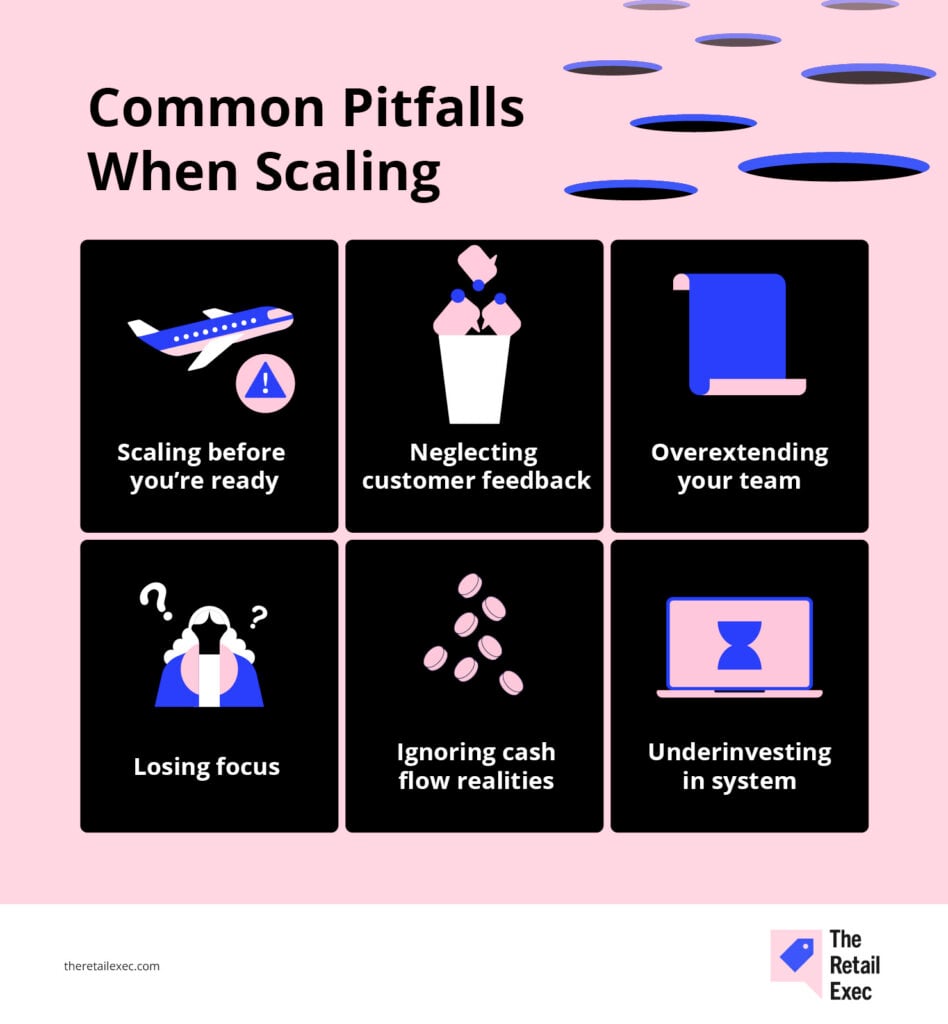
Most retail scaling failures don’t start with a bad idea—they start when you outrun your systems, your cash, or your culture.
There’s a reason seasoned retailers approach scaling with a bit of healthy skepticism.
Take Zume, the pizza-robot startup once flush with $425 million in funding. The company tried to scale too quickly, expanding their workforce and infrastructure before proving they could do it profitably.
Eventually, high costs and broken unit economics caught up, leading to a massive pivot, layoffs, and a complete shutdown in 2023.
You see this same pattern across retail: growing for growth’s sake—without the right foundation—almost always backfires. It’s easy to burn cash chasing every opportunity, but hard to recover once those bets go sideways.
Staff and talent acquisition
Scaling your team isn’t just a hiring spree—it’s about building the right bench for tomorrow’s challenges, not just filling gaps today.
- Hiring too fast. Many retailers rush to add staff when demand spikes, but without a proper onboarding plan, new hires can create more problems than they solve—leading to errors, poor service, and higher turnover.
- Losing your core culture. Bringing in outsiders quickly makes it tougher to keep the values and energy that got you started. Culture drift can set in before you notice.
- Retention risk. Early high-performers may struggle as roles evolve and expectations rise. Lose them, and you lose momentum and critical know-how.
- Training and development. Scaling without robust training creates uneven standards and inconsistent experiences—both for staff and customers.
The most successful operators invest in talent processes—recruiting, onboarding, and developing people—before the next growth wave hits.
Shared values and company culture
As your retail business grows, protecting your culture gets harder—and more important.
- Dilution risk. Every new hire, new store, or new initiative can blur the values and attitudes that made you successful in the first place.
- Disconnected teams. Growth often leads to more layers, more remote or siloed teams, and less direct contact with leadership. When teams stop talking, priorities drift and morale suffers.
- Leadership visibility. If your leaders don’t actively reinforce what matters—through communication, recognition, and example—your culture will fill the void with confusion or even resentment.
- Change fatigue. As processes shift and roles change, even loyal employees can feel left behind or undervalued, eroding engagement and productivity.
The best retail leaders fight culture drift by consistently modeling values, sharing wins and failures openly, and keeping lines of communication wide open—even as they scale.
Organizational structure
What worked when you were a small, close-knit crew won’t work once you’re managing multiple locations or channels.
In the early days, everyone wears multiple hats. But as you scale, you’ll need to introduce some structure—or risk chaos.
- Too flat? Decision bottlenecks start to slow everything down.
- Too layered? Bureaucracy creeps in, and your team loses its sense of ownership.
- Vague roles? People start working at cross-purposes, and nothing moves forward.
The trick is to add just enough process and hierarchy to keep the business running smoothly—without smothering the agility that helped you grow in the first place.
Most retail teams need to evolve their org chart and reporting lines as they scale, but if you overcomplicate things, you’ll regret it.
The lesson: structure supports scale, but complexity is the enemy. Build in only what you need, and stay nimble wherever you can.
Speed of business growth
Timing matters just as much as ambition when it comes to scaling your business strategy.
Move too fast and you’ll stretch your team, systems, and cash flow past the breaking point. Move too slow, and you risk losing market share to faster, hungrier competitors.
Retailers often underestimate how quickly scaling pains can hit—especially when a hot product, new location, or marketing push brings in a wave of new customers overnight.
Inventory systems buckle, workflows get messy, and support teams scramble to keep up.
On the other hand, caution has its own risks. If you hesitate to invest in automation, new technology, or expanding your customer base, you might plateau before you ever reach your real growth potential.
Finding the right pace is about watching your metrics, knowing your target market, and having a plan to adjust as demand shifts.
Sustainable business growth comes from scaling at the speed your team and systems can actually handle.
Scope of opportunities
Rapid growth opens up a world of possibilities—new markets, expanded product lines, and partnerships you never considered in the early stages.
But chasing every opportunity can quickly lead to a scattered business model and overstretched resources.
Retailers often find themselves tempted by the next big thing: a new product category, a fresh social media trend, or a partnership that seems too good to pass up. Sometimes these bets pay off, but more often they distract from core strengths and customer needs.
The smartest operators use data, market research, and real customer feedback to evaluate each new opportunity.
They’re not afraid to say “no” to ideas that don’t align with their scaling strategy, even when the upside looks tempting on paper.
Focus is what keeps your scaling process on track.
When every new market or product launch gets weighed against your long-term business goals, you avoid the chaos that comes from trying to do everything at once.
Financing and resource allocation
Scaling a retail business always puts your finances to the test. Growth eats capital—sometimes faster than you expect—and small missteps with cash flow or budgeting can stall your scaling process before it really starts.
- Rising costs. Every new store, channel, or product line requires upfront investment—inventory, staffing, systems, and more. If you’re not careful, these expenses can quickly erode your profit margins.
- Cash flow crunches. Increased demand means bigger orders and longer lead times, but suppliers and landlords still expect to be paid on time. Retailers often find themselves squeezed if sales growth outpaces available cash.
- Smart allocation. Successful scaling depends on directing resources where they’ll drive the most impact—whether that’s automating workflows, upgrading your CRM, or investing in customer experience.
- Funding trade-offs. Raising outside capital (through loans or investors) can accelerate growth, but it also brings new pressures—like accountability to outside stakeholders and tighter timelines for results.
- Tech investments. Don’t just throw money at software—look for tools that help streamline your business processes and scale with you as needs evolve.
Nail down your budgets, forecast regularly, and track your key performance indicators to keep your scaling strategy on solid financial ground.
7 Business Scaling Strategies That Work
There’s no single playbook for scaling a retail business, but the most successful operators rely on a handful of proven strategies. These approaches help you build a business model that’s resilient, adaptable, and positioned for long-term success.
Let’s break down six business scaling strategies that can help your retail operation grow with fewer headaches—and more sustainable results.
1. Make sales data your compass
Relying on gut feel is risky when you’re scaling up.
Retailers who use sales data and analytics to drive decision-making get better visibility into trends, customer behavior, and which products or channels actually fuel business growth.
- Analyze buying patterns. Understand what sells, when, and to whom, so you can forecast demand and personalize marketing.
- Segment your customer base. Use data to identify your highest-value segments and tailor offers to boost customer loyalty and retention.
- Track KPIs. Keep a close eye on conversion rates, average order value, customer acquisition cost, and other key performance indicators to spot issues before they escalate.
- Empower your team. Equip staff with real-time data and clear dashboards so they can react to opportunities (or problems) faster.
Data-driven sales leadership means making decisions based on real-life facts, not just gut feelings or intuition. This includes gathering, analyzing, and interpreting data to spot trends, measure results, and make informed decisions.

If you don’t already have a retail analytics tool or CRM, now’s the time to invest.
Start small—track a handful of essential metrics, build a habit of reviewing the numbers, and let your data guide your business scaling strategy.
2. Automate your operations before you break
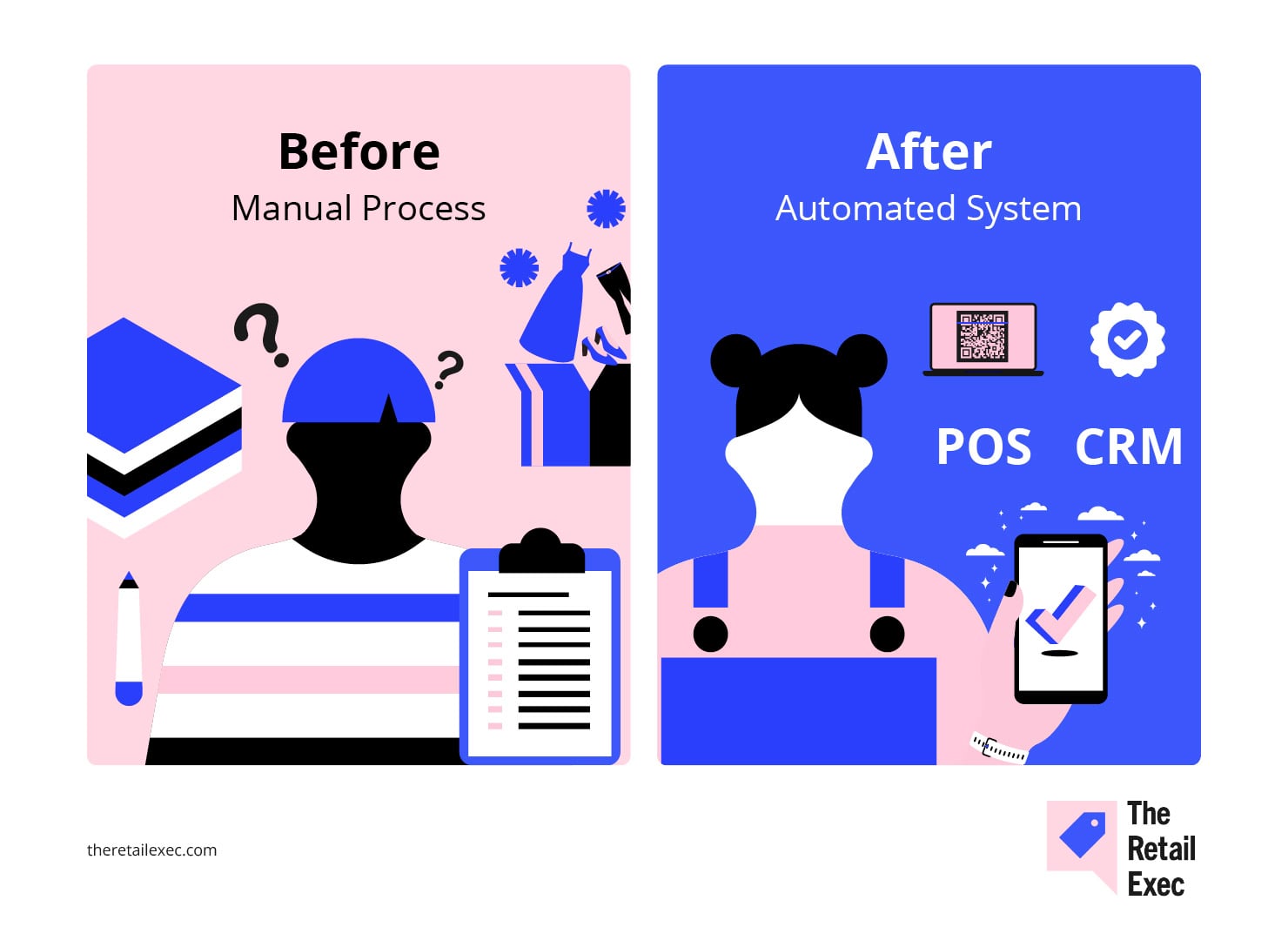
Manual processes might get you through the early stages, but they won’t scale with your business. Automation—whether it’s inventory management, POS, payroll, or customer communications—frees up your team to focus on higher-value work and helps you handle increased demand without losing control.
- Inventory automation. Modern inventory software can help you maintain stock accuracy, manage replenishment, and avoid costly stockouts or overages as you scale.
- Integrated POS and CRM. Connecting your sales, customer data, and marketing tools means fewer errors and better customer experiences.
- Workflow optimization. Automating repetitive tasks (like purchase orders, scheduling, or reporting) reduces mistakes and keeps your business nimble.
- Scalable systems. Choose tools that grow with your operation, from a single storefront to multiple channels, locations, or markets.
Retailers who invest in automation early build scalability into their business model. They’re ready to expand, add new products, or enter new markets without scrambling to patch together workarounds at the last minute.

Looking for solutions? Check out our roundup of best retail management software for tools that can help you streamline operations as your business grows.
3. Build a team that can scale with you
The right people are your biggest asset—and your biggest risk—when scaling a retail business. It’s not just about hiring more team members, but about finding and developing talent who can grow with your business and adapt as your operations evolve.
- Smart hiring. Resist the urge to simply fill seats when demand spikes. Instead, build a pipeline of candidates who fit your company culture and bring in new skill sets that support long-term business growth.
- Structured onboarding. A fast-growing team needs a consistent process for bringing people up to speed—one that covers both the nuts and bolts of the job and what makes your culture unique.
- Retention and development. Invest in ongoing training and career paths for your staff. High turnover disrupts customer experience and erodes your company culture.
- Communication and feedback. As you scale, create systems for regular check-ins and open dialogue. This helps team members feel heard and stay aligned with company goals.
You can do all the market research you want, but if it’s not analyzed, interpreted and applied correctly to define meaningful action, it will never be used to make an impact on strategic thinking and decision making.

Scaling is about numbers, sure—but, it’s also about building a team that’s ready and able to take your business to the next level.
4. Expand to the right markets (not just the easy ones)
Expanding your retail business—whether it’s launching new stores, moving online, or targeting a fresh customer base—can accelerate growth if you pick your spots wisely.
But not every opportunity is worth chasing.
Start with rigorous market research to identify where your products and business model actually fit. Don’t rely solely on assumptions or gut feeling; dig into the data, competitor analysis, and feedback from your existing customer base.
- Know your target audience. Survey your best customers, analyze purchasing patterns, and look for adjacent markets where your offer makes sense.
- Validate before you launch. Test new markets with pilots, pop-up shops, or targeted online campaigns before going all-in.
- Localize your approach. Every market has its quirks—adjust your product mix, pricing, and marketing strategies to match local expectations.
- Track and adapt. Monitor performance metrics and customer feedback closely as you enter new markets. Be ready to pivot or pull back if things don’t click.
The best retailers grow by expanding into markets that fit their strengths—not just those that seem easy or exciting. Let real data and market insight—not FOMO—guide your next move.
5. Partner for what you can’t do in-house
No retailer can do everything alone, especially when the business starts scaling fast.
Sometimes, the smartest move is to find partners or outsource functions that would slow you down or stretch your team too thin.
- Identify your gaps. Are you missing expertise in logistics, digital marketing, or IT? Partnerships can fill these needs without hiring a full internal team.
- Vet your partners. Look for agencies, consultants, or vendors with a proven track record helping businesses at your stage. Check references and clarify expectations up front.
- Start small. Pilot projects let you test the fit before making a bigger commitment—protecting both budget and brand reputation.
- Maintain control. Assign an internal owner for each partnership to manage deliverables, provide feedback, and keep things on track.
Partnerships, when chosen and managed well, can help you scale faster, stay agile, and free up internal resources to focus on what your business does best.
6. Conduct a risk assessment as you scale
Every new phase of business growth brings fresh risks—market shifts, supply chain snags, regulatory changes, and more. Smart retailers stay ahead by regularly assessing and managing those risks, not just reacting after something goes wrong.
- Identify key risks. Brainstorm the vulnerabilities that could derail your scaling process—cash flow crunches, supplier disruptions, key employee turnover, technical failures, or changing customer needs.
- Analyze and prioritize. For each risk, gauge the likelihood and potential impact. Don’t just worry about the obvious; scan for edge cases, too.
- Strengthen controls. Where risks are real, shore up your internal processes: diversify vendors, cross-train staff, invest in backups, or tighten financial oversight.
- Monitor and review. Schedule regular risk check-ins as you scale, so you can update your mitigation plans as business conditions evolve.
Risk assessment without risk management will lead to ineffective risk mitigation.

By treating risk management as an ongoing discipline, not just a one-time checklist, you protect your business scaling strategy—and position your brand for long-term success.
7. Set goals—and actually measure progress
Ambition without accountability is just wishful thinking. To scale your retail business sustainably, you need clear business goals, defined milestones, and a disciplined approach to tracking results.
- Set SMART goals. Make them specific, measurable, achievable, relevant, and time-bound. A goal like “increase online sales by 20% in the next quarter” beats vague aspirations every time.
- Align across the team. Bring leadership and front-line staff together so everyone understands what success looks like—and what their part is.
- Track key metrics. Don’t just watch revenue. Monitor KPIs like conversion rates, retention, inventory turnover, and profit margins to get a true picture of business health.
- Review and adjust. Check progress regularly. If you’re off track, figure out why—then adapt your growth strategy before small problems turn into big setbacks.
Scaling is a moving target. Setting the right goals and tracking real progress makes it a process you can manage, not just survive.
Avoiding Common Mistakes in Scaling
Most scaling failures in retail aren’t really about ambition—they’re about neglecting the details.
The graveyard of failed retailers is full of operators who grew too fast, lost track of their cash flow, or forgot the customer in their rush to expand.
Here are the pitfalls that trip up even the best:
- Scaling before you’re ready. Jumping into new markets or product lines without a proven business model or reliable processes.
- Neglecting customer feedback. Expansion often means losing touch with the people who made you successful. Customer needs can shift fast—ignore them at your peril.
- Overextending your team. Stretching talent too thin without clear roles, training, or support sets you up for turnover and poor execution.
- Losing focus. Chasing every new opportunity or shiny object drains resources from what you do best.
- Ignoring cash flow realities. Growth burns cash—underestimate your needs, and you could stall out just as things get interesting.
- Underinvesting in systems. Manual processes and outdated tech become bottlenecks as you add locations or channels.
Smart retailers step back, anticipate these traps, and build discipline into every phase of the scaling process.
Don’t Let Growth Get Out of Hand
Scaling your retail business shouldn’t come at the expense of what makes you great.
With a clear business scaling strategy, you can expand with confidence—keeping your systems strong, your team engaged, and your customers coming back.
Stick to the fundamentals. Make decisions grounded in data, not just instinct. Invest in your people and processes before you chase the next big thing.
Growth is only good if your business is ready for it. Scale smart, stay nimble, and let your success do the talking.
Retail never stands still—and neither should you. Subscribe to our newsletter for the latest insights, strategies, and career resources from top retail leaders shaping the industry.