
HubSpot Review: Pros, Cons, Features and Pricing


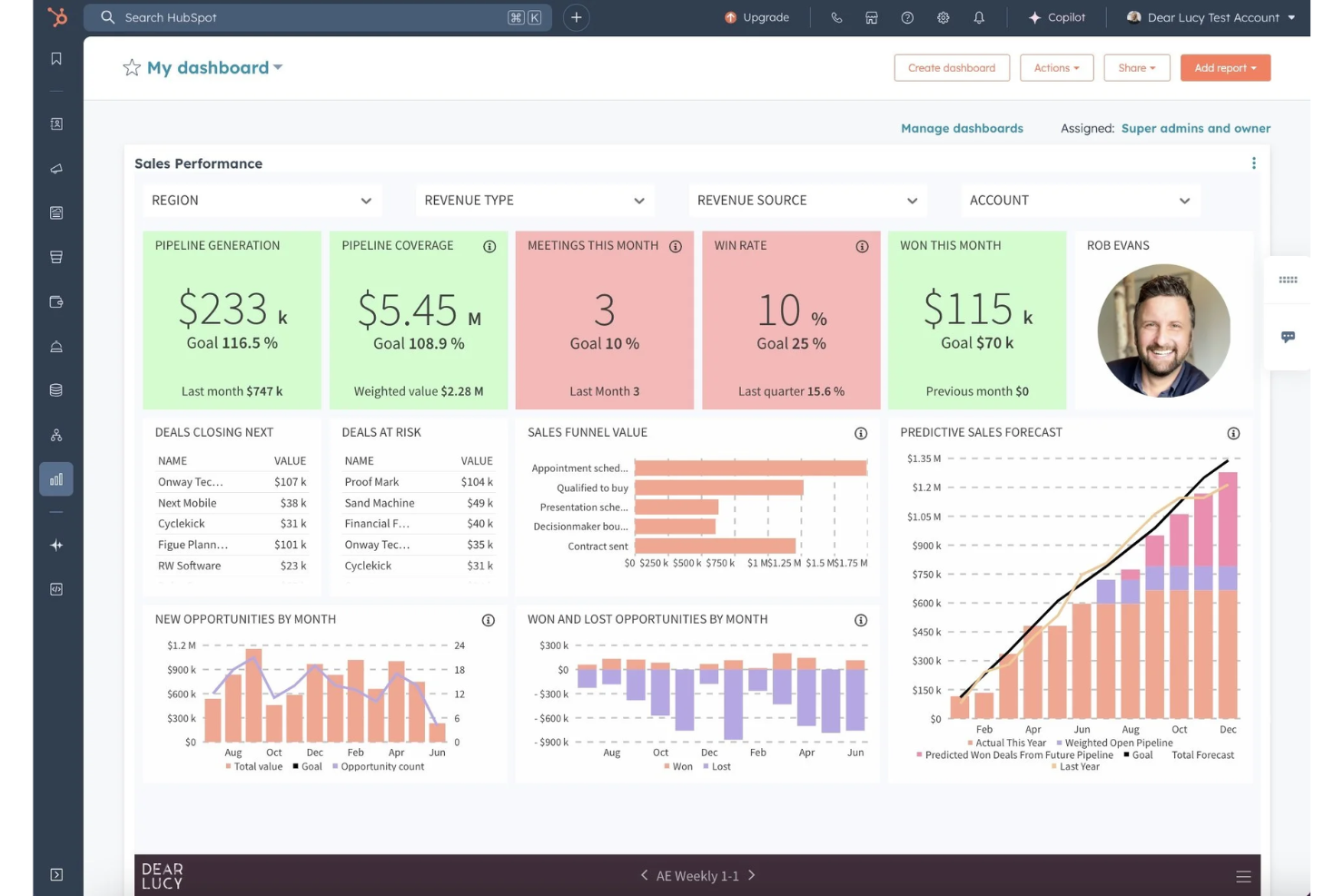
HubSpot is an all-in-one ecommerce automation tool and CRM software that helps businesses manage customer relationships and marketing efforts. It best serves small to medium-sized businesses, especially marketing and sales teams looking to improve lead management and customer engagement. HubSpot offers a user-friendly platform that simplifies ecommerce operations.
HubSpot addresses pain points like inefficient lead tracking and poor customer engagement, benefiting marketing and sales teams. In this article, I'll cover HubSpot's features, pros and cons, use cases, and pricing so you can decide if it aligns with your team's needs and goals.
HubSpot Evaluation Summary
- From $9/month (billed annually)
- Free plan available
Why Trust Our Software Reviews
HubSpot Overview
In my opinion, HubSpot is a solid choice for ecommerce automation, especially for small to medium-sized businesses. It excels with its intuitive interface and extensive feature set, making it a good option for marketing and sales teams. While the pricing might be on the higher side, the value it provides through integrations and ease of use makes it worth considering. Compared to other tools like Salesforce or Pipedrive, HubSpot stands out with its user-friendly onboarding and robust support. However, it may not be the best fit for larger enterprises needing more customization. If your team values simplicity and effective functionality, HubSpot could be the right choice.
pros
-
Customer support is responsive and helpful when you need assistance.
-
The onboarding process is smooth, helping your team get started quickly.
-
HubSpot's interface is intuitive and easy for your team to navigate.
cons
-
Some users find the reporting features less flexible than needed.
-
It might not scale well for very large enterprises.
-
HubSpot's customization options can be limited for advanced users.
Our Review Methodology
How We Test & Score Tools
We’ve spent years building, refining, and improving our software testing and scoring system. The rubric is designed to capture the nuances of software selection and what makes a tool effective, focusing on critical aspects of the decision-making process.
Below, you can see exactly how our testing and scoring works across seven criteria. It allows us to provide an unbiased evaluation of the software based on core functionality, standout features, ease of use, onboarding, customer support, integrations, customer reviews, and value for money.
Core Functionality (25% of final scoring)
The starting point of our evaluation is always the core functionality of the tool. Does it have the basic features and functions that a user would expect to see? Are any of those core features locked to higher-tiered pricing plans? At its core, we expect a tool to stand up against the baseline capabilities of its competitors.
Standout Features (25% of final scoring)
Next, we evaluate uncommon standout features that go above and beyond the core functionality typically found in tools of its kind. A high score reflects specialized or unique features that make the product faster, more efficient, or offer additional value to the user.
We also evaluate how easy it is to integrate with other tools typically found in the tech stack to expand the functionality and utility of the software. Tools offering plentiful native integrations, 3rd party connections, and API access to build custom integrations score best.
Ease of Use (10% of final scoring)
We consider how quick and easy it is to execute the tasks defined in the core functionality using the tool. High scoring software is well designed, intuitive to use, offers mobile apps, provides templates, and makes relatively complex tasks seem simple.
Onboarding (10% of final scoring)
We know how important rapid team adoption is for a new platform, so we evaluate how easy it is to learn and use a tool with minimal training. We evaluate how quickly a team member can get set up and start using the tool with no experience. High scoring solutions indicate little or no support is required.
Customer Support (10% of final scoring)
We review how quick and easy it is to get unstuck and find help by phone, live chat, or knowledge base. Tools and companies that provide real-time support score best, while chatbots score worst.
Customer Reviews (10% of final scoring)
Beyond our own testing and evaluation, we consider the net promoter score from current and past customers. We review their likelihood, given the option, to choose the tool again for the core functionality. A high scoring software reflects a high net promoter score from current or past customers.
Value for Money (10% of final scoring)
Lastly, in consideration of all the other criteria, we review the average price of entry level plans against the core features and consider the value of the other evaluation criteria. Software that delivers more, for less, will score higher.
Core Features
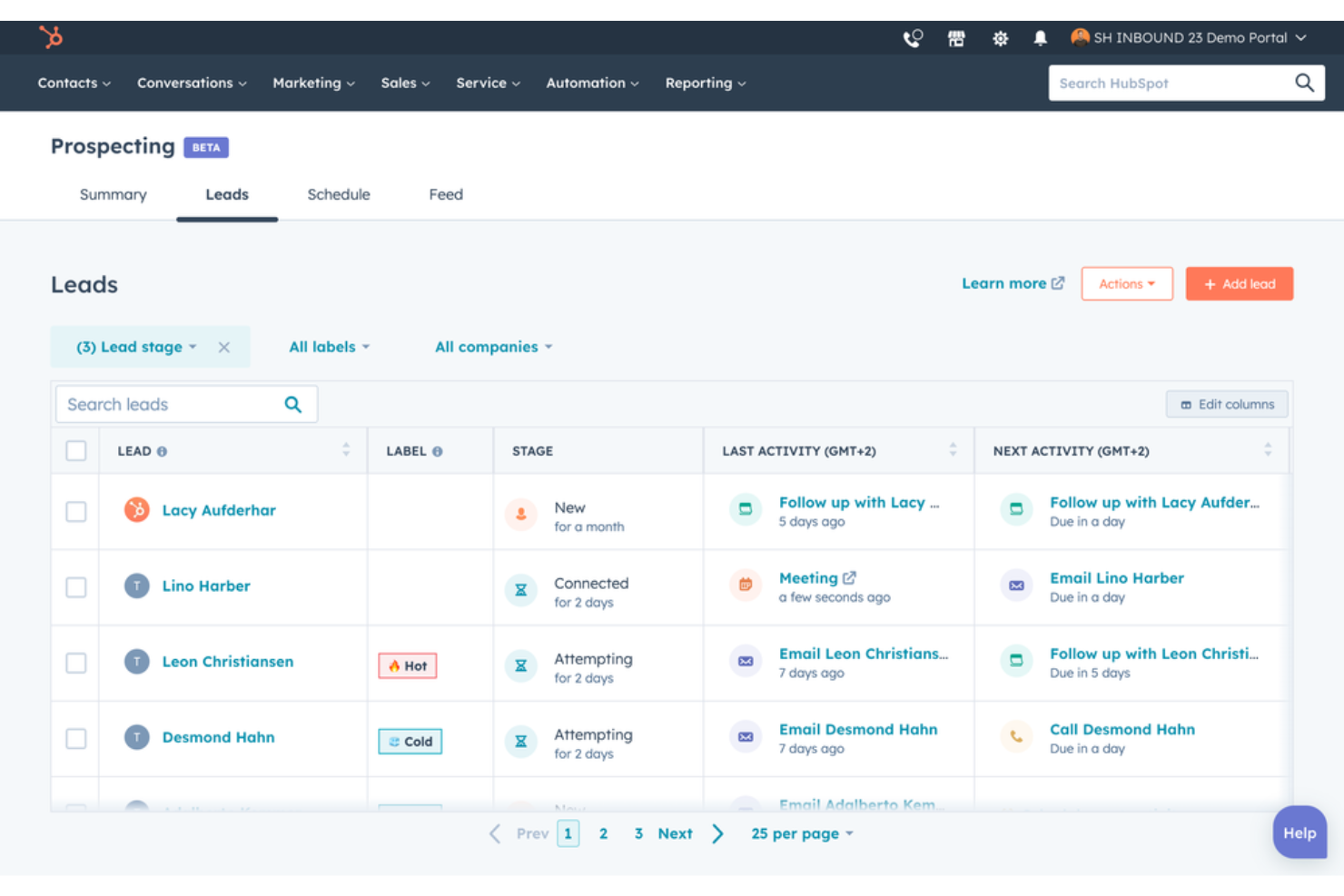
Lead Management: HubSpot helps you track and nurture leads efficiently with its easy-to-use dashboard to streamline your sales process. It ensures your sales team never misses an opportunity within the sales pipeline.
Email Marketing: Create and send personalized email marketing campaigns with built-in marketing automation. HubSpot's tools help you reach your audience effectively and track engagement.
CRM: HubSpot's CRM keeps all your customer data organized and accessible, centralizing contact management. It simplifies customer relationship management for your team.
Analytics: Get insights into your marketing efforts with HubSpot's analytics tools, tracking the metrics that matter the most. They help you understand what's working and where to improve.
Social Media Management: Schedule and monitor your social media posts from one place. HubSpot makes it easy to engage with your audience across platforms.
Content Management: HubSpot's CMS lets you create and manage your website and landing page content using a drag and drop editor. It ensures your site stays relevant and engaging.
Ease of Use
HubSpot is user-friendly, making it a popular choice for teams that want to hit the ground running. Its intuitive interface means you spend less time on training and more on your work. The clean design and accessible tools help you manage tasks easily, whether it's scheduling social media posts or tracking leads. Users appreciate how quickly they can adapt when using Hubspot, which is a big plus compared to many competitors.
Integrations
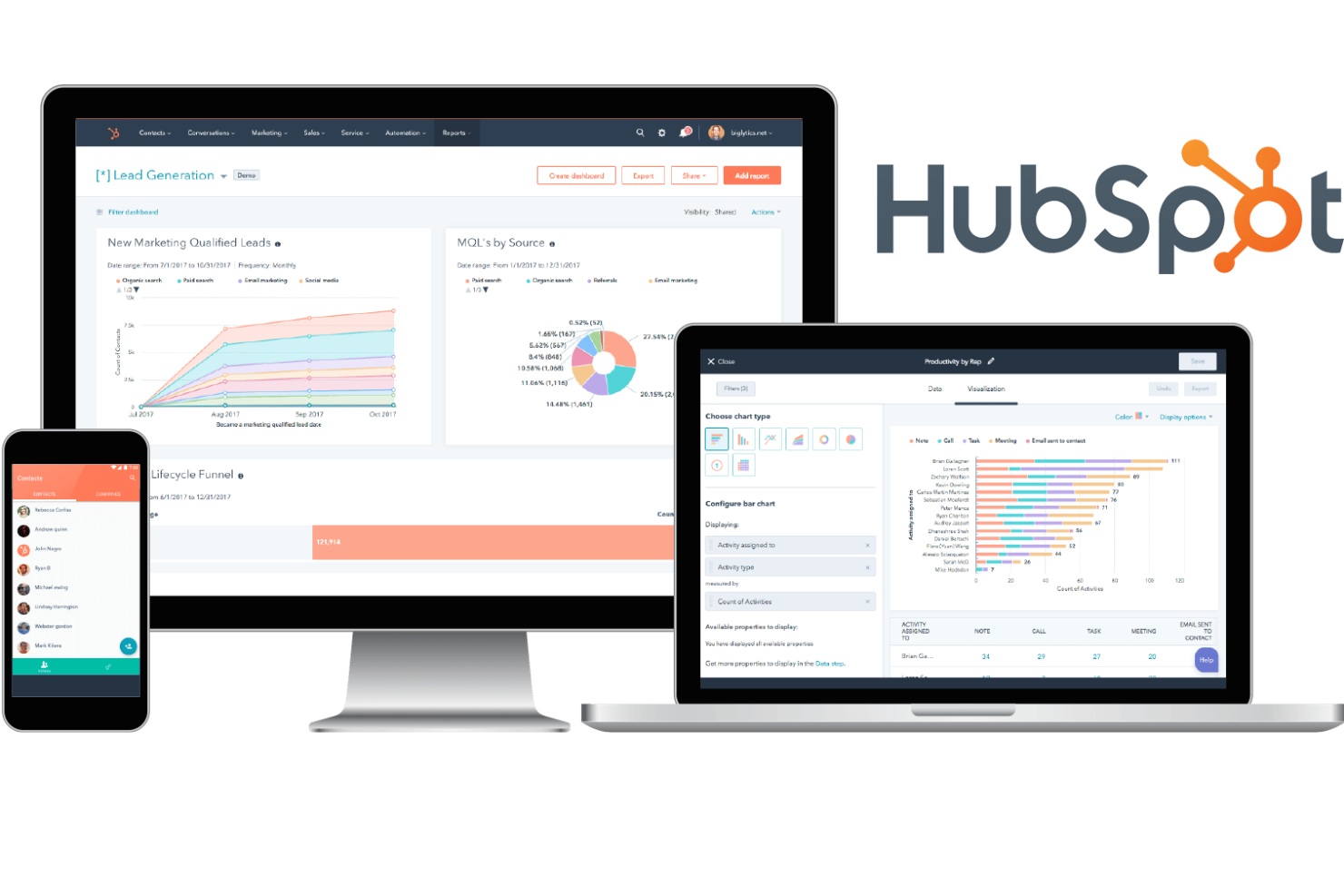
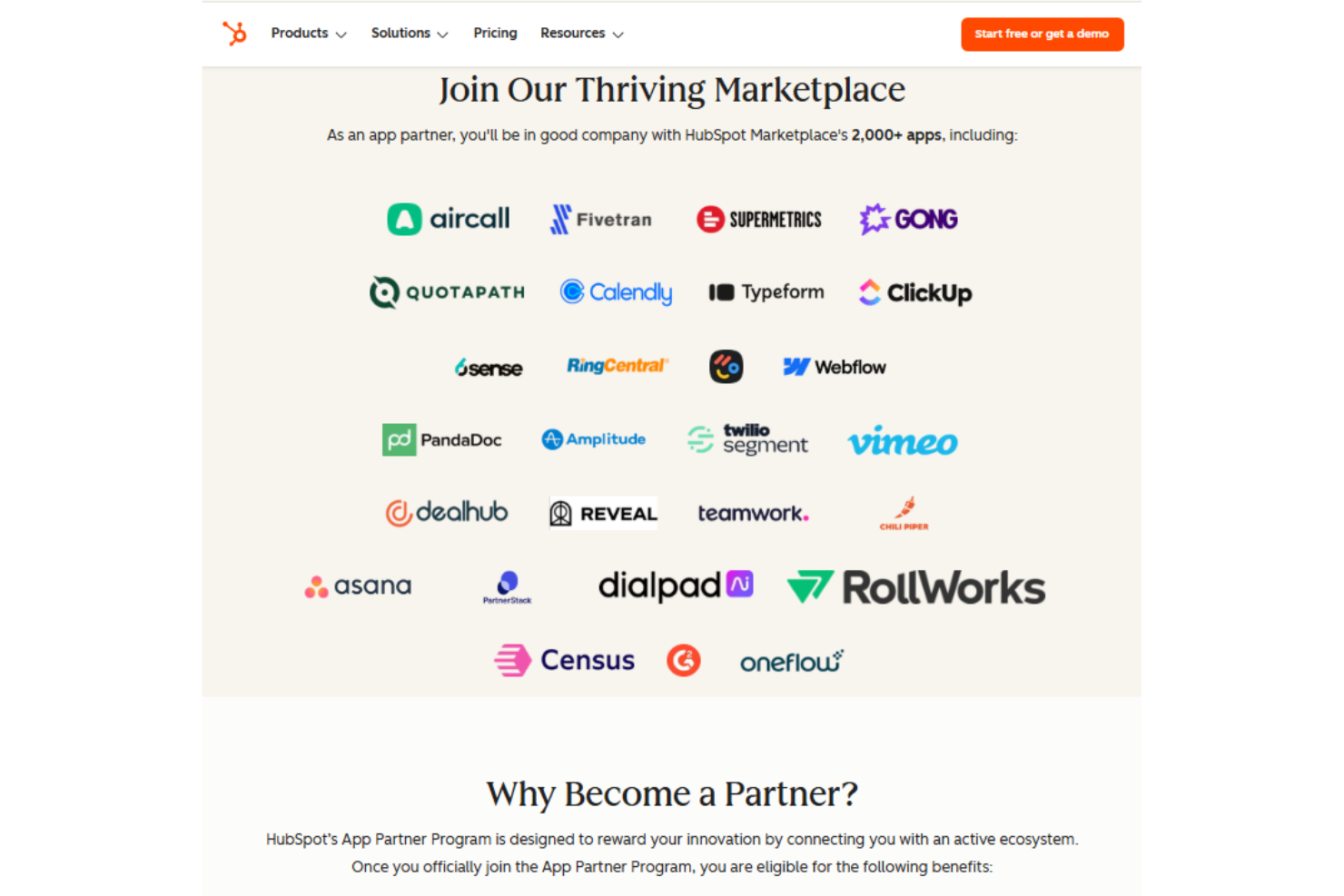
HubSpot integrates with Gmail, Google Calendar, Outlook, Slack, Zoom, Mailchimp, Shopify, WordPress, Microsoft Teams, Facebook Ads, and LinkedIn. HubSpot also offers an API and connects with third-party integration tools.
HubSpot Specs
- 2-Factor Authentication
- API
- Calendar Management
- Call Tracking
- Campaign Management
- Click-to-Dial
- Contact Management
- Contact Sharing
- Custom Data Forms
- Customer Management
- Dashboard
- Data Export
- Data Import
- Data Visualization
- Email Integration
- External Integrations
- File Sharing
- File Transfer
- Google Apps Integration
- Lead Management
- Lead Scoring
- Marketing Automation
- Mobile App
- Multi-User
- Notifications
- Pipeline Management
- Sales Automation
- Scheduling
- Social-Media Integration
- Task Scheduling/Tracking
- Third-Party Plugins/Add-Ons