

The best Tipalti alternatives make multi-entity payments, global vendor management, and accounts payable less of a headache—especially for retail teams juggling inventory, suppliers, and compliance across markets. If you’re comparing retail accounting software, you need tools that automate more than invoice processing. You want deep ERP integrations, granular spend controls, and support for every payment method your suppliers demand. This guide to Tipalti alternatives covers proven platforms that can handle payment automation, global scale, and the tricky workflows retail operations face, so you can focus on growth, not paperwork.
What Is Tipalti?
Tipalti is an accounts payable automation platform that centralizes invoice processing, vendor onboarding, global payments, tax compliance, and reporting for businesses that manage complex supplier networks. Retail and ecommerce teams use Tipalti to automate multi-currency payments, improve control over spend, and bring together data from various back-office systems. It helps reduce manual tasks in finance operations and supports growth across international markets by supporting a wide range of payment methods and currencies.
Tipalti Alternatives Comparison Table
Compare pricing and specs, side by side, for the Tipalti alternatives that made it onto my shortlist.
| Tool | Best For | Trial Info | Price | ||
|---|---|---|---|---|---|
| 1 | Best for card rebates on vendor payments | Free plan + free demo available | From $15/user/month | Website | |
| 2 | Best for AI-native invoice matching at scale | Free demo available | Pricing upon request | Website | |
| 3 | Best for global e-invoicing at enterprise scale | Free demo available | Pricing upon request | Website | |
| 4 | Best for automating financial close and AP | Free demo available | Pricing upon request | Website | |
| 5 | Best for mass payouts across 220+ countries | Free demo available | From $1,250/month (billed annually) | Website | |
| 6 | Best for ERP-native AP workflow automation | Free demo available | Pricing upon request | Website | |
| 7 | Best for automating multiple payment rails | Free demo available | Pricing upon request | Website | |
| 8 | Best for enterprise-grade spend management | Free demo available | Pricing upon request | Website | |
| 9 | Best for intake-to-pay across multiple entities | Free demo available | Pricing upon request | Website | |
| 10 | Best for enterprise S2P with Taulia early pay | Free trial + free demo available | From $2420/month | Website |


Why Trust Our Software Recommendations
6,700+
Reviews
20
Industry experts
16+
Evaluation factors
14
Years
Our team has been testing and reviewing software since 2012. As retail leaders ourselves, we know how difficult—and important—it is to choose the right software.
For this guide, we evaluated tools using hands-on testing and independent research, scoring tools using our selection criteria.
Our reviews reflect our independent judgment—not a sales pitch.
Tipalti Alternatives Reviews
Below are my detailed summaries of the best Tipalti alternatives that made it onto my shortlist. My reviews offer a detailed look at the features, integrations, and best use cases of each platform to help you find the best one for you.
 1Best for card rebates on vendor payments
Ramp
- Free plan + free demo available
- From $15/user/month
Visit WebsiteCustomer Rating:4.8/5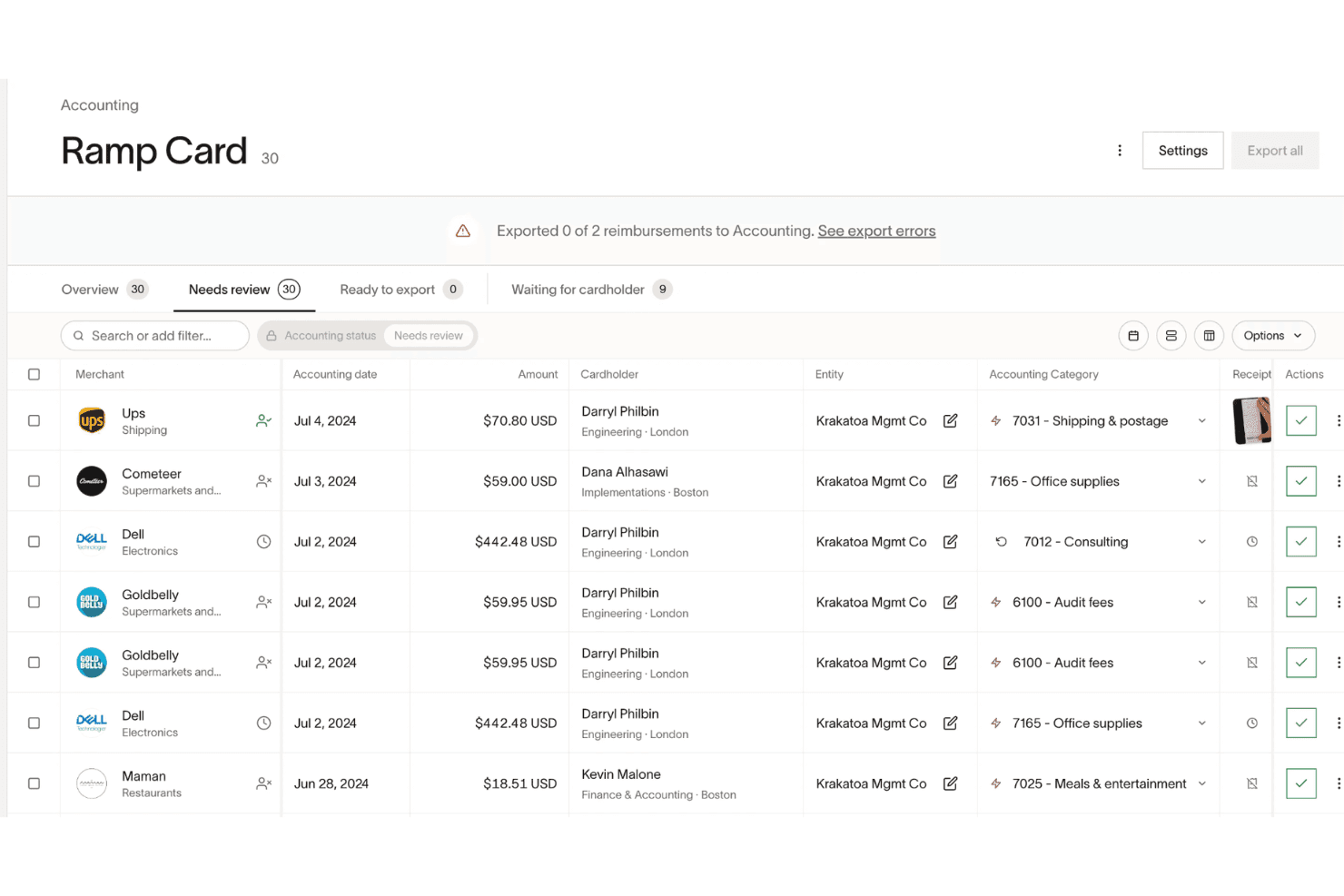
Ramp lets users review and categorize card transactions before exporting to accounting. Ramp is a modern accounts payable solution tailored for finance teams in retail and ecommerce who want to automate vendor payments, control spend, and integrate expense management with accounting processes.
Who is Ramp Best For?
Ramp is a strong fit for retail and ecommerce finance teams at midsize and enterprise companies that want to automate vendor payments and manage spending.
Why Ramp is a Good Tipalti Alternative
I picked Ramp as a top Tipalti alternative because I like how it automates vendor payments and tracks spend while returning card rebates on every eligible transaction. My team uses Ramp to control costs on large supplier invoices and earn back a percentage, which directly supports our retail margins. Being able to manage payables and maximize cash back in one place is a clear advantage for our finance workflows.
Ramp Key Features
- Automated invoice matching: Matches invoices to purchase orders and receipts to support payment approvals.
- Multi-entity support: Lets you manage accounts payable for multiple business units or locations from one dashboard.
- Accounting software integrations: Connects directly with platforms like QuickBooks, NetSuite, and Xero for synchronized bookkeeping.
- Custom approval workflows: Allows you to configure multi-level approvals tailored to your team’s spending policies.
Ramp Integrations
Ramp offers native integrations with QuickBooks, NetSuite, and Xero for accounting sync. An API is available for custom integrations.
Pros and Cons
Pros:
- Centralized dashboard for multi-entity management
- Issues corporate spending limits dynamically
- Earns card rebates on eligible vendor payments
Cons:
- Some accounting syncs require manual adjustments
- Lacks support for international currency payments
Learn more about Ramp: Best for AI-native invoice matching at scale
- Free demo available
- Pricing upon request
Visit WebsiteCustomer Rating:4.3/5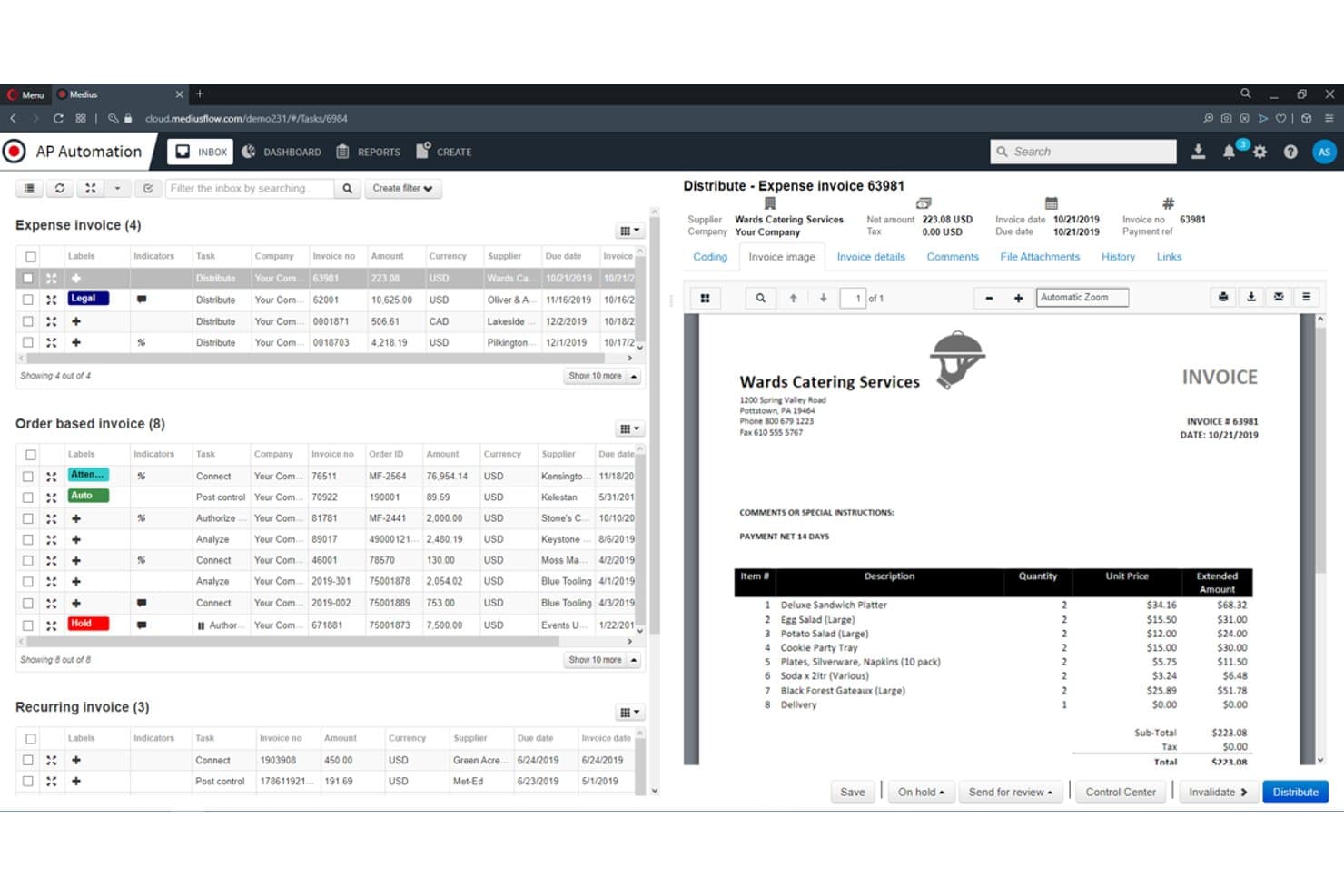
Medius automates invoice processing and expense distribution workflows. Medius is an accounts payable automation solution designed for retailers and ecommerce teams who need to reduce manual invoice processing, improve control over payables, and connect accounting with supply chain and procurement systems.
Who is Medius Best For?
Medius is a good fit for mid-sized and large retail and ecommerce companies that need automated invoice matching across multiple vendors and channels.
Why Medius is a Good Tipalti Alternative
I picked Medius as one of the best because its AI-native invoice matching makes handling high-volume, multi-vendor payables in retail straightforward. I’ve found its automation takes care of complex matching and exception handling with almost no manual intervention, which helps my team keep control as we scale.
Medius Key Features
- Supplier self-service portal: Suppliers can submit invoices, check payment status, and resolve queries without extra email or phone follow-ups.
- Automatic GL coding: The platform assigns general ledger codes to invoices using business rules, reducing manual data entry for your team.
- Real-time spend analytics: Access dashboards that break down spend by vendor, category, or project to support data-driven purchasing.
- Integration with ERP systems: Medius connects with leading ERP and accounting platforms to sync payables data and support reconciliation.
Medius Integrations
Medius offers native integrations with SAP, Oracle, Microsoft Dynamics 365, Infor, Unit4, and IFS. An API is available for custom integrations.
Pros and Cons
Pros:
- Automatic GL coding speeds invoice approvals
- Automates complex supplier exception handling
- AI handles high-volume invoice matching
Cons:
- Implementation often requires dedicated IT support
- Limited historical data export formats
Learn more about Medius: Best for global e-invoicing at enterprise scale
- Free demo available
- Pricing upon request
Visit WebsiteCustomer Rating:4.1/5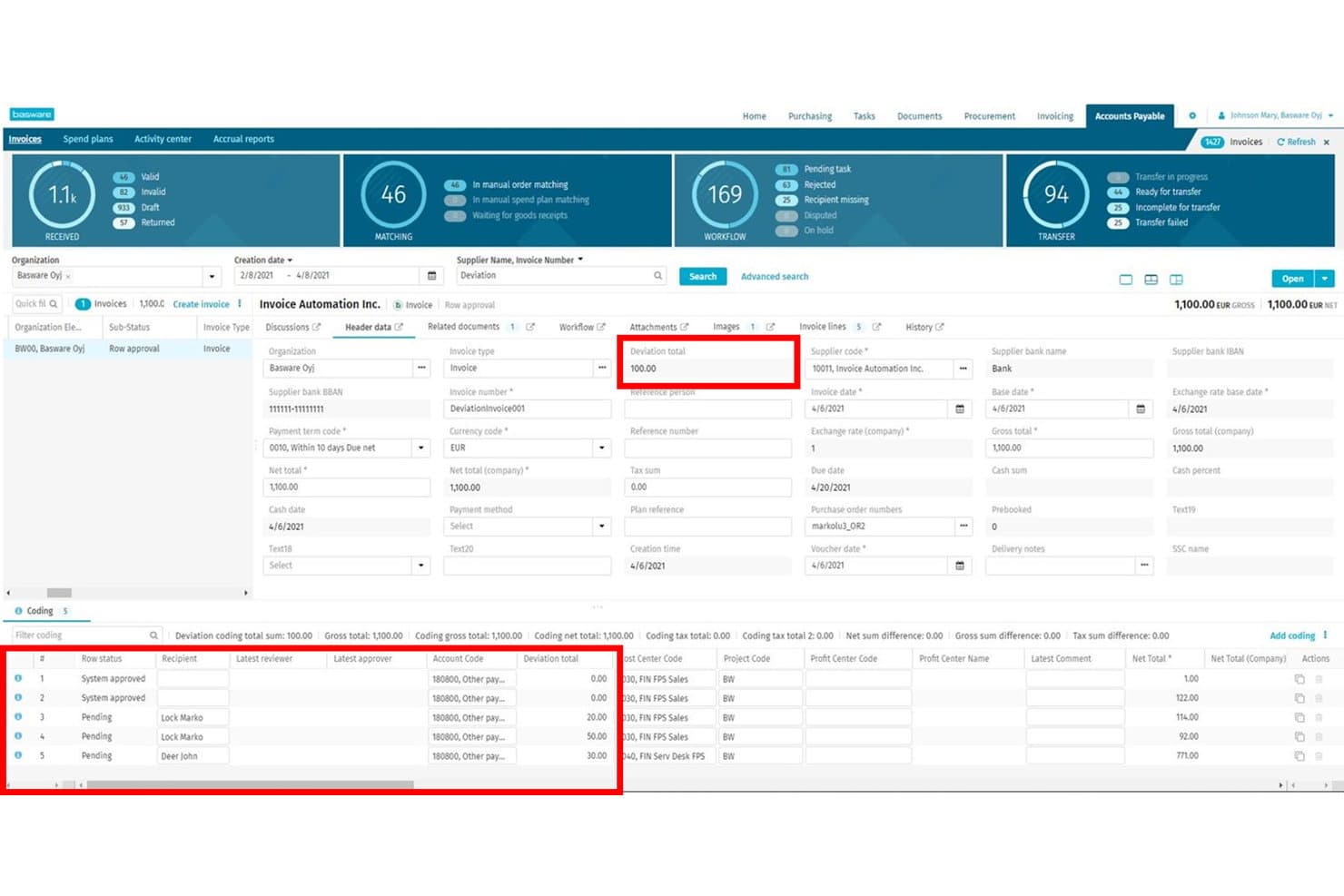
Basware flags invoice deviations for review across coding rows. Basware helps enterprise retailers and ecommerce teams automate accounts payable processes, improve invoice transparency, and handle complex supplier networks in markets with demanding regulatory and tax requirements.
Who is Basware Best For?
Global enterprise finance teams managing complex supplier networks and demanding regulatory requirements across multiple countries.
Why Basware is a Good Tipalti Alternative
I picked Basware as one of the best because my team can automate AP processes at enterprise scale, handle invoicing in dozens of global markets, and maintain compliance with complex international regulations. I rely on Basware's invoice data capture and multi-country supplier management when we deal with more demanding retail supply chains.
Basware Key Features
- Automated invoice matching: Match invoices to purchase orders and goods receipts with rules-based automation.
- Supplier self-service portal: Give suppliers access to submit invoices, check payment status, and update information.
- Spend analytics dashboard: View and track spend data in real time for better visibility and control.
- Audit-ready document archive: Store all AP documents securely with full audit trail access.
Basware Integrations
Basware offers native integrations with SAP, Oracle, Microsoft Dynamics 365, Coupa, and Salesforce, and provides an API for custom integrations.
Pros and Cons
Pros:
- Real-time spend analytics with audit trails
- Supports digital purchase order matching
- Handles multi-country invoicing and compliance
Cons:
- Implementation may require significant onboarding time
- Interface can feel complex to navigate
Learn more about Basware: Best for automating financial close and AP
- Free demo available
- Pricing upon request
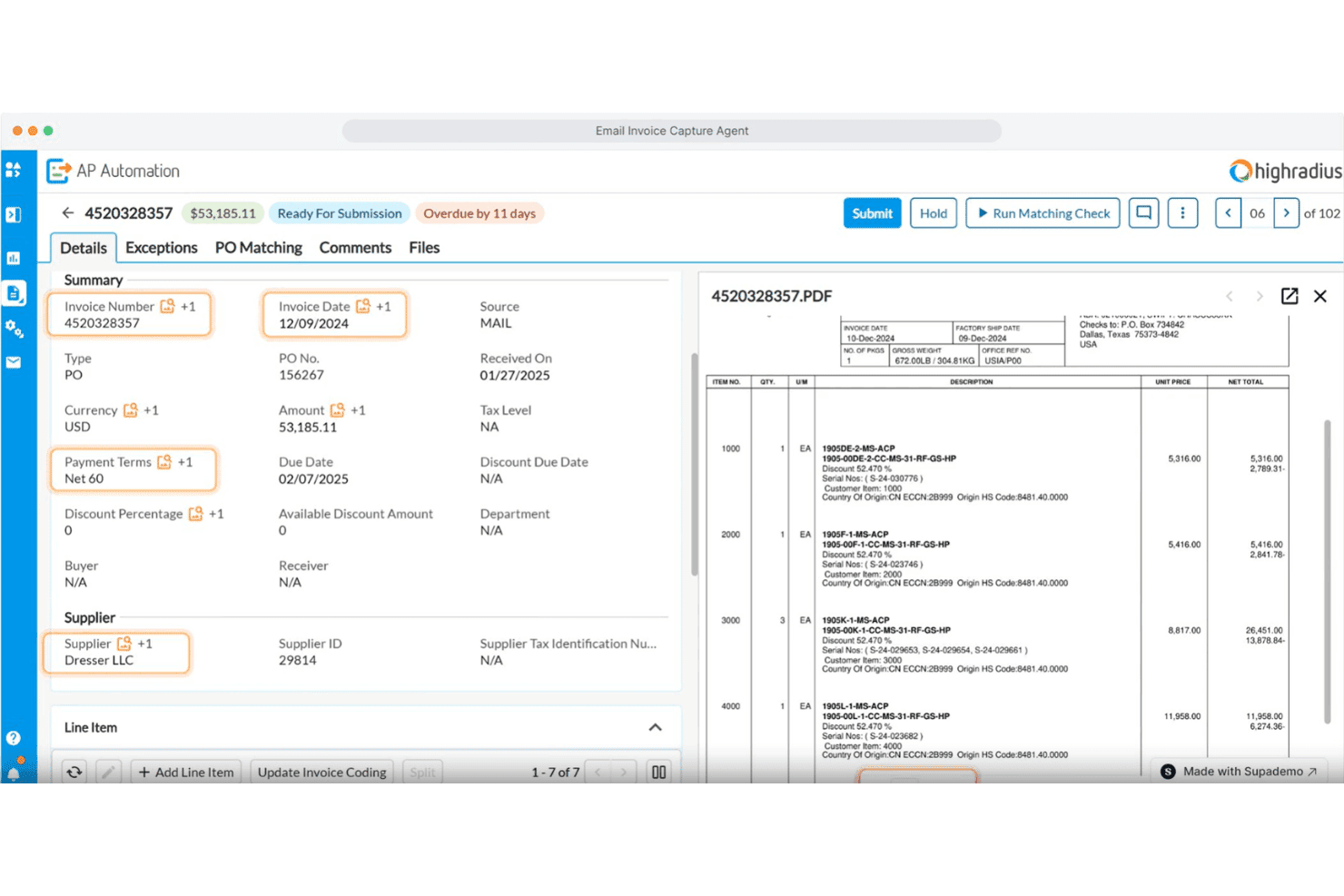
HighRadius automates invoice capture and AP processing workflows. HighRadius is an AI-driven accounts payable automation platform designed for retailers and ecommerce businesses who want to speed up invoice processing, minimize manual data entry, and manage complex supplier workflows from a single dashboard.
Who is HighRadius Best For?
HighRadius is a smart choice for retail and ecommerce finance teams looking to automate accounts payable and unify invoice management in one platform.
Why HighRadius is a Good Tipalti Alternative
I picked HighRadius as one of the best because it automates complex financial close and AP workflows for retail and ecommerce teams. I use it to speed up invoice processing and cut manual entries with AI-driven data capture. My team is able to manage multi-vendor approvals and payment schedules in one dashboard, which simplifies busy month-ends.
HighRadius Key Features
- Automated invoice capture: Extracts data from invoices using AI-driven OCR technology.
- Supplier portal: Lets suppliers submit invoices and track payment status online.
- Three-way matching: Compares purchase orders, invoices, and receipts automatically for accuracy.
- Custom approval workflows: Allows you to set up multi-stage approval processes based on your business rules.
HighRadius Integrations
Native integrations are not clearly documented. HighRadius supports integrations via its API for custom workflows.
Pros and Cons
Pros:
- Three-way matching for purchase order validation
- AI-driven OCR extracts invoice data accurately
- Automates multi-vendor invoice approval workflows
Cons:
- No transparent information on native integrations
- API setup may require technical resources
Learn more about HighRadius: Best for mass payouts across 220+ countries
- Free demo available
- From $1,250/month (billed annually)
Visit WebsiteCustomer Rating:5/5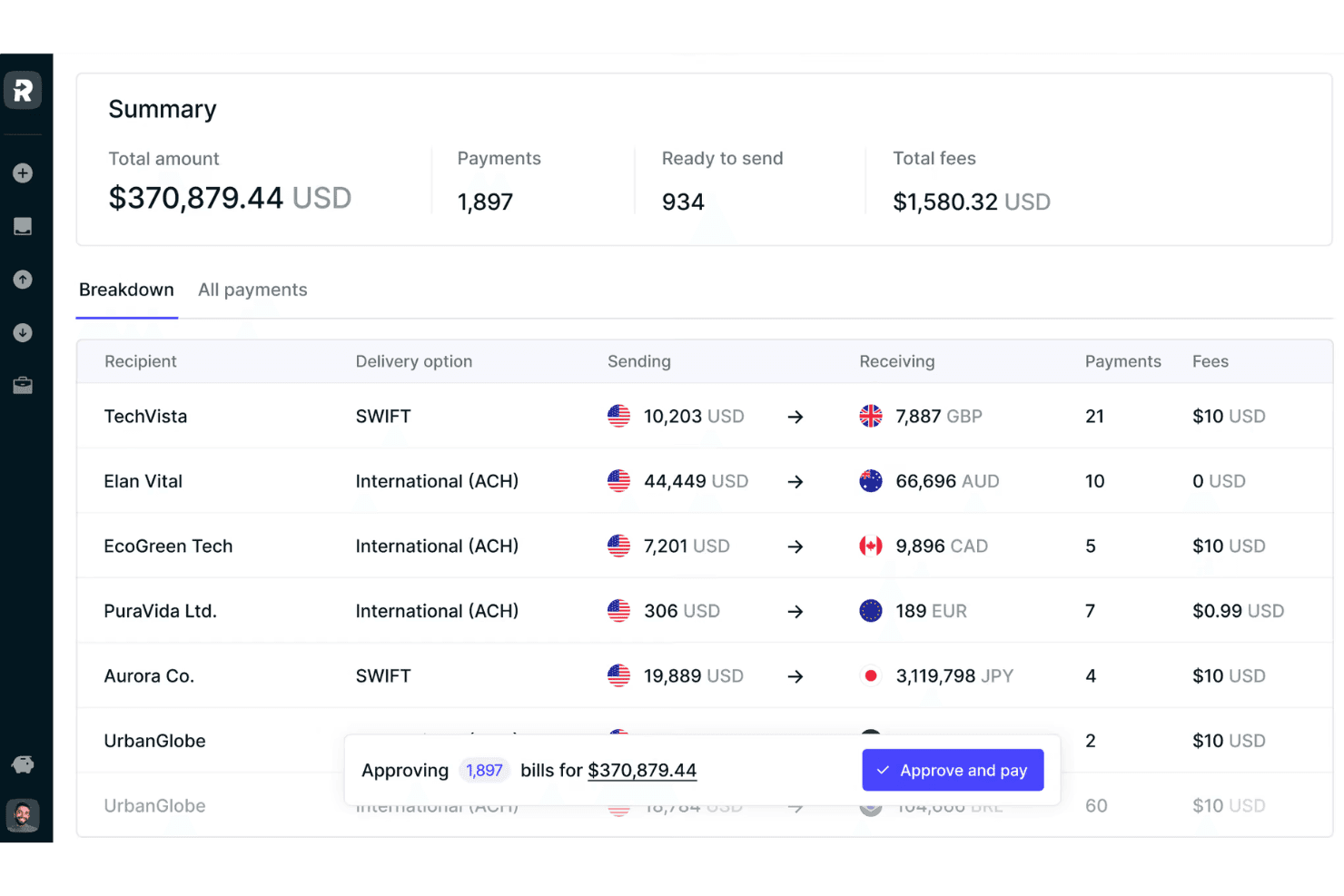
Routable lets users review and approve bulk payments in one click. Routable is a payout automation platform for retailers and ecommerce teams looking to handle vendor payments, commissions, and mass disbursements at scale while improving payment accuracy and tracking.
Who is Routable Best For?
Retail and ecommerce teams that need to manage large-scale global payouts and vendor payments with automated tracking and reporting.
Why Routable is a Good Tipalti Alternative
I picked Routable as one of the best because I can automate mass payouts across 220+ countries, which makes it easier to manage global vendor payments through a single platform. With built-in payment tracking and reporting, my team is able to reduce manual errors when handling commissions or disbursements at volume. I appreciate being able to support payout operations for retail and ecommerce.
Routable Key Features
- Automated approval workflows: Set up multi-level approval rules for payouts and payments to match your accounting policies.
- Built-in vendor onboarding: Collect payment details and tax information from vendors through secure online forms.
- Real-time payment status updates: Monitor every payment’s progress with live status tracking and notifications for both you and your vendors.
- Integration with accounting platforms: Sync payout data directly with systems like QuickBooks Online and Xero for easier reconciliation.
Routable Integrations
Routable offers native integrations with QuickBooks Online and Xero. An API is available for custom integrations.
Pros and Cons
Pros:
- Offers multi-level payout approval workflows
- Includes real-time payment status tracking
- Automates mass payouts in over 220 countries
Cons:
- No off-the-shelf payroll tax calculation
- Lacks local vendor verification checks
Learn more about Routable: Best for ERP-native AP workflow automation
- Free demo available
- Pricing upon request
Visit WebsiteCustomer Rating:4.8/5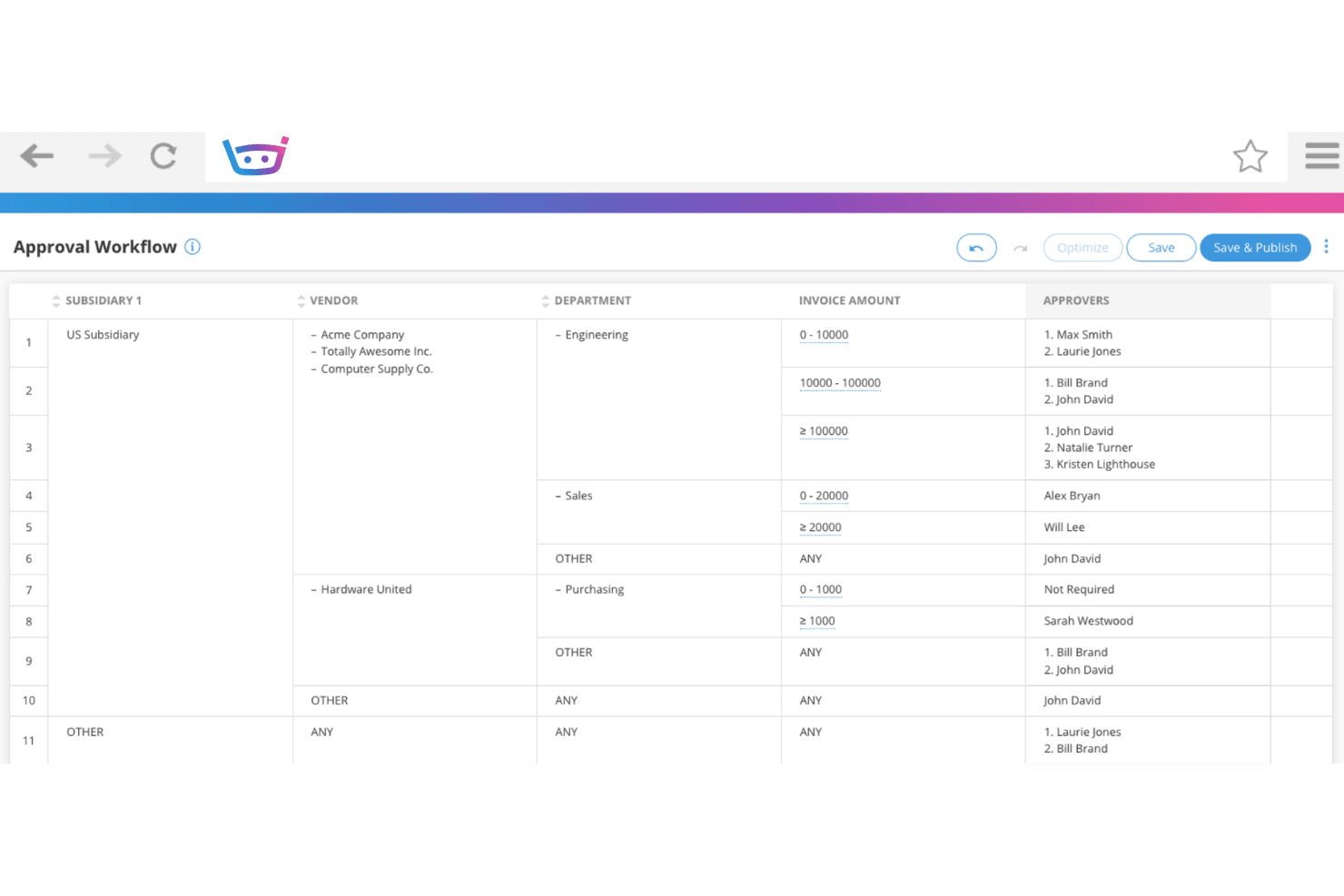
Stampli structures invoice approvals by vendor, department, and amount. Stampli gives retail and ecommerce finance teams a platform to centralize accounts payable, automate invoice approvals, and manage vendor communications within one system that connects easily with your ERP.
Who is Stampli Best For?
Stampli is a solid choice for finance teams at midsize and large retail or ecommerce businesses looking to automate AP workflows within their existing ERP systems.
Why Stampli is a Good Tipalti Alternative
I picked Stampli as one of the best because it centralizes AP workflows directly in your ERP, letting my team automate invoice approvals and collaborate with vendors—all from one place. I like that the focus on ERP-native design keeps everything connected without juggling extra integrations.
Stampli Key Features
- Automated invoice capture: Capture and digitize invoices from email, uploads, or scans with AI-driven data extraction.
- Audit trails: Maintain detailed logs of every user action and invoice status change for compliance.
- Custom approval flows: Set up multi-step, role-based approval processes directly in the platform.
- Vendor portal: Let vendors access invoice statuses and respond to inquiries through a secure online portal.
Stampli Integrations
Stampli offers native integrations with ERP systems including NetSuite, Sage Intacct, Microsoft Dynamics 365, QuickBooks Online, SAP, and Oracle. An API is available for custom integrations.
Pros and Cons
Pros:
- Audit trails support compliance and accountability
- Vendor portal improves invoice status transparency
- Invoice approvals automated directly within ERP
Cons:
- Mobile app experience can be inconsistent
- Lacks advanced global payment capabilities
Learn more about Stampli: Best for automating multiple payment rails
- Free demo available
- Pricing upon request
Visit WebsiteCustomer Rating:4.6/5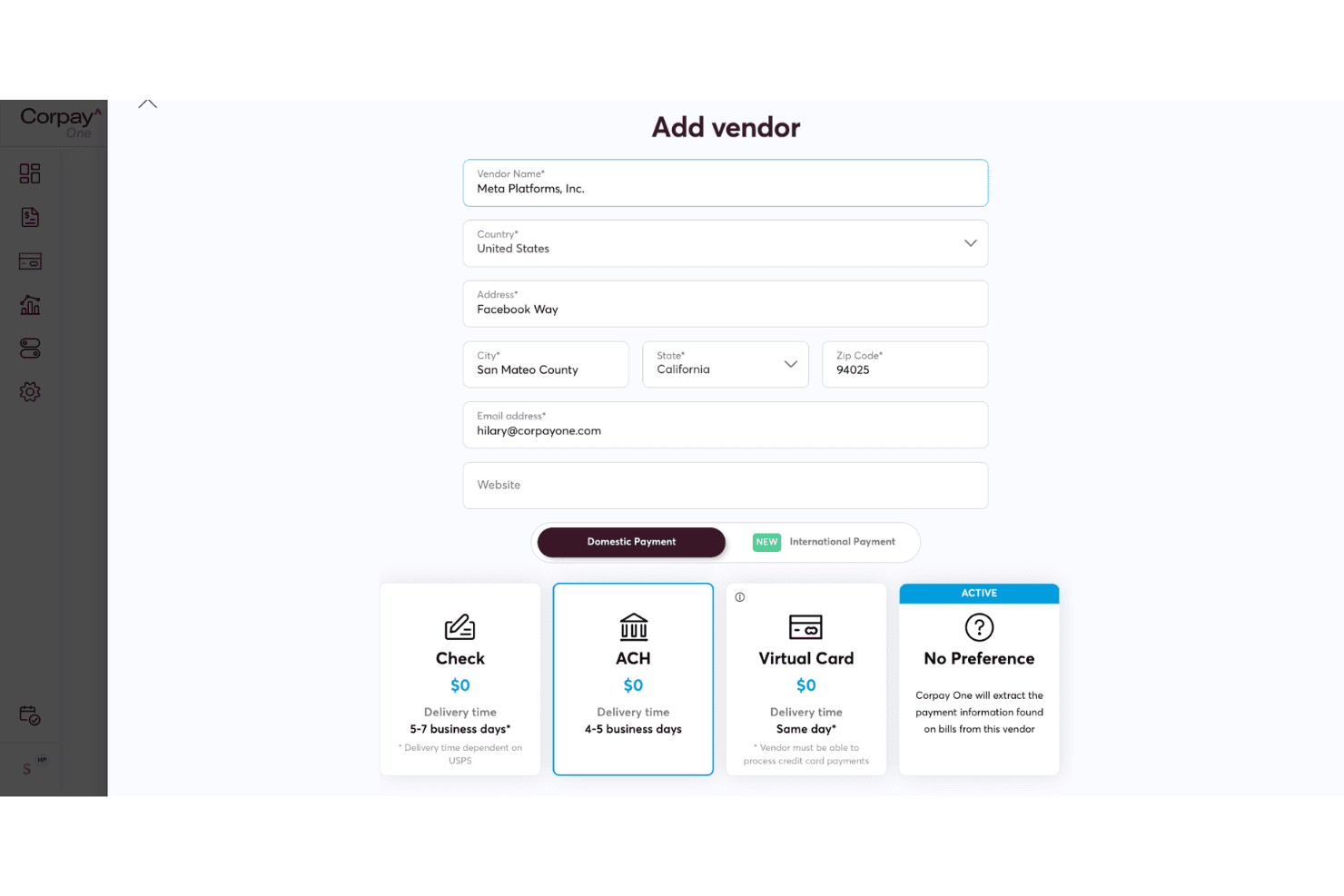
Corpay lets users add vendors and select payment methods. Corpay is a payment automation platform designed for retail businesses and ecommerce teams who want to manage payments, control expenses, and unify multiple payment methods in one place.
Who is Corpay Best For?
Retail and ecommerce operations teams managing high payment volumes across multiple methods and suppliers.
Why Corpay is a Good Tipalti Alternative
I picked Corpay because I can set up automated payments across multiple payment rails, which supports handling supplier invoices for retail and ecommerce. I like that Corpay lets my team control spending and consolidate payment workflows for credit cards, ACH, and wires all in one platform. That flexibility is vital when managing high volumes to many vendors.
Corpay Key Features
- Real-time payment tracking: Monitor all payment statuses and histories in a centralized dashboard.
- Supplier onboarding tools: Digitize vendor onboarding with built-in forms and compliance checks.
- Custom approval workflows: Set multi-level approvals based on invoice amount or payment type.
- ERP and accounting integrations: Connect Corpay with platforms like NetSuite, Sage Intacct, and QuickBooks.
Corpay Integrations
Corpay offers native integrations with NetSuite, Sage Intacct, and QuickBooks, and provides an API for custom integrations.
Pros and Cons
Pros:
- Consolidates corporate expense card management
- Centralized dashboard for real-time payment tracking
- Automates payments across credit card, ACH, and wires
Cons:
- Delays transaction reconciliation batches
- No transparent pricing information online
Learn more about Corpay: Best for enterprise-grade spend management
- Free demo available
- Pricing upon request
Visit WebsiteCustomer Rating:4.2/5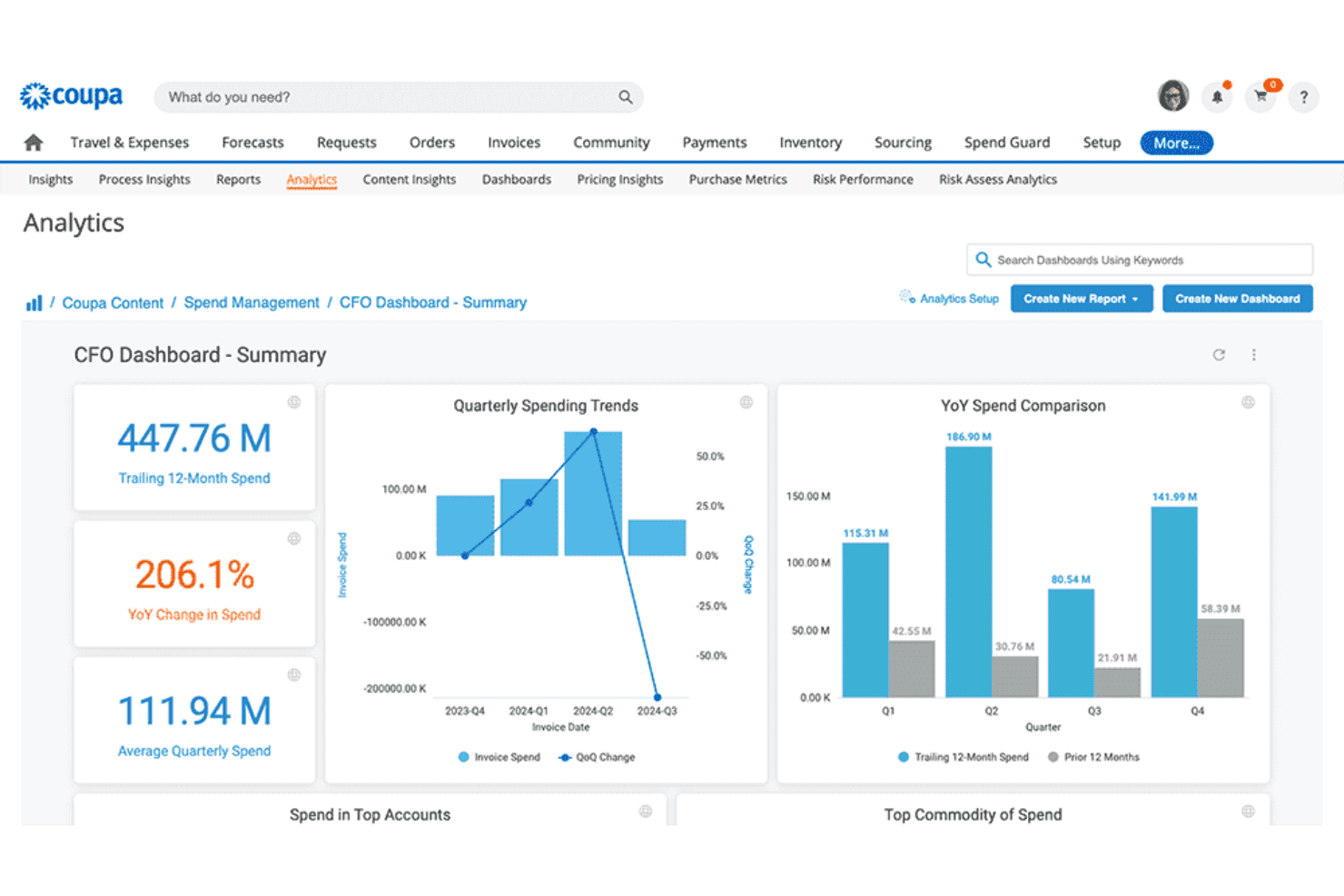
Coupa analyzes quarterly spending trends and year-over-year spend changes. Coupa brings together accounts payable automation, expense management, and procurement tools for midsize and large retail businesses that need full control over spend, compliance, and supplier relationships.
Who is Coupa Best For?
Coupa is ideal for finance and procurement teams at midsize and large retail businesses that need advanced spend management and compliance controls.
Why Coupa is a Good Tipalti Alternative
I picked Coupa as a Tipalti alternative because it gives my finance team enterprise-grade spend controls that go well beyond invoice processing. I like being able to connect accounts payable automation with procurement workflows and track every cent spent across vendors and departments. In practice, Coupa’s compliance tools let us set strict rules and audit trails for every purchase.
Coupa Key Features
- Supplier management portal: Centralizes vendor profiles, onboarding, and communication in one place.
- Automated PO matching: Connects purchase orders to invoices and receipts for faster reconciliation.
- AI-driven invoice capture: Uses machine learning to extract and validate invoice data automatically.
- Global payments engine: Supports multi-currency and cross-border payments within a unified system.
Coupa Integrations
Coupa offers native integrations with NetSuite, SAP, Oracle, Workday, Microsoft Dynamics 365, Salesforce, ADP, and Okta. It provides an API for custom integrations and supports connections with RPA and IDP systems through built-in connectors.
Pros and Cons
Pros:
- Standardizes international procurement document intake
- Monitors purchasing against corporate budgets
- Advanced spend management across multiple departments
Cons:
- System navigation can feel unintuitive for new users
- Limited custom invoice approval routing
Learn more about Coupa:
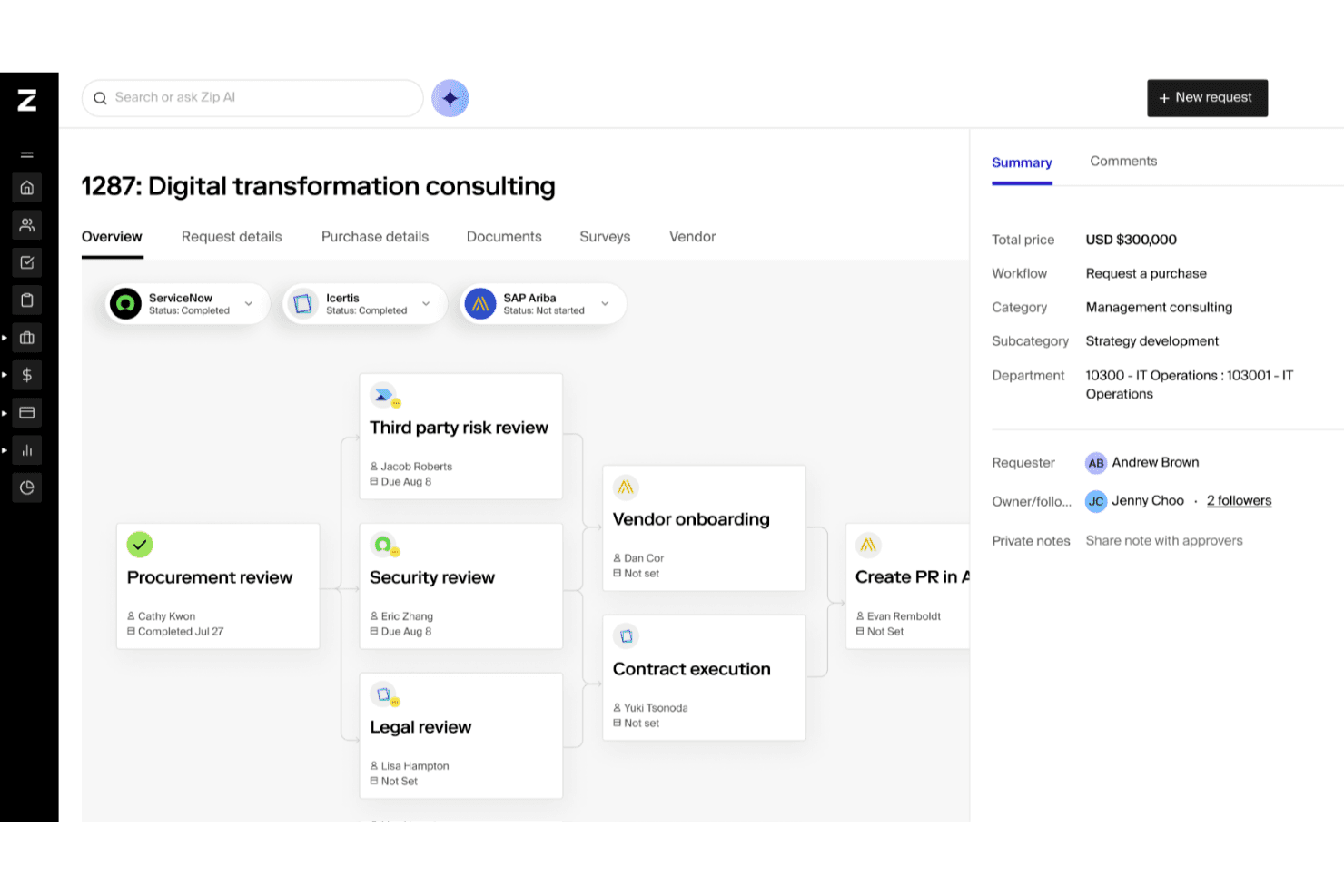
Zip tracks procurement workflows across teams with task visibility. Zip is a global payments platform designed for businesses that manage complex intake, procurement, and payables workflows, making it especially useful for retail and ecommerce teams handling multiple entities or vendor relationships.
Who is Zip Best For?
Zip is a strong fit for retail and ecommerce teams managing complex intake, procurement, and vendor payment workflows across multiple business entities.
Why Zip is a Good Tipalti Alternative
I picked Zip as a top Tipalti alternative because it’s built for teams handling intake-to-pay workflows across multiple business entities. My team can create, route, and approve requests involving different entities or subsidiaries, then manage purchasing and payables from one platform. That makes it easy to stay on top of complex procurement scenarios and vendor payment processes.
Zip Key Features
- Custom approval workflows: Set up tailored routing and approvals for purchase and payment requests across your business units.
- Vendor onboarding tools: Collect required vendor details, documents, and compliance information through a guided onboarding process.
- Automated invoice matching: Link incoming invoices to approved purchase orders to maintain accuracy and reduce manual work.
- Audit-ready reporting: Generate audit trails and downloadable reports for all transactions and approval steps.
Zip Integrations
Native integrations are not clearly documented. Zip offers an API for custom integrations.
Pros and Cons
Pros:
- Guided vendor onboarding with compliance tracking
- Customizable intake and approval workflows
- Handles multi-entity procurement and payments
Cons:
- Limits offline mobile receipt capture
- Integrations require custom API development
Learn more about Zip: Best for enterprise S2P with Taulia early pay
- Free trial + free demo available
- From $2420/month
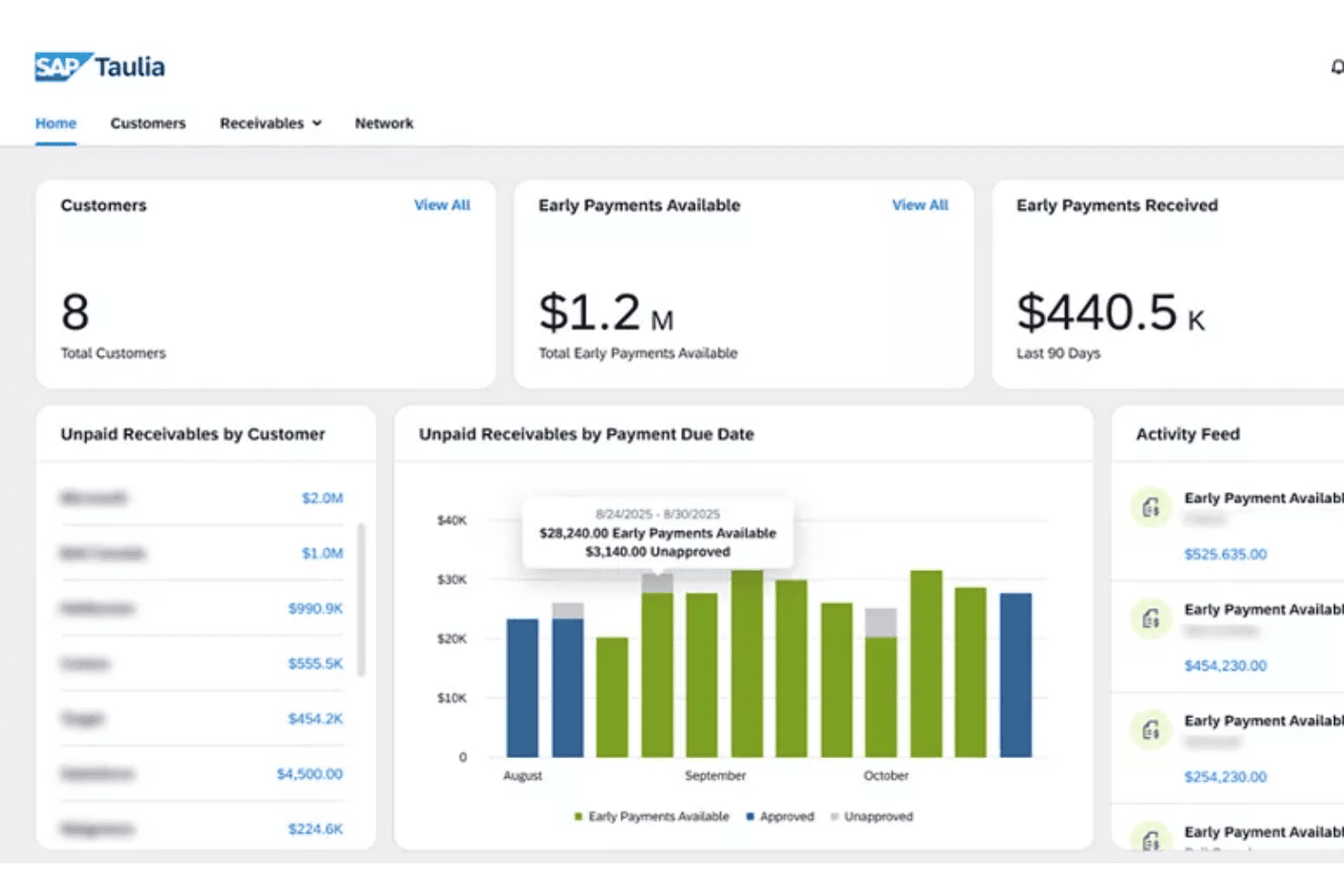
SAP Taulia tracks early payment availability and unpaid receivables by due date. SAP Spend Management is an enterprise spend management platform designed for large retail and ecommerce businesses that need to control procurement, supplier management, and accounts payable in one system.
Who is SAP Spend Management Best For?
SAP Spend Management is a strong fit for large retail and ecommerce teams managing procurement, suppliers, and payments at enterprise scale.
Why SAP Spend Management is a Good Tipalti Alternative
I picked SAP Spend Management because it gives my team a single platform to control procurement, supplier management, and payments at scale. I like that it supports early pay programs through Taulia, which lets us optimize working capital and supplier relationships without piecing together separate tools. This kind of end-to-end spend management is tough to match elsewhere.
SAP Spend Management Key Features
- Contract lifecycle management: Create, store, and manage supplier contracts and approvals from a central dashboard.
- Spend analytics reporting: Analyze spend data across categories, suppliers, and business units with built-in, customizable dashboards.
- Supplier risk monitoring: Track supplier risk factors using integrated risk assessments and performance metrics.
- Automated invoice processing: Match purchase orders, receipts, and invoices automatically to support accurate payments and compliance.
SAP Spend Management Integrations
SAP Spend Management offers native integrations across the SAP ecosystem, including SAP Ariba, SAP S/4HANA, SAP Fieldglass, and SAP Concur. It also supports integration with Taulia for early payment solutions and provides an API for custom integrations.
Pros and Cons
Pros:
- Supports early pay programs with flexible options
- Offers supplier risk and performance monitoring tools
- Centralizes procurement, supplier, and payments workflows
Cons:
- Requires standardized vendor onboarding fields
- Complex configuration processes for initial setup
Learn more about SAP Spend Management:
Other Tipalti Alternatives
Here are some additional Tipalti alternatives that didn’t make it onto my shortlist, but are still worth checking out:
- 11BILLBest for SMB AP with a built-in vendor network
- 12PaylocityBest for unified HR and AP spend management
- 13PrecoroBest for P2P procurement paired with AP automation
- 14MineralTreeBest for mid-market bidirectional ERP sync
- 15YoozBest for AP teams with complex ERP stacks
- 16BrexBest for unified spend and AP in one platform
- 17AirwallexBest for paying global vendors with low FX fees
- 18Quadient APBest for multi-entity AP without per-user fees
- 19Vic.aiBest for AI-driven touchless invoice processing
- 20PayhawkBest for combining corporate cards with AP
How I Evaluate Tipalti Alternatives
I split my evaluation into two layers: core functionality every AP and payments tool must cover, and differentiators that separate one platform from another. Core functionality maps directly to what Tipalti itself does—invoice capture, approval workflows, global payments, supplier onboarding, ERP integrations, and tax compliance.
Core Functionality (Table Stakes for This List)
When I'm selecting tools for my list, I rank each one on a scale from 0 (does not offer the functionality) to 5 (excels in this area) for each core functionality listed below. I then calculate the tool's total score as a percentage, using 65% as a benchmark to help assess its overall fit for the list.
- Invoice automation: I check whether the platform uses OCR or AI to capture, code, and match invoices with minimal manual input—like auto-extracting line items from a supplier PDF and matching them against a purchase order.
- Approval workflows: Configurable, multi-level routing matters here. I look for rule-based approvals tied to amount thresholds, GL codes, or entities so that, say, a regional manager only sees invoices above a set value for their stores.
- Global payments: I evaluate the range of payment methods, supported currencies, and country coverage. Retail teams paying international vendors and dropship suppliers need options beyond basic ACH or wire transfers.
- Supplier onboarding: A self-service portal where vendors submit banking details and tax forms (W-9, W-8) on their own saves AP teams hours of back-and-forth. I look for built-in validation and status tracking as well.
- ERP/accounting integration: Bi-directional, prebuilt connectors to systems like NetSuite, Sage Intacct, QuickBooks, and SAP are what I evaluate here. One-way CSV exports don't cut it for multi-entity retail operations.
- Tax and compliance: I consider how each tool handles tax form validation, 1099 generation, sanctions screening, and audit-ready reporting. Retailers with large supplier bases need automated compliance, not spreadsheets.
Once I have a list of tools that meet the criteria, I consider what sets each platform apart.
Differentiating Factors (What Sets Vendors Apart)
Here's how I compare and contrast different vendors:
Standout Features
I look for multi-entity consolidation—whether a platform can manage AP across multiple subsidiaries or store banners from one instance with intercompany netting. Retail chains running separate entities per region need this to avoid duplicating work. Virtual card programs also matter because they generate rebates on supplier payments, offsetting costs on high-volume vendor spend. I evaluate AP analytics and cash forecasting dashboards for visibility into DPO, invoice aging, and forward-looking cash needs tied to seasonal buying cycles.
Beyond Features
I evaluate total cost of ownership by modelling per-invoice fees, FX markups, and payment rail charges against actual transaction volumes—headline subscription pricing rarely tells the full story for retailers sourcing globally. Supplier enablement matters just as much: a self-service portal with multi-language support and payment status visibility drives adoption rates that directly determine how many invoices process touchlessly. I also check security and compliance depth, including SOC 2 Type II certification, supplier bank change verification, and multi-jurisdiction tax form handling for teams managing cross-border vendor networks.
Why Look For A Tipalti Alternative?
While Tipalti is a good choice of retail accounting software, there are a number of reasons why some users seek out alternative solutions. You might be looking for a Tipalti alternative because…
- Needing deeper ERP integrations for real-time data sync with your accounts payable platform
- Managing global entities with complex payment needs and source-to-pay workflows
- Wanting lower transaction fees for cross-border payments
- Requiring more flexible approval workflow customization for better spend control
- Seeking better support for local payment methods in new markets, leading you to research Tipalti competitors
- Preferring a self-service vendor portal with multilingual support
If any of these sound like you, you’ve come to the right place. My list contains several retail accounting software options that are better suited for teams facing these challenges with Tipalti and looking for alternative solutions across procure-to-pay and accounts receivable.
Tipalti Key Features
Here are some of the key features of Tipalt, to help you contrast and compare what alternative solutions offer:
- Invoice automation: Scans, captures, and codes incoming invoices using OCR and AI-driven machine learning, reducing manual data entry and errors. It handles invoice management by performing 3-way PO matching to purchase orders for accurate payment processing and proactive fraud detection.
- Approval workflows: Customizes multi-level routing for invoice approvals based on dollar amount, department, or entity. Helps ensure the right people approve payments and maintains compliance with spending policies.
- Global payments: Supports payments to suppliers in over 190 countries using options like ACH, wire transfer, PayPal, and local bank transfers. Handles multiple currencies and conversion in-platform, similar to the AvidPay network.
- Supplier onboarding: Lets vendors self-register in a branded portal, submit their banking and tax details, and track onboarding status. Built-in validation reduces risk of incomplete or inaccurate data.
- ERP integration: Connects bi-directionally with leading ERP and accounting platforms, including Oracle NetSuite, QuickBooks, and Sage Intacct. Keeps vendor and payment data consistent between systems.
- Tax and compliance management: Automates collection and validation of global tax forms (W-9, W-8), screens vendors against sanctions lists, and generates audit-ready compliance reports for full tax compliance.
- Multi-entity management: Consolidates AP automation operations across subsidiaries or business units. Lets you manage workflows and reporting for each entity from a single dashboard.
- Virtual card payments: Issues virtual cards and corporate cards for supplier payments, allowing teams to capture rebates and strengthen controls over spending.
- Supplier portal: Provides vendors with real-time invoice and payment status updates, communication tools, and multilingual support to reduce inquiries and speed up resolution.
- AP analytics and reporting: Offers dashboards that track key metrics like invoice aging, payment status, DPO, and cash flow to help teams manage working capital, balance e-invoicing, and spot issues early.
Costs and Pricing of Tipalti Alternatives
Selecting Tipalti alternatives requires an understanding of the various pricing models and plans available. Costs vary based on features, team size, add-ons, and more. The table below summarizes common plans, their average prices, and typical features included in Tipalti alternatives solutions:
Plan Comparison Table for Tipalti Alternatives
| Plan Type | Average Price | Common Features |
|---|---|---|
| Plan TypeFree Plan | Average Price$0 | Common FeaturesBasic invoice tracking, manual approval workflows, limited reporting, and email support. |
| Plan TypePersonal Plan | Average Price$10–$30/user/month | Common FeaturesAutomated invoice capture, batch payments, simple approval rules, and integration with accounting tools. |
| Plan TypeBusiness Plan | Average Price$40–$80/user/month | Common FeaturesMulti-currency payments, mobile approvals, advanced reporting, supplier onboarding portals, and tax form collection. |
| Plan TypeEnterprise Plan | Average Price$150–$500+/month | Common FeaturesMulti-entity management, custom integrations, advanced analytics, virtual card programs, and dedicated support. |