

10 Best Online POS Software Picked for 2026

Best Online POS Software Shortlist


Why Trust Our Software Recommendations
Our team has been testing and reviewing software since 2012. As retail leaders ourselves, we know how difficult—and important—it is to choose the right software.
For this guide, we evaluated tools using hands-on testing and independent research, scoring tools using our selection criteria.
Our reviews reflect our independent judgment—not a sales pitch.
Online POS software is a cloud-based point-of-sale system that lets your team process sales, manage inventory, and track customer data from any device with internet access. If you’re searching for the best online POS software, you’re likely looking to improve checkout speed, keep inventory accurate, and connect sales across your physical and digital channels. This guide will help you compare top options for 2026, so you can find a solution that fits your business model, supports your growth, and keeps your operations running smoothly.
Best Online POS Software Summary
This comparison chart summarizes pricing details for my top online POS software selections to help you find the best one for your budget and business needs.
| Tool | Best For | Trial Info | Price | ||
|---|---|---|---|---|---|
| 1 | Best for restaurant order management | Free demo available | From $69/month | Website | |
| 2 | Best for advanced retail analytics | 14-day free trial | From $89/month (billed annually) | Website | |
| 3 | Best for free starter plan availability | Free plan + free demo available | From $10/month (billed annually) | Website | |
| 4 | Best for rapid staff training tools | 30-day free trial | From $39/month | Website | |
| 5 | Best for tableside ordering features | Free demo available | From $69/month | Website | |
| 6 | Best for simple setup and onboarding | 30-day free trial | From $45/month | Website | |
| 7 | Best for multi-location inventory tracking | 30-day free trial | From $4/user/month | Website | |
| 8 | Best for real-time sales monitoring | Not available | From $668 (one-time, includes 3-year license) | Website | |
| 9 | Best for independent convenience stores | 30-day free trial | From $19.95/month | Website | |
| 10 | Best for integrating with online stores | 3-day free trial | From $89/month | Website |
Best Online POS Software Reviews
Below are my detailed summaries of the best online POS software that made it onto my shortlist. My reviews offer a detailed look at the features, best use cases, and integrations of each platform to help you find the best one for you.

Toast
Best for restaurant order management
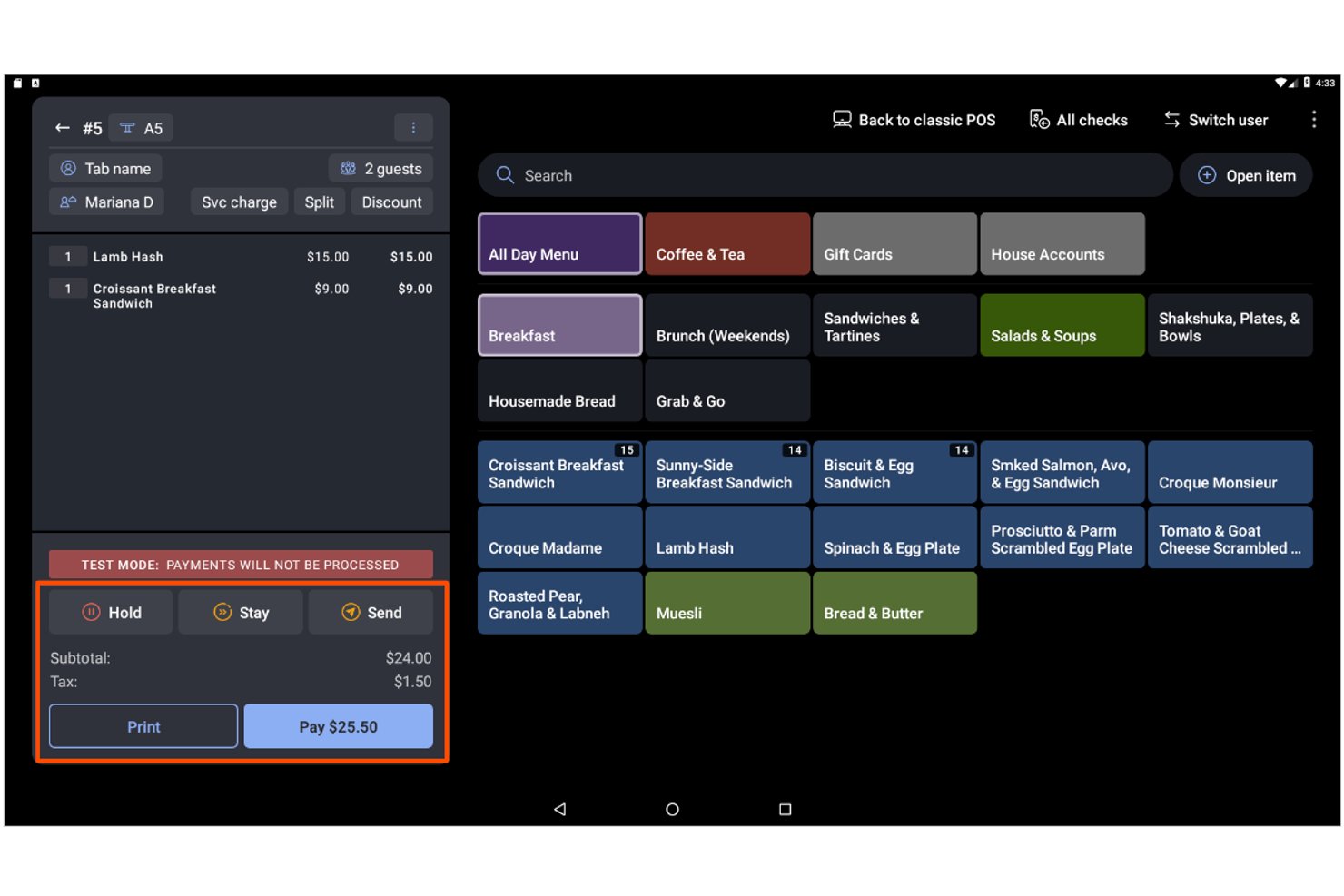
Toast is a cloud-based POS platform built for restaurants and food-adjacent businesses, combining in-person and online order management, payment processing, inventory tracking, loyalty, and multi-location reporting in one system.
Who Is Toast Best For?
Toast is the go-to choice for restaurant operators and food-service businesses that need a POS built around the specific demands of food and beverage workflows.
Why I Picked Toast
Toast earns its spot on my shortlist because no other POS platform centralizes restaurant order management quite like this one. I love how DoorDash, Uber Eats, and Grubhub orders flow directly into the POS and kitchen display system without a separate tablet or manual re-entry. Toast IQ, the built-in AI assistant, proactively surfaces trends and flags anomalies across all your order channels so you can act fast.
Toast Key Features
- Offline mode: Toast keeps processing orders even when your internet goes down, then auto-syncs data once the connection is restored.
- Toast Go® 3 handheld device: A purpose-built mobile terminal that lets staff take orders and accept payments tableside.
- xtraCHEF inventory management: Tracks ingredient-level inventory in real time, automates purchase orders, and generates recipe costing and COGS reports.
- Toast Loyalty: A built-in digital loyalty program with customizable rewards, segmented campaigns, and automated triggers like birthday offers and lapsed-guest re-engagement.
Toast Integrations
Toast offers 300+ marketplace integrations, including DoorDash, Uber Eats, Grubhub, Shopify, QuickBooks Online, and Google booking. Its open API supports custom integrations.
Pros and Cons
Pros:
- AI flags anomalies and trends automatically
- Offline mode supports order processing uninterrupted
- Menus, pricing, and reporting update instantly
Cons:
- No two-way sync with eCommerce platforms
- Must use Toast's payment processing only

Best for advanced retail analytics
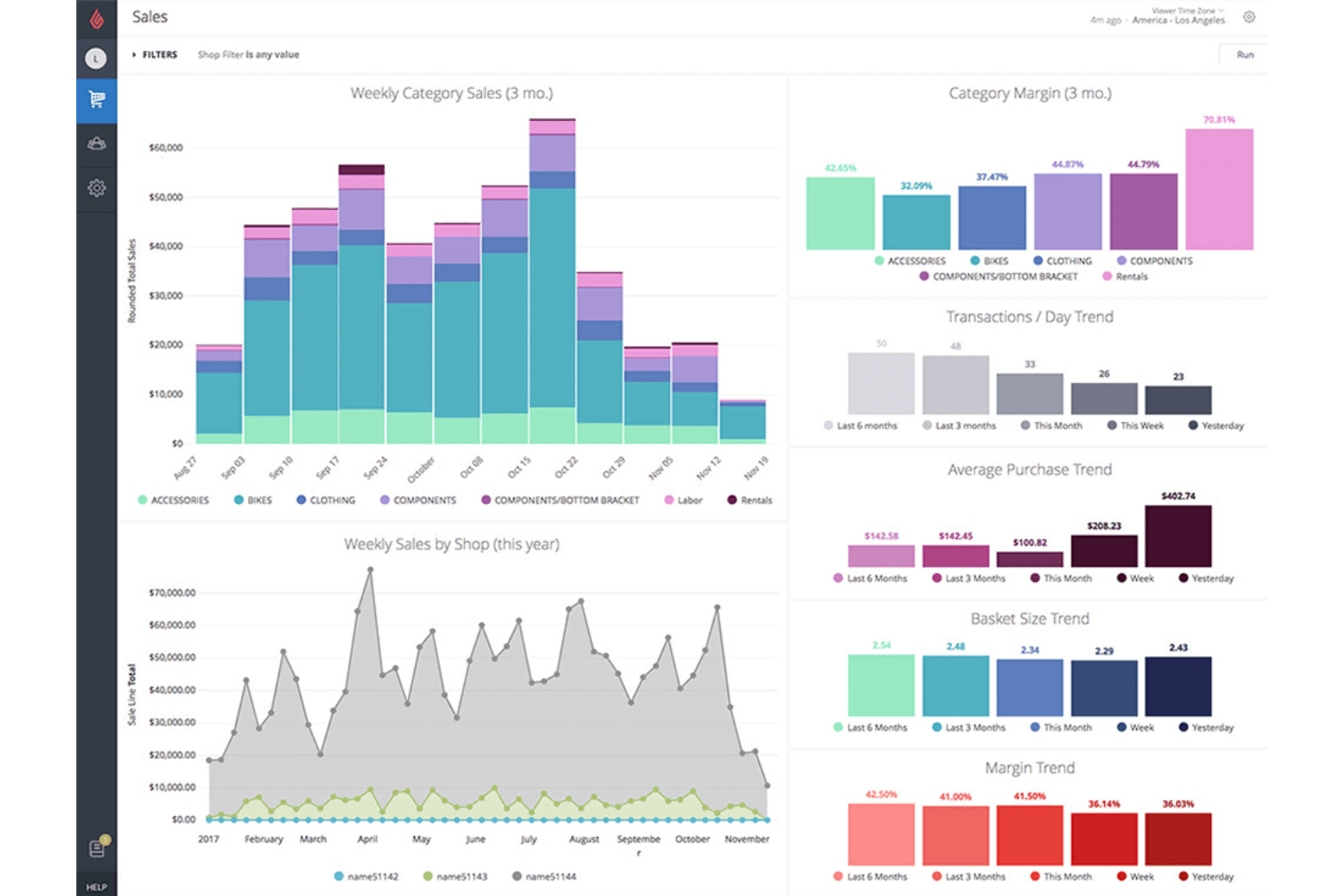
Lightspeed is a cloud-based retail POS platform that combines in-store and online transaction processing, multi-location inventory management, omnichannel selling, and advanced analytics reporting.
Who Is Lightspeed Best For?
Lightspeed is a strong fit for multi-location retailers who need deep inventory visibility and analytics across every store and sales channel.
Why I Picked Lightspeed
I picked Lightspeed as one of the best because its Insights module goes well beyond standard POS reporting. It delivers demand forecasting, cross-location KPI comparisons, and scheduled report delivery that surface what's actually driving or dragging performance across every store. I love that it can auto-draft purchase orders based on real sales patterns, so you're not manually chasing reorder points when stock runs low across multiple locations.
Lightspeed Key Features
- Omnichannel inventory sync: Real-time two-way sync keeps product data, pricing, and stock levels aligned across your POS, Lightspeed eCom, and third-party platforms like Shopify and WooCommerce simultaneously.
- Integrated loyalty program: Tiered loyalty lets customers earn and redeem points across in-store and online purchases through unified omni customer accounts.
- Lightspeed Payments: A built-in payment processor that accepts contactless, Apple Pay, Google Pay, split tender, and card-not-present transactions at a flat 1.5% card-present rate.
- Mobile Scanner POS App: Turns iOS and Android devices into handheld registers for stock counts, order fulfillment, and payment processing on the floor or at pop-up events.
Lightspeed Integrations
Lightspeed supports integrations with Shopify, WooCommerce, BigCommerce, QuickBooks, Xero, Klaviyo, Mailchimp, NuORDER, Amazon, and eBay. An open REST API on the Plus plan supports custom integrations and workflows.
Pros and Cons
Pros:
- Omnichannel selling and loyalty programs unified
- Multi-location inventory and reporting management
- Advanced demand forecasting and sales analytics
Cons:
- Additional fees for using external payment processors
- Limited native offline transaction capabilities

eHopper
Best for free starter plan availability
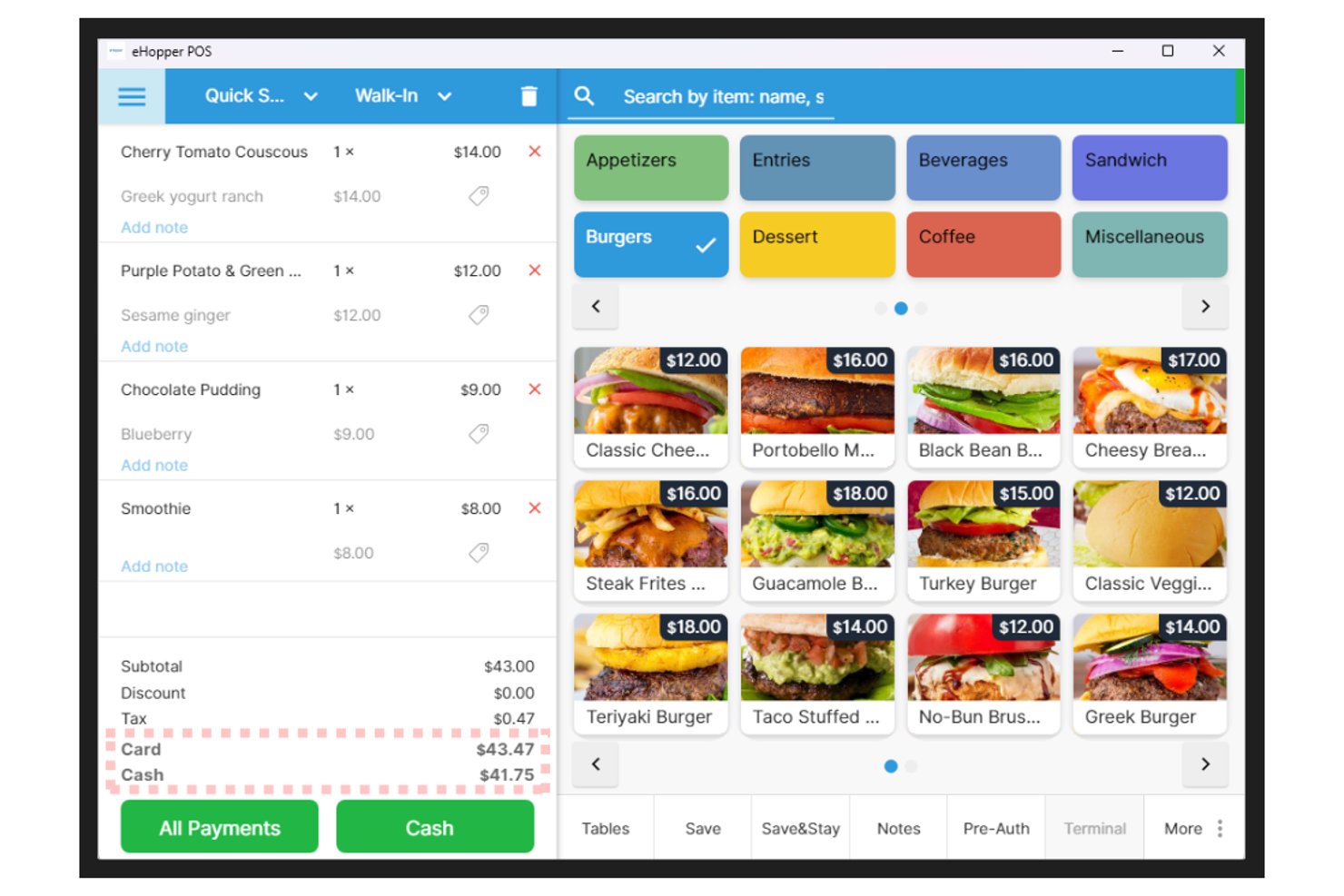
eHopper is a cloud-based POS platform that combines in-store transaction processing, a proprietary hosted eCommerce storefront, inventory management, CRM, and built-in marketing tools—all within a single system designed for small and independent retailers.
Who Is eHopper Best For?
eHopper suits independent retailers and small business owners who want an all-in-one POS and online store without paying a monthly fee to get started.
Why I Picked eHopper
eHopper earns its spot on my list because it's one of the only online POS platforms with a permanently free plan, making it genuinely accessible for independent retailers who aren't ready to commit to monthly fees. I'm particularly impressed by the OmniChannel plan's built-in hosted storefront, which syncs product catalogs and inventory with the in-store POS in real time, so you're never manually reconciling stock between channels. The cash discount program is another standout: qualifying merchants can run the full platform at $0/month by passing card fees to customers.
eHopper Key Features
- Multi-processor payment support: eHopper lets you connect your preferred third-party payment processor—including Stripe, PayPal, and Authorize.Net—rather than locking you into a single provider.
- Built-in CRM with customer profiles: The system stores individual customer purchase histories and enables segmentation for targeted email and SMS marketing campaigns.
- Employee time clock and permissions: Staff can clock in and out directly from the POS terminal, with role-based access controls limiting what each employee can view or edit.
- Purchase order management: You can create and track vendor purchase orders tied to real-time inventory levels, streamlining the restocking process from within the platform.
eHopper Integrations
eHopper offers native integrations with QuickBooks Online, Authorize.Net, PayPal, Stripe, Poynt, and PAX terminals, plus multiple payment processors. It also provides API access for custom integrations.
Pros and Cons
Pros:
- Accepts multiple payment processors and methods
- Built-in eCommerce site syncs inventory
- Free starter plan with no time limit
Cons:
- iOS devices and iPads not supported
- No native sync with Shopify or WooCommerce

Epos Now
Best for rapid staff training tools
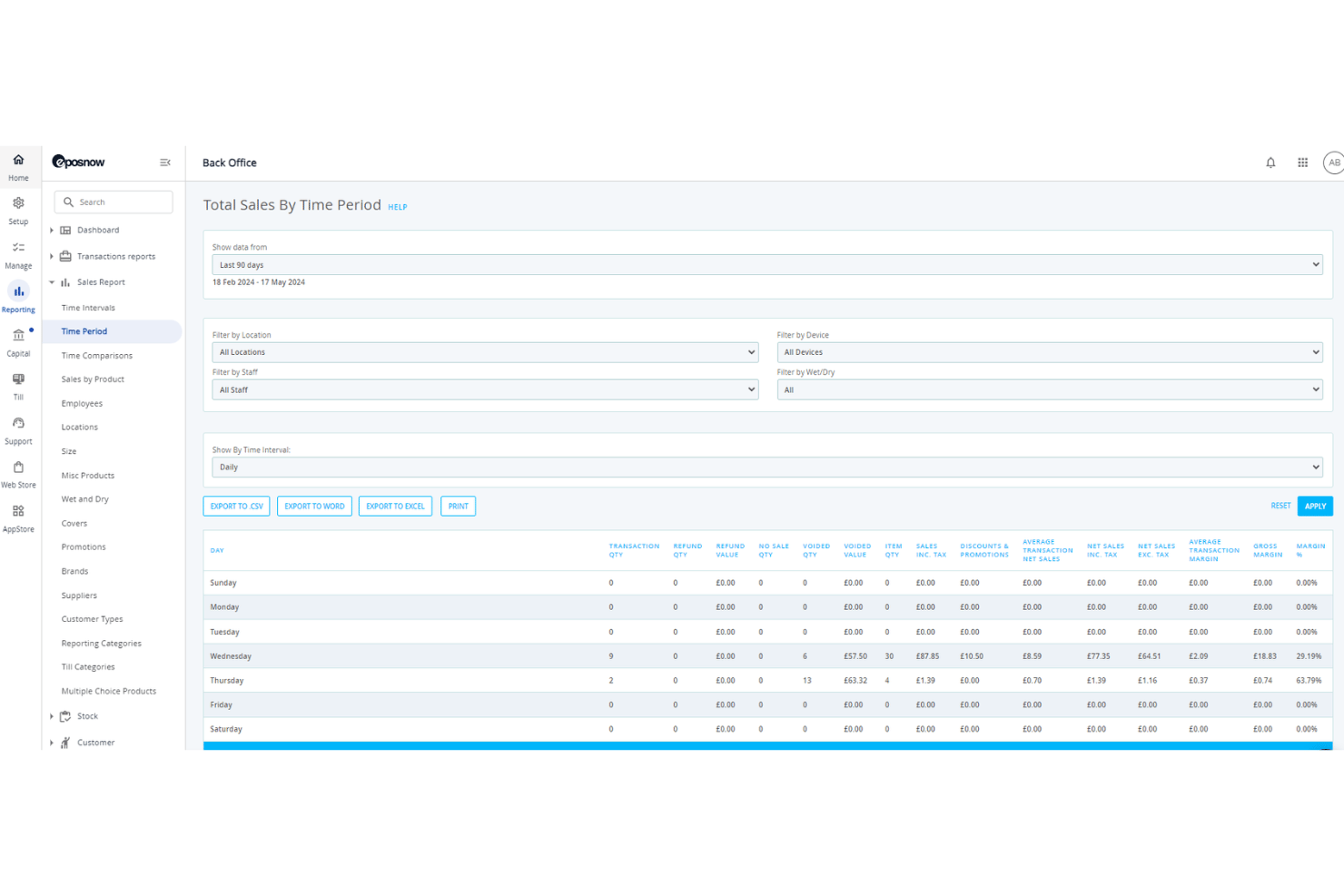
Epos Now is a cloud-based POS platform that combines in-store transaction processing, real-time inventory management, omnichannel ecommerce sync, and built-in CRM and staff management tools.
Who Is Epos Now Best For?
Epos Now is a strong fit for retailers and multi-location operators who need new staff up and running at the register fast, without lengthy onboarding.
Why I Picked Epos Now
Epos Now earns its spot on my shortlist because of how seriously it treats staff onboarding as a feature, not an afterthought. The platform is built so new hires can be trained at the register in around 15 minutes, with role-based permissions and unique login methods set up just as fast. I also like that the time clock and shift tracking are baked directly into the same system, so there's no separate tool to manage.
Epos Now Key Features
- Real-time inventory sync: Two-way sync across Shopify, WooCommerce, and BigCommerce keeps stock levels accurate across all channels automatically.
- Built-in CRM: Customer profiles store full purchase history, enabling targeted promotions and loyalty point tracking directly from the POS.
- Multi-site manager: A single dashboard lets you control pricing, tax rules, and inventory allocation across multiple store locations.
- AI-powered sales insights: The Sidekick assistant analyzes product margins and flags pricing opportunities using your live sales data.
Epos Now Integrations
Epos Now offers 100+ marketplace integrations, including Shopify, WooCommerce, BigCommerce, QuickBooks Online, Xero, Salesforce, Mailchimp, Deputy, and Zapier. Its open API supports custom integrations for enterprise workflows.
Pros and Cons
Pros:
- Offline card payments continue during outages
- Multi-location inventory sync with real-time updates
- Staff training completed in around 15 minutes
Cons:
- Premium support costs extra each month
- Contract cancellation is complex and restrictive

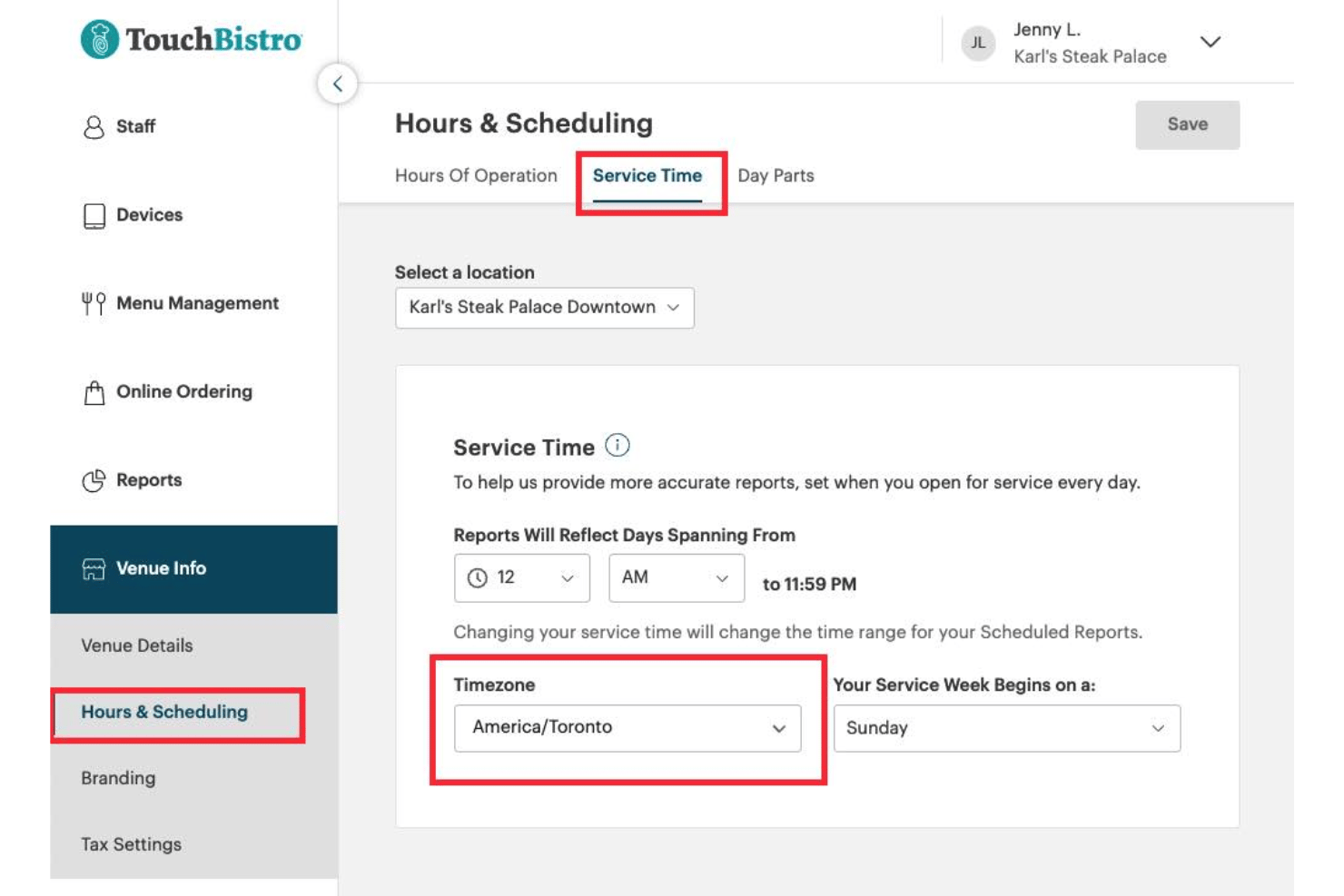
TouchBistro is a restaurant-focused POS system that combines tableside ordering, floor plan management, online ordering, loyalty, and back-of-house tools like inventory and labor management in one platform.
Who Is TouchBistro Best For?
TouchBistro is a strong fit for full-service and quick-service restaurants that want tableside ordering, loyalty, and back-of-house tools in one iPad-native system.
Why I Picked TouchBistro
TouchBistro earns its spot on my list because its tableside ordering setup is genuinely one of the best I've seen in a restaurant POS. Staff can take orders, fire tickets to the kitchen, and process payments directly from an iPad at the table using TouchBistro One, which cuts down on errors from re-entering orders at a terminal. The floor plan management ties directly into the ordering flow, so servers always know table status in real time.
TouchBistro Key Features
- Commission-free online ordering: Customers can place pickup and delivery orders through your website, Google listing, and social channels without per-order commissions eating into your margins.
- 50+ cloud-based reports: Sales, labor, inventory, and loyalty reports are all accessible from any internet-connected device, not just your in-venue terminals.
- Built-in loyalty CRM: TouchBistro Loyalty captures visit frequency, spend history, and order data for each guest, letting you segment and target customers through email and in-app campaigns.
- Offline transaction continuity: The system processes orders and payments locally between devices during internet outages, so a dropped connection doesn't halt service.
TouchBistro Integrations
TouchBistro documents integrations with Restaurant365, MarginEdge, Deliverect, UrbanPiper, Worldpay, Chase Payment Solutions, and Moneris. It doesn’t offer native connectors for Shopify, WooCommerce, BigCommerce, or Magento, limiting its fit for omnichannel retail.
Pros and Cons
Pros:
- Loyalty and marketing built into POS
- Commission-free online ordering for restaurants
- Tableside ordering on iPad or handheld device
Cons:
- Many essential features cost extra
- Not suitable for retail or eCommerce

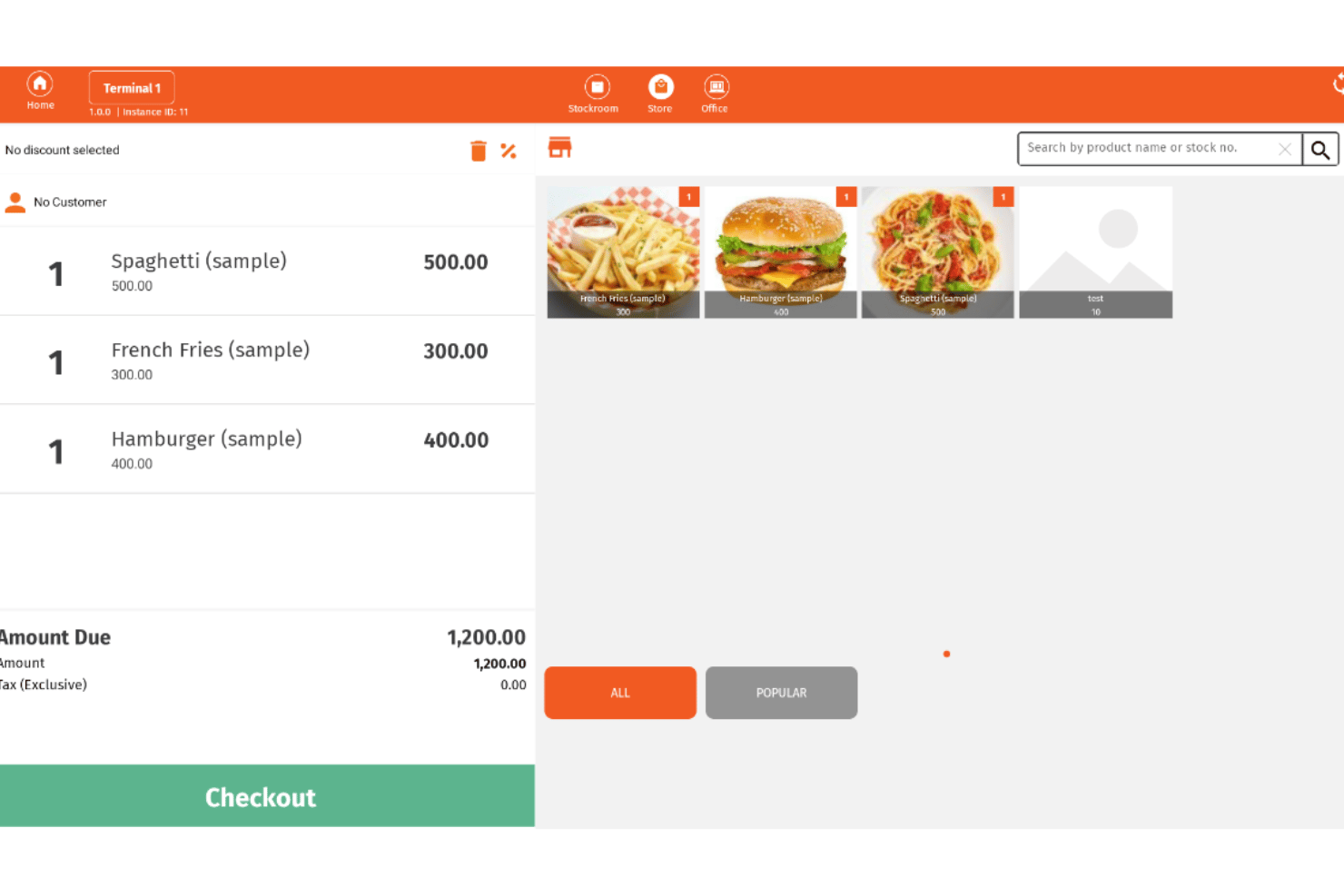
Imonggo is a browser-based POS system that handles sales transactions, inventory tracking, customer management, and basic reporting across single and multi-branch retail operations.
Who Is Imonggo Best For?
Imonggo is a strong fit for independent retailers and small shop owners who want to start selling quickly without technical setup or upfront costs.
Why I Picked Imonggo
Imonggo earns its spot on my shortlist because it's the only browser-based POS here that gets you selling without a single installation. I love that you can open a browser, create an account, and run a live transaction in minutes. Its offline mode processes sales locally and auto-syncs when your connection returns, so a spotty signal won't kill your checkout flow.
Imonggo Key Features
- Loyalty and reward points program: Customers earn points on purchases that can be redeemed as instant discounts at checkout.
- Branch-specific pricing: Each retail location can carry its own product pricing, independent of other branches in the same account.
- CSV data import and export: Bulk-upload your product catalog via CSV and export sales invoice data for use in external accounting tools.
- Configurable tax settings: Set inclusive or exclusive tax rates at the item, branch, or global level to support varied regional tax requirements.
Imonggo Integrations
Imonggo has documented integrations with Shopify, Xero, Authorize.net, Stripe, Dymo Label, and Cyclr. It also offers a REST API for custom integrations.
Pros and Cons
Pros:
- Branch-specific product pricing is fully supported
- Loyalty points redeem instantly at checkout
- Setup requires only a browser and account
Cons:
- Shopify is the only native eCommerce sync
- No contactless or mobile wallet support

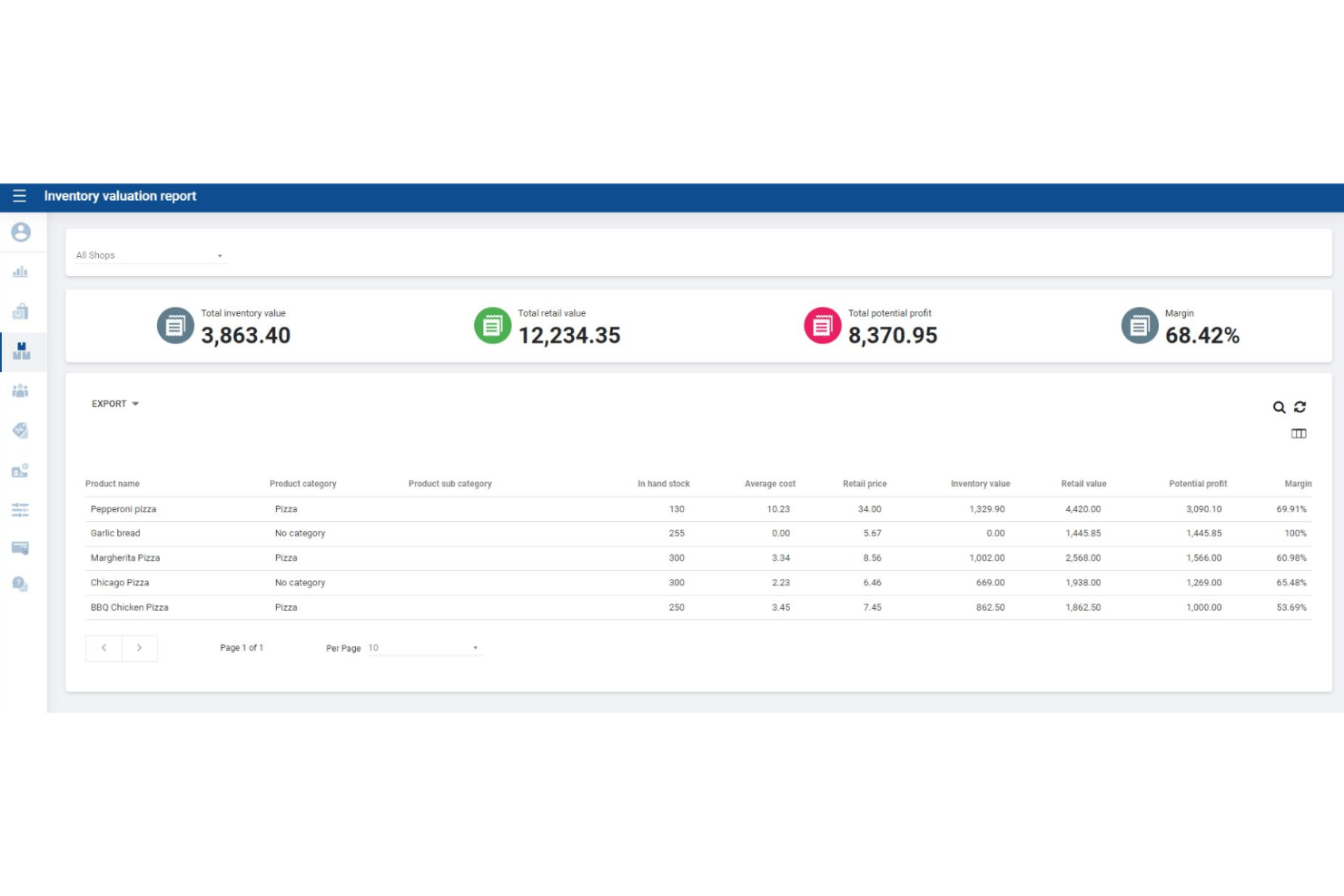
SalesPlay POS is a cloud-based point of sale system that covers in-store billing, multi-location inventory tracking, CRM, loyalty programs, and sales reporting across Android devices and a web browser interface.
Who Is SalesPlay POS Best For?
SalesPlay POS is a strong fit for small and growing retailers managing stock across multiple store locations from a single, centralized system.
Why I Picked SalesPlay POS
SalesPlay POS earns its spot on my shortlist because real-time stock tracking across multiple locations is available even on the free plan. I'm particularly impressed by the centralized Back Office, which lets you view inventory levels, transfer stock between stores, and generate shop-wise reports from a single dashboard. The Advanced Inventory add-on takes it further with full purchase order and goods received note workflows, so you're managing the entire stock lifecycle in one place.
SalesPlay POS Key Features
- Offline mode: Records transactions without an internet connection and automatically syncs data once connectivity is restored.
- Point-based loyalty program: Assigns and tracks reward points per customer across all store locations, with manual adjustment available from the Back Office.
- Xero and QuickBooks integration: Connects directly to both accounting platforms via Back Office settings to sync sales data for bookkeeping.
- Self-order kiosk app: Provides a dedicated customer-facing ordering interface that syncs with the POS in real time.
SalesPlay POS Integrations
SalesPlay POS offers documented integrations with Shopify, WooCommerce, Xero, and QuickBooks. It also provides an open API for custom integrations covering orders, inventory, payments, and accounting.
Pros and Cons
Pros:
- Built-in CRM with loyalty and customer profiles
- Centralized Back Office manages all stores
- Multi-location stock tracking on free plan
Cons:
- Full inventory sync to ecommerce not confirmed
- No native iOS app support

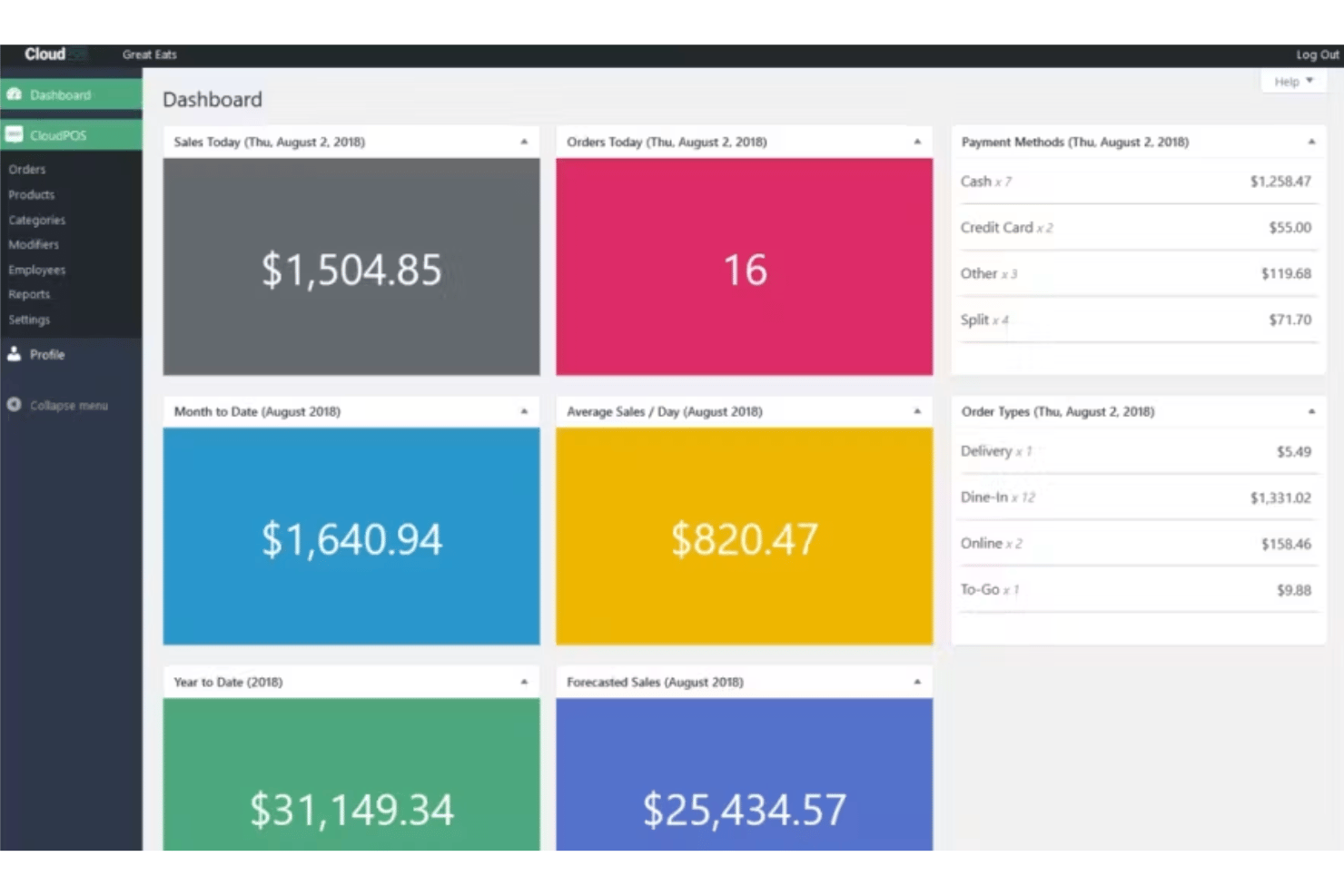
Cloud POS is a POS hardware and software marketplace that bundles PAX terminal hardware with a locally stored cash register software license, alongside resold cloud-based platforms like ePOS Now and Shopify POS.
Who Is Cloud POS Best For?
Cloud POS suits small, independent retailers who want a no-monthly-fee hardware-software bundle and prefer working with a full-service deployment partner over self-managing a cloud POS setup.
Why I Picked Cloud POS
I picked Cloud POS as one of the best because of how it surfaces real-time sales data through ePOS Now's live reporting dashboard, letting you spot revenue trends as they happen rather than after the fact. I like that its end-of-day reporting automatically calculates cash-up totals and logs historical data, so you're not piecing together numbers manually at close. Its processor-agnostic setup also means you can connect your existing payment processor without switching hardware.
Cloud POS Key Features
- Processor-agnostic payment support: Cloud POS connects to major processors—including First Data, TSYS, Heartland, and Worldpay—without locking you into a single provider.
- PAX terminal compatibility: Bundles include Android-based PAX terminals that accept EMV chip, NFC/contactless, magnetic swipe, and keyed card entry.
- ePOS Now loyalty app integration: An add-on loyalty app lets you run customer reward programs directly through the ePOS Now platform.
- eCommerce website integration: Cloud POS can add a checkout-enabled product catalog to your existing website, with backend access to sales and customer data.
Cloud POS Integrations
Cloud POS supports integrations with Shopify POS, ePOS Now, and 100+ POS systems through the eConduit (Payroc) payment API, including Lightspeed, Vend, and Heartland Retail. It also supports payment connections with processors such as First Data, TSYS, Heartland, and Worldpay.
Pros and Cons
Pros:
- Full-service POS deployment and onboarding
- Works with many major payment processors
- No monthly fee hardware-software bundle option
Cons:
- Advanced features require third-party add-ons
- No native cloud POS software offered

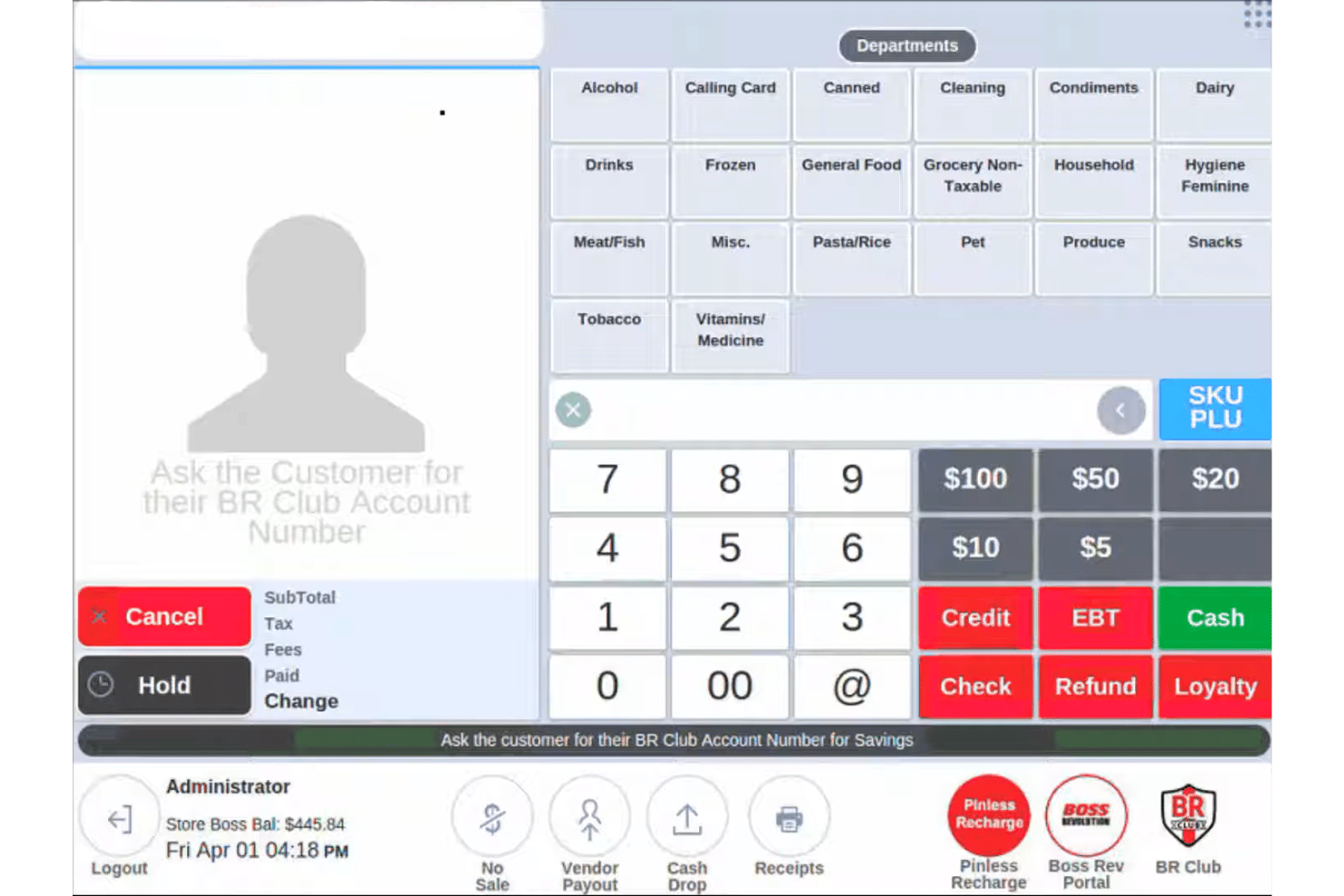
NRS is a POS system purpose-built for independent convenience stores, bodegas, and liquor stores, offering in-store sales, EBT/eWIC payment acceptance, real-time inventory tracking, and a proprietary ecommerce storefront with local delivery integration.
Who Is NRS Best For?
NRS is a strong fit for independent convenience store, bodega, and liquor store owners who need built-in EBT/eWIC support, a pre-loaded product database, and local delivery integration out of the box.
Why I Picked NRS
NRS earns its spot on my shortlist because no other POS system I've reviewed matches its depth of support for independent convenience store operators. I love that EBT and eWIC acceptance are built directly into NRS Pay, so bodega and c-store owners can serve SNAP customers without bolting on a separate solution. The 100,000+ pre-loaded UPC pricebook also means new store owners aren't manually entering thousands of products on day one.
NRS Key Features
- NRS Pay payment acceptance: NRS Pay supports credit, debit, EBT, eWIC, Apple Pay, Google Pay, and contactless payments directly through the POS.
- Food delivery platform integrations: DoorDash, Grubhub, and Uber Eats orders can be managed from within the NRS POS system for an additional monthly fee per platform.
- BOSS Club coupon rewards program: A built-in customer rewards program is included free on every plan, letting customers enroll via phone number at the register.
- Anti-theft alerts: Real-time push notifications flag suspicious POS activity to the merchant's mobile app, available as an add-on or included on Advanced and Elite plans.
NRS Integrations
NRS has documented integrations with DoorDash, Grubhub, Uber Eats, Stripe, QuickBooks Online, and the BOSS Local Shopping App. It offers a smaller connectivity set, with no documented Shopify, WooCommerce, BigCommerce, or open API integrations.
Pros and Cons
Pros:
- Real-time inventory sync across channels
- Loyalty program included on all plans
- EBT and eWIC payments accepted natively
Cons:
- Limited eCommerce integrations outside proprietary system
- No offline mode for internet outages

Shopify POS
Best for integrating with online stores
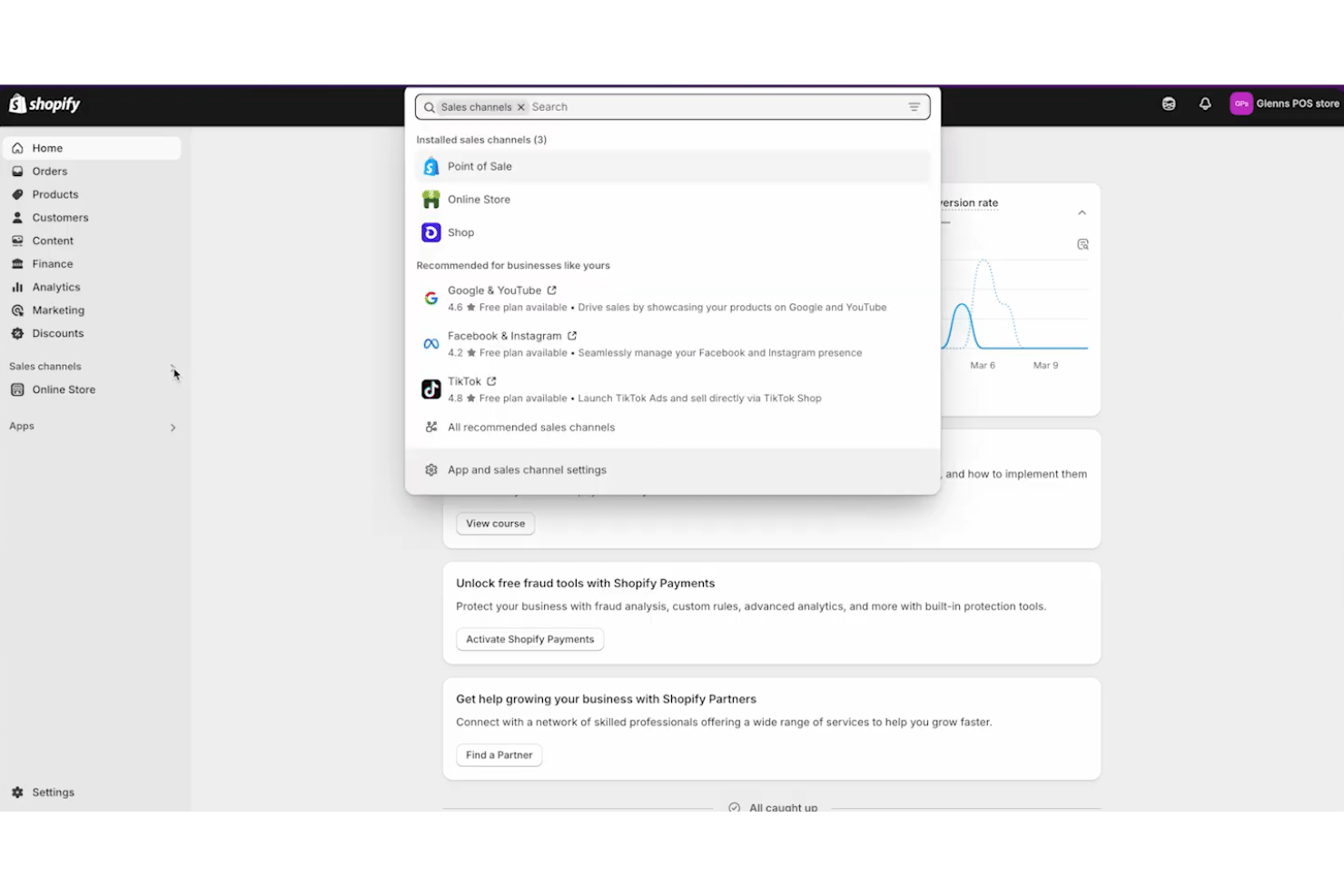
Shopify POS is a cloud-native point-of-sale system that unifies in-store transactions, multi-location inventory, omnichannel order management, and payment processing across physical and digital retail channels.
Who Is Shopify POS Best For?
Shopify POS is a natural fit for retailers who already run—or plan to run—an online store and want their in-store and digital operations managed from a single back office.
Why I Picked Shopify POS
Shopify POS earns its spot on my shortlist because no other POS system closes the gap between physical and digital retail the way it does. If you're already selling on Shopify, your in-store and online inventory, orders, and customer profiles share a single back office with zero middleware. I particularly like the BOPIS and ship-from-store capabilities, which let store staff fulfill online orders directly from floor inventory without jumping between systems.
Shopify POS Key Features
- Tap to Pay on iPhone and Android: Accept contactless payments using your existing iPhone or Android device, with no card reader required.
- Staff roles and permissions: Assign custom POS access levels and unique PIN logins to each staff member, with manager approval required for discounts or refunds.
- Multi-location inventory transfers: Move stock between store locations directly from the POS app, with inventory counts updating in real time across all locations.
- 200+ real-time reports: Access retail-specific sales, cash flow, and product performance reports from any device on the Grow plan and above.
Shopify POS Integrations
Shopify POS natively integrates with Shopify’s ecommerce platform. Its marketplace offers 100+ POS-specific apps, including QuickBooks, Xero, Klaviyo, Smile.io, and Better Reports, while its open API supports custom integrations.
Pros and Cons
Pros:
- Buy online, return or pickup in-store
- Tap to Pay on iPhone and Android
- Real-time sync for online and in-store sales
Cons:
- Advanced inventory tools require Pro add-on
- No built-in loyalty program
New Product Updates from Shopify POS
Shopify POS Adds Local Delivery at Checkout
Shopify POS now lets staff create local delivery orders during checkout using existing delivery zones and rates, adding delivery details to carts and receipts. For more information, visit Shopify POS's official site.
 .
.Other Online POS Software
Here are some additional online POS software options that didn’t make it onto my shortlist, but are still worth checking out:
- Clover
For customizable hardware options
- Square
For mobile payment flexibility
- PayPal POS
For accepting PayPal payments in-store
- Hike POS
For integrated appointment scheduling
- Loyverse
For managing customer loyalty programs
- Stripe Terminal
For unified online and in-person payments
- Toshiba Commerce
For enterprise-grade hardware compatibility
- QuickBooks POS
For syncing with accounting software
- Salesforce Retail Cloud POS
For CRM-driven sales insights


How I Evaluate Online POS Software
I evaluate online POS tools in two layers: the core must-haves—cloud-based checkout, real-time inventory, omnichannel sync—and the differentiators that determine the right fit for your stores.
Core Functionality (Table Stakes for This List)
When I'm selecting tools for my list, I rank each one on a scale from 0 (does not offer the functionality) to 5 (excels in this area) for each core functionality listed below. Then, I calculate the tool's total score into a percentage. Each tool needs to achieve a minimum total score of 65% to be considered for inclusion.
- Cloud-Based Transaction Processing: I check whether the POS runs fully in a browser or cloud-hosted app, so you can ring up sales from a tablet on the floor or a laptop in a pop-up shop.
- Payment Processing: Each tool should support cards, contactless, and mobile wallets, plus integrate with processors like Square, Stripe, or proprietary gateways.
- Real-Time Inventory Tracking: I look for automatic stock updates the moment a sale happens, across every register and location, with low-stock alerts to prevent overselling.
- Omnichannel Sales Sync: Product catalogs, pricing, and stock levels should stay aligned between in-store registers and online storefronts—whether that's Shopify, WooCommerce, or a built-in webstore.
- Sales Reporting and Analytics: Useful dashboards matter here—things like hourly sales trends, top-selling SKUs, and margin breakdowns that help you make restocking and staffing decisions.
- Customer Management: I evaluate whether the platform captures buyer profiles, tracks purchase history, and supports loyalty or rewards programs to drive repeat business.
Once I have a list of tools that meet this criteria, I consider what sets each platform apart.
Differentiating Factors (What Sets Vendors Apart)
Here's how I compare and contrast different vendors:
Standout Features
Offline mode is a big one—if your internet drops mid-transaction, the system should keep processing sales and sync everything once you're back online. I also look at employee management features like role-based permissions and shift tracking, which matter when you're running a team across multiple registers. Mobile POS hardware support is worth evaluating too, especially if you run pop-up events or need staff to check out customers anywhere on the floor with a handheld device.
Beyond Features
Integrations matter a lot here. I check whether a platform connects natively to your accounting software, eCommerce storefront, and marketing tools—so you're not manually exporting CSV files every week. Pricing transparency is another factor I evaluate closely, especially how per-register and per-location fees add up as you grow. Scalability ties into this: a system that works for one shop should also let you manage five locations from a single dashboard without a complete platform change.
How to Choose Online POS Software
It’s easy to get bogged down in long feature lists and complex pricing structures. To help you stay focused as you work through your unique software selection process, here’s a checklist of factors to keep in mind:
| Factor | What to Consider |
| Scalability | Will the system support your growth, such as adding new locations, registers, or users without major upgrades or extra costs? |
| Integrations | Does the POS connect natively to your accounting, ecommerce, or inventory management tools, or will you need workarounds or custom APIs? |
| Customizability | Can you tailor workflows, receipts, and user permissions to match your business processes and branding requirements? |
| Ease of use | Will your staff be able to learn and use the system quickly, even with high turnover or seasonal hiring? |
| Implementation and onboarding | How long will it take to get up and running, and what resources (training, migration, hardware setup) will you need to allocate? |
| Cost | Are all fees clear—including hardware, payment processing, and support—or are there hidden charges that could impact your margins? |
| Security safeguards | Does the POS offer end-to-end encryption, PCI compliance, and user access controls to protect customer and business data? |
| Support availability | Can you reach support during your business hours, and are there multiple channels (chat, phone, email) for urgent issues? |
What Is Online POS Software?
Online POS software is a cloud-based system that allows businesses to process sales transactions, manage inventory, and track customer activity using internet-connected devices. Many platforms operate through a POS app that can run on mobile devices such as tablets, iPhones, or traditional registers connected to POS hardware.
These systems allow retailers, restaurants, and other business types to monitor sales activity across physical and digital channels from one central platform. Because the software runs in the cloud, teams can view real-time data, manage operations remotely, and automate key administrative tasks.
Features
When selecting online POS software, keep an eye out for the following key features:
- Sales transaction processing: Handles in-person and online sales, calculates totals, applies discounts, and processes various payment types at checkout.
- Inventory management: Tracks stock levels in real time, updates quantities after each sale, and alerts you when items are running low or out of stock.
- Multi-location support: Allows you to manage sales, inventory, and staff across several stores or registers from a single dashboard.
- Customer management: Stores customer profiles, purchase history, and contact details to support loyalty programs and personalized service.
- Reporting and analytics: Generates detailed sales, inventory, and staff performance reports to help you make informed business decisions.
- Role-based access controls: Let you assign permissions and restrict access to sensitive data based on staff roles and responsibilities.
- Receipt customization: Enables you to design and print branded receipts with custom messages, logos, and required legal information.
- Offline transaction capability: Allows you to continue processing sales even if your internet connection drops, syncing data once you’re back online.
- Integrated payment processing: Supports a range of payment methods, including credit cards, mobile wallets, and contactless payments, all within the same system.
Benefits
Implementing online POS software provides several benefits for your team and your business. Here are a few you can look forward to:
- Centralized sales management: Access and manage all sales activity across locations and channels from a single, cloud-based dashboard.
- Real-time inventory visibility: Monitor stock levels instantly and reduce the risk of overselling or stockouts with automated inventory tracking.
- Flexible payment acceptance: Offer customers a variety of payment options, including cards and mobile wallets, through integrated payment processing.
- Improved data security: Protect sensitive business and customer information with built-in encryption, PCI compliance, and role-based access controls.
- Faster onboarding and training: Get new staff up to speed quickly with intuitive interfaces, guided product tours, and accessible training resources.
- Actionable business insights: Use built-in reporting and analytics tools to identify trends, track performance, and make informed decisions.
- Business continuity: Continue processing sales even during internet outages with offline transaction capabilities that sync data when reconnected.
Costs and Pricing
Selecting online POS software requires an understanding of the various pricing models and plans available. Costs vary based on features, team size, add-ons, and more. The table below summarizes common plans, their average prices, and typical features included in online POS software solutions:
Plan Comparison Table for Online POS Software
| Plan Type | Average Price | Common Features |
| Free Plan | $0 | Basic sales processing, limited inventory tracking, single-user access, and standard reporting. |
| Personal Plan | $10-$30/user/month | Multi-user support, expanded inventory management, basic customer profiles, and email support. |
| Business Plan | $40-$80/user/month | Multi-location management, advanced reporting, integrated payment processing, and role-based access. |
| Enterprise Plan | $100-$200+/ user/month | Custom integrations, dedicated account management, priority support, advanced security, and API access. |
Online POS Software FAQs
Here are some answers to common questions about online POS software:
Can online POS software work without an internet connection?
Yes, many online POS software solutions offer offline transaction capabilities. This means you can continue processing sales during internet outages, and the system will sync data automatically once the connection is restored.
How secure is online POS software for handling payments and customer data?
Online POS software typically uses encryption, PCI compliance, and role-based access controls to protect sensitive information. Always confirm that your chosen provider meets industry security standards and offers regular updates to address new threats.
What hardware is required to use online POS software?
Most online POS software works on standard computers, tablets, or smartphones. You may also need compatible receipt printers, barcode scanners, and payment terminals, depending on your business setup and the software’s supported devices.
Can I integrate online POS software with my existing ecommerce or accounting tools?
Yes, many online POS software platforms offer integrations with popular ecommerce, accounting, and inventory management systems. Check for native integrations or available APIs to ensure smooth data flow between your tools.
How long does it take to set up online POS software?
Setup time varies by provider and business complexity. Many solutions offer guided onboarding, training resources, and product tours to help you get started quickly—often within a few hours to a few days for most small to mid-sized businesses.
What’s Next:
If you're in the process of researching online POS software, connect with a SoftwareSelect advisor for free recommendations.
You fill out a form and have a quick chat where they get into the specifics of your needs. Then you'll get a shortlist of software to review. They'll even support you through the entire buying process, including price negotiations.