
15 MAP Price Monitoring Software Picked for 2026

MAP Price Monitoring Software Shortlist
Here’s my shortlist of MAP price monitoring software:


MAP price monitoring software tracks and enforces minimum advertised price (MAP) policies across online retailers and marketplaces. If you’re searching for ways to protect your brand’s value, spot unauthorized discounting, or keep resellers in check, the right MAP monitoring tool can make a measurable difference.
This list will help you compare top solutions for 2026, so you can choose software that fits your product catalog, reporting needs, and compliance goals.
Why Trust Our Software Reviews
Best MAP Price Monitoring Software Summary
This comparison chart summarizes pricing details for my top MAP price monitoring software selections to help you find the best one for your budget and business needs.
| Tool | Best For | Trial Info | Price | ||
|---|---|---|---|---|---|
| 1 | Best for multi-channel price tracking | 14-day free trial | From $99/month | Website | |
| 2 | Best for large-scale product catalogs | Free demo available | Pricing upon request | Website | |
| 3 | Best for multi-language monitoring | Free demo available | Pricing upon request | Website | |
| 4 | Best for customizable reporting options | Free demo available | Pricing upon request | Website | |
| 5 | Best for AI-driven price insights | Free demo available | Pricing upon request | Website | |
| 6 | Best for real-time data updates | Free demo available | From $49/month | Website | |
| 7 | Best for tracking prices across global markets | Free demo available | Pricing upon request | Website | |
| 8 | Best for automated violation alerts | Free plan + free trial available | From $49/month | Website | |
| 9 | Best for advanced analytics dashboards | Free demo available | Pricing upon request | Website | |
| 10 | Best for brand protection compliance | Free demo available | Pricing upon request | Website |
MAP Price Monitoring Software Reviews
Below are my detailed summaries of the MAP price monitoring software that made it onto my shortlist. My reviews offer a detailed look at the features, best use cases, and integrations of each platform to help you find the best one for you.

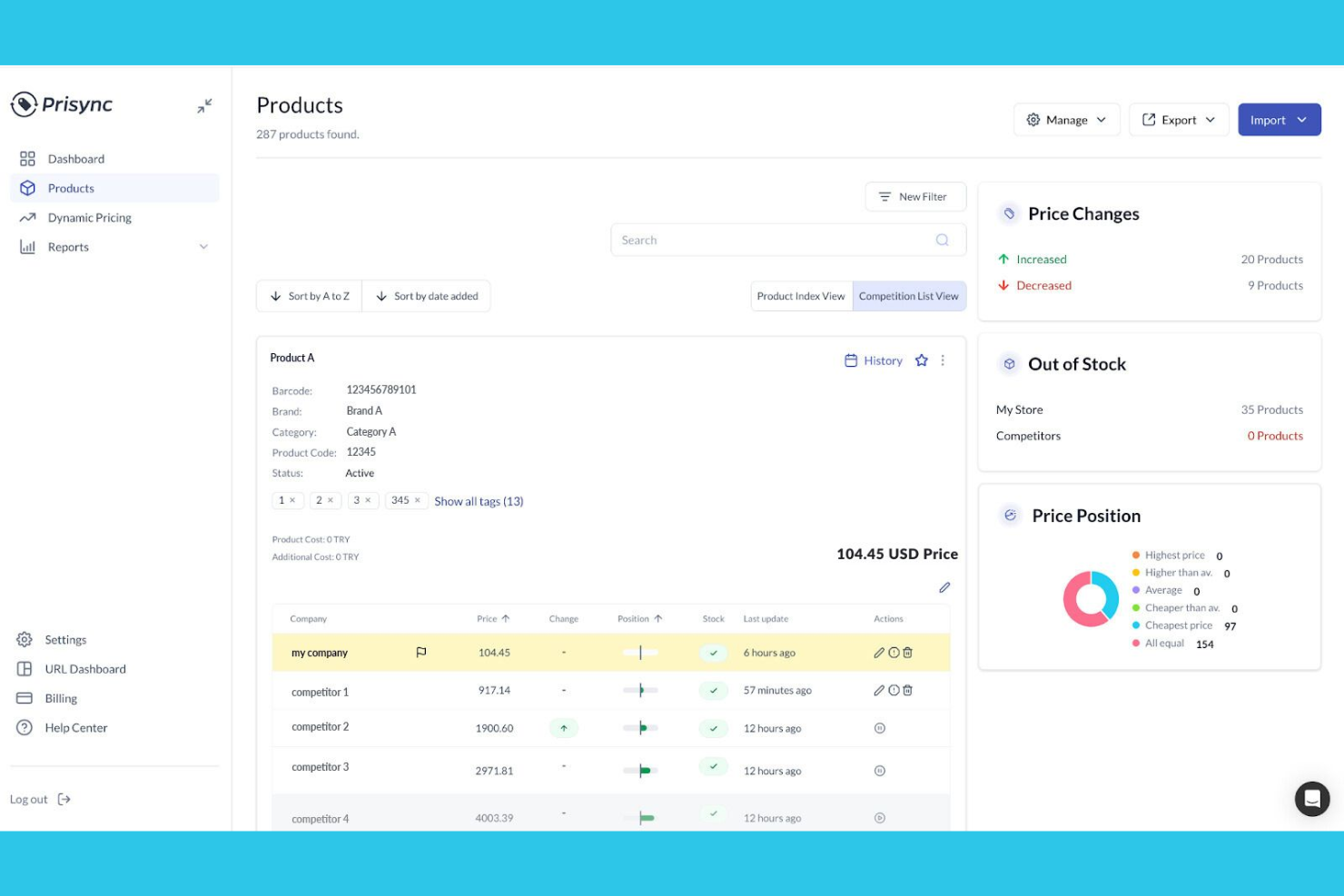
Prisync is designed for retailers and brands that need to monitor prices across multiple sales channels and marketplaces. The platform is especially useful for ecommerce teams managing complex product catalogs and frequent price changes. Prisync’s multi-channel tracking helps you keep MAP compliance in check while staying competitive in dynamic online markets.
Why I Picked Prisync
What sets Prisync apart is its ability to track prices across a wide range of online channels and marketplaces. I picked Prisync because it gives you a unified view of competitor pricing, whether you’re selling on your own site, Amazon, or other third-party platforms.
The tool automatically collects and updates pricing data from multiple sources, helping you spot MAP violations wherever they occur. For businesses juggling several sales channels, Prisync’s multi-channel tracking keeps your pricing strategy consistent and compliant.
Prisync Key Features
Some other features that make Prisync useful for MAP monitoring include:
- Automated repricing engine: Adjusts your prices automatically based on competitor data and your own pricing rules.
- Bulk product import: Lets you upload and manage large product catalogs using CSV files.
- MAP violation alerts: Notifies you instantly when a competitor violates your minimum advertised price.
- Detailed price history reports: Provides access to historical pricing data for trend analysis and compliance tracking.
Prisync Integrations
Integrations include Shopify, WooCommerce, Google Shopping, Amazon, and API integration for custom workflows.
Pros and Cons
Pros:
- Detailed historical price change reports
- Instant MAP violation email notifications
- Bulk product import for large catalogs
Cons:
- Limited offline retailer price tracking
- No mobile app for on-the-go monitoring

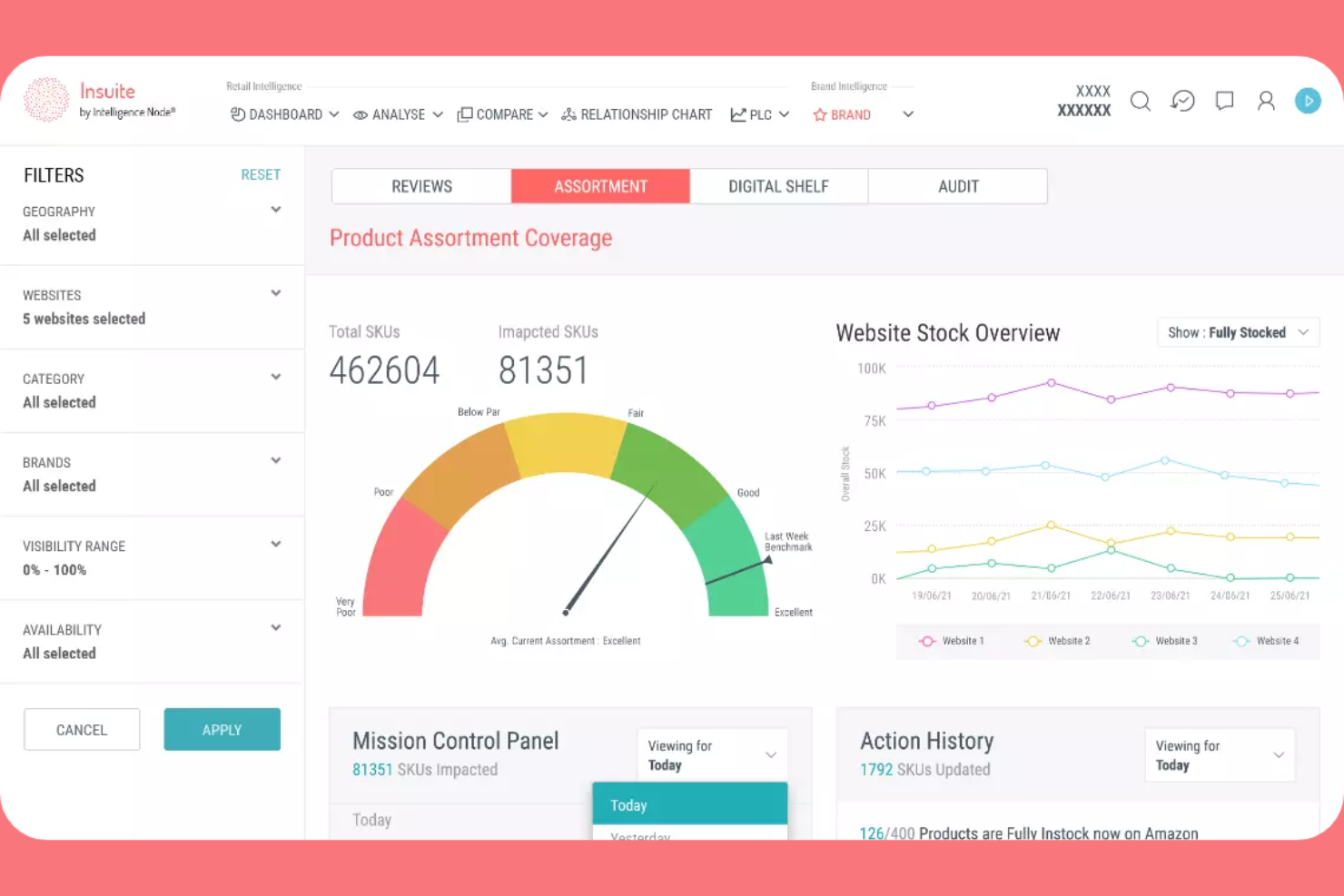
Intelligence Node is built to handle MAP monitoring at scale if you manage a large or complex product catalog. The platform is designed for enterprise brands and retailers that need to track pricing compliance across thousands of SKUs and multiple channels. Intelligence Node’s automated matching and real-time data coverage help you keep pace with high-volume, fast-changing assortments.
Why I Picked Intelligence Node
For brands with thousands of SKUs, Intelligence Node offers MAP monitoring that’s purpose-built for scale. I picked Intelligence Node because it uses AI-driven product matching to accurately track pricing across massive catalogs, even when listings vary by region or seller.
The platform’s real-time data collection covers a wide range of online retailers and marketplaces, so you can spot violations quickly. If your business needs to monitor MAP compliance for a large and constantly changing assortment, Intelligence Node’s automation and breadth make it a strong fit.
Intelligence Node Key Features
Some other features that make Intelligence Node useful for MAP monitoring include:
- Automated violation alerts: Notifies your team when MAP breaches are detected across monitored channels.
- Customizable dashboards: Lets you visualize pricing data and compliance trends in formats that fit your workflow.
- Bulk product onboarding: Supports importing and managing large product lists for monitoring at scale.
- Historical pricing analytics: Provides access to past pricing data for trend analysis and compliance reporting.
Intelligence Node Integrations
Native integrations are not currently listed.
Pros and Cons
Pros:
- Customizable dashboards for compliance tracking
- Real-time monitoring across global marketplaces
- AI-driven product matching for large catalogs
Cons:
- Pricing starts at enterprise-level budgets
- No public native integrations listed

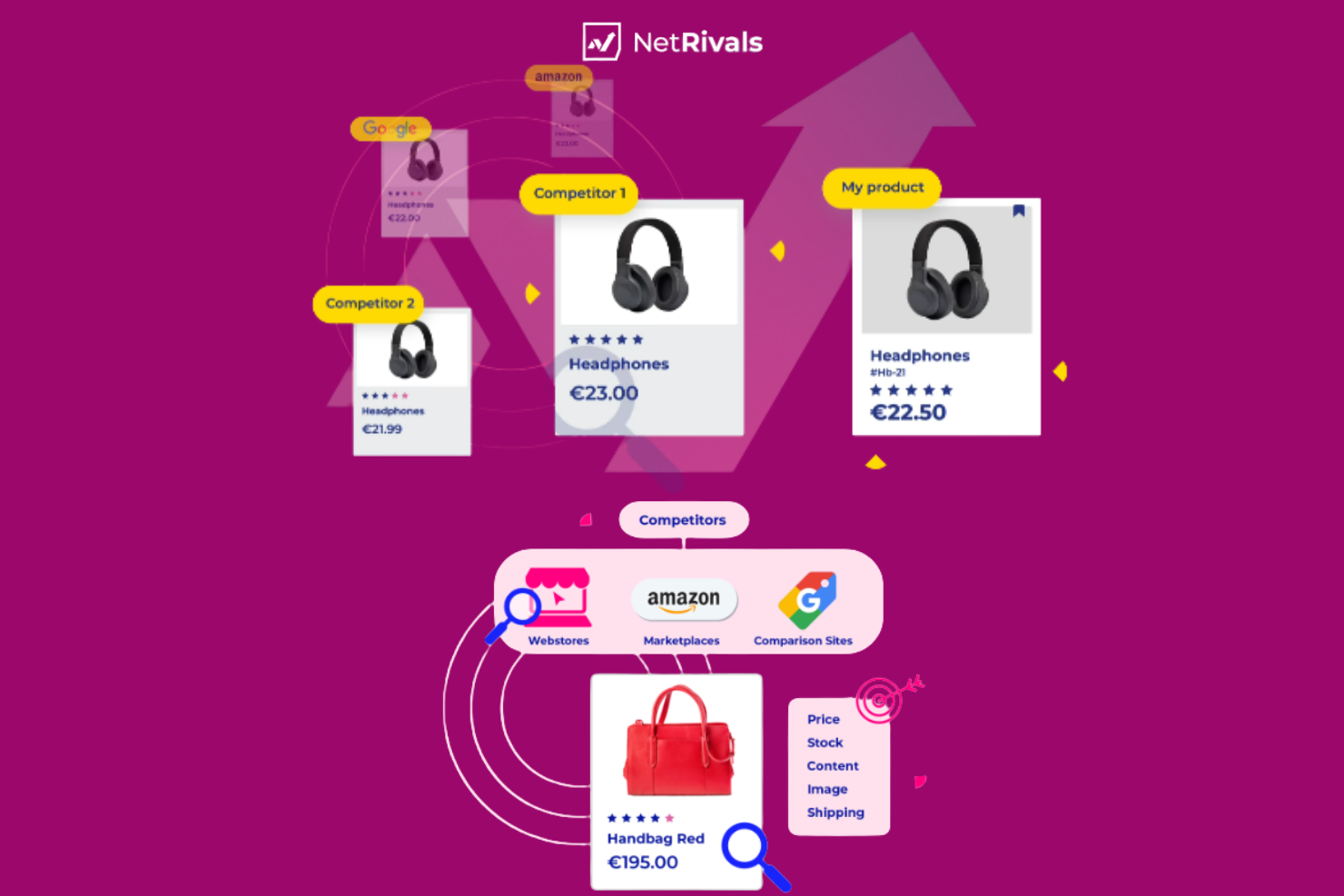
If your business needs to monitor MAP pricing across multiple languages and markets, NetRivals is designed for that challenge. The platform helps brands and retailers track pricing and compliance on a global scale, supporting dozens of languages and currencies. NetRivals is especially useful for teams managing international catalogs who need accurate, localized price intelligence.
Why I Picked NetRivals
NetRivals stands out for its ability to monitor MAP pricing across a wide range of languages and regions. I picked NetRivals because it supports localized data collection, letting you track prices and MAP compliance in the native language and currency of each market.
The platform’s product matching engine is built to handle international catalogs, so you can accurately compare SKUs and offers across borders. For businesses operating in multiple countries, NetRivals makes it possible to maintain MAP standards without language or localization barriers.
NetRivals Key Features
I also found several other features that support MAP price monitoring with NetRivals:
- Automated MAP violation alerts: Send notifications when a retailer’s price drops below your set MAP threshold.
- Customizable reporting tools: Let you generate and schedule detailed reports on pricing and compliance.
- Marketplace and direct retailer coverage: Monitors both online marketplaces and individual retailer sites for pricing data.
- Visual price history charts: Displays historical pricing trends for each product in an easy-to-read format.
NetRivals Integrations
Integrations include Shopify, Akeneo PIM, PrestaShop, Shopware, WooCommerce, Google Analytics, NetAmplify, NetMarkets, and an API for custom integrations.
Pros and Cons
Pros:
- Integrates with major ecommerce platforms natively
- Customizable reporting for MAP compliance audits
- Offers visual price history for each SKU
Cons:
- No dedicated mobile app for alerts
- Some integrations require technical setup
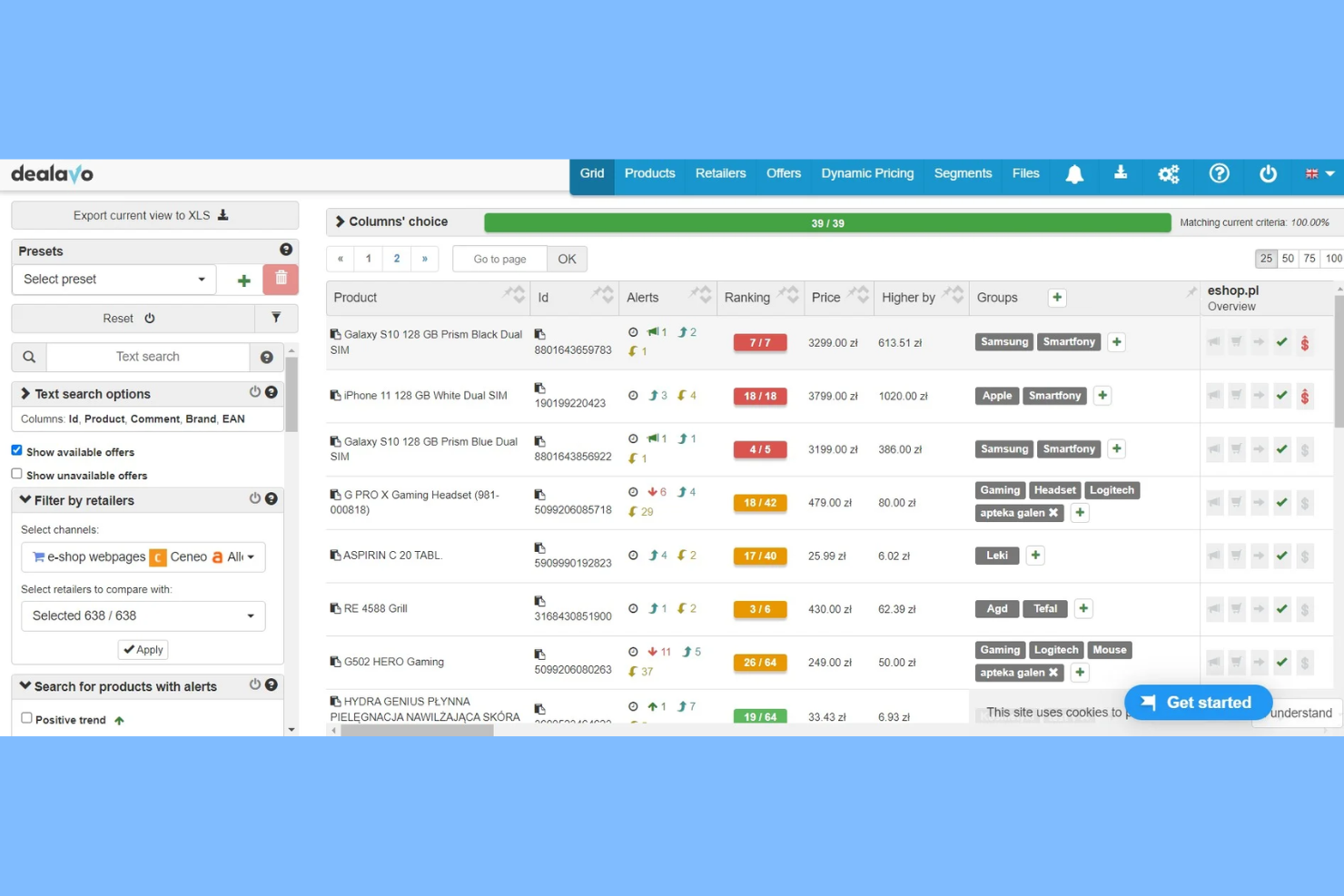
Dealavo gives retailers and brands flexible tools to track MAP compliance and market pricing across multiple channels. The platform is a strong fit for ecommerce managers and analysts who need customizable reporting to dig into pricing trends and competitor activity. Dealavo stands out for its advanced filtering and reporting options, helping you tailor insights to your business’s unique pricing strategy.
Why I Picked Dealavo
Customizable reporting options are what make Dealavo a strong choice for MAP price monitoring. I picked Dealavo because it lets you build tailored dashboards and reports, so you can focus on the data that matters most to your business.
The platform supports advanced filtering, letting you segment pricing data by channel, product, or competitor. For teams that need to analyze MAP compliance from multiple angles, Dealavo’s flexible reporting tools help you surface actionable insights quickly.
Dealavo Key Features
Some other features that make Dealavo useful for MAP monitoring include:
- Dynamic price tracking: Monitors real-time price changes across multiple online retailers.
- MAP violation alerts: Send notifications when a product’s price drops below your set threshold.
- Historical price analysis: Lets you review and compare pricing trends over time.
- Assortment monitoring: Tracks product availability and assortment changes across channels.
Dealavo Integrations
Integrations include WooCommerce, Shopware, Shopify, Adobe Commerce, eBay, GA4, JTL, Amazon Marketplace, Google Shopping, and API integration.
Pros and Cons
Pros:
- Historical pricing data for trend analysis
- Real-time price tracking across multiple channels
- Custom report builder for MAP compliance
Cons:
- Interface can feel cluttered with large catalogs
- Limited offline retailer monitoring capabilities

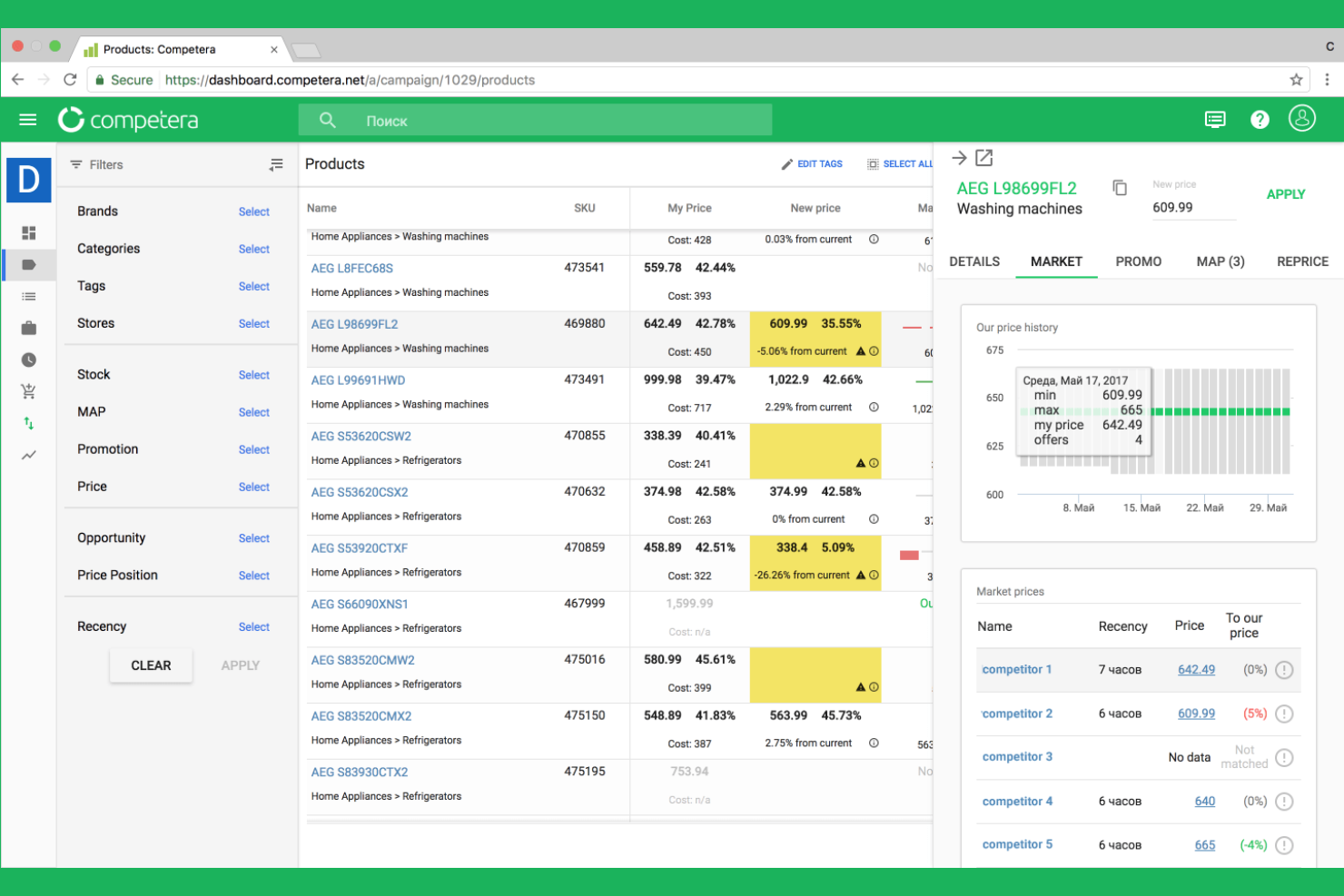
Competera is worth a close look if you’re searching for MAP price monitoring that uses AI to surface actionable insights. The platform is designed for retailers and brands that want to refine pricing decisions through machine learning and advanced analytics. Competera’s AI-driven approach helps you identify pricing gaps, monitor compliance, and adjust to market shifts with data-backed recommendations.
Why I Picked Competera
What sets Competera apart is its use of AI to deliver deep price insights that go beyond basic MAP monitoring. I picked Competera because it analyzes large volumes of pricing data and market signals to recommend optimal price points and flag MAP violations.
The platform’s machine learning models help you understand pricing trends and competitor moves in real time. For teams that want to move from reactive to proactive MAP enforcement, Competera’s AI-driven analytics offer a clear advantage.
Competera Key Features
Some other features that make Competera useful for MAP price monitoring include:
- Dynamic pricing engine: Automatic pricing adjustments based on real-time market data and business rules.
- Rule-based alert system: Notifies you when MAP violations or pricing anomalies occur.
- Customizable dashboards: Lets you visualize pricing, compliance, and market data in formats that fit your workflow.
- Bulk product import: Allows you to upload and manage large product catalogs for monitoring.
Competera Integrations
Integrations include Shopify, Adobe Commerce, SAP, Salesforce, Amazon, and more.
Pros and Cons
Pros:
- Bulk product monitoring for large assortments
- Visual dashboards for compliance and pricing trends
- AI-driven pricing recommendations for MAP enforcement
Cons:
- Limited documentation for technical setup
- Requires onboarding for advanced AI features

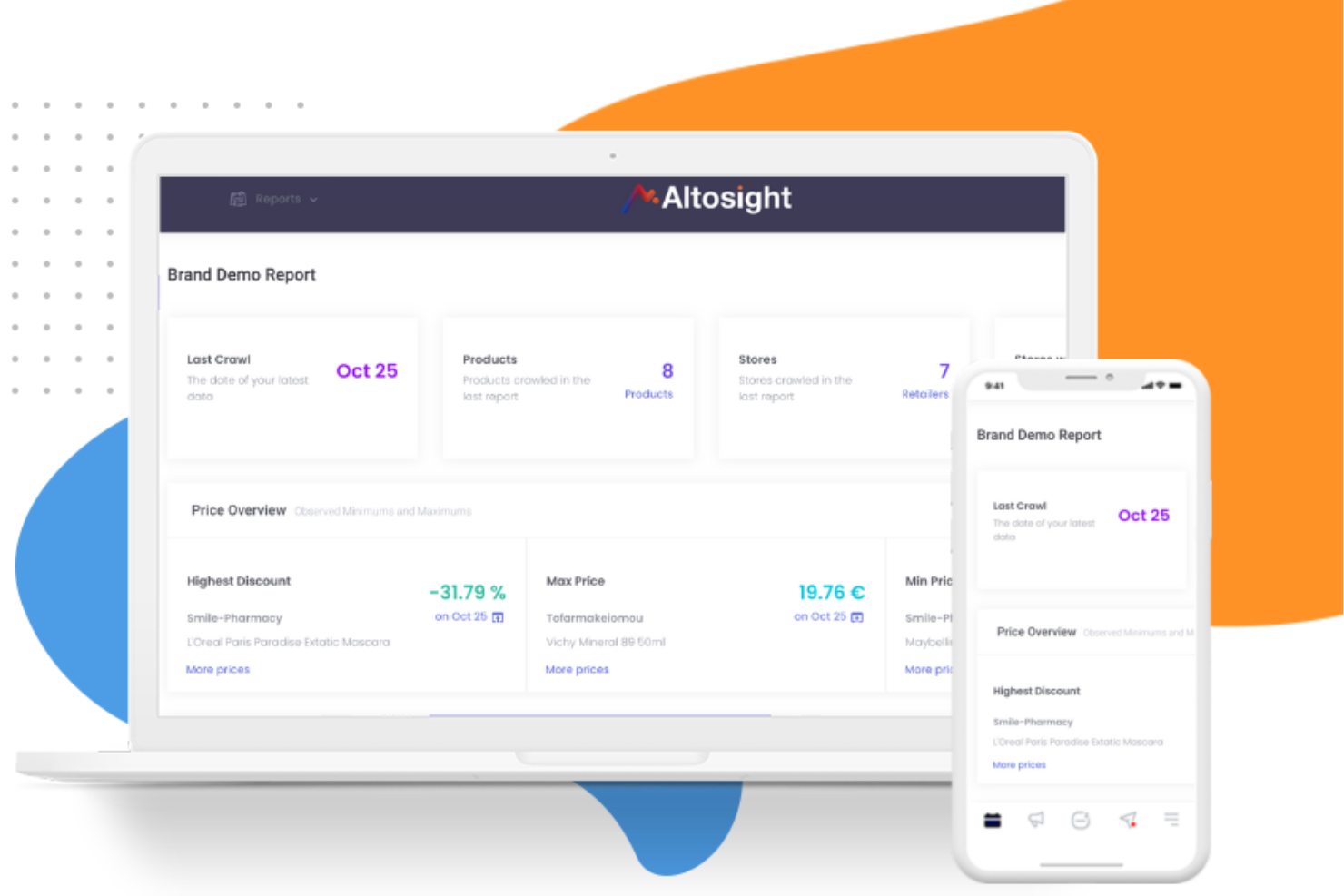
Altosight stands out for brands and retailers that need up-to-the-minute MAP price monitoring across online stores. The platform is built for teams that can’t afford to miss rapid price changes or MAP violations, especially in fast-moving ecommerce categories. With real-time data updates, Altosight helps you catch pricing issues as they happen and respond quickly.
Why I Picked Altosight
Altosight’s real-time data updates make it a strong choice for brands that need to react quickly to MAP violations. I picked Altosight because it continuously monitors online retailers and updates pricing data as soon as changes occur, so you’re never left in the dark about sudden price drops.
The platform’s instant alert system notifies you the moment a MAP breach happens, allowing for immediate action. For teams managing high-velocity product lines or sensitive pricing agreements, Altosight’s real-time monitoring is a key advantage.
Altosight Key Features
Some other features that make Altosight valuable for MAP monitoring include:
- Customizable reporting dashboard: Lets you tailor data views and reports to your team’s needs.
- Bulk product tracking: Monitors thousands of SKUs across multiple online retailers at once.
- Competitor price comparison: Displays side-by-side pricing for your products and competitors.
- Automated data exports: Schedules regular exports of pricing data to your preferred formats or systems.
Altosight Integrations
Integrations include Google Looker Studio and API integration for custom workflows.
Pros and Cons
Pros:
- Bulk SKU tracking for large product catalogs
- Customizable reporting dashboard for tailored insights
- Real-time price updates for immediate MAP alerts
Cons:
- API access requires technical setup and support
- No mobile app for remote monitoring

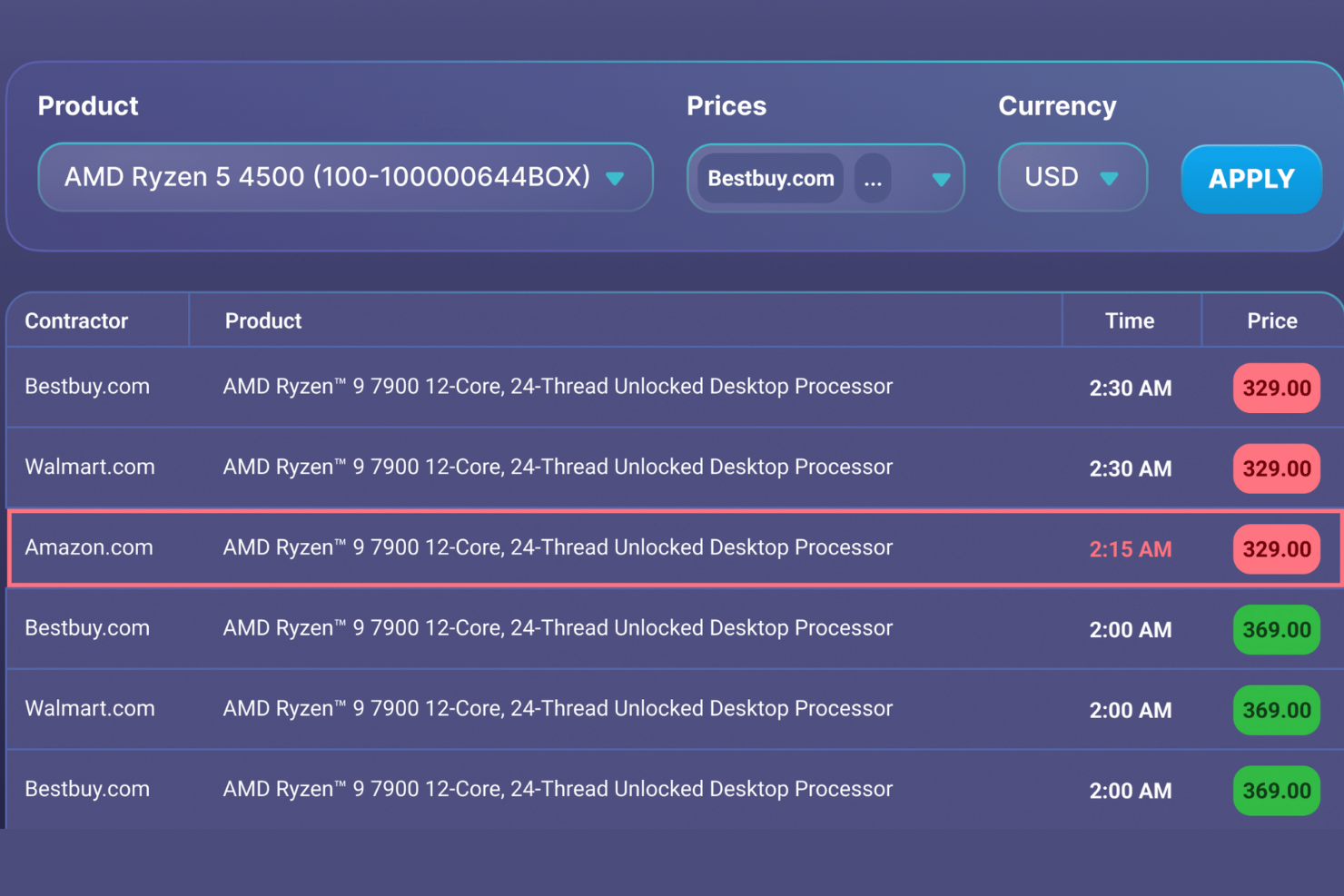
Pricer24 offers a focused solution if you need to monitor product prices across multiple countries and currencies. The platform is designed for brands and manufacturers managing global distribution and complex pricing policies. Pricer24 helps you track MAP compliance and identify pricing issues across international markets.
Why I Picked Pricer24
I chose Pricer24 because it specializes in tracking prices across global markets, which is essential for brands with international distribution. The platform supports multi-currency monitoring and lets you compare prices for the same product in different countries. I like that
Pricer24 provides detailed MAP violation alerts and region-specific reporting, so you can quickly spot and address pricing issues wherever they occur. This focus on global coverage makes it a strong fit for businesses managing MAP compliance on an international scale.
Pricer24 Key Features
Some other features in Pricer24 that stand out for MAP price monitoring include:
- Dynamic price change tracking: Monitors and logs every price change for your products across all monitored channels.
- Automated screenshot capture: Captures and stores screenshots of product listings to provide visual proof of MAP violations.
- Competitor assortment analysis: Compares your product assortment with competitors to identify gaps or overlaps in market coverage.
- Customizable reporting tools: Let you build and schedule tailored reports to match your team’s specific monitoring and compliance needs.
Pricer24 Integrations
Native integrations are not currently listed.
Pros and Cons
Pros:
- Supports multi-country and multi-currency tracking
- Real-time MAP violation alerts
- High accuracy in product matching
Cons:
- Pricing information is not transparent
- No public native integrations listed

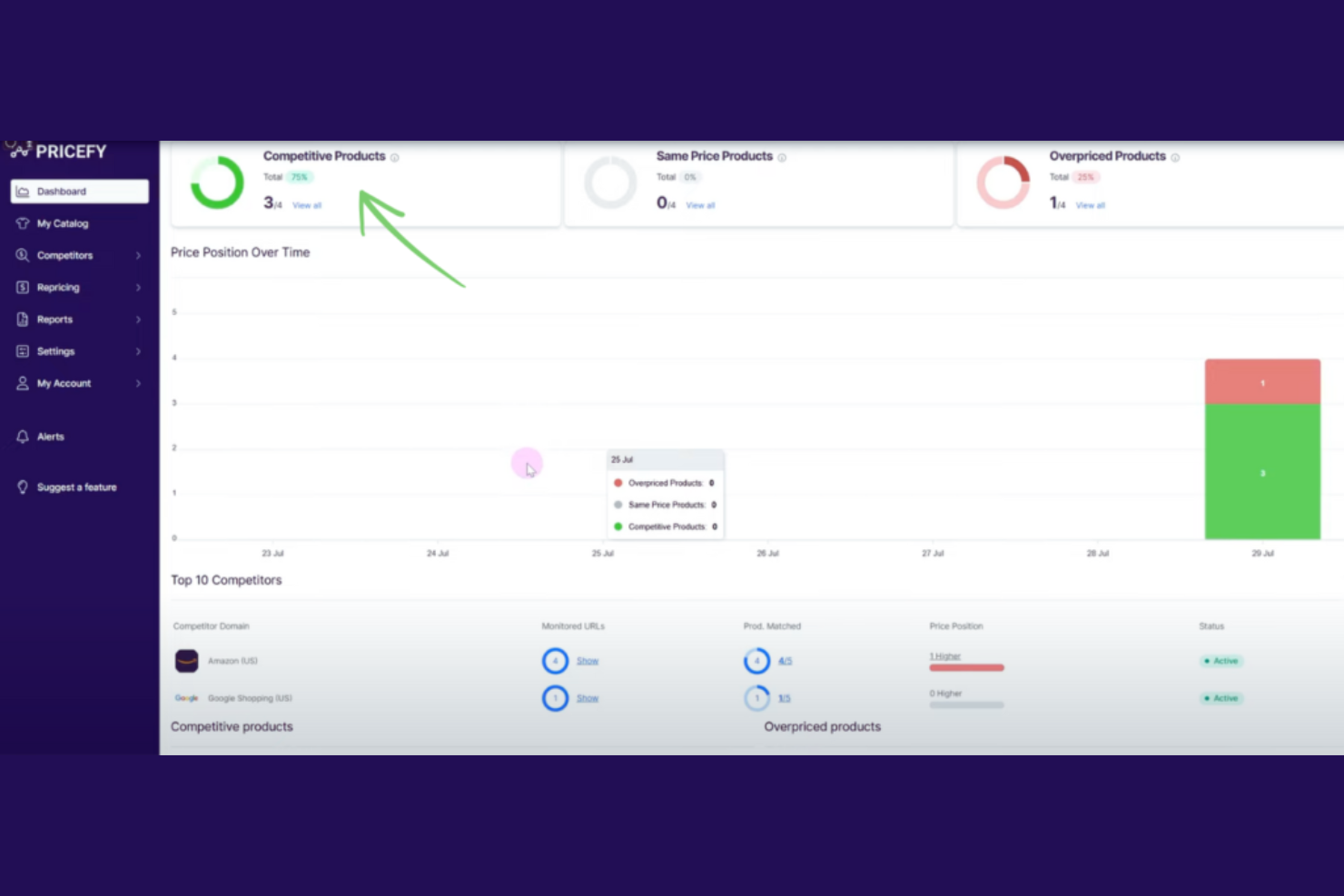
Pricefy offers a highly automated approach for brands and manufacturers who need instant MAP violation alerts. The platform is built for teams that want to catch unauthorized price drops quickly and act before they impact channel relationships. Pricefy’s real-time monitoring and notification system helps you stay on top of compliance issues without manual effort.
Why I Picked Pricefy
What sets Pricefy apart is its focus on delivering automated violation alerts, which is crucial for brands that need to respond quickly to MAP breaches. The platform continuously scans online retailers and marketplaces, sending instant notifications when it detects unauthorized price drops.
I appreciate that Pricefy allows you to customize alert thresholds and notification channels, so your team can prioritize the most urgent issues. This level of automation helps you maintain pricing compliance without constant manual monitoring.
Pricefy Key Features
In addition to automated violation alerts, Pricefy offers several other features designed for MAP price monitoring:
- Bulk product import: Lets you upload large product catalogs for monitoring using CSV files.
- MAP and MSRP rule management: Allows you to set and manage different pricing rules for each product or brand.
- Historical price tracking: Stores and displays past price changes for each monitored product.
- Customizable dashboard: Provides a configurable interface to organize and view your most important monitoring data.
Pricefy Integrations
Integrations include Shopify, WooCommerce, Adobe Commerce, BigCommerce, PrestaShop, Wix, and more.
Pros and Cons
Pros:
- Historical price tracking for all products
- Bulk product import with CSV support
- Automated MAP violation alerts by email
Cons:
- Alert customization options are somewhat limited
- Limited advanced analytics or reporting tools

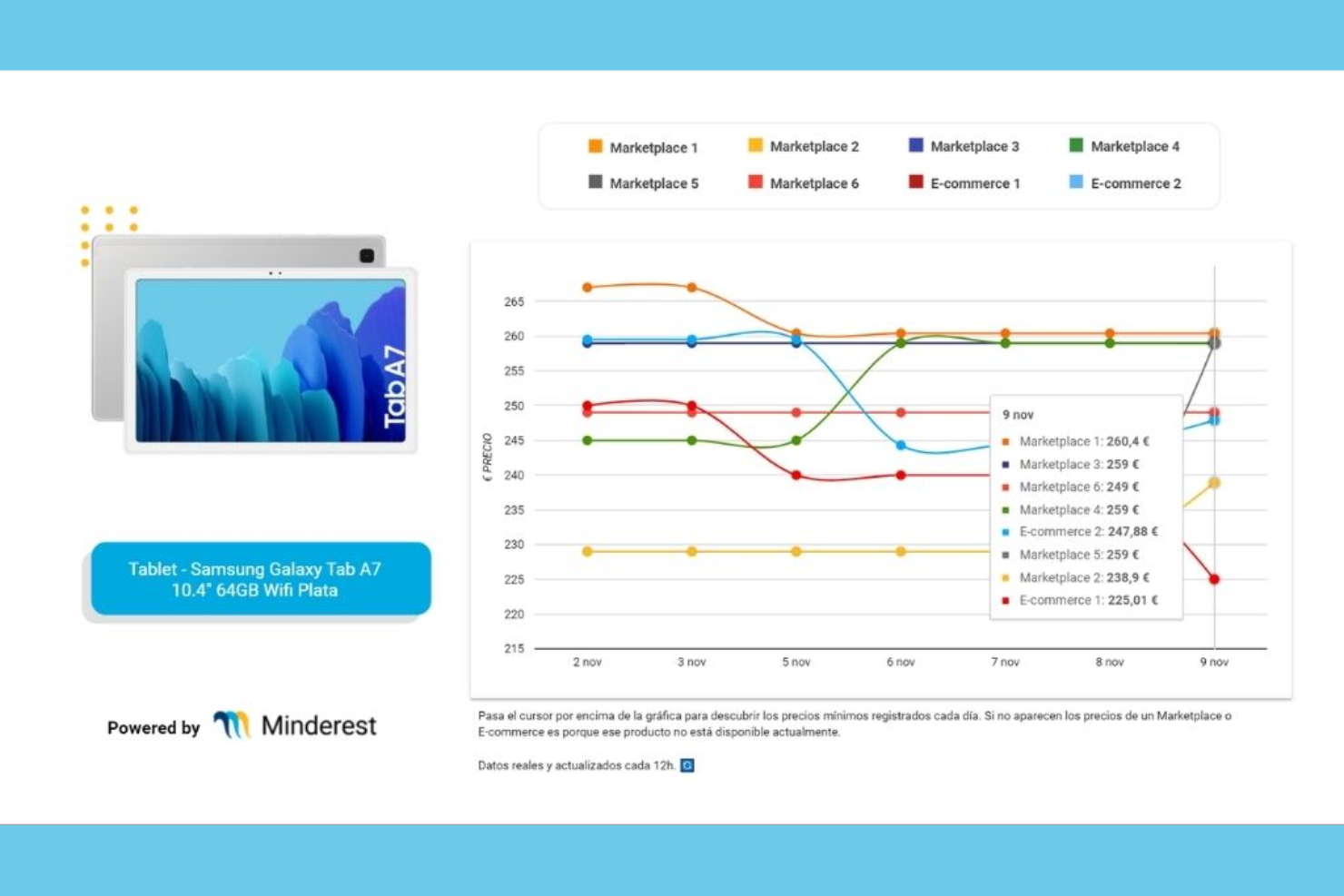
Minderest offers advanced analytics dashboards tailored for MAP price monitoring, providing retail and ecommerce teams with deep visibility into pricing trends. The platform is built for brands and retailers who want to analyze competitor pricing, track MAP violations, and visualize pricing data in detail. Minderest helps you turn complex pricing information into actionable insights for compliance and pricing strategy.
Why I Picked Minderest
What sets Minderest apart is its focus on advanced analytics dashboards that give you a granular view of MAP compliance and pricing trends. I picked Minderest because it lets you visualize pricing data with customizable dashboards and detailed reporting tools, making it easier to spot violations and market shifts.
The platform supports in-depth competitor analysis, so you can benchmark your prices and monitor how your products are positioned across channels. For teams that want to move beyond basic monitoring and leverage data-driven insights, Minderest offers the analytics depth that many other MAP price monitoring tools lack.
Minderest Key Features
Some other Minderest features that support MAP price monitoring include:
- Automated MAP violation alerts: Send notifications when pricing violations are detected across monitored channels.
- Dynamic pricing rules engine: Lets you set custom rules for pricing and MAP enforcement.
- Historical price tracking: Stores and displays past pricing data for trend analysis and compliance documentation.
- Multi-currency and international support: Monitors prices and MAP compliance across different countries and currencies.
Minderest Integrations
Integrations include Power BI, Tableau, Looker Studio, Adobe Commerce (Magento), PrestaShop, Shopify, and an API for custom integrations.
Pros and Cons
Pros:
- Dynamic pricing rules engine for MAP enforcement
- Supports multi-currency and international monitoring
- Advanced dashboards visualize MAP compliance trends
Cons:
- Interface may feel complex for new users
- No public pricing details available

Trade Vitality is built for brands that need to enforce MAP policies and protect their reputation across online channels. The platform appeals to brand managers and legal teams who want automated MAP violation detection and streamlined compliance workflows. Trade Vitality stands out for its focus on brand protection, helping you quickly identify unauthorized sellers and document violations for enforcement.
Why I Picked Trade Vitality
What sets Trade Vitality apart is its strong focus on brand protection compliance, which is essential for businesses that need to enforce MAP policies across multiple online retailers. I picked Trade Vitality because it automates the detection of MAP violations and provides tools for documenting and managing enforcement actions.
The platform lets you track unauthorized sellers and generate compliance reports, making it easier to build an enforcement case. For brands that prioritize protecting their reputation and pricing integrity, Trade Vitality offers targeted features that support a proactive compliance strategy.
Trade Vitality Features
Some other features that make Trade Vitality useful for MAP monitoring include:
- Bulk product upload: Lets you add large product catalogs for monitoring in a single step.
- Automated screenshot capture: Captures and stores screenshots of MAP violations for documentation.
- Customizable violation thresholds: Allows you to set specific MAP rules for different products or retailers.
- Email notification system: Sends alerts to your team when new MAP violations are detected.
Trade Vitality Integrations
Native integrations are not currently listed.
Pros and Cons
Pros:
- Customizable MAP rules by retailer
- Bulk product upload for large catalogs
- Automated MAP violation screenshot documentation
Cons:
- No public API documentation for custom workflows
- No mobile app for on-the-go monitoring
Other MAP Price Monitoring Software
Here are some additional MAP price monitoring software options that didn’t make it onto my shortlist, but are still worth checking out:
- MAPP Trap
For historical price violation records
- Wayvia
For integration with Shopify stores
- Wiser
For omnichannel price visibility
- TrackStreet
For reseller policy enforcement
- Omnia
For dynamic pricing rule automation


MAP Price Monitoring Software Selection Criteria
When selecting the best MAP price monitoring software to include in this list, I considered common buyer needs and pain points like tracking MAP violations across multiple channels and managing large product catalogs efficiently. I also used the following framework to keep my evaluation structured and fair:
Core Functionality (25% of total score)
To be considered for inclusion in this list, each solution had to fulfill these common use cases:
- Monitor online prices for MAP compliance
- Detect and alert on MAP violations
- Generate compliance and violation reports
- Track pricing across multiple retailers and marketplaces
- Store historical pricing data for analysis
Additional Standout Features (25% of total score)
To help further narrow down the competition, I also looked for unique features, such as:
- AI-powered product matching
- Automated violation notification workflows
- Bulk product onboarding and management
- Customizable dashboards and reporting
- Integration with ecommerce and retail platforms
Usability (10% of total score)
To get a sense of the usability of each system, I considered the following:
- Simple and intuitive user interface
- Clear navigation and dashboard layout
- Fast access to key monitoring tools
- Minimal manual data entry required
- Responsive design for different devices
Onboarding (10% of total score)
To evaluate the onboarding experience for each platform, I considered the following:
- Availability of training videos and tutorials
- Access to onboarding webinars or live sessions
- Step-by-step product tours or walkthroughs
- Pre-built templates for quick setup
- In-app chat or chatbot support during onboarding
Customer Support (10% of total score)
To assess each software provider’s customer support services, I considered the following:
- 24/7 support availability
- Multiple support channels (chat, email, phone)
- Access to a knowledge base or help center
- Fast response times to inquiries
- Dedicated account management for enterprise users
Value For Money (10% of total score)
To evaluate the value for money of each platform, I considered the following:
- Transparent and flexible pricing plans
- Features included at each pricing tier
- No hidden fees or surprise charges
- Discounts for annual or volume commitments
- Free trial or demo availability
Customer Reviews (10% of total score)
To get a sense of overall customer satisfaction, I considered the following when reading customer reviews:
- Positive feedback on MAP monitoring accuracy
- Reports of reliable alerting and notifications
- Comments on ease of onboarding and setup
- Experiences with customer support responsiveness
- Value perception compared to similar tools
How to Choose MAP Price Monitoring Software
It’s easy to get bogged down in long feature lists and complex pricing structures. To help you stay focused as you work through your unique software selection process, here’s a checklist of factors to keep in mind:
| Factor | What to Consider |
|---|---|
| Scalability | Can the software handle your current and projected SKU volume, channel count, and catalog changes? |
| Integrations | Does it connect natively to your ecommerce, ERP, or analytics platforms, or will you need custom workarounds? |
| Customizability | Can you tailor dashboards, alerts, and reporting to your team’s workflows and compliance policies? |
| Ease of use | Will your team be able to navigate and act on data without extensive training or technical support? |
| Implementation and onboarding | How long will it take to get up and running, and what resources or support does the vendor provide during setup? |
| Cost | Are pricing tiers transparent, and do they align with your usage patterns and budget constraints? |
| Security safeguards | Does the vendor offer data encryption, access controls, and compliance with relevant privacy standards? |
| Support availability | What support channels are offered, and are response times and expertise sufficient for your business needs? |
What Is MAP Price Monitoring Software?
MAP price monitoring software is a tool that tracks and analyzes online product prices to ensure retailers comply with minimum advertised price (MAP) policies set by brands or manufacturers.
These platforms automatically scan websites, marketplaces, and digital channels, flagging violations and providing reports so businesses can protect brand value, maintain fair competition, and respond quickly to pricing issues.
Features
When selecting MAP price monitoring software, keep an eye out for the following key features:
- Automated price tracking: Continuously scans online stores and marketplaces to capture current product prices for your catalog.
- MAP violation alerts: Notifies your team when a retailer advertises a product below your minimum advertised price policy.
- Customizable reporting: Lets you generate and schedule detailed reports on pricing trends, violations, and compliance history.
- Bulk product management: Allows you to upload, organize, and monitor large product lists efficiently.
- Historical price data: Stores past pricing information so you can analyze trends and identify recurring issues.
- Multi-channel monitoring: Tracks prices across various online channels, including direct retailer sites and third-party marketplaces.
- User access controls: Enable you to set permissions and roles for different team members managing MAP compliance.
- Exportable data: Provides options to download pricing and violation data in formats like CSV or Excel for further analysis or sharing.
- Compliance dashboards: Offers visual overviews of MAP compliance status, violations, and trends for quick decision-making.
Common MAP Price Monitoring Software AI Features
Beyond the standard MAP price monitoring software features listed above, many of these solutions are incorporating AI with features like:
- AI-powered product matching: Uses machine learning to accurately identify and match products across different retailers, even when product titles, images, or descriptions vary.
- Predictive violation detection: Analyzes historical pricing and seller behavior to forecast which products or retailers are most likely to violate MAP policies in the future.
- Automated anomaly detection: Flags unusual pricing patterns or suspicious activity that may indicate unauthorized sellers or hidden MAP violations.
- Dynamic competitor benchmarking: Continuously learns from market data to provide real-time insights on how your pricing compares to competitors, adjusting recommendations as the market shifts.
- Natural language processing for policy monitoring: Scans and interprets product listings and descriptions to detect subtle MAP violations that may not be obvious through price alone.
Benefits
Implementing MAP price monitoring software provides several benefits for your team and your business. Here are a few you can look forward to:
- Faster MAP violation detection: Automated monitoring and real-time alerts help your team spot and address pricing issues before they escalate.
- Improved brand protection: Consistent enforcement of MAP policies across channels preserves your brand’s value and reputation in the market.
- Greater pricing transparency: Centralized dashboards and customizable reports give you a clear view of pricing trends and compliance across all retailers.
- Efficient large-scale management: Bulk product onboarding and multi-channel monitoring make it practical to oversee thousands of SKUs without manual effort.
- Data-driven decision making: Access to historical pricing data and analytics supports smarter enforcement strategies and long-term planning.
- Reduced manual workload: Automated tracking, reporting, and AI-powered product matching minimize the need for time-consuming manual checks.
- Enhanced collaboration: User access controls and exportable data make it easier for teams to share insights and coordinate MAP compliance efforts.
Costs and Pricing
Selecting MAP price monitoring software requires an understanding of the various pricing models and plans available. Costs vary based on features, team size, add-ons, and more. The table below summarizes common plans, their average prices, and typical features included in MAP price monitoring software solutions:
Plan Comparison Table for MAP Price Monitoring Software
| Plan Type | Average Price | Common Features |
|---|---|---|
| Free Plan | $0 | Basic price tracking for a limited number of SKUs, simple violation alerts, and basic reporting. |
| Personal Plan | $50-$150/month | Price monitoring for a small catalog, standard violation alerts, basic dashboards, and email support. |
| Business Plan | $200-$600/month | Multi-channel monitoring, bulk product management, advanced reporting, user access controls, and integrations. |
| Enterprise Plan | $1,000+/month | Unlimited SKUs, custom dashboards, API access, dedicated account management, and advanced compliance tools. |
MAP Price Monitoring Software FAQs
Here are some answers to common questions about MAP price monitoring software:
How does MAP price monitoring software detect MAP violations?
MAP price monitoring software scans online stores and marketplaces, comparing listed prices to your minimum advertised price policy. When it finds a product advertised below your set threshold, it flags the violation and notifies your team so you can take action.
Can MAP price monitoring software track prices across multiple marketplaces?
Yes, most MAP price monitoring software can track prices across multiple marketplaces, including major platforms like Amazon, Walmart, and eBay. This helps you maintain MAP compliance no matter where your products are sold online.
What data security measures should I look for in MAP price monitoring software?
Look for software that offers data encryption, secure user authentication, and compliance with privacy standards like GDPR. These safeguards help protect your pricing data and sensitive business information from unauthorized access.
How long does it take to implement MAP price monitoring software?
Implementation time varies, but many solutions offer onboarding tools, product import templates, and support resources to help you get started within days or weeks. The timeline depends on catalog size, integration needs, and internal resources.
Can I customize alerts and reports in MAP price monitoring software?
Yes, most solutions let you customize alert thresholds, notification channels, and report formats. This flexibility ensures your team receives relevant information in a way that fits your workflows and compliance processes.
What’s Next:
If you're in the process of researching MAP price monitoring software, connect with a SoftwareSelect advisor for free recommendations.
You fill out a form and have a quick chat where they get into the specifics of your needs. Then you'll get a shortlist of software to review. They'll even support you through the entire buying process, including price negotiations.