24 Best Criteo Alternatives Reviewed in 2026

10 Best Criteo Alternatives Shortlist
Here's my pick of the 10 best software from the 24 tools reviewed.


Running a retail operation isn't easy. You face challenges like targeting the right audience, managing ad spend, and keeping up with changing consumer behaviors. That's where marketing automation software comes in, helping you tackle these issues head-on.
But maybe Criteo isn't cutting it for your needs. Perhaps you're looking for better features, more flexibility, or simply a better fit for your team. You're in the right place.
I've tested and reviewed various alternatives, focusing on what truly matters to you. In this article, I'll share my top picks, giving you the insights needed to make an informed decision. Let's find the right solution for your business.
What Is Criteo?
Criteo is a marketing automation software that helps businesses drive sales and increase customer engagement. It's commonly used by digital marketers, e-commerce managers, and retail professionals who need to optimize their advertising strategies. Features like personalized retargeting, dynamic ad creation, and real-time bidding help reach the right audience and maximize ad spend efficiency. Overall, Criteo's value lies in its ability to enhance your team's marketing efforts and boost your return on investment.
Best Criteo Alternatives Summary
This comparison chart summarizes pricing details for my top Criteo alternative selections to help you find the best one for your budget and business needs.
| Tool | Best For | Trial Info | Price | ||
|---|---|---|---|---|---|
| 1 | Best for programmatic storytelling | Free demo available | Pricing upon request | Website | |
| 2 | Best for AI-driven marketing | Free demo available | From $36/month | Website | |
| 3 | Best for content discovery | Not available | Pricing based on usage | Website | |
| 4 | Best for multi-channel campaigns | Free demo available | Pricing upon request | Website | |
| 5 | Best for real-time audience modeling | Free demo available | Pricing upon request | Website | |
| 6 | Best for omnichannel advertising | Free demo available | Pricing upon request | Website | |
| 7 | Best for unified ads with email data | Free demo available | Pricing upon request | Website | |
| 8 | Best for shopper-intent targeting | Not available | Pricing based on usage | Website | |
| 9 | Best for enterprise-scale media buying | Not available | Pricing upon request | Website | |
| 10 | Best for deep-learning personalization | Free demo available | Pricing upon request | Website |
Why Trust Our Software Reviews
Best Criteo Alternatives Reviews
Below are my detailed summaries of the best Criteo alternatives that made it onto my shortlist. My reviews offer a detailed look at the key features, pros & cons, integrations, and ideal use cases of each tool to help you find the best one for you.

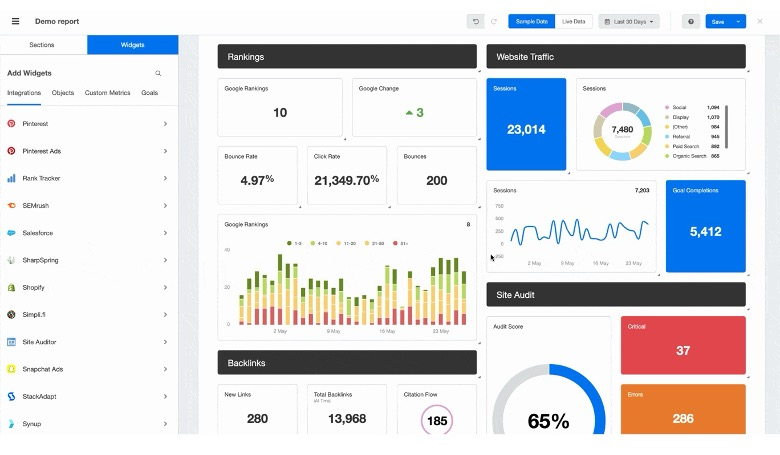
StackAdapt is a programmatic advertising platform aimed at marketers and advertisers looking to enhance their digital advertising strategies. It provides tools for native, video, and connected TV advertising, with a focus on advanced targeting and data-driven insights.
Why it's a good Criteo alternative: StackAdapt offers advanced targeting capabilities that help your team reach precise audience segments. Its machine learning algorithms enhance targeting, enabling you to optimize campaigns effectively. The platform supports a variety of ad formats, giving you flexibility in your advertising approach. Additionally, StackAdapt's emphasis on data-driven insights enables you to make informed decisions and improve campaign outcomes.
Standout features & integrations:
Features include a user-friendly interface that simplifies campaign management. The platform's real-time analytics provide performance insights, helping you make quick adjustments. StackAdapt also offers creative services to assist with ad design and development.
Integrations include Google Analytics, HubSpot, Salesforce, Adobe Analytics, Marketo, Shopify, Oracle, Mailchimp, Microsoft Dynamics, and Facebook.
Pros and Cons
Pros:
- Quick setup for native
- Clear creative guidelines
- Helpful niche targeting
Cons:
- Slow new feature rollout
- Limited bulk editing

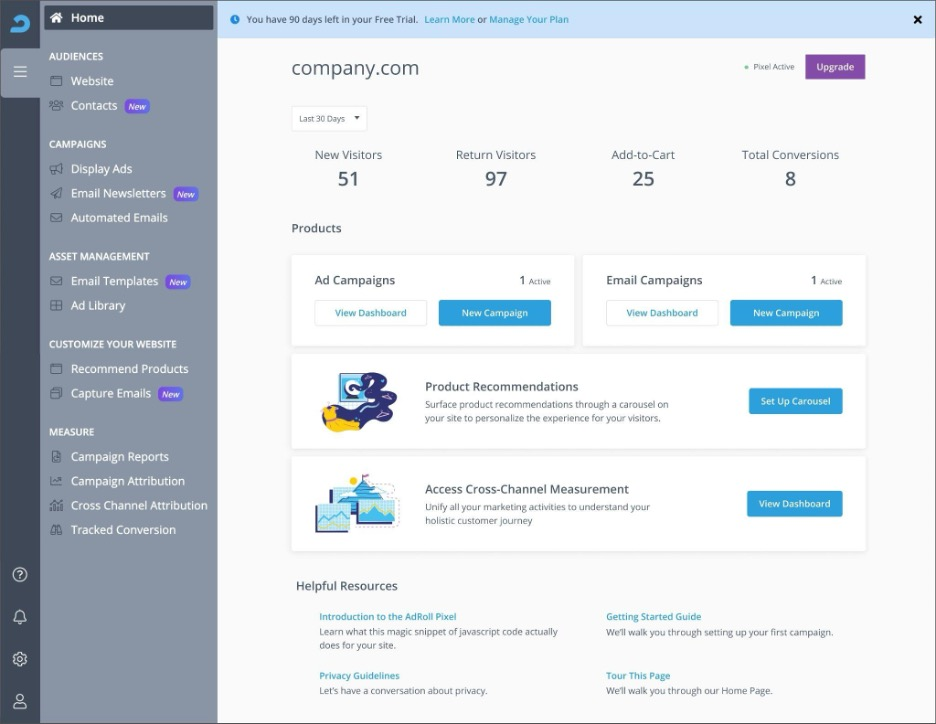
AdRoll is a digital advertising platform designed for brands and agencies looking to run multi-channel campaigns. It serves industries like retail, B2B, and finance, providing tools for cross-channel advertising and analytics.
Why it's a good Criteo alternative: AdRoll is a strong choice for e-commerce brands that want simple, unified control over ad campaigns across web and social channels. I selected it because its built-in audience tools and automation make it easy for smaller teams to run retargeting and prospecting campaigns without juggling multiple platforms.
Standout features & integrations:
Features include audience segmentation, which allows you to target specific groups effectively. Retargeting capabilities help you reconnect with potential customers. The platform also offers analytics tools to measure and optimize campaign performance.
Integrations include Shopify, WooCommerce, Adobe Commerce, BigCommerce, Mailchimp, HubSpot, Marketo, Salesforce, Google Analytics, and Facebook.
Pros and Cons
Pros:
- Helps with small catalogs
- Good email tie-ins
- Simple retargeting focus
Cons:
- Needs cleaner data flow
- Prospecting feels narrow

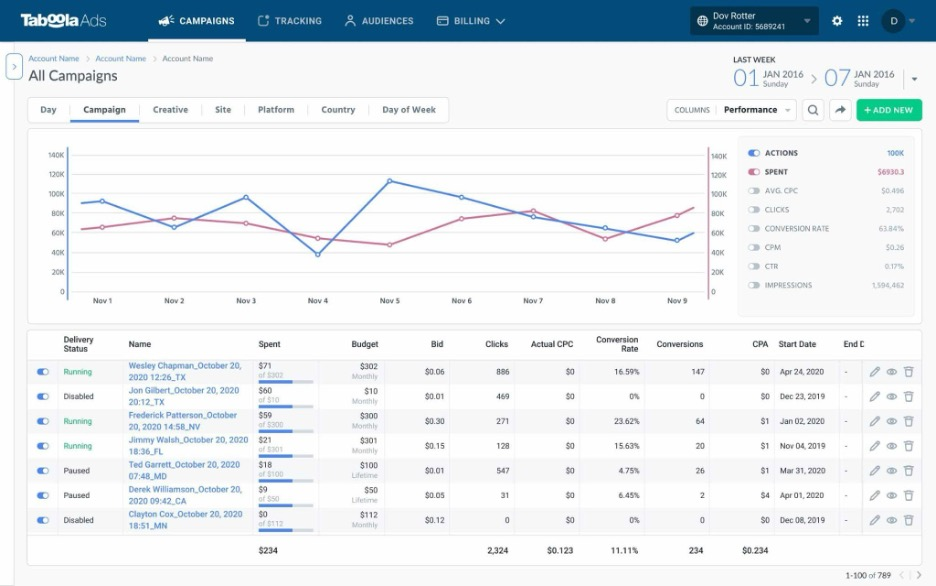
Taboola is a content discovery platform designed for publishers and advertisers looking to increase engagement and drive traffic. It offers tools for native advertising, helping businesses connect with audiences through personalized content recommendations.
Why it's a good Criteo alternative: Taboola helps advertisers reach broad audiences by placing content recommendations across major publisher sites. I chose it because its placements blend naturally into editorial environments, making it useful for brands aiming to drive awareness or top-of-funnel traffic. Taboola's focus on personalized content recommendations ensures your marketing efforts align with audience interests.
Standout features & integrations:
Features include real-time analytics that provide insights into content performance and audience engagement. The platform's A/B testing capabilities allow you to optimize ad content for better results. Taboola also offers customizable widgets to enhance user experience and ad placement.
Integrations include Google Analytics, Adobe Analytics, HubSpot, Marketo, Salesforce, Oracle, Microsoft Dynamics, Mailchimp, Shopify, and Facebook.
Pros and Cons
Pros:
- Flexible article promotion
- Strong top-funnel impact
- Large news site reach
Cons:
- Click quality varies
- Lower content quality risk

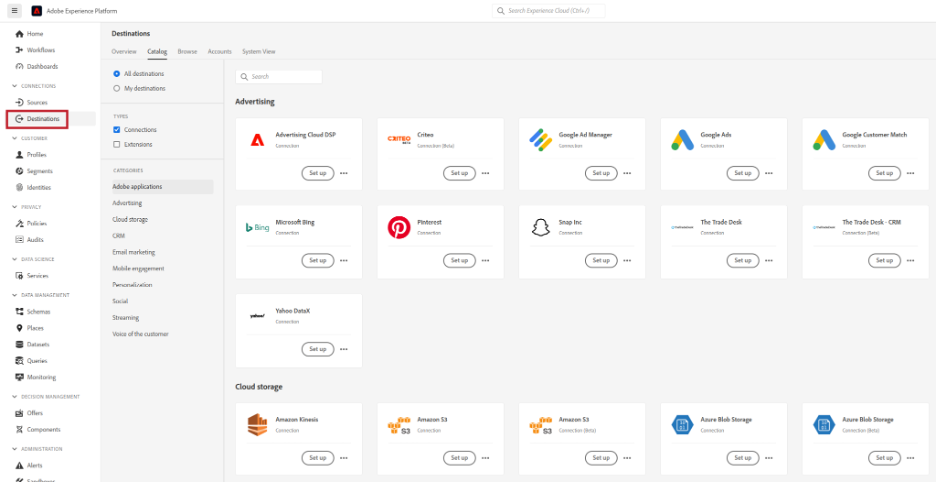
Adobe Advertising is a digital marketing platform designed for advertisers and marketers looking to manage multi-channel campaigns. It offers tools for media planning, buying, and optimization that cater to a wide range of industries.
Why it's a good Criteo alternative: Adobe Advertising offers a unified environment for managing media across different channels while maintaining consistent data and measurement. I chose it because its integration with Adobe’s ecosystem helps brands coordinate creative, audiences, and optimization tools in a single workflow, which is ideal for teams already using Adobe products.
Standout features & integrations:
Features include advanced targeting options, real-time bidding, and detailed analytics. These features let you tailor ads to specific audiences and optimize performance. The platform's integration with Adobe Creative Cloud supports easy creative development.
Integrations include Adobe Analytics, Adobe Experience Manager, Adobe Creative Cloud, Google Analytics, Salesforce, Oracle, HubSpot, Marketo, SAP, and Microsoft Dynamics.
Pros and Cons
Pros:
- Good for layered campaigns
- Good creative workflow options
- Strong brand control tools
Cons:
- Best suited to big content teams
- Slow feature adoption
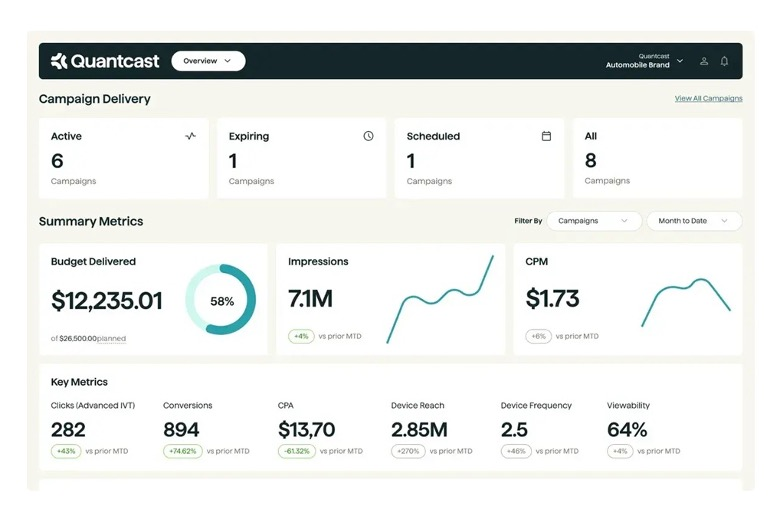
Quantcast Platform is an AI-driven advertising platform designed for marketers and advertisers looking to enhance their audience targeting. It offers tools for real-time advertising and insights, focusing on audience behavior analysis.
Why it's a good Criteo alternative: Quantcast uses real-time data to build audiences and forecast performance before campaigns launch. I chose it because its predictive modeling helps advertisers understand likely outcomes and adjust strategy early, which is especially useful for performance-focused teams.
Standout features & integrations:
Features include real-time audience insights that help you understand consumer behavior. The platform's predictive modeling uses AI to forecast trends and optimize ad spend. Quantcast also offers customizable reporting tools to tailor insights to your needs.
Integrations include Google Analytics, Salesforce, Adobe Analytics, HubSpot, Marketo, Oracle, Microsoft Dynamics, Mailchimp, Shopify, and Facebook.
Pros and Cons
Pros:
- Good cookieless tools
- Helpful trend spotting
- Strong predictive models
Cons:
- Weak cross-market support
- Limited customization options
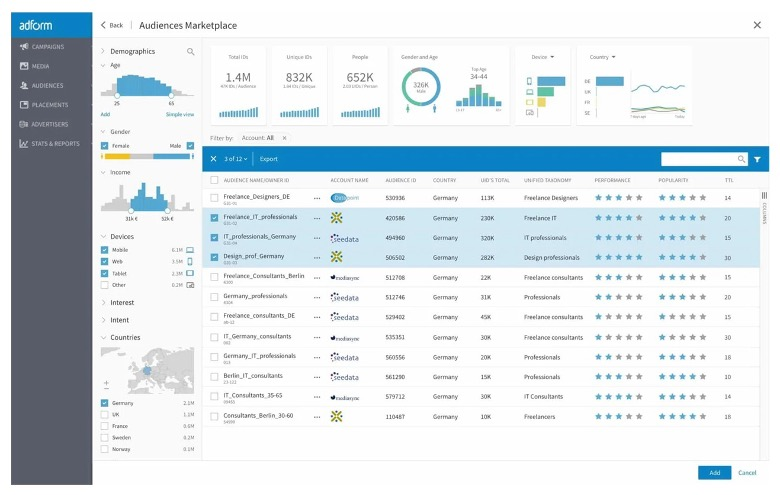
Adform is an integrated advertising platform that combines a Demand Side Platform (DSP), Ad Server, and Data Management Platform (DMP) for efficient media buying across multiple channels. Its main users include advertisers and publishers who need tools to manage campaigns and optimize revenue.
Why it's a good Criteo alternative: Adform excels in omnichannel advertising, allowing your team to manage campaigns across display, video, mobile, and retail media. It leverages first-party data to enhance audience reach, an essential factor for precise targeting. Adform's transparency and independence make it a reliable choice for those looking to maintain control over their advertising strategies. The platform also emphasizes sustainability by offering tools that help reduce carbon footprints.
Standout features & integrations:
Features include advanced campaign management, enabling your team to execute and optimize ads effectively. The platform's data management capabilities allow you to leverage first-party data for more targeted targeting. Additionally, Adform's ad server provides real-time analytics to track performance and make data-driven decisions.
Integrations include Google Analytics, Salesforce, Adobe Analytics, SAP, Microsoft Dynamics, HubSpot, Oracle, Marketo, Mailchimp, and Shopify.
Pros and Cons
Pros:
- Clear audit-ready data
- Good for privacy setups
- Strong publisher tools
Cons:
- Lacks simple presets
- Needs structured team roles
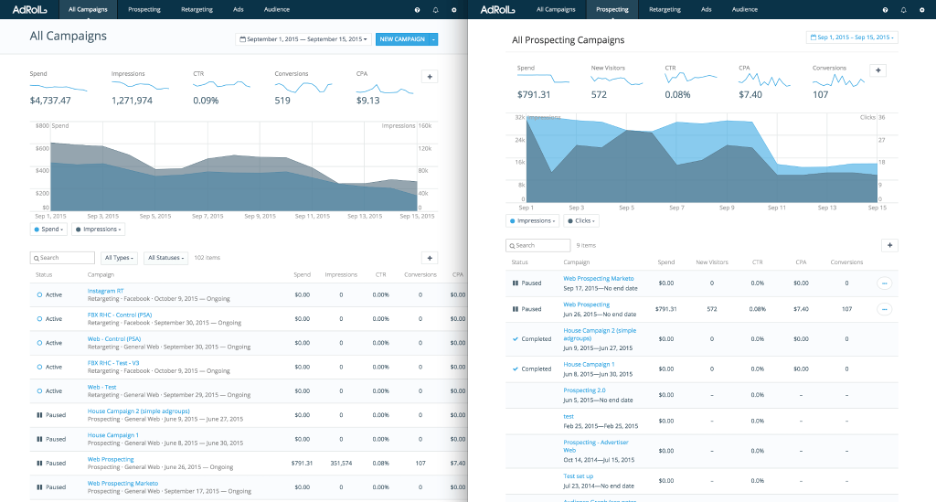
NextRoll is a marketing platform that combines AdRoll and RollWorks to serve a diverse user base, including e-commerce businesses and B2B marketers. It offers solutions for retargeting, audience targeting, and analytics to enhance marketing efforts.
Why it's a good Criteo alternative: NextRoll brings marketing and sales data together, enabling teams to run coordinated advertising and outreach from a single environment. I chose it because this connection between ads, email, and CRM activity helps brands deliver more consistent messaging across the customer journey. NextRoll's focus on personalization ensures that your marketing strategies align with the specific needs of your audience.
Standout features & integrations:
Features include dynamic ads that adjust content based on user interactions. The platform's cross-channel capabilities enable you to manage campaigns across multiple channels. NextRoll also provides in-depth analytics to track and measure campaign success.
Integrations include Shopify, WooCommerce, Adobe Commerce, BigCommerce, Mailchimp, HubSpot, Marketo, Salesforce, Google Analytics, and Facebook.
Pros and Cons
Pros:
- Simple audience building
- Helpful ABM workflows
- Good cross-team visibility
Cons:
- Setup quirks appear occasionally
- Complex B2C reporting
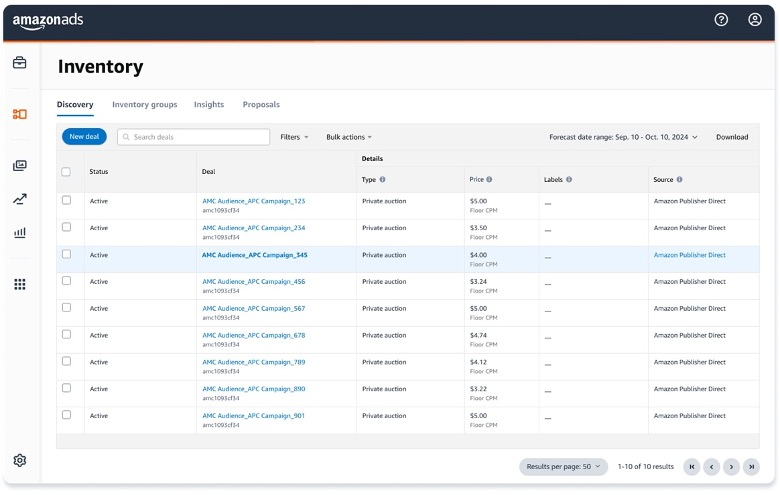
Amazon Ads is an advertising platform designed for brands and sellers looking to reach customers on Amazon's marketplace. It provides tools for sponsored product ads, display ads, and video ads, helping businesses increase visibility and sales.
Why it's a good Criteo alternative: Amazon Ads gives brands direct access to high-intent shoppers by using Amazon’s shopping and browsing signals. I chose it because this first-party data provides a clear advantage for advertisers looking to reach consumers closer to the point of purchase. Amazon's extensive data insights enable you to optimize advertising strategies without wasting time.
Standout features & integrations:
Features include real-time analytics that provide insights into ad performance, helping you make data-driven decisions. The platform's bidding tools allow for flexible ad spend management. Amazon Ads also offers customizable ad formats to fit your brand's needs.
Integrations include Amazon DSP, Amazon Attribution, Amazon Marketing Cloud, Amazon Seller Central, Amazon Vendor Central, Amazon Merch, Amazon Fire TV, Twitch, and IMDb.
Pros and Cons
Pros:
- Good product intent data
- Real-time buying signals
- Reaches active shoppers
Cons:
- Ranking changes often
- Crowded ad landscape


The Trade Desk is a programmatic advertising platform designed for marketers and advertisers who want to optimize their media buying strategies. It provides tools for data-driven targeting and cross-channel campaign management.
Why it's a good Criteo alternative: The Trade Desk is designed for advertisers who want deep transparency and flexibility in their media buying. I chose it because its open marketplace approach and extensive data options give teams more control over how they plan, test, and optimize campaigns at scale.
Standout features & integrations:
Features include advanced reporting tools that provide insights into campaign performance. The platform's real-time bidding capabilities help you make informed decisions quickly. Additionally, The Trade Desk offers a user-friendly interface that simplifies the management of complex campaigns.
Integrations include Google Analytics, Salesforce, Adobe Analytics, HubSpot, Marketo, Oracle, Microsoft Dynamics, Mailchimp, Shopify, and Facebook.
Pros and Cons
Pros:
- Reliable global reach
- Top choice for CTV
- Extensive inventory
Cons:
- Frequent interface changes
- Steep learning curve

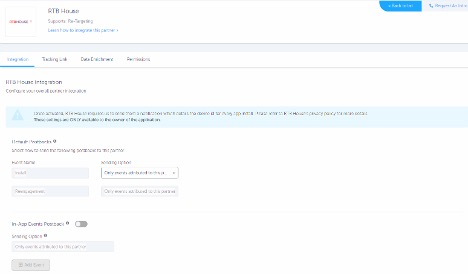
RTB House is an AI-powered ad platform designed for brands and agencies looking to optimize their digital marketing strategies. It offers tools for personalized ad targeting and real-time bidding across multiple channels.
Why it's a good Criteo alternative: RTB House is built on deep learning models that adapt to user behavior, making it well-suited for performance campaigns. I chose it because its personalization engine often outperforms simpler retargeting tools, especially for advertisers with extensive product catalogs. With its focus on customization, RTB House ensures your campaigns align with specific marketing goals.
Standout features & integrations:
Features include advanced analytics that provide insights into campaign performance. The platform's creative optimization tools help refine ad content for better engagement. RTB House also offers audience segmentation capabilities to target specific groups effectively.
Integrations include Google Analytics, Salesforce, Adobe Analytics, HubSpot, Marketo, Oracle, Microsoft Dynamics, Mailchimp, Shopify, and Facebook.
Pros and Cons
Pros:
- Accurate user scoring
- Good e-commerce alignment
- Great dynamic creatives
Cons:
- Limited transparency overall
- Heavy data dependencies
Other Criteo Alternatives
Here are some additional Criteo alternatives that didn’t make it onto my shortlist, but are still worth checking out:
- MediaMath
For customizable programmatic controls
- Basis Technologies
For early-stage tech ventures
- Kevel
For API-first ad serving
- Skai
For cross-channel budget optimization
- Meta Ads Manager
For social media advertising
- Outbrain
For premium publisher placements
- InMobi
For mobile-first campaigns
- CitrusAd
For retail media networks
- Epsilon PeopleCloud Digital Media
For data-driven personalization
- Bidease
For mobile-first advertising
- Adikteev
For re-engagement campaigns
- Yahoo DSP
For identity-based reach
- Adkernal
For building custom ad platforms
- Mediaocean
For efficient media management


Criteo Alternatives Selection Criteria
When selecting the best Criteo alternatives for this list, I considered common buyer needs and pain points in marketing automation software, such as integration capabilities and user-friendly interfaces. I also used the following framework to keep my evaluation structured and fair:
Core Functionality (25% of total score)
To be considered for inclusion in this list, each solution had to fulfill these common use cases:
- Campaign management
- Audience segmentation
- Email marketing automation
- Analytics and reporting
- Lead management
Additional Standout Features (25% of total score)
To help further narrow down the competition, I also looked for unique features, such as:
- AI-driven insights
- Cross-channel tracking
- Customizable dashboards
- Advanced targeting options
- Real-time bidding
Usability (10% of total score)
To get a sense of the usability of each system, I considered the following:
- Intuitive interface
- Easy navigation
- Customizable settings
- Mobile accessibility
- Quick response time
Onboarding (10% of total score)
To evaluate the onboarding experience for each platform, I considered the following:
- Availability of training videos
- Interactive product tours
- Access to templates
- Webinars and live sessions
- Supportive chatbots
Customer Support (10% of total score)
To assess each software provider’s customer support services, I considered the following:
- 24/7 support availability
- Live chat options
- Email support
- Dedicated account managers
- Comprehensive help center
Value For Money (10% of total score)
To evaluate the value for money of each platform, I considered the following:
- Competitive pricing
- Flexible payment plans
- Free trial availability
- No hidden fees
- Discounts for annual subscriptions
Customer Reviews (10% of total score)
To get a sense of overall customer satisfaction, I considered the following when reading customer reviews:
- Positive feedback on functionality
- Satisfaction with customer support
- Ease of use
- Value for money
- Implementation experience
Why Look For A Criteo Alternative?
While Criteo is a good choice of marketing automation software, there are a number of reasons why some users seek out alternative solutions. You might be looking for a Criteo alternative because…
- You need more flexible pricing options.
- Your team requires better customer support
- You're looking for enhanced targeting capabilities
- You need a tool with wider geographic availability
- Your business demands more scalable solutions
- Your industry requires specialized features
If any of these sound like you, you’ve come to the right place. My list includes several marketing automation software options that are better suited for teams facing these challenges with Criteo and seeking alternative solutions.
Criteo Key Features
Here are some of the key features of Criteo, to help you contrast and compare what alternative solutions offer:
- Personalized Retargeting: Delivers ads tailored to your customers' previous interactions with your site, helping you re-engage them effectively.
- Dynamic Product Ads: Automatically generate ads with products that your customers are most likely to buy, increasing conversion chances.
- Predictive Bidding: Uses AI to optimize bidding strategies, ensuring you get the best return on your ad spend.
- Audience Targeting: Allows you to reach specific customer segments based on their shopping behavior and preferences.
- Real-time Reporting: Provides instant insights into campaign performance, helping your team make data-driven decisions.
- Cross-device Advertising: Ensures consistent ad experiences across multiple devices, reaching your audience wherever they are.
- AI Optimization: Utilizes artificial intelligence to enhance ad relevance and effectiveness, improving overall campaign success.
- Commerce Data: Leverages extensive commerce data to better understand customer intent and drive more personalized marketing.
What’s Next:
If you're researching for a marketing automation tool, connect with a SoftwareSelect advisor for free recommendations.
You fill out a form and have a quick chat where they get into the specifics of your needs. Then you'll get a shortlist of software to review. They'll even support you through the entire buying process, including price negotiations.