
Shopifyn arvostelu: hyvät puolet, huonot puolet, ominaisuudet & hinnoittelu
Verkkokauppa-alustan valitseminen voi olla haastavaa. Tämä on yksityiskohtainen Shopify-arvosteluni harkittavaksesi.

We review tools independently, and commissions help fund our testing. See our transparency policy, our methodology, or suggest a tool.
Shopify is an ecommerce platform to accelerate sales built for businesses that want to launch and run an online store without managing technical infrastructure. I'd consider it if you need a hosted storefront with built-in payments, inventory tracking, and sales channel integrations that work out of the box. It's a stronger fit than WooCommerce if your team doesn't want to take on hosting, plugin maintenance, and security updates alongside actually running your business.
Shopify Evaluation Summary
4.5/5
- From $29/month (billed annually)
- 3-day free trial
Miksi luottaa ohjelmistosuosituksiimme
6,700+
Reviews
20
Industry experts
16+
Evaluation factors
14
Years
Tiimimme on testannut ja arvioinut ohjelmistoja vuodesta 2012 lähtien. Julkaisijoina ja mediatoimijoina tiedämme itse, kuinka vaikeaa — ja tärkeää — oikean ohjelmiston valitseminen on.
Tätä opasta varten arvioimme työkaluja käytännön testauksen ja itsenäisen tutkimuksen avulla, pisteyttäen työkalut valintakriteeriemme perusteella.
Arvostelumme perustuvat inhimilliseen toimitukselliseen harkintaamme, eivät myyntipuheeseen.
Shopify Overview
Shopify empowers your business with its robust ecommerce tools, making it a top choice for entrepreneurs seeking growth and simplicity.
Pros
- You can easily customize your store with a wide range of themes.
- Shopify's app store offers tools to boost your store's functionality.
- It provides reliable security to protect your customers' data.
Cons
- You might find transaction fees if not using Shopify Payments.
- Shopify's blogging feature is less robust than others.
- It can be challenging to manage multiple currencies.
Is Shopify Right For Your Needs?
Who Would be a Good Fit for Shopify?
Small to medium-sized retailers and entrepreneurs are well-suited for Shopify. If you’re a boutique clothing store or an artisanal food shop, you’ll benefit from Shopify’s customizable themes and robust app store, which help you create a unique online presence. It’s ideal for those who want a secure and straightforward platform to manage sales and inventory without getting bogged down in technical details.
- Boutique RetailersShopify’s customizable themes help your store stand out in a crowded market.
- Artisan ShopsYou can easily showcase and sell unique products with Shopify’s flexible product listings.
- StartupsShopify’s user-friendly interface allows you to set up quickly and focus on growth.
- Small BusinessesIts app store provides tools to expand your store’s capabilities as your business grows.
- Online MarketplacesShopify’s secure checkout process builds trust with your customers.
- Subscription ServicesYou can manage recurring payments and customer subscriptions efficiently with Shopify’s built-in tools.
Who Would be a Bad Fit for Shopify?
Large enterprises or businesses with complex needs might struggle with Shopify. If your team requires extensive customization or advanced analytics, Shopify’s straightforward interface may limit you. Companies needing multi-currency management or those heavily reliant on blogging may find Shopify’s capabilities insufficient for their operations.
- Enterprise BusinessesShopify’s simplicity doesn’t meet the complex demands of large-scale operations.
- Advanced Analytics TeamsShopify’s analytics tools are basic compared to specialized platforms.
- Blog-Centric BrandsThe blogging feature lacks the depth needed for content-heavy strategies.
- International RetailersManaging multiple currencies can be cumbersome with Shopify’s current setup.
- Highly Customized StoresIf your store needs intricate customizations, Shopify’s options might feel limiting.
- ManufacturersShopify doesn’t cater well to the complex inventory and supply chain needs of manufacturers.
Our Review Methodology
How We Test & Score Tools
We’ve spent years building, refining, and improving our software testing and scoring system. The rubric is designed to capture the nuances of software selection and what makes a tool effective, focusing on critical aspects of the decision-making process.
Below, you can see exactly how our testing and scoring works across seven criteria. It allows us to provide an unbiased evaluation of the software based on core functionality, standout features, ease of use, onboarding, customer support, integrations, customer reviews, and value for money.
Core Functionality (25% of final scoring)
The starting point of our evaluation is always the core functionality of the tool. Does it have the basic features and functions that a user would expect to see? Are any of those core features locked to higher-tiered pricing plans? At its core, we expect a tool to stand up against the baseline capabilities of its competitors.
Standout Features (25% of final scoring)
Next, we evaluate uncommon standout features that go above and beyond the core functionality typically found in tools of its kind. A high score reflects specialized or unique features that make the product faster, more efficient, or offer additional value to the user.
We also evaluate how easy it is to integrate with other tools typically found in the tech stack to expand the functionality and utility of the software. Tools offering plentiful native integrations, 3rd party connections, and API access to build custom integrations score best.
Ease of Use (10% of final scoring)
We consider how quick and easy it is to execute the tasks defined in the core functionality using the tool. High scoring software is well designed, intuitive to use, offers mobile apps, provides templates, and makes relatively complex tasks seem simple.
Onboarding (10% of final scoring)
We know how important rapid team adoption is for a new platform, so we evaluate how easy it is to learn and use a tool with minimal training. We evaluate how quickly a team member can get set up and start using the tool with no experience. High scoring solutions indicate little or no support is required.
Customer Support (10% of final scoring)
We review how quick and easy it is to get unstuck and find help by phone, live chat, or knowledge base. Tools and companies that provide real-time support score best, while chatbots score worst.
Customer Reviews (10% of final scoring)
Beyond our own testing and evaluation, we consider the net promoter score from current and past customers. We review their likelihood, given the option, to choose the tool again for the core functionality. A high scoring software reflects a high net promoter score from current or past customers.
Value for Money (10% of final scoring)
Lastly, in consideration of all the other criteria, we review the average price of entry level plans against the core features and consider the value of the other evaluation criteria. Software that delivers more, for less, will score higher.
Core Features
Online Store Builder
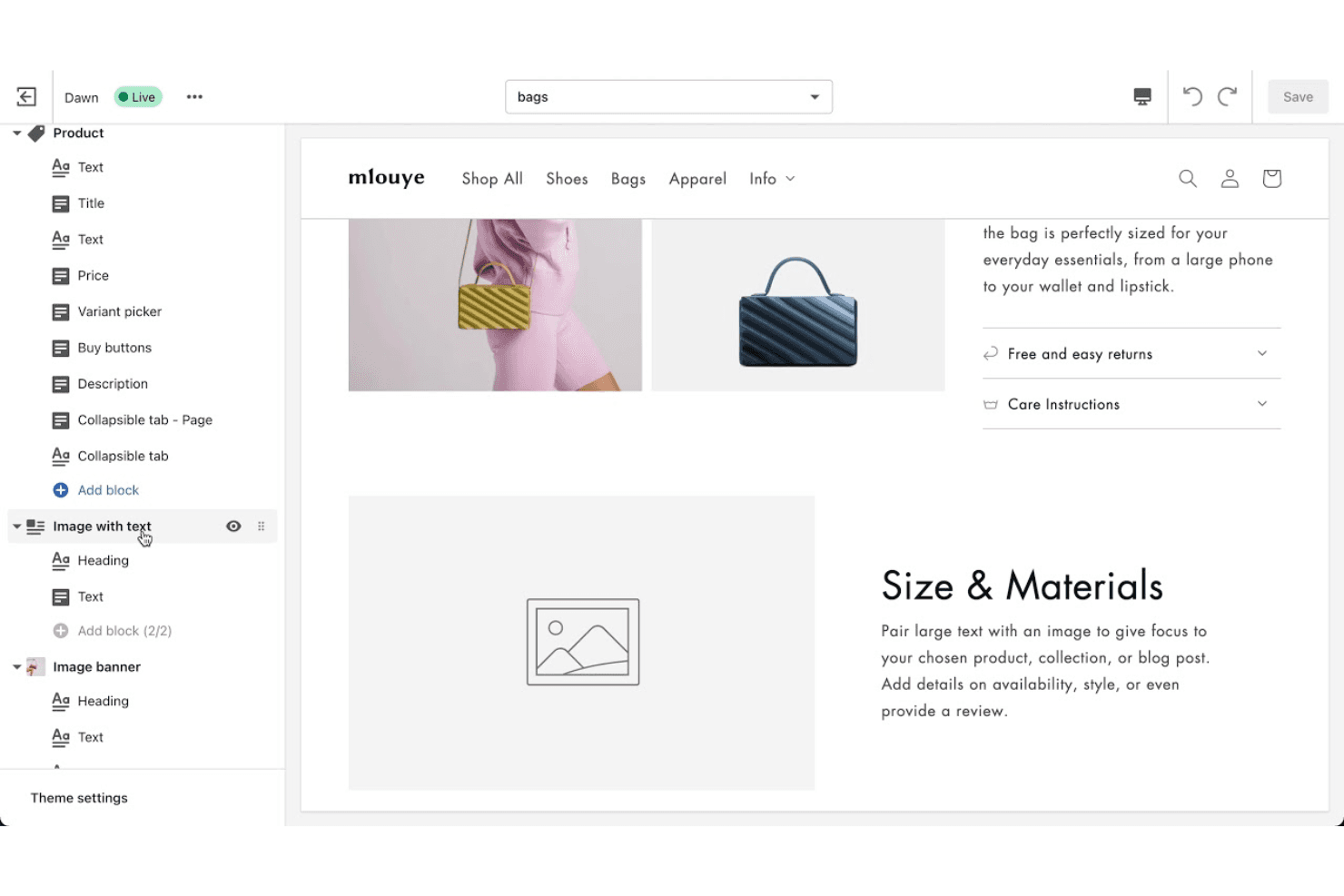
Shopify provides an easy-to-use drag-and-drop store builder that lets you design your store without coding. You can choose from a variety of themes to create a unique look for your brand.
Product Management
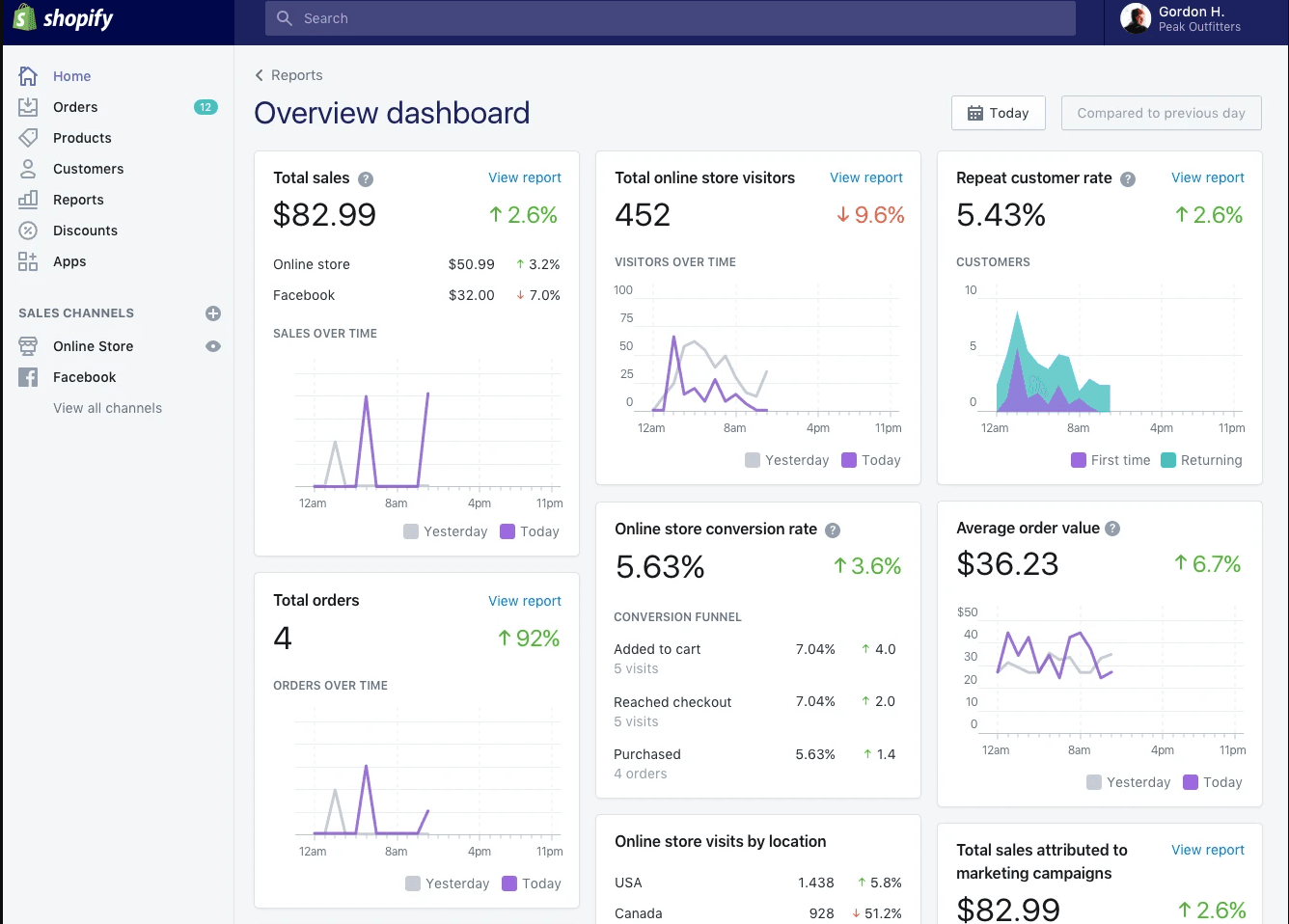
Manage your product listings with ease, including inventory tracking and product variants. Shopify's interface makes it simple to add descriptions, images, and pricing.
Secure Payments
Accept payments from major credit cards with Shopify Payments, ensuring secure transactions for your customers. It simplifies the checkout process and builds trust.
Order Management
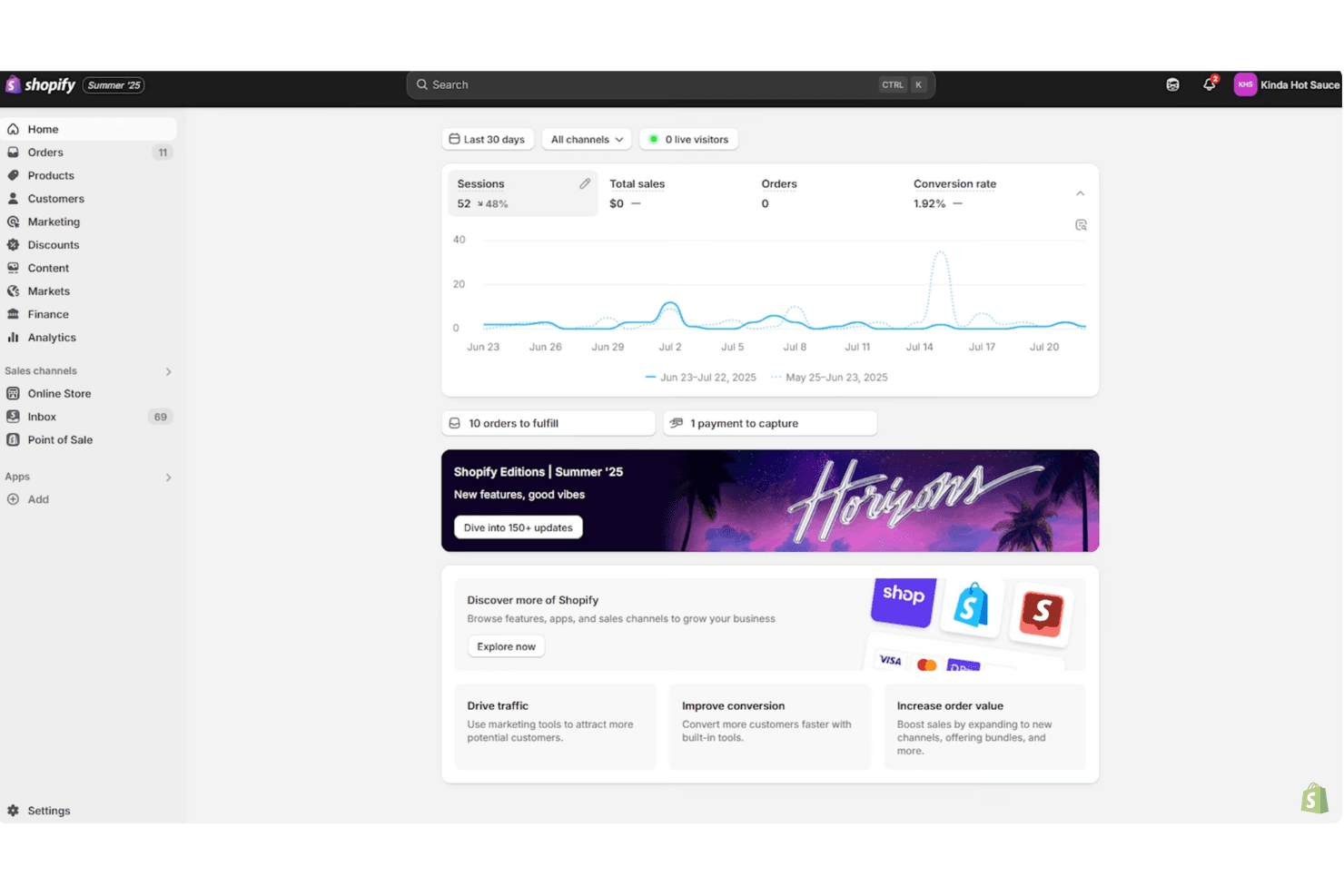
Track and manage all your orders from one dashboard. You can fulfill orders, update statuses, and communicate with customers seamlessly.
SEO Tools
Shopify offers built-in SEO features to help your store rank better in search engines. You can edit meta tags, product descriptions, and URLs to optimize for search visibility.
Mobile Responsiveness
Your store automatically adjusts to look great on any device. This ensures a consistent shopping experience for your customers, whether they're on mobile or desktop.
Ease of Use
Shopify stands out for its user-friendly interface, making it easy for you to set up and manage your online store. The drag-and-drop builder lets you design your store without needing technical skills. Users appreciate the intuitive dashboard for managing products and orders, which saves time and reduces errors. While some advanced features may require a learning curve, the platform’s overall simplicity helps you focus on growing your business instead of getting bogged down in complex processes.
Integrations
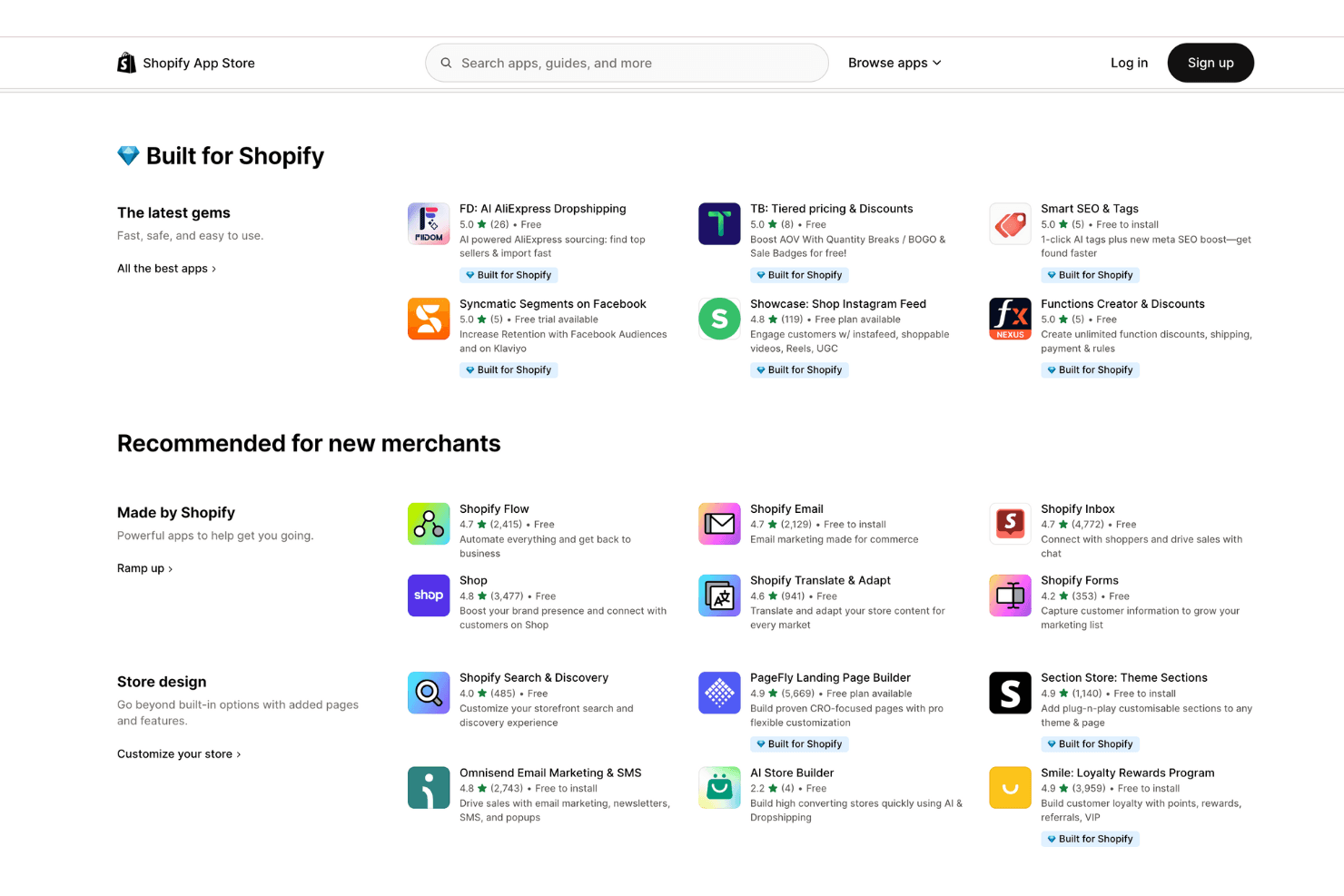
Integrations include Shopify Payments, Facebook, Instagram, Amazon, eBay, Walmart, TikTok, Google, Adyen, Manhattan, Shopify Flow, and POS systems.
Shopify Specs
- 2-Factor Authentication: Yes
- A/B Testing: No
- Analytics: Yes
- API: Yes
- BitCoin: No
- Conversion Tracking: Yes
- Dashboard: Yes
- Data Export: Yes
- Data Import: Yes
- Data Visualization: No
- Design Templates: Yes
- External Integrations: Yes
- Inventory Tracking: Yes
- Keyword Tracking: Yes
- Marketing Automation: Yes
- Multi-User: No
- Notifications: Yes
- Order Management: Yes
- Payment Gateway Integration: Yes
- Payment Processor: No
- PayPal: Yes
- Product Catalog: Yes
- Review Monitoring: Yes
- SAP Integration: No
- Scheduling: No
- Stripe: No
- Third-Party Plugins/Add-Ons: No
Alternatives to Shopify


Shopify FAQs
Mitä seuraavaksi?
Vähittäiskauppa ei koskaan pysähdy – eikä sinunkaan pitäisi. Tilaa uutiskirjeemme, niin saat tuoreimmat näkemykset, strategiat ja uraresurssit alan johtavilta vähittäiskaupan ammattilaisilta, jotka muovaavat toimialaa.