


ShipStation vs. Shopify: Comparison & Expert Reviews for 2026

We review tools independently, and commissions help fund our testing. See our transparency policy, our methodology, or suggest a tool.
Juggling orders, inventory, and shipping can leave you feeling stretched thin. Choosing between ShipStation and Shopify for ecommerce order management software means weighing easy shipping against all-in-one store management. You want a solution that fits your workflow, scales with your business, and keeps customers happy.
In this article, you’ll get a side-by-side comparison of both tools—including pros and cons, use cases, pricing, security, and usability. I’ll help you decide which platform makes the most sense for your unique needs.
ShipStation
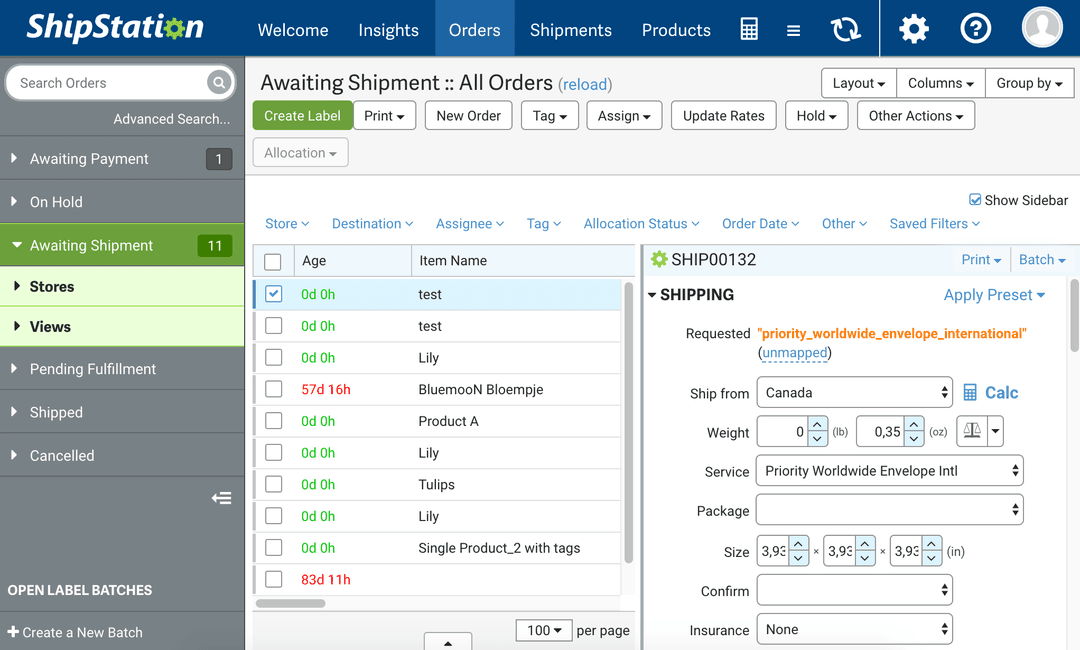
4.6/5
- 30-day free trial
- From $14.99/month
Shopify
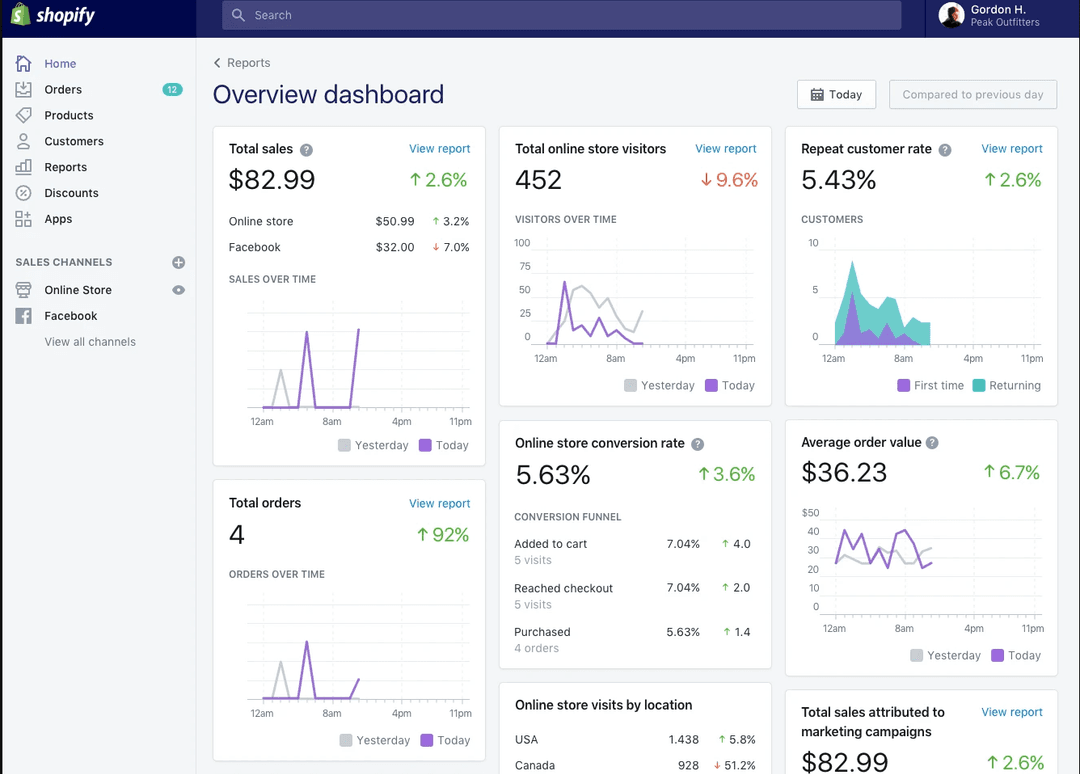
4.5/5
- 3-day free trial
- From $29/month (billed annually)
Why Trust Our Software Recommendations
6,700+
Reviews
20
Industry experts
16+
Evaluation factors
14
Years
Our team has been testing and reviewing software since 2012. As retail leaders ourselves, we know how difficult—and important—it is to choose the right software.
For this guide, we evaluated tools using hands-on testing and independent research, scoring tools using our selection criteria.
Our reviews reflect our independent judgment—not a sales pitch.
| ShipStation | Shopify | |
|---|---|---|
| Free Trial | 30-day free trial | 3-day free trial |
| Pricing | From $14.99/month | From $29/month (billed annually) |
ShipStation vs. Shopify Pricing & Hidden Costs
ShipStation uses a tiered subscription model based on shipment volume, with each plan unlocking more features and higher order limits. You may also encounter extra charges for premium integrations, carrier fees, or add-ons. Shopify, on the other hand, charges a monthly fee for its ecommerce platform, with transaction fees, payment processing costs, and optional app purchases that can add up quickly as your store grows.
To choose the right pricing model, map out your expected order volume, sales channels, and any must-have integrations. Consider not just the base subscription, but also the potential for extra fees as your business scales or your needs change. Reviewing your current and projected workflows will help you spot which platform’s pricing structure fits your growth plans without surprise costs.
Both ShipStation and Shopify offer order tracking, inventory management, and integration with popular shipping carriers. You’ll also find automation tools to speed up fulfillment and reporting features to keep tabs on your sales and shipments. These shared features help streamline your day-to-day operations and keep your orders organized.
ShipStation stands out with its advanced shipping automation and multi-carrier label printing, making it a favorite for businesses focused on high-volume shipping. Shopify, meanwhile, shines with its built-in online store builder and extensive app marketplace, giving you everything you need to run and grow your ecommerce storefront from one place.
| ShipStation | Shopify | |
|---|---|---|
| 2-Factor Authentication | No | Yes |
| A/B Testing | Yes | No |
| Analytics | No | Yes |
| API | Yes | Yes |
| BitCoin | No | No |
| Conversion Tracking | Yes | Yes |
| Dashboard | Yes | Yes |
| Data Export | Yes | Yes |
| Data Import | Yes | Yes |
| Data Visualization | Yes | No |
| Design Templates | No | Yes |
| External Integrations | Yes | Yes |
| Inventory Tracking | Yes | Yes |
| Keyword Tracking | No | Yes |
| Marketing Automation | Yes | Yes |
| Multi-User | Yes | No |
| Notifications | Yes | Yes |
| Order Management | Yes | Yes |
| Payment Gateway Integration | No | Yes |
| Payment Processor | No | No |
| PayPal | Yes | Yes |
| Product Catalog | Yes | Yes |
| Review Monitoring | No | Yes |
| SAP Integration | No | No |
| Scheduling | Yes | No |
| Stripe | Yes | No |
| Third-Party Plugins/Add-Ons | Yes | No |
| Integration | ShipStation | Shopify |
| Amazon | ✅ | ✅ |
| eBay | ✅ | ✅ |
| Etsy | ✅ | ✅ |
| Walmart | ✅ | ✅ |
| QuickBooks | ✅ | ✅ |
| FedEx | ✅ | ✅ |
| UPS | ✅ | ✅ |
| Xero | ✅ | ❌ |
| Royal Mail | ✅ | ❌ |
| Facebook Shops | ✅ | ✅ |
| API | ✅ | ✅ |
| Zapier | ✅ | ✅ |
Both ShipStation and Shopify cover the most popular ecommerce and shipping integrations, but ShipStation offers a wider range—especially for accounting and global carriers. With API and Zapier support, both platforms let you connect to almost any tool, so you’re set for most integration needs.
| Factor | ShipStation | Shopify |
| Data Encryption | Uses SSL encryption for data in transit and secure storage for sensitive info. | Encrypts all data in transit and at rest, with PCI DSS Level 1 compliance. |
| Regulatory Compliance | Supports GDPR and CCPA requirements for data privacy and user rights. | Fully compliant with GDPR, CCPA, and PCI DSS for global ecommerce. |
| Uptime & Reliability | Guarantees high uptime with redundant infrastructure and real-time monitoring. | Delivers 99.99% uptime and global CDN for fast, reliable access. |
| Access Controls | Offers user roles and permissions to restrict sensitive data access. | Provides granular staff permissions and two-factor authentication. |
Shopify leads with advanced compliance certifications and global reliability, while ShipStation covers the essentials for secure order management. ShipStation’s strength is in straightforward, practical security for shipping, while Shopify stands out for its enterprise-grade compliance and always-on reliability for the entire storefront.
| Factor | ShipStation | Shopify |
| User Interface | Clean dashboard focused on shipping tasks, with customizable views. | Intuitive drag-and-drop store builder and clear navigation menus. |
| Onboarding | Guided setup with helpful tooltips, but some features require learning. | Step-by-step onboarding and extensive tutorials for new users. |
| Setup Process | Quick to connect carriers and channels, but advanced rules take time. | Fast store launch with built-in templates and easy product uploads. |
| Customer Support | Email and chat support, plus a searchable help center. | 24/7 live chat, phone, and a large knowledge base. |
Shopify is easier for beginners and those building a store, while ShipStation is best for users who want fast, focused shipping workflows. ShipStation’s interface is efficient for order processing, while Shopify’s user-friendly design and support make it simple to manage every aspect of your ecommerce business.
ShipStation
- Smooth integrations. Works seamlessly with platforms like Shopify, Amazon, eBay, and Etsy so you can manage all orders in one place.
- Time-saving automation. Cuts down repetitive shipping tasks, letting you focus on fulfillment instead of button-clicking.
- Solid tracking and reporting. Gives you visibility into shipments and performance without pulling manual spreadsheets.
- Clunky interface. The navigation isn’t intuitive, which can slow down teams until they get comfortable.
- Slow onboarding. Setup and training take longer than they should, especially for less technical users.
- Inconsistent support. Help is available, but responses can be delayed when you’re under pressure.
Shopify
- You can easily customize your store with a wide range of themes.
- Shopify's app store offers tools to boost your store's functionality.
- It provides reliable security to protect your customers' data.
- You might find transaction fees if not using Shopify Payments.
- Shopify's blogging feature is less robust than others.
- It can be challenging to manage multiple currencies.
ShipStation
- Small retailersManage fulfillment without needing a large back-office team.
- Online boutiquesTrack and report on shipments to keep customers informed.
- Electronics storesHandle high-volume orders thanks to strong platform integrations.
- Home goods sellersStreamline complex product ranges with comprehensive shipping tools.
- Logistics teamsAutomate repetitive tasks so staff can focus on higher-value work.
- Customer service departmentsShare accurate shipping updates to improve the customer experience.
Shopify
- Boutique RetailersShopify’s customizable themes help your store stand out in a crowded market.
- Artisan ShopsYou can easily showcase and sell unique products with Shopify’s flexible product listings.
- StartupsShopify’s user-friendly interface allows you to set up quickly and focus on growth.
- Small BusinessesIts app store provides tools to expand your store’s capabilities as your business grows.
- Online MarketplacesShopify’s secure checkout process builds trust with your customers.
- Subscription ServicesYou can manage recurring payments and customer subscriptions efficiently with Shopify’s built-in tools.
Who Should Use ShipStation, and Who Should Use Shopify?
ShipStation is best suited for ecommerce businesses that already have a store but need a dedicated shipping software and fulfillment solution, especially as order volume starts to climb. If you’re selling across multiple channels like Amazon, eBay, or Shopify, it helps you centralize orders and automate shipping workflows without rebuilding your entire stack. You’ll get the most value from ShipStation if your main challenge is operational efficiency—streamlining labels, carriers, and fulfillment at scale.
Shopify, on the other hand, is ideal if you’re looking for an all-in-one ecommerce platform to build and run your store from the ground up. I think it’s a strong fit if you want a simple way to launch quickly, manage products, accept payments, and handle basic shipping all in one place. If you’d rather not piece together multiple tools and just want something that works out of the box, Shopify is likely the better choice for you.
| ShipStation | Shopify | |
|---|---|---|
| Automation | ShipStation Advanced shipping automation, rules, and batch label printing. | Shopify Native automation tools (like Shopify Flow), focused on sales and workflows. |
| Core Focus | ShipStation Dedicated shipping and fulfillment management platform. | Shopify All-in-one ecommerce platform for selling, marketing, and operations. |
| Inventory Management | ShipStation Focused on fulfillment workflows and shipping optimization. Inventory management features limited to higher-tier plans. | Shopify Built-in inventory management at all pricing levels, including product catalogs and order management functionality. |
| Marketing & Sales Tools | Shopify Built-in tools for email marketing, SEO, and social selling. | |
| Shipping Carriers | ShipStation 50+ global carrier integrations (e.g., Canada Post, USPS, DHL, UPS, FedEx, Royal Mail, Amazon, etc.) for maximum flexibility. | Shopify Limited native carriers, extended via apps if needed. |
| Storefront Creation | ShipStation No built-in storefront; requires integration with an ecommerce platform. | Shopify Includes a full website builder with customizable storefronts. |
| API & Zapier Access | Both offer API access and Zapier integration for custom workflows and connecting with other business tools. |
|---|---|
| International Shipping | Each platform supports international shipping, including customs forms and global carrier options. |
| Mobile Access | Both offer mobile apps or mobile-friendly dashboards for managing orders and operations on the go. |
| Order Management | Both let you handle multi-channel order management: view, organize, and process orders in one dashboard. |
| Reporting & Analytics | Each provides sales, shipping, and performance reports to help you track business metrics and trends. |