

BigCommerce vs. Shopify: Comparison & Expert Reviews for 2026
I break down BigCommerce vs. Shopify, revealing key differences and unique perks to help you confidently choose the right SaaS ecommerce platform for your goals.

We review tools independently, and commissions help fund our testing. See our transparency policy, our methodology, or suggest a tool.
If you’re digging into BigCommerce and Shopify, you’re probably trying to grow online store sales, skip tech headaches, and keep costs under control. With so many saas ecommerce platforms promising flexibility, speed, and scalability, it’s tough to spot what really matters for your team.
In this article, you’ll get a head-to-head comparison—covering pros and cons, common use cases, pricing, security, and usability—so you can decide which platform fits your needs right now.
If you’re digging into BigCommerce and Shopify, you’re probably trying to grow online store sales, skip tech headaches, and keep costs under control. With so many saas ecommerce platforms promising flexibility, speed, and scalability, it’s tough to spot what really matters for your team.
In this article, you’ll get a head-to-head comparison—covering pros and cons, common use cases, pricing, security, and usability—so you can decide which platform fits your needs right now.
BigCommerce
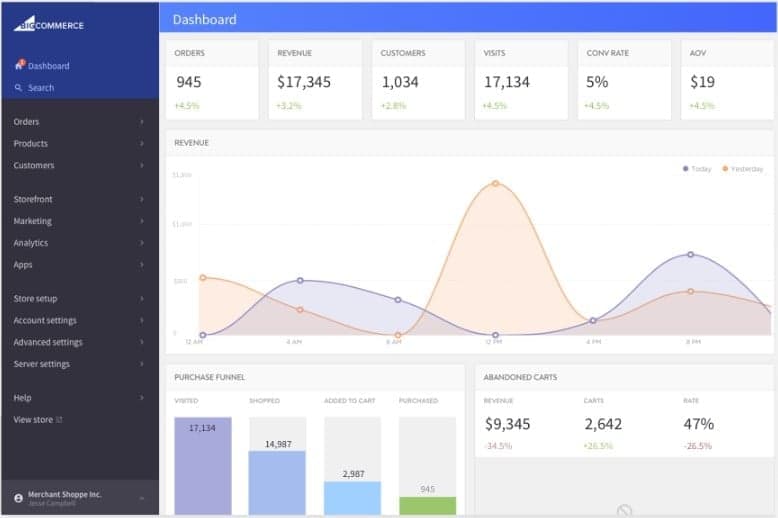
4.3/5
- 15-day free trial + free demo available
- From $29/month (billed annually)
Shopify
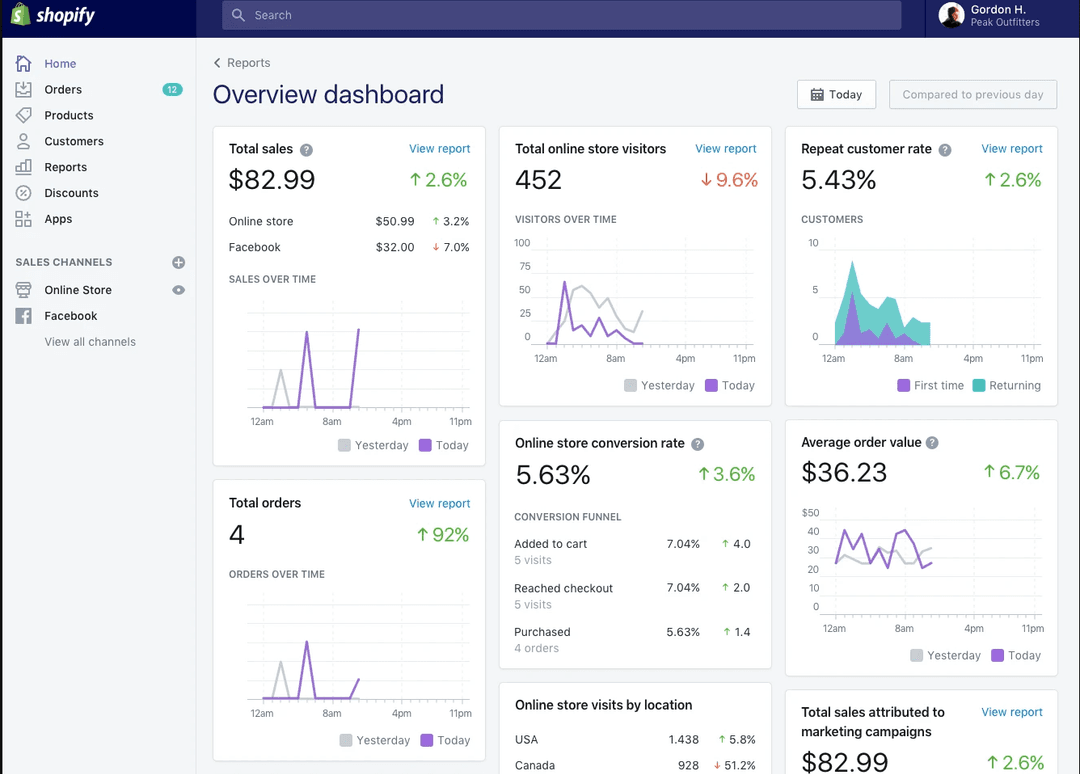
4.5/5
- 3-day free trial
- From $29/month (billed annually)
Why Trust Our Software Recommendations
6,700+
Reviews
20
Industry experts
16+
Evaluation factors
14
Years
Our team has been testing and reviewing software since 2012. As retail leaders ourselves, we know how difficult—and important—it is to choose the right software.
For this guide, we evaluated tools using hands-on testing and independent research, scoring tools using our selection criteria.
Our reviews reflect our independent judgment—not a sales pitch.
| BigCommerce | Shopify | |
|---|---|---|
| Free Trial | 15-day free trial + free demo available | 3-day free trial |
| Pricing | From $29/month (billed annually) | From $29/month (billed annually) |
BigCommerce vs. Shopify Pricing & Hidden Costs
BigCommerce offers transparent plans with features scaling up as you grow, but watch out for possible extra charges as your revenue increases. Shopify uses a tiered subscription model, yet you might find extra costs for third-party apps, premium themes, and transaction fees if you don't use their payment gateway.
To choose the best fit, dig into the fine print: compare which their built-in features with the ones that require add-ons or upgrades. Make a list of the must-have tools and integrations for your business, then estimate what your total costs look like as you scale—think revenue thresholds, payment processing, and support needs—so you’re not surprised down the line.
| BigCommerce | Shopify | |
|---|---|---|
| 2-Factor Authentication | No | Yes |
| A/B Testing | No | No |
| Analytics | No | Yes |
| API | Yes | Yes |
| BitCoin | No | No |
| Conversion Tracking | Yes | Yes |
| Dashboard | Yes | Yes |
| Data Export | Yes | Yes |
| Data Import | Yes | Yes |
| Data Visualization | Yes | No |
| Design Templates | No | Yes |
| External Integrations | Yes | Yes |
| Inventory Tracking | Yes | Yes |
| Keyword Tracking | No | Yes |
| Marketing Automation | Yes | Yes |
| Multi-User | Yes | No |
| Notifications | Yes | Yes |
| Order Management | Yes | Yes |
| Payment Gateway Integration | No | Yes |
| Payment Processor | Yes | No |
| PayPal | Yes | Yes |
| Product Catalog | Yes | Yes |
| Review Monitoring | No | Yes |
| SAP Integration | Yes | No |
| Scheduling | No | No |
| Stripe | Yes | No |
| Third-Party Plugins/Add-Ons | Yes | No |
| Integration | BigCommerce | Shopify |
|---|---|---|
| IntegrationMailchimp | BigCommerce✅ | Shopify✅ |
| IntegrationQuickBooks | BigCommerce✅ | Shopify✅ |
| IntegrationAmazon | BigCommerce✅ | Shopify✅ |
| IntegrationeBay | BigCommerce✅ | Shopify✅ |
| IntegrationWalmart | BigCommerce✅ | Shopify❌ |
| IntegrationFacebook Shops | BigCommerce✅ | Shopify✅ |
| IntegrationStripe | BigCommerce✅ | Shopify✅ |
| IntegrationTikTok | BigCommerce✅ | Shopify✅ |
| IntegrationSquare POS | BigCommerce✅ | Shopify❌ |
| IntegrationAfterpay | BigCommerce❌ | Shopify✅ |
| IntegrationAPI | BigCommerce✅ | Shopify✅ |
| IntegrationZapier | BigCommerce✅ | Shopify✅ |
Both platforms support a huge range of integrations, covering popular channels and business tools, with Shopify offering access to thousands of niche add-ons through its app store. Thanks to robust APIs and Zapier support, either platform can cover just about any integration need your business has—though it’s worth checking each for a few must-have connections before you commit.
| Factor | BigCommerce | Shopify |
|---|---|---|
| FactorPCI Compliance | BigCommerceCertified PCI DSS out-of-the-box, so stores automatically meet payment standards. | ShopifyFully PCI DSS compliant, so merchants don’t have to manage compliance themselves. |
| FactorData Encryption | BigCommerceUses HTTPS and TLS to encrypt customer data during every transaction. | ShopifyEncrypts all store and payment data with SSL/TLS for secure browsing and checkout. |
| FactorUptime SLA | BigCommerce99.99% uptime commitment, with redundant systems and disaster recovery. | Shopify99.99% uptime with global CDN and robust failover procedures for reliability. |
| FactorFraud Protection | BigCommerceIncludes built-in fraud analysis tools and supports third-party fraud apps. | ShopifyOffers real-time fraud analysis and access to fraud detection apps in the app store. |
| FactorGDPR Support | BigCommerceProvides privacy tools for GDPR compliance, including cookie consent and data export. | ShopifyOffers GDPR-ready features like customer data requests and privacy policy templates. |
Both platforms hold strong when it comes to security and compliance, but Shopify earns points for its seamless compliance processes and user-friendly privacy features. From my experience, BigCommerce feels more transparent about reliability while Shopify’s automation around compliance stands out for fast-moving teams.
| Factor | BigCommerce | Shopify |
|---|---|---|
| FactorSetup Process | BigCommerceOffers guided setup with helpful checklists, though catalog setup can feel complex for large stores. | ShopifyStreamlined onboarding gets you live in minutes, with a simple store wizard. |
| FactorUser Interface | BigCommerceClean dashboard geared toward power users with advanced settings upfront. | ShopifyIntuitive, drag-and-drop interface that’s ideal for beginners and growing teams. |
| FactorTheme Editing | BigCommerceTheme editor provides deep customization, but requires some technical know-how. | ShopifyIn-browser theme editor makes it easy to swap, edit, and preview changes instantly. |
| FactorHelp Resources | BigCommerceExtensive help articles and phone support for onboarding and troubleshooting. | Shopify24/7 live chat, community forums, and instant guides integrated into the admin. |
| FactorMobile Access | BigCommerceMobile app with product management and some order fulfillment features. | ShopifyFull-featured mobile app lets you manage most store tasks on the go. |
Shopify wins for ease of use, with a faster learning curve, a truly intuitive builder, and better user experience overall. I find BigCommerce gives you more advanced options if you’re tech-savvy, while Shopify removes almost every barrier for busy teams launching fast.
BigCommerce
- You can easily customize your store with its flexible design tools.
- Your team benefits from strong SEO features that boost visibility.
- You get reliable performance with fast loading times.
- Your team might find the learning curve a bit steep.
- You could encounter limitations with multi-language support.
- You might need more advanced reporting tools for detailed insights.
Shopify
- You can easily customize your store with a wide range of themes.
- Shopify's app store offers tools to boost your store's functionality.
- It provides reliable security to protect your customers' data.
- You might find transaction fees if not using Shopify Payments.
- Shopify's blogging feature is less robust than others.
- It can be challenging to manage multiple currencies.
BigCommerce
- Fashion RetailersBigCommerce’s flexible design tools let you create visually appealing stores that attract fashion-savvy customers.
- Electronics StoresIts strong SEO features help your tech products reach a wider audience, boosting your online presence.
- Mid-Sized BusinessesBigCommerce supports scalability, allowing your business to grow without hitting platform limitations.
- Marketing TeamsThe SEO capabilities enable your team to enhance your brand’s visibility and drive more traffic.
- Home Goods RetailersYou can benefit from reliable performance and fast loading times, ensuring a smooth shopping experience for your customers.
- Digital AgenciesBigCommerce’s customizable design options let your agency craft unique, branded experiences for clients.
Shopify
- Boutique RetailersShopify’s customizable themes help your store stand out in a crowded market.
- Artisan ShopsYou can easily showcase and sell unique products with Shopify’s flexible product listings.
- StartupsShopify’s user-friendly interface allows you to set up quickly and focus on growth.
- Small BusinessesIts app store provides tools to expand your store’s capabilities as your business grows.
- Online MarketplacesShopify’s secure checkout process builds trust with your customers.
- Subscription ServicesYou can manage recurring payments and customer subscriptions efficiently with Shopify’s built-in tools.
Who Should Use BigCommerce, and Who Should Use Shopify?
BigCommerce is best for teams that want plenty of out-of-the-box functionality, advanced product catalogs, and multi-store management without heavy additional costs—often midsize or enterprise retailers or those selling B2B. Shopify offers a solution for anyone looking to launch an ecommerce store fast, prioritize usability, and tap into a massive ecosystem of apps (Shopify app store) and partners, making it a favorite for new brands, growing DTC shops, and teams with limited technical resources. If you want more technical control and complexity, lean BigCommerce. For speed, simplicity, and a supportive app community, you can’t go wrong with Shopify.
| BigCommerce | Shopify | |
|---|---|---|
| App Ecosystem | BigCommerce Smaller app marketplace, most essentials built-in. | Shopify Massive app store with virtually every integration imaginable. |
| Multi-Storefront | BigCommerce Supports multiple storefronts natively in one admin. | Shopify Needs third-party apps or workarounds for multi-storefronts. |
| Onboarding Speed | BigCommerce More complex initial setup for advanced stores. | Shopify Very quick to launch with guided setup for new sellers. |
| Payment Processing | BigCommerce No extra fees for third-party payment gateways. | Shopify Charges extra fees unless you use Shopify Payments. |
| Product Catalog | BigCommerce Advanced product options and bulk editing out-of-the-box. | Shopify Streamlined catalog, suited for simpler or smaller inventories. |
| Built-In Analytics | Each platform provides dashboards and reports for tracking sales, traffic, and store performance right from the admin. |
|---|---|
| Hosted Platform | Both are fully hosted, so you don’t worry about servers, maintenance, or updates—your store stays online and secure at all times. |
| Integration Ready | Both offer robust APIs and Zapier integrations, so you can connect with just about any business tool or system your team uses. |
| Payment Options | Both support a wide range of payment providers, including Stripe and PayPal, giving merchants flexibility with customer payments. |
| Subscription Model | Both charge monthly subscription fees and offer tiered plans that scale with business needs, and allow you to upgrade as you grow. |