

10 sistemi di gestione del magazzino per e-commerce per il 2026

10 Elenco ristretto dei sistemi di gestione del magazzino per il commercio elettronico


Un sistema di gestione del magazzino per il commercio elettronico (WMS) è un software di gestione del magazzino che aiuta la tua azienda a monitorare l'inventario, gestire gli ordini e coordinare il processo di evasione degli ordini attraverso i canali online e offline. Se stai cercando il miglior WMS o il miglior sistema di gestione del magazzino per il commercio elettronico, probabilmente stai affrontando difficoltà legate alla precisione dell'inventario, alla velocità di evasione degli ordini o all'espansione delle tue attività con la crescita delle vendite. I moderni software WMS supportano la gestione del magazzino, il coordinamento della catena di approvvigionamento e il commercio omnicanale, spesso attraverso piattaforme basate sul cloud progettate per semplificare l'evasione degli ordini del commercio elettronico. Il sistema giusto può aiutarti a evitare costose rotture di stock, ridurre gli errori nell'evasione degli ordini e mantenere soddisfatti i tuoi clienti, indipendentemente dalla complessità dei tuoi canali di vendita o della configurazione del magazzino. In questa guida troverai un elenco curato delle migliori soluzioni per il 2026, con informazioni chiare su ciò che ciascuna offre al meglio, così potrai prendere una decisione consapevole per la tua azienda.
Perché fidarsi dei nostri consigli sui software
Il nostro team testa e recensisce software dal 2012. In quanto leader del retail noi stessi, sappiamo quanto sia difficile — e importante — scegliere il software giusto.
Per questa guida, abbiamo valutato gli strumenti attraverso test pratici e ricerche indipendenti, assegnando un punteggio agli strumenti in base ai nostri criteri di selezione.
Le nostre recensioni riflettono il nostro giudizio indipendente, non un discorso di vendita.
Riepilogo dei sistemi di gestione del magazzino per il commercio elettronico
| Tool | Best For | Trial Info | Price | ||
|---|---|---|---|---|---|
| 1 | Ideale per la protezione integrata dell’account Amazon | Piano gratuito + demo gratuita disponibile | A partire da $19/mese | Website | |
| 2 | Ideale per il monitoraggio dell'inventario nelle piccole imprese | Prova gratuita di 14 giorni + demo gratuita disponibile | Da $129/mese (fatturazione annuale) | Website | |
| 3 | Ideale per operazioni di magazzino mobili | Demo gratuita disponibile | Da $590/utente/mese (fatturazione annuale) | Website | |
| 4 | Ideale per 3PL e fornitori di servizi di fulfillment | Demo gratuita disponibile | Prezzo su richiesta | Website | |
| 5 | Ideale per l'integrazione con QuickBooks | Demo gratuita disponibile | Da $229/mese (fatturazione annuale) | Website | |
| 6 | Ideale per commercianti omnicanale in fase di espansione | Demo gratuita disponibile | Prezzo su richiesta | Website | |
| 7 | Ideale per l'automazione di magazzino guidata dall'AI | Demo gratuita disponibile | Prezzo su richiesta | Website | |
| 8 | Ideale per la gestione aziendale tutto-in-uno | Demo gratuita + prova gratuita di 14 giorni disponibile | Da €14,50 /mese | Website | |
| 9 | Ideale per la visibilità dell'inventario su più sedi | Demo gratuita disponibile | Prezzo su richiesta | Website | |
| 10 | Ideale per l'evasione diretta al consumatore | Demo gratuita disponibile | A partire da $499/mese/account | Website |
Recensioni dei sistemi di gestione del magazzino per il commercio elettronico
Di seguito trovi i miei riepiloghi dettagliati dei sistemi di gestione del magazzino per il commercio elettronico che sono entrati nel mio elenco ristretto. Le mie recensioni offrono una panoramica dettagliata delle funzionalità, dei migliori casi d’uso e delle integrazioni di ciascun sistema, per aiutarti a trovare quello più adatto alla tua azienda.

Veeqo
Ideale per la protezione integrata dell’account Amazon
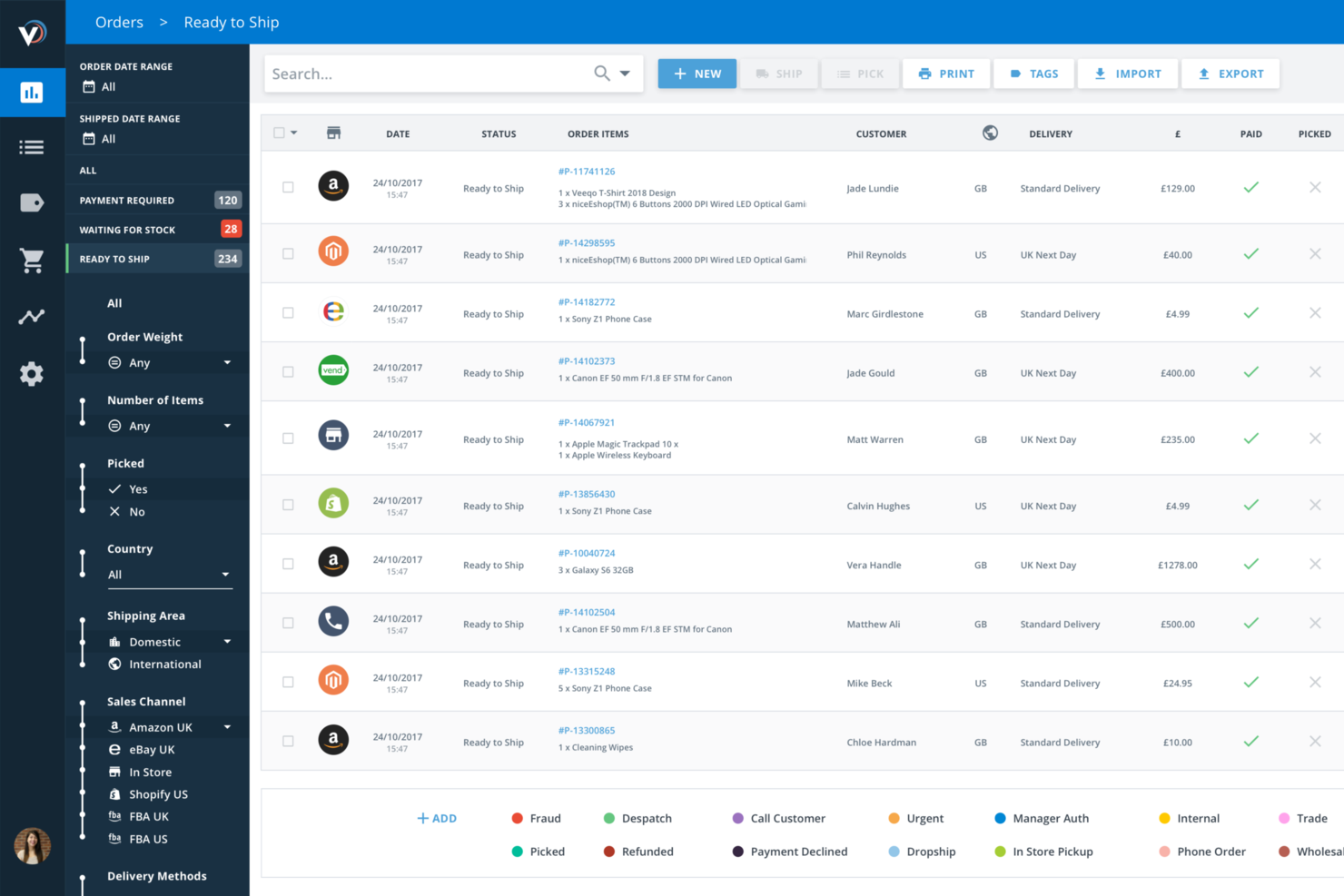
Veeqo è un sistema di gestione del magazzino per l'ecommerce che unisce controllo dell'inventario, gestione degli ordini, creazione di etichette di spedizione e integrazioni multi-canale per i rivenditori online.
Per chi è Veeqo?
Veeqo è adatto ai rivenditori ecommerce e ai team di magazzino che hanno bisogno di gestire inventario, ordini e spedizioni su più canali di vendita.
Perché ho scelto Veeqo
Ho incluso Veeqo tra le mie scelte migliori perché offre una protezione Amazon integrata per l’account che aiuta il mio team a evitare sospensioni costose dell’account. Utilizzo le integrazioni FBA e FBM di Amazon per sincronizzare inventario e ordini rispettando i rigorosi requisiti di Amazon. Gli avvisi in tempo reale di Veeqo segnalano possibili problemi con inserzioni o consegne, così posso agire prima che influiscano sullo stato del mio account Amazon.
Caratteristiche principali di Veeqo
- Gestione ordini multi-canale: Sincronizza e gestisci gli ordini da Amazon, eBay, Shopify e altri canali di vendita in un’unica dashboard.
- Creazione automatica delle etichette di spedizione: Genera etichette di spedizione per più corrieri direttamente dalla piattaforma.
- Scannerizzazione dei codici a barre: Usa la scannerizzazione dei codici a barre per velocizzare il prelievo e l’imballaggio in magazzino.
- Tracciamento inventario tra sedi diverse: Monitora i livelli e i movimenti di stock tra magazzini e punti di stoccaggio diversi.
Integrazioni di Veeqo
Veeqo offre integrazioni native con Amazon, eBay, Shopify, Walmart, WooCommerce, BigCommerce, Magento, Etsy, UPS, USPS, FedEx e DHL. È disponibile un’API per integrazioni personalizzate.
Pros and Cons
Pros:
- Sincronizzazione in tempo reale dell’inventario su tutti i canali
- Premi integrati Veeqo Credits per la spedizione
- Supporto per il prelievo in batch e la scannerizzazione dei codici a barre
Cons:
- Opzioni limitate di personalizzazione dei report
- Nessuna funzionalità integrata di previsione o pianificazione della domanda
New Product Updates from Veeqo
Veeqo Adds Wix Integration for US and UK Users
Veeqo now integrates with Wix for US and UK users, letting you connect your Wix account and manage orders and inventory from a single place. For more information, visit Veeqo's official site.
 .
.
Ideale per il monitoraggio dell'inventario nelle piccole imprese
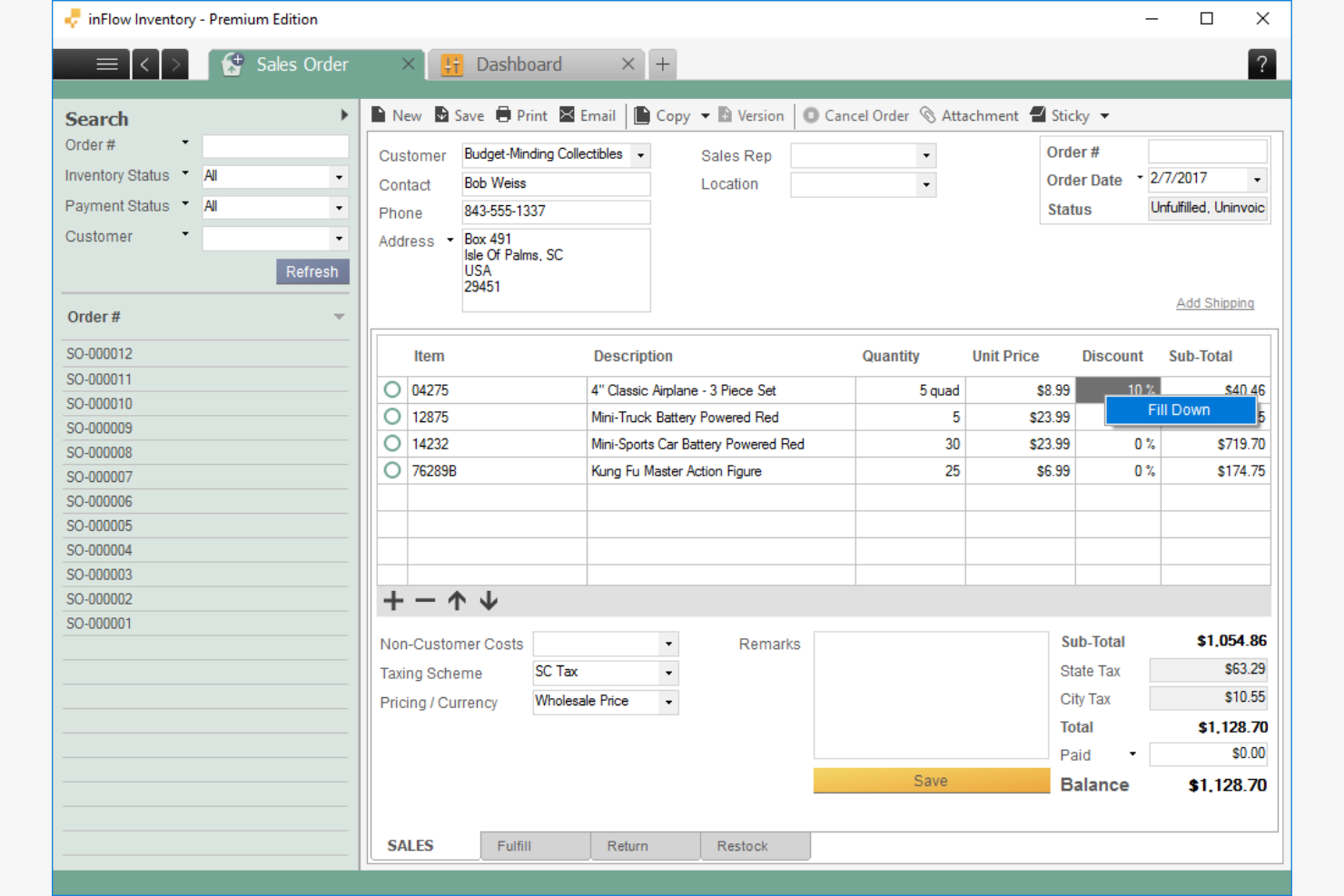
Se gestisci una piccola attività di e-commerce e hai bisogno di monitorare attentamente l'inventario, inFlow Inventory offre una soluzione mirata per tracciare scorte, ordini e spedizioni. Questo strumento è pensato per rivenditori e grossisti che desiderano gestire l'inventario in più sedi senza la complessità di sistemi aziendali. inFlow Inventory si distingue per il supporto ai codici a barre e la gestione degli ordini integrata, aiutando i piccoli team a rimanere organizzati durante la crescita.
Perché ho scelto inFlow Inventory
Per le piccole imprese che necessitano di un monitoraggio affidabile dell'inventario senza complessità aggiuntive, inFlow Inventory è progettato proprio per questa esigenza. Ho scelto inFlow Inventory perché offre la scansione dei codici a barre e aggiornamenti in tempo reale dello stock, fondamentali per gestire l’inventario in modo efficiente in un’attività di e-commerce in crescita. Lo strumento supporta anche il tracciamento di ordini e spedizioni, così puoi seguire i prodotti dall’acquisto alla consegna. Se desideri un sistema di gestione del magazzino su misura per i flussi di lavoro delle piccole imprese, inFlow Inventory svolge bene questo ruolo.
Funzionalità principali di inFlow Inventory
Altre funzionalità di inFlow Inventory che supportano la gestione dei magazzini e-commerce includono:
- Monitoraggio inventario multi-sede: Controlla i livelli di stock in diversi magazzini o punti vendita da un’unica dashboard.
- Raggruppamento e confezionamento prodotti: Raggruppa più articoli insieme per venderli come un unico prodotto o kit.
- Report personalizzabili: Genera report su inventario, vendite e acquisti su misura per le esigenze della tua azienda.
- Gestione dei permessi utente: Imposta diversi livelli di accesso per i membri del team per controllare chi può visualizzare o modificare i dati dell’inventario.
Integrazioni di inFlow Inventory
Le integrazioni includono Etsy, Amazon, BigCommerce, eBay, Faire, FedEx, QuickBooks Online, Shopify, WooCommerce, Squarespace, Xero, Zapier e altro ancora.
Pros and Cons
Pros:
- Gestione multi-sede coordina l’inventario di magazzino
- Ordini integrati semplificano i flussi di acquisto
- Il raggruppamento prodotti supporta i kit per e-commerce
Cons:
- Nessuna integrazione nativa con corrieri di spedizione
- Nessuna funzione avanzata di prelievo prodotti dal magazzino

Ideale per operazioni di magazzino mobili
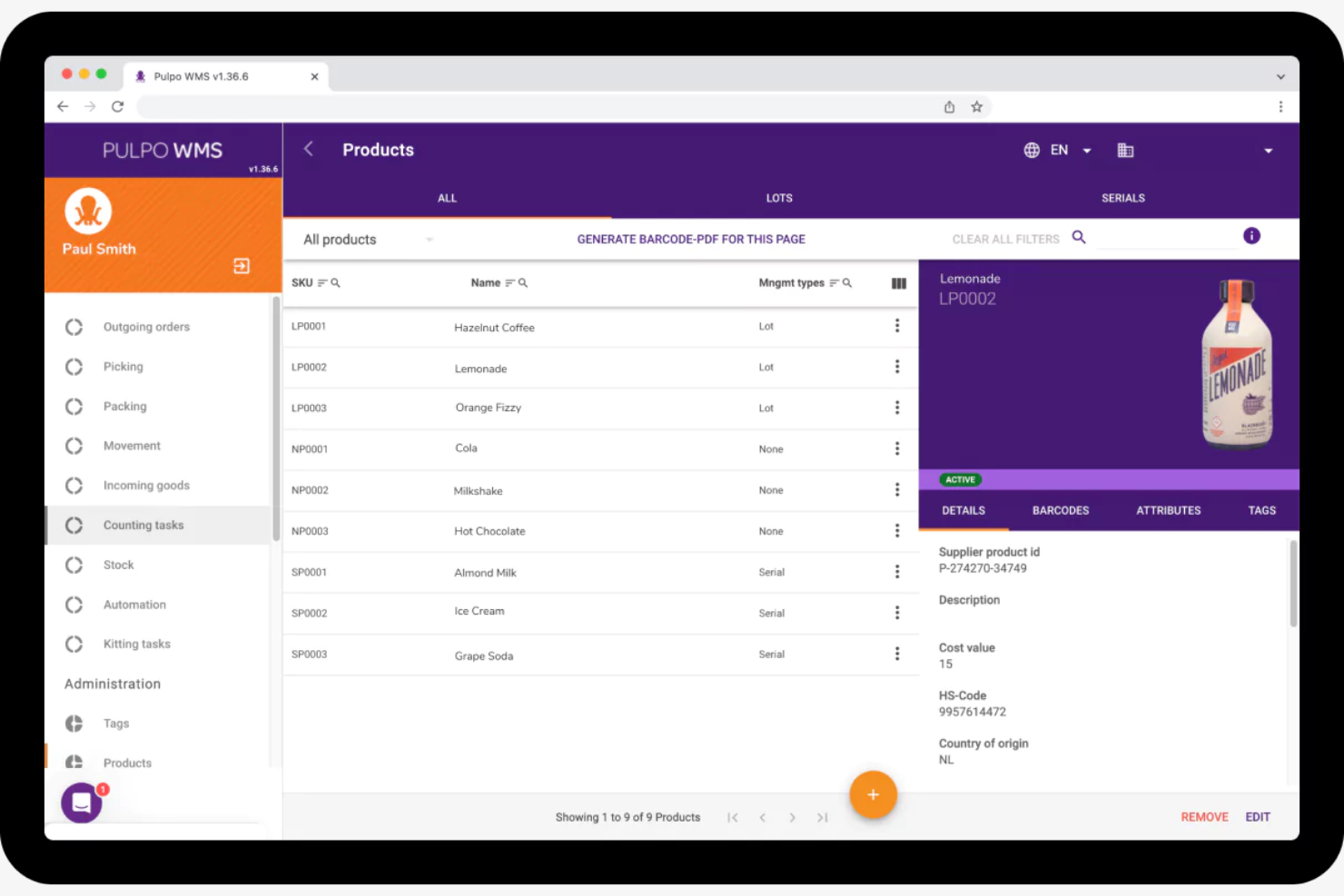
Se il tuo team di magazzino fa affidamento su dispositivi mobili per le operazioni quotidiane, PULPO WMS è pensato per te. Questa piattaforma è progettata per le aziende di e-commerce che necessitano di un controllo dell'inventario in tempo reale e della gestione delle attività direttamente sul pavimento del magazzino. PULPO WMS ti aiuta a digitalizzare il prelievo, la ricezione e i movimenti di inventario direttamente da smartphone o tablet, riducendo gli errori e aumentando l'efficienza.
Perché ho scelto PULPO WMS
Ciò che distingue PULPO WMS è il suo focus sulle operazioni di magazzino mobile-first, particolarmente prezioso per le aziende di e-commerce con ambienti dinamici e frenetici. Ho scelto PULPO WMS perché permette al personale di magazzino di gestire il prelievo, la ricezione e le rettifiche di inventario direttamente da smartphone o tablet. L'app mobile supporta la scansione di codici a barre e aggiornamenti delle attività in tempo reale, così i team possono restare connessi e precisi sul pavimento del magazzino. Per le aziende che vogliono digitalizzare e rendere mobili i processi di magazzino, PULPO WMS offre una soluzione pratica e concreta.
Funzionalità principali di PULPO WMS
Altre funzionalità di PULPO WMS che supportano la gestione del magazzino e-commerce includono:
- Gestione multi-magazzino: Sovrintendi inventario e operazioni in diverse sedi di magazzino da un'unica piattaforma.
- Controlli di accesso basati sui ruoli: Assegna permessi e limita l'accesso in base ai ruoli degli utenti nel tuo team.
- Notifiche automatiche di reintegro: Ricevi avvisi quando i livelli di stock scendono sotto le soglie predefinite.
- Integrazione con piattaforme e-commerce: Collegamento diretto ai principali sistemi di e-commerce per sincronizzare ordini e dati di inventario.
Integrazioni di PULPO WMS
Le integrazioni includono Shopify, Shopify POS, Magento, PrestaShop, WooCommerce, Salesforce, Odoo, Shipcloud, ShipStation e altri.
Pros and Cons
Pros:
- Assegnazione delle attività coordina il personale di magazzino
- Gestione multi-magazzino supervisiona le sedi
- Avvisi automatici sulle scorte prevengono esaurimenti
Cons:
- La reportistica non offre opzioni di analisi avanzate
- L'implementazione richiede supporto del fornitore

Infoplus
Ideale per 3PL e fornitori di servizi di fulfillment
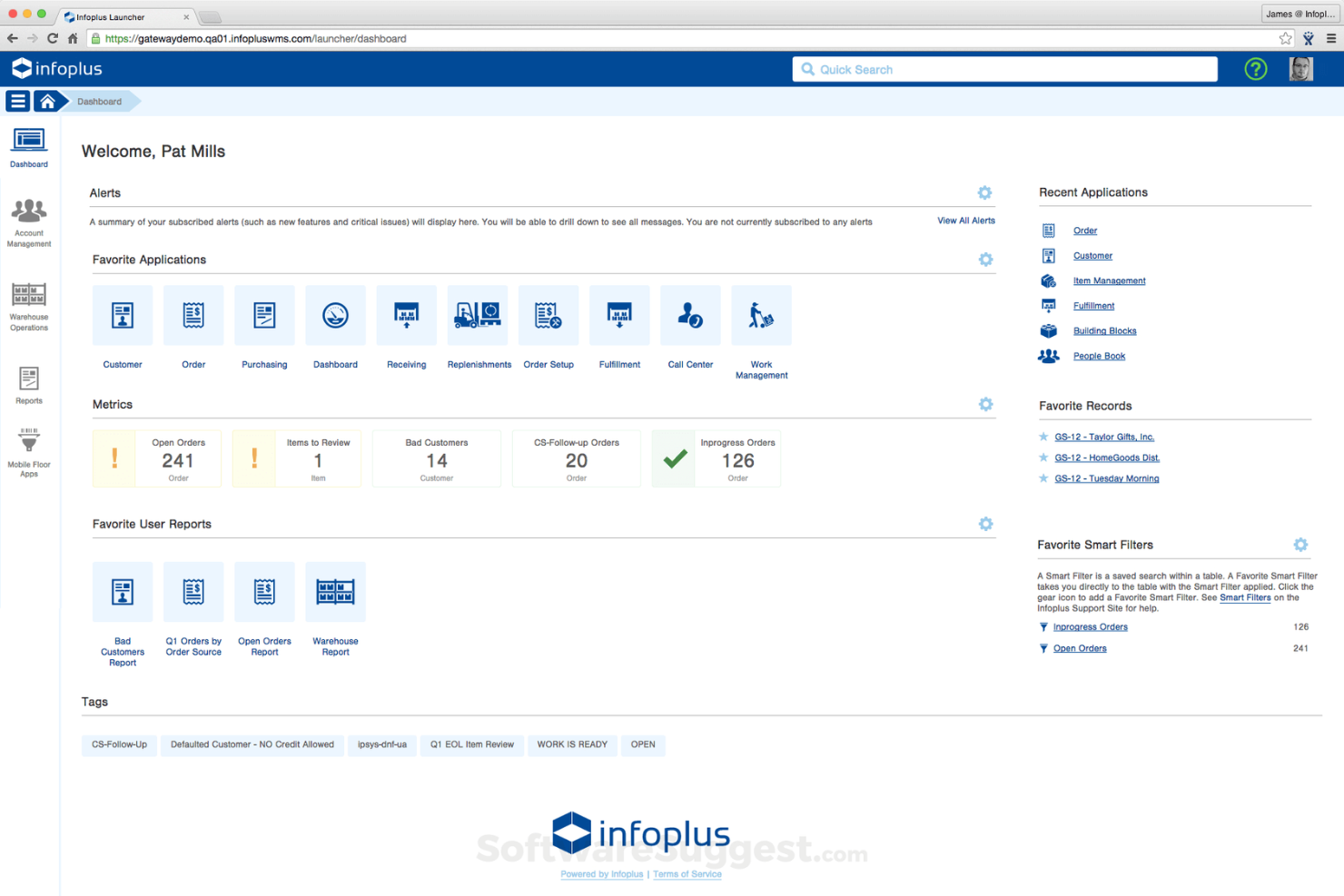
Infoplus è pensato per 3PL e fornitori di servizi di fulfillment che devono gestire operazioni di magazzino complesse e ad alto volume. La piattaforma offre automazione avanzata e flussi di lavoro personalizzabili per gestire più clienti, canali e tipi di inventario. Se desideri centralizzare il fulfillment per brand e-commerce differenti, Infoplus ti offre un controllo dettagliato su ogni fase del processo.
Perché ho scelto Infoplus
Per i fornitori di servizi di fulfillment e i 3PL che gestiscono più clienti, Infoplus offre la flessibilità e il controllo necessari per affrontare operazioni complesse. La piattaforma supporta la gestione multi-magazzino e multi-cliente, permettendoti di segmentare inventario, ordini e flussi di lavoro per ogni cliente. Apprezzo come Infoplus consenta regole di automazione personalizzate, così puoi adattare i processi alle esigenze specifiche di ogni cliente. Se la tua attività deve gestire necessità di fulfillment diverse sotto un unico sistema, Infoplus è progettato per supportare tale livello di complessità.
Caratteristiche principali di Infoplus
Altre funzionalità che mi hanno colpito sono:
- Supporto per la scansione dei codici a barre: Utilizza la scansione dei codici a barre per tracciare il movimento dell'inventario e ridurre gli errori di inserimento manuale.
- Motore di instradamento degli ordini: Assegna automaticamente gli ordini al magazzino o metodo di spedizione migliore in base a regole personalizzate.
- Strumenti di reportistica personalizzati: Crea e programma report dettagliati su inventario, ordini e attività di magazzino.
- Integrazione EDI: Connettiti con partner commerciali e automatizza lo scambio dati grazie alle funzionalità EDI integrate.
Integrazioni di Infoplus
Le integrazioni includono Magento, WooCommerce, BigCommerce, Shopify, Pipe17, eBay, PayPal, Salesforce, NetSuite, PrestaShop, Etsy e altro ancora.
Pros and Cons
Pros:
- L'automazione personalizzata adatta i flussi di lavoro ai clienti
- La scansione dei codici a barre riduce gli errori di inventario
- L'integrazione EDI automatizza lo scambio dati con i partner
Cons:
- Gli aggiornamenti dell'interfaccia interrompono i flussi di lavoro del magazzino
- La documentazione è difficile per i nuovi utenti

Ideale per l'integrazione con QuickBooks
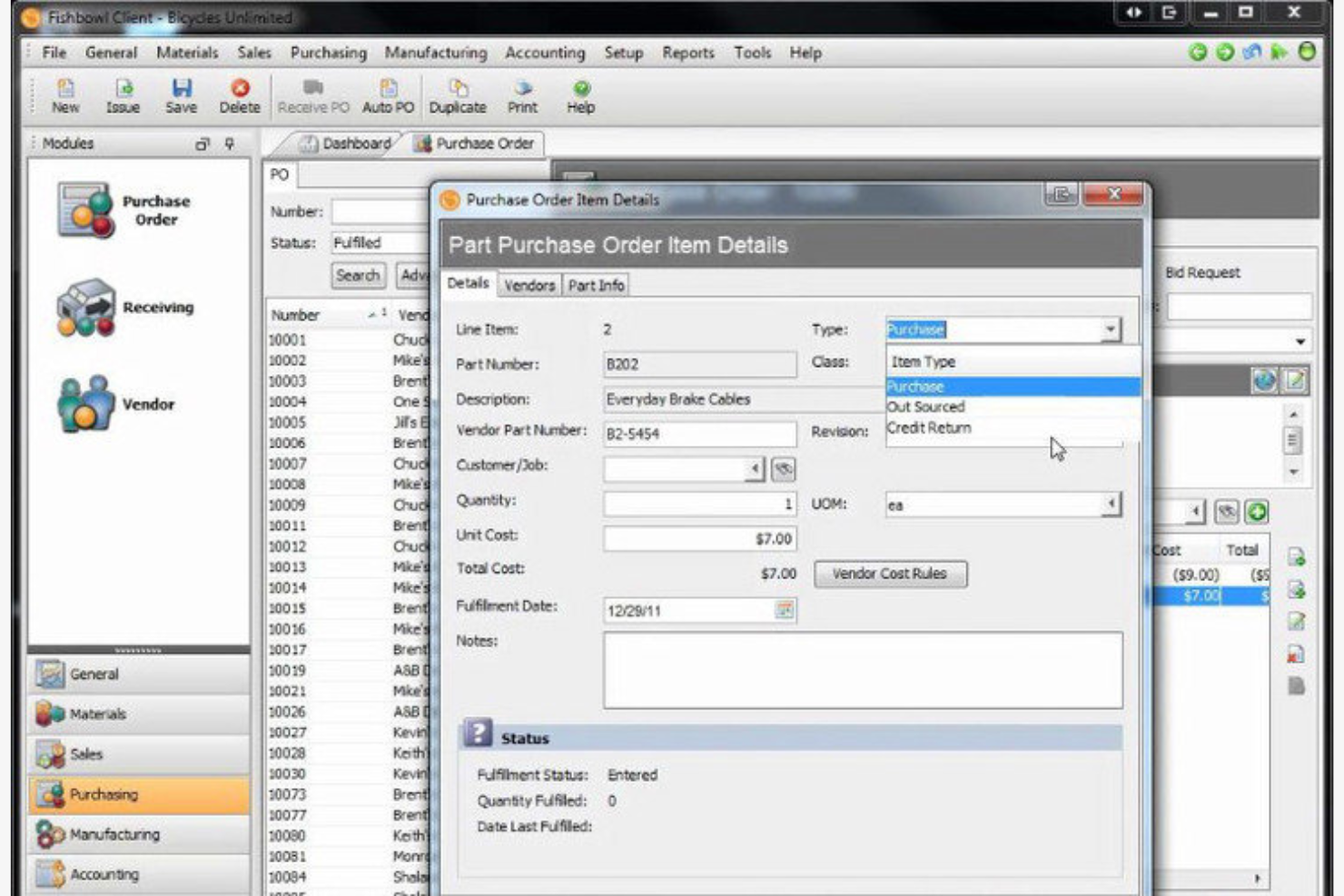
Fishbowl Inventory è un sistema di gestione del magazzino progettato per le aziende che necessitano di una stretta integrazione con QuickBooks. È particolarmente adatto a rivenditori e grossisti e-commerce che desiderano automatizzare il monitoraggio dell'inventario e la gestione degli ordini senza abbandonare la propria piattaforma di contabilità. In quanto soluzione software WMS per l'e-commerce, aiuta a ridurre i costi operativi e a minimizzare le inefficienze sincronizzando inventario e dati finanziari in un unico posto. Se la sincronizzazione tra l'inventario e i dati finanziari è una priorità per il tuo team, Fishbowl Inventory offre una risposta diretta a questa esigenza.
Perché ho scelto Fishbowl Inventory
Fishbowl Inventory si distingue per le aziende e-commerce che utilizzano QuickBooks per la contabilità e necessitano di un sistema di gestione del magazzino che si sincronizzi senza problemi. Ho scelto Fishbowl Inventory perché offre aggiornamenti in tempo reale sull’inventario e sincronizzazione automatica degli ordini direttamente con QuickBooks, aiutando così a prevenire discrepanze tra magazzino e registri finanziari. Il sistema supporta inoltre la gestione dell'inventario su più sedi, semplificando il controllo delle scorte tra diversi magazzini o canali di vendita. Per i team che vogliono mantenere contabilità e operazioni di magazzino fortemente interconnesse, l'integrazione diretta di Fishbowl Inventory risolve un punto dolente comune nei flussi di lavoro dell'e-commerce.
Funzionalità principali di Fishbowl Inventory
Altre funzionalità di Fishbowl Inventory che supportano la gestione del magazzino e-commerce includono:
- Lettura codici a barre: Usa la lettura dei codici a barre per velocizzare la ricezione, il prelievo e il conteggio delle scorte in tutto il magazzino.
- Punti di riordino automatici: Imposta punti di riordino personalizzati per ogni SKU affinché il sistema possa generare ordini di acquisto quando le scorte stanno per esaurirsi.
- Integrazioni con spedizionieri: Collegati con i principali corrieri per generare etichette e tracciare le spedizioni direttamente dalla piattaforma.
- Permessi utente: Assegna ruoli specifici e livelli di accesso ai membri del team per controllare chi può visualizzare o modificare i dati di inventario e ordini.
Integrazioni di Fishbowl Inventory
Le integrazioni includono QuickBooks, Salesforce, Shopify, Amazon, eBay, WooCommerce, Magento, BigCommerce e Xero. Fishbowl Inventory offre anche un'API per integrazioni personalizzate.
Pros and Cons
Pros:
- Il monitoraggio multi-sede gestisce magazzini distribuiti
- La lettura codici a barre velocizza il prelievo ordini
- Punti di riordino automatici prevengono esaurimenti di stock
Cons:
- Le funzionalità avanzate necessitano moduli aggiuntivi
- La configurazione richiede tempo per i nuovi utenti

Fulfil
Ideale per commercianti omnicanale in fase di espansione
Fulfil è un sistema di gestione del magazzino basato sul cloud, progettato per i rivenditori ecommerce e omnicanale in rapida crescita che devono unificare le operazioni di inventario, ordini ed evasione degli ordini su più canali di vendita e sedi.
Per chi è più adatto Fulfil?
Fulfil è particolarmente adatto ai rivenditori ecommerce di medie e grandi dimensioni che gestiscono inventari complessi ed evasione degli ordini su più canali.
Perché ho scelto Fulfil
Ho scelto Fulfil come una delle soluzioni migliori perché la sua integrazione nativa con Shopify Plus consente al mio team di sincronizzare in tempo reale i dati relativi a inventario, ordini ed evasione degli ordini senza affidarsi a connettori di terze parti. Apprezzo la possibilità di automatizzare l'instradamento degli ordini e gestire le scorte distribuite su più sedi direttamente dalla dashboard di Fulfil. Questa configurazione ci aiuta a evitare vendite superiori alle disponibilità e mantiene i nostri storefront Shopify Plus precisi e aggiornati.
Funzionalità principali di Fulfil
- Creazione automatizzata degli ordini di acquisto: Genera ordini di acquisto in base alle soglie di inventario in tempo reale e alla velocità delle vendite.
- Gestione di resi e sostituzioni: Monitora, elabora e reinserisce a magazzino gli articoli restituiti tramite flussi di lavoro integrati.
- Supporto per più magazzini: Gestisci inventario, trasferimenti ed evasione degli ordini in più sedi di magazzino.
- Monitoraggio dei lotti e dei numeri di serie: Assegna e monitora i numeri di lotto o di serie per garantire tracciabilità e conformità.
Integrazioni di Fulfil
Le integrazioni includono Shopify, Amazon, ShipBob, ShipMonk, Looker, Tableau, Google Sheets, Claude, ChatGPT e oltre 400 3PL e corrieri.
Pros and Cons
Pros:
- Flussi di lavoro altamente personalizzabili
- Sincronizzazione dell'inventario in tempo reale
- API aperta completa
Cons:
- Eccessivo per i piccoli negozi
- L'implementazione richiede tempo

Hopstack
Ideale per l'automazione di magazzino guidata dall'AI
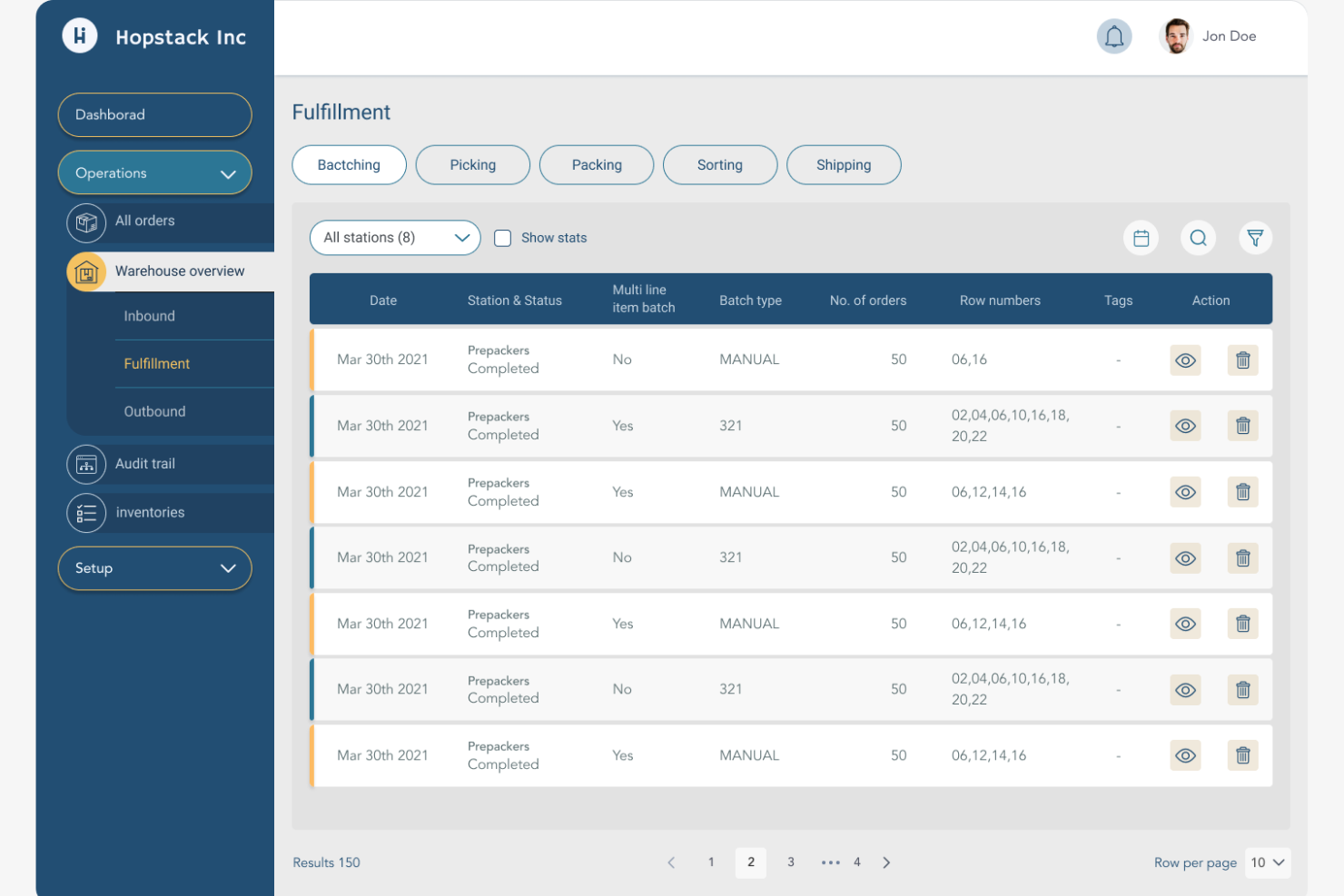
Hopstack porta l'automazione guidata dall'AI nella gestione dei magazzini per l'e-commerce, rendendolo una soluzione ideale per le aziende che vogliono ottimizzare l'evasione degli ordini con tecnologie avanzate. La piattaforma è pensata per i responsabili delle operazioni e i team di magazzino che desiderano automatizzare le attività di picking, packing e controllo dell'inventario. Se hai bisogno di informazioni in tempo reale e orchestrazione intelligente dei compiti per gestire grandi volumi di ordini, Hopstack offre un approccio moderno all'efficienza di magazzino.
Perché ho scelto Hopstack
Ciò che distingue Hopstack è la sua attenzione all'automazione dei magazzini tramite AI, particolarmente preziosa per le aziende e-commerce che gestiscono grandi volumi di ordini. La piattaforma utilizza l'intelligenza artificiale per ottimizzare i percorsi di picking e automatizzare l'assegnazione delle attività, aiutando i team a lavorare più rapidamente e ridurre gli errori manuali. Ho scelto Hopstack perché la sua analisi in tempo reale e il motore di orchestrazione intelligente permettono ai responsabili di magazzino di adattarsi velocemente ai cambiamenti della domanda. Se cerchi un sistema che porti automazione avanzata e decisioni basate sui dati nel tuo magazzino, Hopstack è progettato proprio per questo.
Caratteristiche principali di Hopstack
Altre funzionalità degne di nota includono:
- Workflow di reintegro automatico: Imposta regole per attivare il rifornimento dell'inventario in base ai livelli di stock in tempo reale.
- Gestione ordini multi-canale: Gestisci ordini provenienti da più piattaforme e-commerce in un'unica dashboard.
- Dashboard personalizzabili: Personalizza le dashboard per visualizzare gli indicatori chiave di performance (KPI) e le metriche di magazzino più rilevanti.
- Supporto app mobile: Accedi alle operazioni di magazzino e gestisci le attività direttamente da un dispositivo mobile.
Integrazioni di Hopstack
Le integrazioni includono Amazon, Shopify, FedEx, Airtable, DHL, Magento, SAP, Delhivery, UPS, Honeywell, Etsy, eBay, Salesforce, Xero, Zoho Invoice e altre ancora.
Pros and Cons
Pros:
- L'orchestrazione dei compiti tramite AI ottimizza l'allocazione della forza lavoro
- Il reintegro automatico riduce la gestione delle scorte
- Gli ordini multi-canale centralizzano l'evasione
Cons:
- L'automazione avanzata richiede supporto nell'onboarding
- Comunità più piccola per il supporto tra pari


Holded riunisce inventario, vendite, contabilità e CRM in un'unica piattaforma, rendendolo interessante per le aziende e-commerce che desiderano gestire tutto da un solo posto. I rivenditori e grossisti che vogliono unificare le operazioni di magazzino con la fatturazione e la gestione clienti possono trovare particolarmente utile l'approccio tutto-in-uno di Holded. Se desideri ridurre la dispersione degli strumenti e centralizzare i processi aziendali, Holded risponde direttamente a questa esigenza.
Perché ho scelto Holded
Ciò che distingue Holded è la sua capacità di combinare inventario, vendite, contabilità e CRM in un'unica piattaforma unificata. Ho scelto Holded per i team che vogliono gestire le operazioni di magazzino insieme alla fatturazione e ai dati dei clienti senza dover passare tra più strumenti. Il modulo di gestione dell'inventario della piattaforma si collega direttamente con le vendite e gli acquisti, permettendo di monitorare in tempo reale le giacenze e lo stato degli ordini. Per le aziende e-commerce che desiderano avere tutte le funzioni aziendali sotto lo stesso tetto, l'approccio tutto-in-uno di Holded è una soluzione ideale.
Funzionalità principali di Holded
Altre funzionalità di Holded che supportano la gestione del magazzino per l'e-commerce includono:
- Tracciamento per lotto e numero di serie: Traccia i prodotti per lotto o numero di serie per una maggiore tracciabilità e conformità.
- Modelli di documenti personalizzabili: Crea e modifica fatture, bolle di accompagnamento e lettere di vettura per adattarli al tuo brand e al tuo flusso di lavoro.
- Calcoli fiscali automatici: Applica automaticamente le regole fiscali specifiche per paese alle transazioni di vendita e acquisto.
- Gestione fornitori: Archivia i dati dei fornitori, tieni traccia degli ordini di acquisto e gestisci le fatture dei fornitori da un'unica dashboard.
Integrazioni di Holded
Le integrazioni native non sono attualmente elencate.
Pros and Cons
Pros:
- Tasse automatiche facilitano la conformità
- Modelli personalizzati adatti ai flussi e-commerce
- Strumenti fornitori tracciano ordini e fatture
Cons:
- Nessuna funzione avanzata di picking magazzino
- Il supporto multi-magazzino è meno dettagliato

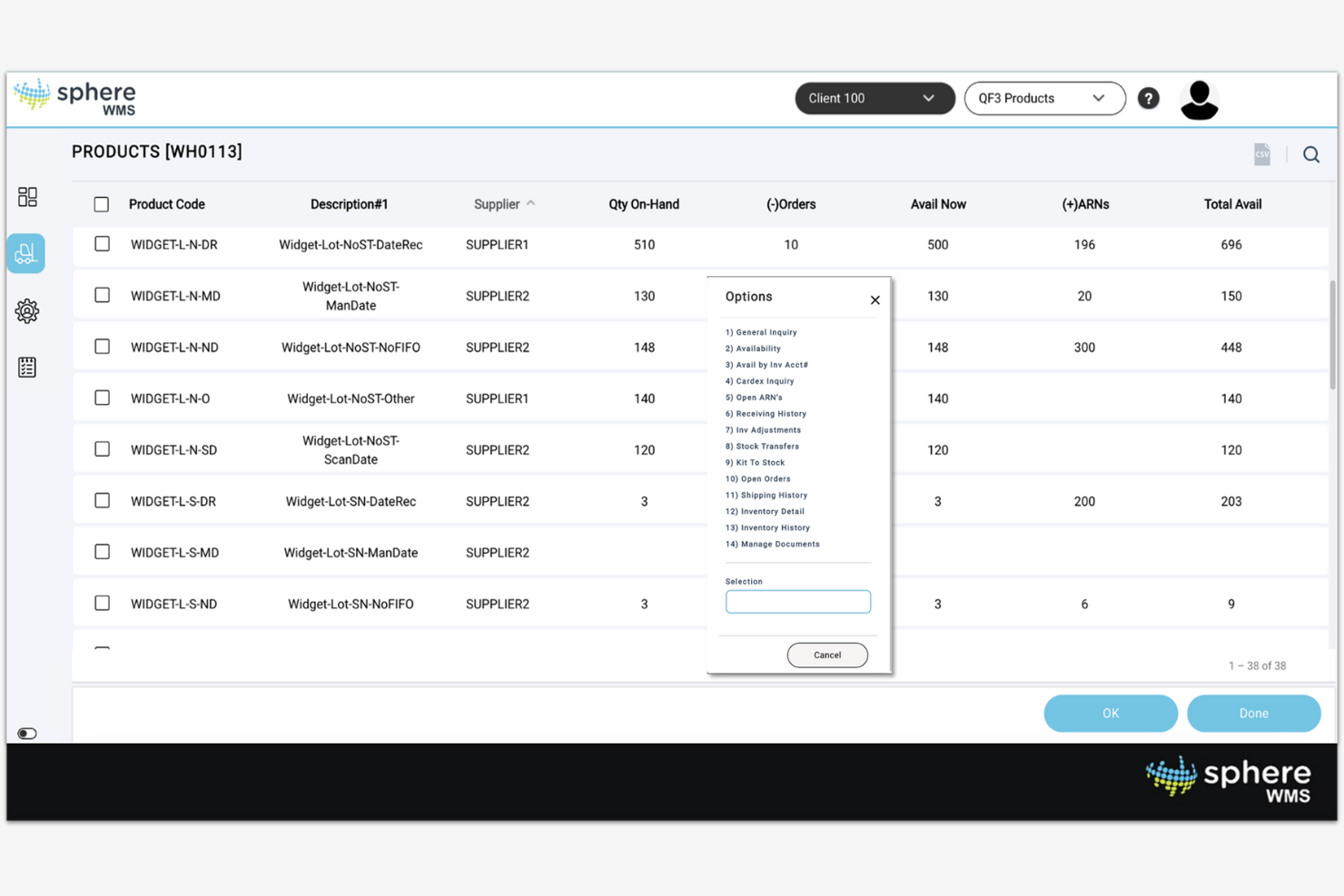
Se la tua attività di e-commerce gestisce l'inventario su più magazzini o sedi, SphereWMS è progettato per offrirti visibilità e controllo in tempo reale. È particolarmente indicato per i team operativi e i responsabili dell'inventario che hanno bisogno di monitorare i livelli di scorta, i trasferimenti e l'evasione degli ordini su una rete distribuita. SphereWMS ti aiuta a ridurre rotture di stock e sovraccarichi centralizzando i dati dell'inventario da ogni sito.
Perché ho scelto SphereWMS
Ciò che mi ha attirato verso SphereWMS è la sua attenzione a fornire ai team e-commerce una chiara visibilità in tempo reale su più sedi di inventario. Per le aziende che gestiscono prodotti in diversi magazzini o punti vendita, SphereWMS offre dashboard centralizzate che mostrano a colpo d'occhio i livelli di inventario, lo stato degli ordini e i trasferimenti. Apprezzo come il sistema supporti il monitoraggio e i report basati sulla posizione, aiutando a prevenire costose discrepanze di magazzino. Se hai bisogno di coordinare l'evasione e il rifornimento su una rete distribuita, SphereWMS è stato costruito per gestire questa complessità.
Caratteristiche principali di SphereWMS
Oltre alla sua visibilità sull'inventario multi-sede, ho trovato anche queste funzionalità degne di nota:
- App mobile per magazzino: Accedi ai dati di inventario, elabora ordini e gestisci attività da dispositivi mobili.
- Flussi di lavoro automatizzati per la ricezione: Semplifica la gestione delle spedizioni in entrata con la scansione di codici a barre e l'acquisizione automatica dei dati.
- Strumenti di report personalizzabili: Genera report dettagliati su inventario, ordini e attività di magazzino.
- Funzionalità per la gestione dei resi: Tieni traccia e gestisci i resi dei prodotti direttamente all'interno del sistema.
Integrazioni di SphereWMS
Le integrazioni includono SAP, QuickBooks, NetSuite, Shopify, Magento, WooCommerce, UPS, FedEx, JDE e altro ancora.
Pros and Cons
Pros:
- L'app mobile supporta le operazioni di magazzino
- La ricezione automatizzata riduce gli errori nei dati
- Report personalizzati offrono analisi di magazzino
Cons:
- Documentazione limitata per l'installazione autonoma
- Alcuni utenti segnalano risposte lente dal supporto

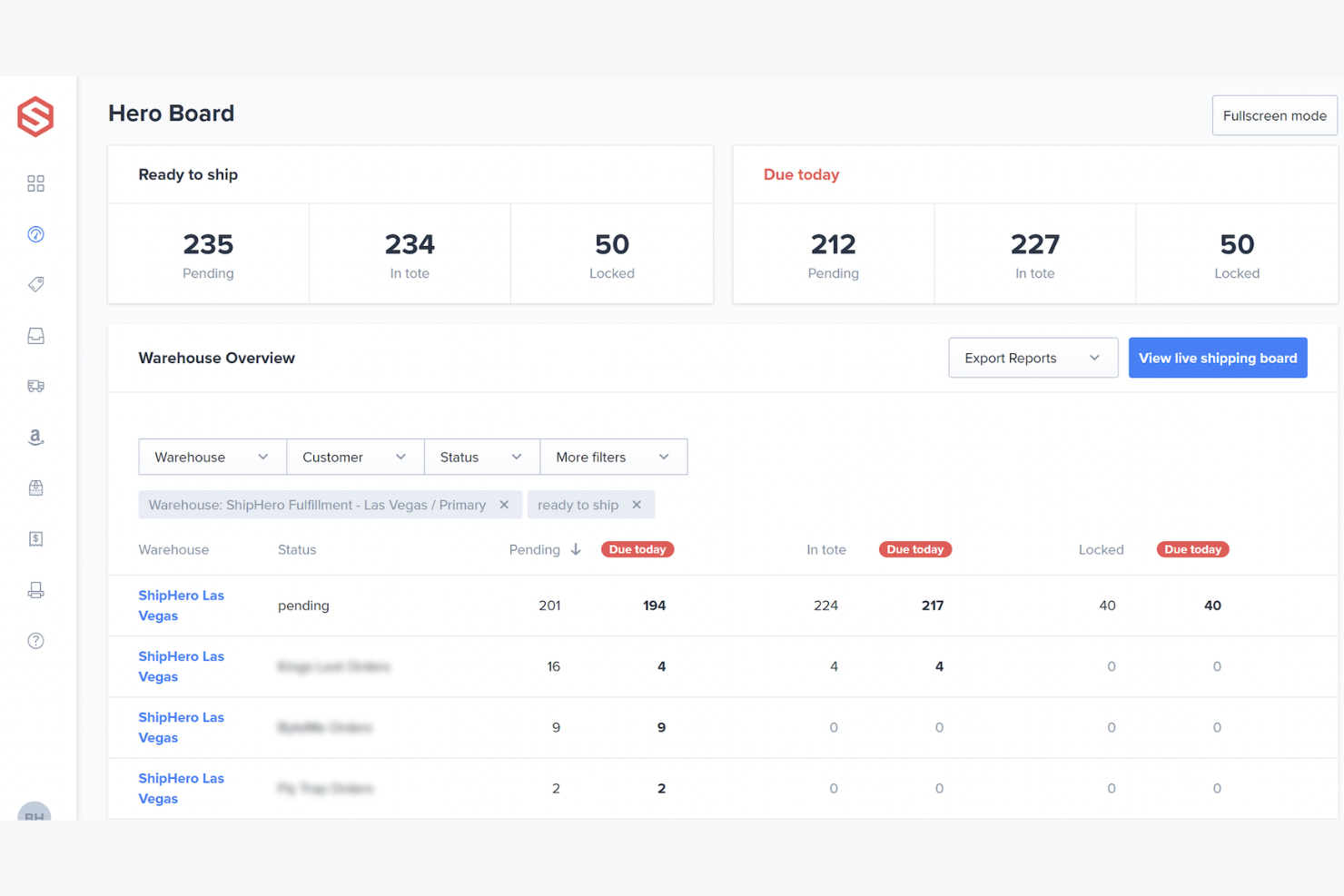
ShipHero si distingue per i marchi e i rivenditori e-commerce che desiderano ottimizzare l'evasione diretta al consumatore. La piattaforma è pensata per le aziende che necessitano di una gestione degli ordini rapida e precisa e di una copertura di spedizioni a livello nazionale. La rete di magazzini distribuiti di ShipHero e il monitoraggio dell'inventario in tempo reale ti aiutano a soddisfare le aspettative dei clienti in termini di velocità e affidabilità.
Perché ho scelto ShipHero
Ciò che rende ShipHero una scelta vincente per la gestione di magazzini e-commerce è la sua attenzione all'evasione diretta al consumatore. La piattaforma gestisce una propria rete di centri di evasione, permettendoti di conservare l'inventario più vicino ai tuoi clienti per spedizioni più veloci. Mi piace che ShipHero offra il tracciamento degli ordini in tempo reale e la generazione automatica delle etichette di spedizione, il che aiuta a ridurre errori e velocizzare la consegna. Se la tua azienda deve scalare le operazioni DTC e mantenere un'elevata precisione degli ordini, ShipHero è progettato per supportare queste esigenze.
Funzionalità principali di ShipHero
Altre funzionalità che hanno attirato la mia attenzione includono:
- Flussi di lavoro per il prelievo a lotti: Raggruppa più ordini per un prelievo e un imballaggio efficiente in magazzino.
- Portale resi: Consenti ai clienti di avviare e tracciare i resi direttamente online.
- Confronto tariffe dei corrieri: Confronta automaticamente le tariffe di spedizione tra più corrieri prima della creazione delle etichette.
- Report sull'invecchiamento dell'inventario: Monitora da quanto tempo i prodotti sono in magazzino per gestire il riassortimento e le promozioni.
Integrazioni ShipHero
Le integrazioni includono BigCommerce, eBay, eShip, FedEx, Etsy, Google Shopping, Make, Shopify, WooCommerce, WebShipper, Zonos e altri.
Pros and Cons
Pros:
- L'inventario in tempo reale previene la sovravendita
- Il prelievo a lotti automatizzato velocizza l'elaborazione
- Il portale resi consente l'autoassistenza
Cons:
- Visibilità limitata sulle operazioni di evasione
- I report avanzati richiedono una configurazione aggiuntiva
Altri sistemi di gestione del magazzino per il commercio elettronico
Ecco alcune ulteriori opzioni di sistemi di gestione del magazzino per il commercio elettronico che non sono entrate nel mio elenco ristretto, ma che vale comunque la pena prendere in considerazione:
- Odoo
Ideale per la personalizzazione modulare dei flussi di lavoro
- Logiwa
Ideale per la gestione di grandi volumi di ordini
- Blue Yonder
Ideale per la previsione avanzata della domanda


Come Valuto i Sistemi di Gestione del Magazzino per l’E-commerce
Valuto questi strumenti su due livelli: cosa un WMS deve assolutamente fare per qualificarsi—sincronizzazione in tempo reale tra canali, prelievo a ondate, spedizioni multi-corriere—e cosa rende un sistema adatto a un brand DTC rispetto a un 3PL.
Funzionalità Base (Requisiti Fondamentali per questa Lista)
Quando seleziono gli strumenti per la mia lista, valuto ciascuno su una scala da 0 (la funzionalità non è offerta) a 5 (eccelle in quest'area) per ogni funzionalità base elencata sotto. Poi calcolo il punteggio totale dello strumento in percentuale. Ogni strumento deve raggiungere un punteggio totale minimo del 65% per essere preso in considerazione per l’inclusione.
- Integrazioni con Piattaforme E-commerce: Verifico la presenza di connettori nativi per piattaforme come Shopify, BigCommerce e Amazon, e se i dati di inventario e ordini si sincronizzano in entrambe le direzioni senza middleware.
- Gestione dell’Inventario in Tempo Reale: Qui conta il monitoraggio multilocation e a livello di SKU, soprattutto per i brand che vendono lo stesso stock sia su un sito DTC che su due o tre marketplace contemporaneamente.
- Flussi di Evasione Ordini: Valuto se il sistema supporta il prelievo a ondate o a lotti con verifica tramite scansione barcode, perché il picking per singolo ordine crolla rapidamente sopra i 500 ordini al giorno.
- Integrazione con Corrieri di Spedizione: Quello che cerco è la possibilità di confrontare le tariffe tra corrieri come UPS, FedEx e DHL da un’unica schermata, oltre agli aggiornamenti di tracking che si riflettono automaticamente sul canale di vendita.
- Ricezione & Stoccaggio: Il processo dalla ricezione dell’ordine d’acquisto al posizionamento in magazzino dice molto—cerco sistemi con ricezione basata su barcode, gestione ASN e stoccaggio guidato verso location specifiche.
- Analisi & Reportistica del Magazzino: Dashboard che monitorano produttività degli operatori, throughput degli ordini e rispetto degli SLA aiutano i responsabili ad individuare i colli di bottiglia prima che si traducano in consegne mancate.
Dopo aver identificato gli strumenti che rispettano questi criteri, considero cosa distingue ciascuna piattaforma.
Fattori Differenzianti (Cosa Distingue i Fornitori)
Ecco come confronto e metto a paragone i diversi fornitori:
Funzionalità Distintive
La gestione dei resi è cruciale—cerco sistemi che gestiscano l’intero ciclo, dal reso avviato dal cliente al riassortimento e ai trigger di rimborso verso il canale di vendita originale. Anche la gestione automatizzata di bundle e kit è importante per i brand che vendono set curati o confezioni assortite, dove il WMS deve scalare le giacenze dei singoli componenti su ogni canale quando viene venduto un bundle. Per i fornitori 3PL, la presenza di un modulo di fatturazione nativo che traccia costi di stoccaggio, prelievo/confezionamento e ricezione per cliente può sostituire completamente la fatturazione su fogli di calcolo.
Oltre le Funzionalità
Valuto quanto l’ecosistema di integrazione di ciascuna piattaforma si colleghi al resto del tech stack—in particolare connettori ERP e contabilità, API aperte e supporto IPaaS tramite strumenti come Celigo o Zapier. La scalabilità è un altro aspetto chiave. Un brand DTC che spedisce 200 ordini al giorno deve poter contare sul fatto che il sistema non crolli a 5.000 durante i picchi stagionali. Considero anche i tempi di implementazione, dato che un WMS che impiega sei mesi per essere operativo può costare più in evasione ordini ritardata che il software stesso.
Come scegliere un sistema di gestione del magazzino per il commercio elettronico
È facile perdersi tra lunghi elenchi di funzionalità e strutture tariffarie complesse. Per aiutarti a rimanere concentrato mentre affronti il tuo specifico processo di selezione del software, ecco un elenco di fattori da tenere a mente:
| Fattore | Cosa considerare |
| Scalabilità | Il sistema sarà in grado di gestire i volumi degli ordini, gli SKU e le sedi dei magazzini attuali e previsti man mano che la tua attività cresce? Informati sui limiti relativi agli utenti o alle transazioni. |
| Integrazioni | Lo strumento si collega nativamente alle tue piattaforme di commercio elettronico, ai corrieri, agli ERP e ai software di contabilità? Verifica la presenza di lacune che potrebbero richiedere attività manuali. |
| Personalizzazione | Puoi adattare i flussi di lavoro, i campi e i report per adeguarli ai tuoi processi specifici? Valuta se i modelli rigidi potrebbero rallentare il tuo team. |
| Facilità d'uso | Il personale del magazzino e i responsabili impareranno rapidamente a utilizzare il sistema? Cerca una navigazione chiara, l'accesso da dispositivi mobili e requisiti minimi di formazione. |
| Implementazione e avvio | Quanto tempo sarà necessario per rendere il sistema operativo? Informati sul supporto alla migrazione, sugli strumenti di importazione dei dati e sulla disponibilità di specialisti o risorse per l'avvio. |
| Costo | Tutti i costi sono trasparenti, inclusi configurazione, utenti, integrazioni e assistenza? Confronta il costo totale di proprietà, non solo i canoni mensili. |
| Misure di sicurezza | Il sistema offre accesso basato sui ruoli, registri di controllo e crittografia dei dati? Assicurati che soddisfi gli standard di sicurezza e conformità della tua azienda. |
| Disponibilità dell'assistenza | Quali canali di assistenza sono disponibili e in quali orari? Valuta se hai bisogno di assistenza 24 ore su 24, 7 giorni su 7, di una gestione dedicata dell'account o di risorse self-service. |
Cos'è un sistema di gestione del magazzino per il commercio elettronico?
Un sistema di gestione del magazzino per il commercio elettronico è un software che aiuta le aziende a monitorare, organizzare e controllare l'inventario, gli ordini e le operazioni di magazzino per le vendite online. Questi sistemi automatizzano attività come il prelievo, l'imballaggio, la spedizione e il rifornimento delle scorte, offrendo al contempo visibilità in tempo reale sui livelli delle scorte e sullo stato degli ordini. Centralizzando i processi di magazzino, supportano un'evasione accurata degli ordini, riducono gli errori manuali e aiutano i rivenditori a gestire più canali di vendita da un'unica piattaforma.
Funzionalità dei sistemi di gestione del magazzino per il commercio elettronico
Quando scegli un sistema di gestione del magazzino per il commercio elettronico, presta attenzione alle seguenti funzionalità principali:
- Monitoraggio dell'inventario: Monitora in tempo reale i livelli delle scorte in più sedi di magazzino, contribuendo a prevenire le rotture di stock e le eccedenze.
- Gestione degli ordini: Centralizza in un unico sistema l'elaborazione, il prelievo, l'imballaggio e la spedizione degli ordini provenienti da diversi canali di vendita.
- Scansione dei codici a barre: Utilizza la tecnologia dei codici a barre per velocizzare la ricezione, il prelievo e lo spostamento dell'inventario, riducendo al contempo gli errori di inserimento manuale.
- Gestione dei resi: Gestisce la ricezione, l'ispezione e il reinserimento a magazzino degli articoli restituiti, garantendo aggiornamenti accurati dell'inventario e una logistica inversa efficiente.
- Supporto per più sedi: Gestisce l'inventario e l'evasione degli ordini in diversi magazzini o centri di distribuzione, consentendo una spedizione e uno stoccaggio flessibili.
- Integrazione con le spedizioni: Si collega direttamente ai principali corrieri per generare etichette di spedizione, monitorare le spedizioni e automatizzare il confronto delle tariffe.
- Report e analisi: Fornisce dashboard e report sulla rotazione dell'inventario, sull'accuratezza degli ordini e sulle prestazioni del magazzino per supportare decisioni basate sui dati.
- Autorizzazioni degli utenti: Consente agli amministratori di impostare controlli degli accessi basati sui ruoli, garantendo che i membri del team visualizzino e gestiscano solo le informazioni pertinenti alle loro responsabilità.
Vantaggi dei sistemi di gestione del magazzino per il commercio elettronico
L'implementazione di un sistema di gestione del magazzino per il commercio elettronico offre diversi vantaggi al tuo team e alla tua azienda. Eccone alcuni di cui potrai beneficiare:
- Controllo accurato dell'inventario: Il monitoraggio in tempo reale e gli aggiornamenti automatizzati contribuiscono a ridurre le discrepanze dell'inventario e a prevenire costose rotture di stock o eccedenze.
- Evasione più rapida degli ordini: La gestione centralizzata degli ordini e la scansione dei codici a barre accelerano i processi di prelievo, imballaggio e spedizione, consentendo consegne più rapide.
- Migliore coordinamento multicanale: L'integrazione con più canali di vendita e magazzini garantisce dati coerenti sull'inventario e sugli ordini in tutta l'azienda.
- Riduzione degli errori manuali: I flussi di lavoro automatizzati e la scansione dei codici a barre riducono al minimo gli errori di inserimento dei dati e migliorano l'accuratezza degli ordini.
- Elaborazione semplificata dei resi: Le funzionalità integrate di gestione dei resi semplificano la ricezione e il reinserimento a magazzino degli articoli restituiti, mantenendo aggiornati i registri dell'inventario.
- Informazioni utili per le decisioni: Gli strumenti di report e analisi offrono visibilità sulle prestazioni del magazzino, aiutandoti a identificare le tendenze e a ottimizzare le operazioni.
- Maggiore sicurezza e controllo: Le autorizzazioni degli utenti e l'accesso basato sui ruoli proteggono i dati sensibili e garantiscono che i membri del team accedano solo alle informazioni necessarie.
Costi e prezzi del sistema di gestione del magazzino per l'e-commerce
La scelta di un sistema di gestione del magazzino per l'e-commerce richiede la comprensione dei vari modelli e piani tariffari disponibili. I costi variano in base alle funzionalità, alle dimensioni del team, ai componenti aggiuntivi e ad altri fattori. La tabella seguente riassume i piani più comuni, i relativi prezzi medi e le funzionalità tipicamente incluse nelle soluzioni di gestione del magazzino per l'e-commerce:
Tabella comparativa dei piani per il sistema di gestione del magazzino per l'e-commerce
| Tipo di piano | Prezzo medio | Funzionalità comuni |
| Piano gratuito | $0 | Monitoraggio di base dell'inventario, gestione limitata degli ordini, supporto per un singolo magazzino e reportistica di base. |
| Piano personale | $50-$150/mese | Gestione degli ordini su più canali, scansione dei codici a barre, gestione dei resi e assistenza standard. |
| Piano aziendale | $200-$600/mese | Supporto per più sedi, reportistica avanzata, integrazioni per le spedizioni, autorizzazioni degli utenti e accesso API. |
| Piano aziendale | $1,000-$3,000/mese | Flussi di lavoro personalizzati, gestione dedicata dell'account, sicurezza avanzata, assistenza prioritaria e integrazioni personalizzate. |
Domande frequenti sul sistema di gestione del magazzino per l'e-commerce
Ecco alcune risposte alle domande comuni sul sistema di gestione del magazzino per l’e-commerce:
In che modo un sistema di gestione del magazzino per l'e-commerce supporta le vendite multicanale?
Un sistema di gestione del magazzino per l’e-commerce centralizza i dati dell’inventario e degli ordini provenienti da tutti i tuoi canali di vendita. Ciò consente di monitorare le scorte, evadere gli ordini e gestire i resi dai marketplace, dal tuo sito web e dai punti vendita al dettaglio in un unico luogo, riducendo le vendite eccessive e le riconciliazioni manuali.
Posso utilizzare un sistema di gestione del magazzino per l'e-commerce con la mia piattaforma e-commerce esistente?
Sì, la maggior parte dei sistemi di gestione del magazzino per l’e-commerce offre integrazioni con le piattaforme e-commerce più diffuse. Prima di scegliere un sistema, verifica se supporta connessioni dirette ai tuoi attuali canali di vendita o se avrai bisogno di un middleware o di uno sviluppo personalizzato per ottenere la piena compatibilità.
Quali sono le principali difficoltà nell'implementazione di un sistema di gestione del magazzino per l'e-commerce?
Le difficoltà più comuni includono la migrazione dei dati, la formazione del personale e l’integrazione con i sistemi esistenti. Pianifica un’implementazione graduale, dedica tempo alla fase di onboarding e assicurati di avere il supporto del fornitore per affrontare i problemi tecnici o di processo durante la transizione.
Come faccio a sapere se la mia azienda è pronta per un sistema di gestione del magazzino per l'e-commerce?
Se hai difficoltà con l’accuratezza dell’inventario, gli errori negli ordini o la gestione di più canali di vendita, potrebbe essere il momento di investire. Le aziende con volumi di ordini in crescita o con piani di espansione verso nuovi canali o sedi traggono spesso i maggiori vantaggi da questi sistemi.
Quali funzionalità di sicurezza dovrei cercare in un sistema di gestione del magazzino per l'e-commerce?
Cerca controlli degli accessi basati sui ruoli, crittografia dei dati, registri di controllo e conformità agli standard del settore. Queste funzionalità aiutano a proteggere i dati sensibili dell’azienda e dei clienti e garantiscono che solo gli utenti autorizzati possano accedere alle informazioni critiche.