

Päivittäistavaroiden toimitusohjelmisto on digitaalinen alusta, jonka avulla yrityksesi voi hallita päivittäistavaroiden verkkotilauksia, toimituksia ja asiakasviestintää. Jos etsit parasta päivittäistavaroiden toimitusohjelmistoa, tarvitset vaihtoehdon, joka pitää tilaukset täsmällisinä, vähentää päänvaivaa ja auttaa sinua kilpailemaan suurempien päivittäistavaraketjujen kanssa. Kun asiakkaiden odotukset nopeuden ja helppouden suhteen kasvavat vuosi vuodelta, oikea ohjelmisto voi auttaa sinua pysymään kilpailijoiden edellä riippumatta siitä, tarvitsetko reittien optimointia, mukautetun verkkokaupan tai kuljettajien reaaliaikaiset päivitykset. Tämän oppaan avulla voit vertailla nopeasti parhaita vaihtoehtoja vuodelle 2026, jotta voit valita tiimillesi, myymälöillesi ja tavoitteillesi sopivan ohjelmiston.
Miksi luottaa ohjelmistosuosituksiimme
6,700+
Reviews
20
Industry experts
16+
Evaluation factors
14
Years
Tiimimme on testannut ja arvioinut ohjelmistoja vuodesta 2012 lähtien. Julkaisijoina ja mediatoimijoina tiedämme itse, kuinka vaikeaa — ja tärkeää — oikean ohjelmiston valitseminen on.
Tätä opasta varten arvioimme työkaluja käytännön testauksen ja itsenäisen tutkimuksen avulla, pisteyttäen työkalut valintakriteeriemme perusteella.
Arvostelumme perustuvat inhimilliseen toimitukselliseen harkintaamme, eivät myyntipuheeseen.
Vertailutaulukko: päivittäistavaroiden toimitusohjelmistot
Tässä vertailutaulukossa esitetään yhteenveto parhaiksi valitsemieni päivittäistavaroiden toimitusohjelmistojen hinnoittelutiedoista.
| Tool | Best For | Trial Info | Price | ||
|---|---|---|---|---|---|
| 1 | Best for loyalty and promotion tools | Free demo available | Pricing upon request | Website | |
| 2 | Best for full-service ecommerce management | Free demo available | Pricing upon request | Website | |
| 3 | Best for automated route optimization | Free plan + free trial available | From $150/month | Website | |
| 4 | Best for advanced delivery route planning | Free demo available | From $299/month | Website | |
| 5 | Best for real-time driver tracking and alerts | Free demo available | From $99/month | Website | |
| 6 | Best for rapid online store launches | Free demo available | Pricing upon request | Website | |
| 7 | Best for optimizing last-mile delivery operations | Free trial available | From $619/month | Website | |
| 8 | Best for custom omnichannel shopping experiences | Free demo available | Pricing upon request | Website | |
| 9 | Best for multicultural grocery retailers | Free demo available | Pricing upon request | Website | |
| 10 | Best for AI-driven shopping journeys | Free demo available | Pricing upon request | Website |


Parhaiden päivittäistavaroiden toimitusohjelmistojen arviot
Alla ovat yksityiskohtaiset yhteenvedot parhaista päivittäistavaroiden toimitusohjelmistoista, jotka pääsivät listalleni. Arvioni tarjoavat tarkan katsauksen kunkin alustan ominaisuuksiin, integraatioihin ja hinnoitteluun, jotta löydät itsellesi parhaiten sopivan vaihtoehdon.
 Best for loyalty and promotion tools
- Free demo available
- Pricing upon request
Visit WebsiteCustomer Rating:4.7/5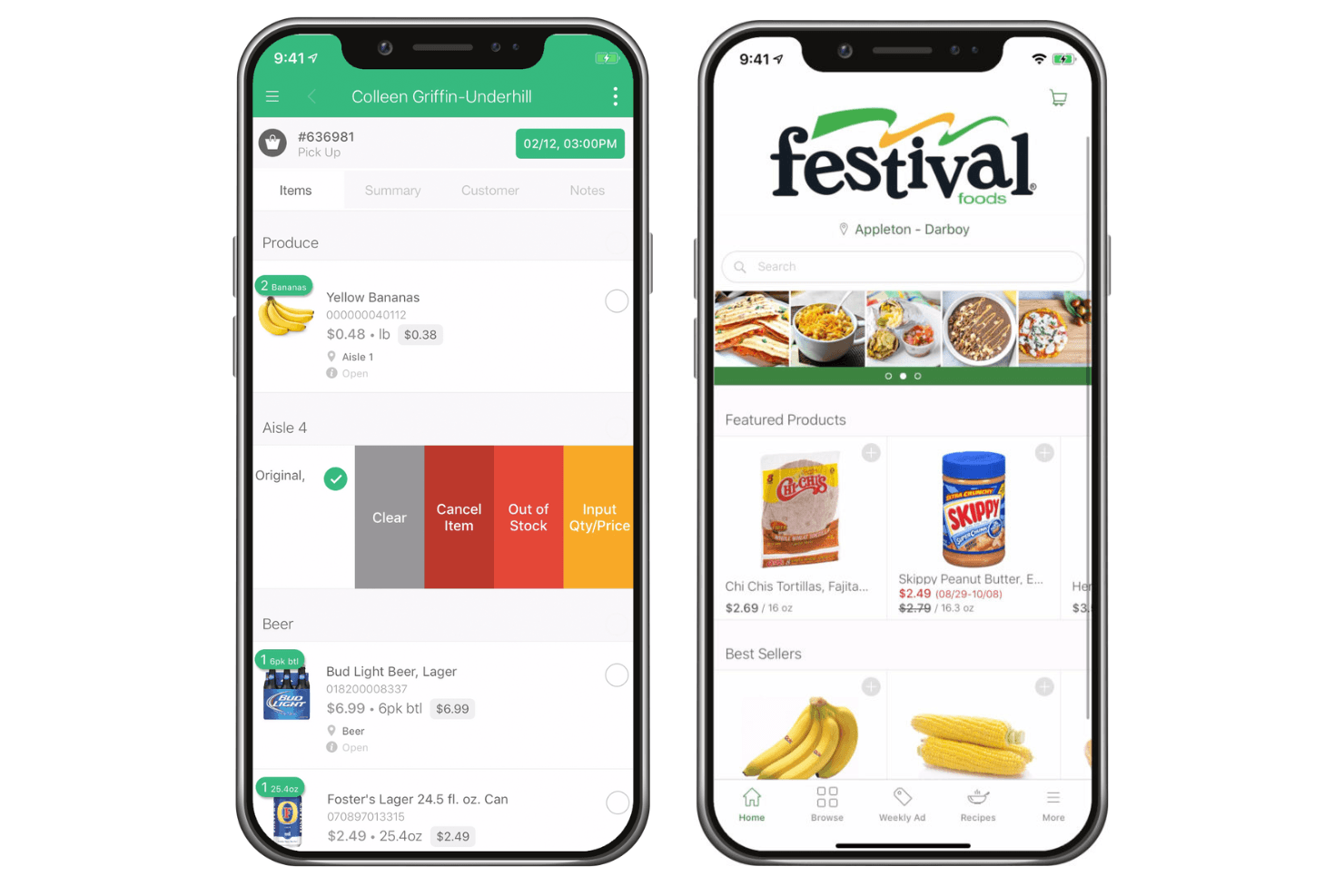
Freshop offers a dual-app interface featuring a shopper-facing grocery store app and a picker/fulfillment app with order management, item scanning, and substitution controls. Freshop (NCR Voyix) is a grocery delivery software solution built for independent grocers and supermarket chains, offering a branded online storefront, real-time inventory sync, in-store picking workflows, and integrated promotions management.
Who Is Freshop Best For?
Independent grocery retailers and regional supermarket chains seeking a grocery-focused eCommerce platform with built-in loyalty and promotion tools.
Why I Picked Freshop
I picked Freshop (NCR Voyix) as one of the best because I can set up branded digital circulars, apply targeted promotions, and integrate loyalty programs right into the online grocery storefront. This lets my team build customer engagement around in-store and online orders.
Freshop Key Features
- Branded web and mobile storefront: Launch a fully branded customer-facing site and mobile experience tailored for grocery.
- Real-time inventory sync: Connects to POS systems to update stock levels and item availability across channels.
- In-store picker app: Guides store staff through order picking with mobile scanning and substitution workflows.
- Time-slot order scheduling: Lets customers reserve delivery or pickup windows with store-managed capacity controls.
Freshop Integrations
Freshop offers an API for custom integrations.
Pros and Cons
Pros:
- Real-time inventory sync for grocery orders
- Customizable branded web and mobile storefront
- Strong digital circular and promotion management
Cons:
- Limited visibility into user satisfaction trends
- Lacks built-in last mile delivery routing
Learn more about Freshop (NCR Voyix): Best for full-service ecommerce management
- Free demo available
- Pricing upon request
Visit WebsiteCustomer Rating:4.4/5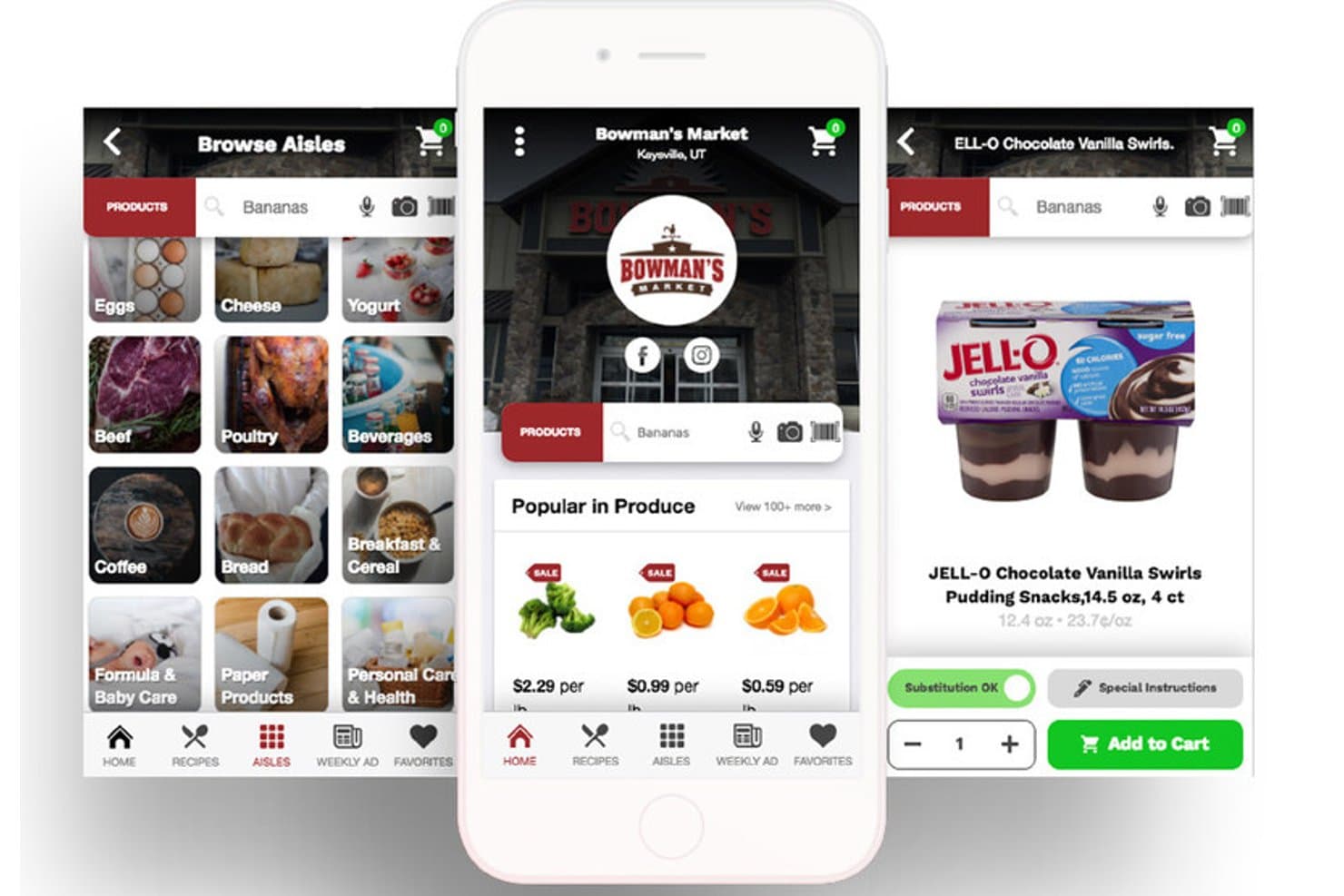
ShopHero offers a mobile grocery app with aisle browsing, store-specific product listings, sale pricing, and add-to-cart functionality. ShopHero is a grocery delivery software platform purpose-built for independent grocers and supermarkets, providing branded online storefronts, real-time inventory sync, delivery management, and mobile tools for in-store picking and customer order scheduling.
Who Is ShopHero Best For?
Independent grocers and supermarket chains that need an integrated platform for online ordering, inventory sync, in-store fulfillment, and delivery management.
Why I Picked ShopHero
I picked ShopHero as one of the best because my team gets a branded online storefront, real-time inventory sync with our POS, and specialized tools for in-store picking and delivery coordination. It truly stands out for full-service ecommerce management.
ShopHero Key Features
- Mobile picker app: Enables pickers to scan barcodes, process substitutions, and manage orders using a dedicated mobile workflow.
- Customer time-slot booking: Lets shoppers schedule delivery or pickup windows directly during checkout with store-controlled time slot management.
- Multi-channel catalog management: Supports unified product catalog management across web and mobile, tailored for groceries.
- Integrated payment processing: Offers multiple payment methods including digital wallets and SNAP/EBT support for eligible stores.
ShopHero Integrations
ShopHero offers an API for custom integrations.
Pros and Cons
Pros:
- Shopper mobile app for in-store picking
- Automated order communication with staff
- Branded customer ordering portal included
Cons:
- Initial setup requires ShopHero team assistance
- Delivery tracking features are basic
Learn more about ShopHero: Best for automated route optimization
- Free plan + free trial available
- From $150/month
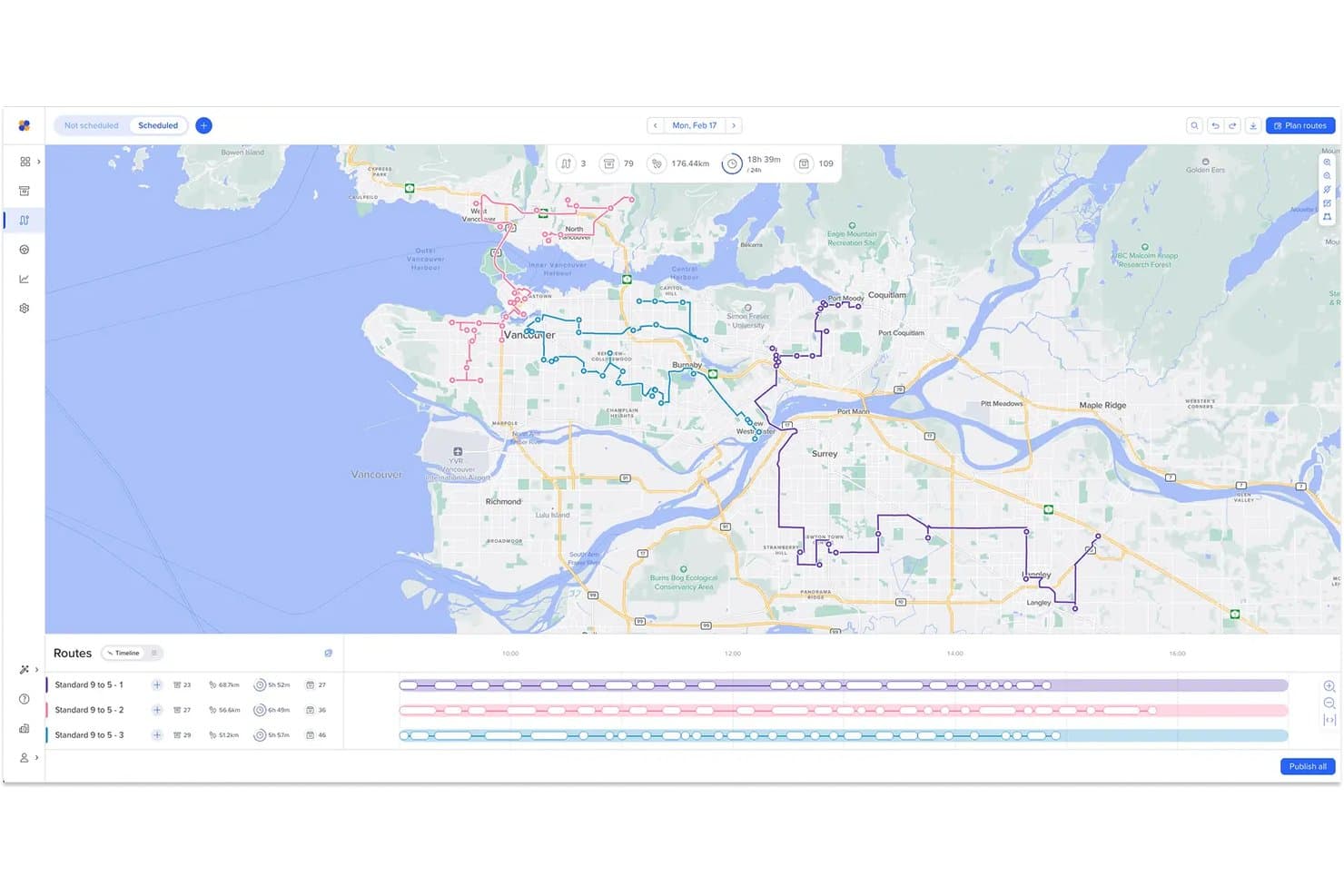
Routific offers a multi-route planning map view with timeline scheduling, showing 3 optimized delivery routes across the Vancouver metro area with stop counts, distances, and durations. Routific is a route optimization software designed for grocery delivery teams, offering tools for automated driver dispatch, delivery scheduling, and real-time route management tailored to perishable goods fulfillment.
Who Is Routific Best For?
Grocery retailers and delivery operators who need advanced route planning and automated driver scheduling for local or regional order fulfillment.
Why I Picked Routific
I picked Routific as one of the best because I rely on its automated route optimization to handle multi-stop grocery deliveries with challenging windows, letting my team assign routes, adjust schedules in real time, and track drivers from a single dashboard.
Routific Key Features
- Driver mobile app: Drivers can receive live route updates and mark deliveries complete from their mobile device.
- Proof of delivery capture: Collect photos and digital signatures directly within the driver app.
- Automated customer notifications: Send SMS or email alerts to customers with real-time ETAs and delivery confirmations.
- API access: Integrate Routific with ordering or dispatch systems to automate route creation and delivery management.
Routific Integrations
Native integrations are not clearly documented.
Pros and Cons
Pros:
- Offers a driver mobile app for live updates
- Handles dynamic delivery time windows
- Optimizes routes for perishable deliveries
Cons:
- Lacks native grocery POS integrations
- No built-in inventory or order management
Learn more about Routific: Best for advanced delivery route planning
- Free demo available
- From $299/month
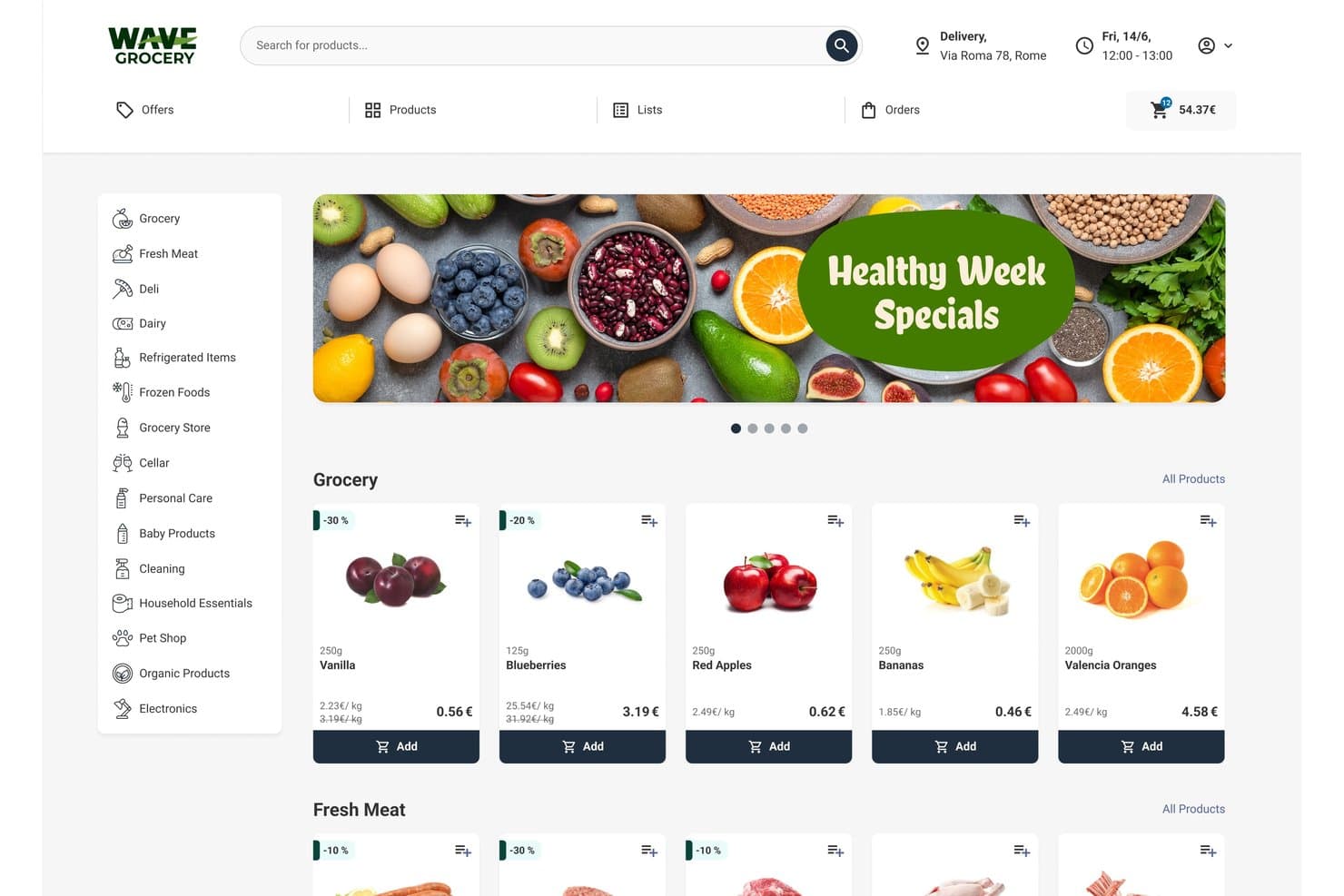
Wave Grocery offers a clean homepage interface with categorized grocery browsing, promotional banners, and product cards featuring discounts and add-to-cart functionality. Wave Grocery is a specialized grocery delivery software platform with modular tools for online storefronts, live inventory sync, in-store picking, and AI-driven driver and route management purpose-built for grocers and supermarket retailers.
Who Is Wave Grocery Best For?
Grocery retailers and supermarket chains that need specialized tools for coordinating multi-store delivery operations and managing time-sensitive order fulfillment.
Why I Picked Wave Grocery
I picked Wave Grocery as one of the best because I rely on its advanced delivery route planning. My team can optimize multi-stop, time-sensitive routes using its AI-powered scheduling tools and manage cold-chain delivery needs for perishables.
Wave Grocery Key Features
- Mobile picker app: Enables in-store pickers to scan items, handle substitutions, and manage batch orders.
- Real-time inventory sync: Integrates with grocery POS systems to update online product availability as stock changes in-store.
- Web and mobile storefronts: Offers customers a branded online shopping experience tailored for grocery catalogs and variable weights.
- Customer time-slot booking: Lets shoppers select delivery or pickup windows with built-in capacity and scheduling controls.
Wave Grocery Integrations
Wave Grocery offers native integrations with SAP, Microsoft Dynamics, Lightspeed, Nash, and Stripe. An API is available for custom integrations.
Pros and Cons
Pros:
- Supports perishable and variable-weight inventory
- Built-in picker app with substitution management
- Advanced driver and route optimization workflow
Cons:
- Fewer public enterprise customer reviews
- Limited US-specific payments functionality
Learn more about Wave Grocery:
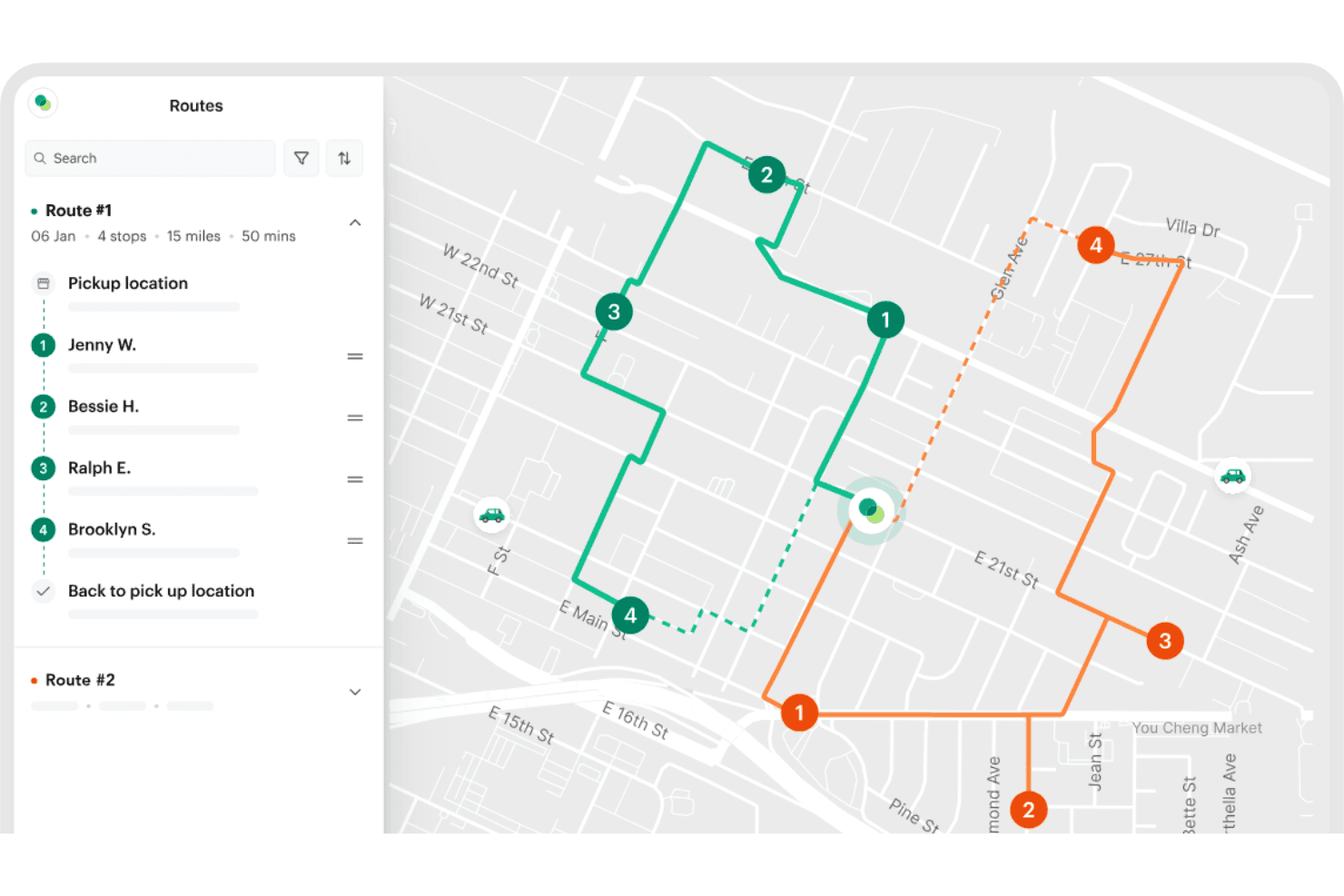
Shipday offers route optimization with multi-stop mapping and an AI-powered reviews dashboard to streamline grocery delivery operations. Shipday is a delivery management platform for grocery retailers that offers real-time driver tracking, automated dispatch, route optimization, and flexible integration with leading POS and online storefront systems.
Who Is Shipday Best For?
Small to mid-sized grocery businesses and retailers that need real-time delivery coordination with easy integration to online ordering or POS platforms.
Why I Picked Shipday
I picked Shipday as one of the best because I rely on its real-time driver tracking and live alerts to monitor every grocery delivery. My team uses the branded order tracking links and automated notifications to keep customers informed throughout the route.
Shipday Key Features
- Route optimization: Calculates the most efficient multi-stop delivery routes for grocery orders.
- Integrated order management: Consolidates orders from connected storefronts and POS systems in a single dashboard.
- Driver mobile app: Provides drivers with pickup details, navigation, and proof of delivery tools.
- Third-party delivery enablement: Lets you assign orders automatically to providers like DoorDash or Uber when needed.
Shipday Integrations
Shipday offers native integrations with Shopify, Square, Wix, Lightspeed, Toast, Grubhub, DoorDash, and Uber. An API is available for custom integrations.
Pros and Cons
Pros:
- Multi-stop route optimization for delivery teams
- Automated customer SMS notifications
- Real-time driver tracking for every order
Cons:
- Lacks native inventory or product management
- No built-in grocery picking workflows
Learn more about Shipday: Best for rapid online store launches
- Free demo available
- Pricing upon request
Visit WebsiteCustomer Rating:4/5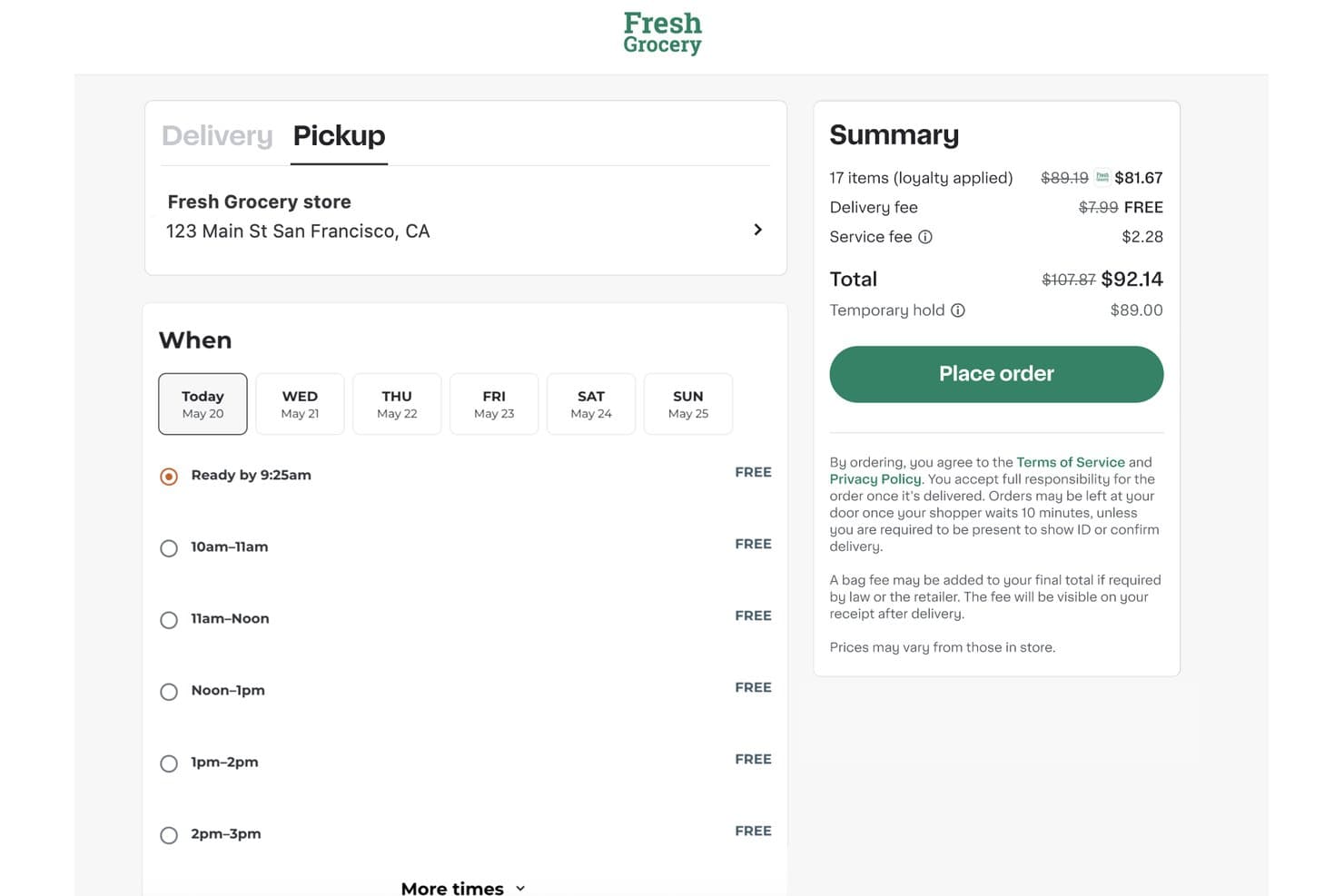
Instacart Storefront offers a pickup scheduling interface with order summary, loyalty pricing, and free delivery at checkout. Instacart Storefront is a grocery delivery software platform designed for retailers that need a branded customer ordering experience, real-time inventory sync, POS integrations, and tools for in-store picking and delivery management.
Who Is Instacart Storefront Best For?
Grocers and supermarket chains looking to launch or upgrade digital ordering and delivery with a unified, branded e-commerce platform.
Why I Picked Instacart Storefront
I picked Instacart Storefront as one of the best because I can launch a fully branded, enterprise-grade grocery storefront quickly, complete with real-time inventory sync and in-store picking using intuitive mobile tools.
Instacart Storefront Key Features
- Customizable product catalogs: Organize grocery SKUs by category, brand, and dietary preferences for precise shopper discovery.
- Integrated retail media platform: Manage sponsored product ads and promotions directly in the storefront.
- Scheduled delivery slot management: Allow customers to reserve specific pickup or delivery times based on real-time store capacity.
- POS and loyalty integrations: Connect with major grocery POS systems and digital loyalty platforms for unified transaction processing.
Instacart Storefront Integrations
Instacart Storefront offers native integrations with ECRS, RORC, Truno, Ibotta, AppCard, BRdata, NCR Loyalty Pro, Braze, Airship, Google Analytics, Epsilon, WordPress, Bazaarvoice, Salesforce, Gigya, Azure, and Okta.
Pros and Cons
Pros:
- Real-time item availability updates and substitutions
- Advanced retail media and personalization tools
- Branded storefronts for each grocery banner
Cons:
- Feature depth may exceed needs for small shops
- Limited review transparency on SaaS product
Learn more about Instacart Storefront: Best for optimizing last-mile delivery operations
- Free trial available
- From $619/month
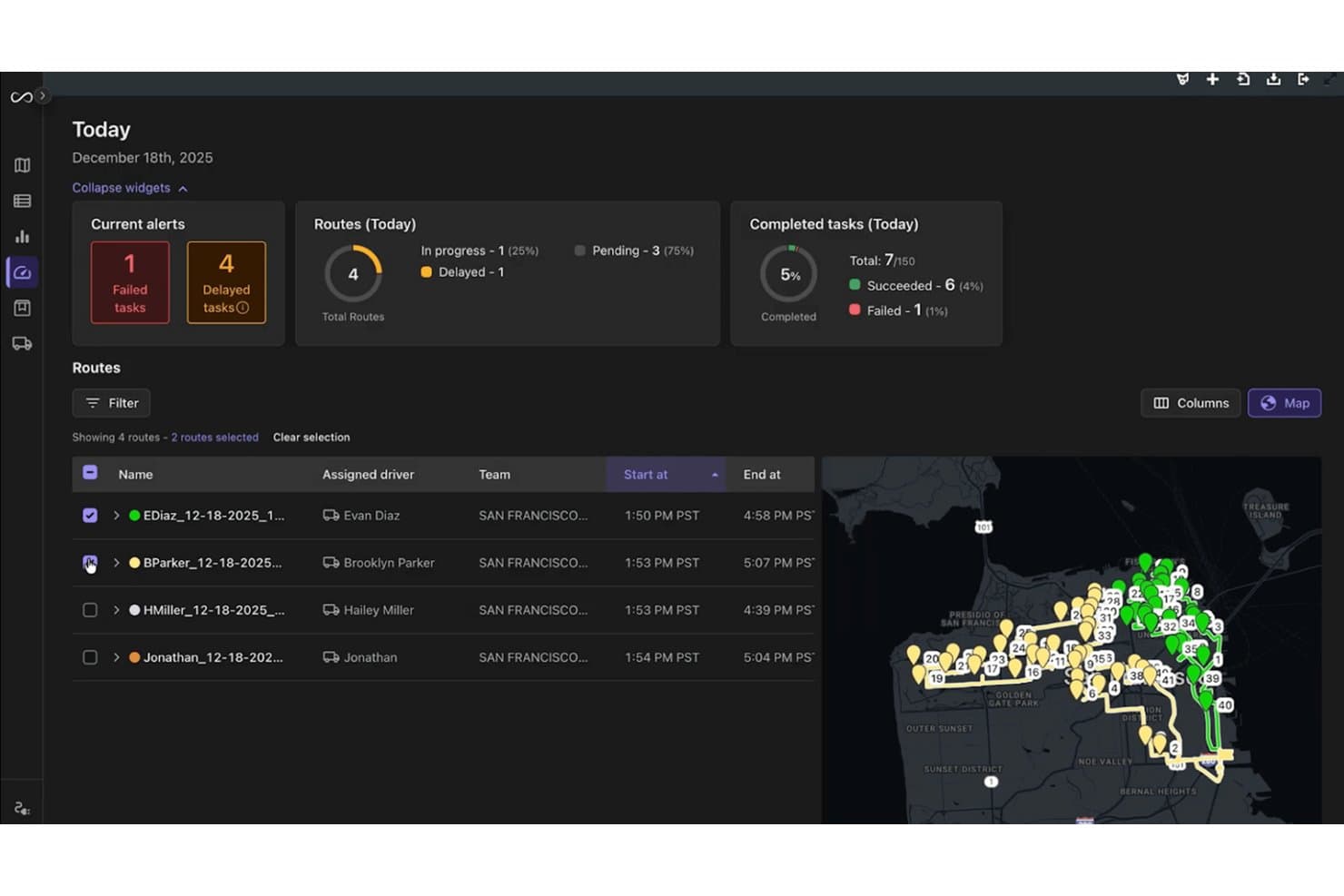
Onfleet offers a real-time command center dashboard displaying route statuses, driver assignments, task alerts, and a live map view for managing grocery deliveries. Onfleet is a last-mile delivery management software designed for grocery retailers who need advanced driver dispatch, real-time route optimization, customer notifications, and proof of delivery workflows.
Who Is Onfleet Best For?
Grocery delivery teams and operations managers at independent stores or multi-location retailers who need dedicated last-mile logistics software.
Why I Picked Onfleet
I’ve included Onfleet in my top picks because I rely on its AI-powered route optimization, real-time driver tracking, and customer notification tools to keep grocery deliveries on time and efficient in busy urban markets.
Onfleet Key Features
- Proof of delivery: Stores photos, signatures, and barcodes for every completed order.
- Age verification workflow: Enables drivers to verify customer age upon delivery for regulated items.
- Automatic driver assignment: Assigns drivers to tasks based on zones, capacity, and schedule settings.
- Analytics dashboard: Displays key metrics on delivery volume, service times, and on-time rates.
Onfleet Integrations
Onfleet offers native integrations with Shopify, Square, and Zapier. An API is available for custom integrations.
Pros and Cons
Pros:
- Supports customer delivery time windows
- Photo and signature proof of delivery
- Accurate real-time tracking
Cons:
- Lacks native grocery POS integration
- No inventory or order picking features
Learn more about Onfleet: Best for custom omnichannel shopping experiences
- Free demo available
- Pricing upon request
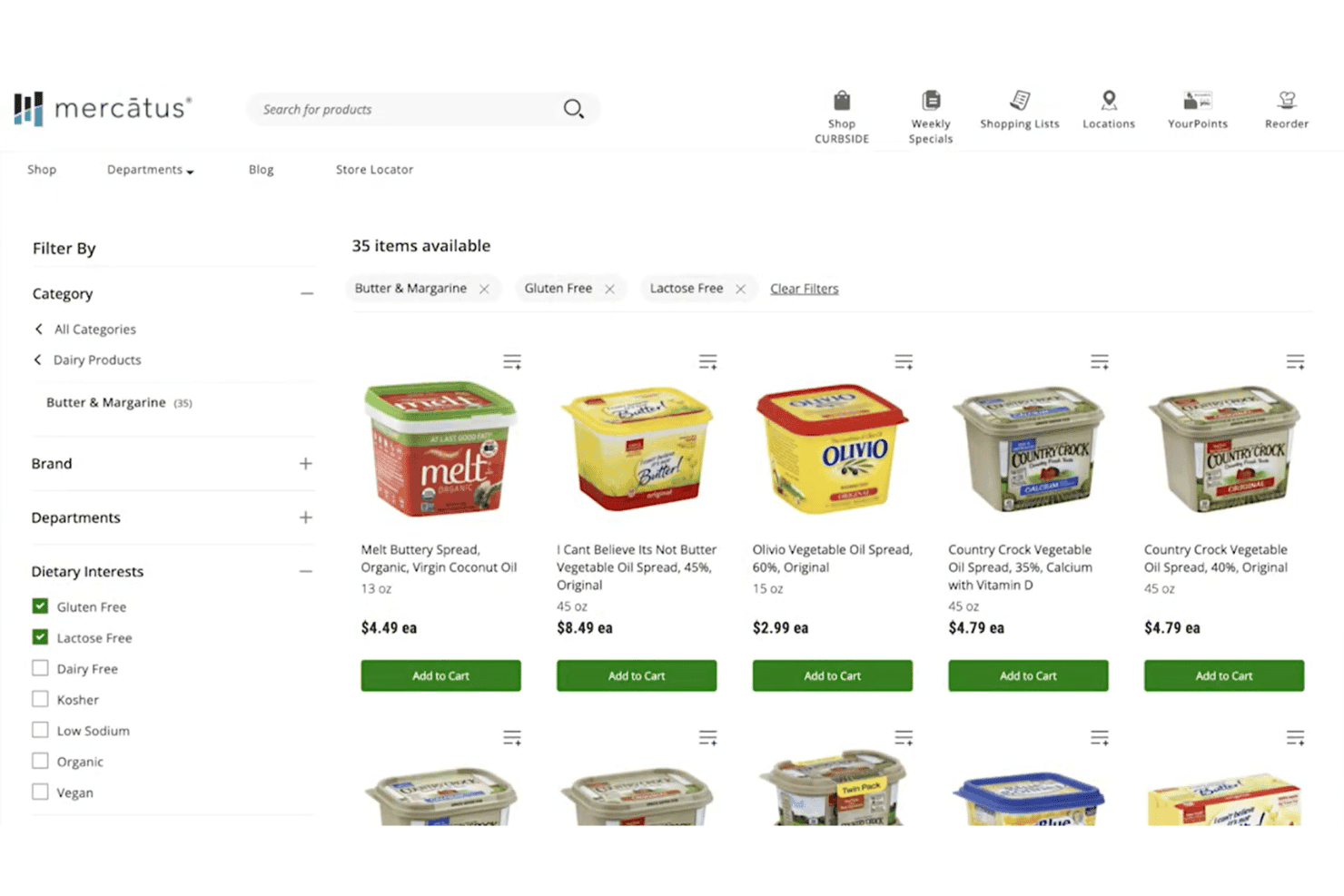
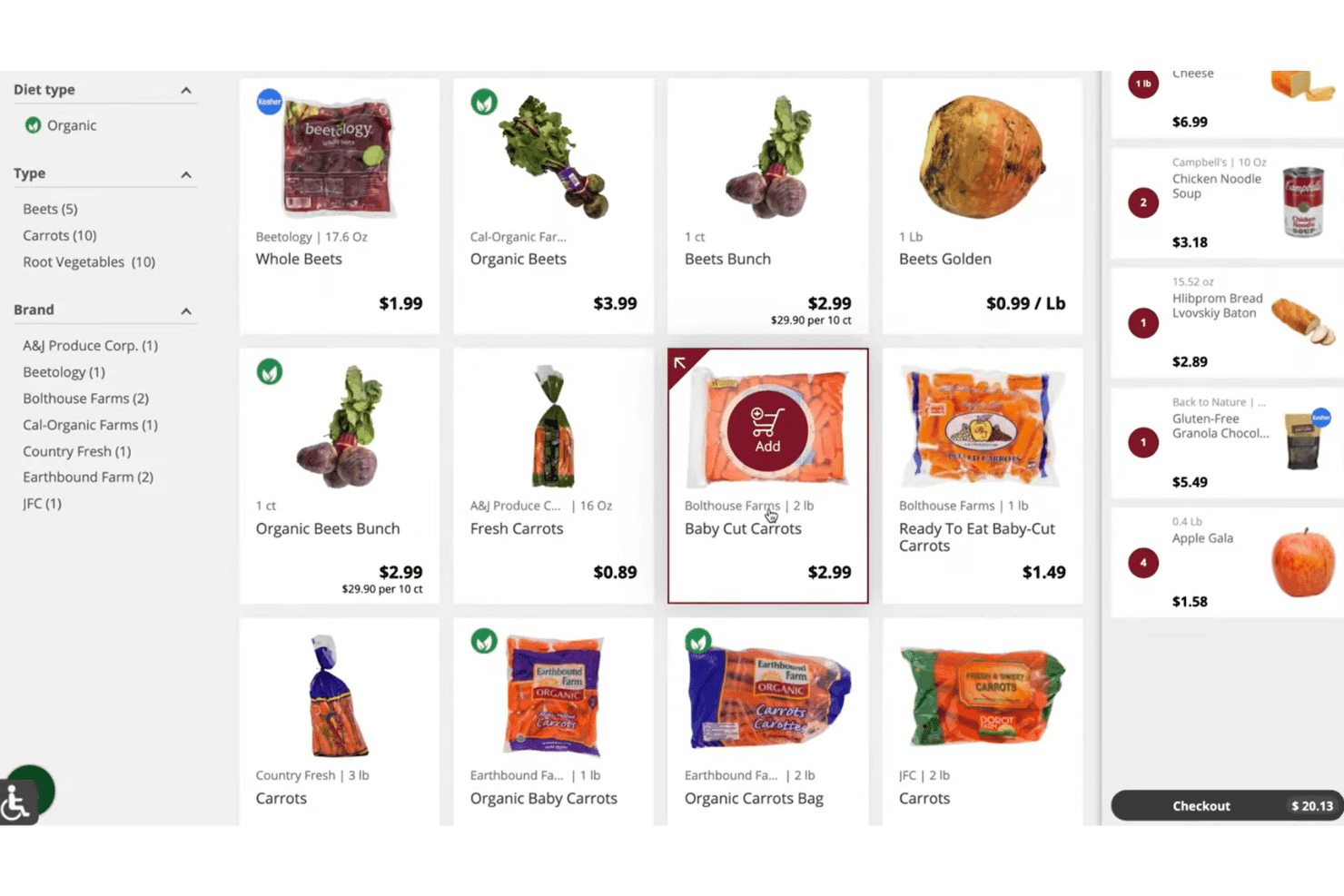
Mercatus offers a grocery e-commerce platform with dietary filters, product listings, and cart functionality for butter and margarine products. Mercatus is a grocery delivery software platform built for retailers who need a customizable online storefront, real-time inventory sync, in-store picking workflows, and integrations with POS, last-mile fulfillment, and payment systems.
Who Is Mercatus Best For?
Mercatus is a strong fit for mid-sized and enterprise grocery retailers seeking a customizable online and in-store shopping experience.
Why I Picked Mercatus
I picked Mercatus as one of the best because I can create customized web and mobile storefronts with grocery-specific merchandising, and my team can manage real-time inventory while supporting branded omnichannel shopping experiences.
Mercatus Key Features
- Mobile picking app: Supports barcode scanning, multi-order batch picking, and weighing for in-store fulfillment.
- Customer-approved substitutions: Lets customers review and approve replacement items in real time during picking.
- Time-slot scheduling: Offers capacity-managed pickup and delivery time-slot booking in the checkout flow.
- Third-party fulfillment integration: Connects with providers like Instacart and DoorDash for last-mile delivery coordination.
Mercatus Integrations
Mercatus offers native integrations with Instacart, DoorDash, and Salsify.
Pros and Cons
Pros:
- Built for complex grocery product catalogs
- Brandable web and mobile storefronts
- Advanced in-store picking with substitutions
Cons:
- Route optimization depends on third-party services
- Limited public user reviews available
Learn more about Mercatus: Best for multicultural grocery retailers
- Free demo available
- Pricing upon request
Visit WebsiteCustomer Rating:4.8/5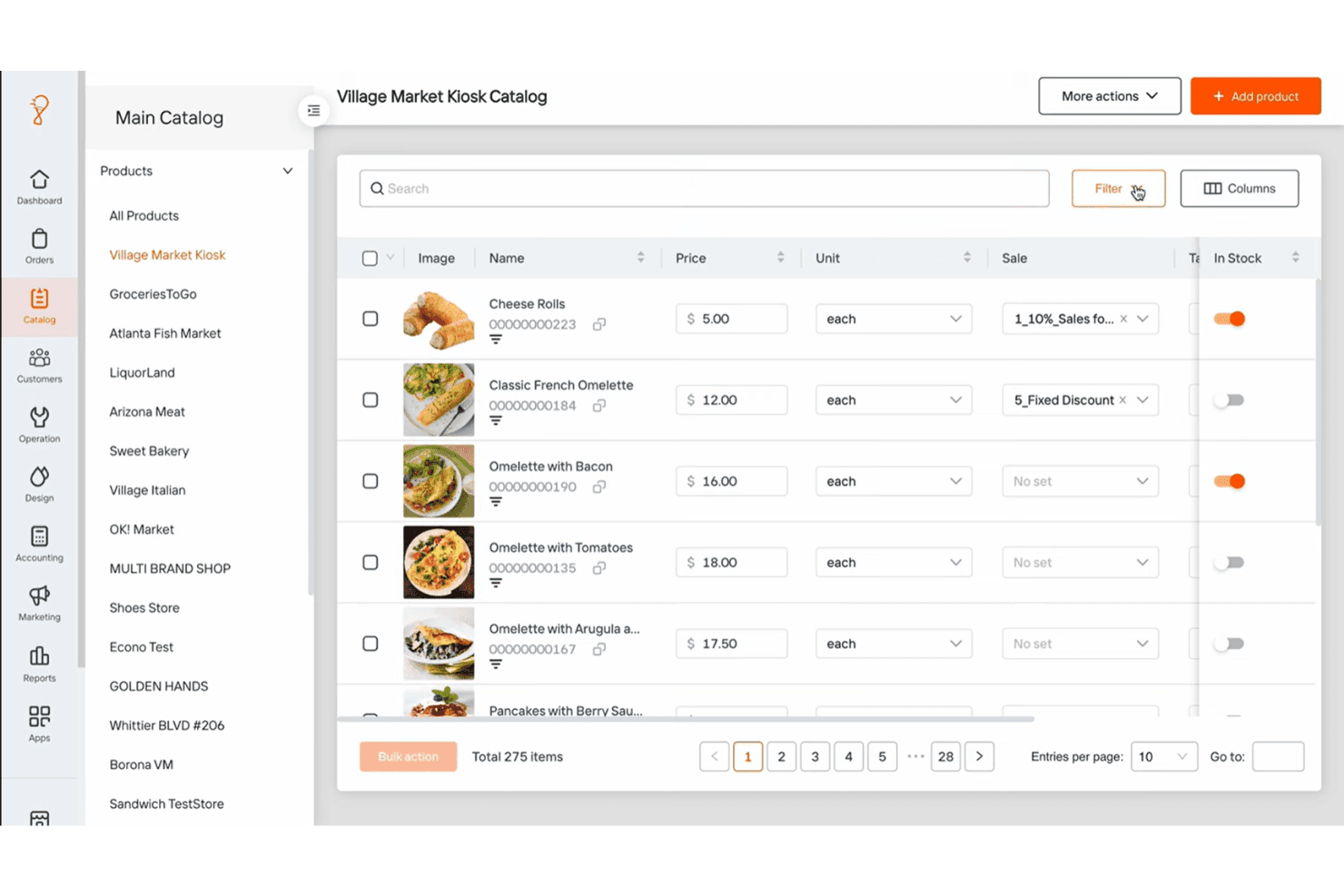
Local Express offers AI-powered inventory management that estimates stock levels and triggers replenishment alerts alongside a multi-vendor grocery catalog interface. Local Express is a grocery delivery software platform tailored for independent and multicultural grocers, offering branded online storefronts, real-time inventory sync, integrated POS and payment options, time-slot scheduling, and in-store picking tools.
Who Is Local Express Best For?
Local Express is a strong fit for independent grocery stores and ethnic supermarkets looking to offer online ordering and local delivery.
Why I Picked Local Express
I picked Local Express as one of the best because I can launch grocery storefronts that handle international foods and languages. I use its supermarket-style search, ethnic SKU support, and multilingual setup for diverse customer bases.
Local Express Key Features
- Real-time inventory synchronization: Keep online and in-store stock levels updated through direct POS integration.
- Integrated delivery route planner: Assign delivery drivers and optimize routes with the built-in dispatcher dashboard.
- Mobile picker app: Store employees use a dedicated app for picking, scanning, and packing grocery orders.
- Customizable time-slot scheduling: Let customers choose available delivery or pickup windows controlled by in-store capacity settings.
Local Express Integrations
Local Express offers native integrations with Stripe, Worldpay, Square, PayPal, Microsoft Dynamics, Google Analytics, LEPay, First Data, Postmates, and Uber Direct. An API is available for custom integrations.
Pros and Cons
Pros:
- In-store picking app for order assembly
- Specialty catalog tools for international groceries
- Multilingual online storefront and admin dashboard
Cons:
- Marketplace advertising options are minimal
- Limited smart routing for large fleets
Learn more about Local Express:
stor.ai offers a shopping cart interface with product listings, unit prices, coupon input, and promotional offers for grocery delivery orders. stor.ai is a grocery delivery software platform that provides an end-to-end online storefront, real-time inventory integration, optimized order picking, delivery routing, and in-store POS connectivity tailored for supermarkets and independent grocers.
Who Is stor.ai Best For?
Independent grocers and supermarket chains looking for an AI-powered grocery delivery and e-commerce platform.
Why I Picked stor.ai
I picked stor.ai as one of the best because I can build custom-branded online grocery experiences and use AI-powered merchandising for dynamic, personalized shopping journeys. I also get advanced inventory syncing and automated substitution support.
stor.ai Key Features
- Mobile picking app: Assigns orders to store staff and guides them through item picking with scanning and verification.
- Time slot scheduling: Lets customers book delivery or pickup windows based on real-time store capacity.
- Route optimization: Plans and assigns efficient delivery routes for drivers handling perishable grocery orders.
- POS integration: Connects directly with leading grocery POS systems to sync orders and inventory across channels.
stor.ai Integrations
stor.ai provides an API for custom integrations.
Pros and Cons
Pros:
- Omnichannel order fulfillment workflow options
- Built-in multi-language support for shoppers
- AI-driven product substitution suggestions
Cons:
- White-label setup process may require onboarding
- Limited public customer feedback available
Learn more about stor.ai:
Muut päivittäistavaroiden toimitusohjelmistot
Tässä on muutamia päivittäistavaroiden toimitusohjelmistovaihtoehtoja, jotka eivät päässeet listalleni mutta joihin kannattaa silti tutustua:
- 11My Cloud GrocerBest for turnkey grocery website solutions
- 12TookanBest for multi-business delivery management
- 13BlinkBest for branded mobile ordering apps
- 14GrowcerBest for fully customizable online store platforms
- 15NavoriBest for integrated inventory and order workflows
- 16RosieBest for independent grocery retailer integrations
- 17eGrowceryBest for shopper loyalty program management
- 18HyperzodBest for white-label delivery dispatch solutions
- 19LocusBest for enterprise-grade logistics automation
How I Evaluate Grocery Delivery Software
I split my evaluation into two layers: the baseline functionality a tool needs to qualify and the differentiators that matter for grocery-specific operations like picking workflows and route planning.
Core Functionality (Table Stakes For This List)
When I'm selecting tools for my list, I rank each one on a scale from 0 (does not offer the functionality) to 5 (excels in this area) for each core functionality listed below. Then, I calculate the tool's total score into a percentage. Each tool needs to achieve a minimum total score of 65% to be considered for inclusion.
- Online grocery storefront: I look for a customer-facing web or mobile ordering interface built around grocery-specific needs like weight-based pricing, category browsing, and product search across thousands of SKUs.
- Real-time inventory sync: Stock accuracy matters when you're selling perishables. I evaluate how each platform syncs inventory between physical shelves, POS systems, and the online catalog to prevent overselling.
- Delivery route optimization: I check whether a tool offers route planning that accounts for multi-stop deliveries, time-sensitive windows, and driver dispatch—especially for orders that include frozen or refrigerated items.
- Time-slot and order scheduling: Customers expect to pick their delivery or pickup window. I look at how each platform handles slot availability, capacity limits per store, and scheduling flexibility.
- In-store picking and substitution: A good picker workflow saves time and reduces errors. I evaluate mobile picking apps, barcode scanning support, and how each tool handles customer-approved substitutions for out-of-stock items.
- POS and payment integration: I check for connections to grocery POS systems and support for relevant payment methods, including digital wallets and program-based payments like SNAP/EBT where applicable.
Once I have a list of tools that meet the criteria, I consider what sets each platform apart.
Differentiating Factors (What Sets Vendors Apart)
Here's how I compare and contrast different vendors:
Standout Features
Real-time driver tracking is a big differentiator. I look for GPS-based visibility that lets customers and dispatchers monitor ETAs and route deviations as they happen. Cold chain monitoring also separates strong platforms from basic ones—temperature logging during picking and delivery helps you stay compliant when handling perishables. Substitution management is worth evaluating closely too. Out-of-stock items are a fact of life in grocery. Tools that let pickers suggest alternatives while customers approve swaps in real time cut down on order issues.
Beyond Features
Business model fit matters a lot here. I evaluate whether a platform supports your specific setup—a single independent store, a multi-location chain, or a dark store fulfillment model. Integration depth is another key factor. Your grocery tech stack likely includes a POS, ERP, and possibly third-party delivery partners like DoorDash Drive or Uber Direct, so I check for native connectors rather than workarounds. Pricing structure also deserves attention, since hidden costs around per-order fees, SMS alerts, and additional store licenses add up fast.
Miten valita päivittäistavaroiden toimitusohjelmisto
Kun haluat perustaa päivittäistavaroiden toimitusyrityksen, pitkät ominaisuusluettelot ja monimutkaiset hinnoittelurakenteet voivat helposti tuntua raskailta. Jotta voit keskittyä olennaiseen käydessäsi läpi yrityksellesi sopivaa ohjelmiston valintaprosessia, pidä mielessä seuraavat tekijät:
| Tekijä | Huomioitavaa |
| Skaalautuvuus | Selviääkö alusta useammista toimipaikoista, käyttäjistä tai tilausmääristä yrityksesi kasvaessa? |
| Integraatiot | Yhdistyykö työkalu helposti nykyiseen kassajärjestelmääsi, toiminnanohjausjärjestelmääsi tai toimituskumppaneihisi ilman merkittäviä ongelmia? |
| Mukautettavuus | Voitko mukauttaa työnkulkuja, brändiä ja asiakasrajapintoja vastaamaan yrityksesi tarpeita ja identiteettiä? |
| Helppokäyttöisyys | Ottavatko myymälän työntekijät, keräilijät ja asiakkaat järjestelmän todella käyttöön? Testaa sitä tiimin todellisissa työnkuluissa. |
| Käyttöönotto ja perehdytys | Kuinka paljon tukea ja koulutusta tarvitaan? Kysy koulutusresursseista ja tyypillisistä käyttöönoton aikatauluista. |
| Kustannukset | Etsi käyttöönotto-, kuukausitilaus-, tilauskohtaiset ja piilomaksut — selvitä omistamisen kokonaiskustannukset. |
| Turvallisuussuojat | Suojataanko maksutiedot, asiakkaiden henkilötiedot ja tilaustiedot ajantasaisilla vaatimustenmukaisuusstandardeilla? |
| Tuen saatavuus | Saavutatko tuen helposti, kun ongelma vaikuttaa käynnissä oleviin tilauksiin tai toimituksiin? Tarkista vastausajat ja niihin liittyvät takuut. |
Mikä on päivittäistavaroiden toimitusohjelmisto?
Päivittäistavaroiden toimitusohjelmisto on digitaalinen alusta, joka hallitsee päivittäistavarakauppiaiden verkkotilauksia, varaston reaaliaikaista synkronointia ja toimituslogistiikkaa. Nämä järjestelmät yksinkertaistavat prosesseja aina verkkokaupan perustamisesta reittien suunnitteluun ja asiakasaikataulujen hallintaan, mikä helpottaa tiimiäsi tilausten täyttämisessä ja toimitusten tarkassa seurannassa. Oikea työkalu yhdistää päivittäistavarakauppasi toiminnot riippumatta siitä, hallinnoitko yhtä myymälää, ketjua tai erillistä pimeää myymälää.
Päivittäistavaroiden toimitusohjelmiston ominaisuudet
Kun valitset päivittäistavaroiden toimitusohjelmistoa, kiinnitä huomiota seuraaviin keskeisiin ominaisuuksiin:
- Verkkokauppa: Antaa asiakkaille mahdollisuuden selata, hakea ja tilata päivittäistavaroita brändätyn, päivittäistavaratuotteille mukautetun verkko- tai mobiilitoimitussovelluksen avulla.
- Varastosaldon reaaliaikainen synkronointi: Päivittää varastosaatavuuden automaattisesti myymälä- ja verkkokanavissa, mikä auttaa estämään liikamyyntiä ja loppuunmyytyihin tuotteisiin liittyvää turhautumista.
- Toimitusreittien suunnittelu: Optimoi kuljettajien reitit, huomioi toimitusajat ja hallinnoi useita tilauksia toimitusten tehokkuuden parantamiseksi.
- Toimitusaikojen ajoitus: Antaa asiakkaille mahdollisuuden valita haluamansa toimitus- tai noutoajat sekä hallita kapasiteettia tilausten käsittelyyn ruuhka-aikoina.
- Myymäläkeräilysovellus: Tarjoaa keräilijöille mobiilityökalut viivakoodien skannaamiseen, tilausten reaaliaikaisiin päivityksiin ja korvaavien tuotteiden hallintaan tilausten käsittelyn helpottamiseksi.
- POS- ja maksujärjestelmäintegraatio: Tukee keskeisiä päivittäistavarakaupan POS-järjestelmiä ja tarjoaa joustavia maksuvaihtoehtoja, kuten luottokortit, digitaaliset lompakot ja julkiset etuudet silloin, kun ne ovat sallittuja.
- Asiakkaan tilausten seuranta: Tarjoaa reaaliaikaisia päivityksiä, jotta asiakkaat voivat seurata tilauksen tilaa, nähdä tarkat arvioidut toimitusajat ja tietää, milloin toimitukset ovat matkalla.
- Korvaavien tuotteiden työnkulut: Antaa henkilöstölle ja asiakkaille joustavan mahdollisuuden hallita loppuunmyytyjen tuotteiden korvaamista, jolloin hyväksynnät tai mieltymykset voidaan hallinnoida digitaalisesti.
- Brändäämätön mukautus: Antaa sinun mukauttaa brändiä, viestintää ja sovelluksen ulkoasua, jotta asiakkaat saavat yhtenäisen ja tunnistettavan ostokokemuksen.
- Vaatimustenmukaisuuden ja tietoturvan hallintakeinot: Varmistaa, että maksujen käsittelyä, tietosuojaa ja saavutettavuutta koskevat standardit täyttyvät, mikä suojaa yritystäsi ja asiakkaidesi tietoja.
Päivittäistavaroiden toimitusohjelmistojen yleiset tekoälyominaisuudet
Edellä lueteltujen päivittäistavaroiden toimitusohjelmistojen vakiotoimintojen lisäksi monet näistä ratkaisuista ottavat käyttöön tekoälyä esimerkiksi seuraavilla ominaisuuksilla:
- Dynaaminen kysynnän ennustaminen: Hyödyntää tekoälyä myyntimallien, sään ja paikallisten tapahtumien analysointiin tulevan kysynnän ennustamiseksi ja kunkin myymälän varastotasojen optimoimiseksi.
- Automaattinen reittien optimointi: Laskee toimitusreitit jatkuvasti uudelleen reaaliajassa liikenteen, tilausten kiireellisyyden ja kuljettajien saatavuuden perusteella toimitusaikojen ja polttoainekustannusten minimoimiseksi.
- Henkilökohtaiset tuotesuositukset: Hyödyntää tekoälyä olennaisten tuotteiden suosittelemiseen asiakkaille päivittäistavaroiden ostamisen ja kassavaiheen aikana, mikä kasvattaa ostoskorin kokoa ja asiakastyytyväisyyttä.
- Älykkäät korvaavien tuotteiden ehdotukset: Analysoi asiakkaiden mieltymyksiä ja ostohistoriaa suositellakseen sopivimpia korvaavia tuotteita loppuunmyytyjen tuotteiden tilalle.
- Petosten havaitseminen ja ehkäiseminen: Hyödyntää koneoppimista poikkeavien tilausmallien tai maksukäyttäytymisen tunnistamiseen, mikä auttaa vähentämään takaisinveloituksia ja ehkäisemään tappioita.
Päivittäistavaroiden toimitusohjelmiston hyödyt
Päivittäistavaroiden toimitusohjelmiston käyttöönotto tarjoaa useita hyötyjä tiimillesi ja yrityksellesi. Tässä muutamia etuja, joita voit odottaa:
- Tehokkaampi tilausten käsittely: Automatisoidut keräilyn työnkulut, varastosaldon synkronointi ja asiakkaiden hyväksymät korvaavat tuotteet auttavat tiimiäsi käsittelemään tilaukset nopeammin ja tarkemmin.
- Parantunut asiakastyytyväisyys: Tilausten reaaliaikainen seuranta, toimitusaikojen ajoitus ja henkilökohtaiset suositukset tarjoavat kätevän ja kiinnostavan ostokokemuksen.
- Vähemmän toiminnallisia virheitä: Viivakoodien skannauksen, tekoälypohjaisen reittien optimoinnin ja petosten havaitsemisen kaltaiset ominaisuudet auttavat minimoimaan virheitä ja tilausongelmia.
- Parempi varastonhallinta: Reaaliaikainen synkronointi ja tekoälypohjainen kysynnän ennustaminen vähentävät liikamyyntiä, hävikkiä ja loppuunmyytyjä tuotteita.
- Vahvempi brändiuskollisuus: Brändäämättömät verkkokaupat ja brändätyt sovellukset pitävät asiakaskokemuksen yhtenäisenä, mikä kasvattaa luottamusta ja tunnettuutta toiminnan laajentuessa.
- Liiketoiminnan skaalautuva kasvu: Integraatioiden ja joustavien työnkulkujen ansiosta voit laajentua yhdestä myymälästä tai alueesta useisiin ilman uuden teknologiakokonaisuuden tarvetta.
- Yksinkertaistettu vaatimustenmukaisuus ja tietoturva: Maksuihin, tietosuojaan ja saavutettavuuteen liittyvät sisäänrakennetut hallintakeinot auttavat tiimiäsi pysymään ajan tasalla määräyksistä ja standardeista.
Päivittäistavaroiden toimitusohjelmiston kustannukset ja hinnoittelu
Päivittäistavaroiden toimitusohjelmiston valinta edellyttää saatavilla olevien hinnoittelumallien ja suunnitelmien ymmärtämistä. Kustannukset vaihtelevat ominaisuuksien, tiimin koon, lisäosien ja muiden tekijöiden perusteella. Alla oleva taulukko kokoaa yhteen päivittäistavaroiden toimitusohjelmistoratkaisujen yleiset suunnitelmat, niiden keskimääräiset hinnat ja tyypillisesti sisältyvät ominaisuudet:
Päivittäistavaroiden toimitusohjelmiston suunnitelmien vertailutaulukko
| Pakettityyppi | Keskimääräinen hinta | Yleiset ominaisuudet |
|---|---|---|
| PakettityyppiIlmainen paketti | Keskimääräinen hinta$0 | Yleiset ominaisuudetPerusverkkokaupan käyttöönotto, rajoitettu määrä SKU-tuotteita, yhden sijainnin tuki, yksinkertainen tilausten seuranta ja sähköpostipohjainen tuki. |
| PakettityyppiHenkilökohtainen paketti | Keskimääräinen hinta$20-$60/kuukausi | Yleiset ominaisuudetKäyttö useilla laitteilla, laajempi määrä SKU-tuotteita, varaston synkronointi, toimitusaikojen aikataulutus, brändätty verkkokauppa ja chat-tuki. |
| PakettityyppiYrityspaketti | Keskimääräinen hinta$100-$350/kuukausi | Yleiset ominaisuudetUseita sijainteja, toimitusten reaaliaikainen seuranta, reittien optimointi, maksujen integroinnit, brändäämättömät jälleenmyyntiratkaisut ja API:t. |
| PakettityyppiYritystason paketti | Keskimääräinen hinta$500-$2,000/kuukausi | Yleiset ominaisuudetEdistyneet integraatiot, mukautetut työnkulut, priorisoitu tuki, vaatimustenmukaisuuden hallinta, kylmäketjun valvonta ja SLA-sopimukset. |
Päivittäistavaroiden toimitusohjelmiston usein kysytyt kysymykset
Tässä on vastauksia yleisiin päivittäistavaroiden toimitusohjelmistoa koskeviin kysymyksiin:
Voiko päivittäistavaroiden toimitusohjelmiston integroida nykyisiin POS- ja varastonhallintajärjestelmiini?
Kyllä, useimmat alustat tarjoavat integraatioita suosittuihin POS- ja varastonhallintajärjestelmiin. On tärkeää tarkistaa natiiviliittimet ja tuetut tietomuodot, jotta vältytään manuaalisilta kiertoratkaisuilta ja vanhentuneilta varastotiedoilta.
Kuinka kauan päivittäistavaroiden toimitusohjelmiston käyttöönotto kestää?
Käyttöönoton aikataulu vaihtelee toimittajan ja käyttöönoton monimutkaisuuden mukaan, mutta useimmat käyttöönotot ovat valmiita 4–12 viikon kuluessa. Kysy toimittajilta perehdytyksen tuesta, tuotevalikoiman tuontimahdollisuuksista ja henkilöstön koulutusresursseista.
Onko päivittäistavaroiden toimitusohjelmisto turvallinen ja maksustandardien mukainen?
Kyllä, hyvämaineiset ratkaisut täyttävät maksuturvallisuutta koskevat PCI-DSS-vaatimukset ja tarjoavat SOC 2 Type II -sertifioinnin sekä työkaluja GDPR:n tai CCPA:n mukaiseen tietosuojaan ja saavutettavuusvaatimuksiin.
Millaiset yritykset voivat käyttää päivittäistavaroiden toimitusohjelmistoa?
Päivittäistavaroiden toimitusalustat sopivat yksittäisille myymälöille, usean sijainnin ketjuille, mikrojakelukeskuksille ja jopa alueellisille markkinapaikoille. Ne tarjoavat joustavat työnkulut sekä B2C- että B2B-toimitusmalleihin.
Miten korvaavia tuotteita koskevat työnkulut toimivat päivittäistavaroiden toimitusohjelmistossa?
Useimmat ohjelmistot antavat keräilijöille mahdollisuuden ehdottaa korvaavia tuotteita loppuunmyytyjen tuotteiden tilalle ja ilmoittaa asiasta asiakkaille reaaliajassa hyväksyntää tai hylkäystä varten. Näin tilaukset pysyvät täsmällisinä ja asiakkaat ajan tasalla.
Mitä piilokustannuksia kannattaa huomioida?
Kiinnitä huomiota tekstiviesti-ilmoituksiin, tilauskohtaisiin tapahtumamaksuihin, ylimääräisiin myymäläsijainteihin, premium-integraatioihin ja laajennettuun API-käyttöön liittyviin lisämaksuihin. Pyydä aina täydellinen erittely ennen sopimuksen allekirjoittamista.
Tukeeko päivittäistavaroiden toimitusohjelmisto paikallisia lakeja ja määräyksiä?
Kyllä, johtavat alustat tukevat iän todentamista, paikallisia veromäärityksiä ja erilaisia tietosuojalakeja varmistaakseen alkoholia, tupakkaa ja asiakastietoja koskevien sääntöjen noudattamisen.