
Mercatus Review: Pros, Cons, Features and Pricing Explained



Mercatus is a grocery ecommerce platform built for grocery retailers who need to run a branded digital storefront with direct control over pricing, promotions, and customer data. I'd look at it closely if owning your shopper relationships matters to your business. Unlike Instacart, which puts your products in front of shoppers but retains that customer data for itself, Mercatus keeps the relationship, and the data, with you.
Mercatus Evaluation Summary
- Pricing upon request
- Free demo available
Why Trust Our Software Recommendations
Our team has been testing and reviewing software since 2012. As retail leaders ourselves, we know how difficult—and important—it is to choose the right software.
For this guide, we evaluated tools using hands-on testing and independent research, scoring ools using our selection criteria.
Our reviews reflect our independent judgment—not a sales pitch.
Mercatus Overview
When judging grocery ecommerce platforms, I think Mercatus is a strong choice for grocers looking to grow online grocery sales through advanced branding, deep customization, and tight integration with in-store systems.Compared to others, its pricing model is less transparent but often more flexible for multi-store groups. Support gets high marks, while onboarding needs some patience. If you’re choosing a platform for a full-scale, long-term digital grocery strategy and need something beyond simple order-taking, I’d rate Mercatus among the top contenders. For single-store grocers or those wanting a pre-built interface, it’s likely more than you’ll need.
pros
-
Customizable storefronts align closely with grocery branding needs
-
Real-time inventory sync connects online and in-store availability
-
Loyalty and digital coupon features encourage repeat shopping
cons
-
Upfront setup requires more time and technical resources
-
Fewer pre-built templates than some competitors offer
-
Pricing transparency is limited without direct sales inquiry
-

GoBolt
Visit WebsiteThis rating combines scores from multiple user review sites to reflect overall customer sentiment about the product.4.2 -
Mouseflow
Visit WebsiteThis rating combines scores from multiple user review sites to reflect overall customer sentiment about the product.4.7 -
Countly
Visit WebsiteThis rating combines scores from multiple user review sites to reflect overall customer sentiment about the product.4.2




Our Review Methodology
How We Test & Score Tools
We’ve spent years building, refining, and improving our software testing and scoring system. The rubric is designed to capture the nuances of software selection and what makes a tool effective, focusing on critical aspects of the decision-making process.
Below, you can see exactly how our testing and scoring works across seven criteria. It allows us to provide an unbiased evaluation of the software based on core functionality, standout features, ease of use, onboarding, customer support, integrations, customer reviews, and value for money.
Core Functionality (25% of final scoring)
The starting point of our evaluation is always the core functionality of the tool. Does it have the basic features and functions that a user would expect to see? Are any of those core features locked to higher-tiered pricing plans? At its core, we expect a tool to stand up against the baseline capabilities of its competitors.
Standout Features (25% of final scoring)
Next, we evaluate uncommon standout features that go above and beyond the core functionality typically found in tools of its kind. A high score reflects specialized or unique features that make the product faster, more efficient, or offer additional value to the user.
We also evaluate how easy it is to integrate with other tools typically found in the tech stack to expand the functionality and utility of the software. Tools offering plentiful native integrations, 3rd party connections, and API access to build custom integrations score best.
Ease of Use (10% of final scoring)
We consider how quick and easy it is to execute the tasks defined in the core functionality using the tool. High scoring software is well designed, intuitive to use, offers mobile apps, provides templates, and makes relatively complex tasks seem simple.
Onboarding (10% of final scoring)
We know how important rapid team adoption is for a new platform, so we evaluate how easy it is to learn and use a tool with minimal training. We evaluate how quickly a team member can get set up and start using the tool with no experience. High scoring solutions indicate little or no support is required.
Customer Support (10% of final scoring)
We review how quick and easy it is to get unstuck and find help by phone, live chat, or knowledge base. Tools and companies that provide real-time support score best, while chatbots score worst.
Customer Reviews (10% of final scoring)
Beyond our own testing and evaluation, we consider the net promoter score from current and past customers. We review their likelihood, given the option, to choose the tool again for the core functionality. A high scoring software reflects a high net promoter score from current or past customers.
Value for Money (10% of final scoring)
Lastly, in consideration of all the other criteria, we review the average price of entry level plans against the core features and consider the value of the other evaluation criteria. Software that delivers more, for less, will score higher.
Core Features
White-Label Storefront Builder
Design custom-branded online grocery experiences using modular components. This gives you full control over your look, feel, and shopper journey.
Real-Time Inventory Management
Synchronize online product availability with in-store stock automatically. Shoppers always see what’s truly in stock, reducing substitutions.
Advanced Promotion and Loyalty Tools
Run your own digital coupons, personalized offers, and rewards programs. This feature lets you boost repeat visits and direct customer retention.
Click-and-Collect and Scheduled Delivery
Offer flexible order fulfillment choices, including curbside pickup and local delivery. Customers choose time slots that work with their schedules.
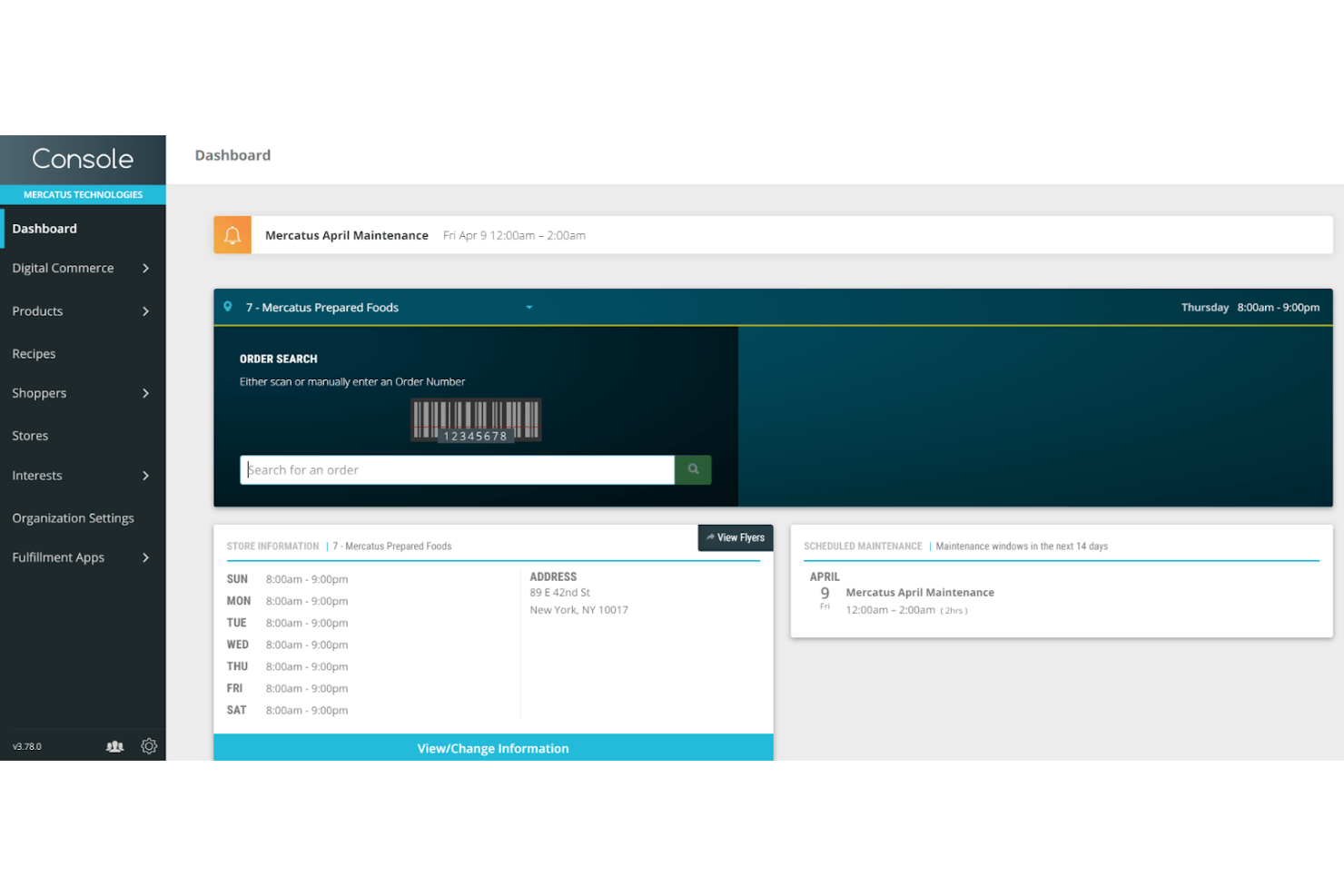
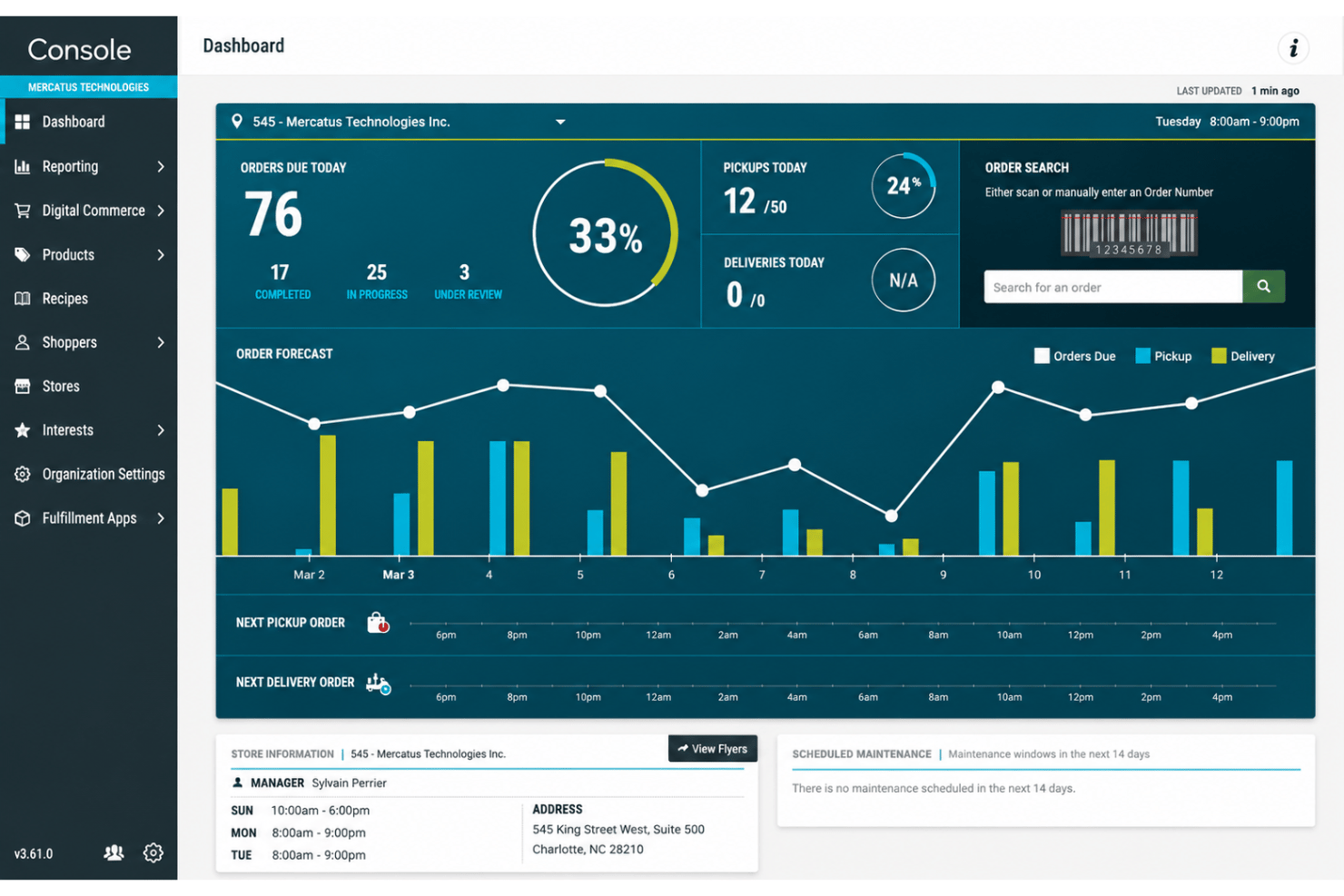
Order Management and Store Ops Dashboard
Track, process, and fulfill ecommerce and online grocery orders from a single retailer portal. Staff can manage batching, substitutions, and customer order updates in real time.
Shopper Analytics and Insights
View dashboards on sales, shopper engagement, order frequency, and other key KPIs like average order values. Use this data to make merchandising and marketing decisions faster.
Ease of Use
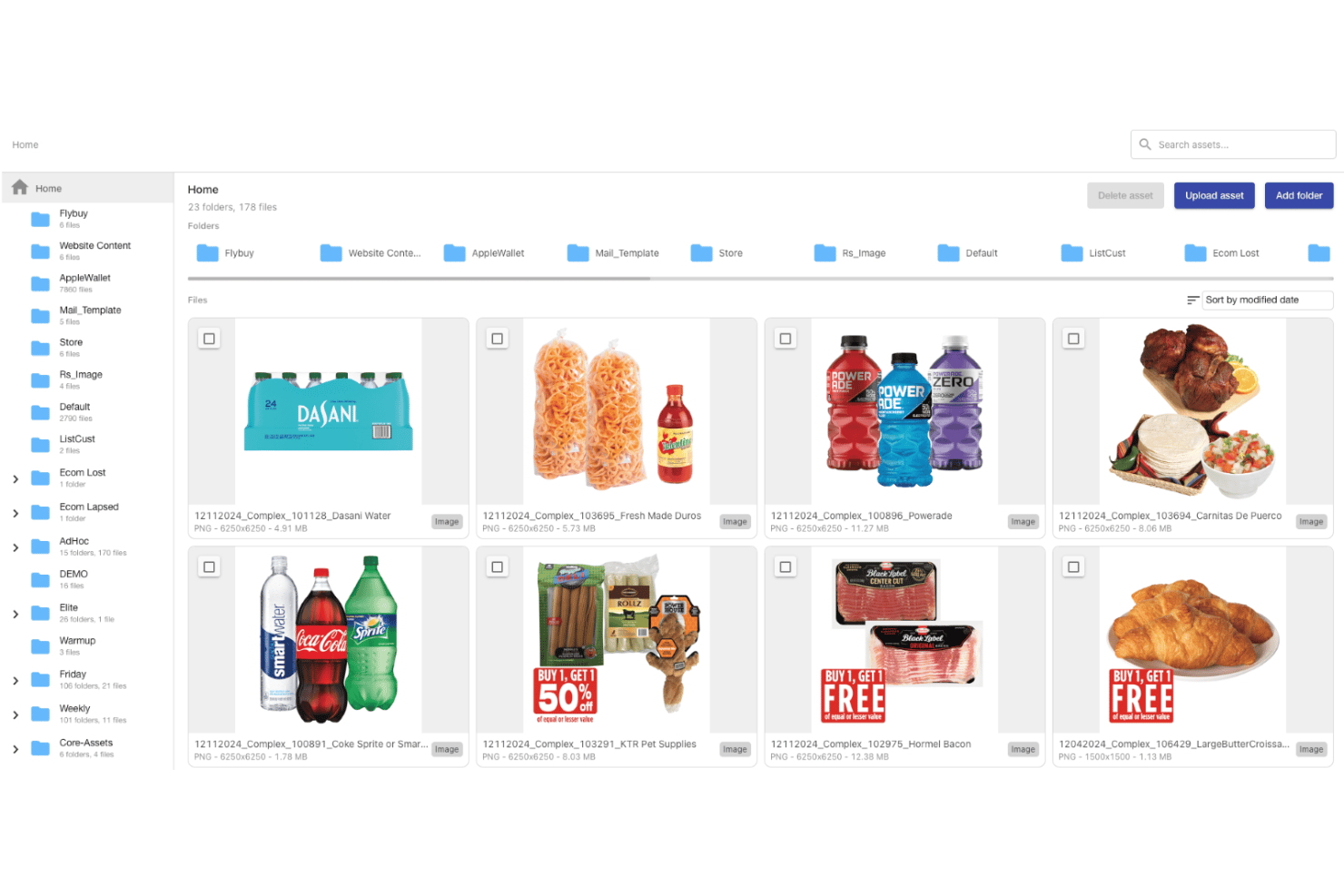
Mercatus offers a user interface that prioritizes flexibility over simplicity, giving grocers powerful controls but requiring more training than some competitors. In my opinion, the dashboard’s comprehensive order management and customizable storefronts are great for multi-store operators, but some users mention navigating advanced settings can slow onboarding. Most praise the logical workflows and real-time inventory sync, suggesting once set up, daily management feels intuitive and reliable.
Integrations
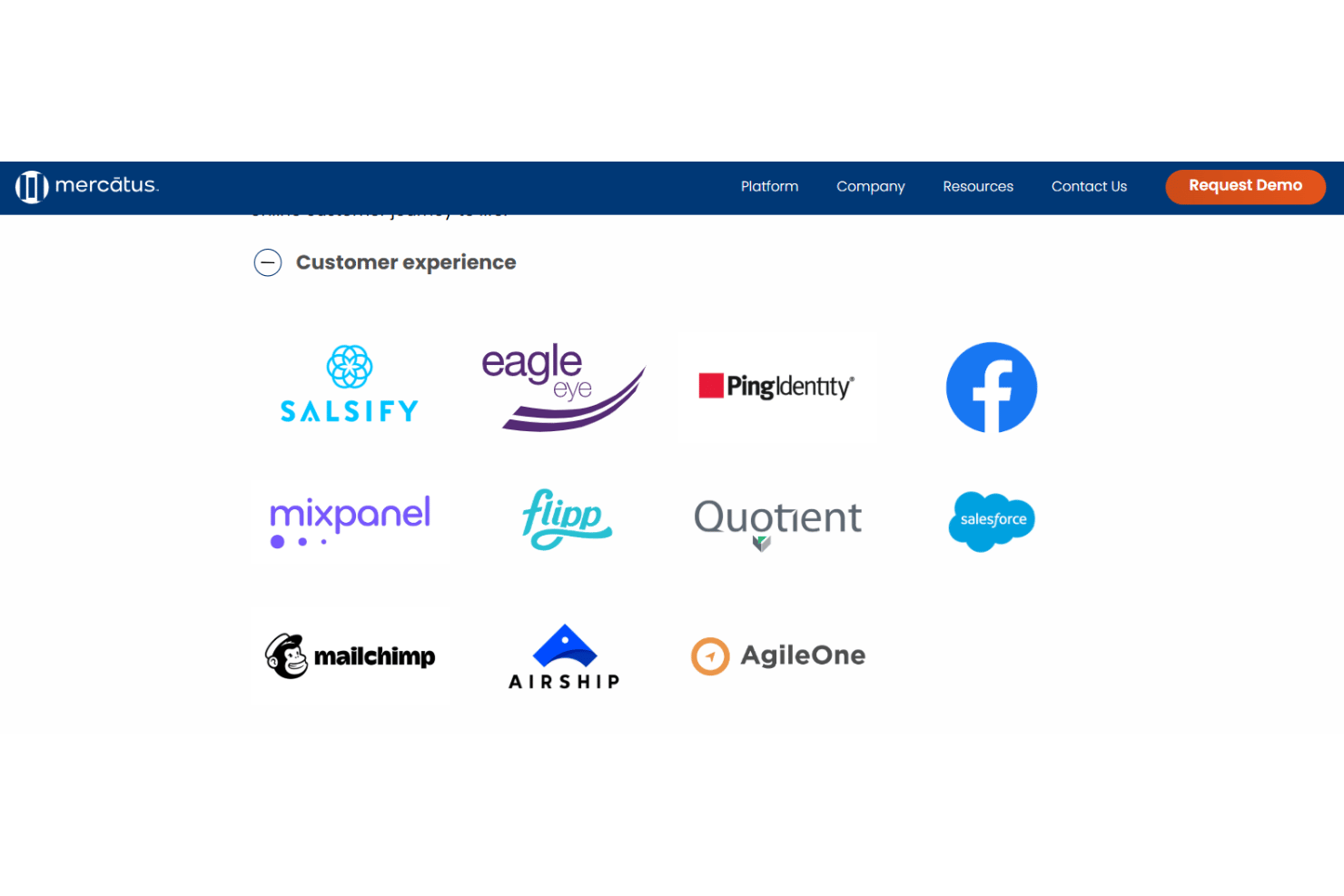
Mercatus integrates with Instacart, Shipt, DoorDash, and ShopperKit, among others.
Mercatus also offers an API and connects with a wide range of third-party integration partners to support additional workflows.
Mercatus Specs
- 2-Factor Authentication
- A/B Testing
- Analytics
- API
- BitCoin
- Conversion Tracking
- Dashboard
- Data Export
- Data Import
- Data Visualization
- Design Templates
- External Integrations
- Inventory Tracking
- Keyword Tracking
- Marketing Automation
- Multi-User
- Notifications
- Order Management
- Payment Gateway Integration
- Payment Processor
- PayPal
- Product Catalog
- Review Monitoring
- SAP Integration
- Scheduling
- Stripe
- Third-Party Plugins/Add-Ons