
Running a grocery store today means wrestling with inventory, delivery headaches, and customers who expect everything to work—fast. Online grocery sales aren’t a bonus anymore; they’re table stakes for any grocer that wants to keep pace, let alone outpace the market.
Problem is, “grocery ecommerce platform” can mean a hundred things—and every provider claims to be the answer. Sorting real solutions from vaporware takes more time than you’ve got.
Most guides drown you in features and buzzwords. I’ll cut through that.
With over a decade running logistics in ecommerce and retail, I’ve seen what actually makes a grocery platform pull its weight on the store floor.
This guide isn’t theory—it’s the practical, tested stuff. You’ll get the best options for supermarkets, independents, and online-first grocers, all vetted for real-world performance, customer experience, and operational impact.
No sponsor hype, no recycled PR—just a straight-shooting review of the platforms worth your time, with a few hard-won lessons from the industry trenches.
Why Trust Our Software Recommendations
6,700+
Reviews
20
Industry experts
16+
Evaluation factors
14
Years
Our team has been testing and reviewing software since 2012. As retail leaders ourselves, we know how difficult—and important—it is to choose the right software.
For this guide, we evaluated tools using hands-on testing and independent research, scoring tools using our selection criteria.
Our reviews reflect our independent judgment—not a sales pitch.
Grocery Ecommerce Platforms Comparison Table
This comparison table summarizes pricing details for my top grocery ecommerce platforms selections:
| Tool | Best For | Trial Info | Price | ||
|---|---|---|---|---|---|
| 1 | Best for built-in AI agent recommendations | Free demo available | Pricing upon request | Website | |
| 2 | Best for small grocery chains | Free demo available | Pricing upon request | Website | |
| 3 | Best for same-day delivery | Free demo available | Pricing upon request | Website | |
| 4 | Best for enterprise scalability | Free demo available | Pricing upon request | Website | |
| 5 | Best for global market reach | Free demo available | Pricing upon request | Website | |
| 6 | Best for modular architecture | Free demo available | Pricing upon request | Website | |
| 7 | Best for community-focused stores | Free demo available | Pricing upon request | Website | |
| 8 | Best for local retailer partnerships | Free demo available | Pricing upon request | Website | |
| 9 | Best for multilingual support | Free demo available | Pricing upon request | Website | |
| 10 | Best for user-friendly interface | Free demo available | From $299/month | Website |



The 10 Best Grocery Ecommerce Platforms, Reviewed
Here’s the bottom line on each platform—features, pros, cons, and use cases—so you can quickly size up which options actually deliver for grocers in the real world.
 Best for built-in AI agent recommendations
- Free demo available
- Pricing upon request
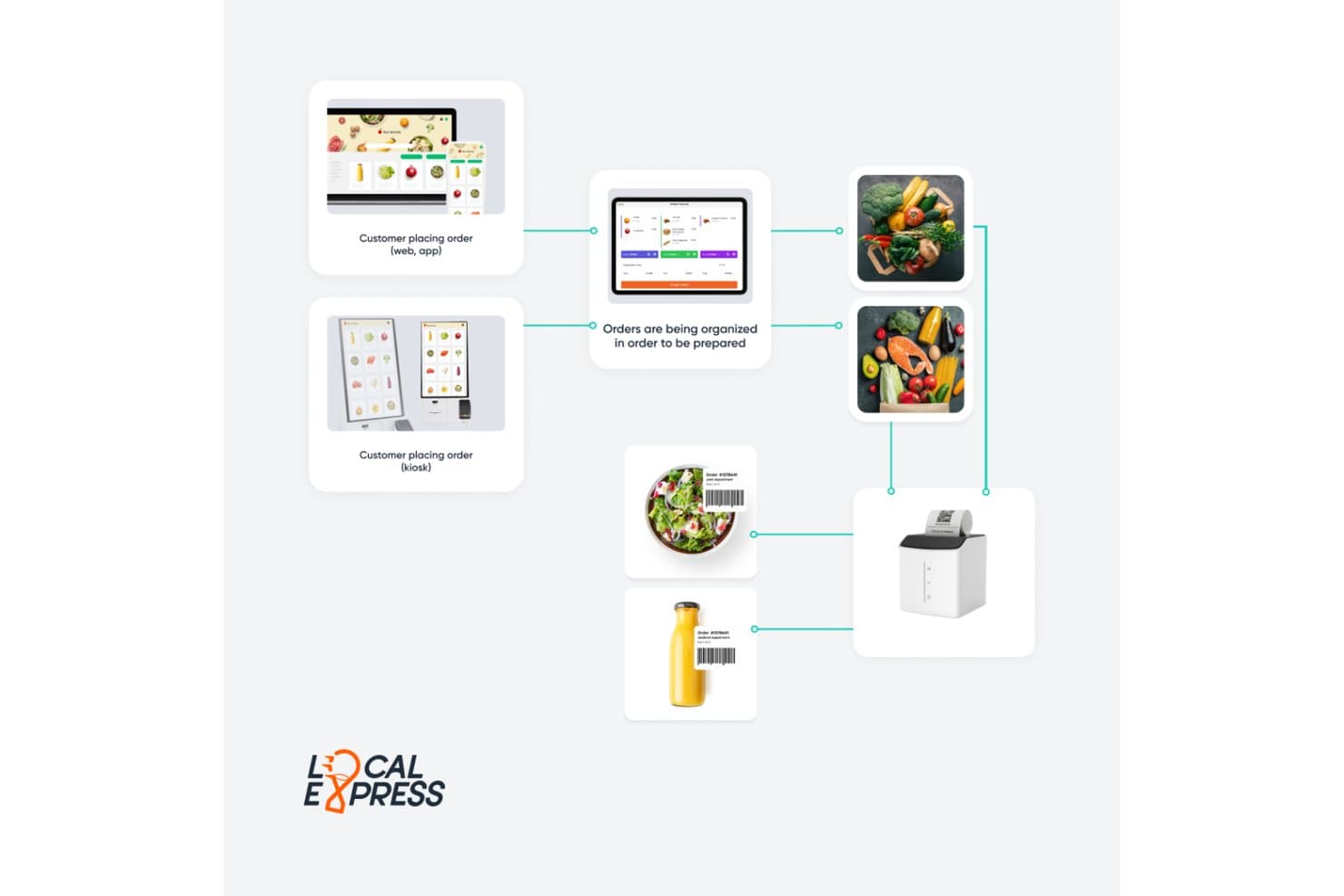
LocalExpress offers an order management workflow connecting customer ordering channels to organized preparation and label printing. Local Express is a white-label grocery ecommerce platform that unifies online storefronts, mobile apps, in-store kiosks, and last-mile delivery management for independent grocers and supermarket chains.
Who Is LocalExpress Best For?
Local Express is a strong fit for independent grocers and regional supermarket chains in the US and Canada looking to launch or scale a branded digital grocery operation without custom development.
Why I Picked LocalExpress
I picked LocalExpress because its built-in LEA AI agents go well beyond what other grocery platforms offer. The LEA Catalog Product Enhancer automatically enriches product listings with optimized descriptions and SEO metadata, saving catalog teams significant manual work. The LEA Pricing Agent recommends dynamic price adjustments based on competitor data and demand patterns. I especially like how the LEA Shopping Copilot gives customers a personalized product discovery experience inside the grocer's own branded storefront.
LocalExpress Key Features
- POS integrations: Connects with over 30 grocery POS systems for real-time inventory and pricing sync.
- In-store kiosk system: Lets shoppers browse, order, and pay using white-label kiosks in physical stores.
- Retail media management: Supports in-store digital ads and CPG-sponsored product placements.
- Prepared foods module: Manages customized menus, holiday preordering, and kitchen display systems for made-to-order items.
LocalExpress Integrations
LocalExpress integrates with ActiveCampaign, MailChimp, Doordash, Walmart, Toast, Twilio, FedEx, Clover, Stripe, Square, and more. An API is available for custom integrations.
Pros and Cons
Pros:
- Deep POS support for grocery workflows
- Advanced prepared foods and catering support
- Built-in AI agents for catalog and pricing
Cons:
- Limited global availability outside US and Canada
- No public free trial or instant setup
Learn more about LocalExpress: Best for small grocery chains
- Free demo available
- Pricing upon request
Visit WebsiteCustomer Rating:4.7/5
Freshop enables small grocers with online shopping, pickup, and delivery tools. Freshop (NCR Voyix) is an ecommerce platform tailored for grocery and specialty retail, focusing on digital engagement and fulfillment. It primarily serves small grocery chains, enabling them to offer online shopping, click-and-collect, and home delivery services.
Why I picked Freshop (NCR Voyix): The platform excels in supporting small grocery chains with its user-friendly features. Freshop's click-and-collect and home delivery options make it convenient for customers. It offers digital weekly ads that allow you to share promotions online easily. The platform also provides fulfillment tools that simplify order management for your team.
Standout features & integrations:
Features include a multichannel shopping experience that lets customers shop on mobile or desktop. They also offer digital weekly ads that enhance customer engagement. Fulfillment tools help your team manage online orders efficiently.
Integrations include loyalty programs, digital coupons, email services, SMS/Texting services, delivery services, last-mile fulfillment, and more.
Pros and Cons
Pros:
- Strong customer support
- Easy-to-use digital ads
- Supports small grocery chains
Cons:
- Learning curve for new users
- Limited customization options
Learn more about Freshop (NCR Voyix):

Instacart Storefront enables grocers with fast online ordering and same-day delivery. Instacart Storefront is an ecommerce solution designed for grocery retailers to enhance their online shopping capabilities. It primarily serves grocery stores aiming to offer quick and efficient order fulfillment, including same-day delivery.
Why I picked Instacart Storefront: Instacart Storefront focuses on providing same-day delivery, making it a valuable tool for retailers who want to meet customer demands promptly. Its real-time inventory management ensures that your stock levels are always accurate. The platform also offers customizable storefronts, allowing you to reflect your brand's identity. Additionally, its user-friendly interface aids in creating a smooth shopping experience for your customers.
Standout features & integrations:
Features include real-time inventory management that keeps your stock levels accurate. They also provide customizable storefronts that reflect your unique brand identity. A user-friendly interface enhances the shopping experience for your customers.
Integrations include Salesforce, Shopify, WooCommerce, BigCommerce, Magento, Adobe Commerce, SAP, Oracle, Microsoft Dynamics, and Square.
Pros and Cons
Pros:
- User-friendly interface
- Customizable storefronts
- Efficient same-day delivery options
Cons:
- Requires technical support for setup
- Limited customization options
Learn more about Instacart Storefront:

Oracle Commerce supports enterprises in scaling complex operations and expanding online reach. Oracle Commerce is a comprehensive ecommerce platform designed for large enterprises aiming to scale their online operations. Its main users are businesses looking to manage complex commerce needs and expand their digital footprint.
Why I picked Oracle Commerce: Oracle Commerce is ideal for enterprises needing scalability to support large-scale operations. Its flexible architecture allows you to handle high-volume transactions efficiently. The platform offers advanced personalization features, enabling your team to tailor customer interactions. Additionally, Oracle Commerce integrates with various business systems, providing a unified approach to digital commerce.
Standout features & integrations:
Features include advanced personalization features that tailor customer interactions. They also provide flexible architecture that supports high-volume transactions. Integration capabilities with various business systems ensure a unified approach.
Integrations include Salesforce, SAP, Microsoft Dynamics, Adobe Commerce, Google Analytics, Facebook Ads, HubSpot, Shopify, Magento, and BigCommerce.
Pros and Cons
Pros:
- Advanced personalization features
- Flexible architecture for high-volume transactions
- Supports enterprise-level scalability
Cons:
- Limited pre-built features
- Complex implementation process
Learn more about Oracle Commerce:

VTEX helps grocers expand digital operations and reach customers worldwide. VTEX is an ecommerce platform designed for grocery retailers aiming to expand their online presence globally. Its main users are businesses looking to enhance their digital operations and reach a wider audience.
Why I picked VTEX: VTEX is tailored for businesses targeting a global market, allowing you to manage multiple stores across different regions easily. Its unified commerce approach lets you control inventory, pricing, and promotions from a single platform. The platform provides scalability, enabling your team to handle increased demand without compromising on performance. Additionally, VTEX offers customizable storefronts that align with your brand's identity.
Standout features & integrations:
Features include a unified commerce approach that lets you manage operations from a single platform. They also provide scalability to handle increased demand. Customizable storefronts align with your brand's identity.
Integrations include Salesforce, SAP, Oracle, Microsoft Dynamics, Shopify, Magento, Adobe Commerce, Google Analytics, Facebook Ads, and HubSpot.
Pros and Cons
Pros:
- Customizable storefronts
- Unified commerce approach
- Supports global market reach
Cons:
- Limited customization options
- Learning curve for new users
Learn more about VTEX:

Spryker enables grocers to customize digital operations with a flexible, modular approach. Spryker is a flexible ecommerce platform tailored for grocery retailers who want to innovate and customize their digital operations. Its main users are businesses seeking a modular approach to manage complex ecommerce needs efficiently.
Why I picked Spryker: Spryker's modular architecture allows you to tailor your ecommerce platform to specific business requirements. It offers a customizable framework, enabling your team to add or remove features as needed. This flexibility helps you adapt quickly to market changes and customer demands. Additionally, Spryker supports various sales channels, ensuring a comprehensive online presence.
Standout features & integrations:
Features include a customizable framework that lets you adapt to market changes. They also provide support for various sales channels to broaden your reach. A modular architecture allows you to add or remove features easily.
Integrations include Salesforce, SAP, Microsoft Dynamics, Adobe Commerce, Google Analytics, Facebook Ads, HubSpot, Shopify, Magento, and BigCommerce.
Pros and Cons
Pros:
- Modular architecture for customization
- Adaptable to market changes
- Supports various sales channels
Cons:
- Limited pre-built features
- Complex implementation process
Learn more about Spryker:

Rosie helps local grocers build community ties with personalized online shopping. Rosie is an ecommerce platform tailored for local and independent grocery stores, focusing on enhancing community engagement and customer relationships. It serves grocery retailers seeking to offer personalized online shopping experiences and strengthen their connection with local customers.
Why I picked Rosie: Rosie excels in supporting community-focused stores with features that enhance local engagement. Its platform allows you to create personalized shopping experiences tailored to your community’s needs. The tool offers tools for managing promotions and loyalty programs, helping you build stronger customer relationships. Additionally, Rosie provides options for local delivery and pickup, making it easier for your team to serve nearby customers efficiently.
Standout features & integrations:
Features include tools for managing promotions and loyalty programs. They also offer options for local delivery and pickup. Personalized shopping experiences are tailored to your community’s needs.
Integrations include DoorDash, Square, QuickBooks, Shopify, WooCommerce, BigCommerce, Google Analytics, Mailchimp, Facebook Ads, and HubSpot.
Pros and Cons
Pros:
- Local delivery and pickup options
- Personalized shopping experiences
- Supports community-focused stores
Cons:
- Requires technical support for setup
- Limited customization options
Learn more about Rosie:

Mercatus boosts retailers’ online presence and streamlines sales management. Mercatus is a grocery ecommerce platform designed primarily for grocery retailers. It helps retailers enhance their online presence and manage online sales efficiently.
Why I picked Mercatus: Mercatus focuses on building strong local retailer partnerships, which sets it apart from other platforms. Its features include personalized content delivery and efficient traffic analysis. These help you target local customers more effectively. The platform also offers advanced analytics tools that provide insights into customer behavior, helping your team optimize marketing strategies.
Standout features & integrations:
Features include advanced analytics tools that help you understand customer behavior. They also provide personalized content delivery to engage local shoppers. In addition, secure payment options ensure smooth transactions.
Integrations include Google Analytics, Facebook Ads, Shopify, Mailchimp, Salesforce, Amazon Advertising, Adobe Experience Manager, and Oracle Commerce Cloud.
Pros and Cons
Pros:
- Secure payment options
- Advanced analytics tools
- Strong local retailer partnerships
Cons:
- Customization may require technical support
- Limited third-party integrations
Learn more about Mercatus: Best for multilingual support
- Free demo available
- Pricing upon request
Visit WebsiteCustomer Rating:4.8/5
Local Express helps grocers expand digital presence and streamline online operations. Local Express is an all-in-one ecommerce solution for grocery stores, focusing on enhancing the online shopping experience. It caters to grocery retailers looking to expand their digital presence and manage operations efficiently.
Why I picked Local Express: The platform is distinguished by its multilingual support, accommodating diverse customer bases. It provides tools for creating personalized shopping experiences, which helps you connect with various communities. The platform also offers custom store branding, allowing your team to maintain a consistent brand image. Its logistics and delivery management features streamline operations, ensuring timely order fulfillment.
Standout features & integrations:
Features include custom store branding that helps maintain your brand identity. They also offer logistics and delivery management that ensures timely fulfillment. Personalized shopping experiences cater to different customer preferences.
Integrations include Shopify, Square, QuickBooks, WooCommerce, Clover, DoorDash, Uber Eats, Google Analytics, Mailchimp, and Facebook Ads.
Pros and Cons
Pros:
- Personalized shopping experiences
- Effective logistics management
- Custom store branding options
Cons:
- Requires technical support for setup
- Limited customization options
Learn more about Local Express:

Wave Grocery helps grocers simplify online operations and boost customer engagement. Wave Grocery is an ecommerce platform designed for grocery retailers, focusing on enhancing the customer shopping experience. Its main users are grocery stores looking to simplify their online operations and improve customer engagement.
Why I picked Wave Grocery: Wave Grocery is recognized for its user-friendly interface, which simplifies the online shopping experience for both retailers and customers. Its intuitive design allows your team to manage products and promotions easily. The platform provides real-time updates, ensuring that your inventory is always accurate. Additionally, it offers customizable layouts, enabling you to reflect your brand's identity effectively.
Standout features & integrations:
Features include real-time inventory updates that keep your stock levels accurate. They also offer customizable layouts that allow you to reflect your brand identity. An intuitive design makes managing products and promotions easy.
Integrations include Shopify, WooCommerce, BigCommerce, Magento, Square, QuickBooks, Mailchimp, Google Analytics, Facebook Ads, and HubSpot.
Pros and Cons
Pros:
- Intuitive design for promotions
- Customizable layouts
- User-friendly interface
Cons:
- Requires technical support for setup
- Limited customization options
Learn more about Wave Grocery:
Other Grocery Ecommerce Platform
Here are some additional grocery ecommerce platform options that didn’t make it onto my shortlist, but are still worth checking out:
- 11WynshopBest for quick deployment
- 12eGrowceryBest for personalized shopper experience
- 13ShopifyBest for small grocery startups
- 14Adobe CommerceBest for extensive customization
- 15ShopHeroBest for customer engagement tools
- 16WooCommerceBest for WordPress users
- 17Salesforce Commerce CloudBest for integrated CRM solutions
- 18commercetoolsBest for headless commerce architecture
- 19BigCommerceBest for large product catalogs
- 20SAP Commerce CloudBest for enterprise resource planning
- 21Square OnlineBest for integrated point of sale
- 22Elastic PathBest for API-driven commerce
- 23ShopwareBest for innovative design flexibility
- 24My Cloud GrocerBest for independent grocers
- 25stor.aiBest for AI-driven inventory management
- 26MercatoBest for local food artisans
- 27HomesomeBest for quick setup
- 28ECRSBest for point of sale integration
- 29NRS EcommerceBest for convenience store solutions
- 30MyfoodlinkBest for Australian grocery stores
How I Evaluate Grocery Ecommerce Platforms
I evaluate grocery ecommerce platforms in two layers: baseline requirements like weighted pricing and picker tools, then differentiators that set apart the best fits for independents versus chains.
Core Functionality (Table Stakes For This List)
When I'm selecting tools for my list, I rank each one on a scale from 0 (does not offer the functionality) to 5 (excels in this area) for each core functionality listed below. Then, I calculate the tool's total score into a percentage. Each tool needs to achieve a minimum total score of 55% to be considered for inclusion.
- Grocery-Specific Product Catalog: I check whether a platform handles weighted and random-weight items, PLU codes, and perishable attributes like expiration dates—details that matter when you're selling deli meat by the gram or bagged produce by weight.
- Delivery & Pickup Fulfillment: Configurable delivery windows, curbside pickup, and click-and-collect workflows are what I look for, since grocery shoppers expect tight time slots and same-day availability.
- In-Store Picking Tools: I evaluate picker app quality, looking at how the platform handles order batching, out-of-stock substitutions, and real-time customer communication during the pick-and-pack process.
- POS & Inventory Integration: Real-time bidirectional sync with grocery POS and ERP systems matters here—I look at how well platforms connect with systems like NCR, ECRS, or Catapult to keep shelf counts accurate online.
- Multi-Store Localization: For chains and multi-banner operators, I evaluate whether each store can maintain its own pricing, assortment, promotions, and inventory within a single platform instance.
- Promotions & Loyalty Engine: Grocery-style promotions like BOGO, mix-and-match deals, and digital weekly circulars are what I look for, along with the ability to sync loyalty programs across online and in-store purchases.
Once I have a list of tools that meet this criteria, I consider what sets each platform apart.
Differentiating Factors (What Sets Vendors Apart)
Here's how I compare and contrast different vendors:
Standout Features
Third-party marketplace sync is a big differentiator—I look at whether a platform can push inventory and pull orders from Instacart, DoorDash, or Uber Eats without manual reconciliation. AI-powered substitutions also matter, especially for grocers with high out-of-stock rates who need smart alternatives surfaced during the picking process. EBT/SNAP payment support opens up a large customer segment that many platforms still don't handle well.
Beyond Features
Implementation timeline is something I evaluate closely. Some platforms can launch a grocery storefront in weeks with pre-built templates, while others require months of custom development. Pricing models vary widely too—I compare flat SaaS fees against GMV-based revenue shares, since a high-volume grocer's costs can look very different under each model. Grocery ecosystem integrations also deserve attention, particularly native connectors to wholesalers and item data providers that simplify catalog onboarding.
What is a Grocery Ecommerce Platform?
Grocery ecommerce platforms are digital solutions built to help grocers, supermarkets, and online retailers sell food and household essentials through a branded online storefront.
These platforms give you the tools to manage inventory, process online orders, offer grocery delivery or curbside pickup, and accept secure payments—without hiring an army of developers.
Used by operators, IT, and store managers alike, the right grocery ecommerce software keeps your inventory accurate, streamlines order fulfillment, and improves the customer experience from first click to doorstep.
For grocers looking to compete in the modern grocery market, these systems take the pain out of going online and make it possible to serve today’s always-connected shoppers, whether you run a single location or a multi-store operation.
How to Choose Grocery Ecommerce Platform
Choosing a grocery ecommerce platform isn’t just a tech decision—it’ll shape your store’s operations and customer experience for years. Here’s a simple, step-by-step way to avoid costly mistakes and get the right fit the first time.
| Step | What to do | Pro tip |
|---|---|---|
| StepDefine goals | What to doMap out must-haves—delivery, pickup, loyalty, integrations, etc. | Pro tipFocus on what moves the needle for your customer base. |
| StepCheck integrations | What to doList your POS, payment gateways, and loyalty tools—verify compatibility. | Pro tipDon’t trust “integrates with everything”—demand proof. |
| StepCompare usability | What to doDemo platforms with real users, not just the IT team. | Pro tipWatch for clunky admin panels and dated interfaces. |
| StepScrutinize support | What to doDig into SLAs, live chat, and onboarding resources. | Pro tipTest response times before you sign a contract. |
| StepPrice it out | What to doGet all costs in writing—setup, add-ons, user limits, transaction fees. | Pro tipVendors who dodge specifics rarely age well. |
| StepPlan for growth | What to doAsk about scalability, multi-store features, and real-world uptime. | Pro tipGrill them on references from grocers your size. |
Features of Grocery Ecommerce Platforms
Grocery ecommerce isn’t just about putting products online—it’s about controlling chaos, saving labor, and moving inventory fast. Here’s what separates a platform that just “works” from one that actually works for grocers:
- Real-time inventory management: Syncs every SKU across online and in-store, preventing overselling and disappointed customers.
- Flexible order management: Lets you handle delivery, curbside, and in-store pickup without juggling different systems.
- Customizable storefronts: Put your weekly specials, branding, and workflows front and center—no IT middleman required.
- Advanced analytics and reporting: Provides instant insight into sales, shrink, and customer patterns so you can make real decisions.
- Seamless payment and POS integration: Accepts cards, wallets, EBT, and ties straight into your point-of-sale for a true omnichannel setup.
- Loyalty program support: Built-in or tightly integrated, so you can reward repeat business and boost retention across all channels.
- API and integration capabilities: Plays nice with your existing ERP, CRM, and warehouse software—no data silos, no extra hassle.
- Mobile-first design: Ensures customers and staff have a smooth experience, whether on a phone in aisle five or from the back office.
Benefits of Grocery Ecommerce Platforms
A proper grocery ecommerce platform doesn’t just add another sales channel—it makes every part of your operation sharper, faster, and more resilient. Here’s what you actually get when you choose well:
- Reach new customers: Tap into online shoppers and compete with the big names—without blowing your budget on tech.
- Cut manual work: Automate inventory, fulfillment, and order routing so your team can focus on what matters (not fixing mistakes).
- Drive repeat business: Loyalty programs, targeted promos, and smooth user experiences keep customers coming back.
- Make smarter moves: Analytics and real-time reports show what’s working, what’s not, and where you’re making or losing money.
- Scale with less pain: Add stores, expand delivery zones, or run new promos without endless IT headaches or replatforming.
- Protect your reputation: Secure payments, reliable fulfillment, and compliance features mean fewer legal risks and PR fires.
- Improve margins: Efficiency gains, fewer errors, and more loyal customers all drop to your bottom line—where it counts.
Pricing & Cost Breakdown for Grocery Ecommerce Platforms
Pricing for grocery ecommerce platforms isn’t one-size-fits-all. Most vendors tailor quotes to your sales volume, number of stores, and integration needs—so be ready for some back-and-forth. Here’s a breakdown of typical tiers and what you can expect at each level.
| Plan | Average price | Common features | Best for |
|---|---|---|---|
| PlanStarter | Average price$100–$300/month | Common featuresBasic online storefront, limited products, simple order management, email support | Best forSmall independents, proof-of-concept |
| PlanProfessional | Average price$400–$1,200/month | Common featuresMultichannel support, real-time inventory, POS integration, basic analytics | Best forEstablished stores, expanding grocers |
| PlanBusiness/Plus | Average price$1,500–$4,000/month | Common featuresAdvanced analytics, loyalty, branded app, multi-store management, 24/7 support | Best forMulti-location chains, specialty grocers |
| PlanEnterprise | Average priceCustom (often $5K+/mo) | Common featuresFull integrations (ERP, CRM, warehouse), dedicated support, deep customization | Best forLarge grocery chains, high-volume ops |
Caveats:
- Pricing often excludes transaction fees, payment gateway costs, and delivery service add-ons.
- Most providers offer onboarding and support tiers—watch for setup or integration fees.
- Contract length, sales volume, and number of users/stores can all push you into higher brackets.
- Some platforms only share prices after a sales call—push for full quotes up front.
Grocery Ecommerce Platform FAQs
Here are some answers to common questions about grocery ecommerce platform:
How well do grocery ecommerce platforms integrate with my POS, payment systems, and loyalty programs?
Yes, most leading grocery ecommerce platforms offer integrations with popular POS, payment gateways, and loyalty programs. Before choosing, make sure your system and software versions are supported.
Some platforms provide pre-built connectors, while others need API or custom integrations. Always ask vendors about setup time, ongoing support, and compatibility with your store’s existing hardware and rewards programs.
What hidden costs should I expect beyond the monthly subscription?
Expect added costs like setup fees, transaction charges, payment processing, premium integrations, and shipping modules. You might also pay for extra users, bandwidth, or API access.
Some platforms charge for advanced support or custom features. Always request a detailed price breakdown so your grocery business avoids surprises.
Can these grocery ecommerce platforms actually scale as my online grocery business grows?
Yes, top grocery ecommerce platforms are designed to scale with your business. Look for flexible infrastructure, robust order management, and automation features that support higher volumes.
Check for options like bulk upload tools, advanced analytics, and the ability to add new pickup and delivery zones. Talk with vendors about case studies in your size range.
What kind of onboarding and customer support is standard with grocery ecommerce software?
Most platforms offer guided onboarding with documentation, tutorials, or live training. Standard support often includes live chat or email, with premium support available for a fee.
Ask if there are dedicated launch specialists or 24/7 help, and what response times look like. Make sure you have clear contacts during your first weeks online.
How do grocery ecommerce platforms help drive customer retention and loyalty?
Platforms boost retention with auto-replenishment, personalized offers, and integration with loyalty programs. Look for features like custom coupons, repeat order reminders, and simple reordering. Some platforms support points or rewards tracking and targeted email campaigns to keep shoppers coming back.
What security measures should I expect for online grocery orders and payments?
Expect end-to-end encryption, PCI-compliant payment processing, and two-factor authentication for admin users. Top platforms offer fraud detection, SSL certificates, and regular security updates.
Make sure your ecommerce provider offers safe data storage and clear communication about their security standards.
How do I migrate my existing grocery store to a new ecommerce platform?
Migration involves exporting products, customer data, and orders from your current system to the new platform. Many vendors offer migration tools or services to simplify this process.
Before starting, back up all data and review the migration checklist with your new provider to ensure nothing gets missed, including loyalty points and historical order information.
How can I customize the look and feel of my online grocery storefront?
Most leading grocery ecommerce platforms offer customizable templates and drag-and-drop editors. You can usually change colors, images, banners, and category layouts with no code.
For more control, some platforms let you edit HTML/CSS or use add-ons for advanced design options. Check if the platform supports custom branding and mobile-friendly themes so your storefront matches your unique style.