

Avis de Square pour le commerce électronique : avantages, inconvénients, fonctionnalités et tarifs
Square se distingue par sa conception conviviale et ses tarifs transparents, ce qui en fait une solution idéale pour les petites entreprises, mais peut manquer de fonctionnalités avancées nécessaires aux grands détaillants.

Nous évaluons les outils de façon indépendante, et les commissions contribuent à financer nos tests. Consultez notre politique de transparence, notre méthodologie, ou suggérez un outil.
Square is a POS system built for small to mid-sized retail and food service businesses. It's designed for sellers who need to accept payments and manage sales without committing to expensive hardware or long-term contracts. I'd consider it over Clover if you want to get started without heavy upfront costs. Square's free plan and flexible hardware options lower the barrier to entry. The built-in ecommerce tools also give brick-and-mortar sellers a direct path to selling online.
Square Evaluation Summary
4.7/5
- From $49/month
- Free plan available; 30-day free trial on paid tiers
Pourquoi faire confiance à nos recommandations de logiciels
6,700+
Reviews
20
Industry experts
16+
Evaluation factors
14
Years
Notre équipe teste et évalue des logiciels depuis 2012. En tant que dirigeants du commerce de détail nous-mêmes, nous savons à quel point il est difficile — et important — de choisir le bon logiciel.
Pour ce guide, nous avons évalué les outils grâce à des tests pratiques et une recherche indépendante, en notant les outils selon nos critères de sélection.
Nos avis reflètent notre jugement indépendant — et non un argumentaire de vente.
Square Overview
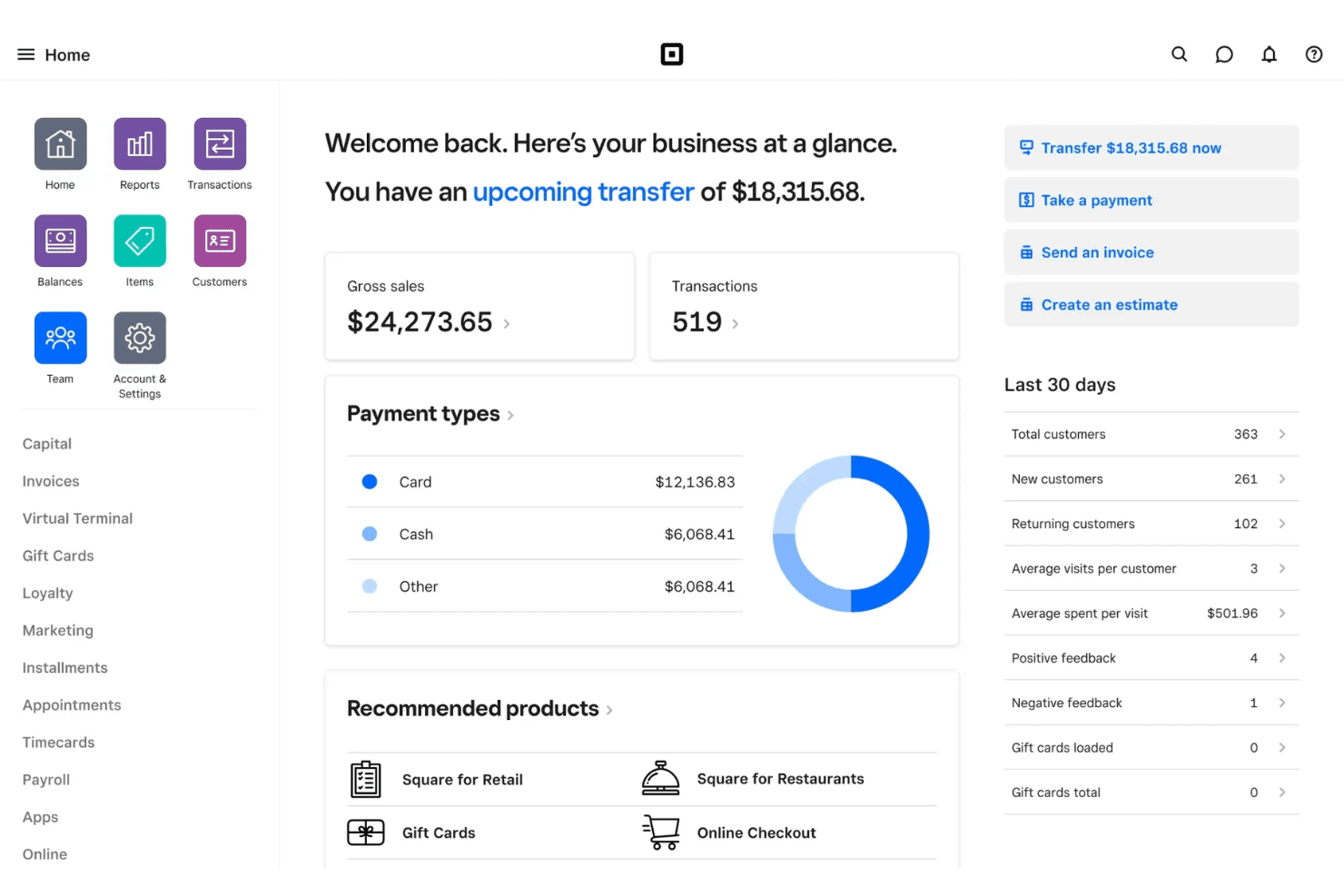
If you’re judging Square Ecommerce against other point-of-sale software, its clean interface, transparent pricing, and quick onboarding make it a top pick for small retailers, pop-ups, and food trucks. You’ll find the app easy to navigate, with built-in payment processing and inventory tools that work right out of the box.
While it doesn’t offer the deep customization or advanced reporting some larger businesses might want, I’d choose Square Ecommerce for teams that value simplicity, fast setup, and reliable support over complex features or deep integrations.
Pros
- All-in-one platform combining POS, payments, and business tools.
- Free core POS with fast, simple setup process.
- Flexible hardware options for mobile, countertop, and retail use.
Cons
- Must use Square Payments, limiting processor choice and negotiation flexibility.
- Flat-rate processing fees can become expensive at higher volumes.
- Not ideal for complex or enterprise-level business operations.
Is Square Right For Your Needs?
Who Would be a Good Fit for Square?
Square Ecommerce is a strong choice for small businesses, mobile sellers, and teams that need a simple, unified system for both in-person and online sales. Its transparent pricing, free plan, and easy onboarding make it especially appealing for those who want to avoid complex contracts or hardware requirements.
If you’re running a business where speed, flexibility, and real-time syncing matter more than deep customization or advanced analytics, Square Ecommerce is likely to fit your needs.
- Food TrucksMobile POS, offline mode, and tap-to-pay make selling anywhere fast and reliable.
- Pop-Up ShopsQuick setup and no contracts make it ideal for short-term or seasonal retail.
- Service ProvidersBuilt-in scheduling, invoicing, and client management simplify operations for service-based businesses.
- Small to Mid-Sized Retail (Omnichannel Sellers)Syncs in-store and online sales with inventory, orders, and customer data in real time.
- Quick-Service Restaurants & CafésSupports fast-paced ordering, tipping, and menu management for quick-service food environments.
- New & First-Time Business OwnersFree POS (plus transaction rates) and simple setup make it easy to start selling quickly.
Who Would be a Bad Fit for Square?
Square Ecommerce isn’t ideal for large retailers, businesses with complex inventory needs, or those requiring highly specialized POS features. If your team needs advanced reporting, deep integrations, or industry-specific compliance, you’ll likely find Square’s feature set limiting.
Larger operations or those with unique workflows may outgrow Square Ecommerce's capabilities and need a more customizable solution.
- Large Retail ChainsSquare Ecommerce lacks advanced inventory and multi-location management features.
- Enterprise RestaurantsNo support for complex kitchen workflows or table management.
- Regulated IndustriesLimited compliance features for age-restricted or high-risk businesses.
- Wholesale DistributorsNo support for bulk pricing, purchase orders, or B2B workflows.
- Multi-Department StoresReporting and permissions are too basic for complex organizations.
- High-Volume EcommerceOrder management and fulfillment tools are limited for large online stores.
Notre méthodologie d'évaluation
Comment nous testons et notons les outils
Nous avons passé des années à construire, affiner et améliorer notre système de test et de notation des logiciels. Notre grille d’évaluation est conçue pour prendre en compte toutes les subtilités du choix d’un logiciel et identifier ce qui rend un outil efficace, en se concentrant sur les aspects essentiels du processus de décision. Vous pouvez voir ci-dessous comment fonctionne notre système de test et de notation selon sept critères. Il nous permet de fournir une évaluation impartiale des logiciels selon leur fonctionnalité principale, leurs caractéristiques remarquables, la facilité d’utilisation, l’intégration, l’onboarding, le service client, les avis clients et le rapport qualité-prix.
Fonctionnalité principale (25% de la note finale)
Le point de départ de notre évaluation est toujours la fonctionnalité de base de l’outil. Possède-t-il les fonctions et caractéristiques attendues par un utilisateur ? Certaines de ces fonctionnalités essentielles sont-elles réservées à des plans tarifaires supérieurs ? Nous attendons d’un outil qu’il se mesure aux capacités minimales proposées par ses concurrents.
Caractéristiques remarquables (25% de la note finale)
Ensuite, nous évaluons les caractéristiques remarquables et uniques qui vont au-delà des fonctionnalités de base normalement attendues d’un outil similaire. Une note élevée reflète des fonctionnalités spécialisées qui rendent le produit plus rapide, plus efficace, ou apportent une valeur ajoutée pour l’utilisateur. Nous évaluons également la facilité d’intégration avec d’autres outils généralement présents dans l’écosystème technique afin d’étendre la fonctionnalité et l’utilité du logiciel. Les outils qui proposent de nombreuses intégrations natives, des connexions avec des solutions tierces, et un accès API pour des intégrations personnalisées obtiennent la meilleure note.
Facilité d’utilisation (10% de la note finale)
Nous analysons la rapidité et la simplicité d’exécution des tâches affectées aux fonctionnalités principales via l’outil. Les logiciels les mieux notés sont bien conçus, intuitifs, offrent des applications mobiles, incluent des modèles prêts à l’emploi et simplifient les opérations complexes.
Onboarding (10% de la note finale)
Nous savons à quel point l’adoption rapide d’une nouvelle plateforme est cruciale pour une équipe. Nous évaluons donc la facilité d’apprentissage et de prise en main d’un outil avec un minimum de formation. Nous examinons la rapidité à laquelle un membre d’équipe peut s’installer et commencer à utiliser l’outil sans expérience préalable. Les solutions les mieux notées montrent qu’elles nécessitent peu ou pas d’assistance.
Service client (10% de la note finale)
Nous évaluons la vitesse et la simplicité pour obtenir de l’aide ou se débloquer par téléphone, chat en direct, ou base de connaissances. Les outils et sociétés qui offrent une assistance en temps réel obtiennent la meilleure note, tandis que les chatbots sont moins bien évalués.
Avis clients (10% de la note finale)
Au-delà de nos propres tests et évaluations, nous tenons compte du score de recommandation (NPS) des clients actuels et passés. Nous examinons leur probabilité de choisir à nouveau l’outil pour sa fonctionnalité principale. Un logiciel bien noté reflète un NPS élevé de la part des clients actuels ou passés.
Rapport qualité-prix (10% de la note finale)
Enfin, au regard de tous les autres critères, nous évaluons le prix moyen des offres de départ au regard des fonctionnalités clés, et tenons compte de la valeur ajoutée selon les autres critères. Les logiciels qui offrent plus pour moins obtiennent une meilleure note.
Core Features
Integrated Payments
Accepts credit cards, contactless payments, and mobile wallets directly through the POS app.
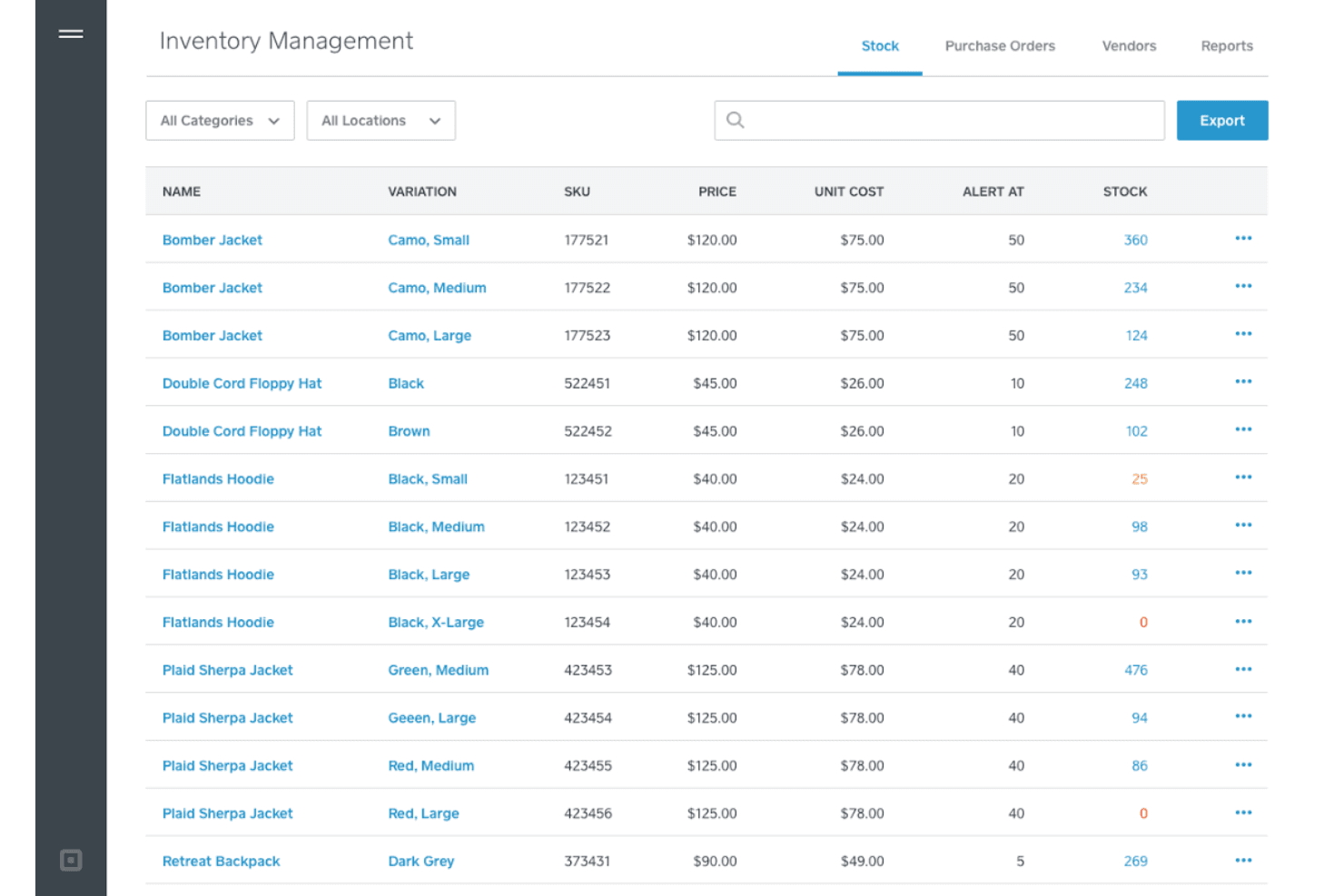
Inventory Management
Tracks stock levels in real time across in-store and online channels, helping prevent overselling.
Customer Directory
Stores customer profiles, purchase history, and loyalty points in one place for easy access.
Order Management
Lets you manage in-person, online, and pickup orders from a single dashboard.
Digital Receipts
Sends receipts via email or text, allowing customers to track purchases and returns easily.
Employee Management
Tracks staff hours, permissions, and sales performance within the POS system.
Ease of Use
Square Ecommerce is one of the most user-friendly point-of-sale systems I’ve tried, with a clean interface and intuitive workflows that make onboarding new staff fast. Users often mention how quickly they can set up hardware, process sales, and manage inventory without training.
The mobile app and dashboard are straightforward, so even non-technical teams can handle daily operations and reporting with minimal hassle.
Integrations
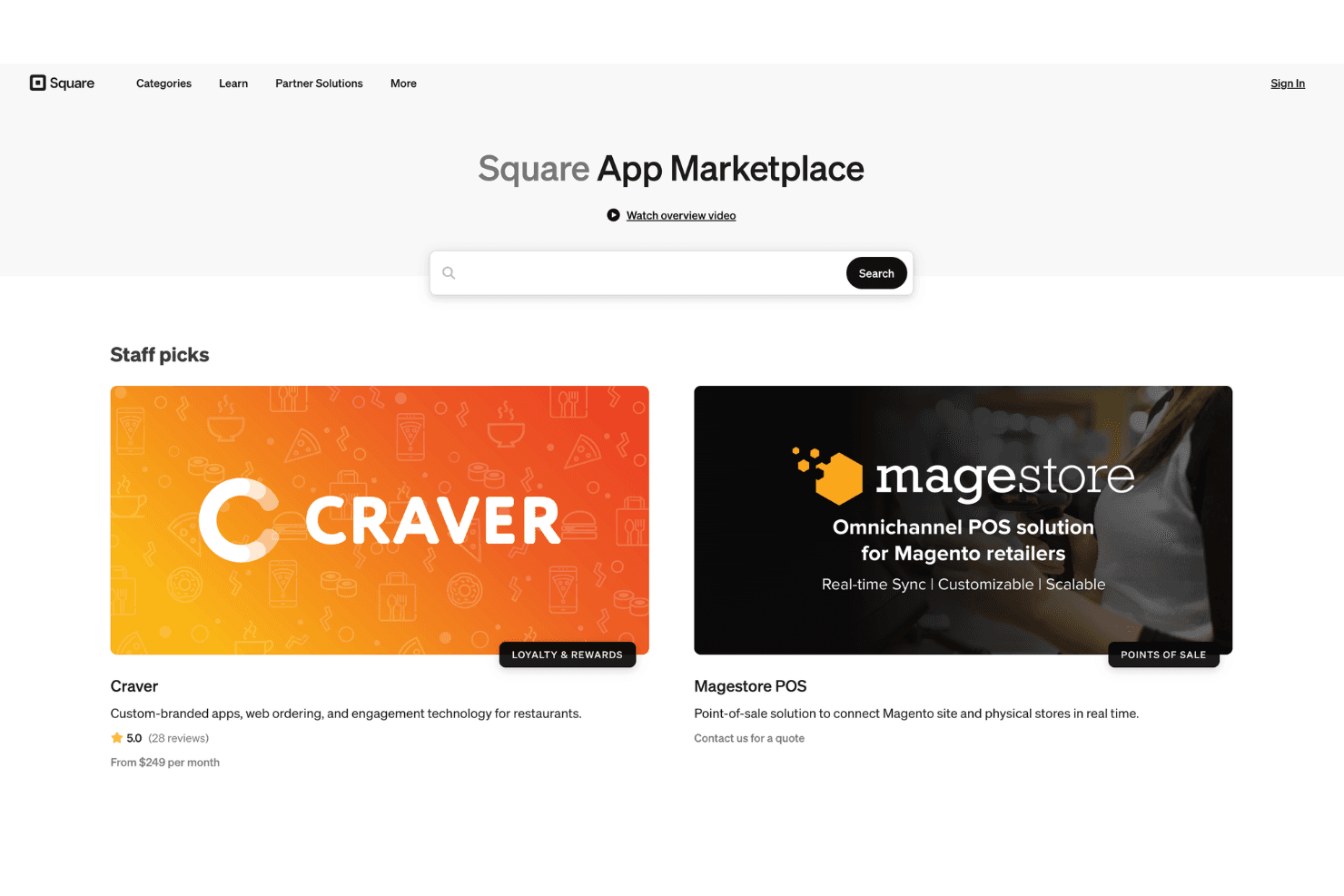
Square integrates with Wix, WooCommerce, QuickBooks, Xero, Shippo, Jotform, Homebase, BigCommerce, Acuity Scheduling, and Mailchimp, among others.
Square also offers an API and connects with third-party integration tools for expanded functionality.
Square Specs
- 2-Factor Authentication: Yes
- API: Yes
- Barcode Scanning: Yes
- BitCoin: No
- Budgeting: No
- Contact Management: Yes
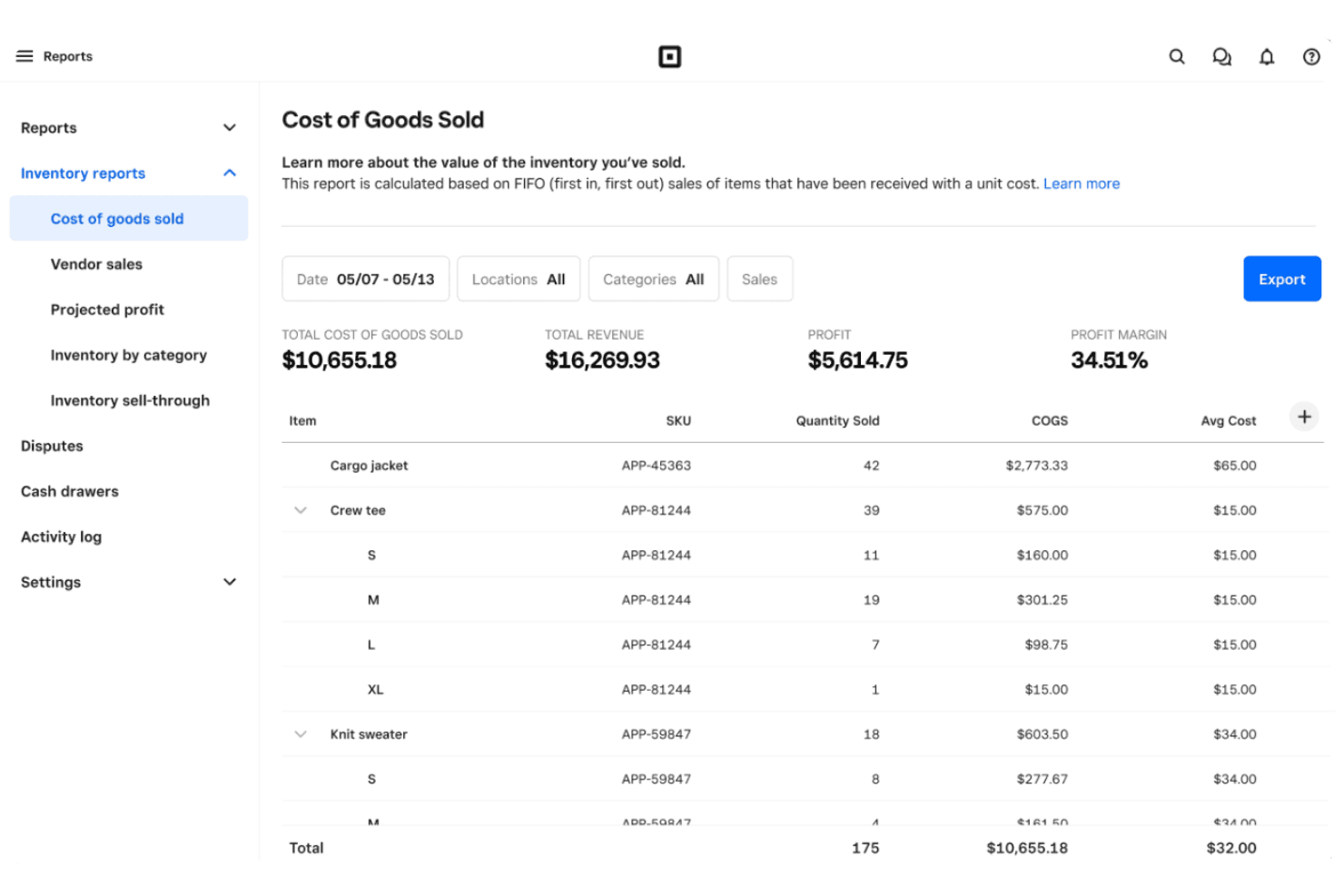
- Custom Reports: Yes
- Customer Management: Yes
- Customer Rewards: Yes
- Dashboard: Yes
- Data Export: Yes
- Data Import: Yes
- Data Visualization: Yes
- External Integrations: Yes
- Forecasting: No
- Fraud Detection: Yes
- Inventory Tracking: Yes
- Multi-Currency: No
- Multi-User: Yes
- Notifications: No
- Offline Access: Yes
- Order Management: Yes
- Payment Processor: Yes
- PayPal: No
- Stripe: No
- Supplier Management: No
- Tax Management: Yes
- Third-Party Plugins/Add-Ons: Yes
- Workflow Management: Yes


