

Los 10 mejores programas TPV para restaurantes de 2026

Los 10 mejores programas de TPV para restaurantes que deberías utilizar


El programa de TPV para restaurantes gestiona pedidos, pagos, inventario y la sincronización entre el área de atención y la cocina en tiempo real.
Sigues lidiando con menús que tardan días en actualizarse, terminales tan lentos que también sirven como pausas para el café (y no precisamente de las divertidas) e integraciones de “un solo clic” que generan registros de errores. Los informes manuales muestran el desorden de ayer, no lo que ocurre hoy.
Llevo más de una década trabajando en operaciones de comercio minorista y comercio electrónico, y he analizado muchas decenas de plataformas de TPV, así que sé qué sistemas cumplen realmente.
En esta guía, clasifico los mejores sistemas de TPV para restaurantes —abarcando paneles en tiempo real, procesamiento de pagos, integraciones, incorporación y precios transparentes— para que puedas cambiar el caos por un flujo de trabajo que funcione como un reloj.
Por qué confiar en nuestras recomendaciones de software
Nuestro equipo lleva probando y evaluando software desde 2012. Como líderes del sector retail, sabemos lo difícil —y lo importante— que es elegir el software adecuado.
Para esta guía, evaluamos las herramientas mediante pruebas prácticas e investigación independiente, puntuando las herramientas según nuestros criterios de selección.
Nuestras reseñas reflejan nuestro criterio independiente, no un discurso de ventas.
Comparativa de los mejores programas de TPV para restaurantes
Esta tabla compara los niveles de precios, la disponibilidad de pruebas y el caso de uso más destacado de cada sistema, para que puedas identificar de un vistazo cuál se adapta mejor a tu presupuesto y necesidades.
| Tool | Best For | Trial Info | Price | ||
|---|---|---|---|---|---|
| 1 | Ideal para almacenamiento en la nube | Not available | Website | ||
| 2 | Mejor para el mercado del Reino Unido | Demo gratuita disponible | Precio a consultar | Website | |
| 3 | La mejor opción para restaurantes indios | Demostración gratuita disponible | Desde $65/mes | Website | |
| 4 | Mejor en seguridad de datos | Demo gratuita disponible | Desde $89/mes por una estación | Website | |
| 5 | Ideal por su facilidad de uso | Demostración gratuita disponible | Desde 3.25% más $0.15 por transacción | Website | |
| 6 | Mejor para pequeñas empresas | Not available | Desde $65/mes por terminal + cuota única de configuración | Website | |
| 7 | Ideal para una configuración rápida | Plan gratuito disponible | Desde $35/mes + comisiones por transacción | Website | |
| 8 | Mejor para flexibilidad de pagos | Demostración gratuita disponible | Precios disponibles bajo solicitud | Website | |
| 9 | Ideal para grandes cadenas | Demo gratuita disponible | Precio bajo consulta | Website | |
| 10 | Ideal para plan inicial gratuito | Complementos opcionales desde $5/mes | Gratis para usar | Website |
Los 10 mejores programas de TPV para restaurantes, analizados
A continuación encontrarás mis principales opciones de sistemas de TPV para restaurantes, con análisis claros y directos sobre la configuración, el procesamiento de pagos, el control del inventario, las integraciones y los precios: todo lo que necesitas para elegir tu próximo TPV sin tener que adivinar.

Ideal para almacenamiento en la nube

Restroworks es un software POS basado en la nube diseñado para restaurantes de todos los tamaños, enfocado en la escalabilidad y la eficiencia tanto en operaciones de salón como en cocina. Ofrece herramientas completas para la gestión de pedidos, control de inventario y compromiso con el cliente, lo que lo hace ideal para entornos de restaurantes dinámicos.
Por qué elegí Restroworks: Restroworks destaca por ofrecer soluciones de almacenamiento en la nube que garantizan que tus datos sean accesibles y seguros. La gestión centralizada de menús e inventarios ayuda a optimizar las operaciones en varias ubicaciones.
Con análisis en tiempo real, puedes tomar decisiones informadas para mejorar el servicio y la rentabilidad. Su capacidad de integrarse con diversas plataformas de pedidos digitales amplía el alcance y las capacidades de atención.
Características e integraciones destacadas:
Características incluyen una interfaz fácil de usar que simplifica el procesamiento de pedidos y reduce los tiempos de espera. La función de gestión de inventario te ayuda a controlar los niveles de existencias y minimizar el desperdicio. Restroworks también ofrece herramientas para crear y gestionar promociones que impulsen la interacción con el cliente.
Integraciones incluyen Zomato, Swiggy, Uber Eats, Paytm, Razorpay, Dunzo, Amazon Pay, PhonePe, Justdial y DotPe.
Pros and Cons
Pros:
- Capacidades extensas de almacenamiento en la nube
- Gestión centralizada de menús
- Análisis en tiempo real disponibles
Cons:
- Detalles sobre precios no transparentes
- Funcionalidad offline limitada

Epos Now
Mejor para el mercado del Reino Unido
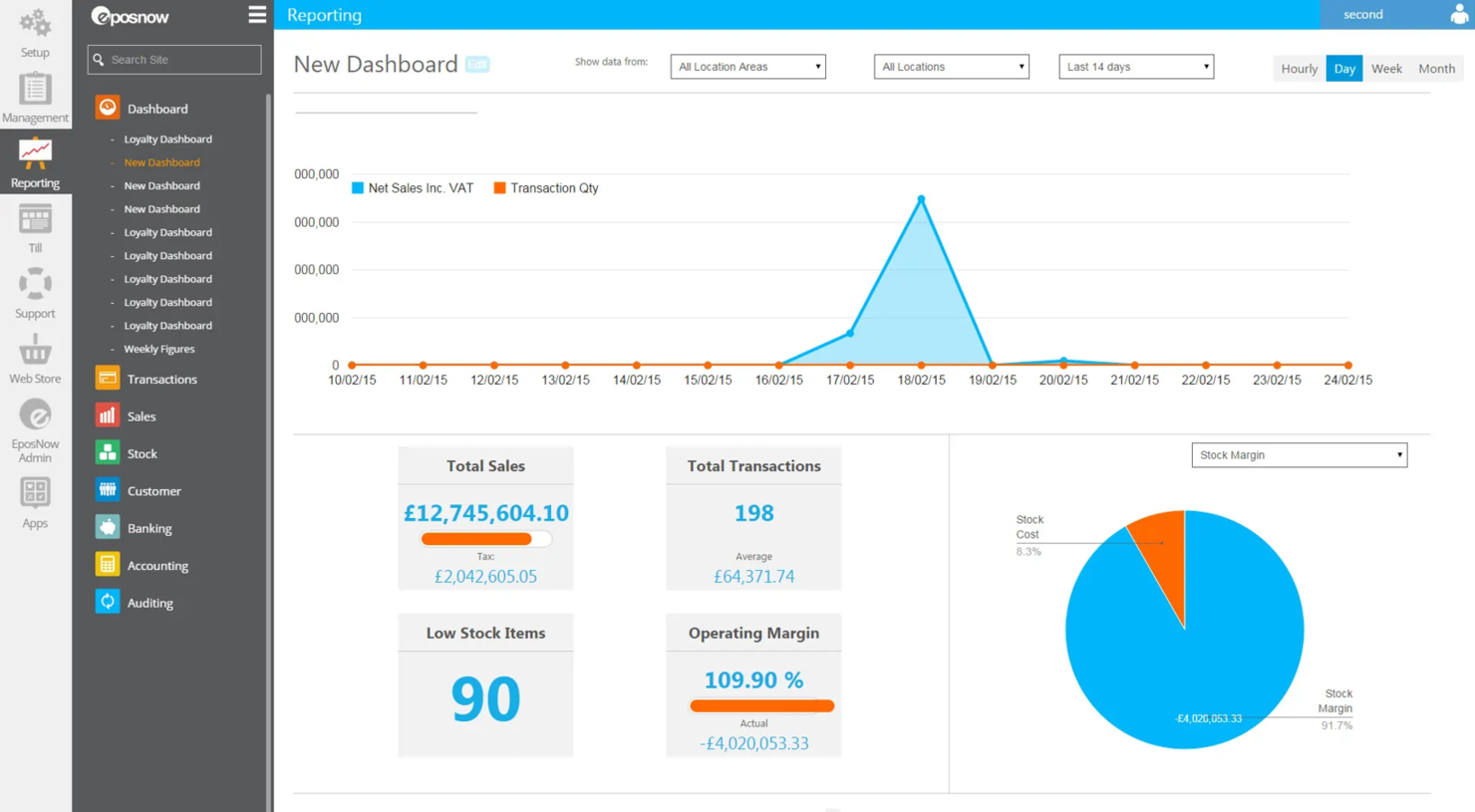
Epos Now es un sistema de punto de venta para restaurantes versátil, diseñado para cafeterías, bares y restaurantes, y se centra en gestionar ventas multicanal, incluyendo en el local, para llevar y a domicilio. Ofrece herramientas para el procesamiento de pagos, la gestión de inventario y análisis en tiempo real para apoyar a los negocios de alimentación.
Por qué elegí Epos Now: Epos Now atiende al mercado del Reino Unido con funciones como la integración con plataformas de contabilidad populares y la compatibilidad con varios métodos de pago. El análisis de datos en tiempo real del sistema te ayuda a optimizar el rendimiento del menú y reducir el desperdicio de alimentos.
La capacidad de la plataforma para gestionar múltiples sucursales con su función Multi-Site Manager es una ventaja significativa. La política de precios promocionales lo convierte en una opción asequible para negocios que buscan mejorar sus operaciones.
Funciones y integraciones destacadas:
Funciones incluyen informes en tiempo real, que te ayudan a hacer un seguimiento eficiente de las ventas y los niveles de inventario. El sistema también ofrece herramientas para programas de fidelización de clientes para aumentar la participación. Los quioscos de autoservicio de Epos Now pueden mejorar la experiencia del cliente al reducir los tiempos de espera.
Integraciones incluyen QuickBooks, Xero, Sage, Mailchimp, Tyro, Deputy, Shopify, WooCommerce, Zapier y PayPal.
Pros and Cons
Pros:
- Adecuado para el mercado del Reino Unido
- Análisis de datos en tiempo real
- Gestión multisitio
Cons:
- Puede requerir conexión a internet
- La configuración de integraciones puede ser compleja

Petpooja
La mejor opción para restaurantes indios

Petpooja es un sistema de punto de venta (POS) para restaurantes diseñado especialmente para establecimientos de la India, que proporciona herramientas para facturación, gestión de inventario y compromiso con el cliente. Atiende a una amplia gama de negocios gastronómicos, desde pequeñas cafeterías hasta grandes locales de comida, ofreciendo funciones que optimizan las operaciones.
Por qué elegí Petpooja: Petpooja está dirigido específicamente al mercado indio con capacidades multilingües y soporte para métodos de pago regionales. Su modo sin conexión garantiza que tu equipo pueda continuar operando incluso sin conexión a internet.
Las herramientas de análisis del software también proporcionan información sobre las tendencias de ventas, ayudándote a tomar decisiones empresariales informadas. Con su interfaz fácil de usar, simplifica la gestión de las tareas diarias.
Características destacadas e integraciones:
Funciones incluyen un menú personalizable que permite modificar artículos y precios rápidamente. El sistema ofrece informes detallados que te ayudan a rastrear ventas e inventario de manera eficiente. Petpooja también admite recibos digitales, lo que reduce el desperdicio de papel y mejora la comodidad del cliente.
Integraciones incluyen Zomato, Swiggy, Uber Eats, Paytm, Razorpay, Dunzo, Amazon Pay, PhonePe, Justdial y DotPe.
Pros and Cons
Pros:
- Soporte multilingüe para idiomas indios
- Modo sin conexión disponible
- Admite métodos de pago regionales
Cons:
- El enfoque regional puede no ser adecuado para todos
- La configuración de integraciones puede ser desafiante

Mejor en seguridad de datos
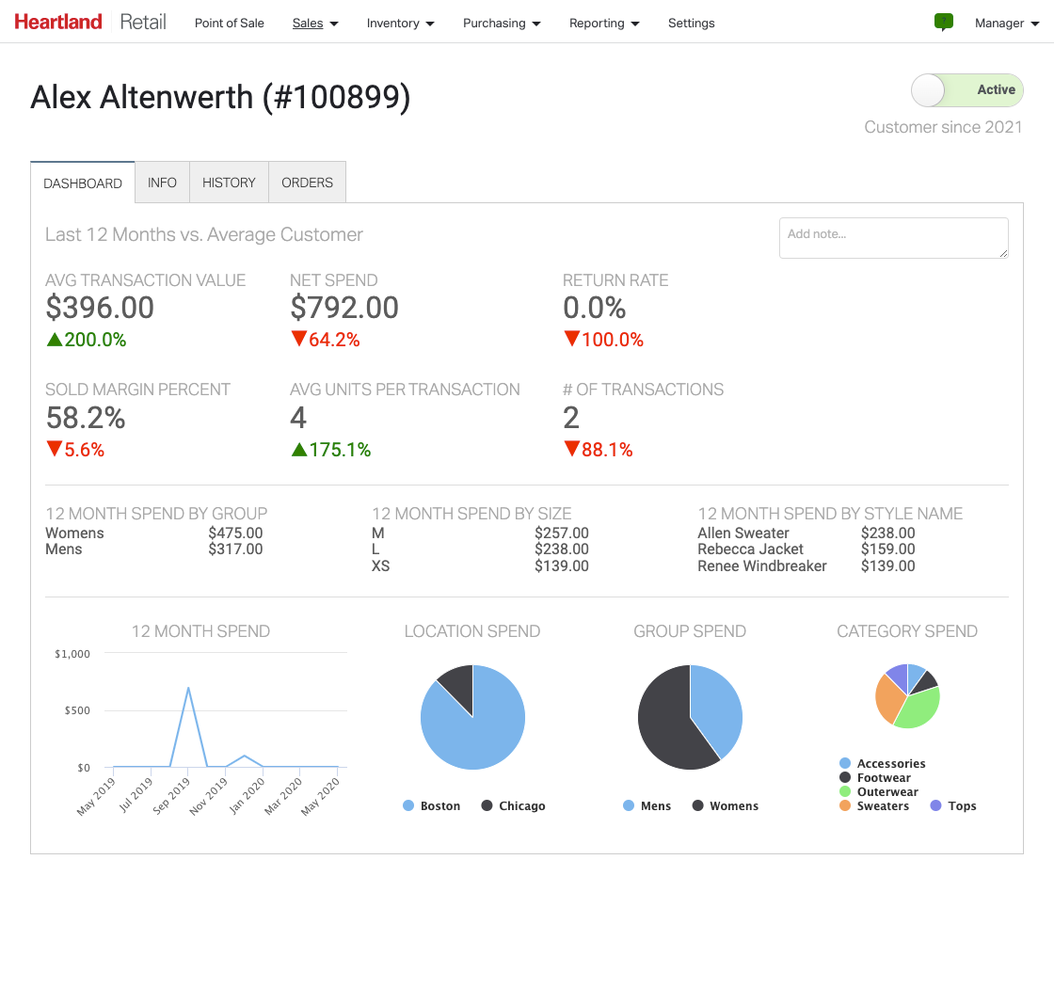
Heartland es un sistema POS integral diseñado para restaurantes, enfocado en el procesamiento seguro de pagos y operaciones eficientes. Atiende a una variedad de establecimientos de comida, proporcionando herramientas para la gestión de pedidos, control de inventario y fidelización de clientes.
Por qué elegí Heartland: Heartland destaca en la seguridad de datos, ofreciendo transacciones cifradas y pasarelas de pago seguras. Con características como cifrado de extremo a extremo y tokenización, puedes proteger la información de pago de tus clientes.
La generación de informes en tiempo real de Heartland te ayuda a llevar un control eficiente de las ventas y el inventario. La capacidad del sistema para admitir múltiples tipos de pago agrega flexibilidad a tus operaciones.
Características y conexiones destacadas:
Funciones incluyen informes personalizables que te permiten adaptar los análisis a las necesidades de tu negocio. Heartland ofrece una función de programa de fidelización para ayudarte a retener clientes y aumentar las ventas recurrentes. El sistema también proporciona capacidades de POS móvil, lo que te permite tomar pedidos y procesar pagos en cualquier lugar.
Integraciones incluyen QuickBooks, Xero, GrubHub, DoorDash, Uber Eats, OpenTable, Resy, Chowly, 7shifts y MarketMan.
Pros and Cons
Pros:
- Medidas sólidas de seguridad de datos
- Admite múltiples tipos de pago
- Capacidades de POS móvil
Cons:
- Funcionalidad limitada sin conexión
- Configuración del sistema compleja

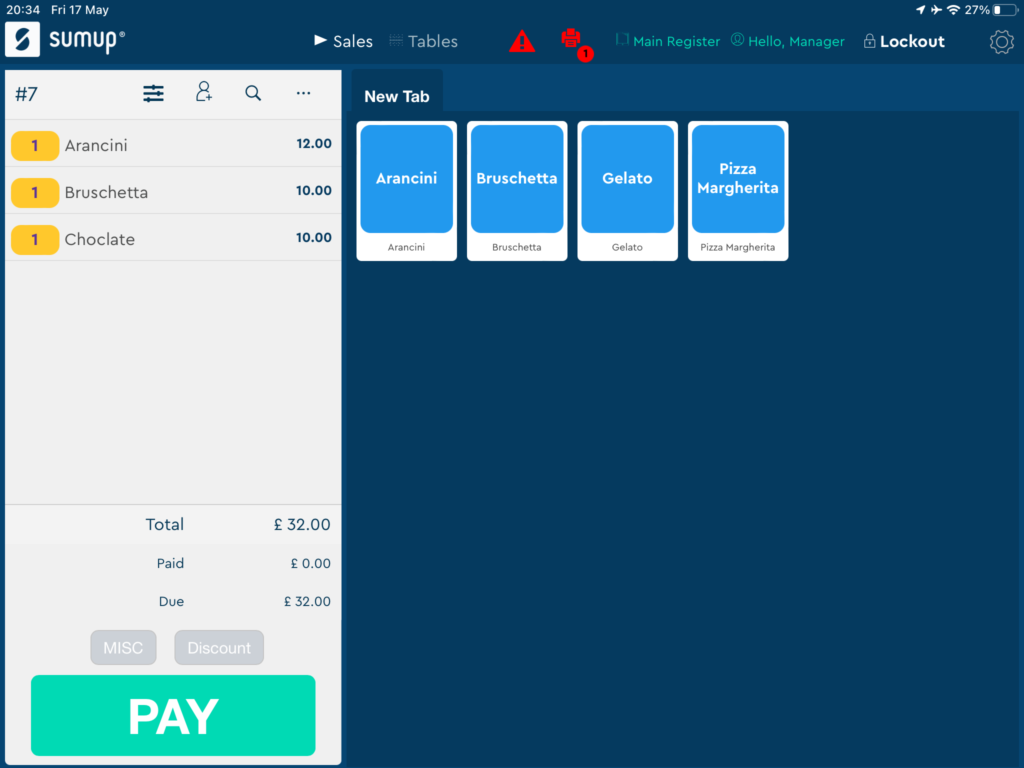
SumUp es una solución de punto de venta (POS) diseñada para pequeñas empresas y emprendedores, que ofrece procesamiento de pagos sencillo y seguimiento de ventas. Proporciona herramientas para gestionar transacciones y aceptar varios métodos de pago, lo que la hace ideal para quienes buscan funcionalidades directas.
Por qué elegí SumUp: SumUp ofrece una configuración y operación intuitivas, perfecta para negocios que no cuentan con personal de TI dedicado. El lector de tarjetas es portátil, permitiéndote aceptar pagos en cualquier lugar.
El panel de control de SumUp brinda información clara sobre las ventas, ayudándote a tomar decisiones informadas. Con su enfoque en la simplicidad, puedes capacitar rápidamente a tu equipo para que lo use de manera efectiva.
Funciones y integraciones destacadas:
Funciones incluyen un terminal virtual que te permite procesar pagos sin un lector de tarjetas. SumUp ofrece informes de ventas detallados para ayudarte a comprender el rendimiento de tu negocio. La función de facturación te permite crear y enviar facturas profesionales directamente desde la aplicación.
Integraciones incluyen Shopify, WooCommerce, PrestaShop, BigCommerce, Magento, OpenCart, QuickBooks, Xero, Vend y PayPal.
Pros and Cons
Pros:
- Proceso de configuración fácil
- Lector de tarjetas portátil
- Capacitación rápida del equipo
Cons:
- Funciones avanzadas limitadas
- Sin línea de atención al cliente dedicada

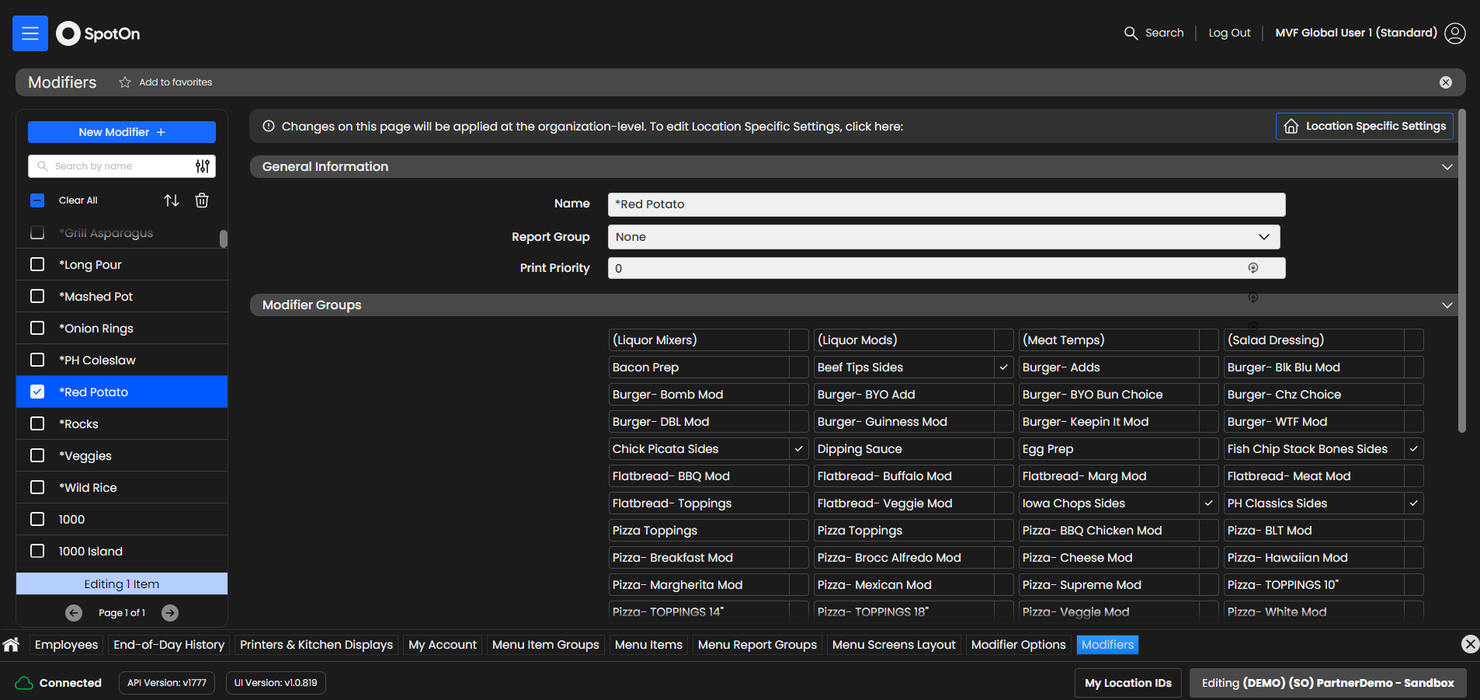
SpotOn es un sistema POS para restaurantes que se adapta a establecimientos de comida casual, servicio rápido y alta cocina. Ofrece soluciones de punto de venta personalizables, gestión de personal y pedidos en línea para mejorar las operaciones del restaurante.
Por qué elegí SpotOn: SpotOn brinda una opción asequible para pequeñas empresas con funciones como dispositivos portátiles y herramientas de programación. Su interfaz flexible te permite gestionar los menús fácilmente, mientras que la copia de seguridad celular garantiza la continuidad de las operaciones durante cortes de internet.
La gestión multi-sucursal de SpotOn también te ayuda a supervisar múltiples ubicaciones de manera efectiva, apoyando tu crecimiento y expansión.
Funciones e integraciones destacadas:
Funciones incluyen reportes seleccionados, visualización de datos al instante y alertas para umbrales de costos y ventas. Puedes recopilar datos de los clientes para fines de marketing, mejorando el compromiso con tus clientes. El sistema también admite la integración de nómina para ayudar a gestionar los costos de manera eficiente.
Integraciones incluyen MarginEdge, Craftable, Gusto, ADP, DoorDash, QuickBooks, Square, Constant Contact y Mailchimp.
Pros and Cons
Pros:
- Personalizable para pequeñas empresas
- Copia de seguridad celular para caídas de servicio
- Admite gestión multi-sucursal
Cons:
- Funcionalidades avanzadas limitadas
- La configuración de integraciones puede ser compleja

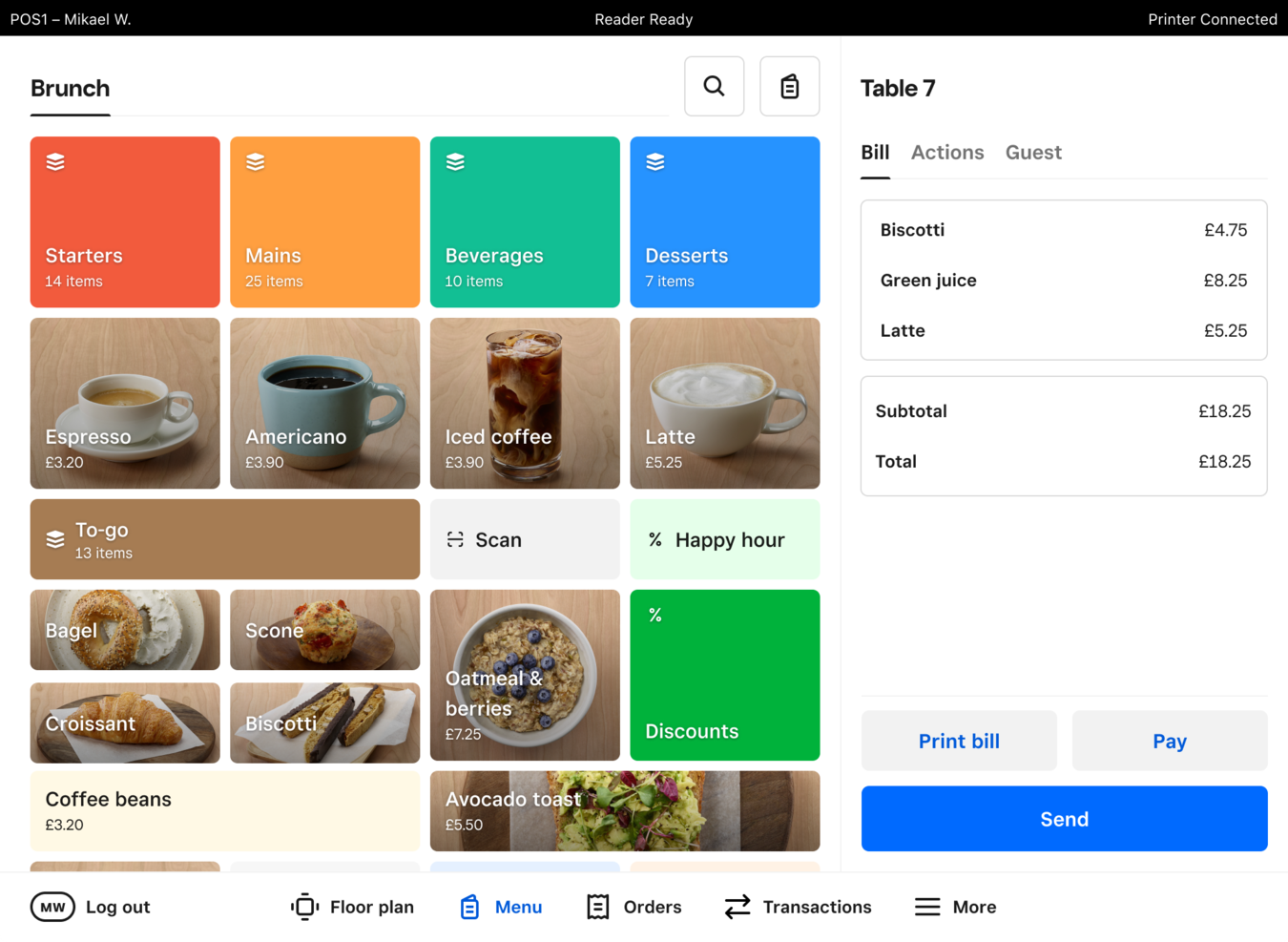
Square for Restaurants es una plataforma de punto de venta (POS) diseñada para establecimientos de comida de todos los tamaños, ofreciendo soluciones para la gestión de pedidos y el procesamiento de pagos. Está orientada a restaurantes, cafeterías y bares, brindando herramientas que simplifican las operaciones y mejoran la calidad del servicio.
Como dice Janice Kuz, propietaria de The Nines Emporium con más de 20 años en la hostelería: “Después de cambiar a Square, nuestro tiempo promedio de pedido bajó de 4.2 a 2.8 minutos. El factor clave fue el sistema de modificación de menús de Square: todo está integrado con modificadores preestablecidos, así que pasamos de 3–4 errores de pedido en un sábado ajetreado a tal vez 1. Cuando sirves más de 200 cafés, esos segundos cuentan.”
Por qué elegí Square for Restaurants: Square for Restaurants ofrece un proceso de configuración rápida, lo que lo hace ideal para negocios que necesitan operar rápidamente. La interfaz intuitiva permite que tu equipo aprenda el sistema con una capacitación mínima.
Incluye funciones como menús personalizables y gestión de mesas que se adaptan a diferentes formatos de restaurantes. Con el procesamiento de pagos integrado, puedes gestionar transacciones de manera eficiente y segura.
Características destacadas e integraciones:
Características incluyen una herramienta de gestión de plano de mesas que te permite optimizar la disposición de los asientos para un mejor flujo de servicio. El sistema también ofrece una suite de informes detallados que proporciona información sobre ventas y métricas de rendimiento. Además, Square for Restaurants admite POS móvil, lo que permite a tu equipo tomar pedidos y procesar pagos desde cualquier parte del restaurante.
Integraciones incluye QuickBooks, Xero, 7shifts, MarketMan, Resy, OpenTable, Deliverect, Uber Eats, DoorDash y GrubHub.
Pros and Cons
Pros:
- Proceso de configuración rápido
- Procesamiento de pagos integrado
- Admite operaciones con POS móvil
Cons:
- Funciones avanzadas limitadas
- Capacidades básicas de informes

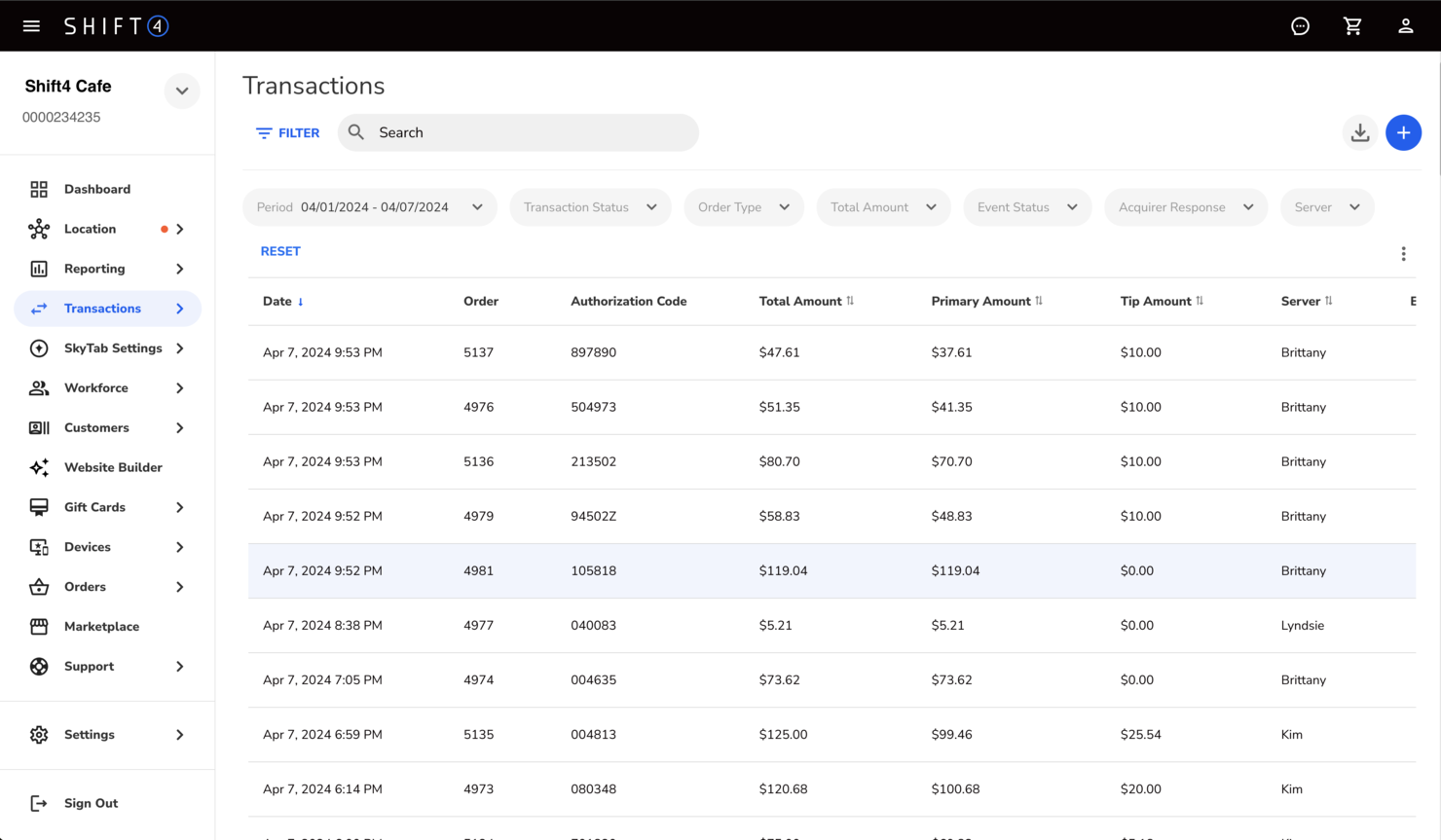
Shift4 es un software de punto de venta para restaurantes que satisface las necesidades de restaurantes y bares gestionando pedidos móviles, pagos y pedidos en línea. Está diseñado para apoyar tanto las operaciones de sala como de cocina, proporcionando herramientas que mejoran la eficiencia y el servicio al cliente.
Por qué elegí Shift4: Shift4 ofrece una flexibilidad única en las opciones de pago, lo que te permite gestionar las transacciones sin contratiempos. Funciones como pagos móviles y con código QR facilitan la adaptación a las preferencias de los clientes.
El software soporta varios métodos de pago, asegurando que tu equipo pueda manejar cualquier escenario de pago. Las herramientas de marketing y fidelización añadidas te ayudan a interactuar de manera efectiva con los clientes.
Funciones destacadas e integraciones:
Funciones incluyen pedidos móviles, soluciones de código QR y herramientas de marketing. Puedes gestionar fácilmente pedidos y pagos a través de su sistema integrado de pedidos en línea. El módulo de informes y analítica te proporciona información sobre el rendimiento de tu restaurante.
Integraciones incluyen QuickBooks, Xero, Sage, Heartland, Micros, Aloha, Toast, Square, Upserve y Clover.
Pros and Cons
Pros:
- Opciones de pago flexibles
- Capacidad de pedidos móviles
- Herramientas de marketing y fidelización
Cons:
- Detalles de precios no transparentes
- Posible curva de aprendizaje


NCR Voyix es un sistema POS basado en la nube diseñado para grandes cadenas de restaurantes, que se centra en optimizar las operaciones y mejorar la experiencia del cliente. Ofrece herramientas completas para la gestión de pedidos, procesamiento de pagos y análisis en tiempo real, dirigido a negocios de alto volumen.
Por qué elegí NCR Voyix: NCR Voyix ofrece escalabilidad e infraestructura robusta para manejar las exigencias de grandes cadenas. Funciones como la gestión centralizada de menús y los informes empresariales facilitan la supervisión de varias ubicaciones.
El sistema basado en la nube garantiza que las actualizaciones sean fluidas, lo que reduce los tiempos de inactividad de tu equipo. Con su enfoque en la eficiencia, podrás mantener un servicio consistente en todos tus locales.
Funciones e integraciones destacadas:
Características incluyen un sistema intuitivo de gestión de pedidos que ayuda a tu equipo a reducir errores y mejorar la rapidez del servicio. El sistema también admite pedidos móviles, lo que permite opciones de servicio más flexibles. NCR Voyix ofrece herramientas avanzadas de informes que te brindan información sobre tendencias de ventas y eficiencia operativa.
Integraciones incluyen Oracle, PayPal, GrubHub, DoorDash, Uber Eats, Postmates, Punchh, Avero, MarketMan y Fourth.
Pros and Cons
Pros:
- Gestión centralizada de menús
- Ofrece informes a nivel empresarial
- Basado en la nube para actualizaciones sencillas
Cons:
- Proceso de configuración complejo
- Posibilidad de costes adicionales


Loyverse es un sistema POS diseñado para pequeñas y medianas empresas, que ofrece funciones que facilitan la gestión de ventas y la fidelización de clientes. Está dirigido a cafeterías, restaurantes y tiendas minoristas, ayudándote a gestionar el inventario, rastrear ventas e interactuar con los clientes.
Por qué elegí Loyverse: Loyverse ofrece un plan inicial gratuito, lo que lo hace accesible para empresas con limitaciones de presupuesto. Su función de programa de fidelidad te ayuda a construir relaciones con los clientes sin costos adicionales.
Las herramientas de gestión de inventario de Loyverse te permiten mantener el control de los niveles de stock sin esfuerzo. Las analíticas de ventas del sistema ofrecen información que te ayuda a tomar decisiones de negocio informadas.
Funciones y
integraciones destacadas:
Funciones incluyen un panel personalizable que te permite organizar la información según tus necesidades. La función de gestión de empleados te ayuda a monitorear el desempeño del personal y gestionar los horarios. Loyverse también ofrece una función de historial de ventas que proporciona una visión detallada de transacciones pasadas para obtener mejores perspectivas de negocio.
Integraciones incluyen QuickBooks, Xero, SumUp, Worldpay, PayPal, Tyro, Zettle, Square, WooCommerce y Shopify.
Pros and Cons
Pros:
- Plan inicial gratuito disponible
- Análisis de ventas detallados
- Soporta gestión de inventario
Cons:
- Características avanzadas limitadas
- Funcionalidad offline limitada
Otros programas de TPV para restaurantes
Estas son algunas opciones adicionales de programas de TPV para restaurantes que no llegaron a mi selección, pero que aún merece la pena conocer:


Cómo Evalúo el Software POS para Restaurantes
Divido mi evaluación en dos niveles: las capacidades básicas que todo POS de restaurante debe tener, como el enrutamiento de KDS y la división de cuentas, y los diferenciadores que distinguen a los proveedores.
Funcionalidad Básica (Imprescindibles para Esta Lista)
Cuando selecciono herramientas para mi lista, califico cada una en una escala del 0 (no ofrece la funcionalidad) al 5 (sobresale en esta área) para cada funcionalidad básica listada a continuación. Luego, calculo la puntuación total de la herramienta en un porcentaje. Cada herramienta debe alcanzar una puntuación mínima del 65% para ser considerada para su inclusión.
- Gestión de Pedidos y Menú: Verifico si el sistema maneja modificadores, tiempos de los platos y flujos de trabajo separados para comer en el local, llevar y entrega, no solo una simple lista plana de artículos.
- Gestión de Mesas y Salón: Los planos visuales de salón, pedidos a nivel de asiento y asignación de secciones de camareros son importantes aquí, especialmente durante los picos de cenas en restaurantes de servicio completo.
- Procesamiento de Pagos y División de Cuentas: Analizo qué tan flexible es el POS para dividir cuentas: por asiento, artículo o monto personalizado, y si admite propinas y pagos sin contacto.
- Integración con Pantallas de Cocina e Impresoras: El enrutamiento por estación es clave. Un pedido de parrilla debe llegar a la pantalla de la parrilla, no a la impresora del bar, y debe contar con soporte para enviar órdenes por tiempos de servicio.
- Inventario y Reportes del Restaurante: Evalúo si el sistema realiza seguimiento a nivel de ingrediente con costeo de recetas, no solo conteo de artículos y totales básicos de ventas.
- Pedidos en Línea e Integración de Entregas: Los pedidos de DoorDash, Uber Eats o de un sitio de marca deben entrar en la misma cola de tickets que los pedidos en salón.
Una vez que tengo una lista de herramientas que cumplen con estos criterios, considero qué diferencia a cada plataforma.
Factores Diferenciadores (Qué Distingue a los Proveedores)
Así es como comparo y contrasto los diferentes proveedores:
Características Destacadas
Los dispositivos POS portátiles son un diferenciador destacado para restaurantes de servicio completo. Evalúo si los camareros pueden tomar pedidos y cerrar cuentas en la mesa sin volver a un terminal fijo. El modo sin conexión es igual de importante: si se cae el internet durante una hora pico, el sistema debe seguir aceptando pedidos y pagos, y luego sincronizarse automáticamente una vez que la conectividad regrese. También reviso las herramientas integradas de gestión de personal y programación, ya que vincular los costos laborales con datos de ventas en tiempo real ayuda a los gerentes a tomar decisiones de personal más inteligentes durante los turnos lentos y las horas punta.
Más Allá de las Características
La compatibilidad de hardware es una de las primeras cosas que reviso. Algunos proveedores requieren terminales propietarios, mientras que otros permiten usar tus propios iPads o tabletas Android, lo cual es importante si ya has invertido en equipamiento. La estructura de precios también importa. Verifico si el procesamiento de pagos está atado a un procesador integrado o si puedes usar un proveedor externo. La profundidad de las integraciones completa el panorama, especialmente las conexiones con herramientas de contabilidad como QuickBooks o Xero y sistemas de reservas como OpenTable que mantienen alineados los datos del salón y de la oficina administrativa.
¿Qué es un programa de TPV para restaurantes?
El programa de TPV para restaurantes es una plataforma integral basada en la nube que gestiona la introducción de pedidos, el procesamiento de pagos y el seguimiento del inventario.
Ayuda a los propietarios, gerentes, camareros y equipos de cocina de los restaurantes a coordinar el servicio en tiempo real.
Al sincronizar los pedidos desde las mesas, el procesamiento de tarjetas de crédito y los niveles de existencias, evita errores en las comandas, elimina las comprobaciones manuales del inventario y garantiza que los menús y los precios sean precisos tanto en el área de atención como en la cocina.
Cómo elegir un programa de TPV para restaurantes
Elegir un sistema de TPV para restaurantes requiere tener claros tus flujos de trabajo, integraciones y precios.
Utiliza esta lista de comprobación práctica para centrarte en las funciones del punto de venta, las integraciones para pedidos en línea, las prestaciones de gestión de restaurantes y el soporte que mantienen el área de atención y la administración funcionando sin problemas.
| Paso | Qué considerar | Consejo práctico |
|---|---|---|
| Define tus flujos de trabajo | Mapea el flujo de pedidos de atención al cliente, las necesidades del sistema de visualización de cocina y la gestión de inventario | Esboza tu proceso actual de principio a fin para detectar posibles deficiencias |
| Verifica las integraciones | Confirma la compatibilidad con tu software de contabilidad, plataformas de pedidos en línea, programas de fidelización y herramientas de gestión laboral | Haz una lista de las plataformas existentes y prueba la sincronización de datos en una demostración |
| Prueba la facilidad de uso | Asegúrate de que la interfaz se adapte a las mesas, al POS móvil y a los paneles basados en la nube | Realiza una prueba de siete días con tu personal durante turnos reales |
| Compara los precios | Ten en cuenta los niveles de suscripción, las comisiones por transacción, los costos del hardware y los complementos | Elabora un modelo de costos del primer año para comparar el gasto total |
| Evalúa la incorporación y el soporte | Revisa los recursos de capacitación, los recorridos guiados en directo por el producto y los acuerdos de nivel de servicio de atención al cliente | Solicita una hoja de ruta de incorporación y los tiempos de respuesta del soporte |
Características del software POS para restaurantes
Un sistema POS sólido para restaurantes incluye herramientas que abordan cada etapa del servicio y del trabajo administrativo. Estas funciones agilizan las operaciones, mejoran la precisión de los pedidos y conectan tu área de atención al cliente con tu inventario, tus integraciones y tus informes en tiempo real.
- Panel en tiempo real. Consulta las ventas, los costos laborales y los niveles de inventario a medida que se actualizan, para detectar problemas antes de que afecten tus resultados.
- Integración con el sistema de visualización de cocina (KDS). Envía los pedidos directamente a las pantallas del área de cocina, eliminando los comprobantes de papel y reduciendo los errores de preparación.
- POS móvil y pedidos en la mesa. Toma pedidos y pagos desde cualquier tableta o dispositivo móvil para agilizar el cobro y mejorar la experiencia de los clientes.
- Gestión de menús basada en la nube. Envía al instante cambios de precios o del menú a iPads, quioscos y canales de pedidos en línea sin cargas manuales.
- Programas de fidelización integrados. Lanza recompensas basadas en puntos o tarjetas de regalo en la misma plataforma, sin soluciones alternativas de terceros ni cargos adicionales.
- Compatibilidad con pagos sin contacto y quioscos. Ofrece pedidos de autoservicio mediante códigos QR o quioscos sin supervisión para reducir las filas y los costos laborales.
- Informes y análisis avanzados. Analiza los datos por turno, mesero o promoción y expórtalos a tu software de contabilidad para agilizar la gestión administrativa.
- Integraciones con terceros. Conecta procesadores de pagos, servicios de pedidos en línea, paquetes de contabilidad y herramientas de gestión laboral para obtener una solución POS todo en uno.
Beneficios del software POS para restaurantes
Elegir el software de gestión de restaurantes adecuado significa reducir el trabajo manual, minimizar los errores y aumentar la rentabilidad.
Estos beneficios se reflejan en el área de atención al cliente, la gestión administrativa y la experiencia de tus clientes.
- Pagos más rápidos y mayor capacidad de servicio. El procesamiento de pagos integrado, compatible con tarjetas de crédito y débito, mantiene las filas en movimiento y aumenta los ingresos.
- Menos faltantes y desperdicio. El seguimiento automatizado del inventario señala en tiempo real los artículos con pocas existencias y activa alertas de reposición, evitando que te quedes sin productos del menú inesperadamente.
- Decisiones basadas en datos. Los informes de ventas y mano de obra en tiempo real te ayudan a optimizar la dotación de personal, los precios del menú y las promociones para maximizar la rentabilidad.
- Mejor experiencia para los clientes. El POS móvil y los pagos en la mesa reducen los tiempos de espera, mientras que los programas de fidelización hacen que los clientes regresen.
- Menor tiempo de capacitación. Las interfaces intuitivas y las herramientas interactivas de incorporación permiten que el personal nuevo aprenda a usar el sistema en horas, no en días.
- Control centralizado para varias ubicaciones. Gestiona los menús, los precios y los informes de todos tus establecimientos desde una única oficina administrativa basada en la nube.
- Transacciones seguras y conformes. El cifrado de extremo a extremo y la tokenización protegen los datos de los clientes y reducen la carga de cumplimiento de PCI.
- Crecimiento escalable. Tanto si tienes un restaurante de servicio rápido como una cadena de servicio completo, tu solución POS crece contigo mediante complementos como quioscos, pantallas de cocina y módulos avanzados de informes.
Costos y precios del software POS para restaurantes
Los planes de POS para restaurantes van desde ofertas básicas gratuitas hasta suscripciones empresariales de más de $400 al mes. La mayoría de los restaurantes pequeños y medianos paga entre $20 y $100 al mes por el software principal, mientras que el hardware y la configuración suelen costar entre $500 y $1,500 por adelantado. Las comisiones por transacción suelen ser de 2.6–3.5% más $0.10–$0.30 por venta. Tu gasto real dependerá de cuántos terminales implementes, qué complementos elijas y de si te comprometes con un acuerdo anual.
| Tipo de plan | Precio promedio | Características comunes | Ideal para |
|---|---|---|---|
| Plan gratuito | $0/mes | Registro básico de pedidos, procesamiento de pagos limitado, informes sencillos | cafeterías temporales y camiones de comida |
| Plan personal | $20–$50/usuario/mes | Gestión de pedidos, seguimiento del inventario, análisis básicos | operadores individuales y cafeterías pequeñas |
| Plan empresarial | $50–$100/usuario/mes | Informes avanzados, programas de fidelización, compatibilidad con varios dispositivos | restaurantes concurridos de servicio completo y de servicio rápido |
| Plan empresarial avanzado | $100–$400+/usuario/mes | Gestión de varias ubicaciones, acceso a la API, asistencia especializada | grandes cadenas y grupos con varias ubicaciones |
Consideraciones adicionales sobre los costos
- Costos de hardware e instalación. Los terminales de punto de venta, las tabletas, las impresoras, la configuración de la red y los lectores de tarjetas pueden añadir $500–$1,500 por adelantado.
- Tarifas de procesamiento de pagos. Normalmente son del 2.6–3.5% + $0.10–$0.30 por transacción, y varían según el plan y el proveedor.
- Módulos y complementos. Las pantallas KDS, los quioscos de autoservicio, el pago en la mesa y los módulos de informes avanzados suelen tener cargos mensuales adicionales.
- Capacitación e incorporación. Los paquetes de asistencia prémium incluyen configuración guiada y capacitación en directo, mientras que los planes básicos dependen de recursos de autoservicio.
- Compromisos contractuales. Los planes mensuales ofrecen flexibilidad, mientras que los contratos anuales pueden garantizar descuentos, pero reducen tu capacidad para cambiar de proveedor.
Preguntas frecuentes sobre el software TPV para restaurantes
Estas son algunas respuestas a preguntas frecuentes sobre el software TPV para restaurantes:
¿Qué hardware necesito para utilizar un sistema TPV moderno para restaurantes?
Normalmente necesitarás una tableta o terminal con pantalla táctil, una impresora de recibos, un cajón portamonedas y quizá una pantalla para la cocina. Algunos sistemas funcionan bien con el equipo que ya tienes, aunque la mayoría ofrecen un mejor rendimiento con hardware que han validado.
Comprueba la compatibilidad antes de gastar dinero. Tu router wifi también es importante. Si tu TPV está “basado en la nube”, ten preparado un punto de acceso móvil de respaldo por si acaso.
¿Puede funcionar un sistema TPV para restaurantes cuando se cae internet?
Sí, la mayoría de los principales sistemas TPV tienen un modo sin conexión, siempre que lo hayas configurado. Puedes seguir introduciendo pedidos aunque tu wifi falle más rápido que el servicio del sábado al mediodía. Sin embargo, las funciones que dependen de internet, como las actualizaciones y el procesamiento de tarjetas de crédito, pueden detenerse. El truco: aclara siempre qué funciona sin conexión antes de que todo se quede a oscuras.
¿Cuánto se tarda en formar al personal en un TPV nuevo?
Si tu TPV necesita horas de formación, probablemente esté hecho para museos, no para restaurantes. La mayoría de los sistemas bien diseñados deberían permitir que tu equipo empiece a cobrar y trabajar en menos de un turno. Calcula aproximadamente un día si tienes un equipo grande o gestionas un servicio complejo. Cuanto antes lo domine tu equipo, antes volverás a servir platos en lugar de ver tutoriales.
¿Qué integraciones debería priorizar para agilizar las operaciones del restaurante?
Empieza por las plataformas de nóminas y contabilidad: ahorran horas y quebraderos de cabeza. Después, las integraciones de reparto y pedidos online; de lo contrario, tendrás que copiar los pedidos a mano. Las integraciones de inventario y planificación de horarios son importantes, pero solo si realmente las vas a utilizar. Comprueba siempre las reseñas de usuarios reales: las afirmaciones de marketing suelen pasar por alto limitaciones problemáticas.
¿Cómo migro los datos de mi antiguo TPV a un sistema nuevo?
La migración de datos no es magia, pero tampoco una operación a corazón abierto. La mayoría de los proveedores ofrecen importaciones de artículos del menú y listas de clientes; solo asegúrate primero de que tu sistema antiguo realmente permite exportar los datos.
Haz copias de seguridad de todo en hojas de cálculo y pide ayuda a tu nuevo proveedor. Si se queja o se encoge de hombros, busca otro proveedor. El soporte para la migración es una prueba de fidelidad.
¿Puedo utilizar mi propio hardware con un software TPV para restaurantes?
Sí, pero revisa la letra pequeña. Algunos programas aceptan iPads o impresoras existentes; otros te obligan a utilizar un costoso hardware “exclusivo”. Los problemas de compatibilidad pueden acabar con tu presupuesto, así que pregunta antes de comprar.
A veces, aceptar el hardware del proveedor te ahorra horas de resolución de problemas y llamadas a “Steve, el de informática”.
¿Cómo gestiona el software TPV para restaurantes varias ubicaciones?
La respuesta breve: los buenos sistemas te permiten consultar las ventas, las horas del personal y el inventario de todos los establecimientos desde un único panel. Algunos incluso permiten actualizar el menú de forma centralizada, para que no tengas que modificar los precios en diez lugares a medianoche. Ten cuidado con las tarifas de configuración de cada nueva ubicación: a los proveedores les encanta ocultarlas en la documentación.
Ofrece un servicio más fluido
Ya has visto cómo el TPV equivocado te ralentiza: menús obsoletos, pagos lentos e integraciones improvisadas que sumerjan tu área administrativa en el caos.
El software TPV adecuado para restaurantes resuelve estos problemas al sincronizar pedidos, pagos e inventario en tiempo real, para que pases menos tiempo solucionando problemas y más tiempo atendiendo a los clientes.
Tanto si necesitas una gestión de inventario sólida como pedidos online fluidos o pagos móviles en mesa, aquí encontrarás una opción adecuada para tu negocio.
Si estás investigando software TPV para restaurantes, contacta gratis con un asesor de SoftwareSelect para recibir recomendaciones.
Rellenas un formulario y mantienes una breve conversación en la que conocerán los detalles de tus necesidades. Después recibirás una lista de programas para evaluar. Incluso te apoyarán durante todo el proceso de compra, incluidas las negociaciones de precios.
El comercio minorista nunca se detiene, y tú tampoco deberías hacerlo. Suscríbete a nuestro boletín para recibir las últimas ideas, estrategias y recursos profesionales de los principales líderes del comercio minorista que están transformando el sector.