

Las 10 mejores alternativas a Looker para informes de comercio minorista en 2026

Selección de alternativas a Looker


Una alternativa sólida a Looker ofrece a tu equipo un modelado de datos flexible, paneles intuitivos y una integración fiable con tus fuentes de datos existentes. Si estás buscando las mejores alternativas a Looker, probablemente estés valorando el coste, la facilidad de uso, la escalabilidad o funciones analíticas específicas que se adapten mejor a tu empresa.
Con tantas plataformas de BI disponibles, es difícil saber qué herramientas realmente cubrirán tus necesidades de generación de informes, colaboración y exploración de datos. Esta lista te ayudará a comparar rápidamente las principales alternativas a Looker para 2026, para que puedas encontrar la solución de análisis adecuada para los objetivos y flujos de trabajo de tu equipo.
¿Qué es Looker?
Looker es una herramienta de inteligencia empresarial que ayuda a los equipos a explorar, analizar y compartir información de datos en tiempo real. Se conecta a varias fuentes de datos y utiliza un lenguaje de modelado llamado LookML para crear informes y paneles personalizados. Looker suele ser utilizado por equipos de datos, analistas y usuarios empresariales que necesitan capacidades analíticas avanzadas para visualizar tendencias, supervisar indicadores clave de rendimiento y tomar mejores decisiones en toda la organización. Aunque ofrece sólidas capacidades analíticas, algunos equipos consideran que su curva de aprendizaje es más pronunciada que la de otras herramientas, que cuentan con una interfaz más basada en arrastrar y soltar o con herramientas de visualización más fáciles de usar.
Resumen de las mejores alternativas a Looker
Esta tabla comparativa resume los detalles de precios de mis principales alternativas a Looker seleccionadas para ayudarte a encontrar la mejor opción para tu presupuesto y las necesidades de tu empresa.
| Tool | Best For | Trial Info | Price | ||
|---|---|---|---|---|---|
| 1 | Ideal para análisis visual interactivo | Prueba gratuita + plan gratuito disponible | Desde $15/usuario/mes (facturado anualmente) | Website | |
| 2 | Ideal para informes de datos automatizados | Prueba gratuita de 14 días + demostración gratuita disponible | Desde $800/10 usuarios/mes (facturado bianualmente) | Website | |
| 3 | Ideal para paneles de control de KPI en tiempo real | Plan gratuito + prueba gratuita de 14 días + demostración gratuita disponible | Desde $71/mes (facturado anualmente) | Website | |
| 4 | Ideal para la integración de datos en la nube | Prueba gratuita de 30 días + demostración gratuita disponible | Precios disponibles previa solicitud | Website | |
| 5 | Ideal para funciones de análisis integradas en la aplicación | Demostración gratuita disponible | Precios bajo solicitud | Website | |
| 6 | Ideal para la integración con Microsoft 365 | Plan gratuito disponible | Desde £10.80/usuario/mes (facturado anualmente) | Website | |
| 7 | Ideal para la personalización de código abierto | Plan gratuito disponible | Desde $90/mes (facturado anualmente) | Website | |
| 8 | Ideal para análisis integrados en aplicaciones | Prueba gratuita de 7 días + demostración gratuita disponible | Precio bajo solicitud | Website | |
| 9 | Ideal para obtener información mediante búsquedas | Prueba gratuita de 14 días + demostración gratuita disponible | Desde $25/usuario/mes (facturado anualmente) | Website | |
| 10 | Ideal para la exploración asociativa de datos | Prueba gratuita de 30 días + demo gratuita disponible | Desde $300/10 usuarios/mes | Website |
Por qué confiar en nuestras recomendaciones de software
Nuestro equipo lleva probando y evaluando software desde 2012. Como líderes del sector retail, sabemos lo difícil —y lo importante— que es elegir el software adecuado.
Para esta guía, evaluamos las herramientas mediante pruebas prácticas e investigación independiente, puntuando las herramientas según nuestros criterios de selección.
Nuestras reseñas reflejan nuestro criterio independiente, no un discurso de ventas.
Análisis de alternativas a Looker
A continuación encontrarás mis resúmenes detallados de las alternativas a Looker que entraron en mi selección. Mis análisis ofrecen una visión detallada de las funciones, los casos de uso más adecuados y las integraciones de cada plataforma para ayudarte a encontrar la mejor opción para tu empresa.
Tableau
Ideal para análisis visual interactivo
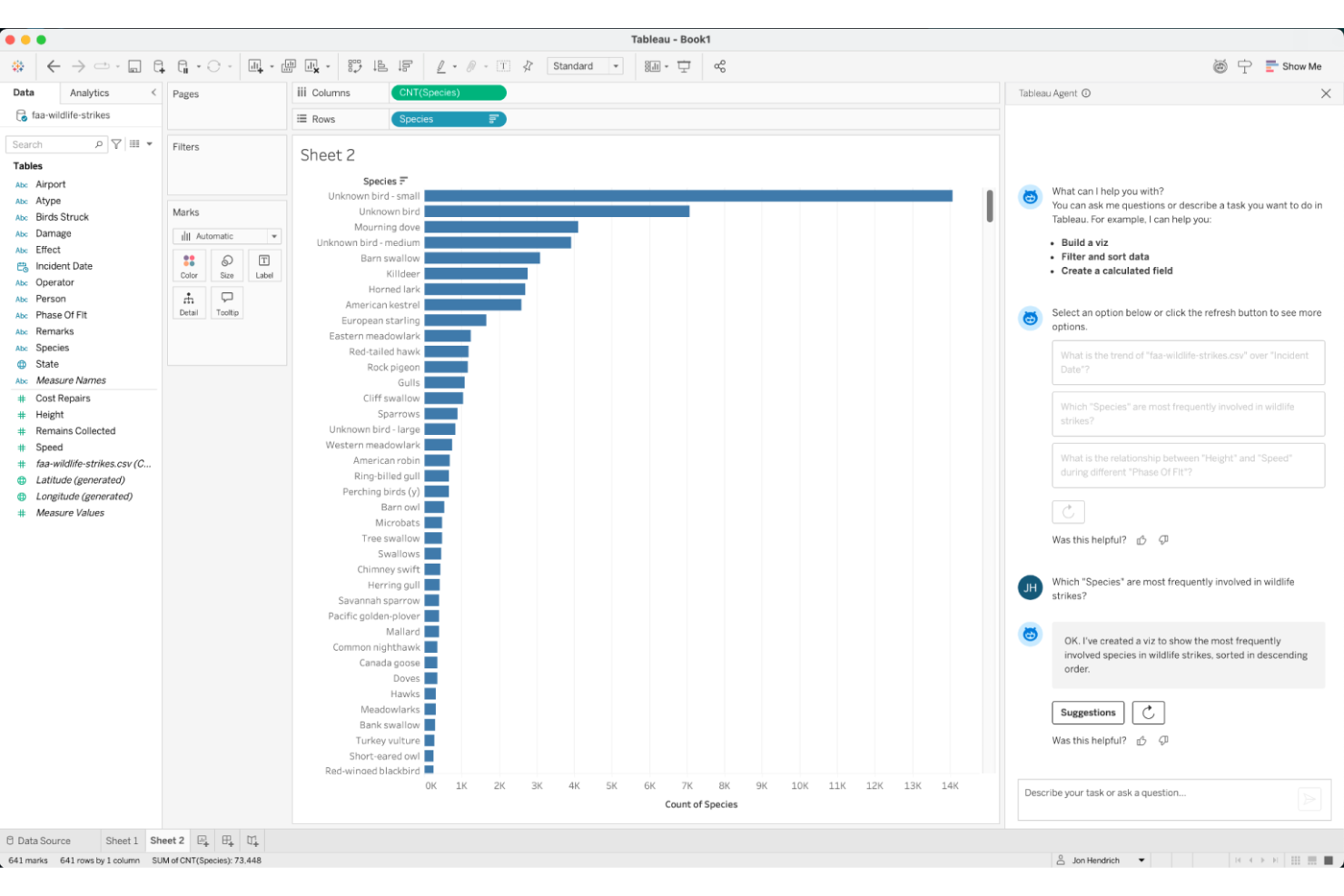
Tableau destaca para los equipos que necesitan análisis altamente interactivos y visualmente enriquecidos. Es una opción ideal para profesionales del comercio minorista, el comercio electrónico y las operaciones que desean profundizar en las tendencias de los datos y crear paneles personalizados sin necesidad de programar demasiado. Si buscas visualizaciones flexibles de arrastrar y soltar y una exploración rápida de los datos, Tableau ofrece un enfoque diferente al flujo de trabajo de Looker, centrado en el modelado.
Por qué Tableau es una buena alternativa a Looker
La fortaleza de Tableau en el análisis visual interactivo lo convierte en una opción atractiva para los equipos que desean explorar los datos visualmente y descubrir información útil con rapidez. Elegí Tableau porque su creador de paneles de arrastrar y soltar y sus herramientas de filtrado dinámico permiten a los usuarios manipular los datos en tiempo real, lo que resulta ideal para los equipos de comercio minorista y comercio electrónico que realizan un seguimiento de métricas que cambian rápidamente. La amplia variedad de tipos de gráficos y las capacidades de creación de mapas de la plataforma también permiten contar historias visuales detalladas con tus datos. Si necesitas presentar información compleja de una manera fácil de entender y aplicar, Tableau ofrece una experiencia diferente al enfoque basado en código de Looker.
Características principales de Tableau
Otras características de Tableau que pueden interesar a tu equipo son:
- Preparación de datos con Tableau Prep: prepara, limpia y da forma visualmente a tus datos antes del análisis mediante la interfaz de flujo de trabajo de Tableau Prep.
- Actualizaciones de datos programadas: configura actualizaciones automáticas de datos para mantener los paneles y los informes al día con la información más reciente.
- Seguridad a nivel de fila: controla el acceso a los datos confidenciales estableciendo permisos a nivel de fila para diferentes usuarios o grupos.
- Paneles optimizados para dispositivos móviles: crea paneles que se ajustan automáticamente a los dispositivos móviles, para que los usuarios puedan consultar información útil desde cualquier lugar.
Integraciones de Tableau
Las integraciones incluyen Salesforce, Google Analytics, Amazon Redshift, Microsoft Excel, Snowflake, Google BigQuery, Oracle, SAP, MySQL y PostgreSQL.
Pros and Cons
Pros:
- Se conecta a una amplia variedad de fuentes de datos más allá de la analítica web
- Ofrece opciones avanzadas de visualización de datos y personalización de paneles
- Admite la combinación de datos en línea y sin conexión para realizar un análisis integral
Cons:
- Requiere una configuración independiente para el seguimiento de sitios web en comparación con Google Analytics
- Carece del modelado de atribución de marketing integrado que ofrecen algunas herramientas de analítica
Ideal para informes de datos automatizados
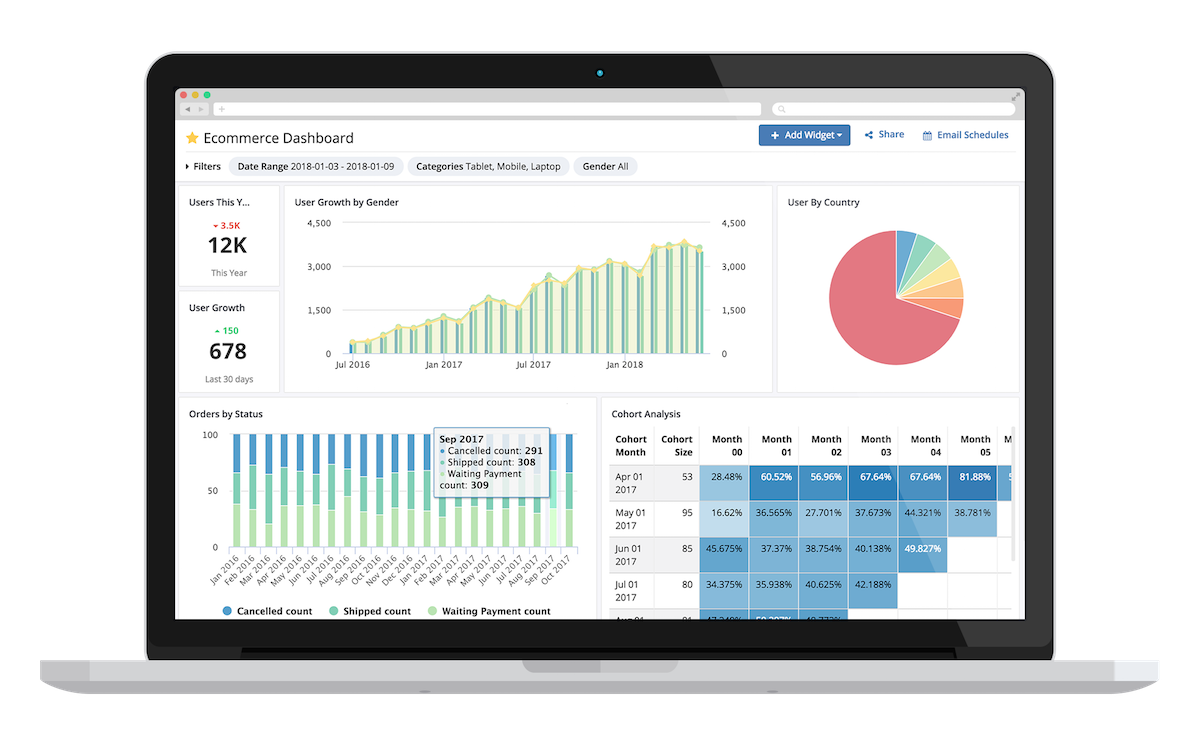
Holistics está diseñado para equipos que desean automatizar los informes de datos y reducir el trabajo manual de análisis. Es especialmente útil para operaciones de comercio electrónico y venta minorista que necesitan entregar informes recurrentes y programados a múltiples partes interesadas. A diferencia de Looker, Holistics hace hincapié en el modelado de datos basado en código y la entrega automatizada de informes, por lo que es una opción adecuada para equipos orientados a los datos con necesidades continuas de generación de informes.
Por qué Holistics es una buena alternativa a Looker
Si buscas una plataforma de inteligencia empresarial que priorice los informes de datos automatizados, vale la pena considerar Holistics. Elegí Holistics porque permite programar y enviar informes recurrentes directamente por correo electrónico, Slack u otros canales sin intervención manual. La capa de modelado de datos de la plataforma utiliza código, por lo que puedes definir lógica reutilizable y automatizar flujos de trabajo complejos de generación de informes. Para los equipos que necesitan mantener a las partes interesadas actualizadas periódicamente con datos recientes, Holistics ofrece capacidades de automatización que van más allá de lo que Looker proporciona de forma predeterminada.
Características principales de Holistics
Otras características que hacen atractivo a Holistics incluyen:
- Exploración de datos de autoservicio: Permite a los usuarios explorar y visualizar datos sin escribir SQL.
- Integración con control de versiones: Gestiona modelos de datos y cambios mediante flujos de trabajo basados en Git.
- Seguridad a nivel de fila: Restringe el acceso a los datos según los roles y permisos de los usuarios.
- Flujos de transformación de datos: Crea y programa trabajos de transformación de datos directamente dentro de la plataforma.
Integraciones de Holistics
Las integraciones incluyen Snowflake, Google BigQuery, Amazon Redshift, MySQL, PostgreSQL, Amazon Athena, ClickHouse, Presto, SQL Server y Databricks.
Pros and Cons
Pros:
- El modelado basado en SQL admite flujos de trabajo de datos complejos
- La lógica de datos centralizada mejora la coherencia de los informes
- Los conectores de datos integrados reducen la necesidad de conectarse a múltiples bases de datos
Cons:
- La documentación y los recursos de la comunidad son menos maduros que los de Looker
- Las funciones avanzadas de interactividad de los paneles aún no están completamente desarrolladas

Databox
Ideal para paneles de control de KPI en tiempo real
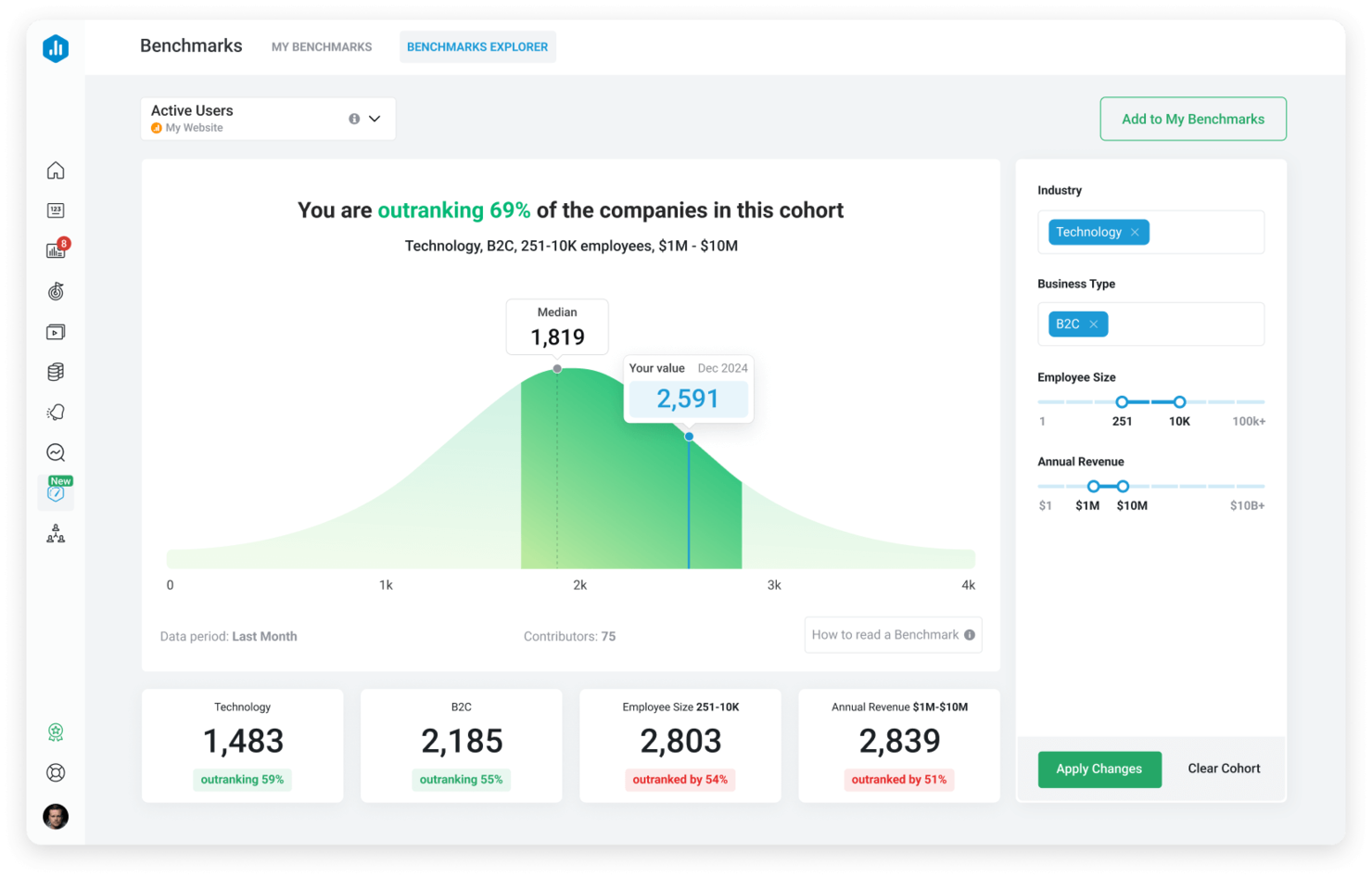
Databox está diseñado para equipos que necesitan visibilidad en tiempo real de los indicadores clave de rendimiento en múltiples fuentes de datos. Es especialmente útil para profesionales del comercio electrónico, el comercio minorista y el marketing que desean supervisar métricas en directo y detectar tendencias a medida que ocurren. A diferencia de Looker, Databox se centra en la creación rápida de paneles y la sincronización instantánea de datos, lo que facilita mantener el control del rendimiento empresarial sin esperar a los informes programados.
Por qué Databox es una buena alternativa a Looker
Para los equipos que necesitan información actualizada al minuto, Databox destaca por sus paneles de control de KPI en tiempo real. Elegí Databox porque permite conectar decenas de fuentes de datos y ver actualizaciones en directo en un solo panel, por lo que nunca tienes que esperar a las actualizaciones programadas. El creador de paneles de arrastrar y soltar de la plataforma facilita la visualización y el seguimiento de las métricas a medida que cambian a lo largo del día. Si quieres supervisar el rendimiento empresarial en tiempo real, Databox ofrece un nivel de inmediatez que Looker no iguala.
Funciones clave de Databox
Otras funciones que hacen atractivo a Databox son:
- Seguimiento de objetivos: Establece, supervisa y visualiza el progreso hacia objetivos empresariales específicos.
- Acceso mediante aplicación móvil: Consulta paneles y recibe alertas en dispositivos iOS y Android.
- Cálculos de datos: Crea métricas personalizadas combinando datos de varias fuentes.
- Instantáneas programadas: Envía automáticamente instantáneas de los paneles a tu equipo por correo electrónico o Slack.
Integraciones de Databox
Las integraciones incluyen Google Analytics, HubSpot, Facebook Ads, Shopify, Instagram Business, LinkedIn, X Ads, Salesforce, Mailchimp, QuickBooks y muchas más.
Pros and Cons
Pros:
- Las actualizaciones de los paneles en tiempo real favorecen la toma de decisiones inmediata de los equipos
- Los conectores prediseñados simplifican la integración con herramientas populares de marketing y ventas
- El acceso mediante la aplicación móvil permite supervisar los KPI desde cualquier lugar
Cons:
- No se admiten consultas SQL personalizadas para análisis de datos avanzados
- Las opciones de transformación de datos son limitadas en comparación con la capa de modelado de Looker
Domo
Ideal para la integración de datos en la nube
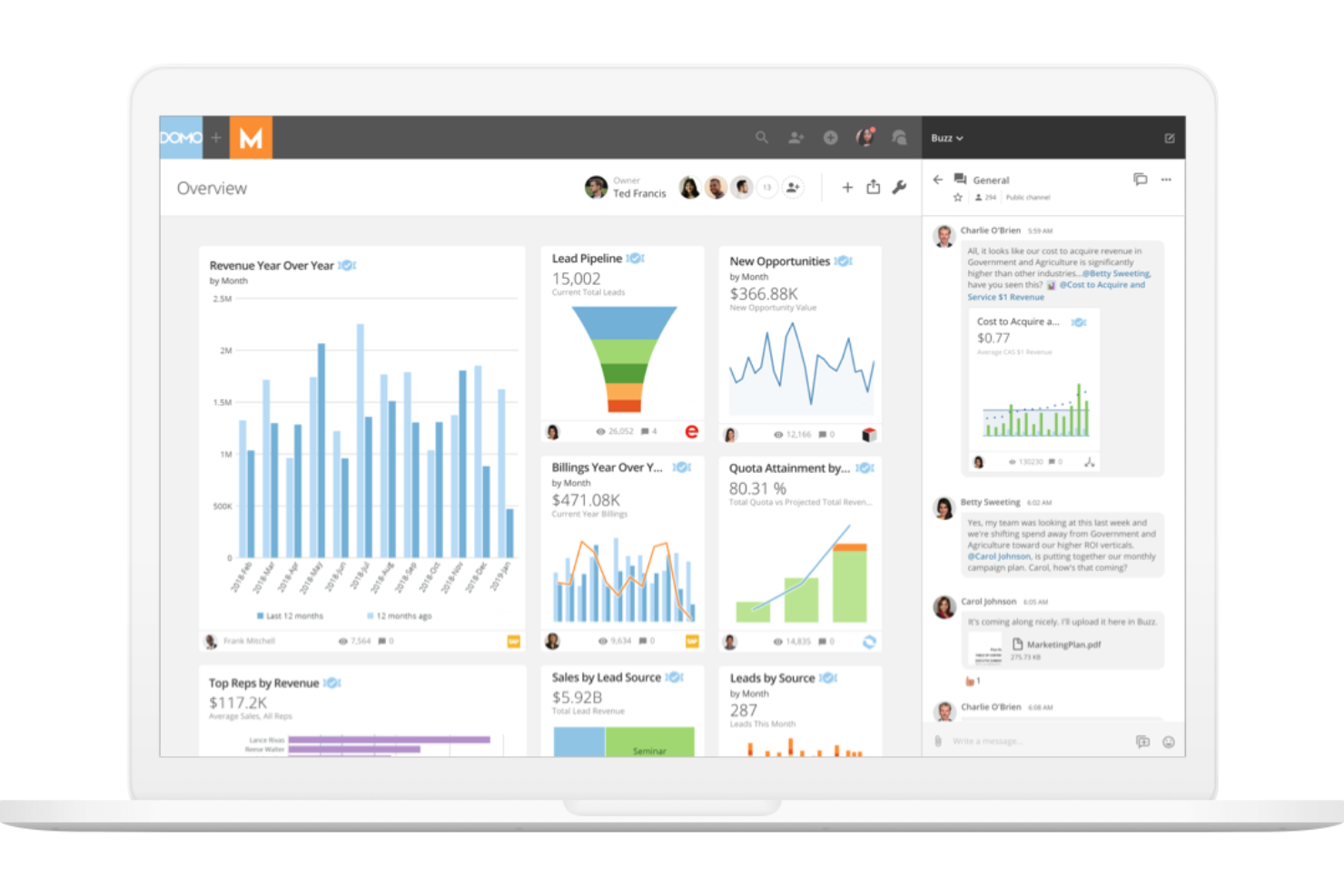
Domo está diseñado para empresas que necesitan conectar, transformar y analizar datos procedentes de una amplia variedad de fuentes en la nube. Los equipos de comercio minorista, comercio electrónico y operaciones suelen elegir Domo por su capacidad para unificar las canalizaciones de datos y automatizar los flujos de trabajo en múltiples plataformas. A diferencia de Looker, Domo hace hincapié en la integración nativa de la nube y en el intercambio de datos en tiempo real, lo que facilita centralizar la información de sistemas dispersos.
Por qué Domo es una buena alternativa a Looker
Si tu empresa depende de conectar datos de docenas de plataformas en la nube, Domo ofrece una ventaja única frente a Looker. Elegí Domo porque su arquitectura nativa de la nube permite extraer, combinar y analizar datos de fuentes como AWS, Google Cloud y Salesforce sin una gran intervención del equipo de TI. La función Magic ETL de Domo permite transformar y preparar datos visualmente directamente en la plataforma, de modo que puedes automatizar flujos de trabajo complejos y mantener tus análisis actualizados. Para los equipos que necesitan centralizar y utilizar rápidamente los datos en la nube, las capacidades de integración de Domo son difíciles de igualar.
Funciones principales de Domo
Otras funciones que hacen atractivo a Domo incluyen:
- App Studio: Crea e implementa aplicaciones de datos personalizadas directamente en la plataforma.
- Herramientas de gobernanza de datos: Gestiona los permisos de los usuarios, el acceso a los datos y los controles de cumplimiento.
- Alertas y notificaciones: Configura alertas automatizadas para detectar cambios o anomalías en métricas clave.
- Análisis integrados: Integra los paneles y los informes de Domo en sitios web o aplicaciones externas.
Integraciones de Domo
Entre las integraciones se incluyen Salesforce, Google Analytics, Facebook Ads, Twitter, Instagram, Shopify, HubSpot, Marketo, LinkedIn y Microsoft Dynamics.
Pros and Cons
Pros:
- La integración de datos nativa de la nube admite conexiones en tiempo real con numerosas fuentes
- Magic ETL permite transformar datos visualmente sin conocimientos de programación
- App Studio permite crear aplicaciones de datos personalizadas dentro de la plataforma
Cons:
- Los grandes volúmenes de datos pueden provocar un rendimiento más lento de los paneles
- La configuración inicial y la incorporación de datos pueden requerir asistencia del proveedor
Reveal
Ideal para funciones de análisis integradas en la aplicación
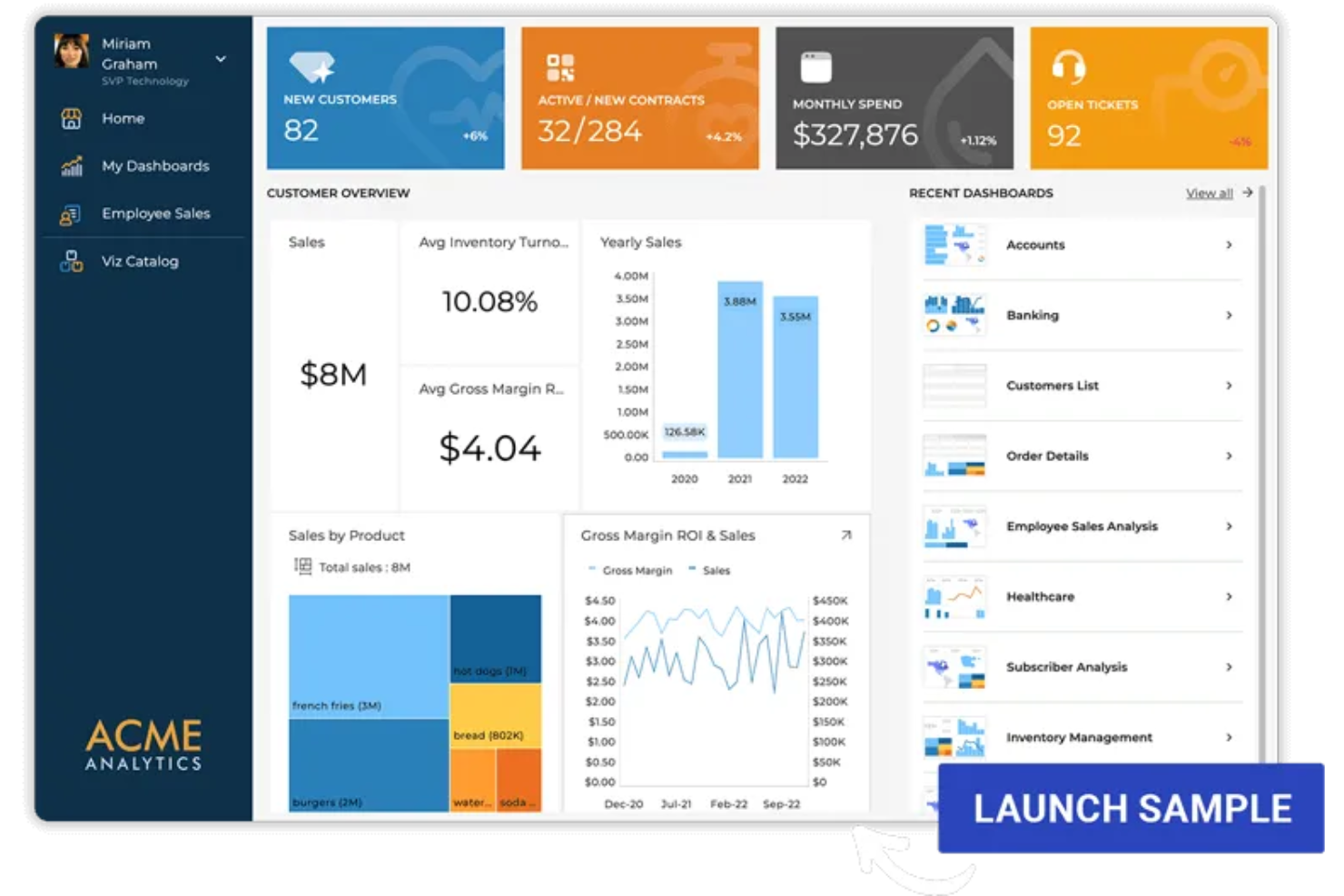
Reveal está diseñado para equipos de producto y empresas de software que desean integrar análisis directamente en sus propias aplicaciones. Si necesitas ofrecer paneles interactivos y visualizaciones de datos dentro de tu producto, Reveal proporciona SDK flexibles y opciones de marca blanca que Looker no ofrece. Este enfoque te ayuda a proporcionar a los usuarios finales información en tiempo real sin enviarlos a una plataforma de análisis independiente.
Por qué Reveal es una buena alternativa a Looker
A diferencia de Looker, Reveal está diseñado específicamente para integrar análisis directamente en tus propios productos de software. Elegí Reveal porque sus SDK te permiten añadir paneles, gráficos y visualizaciones de datos interactivos directamente dentro de tu aplicación, de modo que los usuarios nunca tengan que abandonar tu plataforma para acceder a la información. Reveal también admite la marca blanca, lo que significa que puedes aplicar completamente tu propia marca a la experiencia de análisis. Para los equipos centrados en ofrecer análisis dentro de la aplicación, Reveal proporciona un nivel de flexibilidad y control que Looker no iguala.
Principales características de Reveal
Otras características que hacen atractivo a Reveal incluyen:
- Conectividad con fuentes de datos: Conéctate a una amplia variedad de bases de datos, servicios en la nube y hojas de cálculo.
- Control de acceso basado en roles: Establece permisos de usuario para gestionar quién puede ver o editar el contenido analítico.
- Informes programados: Automatiza el envío de informes a los usuarios según un calendario recurrente.
- Paneles optimizados para móviles: Accede a los paneles de análisis e interactúa con ellos desde cualquier dispositivo móvil.
Integraciones de Reveal
Las integraciones incluyen PostgreSQL, MySQL, BigQuery, Snowflake, Databricks, Google Sheets, REST, JSON, Excel y otras fuentes de datos compatibles mediante los conectores del SDK de Reveal.
Pros and Cons
Pros:
- Los SDK de análisis integrables permiten la integración en aplicaciones personalizadas
- Las opciones de marca blanca permiten aplicar una identidad de marca completa a las experiencias de análisis
- Los paneles optimizados para móviles proporcionan análisis adaptables en cualquier dispositivo
Cons:
- Menos funciones avanzadas de modelado de datos en comparación con Looker
- Documentación limitada para escenarios de integración complejos
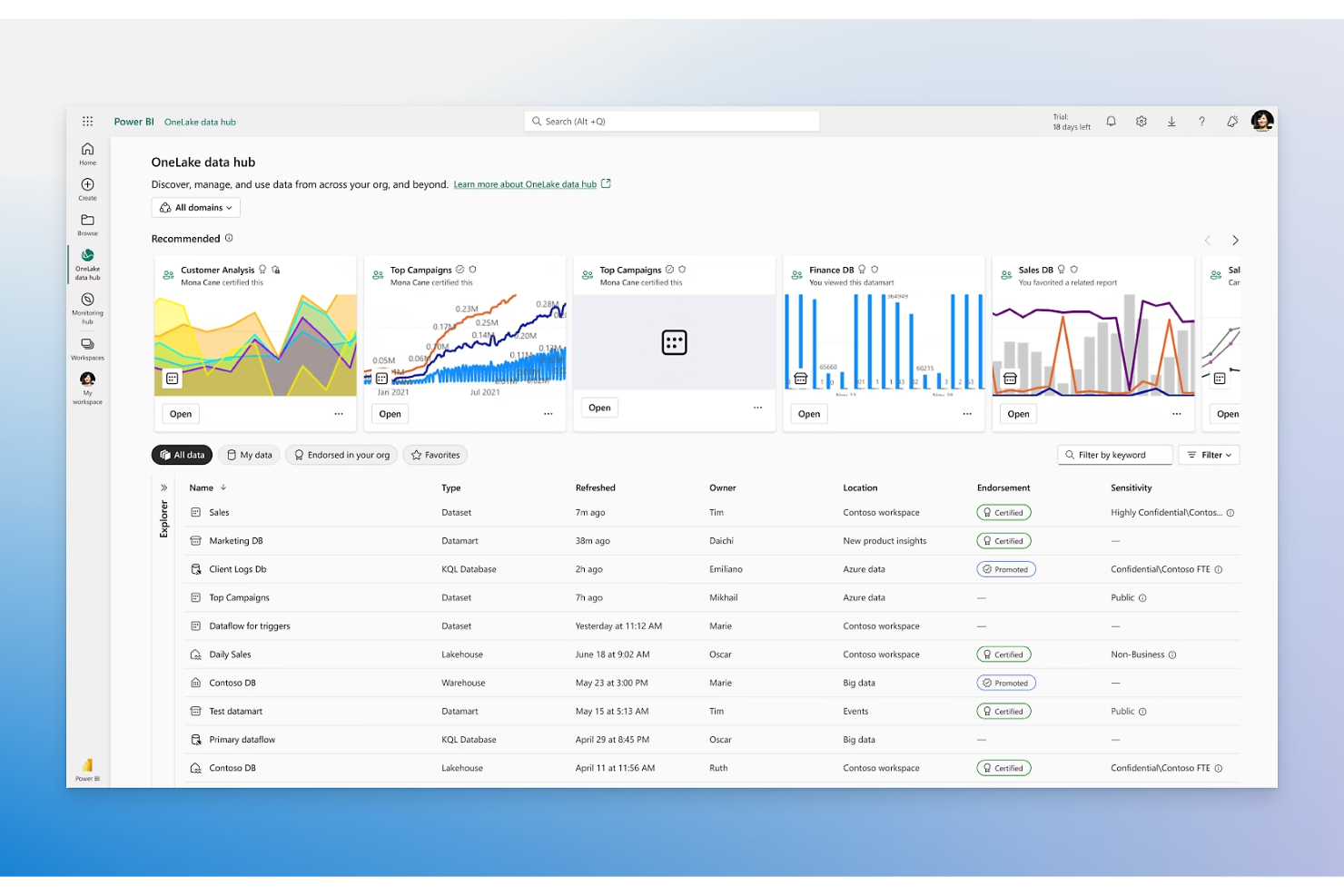
Si su empresa ya depende de Microsoft 365, Power BI ofrece una extensión natural para el análisis y la elaboración de informes. Es especialmente útil para los equipos de comercio minorista y comercio electrónico que desean conectar datos de Excel, Teams y SharePoint para crear paneles unificados. Power BI se diferencia de Looker por ofrecer una integración profunda con las herramientas de productividad de Microsoft y unas interfaces conocidas para los usuarios de toda su organización.
Por qué Microsoft Power BI es una buena alternativa a Looker
Para los equipos que ya han invertido en Microsoft 365, Power BI ofrece análisis que encajan directamente en sus flujos de trabajo existentes. Elegí Power BI porque permite extraer datos directamente de Excel, Teams y SharePoint, lo que facilita la creación de paneles con las herramientas que su empresa ya utiliza. Su integración con Microsoft 365 también significa que puede colaborar en informes y compartir información dentro de aplicaciones conocidas. Si desea análisis que parezcan una parte natural de su entorno de Microsoft, Power BI ofrece una experiencia diferente a la plataforma independiente de Looker.
Características principales de Microsoft Power BI
Otras características de Power BI que pueden resultar útiles para su equipo incluyen:
- Información de datos impulsada por AI: Utilice la inteligencia artificial integrada para detectar patrones y generar información a partir de sus datos.
- Mercado de visualizaciones personalizadas: Acceda a una biblioteca de visualizaciones personalizadas creadas por Microsoft y la comunidad de Power BI para mejorar sus informes.
- Compatibilidad con la puerta de enlace de datos: Conecte de forma segura fuentes de datos locales a sus paneles de Power BI mediante la puerta de enlace de datos de Microsoft.
- Informes paginados: Cree informes con una precisión de píxel perfecta y listos para imprimir, destinados a necesidades operativas y normativas.
Integraciones de Microsoft Power BI
Las integraciones incluyen Microsoft Excel, Microsoft Teams, SharePoint, PowerPoint, Outlook, Microsoft Azure, Dynamics 365, OneDrive, Microsoft Dataverse y Microsoft Purview.
Pros and Cons
Pros:
- Gran compatibilidad con los flujos de trabajo de Microsoft 365
- Las consultas en lenguaje natural simplifican la exploración de datos
- Amplia biblioteca de visualizaciones personalizadas para paneles
Cons:
- Estructura de licencias compleja para funcionalidades avanzadas
- Es necesario configurar la puerta de enlace para acceder a datos locales


Para los equipos que desean tener un control total sobre su entorno de análisis, Metabase ofrece una plataforma de código abierto diseñada para la personalización. Es una opción ideal para empresas minoristas y de comercio electrónico con talento técnico interno que desean adaptar los paneles, las consultas y los flujos de trabajo a sus necesidades exactas. A diferencia de Looker, Metabase proporciona acceso directo al código fuente, por lo que puede adaptar la plataforma a medida que evoluciona su estrategia de datos.
Por qué Metabase es una buena alternativa a Looker
Si su equipo desea personalizar cada aspecto de su pila de análisis, Metabase destaca por su flexibilidad de código abierto. Elegí Metabase porque permite modificar el código fuente, crear visualizaciones personalizadas e incluso desarrollar sus propios complementos para adaptarse a necesidades empresariales únicas. La plataforma admite consultas SQL avanzadas y permite insertar análisis directamente en sus propias aplicaciones. Para las organizaciones que desean ser propietarias de su entorno de BI y adaptarlo, Metabase ofrece un nivel de control que Looker no iguala.
Características principales de Metabase
Otras características que hacen atractivo a Metabase incluyen:
- Generador de consultas sin código: Cree consultas complejas mediante una interfaz visual sin escribir SQL.
- Programación automatizada de informes: Programe el envío de informes recurrentes por correo electrónico o Slack.
- Paneles interactivos: Cree paneles con filtros, desgloses y visualizaciones dinámicas.
- Registros de auditoría: Realice un seguimiento de la actividad de los usuarios y de los cambios dentro de la plataforma para fines de cumplimiento y seguridad.
Integraciones de Metabase
Las integraciones incluyen Exasol, Cube, Databricks, Dremio, Druid, DuckDB, Firebolt, Google Sheets, Hydra, MariaDB, Snowflake y más.
Pros and Cons
Pros:
- La base de código abierto permite una personalización completa y opciones de alojamiento propio
- Admite consultas SQL directas para necesidades avanzadas de exploración de datos
- Los análisis integrables permiten añadir paneles a sus propias aplicaciones
Cons:
- Compatibilidad integrada limitada con la seguridad a nivel de fila y los permisos detallados
- Menos tipos de visualización avanzados en comparación con algunos competidores

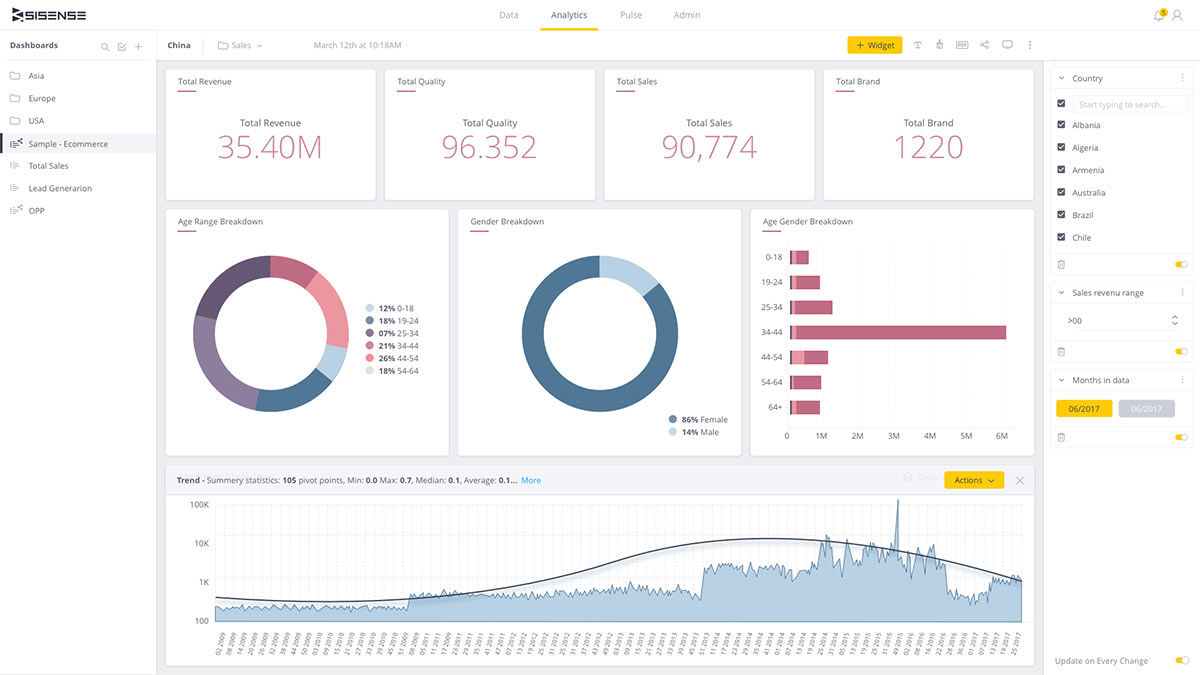
Si necesitas integrar análisis directamente en tus propios productos o aplicaciones orientadas al cliente, Sisense está diseñado para ese propósito. Esta plataforma es ideal para empresas de software, proveedores de SaaS y equipos digitales que desean ofrecer paneles interactivos y análisis dentro de sus propias experiencias de usuario. Sisense se diferencia de Looker al ofrecer API flexibles y opciones de etiquetado blanco que te permiten controlar por completo cómo aparecen y funcionan los análisis dentro de tus aplicaciones.
Por qué Sisense es una buena alternativa a Looker
Para los equipos que desean integrar análisis directamente en sus propios productos, Sisense ofrece un nivel de flexibilidad que Looker no iguala. Elegí Sisense porque su arquitectura basada en API y sus opciones de etiquetado blanco te permiten personalizar por completo la experiencia de análisis para tus usuarios. Puedes controlar desde el diseño del panel hasta la marca, e incluso integrar análisis en flujos de trabajo complejos dentro de tu aplicación. Si necesitas ofrecer análisis como parte de tu producto, Sisense te proporciona las herramientas para que parezcan una parte nativa de tu plataforma.
Características principales de Sisense
Otras características que me llamaron la atención incluyen:
- Modelado de datos con Elasticube: Crea y administra modelos de datos personalizados utilizando el motor en memoria de Sisense.
- Consultas en lenguaje natural: Permite a los usuarios formular preguntas en lenguaje sencillo y obtener visualizaciones instantáneas.
- Informes programados: Automatiza el envío de paneles e informes a las partes interesadas según un calendario establecido.
- Control de acceso basado en roles: Define permisos detallados para usuarios y grupos con el fin de gestionar la seguridad de los datos.
Integraciones de Sisense
Las integraciones incluyen Snowflake, Google BigQuery, Amazon Redshift, Databricks, Azure Synapse, Salesforce, Oracle, PostgreSQL, MySQL y SQL Server.
Pros and Cons
Pros:
- La integración de análisis en aplicaciones web y móviles es altamente personalizable
- Las opciones de etiquetado blanco permiten controlar por completo la marca de los paneles
- El motor Elasticube admite modelos de datos complejos y consultas rápidas
Cons:
- Las herramientas de preparación de datos son menos intuitivas que las de algunos competidores
- El rendimiento de los paneles puede disminuir con conjuntos de datos muy grandes

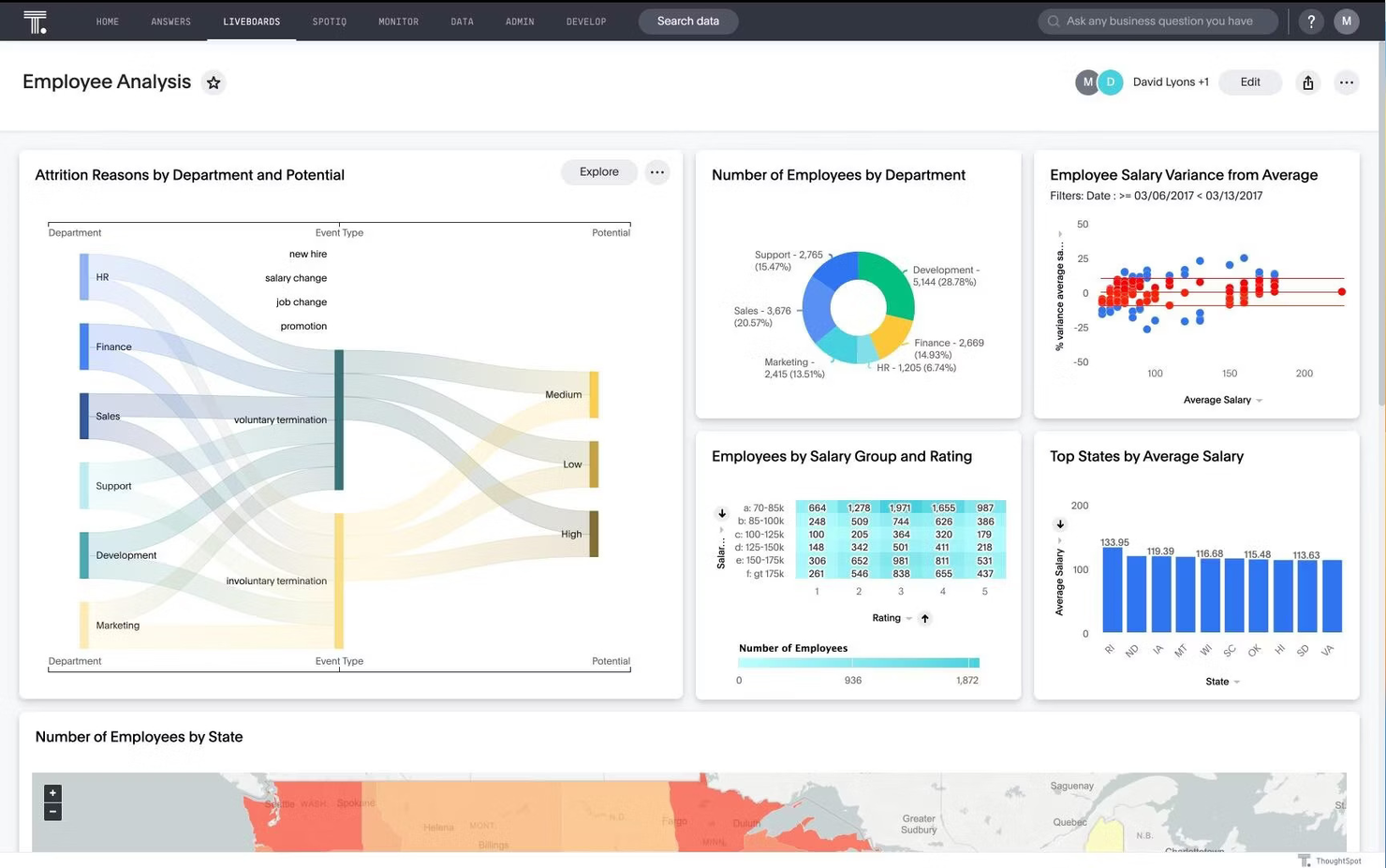
Si tu equipo quiere que la exploración de datos sea tan sencilla como buscar en Internet, ThoughtSpot está diseñado para ustedes. Esta plataforma es especialmente útil para los equipos de comercio minorista, comercio electrónico y operaciones que necesitan respuestas rápidas y de autoservicio a partir de datos complejos sin depender de analistas. ThoughtSpot se diferencia de Looker al permitir que los usuarios escriban consultas en lenguaje natural y generen al instante informes y visualizaciones interactivas.
Por qué ThoughtSpot es una buena alternativa a Looker
A diferencia de las herramientas de BI tradicionales, que requieren crear paneles con antelación, ThoughtSpot permite a los usuarios buscar información mediante consultas en lenguaje natural. Elegí ThoughtSpot porque su motor de análisis basado en búsquedas permite a cualquiera escribir una pregunta y ver al instante gráficos, tablas o tendencias relevantes. Las sugerencias impulsadas por IA de la plataforma ayudan a orientar a los usuarios hacia los datos adecuados, incluso si no saben por dónde empezar. Para los equipos que quieren respuestas rápidas y flexibles sin esperar el apoyo de un analista, ThoughtSpot ofrece un enfoque único que lo distingue de Looker.
Características principales de ThoughtSpot
Otras características que llamaron mi atención incluyen:
- Análisis en vivo de datos en la nube: Consulta datos directamente desde almacenes de datos en la nube sin moverlos ni duplicarlos.
- Paneles fijados: Crea y comparte paneles interactivos que se actualizan en tiempo real.
- Capa de modelado de datos: Define relaciones, jerarquías y métricas personalizadas dentro de tus conjuntos de datos.
- Controles de acceso detallados: Establece permisos detallados para usuarios, grupos y fuentes de datos.
Integraciones de ThoughtSpot
Entre las integraciones se incluyen Snowflake, Google BigQuery, Amazon Redshift, Databricks, Microsoft Azure Synapse, Google Sheets, Salesforce, ServiceNow, Oracle y SAP.
Pros and Cons
Pros:
- La búsqueda en lenguaje natural permite explorar datos de forma rápida y autónoma
- La capacidad de consulta en vivo se conecta directamente con almacenes de datos en la nube
- La información impulsada por IA muestra automáticamente tendencias y anomalías
Cons:
- Las opciones de modelado de datos son menos flexibles que LookML de Looker
- Las opciones de visualización personalizada son limitadas en comparación con algunos competidores

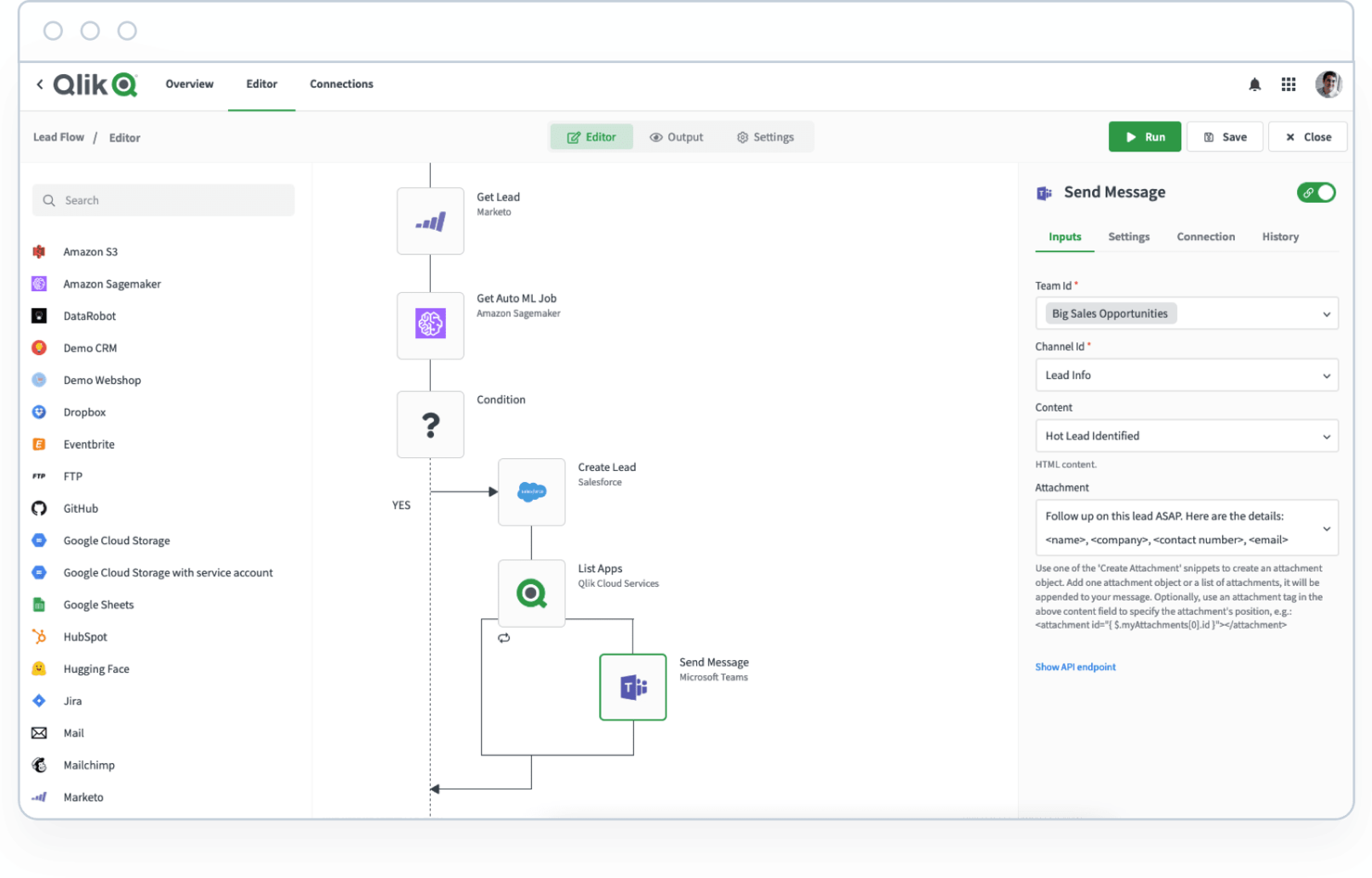
A diferencia de la mayoría de las plataformas de análisis, Qlik Sense utiliza un motor de datos asociativo que permite explorar los datos desde cualquier ángulo sin rutas de consulta predefinidas. Este enfoque es especialmente valioso para los equipos de comercio minorista y comercio electrónico que necesitan descubrir relaciones ocultas entre los datos de ventas, inventario y clientes. Qlik Sense se diferencia de Looker al permitir que los usuarios naveguen libremente y descubran información que podría pasar desapercibida con las herramientas tradicionales basadas en SQL.
Por qué Qlik Sense es una buena alternativa a Looker
Qlik Sense adopta un enfoque diferente al de Looker al utilizar un motor de datos asociativo que permite explorar los datos sin estar limitado por consultas predefinidas. Elegí Qlik Sense por su capacidad para revelar conexiones inesperadas entre los puntos de datos, lo que resulta especialmente útil para los equipos de comercio minorista y comercio electrónico que trabajan con conjuntos de datos complejos y procedentes de múltiples fuentes. Su modelo de selección interactiva permite hacer clic en cualquier valor y ver al instante cómo se relaciona con el resto de los datos, lo que facilita la identificación de tendencias y valores atípicos. Si buscas una plataforma que fomente la exploración y el descubrimiento abiertos, Qlik Sense ofrece una alternativa única al análisis más estructurado y basado en SQL de Looker.
Características principales de Qlik Sense
Además de su exploración asociativa de datos, también encontré que vale la pena destacar estas características:
- Análisis aumentado: Aprovecha las sugerencias y la información basadas en inteligencia artificial para orientar tu análisis y destacar las tendencias clave.
- Preparación de datos de autoservicio: Prepara, combina y transforma datos de múltiples fuentes sin depender del departamento de TI.
- Diseño adaptable: Crea paneles que se ajusten automáticamente a cualquier dispositivo, incluidos ordenadores de escritorio, tabletas y teléfonos inteligentes.
- Análisis integrados: Integra directamente las visualizaciones y los paneles de Qlik Sense en tus propias aplicaciones o sitios web.
Integraciones de Qlik
Las integraciones incluyen AWS, Google Cloud, Microsoft Azure, Snowflake, SAP, Databricks, Cloudera, Salesforce, Oracle y Teradata.
Pros and Cons
Pros:
- El motor asociativo permite rutas flexibles y no lineales para explorar los datos
- El procesamiento en memoria permite analizar rápidamente grandes conjuntos de datos
- El análisis aumentado integrado revela información mediante sugerencias basadas en inteligencia artificial
Cons:
- Las funciones de gobernanza de datos son menos detalladas que el modelo de Looker
- A menudo se requieren scripts complejos para realizar transformaciones de datos avanzadas
Otras alternativas a Looker
Estas son algunas alternativas adicionales a Looker que no entraron en mi selección, pero que merece la pena conocer:
- Apache Superset
Ideal para implementaciones autoalojadas
- Zoho Analytics
Ideal para generar informes unificados de aplicaciones empresariales
- Toucan
Ideal para análisis guiados para equipos empresariales


Cómo evalúo las alternativas de Looker
Evalúo las herramientas en dos niveles: requisitos básicos —como la conectividad con POS y los paneles de autoservicio— y factores diferenciadores que distinguen las plataformas realmente preparadas para el comercio minorista de las herramientas de BI genéricas.
Funcionalidad esencial para esta lista
Al seleccionar herramientas para mi lista, califico cada una en una escala de 0 (no ofrece la funcionalidad) a 5 (sobresale en esta área) para cada funcionalidad principal que se indica a continuación. Después, convierto la puntuación total de la herramienta en un porcentaje. Cada herramienta debe alcanzar una puntuación total mínima del 65 % para ser considerada para su inclusión.
- Conectividad con múltiples fuentes de datos: Compruebo si una herramienta se conecta de forma nativa con plataformas de POS, ERP y comercio electrónico, no solo con almacenes de datos en la nube, para que los equipos minoristas puedan unificar los datos de ventas e inventario.
- Modelado semántico de datos: En este caso es importante contar con una capa de métricas gobernada. Busco definiciones reutilizables de KPI como el margen, la tasa de venta y las ventas en tiendas comparables que se mantengan coherentes en todos los paneles.
- Paneles interactivos y visualización: Evalúo las funciones de desglose desde el rendimiento regional hasta el detalle de una tienda individual o de un SKU, junto con el filtrado cruzado y los tipos de gráficos relevantes para el comercio minorista.
- Exploración de autoservicio: Los gerentes de tienda y los responsables de comercialización necesitan segmentar los datos por su cuenta. Busco generadores de consultas de arrastrar y soltar o funciones de exploración guiada que no requieran conocimientos de SQL.
- Informes programados y alertas: Evalúo si la herramienta puede automatizar resúmenes diarios de ventas y activar alertas basadas en umbrales, como señalar cuándo el inventario de una ubicación cae por debajo de los niveles de reposición.
- Análisis integrados y móviles: Los equipos de campo y de tienda necesitan acceder a los paneles desde el establecimiento. Busco aplicaciones móviles o vistas adaptables, así como opciones de integración en portales internos.
Una vez que tengo una lista de herramientas que cumplen estos criterios, considero qué distingue a cada plataforma.
Factores diferenciadores (qué distingue a los proveedores)
Así es como comparo y contrasto los distintos proveedores:
Características destacadas
Las plantillas minoristas prediseñadas son un factor diferenciador importante. Busco paneles listos para realizar un seguimiento del tamaño de la cesta, las mermas y la combinación de categorías desde el primer día, lo que ahorra semanas de configuración. Las consultas en lenguaje natural son otra característica que valoro, especialmente para los gerentes de tienda que necesitan respuestas rápidas sobre las ventas diarias sin enviar solicitudes a un equipo de BI. Los análisis geoespaciales también son importantes para los minoristas con múltiples ubicaciones, ya que las vistas basadas en mapas del rendimiento de las tiendas y la superposición de las áreas de influencia ayudan a los equipos de operaciones a tomar decisiones más acertadas sobre la expansión.
Más allá de las características
El coste total de propiedad es uno de los primeros aspectos que evalúo. Las licencias por usuario de Looker pueden resultar caras cuando se implementan paneles para cientos de empleados de tiendas. También analizo las integraciones con la pila tecnológica minorista: que una herramienta se conecte de forma nativa con las plataformas de POS, ERP y comercio electrónico determina cuánto trabajo de ingeniería de datos se interpone entre la empresa y la obtención de información útil. La escalabilidad también es importante, especialmente para los minoristas con datos de SKU de alta cardinalidad y usuarios simultáneos en decenas o cientos de ubicaciones.
¿Por qué buscar una alternativa a Looker?
Aunque Looker es una potente herramienta de inteligencia empresarial, hay varios motivos por los que los compradores empiezan a comparar las mejores alternativas. Es posible que estés buscando una alternativa a Looker porque…
- Quieres una curva de aprendizaje más corta para los usuarios empresariales y los equipos no técnicos
- Necesitas una interfaz más intuitiva de arrastrar y soltar para crear paneles
- Quieres herramientas de visualización más fáciles de usar para generar informes con mayor rapidez
- Tu equipo necesita funciones avanzadas sin depender tanto de una configuración técnica
- Quieres una asistencia más completa para las previsiones o un acceso más sencillo a análisis avanzados
- Necesitas conectarte a herramientas como Google Analytics como parte de tu flujo de trabajo de generación de informes
- Quieres unos precios o planes que funcionen mejor para equipos en crecimiento o usuarios ilimitados
Si alguna de estas situaciones te resulta familiar, has llegado al lugar adecuado. Esta lista incluye varias de las mejores alternativas a Looker para equipos que necesitan capacidades analíticas flexibles, flujos de trabajo de generación de informes más sencillos o una solución que se adapte mejor a las necesidades de su empresa.
Funciones principales de Looker
Estas son algunas de las funciones principales de Looker, para ayudarte a contrastar y comparar lo que ofrecen las soluciones alternativas:
- Modelado de datos centralizado con el lenguaje LookML
- Paneles personalizables y visualizaciones interactivas
- Envío programado y automatizado de informes
- Análisis integrados para aplicaciones externas
- Seguridad a nivel de fila y permisos de usuario detallados
- Integración con Google Cloud y BigQuery
- Exploración de datos en tiempo real y consultas ad hoc
- Acceso mediante API para flujos de trabajo e integraciones personalizados
- Control de versiones para modelos de análisis y paneles