

Los 10 mejores programas de analítica para comercio electrónico para hacer seguimiento del ROI en 2026

10 Selección del mejor software de análisis de comercio electrónico


Hay tantos programas de análisis de comercio electrónico diferentes que puede resultar complicado hacer una selección de los mejores. Quieres realizar un seguimiento de métricas clave como las tasas de conversión, el valor medio de los pedidos y los costes de adquisición de clientes, y ahora necesitas la herramienta adecuada para tu operación de comercio electrónico. ¡Yo puedo ayudarte! En esta publicación, comparto mi experiencia personal gestionando tiendas en línea de todos los tamaños, utilizando muchas plataformas de análisis diferentes con equipos dinámicos, y presento mi selección del mejor software de análisis de comercio electrónico en general.
Por qué confiar en nuestras recomendaciones de software
Nuestro equipo lleva probando y evaluando software desde 2012. Como líderes del sector retail, sabemos lo difícil —y lo importante— que es elegir el software adecuado.
Para esta guía, evaluamos las herramientas mediante pruebas prácticas e investigación independiente, puntuando las herramientas según nuestros criterios de selección.
Nuestras reseñas reflejan nuestro criterio independiente, no un discurso de ventas.
Tabla comparativa del mejor software de análisis de comercio electrónico
Esta tabla comparativa resume los detalles básicos de cada una de mis principales selecciones de software de análisis de comercio electrónico. Puedes consultar los precios y la disponibilidad de pruebas gratuitas o demostraciones en paralelo para ayudarte a encontrar el mejor software para tu presupuesto.
| Tool | Best For | Trial Info | Price | ||
|---|---|---|---|---|---|
| 1 | El mejor software de análisis para ecommerce en cuanto a variedad de tipos de mapas de calor | Prueba gratuita de 14 días + plan gratuito + demo gratis disponible | Desde $25/mes (facturado anualmente) | Website | |
| 2 | Mejor software de análisis para ecommerce enfocado en análisis de productos autogestionado | Plan gratuito + demo gratis disponible | Desde $1200/año (facturado anualmente) | Website | |
| 3 | Mejor software de análisis para comercio electrónico orientado a la experiencia del cliente | Demo gratuita disponible | Precios a consultar | Website | |
| 4 | Mejor software de análisis ecommerce para analizar recorridos de clientes omnicanal | Demostración gratuita + prueba gratuita de 30 días disponible | Desde $416.25/mes (facturado anualmente) | Website | |
| 5 | El mejor software de análisis para ecommerce para la captura automática de datos | Plan gratuito + prueba gratuita + demo gratuita disponible | Precio a consultar | Website | |
| 6 | Mejor software de analítica ecommerce para análisis de comportamiento | Prueba gratuita de 7 días + demo gratuita disponible | Desde $99/mes | Website | |
| 7 | El mejor software de análisis de comercio electrónico para tiendas Shopify | Plan gratuito + demo gratis disponible | Desde $219/mes | Website | |
| 8 | El mejor software de análisis de comercio electrónico como única fuente de verdad | Demostración gratuita disponible | Precio bajo solicitud | Website | |
| 9 | Mejor software de análisis de comercio electrónico para visibilidad multiplataforma | Demo gratuita disponible | Precio bajo solicitud | Website | |
| 10 | El mejor software de análisis para ecommerce con seguimiento sin cookies | Plan freemium + demo gratuita disponible | Desde $55/mes (facturado anualmente) | Website |
Reseñas de los 20 mejores software de análisis de comercio electrónico
Aquí tienes una breve descripción de cada software de análisis de comercio electrónico, en la que se muestra el caso de uso más adecuado de cada sistema, sus características destacadas y algunas ventajas y desventajas. También he incluido capturas de pantalla para ofrecerte una vista general de su interfaz de usuario.

El mejor software de análisis para ecommerce en cuanto a variedad de tipos de mapas de calor
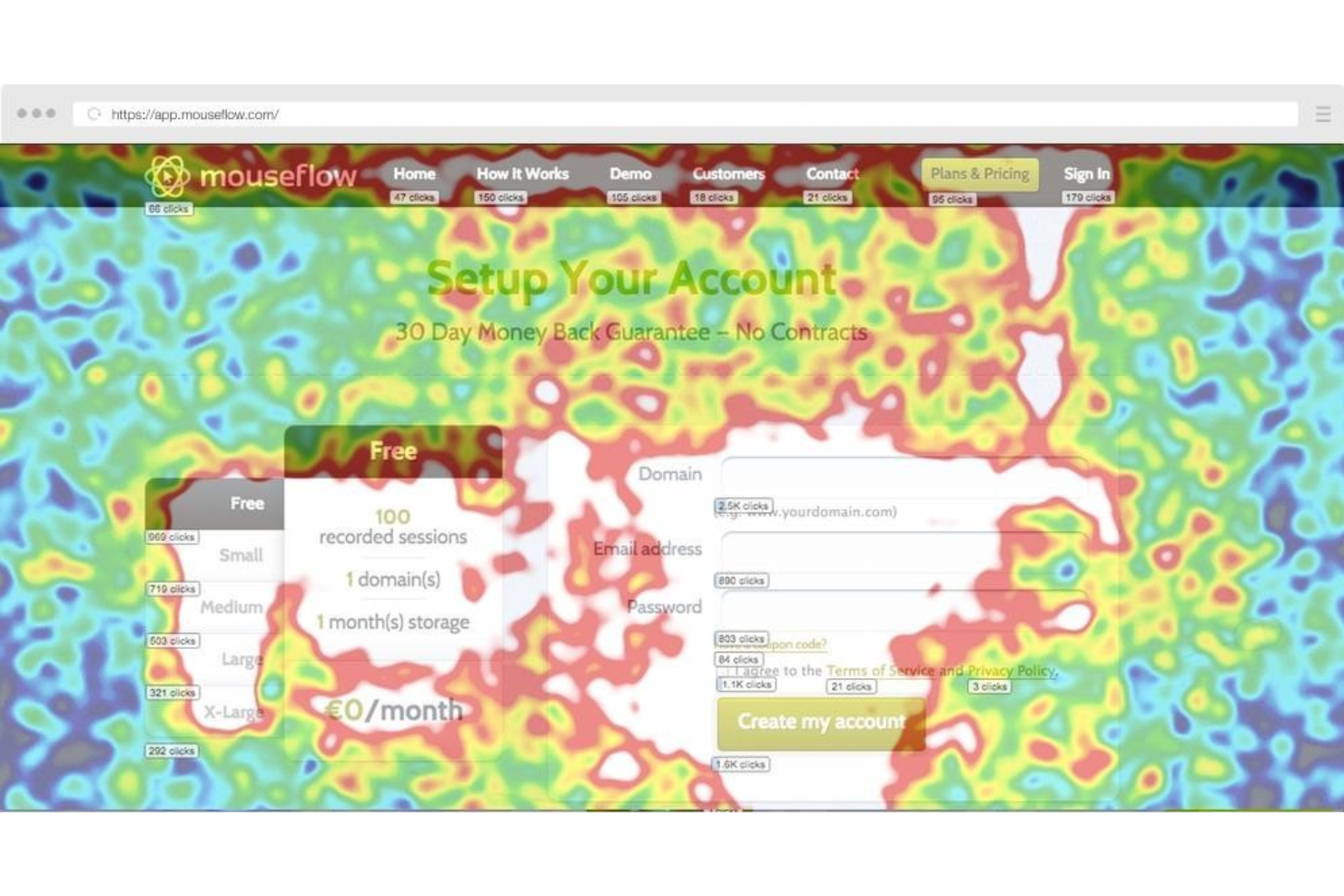
Mouseflow es una plataforma de analítica web basada en el comportamiento que optimiza las experiencias en el sitio web para mejorar las conversiones.
Por qué elegí Mouseflow: El software te permite ver sesiones de visitantes del sitio web y construir hasta seis tipos de mapas de calor para rastrear la actividad. También puedes configurar embudos para mostrar dónde abandonan los visitantes (y por qué). Las herramientas de analítica de formularios ayudan a mejorar la generación de contactos, mientras que las campañas de retroalimentación recopilan información adicional sobre los visitantes.
Además, puedes analizar tus datos de múltiples maneras utilizando opciones avanzadas de filtrado. Mouseflow también ofrece aprendizaje automático para acelerar la optimización y el crecimiento de ingresos.
Características destacadas e integraciones de Mouseflow
Características incluyen mapas de calor avanzados, puntuaciones de fricción, mapas de desplazamiento, embudos de conversión, reproducción de sesiones, visualizaciones enriquecidas e identificación de patrones.
Integraciones incluyen Google Sheets, Gmail, HubSpot, Mailchimp, Microsoft Outlook, Notion, Slack, Spreedly, Trello y Twitter.
Pros and Cons
Pros:
- Buen equilibrio entre costo y funciones
- Rastrea todo el recorrido del cliente
- Económico y fácil de usar
Cons:
- La puntuación de fricción es confusa
- Los mapas de calor son difíciles de modificar

Mixpanel
Mejor software de análisis para ecommerce enfocado en análisis de productos autogestionado
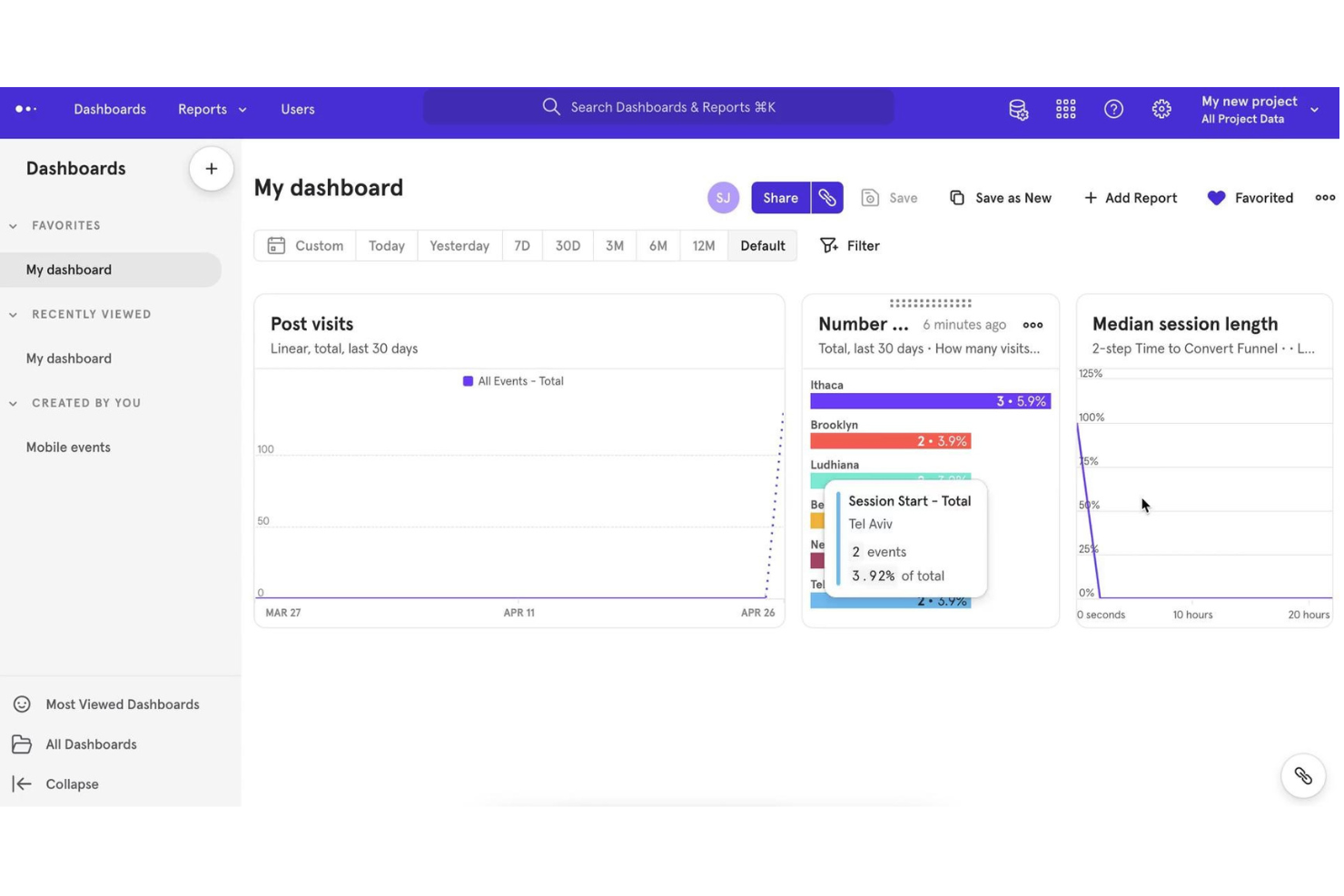
Mixpanel es una solución de análisis de productos que ofrece información sobre el comportamiento de la audiencia y rastrea los recorridos de los clientes.
Por qué elegí Mixpanel: El software te permite convertir clientes potenciales en clientes, generar informes personalizados, visualizar los principales flujos de usuarios, construir embudos, crear cohortes en lote y automatizar flujos de trabajo. Las herramientas ofrecidas incluyen pruebas A/B, segmentación de audiencia, visualización de datos, seguimiento de conversiones y análisis estadístico.
Mixpanel te ayuda a gestionar campañas y mejorar las tasas de conversión. También puedes recibir alertas de actualizaciones de productos y monitorear los indicadores clave de rendimiento (KPI) de los productos.
Funciones y integraciones destacadas de Mixpanel
Funciones incluyen informes en tiempo real, seguimiento estándar de eventos, métricas de engagement, seguimiento de eventos personalizados, segmentación, embudos y paneles personalizados.
Integraciones incluyen AB Tasty, Alooma, Apptimize, Branch Metrics, Chartio, Google Cloud Platform, HubSpot, Intercom y Spreedly. Mixpanel también incluye una interfaz de programación de aplicaciones (API), para facilitar la integración con plataformas de comercio electrónico de terceros.
Pros and Cons
Pros:
- Integración con Segment
- Rastrea tanto eventos como perfiles
- Fácil visualización de datos
Cons:
- La documentación a veces está desactualizada
- Curva de aprendizaje pronunciada

Glassbox
Mejor software de análisis para comercio electrónico orientado a la experiencia del cliente

Glassbox tiene como objetivo mostrarte con precisión lo que hacen tus clientes y por qué. El software ofrece análisis diseñados para impulsar el crecimiento de los clientes y aumentar la lealtad.
Por qué elegí Glassbox: Glassbox proporciona información sobre la experiencia del usuario que ayuda a comprender en profundidad a tus clientes, para que puedas hacer crecer tu negocio de comercio electrónico más rápido. El sistema te ayuda a diseñar experiencias que maximizan las conversiones, crear productos centrados en el cliente, resolver problemas técnicos y reaccionar más rápido a los comentarios de los clientes.
El software elimina la necesidad de etiquetar elementos individuales de la página, eventos o puntos de conversión. En su lugar, cada comportamiento del usuario y elemento técnico se captura automáticamente. Como resultado, obtienes una visión completa de la experiencia de tus usuarios en aplicaciones web y móviles.
Puedes revisar de forma retroactiva cualquier sesión o cohorte de usuarios y obtener respuestas al instante. Todos los datos de sesión están disponibles en tiempo real, lo que te permite identificar problemas en cuanto surgen. Los mapas de recorrido aumentados muestran problemas de tasa de abandono o comportamientos inesperados y proporcionan información impulsada por IA, para que puedas solucionar los problemas rápidamente.
Características destacadas e integraciones de Glassbox
Características incluyen recopilación de datos sin etiquetas, mapas de recorrido aumentados, métricas, análisis digital, datos de páginas de entrada y salida, seguimiento estándar de eventos, informes de embudos de ventas, informes personalizados y paneles de control.
Integraciones incluyen Adobe Analytics, AppDynamics, Dynatrace, Google Analytics, Medallia, NewRelic, Qualtrics, Slack, Splunk y Verint.
Pros and Cons
Pros:
- Pruebas A/B
- Reportes desde la app móvil
- Interfaz fácil de usar
Cons:
- Interfaz de usuario con fallos
- Las plantillas de correo necesitan mejoras

Woopra
Mejor software de análisis ecommerce para analizar recorridos de clientes omnicanal
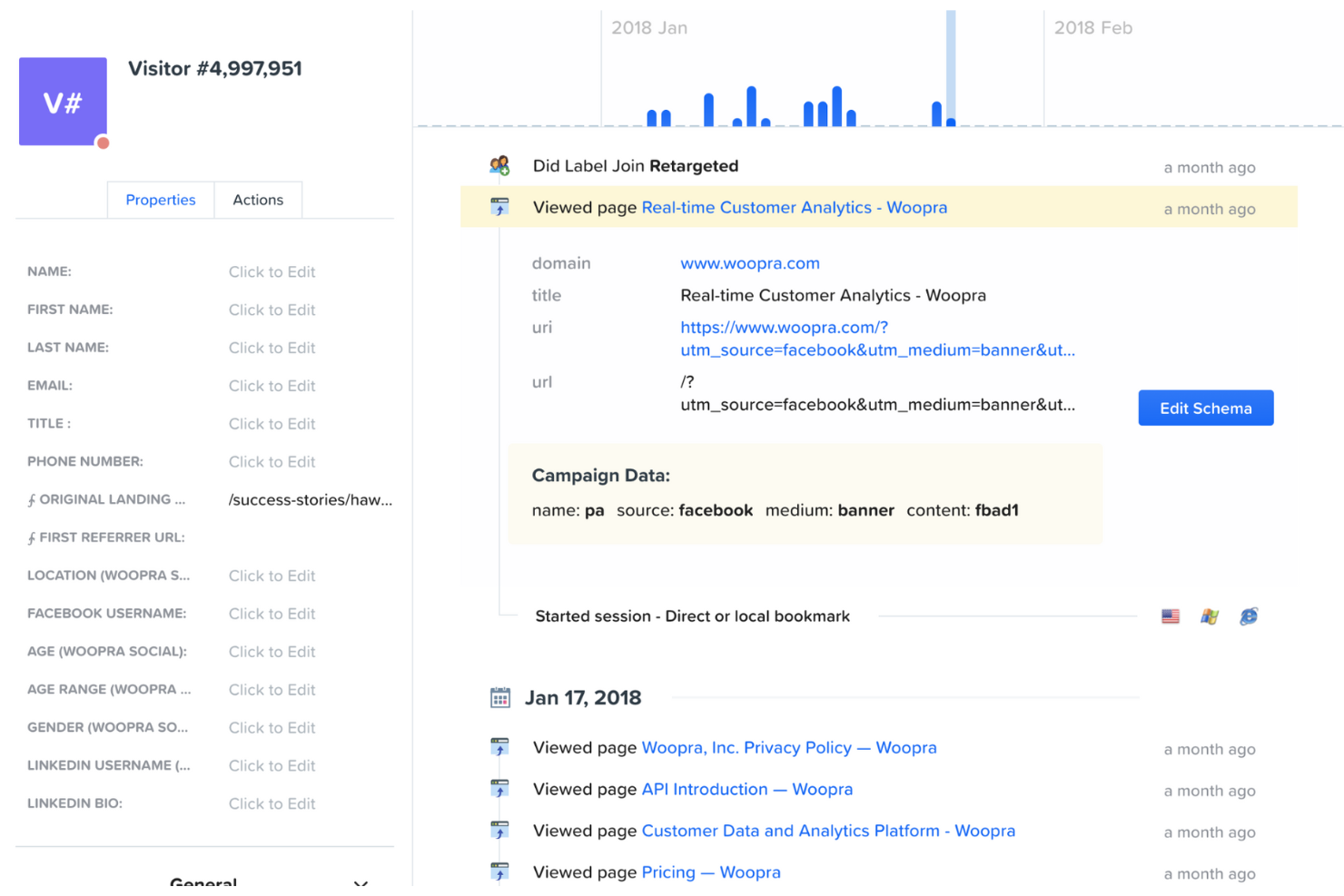
Con datos de sitio web, soporte, marketing y compras, todo en una sola plataforma, Woopra ofrece todas las herramientas que necesitas para comprender a tus clientes y fomentar compras repetidas.
Por qué elegí Woopra: El software te permite construir recorridos que mapean cada punto de contacto del cliente, activar mensajes de texto e informar campañas de retargeting con datos de comportamiento. Puedes seguir recorridos únicos desde el primer contacto de un visitante con tu marca hasta que se convierte en un cliente fiel.
Los perfiles de personas ayudan a los miembros del equipo, ya sea que estén respondiendo a un ticket de soporte o participando en una conversación de chat en vivo. En tiempo real, pueden ver todas las acciones previas tomadas por el cliente, incluido su historial de compras y el uso de cupones.
Woopra te muestra dónde pierdes visitantes en el proceso de compra, qué pasos llevaron a la conversión, qué errores cometieron los clientes y cómo identificar a un buen cliente.
Características destacadas e integraciones de Woopra
Funciones incluyen atribución de embudo completo, optimización del onboarding, tendencias de uso de funciones, crecimiento de suscripciones y análisis de cohortes.
Integraciones incluyen ActiveCampaign, HubSpot, LiveChat, Marketo, RedShift, Salesforce, Shopify, Slack, Stripe y Zendesk.
Pros and Cons
Pros:
- Actualizaciones en vivo detalladas
- Excelentes métricas listas para usar
- Interfaz atractiva
Cons:
- Bugs ocasionales
- Las páginas pueden cargar lentamente

El mejor software de análisis para ecommerce para la captura automática de datos
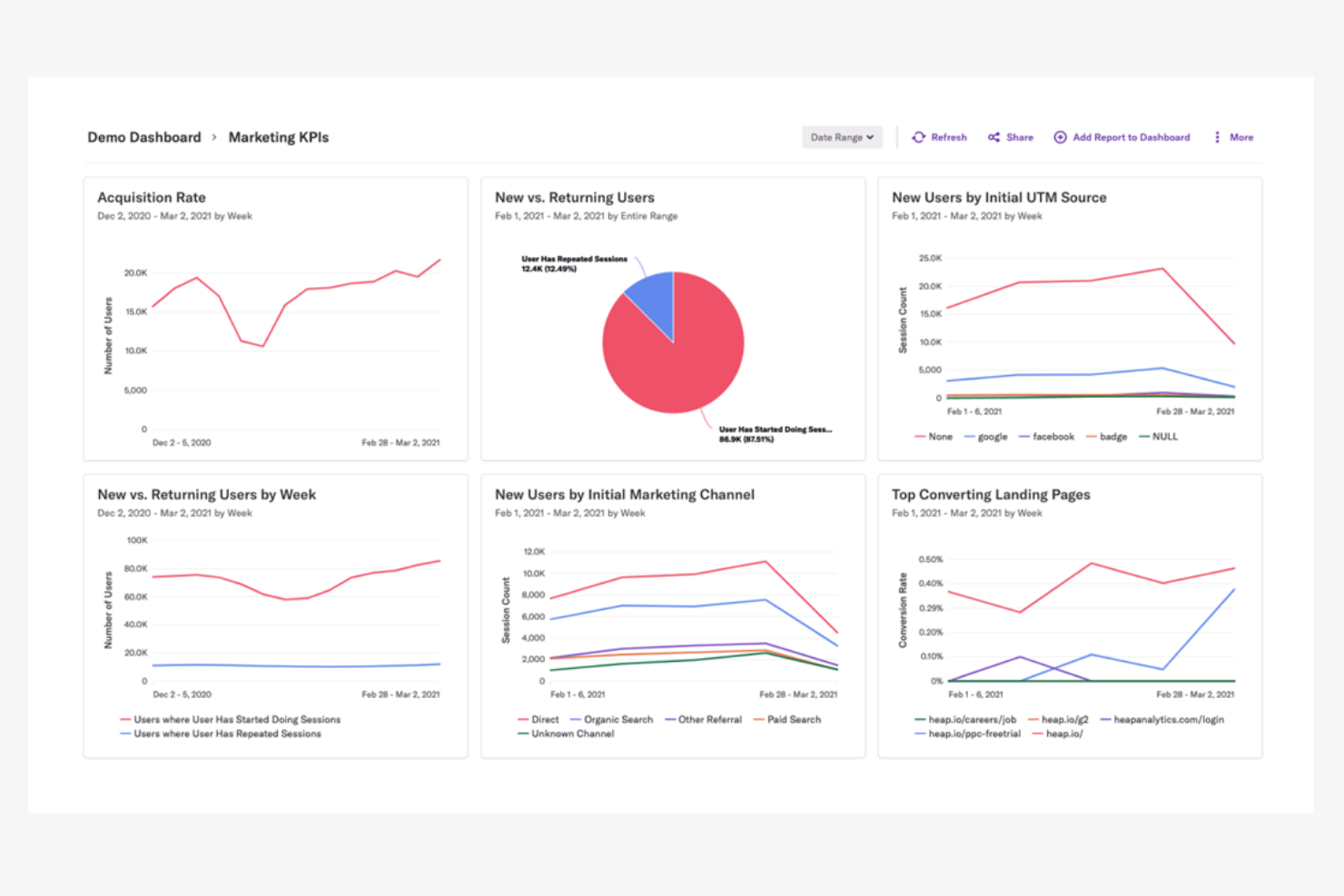
Heap es una plataforma de análisis digital que te brinda una comprensión detallada de los recorridos de los clientes en tu sitio web de comercio electrónico, para que puedas mejorar rápidamente las tasas de conversión y retención.
Por qué elegí Heap: Un solo fragmento de código captura automáticamente toda la experiencia digital de cada usuario sin necesidad de ingeniería especializada. Como resultado, obtienes un conjunto de datos completo para ayudarte a tomar decisiones basadas en datos. Así puedes optimizar el viaje de los compradores e identificar los comportamientos de los clientes que más influyen en la conversión.
La capa de ciencia de datos de Heap analiza conjuntos completos de datos de comportamiento para descubrir puntos de fricción ocultos. También identifica oportunidades para mejorar tus resultados. Con este software, puedes reducir el abandono de carrito, aumentar el valor medio del pedido, impulsar la fidelidad de marca y mejorar la retención de clientes.
Características y integraciones destacadas de Heap
Características incluyen recopilación automática de datos, reproducción de sesiones, análisis digital, análisis autoservicio y herramientas de ciencia de datos.
Integraciones incluyen Amazon S3, BigQuery, Intercom, Iterable, Marketo, RedShift, Salesforce, Shopify, Snowflake y Zendesk.
Pros and Cons
Pros:
- Incluye licencias de usuario ilimitadas
- Registra todos los datos automáticamente
- Excelentes herramientas de colaboración
Cons:
- Opciones de personalización limitadas
- Confuso para personas sin conocimientos técnicos

Mejor software de analítica ecommerce para análisis de comportamiento

Kissmetrics es una solución basada en la nube para la participación de clientes y campañas por correo electrónico, diseñada para ayudarte a comprender a los visitantes de tu sitio web a través de un análisis basado en su comportamiento.
Por qué elegí Kissmetrics: De un vistazo, puedes ver métricas clave como ventas totales, ingresos totales, ingresos promedio por persona, nuevos visitantes, la tasa de conversión de visitante a compra, la tasa de conversión de carrito a compra y las búsquedas en sitios de comercio electrónico.
Kissmetrics te muestra quiénes son tus grandes compradores y qué tienen en común. Puedes identificar cómo los adquiriste y si la cantidad de compradores primerizos y recurrentes está aumentando o disminuyendo.
Los informes detallados de actividad de clientes resaltan tus productos con más vistas, agregados al carrito de compras y comprados. Puedes descubrir rápidamente qué categorías y productos están en tendencia, identificar las ofertas de descuento más populares y ver qué porcentaje de las búsquedas termina en una compra. También puedes profundizar en las ventas e ingresos por categoría, tipo de dispositivo, fuente de tráfico o campañas.
Características destacadas e integraciones de Kissmetrics
Características incluyen gestión de datos, eventos, informes, campañas y perfiles de clientes.
Integraciones incluyen Appcues, Chargify, Facebook, HubSpot, Instagram, Magento Go, Recurly, Shopify, Slack y WooCommerce.
Pros and Cons
Pros:
- Informes programados
- Acceso rápido a informes
- Seguimiento de datos integral
Cons:
- Los paneles no son personalizables
- La configuración puede ser confusa

El mejor software de análisis de comercio electrónico para tiendas Shopify
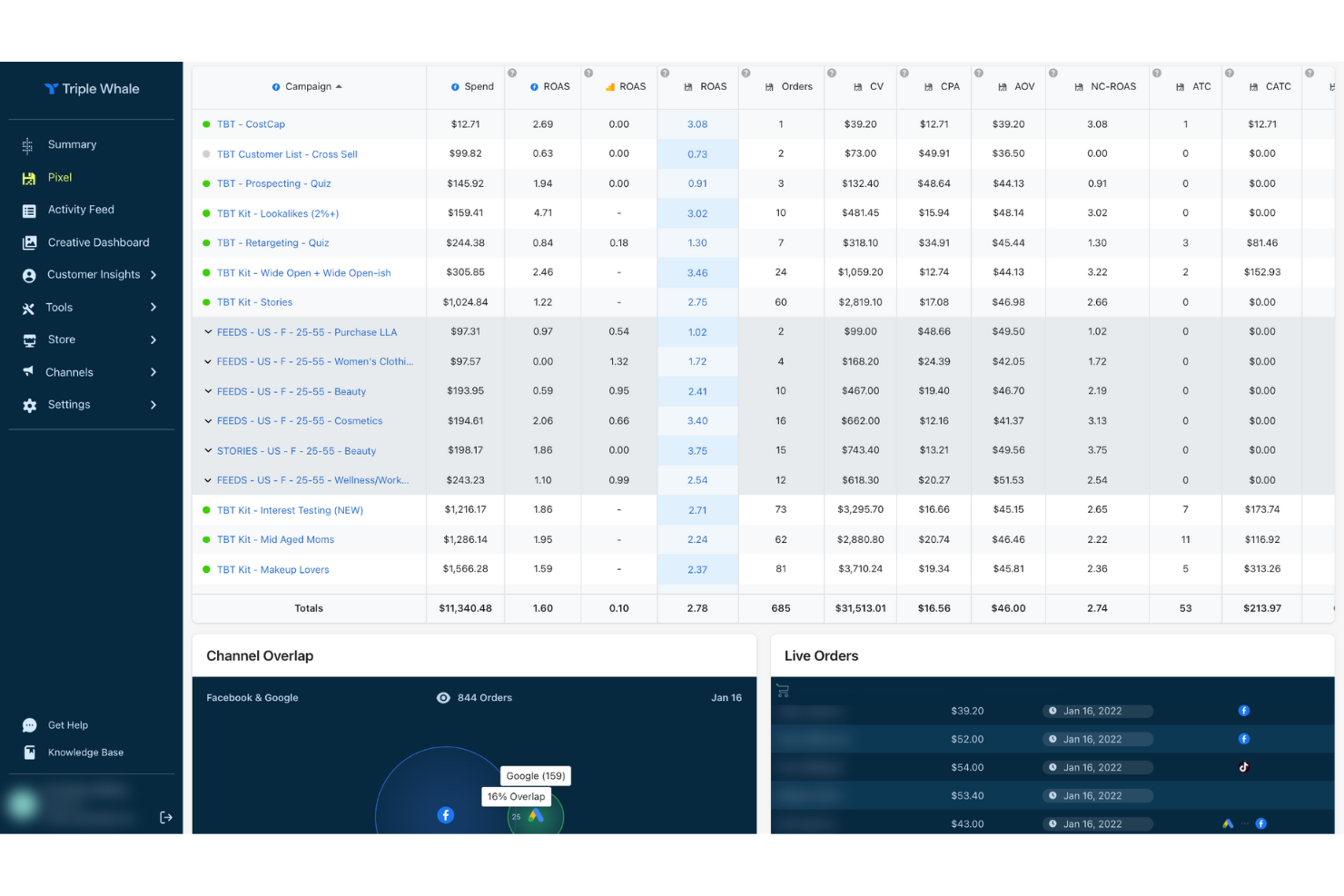
Triple Whale permite a los propietarios de tiendas Shopify convertir los datos en tiempo real en un crecimiento rentable, mientras ahorran tiempo y dinero en la gestión de análisis y atribución.
Por qué elegí Triple Whale: Mediante la agregación de datos, visualizaciones y seguimiento de atribuciones, este software SaaS proporciona métricas esenciales de manera clara y transparente. Su tecnología de píxel propia rastrea los datos de compra de clientes de primera parte hasta el nivel del anuncio. Los propietarios de negocios de Shopify pueden obtener claridad sobre de dónde vienen los compradores, qué están comprando y cómo pueden ser contactados de manera más efectiva en el futuro.
Gracias a seis modelos de atribución y el mapeo del recorrido, el píxel proporciona métricas de rendimiento que reflejan con precisión la salud de la tienda. Triple Whale ofrece usuarios ilimitados e integraciones de tiendas, además de aplicaciones móviles para Android e iOS.
Características destacadas e integraciones de Triple Whale
Características incluyen reportes automatizados por correo electrónico y Slack, datos de AOV (Average Order Value, valor promedio de pedido) de media, mediana y moda, reportes de valor de vida del cliente, análisis de cohortes y recorridos de productos.
Integraciones incluyen Attentive, EnquireLabs, Facebook, Google Ads, Google Analytics, Gorgias, Klaviyo, Pinterest, Shopify, Snapchat y TikTok.
Pros and Cons
Pros:
- Seguimiento muy preciso
- Análisis avanzados en tiempo real
- Rastrea conversiones a través de canales de marketing
Cons:
- Solo para tiendas Shopify
- El proceso de incorporación podría mejorar

El mejor software de análisis de comercio electrónico como única fuente de verdad
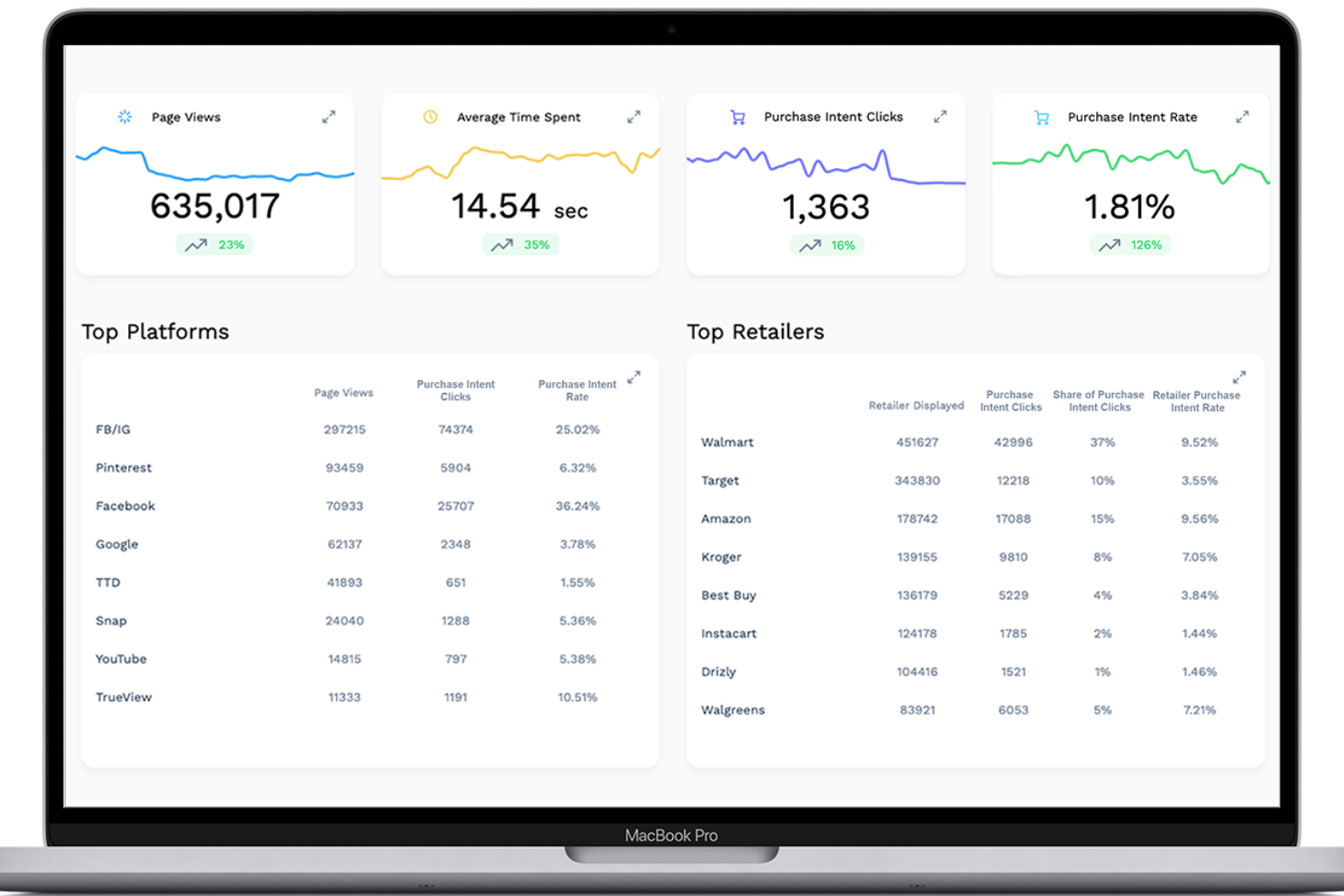
MikMak Insights es una herramienta de análisis de comercio electrónico que te ayuda a obtener una comprensión completa del comportamiento y las preferencias de los consumidores en línea.
Por qué elegí MikMak Insights: El software proporciona una única fuente de verdad sobre los recorridos de compra en línea de tus clientes, rastreando el comportamiento en línea a través de múltiples plataformas. Identifica los medios y creatividades que impulsan las ventas y analiza la intención de compra por audiencia, canal y campaña. MikMak Insights también revela información sobre el envío de los consumidores y compara resultados con el rendimiento histórico y de la categoría.
Utiliza datos propios para ayudarte a comprender cómo se comporta tu audiencia objetivo en diversas plataformas, minoristas y campañas de marketing. Como resultado, puedes acortar el camino a la compra, identificar qué estrategias de marketing marcan la diferencia y presentar las creatividades adecuadas en el momento correcto. También puedes impulsar la adquisición de clientes optimizando el proceso de compra en el minorista preferido del consumidor y luego revisar el rendimiento.
Características e integraciones destacadas de MikMak Insights
Características incluyen un panel de actividades, detección automática de ubicación, analítica de campañas, gestión de campañas, segmentación de campañas y análisis por canal.
Integraciones incluyen Amazon, Facebook, Google Analytics, Instagram, Pinterest, Salesforce, Snapchat, TikTok, Twitter y YouTube.
Pros and Cons
Pros:
- Panel de análisis fácil de usar
- Fácil seguimiento de medios y ventas
- Mejora continua
Cons:
- Algo de duplicación de datos
- La implementación lleva tiempo

Mejor software de análisis de comercio electrónico para visibilidad multiplataforma
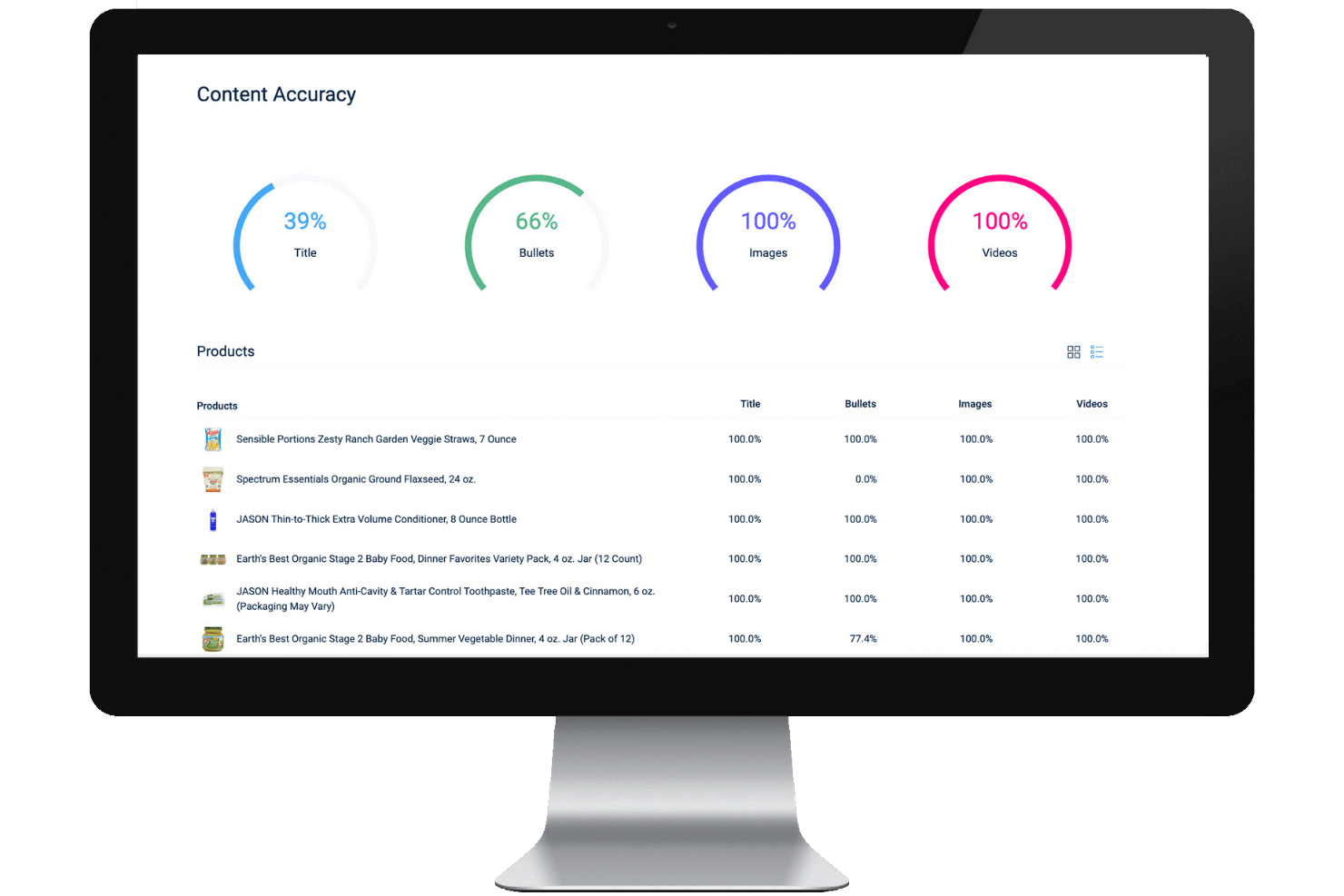
Beacon, desarrollado por Stackline, conecta los datos de tu negocio de comercio electrónico, proporcionando información de rendimiento de extremo a extremo en múltiples plataformas.
Por qué elegí Beacon: Cubriendo todo, desde la dinámica del mercado hasta el rendimiento del marketing, este conjunto de software te ayuda a escalar brindando visibilidad clara de cada SKU vendido en cada plataforma. Puedes rastrear tus ventas, marketing y actividades publicitarias en cada minorista. Gracias a la segmentación precisa, puedes obtener información en tiempo real de cada producto. También puedes establecer alertas para cambios de precio, problemas de inventario u otros eventos críticos.
El software incrementa las ventas y la rentabilidad al mostrar métricas empresariales esenciales que te ayudan a ganar la buy box. Obtienes información sobre la competencia, identificando y evaluando a los ganadores de la buy box en cada plataforma minorista. Puedes medir el tráfico por fuente, volumen y eficiencia, y comparar tu rendimiento con el de los competidores.
Funciones y conexiones destacadas de Beacon
Funciones incluyen monitoreo de vendedores, gestión de palabras clave, cumplimiento de catálogos, monitoreo de políticas de precios, cumplimiento de contenido y gestión de reseñas.
Conexiones incluyen Amazon, Best Buy, Costco, Flipkart, Instacart, JD.com, Kroger, Target, Walmart y Wayfair.
Pros and Cons
Pros:
- Gran alcance global
- Vista integral del rendimiento
- Alcance multiplataforma
Cons:
- Altos costos iniciales
- No apto para tiendas pequeñas

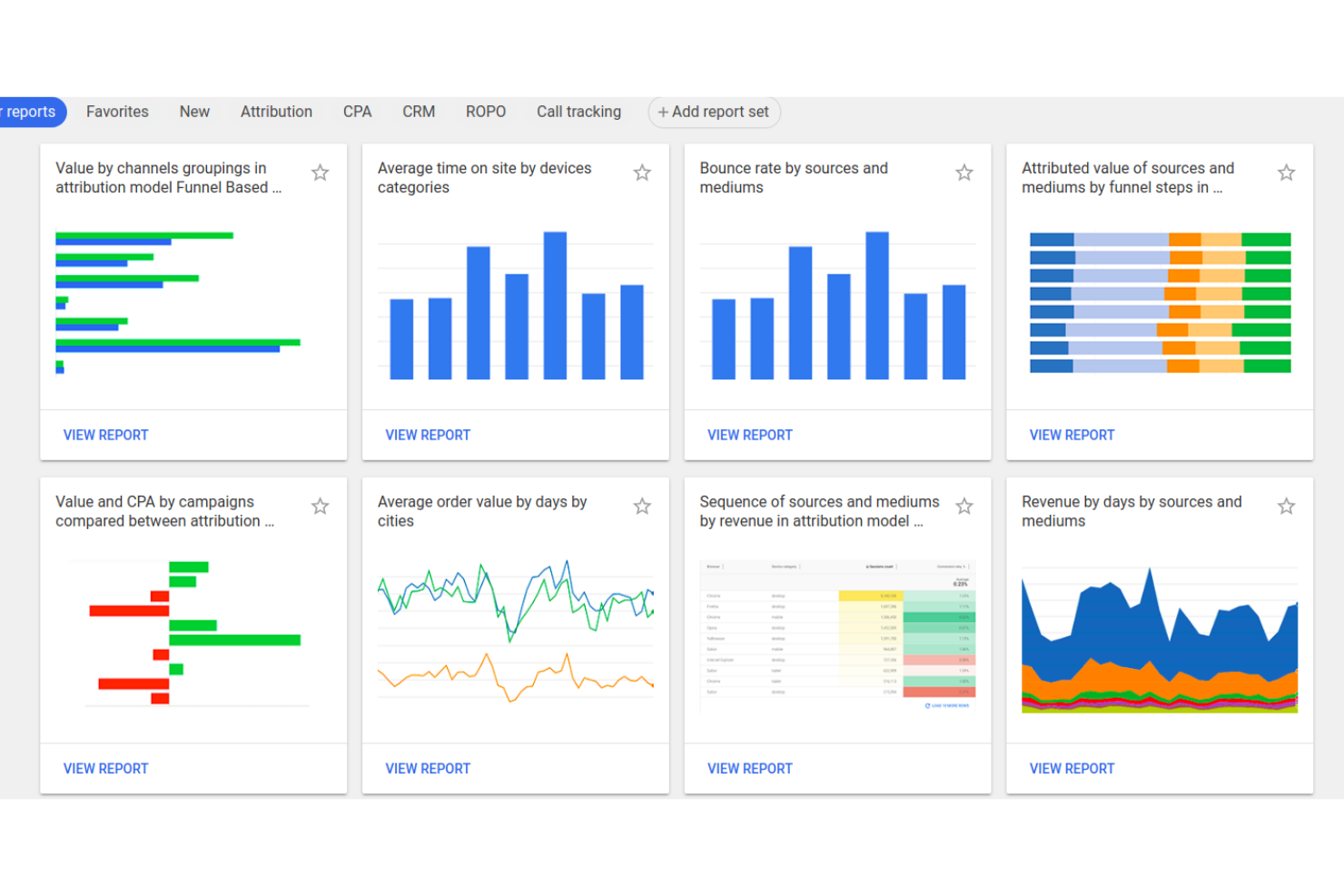
OWOX proporciona análisis de marketing digital para negocios minoristas y de comercio electrónico, utilizando un seguimiento sin cookies para ofrecer información sobre el comportamiento del cliente.
Por qué elegí OWOX: OWOX recoge y fusiona automáticamente datos de servicios publicitarios, sitios web, aplicaciones y sistemas CRM. Los datos recopilados incluyen pedidos cancelados, corporativos, compras realizadas en centros de llamadas y pedidos de tiendas físicas. Los propietarios de tiendas pueden ver el beneficio real generado por cada canal, campaña y palabra clave.
OWOX ofrece seguimiento en el servidor y transmisión en tiempo real de datos de comportamiento del usuario directamente desde tu sitio web. Esto se presenta en formato de Google Analytics 4, proporcionando a los usuarios una base de datos completa y de alta calidad para tomar decisiones informadas. El modelado de conversiones asegura que se contabilicen incluso las compras realizadas por usuarios que no dieron su consentimiento.
Funciones y Integraciones Destacadas de OWOX
Funciones incluyen seguimiento de ROI, recopilación de datos, conocimiento del cliente, acceso multiusuario, actividad de campaña, retención de campañas y optimización de marca.
Integraciones incluyen BigQuery, Facebook, Google Analytics, LinkedIn, Mailchimp, Ringostat y Twitter.
Pros and Cons
Pros:
- Información detallada sobre marketing
- Ahorra una cantidad significativa de tiempo
- Automatiza la recopilación y el procesamiento de datos
Cons:
- Ocasionales fallos técnicos
- Requiere buenas habilidades analíticas
Otras opciones
Aquí tienes algunas opciones más que merecen la pena y que no llegaron a formar parte de la lista de las mejores herramientas de análisis de comercio electrónico:
- Profitero
El mejor software de análisis de comercio electrónico para inteligencia y activación todo en uno
- CartInsight
Mejor software de análisis de ecommerce para analizar datos de tiendas
- Conjura
El mejor software de análisis de comercio electrónico para reportes automatizados de desempeño


Cómo seleccioné el mejor software de análisis de comercio electrónico
Si te preguntas cómo seleccioné el mejor software de análisis de comercio electrónico para esta lista, este es el proceso que seguí.
Revisé una amplia variedad de herramientas con valoraciones positivas de los usuarios y, después, perfeccioné mi lista según los criterios de selección que aparecen a continuación. También recurrí a mi experiencia personal utilizando herramientas de comercio electrónico para obtener más información.
Cómo evalúo el software de análisis de comercio electrónico
Divido mi evaluación en dos capas: los requisitos básicos que toda herramienta debe cubrir—informes a nivel de SKU, seguimiento de abandono de embudo, integraciones con plataformas—y los diferenciadores que marcan la diferencia entre las mejores opciones.
Funcionalidad básica (Requisitos mínimos para esta lista)
Cuando selecciono herramientas para mi lista, califico cada una en una escala del 0 (no ofrece la funcionalidad) al 5 (destaca en esta área) para cada funcionalidad clave listada a continuación. Luego, calculo la puntuación total de la herramienta como un porcentaje. Cada herramienta necesita alcanzar una puntuación mínima total del 65% para ser considerada para su inclusión.
- Seguimiento de ventas e ingresos: Verifico si una herramienta puede desglosar los ingresos por canal, período y segmento de clientes—no solo mostrar un total de pedidos para toda la tienda.
- Análisis de comportamiento del cliente: Aquí importan los datos a nivel de sesión y de eventos, como ver qué páginas de producto vio un comprador antes de añadir al carrito o abandonar el sitio.
- Análisis del embudo de conversión: Busco herramientas que mapeen el camino completo desde la vista de producto hasta el pago y que señalen exactamente dónde se disparan los abandonos, especialmente en los pasos del carrito y el pago.
- Información de productos e inventario: Evalúo los informes a nivel de SKU: los más vendidos, tasas de devolución y la contribución por categoría, no solo una lista genérica de “mejores productos”.
- Atribución de marketing: La herramienta debe conectar los ingresos reales con las fuentes de tráfico y campañas, para que puedas comparar ROAS de búsquedas pagadas con el rendimiento de email o redes sociales.
- Integraciones con plataformas de ecommerce: Busco conectores nativos para plataformas como Shopify, BigCommerce, Magento y WooCommerce, además de redes de anuncios y herramientas de marketing.
Una vez que tengo una lista de herramientas que cumplen con este criterio, considero lo que diferencia a cada plataforma.
Factores diferenciadores (lo que distingue a los vendedores)
Así es como comparo y contrasto a los diferentes proveedores:
Características destacadas
El modelado del valor de vida del cliente (CLV) es un gran diferenciador. Busco herramientas que predicen el valor de vida del cliente por segmento, ayudando a identificar qué canales de adquisición traen compradores recurrentes y no solo ocasionales. El análisis de cohortes y retención complementa esto mostrando curvas de recompra a lo largo del tiempo. Las perspectivas impulsadas por IA también son importantes—las herramientas que detectan anomalías como una caída repentina en conversiones o un SKU en tendencia ahorran horas de búsqueda manual en el panel de control. Las alertas en tiempo real que se envían a Slack o correo electrónico durante una venta relámpago permiten a tu equipo reaccionar antes de perder ingresos.
Más allá de las características
La precisión de los datos importa más de lo que la mayoría cree. Verifico si una herramienta ofrece seguimiento del lado del servidor para sortear bloqueadores de anuncios y los cambios de privacidad de iOS que distorsionan los datos de sesión y conversión. La compatibilidad con el stack tecnológico es igual de importante: tu plataforma de análisis debe enviar y recibir datos de tus plataformas de anuncios, herramientas de email y CRM, sin exportaciones manuales de CSV. La escalabilidad es otro factor que evalúo, especialmente para marcas que gestionan múltiples tiendas o venden en marketplaces además de su sitio DTC.
¿Qué es el software de análisis de comercio electrónico?
El software de análisis de comercio electrónico es una herramienta que recopila y analiza datos de las operaciones minoristas en línea. Realiza un seguimiento e interpreta las interacciones de los clientes, el rendimiento de las ventas y el tráfico del sitio web, proporcionando información valiosa sobre el comportamiento de los consumidores y la eficacia de la empresa. Este software ayuda a las empresas de comercio electrónico a comprender qué productos son populares, cómo navegan los clientes por su sitio y qué estrategias de marketing son más eficaces. Combinado con herramientas de atención al cliente de calidad, permite a las empresas crear un enfoque integral para optimizar la experiencia del cliente.
Las personas también preguntan
Estas son algunas respuestas a las preguntas que las personas me hacen con mayor frecuencia sobre el software de análisis del comercio electrónico y su funcionamiento.
¿Qué es el análisis del comercio electrónico?
¿Qué funciones se incluyen habitualmente en el software de análisis del comercio electrónico?
¿Cuáles son los principales beneficios de utilizar software de análisis del comercio electrónico?
Reflexiones finales
Esto concluye mi reseña de los principales sistemas de software de análisis del comercio electrónico. Pero, ya que estás aquí, no dejes de consultar nuestros muchos otros artículos para propietarios de tiendas de comercio electrónico. Por ejemplo, no querrás perderte nuestra publicación sobre formas sencillas de lograr un crecimiento del 40 % en las ventas de comercio electrónico.
Recuerda suscribirte también a nuestro boletín de Ecomm Manager para recibir las últimas perspectivas de los principales expertos del mundo del comercio electrónico.