

10 Amazon Inventory Management Software Picked for 2026

Amazon Inventory Management Software Shortlist


Amazon inventory management software helps your business track, organize, and replenish products sold through Amazon and other channels. A reliable inventory management system ensures accurate stock levels, simplified replenishment, and better visibility across warehouses and marketplaces.
If you’re searching for the best tools to keep inventory accurate, avoid stockouts, and handle multichannel sales, you know how quickly manual processes or spreadsheets can lead to lost sales or excess stock.
This list will help you compare leading Amazon inventory management solutions, so you can choose the right fit for your team’s workflows, sales volume, integration needs, and key inventory metrics. Get a clear view of your options and make a confident decision for 2026.
Why Trust Our Software Recommendations
Our team has been testing and reviewing software since 2012. As retail leaders ourselves, we know how difficult—and important—it is to choose the right software.
For this guide, we evaluated tools using hands-on testing and independent research, scoring tools using our selection criteria.
Our reviews reflect our independent judgment—not a sales pitch.
Best Amazon Inventory Management Software Summary
This comparison chart summarizes pricing details for my top Amazon inventory management software selections to help you find the best one for your budget and business needs.
| Tool | Best For | Trial Info | Price | ||
|---|---|---|---|---|---|
| 1 | Best for omnichannel inventory synchronization | Free demo available | From $100/month | Website | |
| 2 | Best for easy multi-marketplace listing management | Free plan + free demo available | From $24/month(billed annually) | Website | |
| 3 | Best for real-time, event-driven Amazon sync | Free demo available | Pricing upon request | Website | |
| 4 | Best for direct integration with eBay and Walmart | 30-day free trial | From $49/month | Website | |
| 5 | Best for advanced warehouse and fulfillment workflows | Not available | Pricing upon request | Website | |
| 6 | Best for profit analytics with inventory tracking | 30-day free trial + free demo available | From $15/month (billed annually) | Website | |
| 7 | Best for managing multiple storefronts in one dashboard | 14-day free trial + free demo available | From £1,150/month | Website | |
| 8 | Best for centralized order and inventory control | Free demo available | Pricing upon request | Website | |
| 9 | Best for integrated FBA restock suggestions | Free demo available | From $129/month | Website | |
| 10 | Best for customizable forecasting workflows | Free trial + free demo available | From $175/month | Website |
Amazon Inventory Management Software Reviews
Below are my detailed summaries of the Amazon inventory management software that made it onto my shortlist. My reviews offer a detailed look at the features, best use cases, and integrations of each software to help you find the best one for your business.

Best for omnichannel inventory synchronization
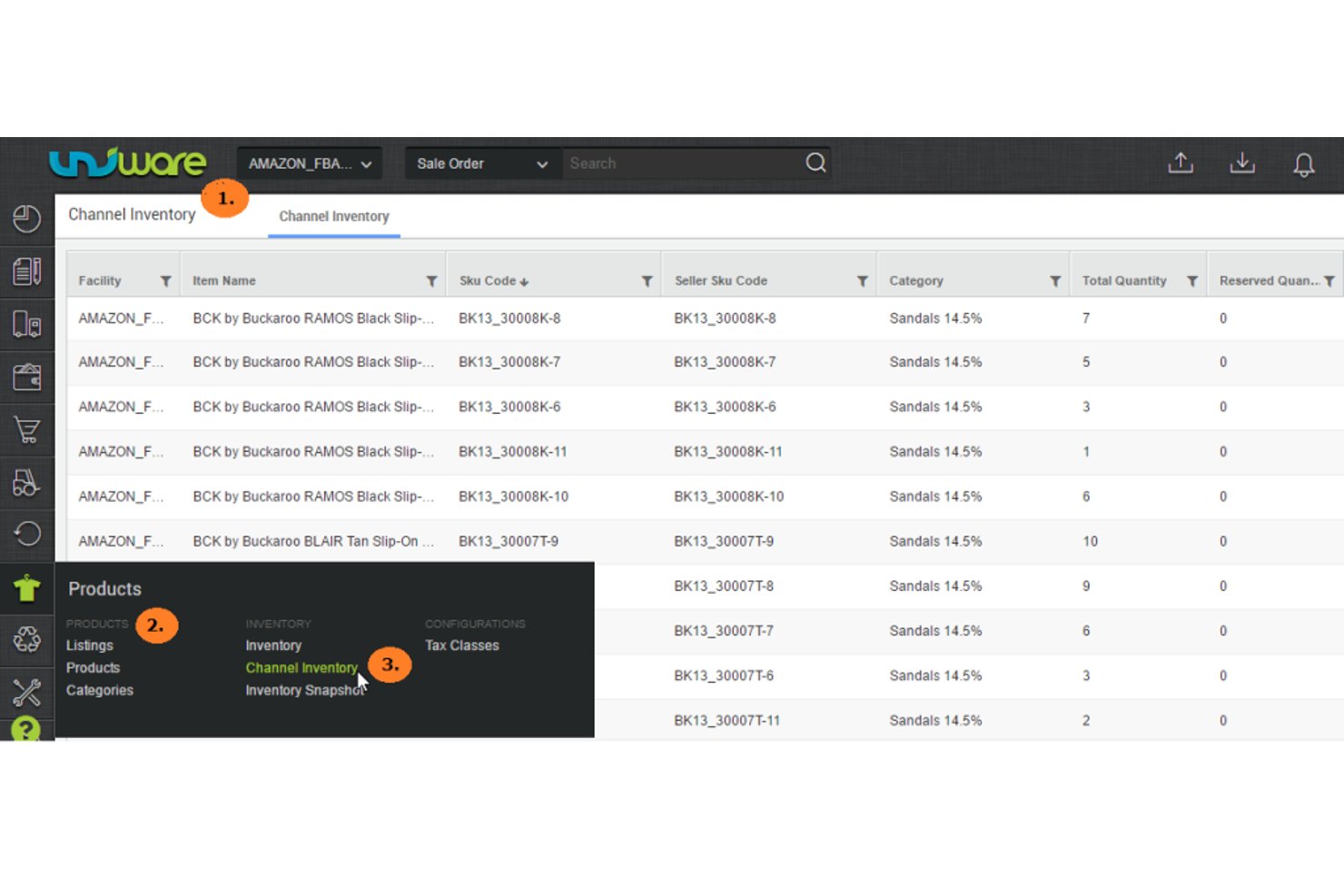
Unicommerce is a multi-channel inventory management platform that centralizes stock, orders, warehousing, and returns across 290+ marketplace, cart, and quick commerce integrations—including Amazon across 12+ global regions.
Who Is Unicommerce Best For?
Unicommerce is a strong fit for multi-channel retailers and ecommerce operations teams selling across Amazon alongside Shopify, eBay, and regional marketplaces who need centralized inventory control at scale.
Why I Picked Unicommerce
I've included Unicommerce in my top picks because its Kafka-powered real-time delta sync across 290+ marketplace, cart, and quick commerce integrations is genuinely best-in-class for sellers managing stock across Amazon alongside Shopify, Flipkart, Myntra, and quick commerce channels simultaneously. I particularly like how virtual inventory pools let you allocate stock separately across B2B and D2C channels without risking overselling. Unicommerce also covers Amazon across 12+ global marketplaces from a single dashboard, which makes cross-border selling far more manageable.
Unicommerce Key Features
- Automated low-stock alerts: Sends notifications via email, SMS, and in-app when stock falls below your defined thresholds across any connected channel.
- Purchase order generation: Creates POs tied to demand signals and reorder points, with inbound shipment tracking through the vendor management module.
- Bundle and kit management: Automatically deducts constituent SKU stock when a bundled or combo product sells across any connected marketplace.
- UniCapture video-verified packaging: Records video proof of order packaging for every shipment, supporting dispute resolution and refund settlement.
Unicommerce Integrations
Unicommerce documents 290+ integrations, including Amazon, Shopify, WooCommerce, eBay, Flipkart, Magento, Shiprocket, Delhivery, SAP, and Tally. Custom/API integrations are available on the Enterprise plan.
Pros and Cons
Pros:
- Automated bundle and kit stock deduction
- Supports multi-warehouse and cross-border Amazon sales
- Real-time inventory sync across 290+ channels
Cons:
- No Amazon ASIN-level profitability reporting
- FBA inventory data updates only once daily

Best for easy multi-marketplace listing management
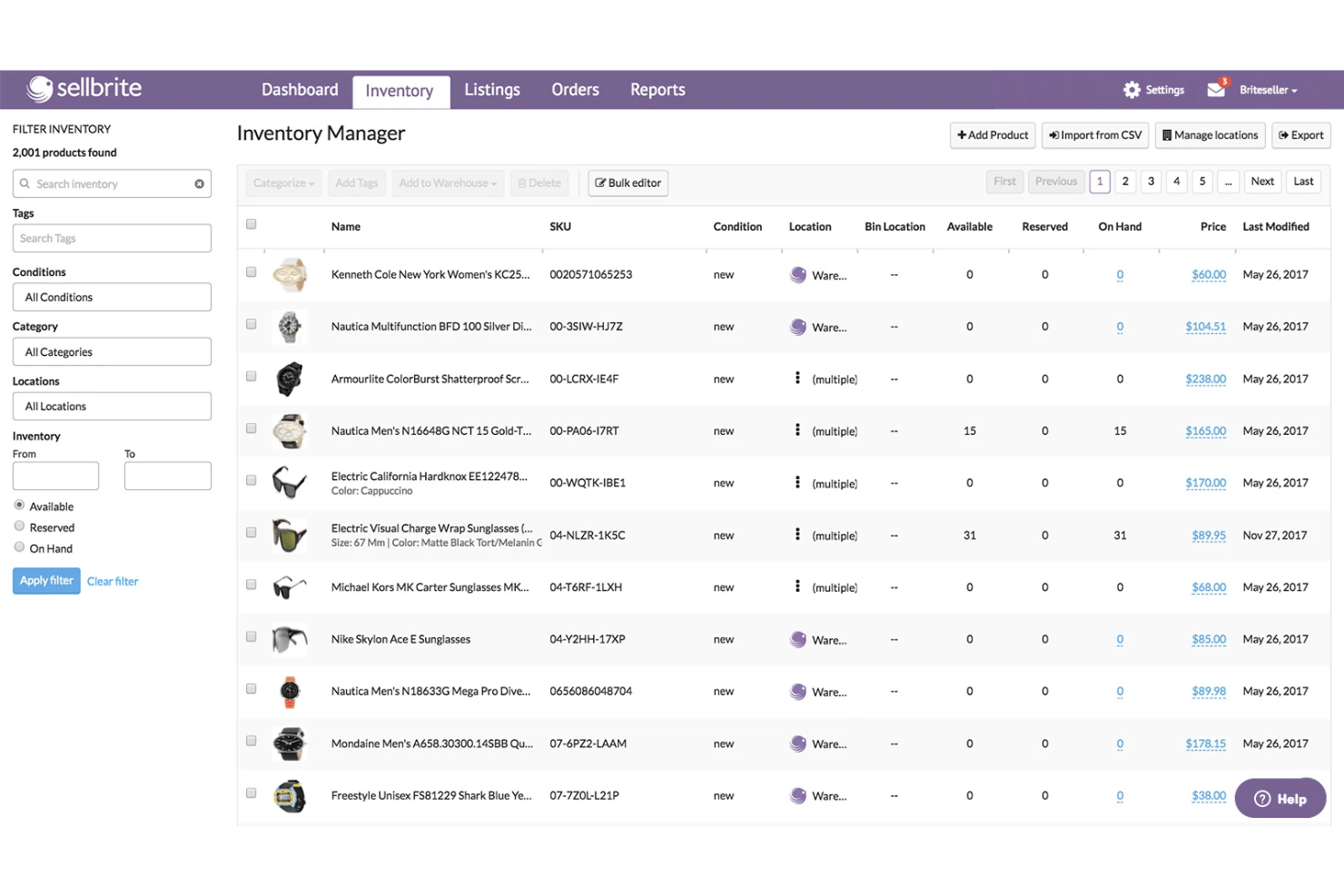
Sellbrite is a multi-channel listing and inventory sync tool that connects Amazon, eBay, Walmart, Etsy, and major shopping carts into a single dashboard for centralized order management, SKU tracking, and cross-channel inventory updates.
Who Is Sellbrite Best For?
Sellbrite is a strong fit for small to mid-sized sellers who need to manage listings and inventory across Amazon, eBay, Etsy, and Walmart from a single, easy-to-navigate dashboard.
Why I Picked Sellbrite
I've included Sellbrite in my top picks because it's the most accessible option for sellers who need to manage Amazon listings alongside eBay, Etsy, Walmart, and a Shopify or WooCommerce storefront from one place. Its 15-minute inventory sync across all connected channels means a sale on Etsy immediately adjusts your Amazon stock, keeping overselling in check without any manual reconciliation. I also like that you can allocate inventory selectively per channel, so you're not exposing your full stock count everywhere at once.
Sellbrite Key Features
- Multi-warehouse inventory allocation: Assign and track stock across multiple physical warehouse locations, with control over how much inventory is pushed to each connected sales channel.
- Amazon FBA multi-channel fulfillment: Route orders from eBay, Etsy, or Shopify to your FBA warehouse for fulfillment via a $19/month add-on.
- Bulk listing management via CSV: Import, update, and export product listings and inventory data in bulk using CSV files across all connected channels.
- Channel-level sales reporting: View revenue and top-seller performance broken down by individual marketplace to compare sales across channels.
Sellbrite Integrations
Sellbrite offers native integrations with Amazon Seller Central, eBay, Walmart, Etsy, Shopify, BigCommerce, WooCommerce, Fulfillment by Amazon, and ShipStation.
Pros and Cons
Pros:
- Broad Amazon, eBay, Etsy, Walmart coverage
- Unlimited SKUs and user seats on all plans
- Multi-channel inventory syncing updates every 15 minutes
Cons:
- No demand forecasting or automated reordering
- Cannot publish new ASINs to Amazon

Fulfil
Best for real-time, event-driven Amazon sync
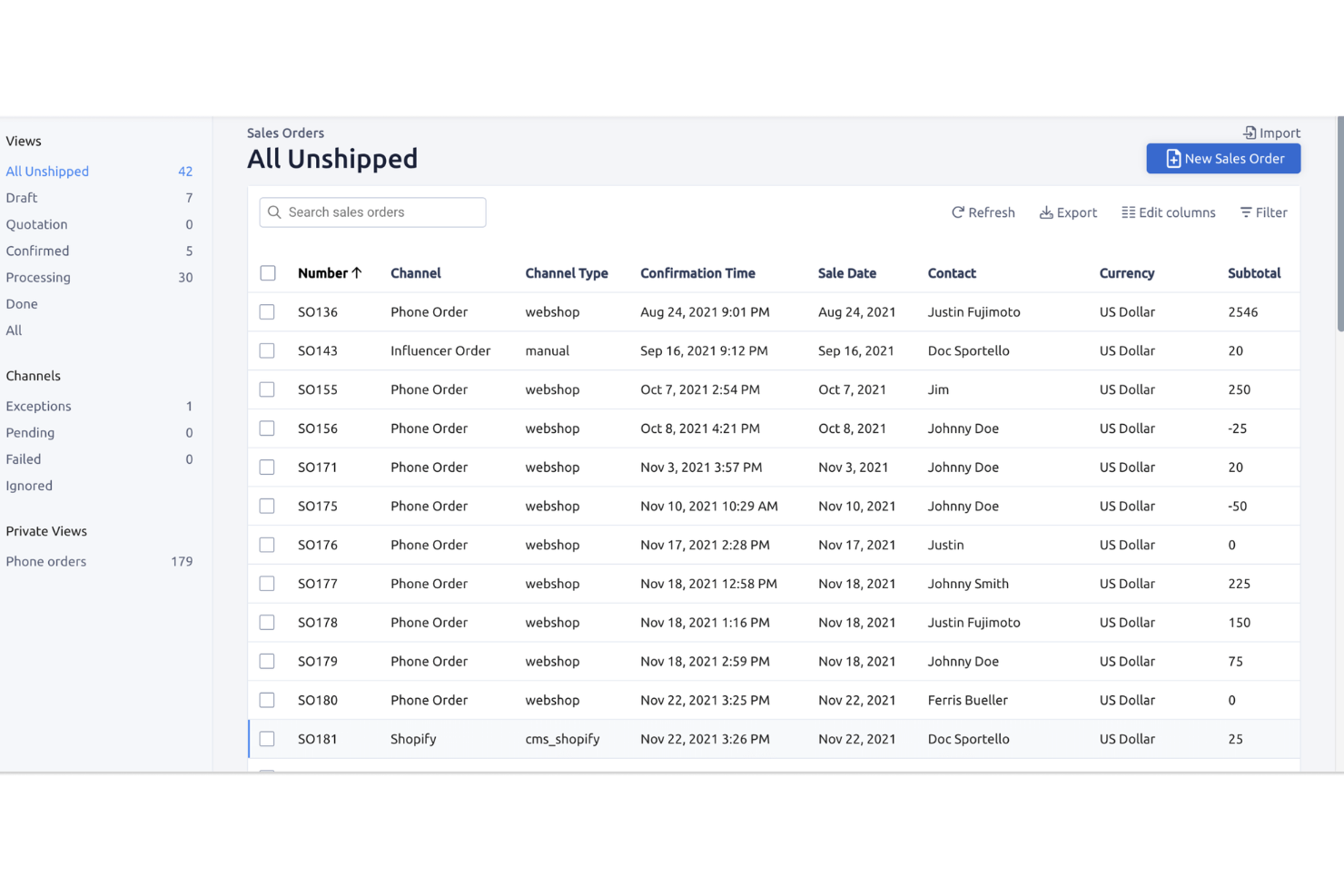
Fulfil is a multi-channel ERP that unifies Amazon inventory management, order management, warehouse operations, purchasing, and financials across FBA, FBM, and Vendor Central in a single platform.
Who Is Fulfil Best For?
Fulfil is built for multi-channel DTC brands doing $15M or more in annual revenue that need a single ERP to manage Amazon alongside Shopify, warehouse operations, and financials.
Why I Picked Fulfil
Fulfil earns its spot on my shortlist because its Amazon sync is genuinely event-driven, not batch-scheduled. That distinction matters in practice: when a sale closes or a warehouse receives stock, Fulfil updates Amazon's available inventory in real time rather than overnight. I also love its inventory visibility controls, which let you define exactly what Amazon "sees," including safety buffers and inbound stock, so you're never at risk of overselling across all 23 global marketplaces.
Fulfil Key Features
- Amazon settlement auto-reconciliation: Fulfil automatically imports bi-weekly Amazon settlement reports and posts fees, refunds, and payments directly to the native general ledger.
- Multi-warehouse allocation rules: You can assign stock from specific warehouses to specific channels, with per-channel safety buffers and inbound PO inclusion in available-to-sell quantities.
- Amazon Multi-Channel Fulfillment (MCF) routing: Orders from Shopify and other channels can be routed to FBA inventory for fulfillment, with delivery speed options and automatic tracking sync back to each channel.
- AI-powered purchase order generation: Fulfil generates draft purchase orders automatically based on demand forecasts, incorporating MOQ constraints, case pack sizes, and supplier lead times.
Fulfil Integrations
Fulfil supports 25+ native sales channels, including Amazon’s 23 marketplaces, Shopify, Walmart, eBay, and TikTok Shop. It also connects with Amazon MCF, 400+ 3PL locations, 500+ EDI retail partners, and Google BigQuery for reporting.
Pros and Cons
Pros:
- Automatic Amazon settlement and fee reconciliation
- Unified FBA, FBM, and Vendor management
- Real-time, event-driven Amazon inventory synchronization
Cons:
- Setup requires significant time and resources
- No dynamic Amazon repricing feature

Best for direct integration with eBay and Walmart
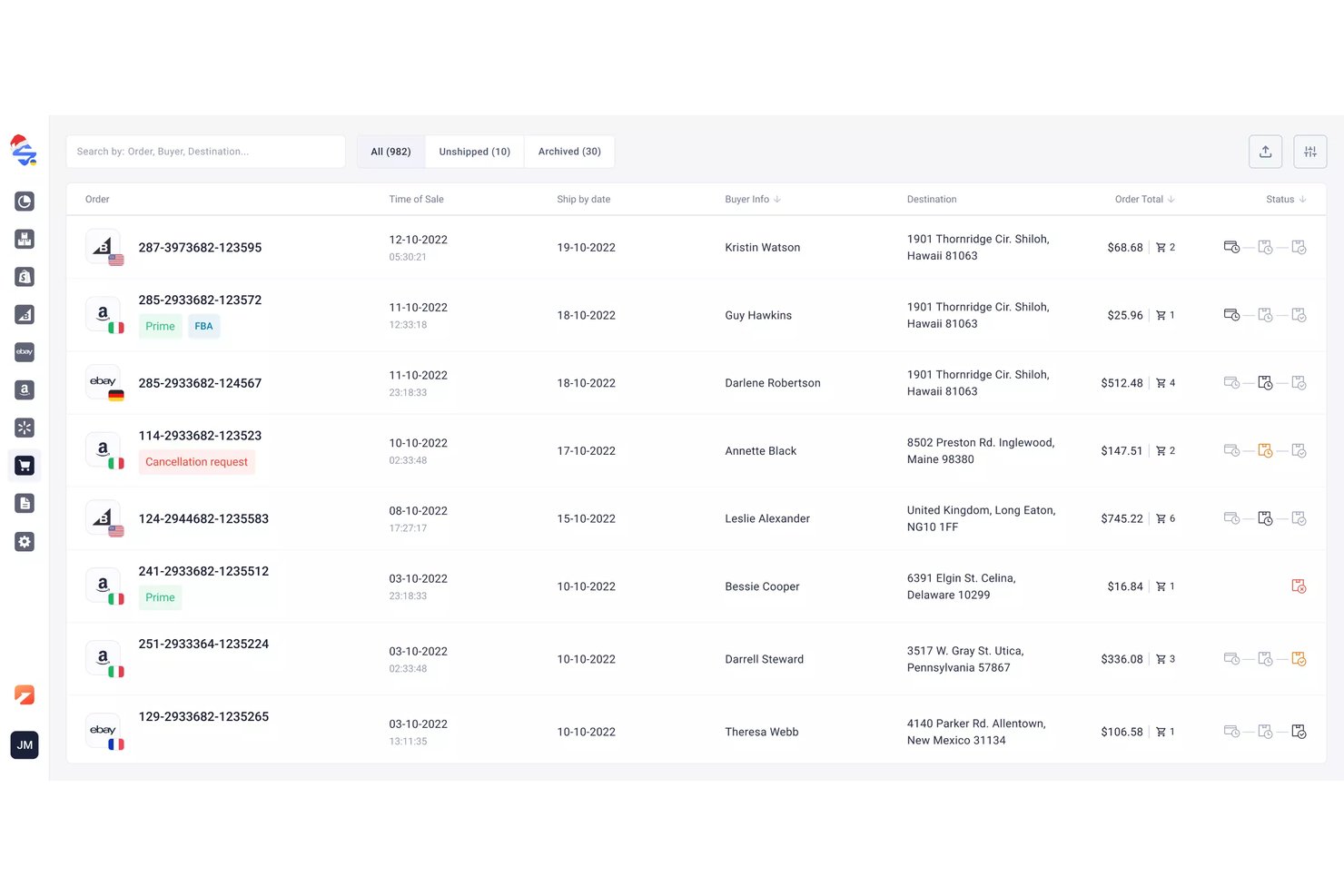
M2E Cloud is a multi-channel listing and inventory sync platform that connects Amazon Seller Central across 19+ global marketplaces with eBay, Walmart, TikTok Shop, and 600+ other channels, alongside a built-in repricer and sales analytics dashboard.
Who Is M2E Cloud Best For?
M2E Cloud is a strong fit for multi-channel sellers who need to keep inventory in sync across eBay, Walmart, and Amazon simultaneously.
Why I Picked M2E Cloud
I've included M2E Cloud in my top picks because its native eBay and Walmart integrations are genuinely tight, not bolted on. When a sale closes on Walmart, stock levels update across Amazon and eBay in real time, which is the kind of two-way sync that prevents costly oversells on multiple fronts simultaneously. I also like that the built-in Amazon Repricer, which tracks competitor pricing and targets the Buy Box 24/7, comes included at no extra cost.
M2E Cloud Key Features
- Amazon Multi-Channel Fulfillment (MCF) integration: Automatically routes orders from eBay, Shopify, Walmart, and other connected channels through your Amazon FBA inventory for fulfillment.
- M2E Policies: Lets you set channel-specific rules for pricing, quantity buffers, and shipping templates per marketplace from a single interface.
- M2E Analytics dashboard: Tracks sales volumes, order fees, cancellation rates, top sellers, and geographic customer data across all connected channels at no extra cost.
- Amazon Repricer: Monitors competitor pricing 24/7 and adjusts your Amazon prices within set min/max limits to target the Buy Box automatically.
M2E Cloud Integrations
M2E Cloud connects with Amazon Seller Central, Amazon FBA and MCF, eBay, Walmart, TikTok Shop, Temu, Shopify, BigCommerce, WooCommerce, and Magento. It also supports 600+ marketplace integrations overall and provides an API for custom integrations.
Pros and Cons
Pros:
- Supports FBA and MCF order management
- Built-in Amazon repricer included for free
- Real-time inventory sync across all channels
Cons:
- Lacks ASIN-level profitability analytics
- No automated replenishment or forecasting tools

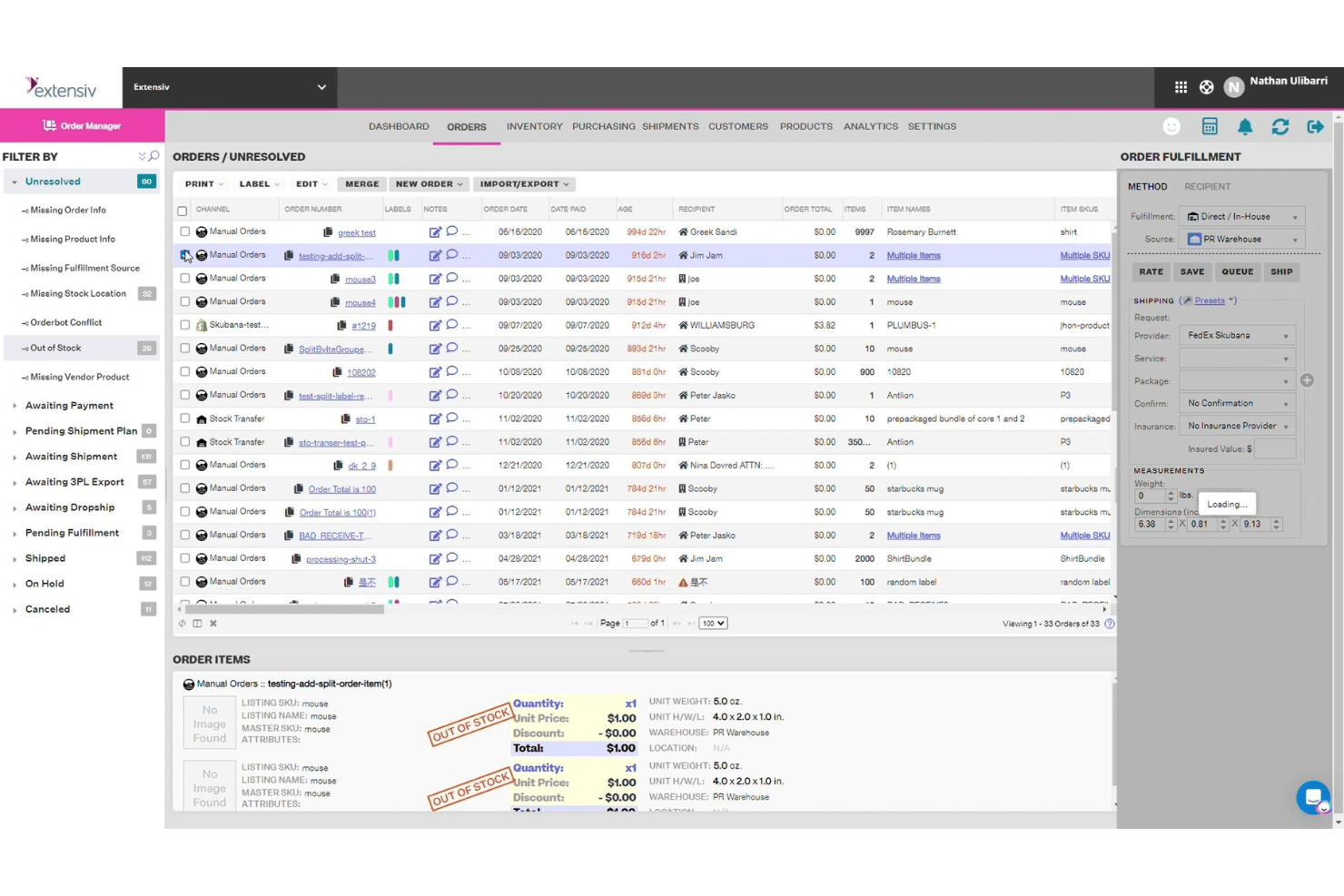
Extensiv is an order and warehouse management platform that handles FBA, FBM, and Multi-Channel Fulfillment alongside multi-channel inventory sync, automated purchase orders, demand forecasting, and bundle management across 110+ ecommerce integrations.
Who Is Extensiv Best For?
Extensiv is a strong fit for operations teams managing complex fulfillment across multiple warehouses, 3PLs, and sales channels simultaneously.
Why I Picked Extensiv
Extensiv earns its spot on my shortlist because of how well it handles fulfillment complexity that simpler tools can't touch. I picked it specifically for operations running FBA, FBM, and Multi-Channel Fulfillment side by side, since Extensiv manages all three from one place without requiring workarounds. I also like its channel-level inventory allocation, which lets you assign a percentage of available stock per sales channel to prevent overselling across Amazon, Walmart, and Shopify simultaneously. Auto-PO generation tied to supplier lead times and sales velocity makes replenishment genuinely hands-off.
Extensiv Key Features
- FNSKU-to-master SKU mapping: Links multiple FNSKUs to a single master SKU, with preferred FNSKU selection configurable per warehouse location.
- SmartScan barcode scanning: Mobile barcode scanning add-on supports pick, restock, and inventory audit workflows across warehouse locations.
- FIFO cost tracking: Tracks inventory costs using First In, First Out methodology, with COGS history linked to individual purchase orders.
- FBA inbound shipment sync: Automatically syncs inbound FBA shipments created in Seller Central into Extensiv Order Management for unified visibility.
Extensiv Integrations
Extensiv offers 110+ ecommerce integrations, including Amazon Seller Central, Shopify, Walmart, eBay, Etsy, Wayfair, BigCommerce, WooCommerce, and Magento, plus 1,000+ 3PL connections. Integration Manager connects to 60+ order destinations, with custom ERP and NetSuite connections available through developer services.
Pros and Cons
Pros:
- Channel-level stock allocation to prevent overselling
- Automated purchase orders with real-time demand data
- Unified management for FBA, FBM, and MCF
Cons:
- Lacks dedicated in-platform IPI Score dashboard
- No native Amazon repricing automation

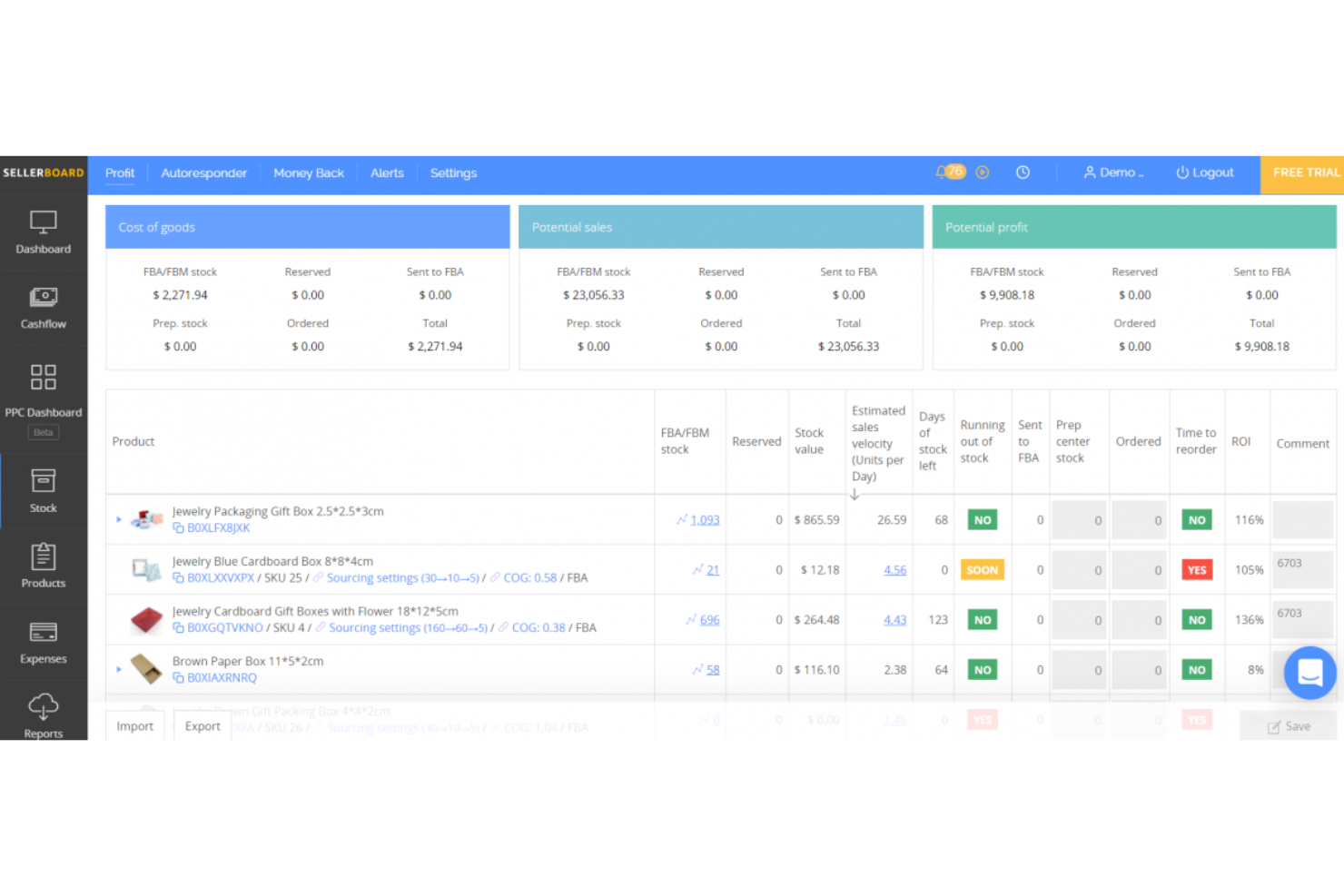
sellerboard is an Amazon-focused profit analytics and inventory management tool that tracks ASIN-level profitability, FBA fees, demand forecasting, purchase orders, and PPC performance across all 24 global Amazon marketplaces.
Who Is sellerboard Best For?
sellerboard is a strong fit for Amazon FBA sellers who want a clear picture of per-product profitability alongside their inventory planning.
Why I Picked sellerboard
sellerboard earns its spot on my shortlist because no other tool at this price point gives you this level of per-ASIN profit visibility alongside inventory planning. I love that it tracks 100+ Amazon fee types, including AWD storage and inbound placement fees, all attributed at the SKU level. The Low Inventory Fee alerts are particularly useful: sellerboard monitors your stock weekly and flags exactly which ASINs Amazon will penalize, along with the recommended ship-in quantity and date.
sellerboard Key Features
- COGS tracking methods: Supports FIFO, batch, period-based, and marketplace-specific COGS calculation methods to keep profitability data accurate.
- PPC bid automation: Offers manual and autopilot bid optimization modes, with automated keyword harvesting and low-performing keyword negation.
- FBA inbound shipment management: Create and track inbound FBA shipments end-to-end, with inventory counts updated dynamically as shipments progress.
- Multi-marketplace summary dashboard: Aggregates key performance metrics across Amazon, Walmart, and eBay accounts into a single unified view.
sellerboard Integrations
sellerboard offers native marketplace integrations with Amazon Seller Central, Walmart Seller Center, and eBay, plus Amazon Advertising API and Amazon Warehousing & Distribution connectivity. Shopify is supported through the separate sellerboard.io platform.
Pros and Cons
Pros:
- Handles FBA, prep center, and AWD inventory flows
- Automated low inventory fee compliance alerts
- Granular per-ASIN profitability with full fee tracking
Cons:
- Reports of discrepancies in profit calculations
- No real-time cross-channel inventory sync

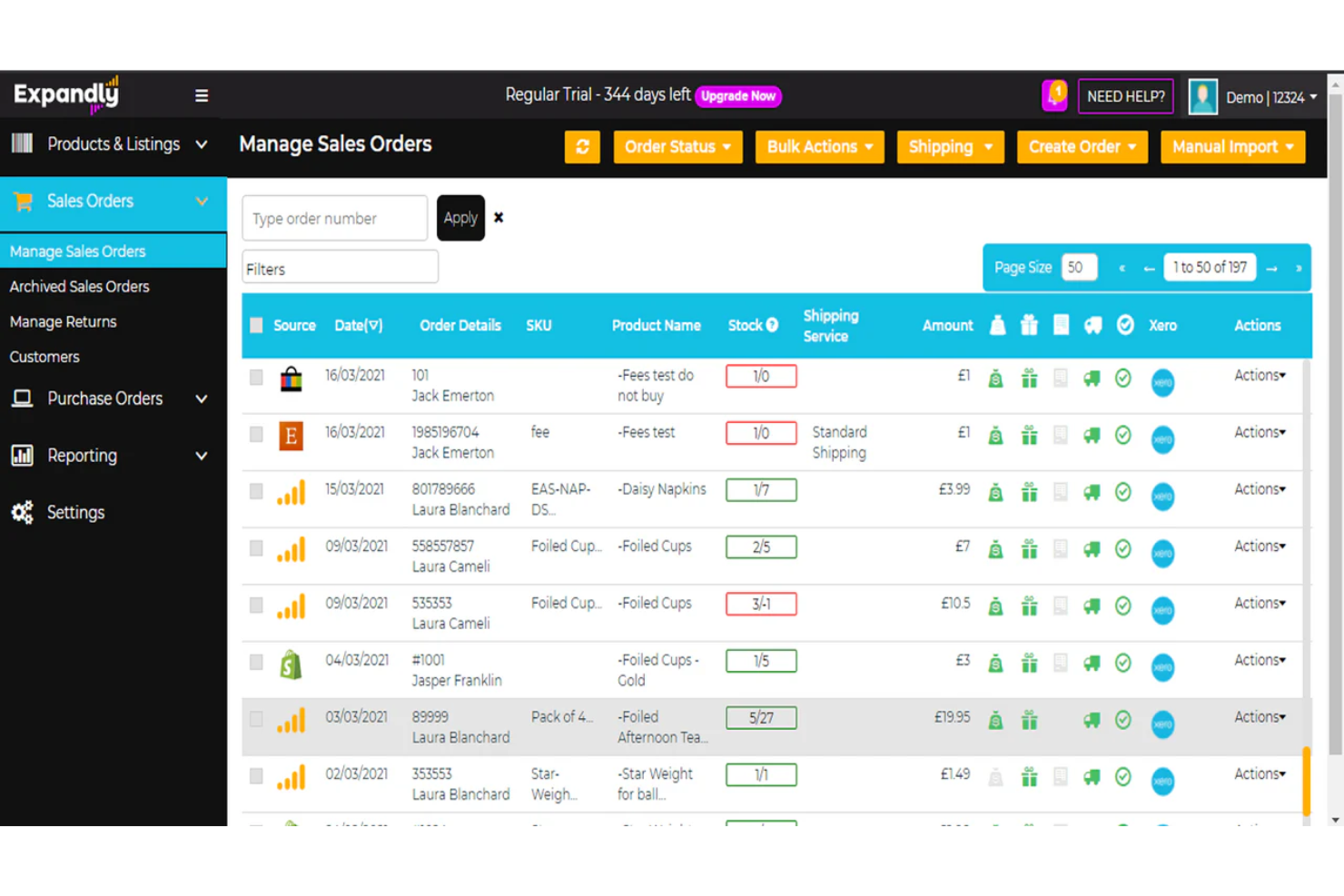
Expandly is a multi-channel inventory and order management platform that syncs stock, listings, and orders across Amazon, eBay, Etsy, and 25+ shopping carts from a single dashboard.
Who Is Expandly Best For?
Expandly is a strong fit for multi-channel sellers who run storefronts across Amazon, eBay, Etsy, and multiple shopping carts and need a single place to keep stock levels in sync.
Why I Picked Expandly
I've included Expandly in my top picks because it's genuinely one of the best tools for keeping stock levels accurate across a large mix of storefronts simultaneously. When a sale closes on eBay, Amazon, and Etsy at nearly the same moment, Expandly's automatic sync pushes updated quantities across all 25+ connected channels before an oversell can happen. I also like its kit and bundle handling, where selling a bundled product triggers component-level stock deductions across every channel automatically.
Expandly Key Features
- Purchase order management: Raise POs, log received goods, and sync purchase order data directly to Xero from within the platform.
- Re-order level alerts: Set custom low-stock thresholds that trigger notifications to prompt restocking before you run out.
- Cross-channel FBA fulfillment routing: Route orders from non-Amazon storefronts to Amazon FBA for fulfillment directly through the platform.
- Bulk listing upload: Create and publish product listings to multiple sales channels simultaneously using batch upload tools.
Expandly Integrations
Expandly offers integrations with Amazon Seller Central, eBay, Etsy, Wish, Shopify, WooCommerce, Magento, BigCommerce, Xero, DHL, and FedEx, plus 25+ shopping carts and multiple carriers. API access is available on higher-tier plans for custom integrations.
Pros and Cons
Pros:
- Includes expert UK/EU compliance support
- Handles kits and bundles natively
- Syncs stock across 25+ sales channels
Cons:
- No demand forecasting or auto-replenishment
- No FBA inbound shipment management

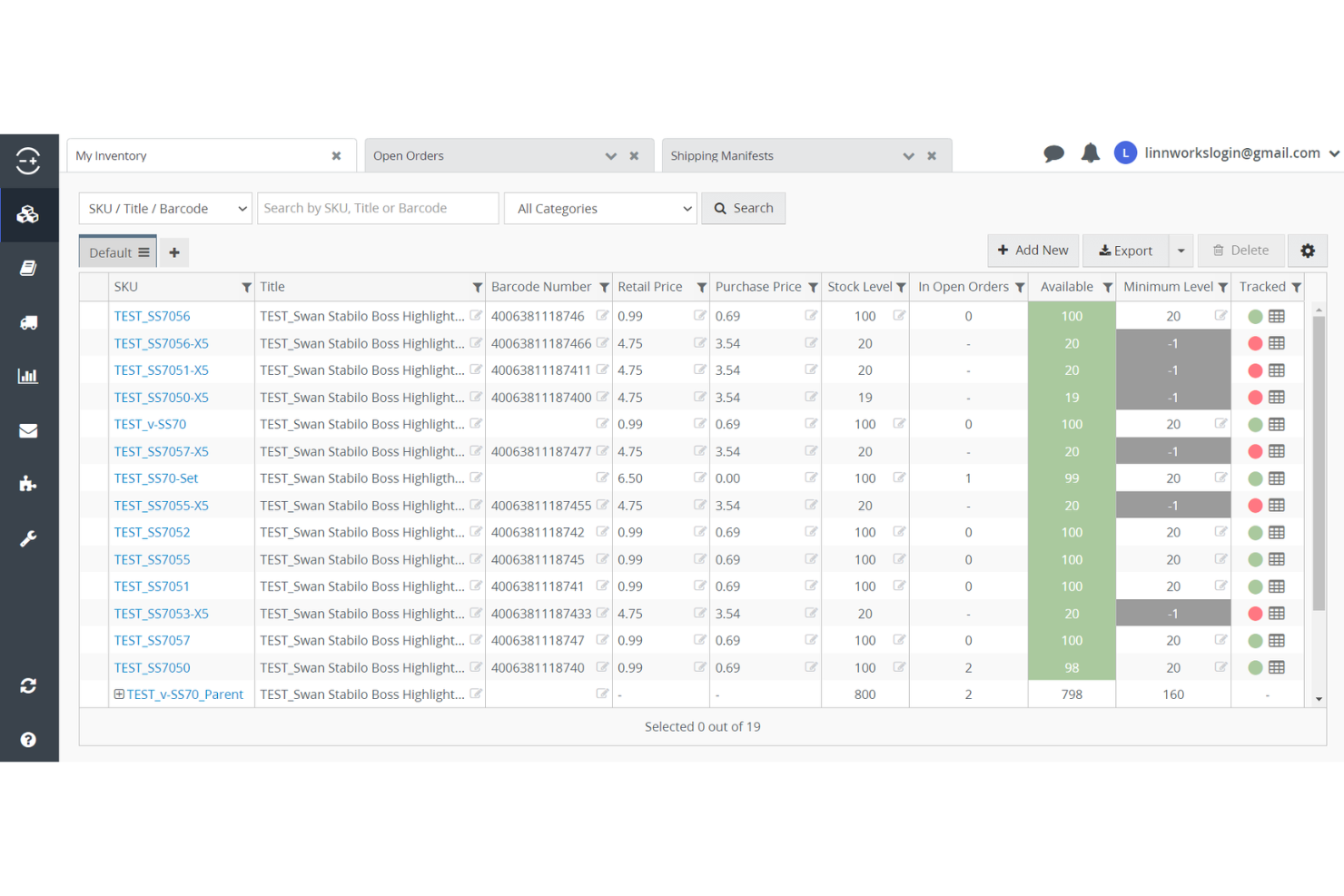
Linnworks is a multi-channel inventory and order management platform that centralizes stock control, FBA workflows, inbound shipment management, and order routing across 100+ sales channels, including all global Amazon marketplaces.
Who Is Linnworks Best For?
Linnworks is a strong fit for multi-channel retailers and Amazon sellers who need to manage orders, inventory, and fulfillment across many sales channels from one place.
Why I Picked Linnworks
Linnworks earns its spot on my shortlist because no other platform I've tested matches its depth for centralized order and inventory control across this many channels. I'm particularly impressed by its dual Seller Central and Vendor Central SP-API coverage, which means sellers operating in both modes can manage FBA inbound shipments, hybrid FBA/FBM routing, and Vendor Central purchase orders from a single dashboard. The Rules Engine alone saves serious time by automating fulfillment routing across warehouses, 3PLs, and Amazon fulfillment centers without manual intervention.
Linnworks Key Features
- Amazon Multi-Channel Fulfillment (MCF) integration: Automatically submits non-Amazon orders to Amazon fulfillment centers, syncing inventory quantities and tracking information back to all connected sales channels.
- Rules Engine: Automates order routing across FBA, FBM, 3PL, and warehouse locations using unlimited configurable rules, without manual intervention.
- Kits and bundles management: Natively tracks component-level inventory deductions when a bundled product or kit is sold across any connected channel.
- SkuVault Core WMS: Adds barcode scanning, digital pick lists, cycle counting, and quality control workflows for warehouse operations that feed into FBA replenishment.
Linnworks Integrations
Linnworks advertises 200+ integrations, including Amazon, eBay, Walmart, Shopify, BigCommerce, TikTok Shop, Amazon MCF, QuickBooks Online, Conjura, and Inventory Planner. An open API supports custom integrations.
Pros and Cons
Pros:
- Central dashboard for all FBA workflows
- Real-time sync across 100+ sales channels
- Dual Amazon Seller and Vendor Central support
Cons:
- Cross-channel SKU mapping can be clunky
- ASIN profitability reporting requires add-ons

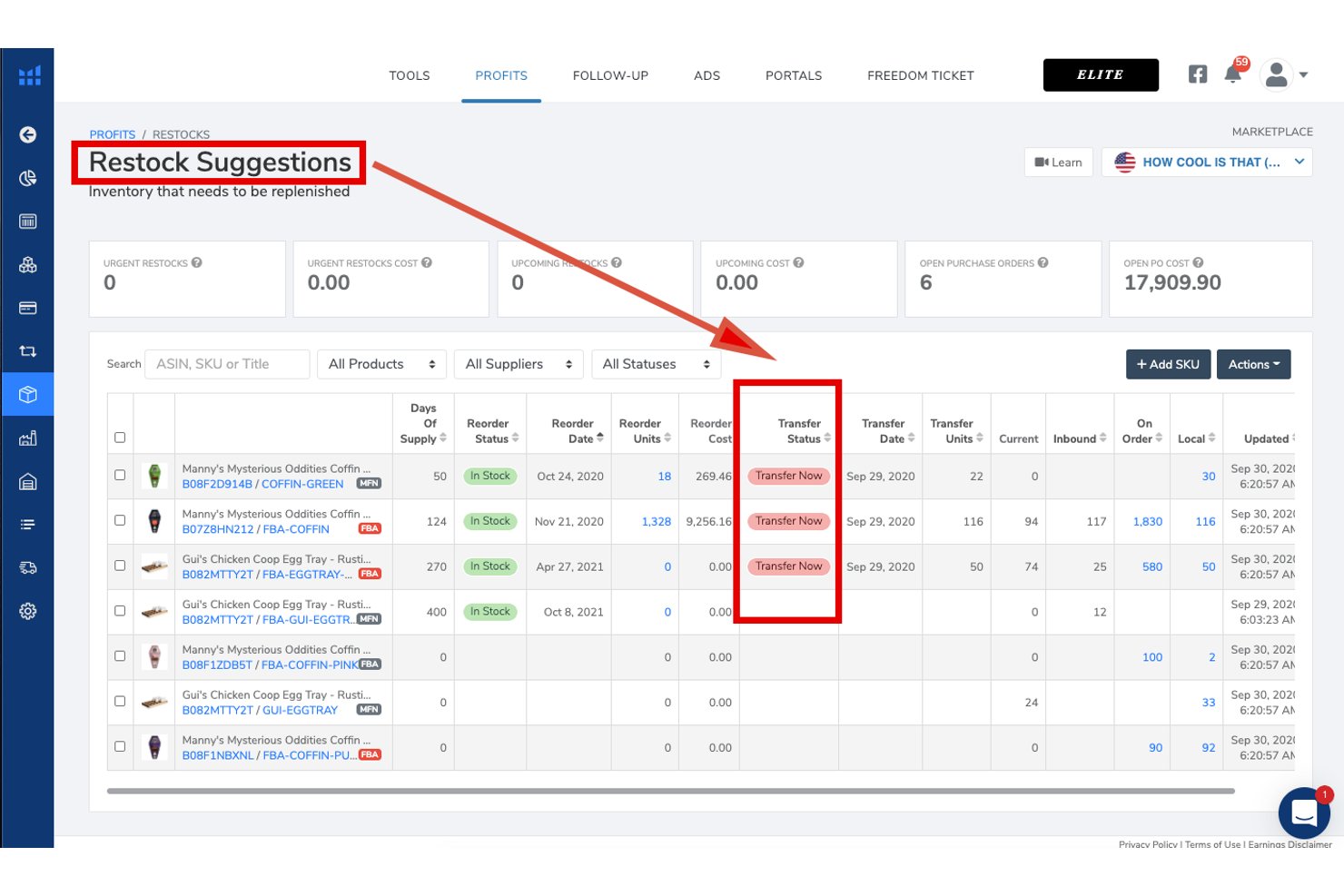
Helium 10 is an Amazon seller platform that combines inventory management, demand forecasting, FBA restock suggestions, supplier and purchase order tracking, listing optimization, keyword research, and ASIN-level profit analytics in one suite.
Who Is Helium 10 Best For?
Helium 10 is a strong fit for Amazon FBA sellers who want restock suggestions, demand forecasting, and supplier management in the same platform they use for product research and listing optimization.
Why I Picked Helium 10
I picked Helium 10 as one of the best because its Restock Suggestions dashboard does something I genuinely find rare: it pulls Amazon sales velocity, lead times, seasonality, and growth curves into a single view, then lets you generate a purchase order in one click. The demand forecasting even handles stockout periods and low-data ASINs, so new product launches don't get skipped over. I also like that supplier details, inbound shipment tracking, and FBA restock signals all live in the same platform you're already using for listing optimization and keyword research.
Helium 10 Key Features
- Profits tool: Tracks real-time revenue, FBA fees, referral fees, ad spend, COGS, and returns at the ASIN level to surface per-product profitability.
- Managed Refund Service: Audits 18 months of FBA transactions to identify and recover reimbursements for lost, damaged, or miscredited inventory.
- Local Warehouse tab: Tracks off-Amazon stock held in your own facility and flags when transferring existing inventory to FBA is cheaper than placing a new supplier order.
- TikTok Shop inventory sync: Maps TikTok products to Amazon SKUs and uses a configurable safety stock threshold to prevent TikTok orders from depleting your FBA inventory.
Helium 10 Integrations
Helium 10 has native Amazon Seller Central integration and an indirect TikTok Shop connection through Amazon Multi-Channel Fulfillment (MCF). Walmart supports research and ads, but no native Shopify, eBay, WooCommerce, accounting, ERP, or 3PL integrations are documented.
Pros and Cons
Pros:
- Handles seasonality and stockout impacts in forecasting
- ASIN-level profit analytics with fee breakdowns
- Advanced Amazon FBA restock suggestions dashboard
Cons:
- No built-in dynamic Amazon repricing tool
- Inventory management is limited on lower plans

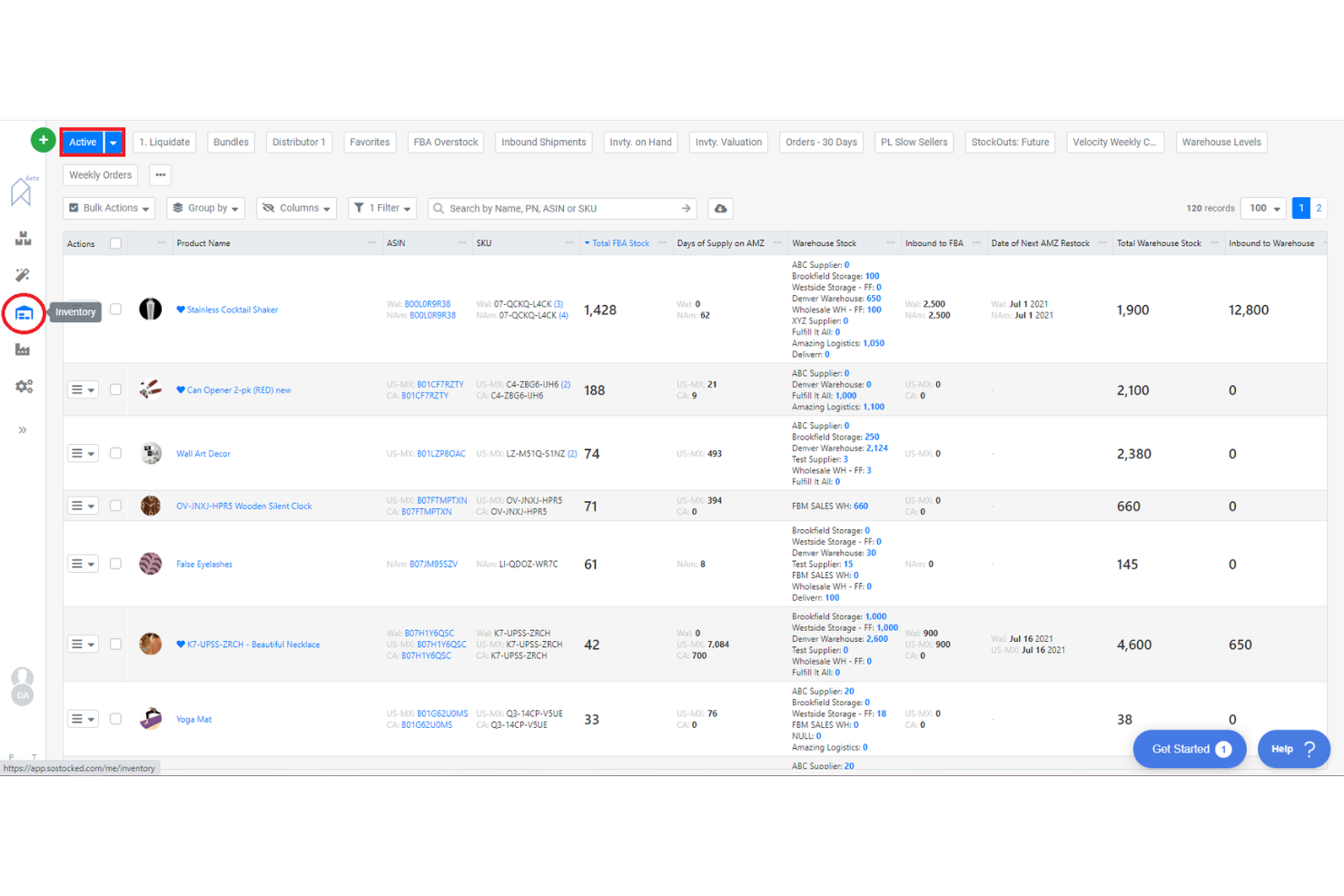
SoStocked is an Amazon-native inventory management and forecasting platform that combines demand forecasting, purchase order tracking, replenishment alerts, FBA inventory monitoring, and ASIN-level profit analysis.
Who Is SoStocked Best For?
SoStocked is a strong fit for Amazon FBA private label sellers and wholesale brands that need transparent, editable forecasting logic across multiple global marketplaces.
Why I Picked SoStocked
SoStocked earns its spot on my shortlist because no other Amazon inventory tool gives you this level of control over your forecast math. I love that you can edit the underlying velocity calculations line by line, which matters when your sales history includes stockout periods that would otherwise skew your reorder points. The Combo Forecasting feature lets you layer Prime Day or BFCM demand spikes over a seasonal baseline and reuse those models year over year.
SoStocked Key Features
- Adjusted velocity calculation: Removes stockout-affected days from your sales history so your demand data reflects true velocity, not distorted dips.
- IPI restock limits integration: Pulls Amazon Inventory Performance Index restock limits daily and factors them directly into your replenishment and transfer schedules.
- ProfitFlow ASIN-level profit analysis: Forecasts sales, FBA fees, and costs at the individual ASIN level to surface margin leaks and underperforming listings.
- FBA size tier optimizer: Analyzes your product dimensions and packaging to flag resizing opportunities that reduce FBA fulfillment fees.
SoStocked Integrations
SoStocked integrates with Amazon Seller Central through SP-API across global marketplaces, plus Amazon AWD and MCF. It has no native Shopify, Walmart, eBay, WooCommerce, or 3PL integrations, but supports custom data workflows through its Marketplace Sales Conversion Tool.
Pros and Cons
Pros:
- IPI restock limits automatically factored in
- Combo Forecasting for seasonality and events
- Editable forecast formulas for precise control
Cons:
- Manual tracking required for 3PL inventory
- No built-in shipment creation workflow
Other Amazon Inventory Management Software
Here are some additional Amazon inventory management software options that didn’t make it onto my shortlist, but are still worth checking out:
- RestockPro
For FBA restocking and purchase order automation
- Jungle Scout
For sales-driven inventory planning
- Veeqo
For high-volume multichannel sellers
- Brightpearl
For integrated accounting workflows
- Zoho Inventory
For automated reorder point management
- Ordoro
For bundled product kitting features
- Cin7 Core
For built-in B2B portal integration
- Finale Inventory
For barcode-based stock control
- LitCommerce
For quick channel setup and migration


How I Evaluate Amazon Inventory Management Software
I split my evaluation into two layers: the baseline FBA and Seller Central capabilities a tool must have to qualify, and the differentiators that determine the right fit for your operation.
Core Functionality (Table Stakes For This List)
When I'm selecting tools for my list, I rank each one on a scale from 0 (does not offer the functionality) to 5 (excels in this area) for each core functionality listed below. Then, I calculate the tool's total score into a percentage. Each tool needs to achieve a minimum total score of 65% to be considered for inclusion.
- Amazon Seller Central Integration: I check whether a tool connects to Seller Central through a native API or relies on a third-party bridge, and whether it syncs orders, inventory, and listings across multiple Amazon marketplaces.
- FBA Inventory Tracking: A tool should show more than just on-hand quantity. I look for visibility into inbound, reserved, unfulfillable, and stranded units so sellers can catch issues before storage fees pile up.
- Demand Forecasting & Reorder Alerts: I evaluate whether reorder suggestions factor in real Amazon sales velocity, supplier lead times, and seasonal trends rather than relying on static thresholds you have to set manually.
- Multi-Channel Inventory Sync: For sellers listing on Shopify, Walmart, or eBay alongside Amazon, I look at how many channels sync in real time and whether the tool supports buffer stock or channel-specific allocation rules.
- SKU-Level Profitability & Cost Tracking: The best tools in this space break down margin per ASIN after referral fees, FBA fees, COGS, and returns. I evaluate how granular the cost inputs are and whether landed costs are supported.
- Purchase Order & Supplier Management: I look for PO creation tied to demand data, a supplier database, and tracking for inbound shipments to FBA or 3PL warehouses rather than standalone spreadsheet-style logging.
Once I have a list of tools that meet this criteria, I consider what sets each platform apart.
Differentiating Factors (What Sets Vendors Apart)
Here's how I compare and contrast different vendors:
Standout Features
IPI monitoring and restock limit tracking matter because a single rejected shipment can stall sales for weeks. I look for tools that flag when you're approaching capacity thresholds so you can adjust inbound plans. Bundle and kit management is another key area—sellers offering multipacks need component-level deductions that fire automatically at the point of sale. PPC integration adds real value here too, connecting ad spend to stock levels so you can pause campaigns on low-inventory ASINs rather than waste budget.
Beyond Features
Pricing transparency matters a lot in this space. I check whether plans scale by order volume or SKU count, and whether features like forecasting or PPC analytics are locked behind premium tiers. Ecosystem integrations also weigh heavily—your inventory tool needs to sync with QuickBooks or Xero for COGS reconciliation and connect to your 3PLs for inbound workflows. I also evaluate how a tool fits different seller types, since a solo FBA seller running a few hundred SKUs has very different needs than an aggregator managing dozens of brands across multiple fulfillment models.
How to Choose Amazon Inventory Management Software
It’s easy to get bogged down in long feature lists and complex pricing structures. To help you stay focused as you work through your unique software selection process, here’s a checklist of factors to keep in mind:
| Factor | What to Consider |
|---|---|
| Scalability | Will the software handle your current and projected order volume, SKUs, and new Amazon channels? |
| Integrations | Does it connect natively to your ecommerce platforms, shipping carriers, and accounting tools? |
| Customizability | Can you tailor workflows, user permissions, and reporting to match your business processes? |
| Ease of use | Will your team be able to learn and use the system quickly without extensive training? |
| Implementation and onboarding | How long will setup take, and what resources or support will you need to get up and running? |
| Cost | Are pricing tiers clear, and do they align with your business size, order volume, and feature needs? |
| Security safeguards | Does the vendor offer data encryption, user access controls, and regular security updates? |
| Support availability | Can you reach support during your business hours, and are there SLAs for urgent issues? |
What Is Amazon Inventory Management Software?
Amazon inventory management software is a digital tool that helps businesses track, organize, and control their product stock across one or more Amazon storefronts. These systems automate inventory updates, manage orders, and sync product data to prevent overselling or stockouts. They’re essential for maintaining accurate inventory levels, supporting multi-channel sales, and streamlining fulfillment processes for Amazon sellers.
Features
When selecting Amazon inventory management software, keep an eye out for the following key features:
- Inventory syncing: Automatically updates stock levels across all Amazon channels to prevent overselling and stockouts.
- Order management: Centralizes order processing, tracking, and fulfillment for all Amazon sales in one dashboard.
- Bulk product listing: Allows you to upload, edit, and manage multiple product listings at once, saving time on catalog updates.
- Purchase order management: Tracks supplier orders, deliveries, and restocks to maintain optimal inventory levels.
- Multi-channel support: Manages inventory and orders across Amazon and other sales channels from a single platform.
- Stock alerts: Notifies you when inventory falls below set thresholds so you can reorder before running out.
- Shipping label generation: Creates shipping labels for various carriers directly within the software to speed up fulfillment.
- Reporting and analytics: Provides detailed reports on inventory, sales, and order trends to support data-driven decisions.
- User permissions: Let you control access levels for different team members, ensuring secure and organized operations.
- Audit trails: Maintains logs of all inventory changes and user actions for transparency and compliance.
Benefits
Implementing Amazon inventory management software provides several benefits for your team and your business. Here are a few you can look forward to:
- Accurate stock tracking: Real-time inventory syncing across Amazon channels helps prevent overselling and stockouts.
- Centralized order processing: Managing all Amazon orders in one dashboard reduces manual work and errors.
- Faster fulfillment: Built-in shipping label generation and order routing speed up the shipping process.
- Improved reporting: Detailed analytics and audit trails support better forecasting and compliance.
- Multi-channel efficiency: Managing inventory for Amazon and other sales channels from one platform saves time and reduces complexity.
- Proactive inventory control: Automated stock alerts and purchase order management help you reorder before running out.
- Enhanced team collaboration: User permissions and activity logs keep operations organized and secure for teams of any size.
Costs and Pricing
Selecting Amazon inventory management software requires an understanding of the various pricing models and plans available. Costs vary based on features, team size, add-ons, and more. The table below summarizes common plans, their average prices, and typical features included in Amazon inventory management software solutions:
Plan Comparison Table for Amazon Inventory Management Software
| Plan Type | Average Price | Common Features |
|---|---|---|
| Free Plan | $0 | Basic inventory tracking, limited order management, single-channel support, and basic reporting. |
| Personal Plan | $30-$60/month | Multi-channel inventory syncing, order management, low stock alerts, and basic shipping tools. |
| Business Plan | $100-$300/month | Bulk product listing, purchase order management, advanced reporting, user permissions, and integrations. |
| Enterprise Plan | $500-$2000/month | Custom workflows, API access, dedicated support, advanced analytics, and multi-location management. |
Amazon Inventory Management Software FAQs
Here are some answers to common questions about Amazon inventory management software:
Can Amazon inventory management software handle both FBA and FBM orders?
Yes, most Amazon inventory management software can manage both Fulfillment by Amazon (FBA) and Fulfillment by Merchant (FBM) orders. This allows you to track inventory, process orders, and sync stock levels across both fulfillment methods from a single dashboard.
How does inventory syncing work with multiple Amazon marketplaces?
Inventory syncing automatically updates stock levels across all connected Amazon marketplaces when a sale occurs. This prevents overselling and ensures accurate inventory counts, even if you sell on Amazon US, UK, or other regional sites at the same time.
What integrations should I look for in Amazon inventory management software?
Look for integrations with your e-commerce platforms, shipping carriers, accounting tools, and third-party logistics providers. These connections help automate workflows, reduce manual data entry, and keep your business systems in sync.
Is it difficult to migrate to a new Amazon inventory management software?
Migration can be straightforward if the software offers import tools, setup wizards, and onboarding support. Check for available training resources, data import options, and customer support to help your team transition smoothly.
How do stock alerts work in Amazon inventory management software?
Stock alerts notify you when inventory levels fall below a set threshold. You can set custom alert points for each product, so you know when it’s time to reorder and avoid running out of stock.
What’s Next:
If you're in the process of researching Amazon inventory management software, connect with a SoftwareSelect advisor for free recommendations.
You fill out a form and have a quick chat where they get into the specifics of your needs. Then you'll get a shortlist of software to review. They'll even support you through the entire buying process, including price negotiations.