
Oprogramowanie do dostaw artykułów spożywczych to platforma cyfrowa, która pozwala Twojej firmie zarządzać zamówieniami internetowymi, dostawami i komunikacją z klientami w zakresie artykułów spożywczych. Jeśli szukasz najlepszego oprogramowania do dostaw artykułów spożywczych, potrzebujesz rozwiązań, które zapewnią dokładność zamówień, oszczędzą Ci problemów i pomogą konkurować z większymi sieciami sklepów spożywczych. Wraz z rosnącymi z każdym rokiem oczekiwaniami klientów dotyczącymi szybkości i wygody odpowiednie oprogramowanie może pomóc Ci utrzymać przewagę, niezależnie od tego, czy potrzebujesz optymalizacji tras, niestandardowego sklepu internetowego czy aktualizacji dotyczących kierowców w czasie rzeczywistym. Ten przewodnik pomoże Ci szybko porównać najlepsze rozwiązania na 2026, aby wybrać oprogramowanie dopasowane do Twojego zespołu, sklepów i celów.
Why Trust Our Software Recommendations
6,700+
Reviews
20
Industry experts
16+
Evaluation factors
14
Years
Our team has been testing and reviewing software since 2012. As retail leaders ourselves, we know how difficult—and important—it is to choose the right software.
For this guide, we evaluated tools using hands-on testing and independent research, scoring tools using our selection criteria.
Our reviews reflect our independent judgment—not a sales pitch.
Tabela porównawcza: oprogramowanie do dostaw artykułów spożywczych
Ta tabela porównawcza przedstawia szczegóły cenowe moich najlepszych propozycji oprogramowania do dostaw artykułów spożywczych.
| Tool | Best For | Trial Info | Price | ||
|---|---|---|---|---|---|
| 1 | Best for loyalty and promotion tools | Free demo available | Pricing upon request | Website | |
| 2 | Best for full-service ecommerce management | Free demo available | Pricing upon request | Website | |
| 3 | Best for automated route optimization | Free plan + free trial available | From $150/month | Website | |
| 4 | Best for advanced delivery route planning | Free demo available | From $299/month | Website | |
| 5 | Best for real-time driver tracking and alerts | Free demo available | From $99/month | Website | |
| 6 | Best for rapid online store launches | Free demo available | Pricing upon request | Website | |
| 7 | Best for optimizing last-mile delivery operations | Free trial available | From $619/month | Website | |
| 8 | Best for custom omnichannel shopping experiences | Free demo available | Pricing upon request | Website | |
| 9 | Best for multicultural grocery retailers | Free demo available | Pricing upon request | Website | |
| 10 | Best for AI-driven shopping journeys | Free demo available | Pricing upon request | Website |


Recenzje najlepszego oprogramowania do dostaw artykułów spożywczych
Poniżej znajdują się moje szczegółowe podsumowania najlepszego oprogramowania do dostaw artykułów spożywczych, które trafiło na moją listę rekomendowanych rozwiązań. Moje recenzje przedstawiają szczegółowe informacje o funkcjach, integracjach i cenach każdej platformy, aby pomóc Ci znaleźć najlepsze rozwiązanie dla siebie.
 Best for loyalty and promotion tools
- Free demo available
- Pricing upon request
Visit WebsiteCustomer Rating:4.7/5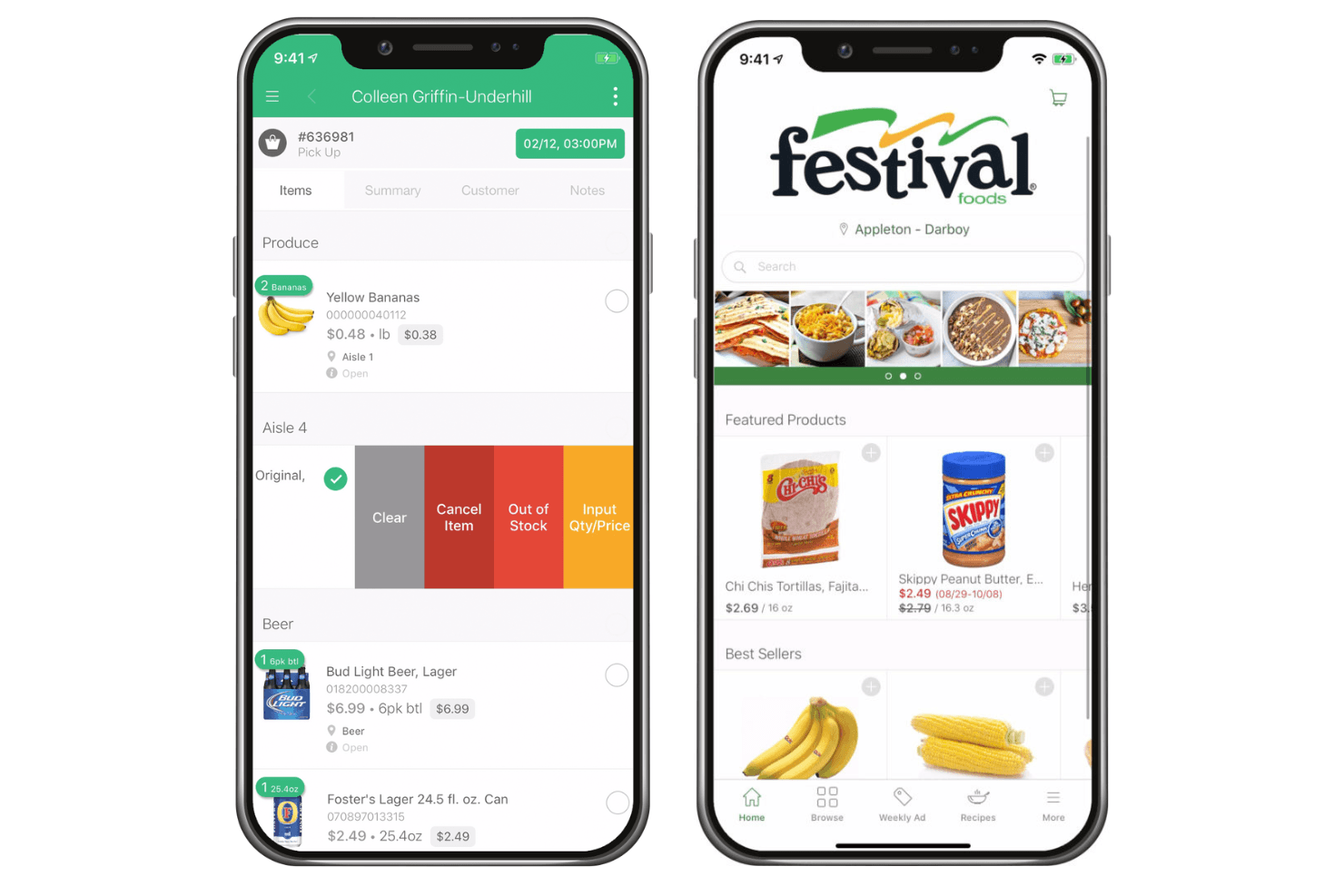
Freshop offers a dual-app interface featuring a shopper-facing grocery store app and a picker/fulfillment app with order management, item scanning, and substitution controls. Freshop (NCR Voyix) is a grocery delivery software solution built for independent grocers and supermarket chains, offering a branded online storefront, real-time inventory sync, in-store picking workflows, and integrated promotions management.
Who Is Freshop Best For?
Independent grocery retailers and regional supermarket chains seeking a grocery-focused eCommerce platform with built-in loyalty and promotion tools.
Why I Picked Freshop
I picked Freshop (NCR Voyix) as one of the best because I can set up branded digital circulars, apply targeted promotions, and integrate loyalty programs right into the online grocery storefront. This lets my team build customer engagement around in-store and online orders.
Freshop Key Features
- Branded web and mobile storefront: Launch a fully branded customer-facing site and mobile experience tailored for grocery.
- Real-time inventory sync: Connects to POS systems to update stock levels and item availability across channels.
- In-store picker app: Guides store staff through order picking with mobile scanning and substitution workflows.
- Time-slot order scheduling: Lets customers reserve delivery or pickup windows with store-managed capacity controls.
Freshop Integrations
Freshop offers an API for custom integrations.
Pros and Cons
Pros:
- Real-time inventory sync for grocery orders
- Customizable branded web and mobile storefront
- Strong digital circular and promotion management
Cons:
- Limited visibility into user satisfaction trends
- Lacks built-in last mile delivery routing
Learn more about Freshop (NCR Voyix): Best for full-service ecommerce management
- Free demo available
- Pricing upon request
Visit WebsiteCustomer Rating:4.4/5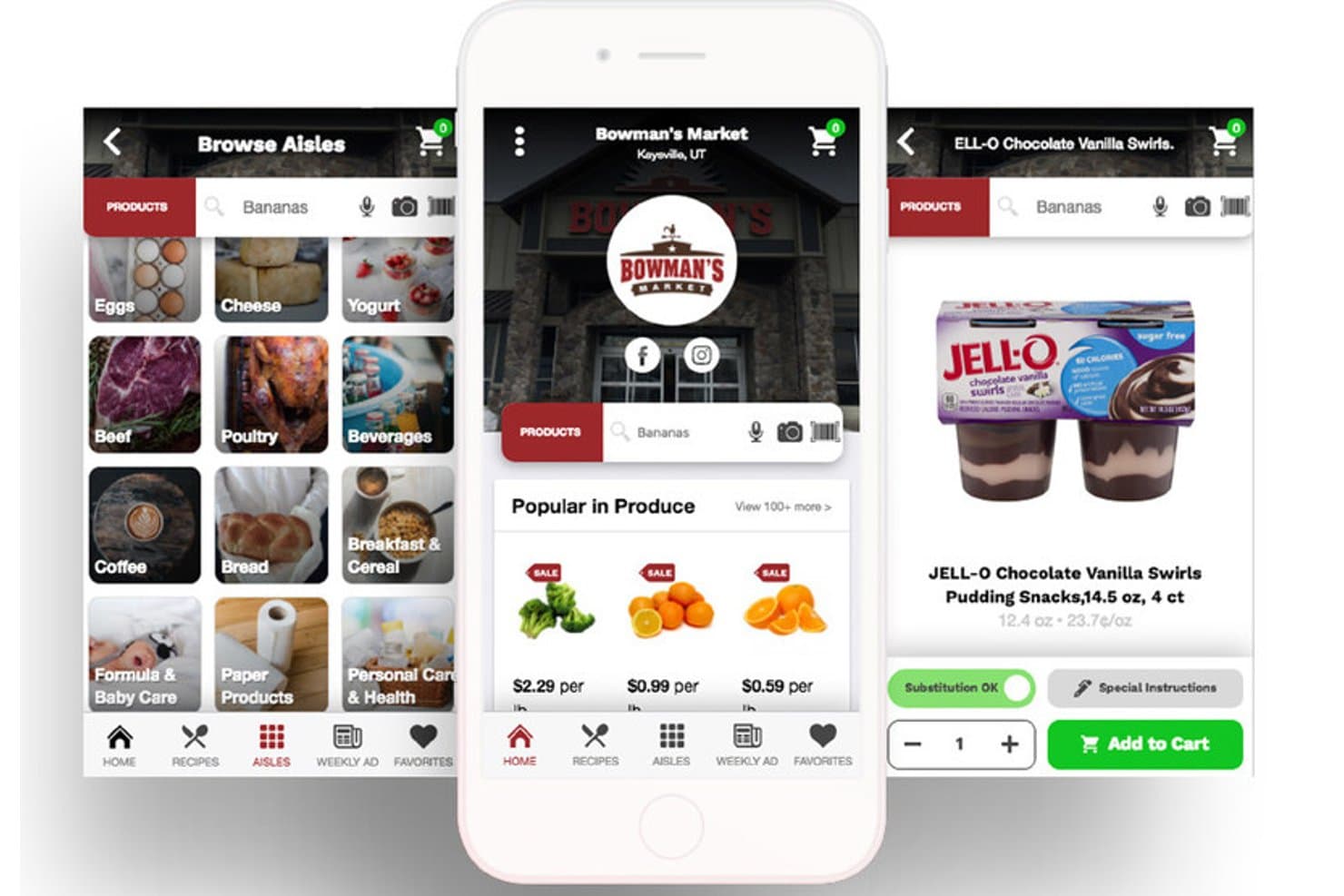
ShopHero offers a mobile grocery app with aisle browsing, store-specific product listings, sale pricing, and add-to-cart functionality. ShopHero is a grocery delivery software platform purpose-built for independent grocers and supermarkets, providing branded online storefronts, real-time inventory sync, delivery management, and mobile tools for in-store picking and customer order scheduling.
Who Is ShopHero Best For?
Independent grocers and supermarket chains that need an integrated platform for online ordering, inventory sync, in-store fulfillment, and delivery management.
Why I Picked ShopHero
I picked ShopHero as one of the best because my team gets a branded online storefront, real-time inventory sync with our POS, and specialized tools for in-store picking and delivery coordination. It truly stands out for full-service ecommerce management.
ShopHero Key Features
- Mobile picker app: Enables pickers to scan barcodes, process substitutions, and manage orders using a dedicated mobile workflow.
- Customer time-slot booking: Lets shoppers schedule delivery or pickup windows directly during checkout with store-controlled time slot management.
- Multi-channel catalog management: Supports unified product catalog management across web and mobile, tailored for groceries.
- Integrated payment processing: Offers multiple payment methods including digital wallets and SNAP/EBT support for eligible stores.
ShopHero Integrations
ShopHero offers an API for custom integrations.
Pros and Cons
Pros:
- Shopper mobile app for in-store picking
- Automated order communication with staff
- Branded customer ordering portal included
Cons:
- Initial setup requires ShopHero team assistance
- Delivery tracking features are basic
Learn more about ShopHero: Best for automated route optimization
- Free plan + free trial available
- From $150/month
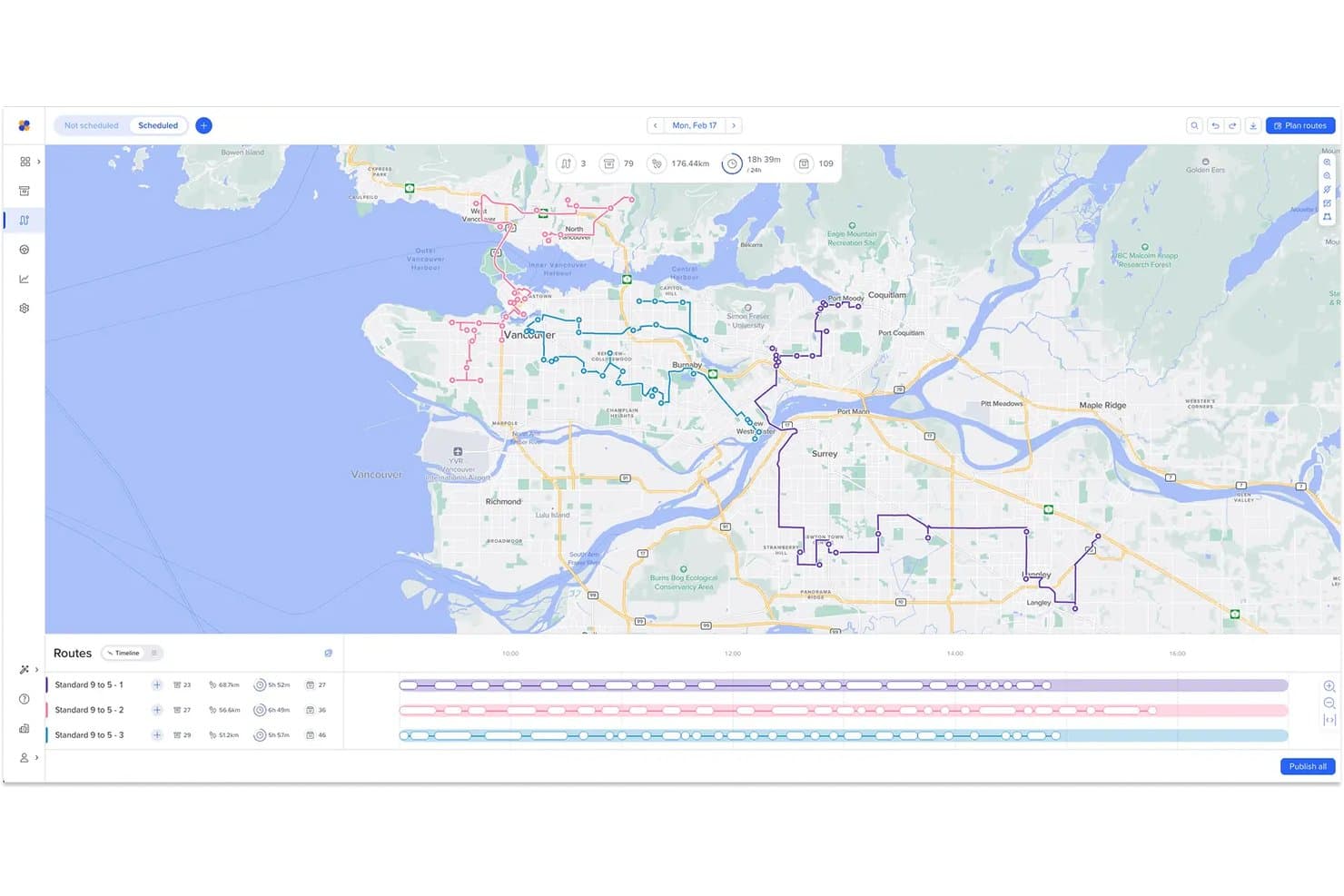
Routific offers a multi-route planning map view with timeline scheduling, showing 3 optimized delivery routes across the Vancouver metro area with stop counts, distances, and durations. Routific is a route optimization software designed for grocery delivery teams, offering tools for automated driver dispatch, delivery scheduling, and real-time route management tailored to perishable goods fulfillment.
Who Is Routific Best For?
Grocery retailers and delivery operators who need advanced route planning and automated driver scheduling for local or regional order fulfillment.
Why I Picked Routific
I picked Routific as one of the best because I rely on its automated route optimization to handle multi-stop grocery deliveries with challenging windows, letting my team assign routes, adjust schedules in real time, and track drivers from a single dashboard.
Routific Key Features
- Driver mobile app: Drivers can receive live route updates and mark deliveries complete from their mobile device.
- Proof of delivery capture: Collect photos and digital signatures directly within the driver app.
- Automated customer notifications: Send SMS or email alerts to customers with real-time ETAs and delivery confirmations.
- API access: Integrate Routific with ordering or dispatch systems to automate route creation and delivery management.
Routific Integrations
Native integrations are not clearly documented.
Pros and Cons
Pros:
- Offers a driver mobile app for live updates
- Handles dynamic delivery time windows
- Optimizes routes for perishable deliveries
Cons:
- Lacks native grocery POS integrations
- No built-in inventory or order management
Learn more about Routific: Best for advanced delivery route planning
- Free demo available
- From $299/month
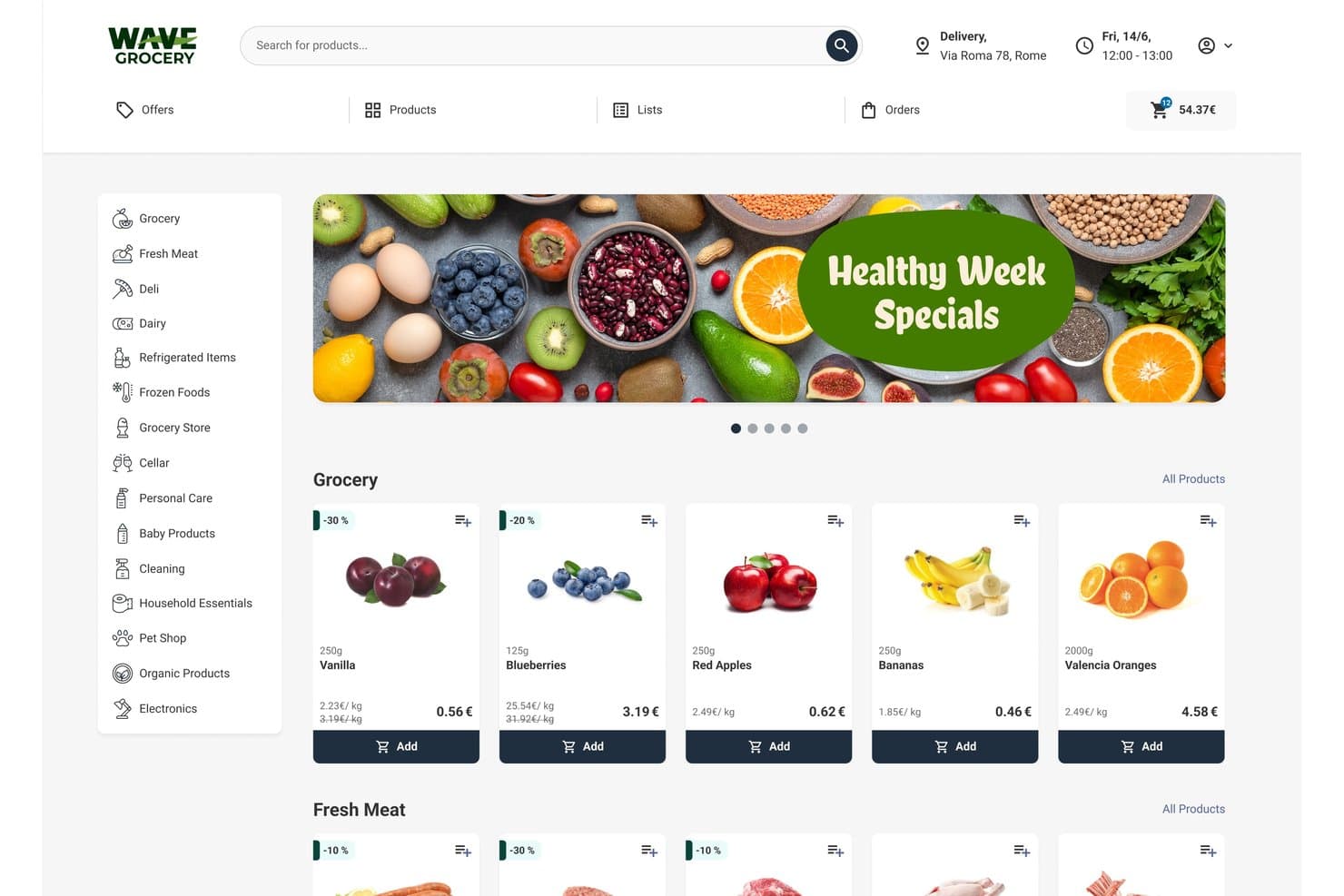
Wave Grocery offers a clean homepage interface with categorized grocery browsing, promotional banners, and product cards featuring discounts and add-to-cart functionality. Wave Grocery is a specialized grocery delivery software platform with modular tools for online storefronts, live inventory sync, in-store picking, and AI-driven driver and route management purpose-built for grocers and supermarket retailers.
Who Is Wave Grocery Best For?
Grocery retailers and supermarket chains that need specialized tools for coordinating multi-store delivery operations and managing time-sensitive order fulfillment.
Why I Picked Wave Grocery
I picked Wave Grocery as one of the best because I rely on its advanced delivery route planning. My team can optimize multi-stop, time-sensitive routes using its AI-powered scheduling tools and manage cold-chain delivery needs for perishables.
Wave Grocery Key Features
- Mobile picker app: Enables in-store pickers to scan items, handle substitutions, and manage batch orders.
- Real-time inventory sync: Integrates with grocery POS systems to update online product availability as stock changes in-store.
- Web and mobile storefronts: Offers customers a branded online shopping experience tailored for grocery catalogs and variable weights.
- Customer time-slot booking: Lets shoppers select delivery or pickup windows with built-in capacity and scheduling controls.
Wave Grocery Integrations
Wave Grocery offers native integrations with SAP, Microsoft Dynamics, Lightspeed, Nash, and Stripe. An API is available for custom integrations.
Pros and Cons
Pros:
- Supports perishable and variable-weight inventory
- Built-in picker app with substitution management
- Advanced driver and route optimization workflow
Cons:
- Fewer public enterprise customer reviews
- Limited US-specific payments functionality
Learn more about Wave Grocery:
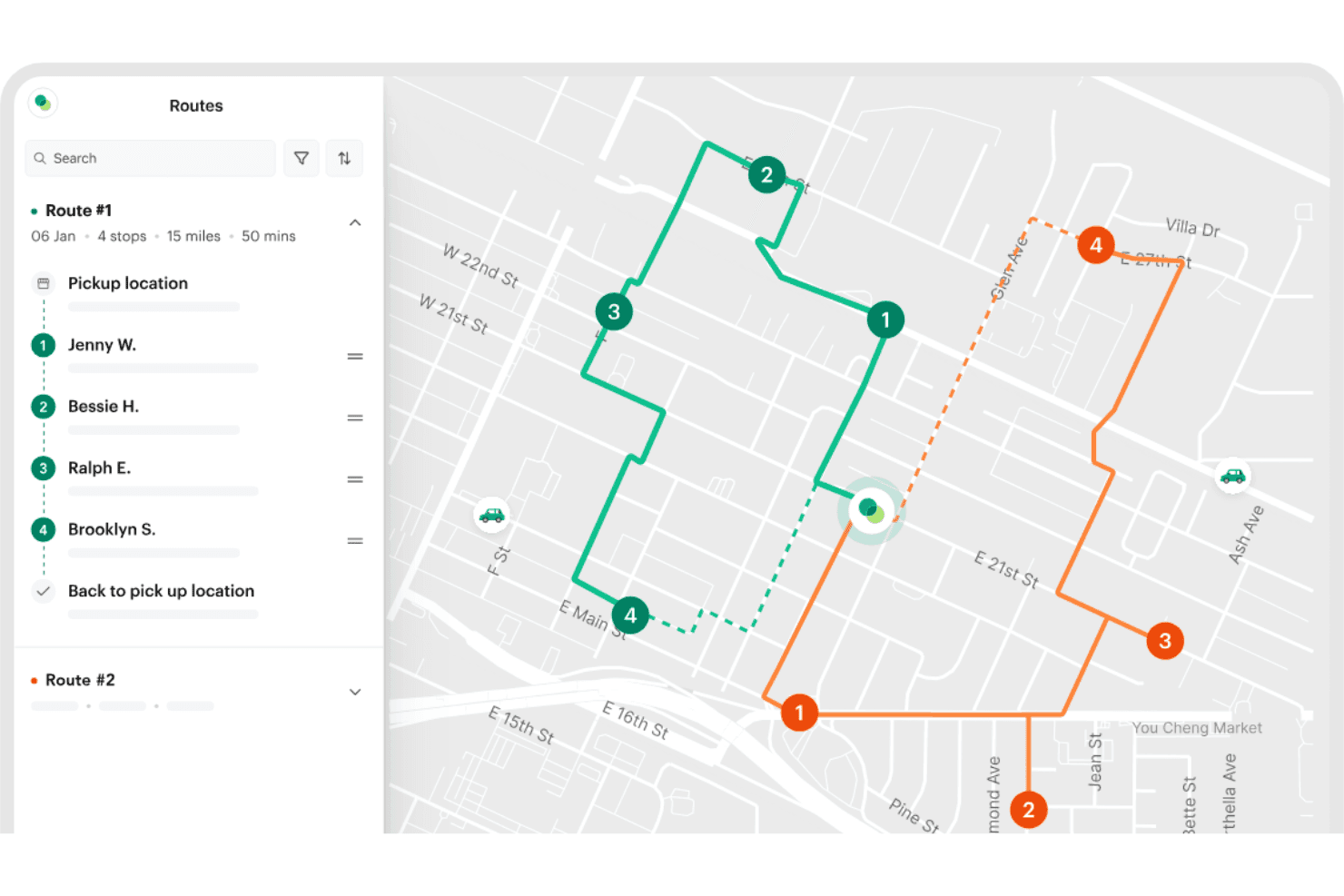
Shipday offers route optimization with multi-stop mapping and an AI-powered reviews dashboard to streamline grocery delivery operations. Shipday is a delivery management platform for grocery retailers that offers real-time driver tracking, automated dispatch, route optimization, and flexible integration with leading POS and online storefront systems.
Who Is Shipday Best For?
Small to mid-sized grocery businesses and retailers that need real-time delivery coordination with easy integration to online ordering or POS platforms.
Why I Picked Shipday
I picked Shipday as one of the best because I rely on its real-time driver tracking and live alerts to monitor every grocery delivery. My team uses the branded order tracking links and automated notifications to keep customers informed throughout the route.
Shipday Key Features
- Route optimization: Calculates the most efficient multi-stop delivery routes for grocery orders.
- Integrated order management: Consolidates orders from connected storefronts and POS systems in a single dashboard.
- Driver mobile app: Provides drivers with pickup details, navigation, and proof of delivery tools.
- Third-party delivery enablement: Lets you assign orders automatically to providers like DoorDash or Uber when needed.
Shipday Integrations
Shipday offers native integrations with Shopify, Square, Wix, Lightspeed, Toast, Grubhub, DoorDash, and Uber. An API is available for custom integrations.
Pros and Cons
Pros:
- Multi-stop route optimization for delivery teams
- Automated customer SMS notifications
- Real-time driver tracking for every order
Cons:
- Lacks native inventory or product management
- No built-in grocery picking workflows
Learn more about Shipday: Best for rapid online store launches
- Free demo available
- Pricing upon request
Visit WebsiteCustomer Rating:4/5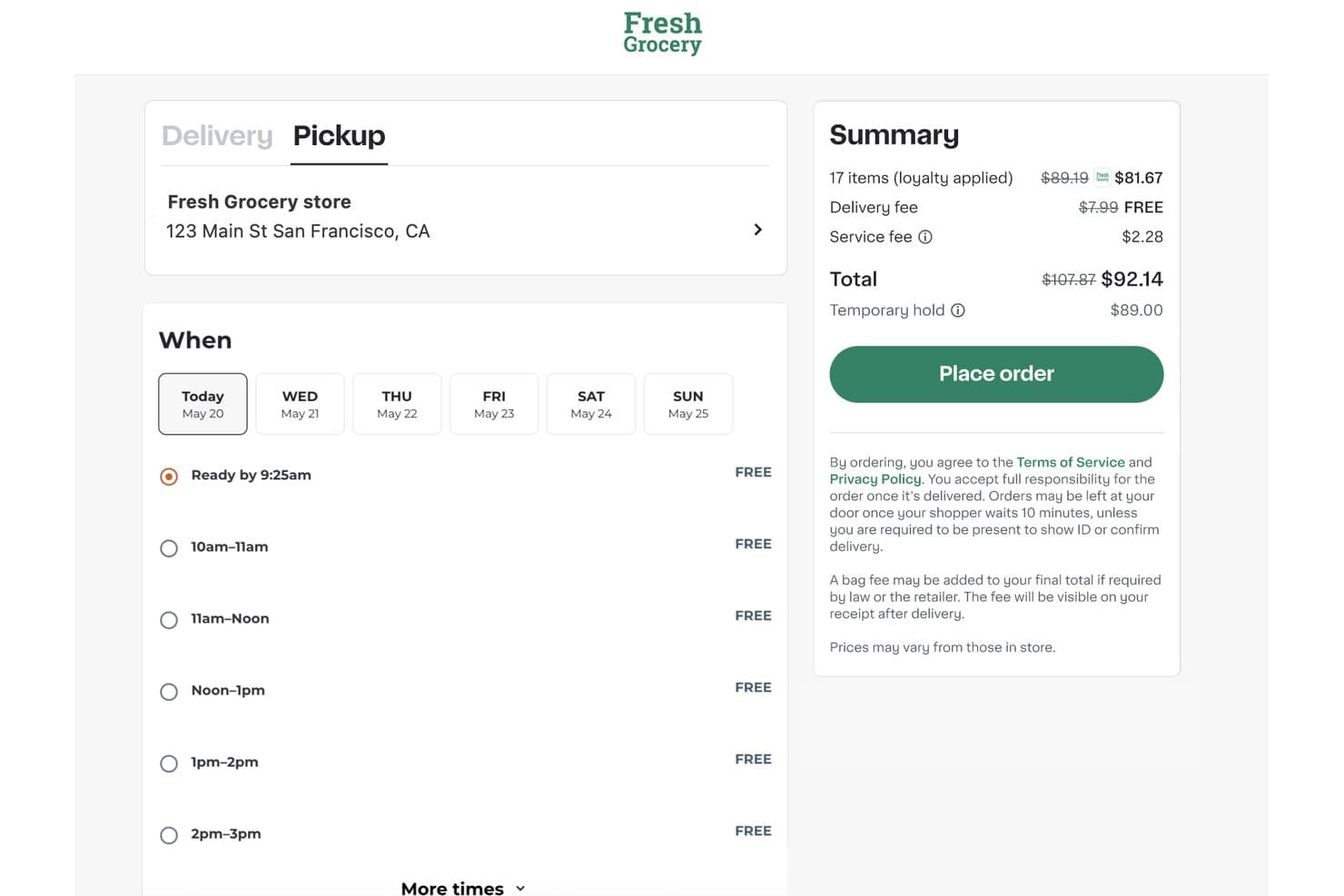
Instacart Storefront offers a pickup scheduling interface with order summary, loyalty pricing, and free delivery at checkout. Instacart Storefront is a grocery delivery software platform designed for retailers that need a branded customer ordering experience, real-time inventory sync, POS integrations, and tools for in-store picking and delivery management.
Who Is Instacart Storefront Best For?
Grocers and supermarket chains looking to launch or upgrade digital ordering and delivery with a unified, branded e-commerce platform.
Why I Picked Instacart Storefront
I picked Instacart Storefront as one of the best because I can launch a fully branded, enterprise-grade grocery storefront quickly, complete with real-time inventory sync and in-store picking using intuitive mobile tools.
Instacart Storefront Key Features
- Customizable product catalogs: Organize grocery SKUs by category, brand, and dietary preferences for precise shopper discovery.
- Integrated retail media platform: Manage sponsored product ads and promotions directly in the storefront.
- Scheduled delivery slot management: Allow customers to reserve specific pickup or delivery times based on real-time store capacity.
- POS and loyalty integrations: Connect with major grocery POS systems and digital loyalty platforms for unified transaction processing.
Instacart Storefront Integrations
Instacart Storefront offers native integrations with ECRS, RORC, Truno, Ibotta, AppCard, BRdata, NCR Loyalty Pro, Braze, Airship, Google Analytics, Epsilon, WordPress, Bazaarvoice, Salesforce, Gigya, Azure, and Okta.
Pros and Cons
Pros:
- Real-time item availability updates and substitutions
- Advanced retail media and personalization tools
- Branded storefronts for each grocery banner
Cons:
- Feature depth may exceed needs for small shops
- Limited review transparency on SaaS product
Learn more about Instacart Storefront: Best for optimizing last-mile delivery operations
- Free trial available
- From $619/month
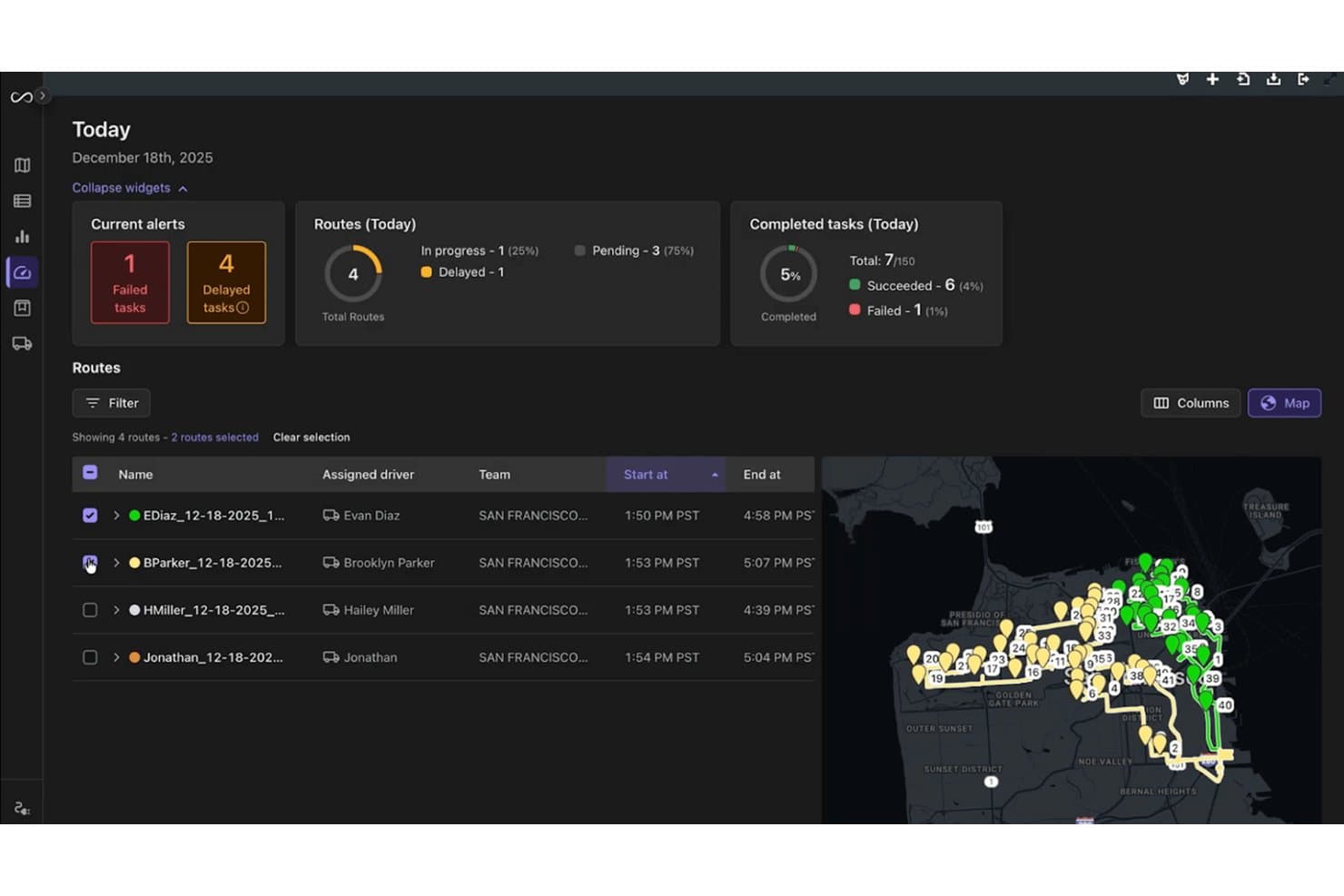
Onfleet offers a real-time command center dashboard displaying route statuses, driver assignments, task alerts, and a live map view for managing grocery deliveries. Onfleet is a last-mile delivery management software designed for grocery retailers who need advanced driver dispatch, real-time route optimization, customer notifications, and proof of delivery workflows.
Who Is Onfleet Best For?
Grocery delivery teams and operations managers at independent stores or multi-location retailers who need dedicated last-mile logistics software.
Why I Picked Onfleet
I’ve included Onfleet in my top picks because I rely on its AI-powered route optimization, real-time driver tracking, and customer notification tools to keep grocery deliveries on time and efficient in busy urban markets.
Onfleet Key Features
- Proof of delivery: Stores photos, signatures, and barcodes for every completed order.
- Age verification workflow: Enables drivers to verify customer age upon delivery for regulated items.
- Automatic driver assignment: Assigns drivers to tasks based on zones, capacity, and schedule settings.
- Analytics dashboard: Displays key metrics on delivery volume, service times, and on-time rates.
Onfleet Integrations
Onfleet offers native integrations with Shopify, Square, and Zapier. An API is available for custom integrations.
Pros and Cons
Pros:
- Supports customer delivery time windows
- Photo and signature proof of delivery
- Accurate real-time tracking
Cons:
- Lacks native grocery POS integration
- No inventory or order picking features
Learn more about Onfleet: Best for custom omnichannel shopping experiences
- Free demo available
- Pricing upon request
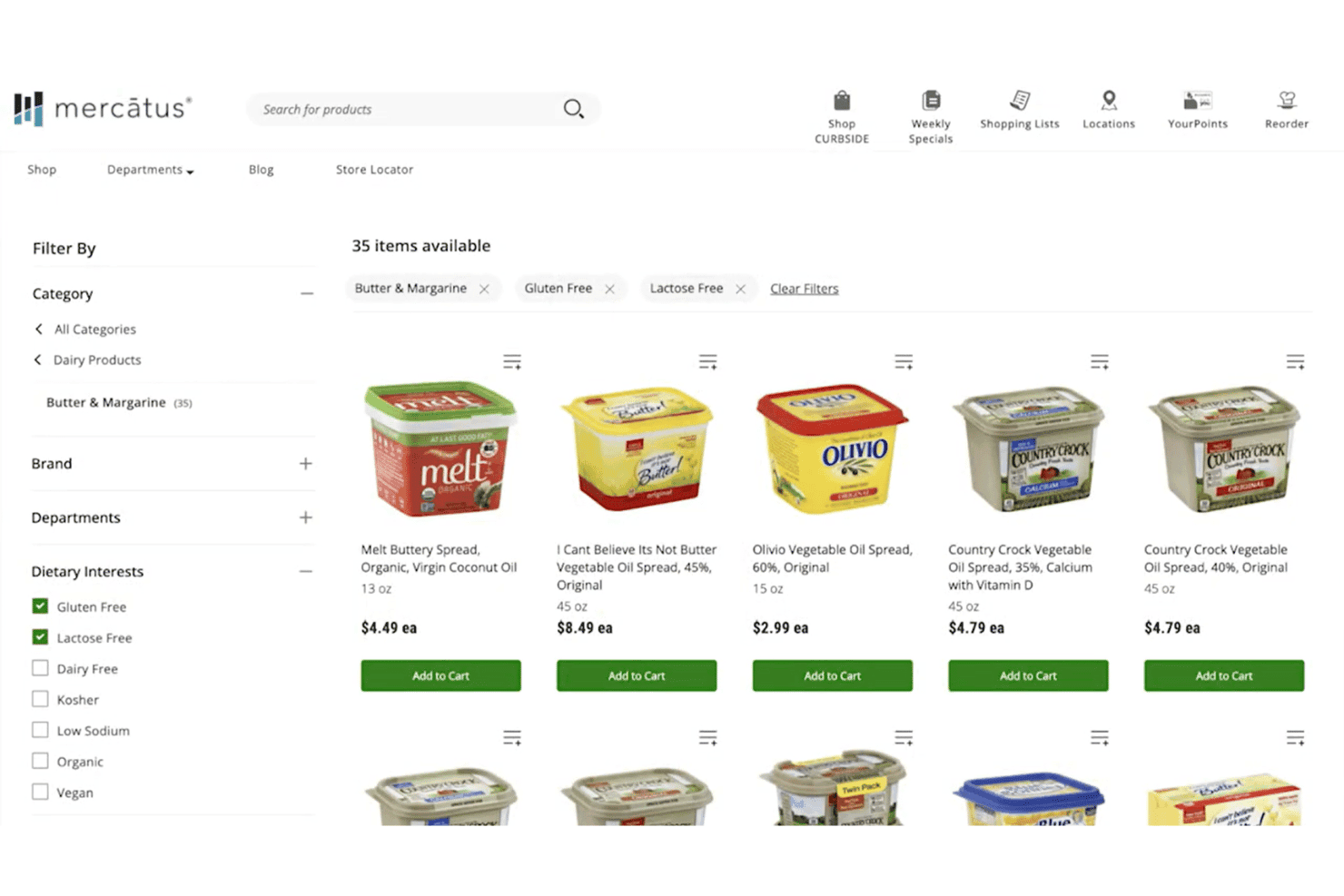
Mercatus offers a grocery e-commerce platform with dietary filters, product listings, and cart functionality for butter and margarine products. Mercatus is a grocery delivery software platform built for retailers who need a customizable online storefront, real-time inventory sync, in-store picking workflows, and integrations with POS, last-mile fulfillment, and payment systems.
Who Is Mercatus Best For?
Mercatus is a strong fit for mid-sized and enterprise grocery retailers seeking a customizable online and in-store shopping experience.
Why I Picked Mercatus
I picked Mercatus as one of the best because I can create customized web and mobile storefronts with grocery-specific merchandising, and my team can manage real-time inventory while supporting branded omnichannel shopping experiences.
Mercatus Key Features
- Mobile picking app: Supports barcode scanning, multi-order batch picking, and weighing for in-store fulfillment.
- Customer-approved substitutions: Lets customers review and approve replacement items in real time during picking.
- Time-slot scheduling: Offers capacity-managed pickup and delivery time-slot booking in the checkout flow.
- Third-party fulfillment integration: Connects with providers like Instacart and DoorDash for last-mile delivery coordination.
Mercatus Integrations
Mercatus offers native integrations with Instacart, DoorDash, and Salsify.
Pros and Cons
Pros:
- Built for complex grocery product catalogs
- Brandable web and mobile storefronts
- Advanced in-store picking with substitutions
Cons:
- Route optimization depends on third-party services
- Limited public user reviews available
Learn more about Mercatus: Best for multicultural grocery retailers
- Free demo available
- Pricing upon request
Visit WebsiteCustomer Rating:4.8/5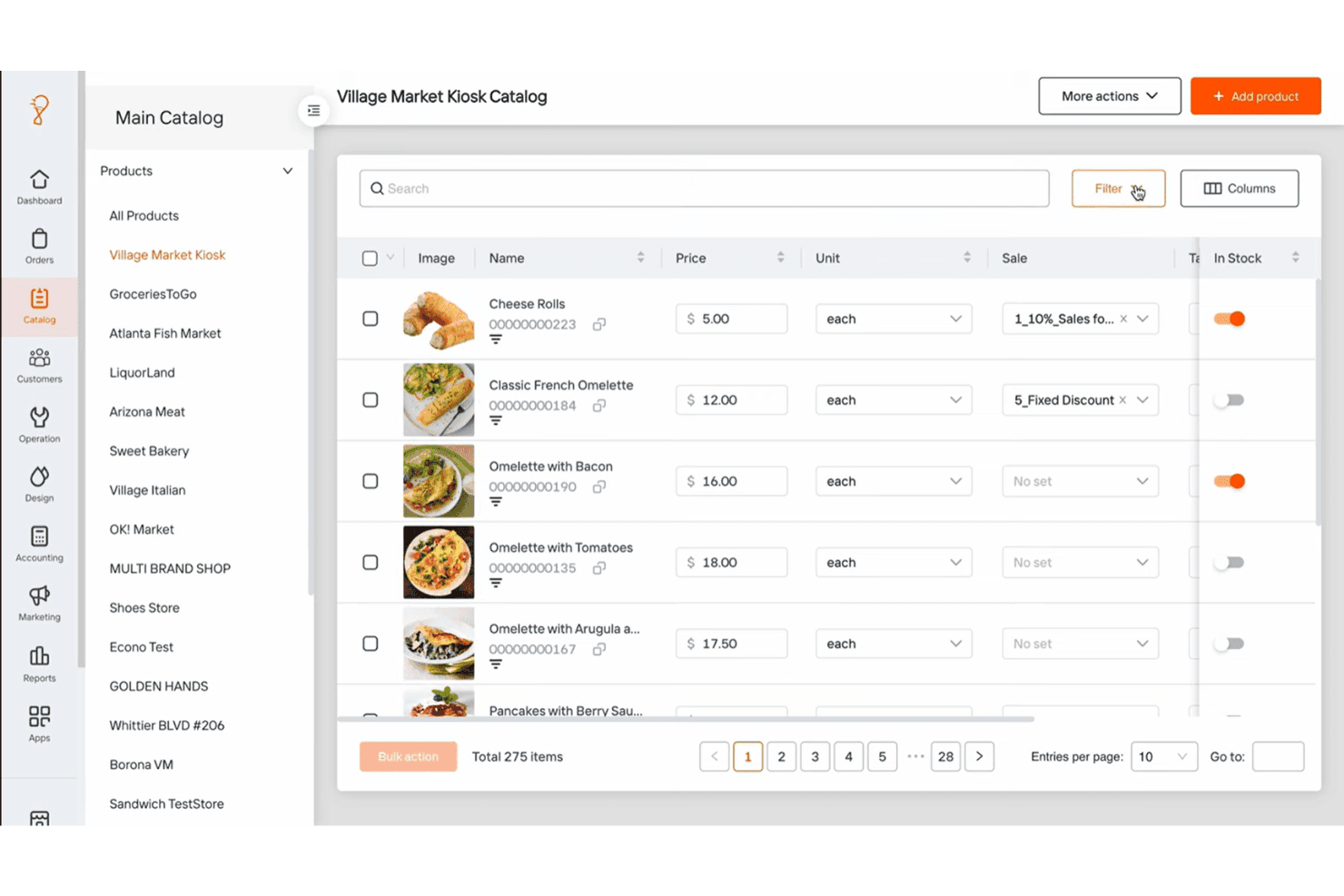
Local Express offers AI-powered inventory management that estimates stock levels and triggers replenishment alerts alongside a multi-vendor grocery catalog interface. Local Express is a grocery delivery software platform tailored for independent and multicultural grocers, offering branded online storefronts, real-time inventory sync, integrated POS and payment options, time-slot scheduling, and in-store picking tools.
Who Is Local Express Best For?
Local Express is a strong fit for independent grocery stores and ethnic supermarkets looking to offer online ordering and local delivery.
Why I Picked Local Express
I picked Local Express as one of the best because I can launch grocery storefronts that handle international foods and languages. I use its supermarket-style search, ethnic SKU support, and multilingual setup for diverse customer bases.
Local Express Key Features
- Real-time inventory synchronization: Keep online and in-store stock levels updated through direct POS integration.
- Integrated delivery route planner: Assign delivery drivers and optimize routes with the built-in dispatcher dashboard.
- Mobile picker app: Store employees use a dedicated app for picking, scanning, and packing grocery orders.
- Customizable time-slot scheduling: Let customers choose available delivery or pickup windows controlled by in-store capacity settings.
Local Express Integrations
Local Express offers native integrations with Stripe, Worldpay, Square, PayPal, Microsoft Dynamics, Google Analytics, LEPay, First Data, Postmates, and Uber Direct. An API is available for custom integrations.
Pros and Cons
Pros:
- In-store picking app for order assembly
- Specialty catalog tools for international groceries
- Multilingual online storefront and admin dashboard
Cons:
- Marketplace advertising options are minimal
- Limited smart routing for large fleets
Learn more about Local Express:
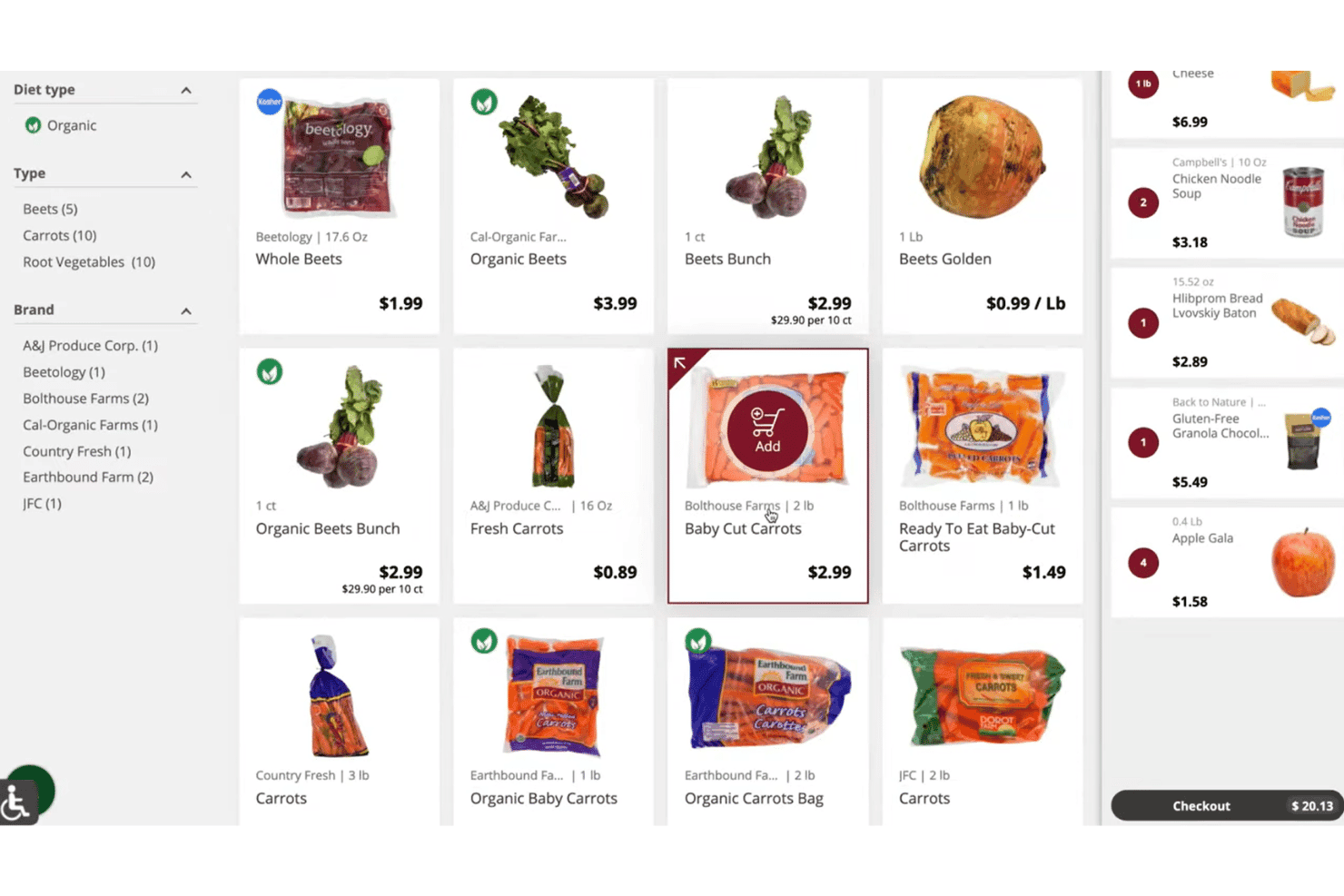
stor.ai offers a shopping cart interface with product listings, unit prices, coupon input, and promotional offers for grocery delivery orders. stor.ai is a grocery delivery software platform that provides an end-to-end online storefront, real-time inventory integration, optimized order picking, delivery routing, and in-store POS connectivity tailored for supermarkets and independent grocers.
Who Is stor.ai Best For?
Independent grocers and supermarket chains looking for an AI-powered grocery delivery and e-commerce platform.
Why I Picked stor.ai
I picked stor.ai as one of the best because I can build custom-branded online grocery experiences and use AI-powered merchandising for dynamic, personalized shopping journeys. I also get advanced inventory syncing and automated substitution support.
stor.ai Key Features
- Mobile picking app: Assigns orders to store staff and guides them through item picking with scanning and verification.
- Time slot scheduling: Lets customers book delivery or pickup windows based on real-time store capacity.
- Route optimization: Plans and assigns efficient delivery routes for drivers handling perishable grocery orders.
- POS integration: Connects directly with leading grocery POS systems to sync orders and inventory across channels.
stor.ai Integrations
stor.ai provides an API for custom integrations.
Pros and Cons
Pros:
- Omnichannel order fulfillment workflow options
- Built-in multi-language support for shoppers
- AI-driven product substitution suggestions
Cons:
- White-label setup process may require onboarding
- Limited public customer feedback available
Learn more about stor.ai:
Inne oprogramowanie do dostaw artykułów spożywczych
Oto kilka dodatkowych opcji oprogramowania do dostaw artykułów spożywczych, które nie trafiły na moją listę rekomendowanych rozwiązań, ale nadal warto się z nimi zapoznać:
- 11My Cloud GrocerBest for turnkey grocery website solutions
- 12TookanBest for multi-business delivery management
- 13BlinkBest for branded mobile ordering apps
- 14GrowcerBest for fully customizable online store platforms
- 15NavoriBest for integrated inventory and order workflows
- 16RosieBest for independent grocery retailer integrations
- 17eGrowceryBest for shopper loyalty program management
- 18HyperzodBest for white-label delivery dispatch solutions
- 19LocusBest for enterprise-grade logistics automation
How I Evaluate Grocery Delivery Software
I split my evaluation into two layers: the baseline functionality a tool needs to qualify and the differentiators that matter for grocery-specific operations like picking workflows and route planning.
Core Functionality (Table Stakes For This List)
When I'm selecting tools for my list, I rank each one on a scale from 0 (does not offer the functionality) to 5 (excels in this area) for each core functionality listed below. Then, I calculate the tool's total score into a percentage. Each tool needs to achieve a minimum total score of 65% to be considered for inclusion.
- Online grocery storefront: I look for a customer-facing web or mobile ordering interface built around grocery-specific needs like weight-based pricing, category browsing, and product search across thousands of SKUs.
- Real-time inventory sync: Stock accuracy matters when you're selling perishables. I evaluate how each platform syncs inventory between physical shelves, POS systems, and the online catalog to prevent overselling.
- Delivery route optimization: I check whether a tool offers route planning that accounts for multi-stop deliveries, time-sensitive windows, and driver dispatch—especially for orders that include frozen or refrigerated items.
- Time-slot and order scheduling: Customers expect to pick their delivery or pickup window. I look at how each platform handles slot availability, capacity limits per store, and scheduling flexibility.
- In-store picking and substitution: A good picker workflow saves time and reduces errors. I evaluate mobile picking apps, barcode scanning support, and how each tool handles customer-approved substitutions for out-of-stock items.
- POS and payment integration: I check for connections to grocery POS systems and support for relevant payment methods, including digital wallets and program-based payments like SNAP/EBT where applicable.
Once I have a list of tools that meet the criteria, I consider what sets each platform apart.
Differentiating Factors (What Sets Vendors Apart)
Here's how I compare and contrast different vendors:
Standout Features
Real-time driver tracking is a big differentiator. I look for GPS-based visibility that lets customers and dispatchers monitor ETAs and route deviations as they happen. Cold chain monitoring also separates strong platforms from basic ones—temperature logging during picking and delivery helps you stay compliant when handling perishables. Substitution management is worth evaluating closely too. Out-of-stock items are a fact of life in grocery. Tools that let pickers suggest alternatives while customers approve swaps in real time cut down on order issues.
Beyond Features
Business model fit matters a lot here. I evaluate whether a platform supports your specific setup—a single independent store, a multi-location chain, or a dark store fulfillment model. Integration depth is another key factor. Your grocery tech stack likely includes a POS, ERP, and possibly third-party delivery partners like DoorDash Drive or Uber Direct, so I check for native connectors rather than workarounds. Pricing structure also deserves attention, since hidden costs around per-order fees, SMS alerts, and additional store licenses add up fast.
Jak wybrać oprogramowanie do dostaw artykułów spożywczych
Podczas poszukiwania rozwiązania do rozpoczęcia działalności w zakresie dostaw artykułów spożywczych łatwo zagubić się w długich listach funkcji i złożonych strukturach cenowych. Aby pomóc Ci zachować koncentrację podczas procesu wyboru oprogramowania dopasowanego do Twoich potrzeb, przygotowaliśmy listę czynników, o których warto pamiętać:
| Czynnik | Na co zwrócić uwagę |
| Skalowalność | Czy platforma obsłuży większą liczbę lokalizacji, użytkowników lub zamówień wraz z rozwojem firmy? |
| Integracje | Czy narzędzie łatwo połączy się z istniejącym systemem POS, ERP lub partnerami dostaw przy minimalnych trudnościach? |
| Możliwość dostosowania | Czy możesz dostosować przepływy pracy, elementy marki i punkty kontaktu z klientem do potrzeb oraz tożsamości swojej firmy? |
| Łatwość obsługi | Czy pracownicy sklepów, osoby kompletujące zamówienia i klienci rzeczywiście przyjmą system? Przetestuj go w rzeczywistych procesach pracy zespołu. |
| Wdrożenie i rozpoczęcie pracy | Jakiego wsparcia i szkolenia potrzeba? Zapytaj o materiały szkoleniowe i typowy harmonogram wdrożenia. |
| Koszt | Uwzględnij opłaty za konfigurację, miesięczną subskrypcję, każde zamówienie i opłaty ukryte — poznaj całkowity koszt posiadania. |
| Zabezpieczenia | Czy dane płatnicze, dane osobowe klientów (PII) i szczegóły zamówień są chronione zgodnie z aktualnymi standardami zgodności? |
| Dostępność wsparcia | Czy możesz łatwo skontaktować się z pomocą techniczną, gdy problem wpływa na realizację bieżących zamówień lub dostaw? Sprawdź gwarantowany czas reakcji. |
Czym jest oprogramowanie do dostaw artykułów spożywczych?
Oprogramowanie do dostaw artykułów spożywczych to platforma cyfrowa, która zarządza zamówieniami internetowymi, synchronizacją zapasów w czasie rzeczywistym i logistyką dostaw dla sprzedawców artykułów spożywczych. Systemy te upraszczają procesy — od konfiguracji sklepu internetowego po planowanie tras i harmonogramowanie dostaw dla klientów — ułatwiając zespołowi dokładną realizację zamówień i śledzenie dostaw. Odpowiednie narzędzie łączy wszystkie działania związane ze sprzedażą artykułów spożywczych, niezależnie od tego, czy zarządzasz pojedynczym sklepem, siecią sklepów, czy prowadzisz dedykowany sklep magazynowy.
Funkcje oprogramowania do dostaw artykułów spożywczych
Wybierając oprogramowanie do dostaw artykułów spożywczych, zwróć uwagę na następujące kluczowe funkcje:
- Sklep internetowy: Umożliwia klientom przeglądanie, wyszukiwanie i zamawianie artykułów spożywczych za pomocą oznaczonej marką aplikacji internetowej lub mobilnej do dostaw, dostosowanej do produktów spożywczych.
- Synchronizacja stanów magazynowych w czasie rzeczywistym: Automatycznie aktualizuje dostępność produktów w kanałach sprzedaży stacjonarnej i internetowej, pomagając zapobiegać nadmiernej sprzedaży oraz frustracji związanej z brakiem produktów.
- Planowanie tras dostaw: Optymalizuje trasy kierowców, uwzględnia przedziały czasowe dostaw i zarządza wieloma zamówieniami, zwiększając efektywność dostaw.
- Planowanie przedziałów czasowych: Umożliwia klientom wybór preferowanych przedziałów czasowych dostawy lub odbioru, a także kontrolowanie przepustowości w celu zarządzania realizacją zamówień w okresach wzmożonego ruchu.
- Aplikacja do kompletowania zamówień w sklepie: Wyposaża pracowników kompletujących zamówienia w mobilne narzędzia do skanowania kodów kreskowych, aktualizowania zamówień w czasie rzeczywistym i zarządzania zamiennikami, upraszczając realizację zamówień.
- Integracja z systemem POS i płatnościami: Obsługuje najważniejsze systemy POS używane w sklepach spożywczych i oferuje elastyczne opcje płatności — w tym karty kredytowe, portfele cyfrowe oraz świadczenia rządowe, jeśli są dozwolone.
- Śledzenie zamówień przez klientów: Zapewnia aktualizacje w czasie rzeczywistym, dzięki czemu klienci mogą śledzić status zamówienia, sprawdzać dokładny przewidywany czas dostawy i wiedzieć, kiedy dostawa jest już w drodze.
- Obsługa zamienników: Zapewnia pracownikom i klientom elastyczną kontrolę nad zamiennikami produktów niedostępnych w magazynie, umożliwiając cyfrowe zarządzanie akceptacjami lub preferencjami.
- Dostosowanie do użycia pod własną marką: Umożliwia dostosowanie marki, komunikatów i projektu aplikacji, aby klienci mieli spójne i rozpoznawalne doświadczenie zakupowe.
- Kontrole zgodności i bezpieczeństwa: Zapewnia spełnienie standardów dotyczących przetwarzania płatności, prywatności danych i dostępności, chroniąc firmę oraz informacje klientów.
Typowe funkcje sztucznej inteligencji w oprogramowaniu do dostaw artykułów spożywczych
Oprócz wymienionych powyżej standardowych funkcji oprogramowania do dostaw artykułów spożywczych wiele z tych rozwiązań wykorzystuje sztuczną inteligencję w funkcjach takich jak:
- Dynamiczne prognozowanie popytu: Wykorzystuje sztuczną inteligencję do analizowania wzorców sprzedaży, pogody i lokalnych wydarzeń w celu przewidywania przyszłego popytu oraz optymalizowania poziomów zapasów dla każdego sklepu.
- Automatyczna optymalizacja tras: Nieustannie przelicza trasy dostaw w czasie rzeczywistym na podstawie natężenia ruchu, pilności zamówień i dostępności kierowców, aby skrócić czas dostaw i zmniejszyć koszty paliwa.
- Spersonalizowane rekomendacje produktów: Wykorzystuje sztuczną inteligencję do sugerowania klientom odpowiednich produktów podczas zakupów spożywczych i finalizowania zamówienia, zwiększając wartość koszyka oraz satysfakcję klientów.
- Inteligentne sugestie zamienników: Analizuje preferencje klientów i historię zakupów, aby rekomendować najlepiej dopasowane zamienniki niedostępnych produktów.
- Wykrywanie i zapobieganie oszustwom: Wykorzystuje uczenie maszynowe do identyfikowania nietypowych wzorców zamówień lub zachowań związanych z płatnościami, pomagając ograniczać obciążenia zwrotne i zapobiegać stratom.
Korzyści z oprogramowania do dostaw artykułów spożywczych
Wdrożenie oprogramowania do dostaw artykułów spożywczych przynosi wiele korzyści Twojemu zespołowi i firmie. Oto kilka z nich:
- Sprawniejsza realizacja zamówień: Zautomatyzowane procesy kompletowania zamówień, synchronizacja stanów magazynowych i zamienniki zatwierdzane przez klientów pomagają zespołowi realizować zamówienia szybciej i dokładniej.
- Większa satysfakcja klientów: Śledzenie zamówień w czasie rzeczywistym, planowanie przedziałów czasowych i spersonalizowane rekomendacje zapewniają wygodne i angażujące doświadczenie zakupowe.
- Mniej błędów operacyjnych: Funkcje takie jak skanowanie kodów kreskowych, optymalizacja tras oparta na sztucznej inteligencji i wykrywanie oszustw pomagają ograniczyć pomyłki oraz problemy z zamówieniami.
- Lepsza kontrola zapasów: Synchronizacja w czasie rzeczywistym i prognozowanie popytu za pomocą sztucznej inteligencji ograniczają nadmierną sprzedaż, psucie się produktów i przypadki braku produktów w magazynie.
- Większa lojalność wobec marki: Sklepy internetowe i aplikacje oznaczone własną marką zapewniają spójne doświadczenie klienta, budując zaufanie i rozpoznawalność wraz z rozwojem firmy.
- Rozwój firmy na dużą skalę: Integracje i elastyczne procesy pracy pozwalają rozwijać działalność z jednego sklepu lub regionu do wielu, bez konieczności wdrażania nowego środowiska technologicznego.
- Uproszczona zgodność i bezpieczeństwo: Wbudowane mechanizmy kontroli płatności, prywatności danych i dostępności pomagają zespołowi przestrzegać aktualnych przepisów i standardów.
Koszty i ceny oprogramowania do dostaw artykułów spożywczych
Wybór oprogramowania do dostaw artykułów spożywczych wymaga zrozumienia różnych dostępnych modeli cenowych i planów. Koszty różnią się w zależności od funkcji, wielkości zespołu, dodatków i innych czynników. Poniższa tabela przedstawia typowe plany, ich średnie ceny oraz standardowe funkcje uwzględniane w rozwiązaniach programowych do dostaw artykułów spożywczych:
Tabela porównawcza planów oprogramowania do dostaw artykułów spożywczych
| Rodzaj planu | Średnia cena | Typowe funkcje |
|---|---|---|
| Rodzaj planuPlan bezpłatny | Średnia cena$0 | Typowe funkcjePodstawowa konfiguracja sklepu, ograniczona liczba SKU, obsługa jednej lokalizacji, proste śledzenie zamówień i pomoc za pośrednictwem poczty elektronicznej. |
| Rodzaj planuPlan osobisty | Średnia cena$20-$60/miesiąc | Typowe funkcjeDostęp z wielu urządzeń, rozszerzona liczba SKU, synchronizacja zapasów, planowanie przedziałów czasowych, sklep pod własną marką i pomoc na czacie. |
| Rodzaj planuPlan biznesowy | Średnia cena$100-$350/miesiąc | Typowe funkcjeWiele lokalizacji, śledzenie dostaw w czasie rzeczywistym, optymalizacja tras, integracje płatności, sprzedaż pod własną marką i interfejsy API. |
| Rodzaj planuPlan dla przedsiębiorstw | Średnia cena$500-$2,000/miesiąc | Typowe funkcjeZaawansowane integracje, niestandardowe przepływy pracy, priorytetowa pomoc, zarządzanie zgodnością, monitorowanie łańcucha chłodniczego i umowy SLA. |
Najczęściej zadawane pytania dotyczące oprogramowania do dostaw artykułów spożywczych
Oto odpowiedzi na niektóre często zadawane pytania dotyczące oprogramowania do dostaw artykułów spożywczych:
Czy oprogramowanie do dostaw artykułów spożywczych można zintegrować z używanymi przeze mnie systemami POS i systemami zarządzania zapasami?
Tak, większość platform oferuje integracje z popularnymi systemami POS i systemami zarządzania zapasami. Ważne jest, aby sprawdzić dostępność natywnych konektorów i obsługiwanych formatów danych, aby uniknąć ręcznych obejść oraz nieaktualnych informacji o zapasach.
Ile czasu zajmuje wdrożenie oprogramowania do dostaw artykułów spożywczych?
Czas wdrożenia różni się w zależności od dostawcy i złożoności konfiguracji, ale większość wdrożeń jest gotowa w ciągu 4–12 tygodni. Zapytaj dostawców o pomoc we wdrożeniu, opcje importowania katalogu i materiały szkoleniowe dla personelu.
Czy oprogramowanie do dostaw artykułów spożywczych jest bezpieczne i zgodne ze standardami płatności?
Tak, renomowane rozwiązania zachowują zgodność z PCI-DSS w zakresie bezpieczeństwa płatności i oferują certyfikat SOC 2 Type II, a także narzędzia zapewniające zgodność z wymogami prywatności danych i dostępności określonymi w RODO lub CCPA.
Jakie rodzaje firm mogą korzystać z oprogramowania do dostaw artykułów spożywczych?
Platformy do dostaw artykułów spożywczych są odpowiednie dla sklepów spożywczych z jedną placówką, sieci wielolokalizacyjnych, centrów mikrorealizacji zamówień, a nawet regionalnych platform handlowych. Oferują elastyczne przepływy pracy zarówno dla modeli dostaw B2C, jak i B2B.
Jak działają przepływy pracy związane z zamiennikami w oprogramowaniu do dostaw artykułów spożywczych?
Większość programów pozwala kompletującym proponować zamienniki niedostępnych produktów oraz powiadamiać klientów w czasie rzeczywistym, aby mogli je zaakceptować lub odrzucić. Dzięki temu zamówienia pozostają dokładne, a klienci są na bieżąco informowani.
Na jakie ukryte koszty należy zwrócić uwagę?
Zwróć uwagę na dodatkowe opłaty związane z powiadomieniami SMS, opłatami transakcyjnymi za każde zamówienie, dodatkowymi lokalizacjami sklepów, integracjami premium i rozszerzonym dostępem do API. Zawsze poproś o pełne zestawienie kosztów przed podpisaniem umowy.
Czy oprogramowanie do dostaw artykułów spożywczych uwzględnia lokalne przepisy i regulacje?
Tak, wiodące platformy obsługują weryfikację wieku, lokalne konfiguracje podatkowe i różne przepisy dotyczące prywatności danych, aby zapewnić zgodność z regulacjami dotyczącymi alkoholu, tytoniu i informacji o klientach.