
Recensione di Mercatus: vantaggi, svantaggi, funzionalità e prezzi spiegati



Mercatus is a grocery ecommerce platform built for grocery retailers who need to run a branded digital storefront with direct control over pricing, promotions, and customer data. I'd look at it closely if owning your shopper relationships matters to your business. Unlike Instacart, which puts your products in front of shoppers but retains that customer data for itself, Mercatus keeps the relationship, and the data, with you.
Mercatus Evaluation Summary
- Pricing upon request
- Free demo available
Perché fidarsi dei nostri consigli sui software
Il nostro team testa e recensisce software dal 2012. In quanto leader del retail noi stessi, sappiamo quanto sia difficile — e importante — scegliere il software giusto.
Per questa guida, abbiamo valutato gli strumenti attraverso test pratici e ricerche indipendenti, assegnando un punteggio agli strumenti in base ai nostri criteri di selezione.
Le nostre recensioni riflettono il nostro giudizio indipendente, non un discorso di vendita.
Mercatus Overview
When judging grocery ecommerce platforms, I think Mercatus is a strong choice for grocers looking to grow online grocery sales through advanced branding, deep customization, and tight integration with in-store systems.Compared to others, its pricing model is less transparent but often more flexible for multi-store groups. Support gets high marks, while onboarding needs some patience. If you’re choosing a platform for a full-scale, long-term digital grocery strategy and need something beyond simple order-taking, I’d rate Mercatus among the top contenders. For single-store grocers or those wanting a pre-built interface, it’s likely more than you’ll need.
pros
-
Customizable storefronts align closely with grocery branding needs
-
Real-time inventory sync connects online and in-store availability
-
Loyalty and digital coupon features encourage repeat shopping
cons
-
Upfront setup requires more time and technical resources
-
Fewer pre-built templates than some competitors offer
-
Pricing transparency is limited without direct sales inquiry
La Nostra Metodologia di Recensione
Come Testiamo e Valutiamo gli Strumenti
Abbiamo trascorso anni a costruire, perfezionare e migliorare il nostro sistema di test e valutazione dei software. Il nostro schema di valutazione è progettato per cogliere le sfumature della selezione dei software e per comprendere cosa rende uno strumento efficace, concentrandosi su aspetti critici del processo decisionale. Qui sotto puoi vedere esattamente come funzionano i nostri test e valutazioni attraverso sette criteri. Questo ci permette di fornire una valutazione imparziale del software basata su funzionalità principali, caratteristiche distintive, facilità d’uso, onboarding, supporto clienti, integrazioni, recensioni dei clienti e rapporto qualità-prezzo.
Funzionalità di base (25% della valutazione finale)
Il punto di partenza della nostra valutazione è sempre la funzionalità principale dello strumento. Ha le funzioni e le caratteristiche di base che un utente si aspetterebbe? Alcune di queste funzionalità sono bloccate a piani tariffari di livello superiore? Alla base, ci aspettiamo che uno strumento regga il confronto con le capacità minime dei suoi concorrenti.
Caratteristiche distintive (25% della valutazione finale)
Successivamente valutiamo caratteristiche distintive e non comuni che vadano oltre la normale funzionalità presente in strumenti simili. Un punteggio alto riflette funzionalità specializzate o uniche che rendono il prodotto più veloce, efficiente o che offrano valore aggiunto all’utente. Valutiamo anche quanto sia facile integrare il software con altri strumenti della consueta infrastruttura tecnologica per espanderne la funzionalità e l’utilità. Gli strumenti che offrono molte integrazioni native, connessioni di terze parti e accesso API per costruire integrazioni personalizzate ottengono il punteggio più alto.
Facilità d’uso (10% della valutazione finale)
Consideriamo quanto sia rapido e semplice eseguire le attività definite nelle funzionalità di base utilizzando lo strumento. I software che ottengono un punteggio alto sono ben progettati, intuitivi, offrono app mobili, modelli pronti e rendono compiti complessi relativamente semplici.
Onboarding (10% della valutazione finale)
Sappiamo quanto sia importante una rapida adozione da parte del team per una nuova piattaforma, quindi valutiamo quanto sia facile imparare a usare uno strumento con una formazione minima. Esaminiamo quanto tempo impiega un membro del team a configurarsi e iniziare a utilizzare lo strumento senza esperienza. Le soluzioni con punteggi elevati richiedono poco o nessun supporto.
Supporto clienti (10% della valutazione finale)
Valutiamo quanto sia rapido e facile ricevere assistenza e trovare aiuto tramite telefono, live chat o base di conoscenza. Gli strumenti e le aziende che forniscono un supporto in tempo reale ottengono i punteggi migliori, mentre i chatbot hanno i punteggi più bassi.
Recensioni dei clienti (10% della valutazione finale)
Oltre ai nostri test e valutazioni, consideriamo il net promoter score dei clienti attuali e passati. Esaminiamo la loro propensione, data la possibilità, a scegliere nuovamente lo strumento per le sue funzionalità di base. Un punteggio elevato riflette un alto net promoter score da clienti attuali o passati.
Rapporto qualità-prezzo (10% della valutazione finale)
Infine, considerando tutti gli altri criteri, valutiamo il prezzo medio dei piani base rispetto alle funzionalità fondamentali e teniamo in considerazione il valore degli altri criteri di valutazione. Il software che offre di più, a meno, ottiene punteggi più alti.
Core Features
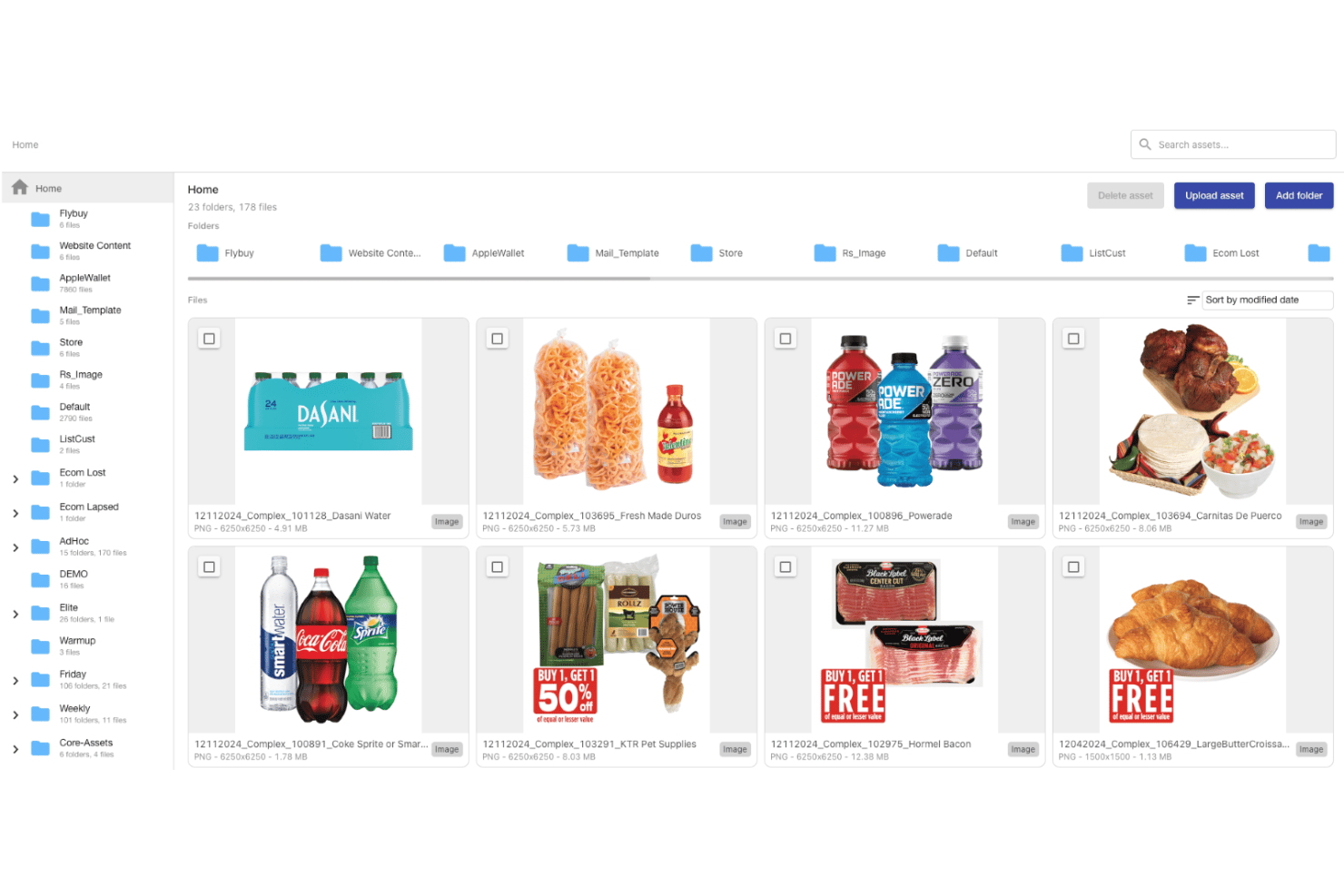
White-Label Storefront Builder
Design custom-branded online grocery experiences using modular components. This gives you full control over your look, feel, and shopper journey.
Real-Time Inventory Management
Synchronize online product availability with in-store stock automatically. Shoppers always see what’s truly in stock, reducing substitutions.
Advanced Promotion and Loyalty Tools
Run your own digital coupons, personalized offers, and rewards programs. This feature lets you boost repeat visits and direct customer retention.
Click-and-Collect and Scheduled Delivery
Offer flexible order fulfillment choices, including curbside pickup and local delivery. Customers choose time slots that work with their schedules.
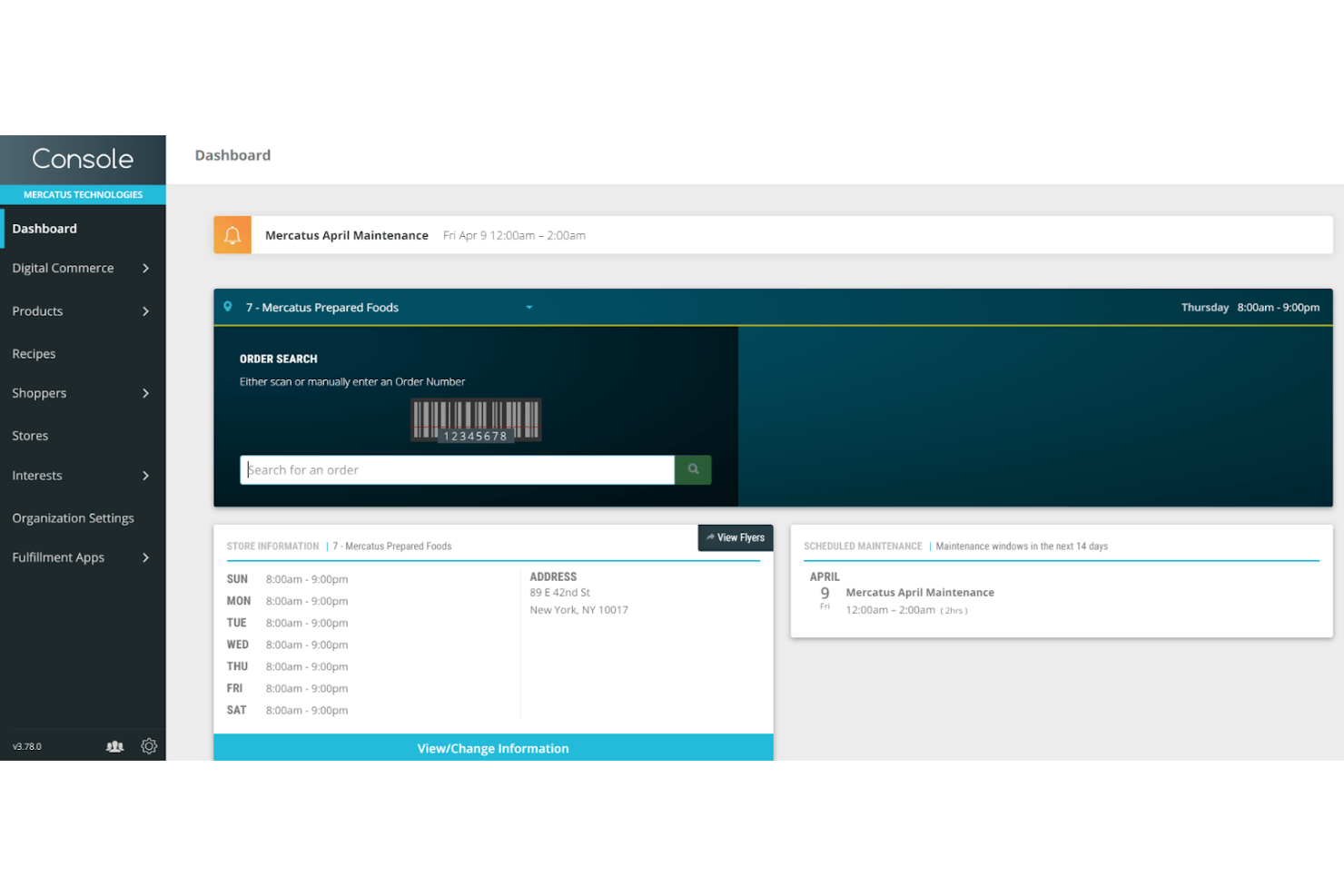
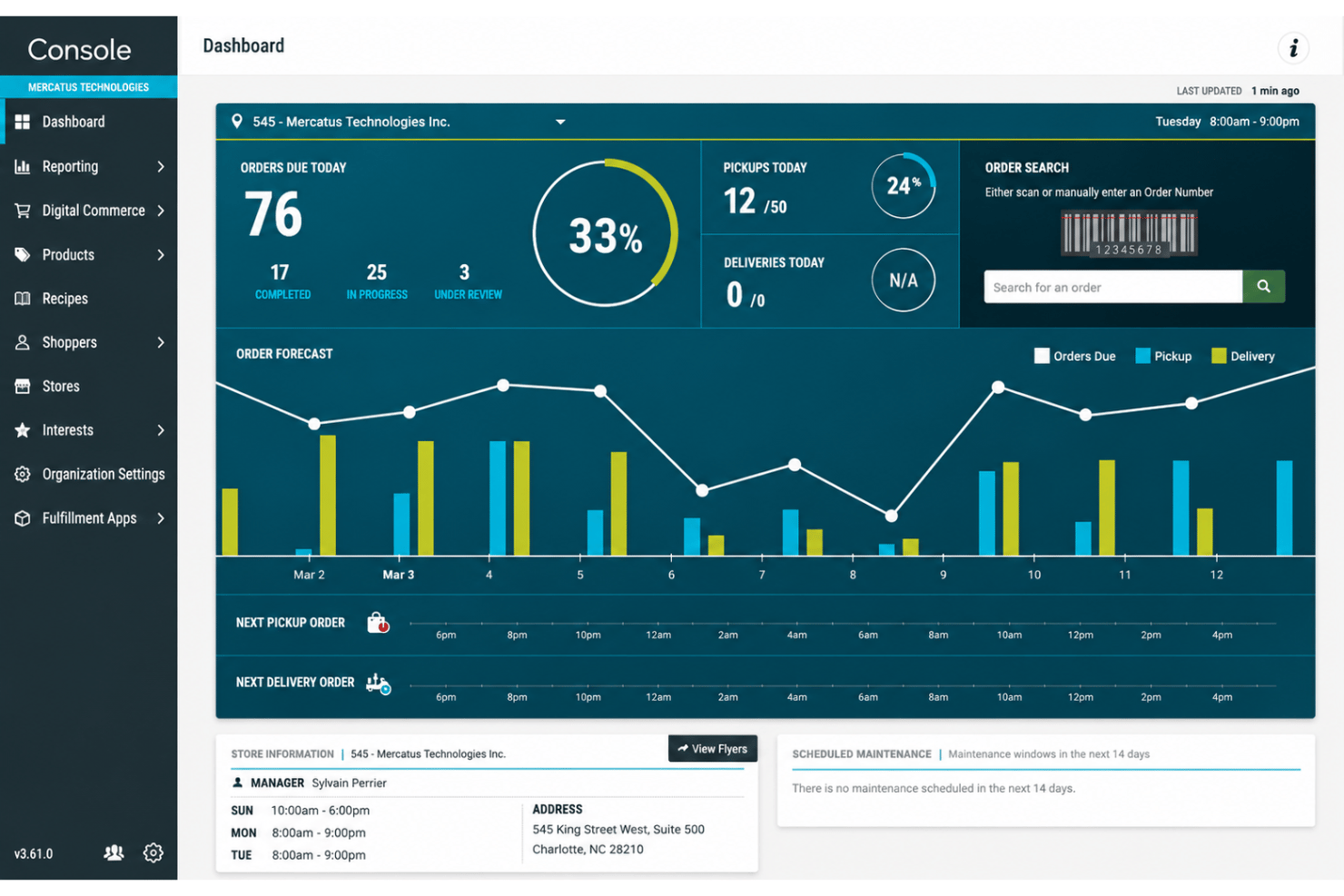
Order Management and Store Ops Dashboard
Track, process, and fulfill ecommerce and online grocery orders from a single retailer portal. Staff can manage batching, substitutions, and customer order updates in real time.
Shopper Analytics and Insights
View dashboards on sales, shopper engagement, order frequency, and other key KPIs like average order values. Use this data to make merchandising and marketing decisions faster.
Ease of Use
Mercatus offers a user interface that prioritizes flexibility over simplicity, giving grocers powerful controls but requiring more training than some competitors. In my opinion, the dashboard’s comprehensive order management and customizable storefronts are great for multi-store operators, but some users mention navigating advanced settings can slow onboarding. Most praise the logical workflows and real-time inventory sync, suggesting once set up, daily management feels intuitive and reliable.
Integrations
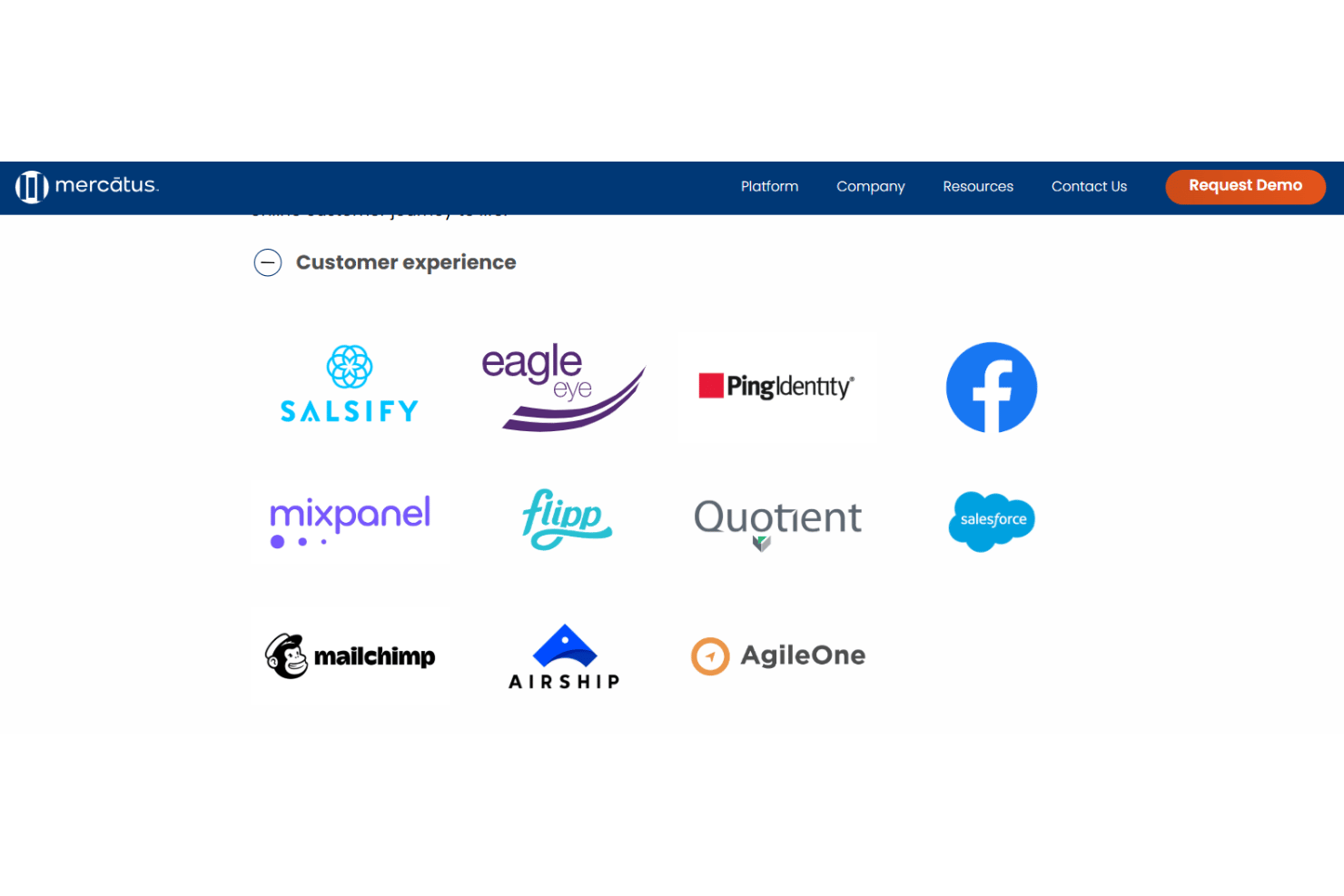
Mercatus integrates with Instacart, Shipt, DoorDash, and ShopperKit, among others.
Mercatus also offers an API and connects with a wide range of third-party integration partners to support additional workflows.
Mercatus Specs
- 2-Factor Authentication
- A/B Testing
- Analytics
- API
- BitCoin
- Conversion Tracking
- Dashboard
- Data Export
- Data Import
- Data Visualization
- Design Templates
- External Integrations
- Inventory Tracking
- Keyword Tracking
- Marketing Automation
- Multi-User
- Notifications
- Order Management
- Payment Gateway Integration
- Payment Processor
- PayPal
- Product Catalog
- Review Monitoring
- SAP Integration
- Scheduling
- Stripe
- Third-Party Plugins/Add-Ons