

«En este mundo nada puede darse por seguro, salvo la muerte y los impuestos». Eso dijo Benjamin Franklin, al menos. Para los comerciantes de comercio electrónico, la parte de los impuestos es la que realmente debe preocuparnos (la primera la dejaremos para otro día). En este caso, hablamos del impuesto sobre las ventas.
Cada transacción que procesa tu tienda debe tener en cuenta las tasas variables del impuesto sobre las ventas según el lugar de residencia de tus clientes.
En Estados Unidos, eso supone una complejidad de tres niveles: tasas estatales, del condado y municipales. Si además tenemos en cuenta las distintas tasas para diferentes categorías de productos —como artículos generales, ropa o alimentos y bebidas—, la situación puede complicarse rápidamente.
Por eso necesitas un programa que no solo haga cálculos, sino que también automatice el trabajo pesado: calcular, recaudar y presentar los impuestos sobre las ventas sin complicaciones.
Estás aquí porque sabes que necesitas la herramienta adecuada para el trabajo, y estás en buenas manos. Gracias a nuestra experiencia en el ámbito del comercio electrónico, hemos seleccionado las mejores opciones de programas de impuestos sobre las ventas para adaptarnos a diversas necesidades empresariales.
Ahora, desplázate hacia abajo para continuar.
Por qué confiar en nuestras recomendaciones de software
6,700+
Reviews
20
Industry experts
16+
Evaluation factors
14
Years
Nuestro equipo lleva probando y evaluando software desde 2012. Como líderes del sector retail, sabemos lo difícil —y lo importante— que es elegir el software adecuado.
Para esta guía, evaluamos las herramientas mediante pruebas prácticas e investigación independiente, puntuando las herramientas según nuestros criterios de selección.
Nuestras reseñas reflejan nuestro criterio independiente, no un discurso de ventas.
Comparación de los mejores programas de impuestos sobre las ventas para tiendas de comercio electrónico
Cuando se trata de impuestos, lo suficientemente bueno no es suficiente. Aquí puedes comparar cada herramienta de impuestos sobre las ventas según su precio base. Después, puedes comparar otras funciones haciendo clic en Comparar programas debajo de la tabla.
| Tool | Best For | Trial Info | Price | ||
|---|---|---|---|---|---|
| 1 | Ideal para productos SaaS y otros productos digitales | Prueba gratuita de 30 días disponible | Desde 39 $/mes | Website | |
| 2 | Mejor solución fiscal empresarial para impuestos sobre ventas | Demostración gratuita | Precio a consultar | Website | |
| 3 | Ideal para una amplia variedad de integraciones | Demostración gratuita disponible | Precio bajo solicitud | Website | |
| 4 | La mejor opción para la presentación certificada por SST en los estados miembros | Prueba gratuita de 30 días | Desde $19/mes | Website | |
| 5 | La mejor opción para la personalización fiscal a nivel empresarial | No disponible | Precios disponibles previa solicitud | Website | |
| 6 | Ideal para la automatización de certificados de exención | Demostración gratuita disponible | Precios disponibles previa solicitud | Website | |
| 7 | La mejor opción para el cálculo tributario en ERP con grandes volúmenes | Demostración gratuita disponible | Precio disponible previa solicitud | Website | |
| 8 | Ideal para marcas de SaaS que se incorporan al impuesto sobre ventas del comercio electrónico | Demostración gratuita disponible | Desde 100 $/mes | Website | |
| 9 | Ideal para la presentación de declaraciones totalmente gestionada y la cobertura de errores | Plan gratuito disponible | Precios disponibles bajo solicitud | Website | |
| 10 | La mejor opción para el seguimiento del nexo fiscal en comercios electrónicos multicanal | Plan gratuito disponible | Desde $75/mes | Website |


Los 10 mejores programas de impuestos sobre las ventas para comercio electrónico para simplificar el cumplimiento
Ahora pasemos a las reseñas. Para cada solución de software de impuestos sobre las ventas, explicaremos qué hace, por qué la elegimos, sus principales funciones e integraciones, además de las ventajas y desventajas que puedes esperar.
 Ideal para productos SaaS y otros productos digitales
- Prueba gratuita de 30 días disponible
- Desde 39 $/mes
Visit WebsiteCustomer Rating:4.6/5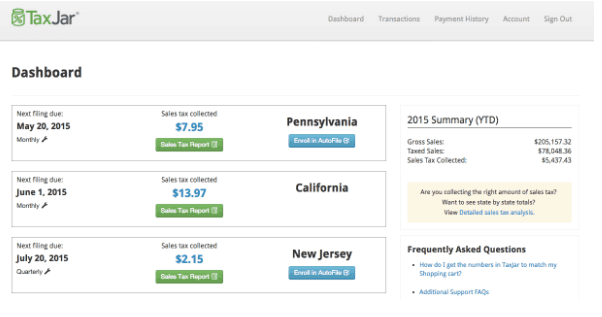
TaxJar facilita la recaudación del importe correcto del impuesto sobre las ventas en diferentes jurisdicciones. TaxJar es una plataforma de automatización del impuesto sobre las ventas que gestiona cálculos en tiempo real durante el pago, la presentación de declaraciones en varios estados, la supervisión del nexo fiscal y la conciliación de recaudaciones de plataformas intermediarias en las principales plataformas de comercio electrónico.
¿Para quién es más adecuado TaxJar?
TaxJar es una excelente opción para empresas de SaaS y vendedores de productos digitales que necesitan códigos fiscales precisos y actualizados en los estados de EE. UU., donde las normas de tributación del software varían considerablemente.
Por qué elegí TaxJar
Elegí TaxJar como una de las mejores opciones porque es una de las pocas herramientas de impuestos sobre las ventas que considera el SaaS y los productos digitales como casos de uso genuinos, en lugar de tratarlos como algo secundario. Mantiene códigos fiscales de productos específicos para productos digitales y cuenta con investigadores que siguen activamente los cambios en la tributación del SaaS estado por estado, algo importante cuando una sola suscripción de software puede estar sujeta a impuestos en Texas, pero exenta en California. También me gusta su garantía de precisión de la API: si un resultado calculado incorrectamente provoca una auditoría, TaxJar cubre el impuesto no recaudado, las sanciones y los intereses.
Características principales de TaxJar
- Presentación de declaraciones con AutoFile: Prepara y presenta automáticamente las declaraciones del impuesto sobre las ventas en 45 estados de EE. UU., con una garantía de presentación que cubre sanciones e intereses si TaxJar incumple un plazo.
- Cálculo de impuestos a nivel de dirección: Calcula el impuesto durante el pago hasta el nivel de la dirección, cubriendo las tasas estatales, del condado, municipales y de distritos especiales en más de 11.000 jurisdicciones de EE. UU.
- Panel de información sobre el nexo económico: Compara tus ventas con los umbrales estatales del nexo económico y te avisa cuando te acercas a ellos.
- Conciliación de recaudaciones de plataformas intermediarias: Identifica los impuestos que ya han recaudado y remitido plataformas como Amazon, Etsy, eBay y Walmart para que no los remitas dos veces mediante AutoFile.
Integraciones de TaxJar
TaxJar ofrece integraciones documentadas con Shopify, BigCommerce, WooCommerce, Magento 2, Amazon, eBay, Etsy, Walmart, QuickBooks Online y Xero. Su API REST y la compatibilidad con la importación de CSV permiten conectar tiendas personalizadas o no compatibles.
Pros and Cons
Pros:
- Códigos fiscales específicos para SaaS y productos digitales
- Los cálculos a nivel de dirección mejoran la precisión durante el pago
- La conciliación de plataformas evita la remisión duplicada de impuestos
Cons:
- No ofrece compatibilidad con el IVA ni el GST internacionales
- Los certificados de exención carecen de validación y alertas de vencimiento
Learn more about TaxJar: Mejor solución fiscal empresarial para impuestos sobre ventas
- Demostración gratuita
- Precio a consultar
Visit WebsiteCustomer Rating:4.4/5
Vertex ofrece cálculo de impuestos sobre ventas en tiempo real gracias a su poderosa tecnología fiscal. Vertex es un proveedor líder de soluciones de software fiscal empresarial, incluyendo el cálculo de impuestos sobre ventas y uso, declaraciones y gestión de certificados de exención. El software está diseñado para automatizar el proceso de cálculo de impuestos sobre ventas y proporciona tarifas y reglas de impuestos sobre ventas en tiempo real para todos los estados de EE. UU. y provincias canadienses.
Por qué elegí Vertex: Vertex se integra con múltiples sistemas de planificación de recursos empresariales (ERP), lo que permite a las empresas gestionar su cumplimiento fiscal en varias jurisdicciones desde una sola plataforma. El software también ofrece soporte para defensa en auditorías, investigación fiscal y soluciones fiscales globales. Vertex es conocido por su precisión, escalabilidad y cobertura integral de regulaciones fiscales complejas, lo que lo convierte en la opción preferida para grandes empresas y corporaciones multinacionales.
Características e integraciones destacadas de Vertex
Las características destacadas de Vertex simplifican el cumplimiento fiscal con su servicio integrado de devoluciones automáticas y presentación de declaraciones. Esta funcionalidad permite a las empresas agilizar la generación y presentación de declaraciones de impuestos sobre ventas directamente desde la plataforma. Al admitir la presentación electrónica y conectarse con diversas autoridades fiscales, elimina el trabajo manual, ahorrando tiempo y esfuerzo significativo para las operaciones de comercio electrónico más ocupadas.
Las integraciones incluyen Accumatica, Adobe Commerce, BigCommerce, ChargeBee, commercetools, Elastic Path, IBM Cognos, Intuit, Kibo Commerce, Microsoft Dynamics 365, NetSuite y docenas más en las áreas de ERP, comercio electrónico, adquisiciones y punto de venta.
Pros and Cons
Pros:
- Solución contable empresarial todo en uno
- Amplio contenido y experiencia fiscal global
- Capacidades integrales de automatización del impuesto sobre ventas
Cons:
- Los precios no son apropiados para pequeños negocios
- Implementación inicial compleja
Learn more about Vertex: Ideal para una amplia variedad de integraciones
- Demostración gratuita disponible
- Precio bajo solicitud
Visit WebsiteCustomer Rating:4/5
La interfaz sencilla y limpia de Avalara facilita el uso de sus múltiples herramientas. Avalara es un software de impuestos sobre ventas basado en la nube, diseñado para ayudar a empresas de todos los tamaños a automatizar el cumplimiento de sus obligaciones fiscales. El software proporciona tasas y normativas fiscales en tiempo real para todos los estados y territorios de EE. UU., así como para IVA y GST en jurisdicciones internacionales.
Por qué elegí Avalara: Avalara Avatax resuelve el principal problema de la sobrecarga contable al proporcionar cálculos y normativas fiscales basados en la geolocalización y la clasificación del producto. Ofrece más de 700 integraciones. Úsalo para gestionar tus datos a través de diferentes aplicaciones conectadas con tu plataforma de comercio electrónico. Además, elimina automáticamente los impuestos de las ventas exentas y gestiona y organiza de manera eficaz la documentación exenta.
Características y integraciones destacadas de Avalara
Las características destacadas de Avalara resaltan en su funcionalidad transfronteriza, que simplifica las complejidades de los impuestos sobre ventas internacionales y el comercio electrónico global. Esta función es fundamental para empresas que realizan negocios a nivel mundial, ya que proporciona acceso a una completa base de datos de normativas, tasas y regulaciones fiscales internacionales en más de 200 países. Ya sea que estés lidiando con IVA, GST u otros requisitos fiscales globales, AvaTax Cross-Border garantiza el cumplimiento con facilidad.
Las integraciones incluyen WooCommerce, Shopify, Quickbooks, Stripe, Magento, NetSuite, Sage, Infor, Amazon, BigCommerce, eBay, SAP, Amazon y otros sistemas y herramientas.
Pros and Cons
Pros:
- Automatiza el proceso de cálculo de impuestos sobre ventas
- Soluciones escalables para empresas de todos los tamaños
- Integración fluida con numerosos sistemas
Cons:
- El costo depende del volumen de transacciones
- El soporte al cliente a veces tarda en responder
Learn more about Avalara: La mejor opción para la presentación certificada por SST en los estados miembros
- Prueba gratuita de 30 días
- Desde $19/mes
Visit WebsiteCustomer Rating:3.6/5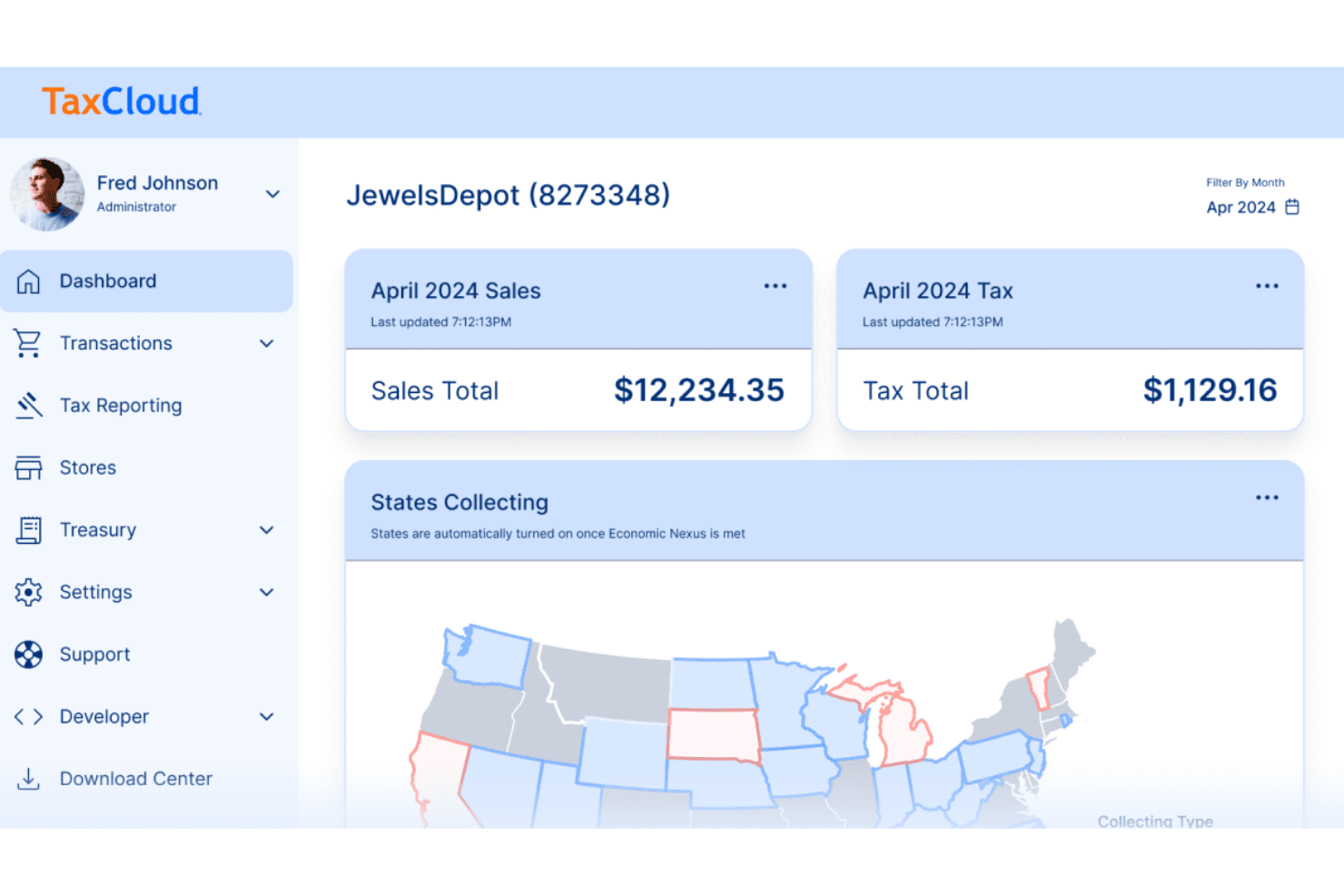
El panel de TaxCloud ofrece numerosas funciones que pueden satisfacer todas tus necesidades de cumplimiento fiscal. TaxCloud es una plataforma de cumplimiento del impuesto sobre las ventas en Estados Unidos y Canadá que gestiona el cálculo fiscal en tiempo real en más de 13.000 jurisdicciones, el seguimiento del nexo económico, la presentación de declaraciones, la remisión de impuestos y la gestión de certificados de exención para empresas de comercio electrónico.
¿Para quién es más adecuado TaxCloud?
TaxCloud es una opción excelente para empresas de comercio electrónico con sede en Estados Unidos que venden en varios estados y quieren reducir los costes de presentación mediante el cumplimiento certificado por SST.
Por qué elegí TaxCloud
TaxCloud se ganó un lugar en mi lista de opciones principales gracias a su condición de proveedor de servicios certificado por SST en los 24 estados miembros, lo que significa que el registro, la presentación, la remisión y la asistencia para auditorías son completamente gratuitos en esos estados. Me encanta que esto no sea solo un descuento, sino una ventaja de costes estructural que se acumula a medida que vendes en más estados SST. Un cliente que he visto mencionado redujo en un 60 % la cantidad de declaraciones pagadas únicamente mediante SST, y ese tipo de ahorro es difícil de replicar con otras herramientas.
Funciones principales de TaxCloud
- Seguimiento del nexo económico: Supervisa diariamente los 50 estados y envía alertas cuando tus ventas se acercan a los umbrales o los superan; esta función está incluida en los planes Starter y Premium.
- Cálculo del impuesto sobre las ventas en Canadá: Calcula en tiempo real el GST, HST, PST, RST y QST, y presenta las declaraciones ante la Agencia Tributaria de Canadá y las agencias provinciales.
- Gestión de facilitadores de mercados: Importa las ventas de los mercados para contabilizarlas en el nexo, al tiempo que las excluye de las declaraciones, con asistencia para más de 30 mercados mediante la integración con Shopify.
- Asistencia para auditorías: Proporciona informes preparados para auditorías y un equipo de Asuntos Gubernamentales, con defensa de auditorías de pago desde $99/mes y asistencia gratuita para auditorías en los 24 estados miembros de SST.
Integraciones de TaxCloud
TaxCloud ofrece integraciones documentadas con Shopify, BigCommerce, WooCommerce, Magento Open Source, Adobe Commerce, Stripe, QuickBooks Online, Chargebee, Miva y Odoo. También admite más de 30 integraciones con mercados mediante Shopify y conectividad con la API REST para integraciones personalizadas.
Pros and Cons
Pros:
- Presentación SST gratuita en los 24 estados miembros
- Supervisa los umbrales del nexo en los 50 estados
- Asistencia de incorporación receptiva para declaraciones complejas
Cons:
- Los certificados de exención no incluyen validación ni seguimiento de vencimientos
- La cobertura internacional no va más allá de Canadá
Learn more about TaxCloud: La mejor opción para la personalización fiscal a nivel empresarial
- No disponible
- Precios disponibles previa solicitud
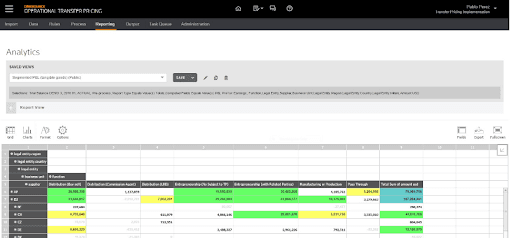
Thomson Reuters ONESOURCE ayuda a organizar y gestionar los impuestos sobre las ventas y el uso de forma optimizada. Thomson Reuters ONESOURCE es un software de cumplimiento fiscal que ofrece una variedad de soluciones tributarias, incluidos impuestos sobre la renta, impuestos indirectos, impuestos sobre la propiedad, precios de transferencia y presentación de información fiscal. ONESOURCE también ofrece una base de datos de investigación fiscal que proporciona a los usuarios leyes tributarias, normativas y casos judiciales actualizados de todo el mundo.
Por qué elegí ONESOURCE: Aunque pueda sonar como una antigua agencia de noticias, Thomson Reuters tiene una enorme relevancia en el mundo del software de impuestos para el comercio electrónico. Utiliza las reglas y tasas más recientes para determinar los impuestos sobre las ventas, los impuestos sobre el uso, el IVA y el GST. Facilita la gestión de los impuestos sobre las ventas y el uso, con el cumplimiento del GST y el IVA realizado de forma optimizada a través de un único sistema. El equipo también proporciona orientación y respuestas paso a paso sobre los impuestos sobre las ventas, todo en un solo lugar.
Características destacadas e integraciones de ONESOURCE
Las características destacadas de ONESOURCE son su flexibilidad y precisión. Esta plataforma es altamente personalizable, lo que la convierte en una opción perfecta para empresas de todos los tamaños, ya sea una empresa emergente que comienza con recursos limitados o una multinacional de gran envergadura. Al adaptar sus herramientas a sus necesidades específicas de cumplimiento fiscal, ONESOURCE ayuda a reducir el riesgo de errores tributarios, mantenerse al día con las leyes fiscales en constante cambio y mejorar la eficiencia general del cumplimiento. Es como tener un experto fiscal disponible las 24 horas del día, los 7 días de la semana.
Las integraciones incluyen soluciones de Acumatica, BigCommerce, Braintree, Cavallo, Coupa, Epicor P21 y EFI.
Pros and Cons
Pros:
- Plataforma integral de tecnología fiscal
- Se integra con diversos sistemas financieros y ERP
- Herramientas avanzadas de generación de informes y análisis
Cons:
- Puede ser compleja de implementar y utilizar
- No está dirigida a empresas pequeñas
Learn more about ONESOURCE: Ideal para la automatización de certificados de exención
- Demostración gratuita disponible
- Precios disponibles previa solicitud
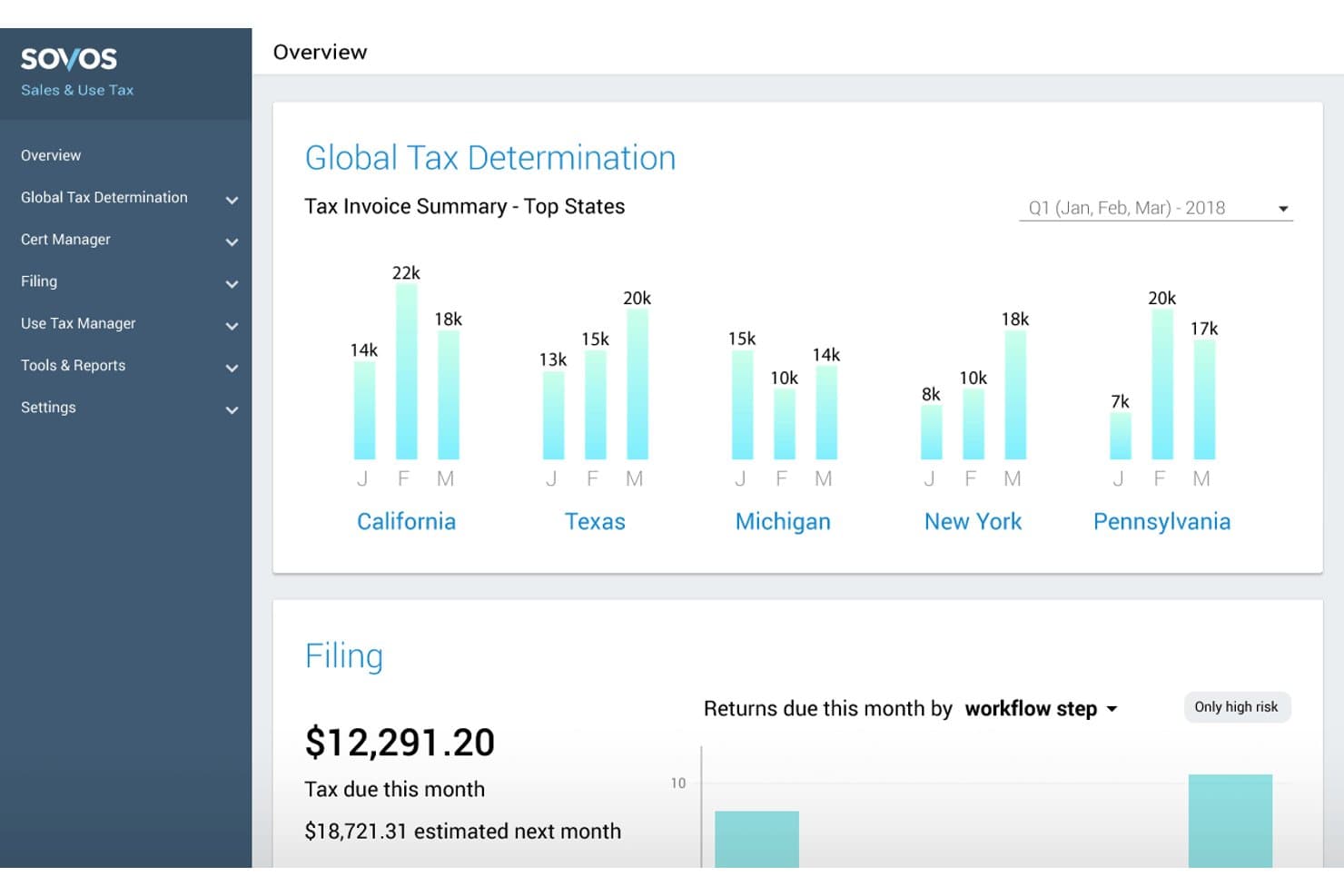
Sovos realiza un seguimiento de las facturas fiscales en los principales estados mediante gráficos trimestrales. Sovos es una plataforma de software de impuestos sobre las ventas de nivel empresarial que abarca el cálculo de impuestos en tiempo real, la presentación de declaraciones en múltiples jurisdicciones, la gestión de certificados de exención y el cumplimiento del IVA/GST en EE. UU. y los mercados globales.
¿Para quién es más adecuado Sovos?
Sovos es una opción sólida para equipos empresariales de finanzas y cumplimiento fiscal que gestionan obligaciones complejas en múltiples jurisdicciones a través de sistemas ERP como SAP, Oracle o NetSuite.
Por qué elegí Sovos
He incluido Sovos entre mis principales opciones porque su módulo CertManager gestiona la automatización de certificados de exención mejor que cualquier otra solución que haya visto a gran escala. Gestiona todo el ciclo de vida del certificado: recopilación automatizada, validación en tiempo real y seguimiento de vencimientos, además de un portal de autoservicio donde los clientes B2B presentan sus propios certificados. También me gusta que cada certificado almacenado esté diseñado para estar listo para auditorías, de modo que, cuando llega una notificación, no tengas que revisar apresuradamente cadenas de correos electrónicos para demostrar el estado de la exención.
Características principales de Sovos
- Cálculo de impuestos en tiempo real: Un motor de cálculo que gestiona la tributación de productos, el envío, los límites máximos y las exenciones fiscales en más de 12.000 jurisdicciones de EE. UU. y aproximadamente 200 jurisdicciones globales.
- Presentación de declaraciones en múltiples niveles: Elige entre un software de presentación de declaraciones de autoservicio, una presentación gestionada totalmente externalizada con un preparador fiscal dedicado o SST Model 1 para vendedores remotos que cumplan los requisitos.
- Asignación de códigos fiscales de productos mediante IA: El agente de asignación de Sovos mediante IA sugiere códigos fiscales de productos en bloque, clasificados según una puntuación de confianza, y procesa automáticamente los elementos con un alto nivel de confianza.
- Herramientas de cumplimiento del IVA de la UE: Un servicio gestionado que cubre el registro en OSS e IOSS, la presentación de declaraciones y un panel de informes para el comercio electrónico transfronterizo con destino a la UE.
Integraciones de Sovos
Sovos ofrece integraciones con SAP, Oracle, NetSuite, Microsoft Dynamics, Adobe Commerce (Magento), SAP Commerce Cloud, Salesforce Commerce Cloud y BigCommerce. Las API REST y un kit de herramientas para desarrolladores permiten conexiones personalizadas.
Pros and Cons
Pros:
- Gestiona más de 12.000 jurisdicciones fiscales de EE. UU.
- Automatiza la recopilación y renovación de certificados de exención
- Ofrece presentación de declaraciones externalizada con asistencia para auditorías
Cons:
- La supervisión del nexo carece de alertas de umbral
- La implementación empresarial requiere personal fiscal dedicado
Learn more about Sovos: La mejor opción para el cálculo tributario en ERP con grandes volúmenes
- Demostración gratuita disponible
- Precio disponible previa solicitud
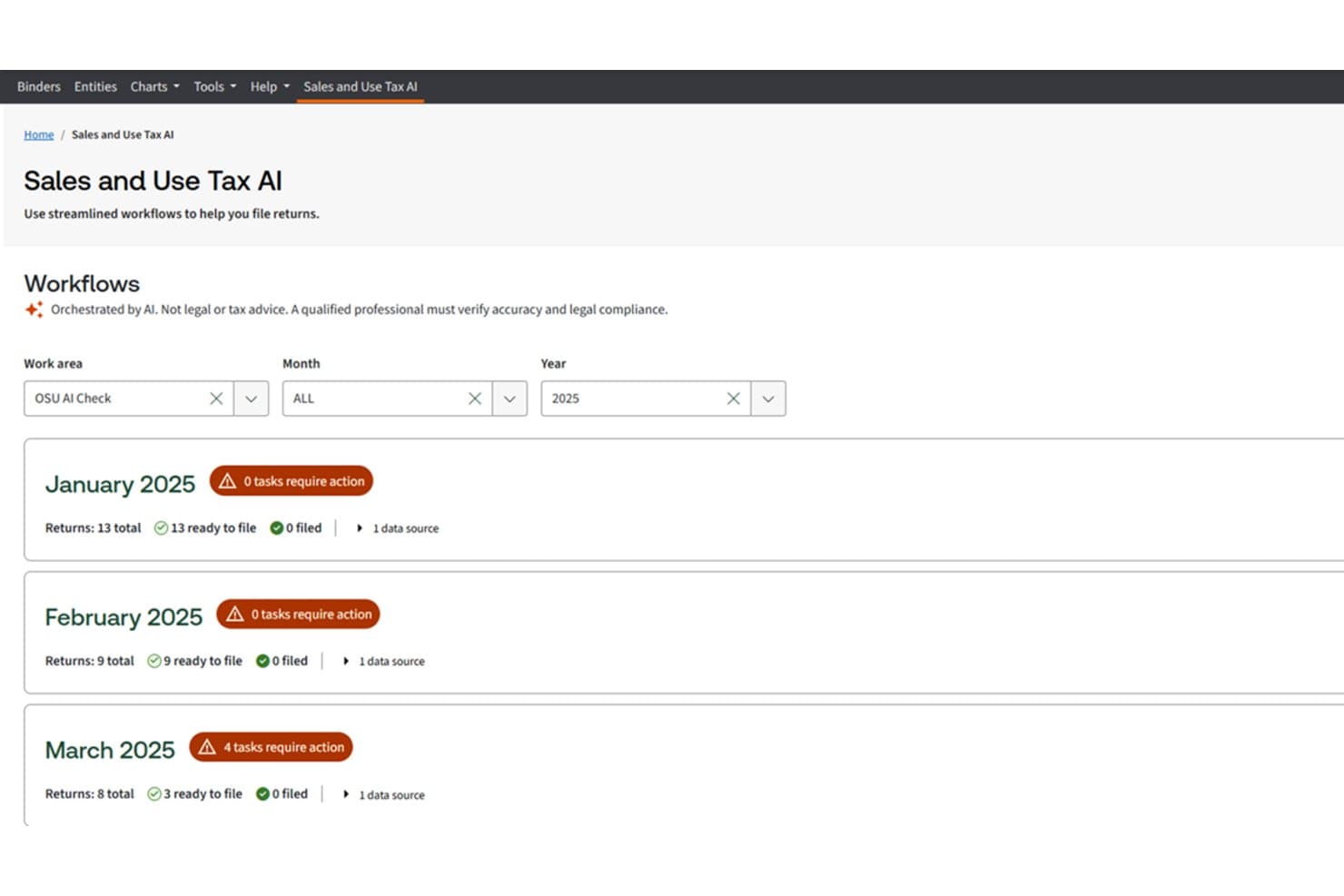
Thomson Reuters ONESOURCE realiza un seguimiento mensual del estado de las declaraciones de impuestos sobre las ventas. Thomson Reuters ONESOURCE es un motor tributario empresarial que gestiona el cálculo de impuestos indirectos en tiempo real, la administración de certificados de exención y la presentación de declaraciones en miles de jurisdicciones de todo el mundo.
¿Para quién es más adecuado Thomson Reuters ONESOURCE?
ONESOURCE está diseñado para grandes empresas con altos volúmenes de transacciones que utilizan SAP, Oracle o Microsoft Dynamics y necesitan un motor de cálculo tributario que se conecte directamente con su ERP.
Por qué elegí Thomson Reuters ONESOURCE
Elegí Thomson Reuters ONESOURCE como una de las mejores opciones porque su motor de determinación está diseñado para el tipo de volumen de transacciones que hace fallar a otras herramientas. Procesa hasta 10 millones de transacciones por hora, con unos 40 ms por llamada, lo que significa que el cálculo tributario mantiene el ritmo del proceso de pago incluso en los picos de demanda. También me gusta que sus más de 460.000 códigos tributarios a nivel de producto aplican las reglas de tributación a nivel de cada línea, no solo a nivel del pedido, algo importante cuando se utiliza SAP u Oracle y se necesita una precisión que resista una auditoría.
Características principales de Thomson Reuters ONESOURCE
- Administración de certificados de exención: Valida los certificados según las normas estatales, realiza un seguimiento de las fechas de vencimiento, envía recordatorios e incorpora las exenciones directamente en el motor de cálculo tributario en el momento de la transacción.
- Preparación de declaraciones con asistencia de IA: Extrae los datos de las transacciones, completa más de 1.200 declaraciones de EE. UU. y gestiona las excepciones, incluida la presentación electrónica en 33 estados y Canadá.
- Cumplimiento global del IVA y el GST: Gestiona la presentación de declaraciones de impuestos indirectos en varios países, incluidos los informes SAF-T y SII mediante ONESOURCE Indirect Compliance.
- Informes preparados para auditorías: Genera informes a nivel de transacción y paquetes de revisión que respaldan la documentación de auditorías en distintas jurisdicciones.
Integraciones de Thomson Reuters ONESOURCE
Thomson Reuters ONESOURCE ofrece más de 60 integraciones prediseñadas, incluidas SAP, Oracle, Microsoft Dynamics, NetSuite y Adobe Commerce. Sus API REST y más de 200 conexiones de sistemas permiten realizar integraciones personalizadas.
Pros and Cons
Pros:
- Gestiona de forma fiable los cálculos tributarios de gran volumen
- Mantiene actualizadas las reglas de tributación de los productos
- Conecta los certificados directamente con los cálculos
Cons:
- La implementación compleja requiere una amplia capacitación
- Algunos usuarios informan de respuestas lentas del servicio de asistencia
Learn more about Thomson Reuters ONESOURCE: Ideal para marcas de SaaS que se incorporan al impuesto sobre ventas del comercio electrónico
- Demostración gratuita disponible
- Desde 100 $/mes
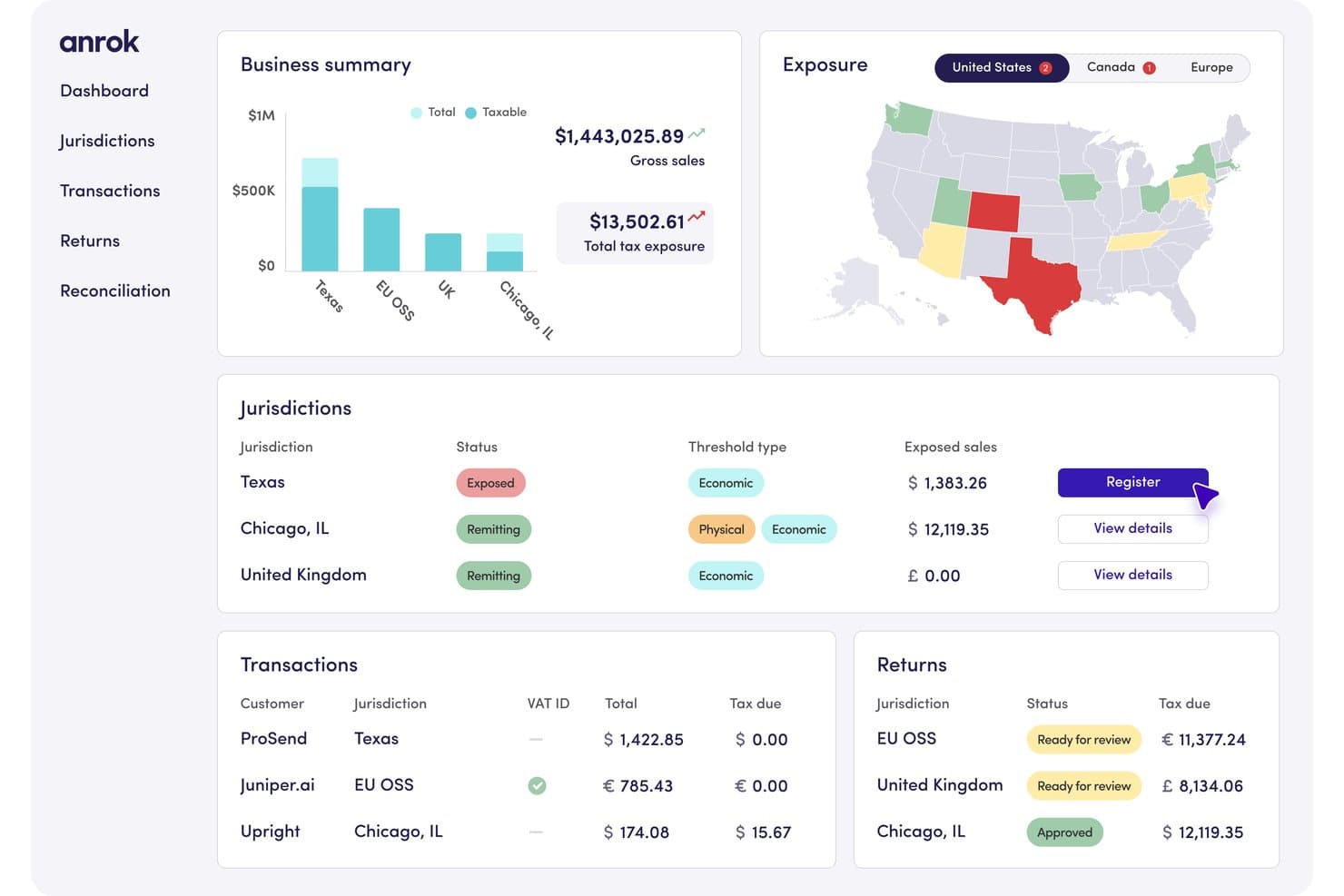
Anrok realiza un seguimiento de la exposición al impuesto sobre ventas y las jurisdicciones en distintas regiones. Anrok es una plataforma de cumplimiento del impuesto sobre ventas que gestiona el seguimiento del nexo fiscal, el cálculo de impuestos en tiempo real, la presentación de declaraciones, la gestión de certificados de exención y la cobertura de múltiples jurisdicciones en Estados Unidos y a nivel internacional.
¿Para quién es más adecuado Anrok?
Anrok es una opción excelente para los equipos financieros y fiscales de empresas de SaaS o software que se están expandiendo al comercio electrónico y necesitan una única plataforma para gestionar todo su ciclo de cumplimiento fiscal.
Por qué elegí Anrok
He incluido Anrok entre mis principales opciones porque cubre todo el ciclo de cumplimiento fiscal en una única plataforma, que es exactamente lo que necesita una empresa de SaaS que se está expandiendo al comercio electrónico cuando sus obligaciones fiscales pasan de repente a abarcar bienes físicos, productos digitales y múltiples jurisdicciones a la vez. Me gusta especialmente su seguimiento del nexo fiscal físico mediante integraciones con sistemas de recursos humanos como Rippling y Workday, que avisa automáticamente cuando una nueva contratación remota crea una obligación fiscal. Su herramienta de conciliación también rastrea cada transacción desde el pago hasta la declaración presentada, lo que hace que la preparación para auditorías sea mucho menos complicada que reconstruir los registros manualmente.
Características principales de Anrok
- Gestión de certificados de exención: Anrok valida los certificados por jurisdicción, realiza un seguimiento de las fechas de vencimiento y reprocesa automáticamente las transacciones anteriores para reembolsar el impuesto una vez aprobado un certificado.
- Asistente de IA Anrok Atlas: Una herramienta de IA que responde preguntas sobre sus datos fiscales, señala transacciones sin procesar y discrepancias, y las muestra según su prioridad.
- Presentación y remisión en múltiples jurisdicciones: Anrok prepara, presenta y paga las declaraciones de Estados Unidos con periodicidad mensual, trimestral o anual, utilizando socios locales para las presentaciones internacionales.
- Integraciones con sistemas de recursos humanos para el nexo fiscal físico: Las conexiones con plataformas de recursos humanos como Rippling, Workday y Gusto detectan automáticamente cuándo las nuevas contrataciones remotas crean obligaciones fiscales.
Integraciones de Anrok
Anrok afirma contar con más de 40 integraciones nativas, incluidas Shopify, WooCommerce, QuickBooks, Xero, NetSuite y Sage Intacct. Es compatible con Amazon, Etsy y Walmart mediante la conciliación de mercados, además de ofrecer una API pública para conexiones personalizadas.
Pros and Cons
Pros:
- Realiza un seguimiento proactivo del nexo fiscal económico y físico
- Concilia las transacciones con las declaraciones presentadas
- Automatiza la validación de certificados de exención y los reembolsos
Cons:
- El cálculo del impuesto en el proceso de pago no es nativo
- La conciliación de mercados sigue siendo limitada para los vendedores
Learn more about Anrok: 9Ideal para la presentación de declaraciones totalmente gestionada y la cobertura de errores
Zamp
- Plan gratuito disponible
- Precios disponibles bajo solicitud
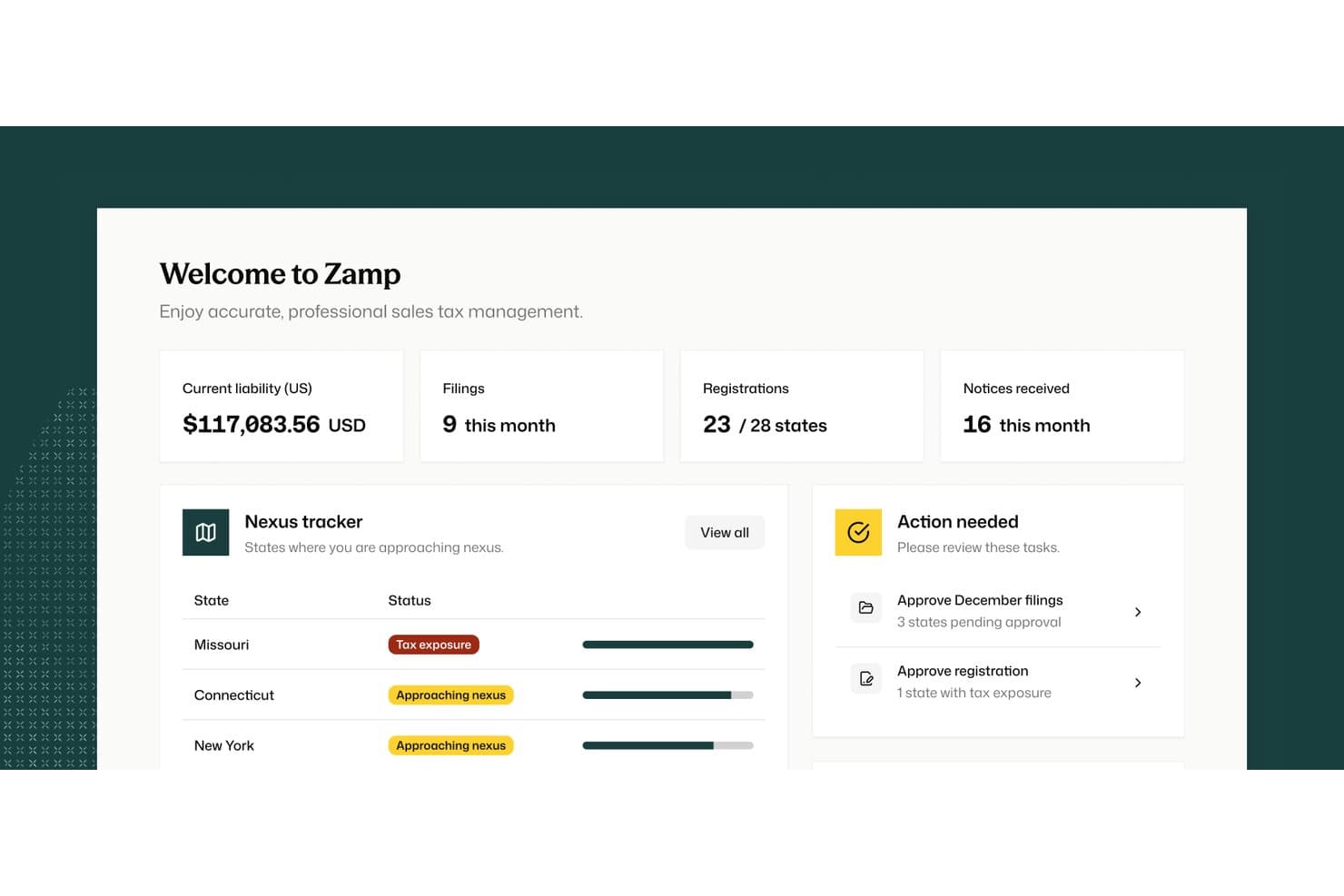
Zamp centraliza la responsabilidad del impuesto sobre las ventas, las declaraciones y el seguimiento del nexo en un solo panel. Zamp es una plataforma de cumplimiento del impuesto sobre las ventas que combina el cálculo automatizado en tiempo real, el seguimiento del nexo, la presentación de declaraciones y un modelo de servicio totalmente gestionado en el que los expertos fiscales de Zamp se encargan de los registros, las declaraciones y las notificaciones en tu nombre.
¿Para quién es más adecuado Zamp?
Zamp es una opción excelente para los equipos de finanzas y contabilidad de comercio electrónico que quieren que un experto fiscal —no solo un software— se encargue de las declaraciones, los registros y las notificaciones en su nombre.
Por qué elegí Zamp
He incluido Zamp entre mis principales opciones porque es la única alternativa de esta lista que considera el cumplimiento fiscal como un servicio, no solo como un software. Cuando se supera un umbral de nexo, el equipo de Zamp gestiona el registro estatal, configura la cuenta y comienza a presentar las declaraciones automáticamente. También valoro mucho su garantía escrita de cobertura de errores: si un cálculo incorrecto de la API provoca una auditoría, Zamp cubre el impuesto no recaudado, las sanciones y los intereses hasta un importe equivalente a las tarifas pagadas durante los 12 meses anteriores.
Características principales de Zamp
- Cálculo de impuestos a nivel de edificio: Zamp calcula las tasas a partir de la dirección exacta del edificio del comprador mediante datos geoespaciales, no códigos postales.
- Seguimiento del nexo en múltiples canales: Supervisa los umbrales del sitio web, Amazon, ventas mayoristas y canales sociales, con alertas al alcanzar el 80 % del límite de cada estado.
- Gestión de notificaciones: Zamp consulta diariamente los portales estatales, clasifica las notificaciones con IA y redacta respuestas respaldadas por registros de auditoría a nivel de transacción.
- Gestión de certificados de exención: Valida que los formularios estén completos en 38 tipos de certificados y envía alertas de vencimiento 60, 30 y 7 días antes.
Integraciones de Zamp
Zamp ofrece 37 integraciones, incluidas Shopify, BigCommerce, WooCommerce, Amazon, eBay, Etsy, Walmart, QuickBooks Online, Xero y NetSuite. También ofrece una API para configuraciones de comercio electrónico personalizadas o sin interfaz.
Pros and Cons
Pros:
- Registros, declaraciones y notificaciones totalmente gestionados
- Cobertura escrita para errores de cálculo
- Realiza un seguimiento del nexo en múltiples canales de venta
Cons:
- Las aprobaciones de las declaraciones no se pueden automatizar
- La cobertura internacional más allá de Canadá sigue sin estar clara
Learn more about Zamp: 10La mejor opción para el seguimiento del nexo fiscal en comercios electrónicos multicanal
Numeral
- Plan gratuito disponible
- Desde $75/mes
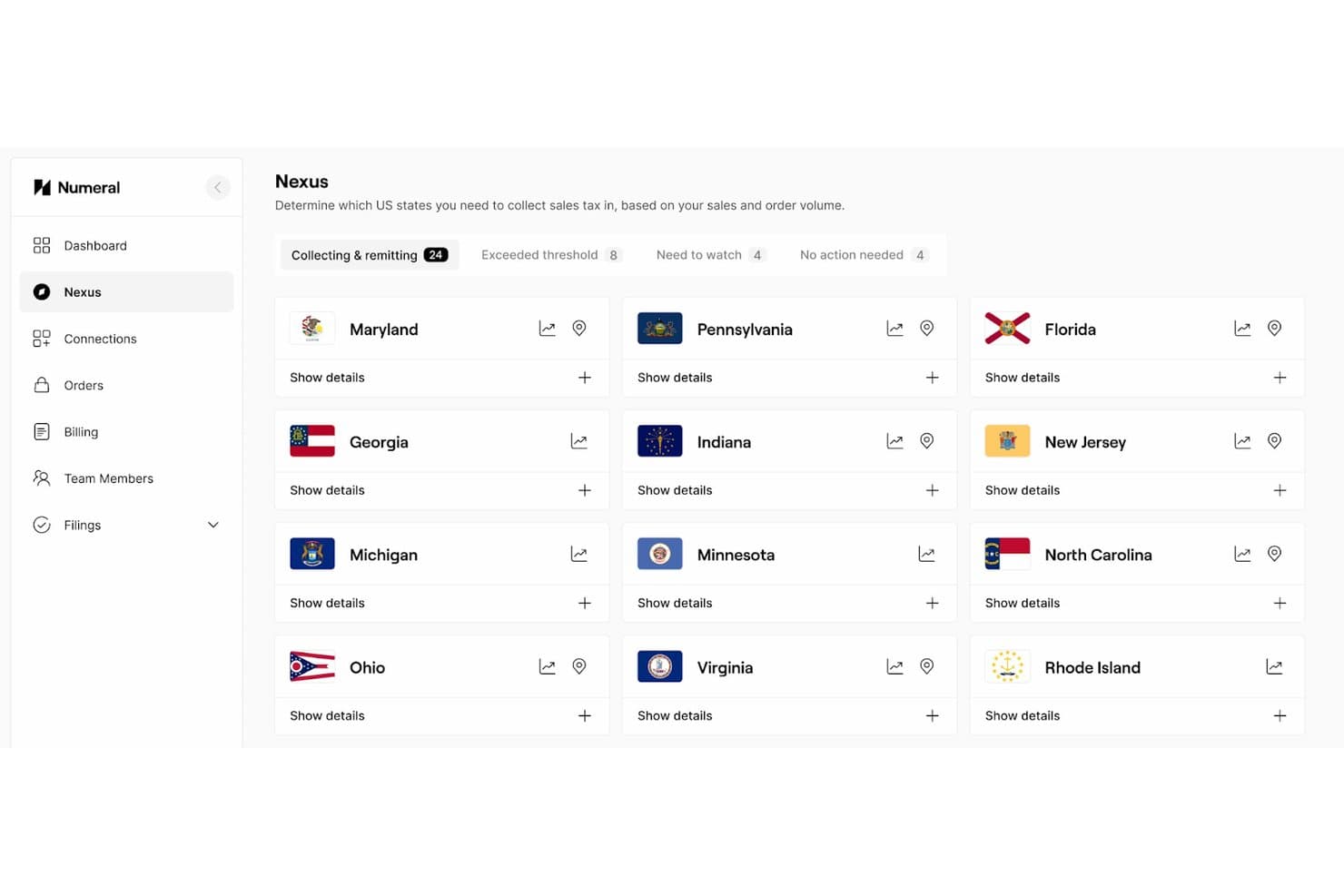
Numeral realiza el seguimiento de las obligaciones del nexo fiscal sobre las ventas en 24 estados de EE. UU. Numeral es una plataforma de cumplimiento del impuesto sobre las ventas asistida por IA que gestiona el monitoreo del nexo fiscal, los registros automatizados, el cálculo, la presentación y el pago de impuestos, así como la gestión de certificados de exención en jurisdicciones de Estados Unidos y más de 90 países.
¿Para quién es más adecuado Numeral?
Numeral es una excelente opción para marcas de comercio electrónico multicanal que venden a través de DTC, Amazon, eBay y Walmart, y que necesitan una vista única del nexo fiscal sin tener que conectar varias herramientas.
Por qué elegí Numeral
Elegí Numeral como una de las mejores opciones porque su monitoreo del nexo fiscal reúne las ventas de DTC, Amazon, eBay y Walmart en un solo panel, por lo que nunca tienes que conciliar manualmente los ingresos de los marketplaces con los umbrales estatales. Me encanta que marque por separado las ventas facilitadas por marketplaces, lo que permite declararlas como exentas o informativas sin modificar las cifras principales de tus obligaciones fiscales. El plan gratuito de Monitoreo incluye un estudio completo del nexo fiscal, lo que significa que puedes conocer tu exposición real antes de gastar un solo dólar.
Características principales de Numeral
- Clasificación de productos mediante IA: Asigna automáticamente categorías fiscales a los SKU mediante IA, incluida en el plan Profesional.
- Registro automático: Solicita automáticamente permisos estatales cuando superas un umbral de nexo fiscal, con revisión opcional en el panel antes del envío.
- Gestión de certificados de exención: Valida más de 500 tipos de certificados estadounidenses mediante IA, con campañas automatizadas de renovación y aplicación en tiempo real a través de sistemas POS o ERP conectados.
- Buzón fiscal virtual: Escanea el correo fiscal estatal entrante y supervisa diariamente los portales estatales para detectar avisos, cambios en la frecuencia de presentación y plazos de cumplimiento.
Integraciones de Numeral
Numeral ofrece más de 40 integraciones, incluidas Shopify, BigCommerce, WooCommerce, Adobe Commerce, Amazon, eBay, Walmart, QuickBooks, NetSuite y Xero. También proporciona una API REST con SDK de Java, Python y Ruby para integraciones personalizadas.
Pros and Cons
Pros:
- Vista unificada del nexo fiscal en todos los canales de venta
- Las ventas de los marketplaces se separan de las obligaciones fiscales
- El servicio de asistencia personalizada gestiona los retrasos en las presentaciones
Cons:
- La cobertura internacional está por detrás de la de proveedores más grandes
- Los casos complejos pueden requerir seguimiento adicional
Learn more about Numeral:
Otras opciones de programas de impuestos sobre las ventas para comercio electrónico
Aquí tienes algunas opciones más que no llegaron a la lista principal.
- 11KintsugiIdeal para la clasificación fiscal de SKU guiada por IA
- 12CommendaLa mejor para gestionar los impuestos de EE. UU. y globales en una única plataforma administrada
- 13ShopifyIdeal para el cálculo de impuestos nativo de Shopify y las alertas de nexo
- 14LovatLa mejor opción para vendedores internacionales
- 15QuadernoIdeal para una base de clientes global
- 16TaxValetIdeal para la presentación gestionada sin sanciones y la cobertura de auditoría
- 17GalvixIdeal para vendedores de comercio electrónico que ya han superado la presentación por cuenta propia
- 18
Cómo evalúo el software de impuestos sobre las ventas para comercio electrónico
Divido mi evaluación en tres partes, dando el mayor peso a la funcionalidad principal: calcular el impuesto en el proceso de pago y hacer un seguimiento de los umbrales de nexo fiscal. Después, busco la clasificación de SKU mediante IA, como la codificación masiva de catálogos. Por último, considero la incorporación, el soporte, las integraciones y la relación calidad-precio.
Funcionalidad principal (requisitos básicos para esta lista)
Al seleccionar herramientas para mi lista, califico cada una en una escala de 0 (no ofrece la funcionalidad) a 5 (sobresale en esta área) para cada funcionalidad principal que se indica a continuación. Después convierto el total en un porcentaje para ayudar a evaluar la adecuación general de cada herramienta, dando un peso adicional a cualquier funcionalidad que haya considerado esencial.
- Cálculo de impuestos (esencial): Compruebo la precisión del cálculo en el proceso de pago según el tipo de producto, la ubicación del comprador, los cargos de envío y las normas específicas de cada jurisdicción.
- Supervisión del nexo fiscal (esencial): Busco seguimiento de transacciones, alertas de umbrales y orientación sobre el registro en las regiones donde opera un vendedor.
- Cobertura de jurisdicciones: Evalúo las tasas actuales y las normas de tributación en las jurisdicciones locales, nacionales e internacionales relevantes para el comercio electrónico.
- Presentación de declaraciones: Evalúo la preparación y presentación de declaraciones, las remesas, el seguimiento de plazos y el soporte para las obligaciones recurrentes en distintas jurisdicciones.
- Integraciones con plataformas: Compruebo las conexiones con plataformas de comercio electrónico, mercados en línea, carritos y sistemas contables para facilitar un flujo fiable de datos de transacciones.
- Certificados de exención: Busco recopilación y validación de certificados, seguimiento de vencimientos y almacenamiento preparado para auditorías para clientes exentos de impuestos.
Una vez que tengo una lista de herramientas que cumplen los criterios, considero qué distingue a cada plataforma.
Factores diferenciadores (lo que distingue a los proveedores)
Así es como comparo y contrasto los distintos proveedores:
Funciones destacadas
Busco una clasificación de SKU mediante IA que pueda asignar códigos de tributación masivamente a un catálogo grande, algo esencial cuando se publican miles de productos con diferentes tratamientos fiscales. La conciliación de los facilitadores de mercados en línea es igualmente importante, ya que plataformas como Amazon ya recaudan los impuestos en tu nombre, y remitirlos dos veces reduce rápidamente los márgenes. También evalúo el soporte para la defensa en auditorías, comprobando si un proveedor ofrece paquetes de documentación y asistencia especializada cuando una jurisdicción cuestiona tus declaraciones.
Más allá de las funciones
Evalúo qué tan bien escala cada plataforma a medida que crece tu presencia en distintas jurisdicciones: pasar de unas pocas regiones a docenas no debería obligarte a realizar una migración complicada. El soporte durante la incorporación es igual de importante, especialmente cuando conectas por primera vez varias tiendas en línea y un ERP como NetSuite o QuickBooks. También compruebo si un proveedor respalda sus cálculos con cobertura de responsabilidad, ya que un solo error de presentación durante una temporada alta de compras navideñas puede generar sanciones que superen ampliamente el costo del software.
¿Qué es un programa de impuestos sobre las ventas para comercio electrónico?
El programa de impuestos sobre las ventas para comercio electrónico es como tu copiloto experto en impuestos: se encarga de calcular, recaudar y remitir el impuesto sobre las ventas de las ventas en línea.
Se sincroniza automáticamente con tu plataforma de comercio electrónico y determina las tasas impositivas correctas según la ubicación de tus clientes y lo que compran, sin necesidad de hacer cálculos manuales.
¿Por qué es importante?
Porque el cumplimiento del impuesto sobre las ventas es un objetivo que cambia constantemente. Las tasas y las normas cambian continuamente entre estados, condados e incluso ciudades. Un buen programa de impuestos sobre las ventas se mantiene al día con estos cambios normativos, garantizando que cumplas la ley y reduciendo al mismo tiempo los costosos errores.
En resumen: Este programa te quita una gran carga administrativa de encima y te evita dolores de cabeza durante la temporada de impuestos.
Cómo elegir el mejor programa de impuestos sobre las ventas para comercio electrónico
Elegir un programa de impuestos sobre las ventas no es una decisión que sirva para todos por igual. Así puedes elegir una solución que se adapte perfectamente a tu negocio:
- Comprueba que las integraciones sean fluidas. Asegúrate de que el software funcione correctamente con tu plataforma de comercio electrónico, ya sea Shopify, WooCommerce, BigCommerce u otra. Necesitas una herramienta que se integre directamente y empiece a funcionar sin una configuración prolongada.
- Da prioridad a las actualizaciones automatizadas. Las leyes fiscales son como las tendencias de la moda: siempre cambian. Tu software debe mantenerse actualizado automáticamente con las normas fiscales más recientes para que nunca te tomen por sorpresa las nuevas tasas o regulaciones.
- Busca una precisión en la que puedas confiar. El impuesto sobre las ventas es un asunto serio. Elige una herramienta con una reputación sólida de precisión. De ese modo, no tendrás que preocuparte por los cálculos ni lidiar con estimaciones propensas a errores que podrían causarte problemas más adelante.
- Piensa en la escalabilidad. Si planeas crecer, elige un software que crezca contigo. Busca precios flexibles y funciones que se amplíen a medida que lo haga tu negocio, para no tener que actualizar o cambiar constantemente de solución a medida que aumente tu volumen de ventas.
- Busca opciones de personalización donde sean importantes. Algunas herramientas te permiten adaptar las normas fiscales por tipo de producto, región o canal. Otras ofrecen flujos de trabajo específicos para cada sector o te permiten crear procesos de aprobación en torno a tus operaciones. Esta flexibilidad puede cambiar las reglas del juego para negocios especializados o catálogos complejos.
- Evalúa los recursos de asistencia y capacitación. Incluso las mejores herramientas tienen una curva de aprendizaje. Asegúrate de que tu elección cuente con un servicio de atención al cliente fiable, además de materiales de capacitación o seminarios web útiles, para no tener que buscar respuestas desesperadamente cuando las necesites.
En resumen: elige un software de impuestos sobre las ventas fácil de configurar, preciso y escalable, con una asistencia de primera categoría que te ayude a mantener el rumbo.
Tendencias del software de impuestos sobre las ventas para el comercio electrónico
A medida que el comercio electrónico crece a escala mundial, el panorama fiscal se vuelve más complejo y exige soluciones de software sólidas que puedan mantenerse al día. Esto es lo que puedes esperar en 2026:
- Conformidad y previsión impulsadas por la IA. La inteligencia artificial (AI) está avanzando más allá de la automatización básica hacia el análisis predictivo, lo que permite al software prever posibles obligaciones fiscales basándose en los datos de ventas y las tendencias legislativas. Este enfoque proactivo ayudará a las marcas de comercio electrónico a cumplir con las normas fiscales cambiantes sin tener que apresurarse a adaptarse después de que entren en vigor.
- Obligaciones fiscales centradas en los mercados en línea. Las leyes sobre los facilitadores de mercados en línea siguen ampliándose, lo que hace que plataformas como Amazon, Etsy y eBay sean cada vez más responsables de recaudar el impuesto sobre las ventas. Sin embargo, a medida que evolucionan las definiciones, los vendedores seguirán necesitando herramientas que aclaren sus responsabilidades fiscales dentro de cada mercado. Busca un software que se adapte rápidamente a los nuevos requisitos de los mercados en línea.
- Fiscalidad de bienes y servicios digitales. Dado que los bienes y servicios digitales (como SaaS) representan una parte cada vez mayor del comercio electrónico, más estados están promulgando o ampliando las leyes sobre el impuesto a las ventas aplicables a estos productos. Se espera que el software ofrezca funciones mejoradas para identificar y gravar con precisión las transacciones digitales, abordando nuevos requisitos para elementos como el contenido descargable o la publicidad digital.
- Conformidad simplificada en varios estados y a escala mundial. La tendencia hacia la armonización y simplificación del impuesto sobre las ventas continúa, y algunos estados están agilizando sus requisitos fiscales. Además, a medida que el comercio electrónico se globaliza, el cumplimiento del IVA en distintas jurisdicciones se convierte en una prioridad. Se espera que las soluciones fiscales basadas en la nube ofrezcan capacidades transfronterizas aún mejores, reduciendo la complejidad de cumplir con las obligaciones internacionales y multiestatales.
- Blockchain para la transparencia y la seguridad. La tecnología blockchain está ganando popularidad por su potencial para garantizar registros precisos e inalterables, especialmente útiles durante las auditorías. Al crear un registro transparente de las transacciones fiscales, blockchain puede ayudar a las empresas a gestionar ventas transfronterizas complejas y generar confianza entre los clientes.
Estas innovaciones posicionan al software de impuestos sobre las ventas como un socio clave para el comercio electrónico, ayudando a las empresas a desenvolverse en un entorno fiscal complejo con mayor facilidad y precisión.
Funciones principales del software de gestión del impuesto sobre las ventas
Un buen software de impuestos sobre las ventas hace mucho más que simplemente aplicar una tasa impositiva. Es una herramienta multifunción diseñada para afrontar todos los obstáculos fiscales que se presenten.
Estas son las funciones principales que debes buscar:
- Cálculos automatizados de impuestos. Calcula la tasa correcta para cada venta según la ubicación del cliente y el tipo de producto, ahorrándote el tiempo y el riesgo de hacerlo por tu cuenta.
- Actualizaciones de las tasas impositivas en tiempo real. Se mantiene al día automáticamente con los últimos cambios fiscales estatales y locales, para que siempre estés actualizado sin mover un dedo.
- Presentación y remisión con un solo clic. Presenta las declaraciones y envía los pagos a las autoridades fiscales sin que tengas que preocuparte por los plazos de presentación ni el papeleo.
- Informes totalmente claros. Genera informes fáciles de leer sobre los impuestos recaudados, presentados y adeudados, para que las auditorías y las revisiones de fin de año no solo sean posibles, sino también (casi) pan comido.
- Gestión de certificados de exención. Almacena y valida automáticamente los certificados de exención, marca los que han caducado y simplifica la presentación de informes sobre ventas exentas, haciendo que la preparación para una auditoría sea mucho menos dolorosa.
- Seguimiento y alertas de nexo fiscal. Hace un seguimiento de los lugares donde tienes obligaciones fiscales y te avisa cuando se alcanzan nuevos umbrales, manteniendo alerta tu radar de cumplimiento.
- Gestión de exenciones. Lleva un registro de las transacciones exentas de impuestos y de los certificados de exención, gestionando con facilidad las ventas B2B y otras excepciones.
- Compatibilidad multicanal. Gestiona la recaudación de impuestos en todos tus canales de venta, desde Shopify y WooCommerce hasta Amazon, sin tener que alternar entre varias herramientas.
- Cumplimiento internacional integrado. Simplifica el IVA, el GST y otros requisitos fiscales internacionales, permitiéndote entrar en nuevos mercados sin esfuerzo.
- Configuraciones y flujos de trabajo personalizados. Muchas herramientas te permiten ajustar las reglas fiscales por región, tipo de producto o canal de venta. Algunas incluso utilizan los comentarios de los clientes para implementar funciones específicas del sector que realmente se adaptan a tu forma de operar.
Estas funciones transforman el software de impuestos sobre las ventas de algo “bueno para tener” en una herramienta “sin la que no puedes vivir”. En resumen, es tu solución todo en uno para que el cumplimiento fiscal sea lo más sencillo posible.
Beneficios del software de impuestos sobre las ventas para minoristas en línea
Los impuestos sobre las ventas no son divertidos, pero el software adecuado hace que sean lo menos dolorosos posible. Así es como el software de impuestos sobre las ventas puede convertirse en el superhéroe del cumplimiento fiscal de tu empresa:
- Reduce las tareas que consumen tiempo. Es como tener un miembro adicional del equipo dedicado a los impuestos. Desde calcular las tasas hasta presentar las declaraciones, el software automatiza todo el proceso para que puedas volver a dedicarte a las partes de tu negocio que realmente disfrutas.
- Te mantiene por el buen camino. Calcular manualmente los impuestos en varios estados (o incluso países) deja demasiado margen para cometer errores. El software de impuestos sobre las ventas reduce el riesgo de equivocaciones que podrían provocar esas temidas sanciones o, peor aún, auditorías.
- Domina el caos multiestatal. Parece que cada estado tiene su propia idea sobre las leyes fiscales; ¡qué divertido! El software de impuestos sobre las ventas realiza un seguimiento de las particularidades y actualizaciones de cada jurisdicción para que tú no tengas que hacerlo.
- Crece contigo. ¿Te expandes a nuevos estados o mercados en línea? No hay problema. El software de impuestos sobre las ventas escala sin esfuerzo y acompaña tu crecimiento sin perder el ritmo.
- Convierte las auditorías en algo irrelevante. Es difícil estresarse por una auditoría cuando tienes un software que mantiene registros ordenados y sin errores, listos para usar. Los auditores pueden pedir lo que quieran: tú estás preparado.
- Genera confianza en tus clientes. ¡Se acabaron las sorpresas al finalizar la compra! El software de impuestos sobre las ventas garantiza que los clientes vean desde el principio el importe correcto de los impuestos, dándoles la confianza de que tu tienda tiene todo bajo control.
- Abre las puertas a los mercados internacionales. IVA, GST, sea cual sea el tipo de impuesto, el software lo simplifica para que puedas vender en todo el mundo sin verte atrapado en las complicaciones de los impuestos internacionales.
En pocas palabras, el software de impuestos sobre las ventas es como tener un asistente experto en impuestos que siempre está atento, dejándote libertad para centrarte en hacer crecer tu negocio (y no volver a preocuparte por el cumplimiento fiscal).
Coste y precios del software de impuestos sobre las ventas
El precio del software de impuestos sobre las ventas puede variar según su alcance y complejidad. Esto es lo que puedes esperar de cada nivel:
| Tipo de plan | Precio medio | Características habituales | Ideal para |
|---|---|---|---|
| Tipo de planGratuito | Precio medioGratuito (uso limitado) | Características habitualesCálculo fiscal básico, presentación en un solo estado, asistencia limitada | Ideal paraPequeñas empresas o negocios con poco volumen que buscan iniciarse en el mundo del software |
| Tipo de planBásico | Precio medio$20 - $100/mes | Características habitualesCálculos esenciales, actualizaciones de las tasas fiscales en tiempo real, informes limitados | Ideal paraEmpresas emergentes, vendedores de un solo estado y pequeñas empresas con necesidades fiscales sencillas |
| Tipo de planProfesional | Precio medio$100 - $300/mes | Características habitualesPresentación en varios estados, presentación automática, informes mejorados, integración con sistemas contables | Ideal paraEmpresas en crecimiento que se expanden a varios estados |
| Tipo de planEmpresarial | Precio medio$300+/mes | Características habitualesOpciones personalizables, acceso completo a la API, seguimiento avanzado del nexo fiscal, asistencia especializada, cumplimiento normativo internacional | Ideal paraGrandes empresas con obligaciones fiscales complejas o alcance de ventas global |
Aspectos clave que debes tener en cuenta
- Los planes gratuitos son una excelente forma de probar el servicio con cálculos básicos y cobertura para un solo estado. Son ideales para empresas muy pequeñas o aquellas con ventas de poco volumen que solo necesitan una herramienta básica para empezar.
- Los planes básicos son asequibles para pequeñas empresas que necesitan funciones esenciales fiables, como cálculos en tiempo real y actualizaciones básicas de cumplimiento normativo. Son perfectos para operaciones en un solo estado o con estructuras sencillas.
- Los planes profesionales incorporan más automatización, como la presentación en varios estados, la integración con tus sistemas actuales y más opciones de informes, lo que los convierte en una opción ideal para empresas en crecimiento.
- Los planes empresariales están dirigidos a empresas que afrontan una gran complejidad fiscal, con funciones personalizadas, cumplimiento normativo internacional y equipos de asistencia especializados para gestionar grandes volúmenes y requisitos fiscales específicos.
Costes adicionales que debes considerar
- Costes de implementación e integración. Integrar el software sin problemas en tus sistemas actuales puede implicar costes de configuración.
- Asistencia premium. Aunque normalmente se incluye algún nivel de asistencia, los gestores de cuenta dedicados o las opciones de respuesta prioritaria pueden tener un coste adicional.
- Personalización y formación. Las configuraciones personalizadas y las sesiones de formación para el equipo también pueden aumentar el precio final, especialmente en equipos grandes o con requisitos específicos.
Equilibrar las funciones con tus necesidades actuales y futuras te ayudará a encontrar una solución que crezca con tu empresa, sin sobrecargar tu presupuesto inicial.
Preguntas frecuentes sobre el software de impuestos sobre ventas para comercio electrónico
Quería dejar algo de espacio para tratar algunas de las preguntas más frecuentes relacionadas con el software de impuestos sobre ventas para comercio electrónico.
¿Cómo funciona el impuesto sobre las ventas en el comercio electrónico y cuándo debo recaudarlo?
El impuesto sobre las ventas del comercio electrónico depende del lugar donde tu empresa tenga un “nexo” o una conexión significativa, como una oficina, un almacén o incluso alcanzar el umbral de ventas de un estado.
Cuando tienes un nexo en un estado, por lo general debes cobrar allí el impuesto sobre las ventas. Gracias a las leyes recientes, más estados pueden exigir la recaudación del impuesto sobre las ventas incluso sin una presencia física, ¡por lo que conviene mantenerse actualizado!
¿Qué es el nexo del impuesto sobre las ventas y cómo sé si lo tengo en un estado?
Nexo es un término sofisticado para referirse a tener suficiente presencia en un estado como para deber allí el impuesto sobre las ventas. Tendrás un nexo si tienes presencia física, como una oficina, empleados, inventario o si tus ventas superan el umbral mínimo del estado, también conocido como nexo económico. El software de impuestos sobre las ventas puede hacer un seguimiento de tu nexo e informarte cuando lo hayas alcanzado.
¿Cómo gestiono los impuestos sobre las ventas de los pedidos fuera del estado y de los pedidos internacionales?
Para los pedidos fuera del estado, la mayoría de los estados utilizan el impuesto basado en el destino, por lo que cobras el impuesto según la ubicación del comprador. En las ventas internacionales, es posible que debas gestionar el IVA u otros impuestos según el país. Algunos programas de impuestos sobre las ventas incluyen funciones para el cumplimiento del IVA, así que busca esa opción si vendes internacionalmente.
¿Qué ocurre si no recaudo el impuesto sobre las ventas en un estado donde es obligatorio?
No recaudar el impuesto sobre las ventas puede provocar algunos problemas: sanciones, intereses e incluso auditorías por parte de las autoridades estatales. El uso de software te ayuda a evitarlo al automatizar todo el proceso, mantenerte en cumplimiento y evitarte preocupaciones.
¿Cómo se integra el software de impuestos sobre las ventas con mi plataforma de comercio electrónico y es fácil configurarlo?
La mayoría de los programas de impuestos sobre las ventas se integran directamente con plataformas como Shopify, WooCommerce o Amazon mediante API o complementos. La configuración suele ser sencilla: instala la aplicación, configura tus ajustes y el software comienza a gestionar automáticamente los cálculos de impuestos.
¿Qué funciones debería priorizar en un software de impuestos sobre las ventas para el cumplimiento normativo en varios estados?
Para cumplir con la normativa en varios estados, prioriza las actualizaciones automáticas de las tasas impositivas, el seguimiento del nexo y la compatibilidad con la presentación de declaraciones en varios estados. Estas funciones te ayudan a cumplir con la normativa a medida que creces y garantizan que estés cubierto en distintas jurisdicciones fiscales con un trabajo manual mínimo.
¿Cómo gestiono las exenciones fiscales y los certificados con el software de impuestos sobre las ventas para comercio electrónico?
La mayoría de las herramientas de impuestos sobre las ventas permiten gestionar exenciones al recopilar, almacenar y validar digitalmente los certificados de exención. Algunas incluso señalan los certificados caducados o no válidos y ayudan a preparar la documentación para las auditorías. Esto garantiza que tus transacciones B2B o con organizaciones sin ánimo de lucro cumplan con la normativa sin necesidad de un seguimiento manual.
Otros tipos de software para comercio electrónico
Si buscas un software de impuestos sobre las ventas para comercio electrónico, supongo que estás ampliando tu conjunto de herramientas de procesamiento de pagos en línea. Estos son algunos recursos adicionales que deberías consultar:
- Software de procesamiento de pagos
- Plataformas de compra ahora y paga después (BNPL)
- Software de suscripciones para comercio electrónico
- Soluciones de carrito de compra
¿Qué sigue?
Si estás investigando software de impuestos sobre las ventas para comercio electrónico, ponte en contacto con un asesor de SoftwareSelect para recibir recomendaciones gratuitas.
Rellenas un formulario y tienes una breve conversación en la que profundizan en los detalles de tus necesidades. Después recibirás una lista breve de programas para revisar. Incluso te apoyarán durante todo el proceso de compra, incluidas las negociaciones de precios.