

Shopify vs. Volusion: Comparison & Expert Reviews for 2026

We review tools independently, and commissions help fund our testing. See our transparency policy, our methodology, or suggest a tool.
Choosing between Shopify and Volusion can feel overwhelming when you’re trying to grow your online business. You want an ecommerce platform that makes selling easy, keeps costs predictable, and helps you stand out—without headaches from clunky tools or hidden fees. Both options promise flexibility, but which one actually delivers what you need?
In this article, you’ll get a clear, side-by-side comparison of Shopify and Volusion. I’ll walk you through their pros and cons, best use cases, pricing, security, and how easy they are to use, so you can make the right call for your business.
Shopify
4.5/5
- 3-day free trial
- From $29/month (billed annually)
Volusion
3.5/5
- 14-day free trial
- From $35/month
Why Trust Our Software Recommendations
6,700+
Reviews
20
Industry experts
16+
Evaluation factors
14
Years
Our team has been testing and reviewing software since 2012. As retail leaders ourselves, we know how difficult—and important—it is to choose the right software.
For this guide, we evaluated tools using hands-on testing and independent research, scoring tools using our selection criteria.
Our reviews reflect our independent judgment—not a sales pitch.
| Shopify | Volusion | |
|---|---|---|
| Free Trial | 3-day free trial | 14-day free trial |
| Pricing | From $29/month (billed annually) | From $35/month |
Shopify vs. Volusion Pricing & Hidden Costs
Shopify and Volusion both use tiered subscriptions, but they structure their pricing plans and scaling limits differently. Shopify offers plans with increasing features and fewer restrictions as you upgrade, including unlimited products across all tiers, but it applies additional transaction fees if you use a third-party payment gateway instead of Shopify Payments. Volusion also uses tiered plans, but places limits on factors like annual sales (GMV), product counts, and staff accounts on lower tiers, which may require upgrading sooner as your business grows.
When it comes to hidden costs, Volusion includes essentials like hosting, SSL, and PCI compliance, and does not charge for bandwidth, but additional fees may apply for certain services or if you exceed plan limits. Shopify’s extra costs typically come from transaction fees, paid apps, and optional add-ons like POS features, even though it includes a wide range of built-in tools. To choose the right platform, look beyond the base subscription and consider how each provider’s limits, fees, and add-ons align with your expected growth and operational needs.
Shopify and Volusion share a strong core as hosted, all-in-one ecommerce platforms. Both let you build and manage an online store without separate hosting, and include essential features like product management, order processing, payment processing, inventory tracking, marketing tools (including SEO tools), and analytics dashboards. They also provide customizable templates, built-in security (like SSL and PCI compliance), and integrated checkout experiences, making them viable end-to-end solutions for launching and running an online business.
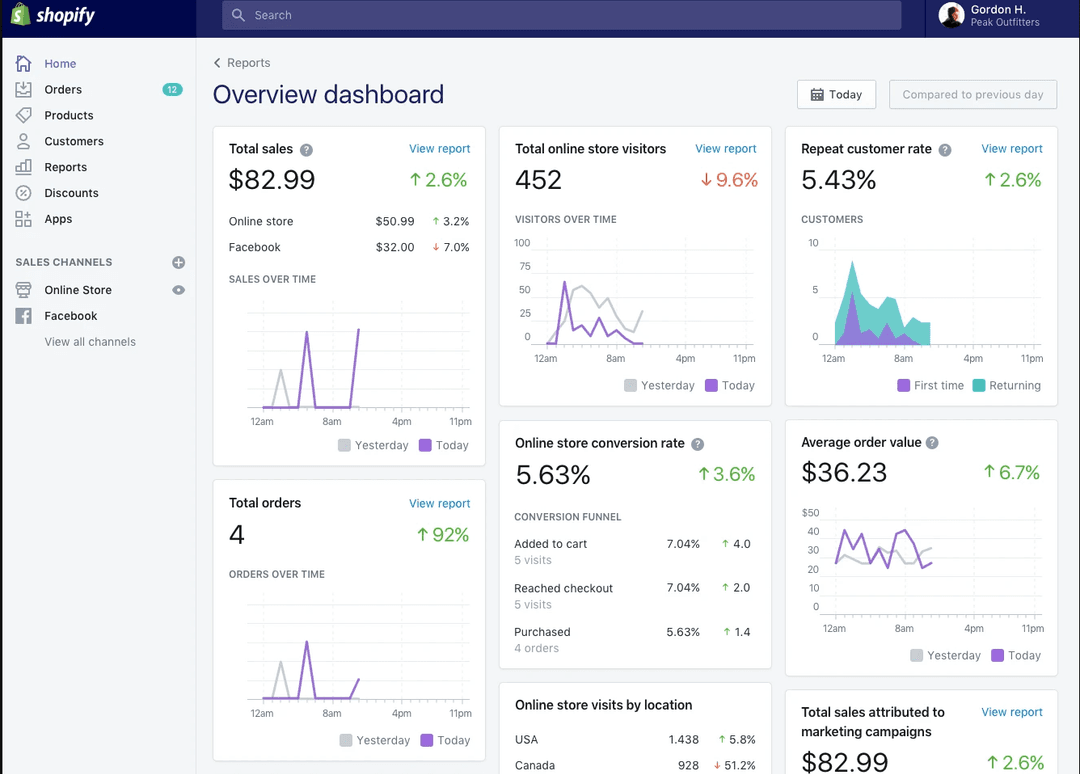
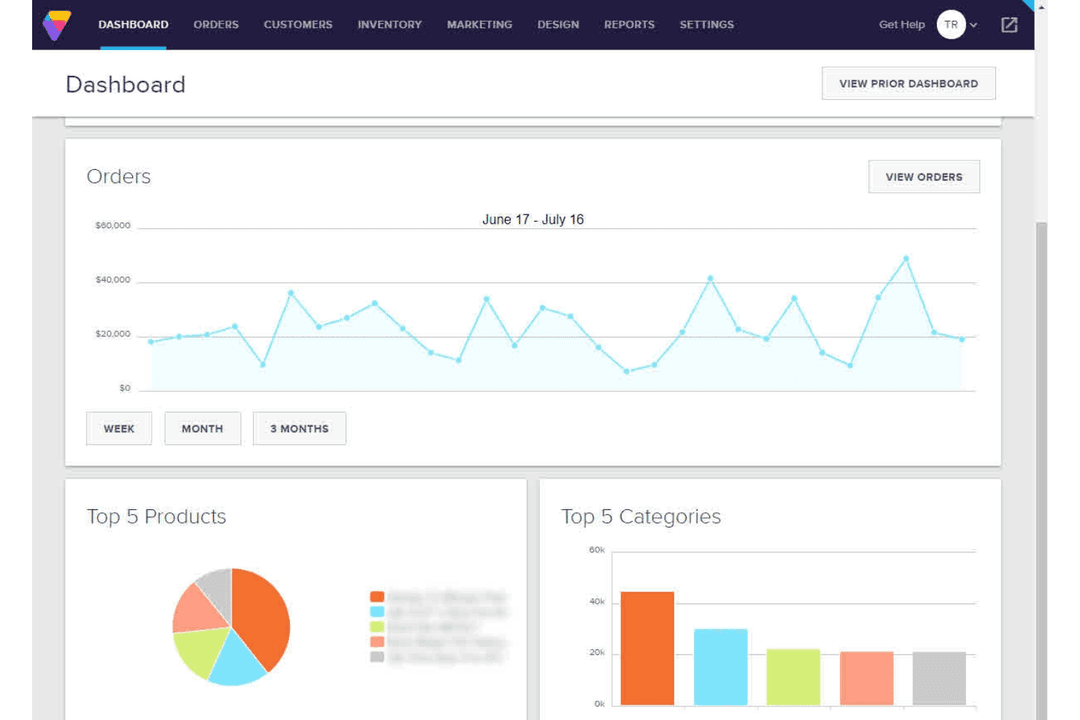
Where they differ is in how they extend those capabilities. Shopify stands out with its massive app ecosystem and integrations, giving merchants far more flexibility to customize and scale their stores with thousands of add-ons and omnichannel (e.g., social media) selling features. Volusion, on the other hand, differentiates itself with strong built-in analytics and reporting tools, built-in tools for recurring billing, and a straightforward drag-and-drop builder that appeals to users who want more native functionality without relying heavily on third-party apps.
| Shopify | Volusion | |
|---|---|---|
| 2-Factor Authentication | Yes | Yes |
| A/B Testing | No | Yes |
| Analytics | Yes | No |
| API | Yes | Yes |
| BitCoin | No | Yes |
| Conversion Tracking | Yes | Yes |
| Dashboard | Yes | Yes |
| Data Export | Yes | Yes |
| Data Import | Yes | Yes |
| Data Visualization | No | Yes |
| Design Templates | Yes | Yes |
| External Integrations | Yes | Yes |
| Inventory Tracking | Yes | Yes |
| Keyword Tracking | Yes | Yes |
| Marketing Automation | Yes | Yes |
| Multi-User | No | Yes |
| Notifications | Yes | Yes |
| Order Management | Yes | Yes |
| Payment Gateway Integration | Yes | Yes |
| Payment Processor | No | Yes |
| PayPal | Yes | Yes |
| Product Catalog | Yes | Yes |
| Review Monitoring | Yes | Yes |
| SAP Integration | No | Yes |
| Scheduling | No | Yes |
| Stripe | No | Yes |
| Third-Party Plugins/Add-Ons | No | Yes |
| Integration | Shopify | Volusion |
| QuickBooks | ✅ | ✅ |
| Mailchimp | ✅ | ✅ |
| Google Analytics | ✅ | ✅ |
| Facebook Shops | ✅ | ✅ |
| Amazon | ✅ | ❌ |
| eBay | ✅ | ❌ |
| Instagram Shopping | ✅ | ❌ |
| ShipStation | ✅ | ✅ |
| API | ✅ | ✅ |
| Zapier | ✅ | ❌ |
Shopify and Volusion both cover the basics, but Shopify offers a much wider range of integrations, especially for social selling and marketplaces. If you need flexibility or want to connect with tools like Zapier or Amazon, Shopify is the stronger choice, while Volusion may feel limiting for fast-growing or omnichannel businesses.
| Factor | Shopify | Volusion |
| PCI Compliance | Fully PCI DSS compliant, handling all payment data securely. | PCI certified, but users must manage some compliance aspects. |
| SSL Encryption | Free SSL certificates for all stores, ensuring encrypted data transfer. | SSL available, but may require manual setup or extra fees. |
| Data Backups | Automated daily backups and disaster recovery included. | Regular backups, but restoration may require support assistance. |
| Uptime Guarantee | High uptime with global CDN and redundant infrastructure. | High uptime, but fewer details on redundancy and global coverage. |
| Fraud Protection | Built-in fraud analysis and risk tools for every transaction. | Basic fraud tools, but less advanced than Shopify’s offerings. |
Shopify and Volusion both cover the essentials with PCI compliance, SSL encryption, and reliable hosted infrastructure to keep stores secure and online. Shopify takes a more fully managed approach, handling PCI compliance, providing automatic SSL, daily backups, and built-in fraud analysis tools, while Volusion offers similar core protections but may require more manual involvement for things like backup restoration or advanced fraud prevention.
Overall, Shopify stands out for its more automated, hands-off security and globally scaled infrastructure, whereas Volusion delivers solid baseline protection but with less transparency and fewer built-in safeguards.
| Factor | Shopify | Volusion |
| User Interface | Clean, modern dashboard with intuitive navigation and drag-and-drop tools. | Simple interface, but feels dated and less visually appealing. |
| Store Setup | Guided setup wizard and extensive help resources for a fast launch. | Setup is straightforward, but some steps require manual tweaks. |
| Theme Customization | Wide range of customizable themes with live preview. | Fewer themes and limited customization options. |
| Customer Support | 24/7 live chat, email, and phone support, plus a large help center. | Support available, but response times can be slower. |
| Learning Curve | Easy for beginners, with plenty of tutorials and community forums. | Slightly steeper learning curve, especially for advanced features. |
Shopify is generally easier to use, thanks to its modern interface, guided onboarding, and extensive support ecosystem that helps beginners get up and running quickly. Volusion is still approachable, but its more dated interface and less guided setup can make the experience feel less intuitive, especially as you start customizing your store. Overall, Shopify offers a smoother, more beginner-friendly and user-friendly experience, while Volusion may require a bit more hands-on effort to achieve the same results.
Shopify
- You can easily customize your store with a wide range of themes.
- Shopify's app store offers tools to boost your store's functionality.
- It provides reliable security to protect your customers' data.
- You might find transaction fees if not using Shopify Payments.
- Shopify's blogging feature is less robust than others.
- It can be challenging to manage multiple currencies.
Volusion
- Built-in mobile-responsive themes for quick site setup
- Inventory tracking with low-stock alerts and variant management
- Straightforward recurring payment and subscription setup
- Limited built-in multi-channel selling options
- SEO tools are basic compared to more advanced platforms
- Transaction fees apply unless using Volusion Payments
Shopify
- Boutique RetailersShopify’s customizable themes help your store stand out in a crowded market.
- Artisan ShopsYou can easily showcase and sell unique products with Shopify’s flexible product listings.
- StartupsShopify’s user-friendly interface allows you to set up quickly and focus on growth.
- Small BusinessesIts app store provides tools to expand your store’s capabilities as your business grows.
- Online MarketplacesShopify’s secure checkout process builds trust with your customers.
- Subscription ServicesYou can manage recurring payments and customer subscriptions efficiently with Shopify’s built-in tools.
Volusion
- Small Retail StoresVolusion’s simple inventory management and barcode tools let brick-and-mortar retailers bring their products online easily.
- Subscription Box CompaniesThe recurring billing feature supports subscription products and auto-charging without special add-ons.
- Apparel BrandsVariant support for sizes and colors, plus inventory controls, make it great for fashion sellers.
- DTC StartupsFast onboarding, mobile themes, and guided store setup mean new DTC brands can launch with no IT team.
- Hobby and Craft SellersStraightforward product management, low learning curve, and payment flexibility help crafters and hobby shops scale online.
- Food and Beverage MerchantsFeatures like Deal of the Day and in-built tax tools streamline selling regulated or perishable items.
Who Should Use Shopify, and Who Should Use Volusion?
Shopify is best for business owners who care about growth, scalability, and the ability to sell across multiple channels without technical complexity. It’s ideal for beginners, fast-growing brands, and larger ecommerce operations because of its ease of use, massive app ecosystem, and strong multichannel capabilities (like selling on social media and marketplaces). If you plan to expand quickly, customize your store heavily, or rely on integrations, Shopify’s ecommerce solutions are usually the better long-term choice.
Volusion is better suited for small businesses or merchants who prefer built-in features and strong analytics without relying heavily on apps. It appeals to users who want a more straightforward, all-in-one platform with native tools for reporting and ecommerce store management, especially if they don’t need advanced customization or large-scale growth. However, it’s generally a better fit for simpler stores or data-focused users rather than high-growth or highly customized ecommerce brands.
| Shopify | Volusion | |
|---|---|---|
| App Ecosystem | Shopify The Shopify app store offers thousands of integrations and add-ons. | Volusion Limited app marketplace with fewer third-party options. |
| Automation Tools | Shopify Advanced automation (e.g., workflows, marketing, abandoned shopping cart recovery). | Volusion Basic automation, mostly limited to order processing. |
| Multichannel Selling | Shopify Built-in tools to sell products on social, marketplaces, and POS. | Volusion Basic online store focus, with fewer multichannel options. |
| Payment Options | Shopify Native payment processor (Shopify Payments) provides a fully integrated, PCI-compliant solution with no third-party transaction fees when used, plus support for hundreds of global payment gateways, digital wallets, BNPL options, and local payment methods worldwide. | Volusion Volusion Payments powered by Stripe offers a fully integrated solution with support for 135+ currencies, digital wallets, BNPL options, and built-in fraud protection, alongside PayPal and other gateways. |
| Theme Customization | Shopify Large library of modern themes with flexible customization in the store builder. | Volusion Smaller theme selection with more limited web design flexibility. |
| Hosting & Security | Both are fully hosted platforms that include web hosting, SSL certificates, and PCI-compliant infrastructure. |
|---|---|
| Mobile Responsiveness | Both offer mobile-responsive themes to ensure stores work well across devices. |
| Order Management | Both provide tools to manage orders, track fulfillment, and handle customer purchases. |
| Product Management | Both let you add, organize, and track products with inventory controls, supporting multiple product types. |
| Reporting & Analytics | Both include dashboards and sales reports to help you monitor performance and make data-driven decisions. |
| SEO Tools | Both provide basic search engine optimization features like customizable URLs, meta tags, and sitemaps to help boost visibility. |