
Retail loyalty program software helps retailers create, manage, and automate a customer loyalty program across in-store and online channels. These platforms can encourage repeat purchases, turn shoppers into loyal customers, collect customer data, and support more targeted retention campaigns. In this list, I’ve reviewed the best retail loyalty program software for 2026, including each platform’s features, integrations, pricing, and ideal use cases.
Why Trust Our Software Recommendations
6,700+
Reviews
20
Industry experts
16+
Evaluation factors
14
Years
Our team has been testing and reviewing software since 2012. As retail leaders ourselves, we know how difficult—and important—it is to choose the right software.
For this guide, we evaluated tools using hands-on testing and independent research, scoring tools using our selection criteria.
Our reviews reflect our independent judgment—not a sales pitch.
Comparison Table: Retail Loyalty Program Software
This comparison table summarizes pricing details for my top retail loyalty program software selections.
| Tool | Best For | Trial Info | Price | ||
|---|---|---|---|---|---|
| 1 | Best for composable rewards architecture | Free demo available | Pricing upon request | Website | |
| 2 | Best for end-to-end rewards fulfillment | Free demo available | Pricing upon request | Website | |
| 3 | Best for unified rewards and promotions | Free demo available | Pricing upon request | Website | |
| 4 | Best for CRM-connected member programs | 30-day free trial + free demo available | From $20,000/org/month (billed annually) | Website | |
| 5 | Best for AI-generated retention campaigns | Free demo available | Pricing upon request | Website | |
| 6 | Best for dual-certified Shopify rewards | Free plan + free demo available | From $15/month | Website | |
| 7 | Best for rewards tied to customer reviews | Free plan + free demo available | From $199/month | Website | |
| 8 | Best for Shopify revenue insights | Free plan + 14-day free trial + free demo available | From $199/month | Website | |
| 9 | Best for multi-brand program management | Free demo available | Pricing upon request | Website | |
| 10 | Best for self-service reward workflows | Free demo available | Pricing upon request | Website |


Best Retail Loyalty Program Software Reviews
Below are my detailed summaries of the best retail loyalty program software that made it onto my shortlist. My reviews offer a detailed look at the features, best use cases, and integrations of each platform to help you find the best one for you.
 Best for composable rewards architecture
- Free demo available
- Pricing upon request
Visit WebsiteCustomer Rating:4.8/5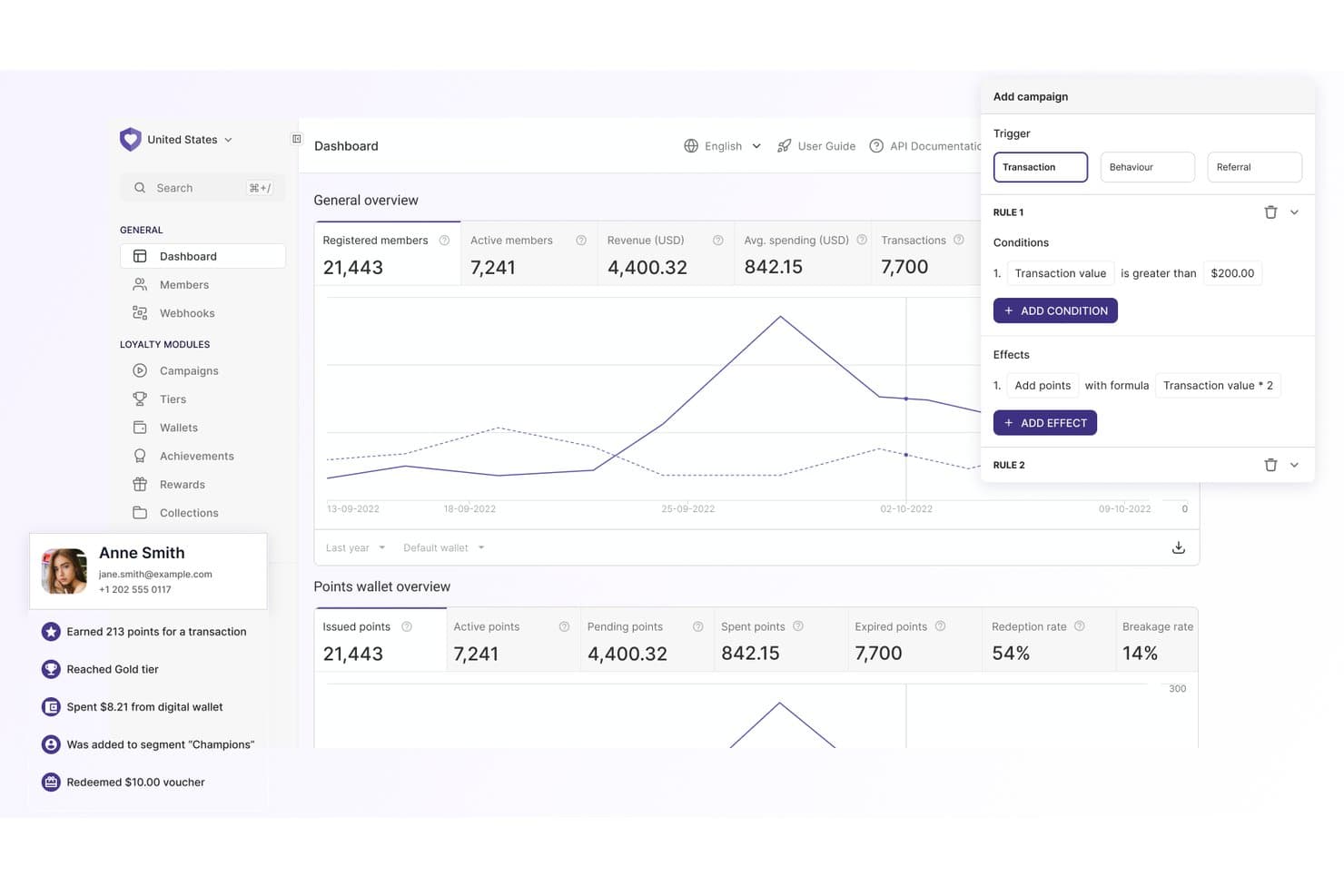
Open Loyalty campaign builder with transaction-based triggers, conditional rules, and point reward formulas alongside a general dashboard overview. Open Loyalty is a headless, API-first loyalty engine that lets retailers build and run points programs, tiered memberships, gamified challenges, and rewards campaigns across ecommerce, POS, and mobile channels.
Who Is Open Loyalty Best For?
Open Loyalty is a strong fit for enterprise and mid-market retailers with in-house development teams who need full control over loyalty logic across multiple brands, regions, or channels.
Why I Picked Open Loyalty
I picked Open Loyalty because its composable architecture gives retailers control over how loyalty mechanics are delivered across different customer touchpoints. Points, tiers, challenges, rewards, and gamification features can be managed through APIs and applied across POS systems, mobile apps, and ecommerce storefronts. Its multi-tenant architecture also supports separate programs for different brands, regions, or business units.
Open Loyalty Key Features
- Admin UI: Manage loyalty rules, member profiles, and campaign settings through a web-based administration dashboard.
- Webhooks support: Receive real-time updates on loyalty events and trigger external processes via webhooks.
- Rewards catalog management: Set up and maintain a library of digital rewards, coupons, and incentives for member redemption.
- ISO 27001 and GDPR compliance: Operates with international security standards and configurable data residency for compliance needs.
Open Loyalty Integrations
Open Loyalty supports integrations through its REST API, webhooks, AWS SQS, and AWS S3 data exports. These tools allow retailers to connect ecommerce, POS, CRM, marketing, and data platforms.
Pros and Cons
Pros:
- Offers gamified mechanics like leaderboards
- Supports multi-brand and multi-region programs
- API-first design for full customization
Cons:
- Requires developer resources for implementation
- Limited prebuilt integrations documented
Learn more about Open Loyalty: Best for end-to-end rewards fulfillment
- Free demo available
- Pricing upon request
Visit WebsiteCustomer Rating:4.1/5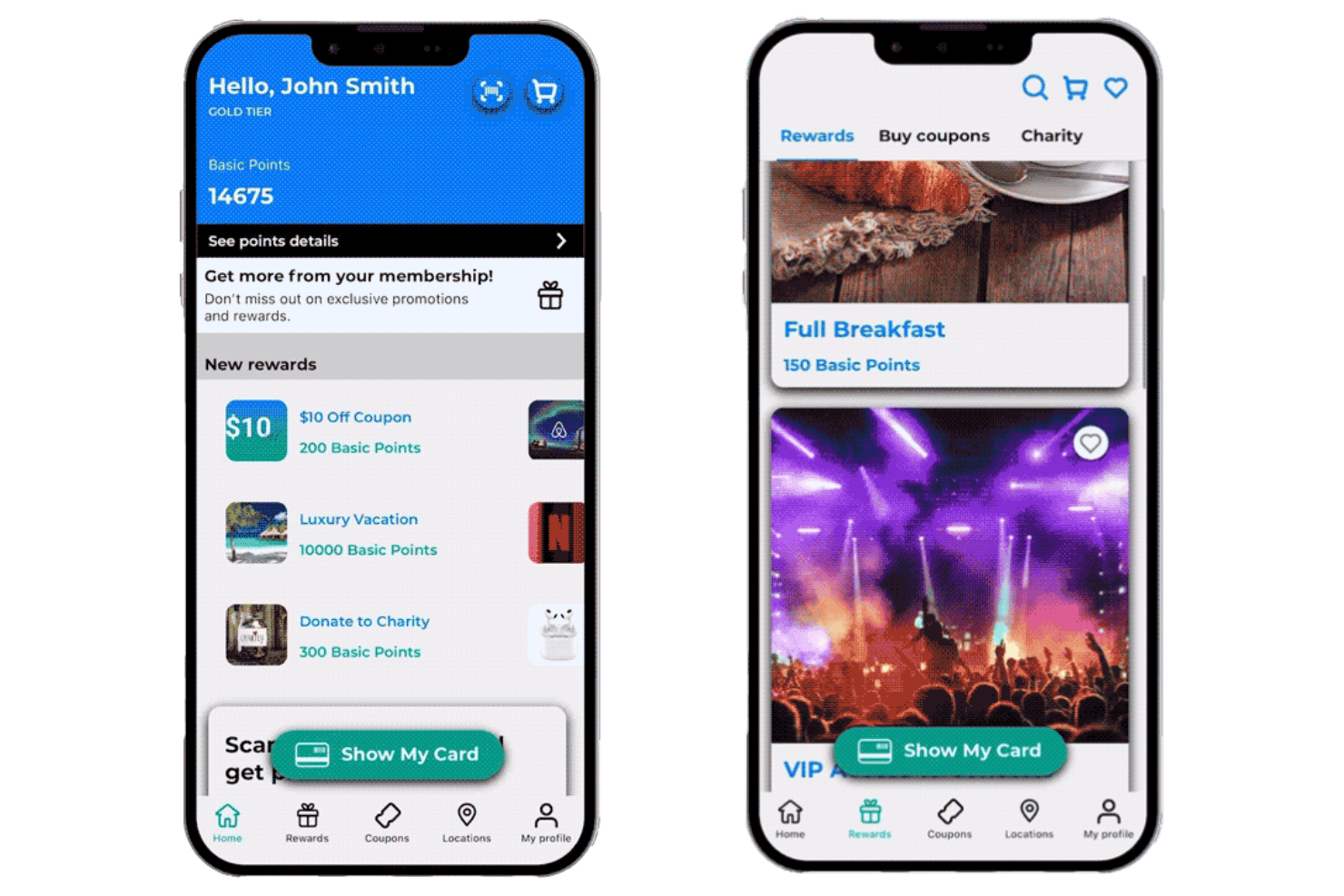
Comarch's retail loyalty program app displays a points dashboard, reward options, and a rewards catalog with breakfast and VIP access offers. Comarch is an enterprise loyalty marketing platform built around a configurable rewards engine, AI-driven segmentation, multi-tier membership management, and omnichannel marketing automation for large-scale retail loyalty programs.
Who Is Comarch Best For?
Comarch is built for enterprise retailers and large multi-brand operators running high-volume loyalty programs across multiple countries or channels.
Why I Picked Comarch
I picked Comarch because it combines loyalty program management with reward catalog and fulfillment capabilities. Retailers can offer vouchers, digital gift cards, merchandise, and experiential rewards through a built-in marketplace or connect their own catalogs through APIs. Comarch also provides branded member portals where customers can review and redeem their available rewards.
Comarch Key Features
- AI-powered segmentation: Dynamically groups customers based on behavior, demographics, or transaction data for precise targeting.
- Multi-tier membership management: Supports flexible VIP or recognition levels with custom progression rules and benefits.
- Omnichannel marketing automation: Triggers campaigns via email, SMS, or push based on purchase and engagement events.
- Enterprise-grade integration API: Connects natively to retail POS, ecommerce platforms, mobile apps, and external business systems.
Comarch Integrations
Comarch supports Shopify and Magento integrations, along with open APIs and batch interfaces for connecting CRM, POS, ecommerce, marketing, mobile, and other business systems.
Pros and Cons
Pros:
- Supports multi-country and multi-brand programs
- Advanced AI segmentation and churn prediction
- Large-scale rewards marketplace for global brands
Cons:
- Complex deployments require technical resources
- Pricing is not publicly disclosed
Learn more about Comarch: Best for unified rewards and promotions
- Free demo available
- Pricing upon request
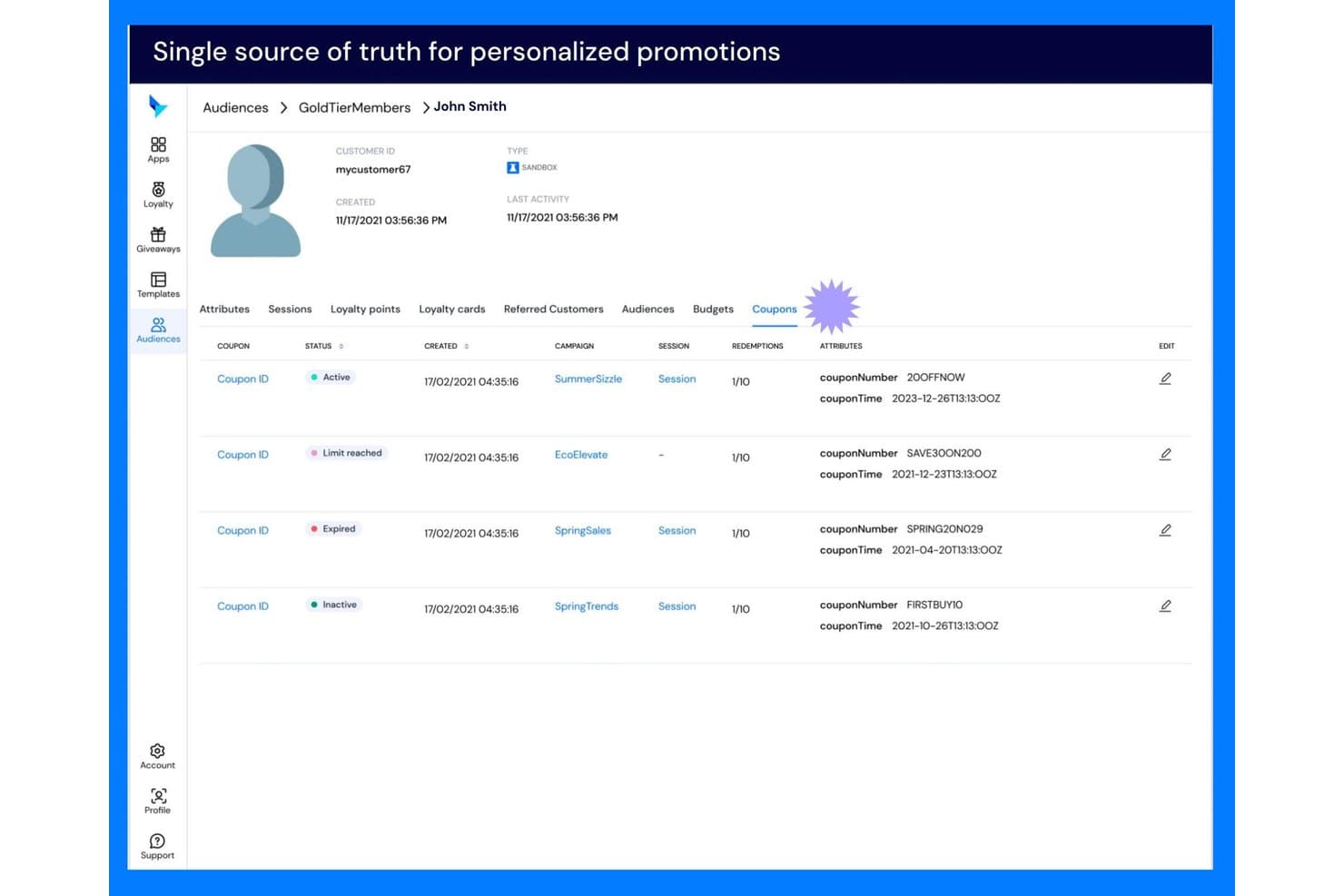
Talon.One offers a single customer profile view displaying all assigned coupons, their statuses, campaigns, and redemption data in one centralized dashboard. Talon.One is an API-first loyalty and promotions platform that combines points and tier management, rules-based campaign logic, and omnichannel integrations across POS and ecommerce systems.
Who Is Talon.One Best For?
Talon.One is a strong fit for enterprise and high-growth B2C retail brands that need to run complex, multi-channel loyalty and promotions programs at scale.
Why I Picked Talon.One
I picked Talon.One as one of the best because it's the only platform I've seen that manages promotions and loyalty within a single rules engine, rather than bolting them together. In practice, that means I can configure a "spend $100, earn double points plus unlock a bonus discount" campaign without switching tools or syncing separate systems. The rules engine also handles non-transactional earning and gamification challenges, which most standalone loyalty platforms simply don't support natively.
Talon.One Key Features
- API-driven configuration: Programmatically define and update campaigns, wallets, and member tiers using the platform’s extensive API.
- Geofence-based campaigns: Trigger location-specific promotions and rewards that sync with in-store activity in real time.
- Wallets for multiple currencies: Support points, cashback, and alternative loyalty currencies in dedicated wallets for each member.
- Real-time reporting dashboards: Monitor loyalty program performance with enrollment, redemption, and ROI metrics in up-to-the-minute dashboards.
Talon.One Integrations
Talon.One offers native integrations with Salesforce Commerce Cloud, Shopify, Oracle Retail Xstore, NewStore, PAR, Braze, Iterable, Twilio Segment, and Movable Ink. An API is available for custom integrations.
Pros and Cons
Pros:
- Handles complex tier and non-transactional rewards
- Highly customizable rules and campaign logic
- Unified platform for loyalty and promotions
Cons:
- Advanced deployments require technical resources
- No built-in email or SMS messaging
Learn more about Talon.One: Best for CRM-connected member programs
- 30-day free trial + free demo available
- From $20,000/org/month (billed annually)
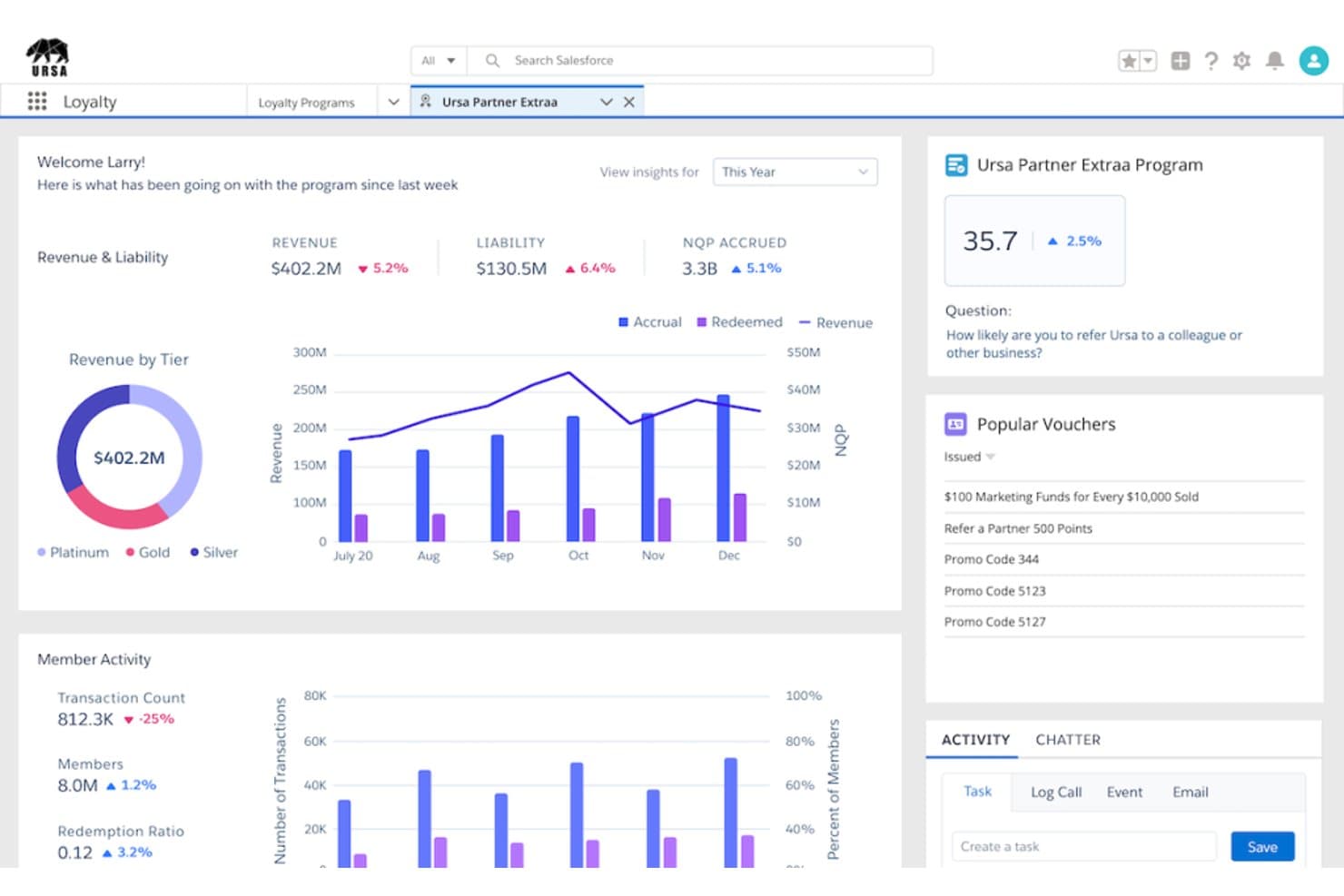
Salesforce Loyalty Management dashboard with revenue, liability, member activity, tier breakdowns, and popular vouchers for partner loyalty programs. Salesforce Loyalty Management is an enterprise loyalty platform built natively into the Salesforce ecosystem, supporting points, tiers, custom reward currencies, partner networks, and AI-driven promotions across both B2C and B2B programs.
Who Is Salesforce Loyalty Management Best For?
It's a strong fit for enterprise retailers already running on Salesforce CRM who want loyalty built into their existing customer data infrastructure.
Why I Picked Salesforce Loyalty Management
I picked Salesforce Loyalty Management because it connects loyalty activity with customer data held across the Salesforce platform. Purchases, service interactions, member profiles, and promotions can be managed within the same ecosystem. Its Loyalty Rules Designer also supports earning rules for activities such as reviews and referrals, while its partner-management capabilities help businesses run coalition programs across multiple brands.
Salesforce Loyalty Management Key Features
- Multi-program support: Run multiple loyalty programs tailored to different customer segments or brands from the same platform.
- Partner administration: Manage external partner relationships, enabling coalition loyalty with point sharing and redemption across businesses.
- Custom reward currencies: Define and configure alternative reward types, such as vouchers, discounts, or specialized brand points.
- Omnichannel data capture: Collect and unify loyalty member activity and purchase data from POS, ecommerce sites, and mobile apps.
Salesforce Loyalty Management Integrations
Salesforce Loyalty Management connects with other Salesforce products, including Data Cloud. It also supports integrations with POS, reservation, booking, billing, service, and operations systems through business APIs.
Pros and Cons
Pros:
- Supports multi-program and multi-partner structures
- Real-time AI-driven segmentation and offers
- Custom loyalty rules for diverse member actions
Cons:
- Complex implementations require technical resources
- Requires significant Salesforce ecosystem investment
Learn more about Salesforce Loyalty Management: Best for AI-generated retention campaigns
- Free demo available
- Pricing upon request
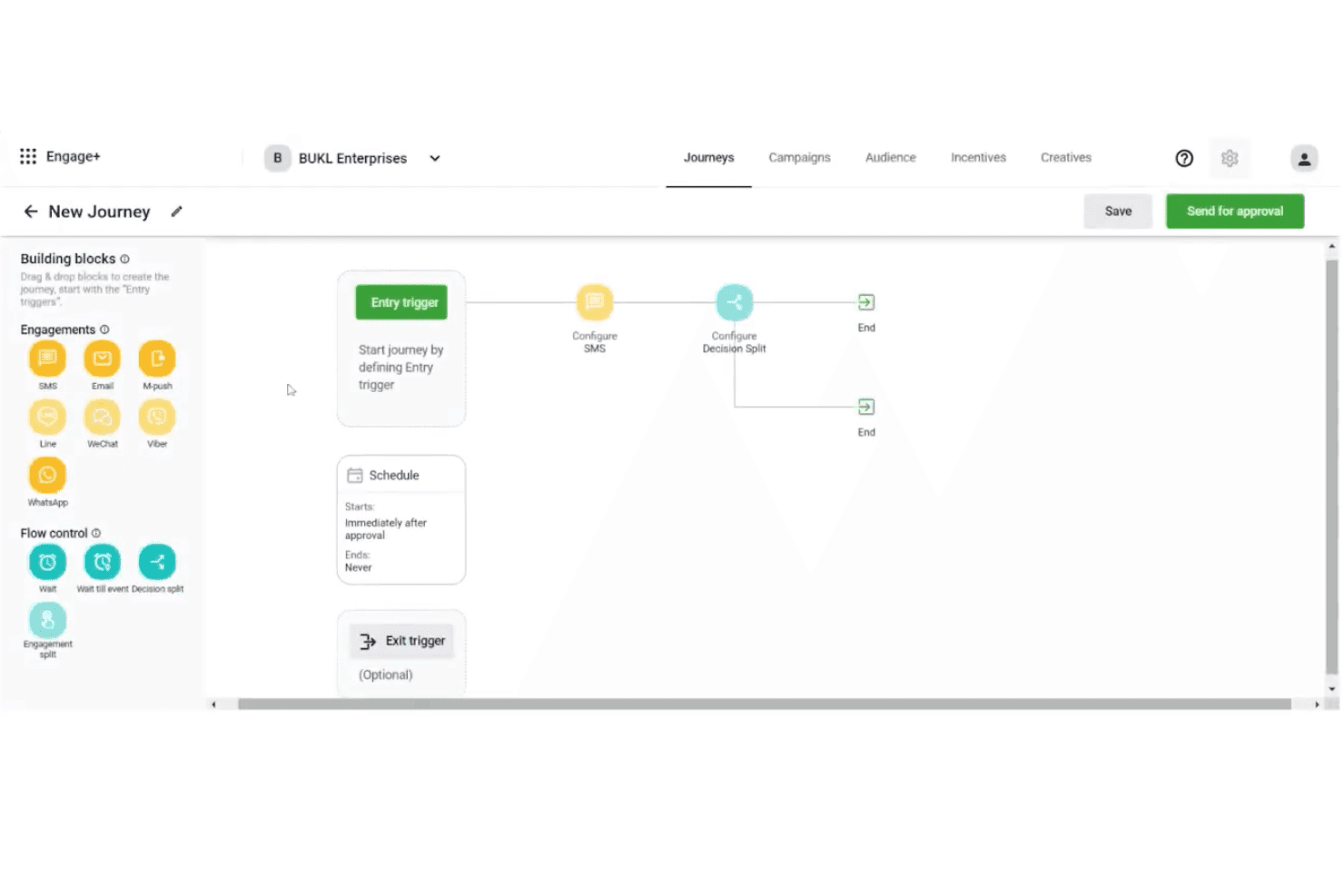
Capillary Technologies offers a visual journey builder with drag-and-drop engagement blocks like SMS, Email, and Decision Split for automated customer workflows. Capillary Technologies is an enterprise loyalty platform built for retail brands, combining a configurable points and rewards engine, AI-driven customer segmentation, tiered membership programs, and omnichannel member engagement tools across in-store and digital channels.
Who Is Capillary Technologies Best For?
Capillary Technologies is a strong fit for enterprise retail brands running complex, multi-location or multi-brand loyalty programs across global markets.
Why I Picked Capillary Technologies
I've included Capillary Technologies in my top picks because of aiRA, its agentic AI co-pilot that takes a campaign brief and builds the audience, selects the rewards, and launches across markets automatically. Paired with the Nudge framework inside CDP+, it predicts which members are at risk of lapsing and triggers the right offer before they disengage. I think this level of automation is what separates Capillary from platforms where loyalty marketers still configure every targeting rule by hand.
Capillary Technologies Key Features
- Loyalty program manager: Design and configure points, rewards, and coupon logic for multiple program types.
- Tiered membership structures: Set up and manage VIP tier levels with unique qualification rules and benefits.
- Omnichannel POS integration: Sync loyalty data with both in-store and ecommerce systems for unified member experiences.
- Rewards+ catalog management: Offer and manage a catalog of digital or physical rewards, including brand merchandise and gift cards.
Capillary Technologies Integrations
Capillary Technologies offers a documented Shopify integration and supports connections with POS, ecommerce, CRM, CDP, mobile, and other systems through APIs and SDKs.
Pros and Cons
Pros:
- Multi-market support for global retail brands
- Highly configurable points and tier structures
- AI-driven automated retention campaign builder
Cons:
- Integrations may require technical resources
- No self-serve onboarding for SMB retailers
Learn more about Capillary Technologies: Best for dual-certified Shopify rewards
- Free plan + free demo available
- From $15/month
Visit WebsiteCustomer Rating:4.8/5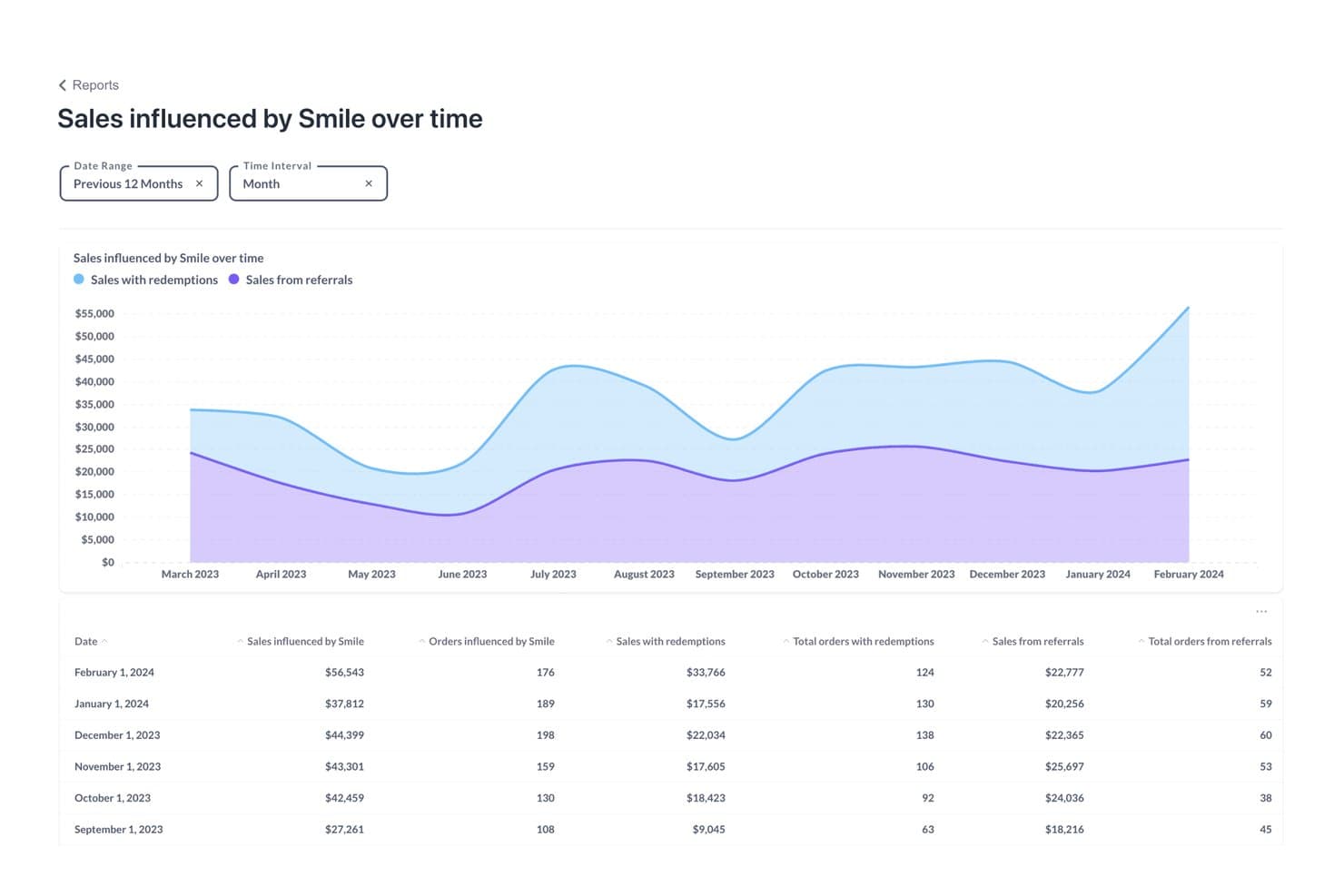
Smile.io offers a detailed analytics dashboard showing sales influenced by its loyalty program, including redemptions and referrals over a 12-month period. Smile.io is a loyalty program platform for Shopify merchants that lets you build and manage points programs, VIP tiers, and referral campaigns across online and in-store channels.
Who Is Smile.io Best For?
Smile.io is a strong fit for Shopify and Shopify Plus merchants who want a loyalty program that works natively within the Shopify ecosystem.
Why I Picked Smile.io
I picked Smile.io because its loyalty features are embedded within the Shopify ecosystem. Smile.io holds Built for Shopify certification and Shopify Technology Partner status, while its Loyalty Hub and checkout extensions let customers view points and redeem eligible rewards within their shopping experience. Its promotion tools also support scheduled bonus-point events without requiring custom development.
Smile.io Key Features
- VIP tier program: Set up multi-level membership tiers with custom qualification rules and perks.
- Shopify POS integration: Syncs loyalty data and rewards usage between online and physical stores.
- Referral rewards: Reward customers for sharing links and referring friends who make purchases.
- Integration marketplace: Connects natively to ecommerce apps like Klaviyo, Judge.me, and Gorgias for data syncing and workflows.
Smile.io Integrations
Smile.io integrates with Klaviyo, Mailchimp, Omnisend, HubSpot, Judge.me, Yotpo, Okendo, Loox, Gorgias, Recharge, and Loop Returns. API access is available on higher-tier plans.
Pros and Cons
Pros:
- Automated bonus point and reward campaigns
- Omnichannel loyalty across Shopify POS and online
- Native Shopify checkout rewards block
Cons:
- Advanced features require higher-tier plans
- Exclusively supports the Shopify ecosystem
Learn more about Smile.io: Best for rewards tied to customer reviews
- Free plan + free demo available
- From $199/month
Visit WebsiteCustomer Rating:4.4/5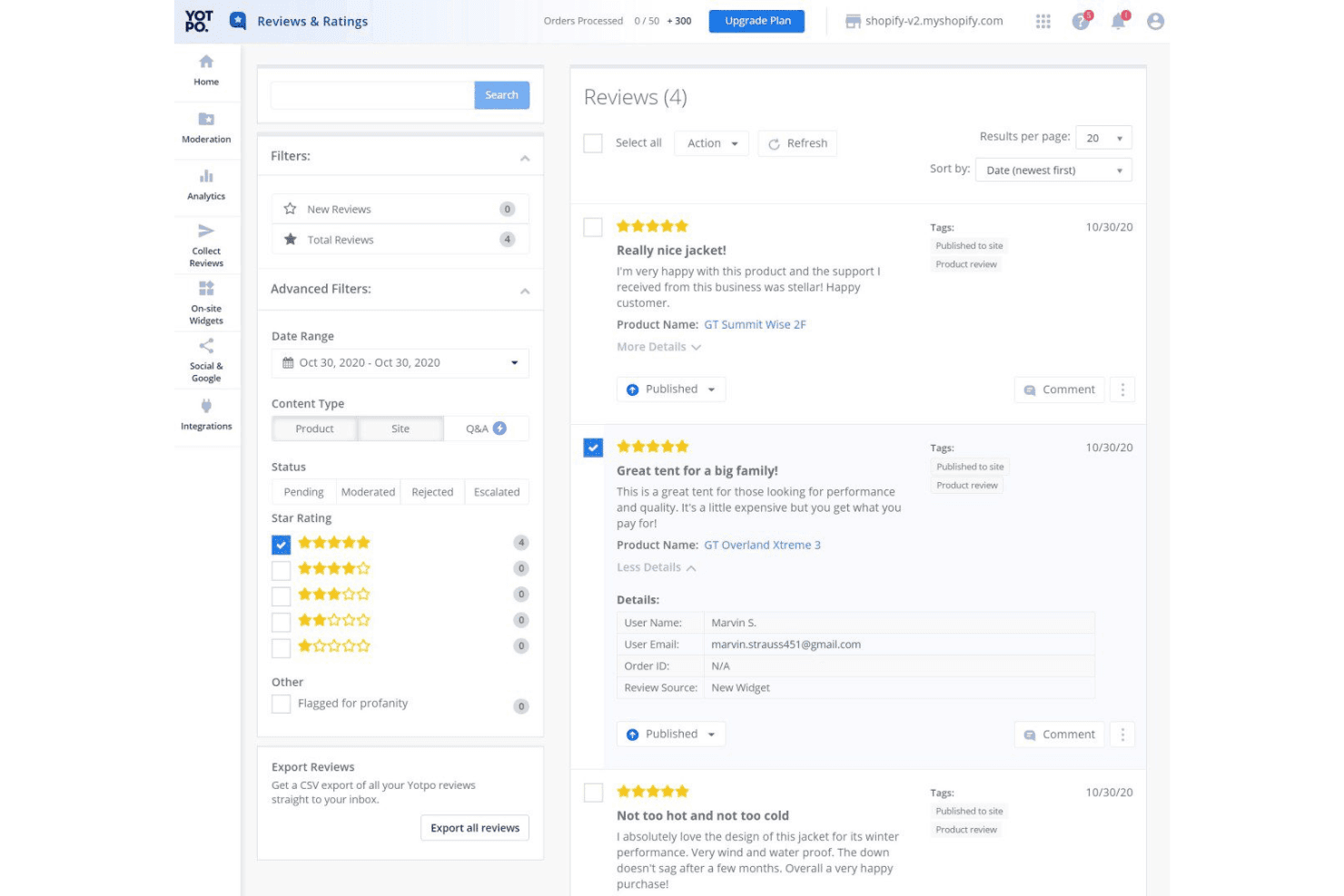
Yotpo's Reviews & Ratings dashboard allows merchants to moderate, filter, and manage customer product reviews with detailed user information and publishing controls. Yotpo Loyalty is a loyalty and referral platform that lets retailers configure points-based rewards, VIP tiers, referral programs, and review-linked earning rules across ecommerce and in-store channels.
Who Is Yotpo Best For?
Mid-market DTC and retail brands running on Shopify that want to connect customer review activity directly to loyalty rewards.
Why I Picked Yotpo
I picked Yotpo because its Loyalty and Reviews products can work together to reward customers for submitting reviews. Retailers can assign points to verified reviews and connect this activity with their broader rewards programs. Yotpo also displays loyalty balances and available rewards at different points in the customer journey, helping brands keep members aware of their program benefits.
Yotpo Key Features
- VIP tier management: Set up multiple loyalty tiers with tier-specific rewards and automatic member progression.
- Apple Wallet and Google Pay cards: Enable shoppers to save and use digital loyalty cards both online and in-store.
- Referral rewards engine: Power referrals with double-sided rewards and custom referral tracking.
- Segmentation and targeting tools: Filter and segment program members to deliver personalized loyalty campaigns.
Yotpo Integrations
Yotpo Loyalty supports 65 integrations, including Shopify, Klaviyo, Attentive, Gorgias, BigCommerce, Salesforce Commerce Cloud, and Adobe Commerce. An API is also available for custom integrations.
Pros and Cons
Pros:
- Digital loyalty cards for in-store and online
- Flexible VIP tiers with automated upgrades
- Built-in connection between reviews and loyalty
Cons:
- Some features only available on Shopify
- Loyalty tiers require paid plans
 Best for Shopify revenue insights
- Free plan + 14-day free trial + free demo available
- From $199/month
Visit WebsiteCustomer Rating:4.2/5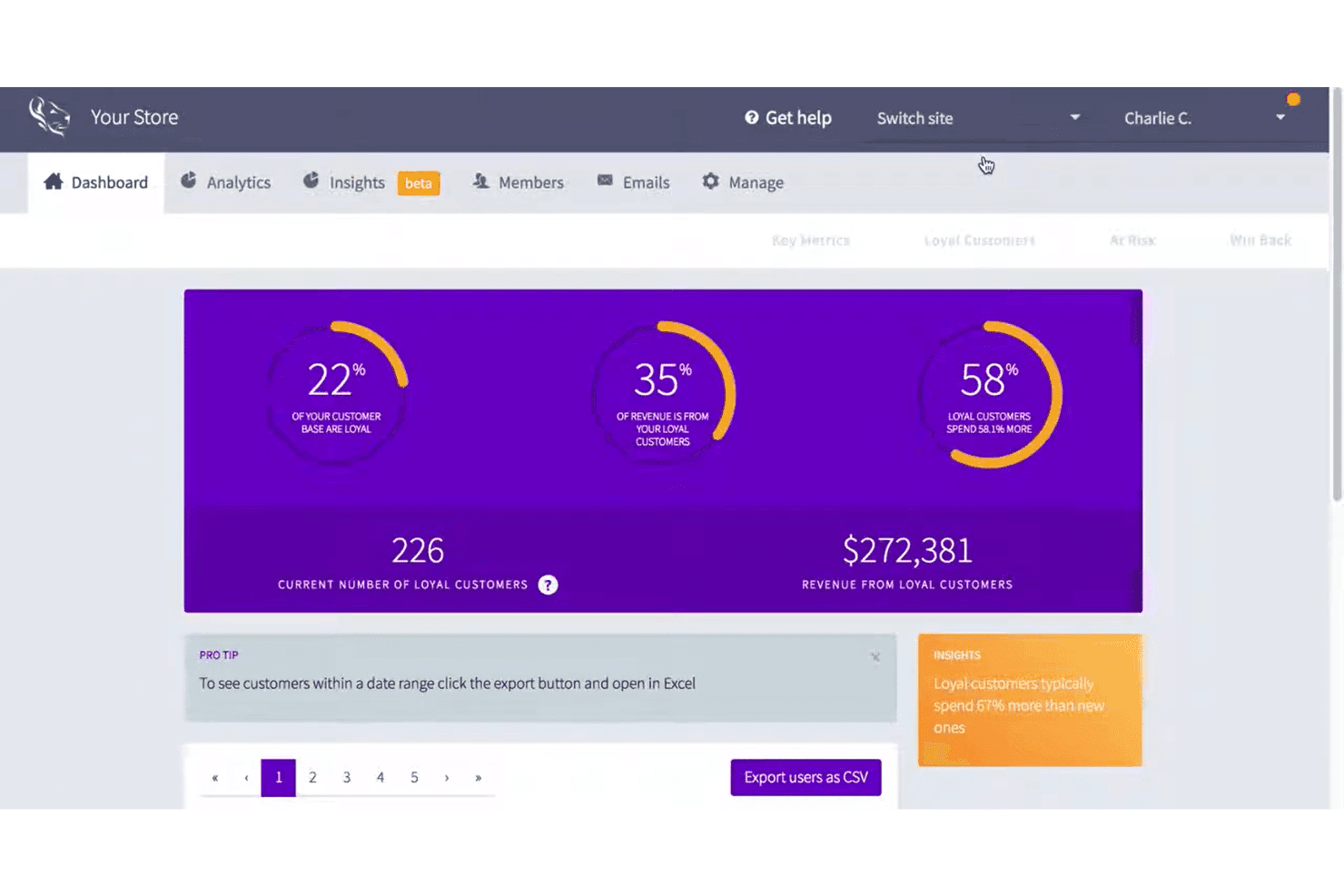
LoyaltyLion displays a dashboard showing that 22% of the customer base are loyal, generating $272,381 in revenue from 226 loyal customers. LoyaltyLion is a Shopify-native loyalty platform that lets retailers configure points programs, VIP tiers, referral campaigns, and loyalty challenges, paired with built-in analytics that track member behavior and customer lifetime value.
Who Is LoyaltyLion Best For?
LoyaltyLion is a strong fit for Shopify and Shopify Plus merchants who want to combine a loyalty program with deep customer revenue analytics.
Why I Picked LoyaltyLion
I picked LoyaltyLion because its analytics connect loyalty participation with customer revenue and retention. The platform groups members into segments such as Loyal, At Risk, and Win Back, helping teams prioritize retention campaigns. Its predictive analytics, customer lifetime value metrics, and revenue reporting also help retailers understand which members and program activities contribute to growth.
LoyaltyLion Key Features
- Customizable earning rules: Set up points for purchases, reviews, referrals, social engagement, birthdays, and custom actions.
- Unlimited VIP tiers: Build multi-level membership programs with unique perks and automatic tier progression.
- Receipt upload: Let customers earn loyalty rewards for qualifying purchases made outside Shopify or online channels.
- Shopify POS integration: Redeem rewards and track loyalty data seamlessly in-store and online through Shopify’s point of sale.
LoyaltyLion Integrations
LoyaltyLion supports more than 100 integrations, including Shopify, Shopify Plus, Shopify POS, Klaviyo, Gorgias, Attentive, Recharge, Loop, Loox, and Zendesk. APIs are also available for custom integrations.
Pros and Cons
Pros:
- Strong multi-location support for Shopify stores
- Highly flexible points and rewards configuration
- Deep analytics for customer segments and CLV
Cons:
- Email and SMS rely on external tools
- POS support mostly limited to Shopify
Learn more about LoyaltyLion: Best for multi-brand program management
- Free demo available
- Pricing upon request
Visit WebsiteCustomer Rating:4.1/5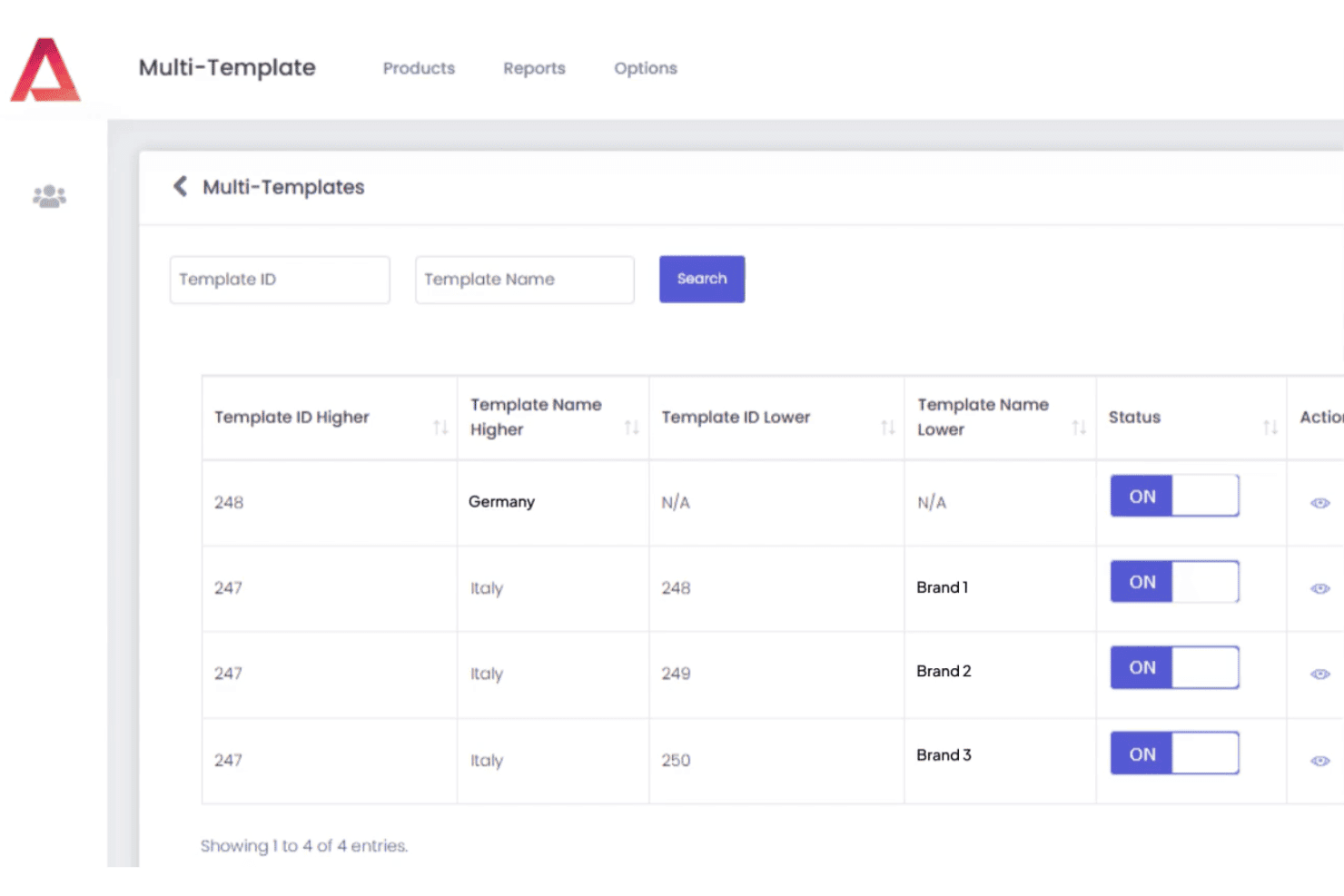
Annex Cloud Multi-Template management lets users search, view, and toggle the status of paired loyalty program templates. Annex Cloud is an enterprise loyalty platform built around a flexible rules engine that supports points, tiers, rewards, referrals, and UGC across omnichannel retail environments.
Who Is Annex Cloud Best For?
Annex Cloud is a strong fit for enterprise retailers in apparel, beauty, and lifestyle who manage multiple brands across global markets.
Why I Picked Annex Cloud
I picked Annex Cloud because its configurable architecture supports different earning rules, tier thresholds, and reward catalogs across multiple brands. It also supports multiple currencies, languages, regions, and program instances within the same platform. This makes it a strong option for global retailers managing several distinct loyalty programs.
Annex Cloud Key Features
- Referral tracking: Capture and reward customer-to-customer referrals directly from the loyalty dashboard.
- Campaign segmentation: Segment loyalty members using RFM, purchase patterns, or custom attributes for targeted campaign delivery.
- User-generated content integration: Tie review and photo submission activities directly to loyalty earning events.
- Omnichannel engagement tracking: Monitor and capture loyalty actions across POS, ecommerce, app, and call center environments.
Annex Cloud Integrations
Annex Cloud offers more than 125 data connectors and integrated components, including SAP Customer Data Cloud, Microsoft Dynamics Service Cloud, Adobe Commerce, Adyen, BigCommerce, Bloomreach, Braze, commercetools, and Constant Contact. APIs are also available for custom integrations.
Pros and Cons
Pros:
- Strong user-generated content earning features
- Supports region-specific tier and reward structures
- Multiple brands managed within one loyalty platform
Cons:
- No self-serve option for small retailers
- Implementation requires technical planning
Learn more about Annex Cloud:
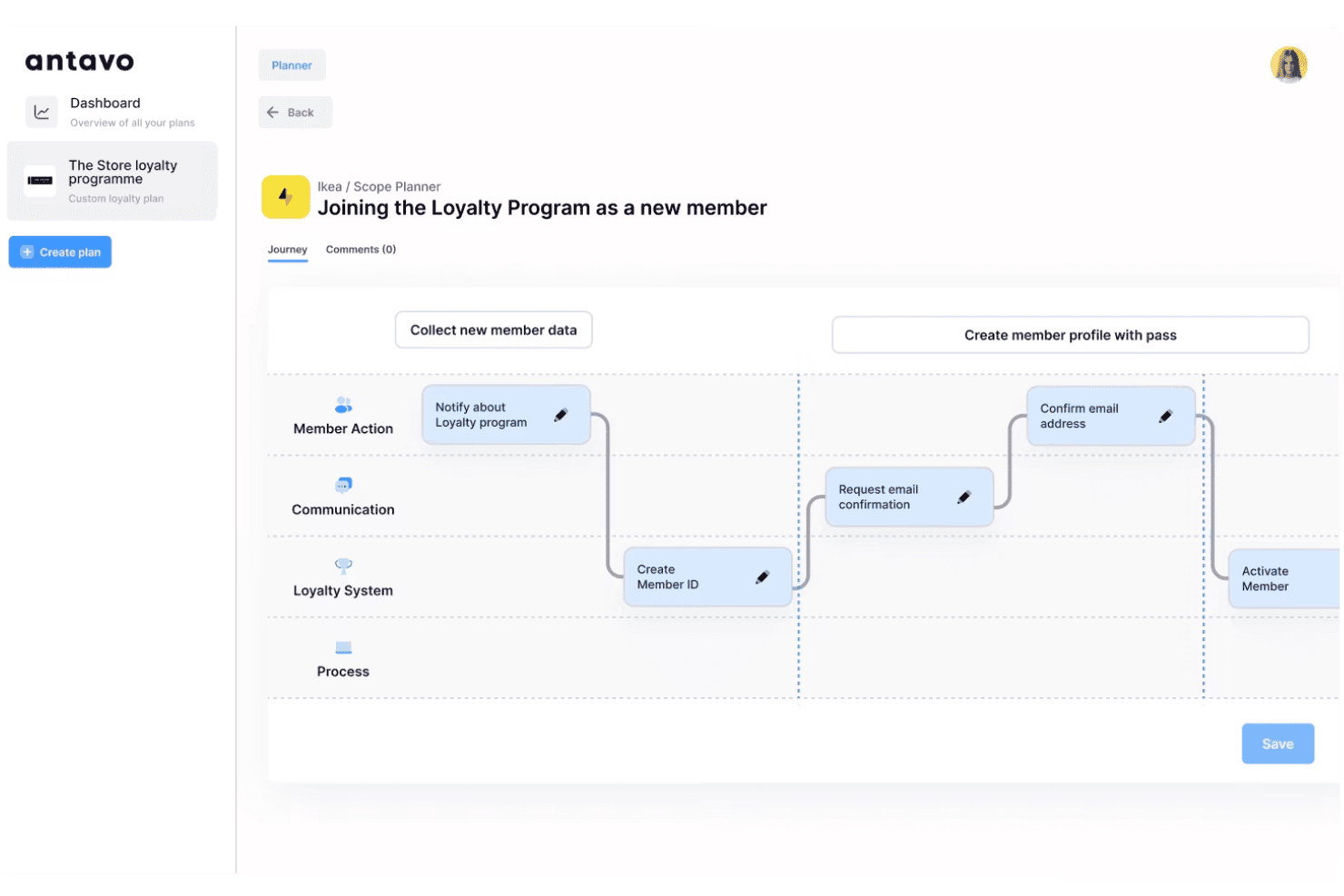
Antavo offers a visual journey planner that maps out the loyalty program onboarding flow for new members across key touchpoints. Antavo is an API-first loyalty platform built for retail and ecommerce brands that combines a points and rewards engine, tiered membership programs, gamification, and omnichannel loyalty delivery across POS, ecommerce, and mobile channels.
Who Is Antavo Best For?
Antavo is a strong fit for mid-market and enterprise retail brands whose marketing or CRM teams need to manage complex, multi-market loyalty programs without relying on engineering resources.
Why I Picked Antavo
I picked Antavo because its no-code Workflows editor lets marketing teams configure earning rules, tier progression, and bonus-point events without changing backend code. Its Loyalty Planner helps teams structure new programs and campaigns, while its AI tools analyze member behavior and identify potential engagement changes. This combination makes Antavo particularly useful for retailers that want greater control over complex loyalty programs without depending on developers for every adjustment.
Antavo Key Features
- Custom loyalty currencies: Configure points, stamps, or credits with flexible earning and expiration settings.
- Gamification modules: Add challenges, badges, prize wheels, and leaderboards to drive ongoing participation.
- Receipt scanning capabilities: Capture out-of-network purchases for loyalty rewards using image upload or scanning.
- Behavioral segmentation tools: Build member audiences with real-time data from actions, RFM, and preferences.
Antavo Integrations
Antavo offers integrations with Shopify, Shopify Plus, Klaviyo, Braze, Bloomreach, Mailchimp, Yotpo, Garmin, Salesforce Commerce Cloud, Salesforce Marketing Cloud, Salesforce Sales Cloud, and Salesforce Service Cloud. APIs are available for custom integrations.
Pros and Cons
Pros:
- Configurable gamification and challenges options
- Multiple types of loyalty currencies supported
- No-code workflows for program design
Cons:
- Communications rely mostly on third-party tools
- No self-service onboarding option
Learn more about Antavo:
Other Retail Loyalty Program Software
Here are some additional retail loyalty program software options that didn’t make it onto my shortlist, but are still worth checking out:
How I Evaluate Retail Loyalty Program Software
I split my evaluation into baseline requirements—like POS integration and points engines—and differentiators that show how well each platform can support different business needs and loyalty strategies.
Core Functionality (Table Stakes For This List)
When I'm selecting tools for my list, I rank each one on a scale from 0 (does not offer the functionality) to 5 (excels in this area) for each core functionality listed below. Then, I calculate the tool's total score into a percentage. Each tool needs to achieve a minimum total score of 65% to be considered for inclusion.
- Points & Rewards Engine: I evaluate how much control you get over earning rules and redemption options—like awarding bonus points on specific product categories or setting expiration windows.
- Tiered Membership Programs: Multi-level structures matter, so I look for automatic tier progression, downgrade logic, and the ability to assign tier-specific perks like early access or free shipping.
- POS & Ecommerce Integration: I check whether the platform connects with major POS systems and ecommerce platforms so customers can earn and redeem points whether they're shopping in-store or online.
- Customer Segmentation & Targeting: Good loyalty platforms let you segment members by purchase history or RFM scores. I look for dynamic audience building that goes beyond basic demographic filters.
- Member Communications: I evaluate whether the platform supports email, SMS, and push notifications with triggered automations—like sending a points balance reminder when a member is close to a reward.
- Loyalty Analytics & Reporting: Dashboards should track more than just member counts. I look for redemption rate tracking, program ROI visibility, and retention metrics that help you measure real impact.
Once I have a list of tools that meet the criteria, I consider what sets each platform apart.
Differentiating Factors (What Sets Vendors Apart)
Here's how I compare and contrast different vendors:
Standout Features
Omnichannel redemption is a big differentiator—I look for platforms where point balances sync in real time across POS, ecommerce, and mobile so a customer who earns points in-store can redeem them online without friction. Gamification mechanics like challenges, badges, and streak rewards keep shoppers engaged between purchases, which is especially useful for retailers with longer buying cycles. I also evaluate referral and advocacy tools that reward customers for social sharing or posting reviews, turning your loyalty members into an acquisition channel.
Beyond Features
Pricing model transparency matters a lot here—some platforms charge per member, which can spike costs fast as your loyalty program grows. I evaluate whether vendors offer flat SaaS pricing or if add-ons like SMS and advanced analytics push costs higher. Integration depth is another key factor. I check for native connectors to retail POS systems like Shopify POS, Square, and Lightspeed alongside ecommerce platforms, with real-time transaction syncing. Data ownership terms also deserve attention, especially your ability to export member data and sync it with your existing CRM or CDP.
How to Choose Retail Loyalty Program Software
It’s easy to get bogged down in long feature lists and complex pricing structures. To help you stay focused as you work through your unique software selection process, here’s a checklist of factors to keep in mind:
| Factor | What to Consider |
|---|---|
| FactorScalability | What to ConsiderWill the solution handle a sharp increase in members, stores, or locations? Check for pricing or limits as you grow. |
| FactorIntegrations | What to ConsiderWhich POS, ecommerce, and marketing tools does it natively connect with? How complicated is mapping your retail workflows? |
| FactorCustomizability | What to ConsiderCan you adapt program rules, tiers, and branding without heavy vendor involvement? Consider configurability for your model. |
| FactorEase of use | What to ConsiderHow simple are setup and daily use for retail marketing and store teams? Prioritize tools your staff will actually use. |
| FactorImplementation and onboarding | What to ConsiderHow long does launch take and what resources or specialists will you need? Ask about onboarding timelines and training included. |
| FactorCost | What to ConsiderBeyond license fees, what are the costs for modules, usage, or service? Request complete pricing scenarios before deciding. |
| FactorSecurity safeguards | What to ConsiderHow does the vendor keep customer data secure and compliant? Look for data privacy, encryption, and strong access controls. |
| FactorInternational capabilities | What to ConsiderIf you operate globally, can the platform handle multi-currency, multi-language, and country-specific rollouts? |
What Is Retail Loyalty Program Software?
Retail loyalty program software is a type of platform that helps retailers create, manage, and automate customer rewards programs across in-store and online channels. These tools let you set up points, tiers, personalized offers, and redemption options that encourage repeat purchases and boost customer engagement. By connecting with your POS and ecommerce systems, loyalty software tracks customer activity, delivers targeted promotions, and measures the impact of your loyalty initiatives. By making rewards more relevant and consistent, these platforms can strengthen each customer relationship and support a long-term relationship between retailers and their most engaged shoppers.
Features of Retail Loyalty Program Software
When selecting retail loyalty program software, keep an eye out for the following key features:
- Points system: Lets you award points for purchases or behaviors and set custom earning and redemption rules that match your unique customer journey.
- Tiered membership levels: Supports VIP or multi-tier programs with automatic upgrades, downgrades, and exclusive perks to encourage more frequent shopping.
- Omnichannel integration: Connects in-store POS and ecommerce platforms so customers earn and redeem rewards seamlessly across every channel.
- Customizable rewards: Offers flexible options like discounts, free items, or store credit so you can shape the loyalty experience around your brand and customer base.
- Customer segmentation: Allows you to target specific shopper groups based on purchase history, frequency, or demographics for more personalized rewards and campaigns.
- Automated communications: Sends out email, SMS, or push notifications to update members about point balances, rewards, and special offers without manual effort.
- Real-time reporting: Provides dashboards and analytics to help you track membership growth, redemption rates, and program ROI.
- Referral program tools: Enables customers to refer friends and family, rewarding both parties for successful signups or purchases.
- Mobile compatibility: Lets members access their loyalty account, check balances, and redeem rewards via a branded mobile app or mobile-friendly portal.
- Fraud prevention controls: Monitors for suspicious activity like point abuse or duplicate accounts and lets you set rules to minimize risks to your program.
Common Retail Loyalty Program Software AI Features
Beyond the standard retail loyalty program software features listed above, many of these solutions are incorporating AI with features like:
- Predictive customer segmentation: Uses AI to analyze shopping patterns and automatically group customers based on their likelihood to purchase, churn, or respond to specific offers.
- Personalized offer recommendations: Analyzes purchases, browsing behavior, and engagement data to deliver tailored rewards and create more personalized experiences for members.
- Churn risk detection: Identifies members who are at risk of disengaging or leaving the program, enabling you to trigger targeted win-back campaigns before they lapse.
- Dynamic reward optimization: Continuously tests and adjusts reward structures using AI to maximize engagement and redemption rates for different customer segments.
- Automated campaign timing: Determines the best time to send offers or reminders to each member based on their unique shopping habits and response history.
Benefits of Retail Loyalty Program Software
Implementing retail loyalty program software provides several benefits for your team and your business. Here are a few you can look forward to:
- Increased customer retention: Rewards and personalized offers encourage repeat visits and help build lasting shopper relationships.
- Higher average order value: Tiered programs and points incentives motivate members to spend more per transaction.
- Consistent omnichannel experience: Integration with POS and ecommerce systems lets customers earn and redeem rewards seamlessly across every channel.
- Actionable customer insights: Real-time analytics and segmentation tools help retailers understand buying behavior, improve the customer experience, and tailor their marketing activities.
- Automated member engagement: Built-in communications and trigger-based messaging keep members informed and active with minimal manual effort.
- Scalable program management: Automation and configurable workflows make it simple to grow your program as your business and customer base expand.
- New customer acquisition: Referral tools turn existing members into advocates, bringing in new shoppers through word-of-mouth, social media, and other sharing channels.
Costs and Pricing of Retail Loyalty Program Software
Selecting retail loyalty program software requires an understanding of the various pricing models and plans available. Costs vary based on features, team size, add-ons, and more. The table below summarizes common plans, their prices, and typical features included in retail loyalty program software solutions:
Plan Comparison Table for Retail Loyalty Program Software
| Plan Type | Typical Pricing Model | Common Features |
|---|---|---|
| Plan TypeFree Plan | Typical Pricing Model$0 with usage limits | Common FeaturesBasic points programs, limited integrations, member or order limits, and standard reporting |
| Plan TypeStarter Plan | Typical Pricing ModelFrom $15/month | Common FeaturesPoints, referrals, basic branding, ecommerce integration, and standard support |
| Plan TypeGrowth Plan | Typical Pricing ModelFrom $199/month | Common FeaturesVIP tiers, segmentation, multi-location support, advanced integrations, and deeper analytics |
| Plan TypeEnterprise Plan | Typical Pricing ModelCustom or usage-based pricing | Common FeaturesAPIs, complex workflows, dedicated support, security controls, and multi-brand program management |
Retail Loyalty Program Software FAQs
Here are some answers to common questions about retail loyalty program software:
How does retail loyalty program software integrate with my existing systems?
Most loyalty solutions offer seamless integration with major POS and ecommerce platforms, allowing point accrual, redemptions, and customer data to sync at each touchpoint. Ask vendors about real-time syncing, API options, and compatibility with your specific technology stack.
What are the biggest challenges when launching a retail loyalty program?
Common hurdles include data migration, employee training, and configuring the program to align with your brand and customer behavior. Look for vendors that provide onboarding support, clear documentation, and project management during setup.
Can I customize rewards and program rules for my business?
Yes, most platforms let you define your own points, tiers, and rewards structure—allowing you to align incentives with your goals. Check if the tool supports branded portals, flexible rule engines, and the ability to edit benefits as your needs change.
How do these tools help reduce fraud and abuse?
Retail loyalty program software includes controls like suspicious activity alerts, points validation, approval workflows, and account verification to help protect your program. Review security features to ensure you can set parameters and monitor activity easily.
Are there options for international retailers?
Yes, many solutions offer multi-currency, multi-language, and region-specific options for retailers operating in different countries. Confirm support for your target markets, tax handling, and compliance needs if you serve global customers.
How do I measure loyalty program ROI?
Use the software’s analytics tools to track metrics like member enrollment, repeat purchase rates, average order value, and reward redemption. Connecting these KPIs to revenue and retention helps you assess program performance and make data-driven adjustments.