
10 Best Retail AI Solutions Reviewed in 2026

Best Retail AI Solutions Shortlist


Running a retail operation means juggling constant moving pieces — keeping stock levels in check, anticipating what shoppers will want next, and improving how people interact with your store. Retail AI tools help you handle those pressures by giving you clearer forecasts, sharper insights, and faster ways to respond to day-to-day demands.
In my experience testing and reviewing software, I know how AI capabilities can transform your retail management. You'll find my unbiased, well-researched review of the top retail AI solutions in this listicle.
I'll guide you through their features, functions, and benefits, so you can make an informed decision for your team.
Why Trust Our Software Recommendations
Our team has been testing and reviewing software since 2012. As retail leaders ourselves, we know how difficult—and important—it is to choose the right software.
For this guide, we evaluated tools using hands-on testing and independent research, scoring tools using our selection criteria.
Our reviews reflect our independent judgment—not a sales pitch.
Retail AI Solutions Comparison Table
This comparison table summarizes pricing details for my top retail AI solution selections:
| Tool | Best For | Trial Info | Price | ||
|---|---|---|---|---|---|
| 1 | Best for AI-driven PO procurement | 90-day free trial | From $100/month | Website | |
| 2 | Best with AI agent trained on your knowledge base | Free plan available; 7-day free trial | From $24.17/month (billed annually) | Website | |
| 3 | Best for integrated business solutions | Free demo available | Pricing upon request | Website | |
| 4 | Best for cloud-based AI services | Free plan available + 30-day free trial | From $0.008/vCPU/hour | Website | |
| 5 | Best for customer relationship management | 30-day free trial | From $25/user/month | Website | |
| 6 | Best for AI-assisted ERP setup | Free demo available | Pricing upon request | Website | |
| 7 | Best for large-scale AI deployment | Free trial available | Contact AWS for pricing | Website | |
| 8 | Best for AI governance and hybrid cloud modernization | Free demo available | Pricing upon request | Website | |
| 9 | Best for in-store monitoring and video analytics | Free demo available | Pricing upon request | Website | |
| 10 | Best for enterprise resource planning | Free trial + free demo available | Pricing upon request | Website |
Best Retail AI Solution Reviews
Below are my detailed summaries of the best retail AI solutions that made it onto my shortlist. My reviews offer a detailed look at the key features, pros & cons, integrations, and ideal use cases of each tool to help you find the best one for you.

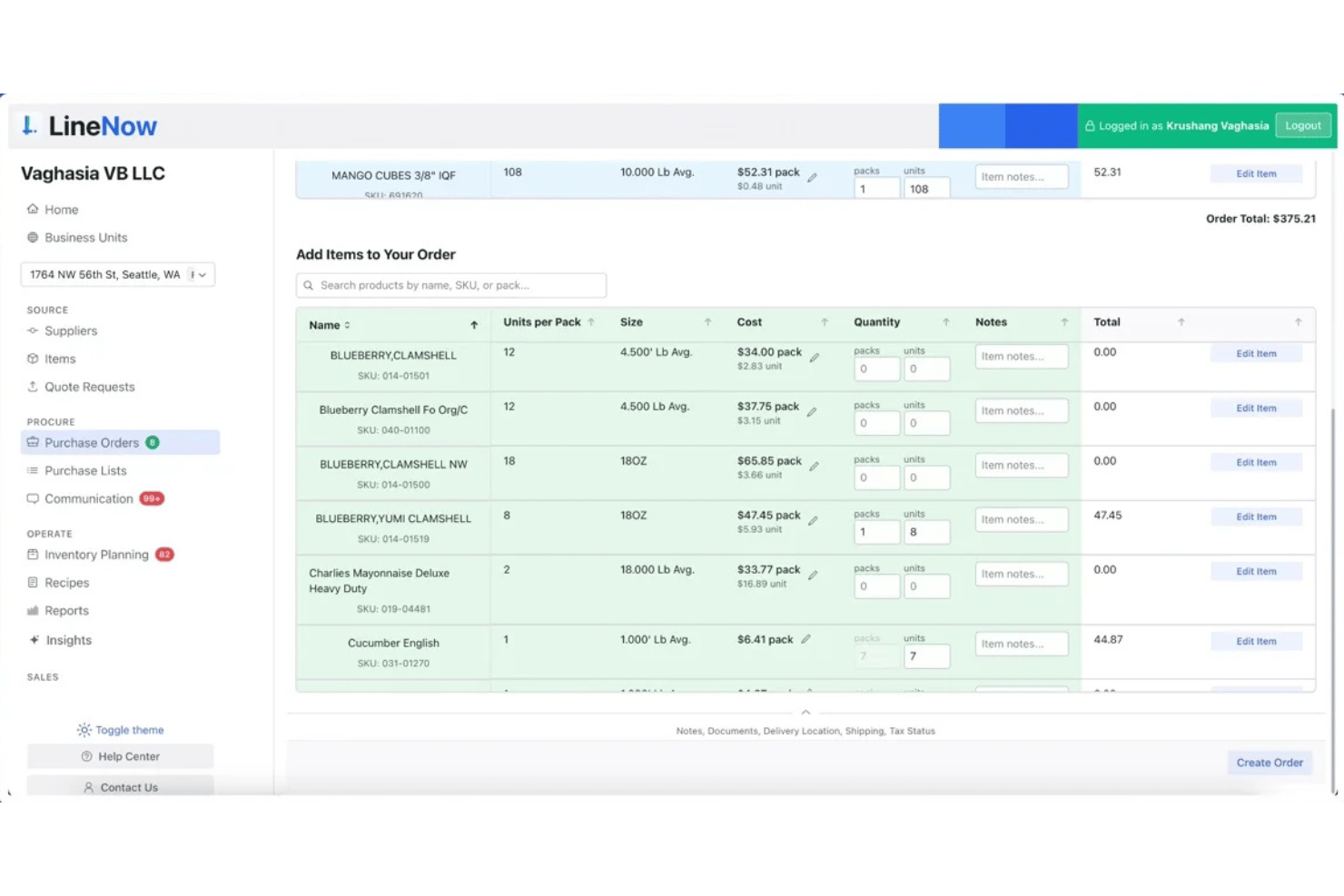
LineNow is a purchase order and inventory management tool that automates procurement workflows for small and mid-sized retailers, covering PO creation, supplier communication, inventory tracking, and accounting sync.
Who Is LineNow Best For?
LineNow suits small and mid-sized retailers managing procurement manually, especially those running multiple locations or sales channels who need to automate PO creation and supplier communication.
Why I Picked LineNow
I picked LineNow as one of the best because its AI handles the most time-consuming part of procurement: building and managing POs without manual input. When stock dips below a reorder threshold, LineNow auto-drafts the PO. When a supplier replies with a backorder or substitution, the AI reads that email and updates the order record automatically. I find that combination, triggered ordering plus AI-parsed supplier communication, genuinely hard to replicate in other small-business procurement tools.
LineNow Key Features
- Sales velocity ranking: Sorts inventory by how quickly items sell, so you can prioritize reorders for your fastest-moving SKUs.
- Multi-location inventory visibility: Tracks stock levels across stores, warehouses, and sales channels in a single view.
- Supplier price change detection: Flags when a supplier updates their pricing so you can review cost impacts before confirming orders.
- Accounting sync: Pushes completed PO and receiving data directly to QuickBooks or Xero to close the procurement-to-payment loop.
LineNow Integrations
Integrations include Square, Toast, Clover, Lightspeed, Shopify, Amazon, Faire, QuickBooks, and Xero.
Pros and Cons
Pros:
- Hands-on onboarding and strong user support
- Interprets supplier replies and updates orders
- AI auto-drafts POs when stock runs low
Cons:
- Not recognized in major retail AI reports
- No AI-driven demand forecasting features

Tidio
Best with AI agent trained on your knowledge base
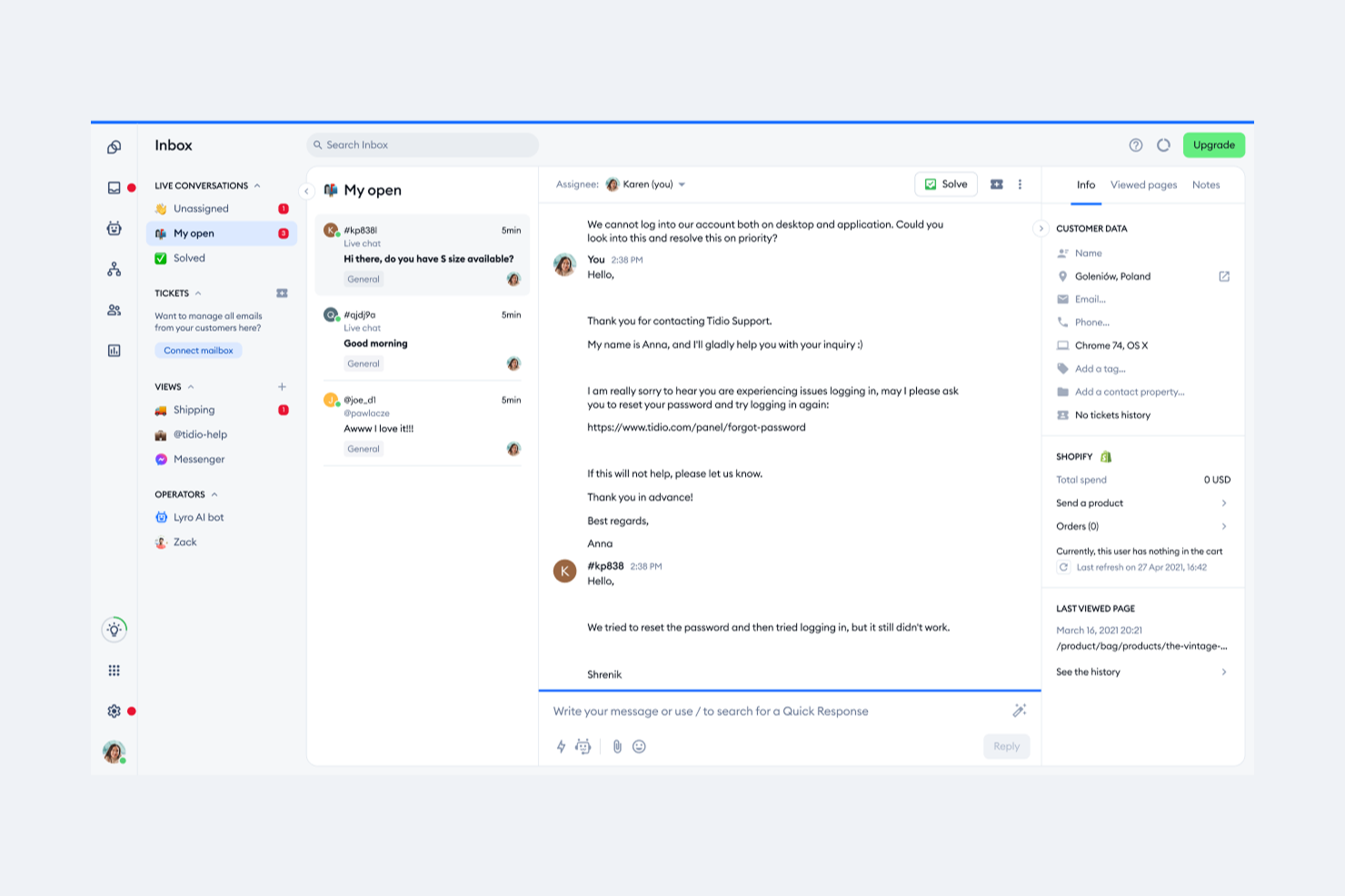
Tidio brings AI-powered chat and automation to retail and ecommerce teams looking to improve customer engagement and support. The platform combines live chat, chatbots, and multichannel messaging in one place, helping businesses manage conversations and automate repetitive tasks. If you want to unify customer interactions and boost efficiency across your digital storefronts, Tidio offers a focused set of tools built for retail needs.
Who Is Tidio Best For?
Tidio is a strong choice for ecommerce and retail businesses that want to automate customer support and manage multichannel conversations from a single platform.
Why I Picked Tidio
What sets Tidio apart for retail ai solutions is its AI agent that you can train using your own knowledge base. I picked Tidio because it allows you to upload FAQs, help docs, and product information, so the AI agent can deliver accurate, brand-specific answers to customer questions. This feature helps retail teams provide instant, consistent support on topics like order status, returns, and product details. By leveraging your business’s unique knowledge, Tidio’s AI agent reduces repetitive inquiries and frees up your team for more complex tasks.
Tidio Key Features
Some other features in Tidio that support retail teams include:
- Live chat widget: Connect with website visitors in real time and answer questions directly from your site.
- Multichannel inbox: Manage conversations from email, Messenger, Instagram, and WhatsApp in a single dashboard.
- AI-powered FAQ bot: Automatically responds to common customer questions using your business’s knowledge base.
- Shopify and WooCommerce integrations: Sync customer data and automate workflows directly with leading ecommerce platforms.
Tidio Integrations
Integrations include Shopify, WooCommerce, Zendesk, Salesforce, HubSpot, Messenger, Instagram, WhatsApp, WordPress, and Adobe Commerce.
Pros and Cons
Pros:
- Pre-built templates for retail-specific workflows
- Real-time visitor tracking for proactive engagement
- No-code automation builder for customer journeys
Cons:
- Chatbot customization options can feel restrictive
- Some integrations require higher-tier plans
Oracle
Best for integrated business solutions
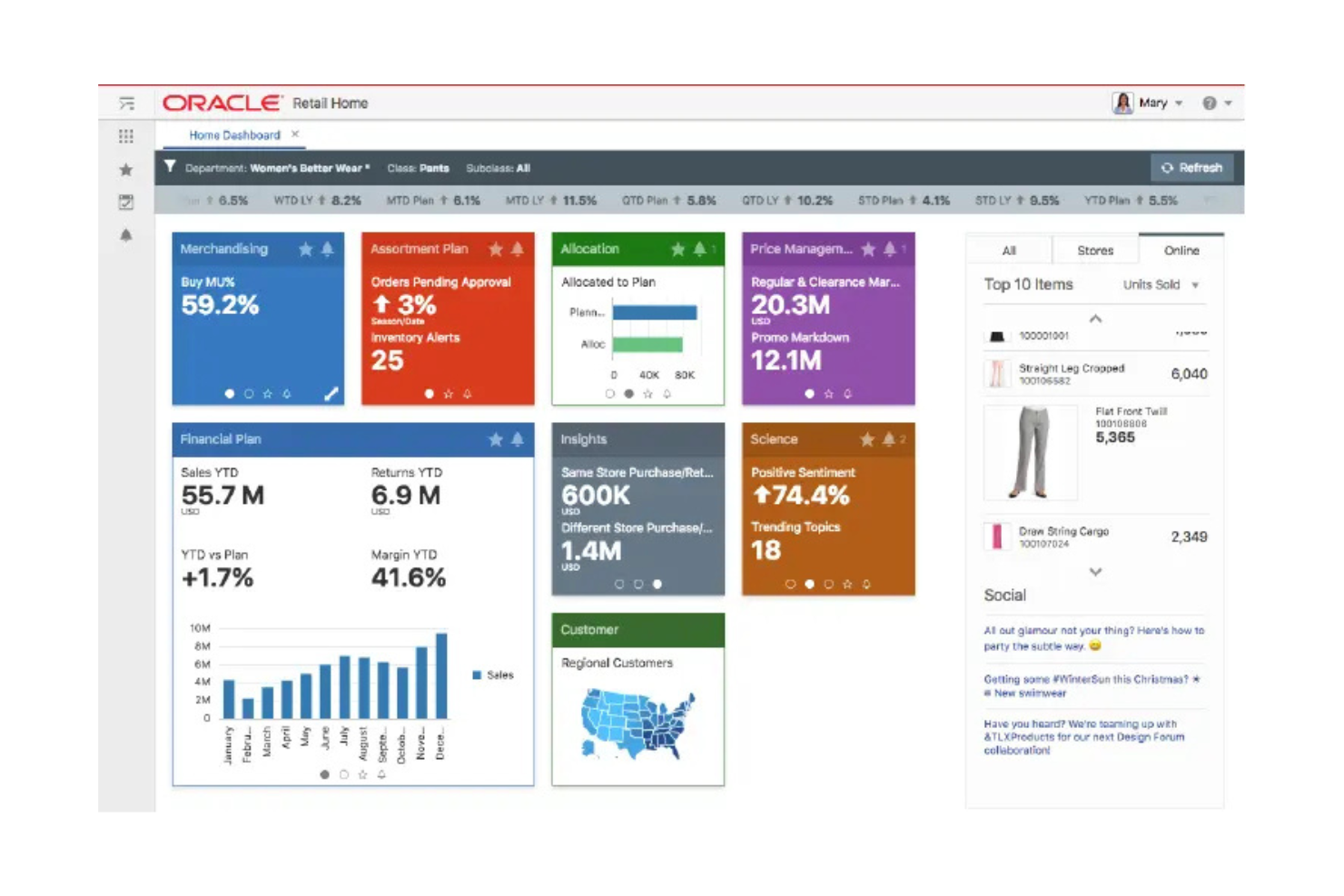
Oracle offers a suite of cloud applications and platform services designed for businesses of all sizes, focusing on integrated business solutions. Its AI capabilities enhance decision-making, automate tasks, and provide valuable insights to users.
Why I picked Oracle: Oracle provides integrated business solutions with its cloud platform. Its AI features include machine learning and decision automation, which help your team improve ecommerce and in-store processes. Oracle's focus on integration allows for data flow across various business functions. This integrated approach makes it ideal for businesses seeking end-to-end solutions.
Standout Features & Integrations:
Features include advanced data analytics, decision automation, and machine learning capabilities. These help you gain insights and make informed decisions quickly. The platform's scalability supports businesses as they grow and adapt.
Integrations include Salesforce, Microsoft Azure, AWS, Google Cloud, SAP, IBM, Workday, NetSuite, Slack, and Tableau.
Pros and Cons
Pros:
- Strong omnichannel support
- Built-in AI for forecasting
- Unified retail suite
Cons:
- Complex setup and configuration
- High cost compared to competitors

Best for cloud-based AI services
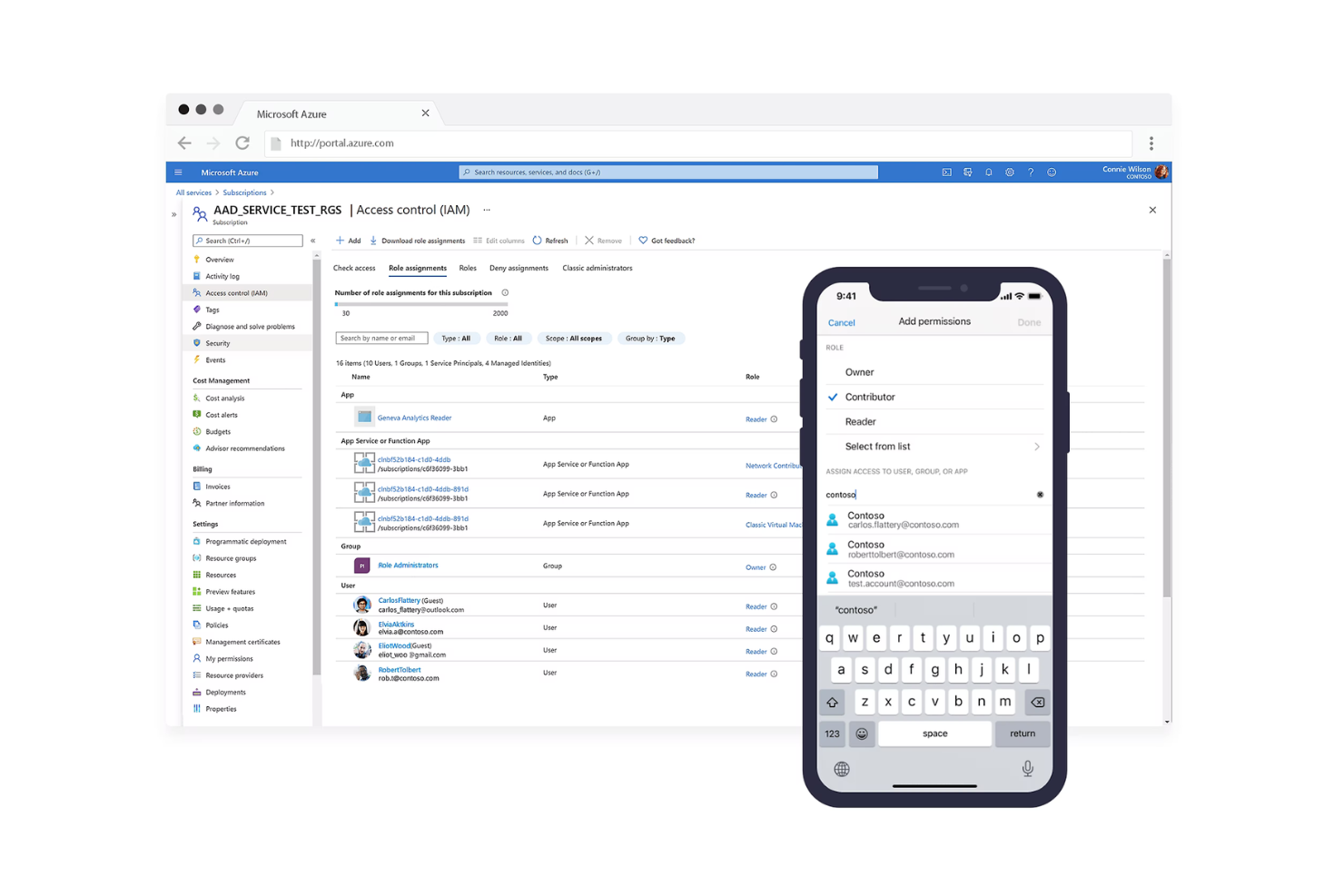
Microsoft Azure is a cloud computing platform that provides a wide range of services, including AI and machine learning tools, for businesses of all sizes. Its AI capabilities help users build, deploy, and manage intelligent applications across many industries.
Why I picked Microsoft Azure: Microsoft Azure offers cloud-based AI services that are scalable and versatile. Its AI tools include machine learning models and cognitive services, which support your team's ability to develop intelligent applications. The platform's flexibility allows you to tailor solutions to your specific business needs. Azure's focus on providing cloud services distinguishes it from other solutions.
Standout Features & Integrations:
Features include AI shopping assistants, campaign orchestrations, assortment optimization, and inventory optimization. These features can transform the shopper experience and drive supply chain agility. Azure's global network ensures reliable and fast service delivery.
Integrations include Microsoft 365, Copilot, OneLake, and Power BI.
Pros and Cons
Pros:
- Scalable cloud infrastructure
- Flexible service offerings
- Extensive AI toolset
Cons:
- Requires technical expertise for setup
- Complex pricing structure
Best for customer relationship management
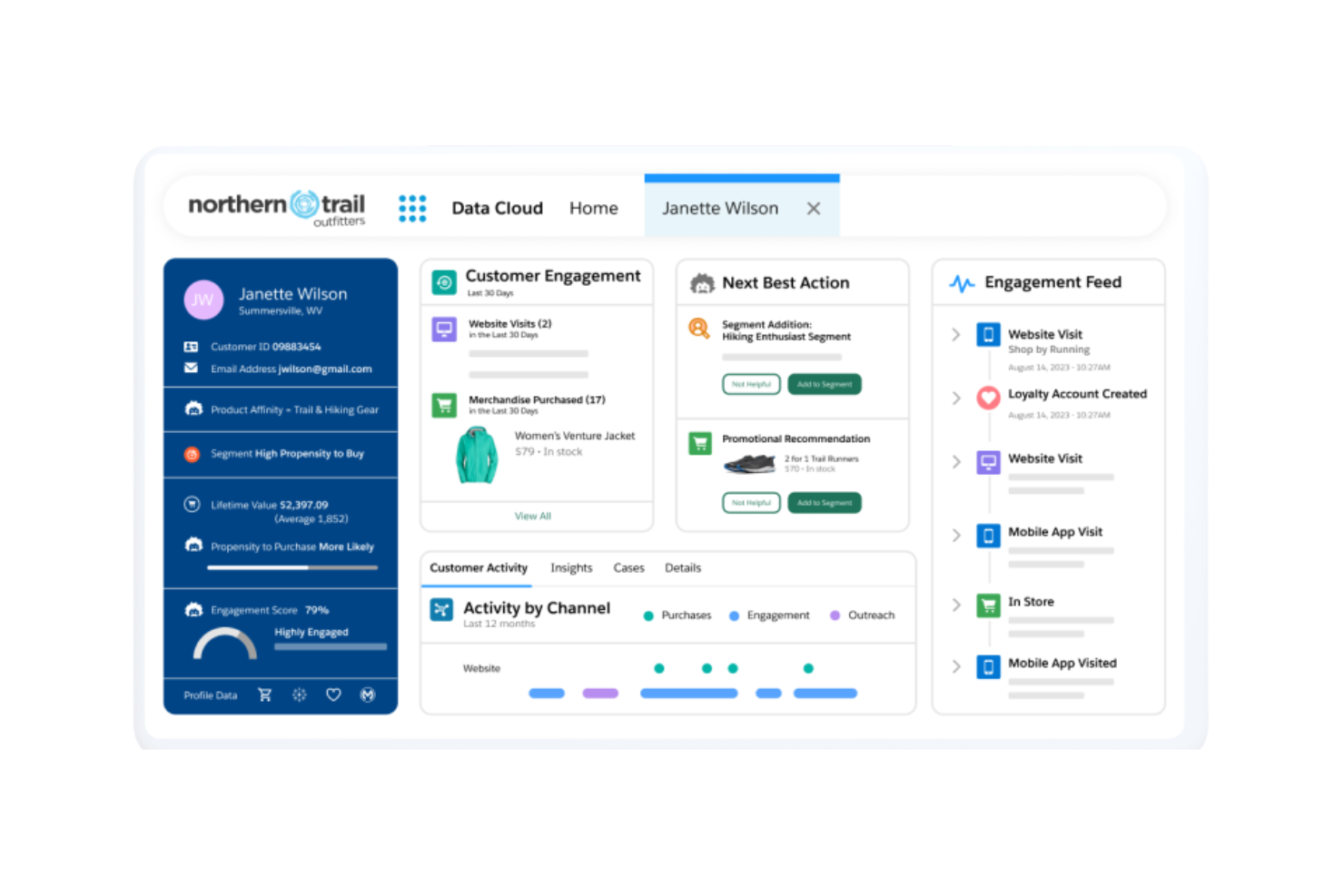
Salesforce is a cloud-based customer relationship management (CRM) platform designed for businesses of all sizes to manage customer interactions and data. Its AI capabilities assist users in personalizing customer interactions and automating sales processes.
Why I picked Salesforce: Salesforce is renowned for its customer relationship management tools, supported by generative AI features like Einstein Analytics. These tools help your team personalize customer experiences and predict sales trends. The platform's automation capabilities simplify routine tasks, freeing up your time. This specialization in CRM makes Salesforce a preferred choice for managing customer relationships.
Standout Features & Integrations:
Features include customizable dashboards, automated workflows, and detailed reporting tools. These features give your team the flexibility to adapt the platform to specific needs. Real-time data access ensures you can make informed decisions quickly.
Integrations include Slack, Mailchimp, HubSpot, Google Workspace, QuickBooks, Dropbox, DocuSign, LinkedIn, and Jira.
Pros and Cons
Pros:
- Effective sales process automation
- Strong AI-driven analytics
- Highly customizable CRM platform
Cons:
- Requires ongoing maintenance and updates
- Can be complex for new users

Fulfil
Best for AI-assisted ERP setup
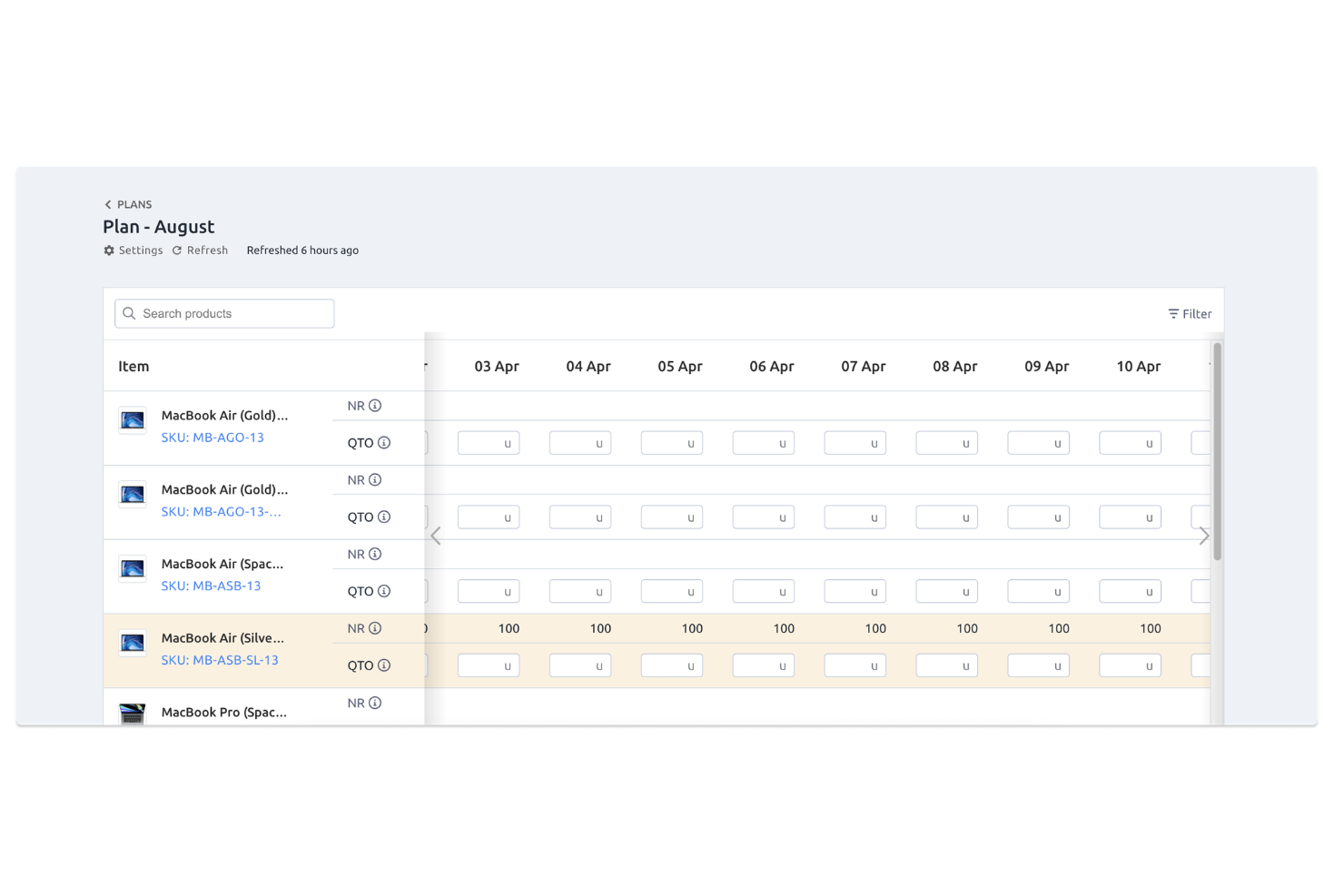
Fulfil is an ERP platform built for direct to consumer brands that need tighter control over inventory, fulfillment, and financial operations. It connects sales channels, warehouses, and accounting into a single system, helping retail teams manage growth without relying on disconnected tools. As a retail AI solution, Fulfil uses AI assisted configuration and automation to reduce manual setup and support more accurate operational workflows.
Why I Picked Fulfil
I picked Fulfil because it combines retail specific ERP functionality with AI assisted setup that can reduce the complexity of implementation. If you run a Shopify or DTC brand, you can centralize inventory, order management, and accounting in one system instead of stitching together multiple platforms. I was especially interested in its prebuilt connections to hundreds of third party logistics providers, which can help you coordinate fulfillment more efficiently as you scale. For growing retail brands that need operational visibility across channels, Fulfil offers structured control without sacrificing flexibility.
Fulfil Key Features
In addition to its robust AI capabilities, Fulfil offers several features that cater to retail businesses:
- Barcoding/Serial Tracking: This feature allows you to maintain accurate inventory records by tracking products through barcodes and serial numbers.
- Order Management: Streamline your order processing with tools that manage orders from multiple channels in one place.
- Real-Time Data: Access up-to-date information on inventory levels and sales to make informed decisions quickly.
- Customer Relationship Management: Improve customer interactions with tools designed to track and manage customer data.
Fulfil Integrations
Fulfil integrates with over 400 third-party logistics providers, Shopify, and other essential retail platforms, ensuring a seamless connection between various aspects of your business operations. Additionally, an open API is available for custom integrations, allowing further customization to meet specific business needs.
Pros and Cons
Pros:
- Extensive 3PL integration network
- Real time inventory visibility
- AI assisted workflow configuration
Cons:
- API customization requires technical expertise
- Pricing not publicly disclosed

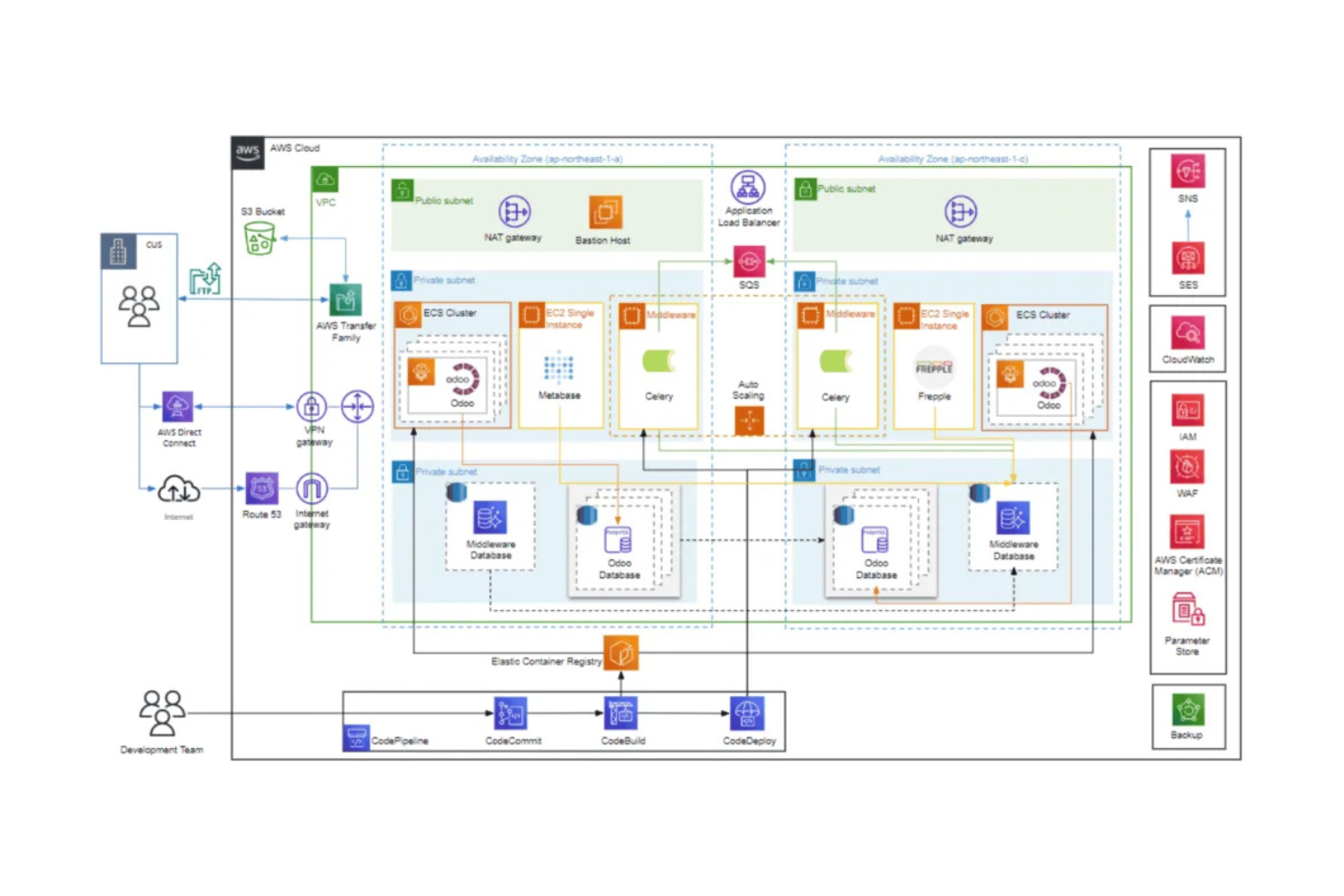
AWS is a cloud computing platform offering a wide range of services, including computing power, storage, and AI tools, for businesses of all sizes. For retail, it delivers cloud portfolio, analytics, and artificial intelligence technologies, decades of industry knowledge, and the largest partner ecosystem.
Why I picked AWS: Retail and consumer goods leaders use AWS's expertise for better customer experiences. AWS and Amazon provide a range of cloud, analytics, and AI capabilities, enabling industry players to maximize cloud potential. Additionally, AWS offers industry-leading security and reliability within the retail and consumer goods sectors.
Standout Features & Integrations:
Features include personalized product recommendations, optimized advertising and marketing campaigns, and personalized emails through GenAI.
Integrations are not publicly listed at this time.
Pros and Cons
Pros:
- Extensive range of cloud services
- Reliable global network
- Scalable infrastructure for growing businesses
Cons:
- Requires technical expertise for setup
- Complex pricing structure
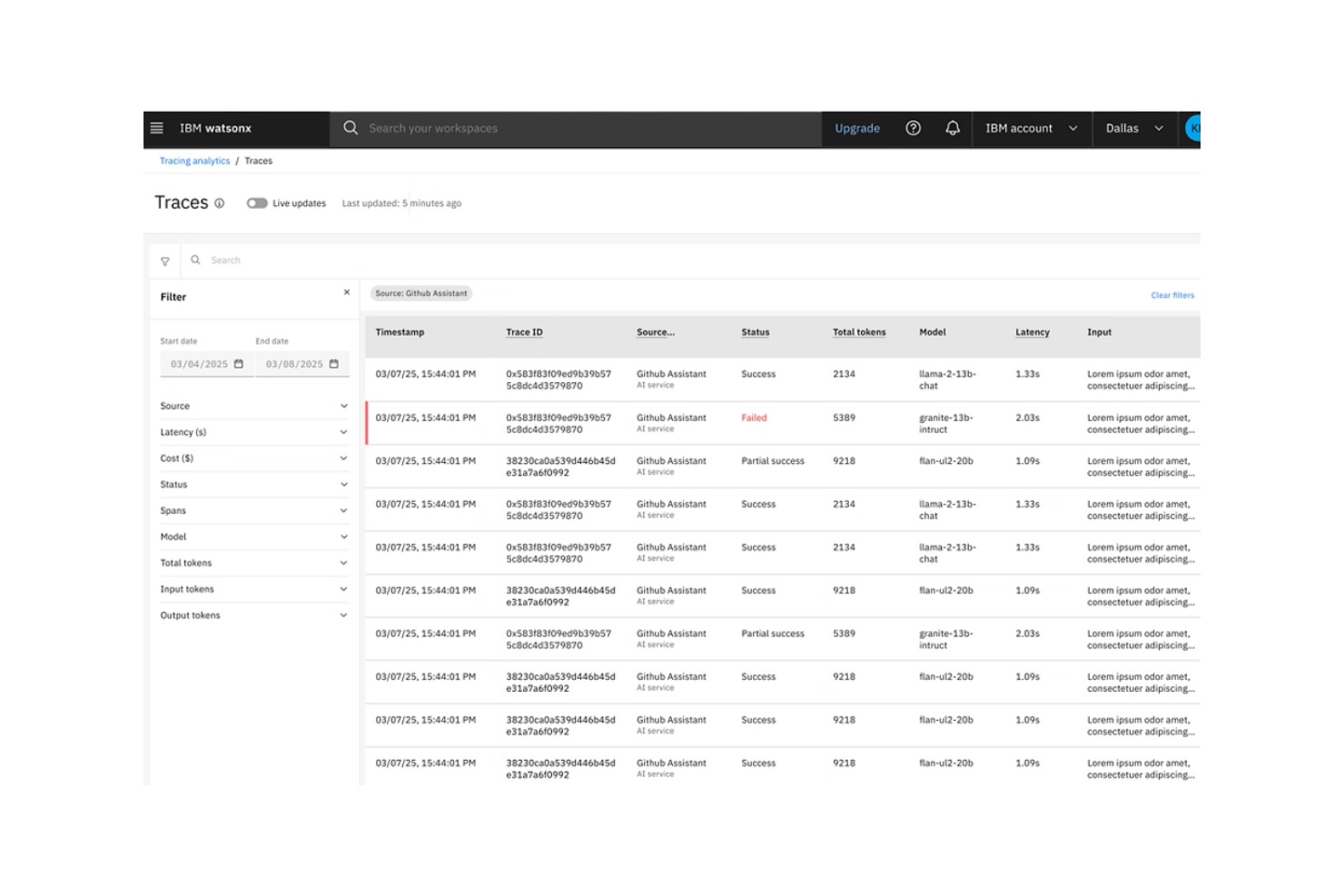
IBM offers a suite of AI-driven business tools designed for retail businesses looking to improve both online and in-store sales. Its AI capabilities include machine learning, natural language processing, and data analytics.
Why I picked IBM: IBM offers a suite of AI-driven business tools that identify automation opportunities, help increase omnichannel profitability, and improve sales. Its machine learning models help your team analyze data patterns and forecast outcomes. Natural language processing allows for improved customer interactions. These features make IBM a strong contender for businesses seeking AI technology solutions.
Standout Features & Integrations:
Features include advanced data analytics, machine learning models, and natural language processing. These are used to forecast customer behavior, assess risk management, and optimize financial performance throughout the planning and record-to-report processes.
Integrations are permitted through APIs over HTTPS for outbound calls and through IBM MQ and RESTful APIs for inbound calls.
Pros and Cons
Pros:
- Advanced AI for personalization and forecasting
- Strong integration with ERPs and trading partners
- Enterprise-grade order and fulfillment orchestration
Cons:
- Steeper learning curve for AI and assistant tools
- High implementation cost and complexity
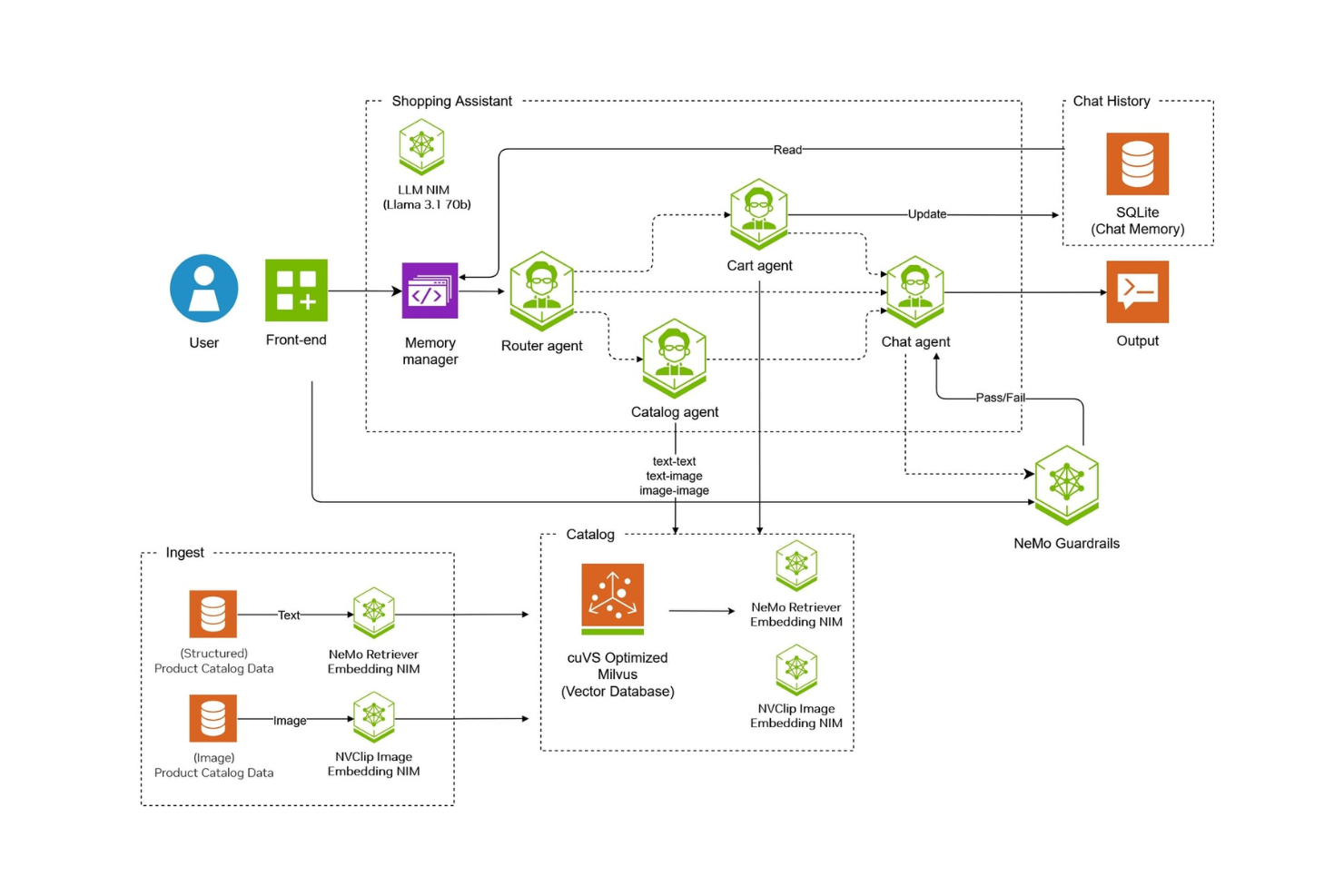
Nvidia provides the GPU infrastructure and AI frameworks that retailers use to analyze store traffic, detect patterns, and improve both customer experience and operational efficiency. Its platforms support a wide range of retail use cases, from computer vision at checkout to inventory tracking, loss prevention, and workforce analytics.
Why I picked Nvidia: Nvidia stands out because its technology powers the most advanced forms of retail intelligence. Its AI frameworks enable video analytics that can identify foot traffic patterns, monitor shelf availability, detect suspicious behavior, and even measure shopper engagement with displays. Retailers can use Nvidia to process camera feeds in real time, giving them instant insights into queue lengths, store congestion, or inventory issues.
Standout Features & Integrations:
Features include smart-store capabilities such as automated checkout systems, planogram compliance checks, and in-store heatmaps that help merchandisers understand how customers move through retail spaces. Combined with its GPU-driven performance for model training and inference, Nvidia enables retailers to deploy faster, more accurate AI applications that improve operations and enhance the customer experience.
Integrations include Microsoft Azure, AWS, Google Cloud, IBM Cloud, SAP, Oracle, MATLAB, TensorFlow, PyTorch, and Kubernetes.
Pros and Cons
Pros:
- High-quality graphics rendering
- Supports a wide range of AI-powered applications
- Exceptional processing power for AI tasks
Cons:
- Can have a steep learning curve
- Requires specialized hardware

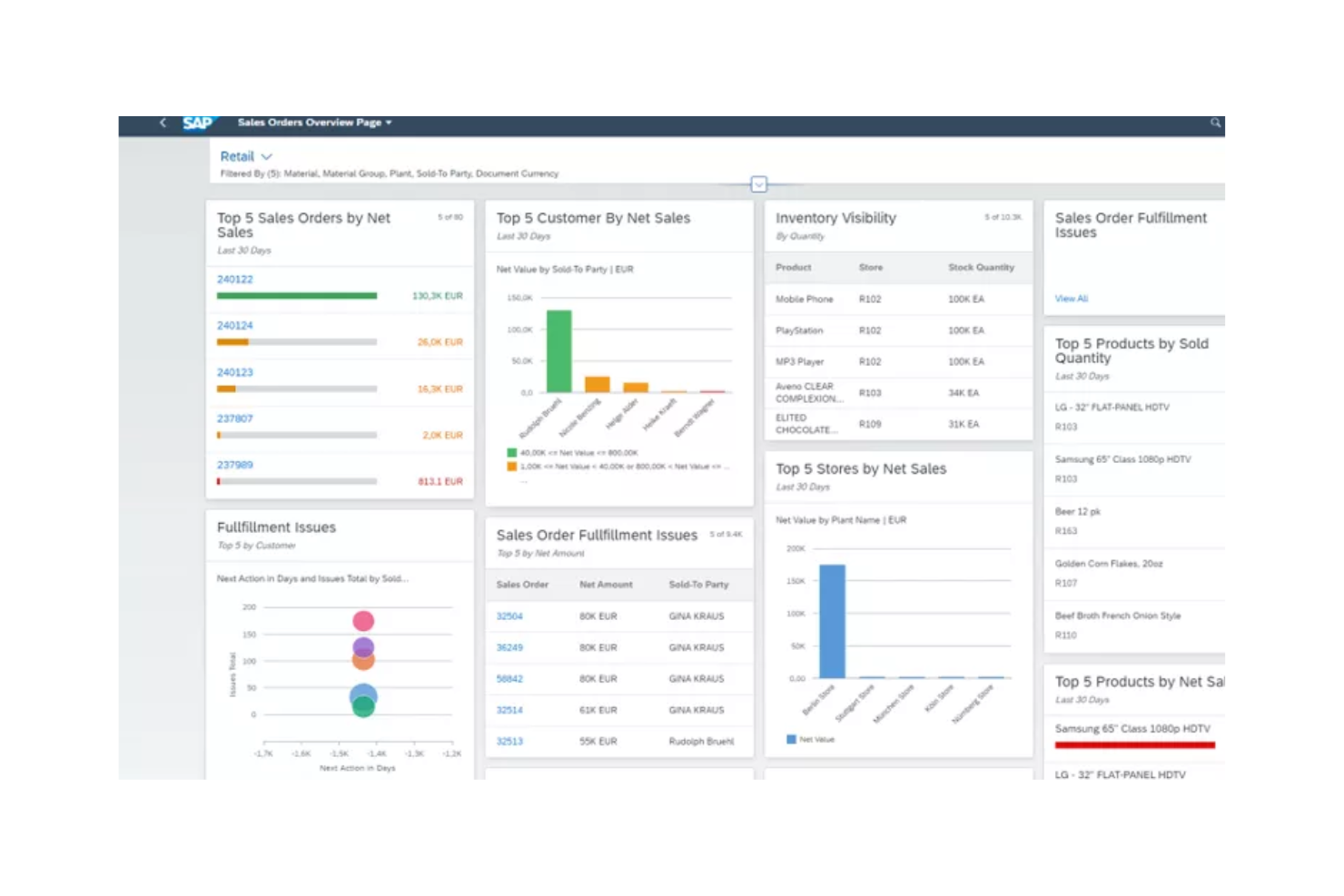
SAP offers enterprise resource planning (ERP) software that helps large organizations manage business operations and customer relations. Its AI capabilities provide predictive insights and help with pricing strategies.
Why I picked SAP: SAP offers enterprise resource planning with its suite of AI-driven tools. Its machine learning algorithms help your team automate repetitive tasks and improve decision-making. Predictive analytics provide valuable insights into business trends. This focus on ERP and AI integration distinguishes SAP from other AI solutions aimed at the retail industry.
Standout Features & Integrations:
Features include predictive analytics, process automation, and real-time reporting. It can help to automate inventory management and data synchronization with suppliers, ensure consistent pricing and promotions across all channels, and monitor store performance through dashboards and real-time insights.
Integrations include Microsoft Azure, AWS, Google Cloud, Salesforce, Oracle, IBM, Workday, Adobe, Slack, and Tableau.
Pros and Cons
Pros:
- Scalable for large enterprises
- Strong predictive analytics offering
- Advanced ERP capabilities
Cons:
- Requires technical expertise for setup
- Complex implementation process
Other Retail AI Solutions
Here are some additional retail AI solutions options that didn’t make it onto my shortlist, but are still worth checking out:
- C3 AI
For predictive analytics
- EDITED
For fashion retail insights
- Stackline
For retail analytics
- Streamline
For demand forecasting
- Toolio
For inventory optimization
- Kimonix
For personalized merchandising
- ForecastSmart
For retail demand prediction


How I Evaluate Retail AI Solutions
I look for platforms where AI delivers measurable lift—tighter inventory turns, smarter markdowns, real-time personalization—not just a chatbot bolted onto a dashboard. I split my evaluation into the core functionality a tool must have to make this list and the differentiating factors that set one vendor apart from another.
Core Functionality (Table Stakes For This List)
When I'm selecting tools for my list, I rank each one on a scale from 0 (does not offer the functionality) to 5 (excels in this area) for each core functionality listed below. Then, I calculate the tool's total score into a percentage. Each tool needs to achieve a minimum total score of 65% to be considered for inclusion.
- AI Demand Forecasting: I evaluate whether ML models forecast at the SKU and store level, factoring in signals like promotions, seasonality, and local events rather than just historical averages.
- Personalization Engine: Real-time product recommendations and tailored offers should adapt across web, app, and in-store touchpoints based on actual customer behavior and purchase history.
- Dynamic Pricing & Promotions: I look for algorithmic pricing that accounts for margin targets, competitor positioning, and elasticity—especially for markdown and end-of-season promo planning.
- Computer Vision for Retail: Shelf compliance, out-of-stock detection, and loss prevention are common use cases here, so I check whether CV runs autonomously or still depends on heavy manual review.
- Retail Data Unification: The platform should pull POS, e-commerce, CRM, and supply chain data into a shared retail data model that actually feeds the AI layer, not just sit in a separate dashboard.
- Prescriptive Retail Analytics: I want to see recommendations tied to action—like flagging an underperforming category with a suggested assortment change—rather than just charts and trend lines.
Once I have a list of tools that meet the criteria, I consider what sets each platform apart.
Differentiating Factors (What Sets Vendors Apart)
Here's how I compare and contrast different vendors:
Standout Features
Scenario simulation is a big differentiator for me—I want to see how a platform models the margin impact of a markdown event or a supplier disruption before decisions get locked in. Autonomous replenishment also stands out, where AI moves past forecasting into triggering purchase orders and store transfers on its own. I check for competitive intelligence too, since real-time visibility into rival pricing and assortment gaps gives merchandising teams a concrete edge during peak planning cycles.
Beyond Features
Integration depth matters a lot here. I check whether a platform has prebuilt connectors to major POS, e-commerce, and ERP systems, since a retail AI tool that can't pull live transaction data from your existing stack delays every insight it promises. Time-to-value is another key factor—platforms with pretrained retail AI models get teams to usable outputs in weeks, not quarters. I also evaluate data privacy posture, especially PCI DSS compliance and transparent model explainability, which become essential once personalization engines start processing customer-level data at scale.
How to Choose Retail AI Solutions
It’s easy to get bogged down in long feature lists and complex pricing structures. To help you stay focused as you work through your unique software selection process, here’s a checklist of factors to keep in mind:
| Factor | What to Consider |
|---|---|
| Scalability | Can the solution grow with your business? Consider future needs and whether the tool can handle increased data or users without performance issues. |
| Integrations | Does it work with your existing tools? Check for compatibility with current systems to avoid workflow disruptions. |
| Customizability | Can you tailor the solution to your needs? Look for options to customize dashboards, reports, and workflows so it fits your business processes. |
| Ease of Use | Is the interface intuitive? Ensure your team can easily navigate the tool without extensive training. A simple user experience can boost adoption rates |
| Implementation and Onboarding | How long will setup take? Consider the time and resources required to get up and running. Look for solutions with clear onboarding processes and support. |
| Cost | Does it fit your budget? Compare pricing plans and check for hidden fees. Ensure the solution offers good value for the features you need. |
| Security Safeguards | How does it protect your data? Look for encryption, compliance with data protection standards, and regular security updates to keep your information safe. |
| Support Availability | When can you get help? Consider the availability of customer support and whether it's offered in your time zone. Quick access to help can solve issues faster. |
What Are Retail AI Solutions?
Retail AI solutions are software tools that use artificial intelligence to help retailers optimize operations, improve customer experiences, and make data-driven decisions. These tools are commonly used by retail managers, data analysts, and marketing professionals to improve efficiency and profitability.
Features like predictive analytics, inventory optimization, and customer behavior insights help with decision-making and operational efficiency. Overall, these tools provide retailers with the ability to adapt quickly to market changes and customer demands.
Features
When selecting retail AI solutions, keep an eye out for the following key features:
- Predictive analytics: Uses historical data to forecast future trends, helping retailers make informed decisions.
- Inventory optimization: Ensures stock levels are balanced to meet demand without overstocking or understocking.
- Customer behavior insights: Analyzes customer data to provide insights into buying patterns and preferences.
- Automated marketing efforts: Streamlines marketing campaigns by targeting customers with personalized offers.
- Real-time data processing: Provides up-to-the-minute information, allowing for quick adjustments to strategies.
- Natural language processing: Enhances customer interactions by understanding and responding to customer queries.
- Advanced data analytics: Offers deep insights into sales and performance metrics for strategic planning.
- Machine learning models: Continuously improves predictions and recommendations based on new data.
- Customizable dashboards: Allows users to tailor data displays to fit their specific business needs.
- Integration capabilities: Ensures the solution works smoothly with existing systems and tools.
Benefits
Implementing retail AI solutions provides several benefits for your team and your business. Here are a few you can look forward to:
- Improved decision-making: Predictive analytics and data insights help your team make informed choices about inventory and marketing.
- Enhanced customer experiences: Customer behavior insights allow for personalized interactions and better service.
- Increased efficiency: Automated marketing and inventory management save time and reduce manual tasks.
- Better demand forecasting: AI models predict future trends, helping you prepare for changes in customer demand.
- Cost savings: Optimizing inventory levels reduces waste and minimizes overstocking costs.
- Scalability: AI solutions grow with your business, adapting to increased data and user demands.
- Faster response times: Real-time data processing ensures quick adaptation to market changes.
Costs and Pricing
Selecting retail AI solutions requires an understanding of the various pricing models and plans available. Costs vary based on features, team size, add-ons, and more. The table below summarizes common plans, their average prices, and typical features included in retail AI solutions:
Plan Comparison Table for Retail AI Solutions
| Plan Type | Average Price | Common Features |
|---|---|---|
| Free Plan | $0 | Basic analytics, limited data processing, and basic customer insights. |
| Personal Plan | $10-$30/user/month | Advanced analytics, personalized dashboards, and basic automation tools. |
| Business Plan | $50-$100/user/month | Full analytics suite, inventory optimization, and advanced customer insights. |
| Enterprise Plan | $150-$300/user/month | Custom AI models, unlimited data processing, and premium support services. |
Retail AI Solutions FAQs
Here are some answers to common questions about retail AI solutions: