

Gestionarea unei afaceri din comerțul cu amănuntul înseamnă să ții sub control numeroase elemente aflate într-o continuă schimbare — să menții nivelurile stocurilor sub control, să anticipezi ce vor dori cumpărătorii în continuare și să îmbunătățești modul în care oamenii interacționează cu magazinul tău. Instrumentele AI pentru comerțul cu amănuntul te ajută să gestionezi aceste presiuni, oferindu-ți prognoze mai clare, informații mai precise și modalități mai rapide de a răspunde cerințelor de zi cu zi.
Din experiența mea în testarea și evaluarea software-ului, știu cum capacitățile AI îți pot transforma gestionarea activității de retail. În această listă vei găsi evaluarea mea imparțială și bine documentată a celor mai bune soluții AI pentru comerțul cu amănuntul.
Te voi ghida prin funcțiile, caracteristicile și beneficiile acestora, astfel încât să poți lua o decizie informată pentru echipa ta.
Why Trust Our Software Recommendations
6,700+
Reviews
20
Industry experts
16+
Evaluation factors
14
Years
Our team has been testing and reviewing software since 2012. As retail leaders ourselves, we know how difficult—and important—it is to choose the right software.
For this guide, we evaluated tools using hands-on testing and independent research, scoring tools using our selection criteria.
Our reviews reflect our independent judgment—not a sales pitch.
Tabel comparativ al soluțiilor AI pentru comerțul cu amănuntul
Acest tabel comparativ sintetizează detaliile privind prețurile pentru soluțiile AI de top pentru comerțul cu amănuntul pe care le-am selectat:
Sorted by: Default
| Tool | Starting Price | Website | |
|---|---|---|---|
Best for AI-driven PO procurement | 4.3 out of 5 | $100/month 90-day free trial | Website |
Best for integrated business solutions | 4.6 out of 5 | Pricing upon request Free demo available | Website |
Best for cloud-based AI services | 4.3 out of 5 | $0.008/vCPU/hour Free plan available + 30-day free trial | Website |
Best for customer relationship management | 4.4 out of 5 | $25/user/month Free plan + 30-day free trial available | Website |
Best for AI-assisted ERP setup | 4.1 out of 5 | Pricing upon request Free demo available | Website |
Best for large-scale AI deployment | Not rated | Contact AWS for pricing Free trial available | Website |
Best for AI governance and hybrid cloud modernization | Not rated | Pricing upon request Free demo available | Website |
Best for in-store monitoring and video analytics | Not rated | Pricing upon request Free demo available | Website |
Best for enterprise resource planning | Not rated | Pricing upon request Free trial + free demo available | Website |
Best for predictive analytics | Not rated | Pricing upon request Free demo available | Website |


Evaluări ale celor mai bune soluții AI pentru comerțul cu amănuntul
Mai jos sunt prezentate rezumatele mele detaliate ale celor mai bune soluții AI pentru comerțul cu amănuntul care au ajuns pe lista mea scurtă. Evaluările mele oferă o privire detaliată asupra caracteristicilor principale, avantajelor și dezavantajelor, integrărilor și cazurilor de utilizare ideale ale fiecărui instrument, pentru a te ajuta să îl găsești pe cel mai potrivit pentru tine.

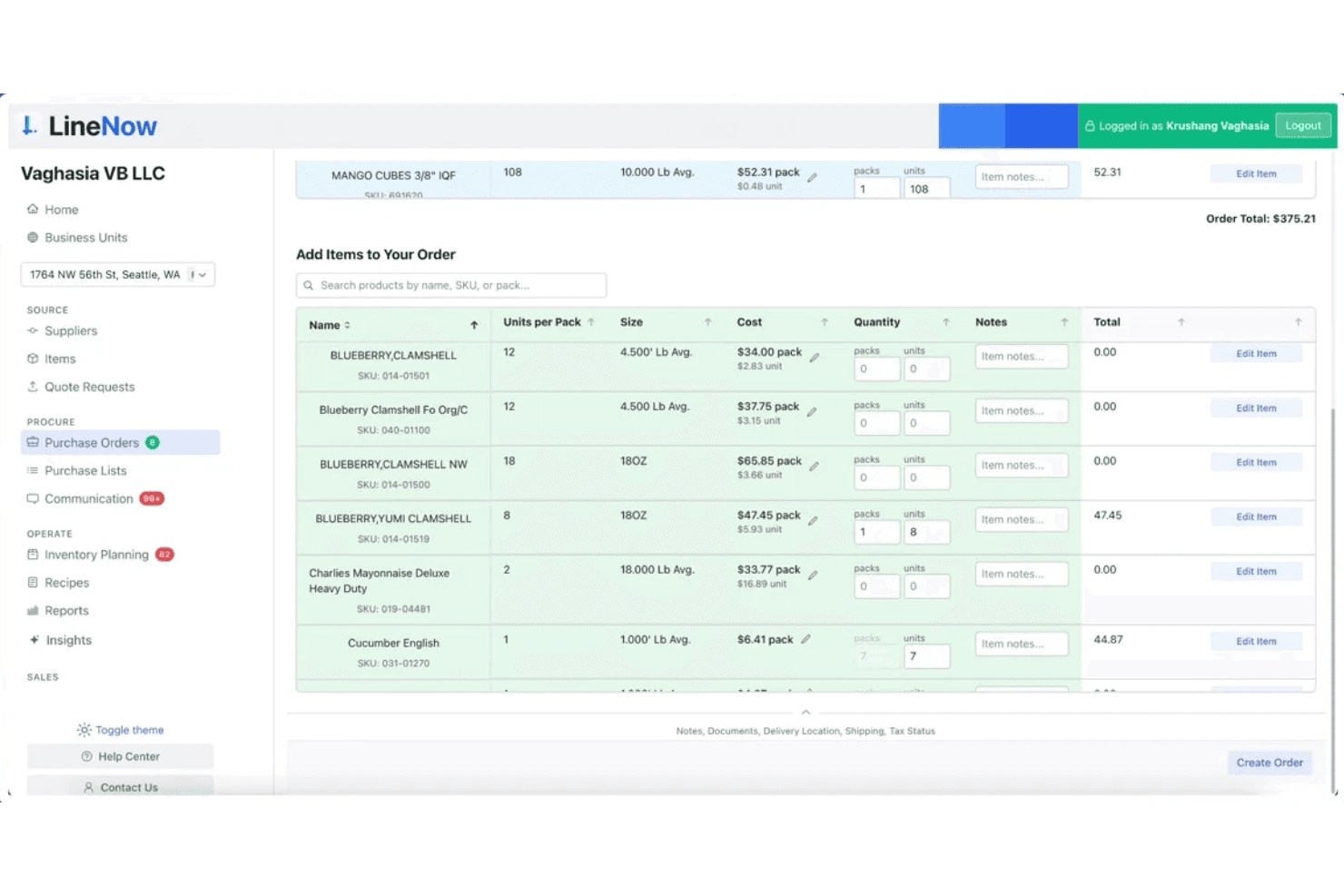
LineNow lets users build and manage purchase orders by item. LineNow is a purchase order and inventory management tool that automates procurement workflows for small and mid-sized retailers, covering PO creation, supplier communication, inventory tracking, and accounting sync.
Who Is LineNow Best For?
LineNow suits small and mid-sized retailers managing procurement manually, especially those running multiple locations or sales channels who need to automate PO creation and supplier communication.
Why I Picked LineNow
I picked LineNow as one of the best because its AI handles the most time-consuming part of procurement: building and managing POs without manual input. When stock dips below a reorder threshold, LineNow auto-drafts the PO. When a supplier replies with a backorder or substitution, the AI reads that email and updates the order record automatically. I find that combination, triggered ordering plus AI-parsed supplier communication, genuinely hard to replicate in other small-business procurement tools.
LineNow Key Features
- Sales velocity ranking: Sorts inventory by how quickly items sell, so you can prioritize reorders for your fastest-moving SKUs.
- Multi-location inventory visibility: Tracks stock levels across stores, warehouses, and sales channels in a single view.
- Supplier price change detection: Flags when a supplier updates their pricing so you can review cost impacts before confirming orders.
- Accounting sync: Pushes completed PO and receiving data directly to QuickBooks or Xero to close the procurement-to-payment loop.
LineNow Integrations
Integrations include Square, Toast, Clover, Lightspeed, Shopify, Amazon, Faire, QuickBooks, and Xero.
Pros and Cons
Pros:
- Hands-on onboarding and strong user support
- Interprets supplier replies and updates orders
- AI auto-drafts POs when stock runs low
Cons:
- Not recognized in major retail AI reports
- No AI-driven demand forecasting features
Learn more about LineNow: Best for integrated business solutions
- Free demo available
- Pricing upon request
Visit WebsiteCustomer Rating:4.6/5
Oracle improves cloud workflows with AI that automates tasks and sharpens decision-making Oracle offers a suite of cloud applications and platform services designed for businesses of all sizes, focusing on integrated business solutions. Its AI capabilities enhance decision-making, automate tasks, and provide valuable insights to users.
Why I picked Oracle: Oracle provides integrated business solutions with its cloud platform. Its AI features include machine learning and decision automation, which help your team improve ecommerce and in-store processes. Oracle's focus on integration allows for data flow across various business functions. This integrated approach makes it ideal for businesses seeking end-to-end solutions.
Standout Features & Integrations:
Features include advanced data analytics, decision automation, and machine learning capabilities. These help you gain insights and make informed decisions quickly. The platform's scalability supports businesses as they grow and adapt.
Integrations include Salesforce, Microsoft Azure, AWS, Google Cloud, SAP, IBM, Workday, NetSuite, Slack, and Tableau.
Pros and Cons
Pros:
- Strong omnichannel support
- Built-in AI for forecasting
- Unified retail suite
Cons:
- Complex setup and configuration
- High cost compared to competitors
Learn more about Oracle: Best for cloud-based AI services
- Free plan available + 30-day free trial
- From $0.008/vCPU/hour
Visit WebsiteCustomer Rating:4.3/5
Microsoft Azure supports building and deploying intelligent applications with AI services Microsoft Azure is a cloud computing platform that provides a wide range of services, including AI and machine learning tools, for businesses of all sizes. Its AI capabilities help users build, deploy, and manage intelligent applications across many industries.
Why I picked Microsoft Azure: Microsoft Azure offers cloud-based AI services that are scalable and versatile. Its AI tools include machine learning models and cognitive services, which support your team's ability to develop intelligent applications. The platform's flexibility allows you to tailor solutions to your specific business needs. Azure's focus on providing cloud services distinguishes it from other solutions.
Standout Features & Integrations:
Features include AI shopping assistants, campaign orchestrations, assortment optimization, and inventory optimization. These features can transform the shopper experience and drive supply chain agility. Azure's global network ensures reliable and fast service delivery.
Integrations include Microsoft 365, Copilot, OneLake, and Power BI.
Pros and Cons
Pros:
- Scalable cloud infrastructure
- Flexible service offerings
- Extensive AI toolset
Cons:
- Requires technical expertise for setup
- Complex pricing structure
Learn more about Microsoft Azure: Best for customer relationship management
- Free plan + 30-day free trial available
- From $25/user/month
Visit WebsiteCustomer Rating:4.4/5
Salesforce features CRM workflows with AI that personalizes interactions and automates sales Salesforce is a cloud-based customer relationship management (CRM) platform designed for businesses of all sizes to manage customer interactions and data. Its AI capabilities assist users in personalizing customer interactions and automating sales processes.
Why I picked Salesforce: Salesforce is renowned for its customer relationship management tools, supported by generative AI features like Einstein Analytics. These tools help your team personalize customer experiences and predict sales trends. The platform's automation capabilities simplify routine tasks, freeing up your time. This specialization in CRM makes Salesforce a preferred choice for managing customer relationships.
Standout Features & Integrations:
Features include customizable dashboards, automated workflows, and detailed reporting tools. These features give your team the flexibility to adapt the platform to specific needs. Real-time data access ensures you can make informed decisions quickly.
Integrations include Slack, Mailchimp, HubSpot, Google Workspace, QuickBooks, Dropbox, DocuSign, LinkedIn, and Jira.
Pros and Cons
Pros:
- Effective sales process automation
- Strong AI-driven analytics
- Highly customizable CRM platform
Cons:
- Requires ongoing maintenance and updates
- Can be complex for new users
Learn more about Salesforce : Best for AI-assisted ERP setup
- Free demo available
- Pricing upon request
Visit WebsiteCustomer Rating:4.1/5
Fulfil offers a comprehensive inventory management system. Fulfil is an ERP platform built for direct to consumer brands that need tighter control over inventory, fulfillment, and financial operations. It connects sales channels, warehouses, and accounting into a single system, helping retail teams manage growth without relying on disconnected tools. As a retail AI solution, Fulfil uses AI assisted configuration and automation to reduce manual setup and support more accurate operational workflows.
Why I Picked Fulfil
I picked Fulfil because it combines retail specific ERP functionality with AI assisted setup that can reduce the complexity of implementation. If you run a Shopify or DTC brand, you can centralize inventory, order management, and accounting in one system instead of stitching together multiple platforms. I was especially interested in its prebuilt connections to hundreds of third party logistics providers, which can help you coordinate fulfillment more efficiently as you scale. For growing retail brands that need operational visibility across channels, Fulfil offers structured control without sacrificing flexibility.
Fulfil Key Features
In addition to its robust AI capabilities, Fulfil offers several features that cater to retail businesses:
- Barcoding/Serial Tracking: This feature allows you to maintain accurate inventory records by tracking products through barcodes and serial numbers.
- Order Management: Streamline your order processing with tools that manage orders from multiple channels in one place.
- Real-Time Data: Access up-to-date information on inventory levels and sales to make informed decisions quickly.
- Customer Relationship Management: Improve customer interactions with tools designed to track and manage customer data.
Fulfil Integrations
Fulfil integrates with over 400 third-party logistics providers, Shopify, and other essential retail platforms, ensuring a seamless connection between various aspects of your business operations. Additionally, an open API is available for custom integrations, allowing further customization to meet specific business needs.
Pros and Cons
Pros:
- Extensive 3PL integration network
- Real time inventory visibility
- AI assisted workflow configuration
Cons:
- API customization requires technical expertise
- Pricing not publicly disclosed
Learn more about Fulfil: Best for large-scale AI deployment
- Free trial available
- Contact AWS for pricing

AWS powers developing, deploying, and scaling machine learning models with AI tools AWS is a cloud computing platform offering a wide range of services, including computing power, storage, and AI tools, for businesses of all sizes. For retail, it delivers cloud portfolio, analytics, and artificial intelligence technologies, decades of industry knowledge, and the largest partner ecosystem.
Why I picked AWS: Retail and consumer goods leaders use AWS's expertise for better customer experiences. AWS and Amazon provide a range of cloud, analytics, and AI capabilities, enabling industry players to maximize cloud potential. Additionally, AWS offers industry-leading security and reliability within the retail and consumer goods sectors.
Standout Features & Integrations:
Features include personalized product recommendations, optimized advertising and marketing campaigns, and personalized emails through GenAI.
Integrations are not publicly listed at this time.
Pros and Cons
Pros:
- Extensive range of cloud services
- Reliable global network
- Scalable infrastructure for growing businesses
Cons:
- Requires technical expertise for setup
- Complex pricing structure
Learn more about Amazon AWS:

IBM advances enterprise operations with AI for analytics, automation, and smarter decisions IBM offers a suite of AI-driven business tools designed for retail businesses looking to improve both online and in-store sales. Its AI capabilities include machine learning, natural language processing, and data analytics.
Why I picked IBM: IBM offers a suite of AI-driven business tools that identify automation opportunities, help increase omnichannel profitability, and improve sales. Its machine learning models help your team analyze data patterns and forecast outcomes. Natural language processing allows for improved customer interactions. These features make IBM a strong contender for businesses seeking AI technology solutions.
Standout Features & Integrations:
Features include advanced data analytics, machine learning models, and natural language processing. These are used to forecast customer behavior, assess risk management, and optimize financial performance throughout the planning and record-to-report processes.
Integrations are permitted through APIs over HTTPS for outbound calls and through IBM MQ and RESTful APIs for inbound calls.
Pros and Cons
Pros:
- Advanced AI for personalization and forecasting
- Strong integration with ERPs and trading partners
- Enterprise-grade order and fulfillment orchestration
Cons:
- Steeper learning curve for AI and assistant tools
- High implementation cost and complexity
Learn more about IBM: Best for in-store monitoring and video analytics
- Free demo available
- Pricing upon request

Nvidia accelerates retail AI with high-performance computing that powers in-store analytics, real-time monitoring, and intelligent video insights Nvidia provides the GPU infrastructure and AI frameworks that retailers use to analyze store traffic, detect patterns, and improve both customer experience and operational efficiency. Its platforms support a wide range of retail use cases, from computer vision at checkout to inventory tracking, loss prevention, and workforce analytics.
Why I picked Nvidia: Nvidia stands out because its technology powers the most advanced forms of retail intelligence. Its AI frameworks enable video analytics that can identify foot traffic patterns, monitor shelf availability, detect suspicious behavior, and even measure shopper engagement with displays. Retailers can use Nvidia to process camera feeds in real time, giving them instant insights into queue lengths, store congestion, or inventory issues.
Standout Features & Integrations:
Features include smart-store capabilities such as automated checkout systems, planogram compliance checks, and in-store heatmaps that help merchandisers understand how customers move through retail spaces. Combined with its GPU-driven performance for model training and inference, Nvidia enables retailers to deploy faster, more accurate AI applications that improve operations and enhance the customer experience.
Integrations include Microsoft Azure, AWS, Google Cloud, IBM Cloud, SAP, Oracle, MATLAB, TensorFlow, PyTorch, and Kubernetes.
Pros and Cons
Pros:
- High-quality graphics rendering
- Supports a wide range of AI-powered applications
- Exceptional processing power for AI tasks
Cons:
- Can have a steep learning curve
- Requires specialized hardware
Learn more about NVIDIA:

SAP supports enterprise operations with AI-driven automation and predictive insights SAP offers enterprise resource planning (ERP) software that helps large organizations manage business operations and customer relations. Its AI capabilities provide predictive insights and help with pricing strategies.
Why I picked SAP: SAP offers enterprise resource planning with its suite of AI-driven tools. Its machine learning algorithms help your team automate repetitive tasks and improve decision-making. Predictive analytics provide valuable insights into business trends. This focus on ERP and AI integration distinguishes SAP from other AI solutions aimed at the retail industry.
Standout Features & Integrations:
Features include predictive analytics, process automation, and real-time reporting. It can help to automate inventory management and data synchronization with suppliers, ensure consistent pricing and promotions across all channels, and monitor store performance through dashboards and real-time insights.
Integrations include Microsoft Azure, AWS, Google Cloud, Salesforce, Oracle, IBM, Workday, Adobe, Slack, and Tableau.
Pros and Cons
Pros:
- Scalable for large enterprises
- Strong predictive analytics offering
- Advanced ERP capabilities
Cons:
- Requires technical expertise for setup
- Complex implementation process
Learn more about SAP:

C3 AI delivers predictive insights to help organizations anticipate trends C3 AI is an enterprise AI platform primarily used by large organizations for predictive analytics and decision-making. It offers AI-driven insights that help businesses anticipate market trends and optimize operations.
Why I picked C3 AI: C3 AI specializes in predictive analytics with its AI capabilities. Its features include real-time data processing and advanced forecasting models. These tools enable your team to predict future trends and make data-driven decisions. This focus on predictive analytics differentiates C3 AI from other retail AI solutions.
Standout Features & Integrations:
Features include real-time data processing, demand forecasting, and workflow automation. These help you optimize inventory and orchestrate the supply chain. The platform's ability to handle large data sets ensures accurate and timely insights.
Integrations include Microsoft Azure, AWS, Google Cloud, SAP, Oracle, Microsoft Power BI and Tableau, as well as machine learning and AI systems.
Pros and Cons
Pros:
- Supports real-time data management
- Handles large data sets efficiently
- Strong predictive analytics capabilities
Cons:
- Requires technical expertise for full utilization
- Complex setup process
Learn more about C3 AI:
Alte soluții AI pentru comerțul cu amănuntul
Iată câteva opțiuni suplimentare de soluții AI pentru comerțul cu amănuntul care nu au ajuns pe lista mea scurtă, dar care merită totuși analizate:
- 11EDITEDBest for fashion retail insights
- 12TidioBest with AI agent trained on your knowledge base
- 13StacklineBest for retail analytics
- 14StreamlineBest for demand forecasting
- 15ToolioBest for inventory optimization
- 16KimonixBest for personalized merchandising
- 17ForecastSmartBest for retail demand prediction
How I Evaluate Retail AI Solutions
I look for platforms where AI delivers measurable lift—tighter inventory turns, smarter markdowns, real-time personalization—not just a chatbot bolted onto a dashboard. I split my evaluation into the core functionality a tool must have to make this list and the differentiating factors that set one vendor apart from another.
Core Functionality (Table Stakes For This List)
When I'm selecting tools for my list, I rank each one on a scale from 0 (does not offer the functionality) to 5 (excels in this area) for each core functionality listed below. Then, I calculate the tool's total score into a percentage. Each tool needs to achieve a minimum total score of 65% to be considered for inclusion.
- AI Demand Forecasting: I evaluate whether ML models forecast at the SKU and store level, factoring in signals like promotions, seasonality, and local events rather than just historical averages.
- Personalization Engine: Real-time product recommendations and tailored offers should adapt across web, app, and in-store touchpoints based on actual customer behavior and purchase history.
- Dynamic Pricing & Promotions: I look for algorithmic pricing that accounts for margin targets, competitor positioning, and elasticity—especially for markdown and end-of-season promo planning.
- Computer Vision for Retail: Shelf compliance, out-of-stock detection, and loss prevention are common use cases here, so I check whether CV runs autonomously or still depends on heavy manual review.
- Retail Data Unification: The platform should pull POS, e-commerce, CRM, and supply chain data into a shared retail data model that actually feeds the AI layer, not just sit in a separate dashboard.
- Prescriptive Retail Analytics: I want to see recommendations tied to action—like flagging an underperforming category with a suggested assortment change—rather than just charts and trend lines.
Once I have a list of tools that meet the criteria, I consider what sets each platform apart.
Differentiating Factors (What Sets Vendors Apart)
Here's how I compare and contrast different vendors:
Standout Features
Scenario simulation is a big differentiator for me—I want to see how a platform models the margin impact of a markdown event or a supplier disruption before decisions get locked in. Autonomous replenishment also stands out, where AI moves past forecasting into triggering purchase orders and store transfers on its own. I check for competitive intelligence too, since real-time visibility into rival pricing and assortment gaps gives merchandising teams a concrete edge during peak planning cycles.
Beyond Features
Integration depth matters a lot here. I check whether a platform has prebuilt connectors to major POS, e-commerce, and ERP systems, since a retail AI tool that can't pull live transaction data from your existing stack delays every insight it promises. Time-to-value is another key factor—platforms with pretrained retail AI models get teams to usable outputs in weeks, not quarters. I also evaluate data privacy posture, especially PCI DSS compliance and transparent model explainability, which become essential once personalization engines start processing customer-level data at scale.
Cum să alegi soluții AI pentru comerțul cu amănuntul
Este ușor să te pierzi în liste lungi de funcții și structuri complexe de prețuri. Pentru a rămâne concentrat în timp ce parcurgi procesul de selectare a software-ului potrivit, iată o listă de verificare a factorilor de care trebuie să ții cont:
| Factor | Aspecte de luat în considerare |
|---|---|
| FactorScalabilitate | Aspecte de luat în considerarePoate soluția să se dezvolte odată cu afacerea ta? Ia în considerare nevoile viitoare și dacă instrumentul poate gestiona un volum mai mare de date sau utilizatori fără probleme de performanță. |
| FactorIntegrări | Aspecte de luat în considerareFuncționează cu instrumentele pe care le folosești deja? Verifică compatibilitatea cu sistemele actuale pentru a evita întreruperile fluxului de lucru. |
| FactorPosibilități de personalizare | Aspecte de luat în considerarePoți adapta soluția la nevoile tale? Caută opțiuni de personalizare a tablourilor de bord, rapoartelor și fluxurilor de lucru, astfel încât să se potrivească proceselor de afaceri. |
| FactorUșurința de utilizare | Aspecte de luat în considerareEste interfața intuitivă? Asigură-te că echipa ta poate naviga cu ușurință în instrument fără instruire extinsă. O experiență simplă pentru utilizator poate crește rata de adoptare. |
| FactorImplementare și inițiere | Aspecte de luat în considerareCât timp va dura configurarea? Ia în considerare timpul și resursele necesare pentru a începe utilizarea. Caută soluții cu procese clare de inițiere și asistență. |
| FactorCost | Aspecte de luat în considerareSe încadrează în bugetul tău? Compară planurile tarifare și verifică existența unor taxe ascunse. Asigură-te că soluția oferă un raport bun între valoare și funcțiile de care ai nevoie. |
| FactorMăsuri de securitate | Aspecte de luat în considerareCum îți protejează datele? Caută criptare, conformitate cu standardele de protecție a datelor și actualizări regulate de securitate pentru a păstra informațiile în siguranță. |
| FactorDisponibilitatea asistenței | Aspecte de luat în considerareCând poți primi ajutor? Ia în considerare disponibilitatea serviciului de asistență pentru clienți și dacă acesta este oferit în fusul tău orar. Accesul rapid la ajutor poate rezolva problemele mai repede. |
Ce sunt soluțiile AI pentru comerțul cu amănuntul?
Soluțiile AI pentru comerțul cu amănuntul sunt instrumente software care utilizează inteligența artificială pentru a ajuta comercianții să optimizeze operațiunile, să îmbunătățească experiențele clienților și să ia decizii bazate pe date. Aceste instrumente sunt utilizate în mod obișnuit de managerii din retail, analiștii de date și specialiștii în marketing pentru a îmbunătăți eficiența și profitabilitatea.
Funcții precum analiza predictivă, optimizarea stocurilor și informațiile despre comportamentul clienților contribuie la luarea deciziilor și la eficiența operațională. În general, aceste instrumente le oferă comercianților posibilitatea de a se adapta rapid la schimbările pieței și la cerințele clienților.
Caracteristici
Când selectezi soluții AI pentru comerțul cu amănuntul, urmărește următoarele caracteristici principale:
- Analiză predictivă: Utilizează date istorice pentru a prognoza tendințele viitoare, ajutând comercianții să ia decizii informate.
- Optimizarea stocurilor: Asigură echilibrarea nivelurilor stocurilor pentru a satisface cererea fără stocuri excesive sau insuficiente.
- Informații despre comportamentul clienților: Analizează datele despre clienți pentru a oferi informații despre tiparele de cumpărare și preferințe.
- Activități de marketing automatizate: Simplifică campaniile de marketing prin direcționarea ofertelor personalizate către clienți.
- Procesarea datelor în timp real: Oferă informații actualizate permanent, permițând ajustarea rapidă a strategiilor.
- Procesarea limbajului natural: Îmbunătățește interacțiunile cu clienții prin înțelegerea și furnizarea de răspunsuri la întrebările acestora.
- Analiză avansată a datelor: Oferă informații detaliate despre vânzări și indicatorii de performanță pentru planificarea strategică.
- Modele de învățare automată: Îmbunătățesc continuu predicțiile și recomandările pe baza datelor noi.
- Tablouri de bord personalizabile: Permit utilizatorilor să adapteze afișarea datelor pentru a răspunde nevoilor specifice ale afacerii lor.
- Capacități de integrare: Asigură funcționarea fără probleme a soluției împreună cu sistemele și instrumentele existente.
Beneficii
Implementarea soluțiilor AI pentru comerțul cu amănuntul oferă mai multe beneficii echipei și afacerii dumneavoastră. Iată câteva dintre avantajele pe care le puteți aștepta:
- Îmbunătățirea procesului decizional: Analiza predictivă și informațiile bazate pe date ajută echipa să ia decizii informate privind stocurile și marketingul.
- Îmbunătățirea experiențelor clienților: Informațiile despre comportamentul clienților permit interacțiuni personalizate și servicii mai bune.
- Creșterea eficienței: Marketingul automatizat și gestionarea stocurilor economisesc timp și reduc sarcinile manuale.
- Prognozarea mai bună a cererii: Modelele AI previzionează tendințele viitoare, ajutându-vă să vă pregătiți pentru schimbările cererii clienților.
- Reducerea costurilor: Optimizarea nivelurilor stocurilor reduce risipa și minimizează costurile asociate stocurilor excesive.
- Scalabilitate: Soluțiile AI se dezvoltă odată cu afacerea dumneavoastră, adaptându-se la creșterea volumului de date și a cerințelor utilizatorilor.
- Timpi de răspuns mai rapizi: Procesarea datelor în timp real asigură adaptarea rapidă la schimbările pieței.
Costuri și prețuri
Selectarea soluțiilor AI pentru comerțul cu amănuntul necesită înțelegerea diferitelor modele de preț și planuri disponibile. Costurile variază în funcție de funcții, dimensiunea echipei, suplimente și alți factori. Tabelul de mai jos prezintă pe scurt planurile obișnuite, prețurile medii ale acestora și funcțiile incluse de obicei în soluțiile AI pentru comerțul cu amănuntul:
Tabel comparativ al planurilor pentru soluțiile AI destinate comerțului cu amănuntul
| Tip de plan | Preț mediu | Funcții comune |
|---|---|---|
| Tip de planPlan gratuit | Preț mediu$0 | Funcții comuneAnaliză de bază, procesare limitată a datelor și informații de bază despre clienți. |
| Tip de planPlan personal | Preț mediu$10-$30/utilizator/lună | Funcții comuneAnaliză avansată, tablouri de bord personalizate și instrumente de automatizare de bază. |
| Tip de planPlan pentru afaceri | Preț mediu$50-$100/utilizator/lună | Funcții comuneSuită completă de analiză, optimizarea stocurilor și informații avansate despre clienți. |
| Tip de planPlan pentru întreprinderi | Preț mediu$150-$300/utilizator/lună | Funcții comuneModele AI personalizate, procesare nelimitată a datelor și servicii de asistență premium. |
Întrebări frecvente despre soluțiile AI pentru retail
Iată câteva răspunsuri la întrebările frecvente despre soluțiile AI pentru retail: