

Avis sur WooCommerce : avantages, inconvénients, fonctionnalités et tarifs
WooCommerce intègre la gestion e-commerce à WordPress, des fiches produits et des paiements à la gestion des stocks, à l’expédition et à la personnalisation de la boutique pour les entreprises en ligne.

Nous évaluons les outils de façon indépendante, et les commissions contribuent à financer nos tests. Consultez notre politique de transparence, notre méthodologie, ou suggérez un outil.
WooCommerce is an open-source ecommerce platform built as a WordPress plugin, giving you full control over your store's code, design, and data. It's worth considering if you're already running WordPress and want to add ecommerce without switching to an entirely new platform. I'd choose WooCommerce over Shopify when customization depth and ownership of your tech stack matter more to you than a fully managed, hosted setup.
WooCommerce Evaluation Summary
4.4/5
- From $0 platform fee; extensions from $29/year
- Free plan available
Pourquoi faire confiance à nos recommandations de logiciels
6,700+
Reviews
20
Industry experts
16+
Evaluation factors
14
Years
Notre équipe teste et évalue des logiciels depuis 2012. En tant que dirigeants du commerce de détail nous-mêmes, nous savons à quel point il est difficile — et important — de choisir le bon logiciel.
Pour ce guide, nous avons évalué les outils grâce à des tests pratiques et une recherche indépendante, en notant les outils selon nos critères de sélection.
Nos avis reflètent notre jugement indépendant — et non un argumentaire de vente.
WooCommerce Overview
If you’re judging open-source ecommerce platforms on flexibility and cost, WooCommerce is tough to beat. You get deep customization, a huge plugin library, and no monthly fees—just pay for what you use. The interface feels familiar if you know WordPress, but onboarding can be tricky for non-technical teams. Support is mostly community-driven, so you’ll need to be comfortable troubleshooting.
I think WooCommerce is best for retailers who want to control every aspect of their store and don’t mind rolling up their sleeves, especially if you’re already invested in the WordPress ecosystem.
Pros
- WooCommerce provides extensive customization capabilities.
- The platform allows for a rich variety of plugins.
- WooCommerce benefits from strong community support and resources.
Cons
- Technical knowledge is needed for setup and customization.
- Extensive plugins and high traffic can affect site speed and performance.
- There's a lack of advanced SEO features.
Is WooCommerce Right For Your Needs?
Who Would be a Good Fit for WooCommerce?
WooCommerce is a strong choice for businesses that want full control over their online store, especially if they already use WordPress or need deep customization. I think it’s best for teams with technical resources, niche retailers, and those who want to avoid monthly platform fees. Its plugin ecosystem and open-source flexibility make it ideal for unique product types, content-driven brands, and companies that want to own their data and customer experience.
- In-House DevelopersOpen-source codebase allows developers to build custom features and workflows.
- International SellersMulti-currency and multilingual plugins help reach global customers.
- NonprofitsCustom donation and fundraising plugins make WooCommerce a fit for nonprofits.
- Content CreatorsSeamless WordPress integration lets bloggers and publishers sell products directly.
- Subscription Box BrandsBuilt-in and third-party plugins support recurring billing and membership models.
- Small RetailersWooCommerce’s low upfront costs and flexibility suit small shops with limited budgets.
Who Would be a Bad Fit for WooCommerce?
WooCommerce isn’t the best choice for teams that need hands-off management, rapid scaling, or enterprise-level support. If you want a platform that handles hosting, security, and updates for you, or if you’re running a high-volume operation with complex inventory needs, you’ll likely run into limitations. WooCommerce also isn’t ideal for teams without technical skills or those who need guaranteed, fast support.
- Large EnterprisesScaling WooCommerce for thousands of SKUs can strain performance and resources.
- High-Growth StartupsFast-scaling brands may outgrow WooCommerce’s hosting and support model.
- B2B WholesalersComplex pricing, quoting, and account management features are limited.
- Non-Technical TeamsOngoing maintenance and troubleshooting require technical skills and WordPress knowledge.
- Regulated IndustriesWooCommerce lacks built-in compliance tools for industries like healthcare or finance.
- Drop Shipping AggregatorsManaging multiple suppliers and automated fulfillment is less streamlined than with some alternatives.
Notre méthodologie d'évaluation
Comment nous testons et notons les outils
Nous avons passé des années à construire, affiner et améliorer notre système de test et de notation des logiciels. Notre grille d’évaluation est conçue pour prendre en compte toutes les subtilités du choix d’un logiciel et identifier ce qui rend un outil efficace, en se concentrant sur les aspects essentiels du processus de décision. Vous pouvez voir ci-dessous comment fonctionne notre système de test et de notation selon sept critères. Il nous permet de fournir une évaluation impartiale des logiciels selon leur fonctionnalité principale, leurs caractéristiques remarquables, la facilité d’utilisation, l’intégration, l’onboarding, le service client, les avis clients et le rapport qualité-prix.
Fonctionnalité principale (25% de la note finale)
Le point de départ de notre évaluation est toujours la fonctionnalité de base de l’outil. Possède-t-il les fonctions et caractéristiques attendues par un utilisateur ? Certaines de ces fonctionnalités essentielles sont-elles réservées à des plans tarifaires supérieurs ? Nous attendons d’un outil qu’il se mesure aux capacités minimales proposées par ses concurrents.
Caractéristiques remarquables (25% de la note finale)
Ensuite, nous évaluons les caractéristiques remarquables et uniques qui vont au-delà des fonctionnalités de base normalement attendues d’un outil similaire. Une note élevée reflète des fonctionnalités spécialisées qui rendent le produit plus rapide, plus efficace, ou apportent une valeur ajoutée pour l’utilisateur. Nous évaluons également la facilité d’intégration avec d’autres outils généralement présents dans l’écosystème technique afin d’étendre la fonctionnalité et l’utilité du logiciel. Les outils qui proposent de nombreuses intégrations natives, des connexions avec des solutions tierces, et un accès API pour des intégrations personnalisées obtiennent la meilleure note.
Facilité d’utilisation (10% de la note finale)
Nous analysons la rapidité et la simplicité d’exécution des tâches affectées aux fonctionnalités principales via l’outil. Les logiciels les mieux notés sont bien conçus, intuitifs, offrent des applications mobiles, incluent des modèles prêts à l’emploi et simplifient les opérations complexes.
Onboarding (10% de la note finale)
Nous savons à quel point l’adoption rapide d’une nouvelle plateforme est cruciale pour une équipe. Nous évaluons donc la facilité d’apprentissage et de prise en main d’un outil avec un minimum de formation. Nous examinons la rapidité à laquelle un membre d’équipe peut s’installer et commencer à utiliser l’outil sans expérience préalable. Les solutions les mieux notées montrent qu’elles nécessitent peu ou pas d’assistance.
Service client (10% de la note finale)
Nous évaluons la vitesse et la simplicité pour obtenir de l’aide ou se débloquer par téléphone, chat en direct, ou base de connaissances. Les outils et sociétés qui offrent une assistance en temps réel obtiennent la meilleure note, tandis que les chatbots sont moins bien évalués.
Avis clients (10% de la note finale)
Au-delà de nos propres tests et évaluations, nous tenons compte du score de recommandation (NPS) des clients actuels et passés. Nous examinons leur probabilité de choisir à nouveau l’outil pour sa fonctionnalité principale. Un logiciel bien noté reflète un NPS élevé de la part des clients actuels ou passés.
Rapport qualité-prix (10% de la note finale)
Enfin, au regard de tous les autres critères, nous évaluons le prix moyen des offres de départ au regard des fonctionnalités clés, et tenons compte de la valeur ajoutée selon les autres critères. Les logiciels qui offrent plus pour moins obtiennent une meilleure note.
Core Features
Product Management
Add, edit, and organize unlimited products with custom attributes and categories. Bulk editing and inventory tracking help you stay on top of stock.
Flexible Checkout
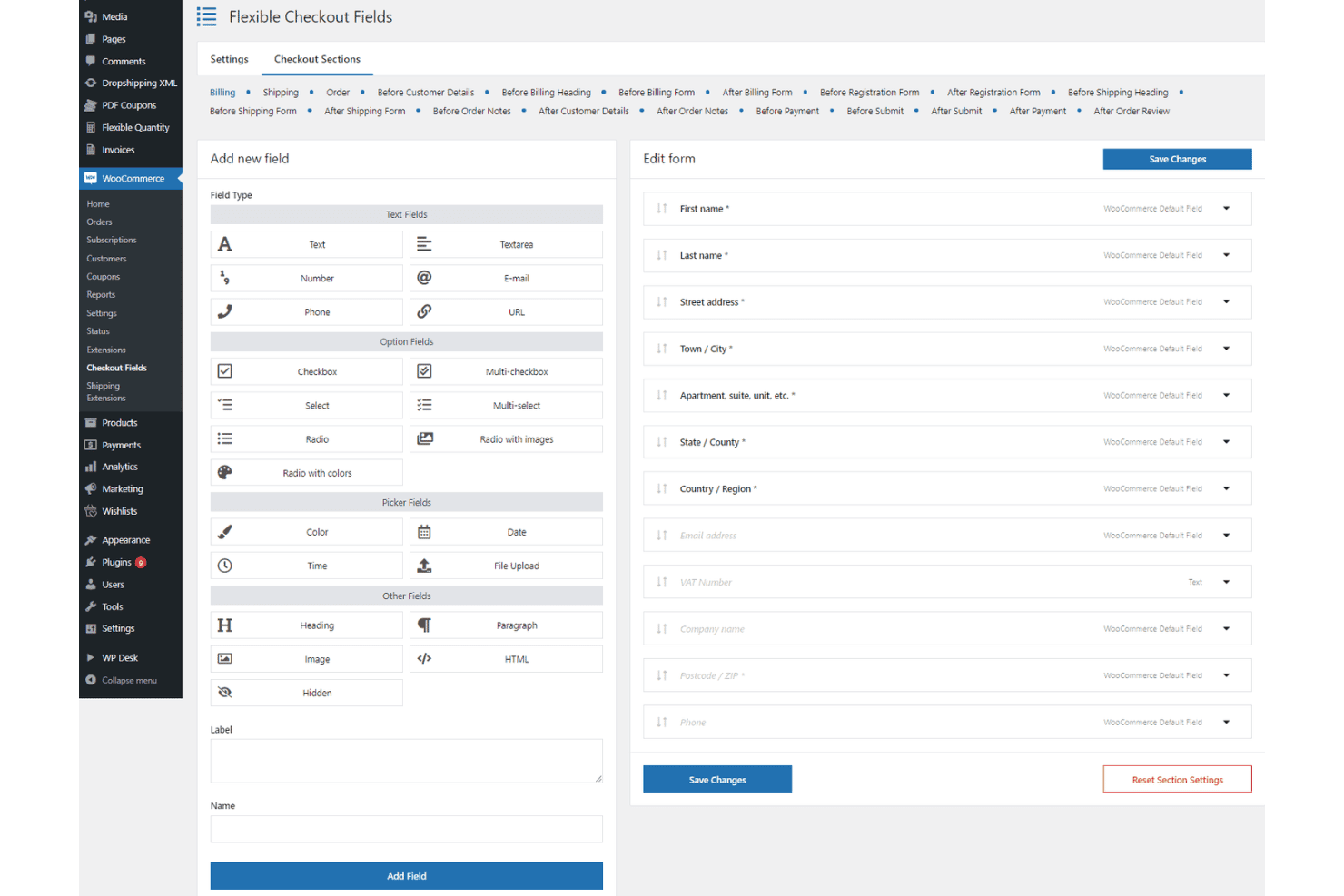
Customize checkout fields, enable guest checkout, and offer multiple payment options. Built-in support for coupons and discounts drives conversions.
Order and Customer Management
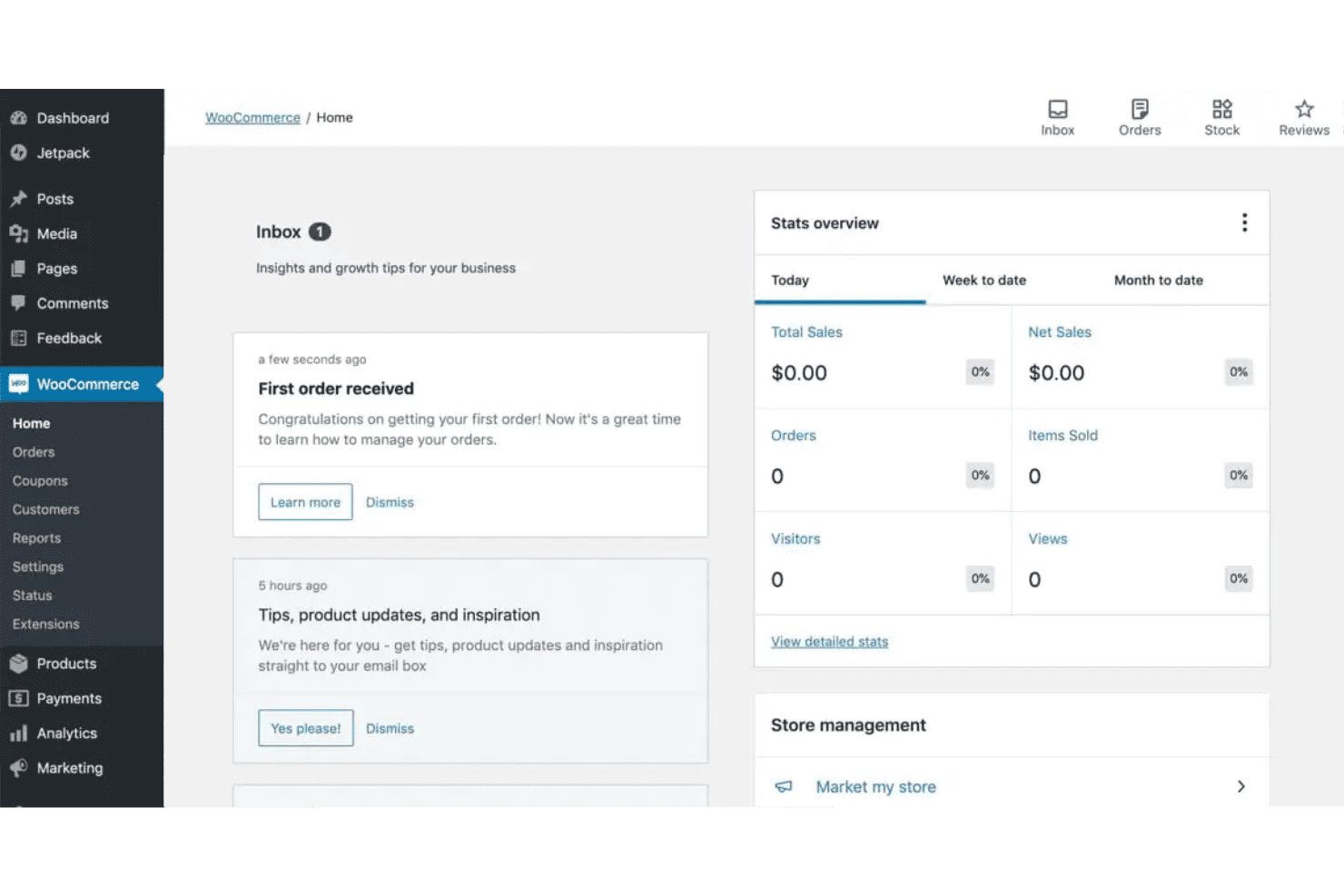
View, update, and manage orders from a central dashboard. Track customer details, order history, and communication in one place.
Shipping Options
Set flat rates, free shipping, or real-time carrier rates for different zones. Automate shipping calculations based on location and product weight.
Reporting and Analytics
Access sales, customer, and inventory reports from your dashboard. Export data or connect to analytics plugins for deeper insights.
Mobile-Friendly Storefronts
All themes are responsive, so your store looks great on any device. Customers can browse and buy from smartphones or tablets without issues.
Ease of Use
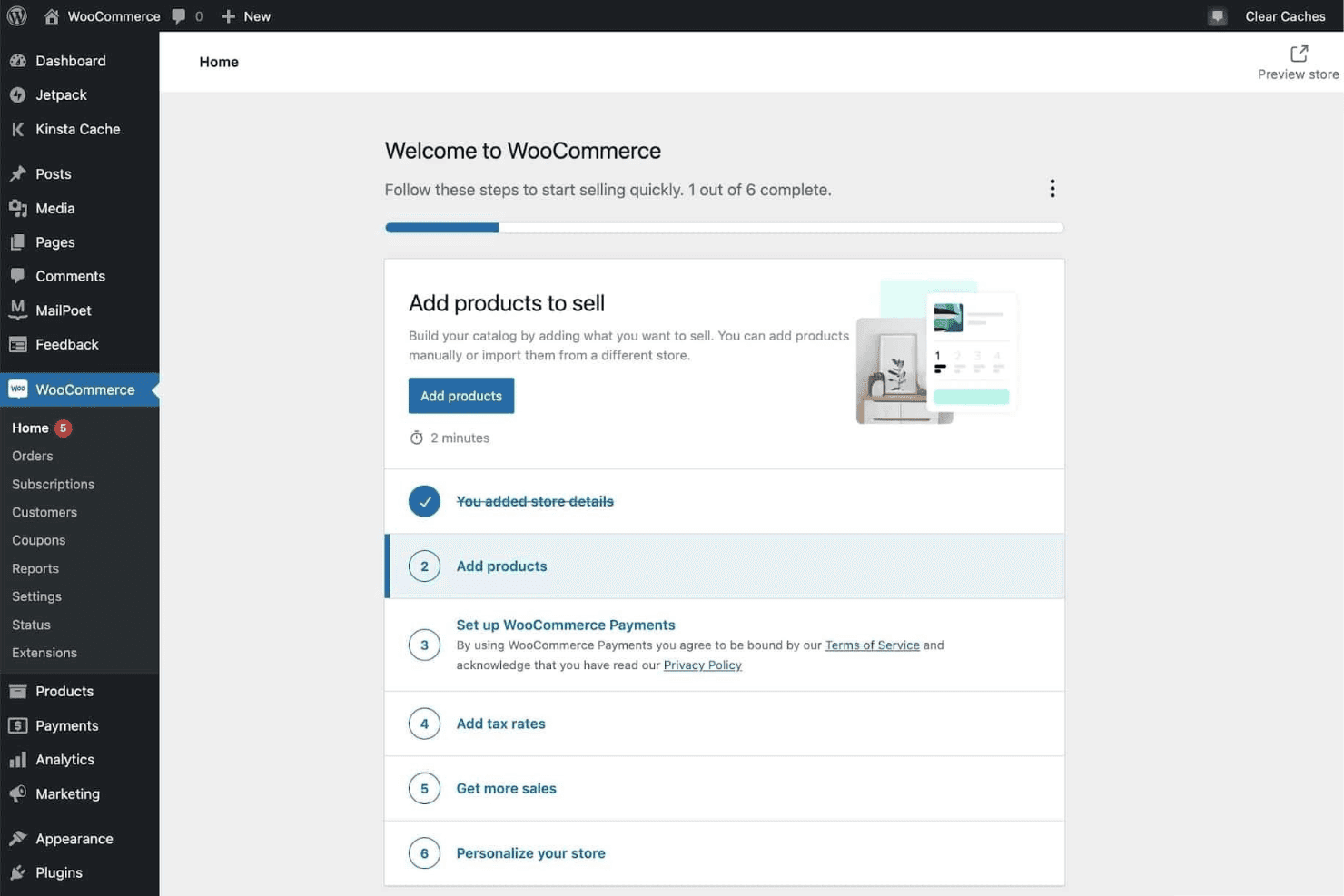
WooCommerce feels intuitive if you’re already comfortable with WordPress, but it’s less beginner-friendly than some open-source ecommerce options. Setting up products, payments, and shipping takes time, and you’ll often need to configure plugins for advanced features.
Many users say the dashboard is clear, but troubleshooting and updates require technical know-how. I think WooCommerce is best for teams with some web experience who want control over every detail.
Integrations
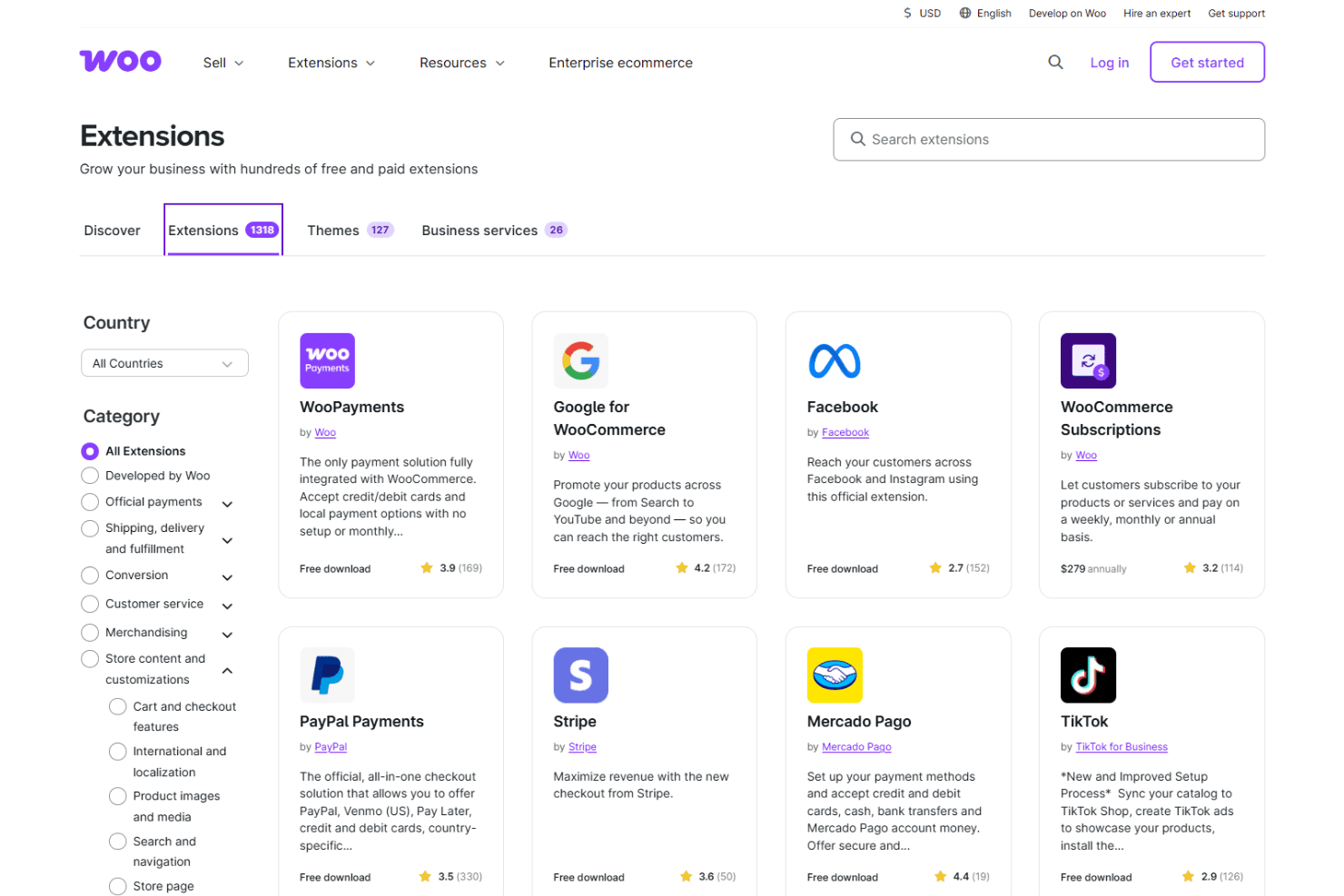
WooCommerce integrates with WooPayments, Stripe, PayPal, Mailchimp, Google Analytics, Facebook, ShipStation, USPS, Zapier, and QuickBooks, among others.
WooCommerce also offers a REST API and connects with third-party integration tools for custom workflows and automation.
WooCommerce Specs
- 2-Factor Authentication: Yes
- A/B Testing: No
- Analytics: Yes
- API: Yes
- BitCoin: No
- Conversion Tracking: Yes
- Dashboard: Yes
- Data Export: Yes
- Data Import: Yes
- Data Visualization: Yes
- Design Templates: Yes
- External Integrations: Yes
- Inventory Tracking: Yes
- Keyword Tracking: No
- Marketing Automation: Yes
- Multi-User: Yes
- Notifications: Yes
- Order Management: Yes
- Payment Gateway Integration: Yes
- Payment Processor: No
- PayPal: Yes
- Product Catalog: Yes
- Review Monitoring: No
- SAP Integration: No
- Scheduling: Yes
- Stripe: Yes
- Third-Party Plugins/Add-Ons: Yes


