

Klaviyo-arvostelu: hyvät ja huonot puolet, ominaisuudet ja hinnoittelu
Klaviyo erottuu edukseen tehokkaalla dataan perustuvalla markkinoinnin automaatiollaan, mikä tekee siitä erinomaisen valinnan verkkokauppayrityksille, jotka pyrkivät parantamaan asiakasvuorovaikutusta.

We review tools independently, and commissions help fund our testing. See our transparency policy, our methodology, or suggest a tool.
Klaviyo is an ecommerce email marketing software designed to help online businesses grow through personalized campaigns. It connects directly with online stores, like your Shopify store, to track customer behavior and purchase history. The platform lets you send targeted emails and SMS messages based on real-time data. Built-in analytics show how campaigns perform and how they drive revenue. Klaviyo is widely used by e-commerce brands to improve engagement and increase sales.
Klaviyo Evaluation Summary
4.6/5
- From $20/month
- Free plan available
Miksi luottaa ohjelmistosuosituksiimme
6,700+
Reviews
20
Industry experts
16+
Evaluation factors
14
Years
Tiimimme on testannut ja arvioinut ohjelmistoja vuodesta 2012 lähtien. Julkaisijoina ja mediatoimijoina tiedämme itse, kuinka vaikeaa — ja tärkeää — oikean ohjelmiston valitseminen on.
Tätä opasta varten arvioimme työkaluja käytännön testauksen ja itsenäisen tutkimuksen avulla, pisteyttäen työkalut valintakriteeriemme perusteella.
Arvostelumme perustuvat inhimilliseen toimitukselliseen harkintaamme, eivät myyntipuheeseen.
Klaviyo Overview
In my opinion, Klaviyo is a solid choice for ecommerce businesses looking for a data-driven email marketing solution. It excels in providing personalized customer experiences and boasts powerful analytics. While its onboarding process could be smoother, its intuitive interface and robust features make up for it. I believe Klaviyo's pricing is justified for the value it offers, especially for medium to large enterprises. However, smaller businesses might find the cost a bit steep. Compared to competitors, Klaviyo stands out with its seamless Shopify integration and advanced segmentation functionality. It's best suited for teams focused on leveraging customer data to drive engagement and sales.
Pros
- You can create highly personalized email campaigns with its advanced segmentation tools.
- Your team will benefit from its powerful analytics and reporting features.
- It offers seamless integration with ecommerce platforms like Shopify.
Cons
- You might find the onboarding process a bit complex and time-consuming.
- Your team could experience occasional delays in customer support response times.
- It may have a steeper learning curve compared to some other tools.
Is Klaviyo Right For Your Needs?
Who Would be a Good Fit for Klaviyo?
Klaviyo is a great fit for ecommerce businesses that want to leverage customer data for personalized marketing. If your team is in retail or direct-to-consumer industries, you'll appreciate Klaviyo's advanced segmentation and analytics. Its powerful features are ideal for marketing departments focused on driving engagement and sales through targeted email campaigns. Teams that use platforms like Shopify will find Klaviyo's seamless integration especially beneficial.
- Ecommerce RetailersKlaviyo's data-driven features help you tailor campaigns to boost customer engagement and sales.
- Direct-to-Consumer BrandsYour brand can benefit from Klaviyo's advanced segmentation to create personalized customer experiences.
- Marketing TeamsYou'll find Klaviyo's analytics and reporting tools invaluable for measuring campaign success.
- Small to Medium Enterprises (SMEs)SMEs can use Klaviyo to optimize email marketing with its robust segmentation and integration capabilities.
- Online Subscription ServicesKlaviyo helps you manage customer relationships with its automated workflows and targeted messaging.
- Fashion and ApparelYour fashion brand can utilize Klaviyo's personalization features to engage shoppers effectively.
Who Would be a Bad Fit for Klaviyo?
Klaviyo might not be ideal for small businesses with limited budgets or those with minimal ecommerce activity. If your team doesn't have the resources to handle a steeper learning curve, you might struggle with Klaviyo's advanced features. Industries that don't rely on data-driven marketing might find its capabilities excessive. Businesses that need quick, out-of-the-box solutions may find Klaviyo's setup and customization time-consuming.
- Non-Ecommerce BusinessesWithout ecommerce activities, you won't benefit from Klaviyo's specialized features.
- Small Local ShopsLimited budgets and resources make Klaviyo's costs and complexity a challenge.
- Basic Email NeedsIf you only need simple email campaigns, Klaviyo's advanced tools might overwhelm you.
- Startups with Limited FundsStartups might find Klaviyo's pricing steep for their tight budgets.
- Non-Data-Driven TeamsTeams not focusing on data analytics won't fully utilize Klaviyo's advanced segmentation.
- Businesses Needing Quick SetupIf you need immediate results, Klaviyo's setup time might slow you down.
Our Review Methodology
How We Test & Score Tools
We’ve spent years building, refining, and improving our software testing and scoring system. The rubric is designed to capture the nuances of software selection and what makes a tool effective, focusing on critical aspects of the decision-making process.
Below, you can see exactly how our testing and scoring works across seven criteria. It allows us to provide an unbiased evaluation of the software based on core functionality, standout features, ease of use, onboarding, customer support, integrations, customer reviews, and value for money.
Core Functionality (25% of final scoring)
The starting point of our evaluation is always the core functionality of the tool. Does it have the basic features and functions that a user would expect to see? Are any of those core features locked to higher-tiered pricing plans? At its core, we expect a tool to stand up against the baseline capabilities of its competitors.
Standout Features (25% of final scoring)
Next, we evaluate uncommon standout features that go above and beyond the core functionality typically found in tools of its kind. A high score reflects specialized or unique features that make the product faster, more efficient, or offer additional value to the user.
We also evaluate how easy it is to integrate with other tools typically found in the tech stack to expand the functionality and utility of the software. Tools offering plentiful native integrations, 3rd party connections, and API access to build custom integrations score best.
Ease of Use (10% of final scoring)
We consider how quick and easy it is to execute the tasks defined in the core functionality using the tool. High scoring software is well designed, intuitive to use, offers mobile apps, provides templates, and makes relatively complex tasks seem simple.
Onboarding (10% of final scoring)
We know how important rapid team adoption is for a new platform, so we evaluate how easy it is to learn and use a tool with minimal training. We evaluate how quickly a team member can get set up and start using the tool with no experience. High scoring solutions indicate little or no support is required.
Customer Support (10% of final scoring)
We review how quick and easy it is to get unstuck and find help by phone, live chat, or knowledge base. Tools and companies that provide real-time support score best, while chatbots score worst.
Customer Reviews (10% of final scoring)
Beyond our own testing and evaluation, we consider the net promoter score from current and past customers. We review their likelihood, given the option, to choose the tool again for the core functionality. A high scoring software reflects a high net promoter score from current or past customers.
Value for Money (10% of final scoring)
Lastly, in consideration of all the other criteria, we review the average price of entry level plans against the core features and consider the value of the other evaluation criteria. Software that delivers more, for less, will score higher.
Core Features
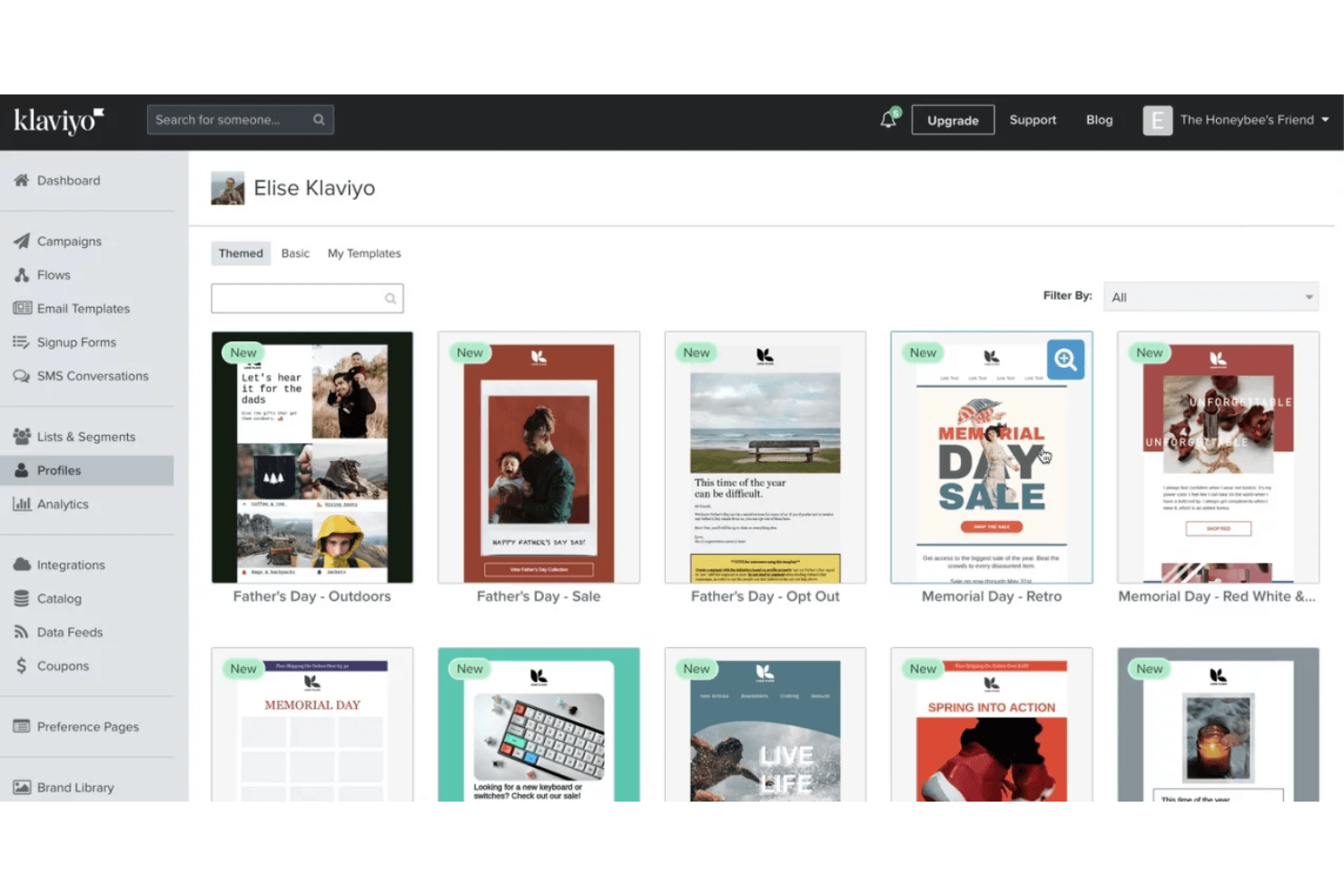
Email Campaigns: You can design and send targeted email campaigns using Klaviyo’s intuitive drag-and-drop email builder and pre-built templates. It allows you to personalize messages to enhance customer engagement.
Segmentation: Klaviyo lets you segment your audience based on abandoned cart rate, purchase history, and checkout activity. This helps your team tailor messages for different customer groups.
Automation/Flows: Automate your email marketing with Klaviyo’s workflows to save time and maintain consistent communication. Set triggers based on customer actions for timely emails and notifications.
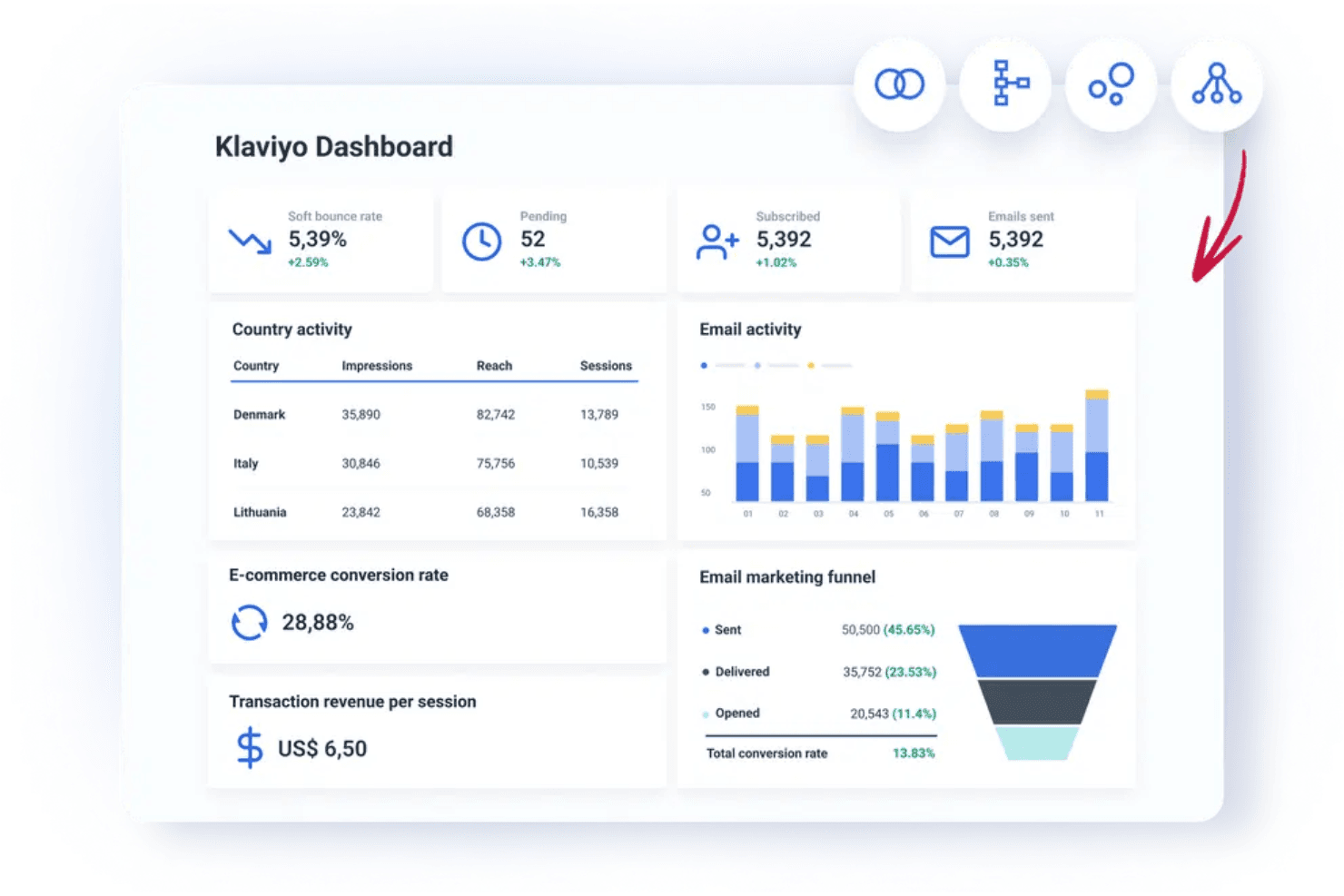
Analytics and Reporting: Access detailed analytics to track the performance of your campaigns against key benchmarks. Your team can use these insights to refine strategies and improve results.
A/B Testing: Test different email variations to see what resonates best with your audience. This feature lets you optimize your campaigns for better performance.
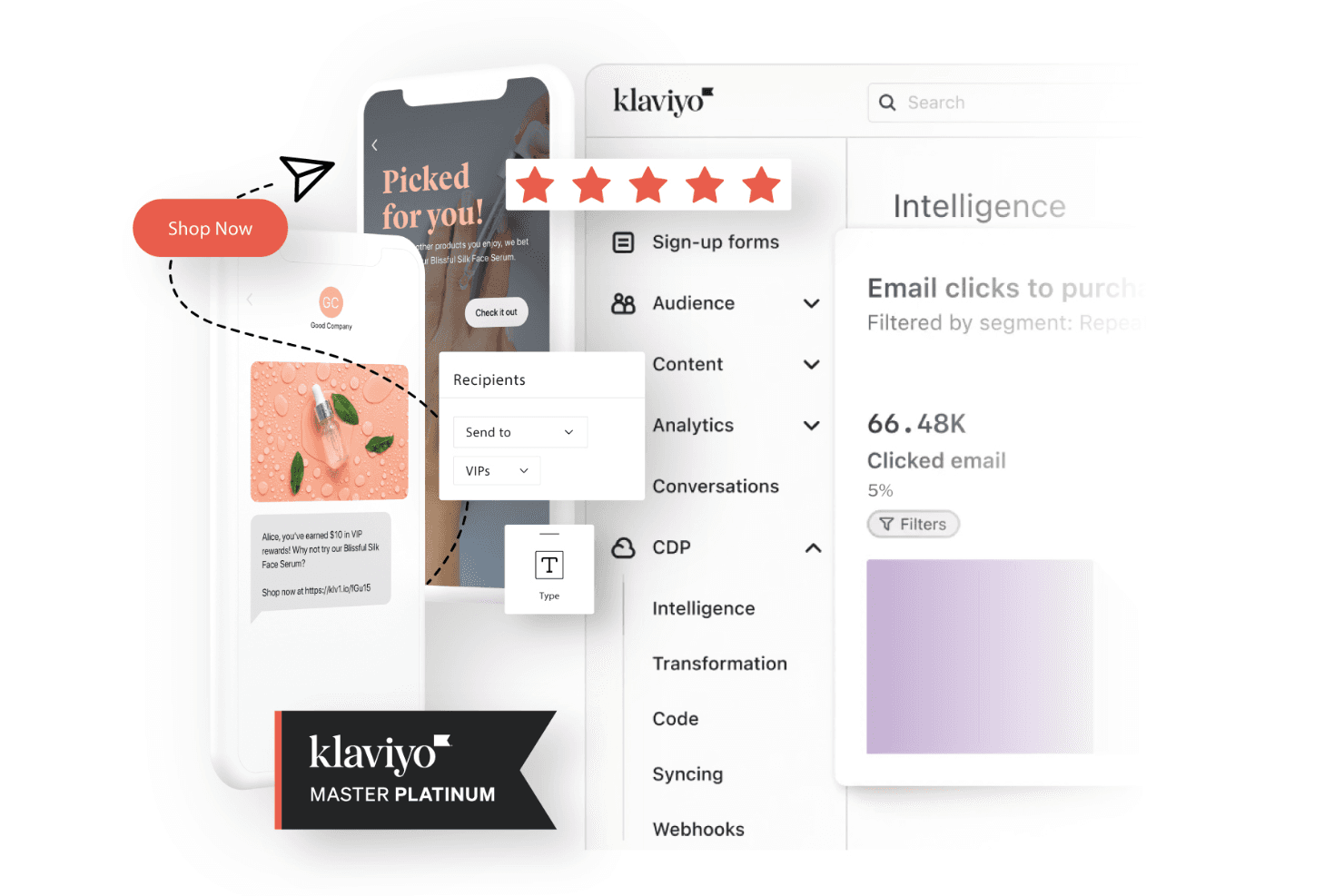
Personalization: Klaviyo offers dynamic content options, a built-in form builder, personalized product recommendations, and product reviews to tailor emails based on customer behavior.
Ease of Use
Klaviyo offers a user-friendly interface that's intuitive for most users, but it may present a learning curve for newcomers. If your team is experienced in email marketing, you'll find its drag-and-drop editor and automation tools straightforward. However, beginners might need some time to get accustomed to its advanced features and workflows. Compared to some competitors, Klaviyo's in-depth capabilities require a bit more effort to master but ultimately provide powerful results for those willing to invest the time.
Integrations
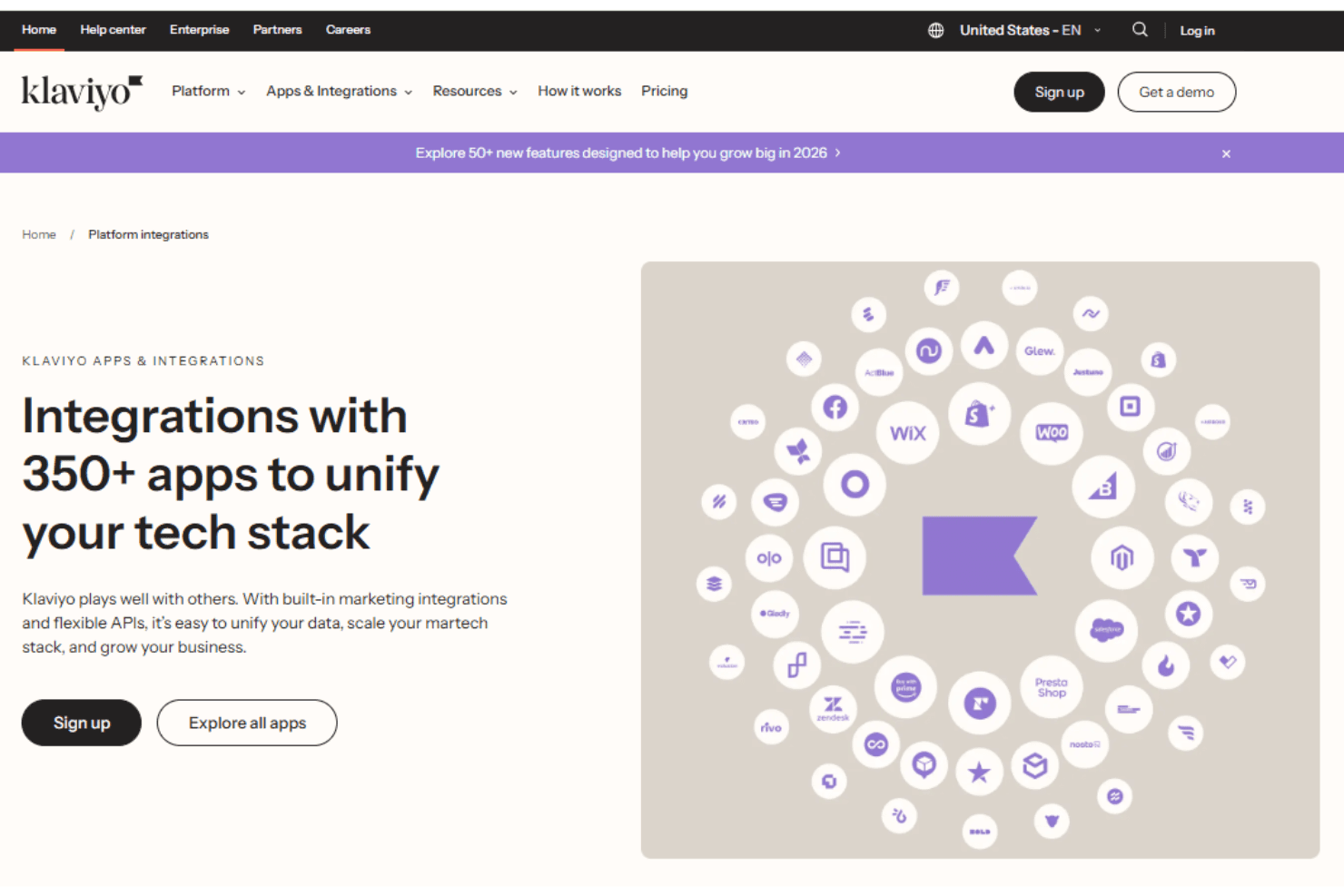
Klaviyo integrates with Shopify, Salesforce, Wix, WooCommerce, Adobe Commerce (Magento 2), BigCommerce, AfterShip Email, Smile.io, Meta Ads, and Stripe.
Klaviyo also has an API, allowing developers to create custom integrations to further enhance business capabilities. It can also connect through tools like Zapier, making it easier to integrate with other email marketing services such as Mailchimp, MailerLite, and Omnisend.
Klaviyo Specs
- 2-Factor Authentication: Yes
- API: Yes
- Calendar Management: Yes
- Call Tracking: Yes
- Campaign Management: Yes
- Click-to-Dial: Yes
- Contact Management: Yes
- Contact Sharing: Yes
- Custom Data Forms: Yes
- Customer Management: Yes
- Dashboard: Yes
- Data Export: Yes
- Data Import: Yes
- Data Visualization: Yes
- Email Integration: Yes
- External Integrations: Yes
- File Sharing: Yes
- File Transfer: Yes
- Google Apps Integration: Yes
- Lead Management: Yes
- Lead Scoring: Yes
- Marketing Automation: Yes
- Mobile App: Yes
- Multi-User: Yes
- Notifications: Yes
- Pipeline Management: Yes
- Sales Automation: Yes
- Scheduling: Yes
- Social-Media Integration: Yes
- Task Scheduling/Tracking: Yes
- Third-Party Plugins/Add-Ons: Yes


